Welcome Guest ( Log In | Register )

Bump Topic Topic Closed RSS Feed
39 Pages « < 11 12 13 14 15 > » Bottom

Outline · [ Standard ] · Linear+

 LYN Catholic Fellowship V01 (Group), For Catholics (Roman or Eastern)

views
     
khool
post Dec 23 2015, 12:07 PM

Getting Started
**
Junior Member
225 posts

Joined: Mar 2008


QUOTE(prophetjul @ Dec 23 2015, 11:18 AM)
That's alot to digest. But i will just concerntrate on this part:
What if you find that tradition is in conflict with scriptures? What will YOU do?

Actually before this, how do you prove that traditions were handed down by Apostles since they were actually poor fishermen and nowadays the Roman Catholic church is heavily institutionalised? 

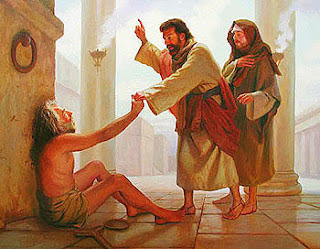
FROM: " Silver and gold have I none..... "  -Acts 3:6

user posted image

TO: 

user posted image

user posted image

user posted image

How do you justify these sort of wealth and splendor owned and practiced by the Vatican with scriptures?
*
Question, where is it mentioned that the Apostles were poor? And, point of fact, not all of them were fishermen ... e.g. St. Matthew was a tax collector, Judas (the traitor was a scholar), St. Paul was a tent maker for the Roman army (and inherited his Roman citizenship from his father)

Personally, I have not found any Traditions that have come in conflict with scripture. From what I noticed and read, Tradition, that was established by the Church came before the Bible, as it is found in today's form, the 73 books that were compiled and redacted by the Church.

As far as wealth and splendor of the Church is concerned, is there anything wrong with that? The wealth of the Church has been slowly built up over the last 2000 years since its establishment by Christ Himself. However, Catholics need to keep reminding themselves that any riches given to us are blessings by God. Such blessings not solely for our benefit alone, but for doing work in His Holy Name to bring others into the faith ...

QUOTE
Luke 12:48 New Revised Standard Version Catholic Edition (NRSVCE)

But the one who did not know and did what deserved a beating will receive a light beating. From everyone to whom much has been given, much will be required; and from the one to whom much has been entrusted, even more will be demanded.
And for the record, were not Abraham, Jacob and Job of the OT, themselves quite rich? Successful men who tended large flocks and and ran business enterprises (or whatever passed as those during their time)


This post has been edited by khool: Dec 23 2015, 12:10 PM
khool
post Dec 23 2015, 03:58 PM

Getting Started
**
Junior Member
225 posts

Joined: Mar 2008


QUOTE(prophetjul @ Dec 23 2015, 03:12 PM)
"Silver and gold have i none"- Acts 3 

Maybe not poor . But they did not build empires of wealth.   "Sell all you have and follow me"? 
Certainly they are not  dressed as radiantly as the popes and seated on thrones as such, of whom Roman Catholics claim descended from Peter.

Blessings are to help the poor. Why keep them in the Vatican? Why adorn themselves while there is starvation in the world? Feed them. Sell the gold and help the world. That's the teaching of scriptures. Not hoard the wealth and dress in them like the pharisees of old.

Abraham, Jacob and Job were not new testament institutions of Jesus whom claimed traditional heritage.

There are many more traditions which are in conflict with scriptures. But suffice, wealth is an issue here with the popes and Vatican.

Do you subscribe to this pope's statement?
*
What makes you think the wealth of the Catholic Church is not used to help the poor? The Church runs a great many charitable organizations around the world ( https://www.facebook.com/notes/michael-sanc...99364450111086/ ) In order to run these charities it takes lots of money, how much I do not know, but with these many organizations, it must cost a pretty packet.

As far as Vatican is concerned, they store a great many items of value, art pieces, sculptures, texts ... all accumulated through the ages for posterity. These accumulated treasure are more often than not put up for display for all to see and enjoy. If the Church were to sell off all these treasures, there is no guarantee that the people who buy it would allow them to be available for all to view and experience. Moreover, the money gained from the sale of these artifacts will not last forever. What will happen once funds from the sales finish? Money of the Church, is kept in banks. In most cases, at a local parish level, all collected from parishioners during Mass or well meaning donors. And the monies collected is disbursed to all the various organizations run by the Church to feed the hungry, clothe the poor, give succor to the afflicted, heal the sick, etc etc.

No tithing is necessary as St Paul says,

QUOTE
2 Corinthians 9:7 NRSVCE
Each of you must give as you have made up your mind, not reluctantly or under compulsion, for God loves a cheerful giver.


For the Pope and bishops attire, again, is there anything in the Bible that prohibits them from wearing what they wear? The money collected by the church is always sufficient to feed and clothe and aid the poor, the Lord provides, we do not doubt Him, and no second guessing His blessings either. In addition, what is the basis of your statement about the Church 'hoarding' wealth? Are you privy to Church financial documents?

I used Abraham, Jacob and Joseph as examples because of that very fact they are of the OT, as Christ ALWAYS referenced the OT, being the promise, and His presence in the NT being the fulfillment of the promise, i.e. the salvation of mankind. This is where Church Tradition stems from. The OT is still very much relevant, and it binds to the NT seamlessly. No conflict or disparity. For the record, Abraham and Jacob being the respective heads of their households would put them on par as high priests of the family. Abraham himself was blessed by Melchizedek, the high priest. This being a time before priests were an actual formal vocation and title, so the heads of the households, the patriarchs, would often assume that role and carry out the rituals and lead the community and family in prayer.

A short answer to your last question, yes. Pope John Paul II is not proclaiming anything new or contrary to Christian belief. JP2 is merely echoing the paragraph in the Catechism of the Catholic Church (or CCC for short);

QUOTE
CCC 841 The Church's relationship with the Muslims. "The plan of salvation also includes those who acknowledge the Creator, in the first place amongst whom are the Muslims; these profess to hold the faith of Abraham, and together with us they adore the one, merciful God, mankind's judge on the last day."

The rest of the contents of CCC please refer here ... http://www.vatican.va/archive/ccc_css/arch...sm/p123a9p3.htm

After all, Christ's commandment to us is;

QUOTE
John 13:34-35New Revised Standard Version (NRSV)

I give you a new commandment, that you love one another. Just as I have loved you, you also should love one another. By this everyone will know that you are my disciples, if you have love for one another.”
JP2's statement definitely brings to mind this verse does it not?

Oh, a little nugget for any and all following this line of inquiry the following is Acts 3: 1 - 10

QUOTE
Peter Heals a Crippled Beggar
One day Peter and John were going up to the temple at the hour of prayer, at three o’clock in the afternoon. And a man lame from birth was being carried in. People would lay him daily at the gate of the temple called the Beautiful Gate so that he could ask for alms from those entering the temple. When he saw Peter and John about to go into the temple, he asked them for alms. Peter looked intently at him, as did John, and said, “Look at us.” And he fixed his attention on them, expecting to receive something from them. But Peter said, “I have no silver or gold, but what I have I give you; in the name of Jesus Christ of Nazareth,stand up and walk.” And he took him by the right hand and raised him up; and immediately his feet and ankles were made strong. Jumping up, he stood and began to walk, and he entered the temple with them, walking and leaping and praising God. All the people saw him walking and praising God, and they recognized him as the one who used to sit and ask for alms at the Beautiful Gate of the temple; and they were filled with wonder and amazement at what had happened to him.


God bless! biggrin.gif rclxm9.gif

This post has been edited by khool: Dec 23 2015, 04:13 PM
khool
post Dec 24 2015, 03:25 PM

Getting Started
**
Junior Member
225 posts

Joined: Mar 2008


user posted image

khool
post Dec 25 2015, 08:49 AM

Getting Started
**
Junior Member
225 posts

Joined: Mar 2008


Good morning and a very Blessed Christmas to all! biggrin.gif


Thank you Father Roderick Von Hogen! biggrin.gif

This post has been edited by khool: Dec 25 2015, 08:53 AM
khool
post Dec 25 2015, 08:57 AM

Getting Started
**
Junior Member
225 posts

Joined: Mar 2008


Amen!

user posted image

khool
post Dec 30 2015, 01:03 PM

Getting Started
**
Junior Member
225 posts

Joined: Mar 2008


The Contemporary Denial of Reality
Anthony Esolen


Prudence, writes Josef Pieper in The Christian View of Man, is the root of all the natural virtues, and there is an obvious reason why. It is the virtue of seeing reality as it is. There can be no true virtue without it, because the virtues are to be exercised among imperfect human beings, not among angels or demons or brutes, and in the world before us, not in a never-land of the fantasies or nightmares of ideology.

It may be that all of the mad errors of the last hundred years have risen from one first and terrible error: that of refusing to honor reality, including human reality, as it is. In generations past, if you did not honor reality, you paid for it swiftly and severely. Try to plant strawberries in a desert, or fig trees in a swamp, and your belly will tell you that you have been a fool, even if your mind is stubborn and slow to admit it. Send your women out with the oxen and the plow, the cross-cut saw and the mattock, while your boys do the laundry and the mending, and the very stones will testify to your stupidity. But our wealth and sophisticated technology are a great buffer between us and those stones. We can seem to ourselves, for a while, to get away with ignoring the real.

Not that we actually do get away with it. Ideologies treat man as if he could be pressed into any shape, like molten plastic poured into a form. Stalin tried his hand at the human extruding machine, ignoring the ordinary farmer’s love for the land to which he and his forebears had given their sweat and their souls. The result was to turn one of the great breadbaskets of the world, the Ukraine, into barrens, while six million people died—not before some of them had sunk below the beast and eaten their own dead. Mao tried his hand at the human extruding machine, ignoring the ordinary man’s piety towards his ancestors and their ways, and the result was a mass destruction of culture, and sixty million people dead.

These are flagrant sinners against God and the reality he made. But the murderer of only one man is a murderer all the same, and more pleasant or vacuous sinners against reality are still sinners and still work harm. In the aggregate they can destroy every bit as much as Stalin and Mao did. Abortion of course is one obvious example of a refusal to look at reality. The child-making act has as its natural and foreseeable end the making of a child. We do know this, just as we know that men should revere their parents and grandparents, and that people who have lived on a tract of land for a hundred years love it and will tend it more carefully than a cadre of bureaucrats could ever imagine. We simply pretend that we do not know it. We pretend that when a man and a woman do the child-making thing, and they make a child, it can strike them as an utter surprise, a bolt from the blue. If you are walking beside a row of high-rise row houses, and you are struck by a piano falling from a great height, that is a surprise, that is an unnerving accident. Not the other.

But, having stiffed the real and embraced a fantasy, here the ideology of sexual liberation, having played at being husband and wife without being husband and wife, we claim all at once to be Surprised by Baby, Dismayed by Baby, Utterly Undone by Baby, and, hence, we want Baby out of the way. To have it out of the way, we have to plunge ourselves even deeper into the unreal. We have to pretend that the baby is not human, when we know, of course, that it is, and that it is not alive, when we know that if it were dead, it would be called a miscarriage, and no moral problem would arise. We have to cleave our minds in half to have our lives of license whole.

So it is that Planned Parenthood, which has never helped any woman to become a parent, sells as human body parts the members of the human beings they have killed under the fiction that they were not human at all, calling it “medical care” when nothing is remediated. So also the Pill, destructive of the common good and (like all synthetic growth hormones) deleterious to the health of the women who use it, is called “medical care,” when no disease is cured, and no limb or organ is restored to its normal and natural function; rather, its purpose is to thwart the natural function of the reproductive system, even at the cost of the woman’s health. It is thus not like an inoculation to protect you against a communicable disease. It is like deliberately putting a joint out of socket.

Lest that comparison seem outrageous, we now witness people who cannot live with the reality of their own bodies, but must have a limb amputated; they cannot be happy with two arms or two legs, but will only feel really fulfilled when they must stump around on a prosthesis, or have people wheel them about on a chair. Others, unhappy with the face God made them—an ordinary human face—must make of themselves another, not with cosmetics, but with what might be called chaotics, boring large holes into the cheek, implanting fiberglass cat whiskers under the nose, studding their jaws with rows of metal teeth, and so forth. Leo really is a lion, you see.

A man who is weary of the reality of being a man and a father can become a woman and a small child merely by pretending to be so, and dressing accordingly, perhaps taking advantage of the nipping and tucking of plastic surgery. A woman who is weary with the reality of being a woman can become a man by having a doctor pin the tail on the donkey. A lonely boy can become a girl—presto!—by mere insistence, and everyone has to play along. People who live atop the citadel of reality can shake their heads and smile at their opponents. They have reality under their feet and round about them and over their heads. Reality is fresh air, bracing and healthy. People who live in the dream world of ideology can never smile at their opponents. One ironical jest is a dire threat. That is because they have built their house on something slighter than sand—airy nothing.

Stalin could not bear reality, and so when Russian soldiers returned home, after seeing too much of the West with their own eyes, they had to be sent to the gulags. When I was an undergraduate at Princeton, one of my classmates delivered flyers to the doors of the dormitories, featuring too much reality—the reality of torn-apart or salt-burned babies. Had it been possible, the undergraduates would have sent him to the gulags too. If you are a professor at most of our Institutions of Higher Dreaming, and you say, “Not all the pretending in the world can actually make a man into a woman,” you are exposing yourself to gunshot.

Even our nation’s judges, who ought to know something about prudence, have entered the dance, and now insist that justice itself requires us to repudiate what is real, and ratify the fantastical notion that a man can mate with another man, despite the obvious facts of physiology, and despite the manifest harm that the Sexual Nutcracker Suite has already done to marriage and the common good. Woe to the nation governed by a lie.

Jesus, says Saint John, did not put too much trust in men, because he knew what was in their hearts. Jesus is the ultimate realist. He knows all of our evasions. You say, “We must divorce, because,” and you give a reason that will pass muster for Rabbi Hillel or Rabbi Shammai. Jesus is not buying. You say, “I am self-sufficient, because my granaries are full, and my annuities are making me fifteen percent a year,” but Jesus says that you are a fool, and that your life will be required of you tonight. You say, “I am right with God, because I give so much of my living to the poor,” but Jesus says that your right hand and your left hand are gabbling proudly to one another all the time.

You say that the people must be protected, but Jesus knows that you want the truth-teller out of the way. You say that you are looking for signs, but signs are all around you and you refuse to see them. You say that you love the poor, but you sure do manage to keep them out of your sight and smell.

You say that you are following the specter of Vatican II, which you cannot possibly identify, but you ignore the documents of the council fathers, which are right in front of your eyes. You say that you love the Church, but it is a Church of your dreams, and not the one here and now, the one you despise and want cleared out, to prepare the way for the Dictatorship of the Laity—a dictatorship inevitably managed by people like yourselves.

You say that you are all for love, and you turn a cold shoulder to young people who want to do what is right, to marry and to have children after the ordinary way of nature. You even say that you love Jesus, but you have riddled the gospels with escape-holes, so that Jesus himself is not the man who said what he said and did what he did, but a Dream-Jesus, a specter, a Jesus of the subjunctive mood, who would say and do this or that, contradicting what he actually did say and do when he walked the earth, if he were alive now. Thus is Jesus demoted from Master to a protagonist in a fiction; and you are his author.

Unreal, unreal.

In some ways, it is easier to swing your sword at a monster of flesh and blood than at a monster of the imagination. The monster of flesh and blood provides real resistance to nerve your arms. The monster of the imagination doesn’t. It is now here, now there, now this, now that, flickering in and out of existence, like the incoherent course of a dream. But we must do what we must do.

And maybe the best way to fight the unreal is also the sweetest and most restorative way—to take joy in the real. Real men, real women, real children; real intercourse of the sexes; real worship, real penitence, real gratitude; real care for the poor; real acknowledgment of the teachings of Jesus, real embrace of the Holy Scriptures; real cherishing of the permanent things; real song, real poetry, real beauty; real honor of the Mother of God; real falling down in adoration of the Son of God, who was really born as an infant boy, in the real village of Bethlehem, two thousand years ago.

Source: http://www.crisismagazine.com/2015/the-con...nial-of-reality

khool
post Dec 31 2015, 01:53 PM

Getting Started
**
Junior Member
225 posts

Joined: Mar 2008


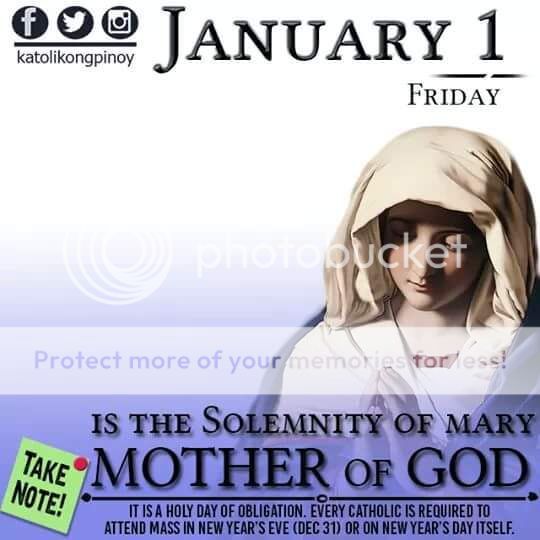
Tomorrow is a feast day, but not a day of obligation. Unless you happen to live in the American continent! biggrin.gif biggrin.gif biggrin.gif

user posted image

khool
post Jan 2 2016, 02:00 PM

Getting Started
**
Junior Member
225 posts

Joined: Mar 2008


QUOTE(yeeck @ Dec 31 2015, 10:31 PM)
That poster from the Philippines, right? Yeah it is a day of obligation in the Philippines too.
*
Oh yes, from an FB friend of mine who is Filipino. I went for Mass on 1st Jan anyways. Enjoyed it! smile.gif
khool
post Jan 4 2016, 05:41 PM

Getting Started
**
Junior Member
225 posts

Joined: Mar 2008


The Only Person Ever Pre-Announced
ARCHBISHOP FULTON J. SHEEN

To each claimant that he is a messenger sent from God, reason says, "What record was there before you were born that you were coming?"
user posted image

History is full of men who have claimed that they came from God, or that they were gods, or that they bore messages from God — Buddha, Mohammed, Confucius, Christ, Lao-tze, and thousands of others, right down to the person who founded a new religion this very day. Each of them has a right to be heard and considered. But as a yardstick external to and outside of whatever is to be measured is needed, so there must be some permanent tests available to all men, all civilizations, and all ages, by which they can decide whether any one of these claimants, or all of them, are justified in their claims.

These tests are of two kinds: reason and history. Reason, because everyone has it, even those without faith; history, because everyone lives in it and should know something about it. Reason dictates that if any one of these men actually came from God, the least thing that God could do to support His claim would be to pre-announce His coming.

Automobile manufacturers tell their customers when to expect a new model. If God sent anyone from Himself, or if He came Himself with a vitally important message for all men, it would seem reasonable that He would first let men know when His messenger was coming, where He would be born, where He would live, the doctrine He would teach, the enemies He would make, the program He would adopt for the future, and the manner of His death.

By the extent to which the messenger conformed with these announcements, one could judge the validity of his claims. Reason further assures us that if God did not do this, then there would be nothing to prevent any impostor from appearing in history and saying, "I come from God," or "An angel appeared to me in the desert and gave me this message." In such cases there would be no objective, historical way of testing the messenger. We would have only his word for it, and of course he could be wrong.

If a visitor came from a foreign country to Washington and said he was a diplomat, the government would ask him for his passport and other documents testifying that he represented a certain government. His papers would have to antedate his coming. If such proofs of identity are asked from delegates of other countries, reason certainly ought to do so with messengers who claim to have come from God.

To each claimant reason says, "What record was there before you were born that you were coming?" With this test one can evaluate the claimants. (And at this preliminary stage, Christ is no greater than the others.) Socrates had no one to foretell his birth. Buddha had no one to pre-announce him and his message or tell the day when he would sit under the tree. Confucius did not have the name of his mother and his birthplace recorded, nor were they given to men centuries before he arrived so that when he did come, men would know he was a messenger from God.

But, with Christ it was different. Because of the Old Testament prophecies, His coming was not unexpected. There were no predictions about Buddha, Confucius, Lao-tze, Mohammed, or anyone else; but there were predictions about Christ. Others just came and said, "Here I am, believe me." They were, therefore, only men among men and not the Divine in the human.

Christ alone stepped out of that line saying, "Search the writings of the Jewish people and the related history of the Babylonians, Persians, Greeks, and Romans." (For the moment, pagan writings and even the Old Testament may be regarded only as historical documents, not as inspired works.)

It is true that the prophecies of the Old Testament can be best understood in the light of their fulfillment. The language of prophecy does not have the exactness of mathematics. Yet if one searches out the various Messianic currents in the Old Testament, and compares the resulting picture with the life and work of Christ, can one doubt that the ancient predictions point to Jesus and the kingdom which he established?

God's promise to the patriarchs that through them all the nations of the earth would be blessed; the prediction that the tribe of Juda would be supreme among the other Hebrew tribes until the coming of Him Whom all nations would obey; the strange yet undeniable fact that in the Bible of the Alexandrian Jews, the Septuagint, one finds clearly predicted the virgin birth of the Messias; the prophecy of Isaias 53 about the patient sufferer, the Servant of the Lord, who will lay down his life as a guilt-offering for his people's offenses; the perspectives of the glorious, everlasting kingdom of the House of David — in whom but Christ have these prophecies found their fulfillment?

From an historical point of view alone, here is uniqueness which sets Christ apart from all other founders of world religions. And once the fulfillment of these prophecies did historically take place in the person of Christ, not only did all prophecies cease in Israel, but there was discontinuance of sacrifices when the true Paschal Lamb was sacrificed.

Turn to pagan testimony. Tacitus, speaking for the ancient Romans, says, "People were generally persuaded in the faith of the ancient prophecies, that the East was to prevail, and that from Judea was to come the Master and Ruler of the world." Suetonius, in his account of the life of Vespasian, recounts the Roman tradition thus, "It was an old and constant belief throughout the East, that by indubitably certain prophecies, the Jews were to attain the highest power."

China had the same expectation; but because it was on the other side of the world, it believed that the great Wise Man would be born in the West. The Annals of the Celestial Empire contain the statement: In the 24th year of Tchao-Wang of the dynasty of the Tcheou, on the 8th day of the 4th moon, a light appeared in the Southwest which illumined the king's palace. The monarch, struck by its splendor, interrogated the sages. They showed him books in which this prodigy signified the appearance of the great Saint of the West whose religion was to be introduced into their country.

The Greeks expected Him, for Aeschylus in his Prometheus six centuries before His coming, wrote, "Look not for any end, moreover, to this curse until God appears, to accept upon His Head the pangs of thy own sins vicarious."

How did the Magi of the East know of His coming? Probably from the many prophecies circulated through the world by the Jews as well as through the prophecy made to the Gentiles by Daniel centuries before His birth.

Cicero, after recounting the sayings of the ancient oracles and the Sibyls about a "King whom we must recognize to be saved," asked in expectation, "To what man and to what period of time do these predictions point?" The Fourth Eclogue of Virgil recounted the same ancient tradition and spoke of "a chaste woman, smiling on her infant boy, with whom the iron age would pass away." Suetonius quoted a contemporary author to the effect that the Romans were so fearful about a king who would rule the world that they ordered all children born that year to be killed — an order that was not fulfilled, except by Herod.

Not only were the Jews expecting the birth of a Great King, a Wise Man and a Savior, but Plato and Socrates also spoke of the Logos and of the Universal Wise Man "yet to come." Confucius spoke of "the Saint" the Sibyls, of a "Universal King" the Greek dramatist, of a savior and redeemer to unloose man from the "primal eldest curse." All these were on the Gentile side of the expectation.

What separates Christ from all men is that first He was expected; even the Gentiles had a longing for a deliverer, or redeemer. This fact alone distinguishes Him from all other religious leaders.

A second distinguishing fact is that once He appeared, He struck history with such impact that He split it in two, dividing it into two periods: one before His coming, the other after it. Buddha did not do this, nor any of the great Indian philosophers. Even those who deny God must date their attacks upon Him, A.D. so and so, or so many years after His coming.

A third fact separating Him from all the others is this: every other person who ever came into this world came into it to live. He came into it to die. Death was a stumbling block to Socrates — it interrupted his teaching. But to Christ, death was the goal and fulfillment of His life, the gold that He was seeking. Few of His words or actions are intelligible without reference to His Cross.

He presented Himself as a Savior rather than merely as a Teacher. It meant nothing to teach men to be good unless He also gave them the power to be good, after rescuing them from the frustration of guilt.

The story of every human life begins with birth and ends with death. In the Person of Christ, however, it was His death that was first and His life that was last. The scripture describes Him as "the Lamb slain as it were, from the beginning of the world." He was slain in intention by the first sin and rebellion against God.

It was not so much that His birth cast a shadow on His life and thus led to His death; it was rather that the Cross was first, and cast its shadow back to His birth. His has been the only life in the world that was ever lived backward. As the flower in the crannied wall tells the poet of nature, and as the atom is the miniature of the solar system, so too, His birth tells the mystery of the gibbet. He went from the known to the known, from the reason of His coming manifested by His name "Jesus" or "Savior" to the fulfillment of His coming, namely, His death on the Cross.

John gives us His eternal prehistory; Matthew, His temporal prehistory, by way of His genealogy. It is significant how much His temporal ancestry was connected with sinners and foreigners! These blots on the escutcheon of His human lineage suggest a pity for the sinful and for the strangers to the Covenant. Both these aspects of His compassion would later on be hurled against Him as accusations: "He is a friend of sinners" "He is a Samaritan." But the shadow of a stained past foretells His future love for the stained.

Born of a woman, He was a man and could be one with all humanity; born of a Virgin, who was overshadowed by the Spirit and "full of grace," He would also be outside that current of sin which infected all men.

Source: http://www.catholiceducation.org/en/contro...-announced.html

khool
post Jan 4 2016, 10:05 PM

Getting Started
**
Junior Member
225 posts

Joined: Mar 2008


QUOTE(yeeck @ Jan 4 2016, 09:53 PM)
Was he indoors or outdoors when it occurred?

khool
post Jan 5 2016, 10:48 AM

Getting Started
**
Junior Member
225 posts

Joined: Mar 2008


QUOTE(yeeck @ Jan 5 2016, 01:36 AM)
Most probably outdoors.
*
Yeah, most probably, but no mention made in the article. It would be quite a feat to be struck by lightning while indoors though.

khool
post Jan 5 2016, 11:11 AM

Getting Started
**
Junior Member
225 posts

Joined: Mar 2008


Nicholas of Cusa, a Medieval Man for Modern Times
Stephen Beale


user posted image

He sought a better understanding of Islam. He pushed for reunion with the Greek Orthodox Church. He was an erstwhile Church reformer. And he was a scientist and mathematician.

Nicholas of Cusa can sound very modern—modern, mind you, not in the technical sense of modernism, but in the very generic sense of someone who lives in modern times.

But, for all that, Nicholas of Cusa was also the consummate medievalist. He was a canon lawyer and, despite his earlier conciliarism, become a fierce advocate of the papacy. Later in life, he ran the papal states as vicar for the pope. His homilies breathe out the distinctly rich air of medieval devotion. And Cusanus—his Latin name—could sound thoroughly Thomistic in his theological thought.

In a life that spanned the first two thirds of the 1400s, Nicholas of Cusa bridged two eras. He was born in 1401, a little over a century after the last real crusade and less than a century after the death of Dante. He died in 1464, about half a century before the Protestant Reformation, which definitely shut the door on the Middle Ages.

He lived in times of turbulence. The Black Death had ravaged Europe in the mid-1300s, triggering an economic, political, and spiritual crisis. Then the Hundred Years War gnawed away at the already frayed nerves of panic-stricken continent.

The Church was a mess too. The Great Western Schism divided the Church from 1378 to 1418. At the height of the crisis, there were three men claiming to be pope. Even the saints were split. St. Catherine of Siena was for Urban, whose line of succession was eventually affirmed as the true one. But another great saint, St. Vincent Ferrer, sided with one of the antipopes, Clement.

With the papacy—the institutional backbone of Europe since the fall of Rome—in total disarray, conciliarism, which wants the Church as governed by council rather than the pope, seized the continent like a fever. This was also the time of forerunners of the Protestant heretics like John Wycliffe and Jan Hus.

Meanwhile, the great city of Constantinople fell to the Turks in 1453. With the end of the Byzantine Empire, the Greek Orthodox Church lost much of its power.

Nicholas of Cusa lived through all this. He was, to quote a prominent nineteenth and early twentieth century American jurist, a man who ‘shared in the action and passion of his time.’

At the Council of Basel, beginning in 1431, he negotiated with the followers of Hus in an effort to keep them in the Catholic fold. He was part of a delegation that hashed out a short-lived reunion with the Greek Orthodox in 1439. And, at a time when reform seemed all the rage, he embraced true spiritual reform.

He studied Latin, Greek, and Hebrew and knew the classics. He was a canon lawyer, theologian, administrator and also a scientists, mathematician, and philosopher. In other words, Nicholas of Cusa was very much a man of the Renaissance, which was blossoming during his lifetime as well.

There was much turmoil and chaos in his time. But Nicholas of Cusa, like the Church he served, was not tossed about in the waves of change. He remained anchored in his deep faith and devotion to God. It’s evident in more than a dozen works of deep theology and philosophy, with titles like On the Hidden God and On Learned Ignorance. And that’s not counting his many homilies.

His theology is strikingly creative—not just because of the new ideas that he put forth, but because these new ideas inhabited what was very much a traditional theological framework.

For example, Nicholas spoke of Christ in new ways, calling Him the ‘maximum man’ and ‘Absolute Obedience’—terms that would have warmed the hearts of twentieth century theologians like Hans Urs von Balthasar and Karl Rahner. But he also remained thoroughly rooted in the classic theology of the Church, using phrases like ‘hypostatic union’ in talking about the two natures of Christ, whereas Balthasar and Rahner would try to move away from such terminology.

Nicholas also blended mysticism and math in absolutely fascinating ways.

For example, there is his concept of the coincidence of opposites. This is best illustrated through geometry. Let’s start with a straight line. We could do two things with this. We could stretch it out to infinity. Or we could connect the ends and create a circle. The line is infinite, the circle is finite. In fact, in math class back in school we learned the formulas for calculating the length of the circumference and the area of the circle.

But we can’t do the same for the line. Because it stretches out to infinity, we can’t measure its length. And there is no fixed area encompassed by the line. So the line and the circle are opposites in the sense that one is infinite and the other is finite.

But Nicholas of Cusa believed that it was possible for these two opposites to coincide. He said that it was possible to imagine a giant circle so large that its circumference would start to look like an infinitely long line.

As improbable as this may seem, it can be illustrated from our everyday world. Earth is a circle in three dimensions—a sphere. But what do you see when you walk out to the beach? The curvature of the earth looks very much like a straight line—what we call the horizon.

Nicholas called this meeting of the infinite and finite the coincidence of opposites. And it became a way he thought of God’s being. Nicholas of Cusa scholar Erich Meuthen explains it this way: “[God’s] infinity is more than the greatest; it is maximum and minimum at the same time. This is the highest possible form of knowing that we can attain, namely the analogous recognition of knowing that we do not know, and this lifts us beyond the boundary of the conceivable.”

In our own time, some scientists, in uncovering the wonder of the natural world, have been led to search for the Wonder behind it all. A fine example of this is the 2004 book The Fire in the Equations: Science Religion and Search For God. Of course, Nicholas did not need math to bring Him to the faith—he already believed in God. But his use of math to better understand God seems very much modern.

And these are but just two of many examples of the lively mingling of the medieval and modern the mind of Nicholas of Cusa.

For Catholics today, Nicholas recommends himself as fresh voice of insight from the past. Ever wonder how a medieval Catholic would respond to the challenges of our time? Chances are you will find an answer in Nicholas.

Of course, this is not to say that we could not find answers to what ails us in other great minds of the Middle Ages, like Aquinas, Bonaventure, and Dante. But, unlike them, Nicholas is distinctive in that he is seems to be asking the same questions that we are. What is the relationship of Christianity to other religions? What about between the Church and other professing Christians? What is the best way to reform the Church? Nicholas wrestled with these issues, much as we do today.

Beyond that, his works are a treasure of creative yet thoroughly traditional theology and spiritual reflection that—outside a small circle of theologians and historians—is waiting to be discovered by the laity.

That said, much of Nicholas’ writing is not necessarily easy going for layman and student alike. On the upside, most of his major works are readily accessible in English and are even available online for free. Some good starting points are listed below.

His last series of sermons are here and here.

The three books of his classic On Learned Ignorance are here, here, and here.

On the Hidden God is here.
On Seeking God is here.
And The Vision of God is here.
Also, his thoughts on Islam are here, here, and here and his reaction to the fall of Constantinople is here.

Source: http://catholicexchange.com/nicholas-of-cu..._eid=6396f20ec0

khool
post Jan 6 2016, 10:54 AM

Getting Started
**
Junior Member
225 posts

Joined: Mar 2008


QUOTE(yeeck @ Jan 6 2016, 01:15 AM)
Should we “keep all the Jewish customs and Mosaic Laws”?

The very fact that Catholics should ask such question shows that modern catechism is not taught properly! Now you need to know that the Church teaches that in the Old Testament laws, there are three kinds:

The moral laws (e.g. the Ten Commandments), which are not only all in force in the New Testament, but even raised to a higher requirement of holiness: re-read the whole chapter 5 of St Matthew (very beautiful!);

The ceremonial laws: dealing with the “sacraments” of the Old Testament, such as circumcision, ritual sacrifices in the Temple of Jerusalem, washings, culinary laws (no pork…): these laws has a FIGURATIVE value (e.g. circumcision signifies baptism; all the Sacrifices of the Old Testament signify the perfect Sacrifice of our Lord Jesus Christ on the Cross, culinary laws signify spiritual purity…); these laws are explicitly terminated once they are replaced by the New Sacraments, the Sacraments of the New Law, of the New Testament. Many passages of the New Testament itself are explicit on this: see for instance: “Behold, I Paul tell you, that if you be circumcised, Christ shall profit you nothing” (Gal. 5:2). Or concerning eating pork…: “There is nothing from without a man that entering into him, can defile him. But the things which come from a man, those are they that defile a man” (Mk. 7:15). “For every creature of God is good, and nothing to be rejected that is received with thanksgiving:” (1 Tim. 4:4).

The third kind of laws is the judiciary laws, i.e. laws enacting penalties for crimes. They keep an indicative value of what is a crime and the gravity thereof: for instance laws imposing the penalty of death for crimes are indication that these are mortal sins (e.g. idolatry, adultery, blasphemy, homosexual acts…) It does not mean that the same penalty should be inflicted in the new testament (this is clear in the case of the woman taken in adultery in John 8:4…), yet it does indicate that it is a very grievous sin. Mercy does require penance and a true conversion: “go and SIN NO MORE!”
*
Thanks bro! Most informative! biggrin.gif notworthy.gif
khool
post Jan 6 2016, 01:16 PM

Getting Started
**
Junior Member
225 posts

Joined: Mar 2008


The Doorway to Salvation
The Baptism of the Lord
by Father Michael Chua Kim Wah


user posted image

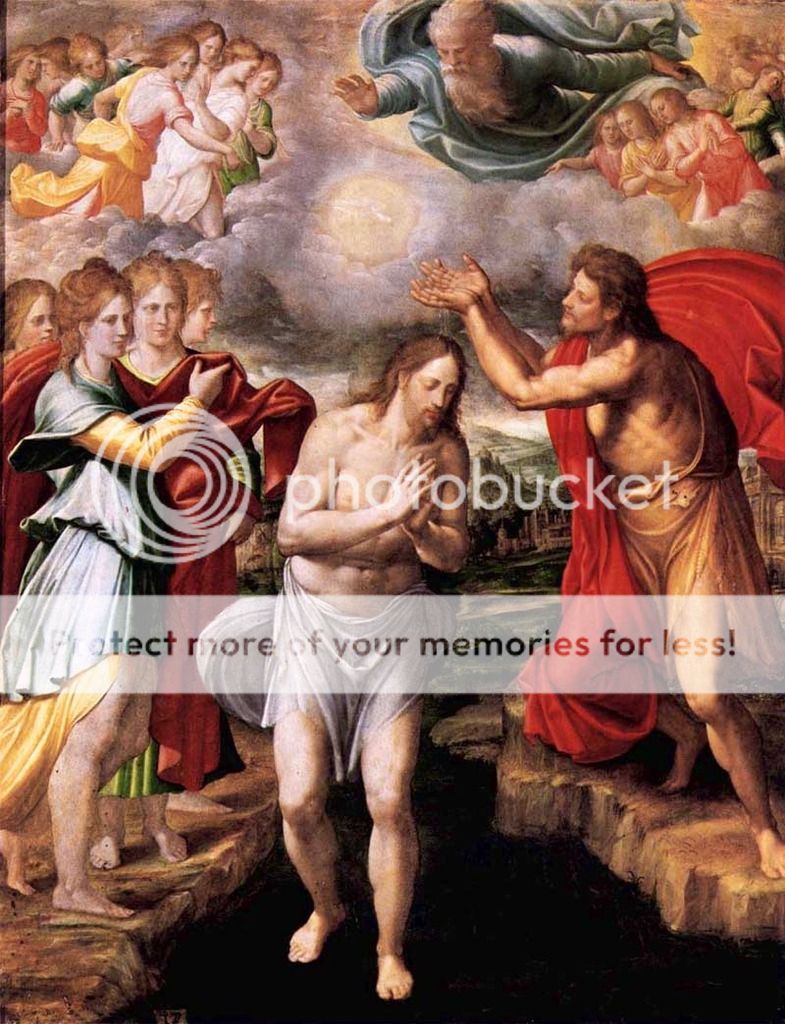
As we come to the close of the Christmas season and begin the ordinary time in this liturgical year, the Church pauses on this Sunday and draws our attention to an important moment of revelation of the person of Jesus Christ, a moment that took place when Jesus willingly submitted himself to be baptised by St John the Baptist at the River Jordan. Pope Emeritus Benedict once said that the “joy arising from the celebration of Christmas finds its completion today in the Feast of the Baptism of the Lord.” To this joy is added another reason for those of us who are gathered here: in the Sacrament of Baptism that will soon be administered to these infants, who will be adopted as Children of God and made into living members of Church, and we cannot help but rejoice.

Today, you parents have taken an important step in deciding to have your children baptised. Why isn't it sufficient for discipleship to know the teachings of Jesus, to know the Christian values? Why is it necessary to be baptised? Many would of course answer in the negative. Living a good life according to one’s conscience, abiding by the golden rule of “doing to others what you wish others to do to you”, and avoiding evil, seems sufficient in today’s society that sees no need for God or religion.

The question may also be asked of our Lord’s decision to submit himself to the baptism for the repentance of sins administered by St John. Was this necessary? If Jesus is truly the Holy One of God, the sinless one, would he be in need of repentance or conversion? The action seems utterly pointless and superfluous. But it is here that we recognise the intimate connection between what took place on Christmas Day and what takes place today in the gospel. In both stories, we encounter the path of abasement and humility that the Son of God freely chose in order to adhere to the plan of the Father, to be obedient to His loving will, even to the offering His Life as a sacrifice on the cross for the salvation of many. Our Lord Jesus, the sinless one, unites himself with the condition of humanity, a condition that was initially planned to be flawless, but now marred by sin. Jesus shows solidarity with us, with our effort to convert, to leave behind our old selves. He joins the line of penitents and sinners queuing up for what was the ancient equivalent of a public confession. In this, Jesus shows us the true meaning of mercy and compassion. The Latin root for the word compassion indicates “suffering with”, and Jesus chooses now to subject himself to the ignoble humiliation of asking for forgiveness.

What happens at the moment when Jesus was baptised by John? In the face of this humble and free act of love on the part of Jesus, the Holy Trinity was manifested. The Father speaks, the Spirit is manifested and the Son is revealed. The destructive waters of chaos which pre-existed creation, the Deluge that destroyed the world, the returning waters of the Red Sea that annihilated the army of Pharaoh, now becomes the source of a new creation, the origin of life. In this very act of God who chooses to humble Himself by assuming our human condition, sin and Satan is defeated, new life is reborn.

My dear parents, what happens in Baptism, which will soon be administered to your children? What happens is this: they will be united in a profound way and forever with Jesus, who chooses to unite Himself with all of us at His Baptism. These children will be immersed in the mystery of His power of recreation to be reborn to new life. When they emerge from the waters of baptism, they would no longer just be your children. They will be reborn as children of God, brothers of our Lord Jesus and will be able to turn to God and call upon Him with full trust and confidence, “Father!” The pleasure of God would be pronounced over them.

The water with which these children will be baptised will be accompanied with the words, “I baptise you in the name of the Father and of the Son and of the Holy Spirit.” Your children will be inserted into the name of the Trinity. Pope Emeritus Benedict speaks of it as an interpenetration of the being of God and our being, just as in marriage, for example, two persons become one flesh, become one single new reality, with a single new name. This thought is staggering to say the least. As incredible as it sounds, what happens in baptism is that we become inserted into the name of God, so that we belong to this name and his name becomes our name. Every time when we make the sign of the cross in the name of the Trinity, we remember not only our baptism but the truth that God is no longer very distant from us, he is not a reality to be discussed – whether he exists or not – but we are in God and God is in us. We will no longer be merely defined by our parentage or heritage or culture, we will be defined by God Himself.

But being children of God they are also inserted into the Body of Christ. Being immersed in God I am united with all others, I am united with my brothers and sisters, because all the others are in God and if I am drawn out of my isolation, if I am immersed in God, I am immersed in communion with others. Being baptised is never a solitary act of “me,” but is always necessarily a being united with all the others, a being in unity and solidarity with the whole body of Christ, with the whole community of his brothers and sisters. This fact that Baptism inserts me into community breaks my isolation. There can be no Christ without the Body, and there can be no Body without Christ as its Head. These children would now be made living members of the Church. If baptism is necessary for their salvation, if Christ is necessary for their salvation, the Church must also be necessary for their salvation. You cannot choose one without the other.

And the final question that is always raised is: “But can we impose on a child what religion he wants to live or not? Shouldn't we leave that decision to the child?” Many may argue that infant baptism robs children of the freedom to choose their path of life. And yet parents make so many other decisions on behalf of their children without relying on this flimsy argument. Today freedom and Christian life, the observance of the commandments of God, move in opposite directions. Being Christian is thought to be a sort of slavery; freedom is emancipation from the Christian faith, emancipation – in the final analysis – from God. But the opposite is true. Christianity and the gift of baptism is what gives our children true freedom. Christ has come to free us from slavery to the world, to sin, and to the power of Satan. It is in baptism that we celebrate that very victory. So, is it necessary for your children to be baptised? Is it depriving them of their freedom to choose? The answer is a definite ‘Yes’ to the first question and a ‘No’ to the second.

Life itself is given to us without our being able to choose whether we want to live or not. No one is asked: “do you want to be born or not?” Life itself is necessarily given to us without previous consent. Likewise the same must be said of baptism, which promises eternal life. Can we honestly say that we wish to give our children the right to choose to be saved or not, to receive eternal life or not? The answer of loving parents would obviously be to always choose salvation and eternal life. Baptism is guarantee of that salvation and eternal life and thus must always be chosen as you have chosen to give birth to these children. Baptism is the doorway to salvation, it is now your duty as parents and godparents that they should walk through it and pass through the corridor of life in order that they may reach their final goal – communion with God in Paradise forever.

Source: http://michaelckw.blogspot.my/2016/01/the-...-salvation.html

khool
post Jan 7 2016, 03:12 PM

Getting Started
**
Junior Member
225 posts

Joined: Mar 2008


Amen!

user posted image

Source: http://amazingcatechists.com/2016/01/8639/

khool
post Jan 7 2016, 03:17 PM

Getting Started
**
Junior Member
225 posts

Joined: Mar 2008


US bishop thunders against sloppy dress in church

An American bishop has launched a broadside against the way some people turn up at Mass wearing very casual dress.

Writing in his diocesan newspaper, Bishop Thomas Tobin of Providence, Rhode Island complained of “an habitual lack of reverence . . .”.

Bishop Tobin wrote that he had seen and received complaints about “the sloppy and even offensive way people dress while attending Mass”.

“You know what I’m talking about; you’ve seen it too,” he wrote.

“Hirsute flabmeisters spreading out in the pew, wearing wrinkled, very-short shorts and garish, unbuttoned shirts; mature women with skimpy clothes that reveal way too much, slogging up the aisle accompanied by the flap-flap-flap of their flip-flops; hyperactive gum-chewing kids with messy hair and dirty hands, checking their iPhones and annoying everyone within earshot or eyesight.

“These displays reveal a gross misunderstanding of the sacred space we’ve entered in the church and the truly sacred drama taking place in our midst.

“C’mon – even in the summer, a church is a church, not a beach or a pool deck.”

Bishop Tobin said every member of the worship community should dress appropriately for Mass, especially those who perform public liturgical ministries.

The bishop admitted he was venting, and went on to complain about people coming to Mass carrying their water bottles and coffee mugs.

“Do they really need to be hydrated or caffeinated during that hour they’re in church? Is it a sacred space or an airport terminal?”

He went on to state he still finds it “inappropriate and disrespectful to have a church full of people talking and creating a boisterous atmosphere before Mass, completely ignorant of the presence of the Blessed Sacrament and the spiritual needs of their fellow parishioners who wish to spend a few moments of quiet prayer with the Lord”.

The bishop also said he is “frequently amazed . . . over how many of the faithful, young and old, simply don’t know how to receive Holy Communion properly”.

Source: http://cathnews.co.nz/2015/06/19/us-bishop...ress-in-church/

khool
post Jan 7 2016, 04:12 PM

Getting Started
**
Junior Member
225 posts

Joined: Mar 2008


QUOTE(yeeck @ Jan 7 2016, 03:49 PM)
You can bet some noises will start using the oft-misused "do not judge" statement.
*
Uh huh, that's why I posted the visual on 'Spiritual Works of Mercy' first. Specifically #1, 'instruct the ignorant' ... I have heard a lot of excuses given for showing up for Church in a pair of shorts, or ripped jeans and flip-flop slippers, followed by that infamous, "Do not judge" statement.

The Lord hung upon that cross for our sins, so the least one can do is to show up for Sunday Mass dressed properly and respectfully!

khool
post Jan 10 2016, 03:29 PM

Getting Started
**
Junior Member
225 posts

Joined: Mar 2008


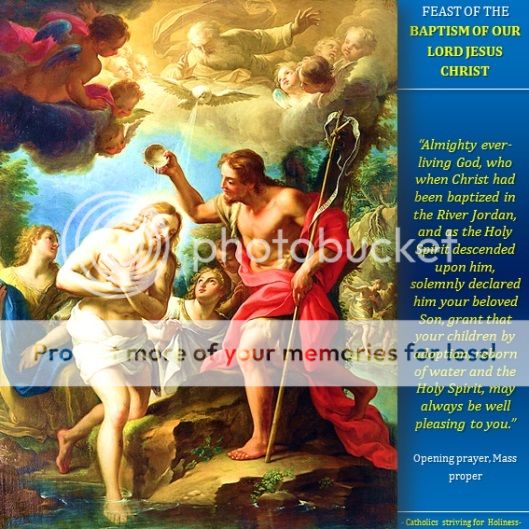
THE BAPTISM OF OUR LORD JESUS CHRIST. WHY DID JESUS SUBMIT HIMSELF TO ST. JOHN’S BAPTISM?
Posted by catholicsstrivingforholiness in Baptism, Feasts, Humility, Jesus Christ, Sacred Humanity of Our Lord Jesus Christ, Self-abasement, Solidarity, Sundays of Ordinary Time, Uncategorized

user posted image

After commemorating the Birth of Our Lord during Christmas and His manifestation as Savior Messiah and Light to the world during the feast of Epiphany, Christmas season draws to its close with the Feast of the Baptism of Our Lord Jesus Christ.

In its liturgy, the Church remembers another solemn manifestation of Christ’s divinity. In the adoration of the Magi God revealed the divinity of Jesus by means of the star. At his Baptism the voice of God the Father, coming “from heaven”, reveals to John the Baptist and to the Jewish people — and thereby to all men — this profound mystery of Christ’s divinity.

“What happens in the moment that Jesus has himself baptized by John? With this act of humble love on the part of the Son of God the heavens open and the Holy Spirit is visibly manifest as a dove, while a voice from on high expresses the Father’s pleasure, who points to his only begotten Son, the Beloved. This is an authentic manifestation of the Most Holy Trinity, which witnesses to Jesus’ divinity, his being the promised Messiah, he whom God sent to free his people so that they might be saved (cf. Isaiah 40:2) (Benedict XVI, Homily on the Feast of the Baptism of Our Lord, January 12, 2013).

The question arises: HOW COME JESUS, BEING THE SON OF GOD, ALLOWED HIMSELF TO RECEIVE FROM JOHN THE “BAPTISM OF REPENTANCE FOR THE FORGIVENESS OF SINS” (Luke 3:3)?

“To inaugurate his public life and to anticipate the “Baptism” of his death, he who was without sin accepted to be numbered among sinners. He was “the Lamb of God who takes away the sin of the world” (John 1:29). The Father proclaimed him to be “his beloved Son” (Matthew 3:17) and the Spirit descended upon him. The baptism of Jesus is a prefiguring of our baptism (Compendium of the Catechism of the Catholic Church, n. 105).””

The Baptism of Our Lord Jesus Christ “DISPLAYS THE PATH OF ABASEMENT AND HUMILITY THAT THE SON OF GOD FREELY CHOSE IN ORDER TO FOLLOW THE FATHER’S PLAN, TO BE OBEDIENT TO HIS WILL OF LOVE FOR MAN IN ALL THINGS, TO THE POINT OF THE SACRIFICE ON THE CROSS. Now an adult, Jesus initiates his public ministry, traveling to the Jordan River to receive a baptism of repentance and conversion from John. There occurs here something that might seem paradoxical in our eyes. DOES JESUS NEED TO REPENT AND CONVERT? CERTAINLY NOT. AND YET HE WHO IS WITHOUT SIN PLACES HIMSELF AMONG SINNERS TO BE BAPTIZED, TO PERFORM THIS GESTURE OF REPENTANCE; THE HOLY ONE OF GOD JOINS WITH THOSE WHO RECOGNIZE THEIR NEED OF FORGIVENESS AND ASK GOD FOR THE GIFT OF CONVERSION, THAT IS, THE GRACE TO RETURN TO HIM WITH ALL THEIR HEART, TO BE COMPLETELY HIS. JESUS WISHES TO PLACE HIMSELF AMONG SINNERS, MAKING HIMSELF (IN) SOLIDARITY WITH THEM, EXPRESSING GOD’S NEARNESS. JESUS SHOWS HIMSELF TO BE SOLIDARY WITH US, WITH OUR EFFORT TO CONVERT, TO LEAVE OUR EGOISM BEHIND, TO TURN FROM OUR SINS, TO TELL US THAT IF WE ACCEPT HIM IN OUR LIVES HE IS ABLE TO LIFT US BACK UP AND LEAD US TO THE HEIGHTS OF GOD THE FATHER. And this solidarity of Jesus is not, so to say, a simple exercise of the mind and will. Jesus has truly immersed himself in our human condition, he lived it through and through, except for sin, and is able to understand weakness and frailty. FOR THIS REASON HE HAS COMPASSION, CHOOSES TO “SUFFER WITH” MEN, TO MAKE HIMSELF A PENITENT WITH US. THE WORK OF GOD THAT JESUS WISHES TO ACCOMPLISH IS THIS: THE DIVINE MISSION HEAL THOSE WHO ARE WOUNDED AND TO CARE FOR THE SICK, TO TAKE THE SIN OF THE WORLD UPON HIMSELF (Benedict XVI, ibidem).”

As Christians, WE MUST IMITATE CHRIST, ENTERING INTO THIS “MYSTERY OF SELF-ABASEMENT AND REPENTANCE, go down into the water with Jesus in order to rise with him, be reborn of water and the Spirit so as to become the Father’s beloved son in the Son and ‘walk in newness of life’(Rom 6:4). ‘Let us be buried with Christ by Baptism to rise with him; let us go down with him to be raised with him; and let us rise with him to be glorified with him (St. Gregory of Nazianzus, Oratio 40, 9)’ (Catechism of the Catholic Church, n. 586).”

Dear friends: let us THANK GOD FOR THE SACRAMENT OF BAPTISM through which we have become children of God and have received the sanctifying grace, the remission of original sin and at the same time the calling towards a life of holiness. Let us FOLLOW JESUS IN HIS HUMILITY AND SELF-ABASEMENT, knowing that we have THE CONSTANT NEED OF REPENTANCE AND CONVERSION.

“Almighty ever-living God, who when Christ had been baptized in the River Jordan, and as the Holy Spirit descended upon him, solemnly declared him your beloved Son, grant that your children by adoption, reborn of water and the Holy Spirit, may always be well pleasing to you (Opening prayer, Mass of the Feast of Baptism of Our Lord).”

Source: http://catholicsstrivingforholiness.com/20...-johns-baptism/

This post has been edited by khool: Jan 10 2016, 03:30 PM
khool
post Jan 10 2016, 09:42 PM

Getting Started
**
Junior Member
225 posts

Joined: Mar 2008


QUOTE(smallbug @ Jan 10 2016, 07:19 PM)
Coincidence or what, same topic at my hometown church a few weeks ago... and this morning at St John's .....  the power flowing through that US Bishop...  biggrin.gif
*
Amen brother!! rclxms.gif notworthy.gif thumbup.gif rclxm9.gif

khool
post Jan 12 2016, 07:55 AM

Getting Started
**
Junior Member
225 posts

Joined: Mar 2008


Evening meditation: "Lazarus."
By Father James Martin, S.J.


As many of you know, David Bowie died last night. What you may not know is that shortly before his death he released a meditation on life, death and, it seems to me, resurrection, in a song (and video) entitled "Lazarus." Mr. Bowie had been suffering for the past 18 months from cancer, and so when he made this video, released a few days ago, he knew death was imminent.


Most Christians, even many non-Christians, know the story of the Raising of Lazarus, as told in the Gospel of John. Mary and Martha, two of Jesus's close friends, who live in the town of Bethany, near Jerusalem, send word that their brother is ill. But they don't say "our brother Lazarus is ill," or even "Lazarus of Bethany is ill." Instead they say, "he whom you love is ill." It's a sign of the deep affection that Jesus has for the man. Jesus waits several days before traveling to Bethany, where he is confronted by the two sisters who say to him, separately, "If you had been here our brother would not have died." Jesus then is brought to the tomb, where he weeps openly. Then he stands at the tomb, asks for the stone to be rolled away, and calls out, "Lazarus, come forth!" The dead man emerges, "his hands and feet bound with strips of cloth, and his face wrapped in a cloth." And Jesus says to the crowd, "Untie him, and let him go."

In his video, David Bowie, who like Lazarus is bandaged, sings, "Look up here, I'm in heaven. I've got scars that can't be seen. I've got drama, can't be stolen. Everybody knows me now." In the first part of the video, Bowie writhes in his bandages in a hospital bed; in the second part "another" Bowie stands and dances, freed from his bandages, in the same room. At the close of the video he enters into a closet.

The video is rich with imagery, and will speak to people in various ways.

For me it's a complex image of life, death and the afterlife. (As well as sight and blindness: as he lays in bed, his eyes are covered by small metal pieces, which may call to mind stories of Jesus's healing of the blind.) Much of the video resonated deeply with me. On the one hand, one will indeed enter into God's presence carrying with us all the "drama" of our lives. One will also be welcomed into the presence of those who know us, and into a place where we will be known fully, by God. And one will be freed of the limitations of physical pain and of the confining "bandages" of our existence.

On the other hand, the "scars," I believe, will be seen by those in heaven, God included. For nothing is lost to God. We are welcomed, scars and all. Remember that when Jesus returns from the dead he shows his disciples his physical wounds, his scars. The Risen One carries in himself, and on himself, the experiences, visible and invisible, of his humanity.

At the close of the video, Bowie retreats into a dark closet. It's a shadow image of conclusion of the story of Lazarus, who, in the Gospels emerges from a dark tomb into the light. (Needless to say, it may be a Johannine image, a nod to Bowie's sexuality, or something else entirely.)

It's not surprising that someone would struggle with issues of illness, death and the afterlife. Even believers do. And I'm not sure what Bowie's religious or spiritual beliefs were. But it's a gift when an artist shares himself or herself with the world in so personal and creative a way, particularly in the midst of the final struggle.

"Oh I'll be free/Just like that bluebird," he sings. "Oh I'll be free/Ain't that just like me?"

As an artist, Bowie always confounded expectations. Perhaps, like most of us, he struggled with a God who confounded him near the end. Now may that same God surprise him. With new life.

May he be untied and let go.

Source: https://www.facebook.com/FrJamesMartin/post...1926496?fref=nf


39 Pages « < 11 12 13 14 15 > » Top
Topic ClosedOptions
 

Change to:
| Lo-Fi Version
0.1409sec    0.66    7 queries    GZIP Disabled
Time is now: 11th December 2025 - 01:03 PM