

LYN Catholic Fellowship V01 (Group), For Catholics (Roman or Eastern)
|
|
 Jan 13 2017, 02:15 PM Jan 13 2017, 02:15 PM
|
 
Junior Member
225 posts Joined: Mar 2008  
|
|
 Quote
Quote|
|
|
|
|
Jan 13 2017, 02:35 PM
|

Senior Member
627 posts Joined: Jun 2009
|
QUOTE(megaman03 @ Jan 13 2017, 02:08 PM) The First Commandment according to the Catechism of the Catholic Church is: Is that in your Catholic bible? If it is so, why are you worshiping idols?"I am the LORD your God, who brought you out of the land of Egypt, out of the house of bondage. You shall have no other gods before me. You shall not make for yourself a graven image, or any likeness of anything that is in heaven above, or that is in the earth beneath, or that is in the water under the earth; you shall not bow down to them or serve them." Maybe do some research next time yeah?  http://www.the-ten-commandments.org/romanc...mmandments.html |
|
|
Jan 13 2017, 03:01 PM
|

Senior Member
3,574 posts Joined: Apr 2006
|
QUOTE(prophetjul @ Jan 13 2017, 11:51 AM) They are dead. Necromancy is forbidden in scriptures Wrong. They are alive in Christ. "The wisdom of men is foolishness to God". Why don't you use your won wisdom to discuss? Preferably with scriptures  |
|
|
Jan 13 2017, 03:03 PM
|
|
Senior Member
3,574 posts Joined: Apr 2006
|
Here we go again. With shioks coming up with the same stuff after not responding to replies. LOL.
|
|
|
Jan 13 2017, 03:44 PM
|

Senior Member
2,718 posts Joined: Oct 2008 From: Democratic People's Republic of Malaya
|
QUOTE(shioks @ Jan 13 2017, 02:35 PM) Is that in your Catholic bible? If it is so, why are you worshiping idols? I'm not a Catholic.http://www.the-ten-commandments.org/romanc...mmandments.html |
|
|
Jan 13 2017, 04:11 PM
|

All Stars
12,268 posts Joined: Oct 2010
|
QUOTE(yeeck @ Jan 13 2017, 03:01 PM) Wrong. They are alive in Christ. "The wisdom of men is foolishness to God". They can't hear you.Please REFER to scriptures to support necromancy. Scriptures please. Did Paul teach us to pray to dead saints? Who did scriptures teach us to pray to? |
|
|
|
|
|
Jan 13 2017, 04:14 PM
|
|
All Stars
12,268 posts Joined: Oct 2010
|
QUOTE(shioks @ Jan 13 2017, 01:17 PM) Catholic has a different 10 commandments than Protestants. Catholic removed idols worshiping to cater for Mary worship. A quick search would come up with the following comparison link: [yeeck] Is this true?http://www.teachingtheword.org/apps/articl...444/default.asp |
|
|
Jan 14 2017, 08:55 AM
|
|
Junior Member
225 posts Joined: Mar 2008
|
If Jesus Was Chinese: 8 Beautiful Paintings of the Life of Our Lord
https://churchpop.com/2017/01/13/jesus-chin...ings-life-lord/ |
|
|
Jan 14 2017, 09:12 AM
|
|
Senior Member
3,574 posts Joined: Apr 2006
|
QUOTE(prophetjul @ Jan 13 2017, 04:11 PM) They can't hear you. The historic Christian practice of asking our departed brothers and sisters in Christ—the saints—for their intercession has come under attack in the last few hundred years. Though the practice dates to the earliest days of Christianity and is shared by Catholics, Eastern Orthodox, the other Eastern Christians, and even some Anglicans—meaning that all-told it is shared by more than three quarters of the Christians on earth—it still comes under heavy attack from many within the Protestant movement that started in the sixteenth century. Please REFER to scriptures to support necromancy. Scriptures please. Did Paul teach us to pray to dead saints? Who did scriptures teach us to pray to? Can They Hear Us? One charge made against it is that the saints in heaven cannot even hear our prayers, making it useless to ask for their intercession. However, this is not true. As Scripture indicates, those in heaven are aware of the prayers of those on earth. This can be seen, for example, in Revelation 5:8, where John depicts the saints in heaven offering our prayers to God under the form of "golden bowls full of incense, which are the prayers of the saints." But if the saints in heaven are offering our prayers to God, then they must be aware of our prayers. They are aware of our petitions and present them to God by interceding for us. And no, it is not necromancy. nec·ro·man·cy ˈnekrəˌmansē/Submit noun the supposed practice of communicating with the dead, especially in order to predict the future. witchcraft, sorcery, or black magic in general. |
|
|
Jan 14 2017, 09:15 AM
|
|
Senior Member
3,574 posts Joined: Apr 2006
|
QUOTE(prophetjul @ Jan 13 2017, 04:14 PM) [yeeck] Is this true? Is google that difficult to use?https://www.catholic.com/magazine/online-ed...en-commandments |
|
|
Jan 14 2017, 09:21 AM
|
|
Senior Member
3,574 posts Joined: Apr 2006
|
Abortionist Quits After St. Thomas Aquinas Visits Him in a Dream
Posted by Angelo Stagnaro on Monday Jan 9th, 2017 at 6:01 PM “These children are the ones you killed with your abortions,” said St. Thomas, and Stojan awoke in shock and fear. He decided he would refuse to participate in any more abortions.  Stojan Adasevic, a Serbian abortionist when Serbia was still a communist country, managed to kill 48,000 children in utero in his 26 years as a purveyor of death. Sometimes up to 35 per day. But that's all on the past, as Stojan is now one of Serbia's most important pro-life voices. As explained in a recent interview with the Spanish daily newspaper, La Razon: The medical textbooks of the Communist regime said abortion was simply the removal of a blob of tissue. Ultrasounds allowing the fetus to be seen did not arrive until the 1980s, but they did not change his opinion. Regardless of what he believed, or thought he believed, Stojan began to have nightmares. In describing his conversion to La Razon, Adasevic "dreamed about a beautiful field full of children and young people who were playing and laughing, from four to 24 years of age, but who ran away from him in fear. A man dressed in a black and white habit stared at him in silence. The dream was repeated each night and he would wake up in a cold sweat. One night Stojan asked the man in black and white in his frightening dream as to his identity. "My name is Thomas Aquinas," he responded. Stojan, educated in communist schools that pushed atheism instead of real learning, didn't recognize the Dominican saint's name. Stojan asked the nightly visitor, "Who are these children?" "They are the ones you killed with your abortions," St. Thomas told him bluntly and without preamble. Stojan awoke in shock and fear. He decided he would refuse to participate in any more abortions. Unfortunately, that very day in which he made his decision, one of his cousins came to the hospital with his four months-pregnant girlfriend―they had hoped for an abortion. Apparently, it wasn’t her first which is not uncommon in countries of the Soviet bloc. Stojan reluctantly agreed, but, instead of the usual Dilation and Curettage (D&C) Method in which the fetus is torn apart with the use of a hook shaped knife called a curette, he decided to chop it up and remove it as a single mass. Horrifically and providentially, his little cousin's heart came out still beating. It was then that Dr. Adasevic realized that he had indeed killed a human being. Stojan immediately notified his hospital that he would no longer perform abortions. No physician in communist Yugoslavia had ever before refused to perform an abortion. The hospital and government's reaction was swift and severe. His salary was cut in half and his daughter was immediately fired from her job. In addition, Stojan's son wasn't allowed to matriculate into the state university. After many years of surviving the many privations orchestrated by pro-abortion/pro-death fundamentalist atheist government, Stojan was about to buckle under the pressure and give into its demands. Fortunately, Stojan had another dream about St. Thomas. St. Thomas assured Stojan of his friendship and Stojan was in turn inspired. The physician became involved in the pro-life movement in Yugoslavia. In fact, he was able to get the state-run Yugoslav television station to twice broadcast Bernard Nathanson's anti-abortion film The Silent Scream. Since then, Stojan has told of his anti-abortion stance and his reversion to the Orthodox faith of his childhood to newspapers and television stations throughout Eastern Europe. In fact, he has a strong devotion to St. Thomas Aquinas and is rarely, if ever, without the saint's books―his constant reading material. Stojan often reminds his listeners that in his Summa Theologiæ, St. Thomas wrote that human life begins forty days after fertilization. Perhaps, Stojan would opine, "the saint wanted to make amends for that error." Today Stojan continues to fight for the lives and rights of the unborn. http://www.ncregister.com/blog/astagnaro/a...-him-in-a-dream This post has been edited by yeeck: Jan 14 2017, 09:22 AM |
|
|
Jan 15 2017, 10:25 PM
|
|
Senior Member
3,574 posts Joined: Apr 2006
|
QUOTE(small_boat @ Jan 14 2017, 11:54 PM) catolic has changed a lot, it went through dark age and start to have many mixture, that's why evangelist or protestant trying to restore the truth, what is catolic's perspective about that? Some may be sincere-minded to address abuses, but most of the time, some errors were brought in as well. Remember, Christ guarantees that His Church will last till the end of time and no powers of hell shall overcome it. Matthew 16:18. |
|
|
Jan 15 2017, 10:27 PM
|
|
Senior Member
3,574 posts Joined: Apr 2006
|
Isn't the Eucharist just symbolic, since Jesus could only sacrifice himself once?
Fr. Vincent Serpa O.P. August 05, 2011 Full Question One of the things that sets Catholics apart from other denominations is Communion. Since the followers of Christ were Jews and consuming blood was an abomination, why would they believe they were ingesting the actual blood of Christ and bring condemnation upon themselves? Also, wouldn’t the wafer, if it became the literal body of Christ, be an abomination to Catholics since cannibalism is a sin? Jesus was offered as a sacrifice for sin once upon the cross, and there is no more need of a sacrifice. Communion has been understood as being symbolic, or else it would have never been accepted by the disciples. The blood shed on the cross is the last time the blood of Christ flowed. His body was last on earth the day he ascended into heaven. To say the juice and wafer becomes the literal blood and body of Christ is saying he is sacrificed anew, which is an impossibility. Answer First of all, up to the 16th century virtually all Christians believed that the bread and wine truly becomes the body and blood of Christ. That’s a long time. The largest and oldest Christian Church still does—as do the Orthodox churches. So there has to be something credible about it. It is true that for the Jews, consuming blood was an abomination. Scripture tells us that many of the disciples of Jesus could not accept this and from that point on did not follow him (Jn 6:66), but not all of them. “Then Jesus said to the Twelve, ‘What about you, do you want to go away too?’ Simon Peter answered, ‘Lord, to whom shall we go? You have the message of eternal life, and we believe; we know that you are the Holy One of God’” (Jn 6:67-69). These disciples did accept what he said—not because they understood, but because they believed in him. If Jesus were merely speaking symbolically, he could easily have called the other disciples back and explained that he wasn’t speaking literally. He did not. Jesus, we believe, is God. It boggles the mind that God loves his creatures so much that he became one of them, and then allowed them to torture him and put him to death for their benefit. The moment in which he died covers every person who lived on this earth before Good Friday and everyone who was to live after it. It transcends time. The Church and everything about it is incarnational because Jesus became incarnate. He used water and spittle and bread and wine and his own body and blood to minister to those who needed him. Since Jesus is God, if he said that the bread and wine becomes his body and blood, then those who acknowledge his divinity should have no difficulty believing it to be true because, like the Twelve, they believe in him. It is certainly no more extraordinary than his Incarnation! Since the moment of his death transcends time, to celebrate it in time is not to create another Passion and death; it is to worship him in that very Passion here and now in the concrete manner of his devising. https://www.catholic.com/qa/isnt-the-euchar...ce-himself-once |
|
|
|
|
|
Jan 15 2017, 11:06 PM
|
|
Senior Member
3,574 posts Joined: Apr 2006
|
|
|
|
Jan 16 2017, 11:17 AM
|
|
All Stars
12,268 posts Joined: Oct 2010
|
QUOTE(yeeck @ Jan 14 2017, 09:12 AM) The historic Christian practice of asking our departed brothers and sisters in Christ—the saints—for their intercession has come under attack in the last few hundred years. Though the practice dates to the earliest days of Christianity and is shared by Catholics, Eastern Orthodox, the other Eastern Christians, and even some Anglicans—meaning that all-told it is shared by more than three quarters of the Christians on earth—it still comes under heavy attack from many within the Protestant movement that started in the sixteenth century. Did Paul teach you to do this? Can They Hear Us? One charge made against it is that the saints in heaven cannot even hear our prayers, making it useless to ask for their intercession. However, this is not true. As Scripture indicates, those in heaven are aware of the prayers of those on earth. This can be seen, for example, in Revelation 5:8, where John depicts the saints in heaven offering our prayers to God under the form of "golden bowls full of incense, which are the prayers of the saints." But if the saints in heaven are offering our prayers to God, then they must be aware of our prayers. They are aware of our petitions and present them to God by interceding for us. And no, it is not necromancy. nec·ro·man·cy ˈnekrəˌmansē/Submit noun the supposed practice of communicating with the dead, especially in order to predict the future. witchcraft, sorcery, or black magic in general. Who taught you that saints have to be dead? For that matter, siants are not only those declared by your pope. Paul called those ALIVE as saints 1 Corinthians 1:2 To the church of God which is at Corinth, to those who have been sanctified in Christ Jesus, saints by calling, with all who in every place call on the name of our Lord Jesus Christ, their Lord and ours: Romans 1:7 to all who are beloved of God in Rome, called as saints: Grace to you and peace from God our Father and the Lord Jesus Christ. Verse Concepts to all who are beloved of God in Rome, called as saints: Grace to you and peace from God our Father and the Lord Jesus Christ. So your concept of saints is already wrong to begin with. No. They cannot hear you. Paul does not teach such practice. The Romish church does. |
|
|
Jan 16 2017, 11:25 AM
|
|
All Stars
12,268 posts Joined: Oct 2010
|
QUOTE(yeeck @ Jan 14 2017, 09:15 AM) Can you not answer for yourself?4 'You shall not make yourself a carved image or any likeness of anything in heaven above or on earth beneath or in the waters under the earth. http://www.catholic.org/bible/book.php?id=2&bible_chapter=20     |
|
|
Jan 16 2017, 01:49 PM
|
|
Senior Member
3,574 posts Joined: Apr 2006
|
QUOTE(prophetjul @ Jan 16 2017, 11:17 AM) Did Paul teach you to do this? When both Col. 1 and Rev. 5 refer to “the saints,” it seems clear they are referring to Christians who are presently "walking[ing] through the valley of the shadow of death" as the Psalmist says. At least, in some sense. But I find many among the non-Catholics I converse with regularly to be surprised when I tell them the Catholic Church acknolwedges that all of the baptized can be referred to as “saints.” CCC 1475 says:Who taught you that saints have to be dead? For that matter, siants are not only those declared by your pope. Paul called those ALIVE as saints 1 Corinthians 1:2 To the church of God which is at Corinth, to those who have been sanctified in Christ Jesus, saints by calling, with all who in every place call on the name of our Lord Jesus Christ, their Lord and ours: Romans 1:7 to all who are beloved of God in Rome, called as saints: Grace to you and peace from God our Father and the Lord Jesus Christ. Verse Concepts to all who are beloved of God in Rome, called as saints: Grace to you and peace from God our Father and the Lord Jesus Christ. So your concept of saints is already wrong to begin with. No. They cannot hear you. Paul does not teach such practice. The Romish church does. In the communion of saints, "a perennial link of charity exists between the faithful who have already reached their heavenly home, those who are expiating their sins in purgatory and those who are still pilgrims on earth. Between them there is, too, an abundant exchange of all good things." In this wonderful exchange, the holiness of one profits others, well beyond the harm that the sin of one could cause others. Thus recourse to the communion of saints lets the contrite sinner be more promptly and efficaciously purified of the punishments for sin. CCC 946-948 makes it even more clear that all of God's faithful can be referred to as "saints." After confessing "the holy catholic Church," the Apostles' Creed adds "the communion of saints." In a certain sense this article is a further explanation of the preceding: "What is the Church if not the assembly of all the saints?" The communion of saints is the Church... (948) The term "communion of saints" therefore has two closely linked meanings: communion in holy things (sancta)" and "among holy persons (sancti)." "Sancti," by the way, means "saints," or "holy ones." The Catechism then continues: Sancta sanctis! ("God's holy gifts for God's holy people") is proclaimed by the celebrant in most Eastern liturgies during the elevation of the holy Gifts before the distribution of communion. The faithful (sancti) are fed by Christ's holy body and blood (sancta) to grow in communion of the Holy Spirit (koinonia) and to communicate it to the world. So now the question becomes: "Then why do Catholics refer to canonized 'saints' as 'saints,' but not one another this side of the veil? This seems to be a contradiction." I find St. Paul himself to be the best place to go for the answer to this question. In Col. 1:1-2, as I said above, St. Paul definitively refers to all of the faithful at Colossae as “saints.” And I should note here that the Greek word for “saints” (hagioi) is comparable to "sancti" in Latin. It simply means, “sanctified, set apart, or holy.” It means "saints." From a Catholic perspective, we would say of course St. Paul would refer to these Christians, and by allusion, all Christians, in this way because "being set apart and made holy" is precisely what baptism accomplishes in the life of every Christian. We “have been baptized into Christ Jesus” (Romans 6:3) who is the source of all holiness. But here's the rub. The Catholic Church also acknowledges what Col. 1:12 says,: Giving thanks to the Father, who has qualified us to share in the inheritance of the saints in light. The Greek word for “share” in this text is merida, which means “to partake in part or a portion.” According to St. Paul, "the saints” on earth partake in part in what "the saints” in heaven possess in fullness. Thus, it is fitting that the Catholic Church reserves the title of "saint" to those she has declared to be in heaven. They alone ("the saints" in heaven) possess sainthood, if you will, in its fullness. |
|
|
Jan 16 2017, 07:01 PM
|
|
Senior Member
3,574 posts Joined: Apr 2006
|
QUOTE(prophetjul @ Jan 16 2017, 11:25 AM) Can you not answer for yourself? Catholics use statues, paintings, and other artistic devices to recall the person or thing depicted. Just as it helps to remember one’s mother by looking at her photograph, so it helps to recall the example of the saints by looking at pictures of them. Catholics also use statues as teaching tools. In the early Church they were especially useful for the instruction of the illiterate. In current times, it helps to lift one's mind to think about heavenly things. Many Protestants have pictures of Jesus and other Bible pictures in Sunday school for teaching children. Catholics also use statues to commemorate certain people and events, much as Protestant churches have three-dimensional nativity scenes at Christmas. 4 'You shall not make yourself a carved image or any likeness of anything in heaven above or on earth beneath or in the waters under the earth. If one measured Protestants by the same rule, then by using these "graven" images, they would be practicing the "idolatry" of which they accuse Catholics. But there’s no idolatry going on in these situations. God forbids the worship of images as gods, but he doesn’t ban the making of images. This post has been edited by yeeck: Jan 16 2017, 07:01 PM |
|
|
Jan 17 2017, 08:35 AM
|
|
All Stars
12,268 posts Joined: Oct 2010
|
QUOTE(yeeck @ Jan 16 2017, 01:49 PM) When both Col. 1 and Rev. 5 refer to “the saints,” it seems clear they are referring to Christians who are presently "walking[ing] through the valley of the shadow of death" as the Psalmist says. At least, in some sense. But I find many among the non-Catholics I converse with regularly to be surprised when I tell them the Catholic Church acknolwedges that all of the baptized can be referred to as “saints.” CCC 1475 says: Well....we agree in parts.In the communion of saints, "a perennial link of charity exists between the faithful who have already reached their heavenly home, those who are expiating their sins in purgatory and those who are still pilgrims on earth. Between them there is, too, an abundant exchange of all good things." In this wonderful exchange, the holiness of one profits others, well beyond the harm that the sin of one could cause others. Thus recourse to the communion of saints lets the contrite sinner be more promptly and efficaciously purified of the punishments for sin. CCC 946-948 makes it even more clear that all of God's faithful can be referred to as "saints." After confessing "the holy catholic Church," the Apostles' Creed adds "the communion of saints." In a certain sense this article is a further explanation of the preceding: "What is the Church if not the assembly of all the saints?" The communion of saints is the Church... (948) The term "communion of saints" therefore has two closely linked meanings: communion in holy things (sancta)" and "among holy persons (sancti)." "Sancti," by the way, means "saints," or "holy ones." The Catechism then continues: Sancta sanctis! ("God's holy gifts for God's holy people") is proclaimed by the celebrant in most Eastern liturgies during the elevation of the holy Gifts before the distribution of communion. The faithful (sancti) are fed by Christ's holy body and blood (sancta) to grow in communion of the Holy Spirit (koinonia) and to communicate it to the world. So now the question becomes: "Then why do Catholics refer to canonized 'saints' as 'saints,' but not one another this side of the veil? This seems to be a contradiction." I find St. Paul himself to be the best place to go for the answer to this question. In Col. 1:1-2, as I said above, St. Paul definitively refers to all of the faithful at Colossae as “saints.” And I should note here that the Greek word for “saints” (hagioi) is comparable to "sancti" in Latin. It simply means, “sanctified, set apart, or holy.” It means "saints." From a Catholic perspective, we would say of course St. Paul would refer to these Christians, and by allusion, all Christians, in this way because "being set apart and made holy" is precisely what baptism accomplishes in the life of every Christian. We “have been baptized into Christ Jesus” (Romans 6:3) who is the source of all holiness. But here's the rub. The Catholic Church also acknowledges what Col. 1:12 says,: Giving thanks to the Father, who has qualified us to share in the inheritance of the saints in light. The Greek word for “share” in this text is merida, which means “to partake in part or a portion.” According to St. Paul, "the saints” on earth partake in part in what "the saints” in heaven possess in fullness. Thus, it is fitting that the Catholic Church reserves the title of "saint" to those she has declared to be in heaven. They alone ("the saints" in heaven) possess sainthood, if you will, in its fullness. However, the Roman church appears to be adding to what God has commanded. If Paul acknowledges that all are saints , why should you start something extra biblical? Appears you are rubbing in too much of your additions. Col 1:12 12 Giving thanks unto the Father, which hath made us meet to be partakers of the inheritance of the saints in light: 13 Who hath delivered us from the power of darkness, and hath translated us into the kingdom of his dear Son: 14 In whom we have redemption through his blood, even the forgiveness of sins: The saints are partakers of the inheritance of the following verses, deliverance and forgiveness. And it's everything there , not a portion as you put it. Is God's deilverance or forgiveness in fractions or parts? No. Nor does any of the verses in this passage indicate the saints in heaven or on earth. You are adding into scriptures. Therefore, for your pope to install saints is extrabiblical. God does that, not your pope P/S Cutting and pasting does not show that you have understanding of scriptures. No wonder they say that most Catholics do not read the bible. They just swallow whatever their priests tell them! This post has been edited by prophetjul: Jan 17 2017, 09:26 AM |
|
|
Jan 17 2017, 08:49 AM
|
|
All Stars
12,268 posts Joined: Oct 2010
|
QUOTE(yeeck @ Jan 16 2017, 07:01 PM) Catholics use statues, paintings, and other artistic devices to recall the person or thing depicted. Just as it helps to remember one’s mother by looking at her photograph, so it helps to recall the example of the saints by looking at pictures of them. Catholics also use statues as teaching tools. In the early Church they were especially useful for the instruction of the illiterate. In current times, it helps to lift one's mind to think about heavenly things. Many Protestants have pictures of Jesus and other Bible pictures in Sunday school for teaching children. Catholics also use statues to commemorate certain people and events, much as Protestant churches have three-dimensional nativity scenes at Christmas. Kissing the statues? If one measured Protestants by the same rule, then by using these "graven" images, they would be practicing the "idolatry" of which they accuse Catholics. But there’s no idolatry going on in these situations. God forbids the worship of images as gods, but he doesn’t ban the making of images. For your info, i don't celebrate your Romish Christmas. So No, i don't do nativity scenes which is Romish tradition. The Israelites celebrated their delivernace by using a golden statue of god as well. Guess what happened to them? Their is NO instruction form the scriptures to use images to help you in the orship fp God. It's all man made. God in His wisdom recognises this and therefore instructed us to not do such stupid things. 4 'You shall not make yourself a carved image or any likeness of anything in heaven above or on earth beneath or in the waters under the earth. You may try to justify your actions like the Israelites did with their golden calf, it is still DISOBEDIENCE. Exodus 32King James Version (KJV) 32 And when the people saw that Moses delayed to come down out of the mount, the people gathered themselves together unto Aaron, and said unto him, Up, make us gods, which shall go before us; for as for this Moses, the man that brought us up out of the land of Egypt, we wot not what is become of him. 2 And Aaron said unto them, Break off the golden earrings, which are in the ears of your wives, of your sons, and of your daughters, and bring them unto me. 3 And all the people brake off the golden earrings which were in their ears, and brought them unto Aaron. 4 And he received them at their hand, and fashioned it with a graving tool, after he had made it a molten calf: and they said, These be thy gods, O Israel, which brought thee up out of the land of Egypt. 5 And when Aaron saw it, he built an altar before it; and Aaron made proclamation, and said, To morrow is a feast to the Lord. 6 And they rose up early on the morrow, and offered burnt offerings, and brought peace offerings; and the people sat down to eat and to drink, and rose up to play. 7 And the Lord said unto Moses, Go, get thee down; for thy people, which thou broughtest out of the land of Egypt, have corrupted themselves: 8 They have turned aside quickly out of the way which I commanded them: they have made them a molten calf, and have worshipped it, and have sacrificed thereunto, and said, These be thy gods, O Israel, which have brought thee up out of the land of Egypt. 9 And the Lord said unto Moses, I have seen this people, and, behold, it is a stiffnecked people: 10 Now therefore let me alone, that my wrath may wax hot against them, and that I may consume them: and I will make of thee a great nation. 'You shall not make yourself a carved image or any likeness of anything in heaven above or on earth beneath or in the waters under the earth. 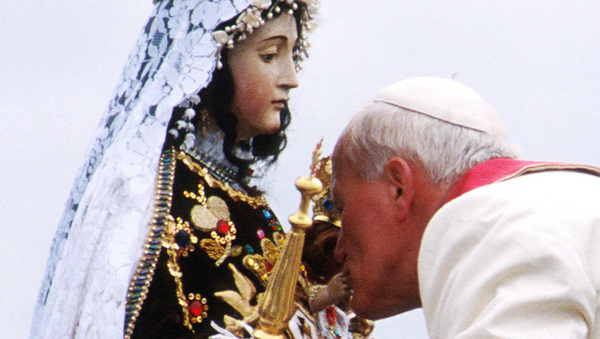  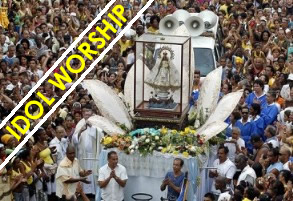  |
|
Topic ClosedOptions
|

| Change to: |  0.0314sec 0.0314sec
 0.47 0.47
 6 queries 6 queries
 GZIP Disabled GZIP Disabled
Time is now: 4th December 2025 - 07:05 AM |
All Rights Reserved © 2002- 2025 Vijandren Ramadass (~unite against racism~)
Powered by Invision Power Board © 2025 IPS, Inc.