

Do Roman Catholics study the scriptures?
Or do they depend solely on their priests to teach them?
LYN Catholic Fellowship V01 (Group), For Catholics (Roman or Eastern)
LYN Catholic Fellowship V01 (Group), For Catholics (Roman or Eastern)
|
|
 Dec 22 2015, 01:58 PM Dec 22 2015, 01:58 PM
Return to original view | Post
#1
|
 
All Stars
12,268 posts Joined: Oct 2010 
|
Do Roman Catholics study the scriptures?
Or do they depend solely on their priests to teach them? |
|
|
|
|
|
Dec 22 2015, 05:36 PM
Return to original view | Post
#2
|
|
All Stars
12,268 posts Joined: Oct 2010
|
QUOTE(yeeck @ Dec 22 2015, 05:32 PM) Yes, there are bible study classes available in many parishes. The only difference with non-Catholic groups is that scripture study in Catholic settings are guided in conformity to Tradition, and the Magisterium, not everyone interpreting according to their whims and fancy. Interesting."But there are also many other things which Jesus did; which, if they were written every one, the world itself, I think, would not be able to contain the books that should be written." - John 21:25 "Wherefore, dearly beloved, waiting for these things, be diligent that you may be found before him unspotted and blameless in peace. And account the longsuffering of our Lord, salvation; as also our most dear brother Paul, according to the wisdom given him, hath written to you: As also in all his epistles, speaking in them of these things; in which are certain things hard to be understood, which the unlearned and unstable wrest, as they do also the other scriptures, to their own destruction. You therefore, brethren, knowing these things before, take heed, lest being led aside by the error of the unwise, you fall from your own steadfastness. But grow in grace, and in the knowledge of our Lord and Saviour Jesus Christ. To him be glory both now and unto the day of eternity. Amen." - 2 Peter 3:14-18  Traditions of the Apostles or the Roman Catholic church? |
|
|
Dec 23 2015, 11:18 AM
Return to original view | Post
#3
|
|
All Stars
12,268 posts Joined: Oct 2010
|
QUOTE(yeeck @ Dec 22 2015, 06:01 PM) Catholic Tradition: That's alot to digest. But i will just concerntrate on this part:Life in the Spirit Catholic Tradition often seems odd to those outside the Catholic Church. People assume it's something that we just... "made up." Sacred Tradition comes from Christ. It's the full, living gift of Christ to the Apostles, faithfully handed down through each generation. It is through Tradition that the Holy Spirit makes the Risen Lord present among us, offering us the very same saving Word and Sacraments that he gave to the Apostles! Understanding Catholic Tradition is essential to understanding the Catholic Church and the Catholic Christian faith. Tradition is "handed down" The word "tradition" actually means handing down something to another person. Scripture testifies to this meaning of Catholic Tradition as the normal mode of transmitting the Faith: "So then, brethren, stand firm and hold to the traditions which you were taught by us, either by word of mouth or by letter." (2 Thess 2:15) "For I received from the Lord what I also handed on to you...." (1 Cor 11:23) "For I handed on to you as of first importance what I also received...." (1 Cor 15:3) "...I know whom I have believed [i.e., Jesus], and I am sure that he is able to guard until that Day what has been entrusted to me. Follow the pattern of the sound words which you have heard from me, in the faith and love which are in Christ Jesus; guard the truth that has been entrusted to you by the Holy Spirit who dwells within us." (2 Tim 1:11-14) "You then, my son, be strong in the grace that is in Christ Jesus, and what you have heard from me before many witnesses entrust to faithful men who will be able to teach others also." (2 Tim 2:1-2) "...I found it necessary to write appealing to you to contend for the faith which was once for all delivered to the saints." (Jude 1:3) This is the most basic meaning of Catholic Tradition: it is the true Faith itself, given to the Apostles by Christ and faithfully transmitted to each new generation. (Catechism, 77-78) We often write Tradition, with a capital 'T', to mean Sacred Tradition. This Catholic Tradition is different from those traditions (small 't') that are merely customs, and which are not part of Divine Revelation. The Apostolic source of Catholic Tradition The Second Vatican Council ("Vatican II") wrote an important document called "On Divine Revelation" (Dei Verbum in Latin). It's quite readable, and contains definitive teaching on the full meaning of Catholic Tradition. The Council notes the importance of seeing that Catholic Tradition is firmly rooted in the Apostles: it is Christ's whole gift to them, and to us. The Council writes: In His gracious goodness, God has seen to it that what He had revealed for the salvation of all nations would abide perpetually in its full integrity and be handed on to all generations. Therefore Christ the Lord in whom the full revelation of the supreme God is brought to completion..., commissioned the Apostles to preach to all men that Gospel which is the source of all saving truth and moral teaching, and to impart to them heavenly gifts. (Dei Verbum, 7) It is specifically this "commissioning of the Apostles" that is fulfilled in the handing on of Catholic Tradition. The Apostles dedicated themselves to this mission, and they appointed other faithful men to succeed them and carry on their work. That same passage of Dei Verbum continues: This commission was faithfully fulfilled by the Apostles who, by their oral preaching, by example, and by observances handed on what they had received from the lips of Christ, from living with Him, and from what He did, or what they had learned through the prompting of the Holy Spirit. The commission was fulfilled, too, by those Apostles and apostolic men who under the inspiration of the same Holy Spirit committed the message of salvation to writing. (Dei Verbum, 7) Catholic Tradition and Scripture Many Protestants believe that Catholics look to Tradition instead of Scripture. Not at all! Catholic Tradition stands with Scripture in forming the one single deposit of the Faith. For Catholics, Sacred Tradition is not in opposition to Scripture: they compliment and confirm one another. Vatican II's Dei Verbum speaks of "a close connection and communication between sacred tradition and Sacred Scripture": "both of them... [flow] from the same divine wellspring." It says that "Sacred Scripture is the word of God inasmuch as it is consigned to writing under the inspiration of the divine Spirit, while sacred tradition takes the word of God entrusted by Christ the Lord and the Holy Spirit to the Apostles, and hands it on to their successors in its full purity." The Church, "led by the light of the Spirit of truth, ...may in proclaiming it preserve this word of God faithfully, explain it, and make it more widely known." (Dei Verbum, 9) This statement reveals another key aspect of Catholic Tradition: it is linked to the active work of the Holy Spirit. The living experience of Christ Through the Spirit Pope Benedict XVI gave a beautiful catechesis on Catholic Tradition in late April, 2006. He says that we miss the profound meaning of Catholic Tradition if we see it only as the handing on of a static Revelation. More than that, it is the active, continuous work of the Holy Spirit in our particular time: it makes real and tangible "the active presence of the Lord Jesus in his people, realized by the Holy Spirit". Seeing Catholic Tradition as the active presence of Christ through the work of the Spirit is precisely what accomplishes the "transmission of the goods of salvation" to us: Thanks to Tradition, guaranteed by the ministry of the apostles and their successors, the water of life that flowed from the side of Christ and his saving blood comes to the women and men of all times. In this way, Tradition is the permanent presence of the Savior who comes to meet, redeem and sanctify us in the Spirit through the ministry of his Church for the glory of the Father. This reality of the divine action of the Holy Spirit within the Church is essential to understanding Catholic Tradition. It is what makes Sacred Tradition something far different than mere human traditions. Through that same action of the Spirit, Catholic Tradition incorporates us into the Communion of the Saints. It ensures the connection "between the experience of the apostolic faith, lived in the original community of the disciples, and the present experience of Christ in his Church." The Pope concludes: Tradition is the living river that unites us to the origins, the living river in which the origins are always present, the great river that leads us to the port of eternity. In this living river, the word of the Lord...: "And behold, I am with you always, until the end of the age", is fulfilled again (Matthew 28:20). Through Catholic Tradition, the Holy Spirit works to bring the grace and truth of Christ into our own lives. It's real. And it's living right now in the Catholic Church! QUOTE Catholic Tradition stands with Scripture in forming the one single deposit of the Faith. For Catholics, Sacred Tradition is not in opposition to Scripture: they compliment and confirm one another. Vatican II's Dei Verbum speaks of "a close connection and communication between sacred tradition and Sacred Scripture": "both of them... [flow] from the same divine wellspring." It says that "Sacred Scripture is the word of God inasmuch as it is consigned to writing under the inspiration of the divine Spirit, while sacred tradition takes the word of God entrusted by Christ the Lord and the Holy Spirit to the Apostles, and hands it on to their successors in its full purity." The Church, "led by the light of the Spirit of truth, ...may in proclaiming it preserve this word of God faithfully, explain it, and make it more widely known." (Dei Verbum, 9) What if you find that tradition is in conflict with scriptures? What will YOU do? Actually before this, how do you prove that traditions were handed down by Apostles since they were actually poor fishermen and nowadays the Roman Catholic church is heavily institutionalised? FROM: " Silver and gold have I none..... " -Acts 3:6 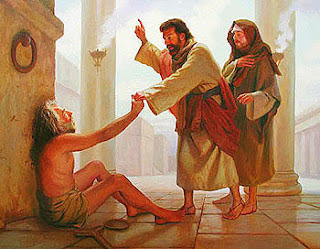 TO:    How do you justify these sort of wealth and splendor owned and practiced by the Vatican with scriptures? |
|
|
Dec 23 2015, 03:12 PM
Return to original view | Post
#4
|
|
All Stars
12,268 posts Joined: Oct 2010
|
QUOTE(khool @ Dec 23 2015, 12:07 PM) Question, where is it mentioned that the Apostles were poor? And, point of fact, not all of them were fishermen ... e.g. St. Matthew was a tax collector, Judas (the traitor was a scholar), St. Paul was a tent maker for the Roman army (and inherited his Roman citizenship from his father) "Silver and gold have i none"- Acts 3 Personally, I have not found any Traditions that have come in conflict with scripture. From what I noticed and read, Tradition, that was established by the Church came before the Bible, as it is found in today's form, the 73 books that were compiled and redacted by the Church. As far as wealth and splendor of the Church is concerned, is there anything wrong with that? The wealth of the Church has been slowly built up over the last 2000 years since its establishment by Christ Himself. However, Catholics need to keep reminding themselves that any riches given to us are blessings by God. Such blessings not solely for our benefit alone, but for doing work in His Holy Name to bring others into the faith ... And for the record, were not Abraham, Jacob and Job of the OT, themselves quite rich? Successful men who tended large flocks and and ran business enterprises (or whatever passed as those during their time) Maybe not poor . But they did not build empires of wealth. "Sell all you have and follow me"? Certainly they are not dressed as radiantly as the popes and seated on thrones as such, of whom Roman Catholics claim descended from Peter. Blessings are to help the poor. Why keep them in the Vatican? Why adorn themselves while there is starvation in the world? Feed them. Sell the gold and help the world. That's the teaching of scriptures. Not hoard the wealth and dress in them like the pharisees of old. Abraham, Jacob and Job were not new testament institutions of Jesus whom claimed traditional heritage. There are many more traditions which are in conflict with scriptures. But suffice, wealth is an issue here with the popes and Vatican. Do you subscribe to this pope's statement? QUOTE According to the Catechism, 'together with us (Catholics) they (Muslims) adore the one, merciful God.' Pope John Paul II repeats this statement even more clearly. Addressing Muslim youths, the Pope said: 'We believe in the same God, the one and only God, the living God, the God who creates worlds and brings creatures to their perfection' (What Dialogue Means for Catholics and Muslims, US Conference of Catholic Bishops, http://www.usccb.org/seia/brunett.htm). This post has been edited by prophetjul: Dec 23 2015, 03:14 PM |
|
|
Dec 25 2015, 10:17 PM
Return to original view | Post
#5
|
|
All Stars
12,268 posts Joined: Oct 2010
|
QUOTE(khool @ Dec 23 2015, 03:58 PM) What makes you think the wealth of the Catholic Church is not used to help the poor? The Church runs a great many charitable organizations around the world ( https://www.facebook.com/notes/michael-sanc...99364450111086/ ) In order to run these charities it takes lots of money, how much I do not know, but with these many organizations, it must cost a pretty packet. i feel that the Roman Catholic displays too much wealth in the environment of their high priests and cardinals. Jesus did not do that.As far as Vatican is concerned, they store a great many items of value, art pieces, sculptures, texts ... all accumulated through the ages for posterity. These accumulated treasure are more often than not put up for display for all to see and enjoy. If the Church were to sell off all these treasures, there is no guarantee that the people who buy it would allow them to be available for all to view and experience. Moreover, the money gained from the sale of these artifacts will not last forever. What will happen once funds from the sales finish? Money of the Church, is kept in banks. In most cases, at a local parish level, all collected from parishioners during Mass or well meaning donors. And the monies collected is disbursed to all the various organizations run by the Church to feed the hungry, clothe the poor, give succor to the afflicted, heal the sick, etc etc. No tithing is necessary as St Paul says, For the Pope and bishops attire, again, is there anything in the Bible that prohibits them from wearing what they wear? The money collected by the church is always sufficient to feed and clothe and aid the poor, the Lord provides, we do not doubt Him, and no second guessing His blessings either. In addition, what is the basis of your statement about the Church 'hoarding' wealth? Are you privy to Church financial documents? I used Abraham, Jacob and Joseph as examples because of that very fact they are of the OT, as Christ ALWAYS referenced the OT, being the promise, and His presence in the NT being the fulfillment of the promise, i.e. the salvation of mankind. This is where Church Tradition stems from. The OT is still very much relevant, and it binds to the NT seamlessly. No conflict or disparity. For the record, Abraham and Jacob being the respective heads of their households would put them on par as high priests of the family. Abraham himself was blessed by Melchizedek, the high priest. This being a time before priests were an actual formal vocation and title, so the heads of the households, the patriarchs, would often assume that role and carry out the rituals and lead the community and family in prayer. A short answer to your last question, yes. Pope John Paul II is not proclaiming anything new or contrary to Christian belief. JP2 is merely echoing the paragraph in the Catechism of the Catholic Church (or CCC for short); The rest of the contents of CCC please refer here ... http://www.vatican.va/archive/ccc_css/arch...sm/p123a9p3.htm After all, Christ's commandment to us is; JP2's statement definitely brings to mind this verse does it not? Oh, a little nugget for any and all following this line of inquiry the following is Acts 3: 1 - 10 God bless!   There is never enough to feed the poor. QUOTE The United Nations Food and Agriculture Organization estimates that about 795 million people of the 7.3 billion people in the world, or one in nine, were suffering from chronic undernourishment in 2014-2016. Almost all the hungry people, 780 million, live in developing countries, representing 12.9 percent, or one in eight, of the population of developing counties. There are 11 million people undernourished in developed countries (FAO 2014; for individual country estimates, see Annex 1. For other valuable sources, especially if interested in particular countries or regions, see IFPRI 2015 and Rosen 2014). http://www.worldhunger.org/articles/Learn/...acts%202002.htm So really the Christmas message from the pope is useless with so much displayed wealth while 1 in 9 human beings are starving. Again, Abraham et al were not NT institutions. They owned personal wealth. You are looking at wrong context of application.AS heads of their respective families, they are the priests. However, in an institution like yours, its different. The institution have a different accountability. So you believe that Christians and Muslims believe in the same god while the Muslims do not believe that Jesus is the Son of God? QUOTE John 13:34-35New Revised Standard Version (NRSV) I give you a new commandment, that you love one another. Just as I have loved you, you also should love one another. By this everyone will know that you are my disciples, if you have love for one another.” Love one another as i have loved you. That commandment was from Jesus to believers. Not to non believers. Non believers need to know the Truth, not a politically correct statement. Faith comes by hearing the Truth and only then will they be set free. Why do popes like to kiss graven images? 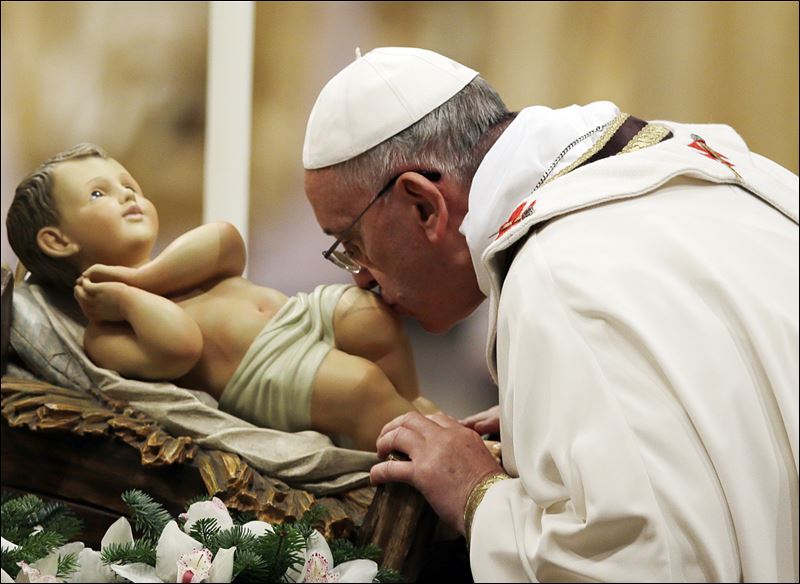 Ex 20 4 Thou shalt not make unto thee any graven image, or any likeness of any thing that is in heaven above, or that is in the earth beneath, or that is in the water under the earth: 5 Thou shalt not bow down thyself to them, nor serve them: for I the LORD thy God am a jealous God, visiting the iniquity of the fathers upon the children unto the third and fourth generation of them that hate me; That is in conflict with scriptures, is it not? God bless. |
|
|
Dec 25 2015, 10:20 PM
Return to original view | Post
#6
|
|
All Stars
12,268 posts Joined: Oct 2010
|
QUOTE(khool @ Dec 25 2015, 08:57 AM) Amen! Hi..........Jesus was a middle eastern Jew.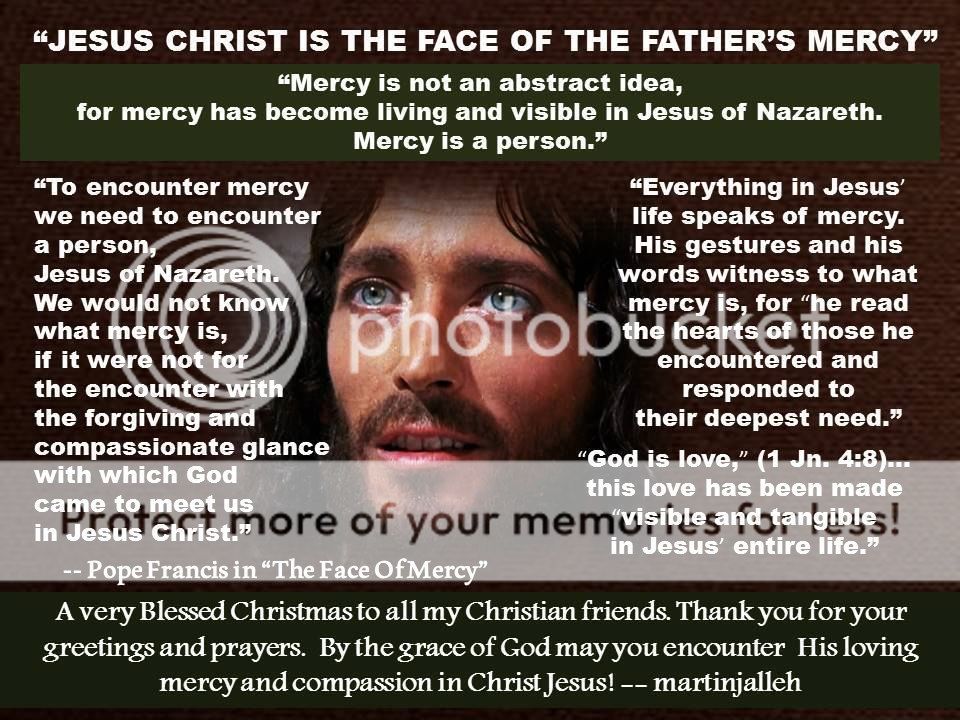 He does not have BLUE EYES!  |
|
|
|
|
|
Dec 25 2015, 11:04 PM
Return to original view | Post
#7
|
|
All Stars
12,268 posts Joined: Oct 2010
|
QUOTE(yeeck @ Dec 25 2015, 10:30 PM) Regarding images, please refer to the earlier posts in this thread. Kindly answer. Can't be looking for posts posted a while back |
|
|
Dec 26 2015, 08:12 AM
Return to original view | Post
#8
|
|
All Stars
12,268 posts Joined: Oct 2010
|
Pope Francis assures atheists: You don’t have to believe in God to go to heaven
In comments likely to enhance his progressive reputation, Pope Francis has written a long, open letter to the founder of La Repubblica newspaper, Eugenio Scalfari, stating that non-believers would be forgiven by God if they followed their consciences. Responding to a list of questions published in the paper by Mr Scalfari, who is not a Roman Catholic, Francis wrote: “You ask me if the God of the Christians forgives those who don’t believe and who don’t seek the faith. I start by saying – and this is the fundamental thing – that God’s mercy has no limits if you go to him with a sincere and contrite heart. The issue for those who do not believe in God is to obey their conscience. “Sin, even for those who have no faith, exists when people disobey their conscience.” Robert Mickens, the Vatican correspondent for the Catholic journal The Tablet, said the pontiff’s comments were further evidence of his attempts to shake off the Catholic Church’s fusty image, reinforced by his extremely conservative predecessor Benedict XVI. “Francis is a still a conservative,” said Mr Mickens. “But what this is all about is him seeking to have a more meaningful dialogue with the world.” In a welcoming response to the letter, Mr Scalfari said the Pope’s comments were “further evidence of his ability and desire to overcome barriers in dialogue with all”. In July, Francis signalled a more progressive attitude on sexuality, asking: “If someone is gay and is looking for the Lord, who am I to judge him?” http://www.independent.co.uk/news/world/eu...en-8810062.html Jesus said: "I am the way, the Truth and the Life. No one goes to the father but through me" - John 14:6 16 For God so loved the world, that he gave his only begotten Son, that whosoever believeth in him should not perish , but have everlasting life. 17 For God sent not his Son into the world to condemn the world; but that the world through him might be saved . 18 He that believeth on him is not condemned : but he that believeth not is condemned already, because he hath not believed in the name of the only begotten Son of God. 19 And this is the condemnation, that light is come into the world, and men loved darkness rather than light, because their deeds were evil. - John 3 |
|
|
Jan 13 2017, 09:51 AM
Return to original view | Post
#9
|
|
All Stars
12,268 posts Joined: Oct 2010
|
QUOTE(yeeck @ Jan 13 2017, 01:33 AM) This year is also the 100th anniversary of the Fatima apparitions. In the face of the ongoing struggles of the world against Christ and His Church, Our Lady and the saints will help us! We need only ask them in prayer! Oremus! |
|
|
Jan 13 2017, 11:51 AM
Return to original view | Post
#10
|
|
All Stars
12,268 posts Joined: Oct 2010
|
QUOTE(yeeck @ Jan 13 2017, 11:23 AM) Please re-read the earlier posts in this thread on statues and images. Plus the doctrine of the communion of saints and asking for their prayers and intercession. They are dead. Necromancy is forbidden in scripturesWhy don't you use your won wisdom to discuss? Preferably with scriptures |
|
|
Jan 13 2017, 11:51 AM
Return to original view | Post
#11
|
|
All Stars
12,268 posts Joined: Oct 2010
|
QUOTE(khool @ Jan 13 2017, 11:26 AM) 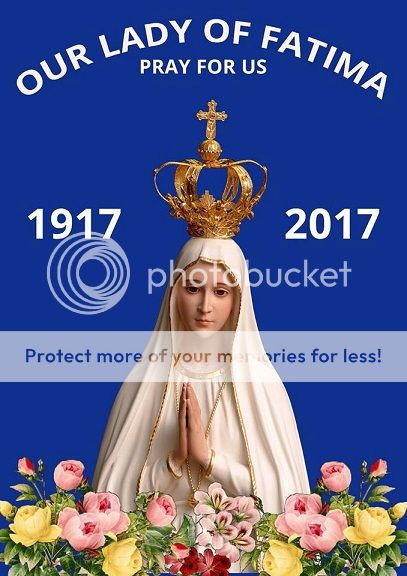 |
|
|
Jan 13 2017, 01:45 PM
Return to original view | Post
#12
|
|
All Stars
12,268 posts Joined: Oct 2010
|
QUOTE(shioks @ Jan 13 2017, 01:17 PM) Catholic has a different 10 commandments than Protestants. Catholic removed idols worshiping to cater for Mary worship. A quick search would come up with the following comparison link: If that is true, woe to them!http://www.teachingtheword.org/apps/articl...444/default.asp Proverbs 30:5-6 ESV Every word of God proves true; he is a shield to those who take refuge in him. Do not add to his words, lest he rebuke you and you be found a liar. Deuteronomy 4:2 ESV You shall not add to the word that I command you, nor take from it, that you may keep the commandments of the Lord your God that I command you. Revelation 22:18 ESV I warn everyone who hears the words of the prophecy of this book: if anyone adds to them, God will add to him the plagues described in this book, Deuteronomy 12:32 ESV “Everything that I command you, you shall be careful to do. You shall not add to it or take from it. |
|
|
Jan 13 2017, 04:11 PM
Return to original view | Post
#13
|
|
All Stars
12,268 posts Joined: Oct 2010
|
QUOTE(yeeck @ Jan 13 2017, 03:01 PM) Wrong. They are alive in Christ. "The wisdom of men is foolishness to God". They can't hear you. Please REFER to scriptures to support necromancy. Scriptures please. Did Paul teach us to pray to dead saints? Who did scriptures teach us to pray to? |
|
|
|
|
|
Jan 13 2017, 04:14 PM
Return to original view | Post
#14
|
|
All Stars
12,268 posts Joined: Oct 2010
|
QUOTE(shioks @ Jan 13 2017, 01:17 PM) Catholic has a different 10 commandments than Protestants. Catholic removed idols worshiping to cater for Mary worship. A quick search would come up with the following comparison link: [yeeck] Is this true?http://www.teachingtheword.org/apps/articl...444/default.asp |
|
|
Jan 16 2017, 11:17 AM
Return to original view | Post
#15
|
|
All Stars
12,268 posts Joined: Oct 2010
|
QUOTE(yeeck @ Jan 14 2017, 09:12 AM) The historic Christian practice of asking our departed brothers and sisters in Christ—the saints—for their intercession has come under attack in the last few hundred years. Though the practice dates to the earliest days of Christianity and is shared by Catholics, Eastern Orthodox, the other Eastern Christians, and even some Anglicans—meaning that all-told it is shared by more than three quarters of the Christians on earth—it still comes under heavy attack from many within the Protestant movement that started in the sixteenth century. Did Paul teach you to do this? Can They Hear Us? One charge made against it is that the saints in heaven cannot even hear our prayers, making it useless to ask for their intercession. However, this is not true. As Scripture indicates, those in heaven are aware of the prayers of those on earth. This can be seen, for example, in Revelation 5:8, where John depicts the saints in heaven offering our prayers to God under the form of "golden bowls full of incense, which are the prayers of the saints." But if the saints in heaven are offering our prayers to God, then they must be aware of our prayers. They are aware of our petitions and present them to God by interceding for us. And no, it is not necromancy. nec·ro·man·cy ˈnekrəˌmansē/Submit noun the supposed practice of communicating with the dead, especially in order to predict the future. witchcraft, sorcery, or black magic in general. Who taught you that saints have to be dead? For that matter, siants are not only those declared by your pope. Paul called those ALIVE as saints 1 Corinthians 1:2 To the church of God which is at Corinth, to those who have been sanctified in Christ Jesus, saints by calling, with all who in every place call on the name of our Lord Jesus Christ, their Lord and ours: Romans 1:7 to all who are beloved of God in Rome, called as saints: Grace to you and peace from God our Father and the Lord Jesus Christ. Verse Concepts to all who are beloved of God in Rome, called as saints: Grace to you and peace from God our Father and the Lord Jesus Christ. So your concept of saints is already wrong to begin with. No. They cannot hear you. Paul does not teach such practice. The Romish church does. |
|
|
Jan 16 2017, 11:25 AM
Return to original view | Post
#16
|
|
All Stars
12,268 posts Joined: Oct 2010
|
QUOTE(yeeck @ Jan 14 2017, 09:15 AM) Can you not answer for yourself?4 'You shall not make yourself a carved image or any likeness of anything in heaven above or on earth beneath or in the waters under the earth. http://www.catholic.org/bible/book.php?id=2&bible_chapter=20     |
|
|
Jan 17 2017, 08:35 AM
Return to original view | Post
#17
|
|
All Stars
12,268 posts Joined: Oct 2010
|
QUOTE(yeeck @ Jan 16 2017, 01:49 PM) When both Col. 1 and Rev. 5 refer to “the saints,” it seems clear they are referring to Christians who are presently "walking[ing] through the valley of the shadow of death" as the Psalmist says. At least, in some sense. But I find many among the non-Catholics I converse with regularly to be surprised when I tell them the Catholic Church acknolwedges that all of the baptized can be referred to as “saints.” CCC 1475 says: Well....we agree in parts.In the communion of saints, "a perennial link of charity exists between the faithful who have already reached their heavenly home, those who are expiating their sins in purgatory and those who are still pilgrims on earth. Between them there is, too, an abundant exchange of all good things." In this wonderful exchange, the holiness of one profits others, well beyond the harm that the sin of one could cause others. Thus recourse to the communion of saints lets the contrite sinner be more promptly and efficaciously purified of the punishments for sin. CCC 946-948 makes it even more clear that all of God's faithful can be referred to as "saints." After confessing "the holy catholic Church," the Apostles' Creed adds "the communion of saints." In a certain sense this article is a further explanation of the preceding: "What is the Church if not the assembly of all the saints?" The communion of saints is the Church... (948) The term "communion of saints" therefore has two closely linked meanings: communion in holy things (sancta)" and "among holy persons (sancti)." "Sancti," by the way, means "saints," or "holy ones." The Catechism then continues: Sancta sanctis! ("God's holy gifts for God's holy people") is proclaimed by the celebrant in most Eastern liturgies during the elevation of the holy Gifts before the distribution of communion. The faithful (sancti) are fed by Christ's holy body and blood (sancta) to grow in communion of the Holy Spirit (koinonia) and to communicate it to the world. So now the question becomes: "Then why do Catholics refer to canonized 'saints' as 'saints,' but not one another this side of the veil? This seems to be a contradiction." I find St. Paul himself to be the best place to go for the answer to this question. In Col. 1:1-2, as I said above, St. Paul definitively refers to all of the faithful at Colossae as “saints.” And I should note here that the Greek word for “saints” (hagioi) is comparable to "sancti" in Latin. It simply means, “sanctified, set apart, or holy.” It means "saints." From a Catholic perspective, we would say of course St. Paul would refer to these Christians, and by allusion, all Christians, in this way because "being set apart and made holy" is precisely what baptism accomplishes in the life of every Christian. We “have been baptized into Christ Jesus” (Romans 6:3) who is the source of all holiness. But here's the rub. The Catholic Church also acknowledges what Col. 1:12 says,: Giving thanks to the Father, who has qualified us to share in the inheritance of the saints in light. The Greek word for “share” in this text is merida, which means “to partake in part or a portion.” According to St. Paul, "the saints” on earth partake in part in what "the saints” in heaven possess in fullness. Thus, it is fitting that the Catholic Church reserves the title of "saint" to those she has declared to be in heaven. They alone ("the saints" in heaven) possess sainthood, if you will, in its fullness. However, the Roman church appears to be adding to what God has commanded. If Paul acknowledges that all are saints , why should you start something extra biblical? Appears you are rubbing in too much of your additions. Col 1:12 12 Giving thanks unto the Father, which hath made us meet to be partakers of the inheritance of the saints in light: 13 Who hath delivered us from the power of darkness, and hath translated us into the kingdom of his dear Son: 14 In whom we have redemption through his blood, even the forgiveness of sins: The saints are partakers of the inheritance of the following verses, deliverance and forgiveness. And it's everything there , not a portion as you put it. Is God's deilverance or forgiveness in fractions or parts? No. Nor does any of the verses in this passage indicate the saints in heaven or on earth. You are adding into scriptures. Therefore, for your pope to install saints is extrabiblical. God does that, not your pope P/S Cutting and pasting does not show that you have understanding of scriptures. No wonder they say that most Catholics do not read the bible. They just swallow whatever their priests tell them! This post has been edited by prophetjul: Jan 17 2017, 09:26 AM |
|
|
Jan 17 2017, 08:49 AM
Return to original view | Post
#18
|
|
All Stars
12,268 posts Joined: Oct 2010
|
QUOTE(yeeck @ Jan 16 2017, 07:01 PM) Catholics use statues, paintings, and other artistic devices to recall the person or thing depicted. Just as it helps to remember one’s mother by looking at her photograph, so it helps to recall the example of the saints by looking at pictures of them. Catholics also use statues as teaching tools. In the early Church they were especially useful for the instruction of the illiterate. In current times, it helps to lift one's mind to think about heavenly things. Many Protestants have pictures of Jesus and other Bible pictures in Sunday school for teaching children. Catholics also use statues to commemorate certain people and events, much as Protestant churches have three-dimensional nativity scenes at Christmas. Kissing the statues? If one measured Protestants by the same rule, then by using these "graven" images, they would be practicing the "idolatry" of which they accuse Catholics. But there’s no idolatry going on in these situations. God forbids the worship of images as gods, but he doesn’t ban the making of images. For your info, i don't celebrate your Romish Christmas. So No, i don't do nativity scenes which is Romish tradition. The Israelites celebrated their delivernace by using a golden statue of god as well. Guess what happened to them? Their is NO instruction form the scriptures to use images to help you in the orship fp God. It's all man made. God in His wisdom recognises this and therefore instructed us to not do such stupid things. 4 'You shall not make yourself a carved image or any likeness of anything in heaven above or on earth beneath or in the waters under the earth. You may try to justify your actions like the Israelites did with their golden calf, it is still DISOBEDIENCE. Exodus 32King James Version (KJV) 32 And when the people saw that Moses delayed to come down out of the mount, the people gathered themselves together unto Aaron, and said unto him, Up, make us gods, which shall go before us; for as for this Moses, the man that brought us up out of the land of Egypt, we wot not what is become of him. 2 And Aaron said unto them, Break off the golden earrings, which are in the ears of your wives, of your sons, and of your daughters, and bring them unto me. 3 And all the people brake off the golden earrings which were in their ears, and brought them unto Aaron. 4 And he received them at their hand, and fashioned it with a graving tool, after he had made it a molten calf: and they said, These be thy gods, O Israel, which brought thee up out of the land of Egypt. 5 And when Aaron saw it, he built an altar before it; and Aaron made proclamation, and said, To morrow is a feast to the Lord. 6 And they rose up early on the morrow, and offered burnt offerings, and brought peace offerings; and the people sat down to eat and to drink, and rose up to play. 7 And the Lord said unto Moses, Go, get thee down; for thy people, which thou broughtest out of the land of Egypt, have corrupted themselves: 8 They have turned aside quickly out of the way which I commanded them: they have made them a molten calf, and have worshipped it, and have sacrificed thereunto, and said, These be thy gods, O Israel, which have brought thee up out of the land of Egypt. 9 And the Lord said unto Moses, I have seen this people, and, behold, it is a stiffnecked people: 10 Now therefore let me alone, that my wrath may wax hot against them, and that I may consume them: and I will make of thee a great nation. 'You shall not make yourself a carved image or any likeness of anything in heaven above or on earth beneath or in the waters under the earth. 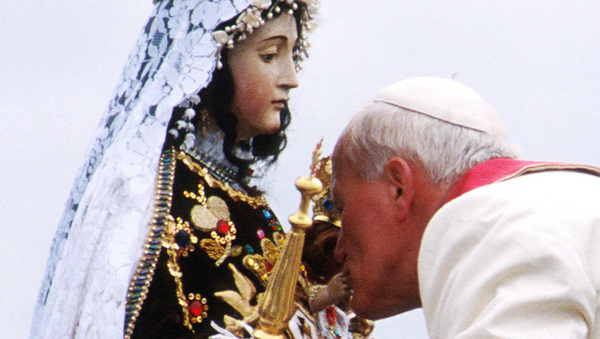  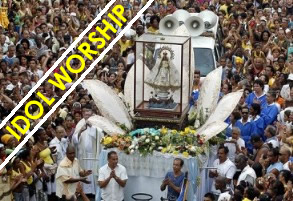  |
|
|
Jan 18 2017, 12:42 PM
Return to original view | Post
#19
|
|
All Stars
12,268 posts Joined: Oct 2010
|
QUOTE(yeeck @ Jan 17 2017, 01:37 PM) There are many things extrabiblical, even by Protestants. Like...what made you accept the books of the Bible in the first place? The word Bible is extrabiblical and you have no problem accepting that now, would you? Christmas, Easter are also celebrated by Protestants even though the words are not found in the Bible, so what gives? Bible just means a collectio of books. C'mon surely you are more matured than this?In extrabiblical teachings, i refer to doctrines and commands especially those which are in conflict with scriptures. i don't celebrate Easter or Christmas, which are deeply rooted in paganism of the Roman church. What gives? |
|
|
Jan 18 2017, 12:55 PM
Return to original view | Post
#20
|
|
All Stars
12,268 posts Joined: Oct 2010
|
QUOTE(yeeck @ Jan 17 2017, 01:43 PM) Ah, so you're not a Protestant then? This gets interesting. Another new mushroom in the minefield of doctrinal disagreement? There are no new mushrooms here, just scripture believing Christians.The Incarnation is a game-changer. Christ made visible the invisible God, and thus it is allowed that images of Him be depicted, unless you're a Muslim, or Jew before the coming of Christ. Sacred images depict real people. The second commandment protects us from creating fantastical creatures that replace the true God. Sacred images depict real people and events that draw us to the true God. Worship and veneration are not the same. Worshiping an idol is the equivalent of replacing God with a created thing (or ideology or passion). Venerating an image is an act of respect and love that glorifies the Creator (sort of like saluting to a soldier is an act of respect and honour that shows your loyalty to your country). God instructed Moses to create images. Just in case anyone thought God’s commandment to Moses excluded all visual images of anything as idols, check out Exodus 36:35-37:9 where, per the instructions of God, Moses has images of cherubim embroidered into the curtains of the tabernacle and statues of the same cast for the Ark of the Covenant. Obviously, then, it is not images that are an issue, but our relationship to images. There is no game changer to God's character. If He hates idols, He is not going to change this character, Unless the god you are worshipping is a charcter chameleon. There are no scared images. You are commanded not create any! Pure and simple, it says “You shall not make for yourself an image in the form of anything in heaven above or on the earth beneath or in the waters below. 5You shall not bow down to them or worship them; for I, the Lord your God, am a jealous God, punishing the children for the sin of the parents to the third and fourth generation of those who hate me, 6but showing love to a thousand generations of those who love me and keep my commandments. You are creating what you says the 2nd commandment is trying to prevent! And you are trying very hard to justify your actions. The Israelites use the golden calf to draw them to Gad as you are using your images of your imaginations. Venerating or worshipping, it's splitting straws. Is kissing the images venerating or worshipping? The images at God commanded Moses to make are not images of GOD. Otherwise God will be contradicting His command. Your relationship to images seems that you kiss them as if they are god! That violates the 2nd commandment. Any non believer in reading the 2nd commandmnet in it's simple language will see that your idols of Jesus and Mary is contravening the commandment. An idol of Mary draws you near to god? Question again: Ddi Paul teach you to use idols for worship? |
|
Topic ClosedOptions
|
| Change to: |  0.1290sec 0.1290sec
 0.30 0.30
 7 queries 7 queries
 GZIP Disabled GZIP Disabled
Time is now: 5th December 2025 - 02:04 AM |
 Quote
Quote