Welcome Guest ( Log In | Register )

13 Pages « < 3 4 5 6 7 > » Bottom

Outline · [ Standard ] · Linear+

 Windows On The Park • WOTP @ Cheras South (V2), By Selangor Dredging Berhad

views
     
calvin989898
post Jun 1 2015, 09:50 PM

Enthusiast
*****
Senior Member
944 posts

Joined: Feb 2005
QUOTE(InF.anime @ Jun 1 2015, 09:42 PM)
I know this project is by SDB, so it's guaranteed on workmanship and completion.

But suddenly have so many 'affordable' projects in KL came out when the market sentiment is low.
*
Affordable house is available all the while. And expensive launch is seen everywhere as well to cater different type of market.
Easiest to compare will be using sales of the car. If you read Paultan report today, so call affordable car like proton , perodua their sales drop 40-50% post GST. Whiles sales for BMW , Mercedes , VW see a slight increase of sales or the same post GST.
Take another examples, DPC, WS3, sold 60% for last 2 days launch. Was is affordable? Very obvious is not. But the rich still buy.
calvin989898
post Jun 3 2015, 04:56 PM

Enthusiast
*****
Senior Member
944 posts

Joined: Feb 2005
QUOTE(Kicimiao66cc @ Jun 3 2015, 04:40 PM)
Outside looks better design doesn't mean that is better. Although I have no purchase WOTP, but I believe it's best condo in Cheras upon completion. Trust me. I didn't buy is because not my prefer location. If this project build in my preferred location surely I won't miss this out. I give 4.5 stars for this project haha
*
4.5 stars out of how many stars ?? 😀😀 what can be seen in Wotp is to use minimise design and back to basic materials. Exposed red bricks , hollow block , raw cements , linear layout orientation ... All this are very basic design that we have not seeing for long time.
calvin989898
post Jun 8 2015, 09:00 AM

Enthusiast
*****
Senior Member
944 posts

Joined: Feb 2005
With Sabah having earth quake now, Malaysia is no more in earth quake free zone. Start appreciating Sdb applying earth quake resistant into all their projects. Previously I thought is waste of money. Hope more developer start to do this for high rise.
calvin989898
post Jun 8 2015, 10:51 AM

Enthusiast
*****
Senior Member
944 posts

Joined: Feb 2005
QUOTE(danielisme @ Jun 8 2015, 10:48 AM)
Do they explained how the earth quake proof building is work ..?
Beside the foundation is there specific window type and wall structured  for the earth quake proof building ..?
*
http://www.webstruc.net/home/
calvin989898
post Jun 11 2015, 11:32 AM

Enthusiast
*****
Senior Member
944 posts

Joined: Feb 2005
KL quake possible as ancient fault lines reactivate, says expert
BY MARIA J. DASS

Published: 11 June 2015 7:01 AM

Kuala Lumpur is located near the epicentres of ancient fault line zones. – The Malaysian Insider file pic, June 11, 2015.
Following the quake tragedy in Sabah, there have been concerns that an earthquake may also hit Kuala Lumpur and according to a geological expert, such misgivings are not misplaced.

This is because the federal capital is located near the epicentres of ancient fault line zones, Universiti Malaya Geology Department Associate Professor Mustaffa Kamal Shuib told The Malaysian Insider.

These fault lines seem to have been reactivated by active tectonic plate boundaries and this, he said, was a cause for concern, especially since many structures in the city were not built and designed to withstand earthquakes.


“The general perception has always been that Peninsular Malaysia was safe because we are far from the Pacific Ring of Fire which surrounds us, but in recent years, there is evidence of earthquakes with focal points or epicentres right under our feet, due to the reactivation of old fault lines,” said Mustaffa.
Asked what causes the reactivation of fault lines, Mustaffa said Malaysia is surrounded by so many active tectonic plate boundaries and the Sunda Shelf, which the country sits on, is being compressed.

Peninsular Malaysia is at the centre of the shelf, also known as Sundaland, which is absorbing all the stress from around it.

“Sooner or later, the earth has to find some release by breaking through old fault line systems,” said Mustaffa whose field of research is structural geology and tectonics.

“This causes earthquakes," he said.

Mustaffa said he and his team first detected epicentres in 2007 and 2009 in Bukit Tinggi, near Genting Highlands, in Pahang, but some of these occurred to the west, near the KL fault zone.

The quakes were not strong but it is hard to say if they will increase in magnitude in the future, he said.

“The strongest one we have detected so far is a magnitude 3.5 in Bukit Tinggi.

"When we have epicentres (like Ranau, Sabah which was recently hit by a magnitude 6.0 quake) there is a possibility of earthquakes hitting the fault line zone," he said.

Mustaffa said in the past, Peninsular Malaysia had suffered tremors from distant sources and places like Sumatra and the Philippines, but now there was evidence of seismic activity in fault lines detected in the Peninsular itself.

There are four fault zones in Peninsular Malaysia – Bukit Tinggi, Kuala Lumpur, Lepar (north of Pahang) and Seremban (Negri Sembilan).

Universiti Malaya Geology Department Associate Professor Mustaffa Kamal Shuib (in checked shirt) with the team from the Malaysian Meteorological Department mapping out fault lines. – Pic supplied, June 11, 2015.
All have epicentres along them, Mustaffa said.

A 3.5 magnitude earthquake may not cause destruction but could damage buildings and structures, said Mustaffa.

“However if there is a higher magnitude earthquake, most of our buildings are unfortunately not designed for it,” he said.

On Tuesday, Kuala Lumpur mayor Tan Sri Ahmad Phesal Talib had said that DBKL would review the construction of new highrise buildings in Kuala Lumpur, especially the safety aspects of these buildings to withstand earthquake tremors.

He had said the views and advice of relevant experts would be sought with regard to this. Phesal was asked to comment on a local media report which touched on Malaysia's location that put the country at risk of earthquake tremors in future.

Asked about early detection and warning system that can be put in place, Mustaffa said that he was currently working together with experts from the Meteorological Department to study and map out seismic activity along old fault lines in Sabah, Sarawak and Peninsular Malaysia.

This report will be submitted to the Science, Technology and Innovation Ministry which is funding the effort, he said.

"We started this study about two-and-a-half years ago and will be finalising our findings any time now," said Mustaffa who has been attached to Universiti Malaya's Geological Department for 30 years.

“Based on this, we will decide on places where seismic stations need to be built.”

Meanwhile, Singapore Earth Observatory Professor Kerry Sieh was reported as saying that the Earth goes through cycles of seismic energy release, and less release and more release.

"We have definitely been in the active cycle in the last 11 years since 2004. All the magnitude 8.4 earthquakes and bigger, up to 9.2, they all happened in the last 11 years. Several of those have been in Asia," he told Bernama.

The previous active cycle was in the 1950s to mid-1960s, which saw several earthquakes with a magnitude of a high 8 and above 9. But for the next 40 years, there were no records of a quake with a magnitude above 8.3, until 2004.

"We don't know whether we are at the end of the cycle or not," said Sieh. "My hunch is we will continue to see a larger number of large earthquakes. But that's only a hunch because we don't really have a way of telling whether we are at the end of the cycle or not." – June 11, 2015.

- See more at: http://www.themalaysianinsider.com/citynew...h.7FRWutnN.dpuf

calvin989898
post Jun 11 2015, 11:56 AM

Enthusiast
*****
Senior Member
944 posts

Joined: Feb 2005
QUOTE(HELLO HELLO @ Jun 11 2015, 11:50 AM)
yup. KL near sunda trench
*
Glad that WOTP is build with earth quake resistance. At least if there is small magnitude EQ, we all will be safe. SDB did a good job include this , probably the lady boss have vision that KL might have EQ haha...
calvin989898
post Jun 11 2015, 12:02 PM

Enthusiast
*****
Senior Member
944 posts

Joined: Feb 2005
QUOTE(Stamp @ Jun 11 2015, 11:57 AM)
WOTP was designed to be "earthquake resistant" up to a certain horizontal peak ground acceleration (PGA) only.

If SDB starts to blow horns about its "earthquake resistant" WOTP, we need to ask them the PGA used for the design.

I very much doubt SDB consultants had used the PGA used in seismic active countries like Japan or Philipines, for WOTP, or else the the structures would be more expensive.
*
Well, we are not expert on this seismic studies. Perhaps you could direct this question to SDB and see what is their response. Earlier they claim to do this features, it is indeed cost them extra few millions for the structures.
calvin989898
post Jun 11 2015, 12:09 PM

Enthusiast
*****
Senior Member
944 posts

Joined: Feb 2005
There is an article on how SDB incorporated with their consultant to build EQ resistant. Perhaps that is not so much technical terms involved there...


Attached thumbnail(s)
Attached Image
calvin989898
post Jun 11 2015, 12:38 PM

Enthusiast
*****
Senior Member
944 posts

Joined: Feb 2005
Some articles about Troika that also use Web Structures as consultant. Perhaps SDB project would also build based on same technologies ..


Web Structures Spotlight on: The Troika, Kuala Lumpur, Malaysia


The Troika is a three-tower, luxury condominium development in Kuala Lumpur, Malaysia. One of the most prestigious and preferred addresses in the city, The Troika is located at the north-eastern precincts of the City Centre – Kuala Lumpur’s ‘city within a city’ – combining apartments, offices, shops and restaurants within a single complex, with the aim of promoting a densely planned approach to living and working in the twenty-first-century city.

The project comprises three apartment towers – of thirty-eight, forty-four, and fifty storeys respectively – which together form the tallest residential development in Malaysia. With its seemingly impossibly slender blades of shear walls reaching more than 200m into the skies, The Troika, like all of Web Structures projects, sets new standards of excellence.

Architects on the project, Foster and Partners, made their design maximize the interaction between architectural and structural expression. The unusual slender concrete sheer walls support stacked blocks that are able to rotate subtly to allow the primary living areas and balconies in each of the 230 apartments to focus on the best available view.

The external structures slender sheer walls also offer an important protective function: they support the subtle rotation of the building, for example, during an earthquake or in a strong wind.

The arrangement of the shear walls also offers great flexibility, generating apartments with a wide variety of orientations and plan sizes. The interfaces between the flat slab floors and walls required special built-in steel connection brackets cast inside the concrete to offer a seamless connection.

Despite their heights of up to 204 metres, the shear walls are only 600 millimetres thick throughout. To achieve the specified accuracy of construction and eliminate the need for plywood shuttering, precast concrete permanent formwork panels were utilised.

These were only 65 millimetres thick, prefabricated in sizes of up to 4,000 by 1,100 millimetres, assembled in sets of three on the ground and hoisted into position on modified strong back frames. Custom-made rubber gaskets were installed on location to seal the joints between precast panels to prevent leakage of in situ concrete backfill. The precast panels are thus an integral part of the structural system.
Three internal cores, two central and one offset work in conjunction with the coupled shear walls to resist wind-induced sway through the diaphragm action of the floor plates. These floor plates have virtual beam edge reinforcement and cantilever out 6 metres at corners.

Top-down construction was used for the four storey basement, to obviate the need for costly temporary works.

Many areas are self-shaded by the overhang of the apartment above, which provides shelter on the balconies and sky bridges link the three towers at Level 24 to create a sky lobby with an unrivalled panorama of the fast-changing Kuala Lumpur skyline.
The twisting geometry of the three towers evolved gradually through detailed modelling analysis, their forms being sculpted to respond organically to the neighbouring buildings and to maximise the dramatic 180 degree vistas.

Web Structures always comes up with the most innovative of solutions, it is the group’s aim to consistently produce the most cost-efficient and optimized structure that is in perfect harmony with and facilitates design intent. Web Structures dedication to the maximization of interaction between architectural and structural expression is evident in the Troika.

An arrestingly stunning building, winner of several accolades including the Royal Institute of British Architects International award, the Troika is another example of Web Structures ability to go beyond the average in structural engineering.

Web Structures has pioneered the art of Fusion Engineering, redefining engineering excellence through innovation and design and enabling ground-breaking architecture to become building reality. A safe, buildable and economical building is the expected norm. It is the innovative thinking and creativity inherent in the practise that propels a Web Structure like the Troika towards outstanding excellence.
calvin989898
post Jun 11 2015, 02:10 PM

Enthusiast
*****
Senior Member
944 posts

Joined: Feb 2005
QUOTE(ameliorate @ Jun 11 2015, 01:58 PM)
All your expectations are so high, it is almost impossible for SDB to fulfill. Even YTL also people complain, so aim lower.
*
Wondering what's make you think YTL better than SDB? Can elaborate more ?
calvin989898
post Jun 15 2015, 07:21 AM

Enthusiast
*****
Senior Member
944 posts

Joined: Feb 2005
QUOTE(WilberSc @ Jun 14 2015, 11:03 PM)
Block C currently market price  rclxms.gif [attachmentid=4486295]
*
680k is fair price for block c. should be doable upon vp. got block a subsales now?
calvin989898
post Jun 15 2015, 11:33 AM

Enthusiast
*****
Senior Member
944 posts

Joined: Feb 2005
QUOTE(ahmai2332 @ Jun 15 2015, 11:16 AM)
RM680k not untung. I think probably to RM750k only consider good investment. Somemore Block C is limited unit.
*
750k a bit high I guess. Take sometime people to willingly pay the price for this area. Unless Sdb does magic and the park really damn impressive where no where they can find such concept perhaps can haha
calvin989898
post Jun 15 2015, 04:30 PM

Enthusiast
*****
Senior Member
944 posts

Joined: Feb 2005
QUOTE(HELLO HELLO @ Jun 15 2015, 04:06 PM)
but quality wise, design wise, feature wise can't match ler. ya 750k... a little too ambitious.
maybe later a few EQ shockwaves can help jack-up the price some more.
sweat.gif
*
Quality vs Quantity.
calvin989898
post Jun 16 2015, 12:34 PM

Enthusiast
*****
Senior Member
944 posts

Joined: Feb 2005
If an earthquake hits the city

BY BAVANI M.

There are many old buildings in Kuala Lumpur such as Masjid Jamek.

ACCORDING to a team of experts from the Institution of Engineers Malaysia (IEM), many older buildings in Kuala Lumpur are at risk if an earthquake was to happen.

Experts from IEM’s study group on earthquakes said old structures built before the 1940s are most vulnerable from cracks and breakage.

IEM deputy president Tan Yean Chin said many of Kuala Lumpur’s pre-war buildings were built on bricks, masonry, or blocks of stone before the introduction of reinforced concrete.

These buildings are more likely to suffer damage if hit by tremors.

As for buildings built post that period which use reinforced concrete, Tan said a far field earthquake (which occurs far away), such as the one that struck Aceh in 2004 and unleashed the tsunami, had little effect, with no building toppling or suffering serious structural damage.

“The buildings trembled but none collapsed and no serious structural damage was reported.

“However, there were minor cracks, partitions and some broken glass and pipes,” he said.

Similarly, near field (local) earthquakes in Bukit Tinggi, Pahang which happened between 2007 and 2009, also did not result in any collapse or serious structural damage to high-rise buildings in Kuala Lumpur.

“Although based on this historical data, buildings in Kuala Lumpur did not suffer any serious structural damage, the seismic effects could still be felt.

“So Malaysia can be susceptible to hazards if a bigger magnitude earthquake occurs,” Tan said.

It was recently reported that Kuala Lumpur City Hall (DBKL) was looking into the need to build tremor-resistant buildings in the wake of the Sabah earthquake.

Mayor Tan Sri Ahmad Phesal Talib said this was a new concern as Kuala Lumpur was always thought to be earthquake free.

But experts have warned of Malaysia’s potential seismic hazards and that peninsular Malaysia falls under the tectonic plate area.

Earthquake-resistant buildings

“We recommend that future buildings be more earthquake-resistant.

“Precautionary measures must be taken as no one can predict when the next earthquake is going to hit,” said Tan.

He added that a modern and developed city like Kuala Lumpur should require all buildings fulfil the latest design requirements, including earthquake-resistance.

IEM has been working on an earthquake design code for Malaysian buildings.

A man on a cherry picker repairing / restoring the wall of the Sultan Abdul Samad building clock tower,Jalan Raja. P.Nathan / The Star
Sultan Abdul Samad building.
According to its structural expert, Prof M.C Hee, the professional body was invited by the government in 2008 to draft the code for earthquake engineering which would serve as the national code for all future buildings in the country.

Hee said they have been working towards endorsing the Eurocode 8 (EC8) to be incorporated into Malaysian standards.

The Eurocode are a set of harmonised technical rules developed by the European Committee for standardisation of structural design of construction works in the European Union.

Replacing British Standards

“Currently, only Terenganu and Selangor have gazetted the Eurocode.

“We would like to meet the mayor of Kuala Lumpur and help the city develop a set of guidelines for future buildings to be earthquake resistant.

Most government building like the KTM building have been gazetted as Heritage building.
KTM building.
“New buildings that have adopted the new code are more earthquake tolerant,” pointed out Hee.

Making KL safer

IEM past chairman Liew Shaw Shong said DBKL as the local authority in charge, should gazette the law and ensure that IEM’s recommendations are followed.

DBKL recently approved more than 50 development projects in the city that have been described by Ahmad Phesal as “Towers of Excellence.”

These projects with a gross development value of billions of ringgit, will be built at various locations in the city centre with many involving skyscrapers between 60 and 65 storeys high.

“We are not recommending that all buildings be evaluated, but the government may want to relook Kuala Lumpur’s old heritage buildings which should at least be evaluated and strengthened to make them more resilient to earthquakes.

“Kuala Lumpur’s existing structures can be checked by our earthquake engineers to see how vulnerable they are.

Acrobatic Lion Dance at Central Market

“We have the means to identify the vulnerable areas and make the buildings more resilient,” added Hee.

Citing Japan as an example, Tan said that Tokyo was predicting a big earthquake within 100 years.

“Most of the buildings will not be able to withstand that kind of devastation.

“But what their engineers are doing is to minimise casualties and other risk factors like fire and gas leaks,” he said.

Liew added that City Hall also needs to look at secondary hazards induced by earthquakes such as sinkholes.

“Slope collapse can also cause damage so it is crucial to identify all these vulnerable areas,” said Liew.

He added that since Malaysia was within the seismic activity range, local authorities nationwide, government agencies and ministries must move now to start incorporating earthquake requirements in their building design.

“We need to push for the Eurocode to be adopted and the government must help move this.

“We can never predict when the next earthquake will hit us or the magnitude of it, but we can prepare for it,” concluded Tan.
calvin989898
post Jun 16 2015, 12:36 PM

Enthusiast
*****
Senior Member
944 posts

Joined: Feb 2005
QUOTE(calvin989898 @ Jun 16 2015, 12:34 PM)
If an earthquake hits the city

BY BAVANI M.

There are many old buildings in Kuala Lumpur such as Masjid Jamek.
 
ACCORDING to a team of experts from the Institution of Engineers Malaysia (IEM), many older buildings in Kuala Lumpur are at risk if an earthquake was to happen.

Experts from IEM’s study group on earthquakes said old structures built before the 1940s are most vulnerable from cracks and breakage.

IEM deputy president Tan Yean Chin said many of Kuala Lumpur’s pre-war buildings were built on bricks, masonry, or blocks of stone before the introduction of reinforced concrete.

These buildings are more likely to suffer damage if hit by tremors.

As for buildings built post that period which use reinforced concrete, Tan said a far field earthquake (which occurs far away), such as the one that struck Aceh in 2004 and unleashed the tsunami, had little effect, with no building toppling or suffering serious structural damage.

“The buildings trembled but none collapsed and no serious structural damage was reported.

“However, there were minor cracks, partitions and some broken glass and pipes,” he said.

Similarly, near field (local) earthquakes in Bukit Tinggi, Pahang which happened between 2007 and 2009, also did not result in any collapse or serious structural damage to high-rise buildings in Kuala Lumpur.

“Although based on this historical data, buildings in Kuala Lumpur did not suffer any serious structural damage, the seismic effects could still be felt.

“So Malaysia can be susceptible to hazards if a bigger magnitude earthquake occurs,” Tan said.

It was recently reported that Kuala Lumpur City Hall (DBKL) was looking into the need to build tremor-resistant buildings in the wake of the Sabah earthquake.

Mayor Tan Sri Ahmad Phesal Talib said this was a new concern as Kuala Lumpur was always thought to be earthquake free.

But experts have warned of Malaysia’s potential seismic hazards and that peninsular Malaysia falls under the tectonic plate area.

Earthquake-resistant buildings

“We recommend that future buildings be more earthquake-resistant.

“Precautionary measures must be taken as no one can predict when the next earthquake is going to hit,” said Tan.

He added that a modern and developed city like Kuala Lumpur should require all buildings fulfil the latest design requirements, including earthquake-resistance.

IEM has been working on an earthquake design code for Malaysian buildings.

A man on a cherry picker repairing / restoring the wall of the Sultan Abdul Samad building clock tower,Jalan Raja. P.Nathan / The Star
Sultan Abdul Samad building.
According to its structural expert, Prof M.C Hee, the professional body was invited by the government in 2008 to draft the code for earthquake engineering which would serve as the national code for all future buildings in the country.

Hee said they have been working towards endorsing the Eurocode 8 (EC8) to be incorporated into Malaysian standards.

The Eurocode are a set of harmonised technical rules developed by the European Committee for standardisation of structural design of construction works in the European Union.

Replacing British Standards

“Currently, only Terenganu and Selangor have gazetted the Eurocode.

“We would like to meet the mayor of Kuala Lumpur and help the city develop a set of guidelines for future buildings to be earthquake resistant.

Most government building like the KTM building have been gazetted as Heritage building.
KTM building.
“New buildings that have adopted the new code are more earthquake tolerant,” pointed out Hee.

Making KL safer

IEM past chairman Liew Shaw Shong said DBKL as the local authority in charge, should gazette the law and ensure that IEM’s recommendations are followed.

DBKL recently approved more than 50 development projects in the city that have been described by Ahmad Phesal as “Towers of Excellence.”

These projects with a gross development value of billions of ringgit, will be built at various locations in the city centre with many involving skyscrapers between 60 and 65 storeys high.

“We are not recommending that all buildings be evaluated, but the government may want to relook Kuala Lumpur’s old heritage buildings which should at least be evaluated and strengthened to make them more resilient to earthquakes.

“Kuala Lumpur’s existing structures can be checked by our earthquake engineers to see how vulnerable they are.

Acrobatic Lion Dance at Central Market

“We have the means to identify the vulnerable areas and make the buildings more resilient,” added Hee.

Citing Japan as an example, Tan said that Tokyo was predicting a big earthquake within 100 years.

“Most of the buildings will not be able to withstand that kind of devastation.

“But what their engineers are doing is to minimise casualties and other risk factors like fire and gas leaks,” he said.

Liew added that City Hall also needs to look at secondary hazards induced by earthquakes such as sinkholes.

“Slope collapse can also cause damage so it is crucial to identify all these vulnerable areas,” said Liew.

He added that since Malaysia was within the seismic activity range, local authorities nationwide, government agencies and ministries must move now to start incorporating earthquake requirements in their building design.

“We need to push for the Eurocode to be adopted and the government must help move this.

“We can never predict when the next earthquake will hit us or the magnitude of it, but we can prepare for it,” concluded Tan.
*
Reported in Thestar today. It seems DBKL are pushing all highrise to be build based on EQ resistant in future.
calvin989898
post Jun 16 2015, 05:55 PM

Enthusiast
*****
Senior Member
944 posts

Joined: Feb 2005
How much billings all of your received from SDB already ? I just received invoice today for total up to date for 65%.
calvin989898
post Jun 16 2015, 07:39 PM

Enthusiast
*****
Senior Member
944 posts

Joined: Feb 2005
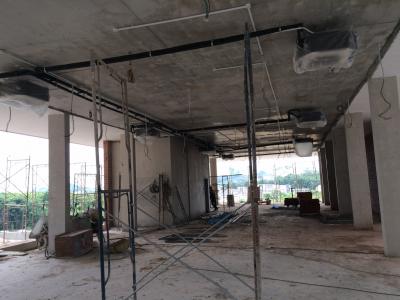
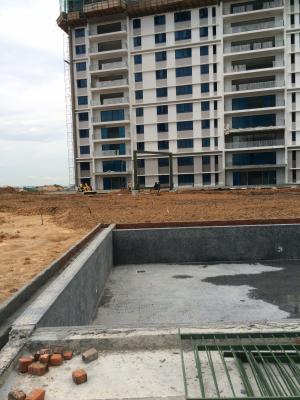
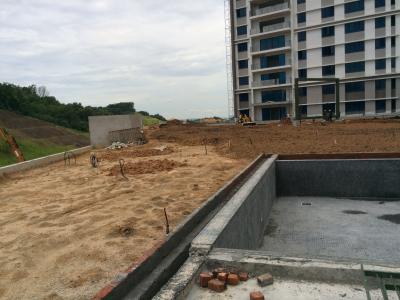
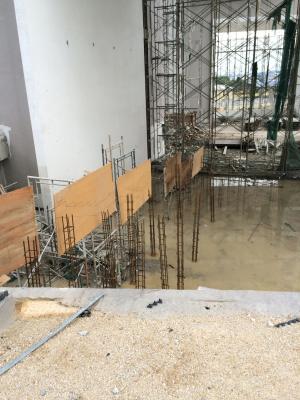
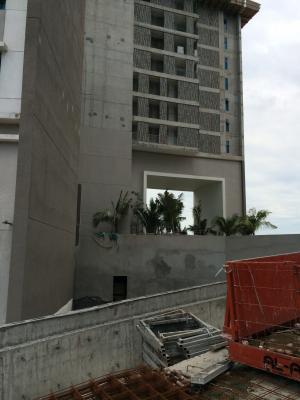
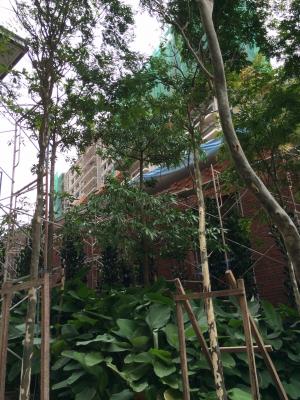
Time for photos sharing...enjoy guys!


Attached thumbnail(s)
Attached Image Attached Image Attached Image Attached Image Attached Image Attached Image Attached Image Attached Image Attached Image Attached Image Attached Image Attached Image
calvin989898
post Jun 17 2015, 12:00 AM

Enthusiast
*****
Senior Member
944 posts

Joined: Feb 2005
QUOTE(crystal_kit85 @ Jun 16 2015, 11:18 PM)
Eh the balcony railing is white color? The three tier trees are looking great.
*
The rail will be black color. White is just first layer of paint.
calvin989898
post Jun 17 2015, 06:15 PM

Enthusiast
*****
Senior Member
944 posts

Joined: Feb 2005
QUOTE(enriquelee @ Jun 17 2015, 05:35 PM)
I do not know, coz they tell so loud do landscape design 1st prior to the condo design. I am expecting something extra ordinary.
*
This part probably just less than 5% of total landskape. And the design not final, still a lot touch up need to be done.
calvin989898
post Jun 18 2015, 04:39 PM

Enthusiast
*****
Senior Member
944 posts

Joined: Feb 2005
It seems the basketball court is confirmed. But it will not build on top of sewerage. Will build beside the sewerage area (show unit) there.

13 Pages « < 3 4 5 6 7 > » Top
 

Change to:
| Lo-Fi Version
0.0401sec    0.71    7 queries    GZIP Disabled
Time is now: 5th December 2025 - 11:43 AM