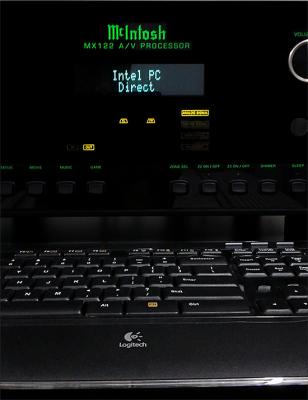
1) You won't get any output because most MUSIC does not have notes below 60hz. What music did you test with? I can play Tron's soundtrack in pure direct mode and my sub will indeed be in use once I manually set the crossover on it. That said, I listen to music in "straight" mode or with an upmixer most of the time.
3) Bass management has been a common method since the 90s, it's not a hack, it's just common sense. Why would a 5.25" or 6.5" driver be able to produce bass below 30hz without distorting and wrecking itself? It's simple physics, think about it for a moment. A sub's driver is usually much bigger, at 8", 10", 12" or even the massive ones going up to 18" or 20".
Then there's also the issue with trying to drive multiple speakers in "Large" mode. You're asking a lot from the puny amps in receivers these days (yes even so called "flagship" ones). They're designed for dynamic power spikes, not a constant draw at long periods of time. You run into the issue of possibly overheating the receiver, they start to clip and then they would go into OVP. Leave the bass to the sub (which often times come with amps multiple times larger than what receivers have), leave the midrange and high-end to the individual speakers.
4) I'm not talking about modes. I'm talking about the SCENES on the Yamaha receiver. They're just different presets that the user can overide with their own settings, so I'm just suggesting you have different "SCENES" set for different listening conditions. Check the manual, it's all there. Too long to explain the steps here.
For the center channel, it really does depend on how it is designed. Not all center channels benefit from setting itself at a lower crossover just so voices can sound "deeper". Because there are certain CCs where then voices can become boomy and muddy, robbing it of detail. Not to mention if there's a panning of effects from any direction, things can sound "weird". Designing a center channel is a lot more complicated than just the L/R bookshelf or tower. Cabinet size being the main concern, driver size being another, then internal crossover can usually be a lot more complex as well depending on the design.
Many enthusiasts would use 3 identical speakers for the LCR, be it bookshelf or towers, place them at exactly the same height and at ear height position behind an acoustically transparent screen.
I find that many people seem to like their center speakers to sound a bit "warm" simply because the voice would be deeper. It's preference of course, but sometimes when you think logically, what if the actor's voice is just genuinely "thin" sounding in the first place?
1) YPAO suggested 110Hz for crossover which I kinda agree with that provided the proper balance for me. I'm playing CDs ripped in FLAC from USB. I guessed it is because I didn't turn on "Extra Bass" for the sub to function when speaker = large as mentioned by ktek.
4) Yes I know how to set the SCENEs but afaik the manual only mention setting the input source, sound program and compressed music enhancer. So I was wondering it there is something I missed.
Yes I do agree with your point on the center speaker.


 Jul 4 2016, 03:43 PM


 Quote
Quote






 0.0348sec
 0.49
0.49
 6 queries
 GZIP Disabled