Welcome Guest ( Log In | Register )

7 Pages « < 2 3 4 5 6 > » Bottom

Outline · [ Standard ] · Linear+

 Ask a Mathematical Physicist

views
     
maximR
post Jan 4 2014, 02:19 PM

Remember who you are
*******
Senior Member
3,864 posts

Joined: Dec 2009


» Click to show Spoiler - click again to hide... «


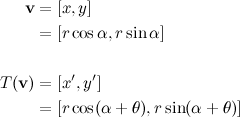
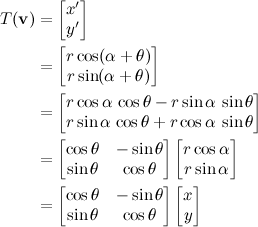
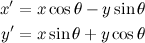
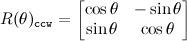
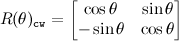
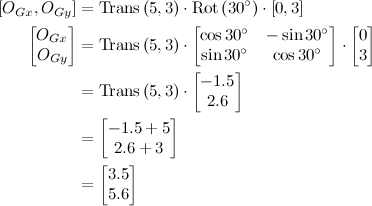
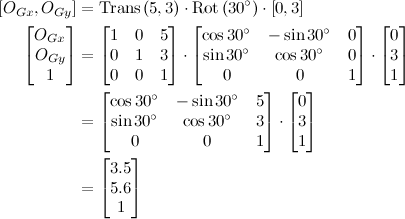
Thank you for your detailed explanation , as always . I thought it would only involve simple trigonometry since the professor said " I will not derive it here , assuming that you're comfortable with this " . Now this clears things up in a way , I'd have to seriously start studying Matrices now since it's used extensively in Physics .

I purchased the STPM Math T book already , and I must admit that your tutorials are much more easier to follow , and compact ( Comparing notes for Complex Numbers ) . Whereas the book has concepts cluttered , plus the presentation sounds more like a typical reference book instead of a conversational textbook . Let's just hope I can understand the explanations on Matrices or else I'd need help from videos on youtube .

I find it odd that STPM stuffs a lot of topics in one chapter , namely Functions . I don't quite understand why Trigonometry is not given a separate treatment , everything including the trig identities and double angle formulas are found in the Functions chapter . blink.gif

I'm a little bit disappointed with the Modern Physics part in STPM , Special Relativity is never mentioned , and I think they should have at least mentioned quarks in passing .

maximR
post Jan 7 2014, 03:05 PM

Remember who you are
*******
Senior Member
3,864 posts

Joined: Dec 2009


QUOTE(Critical_Fallacy @ Jan 7 2014, 02:43 PM)
I can handle Introductory Statistical Methods only. unsure.gif

- Basic Probability,
- Discrete Random Variables,
- Continuous Random Variables,
- Point Estimation of Parameters and Sampling Distributions,
- Simple Linear Regression and Correlation
- Statistical Quality Control

For Advanced Statistical Methods made easy, you can probably consult a good teacher like mumeichan! icon_idea.gif

- Statistical Intervals for a Single Sample
- Tests of Hypotheses
- Statistical Inference for Two Samples
- Multiple Linear Regression
- The Analysis of Variance (ANOVA)
- Design of Experiments with Several Factors
*
I would dearly appreciate it if you could reveal your tertiary education background .
maximR
post Jan 11 2014, 04:28 PM

Remember who you are
*******
Senior Member
3,864 posts

Joined: Dec 2009


After doing some past year SAT Maths 2 questions , I was like this : sweat.gif
I know the content of SPM Maths and SPM Add Maths , but when it comes to application and problem solving , I am not as fluent as I'd like myself to be .

Here's a sample problem for SAT Maths 2 :

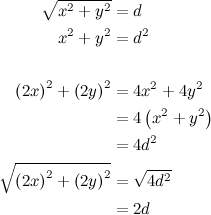
If the distance of point (x,y) from the origin is d , what is the distance of point (2x , 2y) from the origin ?

Speed is also an issue . 50 questions in an hour . During the holidays I haven't had the discipline and the drive to start working on my preparation . I just don't know where to start . sad.gif Sometimes I feel like I need to go back to more elementary concepts , like geometry and work on more IQ-related geometry problems . For example , in proving the Pythagoras' Theorem using Einstein's proof , I have never encountered the Similarity Transformation . I'm not sure what went wrong with how I studied Transformations in Form Two and Form Three .

I currently have resources with me (STPM Math T / Physics books , SAT books , PAT past year papers , NUS past year papers ( Physics ) ) but I just can't seem to find an avenue to dig in , yet .

I think I'd like to apply to the University of Oxford in the future . There's an entrance exam called PAT , which Physics , Maths and Engineering students must sit for .

I'd really appreciate if you could provide answers for section A , Mathematics for Physics for PAT 2013 so I can at least check my answers for certain questions and have a clue on how to approach problems which I don't know how to solve :

www2.physics.ox.ac.uk/sites/default/files/PAT-2006-Paper.pdf

What do you think , sensei Critical_Fallacy ? Are my concerns a result of idleness of my mind , an issue which has to do with retirement ?

This post has been edited by maximR: Jan 11 2014, 04:29 PM
maximR
post Jan 11 2014, 05:19 PM

Remember who you are
*******
Senior Member
3,864 posts

Joined: Dec 2009


QUOTE(Critical_Fallacy @ Jan 11 2014, 05:11 PM)
Sample Solution: smile.gif

user posted image
*
I knew how to do that , but my problem was I wasn't quick enough to come up with a plan . Do you think more practices should help ?
maximR
post Jan 11 2014, 05:28 PM

Remember who you are
*******
Senior Member
3,864 posts

Joined: Dec 2009


QUOTE(Critical_Fallacy @ Jan 11 2014, 05:21 PM)
Start pumping up your energy! icon_idea.gif

It is important to note that physics is not a collection of equations to be memorized. Simply searching for an equation that might work can lead you to a wrong result and will not help you understand physics. Here is the general Problem Solving Strategy for Physics.

(1) Read and reread the whole problem carefully before trying to solve it.

(2) Draw a diagram or picture of the situation, with coordinate axes wherever applicable.

(3) Write down what quantities are “known” or “given,” and then what you want to know.

(4) Think about which principles of physics apply in this problem. Use common sense and your own experiences when considering which equations relate the quantities involved. Before using them, be sure their range of validity.
*
Noted all of them down in my mini-notebook . Thanks ! Motivation is coming back . flex.gif

I understand that memorising equations will not get me far . I'm not doing that . Sure , they may be helpful in standardised tests as I wouldn't need to derive them again but it wouldn't help in problem solving . What I plan to do , is to read up and be familiar with fundamental concepts in Physics which were not covered when I did SPM . Gravitation , deformation of solids , statics , rotation of rigid bodies , thermodynamics , electricity and magnetism come to mind .

I didn't know that there are negative voltages and currents . After reading a short page on the common convention of signs for voltage and current , I know now . Kirchhoff's Law make sense to me now . smile.gif
maximR
post Jan 11 2014, 06:08 PM

Remember who you are
*******
Senior Member
3,864 posts

Joined: Dec 2009


» Click to show Spoiler - click again to hide... «


Again , noted . The price of these two books would cost me an arm and a leg , hopefully when I'm really into serious Physics or Engineering I'll be getting one of these books for my own keepsake .

maximR
post Jan 12 2014, 01:17 PM

Remember who you are
*******
Senior Member
3,864 posts

Joined: Dec 2009


Sorry , the PAT paper that I was referring to is this one :

PAT 2013


maximR
post Jan 13 2014, 10:15 AM

Remember who you are
*******
Senior Member
3,864 posts

Joined: Dec 2009


QUOTE(Critical_Fallacy @ Jan 13 2014, 09:48 AM)
user posted image
image width = 460 pixels

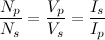
In an ideal transformer, the turns ratio equations are given by:

user posted image

Hence, the answer for Q11 is B) 50 turns. icon_idea.gif

Can you put up your workings on the Section A: Math part? sweat.gif
*
I'll scan and upload them here later . I skipped some questions as I haven't covered some of the topics .
maximR
post Jan 13 2014, 10:10 PM

Remember who you are
*******
Senior Member
3,864 posts

Joined: Dec 2009


Critical_Fallacy

What does it mean to integrate differentials , like dy , or dx ?

Ex :

intg dy = y + c

maximR
post Jan 14 2014, 01:23 PM

Remember who you are
*******
Senior Member
3,864 posts

Joined: Dec 2009


QUOTE(v1n0d @ Jan 13 2014, 11:51 PM)
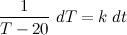
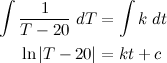
On it's own, the intergration of a differential user posted image has no meaning. In the context of a separable differential equation however, it looks like this:
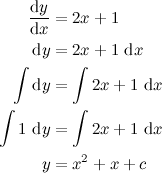
user posted image
where c is an arbitrary constant.
*
QUOTE(Krevaki @ Jan 13 2014, 11:56 PM)
Well, I can't seem to locate it. sweat.gif

Anyway, I believe he is referring to one of the basic methods to solve a separable ordinary differential equation. Essentially you move one variable to the right and the other to the left, then solve by integration. That said, I don't really have a good example now. hmm.gif
*
QUOTE(Critical_Fallacy @ Jan 14 2014, 09:58 AM)
Differential is used in calculus to refer to an infinitesimal (infinitely small) change in some varying quantity. The differential also represents a change in the linearization of a function.

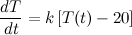
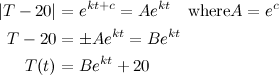
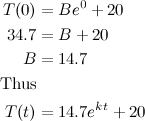
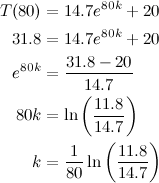
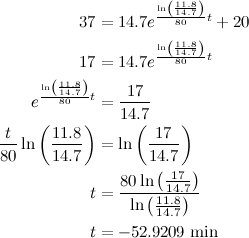
Perhaps you can read up Newton's law of cooling before I give you an interesting Example of Ordinary Differential Equation (ODE). icon_idea.gif
*
Yes , that's what I meant . Thank you , especially for deciphering my question . I didn't know what I was asking either after looking back at my post . sweat.gif

Anyway , I've learned that dy/dx is just an operator , a symbol . It cannot be treated as a fraction . And I also learned that infinitesimals don't exist because of the Archimedean Property . But in solving differential equations , why can it be treated as a ratio ?

Second problem is about visualising the concept behind it . ∫ (2x) dx means summing up all the rectangles under the curve , with area of (2x) dx . What does ∫ dy mean then ? Summing up all the dy's , which gives us the y back ? hmm.gif Or should I accept it by definition ?

Critical_Fallacy I've read up on Newton's Law of Cooling already . smile.gif At first I didn't understand why there was a negative sign along with the constant k , then the term 'cooling' explained everything . I've only touched on basic concepts like " what is a differential equation " , and solving separable differential equation . The next part is partial derivatives but I find it to be a little bit of a leap . Is there something to bridge the gap ?
maximR
post Jan 14 2014, 07:12 PM

Remember who you are
*******
Senior Member
3,864 posts

Joined: Dec 2009


» Click to show Spoiler - click again to hide... «


This is both fascinating and spine chilling at the same time !

Is this model really accurate , as in , does it correctly predict the time of death of a person given the constraints ?
maximR
post Jan 14 2014, 09:56 PM

Remember who you are
*******
Senior Member
3,864 posts

Joined: Dec 2009


» Click to show Spoiler - click again to hide... «


I didn't touch on Differential Equations because I figured that my mastery of differentiation and integration is still at an elementary level . sweat.gif And I wanted to really master Functions before reading your Differentiation tutorial . Now that I'm more comfortable with STPM Functions , I think I'm ready to read up on your Differentiation tutorial . I only touched on very basic aspects of Differential Equations .

I chanced upon this set of First Order Differential Equations tutorial videos , so I watched the first four videos . [ KhanAcademy - Differential Equations

However , I think the videos are not enough to cover everything about First Order ODE's . After four of the videos , it jumps straight to Exact Equations . Some playlists like MIT's Differential Equations' pace is too fast for a beginner like me . University notes have a lot of new notations which I'm unfamiliar with , like this one : Cornel : Differential Equations . Do you have a very basic introduction to ODE's ?

Do you mean that I can learn about the integrating factor after Separable ODE's ?

Ahh , I see . As with most other models . I think all models in Engineering don't actually mimic the real world , they are just good approximations . Engineers simplify difficult Physics equations to be used to solve problems , am I right ? For example in EE , Maxwell's equations are simplified to something else to solve circuit problems . Correct me if I'm wrong because these are what I've gathered from websites and videos .

maximR
post Jan 14 2014, 10:30 PM

Remember who you are
*******
Senior Member
3,864 posts

Joined: Dec 2009


QUOTE(p3nguin @ Jan 14 2014, 09:59 PM)
Been following your thread for a while, as well as a lot of your stuff that you post here. I was just curious about something though, and wanted to hear your opinion.

If you ever had the opportunity to change the Mathematics curriculum in schools, how would you do so in such a way to engage a student in the classroom, as well as instilling a greater core understanding of the Mathematics involved? Correct me if I'm mistaken here, but I get the impression that the way things are done at the moment, rote memorisation is prioritised over understanding.
*
I'm not experienced enough to be able to provide a better system here , but I really think we should look at Singapore's curriculum . Our Maths education system is flawed from the beginning . Back when the syllabus wasn't revamped , Malaysian students ranked in the top ten list of countries for TIMMS 2003 .

And you're right , it's all about rote-learning . At the end of the day , as an ex-SPM candidate , I feel ashamed of my problem solving skills . I'm 18 and I should be ready to embark on more advanced Mathematics but I realise I was unable to proof simple things like the angles in a triangle add up to 180 , diagonals in a parallelogram bisect each other , Pythagoras' Theorem , radius of a circle bisects a chord perpendicularly , angle of a triangle touching a circle is 90 degrees , all these fundamental concepts which are so familiar to us . I am also against how the topics are arranged in our syllabus . All in all , I'm not happy with how our Maths curriculum has turned out to be . shakehead.gif

Last year , my younger brother asked me a question which made me ponder for a bit . I knew how to answer it using algebra , but how do I teach him that method ? He hasn't learned algebra and doesn't have the basics . I then recalled that my teacher ( who taught me in Year 6 , by far the best Maths teacher I've ever encountered ) taught us basic algebra to solve a problem . At that time we thought it was some kind of magic , bringing 'a' from downstairs to upstairs from one side of an equation to another .

Here's a sample problem :

Ali has 300 sweets . He divides the sweets between Chong and Muthu . Muthu gets 145 more sweets than Chong . How many sweets did Chong get ?

The problem was a much harder example . In Singapore , primary school students are taught to visualise problems like these using geometrical 'block models' or 'bars' . In Malaysia , we are only given problems like these without being properly trained to solve problems .

What is your take on this ?
maximR
post Jan 14 2014, 10:42 PM

Remember who you are
*******
Senior Member
3,864 posts

Joined: Dec 2009


p3nguin

Here's a little bit more :

Proof that the angle which touches the circumference of a triangle that lies on the diameter of a circle is 90 degrees:

user posted image


Proof that the sum of angles in a triangle is 180 degrees:

user posted image

There are 2 problems . Firstly , why were we not taught these proofs which are simple enough for secondary school students to understand ? Did you learn this ?

Secondly , we learn about the angles in a triangle in Form One , but only learn about parallel and angles of traversals in Form Three . I believe that the latter should be taught first as an introduction to angles , which is incredibly useful to proof many of the geometry axioms that we learnt in Form One .
maximR
post Jan 15 2014, 01:42 PM

Remember who you are
*******
Senior Member
3,864 posts

Joined: Dec 2009


v1n0d

Yesterday night when I was in bed thinking , it suddenly dawned on me that what you've shown me explains why ∫ dy = y +c .

There is a hidden '1' in between the integral sign and dy !

∫ 1 dy = y + c

Thanks ! biggrin.gif
maximR
post Jan 17 2014, 03:14 PM

Remember who you are
*******
Senior Member
3,864 posts

Joined: Dec 2009


QUOTE(Y.J.S @ Jan 17 2014, 02:06 PM)
Need help here !

Q :

A cylindrical container is to be packed into a cubical box. The length of the box is (2p-4) cm. The container fits into the box as shown in the diagram. write a quadratic expression for the area of the base of the box occupied by the container. (PI = 22/7)

maximR mind helping ???
*
Y.J.S

Nevermind , saw the diagram in your post on the Physics book thread . Try posting your questions here next time as you will get faster and better responses . smile.gif

I will not give you the full solution as you won't learn anything that way , but I'll give you hints to guide you to the solution .

This question can be approached using only PMR Area of Circles and PMR Algebraic Expressions .

Things that you can extract from the question :

1 . Since the diameter of the base of the cylinder = Length of the side of the cube = (2p-4) , or

d = (2p-4)

Can you find the radius , r ?

2 . Area of a circle = πr^2 where π = 22/7 and r = ( expression from Step 1 ) ,

Can you find the area of the circle now ?

3 . Knowing the area of the circle , the conclusion follows because area of circle = area of base of container occupied by the cylinder .

Post your solution here if you want it to be checked . It's good that you're attempting these questions as they involve mathematical reasoning and algebraic manipulation , SPM Add Maths papers lack these questions .
maximR
post Jan 18 2014, 07:06 PM

Remember who you are
*******
Senior Member
3,864 posts

Joined: Dec 2009


QUOTE(Y.J.S @ Jan 18 2014, 06:17 PM)
Can I ask Physics questions here ? icon_question.gif

edit :
» Click to show Spoiler - click again to hide... «
maximR
post Jan 18 2014, 08:51 PM

Remember who you are
*******
Senior Member
3,864 posts

Joined: Dec 2009


QUOTE(Y.J.S @ Jan 18 2014, 08:15 PM)
so either ONE equal to zero , it can't be both.

Got it, I guess ? happy.gif
*
You have the idea. But there are cases where both are zero. (0)(0) = 0 , and (2-x)(2-x) = 0 in case of two equal roots . Keep on thinking about the concepts. Graph these equations and think about what they really mean. For equations which have two equal roots, the curve touches the x-axis only once.
maximR
post Jan 18 2014, 09:46 PM

Remember who you are
*******
Senior Member
3,864 posts

Joined: Dec 2009


QUOTE(Y.J.S @ Jan 18 2014, 09:44 PM)
hmm.gif until now I still don't understand how the graph works...

What do you mean 'the curve touches x-axis only once'?
*
Check out Chapter Three first .
maximR
post Jan 18 2014, 10:39 PM

Remember who you are
*******
Senior Member
3,864 posts

Joined: Dec 2009


» Click to show Spoiler - click again to hide... «


Graph transformations are not needed in SPM but I'd advise you to learn how to spot them.

Yes, that's the one. By the way, I can see that you're using a CPU Maths book.

7 Pages « < 2 3 4 5 6 > » Top
 

Change to:
| Lo-Fi Version
0.0528sec    1.14    7 queries    GZIP Disabled
Time is now: 19th December 2025 - 08:26 AM