Welcome Guest ( Log In | Register )

7 Pages < 1 2 3 4 5 > » Bottom

Outline · [ Standard ] · Linear+

 Ask a Mathematical Physicist

views
     
maximR
post Dec 18 2013, 08:49 PM

Remember who you are
*******
Senior Member
3,864 posts

Joined: Dec 2009


In choosing a correct physics equation , one thing to check is its homogeneity . But if two equations are homogenous , the books tell us that we should conduct experiments and plot the graph for both equations . However , after getting our results , which graph is the correct one ? One book tells me that the one with a straight line from origin is correct , another one chooses a straight line not from zero over another graph which is a curve .

Which is which ?
maximR
post Dec 18 2013, 09:58 PM

Remember who you are
*******
Senior Member
3,864 posts

Joined: Dec 2009


QUOTE(crazywing26 @ Dec 18 2013, 08:59 PM)
If the equation is non-homogeneous, then the equation is invalid. If the equation is homogeneous, then the equation MIGHT be correct provided by doing experiment to determine it constant. For example, both equations v=u+at and v=u-at are both homogeneous but only v=u+at is correct. smile.gif
*
I know , but in some of the practices they give a few equations and it asks to choose the correct one . Graphs must be drawn , and then the correct equation is selected based on the graph . My question is , what criteria are we looking for when looking at the graphs drawn ? Whether it is linear or not ? Whether it starts from zero or not ?
maximR
post Dec 18 2013, 10:05 PM

Remember who you are
*******
Senior Member
3,864 posts

Joined: Dec 2009


» Click to show Spoiler - click again to hide... «


Are you referring to the old Malay version textbook your teacher gave you ?
maximR
post Dec 18 2013, 10:12 PM

Remember who you are
*******
Senior Member
3,864 posts

Joined: Dec 2009


QUOTE(RED-HAIR-SHANKS @ Dec 18 2013, 10:09 PM)
Nope, it's the modular system of STPM Math T books by Oxford Fajar. If you are talking about the old FM books that I have, it stores lots of notes and exercises that are way more complex compared to my STPM Math T book.
*
So Oxford Fajar takes Matrices to a whole new level ? Interesting ... hmm.gif
maximR
post Dec 18 2013, 10:24 PM

Remember who you are
*******
Senior Member
3,864 posts

Joined: Dec 2009


QUOTE(RED-HAIR-SHANKS @ Dec 18 2013, 10:22 PM)
I'm quite lucky to have bought that book. If you're looking for intense exercises that surpasses basic Form 6 Math, then Oxford Fajar would be it. I remembered that Just Visiting By has previously mentioned somewhere that some of the exercises in Oxford Fajar are exceedingly tougher than Pelangi or Longman version of Math T books. Some of the questions are even beyond STPM level.....
*
Have you touched a bit on Physics , or/and Chemistry ?
maximR
post Dec 22 2013, 06:36 PM

Remember who you are
*******
Senior Member
3,864 posts

Joined: Dec 2009


» Click to show Spoiler - click again to hide... «


I enjoyed this short article ! nod.gif

One question : How did he come to the conclusion that his body's volume was the same as the volume of water displaced by his body ? Since his body is an irregular-shaped object and cannot be measured .

maximR
post Dec 24 2013, 12:04 PM

Remember who you are
*******
Senior Member
3,864 posts

Joined: Dec 2009


QUOTE(Critical_Fallacy @ Dec 24 2013, 10:05 AM)
Hi Flame Haze, RED-HAIR-SHANKS, maximR, crazywing26 and iChronicles,

What a year it's been. This is 2013 end-of-year question. tongue.gif

Evaluate user posted image.

P.S. If you can tackle the previous problem, you can tackle this one too. icon_rolleyes.gif
*
I see something here . Does it involve factorising using difference between two squares , 3+7+11+15 ... , and -1 ?

This post has been edited by maximR: Dec 24 2013, 01:43 PM
maximR
post Dec 24 2013, 01:46 PM

Remember who you are
*******
Senior Member
3,864 posts

Joined: Dec 2009


QUOTE(Critical_Fallacy @ Dec 24 2013, 01:37 PM)
You have a sharp mind! wink.gif
Very close! sweat.gif

user posted image
BINGO! thumbup.gif But I've given you a gentle clue! Remember the last series? icon_idea.gif

user posted image
user posted image
user posted image
*
I'm glad I had the idea . smile.gif

I probably would have to look at your series tutorials to understand crazywing's workings , still not familiar with the summation notation . I understand Shank's .
maximR
post Dec 27 2013, 09:43 PM

Remember who you are
*******
Senior Member
3,864 posts

Joined: Dec 2009


Critical_Fallacy

I'm sorry I didn't follow many of the things you've taught in your tutorials , I'm so far behind . I feel like I'm not disciplined enough , not working at the pace as my Sensei's . I will try my best to finish all your tutorials and exercises as I'm now waiting for my L license .

One thing that I want to say is that my knowledge on Matrices is still very shallow ( SPM Level ) . I only know how to compute the usual Matrices with usual dimensions as in SPM . I've always paid little attention on Mathematics which has a rigid algorithm , I found them to be quite dry . But looking at the discussions here about so many interesting properties and uses of Matrices , I'm fascinated by it and want to learn more .

I have one question and I hope you can answer it .

Helium is an interesting element because when it's cooled to very low temperatures , it does not freeze into a solid , instead , it becomes liquid helium , a superfluid which flows without viscosity .

Landau , a Russian physicist came up with a complicated equation which described the property of liquid helium which was based on the assumption that the atoms must be very far apart .

However , Feynman decided that there was a simpler and more elegant solution to the problem and came up with his own using simple assumptions and reasoned through to get to an equation like Landau's . My question is , what are Landau's and Feynman's equations , and are the diagrams involved with Feynman's ? Thank you . Leonard Susskind mentioned that a bright high school student would understand Feynman's solution but did not mention the actual name of the equation .
maximR
post Dec 28 2013, 02:45 PM

Remember who you are
*******
Senior Member
3,864 posts

Joined: Dec 2009


QUOTE(Critical_Fallacy @ Dec 27 2013, 11:57 PM)
It would be pretty tedious for me to type out all the sophisticated equations here. sweat.gif But I can guide you to find out more about the discovery of Superfluidity. Superfluidity is an ability of a fluid to flow without friction through narrow tubes, and it is closely related to Bose-Einstein condensation.

@ Macroscopic structure of Superfluid helium: Landau’s two-fluid theory of superfluidity, which is related to the free energy of Ising model.

@ Microscopic structure of Superfluid helium: Quantum vortex ring model. Quantized vortices were first predicted by Onsager (1949), and later independently by Feynman (1955). Feynman further developed Onsager’s ideas and simplified the the problem of rotations in superfluids by applying Stokes’ theorem (the Calculus mentioned by Susskind).

user posted image

Stokes’ theorem :: Let S be an oriented surface with unit normal vector n, bounded by a piecewise smooth simple closed curve C with a positive orientation. If v is a vector field whose component functions have continuous first partial derivatives on an open region containing S and C, then

user posted image
*
Finally . Thank you ! rclxms.gif When Susskind mentioned 'bright' high school student , he did really mean 'bright' because this is still beyond me .
maximR
post Dec 31 2013, 05:56 PM

Remember who you are
*******
Senior Member
3,864 posts

Joined: Dec 2009


Critical_Fallacy I don't think I can , but I'll leave it to the others to come up with a simplification . biggrin.gif

I've been away to study STPM Kinematics and Dynamics . I must say that STPM Physics is on a whole new level compared with SPM Physics . Here's one question which I need help on :

Two objects with masses m1 and m2 have the same kinetic energy . What is the ratio of the momentum of mass m1 to momentum of mass m2 ?

- On a sidenote , I've finally studied Sequences and Series using sigma notation and only now do I comprehend the posts about formulae for the series of squares , cubes , etc . And I saw many cool tricks to come up with a simple formula for a sequence !

I'd like to get First Term and Second Term STPM Maths T books alongside your printed tutorials and start working on them , if I can finish those I think I'd be ready for A Level Maths and a little bit of A Level Further Maths .

This post has been edited by maximR: Dec 31 2013, 06:10 PM
maximR
post Dec 31 2013, 05:57 PM

Remember who you are
*******
Senior Member
3,864 posts

Joined: Dec 2009


QUOTE(ystiang @ Dec 31 2013, 05:53 PM)
Is it the answer:
» Click to show Spoiler - click again to hide... «


Brilliant & Interesting, may I share it later out on my FB?
*
rclxms.gif
maximR
post Jan 1 2014, 12:42 PM

Remember who you are
*******
Senior Member
3,864 posts

Joined: Dec 2009


QUOTE(Critical_Fallacy @ Jan 1 2014, 01:55 AM)
Have you learned the projectile motion in two dimensions in STPM/A-level Physics “Kinematics”? sweat.gif

user posted image
*
Yes , this took the most time as I had to play with the equations and think about the different cases for the concepts to sink in . For example , the object that is projected at an angle doesn't accelerate in the horizontal direction at all . Another thing which I want to point out ( which is incorrectly stated in SPM ) is about the sign of g in kinematic problems .
maximR
post Jan 1 2014, 04:06 PM

Remember who you are
*******
Senior Member
3,864 posts

Joined: Dec 2009


Critical_Fallacy and v1n0d

Look at what I found !

http://eprints.usm.my/view/subjects/
maximR
post Jan 1 2014, 06:07 PM

Remember who you are
*******
Senior Member
3,864 posts

Joined: Dec 2009


QUOTE(studyboy @ Jan 1 2014, 06:02 PM)
tongue.gif Why are you so excited? Have a look at the link below:

http://eprints.maths.ox.ac.uk/view/subjects/

See if the above appeals to you. They are mostly applied maths thesis though, not physics unfortunately.
*
They say I'm weird but delicious things like this make me go " shocking.gif " . I actually prefer this ( although I understand 0.1% of it ) to parties and countdowns .

I still haven't found a friend who has the same wavelength as me . sad.gif

Hopefully at uni , I'll finally be able to talk to someone whose eyes glimmer when reading about stuff like the curving of space-time , even in layman's terms . Nobody is interested in what I'm interested in . Everyone's so career oriented that I want to get out of this shell , this small fishing village to somewhere which hopefully would provide me with academic stimulation which I'd really appreciate .

I've been living for 18 years ( almost ) as a lonely kid , thank Goodness there's this thing called the internet . notworthy.gif

This post has been edited by maximR: Jan 1 2014, 06:08 PM
maximR
post Jan 1 2014, 10:37 PM

Remember who you are
*******
Senior Member
3,864 posts

Joined: Dec 2009


QUOTE(Flame Haze @ Jan 1 2014, 10:33 PM)
Parents are both accountants. Pathway laid out edi.  sweat.gif
*
Oh . But it'd be better if you do what you love . smile.gif
maximR
post Jan 2 2014, 01:47 PM

Remember who you are
*******
Senior Member
3,864 posts

Joined: Dec 2009


» Click to show Spoiler - click again to hide... «


Well , I've officially retired from high school so I don't have a Physics teacher . It's all up to me , the books , and the internet . smile.gif

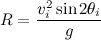
I have seen the term escape velocity before in my book but it's not under projectile motion , it's under gravitation . The derivation is different , it involves kinetic energy and Newton's law of universal gravitation . I understand that derivation . Is there another derivation using that range formula ?

maximR
post Jan 2 2014, 02:07 PM

Remember who you are
*******
Senior Member
3,864 posts

Joined: Dec 2009


College lectures have this fundamental kinematics equation :

x = x0 + v0t + 1/2 at^2

But my textbooks say this , and the derivation seems correct :

x = v0t + 1/2 at^2

Is the term x0 really necessary , Critical_Fallacy ?
maximR
post Jan 3 2014, 09:06 PM

Remember who you are
*******
Senior Member
3,864 posts

Joined: Dec 2009


» Click to show Spoiler - click again to hide... «


I didn't want to answer this question because I've seen this question and it has been demonstrated experimentally in this lecture , hence , it's a little bit unfair .


And thanks for your explanation on the change in displacement in kinematics equations . All textbooks , be it SPM or STPM do not mention this important fact , because the initial displacement is always assumed to be zero . The important thing to realise is the freedom in choosing increasing values of x and the coordinate system , with this , students will never be confused and make mistakes about the sign of g in different situations .

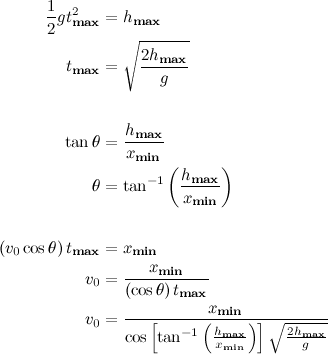
I have another question : In order to increase the angle of landing ( projectile motion ) when a bullet is fired horizontally , do we increase the height from which the bullet is fired ( or vice-versa ) and increase the initial velocity of the bullet ( or vice-versa ) ? I've tried proving this using the equations , and I came to the conclusion that height should be increased and velocity should also be increased . I need clarification . Thanks .
maximR
post Jan 3 2014, 11:10 PM

Remember who you are
*******
Senior Member
3,864 posts

Joined: Dec 2009


Critical_Fallacy

Sometimes all you need is the push in the right direction . Sometimes something so obvious eludes you . So forgive me if this is very simple , but I'd dearly want to know , why is i' taken to be equal to i cos phi + j sin phi ? This is about rotation of Cartesian Coordinate System .

user posted image


Shouldn't the projection of i' on the horizontal axis be i' cos phi ? How to show that :

i' = i cos phi + j sin phi ?

This post has been edited by maximR: Jan 3 2014, 11:11 PM

7 Pages < 1 2 3 4 5 > » Top
 

Change to:
| Lo-Fi Version
0.4690sec    0.52    7 queries    GZIP Disabled
Time is now: 17th December 2025 - 08:46 AM