Welcome Guest ( Log In | Register )

91 Pages  1 2 3 > » Bottom

Outline · [ Standard ] · Linear+

 Ask a Mathematical Physicist

views
     
TSCritical_Fallacy
post Aug 6 2013, 07:47 PM, updated 3y ago

∫nnộvisεr
Group Icon
VIP
3,713 posts

Joined: Nov 2011
From: Torino
https://www.symbolab.com/
http://onsolver.com/

Original First Post
» Click to show Spoiler - click again to hide... «

College Algebra
» Click to show Spoiler - click again to hide... «

Calculus :: Early Transcendentals
» Click to show Spoiler - click again to hide... «

Advanced Engineering Mathematics
» Click to show Spoiler - click again to hide... «

Numerical Methods (a.k.a. Computational Methods for Applied Sciences)
» Click to show Spoiler - click again to hide... «

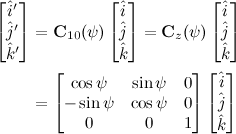
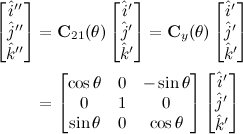
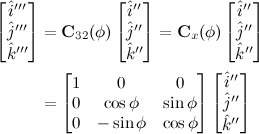
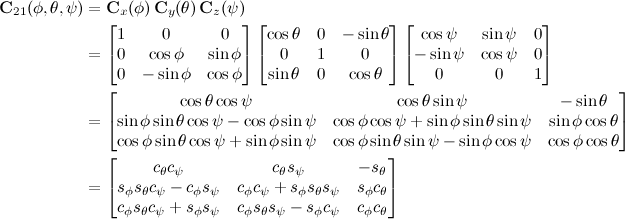
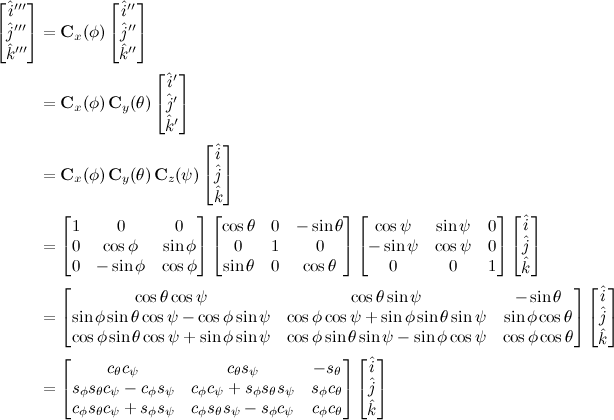
Euler Angles
» Click to show Spoiler - click again to hide... «

Operators & Symbols ::
(–x, y) ± + − × ÷ √ ² ³ ^ ∫ Σ Δ ∇ ∂ ∠ ° Ω “” → ← ↑ ↓ ∵ ∴ ½ ∞ ≈ ≠ ≪ ≤ ≥ ≫ • · ∝ † ⊗ ✔ ✘ 2⁄2 x≈-1.25992 ∧ ‖a‖ y≈-1.5874 …

Common Greek alphabets in Rotational dynamics:
ϕ, θ, ψ, ω

PID Controller ::
u = − (Ki*∫ x + Kp*x + Kd*ẋ)

15° π/12
30° π/6
45° π/4
60° π/3
75° 5π/12
90° π/2

① ② ③ ④ ⑤ ⑥ ⑦ ⑧ ⑨ ⑩

b² – 4ac

Superscripts and subscripts ::
x⁰ x¹ x² x³ x⁴ x⁵ x⁶ x⁷ x⁸ x⁹ x⁺ x⁻ x⁼ x⁽ ⁾ xⁿ x* x˙ xˣ

x₀ x₁ x₂ x₃ x₄ x₅ x₆ x₇ x₈ x₉ x₊ x₋ x₌ x₍ ₎ xᵢ xᵣ xₑ xₙ

Greek alphabets (lowercase) ::
α, β, γ, δ, ε, ζ, η, θ, κ, λ, μ, ξ, π, ρ, σ, τ, υ, ϕ, φ, χ, ψ, ω

Greek alphabets (uppercase & lowercase) ::
Αα Alpha Νν Nu
Ββ Beta Ξξ Xi
Γγ Gamma Οο Omicron
Δδ Delta Ππ Pi
Εε Epsilon Ρρ Rho
Ζζ Zeta Σσς Sigma
Ηη Eta Ττ Tau
Θθ Theta Υυ Upsilon
Ιι Iota Φϕφ Phi
Κκ Kappa Χχ Chi
Λλ Lambda Ψψ Psi
Μμ Mu Ωω Omega

» Click to show Spoiler - click again to hide... «


[attachmentid=4328645]

This post has been edited by Critical_Fallacy: Apr 29 2023, 03:50 PM

ystiang
post Aug 6 2013, 09:23 PM

Getting Started
**
Junior Member
171 posts

Joined: May 2012
Mostly are out of syllabus, like Cauchy-Schwarz Inequality, AM-GM Inequality, but Number Theory(Modular Arithmetic, Diophantine Equation) and Euclidean Plane Geometry do cover on syllabus of STPM further maths...

9th Dec 2013: Updated questions and answers...

OMK 2013 Sulong

Section A

1. A large cube is divided into 99 cubes with integer lengths, 98 of them with side 1. Find the volume of the large cube.

2. Let M be the set of all nine-digit positive integers that contain each digit from 1 to 9 once. Find the highest common factor of all elements of M.

3. What is the remainder when 5^5555 is divided by 10000?

4. Given a trapezium with perpendicular diagonals and height 12. The length of one of its diagonals is 15. Find the area of the trapezium.

5. The digits of 2013 can be rearranged to form an arithmetic progression. Determine the number of four-digit positive integers with this property.
(Note: An arithmetic progression might have common difference 0.)

6. Determine the smallest prime factor of 8051.


Section B

1. Given a triangle ABC. The midpoints of AB, BC, CA are C1, A1, B1 respectively.
Construct another triangle DEF with side lengths equal to the lengths of AA1, BB1, CC1.
(a) Prove that the ratio of the area of triangle DEF to the area of triangle ABC is a constant, regardless of the choice of triangle ABC.
(b) Find the area of triangle DEF if AB = 13, BC = 14, CA = 15.


2. Prove that there exist integers a1, a2, a3, …, a2013, b, all greater than 1, such that
(a1!)(a2!)(a3!)…(a2013!) = b!


3. A sequence x1, x2, x3, … is defined as follows: x1 = 1, x2 = 143, and
xn+1 = 5(x1 + x2 + … + xn)/n for all n ≥ 2.
Prove that all terms of the sequence are integers.


Hints & Answers:
» Click to show Spoiler - click again to hide... «


This post has been edited by ystiang: Dec 9 2013, 05:53 PM
maximR
post Aug 6 2013, 09:30 PM

Remember who you are
*******
Senior Member
3,864 posts

Joined: Dec 2009


This is amazing . This is something big .
I hope people will start to utilise this thread as much as possible . I'll share it to everyone I know .

Thank you so much .
5p3ak
post Aug 6 2013, 09:44 PM

CPE, FIG Certified Gymnastics Coach
*******
Senior Member
5,648 posts

Joined: Mar 2011
From: Jalan Tijani
Thanks to maximR for showing me this thread.

I got question.

» Click to show Spoiler - click again to hide... «


Show means to prove right? hmm.gif

This this correct? P(Z<500-510/s.d.)= 0.01
ystiang
post Aug 6 2013, 10:11 PM

Getting Started
**
Junior Member
171 posts

Joined: May 2012
QUOTE(5p3ak @ Aug 6 2013, 09:44 PM)
Thanks to maximR for showing me this thread.

I got question.

» Click to show Spoiler - click again to hide... «


Show means to prove right?  hmm.gif

This this correct? P(Z<500-510/s.d.)= 0.01
*
P(X < 500) = 0.01

Show basically means prove. Don't forget [shown].

Edited for: wrong info... sorry T_T

This post has been edited by ystiang: Nov 29 2013, 07:56 AM
maximR
post Aug 6 2013, 10:31 PM

Remember who you are
*******
Senior Member
3,864 posts

Joined: Dec 2009


Critical_Fallacy

I consulted the Bronze Medallist , and he told me that this solution is incorrect , and it'll be worth one point only . He attached a link to an accurate solution :

http://www.artofproblemsolving.com/Forum/v...ce9c11#p3152687

He added : The solution gives a construction of 2^k-1 terms but the problem statement requires exactly k terms

I never knew the questions in IMO would be this challenging !

This post has been edited by maximR: Aug 6 2013, 10:33 PM
ystiang
post Aug 6 2013, 10:39 PM

Getting Started
**
Junior Member
171 posts

Joined: May 2012
QUOTE(maximR @ Aug 6 2013, 10:31 PM)
Critical_Fallacy

I consulted the Bronze Medallist , and he told me that this solution is incorrect , and it'll be worth one point only . He attached a link to an accurate solution :

http://www.artofproblemsolving.com/Forum/v...ce9c11#p3152687

He added : The solution gives a construction of 2^k-1 terms but the problem statement requires exactly k terms

I never knew the questions in IMO would be this challenging !
*
Try to participate OMK if you intend to study form 6.
OMK considered as very hard, IMO I can't imagine my brain blank 4 hours...

For Malaysia, Top OMK performers are selected to attend the training camps, and the final IMO representatives are selected based on the students' performance in the camps and race. (I think only 6 in the final stage, and 3~4 of them are "bumiputera".

This post has been edited by ystiang: Aug 6 2013, 10:39 PM
maximR
post Aug 6 2013, 10:48 PM

Remember who you are
*******
Senior Member
3,864 posts

Joined: Dec 2009


QUOTE(ystiang @ Aug 6 2013, 10:39 PM)
Try to participate OMK if you intend to study form 6.
OMK considered as very hard, IMO I can't imagine my brain blank 4 hours...

For Malaysia, Top OMK performers are selected to attend the training camps, and the final IMO representatives are selected based on the students' performance in the camps and race. (I think only 6 in the final stage, and 3~4 of them are "bumiputera".
*
I don't think I'll make the cut for IMO camps ( IPhO , probably . In the near future . tongue.gif ) though . You know the Bronze Medallist I mentioned ? He's as old as me , but he has far more experience and he started very young , at about 7 .

How do you find STPM ? Enjoying it ?
ystiang
post Aug 6 2013, 11:56 PM

Getting Started
**
Junior Member
171 posts

Joined: May 2012
QUOTE(maximR @ Aug 6 2013, 10:48 PM)
I don't think I'll make the cut for IMO camps ( IPhO , probably . In the near future .  tongue.gif ) though . You know the Bronze Medallist I mentioned ? He's as old as me , but he has far more experience and he started very young , at about 7 .

How do you find STPM ? Enjoying it ?
*
You ask the same question to me several months ago... But I think my answer is different now.

Quiet enjoying... especially maths =)

My target: 3.5 or above.

Quit working this sem, and rapidly done all the PBS, focusing on study now.

The only 'tak syok' thing in this sem so far is my monthly test math paper, originally can get perfect score, but so much careless T_T


CallMeBin
post Aug 7 2013, 01:10 AM

Regular
******
Senior Member
1,222 posts

Joined: Jan 2011
edited for doh.gif

This post has been edited by CallMeBin: Aug 7 2013, 02:31 AM
VengenZ
post Aug 7 2013, 02:27 AM

La la la~
****
Senior Member
608 posts

Joined: Nov 2009
From: 127.0.0.1


Malaysia got 37/97 on this year's IMO, singapore on the other hand got 6th. China's 14-year-old got gold ffuuu so pro these guys
5p3ak
post Aug 7 2013, 07:52 AM

CPE, FIG Certified Gymnastics Coach
*******
Senior Member
5,648 posts

Joined: Mar 2011
From: Jalan Tijani
QUOTE(ystiang @ Aug 6 2013, 10:11 PM)
Usually I will suggest continuity correction...

P(X < 500) = 0.01

P(Z < (499.5-510)/S.D.) = 0.01

Show basically means prove. Don't forget [shown].
*
But when does the 4.3g come into play? rclxub.gif
ystiang
post Aug 7 2013, 11:13 AM

Getting Started
**
Junior Member
171 posts

Joined: May 2012
QUOTE(5p3ak @ Aug 7 2013, 07:52 AM)
But when does the 4.3g come into play?  rclxub.gif
*
Since P(Z < z) = 0.01

Since the probability is less than 0.5, z must be negative.

P(Z < -z) = 1 - 0.01 = 0.99

From the normal distribution table, P(Z < 2.326) = 0.99

Thus, P(Z < -2.326) = 0.01

(500-510)/SD = -2.326
-10/SD = -2.326

SD = -10/-2.326 = 4.3g [shown]


This post has been edited by ystiang: Nov 29 2013, 07:55 AM
TSCritical_Fallacy
post Aug 7 2013, 03:00 PM

∫nnộvisεr
Group Icon
VIP
3,713 posts

Joined: Nov 2011
From: Torino
QUOTE(maximR @ Aug 6 2013, 10:31 PM)
I consulted the Bronze Medallist , and he told me that this solution is incorrect , and it'll be worth one point only . He attached a link to an accurate solution :

http://www.artofproblemsolving.com/Forum/v...ce9c11#p3152687

He added : The solution gives a construction of 2^k-1 terms but the problem statement requires exactly k terms

I never knew the questions in IMO would be this challenging !
Impressive! Thanks for sharing the link. Tell your Bronze Medallist friend that he obviously has a good understanding of mathematics that is far superior to mine. Through the composed power of his highly intelligent mind, he could probably solve some of the unsolved problems in mathematics in near future. Perhaps you don’t know; I’m particularly fascinated by the Navier–Stokes existence and smoothness problem. laugh.gif

If you want to claim $1 million Millennium Prize from the Clay Mathematics Institute, you’ll need to either prove or disprove this statement: “In three space dimensions and time, given an initial velocity field, there exists a vector velocity and a scalar pressure field, which are both smooth and globally defined, that solve the Navier–Stokes equations.icon_idea.gif

In physics, the Navier–Stokes equations are a system of nonlinear partial differential equations for describing the motion of fluid substances in almost every real situation. In fact, these equations are derived from applying Newton's 2nd law to fluid motion. The animation below shows how a Kármán vortex street develops behind a cylinder moving through a fluid.

user posted image
(courtesy of Cesareo de la Rosa Siqueira at the University of Sao Paulo, Brazil)
maximR
post Aug 7 2013, 05:46 PM

Remember who you are
*******
Senior Member
3,864 posts

Joined: Dec 2009


» Click to show Spoiler - click again to hide... «


I see !

I've heard about turbulence in fluid motion and how hard it is to model that accurately ( I think it's still on Wikipedia's List of unsolved problems in Physics ) .

If you don't mind me asking , what led you to to become a Mathematical Physicist ? Was is a smooth pathway ?

katijah
post Aug 7 2013, 06:19 PM

Getting Started
**
Junior Member
77 posts

Joined: Aug 2013
QUOTE(ystiang @ Aug 6 2013, 10:39 PM)

For Malaysia, Top OMK performers are selected to attend the training camps, and the final IMO representatives are selected based on the students' performance in the camps and race. (I think only 6 in the final stage, and 3~4 of them are "bumiputera".
*
Are you sure of your last statement? wink.gif
5p3ak
post Aug 7 2013, 07:27 PM

CPE, FIG Certified Gymnastics Coach
*******
Senior Member
5,648 posts

Joined: Mar 2011
From: Jalan Tijani
QUOTE(ystiang @ Aug 7 2013, 11:13 AM)
Since P(Z < z) = 0.01

Since the probability is less than 0.5, z must be negative.

P(Z < -z) = 1 - 0.01 = 0.99

From the normal distribution table, P(Z < 2.326) = 0.99

Thus, P(Z < -2.326) = 0.01

(500-510)/SD = -2.326
-10/SD = -2.326

SD = -10/-2.326 = 4.3g [shown]

I use back 500 because I think continuity correction isn't in SPM level.
*
I see. Thanks for the heads up thumbup.gif
TSCritical_Fallacy
post Aug 10 2013, 04:01 PM

∫nnộvisεr
Group Icon
VIP
3,713 posts

Joined: Nov 2011
From: Torino
GreatFish posted a physics question about Newton’s Law of Universal Gravitation on this thread. Because there is slight inaccuracy about the direction of the gravitational force vector on the Wikipedia, so I decided to provide a salient answer on this matter. The negative-sign equation arises partly due to our interest in researching the kinodynamics behavior of the object being accelerated. icon_idea.gif

user posted image

This post has been edited by Critical_Fallacy: Oct 2 2014, 04:02 PM
maximR
post Aug 10 2013, 04:41 PM

Remember who you are
*******
Senior Member
3,864 posts

Joined: Dec 2009


» Click to show Spoiler - click again to hide... «


I see . I've thought about that for a long time . Thanks for clarifying !

Now I've a question , it's regarding the constants that appear in Physics equations .

Example :

1 . E = mc^2
2 . F = kx
3 . F(grav) = G (Mm)/r^2

My question is , will a constant always appear if a physical quantity varies directly as the other ? If it will , why do some constants behave in different ways . Why is the speed of light squared in Einstein's equation ? Since there were no experimental data at first to support his theory , how did he derive c ?

Why can the constant in F = kma be defined so that F = ma , but not with other equations ?
VengenZ
post Aug 10 2013, 06:13 PM

La la la~
****
Senior Member
608 posts

Joined: Nov 2009
From: 127.0.0.1


QUOTE(maximR @ Aug 10 2013, 04:41 PM)
» Click to show Spoiler - click again to hide... «


I see . I've thought about that for a long time . Thanks for clarifying !

Now I've a question , it's regarding the constants that appear in Physics equations .

Example :

1 . E = mc^2
2 . F = kx
3 . F(grav) = G (Mm)/r^2

My question is , will a constant always appear if a physical quantity varies directly as the other ? If it will , why do some constants behave in different ways . Why is the speed of light squared in Einstein's equation ? Since there were no experimental data at first to support his theory , how did he derive c ?

Why can the constant in F = kma be defined so that F = ma , but not with other equations ?
*
I don't know about others but E=mc^2 isnt the full formula. By using some complex special relativity theories, he came up with the momentum in 4D equation.. And if I remembered correctly by using binomial expansion, he got the equation E = mc^2 + 1/2(mv^2) + ... From this he found the rest mass energy equation E = mc^2. There's a second way that he did to derive it which involved E^2 = (pc)^2 + (mc^2)^2 .. after a few algebraic operation, we can obtain E =mc^2. But of course this is the end product of a long complex mathematical calculation and awesome thought experiments.
I think Critical_Fallacy can explain more to you about Time Dilation, Length contraction and so on, until the part where he got the rest mass energy equation.

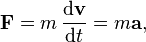
For F = ma, that is not actually the real formula. From Newton's 2nd law, force can be expressed as:
user posted image ---> user posted image

Force is said to be exerted when the mass of an object changes, or the velocity of the object changes.

I am more interested in the general relativity of Einstein. Anyone here knows how he got the christoeffel symbol in terms of the metric tensor? Probably Critical_Fallacy knows?

91 Pages  1 2 3 > » Top
 

Change to:
| Lo-Fi Version
0.0365sec    0.64    6 queries    GZIP Disabled
Time is now: 15th December 2025 - 08:24 AM