Welcome Guest ( Log In | Register )

91 Pages « < 19 20 21 22 23 > » Bottom

Outline · [ Standard ] · Linear+

 Ask a Mathematical Physicist

views
     
delsoo
post Dec 23 2013, 11:37 PM

Look at all my stars!!
*******
Senior Member
3,187 posts

Joined: Nov 2013
QUOTE(Critical_Fallacy @ Dec 23 2013, 10:56 PM)
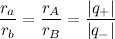
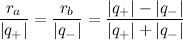
Topping up on VengenZ statement, if you are evaluating the potentials along the x-axis, these neutral “points” (V = 0) are not really discrete points in a two-particle configuration in the x-direction. In fact, the electric potential was found to be zero for all values of y at specific x positions. These neutral positions can be determined fairly easily once you understand the concept as shown graphically below.

user posted image

Using the formula for finding the Electric Potential V due to two point Charges q,
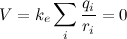
user posted image

it can be shown that

user posted image.

If we set

user posted image

it follows that

user posted image.

Similarly, using algebraic manipulations, you can determine the position of the neutral point, if it is located at the LEFT side of the positively-charged particle, user posted image. icon_rolleyes.gif
You were not alone! sweat.gif
*
sorry i cant understand your explainaton in post #399... would you mind to explain based on the photo attached on post#396? doh.gif cry.gif
TSCritical_Fallacy
post Dec 23 2013, 11:41 PM

∫nnộvisεr
Group Icon
VIP
3,713 posts

Joined: Nov 2011
From: Torino
QUOTE(delsoo @ Dec 23 2013, 11:37 PM)
sorry i cant understand your explainaton in post #399... would you mind to explain based on the photo attached on post#396? doh.gif  cry.gif
Could you circle the part that you don't particularly understand? It helps me to narrow down my focus on your cognitive problem in the Electricity topic. Thanks! icon_rolleyes.gif
delsoo
post Dec 23 2013, 11:54 PM

Look at all my stars!!
*******
Senior Member
3,187 posts

Joined: Nov 2013
QUOTE(Critical_Fallacy @ Dec 23 2013, 11:41 PM)
Could you circle the part that you don't particularly understand? It helps me to narrow down my focus on your cognitive problem in the Electricity topic. Thanks! icon_rolleyes.gif
*
kindly refer to the photo attached in post #396, i dont understand
for the charge +5e and -3e, the neutral point is at the right side of charge -3e

for the another photo, i dont understand the point where v=0, is located at the centre...

based on my understanding, i think the e(electric potential ) should acted in opposite direction so the forces can cancel each other , thus the point can be called as neutral point where v=0..

correct me if my concept is wrong... icon_question.gif
Flame Haze
post Dec 24 2013, 12:18 AM

Enthusiast
*****
Senior Member
814 posts

Joined: Oct 2009


QUOTE(Critical_Fallacy @ Dec 23 2013, 11:36 PM)
Hi RED-HAIR-SHANKS, maximR, crazywing26 and iChronicles,

Now it is a good time to test your understanding on SPM/STPM Series. icon_idea.gif

Can you find the sum of the following series if n is a positive integer?

user posted image
*
Infinity? or n/2 (1+n)

This post has been edited by Flame Haze: Dec 24 2013, 12:22 AM
TSCritical_Fallacy
post Dec 24 2013, 12:22 AM

∫nnộvisεr
Group Icon
VIP
3,713 posts

Joined: Nov 2011
From: Torino
QUOTE(Flame Haze @ Dec 24 2013, 12:18 AM)
Infinity?
Thanks for pointing out! It would be meaningless if the sum to infinity because the series diverges. Just find the formula of the sum up to a finite n positive integer. icon_idea.gif

This post has been edited by Critical_Fallacy: Dec 24 2013, 12:22 AM
Flame Haze
post Dec 24 2013, 12:27 AM

Enthusiast
*****
Senior Member
814 posts

Joined: Oct 2009


QUOTE(Critical_Fallacy @ Dec 24 2013, 12:22 AM)
Thanks for pointing out! It would be meaningless if the sum to infinity because the series diverges. Just find the formula of the sum up to a finite n positive integer. icon_idea.gif
*
Previous post tongue.gif
TSCritical_Fallacy
post Dec 24 2013, 12:28 AM

∫nnộvisεr
Group Icon
VIP
3,713 posts

Joined: Nov 2011
From: Torino
QUOTE(delsoo @ Dec 23 2013, 11:54 PM)
kindly refer to the photo attached in post #396, i dont understand
for the charge +5e and -3e, the neutral point is at the right side of charge -3e

for the another photo, i dont understand the point where v=0, is located at the centre...

based on my understanding, i think the e(electric potential ) should acted in opposite direction so the forces can cancel each other , thus the point can be called as neutral point where v=0.

correct me if my concept is wrong... icon_question.gif
Your basic concept is correct, except the “center” position. “Center” means the point is equally distant from the positively charged particle user posted image and from the negatively charged particle user posted image. The electric potential is zero ONLY when at the center of an electric dipole (a pair of electric charges of equal magnitude but of opposite sign or polarity).

Refer to the figure on Post #399 or #396, now do this for me:

(1) Find the electric potential at the point β (far right) due to a positively charged particle user posted image, separated by a distance user posted image.

(2) Find the electric potential at the point β (far right) due to a negatively charged particle user posted image, separated by a distance user posted image.

(3) Find the net electric potential at the point β (far right) due to both charged particles.

(4) Equate the net electric potential V = 0, and then simplify the equation in terms of ratio rA / rB.

This post has been edited by Critical_Fallacy: Dec 24 2013, 12:34 AM
TSCritical_Fallacy
post Dec 24 2013, 12:36 AM

∫nnộvisεr
Group Icon
VIP
3,713 posts

Joined: Nov 2011
From: Torino
QUOTE(Flame Haze @ Dec 24 2013, 12:18 AM)
Infinity? or n/2 (1+n)
You are good! wink.gif
delsoo
post Dec 24 2013, 12:43 AM

Look at all my stars!!
*******
Senior Member
3,187 posts

Joined: Nov 2013
her's my ans... i'm not very sure cry.gif


Attached thumbnail(s)
Attached Image
TSCritical_Fallacy
post Dec 24 2013, 12:52 AM

∫nnộvisεr
Group Icon
VIP
3,713 posts

Joined: Nov 2011
From: Torino
QUOTE(delsoo @ Dec 24 2013, 12:43 AM)
her's my ans... i'm not very sure cry.gif
Solving physics problems demand concentration. Find Electric Potential V, NOT Electric Field E.

How about your answer for No.4?

You can use the Coulomb's constant, user posted image for simplification. sweat.gif

This post has been edited by Critical_Fallacy: Dec 24 2013, 01:00 AM
delsoo
post Dec 24 2013, 12:59 AM

Look at all my stars!!
*******
Senior Member
3,187 posts

Joined: Nov 2013
QUOTE(Critical_Fallacy @ Dec 24 2013, 12:52 AM)
Solving physics problems demand concentration. Find Electric Potential, NOT force.

How about your answer for No.4?
*


Attached thumbnail(s)
Attached Image
TSCritical_Fallacy
post Dec 24 2013, 01:04 AM

∫nnộvisεr
Group Icon
VIP
3,713 posts

Joined: Nov 2011
From: Torino
Hi delsoo,

There is a mistake.

(1) Find the electric potential at the point β (far right) due to a positively charged particle user posted image, separated by a distance user posted image.

You can use the Coulomb's constant, user posted image for simplification. sweat.gif

user posted image

This post has been edited by Critical_Fallacy: Dec 24 2013, 01:05 AM
delsoo
post Dec 24 2013, 01:07 AM

Look at all my stars!!
*******
Senior Member
3,187 posts

Joined: Nov 2013
QUOTE(Critical_Fallacy @ Dec 24 2013, 01:04 AM)
Hi delsoo,

There is a mistake.

(1) Find the electric potential at the point β (far right) due to a positively charged particle user posted image, separated by a distance user posted image.

You can use the Coulomb's constant, user posted image for simplification. sweat.gif

user posted image
*
sorry i used to used to use 1/4pi e .... btw the rest are correct? i'm not very sure about my ans for ques 2.. icon_question.gif

This post has been edited by delsoo: Dec 24 2013, 01:08 AM
TSCritical_Fallacy
post Dec 24 2013, 01:10 AM

∫nnộvisεr
Group Icon
VIP
3,713 posts

Joined: Nov 2011
From: Torino
QUOTE(delsoo @ Dec 24 2013, 01:07 AM)
sorry i used to used to use 1/4pi e .... btw the rest are correct?
It's your preference. To answer the rest, please concentrate on reading my post CLOSELY. sweat.gif

As mentioned in previous post. There is a mistake in (1), which is affecting (3) and (4).

(1) Find the electric potential at the point β (far right) due to a positively charged particle user posted image, separated by a distance user posted image.

You can substitute the positively charged particle user posted image = 5q and the negatively charged particle user posted image = -3q, as in your original problem in Post #396.

This post has been edited by Critical_Fallacy: Dec 24 2013, 01:18 AM
delsoo
post Dec 24 2013, 01:18 AM

Look at all my stars!!
*******
Senior Member
3,187 posts

Joined: Nov 2013
QUOTE(Critical_Fallacy @ Dec 24 2013, 01:10 AM)
It's your preference. To answer the rest, please concentrate on reading my post CLOSELY. sweat.gif

As mentioned in previous post. There is a mistake in (1), which is affecting (3) and (4).

(1) Find the electric potential at the point β (far right) due to a positively charged particle user posted image, separated by a distance user posted image.

You can substitute the positively charged particle user posted image = 5q and the negatively charged particle user posted image = -3q.
*
so the ans for 1 should be q+/4(pi)9e)(r of A ) ?
TSCritical_Fallacy
post Dec 24 2013, 01:19 AM

∫nnộvisεr
Group Icon
VIP
3,713 posts

Joined: Nov 2011
From: Torino
QUOTE(delsoo @ Dec 24 2013, 01:18 AM)
so the ans for 1 should be q+/4(pi)9e)(r of A ) ?
Doesn't this figure tell you the whole story clearly? sweat.gif

user posted image
delsoo
post Dec 24 2013, 01:21 AM

Look at all my stars!!
*******
Senior Member
3,187 posts

Joined: Nov 2013
QUOTE(Critical_Fallacy @ Dec 24 2013, 01:19 AM)
Doesn't this figure tell you the whole story clearly? sweat.gif

user posted image
*
rclxms.gif , thanks again for spending your time to answer my doubts
TSCritical_Fallacy
post Dec 24 2013, 01:24 AM

∫nnộvisεr
Group Icon
VIP
3,713 posts

Joined: Nov 2011
From: Torino
QUOTE(delsoo @ Dec 24 2013, 01:21 AM)
rclxms.gif , thanks again  for spending your time to answer my doubts
When solving physics problem, you cannot rush. Read carefully and understand what are required by the questions. They are your mini tasks, sub-problems that you need to tackle. icon_idea.gif
crazywing26
post Dec 24 2013, 09:12 AM

Getting Started
**
Junior Member
283 posts

Joined: Apr 2013


QUOTE(Critical_Fallacy @ Dec 23 2013, 11:36 PM)
Hi RED-HAIR-SHANKS, maximR, crazywing26 and iChronicles,

Now it is a good time to test your understanding on SPM/STPM Series. icon_idea.gif

Can you find the sum of the following series if n is a positive integer?

user posted image
*
Looks tough but its not. In fact, its quite easy.
Its actually 1+2+3+…+n biggrin.gif So the sum of the series is n(n+1)/2.

Oh. Flame Haze has answered this question XD

This post has been edited by crazywing26: Dec 24 2013, 09:17 AM
TSCritical_Fallacy
post Dec 24 2013, 10:04 AM

∫nnộvisεr
Group Icon
VIP
3,713 posts

Joined: Nov 2011
From: Torino
QUOTE(crazywing26 @ Dec 24 2013, 09:12 AM)
Looks tough but its not. In fact, its quite easy.
Its actually 1+2+3+…+n biggrin.gif So the sum of the series is n(n+1)/2.

Oh. Flame Haze has answered this question XD
Easy is GOOD! thumbup.gif Try the next one. wink.gif

91 Pages « < 19 20 21 22 23 > » Top
 

Change to:
| Lo-Fi Version
0.0308sec    0.37    6 queries    GZIP Disabled
Time is now: 19th December 2025 - 05:57 PM