Welcome Guest ( Log In | Register )

29 Pages  1 2 3 > » Bottom

Outline · [ Standard ] · Linear+

 Ask a Mathematical Physicist

views
     
TSCritical_Fallacy
post Aug 6 2013, 07:47 PM, updated 3y ago

∫nnộvisεr
Group Icon
VIP
3,713 posts

Joined: Nov 2011
From: Torino
https://www.symbolab.com/
http://onsolver.com/

Original First Post
» Click to show Spoiler - click again to hide... «

College Algebra
» Click to show Spoiler - click again to hide... «

Calculus :: Early Transcendentals
» Click to show Spoiler - click again to hide... «

Advanced Engineering Mathematics
» Click to show Spoiler - click again to hide... «

Numerical Methods (a.k.a. Computational Methods for Applied Sciences)
» Click to show Spoiler - click again to hide... «

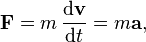
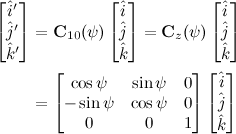
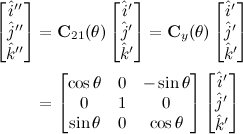
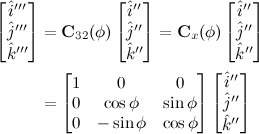
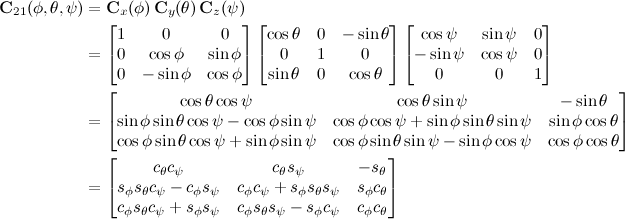
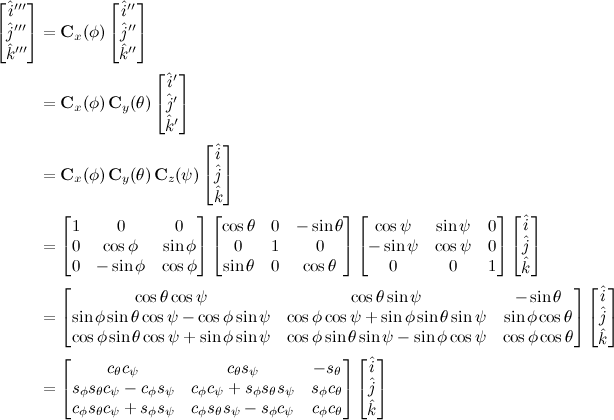
Euler Angles
» Click to show Spoiler - click again to hide... «

Operators & Symbols ::
(–x, y) ± + − × ÷ √ ² ³ ^ ∫ Σ Δ ∇ ∂ ∠ ° Ω “” → ← ↑ ↓ ∵ ∴ ½ ∞ ≈ ≠ ≪ ≤ ≥ ≫ • · ∝ † ⊗ ✔ ✘ 2⁄2 x≈-1.25992 ∧ ‖a‖ y≈-1.5874 …

Common Greek alphabets in Rotational dynamics:
ϕ, θ, ψ, ω

PID Controller ::
u = − (Ki*∫ x + Kp*x + Kd*ẋ)

15° π/12
30° π/6
45° π/4
60° π/3
75° 5π/12
90° π/2

① ② ③ ④ ⑤ ⑥ ⑦ ⑧ ⑨ ⑩

b² – 4ac

Superscripts and subscripts ::
x⁰ x¹ x² x³ x⁴ x⁵ x⁶ x⁷ x⁸ x⁹ x⁺ x⁻ x⁼ x⁽ ⁾ xⁿ x* x˙ xˣ

x₀ x₁ x₂ x₃ x₄ x₅ x₆ x₇ x₈ x₉ x₊ x₋ x₌ x₍ ₎ xᵢ xᵣ xₑ xₙ

Greek alphabets (lowercase) ::
α, β, γ, δ, ε, ζ, η, θ, κ, λ, μ, ξ, π, ρ, σ, τ, υ, ϕ, φ, χ, ψ, ω

Greek alphabets (uppercase & lowercase) ::
Αα Alpha Νν Nu
Ββ Beta Ξξ Xi
Γγ Gamma Οο Omicron
Δδ Delta Ππ Pi
Εε Epsilon Ρρ Rho
Ζζ Zeta Σσς Sigma
Ηη Eta Ττ Tau
Θθ Theta Υυ Upsilon
Ιι Iota Φϕφ Phi
Κκ Kappa Χχ Chi
Λλ Lambda Ψψ Psi
Μμ Mu Ωω Omega

» Click to show Spoiler - click again to hide... «


[attachmentid=4328645]

This post has been edited by Critical_Fallacy: Apr 29 2023, 03:50 PM
TSCritical_Fallacy
post Aug 7 2013, 03:00 PM

∫nnộvisεr
Group Icon
VIP
3,713 posts

Joined: Nov 2011
From: Torino
QUOTE(maximR @ Aug 6 2013, 10:31 PM)
I consulted the Bronze Medallist , and he told me that this solution is incorrect , and it'll be worth one point only . He attached a link to an accurate solution :

http://www.artofproblemsolving.com/Forum/v...ce9c11#p3152687

He added : The solution gives a construction of 2^k-1 terms but the problem statement requires exactly k terms

I never knew the questions in IMO would be this challenging !
Impressive! Thanks for sharing the link. Tell your Bronze Medallist friend that he obviously has a good understanding of mathematics that is far superior to mine. Through the composed power of his highly intelligent mind, he could probably solve some of the unsolved problems in mathematics in near future. Perhaps you don’t know; I’m particularly fascinated by the Navier–Stokes existence and smoothness problem. laugh.gif

If you want to claim $1 million Millennium Prize from the Clay Mathematics Institute, you’ll need to either prove or disprove this statement: “In three space dimensions and time, given an initial velocity field, there exists a vector velocity and a scalar pressure field, which are both smooth and globally defined, that solve the Navier–Stokes equations.icon_idea.gif

In physics, the Navier–Stokes equations are a system of nonlinear partial differential equations for describing the motion of fluid substances in almost every real situation. In fact, these equations are derived from applying Newton's 2nd law to fluid motion. The animation below shows how a Kármán vortex street develops behind a cylinder moving through a fluid.

user posted image
(courtesy of Cesareo de la Rosa Siqueira at the University of Sao Paulo, Brazil)
TSCritical_Fallacy
post Aug 10 2013, 04:01 PM

∫nnộvisεr
Group Icon
VIP
3,713 posts

Joined: Nov 2011
From: Torino
GreatFish posted a physics question about Newton’s Law of Universal Gravitation on this thread. Because there is slight inaccuracy about the direction of the gravitational force vector on the Wikipedia, so I decided to provide a salient answer on this matter. The negative-sign equation arises partly due to our interest in researching the kinodynamics behavior of the object being accelerated. icon_idea.gif

user posted image

This post has been edited by Critical_Fallacy: Oct 2 2014, 04:02 PM
TSCritical_Fallacy
post Aug 11 2013, 08:04 PM

∫nnộvisεr
Group Icon
VIP
3,713 posts

Joined: Nov 2011
From: Torino
QUOTE(GreatFish @ Aug 11 2013, 11:30 AM)
can you write the deriavation of gravitational potential energy at here notworthy.gif
You should be able to find a lots of detailed explanations from many physics textbooks and websites. smile.gif
user posted image

user posted image
TSCritical_Fallacy
post Aug 11 2013, 08:32 PM

∫nnộvisεr
Group Icon
VIP
3,713 posts

Joined: Nov 2011
From: Torino
QUOTE(maximR @ Aug 10 2013, 04:41 PM)
Why is the speed of light squared in Einstein's equation? Since there were no experimental data at first to support his theory, how did he derive c?
The derivation of Einstein's most famous equation E = mc² is purely theoretical, which arises as a direct consequence of his Special Theory of Relativity that involves some algebraic manipulations using the Pythagorean theorem (SPM level). To understand how he derived the equation, you must understand a portion of his Special Relativity; Time Dilation (see the embedded Spaceship figure). The following derivation is highly simplified for the mathematically untrained. To further enhance your understanding, you should watch the YouTube video by minutephysics. icon_rolleyes.gif

user posted image

user posted image


TSCritical_Fallacy
post Aug 12 2013, 04:29 AM

∫nnộvisεr
Group Icon
VIP
3,713 posts

Joined: Nov 2011
From: Torino
QUOTE(VengenZ @ Aug 10 2013, 07:15 PM)
As fallacy said to err is human, so please fix if there is anything wrong with my explanation.
QUOTE(maximR @ Aug 10 2013, 04:41 PM)
Will a constant always appear if a physical quantity varies directly as the other? If it will, why do some constants behave in different ways?
QUOTE(maximR @ Aug 10 2013, 06:26 PM)
Why must constants appear in every Physics equation?
Physicists know some things never change and they call them the fundamental physical constants. Such frequently used constants as the speed of light in vacuum, c, magnetic constant, μ0, electric constant, ε0, Newtonian constant of gravitation, G, Planck constant, h, elementary charge, e, and the Proton-to-electron mass ratio, μ, are assumed to be the same at all places and times in the universe. They form the scaffolding around which the theories of physics are built on, and they define the fabric of the cosmos.

Despite that, one of the most fundamental properties of Newton’s Mechanics, Maxwell’s Macroscopic Electrodynamics, and the Laws of Thermodynamics, is the absence of any physical constants in their basic equations. In fact, all necessary fundamental physical constants appear only at the stage of applications of these theories to specific phenomena. Nevertheless, these constants play an important role in physics and metrology because scientists need reference values for measurements in experimental physics and making theoretical prediction on papers.

Other than Newton’s and Maxwell’s equations, centripetal acceleration (a = v²/r), density (Q = m/V), pressure (P = F/A), and electric power (P = V*I) seem to be self-evident counterexamples to your above question. You can also see other frequently used physics equations for yourself in this link. icon_rolleyes.gif
user posted image

QUOTE(maximR @ Aug 10 2013, 04:41 PM)
Why can the constant in F = kma be defined so that F = ma, but not with other equations?
QUOTE(maximR @ Aug 10 2013, 06:26 PM)
And why can the constant in Newton's 2nd Law be simplified to 1?
Although physical constants can appear to be dimensional or dimensionless, the imaginary constant factor k in your F = kma does not exist. That’s because the equation F = ma is self-contained and Newton did NOT require adding a dimensionless constant factor k = 1 to his mechanics to reproduce that “observation of force”. In fact, as guided by VengenZ in Post #20, Newton’s 2nd Law originally states that the net force on an object is equal to the rate of change of its linear momentum p in an inertial reference frame, which can be manipulated algebraically to be stated in terms of an object's acceleration, i.e. F = ma.

user posted image ---> user posted image

Since the dimensionless constant factor k does not exist in F = dp/dt in the first place, then it follows that k is not needed in F = ma either. If your friends or physics teacher insist on the existence of k = 1, be sure to ask them what they think of a = dv/dt, p = mv, v = dx/dt, and other counterexamples as shown, so that other similar fundamental physics equations cannot be ignored, and they will thus be psychologically compelled to consider their merit. icon_idea.gif

~ HAVE A NICE DAY! ~
TSCritical_Fallacy
post Aug 12 2013, 02:35 PM

∫nnộvisεr
Group Icon
VIP
3,713 posts

Joined: Nov 2011
From: Torino
QUOTE(maximR @ Aug 10 2013, 04:41 PM)
it's regarding the constants that appear in Physics equations .
This set of frequently used Fundamental Physical Constants is recommended for international use by CODATA (The Committee on Data for Science and Technology). The full 2010 CODATA set of constants may be found at its website (click the image) at the time of this writing.

user posted image

For your convenience, a PDF document (Extensive Listing) is available which can be read online or printed. icon_rolleyes.gif
Attached File  Fundamental_Physical_Constants_____Extensive_Listing__2010_.pdf ( 124.83k ) Number of downloads: 1

TSCritical_Fallacy
post Aug 13 2013, 03:41 AM

∫nnộvisεr
Group Icon
VIP
3,713 posts

Joined: Nov 2011
From: Torino
QUOTE(maximR @ Aug 12 2013, 03:02 PM)
Here's the explanation provided by textbooks :
From Experiment 1 , a α F
From Experiment 2 , a α 1/m
The two results are combined.
a α F/m
OR
F α ma
Therefore : F = kma
What you see in the following figure is an excerpt from The Principia: Mathematical Principles of Natural Philosophy (2010), the reprinted text which based on Motte’s 1729 translation of the 1726, 3rd edition of Philosophiæ Naturalis Principia Mathematica, that was the final version corrected by Sir Isaac Newton.

user posted image

QUOTE
Law II: The alteration of motion is ever proportional to the motive force impressed; and is made in the direction of the right line in which that force is impressed.

As you can see, Newton never explicitly stated the formula F = ma in his Principia. The “motion” and “impressed” in which Newton used his terminology, and how he understood the second law and intended it to be understood, have been extensively discussed by historians of science. It was until James Clerk Maxwell published a treatise in Matter and Motion in 1876 (see excerpt below) that the modern ideas of how Newton was using his terminology is understood.

user posted image

According to Maxwell, Newton meant by motion “the quantity of matter moved as well as the rate at which it travels” and by impressed force he meant “the time during which the force acts as well as the intensity of the force”. And so in modern terms, motion is Newton’s name for momentum, which allows Newton’s 2nd Law to be formulated as follows:

user posted imageuser posted image

Now, allow me to make a few additional points after my Post #29. Based on what the mathematicians and physicists understood from the experimental observations of Newton’s 2nd Law: the change of momentum of a body is proportional to the impulse impressed on the body, a proportionality constant k, shall be assigned to the formula F = kma. In order to standardize the unit force and to eliminate the proportionality constant k, Conférence Générale des Poids et Mesures (CGPM) in 1948, adopted the name "newton" with symbol N for the SI unit force to define the amount needed to accelerate 1 kg of mass at the rate of 1 m/s² by choosing a proportionality constant of 1.

In a sense, the proportionality constant k can be seen as a conversion factor if we apply F = kma in other system of measurement, such as the Imperial units. For example, 1 pound-force (lbf) is defined as the amount needed to accelerate 1 pound (lb) of mass at the standard gravity of 32.174 ft/s². Consequently, we can deduced from this observation that k = 1/32.174. Thus, to eliminate the proportionality constant k, the preferred unit of mass is the slug because a slug is defined to have a mass of 32.174 lb, so that 1 lbf = 1 slug × 1 ft/s².

To summarize this post and Post #29, naturally, the proportionality constant k = 1 doesn’t appear in momentum (p = m*v), centripetal acceleration (a = v²/r), density (Q = m/V), pressure (P = F/A), electric power (P = V*I), and a bundle of other primary equations of physics, because the physicists relate the basic physical quantities by defining the formulation of physical laws in a way to achieve universality and generality. All in all, to determine whether a significant proportionality constant is needed or not, at the first place, we should at least understand how strong the correlation of physical quantities is by performing the dimensional analysis, and ensure that the experimental data are consistent. icon_rolleyes.gif
TSCritical_Fallacy
post Aug 13 2013, 03:52 AM

∫nnộvisεr
Group Icon
VIP
3,713 posts

Joined: Nov 2011
From: Torino
QUOTE(studyboy @ Aug 11 2013, 09:35 PM)
You took up a daunting task of explaining time dilation to the masses.
Oh! It is not as daunting as the quantum mechanics. Coincidentally, 12 August marks the birthday of Erwin Schrödinger, the Nobel prize-winning quantum physicist whose eponymous equation lies at the heart of quantum mechanics. laugh.gif

user posted image
TSCritical_Fallacy
post Aug 14 2013, 02:13 PM

∫nnộvisεr
Group Icon
VIP
3,713 posts

Joined: Nov 2011
From: Torino
QUOTE(mr unknown @ Aug 14 2013, 10:33 AM)
The kinetic energy of a an object is E and its linear momentum is p. if the kinetic energy is 2E, then it's linear momentum will be? ans: (square root of 2p)... can anyone pls explain how to get the ans?
In Newtonian Kinetic Energy, as long as the object is not at microscopic level and the speed involved is very much lower than the speed of light, the mass is considered an absolute, or in a state of constant in an inertial frame of reference.

user posted image

P.S. Thanks sharp-eyed Krevaki for pointing out the typo in Line 4 of the previous image. Correction has been made. notworthy.gif

This post has been edited by Critical_Fallacy: Aug 14 2013, 07:28 PM
TSCritical_Fallacy
post Aug 14 2013, 03:15 PM

∫nnộvisεr
Group Icon
VIP
3,713 posts

Joined: Nov 2011
From: Torino
QUOTE(maximR @ Aug 13 2013, 01:14 PM)
So if I get this right, the reason why G appears in Newton's Law of Universal Gravitation is because the unit of force is defined as amount needed to accelerate 1 kg of mass at the rate of 1 m/s², therefore G should be added to ensure that the units on both sides of the equation are the same? And that after careful experiments, experimental physicists discovered that the force on gravity between two bodies does not vary simply as F = Mm/r², so there must be a constant to account for the interaction between the two bodies?

And that means Newton never really had accurate calculations since he couldn't determine G, and did not include them in his equations? (or did he? if yes, then how did he come to the conclusion that there is a constant just by empirical observation? or did he derive it mathematically, or did he think that since the force of gravity is usually very small between two bodies, there must be something that accounts for this, therefore, a constant must exist?)
Though Newton’s Principia (1687) theorized the presence of the gravitational constant G, it was not until 1798 that the constant was determined through observing the density of the Earth in the Cavendish experiment. Because Newton’s calculations could not use the mathematical value of G, he could only calculate a force relative to another force as a ratio using Kepler’s Third Law. The following propositions for Newton’s Law of Universal Gravitation are the excerpts from The Book III of Principia. If you are interested, you probably find this link useful (Read Proposition VIII. Theorem VIII. Corollary 2).

user posted image
user posted image
user posted image

As you probably already know, most modern physics textbooks states Newton’s law of universal gravitation according Maxwell’s Matter and Motion (1876); “Every portion of matter attracts every other portion of matter, and the stress between them is proportional to the product of their masses divided by the square of their distance.” Maxwell also acknowledged that although the idea of inverse square law had been the prior work of others, but in the hands of Newton, the doctrine of gravitation assumed its final form.

user posted image

This post has been edited by Critical_Fallacy: Oct 24 2014, 12:05 AM
TSCritical_Fallacy
post Aug 14 2013, 07:45 PM

∫nnộvisεr
Group Icon
VIP
3,713 posts

Joined: Nov 2011
From: Torino
QUOTE(maximR @ Aug 14 2013, 03:28 PM)
For beginners like me, how do I develop the intuition to manipulate the equation so p exists in that KE equation?
Also, if KE becomes 2KE, p becomes 2p as well? How to prove this?
Erratum: Please take note that there was a typo in the last line of the previous image. Last line “√(2p)” should be “√2*p”. Thanks Krevaki for pointing it out. It has been corrected.

Basically, it is very similar to proving Trigonometric Identities in SPM Add Maths. When you have the knowledge of momentum p = m*v, you will think of ways to express KE in terms of momentum and at the same time, conserving the dimensions of the original KE equation. icon_rolleyes.gif
TSCritical_Fallacy
post Aug 14 2013, 07:50 PM

∫nnộvisεr
Group Icon
VIP
3,713 posts

Joined: Nov 2011
From: Torino
QUOTE(Intermission @ Aug 11 2013, 02:06 PM)
As a unsuccessful wannabe math olympian who never had any formal training in mathematical olympiads, I participated in this year's OMK Sulong 2013.
By the way, care to tell me about the reception of your Science Fair project? laugh.gif
TSCritical_Fallacy
post Aug 14 2013, 08:33 PM

∫nnộvisεr
Group Icon
VIP
3,713 posts

Joined: Nov 2011
From: Torino
QUOTE(maximR @ Aug 14 2013, 03:28 PM)
Here's a question from an SPM Olympiad Fizik book :
user posted image
QUOTE(kingkingyyk @ Aug 14 2013, 05:59 PM)
The answer is Bdrool.gif
QUOTE(maximR @ Aug 14 2013, 06:02 PM)
According to the guy who provided the question, yes.
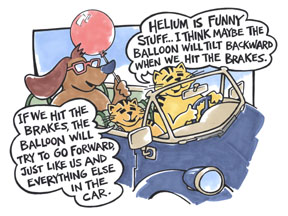
Under normal circumstances, your daily experience, common sense plus Newton’s 1st Law generally would tell you the “rational” answer seems to be B. However, if B were the intended answer, why would the person who set the question bother to add the floating helium-filled balloon in the boxcar? Is it a tricky question? sweat.gif

There are 2 clues provided:
(1) If the helium-filled balloon wasn't tied to the floor of the boxcar, it would float all the way up to the ceiling.
(2) In physics, Impulse of Force is used to refer to a fast-acting force that is applied briefly: I = F*δt = m*δv.

QUOTE(kingkingyyk @ Aug 14 2013, 06:17 PM)
My reason:
When you are sitting in a moving bus, you are moving as well. When the bus stops, your inertia causes you to continue to move. Same to the question. The initial state of the objects is static. When you push the box, the inertia will cause the object to try to stay in the initial state, that is not moving. You might use Newton's Third Law to think about it.
QUOTE(kingkingyyk @ Aug 14 2013, 06:44 PM)
Physical Chemistry : Keywords, Calculations, Logical Thinking.
Lastly, logical thinking is not just using our “common sense.” After all, “common sense” tells us the earth is flat. But even when “common sense” is correct, it may tell us, for example, that gravity cannot be pulling a thing down and pushing up the other at the same time. Therefore, critical thinking goes well beyond just using such basic principles. icon_idea.gif

Perhaps Krevaki and work_tgr can offer some clues as well. laugh.gif

user posted image
TSCritical_Fallacy
post Aug 15 2013, 12:59 AM

∫nnộvisεr
Group Icon
VIP
3,713 posts

Joined: Nov 2011
From: Torino
QUOTE(maximR @ Aug 14 2013, 06:09 PM)
Solution provided is about pressure , artificial gravity , inertia ...  blink.gif
QUOTE(Krevaki @ Aug 14 2013, 07:54 PM)
The steel (?) ball and the helium balloon are attached to the box by strings. The connections are not rigid and when you move the box, you would expect their inertia to hold them in their original position.
QUOTE(kingkingyyk @ Aug 14 2013, 08:39 PM)
The answer would be A then.  unsure.gif
What I meant by "logical thinking" here is think based on law's logic.  icon_idea.gif
Perhaps watching the YouTube video below would give you new insights into the physics of helium balloon. icon_rolleyes.gif


TSCritical_Fallacy
post Aug 15 2013, 04:20 AM

∫nnộvisεr
Group Icon
VIP
3,713 posts

Joined: Nov 2011
From: Torino
QUOTE(manutd96 @ Aug 13 2013, 04:13 AM)
In a shooting competition, the probability that ali hits the target is 0.4. Find the minimum number of trials that ali needs to make such that the probability that he hits the target at least once is 0.8. << add maths question. How do I do it? Which method should I use? Is it part of binomial distribution?
Technically speaking, the method employed by ystiang is called Complementary Cumulative Distribution Function. The solution is exactly the same as the one beautifully brought by ystiang, with a little extra information of how the principle of Cumulative Distribution Function works. wink.gif

user posted image
TSCritical_Fallacy
post Aug 15 2013, 05:20 PM

∫nnộvisεr
Group Icon
VIP
3,713 posts

Joined: Nov 2011
From: Torino
QUOTE(kingkingyyk @ Aug 15 2013, 09:25 AM)
Helium gas balloon will move forward, pendulum will move behind? shocking.gif
QUOTE(Krevaki @ Aug 15 2013, 10:47 AM)
You're right! As the box moves to the right, the air gets compressed to the left, making the left side of the box denser than the right side. The helium balloon actually gets pushed to the right!
QUOTE(maximR @ Aug 15 2013, 01:20 PM)
But looking for explanations on the internet, there are some who use General Relativity to explain this. So is the explanation using air compression / buoyant force correct, or General Relativity, or both?
It takes the knowledge of Density of Steel, Density of Helium, Newton’s Law, Archimedes’ principle (Buoyancy), Impulse of Force, and a few assumptions to understand the tricky physics problem.

Statics ::

(1) The boxcar is at rest on a frictionless surface. Between the two objects inside the boxcar, a solid steel ball is much more dense than a helium-filled balloon. The steel pendulum and helium balloon are rigid bodies.

(2) Newton’s Law tells us the downward force of gravity pulls the steel pendulum and helium balloon, which results in their respective weights, W↓ = mg.

(3) Archimedes’ principle tells us the upward buoyant forces exerted on the steel pendulum and helium balloon “immersed fully” in the air, are equal to the respective weights of the air that the objects displace, F↑ = ρVg.

(4) For the heavier-than-air steel ball, because W↓ > F↑, the steel ball is pulled downward by the Net force.

(5) For the lighter-than-air helium balloon, because F↑ > W↓, the helium balloon is pushed upward by the Net force.

(6) Because the freedom of movements of the steel pendulum and helium balloon are constrained in the direction of the respective Net forces (vertical) axes, Newton’s Law tells us their respective normal Reaction forces are generated, so that they appear to be held in their places.

user posted imageuser posted image

Dynamics ::

(7) For the impulse of force, in which we assume the force exerted on boxcar acts for a very short time δt but is much greater than any other force present. Imagine flicking your finger to apply the impulse of force on the outer left side of the boxcar! The duration of the collision is very short and bring the boxcar to an abrupt STOP.

user posted image

(8) Now, because the steel pendulum and helium balloon are not constrained horizontally, any applied horizontal force will cause the objects to swing left and right.

(9) Since the boxcar comes to an abrupt STOP, when we reapply the Newton’s Laws and Archimedes’ principle from (1)−(5), the most probable positions of the steel pendulum and helium balloon caused by the impulse is depicted in Image C. What do you think? sweat.gif

user posted image
TSCritical_Fallacy
post Aug 21 2013, 04:05 AM

∫nnộvisεr
Group Icon
VIP
3,713 posts

Joined: Nov 2011
From: Torino
QUOTE(maximR @ Aug 15 2013, 01:20 PM)
But looking for explanations on the internet, there are some who use General Relativity to explain this. So is the explanation using air compression / buoyant force correct, or General Relativity, or both?
Have you discovered this link? icon_idea.gif

QUOTE(work_tgr @ Aug 15 2013, 10:53 PM)
Reedit : second thought, answer is B.  tongue.gif

1. An opposite force, f occurs at the string to resist F. The direction of f is to the left.
2. Resultant force of L is pointing south west.
3. Resultant force of B is pointing north west.
Possible, if it is an “open” boxcar. wink.gif

QUOTE(VengenZ @ Aug 16 2013, 02:23 AM)
Probably could use general relativity for that question. Einstein's famous thought experiment (physicist in a box):
In the physics of general relativity (non SPM), we can certainly describe the motion of the steel pendulum and helium balloon by the equivalence principle. icon_rolleyes.gif

QUOTE(Krevaki @ Aug 16 2013, 11:52 AM)
But are we not looking for the moment when the box is "pushed"?
True, but since the impulse acts for a very short time δt ~ 0 sec, the closest image that describes the positions (during δt) of the steel pendulum and helium balloon caused by the impulse that brings the boxcar to an abrupt STOP would probably be Image C. Just my 2 cents. sweat.gif

user posted image
TSCritical_Fallacy
post Aug 21 2013, 05:26 AM

∫nnộvisεr
Group Icon
VIP
3,713 posts

Joined: Nov 2011
From: Torino
QUOTE(young_97 @ Aug 20 2013, 09:32 PM)
this two question shocking.gif  unsure.gif
user posted image

Refer to Tensile testing and Stress–strain curve. icon_idea.gif

The formula to calculate the “apparentengineering stress, σ, is given by σ = F / Ao, assuming that the original cross-sectional area Ao is UNCHANGED (not reducing) through which the force is applied. In fact, as deformation continues, cross-sectional area decreases.

Similarly, the formula to calculate the engineering strain, ε, is given by ε = ΔL / Lo. Some questions give the elongation measurement L instead, and if that is the case, use ΔL = L − Lo.

user posted image

Refer to Properties of Water, Continuity equation, Bernoulli's principle and Venturi effect. icon_rolleyes.gif

Water is treated as an incompressible fluid because the changes in relative volume ΔV / V is negligible as the pressure increases.

In fluid mechanics, the continuity equation states that, in any steady state process, the rate of change of mass within the control volume is equal to the rate at which mass leaves the surface S of volume V.

user posted image

In other words, mass inflow = mass outflow. However, mass is also given by the product of ρV (density × volume). Because water is essentially incompressible, therefore the density ρ of water is treated as constant throughout the streamline from the hose to the head. For that reason, we can rewrite the continuity equation as follows:

Volumetric inflow rate, Q1 = Volumetric outflow rate, Q2[/B][/COLOR]

user posted image

Because Volumetric flow rate, Q is defined as Q = dV / dt,

and the volume of a mass, V is given by V = A*l (cross-sectional area × traversed length), therefore

A1 × (dl1 / dt) = A2 × (dl2 / dt)

Since dl / dt is defined as the velocity, υ, we can simplify the equation to

A1 × υ1 = A2 × υ2
TSCritical_Fallacy
post Aug 21 2013, 03:44 PM

∫nnộvisεr
Group Icon
VIP
3,713 posts

Joined: Nov 2011
From: Torino
QUOTE(manutd96 @ Aug 21 2013, 09:25 AM)
What is the ans for 3c and explanation please?
user posted image

If the gas is continuously supplied at a constant pressure, the new level of “A would probably look like this: icon_idea.gif

user posted image

29 Pages  1 2 3 > » Top
 

Change to:
| Lo-Fi Version
0.0555sec    0.84    7 queries    GZIP Disabled
Time is now: 17th December 2025 - 02:46 PM