QUOTE(codenamew @ Apr 16 2013, 05:26 PM)
I read somewhere that gflops is affected by the background services running in our pc during Linx. In order to get the optimum result during Linx, better to leave the pc to idle for about 5mins then only start the Linx test. This is to ensure there is no background service running, it is also better to quit all of the applications prior running Linx test. I have tested this and all my Linx is above 120gflops for 3570k regardless of the memory speed. Correct me if I'm wrong.
You may run LinX/IBT/prime95 in diagnostic mode, so that it won't be affected by windows background services and can use maximum RAM amount as possible as there would be more free mem available.
QUOTE(hypermax @ Apr 16 2013, 07:16 PM)
Still trying to figure out how to overclock my ivy bridge. It is a beast difficult to be tamed. Unlike sandy where u can just pump vcore and get stable overclocking, ivy bridge hates excessive vcore. The vcore has to be "just enough" for a overclock to be stable

I got a lot of d124 error which was due to excessive vcore.
Also, I found other voltages like pll, vccsa, vccio actually play a role in the stability of the system even in modest overclock.
I can't comment on your experience but IMO Ivy is a lot easier to overclock than Sandy, provided you have a good cooling gear to tame its temps.
Sandy is suffered from the infamous BSOD 124 (insufficient vCore) and deteriorating so quickly within a few days.
I have never heard of the Ivy hates excessive vCore. hmmm...

vPLL doesn't help in overclocking at all. I used 1.35v to 1.8v also won't give any different in terms of overclockablity and stability.
VCCIO aka vIO = VTT and VCCSA aka vSA = IMC will help RAM overclocking ONLY, not CPU OC.
This post has been edited by owikh84: Apr 16 2013, 09:34 PM 

 Apr 15 2013, 10:22 PM


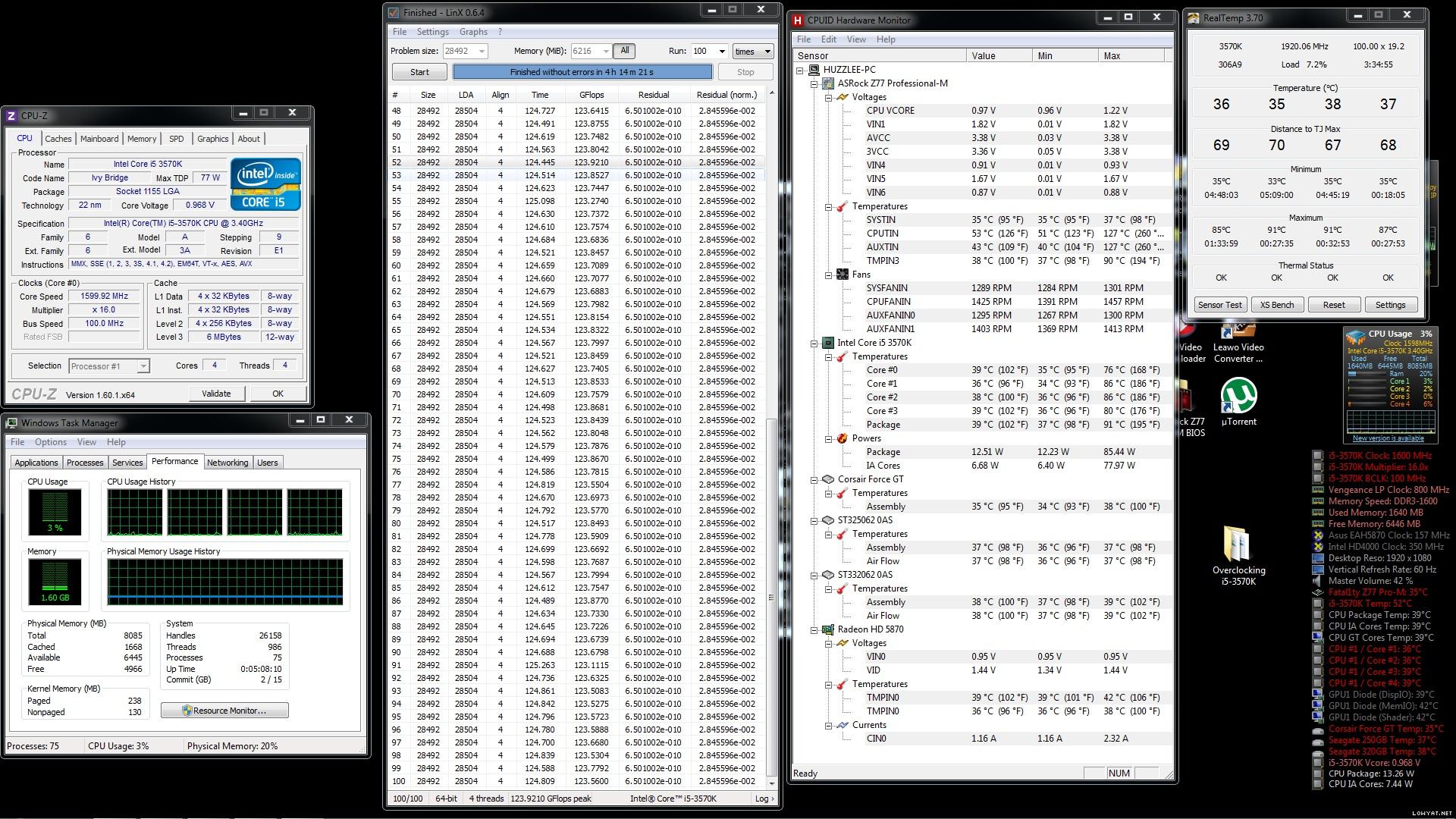
 VCore is default +160mV as shown on screenie

 Quote
Quote













 ) to 1.50V just now, doesn't seem to affect stability nor reduce temps. Only problem I've seen so far is a few apps like RealTemp and Intel XTU detecting wrong CPU clocks and wrong BCLK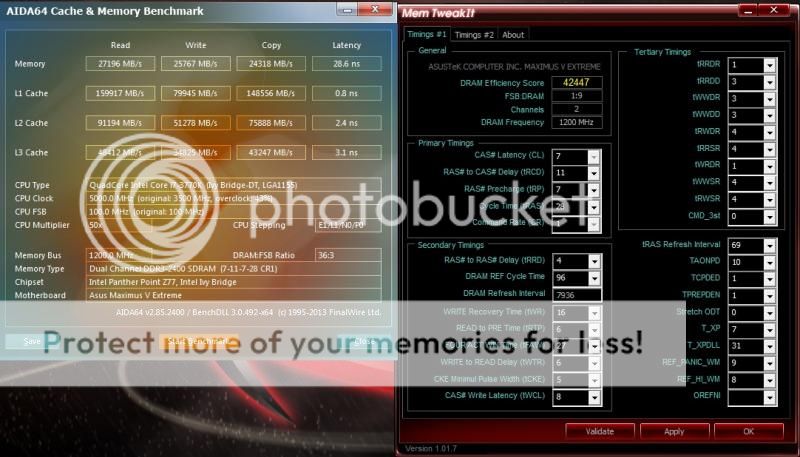


 0.0248sec
 0.34
0.34
 7 queries
 GZIP Disabled