QUOTE(shaun1212 @ Jun 26 2012, 03:33 PM)
normal = no need to spend money to fix...typical
I went to SC over the weekend for service + to check on the wind noise and for the second time they say, no sound. I took out the technician and he said normal tyre soundlah. I drove for 30 minutes just to convince him that the sound is not natural. Only then he believed.
Told him to take the car for a few days next week and fix the car once and for all.
there is a simple DIY method has been done by the member from insight central.com that solved this problem.
QUOTE(danketchpel;233715)
Good thing you asked.
I had to do about a 200 mile drive last night and decided to conduct a test to find out where the problem was. I used black electrical tape to cover first the front rubber strip between the glass and thicker rubber strip. This did NOT stop the squeal and if anything made it slightly worse. Next I stopped and applied tape to the rear rubber strip between the strip and the body. This stopped the noise completely.
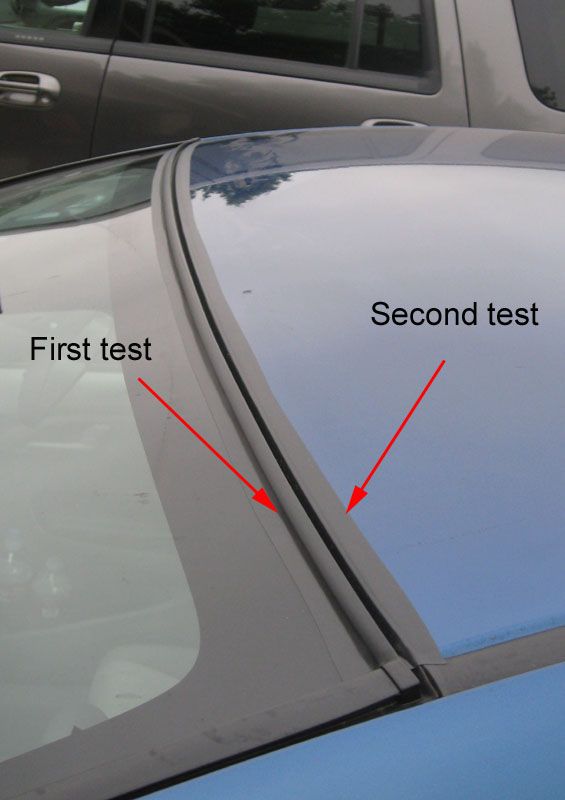
This morning I removed the front tape leaving only the rear on my drive to work and the noise did not return. Consequently, this is where the silicone needs to be applied, between the thin rear rubber strip and the body.
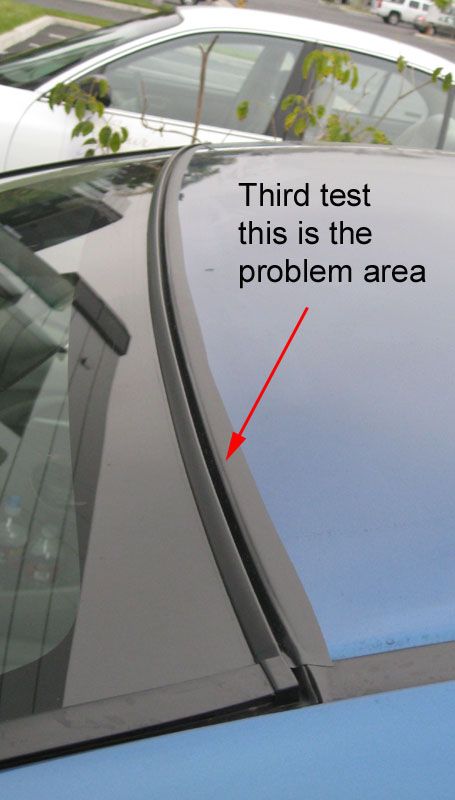
I will use
this sealant made by Permatex designed for automotive windshield sealing. I plan to peal back the rubber strip, insert the sealant dispensing nozzle, and run a very thin bead of sealant the full length of the joint to adhere the strip to the body. I will use blue masking tape on the body at the edge of the joint to protect against sealant getting on the paint.
For anybody unsure or wishing to convince a dealer, I'd suggest trying the same test yourself, it's easy and nothing is permanently changed.
QUOTE(danketchpel;234091)
I did the silicone seal Friday night. I used a paper towel to clean the area between the thin rear lip of rubber and the body making many swipes with the towel until it came out white with no traces of dirt. I kept the towel dry because I did not want to introduce any moisture to the area where the Silicone sealant would be applied. Then using the nozzle cut to the smallest part, I inserted it between the rubber and body at one side of the car and moved along the seam slowly measuring out a consistently small bead of silicone allowing the rubber to fall back against the body as I moved along the seam compressing the silicone bead between the rubber lip and body.
After completing the pass I went back and wiped off any extra silicone, there was very little, and then pulled off the 2" wide blue masking tape I used to protect the paint. I then double checked for any silicone that might have gotten on the paint and let it dry overnight.
I wish I'd taken photos of this process but I couldn't see how to shoot it while making the pass.
I took the car on a drive through LA yesterday and there was zero squealing noise, it's quiet as a Honda should be now. You cannot see any alteration to the car, it looks 100% stock.
Anyway, I see this solution as very easy to do, effective, and there are no changes in how the car looks. I see NO reason why the windshield should need to be replaced or taken out and resealed unless it is leaking water.
courtesy of
http://www.insightcentral.net/ 

 Jun 22 2012, 10:15 AM


 Quote
Quote



 0.0294sec
 0.47
0.47
 7 queries
 GZIP Disabled