

::V6::Scorpion-Thread::V6::, Scorpion Conservation
|
|
 Oct 28 2009, 07:37 PM Oct 28 2009, 07:37 PM
|
 
Junior Member
263 posts Joined: Aug 2008  
|
^^
|
|
|
|
|
|
Oct 28 2009, 07:47 PM
|

Senior Member
2,313 posts Joined: May 2008 
|
Btw my deepest condolence for the dead Hot hottentotta
|
|
|
Oct 28 2009, 08:09 PM
|

Junior Member
377 posts Joined: Mar 2008 From: Kuala Lumpur, Malaysia
|
In theory though, inbreeding isn't exactly a bad thing actually, if you are well informed on the theory of genetics.
Inbreeding in theory is a step towards line breeding which is one of the best method to keep a long well kept generation of good genetics. Although even so, you will have to somewhat out cross in between in order to assure good genetics. Going full inbreeding in time can actually cause recessive genetic traits to emerge. This post has been edited by Kar: Oct 28 2009, 08:16 PM |
|
|
Oct 28 2009, 08:11 PM
|

Junior Member
217 posts Joined: Jun 2009 From: Seremban, Negeri Sembilan
|
QUOTE(RyoKenzaki @ Oct 28 2009, 07:47 PM) Btw my deepest condolence for the dead Hot hottentotta thanks for the concern, seems like i have to buy few more h.h to test for experience...LoL  |
|
|
Oct 28 2009, 09:08 PM
|

Junior Member
466 posts Joined: Dec 2005
|
Inbreeding har .. I don't know much for the pro and cons as Kar said. But I do have a story to share. My sister used to keep hamster and as you know, rotten produce fast and lots. So, after a few in breeding, at the 4th or 5th generation, those hamster had stop giving birth or even making up. I'm actually not sure what happened but I can said that they are healthy lil hamster. Apart from that, we human also always prevent from inbreeding and there are lots of "story" to support that. lol
As for the scorpion, my female aes give birth a number of 14 sling last time which is her second birth after a year plus from the first. Those sling end up all dead due to bad molth. Personally I think that I have provide enough humidity for them and I did feed them with worms. Too bad I din take any picture of them at that time to bring up discussion more. btw, Ryo, before the scorpion go into mouthing stage, did some part of the skin turn to white? |
|
|
Oct 28 2009, 09:16 PM
|
|
Junior Member
217 posts Joined: Jun 2009 From: Seremban, Negeri Sembilan
|
moult u mean?
|
|
|
|
|
|
Oct 28 2009, 09:40 PM
|
|
Junior Member
466 posts Joined: Dec 2005
|
molt indeed, sorry for spelling mistakes. lol
|
|
|
Oct 28 2009, 09:57 PM
|

Junior Member
502 posts Joined: May 2009
|
QUOTE(tunemystylez @ Oct 28 2009, 08:11 PM) thanks for the concern, U r going to the wrong way...If u really wanna keep them alive,u shud study more about them not just buy more and experiment on them.seems like i have to buy few more h.h to test for experience...LoL Love them is to keep them alive,not take their lives as a gamble  |
|
|
Oct 28 2009, 10:24 PM
|
|
Senior Member
2,313 posts Joined: May 2008
|
QUOTE(aimeh @ Oct 28 2009, 09:08 PM) Inbreeding har .. I don't know much for the pro and cons as Kar said. But I do have a story to share. My sister used to keep hamster and as you know, rotten produce fast and lots. So, after a few in breeding, at the 4th or 5th generation, those hamster had stop giving birth or even making up. I'm actually not sure what happened but I can said that they are healthy lil hamster. Apart from that, we human also always prevent from inbreeding and there are lots of "story" to support that. lol Bold part: As for the scorpion, my female aes give birth a number of 14 sling last time which is her second birth after a year plus from the first. Those sling end up all dead due to bad molth. Personally I think that I have provide enough humidity for them and I did feed them with worms. Too bad I din take any picture of them at that time to bring up discussion more. btw, Ryo, before the scorpion go into mouthing stage, did some part of the skin turn to white? Unlike invert, inbreeding in mammal can cause more problem, u think they are healthy because they looks physically fine but i can assure u that 4-5th generation confirm suffer from the effect of inbreeding are The effect are: Reduced fertility both in litter size and sperm viability Increased genetic disorders Fluctuating facial asymmetry Lower birth rate Higher infant mortality Slower growth rate Smaller adult size Loss of immune system function As u can see, most (If not all) cant be seen physically Btw some scorp like my Hot Hot, i do notice the exo whiten prior to molt It's more like the old exo loosen up already, can see clearly  |
|
|
Oct 28 2009, 10:29 PM
|
|
Junior Member
377 posts Joined: Mar 2008 From: Kuala Lumpur, Malaysia
|
Inbreeding in humans or animals is the same, there's actually pros and cons but imho the best way is to go from inbreeding to outcross and then it's all linebreeding. Unfortunately it isn't exactly as easy as it is when it comes to applying it in practical as we can only guess the genetic traits and not able to fully identify them. That is why scientists are always going on with the theory of going outcross is always better than inbreeding.
You can actually sustain up to 3rd generation at most. After that, chances of getting defected younglings will definitely occur. Some may not be visible, some will be visible. Some aren't even worth mentioning but some can cause damage. But our question here has possibly no relation at all towards outcross/linebreed/inbreed because we are as a matter of fact only looking at Hottentotta Hottentotta at the very moment. |
|
|
Oct 28 2009, 11:41 PM
|

Junior Member
49 posts Joined: Oct 2008 From: Malaysia / USA / Scorpion Land 
|
hmmm .... i starting to feel tense in here ........... topic become more and more chim liao ... lol ... but very informative
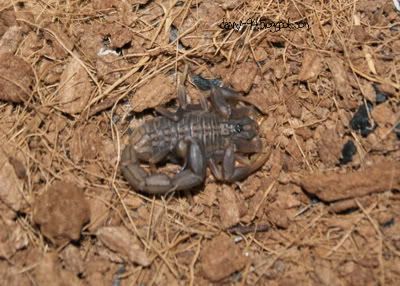
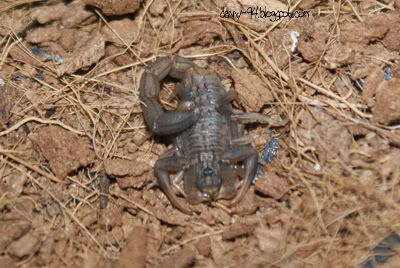
 Added on October 28, 2009, 11:46 pm QUOTE(RyoKenzaki @ Oct 28 2009, 06:55 PM) What? L.Australasiae die easily and need to force feed? O_O hmmm btw i named it michael jackson... I have no problem at all with my wc LA, i even caught one with brood from previous herping trip with taggy and all of the babies survived (Few died cause i neglected them, ok sry man:() About feeding, no problem at all, just kill and throw inside, they ll eat after a few minutes Stigmurus and Jacksoni are from trading with lester with my innesi They will only reach on mid nov thou... Grey color= Pending an dtot it how to moon walk QUOTE(*FallenAngel* @ Oct 28 2009, 07:03 PM) inbreeding could cause any effect in inverts? For gravid scorps that refuse to eat, i dont think that they are full so they refuse to eat. Same as human beings, they need to supply nutrients to the foetus in the womb (if they have 1). Or maybe they not used to local crix? still have not go to hunt for it ... damned busy with work .. never ending project ... think i switch company after chinese new year ... cannot tahan liao ... or they are too weak to eat after killing the prey as they are gravid n need more energy? Ryo do you tried prekilled prey? or they are too weak to eat after killing the prey as they are gravid n need more energy? Ryo do you tried prekilled prey? And yeah, I agree with Kar too, wc specimen are not use to be fed with mealworm or crix. Hong/eddie once told me that wild caught specimen will refuse to eat as they were fed with other kind of bugs in the wild. They might never encounter these bugs in their life before and hence they refuse to eat. And I read that living things do "evolve" into different species (speciation) if they have different kind of food source. So might be the food are not their basic diet hence they might face some problem during digestion and absorption. Lester, how about those Lychas Scutilus ? U mention about you found their habitat right? So any news? Added on October 28, 2009, 11:48 pm QUOTE(danny94 @ Oct 28 2009, 08:37 PM) ^^ nice h.hAdded on October 28, 2009, 11:49 pmHottentotta Polystictus & Hottentotta Trilineatus Hottentotta Polystictus & Hottentotta Trilineatus Hottentotta Polystictus & Hottentotta Trilineatus Hottentotta Polystictus & Hottentotta Trilineatus Hottentotta Polystictus & Hottentotta Trilineatus Hottentotta Polystictus & Hottentotta Trilineatus This post has been edited by s98432512: Oct 28 2009, 11:49 PM |
|
|
Oct 28 2009, 11:53 PM
|

Junior Member
239 posts Joined: Dec 2008 From: Bandar Baru Bangi, Cyberjaya, United Kingdom
|
lol lester....just love all the hottentotta's..
|
|
|
Oct 28 2009, 11:56 PM
|
|
Junior Member
49 posts Joined: Oct 2008 From: Malaysia / USA / Scorpion Land
|
btw guys ...the sand and earth clay mixture have dry up .... but i think i added too much sand .. now is so damned hard ..abit differ from what i have in mind ... but i think still okie ...
texture and intact percentage is there ......... color is of pale red more to dull pink...i think i wil proceed with the actual tank landscaping but with lesser sand this time round ......... |
|
|
|
|
|
Oct 29 2009, 12:00 AM
|
|
Junior Member
239 posts Joined: Dec 2008 From: Bandar Baru Bangi, Cyberjaya, United Kingdom
|
do post some pics of it bro...
|
|
|
Oct 29 2009, 12:02 AM
|
|
Junior Member
49 posts Joined: Oct 2008 From: Malaysia / USA / Scorpion Land
|
hmm sorry .... not pics til i get my dc back from friend ... dc went to the zoo .........
|
|
|
Oct 29 2009, 08:30 AM
|

Junior Member
464 posts Joined: Jul 2005 From: Smurf Village 
|
I am somehow skeptical. Define genetic defects. Define genetic attributed defects. Don't be too quick to jump the gun on this one. It's easy to talk booya but to walk booya and to prove booya can end up with 3 totally diverging schools of thoughts. And this, can be very confusing to the average George, Dollah and Najib. Genetic pooling is not something 99% of us here trained to comprehend. Discussing is still good and there is bound to appear more interesting things. We just have to bear in mind that this is a lot of theory and very little field work where scorpions come in.
I believe its something closer to home - like food rounds, humidity and leaving the scorps alone. Creating the best possible environment for them to live in is a good study. |
|
|
Oct 29 2009, 05:10 PM
|
|
Junior Member
377 posts Joined: Mar 2008 From: Kuala Lumpur, Malaysia
|
From what I know, genetic attributed defects comes in many ways especially when one proceeds to heavy inbreeding. But to define what are the specific defects will be super hard as not all defects are noticeable with the naked eye. Some can be seen if dissected by a true researcher but yet there are still some that can't be seen at all.
Out-cross breeding somehow would reduce the risk because it has a much more stable and easier to predict probability where as compared to inbreeding, basically from the first generation to the number-god-knows-what generation, the risk of getting higher number of genetic attributed defects will get higher and higher. That in a way kinda explains that it is definitely good for us to trade scorpions from different broods to sustain a colony rather that using one single brood to maintain a colony. Trust me, it will die off in time, in theory, it will take roughly about 4 generations to show damage, it's a long way to go but yes, at the end of the day, genetically defected specimens will be circulating around the world some how if everyone does it. That is just one set of theory set aside to explain the unexplainable deaths that occur among our scorpions. To put it simpler, genetic defects exist in any specimen regardless of where it came from. However, through out-crossing, you are actually able to eliminate the chances of getting generations that have high percentage of genetic attributed defects where as through inbreeding, the chance for genetic attributed defects will definitely increase. I have to agree with you Rafiq, I think keeping any inverts or even animals, it is definitely important and crucial to provide an environment that replicates the wild. However, I also do believe that after replicating, then it comes to improving. Through improving, I believe we'll be able to ensure higher survivability rate in captivity. Take tortoises for example, we don't usually just replicate, but we improvise and results have shown that they do have a higher survivability rate. |
|
|
Oct 29 2009, 05:28 PM
|
|
Junior Member
464 posts Joined: Jul 2005 From: Smurf Village
|
Good stuff Kar.
What about genetic diversity in parthenogenic scorpions such as the ever hot Hottentotta caboverdensis aka Hottentotta hottentotta? Are we all doomed to the same inevitable end? Lol. |
|
|
Oct 29 2009, 06:01 PM
|

Junior Member
94 posts Joined: Sep 2007 From: Ampang, Selangor
|
In my humble opinion,
Parthenogenesis is usually the form of reproduction of some organism when optimal conditions are met. As with all types of asexual reproduction, there are both costs (low genetic diversity and therefore susceptibility to adverse mutations that might occur) and benefits (reproduction without the need for a male) associated with parthenogenesis. Lacking the ability to switch to sexual reproduction, the only means of propagations fo obligate parthenogenic species, namely Hottentotta hottentotta and other species which have no known male species is by developing from unfertilized eggs of the parent scorpion For the gene pool of these obligate species to diversify, one must always hope and assume random mutations occur for the better survival of the species. I am not implying that we should all take X-rays and start mutating the scorpions but to allow nature to take its course. Let new alleles and genes arise by themselves. However, in nature obligate parthenogenic organism are bounded to a genetic disaster if the species is not easily mutable. It is apparent that the offspring will be less viable and prone to early deaths. I don't know whether does it apply to scorpions. but seeing the situation of H.Hs I can only assume. Of course I am no expert in this and I am merely sharing my thoughts and knowledge on parthenogenic animals. Excuse me for intruding.  This post has been edited by yltanisaac: Oct 29 2009, 06:14 PM |
|
|
Oct 29 2009, 06:15 PM
|
|
Junior Member
377 posts Joined: Mar 2008 From: Kuala Lumpur, Malaysia
|
QUOTE(rafiqos @ Oct 29 2009, 05:28 PM) Good stuff Kar. Now that is the reason why I said that the theory of genetics might not really apply well here. But if you were to look deep in to parthenogenesis, yes I will have to say that parthenogenic species are pretty much doomed to the same inevitable end. Like how all other asexual reproductive animals, there are both pros and cons. The pros is reproduction without the need for a male where as the con is low genetic diversity. What about genetic diversity in parthenogenic scorpions such as the ever hot Hottentotta caboverdensis aka Hottentotta hottentotta? Are we all doomed to the same inevitable end? Lol. Low genetic diversity alone will definitely cause generations that have high percentage of defected offsprings. But don't worry, low genetic diversity doesn't mean that you will definitely be getting bad broods, it's just higher chance compared to sexual production(having both male & female). It's just lower chance to get offsprings that are have high quality genes, not an inevitable doom and plus, most of the time, you get broods after broods, that's how you even up the difference. |
|
Topic ClosedOptions
|
| Change to: |  0.0293sec 0.0293sec
 0.21 0.21
 6 queries 6 queries
 GZIP Disabled GZIP Disabled
Time is now: 2nd December 2025 - 04:36 AM |
 Quote
Quote