Have gotten an Arctic Cooling
Accelero Twin Turbo from moderno for the 4870.
Previous stock cooler temperatures (GPU #1) were mid-50'C at idle, and reaching the high-70'C under reasonable load on an non-oc'd card with fan speed at automatic. With a 40% fan speed, temperatures were closer to mid-40'C at idle and around 60'C under load. I wish I took some GPU-Z screenies of this but I forgot.
Anyways, the Twin Turbo:
» Click to show Spoiler - click again to hide... «
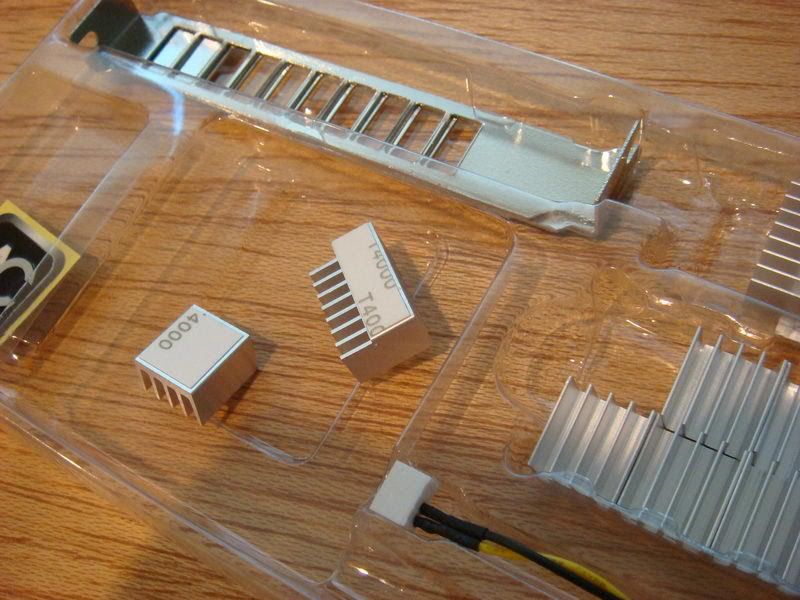
Popping open the packaging, you see pre-applied MX-2, and a selection of heatsinks, power adapter, slot grilles and screws.

The ramsinks are fairly regular, but the VRM sinks are physically larger, with a smaller and narrower contact base. They are made of aluminium, and weigh next to nothing.
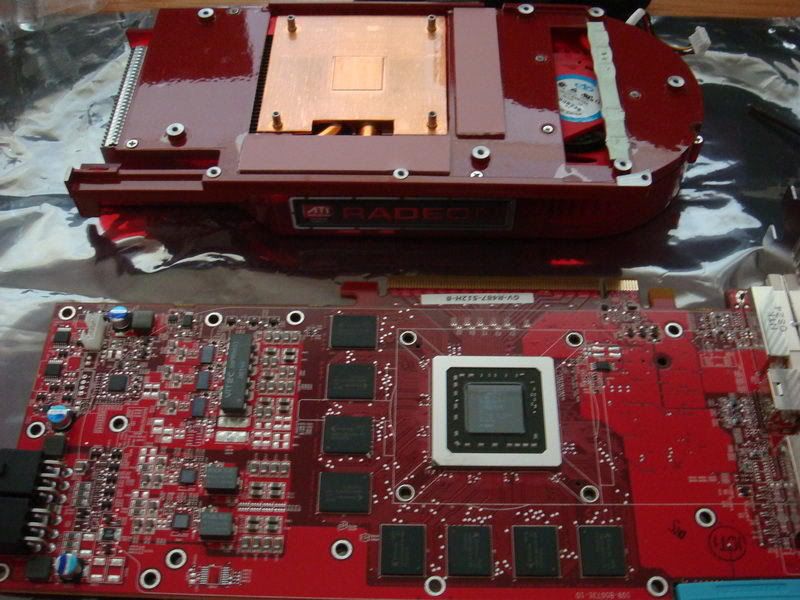
Stock cooler removed, and all the contact points cleaned. Note the size of the VRM chips, and the unnecessary bulk of the stock cooling solution.
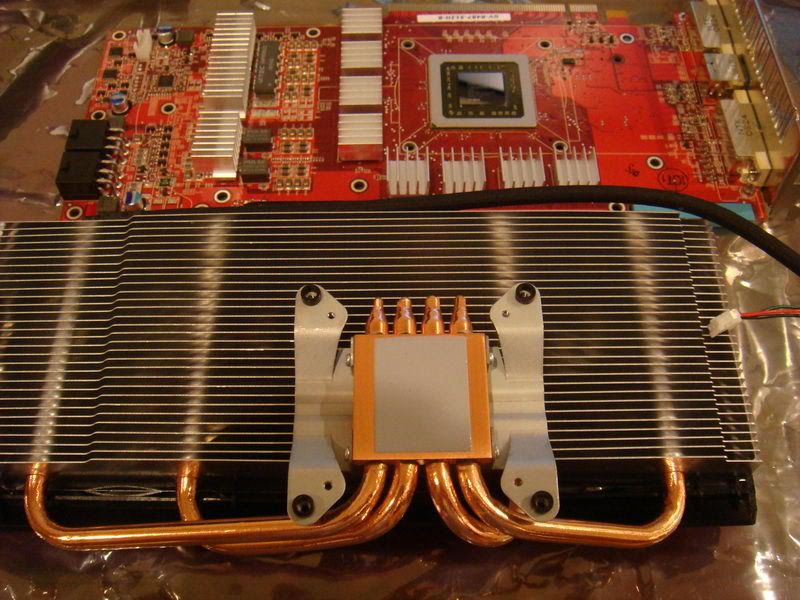
All the heatsinks attached with their thermal tape, and the main cooler is ready to be slapped on. Installation is very easy, just place the cooler upside down, slap on some washers, line it all up, and screw in the four screws. The VRMs could only accommodate three of the four heatsinks supplied.
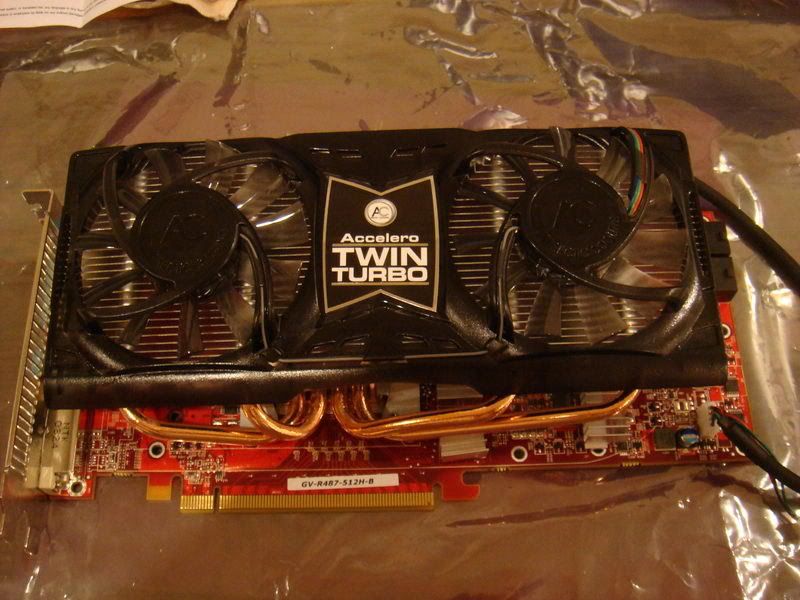
The cooler attached and ready to go. It comes with both three and four pin plugs for the fan power, but the sleeved cable is way long.
A bit of contact between the ramsink closest to the the slot, and one of the heatpipes. Angling the ramsink a bit to accommodate the heatpipe solves the problem.
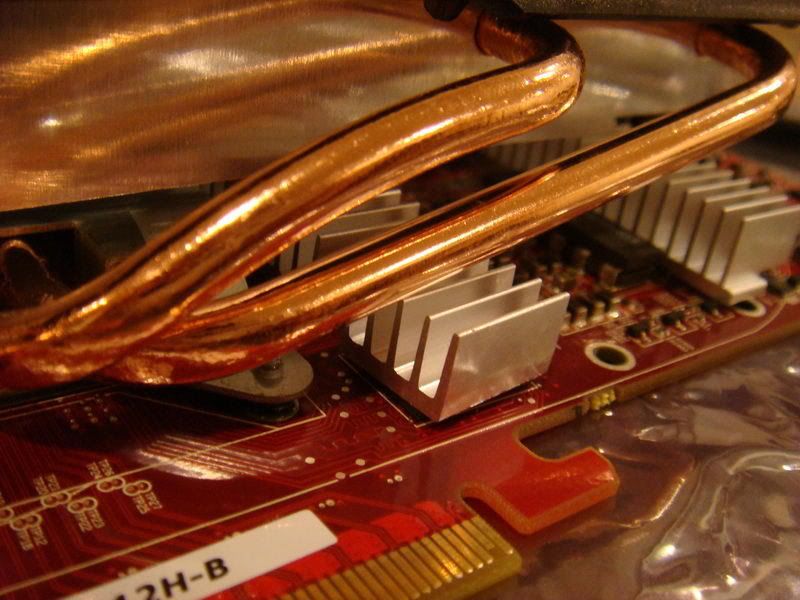
Here you see what could be an issue with the VRM sinks. They already have a smaller contact patch, but the tiny VRM chips themselves offer hardly any purchase for the sinks to stick on to. I would have rather have the sink as one single piece, and have it attached to the holes on top and below the chips, like the sink I saw bundled with the S1 cooler. As it is, it doesn't take much pressure on the furthest point from the contact patch to pop the sink off the chip. I'd have preferred a larger sink too, as my finger tells me these sinks do get very very warm.
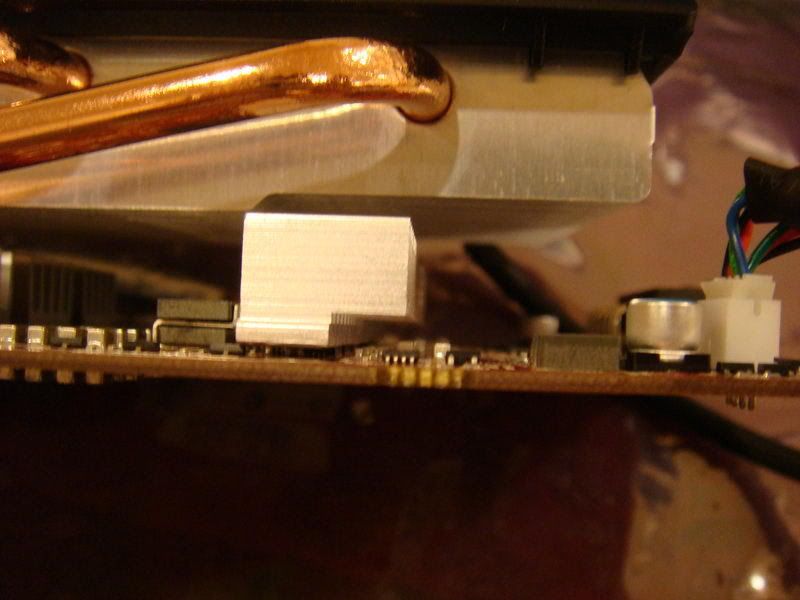
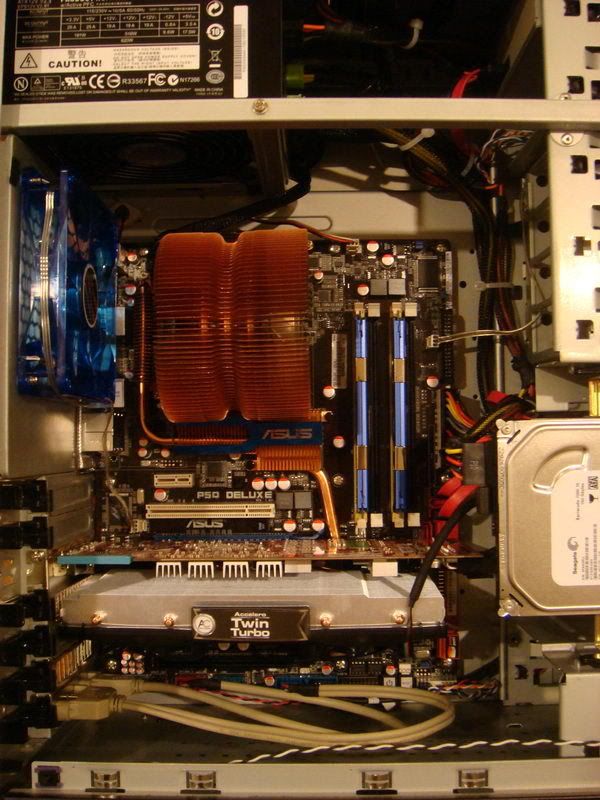
Here's the card installed. There's enough space underneath for a second card with a Twin Turbo, too, but I'd probably need a bigger case. The cooler itself is very lightweight in relation to the stock cooler.
Wasn't too comfortable with the catalyst profile set to 'automatic', at the fan would stop and I'd start worrying. So I used a 70% fan speed manual profile.
At idle:
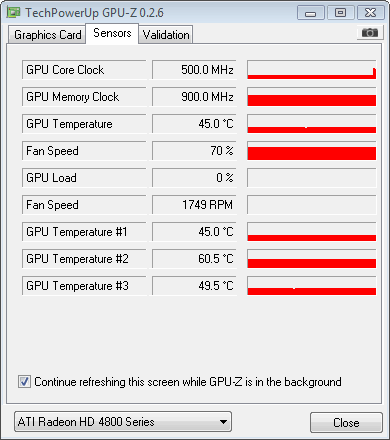
and with a reasonable amount of load:
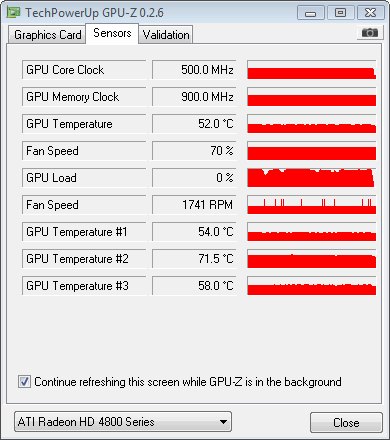
At 70%, the fan is still very, very quiet, and as this cooler does not evacuate hot air out of the card's rear exhaust, the heat dissipates within the case, but the internal ambient temperature only went up a couple of degrees as there was a sufficient cross-flow of air through the system.
Overall, under load, there's a clear reduction of temperature from a worrying high-70'C to a mid-50'C with the fan at 70%. There is hardly any increase in noise with the fan at 100% and probably a more significant decrease in temperatures, but I felt comfortable with the temperature levels at this setting. Ultimately, that's what any aftermarket cooler provides, the security of being able to run whatever you want to run without having to be concerned about temperature levels and such.
Edit: Just looked at the last page and saw that post about the Twin Turbo idling at 32'C with a 100% fan speed. Will go play around later and see what kind of temperatures I can get out of this with a higher fan speed.
This post has been edited by Roland San: Jul 29 2008, 04:42 PM 

 Jul 29 2008, 10:31 AM


 Quote
Quote


 0.0177sec
 0.17
0.17
 6 queries
 GZIP Disabled