

as above title. whats the diff. roughly i know how the lighten 1 works. can some pls enlighten me on how the adjustable 1 works?
how an adjustable cam pulley works?
how an adjustable cam pulley works?
|
|
 Feb 28 2008, 10:58 PM, updated 18y ago Feb 28 2008, 10:58 PM, updated 18y ago
Show posts by this member only | Post
#1
|
 
Staff
4,380 posts Joined: Mar 2005 From: petaling jaya,puchong jaya,pandan jaya,putra jaya   
|
as above title. whats the diff. roughly i know how the lighten 1 works. can some pls enlighten me on how the adjustable 1 works?
|
|
|
|
|
|
Feb 28 2008, 11:38 PM
Show posts by this member only | Post
#2
|
 
Senior Member
664 posts Joined: Jan 2003 From: Cheras, KL
|
err, i think u got confused with CAM PULLEY and CRANK PULLEY
|
|
|
Feb 29 2008, 12:30 AM
Show posts by this member only | Post
#3
|

Senior Member
10,975 posts Joined: Jan 2003 From: disini disana
|
there isnt any adjustable crankpulley available...
campulley is the top one... crankpulley is the bottom one... there is adjustable campulley and lightened crankpulley... both different thing... |
|
|
Feb 29 2008, 12:37 AM
Show posts by this member only | Post
#4
|

All Stars
15,278 posts Joined: Jan 2003
|
lol if adjustable crank pulley then easier to put supercharger XD
|
|
|
Feb 29 2008, 01:16 AM
Show posts by this member only | Post
#5
|
|
Staff
4,380 posts Joined: Mar 2005 From: petaling jaya,puchong jaya,pandan jaya,putra jaya
|
ooooo. crank is the 1 at the bottom? okie okie. so how a adjustable cam pulley works then?
|
|
|
Feb 29 2008, 02:31 AM
Show posts by this member only | Post
#6
|
|
Senior Member
10,975 posts Joined: Jan 2003 From: disini disana
|
QUOTE(scotty @ Feb 29 2008, 01:16 AM) ooooo. crank is the 1 at the bottom? okie okie. so how a adjustable cam pulley works then? it allows u to retard or advance the timing of ur car...   |
|
|
|
|
|
Feb 29 2008, 02:47 AM
Show posts by this member only | Post
#7
|
|
Staff
4,380 posts Joined: Mar 2005 From: petaling jaya,puchong jaya,pandan jaya,putra jaya
|
QUOTE(the_catacombs @ Feb 29 2008, 02:31 AM) it allows u to retard or advance the timing of ur car... i read somewhere, advance means inlet valve comes down faster than normal first then only the piston comes up? sorry noob here.  |
|
|
Feb 29 2008, 09:58 AM
Show posts by this member only | Post
#8
|

Senior Member
3,945 posts Joined: Jan 2003
|
so retard and advance what we gain then? got any sifu can explaint. me noobie
|
|
|
Feb 29 2008, 10:08 AM
Show posts by this member only | Post
#9
|

Senior Member
3,872 posts Joined: Jan 2003 From: 10001011010101
|
Retard and advance means you... actually, screw that. it's way too technical for me to explain. Let's just say that by retarding or advancing the valve openings you get to fine-tune the amount of air going into the petrol chamber. More, or less, to optimize the compression - AKA increase/decrease the power.
Basically, it lets you choose to burn rich (too much petrol, too little air) or burn lean (too little petrol, too much air). Most cars are tuned to burn rich, which produces less power. But tune it too lean and you risk knocking or worse, detonation. |
|
|
Feb 29 2008, 01:47 PM
|

Senior Member
3,772 posts Joined: Jan 2003
|
If i am not mistaken the adjustable cam pulley allows adjustment of valve timing as mentioned above.
At low engine speed you would want the intake valve to open slightly before the exhaust valve close totally to take advantage of the vacuum caused by the exiting exhaust to pull more air and fuel in. At high speed the intake should open AFTER the exhaust closes because if they overlap, the incoming air and fuel will go straight out the exhaust because it's moving at much higher speed causing loss of power. So you can adjust the valve timings to suit what you are looking for. BUT you ask 'then isn't that only one setting?' Exactly! so welcome to the age of VVTi,i-VTEC,VANOS,CVVT,DVVT,MIVEC, variable valve timing. Variable valve timing now allows the engine to adjust itself the best conditions for every engine speed. |
|
|
Feb 29 2008, 03:41 PM
|
|
Senior Member
10,975 posts Joined: Jan 2003 From: disini disana
|
QUOTE(lonewolf @ Feb 29 2008, 09:58 AM) so retard and advance what we gain then? got any sifu can explaint. me noobie retard to gain more top end power... advance to gain more initial pickup acceleration....retard more u gain more top speed.... but cannot retard too much or else initial acceleration will be jerky.... advance more u gain better initial pickup... but over advanced will cause detonation, which is bad for engine... |
|
|
Mar 1 2008, 12:20 AM
|

Senior Member
1,008 posts Joined: Jan 2005 From: Shah Alam SDE
|
for what i know, by adjusting ur distributer 1degree weather clockwise/anti-clockwise also can make it retard/advance (but if got distributer la)....
i think when using adjustable campulley can make it more retard/advance to higher level.... but using programable ECU also can done that without adjusting campulley, but dunno which one more accurate? |
|
|
Mar 1 2008, 01:36 AM
|

Senior Member
936 posts Joined: Jun 2005
|
ecu can only adjust the ignition timing for normal engines. for those with vvt or some form of it you can adjust when it happens but not how much.
there are 3 reasons why adjustable pulleys are used. 1 - They just look cool when exposed don't they ? 2 - For engines with out vvt or some form of it, you cannot adjust the cam timing with the standard pulley. 3 - For track guys you will know this. Officially speaking, vvt is something like turbocharging so when on the track there is a weight penalty for cars wif vvt. Thats why the track engines have the vtec disabled or the vvt oil hole plugged. Don't get mixed up with the ignition timing and the cam timing. Ignition timing is to adjust when the spark plug fires relative to piston position cam timing is to control when the valve opens relative to piston position. Added on March 1, 2008, 1:38 amalso, the adjusting is actually to suit different the user. If you use the engine mainly at low rpms then less overlap is better. if you are at high rpms more overlap is better. overlap is the amount of time the intake valve is open while the exhaust valve is open. This post has been edited by sakaic: Mar 1 2008, 01:38 AM |
|
|
|
|
|
Mar 1 2008, 07:29 AM
|

Junior Member
160 posts Joined: Jan 2007 From: kl
|
 understand cam 1st; then can understand how cam pulley work to get back ideal ignition point understand cam 1st; then can understand how cam pulley work to get back ideal ignition pointThere is only one way to increase the performance of an engine, and that is to cram more fuel/air mixture into the cylinder, compress it and then ignite it. The bigger the bang, the more energy is released and if this energy is efficiently harnessed the higher the performance of the engine. Many ways are employed to fill the cylinders, such as high flow air filters, multi carburettors, big ass fuel Injetcors, ported and large valve cylinder heads, supercharging and turbocharging.. However no matter what methods are used they all rely on the camshaft opening the valves high enough and long enough to enable them to get this increased mixture into the engine. It is the enhanced "lift" and "duration" that is imparted to the valves by the high performance camshaft, that makes it an altogether different component to the standard cam. It is usually these figures that are the measure of how "hot" or radical the performance cam is. High performance cams are often surrounded by a good deal of mysticism, confusion and ignorance, largely brought about by the lack of reliable information from the performance cam manufacturer. It is the intention of this publication to inform, and to make cam selection easy to understand. The function of the camshaft is to lift the valve off the seat, and, as it rotates, to allow the valve spring to close it again. There are numerous ways in which engine designers have linked the camshaft to the valve, but the most common are - Push rod and rocker arm e.g. GM V8 blocks :monkey: Finger follower e.g. Astra "J" and Ford Each method of linking the cam to the valve, or valve train, requires a different design of cam profile. possible to select a,push rod profile for a direct acting application, or vice versa. of the engine. 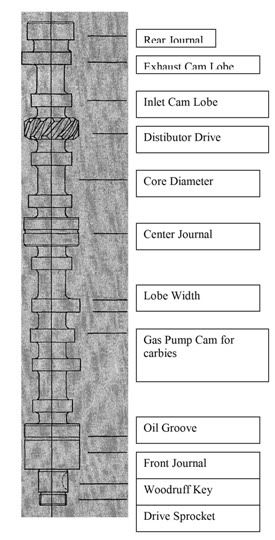 Figure of a camshaft 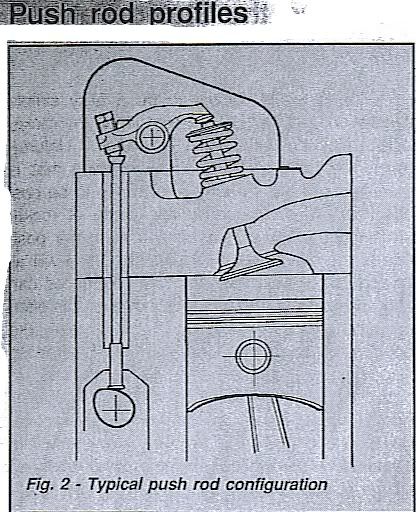 Generally speaking all push rod engine profiles have less cam lift than valve lift. The rocker arm has an offset pivot rather like a lever, and as the push rod activates the arm, this motion is multiplied, by the amount of offset of the pivot, and transmitted to the valve. This offset is usually refered to as a ratio, and is normally in the region of 1.5:1. This means for every .010" of cam lift, the valve will open .015" i.e.. cam lift .010." x rocker ratio 1.5 = .015" valve lift. (see fig 3) However it must be remembered when calculating valve lift, that.all mechanical profiles operate with a valve clearance and this clearance must be deducted from the total lift in order to find the true valve lift. e.g.. Cam lift .200" x rocker ratio 1.5 = .300" - clearance .010" = valve lift .290" (see fig 3) 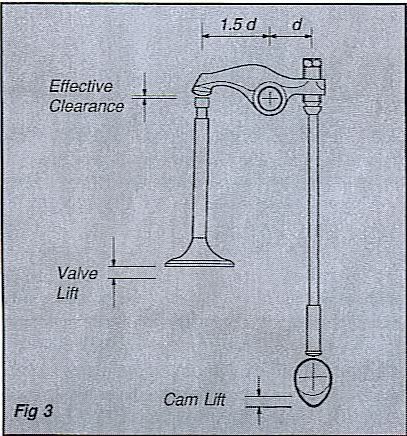 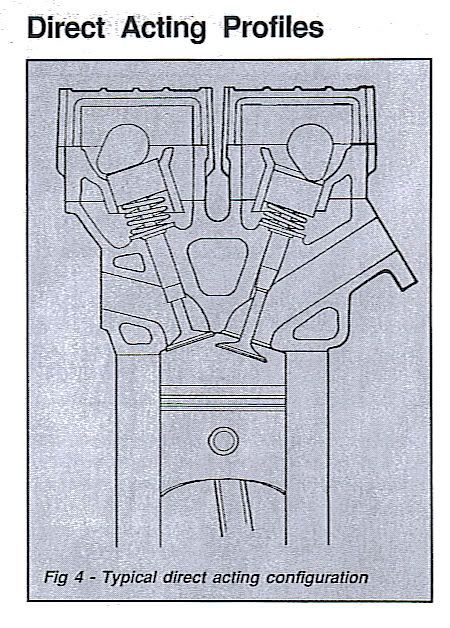 This is probably the easiest of all valve trains to understand as the cam operates directly onto a bucket type follower, (so called as it looks rather like an inverted bucket. See fig 5) and the cam motion is transmitted via an adjustment shim to the valve. Because of the relatively compact area of this type of design it is invariably used in twin-cam applications.(fig 4) 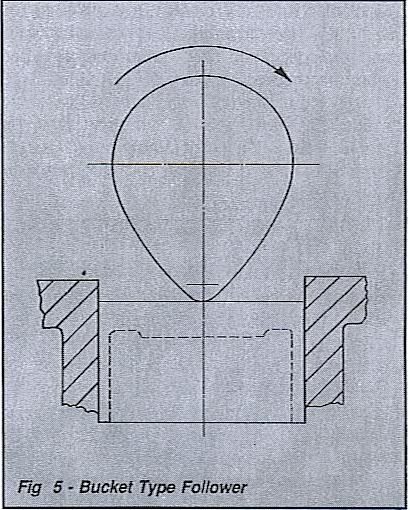 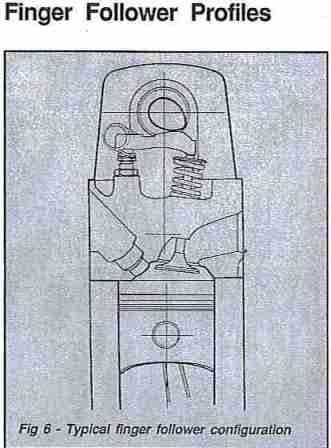 The vast majority of finger follower type profiles utilise an asymmetric cam profile operating on a radiused finger. (see fig.5) The finger is pivoted at one end on an adjustable ball stud and the cam operates on a radiused pad on the finger and this motion is then transmitted to the other end of the finger where it operates the valve. The finger is designed in very much the same way as the push rod rocker arm. i.e.. it also employs a rocker ratio, as the cam contact area is not in the centre of the finger. With some of the more radical race and rally profiles in Ford Pinto engines it has been found that the wipe area of the standard finger is too short and special long pad fingers are required. (part no CF12) Unlike both the push rod and direct acting set ups, there is a considerable wipe area of cam lobe over the finger, and fitting instructions must be adhered to if excessive wear to both the cam and fingers is to be avoided. This post has been edited by lienster: Mar 1 2008, 07:33 AM |
|
|
Mar 2 2008, 05:14 AM
|
|
Senior Member
10,975 posts Joined: Jan 2003 From: disini disana
|
QUOTE(sakaic @ Mar 1 2008, 01:36 AM) 3 - For track guys you will know this. Officially speaking, vvt is something like turbocharging so when on the track there is a weight penalty for cars wif vvt. Thats why the track engines have the vtec disabled or the vvt oil hole plugged. i didnt know that...  QUOTE(lienster @ Mar 1 2008, 07:29 AM) » Click to show Spoiler - click again to hide... «  |
|
|
Mar 2 2008, 10:49 AM
|

Senior Member
6,724 posts Joined: Jan 2003 From: Seri Petaling 
|
QUOTE(lienster @ Mar 1 2008, 07:29 AM) understand cam 1st; then can understand how cam pulley work to get back ideal ignition pointThere is only one way to increase the performance of an engine, and that is to cram more fuel/air mixture into the cylinder, compress it and then ignite it. The bigger the bang, the more energy is released and if this energy is efficiently harnessed the higher the performance of the engine. Many ways are employed to fill the cylinders, such as high flow air filters, multi carburettors, big ass fuel Injetcors, ported and large valve cylinder heads, supercharging and turbocharging.. However no matter what methods are used they all rely on the camshaft opening the valves high enough and long enough to enable them to get this increased mixture into the engine. It is the enhanced "lift" and "duration" that is imparted to the valves by the high performance camshaft, that makes it an altogether different component to the standard cam. It is usually these figures that are the measure of how "hot" or radical the performance cam is. High performance cams are often surrounded by a good deal of mysticism, confusion and ignorance, largely brought about by the lack of reliable information from the performance cam manufacturer. It is the intention of this publication to inform, and to make cam selection easy to understand. The function of the camshaft is to lift the valve off the seat, and, as it rotates, to allow the valve spring to close it again. There are numerous ways in which engine designers have linked the camshaft to the valve, but the most common are - Push rod and rocker arm e.g. GM V8 blocks :monkey: Finger follower e.g. Astra "J" and Ford Each method of linking the cam to the valve, or valve train, requires a different design of cam profile. possible to select a,push rod profile for a direct acting application, or vice versa. of the engine. Figure of a camshaft Generally speaking all push rod engine profiles have less cam lift than valve lift. The rocker arm has an offset pivot rather like a lever, and as the push rod activates the arm, this motion is multiplied, by the amount of offset of the pivot, and transmitted to the valve. This offset is usually refered to as a ratio, and is normally in the region of 1.5:1. This means for every .010" of cam lift, the valve will open .015" i.e.. cam lift .010." x rocker ratio 1.5 = .015" valve lift. (see fig 3) However it must be remembered when calculating valve lift, that.all mechanical profiles operate with a valve clearance and this clearance must be deducted from the total lift in order to find the true valve lift. e.g.. Cam lift .200" x rocker ratio 1.5 = .300" - clearance .010" = valve lift .290" (see fig 3) This is probably the easiest of all valve trains to understand as the cam operates directly onto a bucket type follower, (so called as it looks rather like an inverted bucket. See fig 5) and the cam motion is transmitted via an adjustment shim to the valve. Because of the relatively compact area of this type of design it is invariably used in twin-cam applications.(fig 4) The vast majority of finger follower type profiles utilise an asymmetric cam profile operating on a radiused finger. (see fig.5) The finger is pivoted at one end on an adjustable ball stud and the cam operates on a radiused pad on the finger and this motion is then transmitted to the other end of the finger where it operates the valve. The finger is designed in very much the same way as the push rod rocker arm. i.e.. it also employs a rocker ratio, as the cam contact area is not in the centre of the finger. With some of the more radical race and rally profiles in Ford Pinto engines it has been found that the wipe area of the standard finger is too short and special long pad fingers are required. (part no CF12) Unlike both the push rod and direct acting set ups, there is a considerable wipe area of cam lobe over the finger, and fitting instructions must be adhered to if excessive wear to both the cam and fingers is to be avoided. |
|
|
Mar 2 2008, 05:18 PM
|
|
Junior Member
160 posts Joined: Jan 2007 From: kl
|
Obtaining the Stated Valve Lift This would appear to be a fairly simple calculation, just multiply the cam lift by the rocker ratio and deduct the valve clearance. Unfortunately life isn't that simple. Everything that is manufactured has to have a tolerance to be cost effective and consequently the length of rocker arm, finger followers, valves and even the position of the ball studs in the cylinder head will all have small differences. All these differences can add up and work in our favour, however this often happens the other way round. This is really like good news and bad news, as these tolerances also allow us to juggle valves, rocker arms etc.. to obtain the optimum lift. It is worth noting that all quoted rocker ratios can only be a guide figure due to these variations, and are calculated from brand new unmodified engines using standard valves at a standard height relative to the rocker arms or fingers. Any variation of the valve height will alter this ratio. Generally speaking if the valve height is reduced the ratio will increase giving more valve lift, and conversely if the valve length is increased the ratio will decrease, resulting in less valve lift. (the effective valve length is increased each time the valve seats are recut) Cam Lobe Terminology We have seen the various methods in which the cam operates the valve, but regardless of how a particular valve train is configured, cam lobe design incorporates certain features common to all cases. 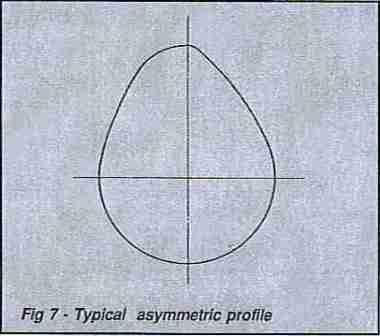 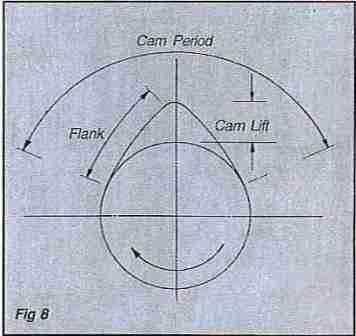 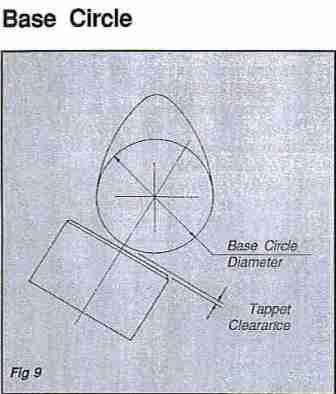 As you will see the base circle accounts for approx. 180 degrees of the cam profile and refers to the portion of the lobe that does not impart any valve motion as the cam rotates. It controls the part of the four stroke cycle where we require the valve to be closed. Theoretically the cam followers will not even run on this section of the lobe, as it is separated from it by valve clearance. (see fig. 9) Valve Clearances It is important to have some slack or clearance in the valve train to compensate for any expansion or growth of the components, due to heat generated when the engine reaches operating temperature. It is worth bearing in mind that any engine that produces more power will also produce more heat and this is why many performance cams run larger valve clearances than the standard or original cam, and are sometimes more noisy in operation. It is also common for the exhaust valve to run larger cold clearances than the inlet valve, because of its higher running temperature. However much depends on the design of the cylinder head and how efficient it is at dispersing the heat produced in the' combustion chamber, away from the valves. 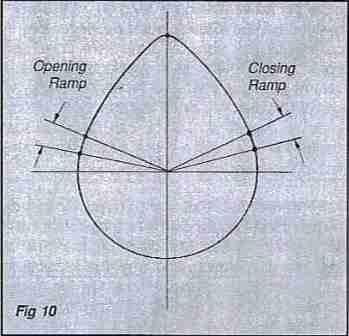 Ramp This is the section of the profile where the clearance is gently taken up as the cam rotates and prepares the cam follower to contact the cam lobe. Ramps are found both on the opening and closing side of the profile and in the case of the standard production cam, help to reduce valve train noise. However the ideal situation in a performance engine is to get the valve open as quickly as possible, and frequently these ramps are heavily modified, often making performance cams less quiet in operation. Obviously the design of the ramps have to be taken into account when designing performance profiles as an extremely noisy cam may be acceptable in a full race engine, but would be unacceptable in a mildly tuned family saloon. The closing ramp is usually less modified than the inlet on performance cams, as it is important to dose the valve gently back on its seat. If this is not the case, the valve will tend to crash back on its seat, and excessive damage to both valve and seat will result. Also the shock of this sudden collision can cause valve float, this being a situation where the valve will bounce back off its seat, thus opening the valve again just when we least want it. Flank The lobe flank is the section of the profile that extends from the ramp to the nose and it is this section of the profile that accelerates the cam follower to the full lift position. As the cam continues to rotate it allows the now compressed valve spring to close the valve in a controlled manner, until it rests back on its seat. The flank is a very important part of the performance profile as it controls the rate or acceleration of the valve. As we stated before, it is desirable in a high performance engine to open the valve as quickly as possible. However the flank has to take account of not only accelerating the whole mass of the valve train (valve, valve spring, valve retainers, push rods, cam followers etc..) but also has to start retarding it before the full lift position is reached. If this were not the case, the follower would no longer stay in contact with the lobe. We therefore only have approx. 50% of the flank to accelerate the whole mass of the valve train, and the further we try to open the valve, the more resistance the spring exerts to oppose it. So it can be seen that acceleration rates are a critical factor in performance cam design. Acceleration rates are limited by the diameter of the follower and it is easy to see why performance profiles are often on the limit of maximum acceleration, and why it is sensible to use the cam follower recommended by the manufacturer of the cam, as this will ensure that the design of the follower will be suitable for a particular profile, or range of profiles. With the need for a quick opening, and gentle closing of the valve, often the inlet and exhaust flank will have differing rates of acceleration, and with the very tight tolerances demanded of a performance profile, it soon becomes apparent that the engine must always be rotated in the correct direction. Quite apart from any damage caused by the backlash in the timing chain being reversed, there is also a chance of the cam lobe crashing with the edge of the followers. Always ensure that the engine is correctly set-up and that there is no possibility of pre-ignition as this may cause the engine to run in the opposite direction to which it was intended. This can result in broken cam followers, smashed lobes, bent valves, etc.. Nose The nose is the section of the profile where maximum lift occurs and is positioned each side of the opening and closing flanks. Due to differing cam design requirements and engine designs, the nose radii of performance cams can vary considerably. Some profiles look very pointed, whilst others may appear rounded. No matter what shape the profile may be the nose radius is the most highly stressed part of the profile, and the part that is most likely to fail. This section of the lobe has the least contact area with the followers, and at the same time has to overcome the full force of the valve spring, which is trying to prevent the valve opening. Pressure well in excess of 10,000 PSI, can be exerted on the lobe nose. It is therefore obvious that only the highest quality oils should be used in performance engines, when you consider that it is only the thin oil film separating the lobe and follower. If this film breaks down failure is inevitable. DWELL 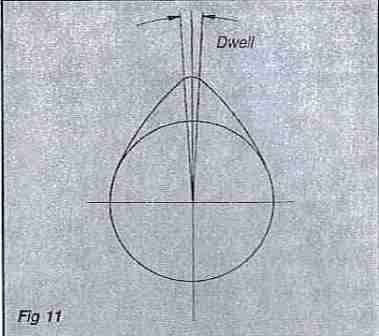 We have seen that the nose is the section of the profile where maximum lift occurs, but it is also the section of the profile that reverses the direction of the valve. We know that the cam lobe controls the opening and closing of the valve, but at some point the valve has to stop before it can reverse its direction. The length of time the valve remains at its maximum height (usually measured in degrees on the crankshaft) is called the dwell angle, and as we will see later, this dwell angle period is very important when setting up the cam. Lift and Duration As previously stated, the performance cam is generally judged by the advertised lift and duration figures, so it is important that we look closely at these two features. Lift When selecting a performance cam it is important to know how much lift a particular profile will impart to the valve. Generally speaking it is true to say the more lift a cam produces the more radical the profile, but also this information is essential in determining if the camshaft will fit in the engine without need to modify other components. When tuning any engine, it is common practice to increase the compression ratio, which means reducing the combustion chamber volume in relation to swept volume. This is often achieved by skimming the face of the cylinder head, thus reducing the clearances between piston and valves. Obviously if we increase the valve lift, we need to do some careful calculations to ensure that the valves do not contact the piston. It may be necessary to machine pockets in the piston crown. (see fig. 12) Whenever there is a possibility of valve to piston contact it is recommended that a trial engine build is carried out, using plasticine on top of the piston crowns. After rotating the engine it is then possible to measure the thickness of the plasticine and determine the valve to piston clearance. It is imperative that this clearance is not less than .060", otherwise the possibility of piston contact will result. 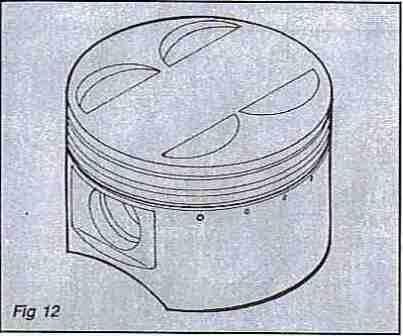 Cam lift can be calculated by deducting the base circle diameter from the overall lobe height. (see fig. 13) 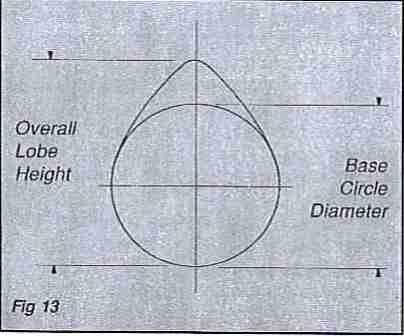 When measuring cam lift, it is impractical to use a micrometer to determine the base circle diameter, as it is not possible to see where the opening and closing ramps start and finish. If accurate results are to be achieved the cam lift must be measured between centres using a dial indicator gauge. When using this method the cam must be checked to ensure that it is not bent, that there is no run-out in the centres, the dial indicator is set up exactly on the centre line of the cam and at 90 degrees to the checking bed, before measuring. (see fig. 14) Never check cam lift in the engine as all the engine tolerances and clearances will combine to give inconsistent and unreliable information. 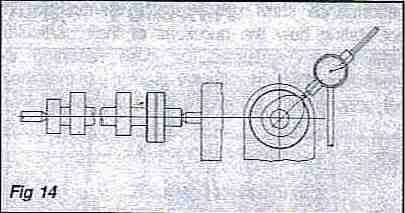 Many people find it difficult to understand that by grinding a lobe smaller, more lift can be achieved. This is probably best explained in fig. 15. 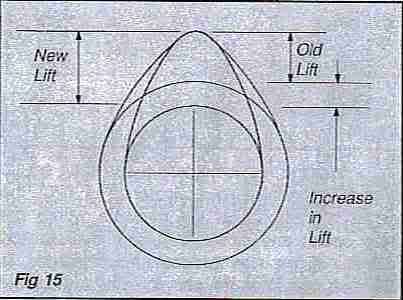 It is interesting to note that many performance cams have the core turned down. In general this is because when an existing cam is reprofiled, the base circle of the lobe is reduced to such an extent to obtain the greater lift, that it becomes smaller in diameter than the core, and if the core was not machined to a lesser diameter than that of the lobe, the cam follower would sit on the core and not the base circle of the cam. Also, even when using a new casting or blank, to obtain radical profiles the same situation often arises. This post has been edited by lienster: Mar 2 2008, 05:19 PM |
|
|
Mar 3 2008, 11:39 AM
|

Senior Member
1,017 posts Joined: Jan 2003 From: Malacca
|
Mr. lienster, PLEASE quote your sources before flooding the thread with it. We wouldn't want LYN to be charged with plagiarism, now would we?
|
|
|
Mar 5 2008, 12:37 AM
|
|
Staff
4,380 posts Joined: Mar 2005 From: petaling jaya,puchong jaya,pandan jaya,putra jaya
|
i just got the cam pulley. how many degrees would be ok?
  This post has been edited by scotty: Mar 5 2008, 03:07 AM |
|
|
Mar 5 2008, 02:31 AM
|
|
Senior Member
10,975 posts Joined: Jan 2003 From: disini disana
|
QUOTE(scotty @ Mar 5 2008, 12:37 AM) i just got the cam pulley. how many degrees would ok? usually they will retard about 4 degree... but this vr vr much depends on ur tuning... get an experienced mech to get it tuned... even its not dyno tuned also nvm... my setting tuned by bawah pokok mech... so far vr satisfied.... » Click to show Spoiler - click again to hide... «  |
|
|
Mar 5 2008, 03:04 AM
|

Junior Member
58 posts Joined: Feb 2008
|
erm, SOCH or DOCH?
|
|
|
Mar 5 2008, 03:07 AM
|
|
Staff
4,380 posts Joined: Mar 2005 From: petaling jaya,puchong jaya,pandan jaya,putra jaya
|
QUOTE(semut_turboo @ Mar 5 2008, 03:04 AM) erm, SOCH or DOCH? its a soch.  |
|
|
Mar 5 2008, 03:37 AM
|
|
Senior Member
10,975 posts Joined: Jan 2003 From: disini disana
|
QUOTE(semut_turboo @ Mar 5 2008, 03:04 AM) erm, SOCH or DOCH? QUOTE(scotty @ Mar 5 2008, 03:07 AM) its a soch. SOHC ler (single overhead camshaft)  |
|
|
Mar 5 2008, 12:29 PM
|

Junior Member
57 posts Joined: Mar 2005 From: Kajang/S.Alam
|
QUOTE(the_catacombs @ Mar 5 2008, 02:31 AM) usually they will retard about 4 degree... but this vr vr much depends on ur tuning... get an experienced mech to get it tuned... even its not dyno tuned also nvm... my setting tuned by bawah pokok mech... so far vr satisfied.... If cam pulley is retard 4 degree, how bout d distributor? Issit also have to retard a bit? Have to set back using d timing light?Btw, how's d FC if normal driving? Issit improve compare to stock? |
|
|
Mar 5 2008, 08:52 PM
|
|
Senior Member
10,975 posts Joined: Jan 2003 From: disini disana
|
QUOTE(San_J @ Mar 5 2008, 12:29 PM) If cam pulley is retard 4 degree, how bout d distributor? Issit also have to retard a bit? Have to set back using d timing light? distributor set at default lor... slowly do trial n error see which setting suits ur driving style... thats why i said this tuning requires vr delicate fine tuning.... not experienced person vr hard to see any difference....Btw, how's d FC if normal driving? Issit improve compare to stock? my fc improved because my previous setting was wrong... (bcoz hand itchy diy tune till all wrong).... compare to stock of coz mine cannot win la... weber + highcam how good fc u can expect leh.... |
|
|
Mar 6 2008, 10:33 AM
|
|
Senior Member
1,017 posts Joined: Jan 2003 From: Malacca
|
QUOTE(the_catacombs @ Mar 5 2008, 08:52 PM) distributor set at default lor... slowly do trial n error see which setting suits ur driving style... thats why i said this tuning requires vr delicate fine tuning.... not experienced person vr hard to see any difference.... my fc improved because my previous setting was wrong... (bcoz hand itchy diy tune till all wrong).... compare to stock of coz mine cannot win la... weber + highcam how good fc u can expect leh.... FINALLY! Admit also!  Not stock anymore... Not stock anymore...  Yeah, I do my tuning myself as it always starts pinging when I get my mech to tune it. Even with the proper wide-band (my mech is also a Proton Service centre), the setting isn't always satisfying. A good trial & error run spanned over several days should give you the best result |
|
|
Mar 6 2008, 02:50 PM
|
|
Senior Member
10,975 posts Joined: Jan 2003 From: disini disana
|
QUOTE(GoldenHawk @ Mar 6 2008, 10:33 AM) FINALLY! Admit also! weber + highcam also can be stock... Not stock anymore... Yeah, I do my tuning myself as it always starts pinging when I get my mech to tune it. Even with the proper wide-band (my mech is also a Proton Service centre), the setting isn't always satisfying. A good trial & error run spanned over several days should give you the best result  |
|
|
Mar 6 2008, 10:13 PM
|
|
Junior Member
160 posts Joined: Jan 2007 From: kl
|
QUOTE(the_catacombs @ Mar 6 2008, 02:50 PM) weber + highcam also can be stock...  its called kiasu stock  |
|
|
Mar 7 2008, 12:53 AM
|

Senior Member
1,145 posts Joined: Dec 2007
|
technically, its useless in msia unless your tuner is really really good or u are doing a race with it cos i believe most mechanics here wouldnt take hours of adjusting it to maximize your car performance accordingly.
in msia everything is easy done easy go. ever wondered why those fuel saving gadgets/ voltage stabilizer can increase so many hp in overseas? answer is commitment and dedication Malaysia? Kerja senang dan mudah |
|
|
Mar 7 2008, 01:21 AM
|
|
Senior Member
10,975 posts Joined: Jan 2003 From: disini disana
|
QUOTE(terrysoh @ Mar 7 2008, 12:53 AM) technically, its useless in msia unless your tuner is really really good or u are doing a race with it cos i believe most mechanics here wouldnt take hours of adjusting it to maximize your car performance accordingly. partially true... but their tuning experience aint fake as well... somehow they tune according to their feel, not through calculations and computers.... it is based on years of experience to achieve that.... in msia everything is easy done easy go. ever wondered why those fuel saving gadgets/ voltage stabilizer can increase so many hp in overseas? answer is commitment and dedication Malaysia? Kerja senang dan mudah as for fuel saving gadgets and so on, they are created by businessmen who knows mere tiny bit about cars and sell them to total noobs about car..... |
|
|
Mar 7 2008, 07:46 AM
|
|
Senior Member
2,147 posts Joined: Mar 2005
|
QUOTE(terrysoh @ Mar 7 2008, 12:53 AM) technically, its useless in msia unless your tuner is really really good or u are doing a race with it cos i believe most mechanics here wouldnt take hours of adjusting it to maximize your car performance accordingly. they did? by how many Hps?in msia everything is easy done easy go. ever wondered why those fuel saving gadgets/ voltage stabilizer can increase so many hp in overseas? answer is commitment and dedication Malaysia? Kerja senang dan mudah |
|
|
Mar 8 2008, 12:15 AM
|
|
Senior Member
1,145 posts Joined: Dec 2007
|
well they have dynos and stuff, which i believe shouldnt be fake... or else whats the point of selling it? sooner they will be bankrupt wat...
|
|
|
Mar 8 2008, 12:25 AM
|
|
Senior Member
10,975 posts Joined: Jan 2003 From: disini disana
|
malaysia dun have dyno and stuff meh??...
|
|
|
Mar 8 2008, 12:37 AM
|

Senior Member
3,827 posts Joined: Jan 2003 From: Here On The Chair Status : Eating Donut
|
got la dyno and all other stuff...but i dont believe all the fuel saving thinggy...better put my money on apexi s-afc or neo...
|
|
|
Mar 8 2008, 01:48 PM
|
|
Senior Member
10,975 posts Joined: Jan 2003 From: disini disana
|
QUOTE(Oly @ Mar 8 2008, 12:37 AM) got la dyno and all other stuff...but i dont believe all the fuel saving thinggy...better put my money on apexi s-afc or neo... vr true...  |
|
|
 Mar 25 2008, 03:06 PM Mar 25 2008, 03:06 PM
|

Junior Member
210 posts Joined: Jun 2007 From: Kuala Lumpur
|
 Bro's, if any of you whom have done the adjustable cam pulley mod, could you share with us which cam pulley is the best value for money and which workshop that has the right tools & expertise in helping to adjust the power band correctly? Regards. Bro's, if any of you whom have done the adjustable cam pulley mod, could you share with us which cam pulley is the best value for money and which workshop that has the right tools & expertise in helping to adjust the power band correctly? Regards. |
|
|
Mar 25 2008, 04:02 PM
|
|
Senior Member
10,975 posts Joined: Jan 2003 From: disini disana
|
QUOTE(alamdamai1 @ Mar 25 2008, 03:06 PM) Bro's, if any of you whom have done the adjustable cam pulley mod, could you share with us which cam pulley is the best value for money and which workshop that has the right tools & expertise in helping to adjust the power band correctly? Regards. workshop ah??.. dunno leh... |
|
|
Jun 20 2008, 01:50 PM
|
|
Junior Member
210 posts Joined: Jun 2007 From: Kuala Lumpur
|
Bro catacombs,
thank you again for coming to my aid in ZTH forum where i've reappended below your earlier advise in order for the benefit of other members.... "yeap.. listen to sifoo tofu... start advancing 1 mark (2 degree) on the campulley.... then try listen for knocking noise (by revving when idle or test drive).... minor knocking is acceptable as high revving is not what u looking for... but major knocking is a big no no... soon it will damage ur valve seal, piston ring, or worse, create a crater in ur piston..." hence, on the piston knocking issue, would it go away once i manage to get the optimum advance timing value/ degree or would it be a permanent feature even when the engine is idling or cruising?... i now have second thoughts about this cam pulley mod as i was not aware earlier it would result in this piston knocking side effect... await for your invaluable reply... |
|
|
Jun 20 2008, 02:16 PM
|
|
Senior Member
10,975 posts Joined: Jan 2003 From: disini disana
|
QUOTE(alamdamai1 @ Jun 20 2008, 01:50 PM) Bro catacombs, it will be a permanent feature... u can try using colder heat range plugs or higher octane fuel to minimize knocking....thank you again for coming to my aid in ZTH forum where i've reappended below your earlier advise in order for the benefit of other members.... "yeap.. listen to sifoo tofu... start advancing 1 mark (2 degree) on the campulley.... then try listen for knocking noise (by revving when idle or test drive).... minor knocking is acceptable as high revving is not what u looking for... but major knocking is a big no no... soon it will damage ur valve seal, piston ring, or worse, create a crater in ur piston..." hence, on the piston knocking issue, would it go away once i manage to get the optimum advance timing value/ degree or would it be a permanent feature even when the engine is idling or cruising?... i now have second thoughts about this cam pulley mod as i was not aware earlier it would result in this piston knocking side effect... await for your invaluable reply... minimal knocking is somehow still acceptable if u not a high revvy person (not everyday rev till redline) to maintain driveability.... |
|
|
 Jun 20 2008, 02:34 PM Jun 20 2008, 02:34 PM
|
|
Junior Member
210 posts Joined: Jun 2007 From: Kuala Lumpur
|
QUOTE(the_catacombs @ Jun 20 2008, 02:16 PM) it will be a permanent feature... u can try using colder heat range plugs or higher octane fuel to minimize knocking.... thanks Bro for pointing out to us on this shortcoming cam pulley mod if one were to shift the engine powerband to lower rpm...i was about to purchase a Works Engineering Cam Pulley worth RM230 but upon giving further thougths, maybe it is not a good idea after all considering this knocking side effect...like they say - you can't have the cake and eat it also...better spent my money on the Boron Nitride thing...thanks Sifu... minimal knocking is somehow still acceptable if u not a high revvy person (not everyday rev till redline) to maintain driveability.... |
|
|
Jun 20 2008, 03:44 PM
|
|
Senior Member
10,975 posts Joined: Jan 2003 From: disini disana
|
QUOTE(alamdamai1 @ Jun 20 2008, 02:34 PM) thanks Bro for pointing out to us on this shortcoming cam pulley mod if one were to shift the engine powerband to lower rpm...i was about to purchase a Works Engineering Cam Pulley worth RM230 but upon giving further thougths, maybe it is not a good idea after all considering this knocking side effect...like they say - you can't have the cake and eat it also...better spent my money on the Boron Nitride thing...thanks Sifu... boron nitride??...  adj campulley works best with highcams lar.... standard cams, got difference but not much... |
|
|
Oct 22 2008, 06:21 PM
|

Junior Member
4 posts Joined: Jul 2008
|
Adjustable cam gear will not cause knocking problems if u set everything correctly.
I have tuned a wira 1.5A cam gear with 6 degree advance crank. Without any knocking problems.. and the car damn so powerful at low end pickup and still able to cruise at 170kmh without much probs with 1.6 internals. The knocking problem is caused by the wrong ignition timing after u adjusted the cam timing. When u advance the crank (retard cam), the ignition timing at the distributor side also advanced.. that's y u get the knocking... So pls dun blame the cam gear for the knocking problem... blame the tuner. Added on October 22, 2008, 6:25 pmAs for adjustable cam gear with stock camshaft, it will still make some difference to the performance... just that u will experience a major compromise between pickup and high end power.. With performance camshaft, u can fine tune and maximise the powerband to suit ur driving style with proper cam timing. This post has been edited by khguan: Oct 22 2008, 06:26 PM |
|
|
Oct 23 2008, 02:06 AM
|
|
Senior Member
10,975 posts Joined: Jan 2003 From: disini disana
|
QUOTE(khguan @ Oct 22 2008, 06:21 PM) Adjustable cam gear will not cause knocking problems if u set everything correctly. my car cannot reach 170kmh.... I have tuned a wira 1.5A cam gear with 6 degree advance crank. Without any knocking problems.. and the car damn so powerful at low end pickup and still able to cruise at 170kmh without much probs with 1.6 internals. The knocking problem is caused by the wrong ignition timing after u adjusted the cam timing. When u advance the crank (retard cam), the ignition timing at the distributor side also advanced.. that's y u get the knocking... So pls dun blame the cam gear for the knocking problem... blame the tuner. Added on October 22, 2008, 6:25 pmAs for adjustable cam gear with stock camshaft, it will still make some difference to the performance... just that u will experience a major compromise between pickup and high end power.. With performance camshaft, u can fine tune and maximise the powerband to suit ur driving style with proper cam timing.  |
|
|
Oct 24 2008, 01:35 PM
|

Junior Member
91 posts Joined: Nov 2006 From: EA Autoworks, Aked Esplanad, Bukit Jalil
|
As he said, tuner's problem.
Added on October 24, 2008, 2:01 pm QUOTE(alamdamai1 @ Jun 20 2008, 02:34 PM) thanks Bro for pointing out to us on this shortcoming cam pulley mod if one were to shift the engine powerband to lower rpm...i was about to purchase a Works Engineering Cam Pulley worth RM230 but upon giving further thougths, maybe it is not a good idea after all considering this knocking side effect...like they say - you can't have the cake and eat it also...better spent my money on the Boron Nitride thing...thanks Sifu... you better check back what Guan posted regarding to the knocking issue.This post has been edited by drexchan: Oct 24 2008, 02:01 PM |
|
|
Oct 25 2008, 08:08 PM
|
|
Junior Member
4 posts Joined: Jul 2008
|
QUOTE(the_catacombs @ Oct 23 2008, 02:06 AM) my car cannot reach 170kmh.... try advancing ur cam for high end... then see how.. |
|
|
Oct 26 2008, 02:10 AM
|
|
Senior Member
10,975 posts Joined: Jan 2003 From: disini disana
|
QUOTE(khguan @ Oct 25 2008, 08:08 PM) try advancing ur cam for high end... then see how.. problem is with my carburetor and clutch...  |
|
|
Nov 27 2008, 01:32 AM
|
|
Junior Member
165 posts Joined: Jan 2003
|
will the car sound weird (exhaust) or idle weird if just set u advance too much? lets just say advance cam and advance ignition
cos my mech adjust the other day but it sounded weird now.. dun sound solid sounds like motor boat only my exhaust.. |
|
|
Nov 27 2008, 07:47 AM
|
|
Senior Member
10,975 posts Joined: Jan 2003 From: disini disana
|
QUOTE(ANGELz @ Nov 27 2008, 01:32 AM) will the car sound weird (exhaust) or idle weird if just set u advance too much? lets just say advance cam and advance ignition advance too much ur idling rpm goes high lor... but up to a certain point when knocking/pinging sound comes in... this is where it gets dangerous..cos my mech adjust the other day but it sounded weird now.. dun sound solid sounds like motor boat only my exhaust.. |
|
|
Nov 27 2008, 10:55 AM
|
|
Junior Member
165 posts Joined: Jan 2003
|
QUOTE(the_catacombs @ Nov 27 2008, 07:47 AM) advance too much ur idling rpm goes high lor... but up to a certain point when knocking/pinging sound comes in... this is where it gets dangerous.. Oh okies thanks bro for the reply... My car idling high.. but mine is like that when i release the pedal off the accelerator.. the RPM stops at 2k rpm for a few seconds.. then down to 1.5krpm a few seconds.. then only back to 1k rpm idling.. |
|
|
Nov 27 2008, 10:11 PM
|
|
Senior Member
10,975 posts Joined: Jan 2003 From: disini disana
|
QUOTE(ANGELz @ Nov 27 2008, 10:55 AM) Oh okies thanks bro for the reply... ur car fuel injection ah??My car idling high.. but mine is like that when i release the pedal off the accelerator.. the RPM stops at 2k rpm for a few seconds.. then down to 1.5krpm a few seconds.. then only back to 1k rpm idling.. |
|
|
Nov 28 2008, 01:22 AM
|
|
Junior Member
165 posts Joined: Jan 2003
|
yah bro.. fuel injection
|
|
|
Jul 16 2009, 01:09 PM
|

Junior Member
8 posts Joined: Apr 2009
|
hi guys...
sori, bring up these old treat... actually I would like to know, to gain hi-rev power/torque, izzit retard in,advance out correct?Campro engine.... and if wrongly setting, can it cause piston damage/crack or something internal damage? |
|
|
Jul 16 2009, 02:02 PM
|

Senior Member
1,057 posts Joined: Jan 2003
|
QUOTE(khguan @ Oct 22 2008, 06:21 PM) Adjustable cam gear will not cause knocking problems if u set everything correctly. Can we adjust the cam pulley to retard 6 degree (3mm)? No any problem and can gain pick up starting?I have tuned a wira 1.5A cam gear with 6 degree advance crank. Without any knocking problems.. and the car damn so powerful at low end pickup and still able to cruise at 170kmh without much probs with 1.6 internals. The knocking problem is caused by the wrong ignition timing after u adjusted the cam timing. When u advance the crank (retard cam), the ignition timing at the distributor side also advanced.. that's y u get the knocking... So pls dun blame the cam gear for the knocking problem... blame the tuner. Added on October 22, 2008, 6:25 pmAs for adjustable cam gear with stock camshaft, it will still make some difference to the performance... just that u will experience a major compromise between pickup and high end power.. With performance camshaft, u can fine tune and maximise the powerband to suit ur driving style with proper cam timing. My car (Proton 4G15 SVDO) already install Pipercam cam shaft. |
|
|
Dec 3 2009, 09:02 AM
|
|
Junior Member
210 posts Joined: Jun 2007 From: Kuala Lumpur
|
planning to do this mod very soon....but before that, need the help of Sifus here...
i've noticed the cam timing for our 4G15 is different between a Carbie and EFI models..append below is the spec sheet... hence, can anyone confirm this and if so, would it be worthwhile to change my stock Carbie Cam to the EFI version for better engine efficiency as the exhaust valve timing for the EFI opens later compared to the Carbie model... members advise is highly appreciated...many thanks...  |
|
|
Mar 20 2011, 03:57 PM
|
 
Elite
2,520 posts Joined: Jan 2003 From: Sibu
|
QUOTE(alamdamai1 @ Dec 3 2009, 09:02 AM) planning to do this mod very soon....but before that, need the help of Sifus here... that is 16valve 4g15 datasheet... i've noticed the cam timing for our 4G15 is different between a Carbie and EFI models..append below is the spec sheet... hence, can anyone confirm this and if so, would it be worthwhile to change my stock Carbie Cam to the EFI version for better engine efficiency as the exhaust valve timing for the EFI opens later compared to the Carbie model... members advise is highly appreciated...many thanks... we only have 12 valve 4g15....  |
|
|
Mar 20 2011, 07:43 PM
|

Senior Member
573 posts Joined: Jul 2006 From: Klang Valley
|
Tumpang thread here,
So which brand of cam gear is good? Aerospeed? HKS? Works Engineering? As other forumers said in previous replies, it's all about how the tuner(s) tune the gadget. If it's tuned correctly, it won't harm the engine, much right? |
|
|
Mar 21 2011, 08:53 PM
|
|
Senior Member
10,975 posts Joined: Jan 2003 From: disini disana
|
QUOTE(jason4883 @ Mar 20 2011, 07:43 PM) Tumpang thread here, yes correctSo which brand of cam gear is good? Aerospeed? HKS? Works Engineering? As other forumers said in previous replies, it's all about how the tuner(s) tune the gadget. If it's tuned correctly, it won't harm the engine, much right? |
|
|
Mar 21 2011, 11:00 PM
|
|
Elite
2,520 posts Joined: Jan 2003 From: Sibu
|
QUOTE(tictac @ Mar 20 2011, 03:57 PM) that is 16valve 4g15 datasheet... 4g15 12valve (fuel injection) stock Camshaft profilewe only have 12 valve 4g15.... - Intake Valve open : 17 degree BTDC - Intake Valve Close : 55 degree ABDC - Exhaust Valve Open : 59 degree BTDC - Exhaust Valve Close : 17 degree ATDC Intake : 252 degree Exhaust : 256 degree 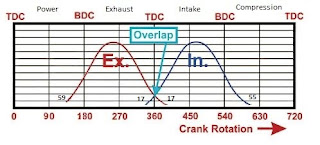 This post has been edited by tictac: Mar 22 2011, 06:51 AM |
|
|
Mar 22 2011, 12:57 AM
|
|
Senior Member
573 posts Joined: Jul 2006 From: Klang Valley
|
QUOTE(the_catacombs @ Mar 21 2011, 08:53 PM) yes correct Then I should source for cam pulley soon, real soon. Again which brand is recommended? |
|
|
Mar 22 2011, 07:57 AM
|
|
Elite
2,520 posts Joined: Jan 2003 From: Sibu
|
Even with Stock camshaft... the adjustable cam can tune Air Fuel Compression efficientcy.
This is with Adjustable cam + Stock 4G15 EFI Camshaft : Stock 0 Degree : Air Fuel Compression 69% Efficiency Advanced 2 Degree : Air Fuel Compression 70% Efficiency Advanced 4 Degree : Air Fuel Compression 71% Efficiency Advanced 6 Degree : Air Fuel Compression 72% Efficiency Advanced 8 Degree : Air Fuel Compression 73% Efficiency Advanced 10 Degree : Air Fuel Compression 75% Efficiency |
|
|
Mar 24 2011, 05:55 AM
|
|
Junior Member
91 posts Joined: Nov 2006 From: EA Autoworks, Aked Esplanad, Bukit Jalil
|
QUOTE(tictac @ Mar 22 2011, 07:57 AM) Even with Stock camshaft... the adjustable cam can tune Air Fuel Compression efficientcy. Interesting... but need some clarification:This is with Adjustable cam + Stock 4G15 EFI Camshaft : Stock 0 Degree : Air Fuel Compression 69% Efficiency Advanced 2 Degree : Air Fuel Compression 70% Efficiency Advanced 4 Degree : Air Fuel Compression 71% Efficiency Advanced 6 Degree : Air Fuel Compression 72% Efficiency Advanced 8 Degree : Air Fuel Compression 73% Efficiency Advanced 10 Degree : Air Fuel Compression 75% Efficiency 1. degrees as in cam or crank degrees? 2. advance as in advancing the cam (clockwise) or the crank (counter clockwise)? 3. what's A/F comp efficiency? 4. where you get the data from. TQVM. =] |
|
|
Mar 24 2011, 08:01 AM
|

Junior Member
60 posts Joined: Jan 2009
|
QUOTE(tictac @ Mar 22 2011, 07:57 AM) Even with Stock camshaft... the adjustable cam can tune Air Fuel Compression efficientcy. Why did they set stock 0 degree at 69% efficiency?This is with Adjustable cam + Stock 4G15 EFI Camshaft : Stock 0 Degree : Air Fuel Compression 69% Efficiency Advanced 2 Degree : Air Fuel Compression 70% Efficiency Advanced 4 Degree : Air Fuel Compression 71% Efficiency Advanced 6 Degree : Air Fuel Compression 72% Efficiency Advanced 8 Degree : Air Fuel Compression 73% Efficiency Advanced 10 Degree : Air Fuel Compression 75% Efficiency |
|
|
Mar 24 2011, 08:18 PM
|
|
Elite
2,520 posts Joined: Jan 2003 From: Sibu
|
QUOTE(drexchan @ Mar 24 2011, 05:55 AM) Interesting... but need some clarification: I think i calculate wrongly1. degrees as in cam or crank degrees? 2. advance as in advancing the cam (clockwise) or the crank (counter clockwise)? 3. what's A/F comp efficiency? 4. where you get the data from. TQVM. =] Added on March 24, 2011, 8:41 pm QUOTE(tictac @ Mar 24 2011, 08:18 PM) I think i calculate wrongly it should be like this... Stock 0 Degree : Air Fuel Compression 69% Efficiency Advanced Camshaft 2 Degree : Air Fuel Compression 71.6% Efficiency Advanced Camshaft 4 Degree : Air Fuel Compression 73.8% Efficiency Advanced Camshaft 6 Degree : Air Fuel Compression 76.1% Efficiency Advanced Camshaft 8 Degree : Air Fuel Compression 78.3% Efficiency Advanced Camshaft 10 Degree : Air Fuel Compression 80.5% Efficiency Explanation........ A compression stroke consist of 180 degree crankshaft rotation (90degree camshaft rotation) With a stock 4g15 Camshaft , effective compression stroke is 180 degree minus Intake Valve Close (ABDC) Stock camshaft have a setting of Intake valve close at 55 degree ABDC The Effective Compression stroke of a 0 degree stock camshaft is : (180 - 55) /180 x 100% = 69 % By advancing camshaft setting 10 degree (20 degree crankshaft), Intake valve will close at 35 degree ABDC The Effective Compression stroke of a 10 degree advance camshaft timing is : (180 - 35) /180 x 100% = 80.5 % The higher compression efficiency. The more air and fuel is compressed for the Power stroke energy extraction... Thank you This post has been edited by tictac: Mar 24 2011, 08:49 PM |
|
|
Mar 24 2011, 09:13 PM
|
|
Junior Member
91 posts Joined: Nov 2006 From: EA Autoworks, Aked Esplanad, Bukit Jalil
|
My brain went wee wang wang reading your explanation but lets assume that you got it right, have you factored in the effect of advances exhaust valve?
|
|
|
Mar 24 2011, 09:22 PM
|
|
Elite
2,520 posts Joined: Jan 2003 From: Sibu
|
QUOTE(drexchan @ Mar 24 2011, 09:13 PM) My brain went wee wang wang reading your explanation but lets assume that you got it right, have you factored in the effect of advances exhaust valve? The exhaust valve will open early... Power stroke will be affected also... 0 degree camshaft (stock) : Power Stroke Efficiency 67% 10 degree advance camshaft : Power Stroke Efficiency 56% This post has been edited by tictac: Mar 24 2011, 09:23 PM |
|
|
Mar 24 2011, 09:29 PM
|
|
Junior Member
91 posts Joined: Nov 2006 From: EA Autoworks, Aked Esplanad, Bukit Jalil
|
Exactly. It's all about getting a balanced point between the compression efficiency and power efficiency. While calculations may give you a picture of what's happening, the end result is still pretty much depending on OTR and on-dyno tests.
This is the reason why most DOHC tuners advance the intake and retard the exhaust. While the idea of advancing the intake and retarding the exhaust improve both compression and power efficiency, the high overlapping duration also means poor idling quality and narrow powerband at the high range. That's how high duration camshaft works. The ultimate questions are - at which rev range the tuner intend to squeeze more juice out of the engine, how much advance, how much retard. The answers come with experience of trial and error, with or without dyno (which just makes things simpler). Oh yes, just want to point out to you that you have neglected the flow efficiency in the intake and exhaust ports. This post has been edited by drexchan: Mar 24 2011, 09:38 PM |
|
|
Mar 24 2011, 09:51 PM
|
|
Elite
2,520 posts Joined: Jan 2003 From: Sibu
|
QUOTE(drexchan @ Mar 24 2011, 09:29 PM) Exactly. It's all about getting a balanced point between the compression efficiency and power efficiency. While calculations may give you a picture of what's happening, the end result is still pretty much depending on OTR and on-dyno tests. thank you This is the reason why most DOHC tuners advance the intake and retard the exhaust. While the idea of advancing the intake and retarding the exhaust improve both compression and power efficiency, the high overlapping duration also means poor idling quality and narrow powerband at the high range. That's how high duration camshaft works. The ultimate questions are - at which rev range the tuner intend to squeeze more juice out of the engine, how much advance, how much retard. The answers come with experience of trial and error, with or without dyno (which just makes things simpler). Oh yes, just want to point out to you that you have neglected the flow efficiency in the intake and exhaust ports. |
|
|
Mar 25 2011, 02:19 PM
|

Senior Member
2,804 posts Joined: Jan 2003
|
Setting also depend on driver preference. When I got mine installed, its setting is for low end, which didn't suits my driving style. So I send it to be re-tuned for high end.
|
|
|
Mar 26 2011, 11:30 AM
|
Senior Member
4,524 posts Joined: Oct 2007 From: ~Still finding the place~
|
Normally how much for adjustable cam pulley for 4G15 EFI?
|
|
|
Mar 26 2011, 03:21 PM
|
|
Junior Member
60 posts Joined: Jan 2009
|
I'm guessing about RM 150-200 a piece.
|
|
|
Mar 26 2011, 04:49 PM
|
|
Senior Member
4,524 posts Joined: Oct 2007 From: ~Still finding the place~
|
QUOTE(GEFORCEXTREME @ Mar 26 2011, 03:21 PM) I'm guessing about RM 150-200 a piece. I know Works Engineering selling RM220 for 4G15..but I think its not adjustable.. |
|
|
Mar 26 2011, 08:45 PM
|
|
Junior Member
60 posts Joined: Jan 2009
|
Sure can adjust what, why can't? If can't, why get it? Why they sell it?
The problem is more of a whether an SOHC can benefit from it or not. A quick search on the Internet says in an SOHC you can only advance or retard the power region, but not increase peak power like you can in a DOHC engine! |
|
|
Mar 26 2011, 08:47 PM
|

Junior Member
132 posts Joined: Dec 2008 From: Seremban, Port Dickson
|
QUOTE(GEFORCEXTREME @ Mar 26 2011, 08:45 PM) Sure can adjust what, why can't? If can't, why get it? Why they sell it? Increase hp on dohc?The problem is more of a whether an SOHC can benefit from it or not. A quick search on the Internet says in an SOHC you can only advance or retard the power region, but not increase peak power like you can in a DOHC engine! |
|
|
Mar 26 2011, 08:49 PM
|
|
Junior Member
60 posts Joined: Jan 2009
|
Yeah, why not? Advance intake retard exhaust? Or other way, I don't know, ask other sifu!
Added on March 26, 2011, 8:50 pm QUOTE(gagak_84 @ Mar 26 2011, 08:47 PM) Increase hp on dohc? Your 4g91 GOOD CANDIDATE!This post has been edited by GEFORCEXTREME: Mar 26 2011, 08:50 PM |
|
|
Mar 26 2011, 08:51 PM
|
|
Junior Member
132 posts Joined: Dec 2008 From: Seremban, Port Dickson
|
QUOTE(GEFORCEXTREME @ Mar 26 2011, 08:49 PM) Yeah, why not? Advance intake retard exhaust? Or other way, I don't know, ask other sifu! Hehehe. Added on March 26, 2011, 8:50 pm Your 4g91 GOOD CANDIDATE! I dont know la. Already think to buy it since last year. No budget. Huhu |
|
|
Mar 26 2011, 08:53 PM
|
|
Junior Member
60 posts Joined: Jan 2009
|
Don't say no budjet la, just get Jasma one maybe? Sell your 2 pc rim to me RM 500! Then you take money go buy! kekeke...
|
|
|
Mar 26 2011, 09:13 PM
|
|
Junior Member
132 posts Joined: Dec 2008 From: Seremban, Port Dickson
|
QUOTE(GEFORCEXTREME @ Mar 26 2011, 08:53 PM) Don't say no budjet la, just get Jasma one maybe? Sell your 2 pc rim to me RM 500! Then you take money go buy! kekeke... Haha. Heavy r 2 pc. Stock rim is better. Hehe |
|
|
Mar 26 2011, 09:24 PM
|
|
Senior Member
4,524 posts Joined: Oct 2007 From: ~Still finding the place~
|
QUOTE(GEFORCEXTREME @ Mar 26 2011, 08:45 PM) Sure can adjust what, why can't? If can't, why get it? Why they sell it? you mean all cam pulley are adjustable cam pulley? The problem is more of a whether an SOHC can benefit from it or not. A quick search on the Internet says in an SOHC you can only advance or retard the power region, but not increase peak power like you can in a DOHC engine! |
|
|
Mar 27 2011, 01:10 PM
|
|
Senior Member
10,975 posts Joined: Jan 2003 From: disini disana
|
QUOTE(Lineage @ Mar 26 2011, 09:24 PM) you mean all cam pulley are adjustable cam pulley? yes, all aftermarket campulley are adjustable ones... if they arent, might as well no need to change since ur original cam pulley is also not adjustable... |
|
|
Mar 27 2011, 10:11 PM
|
|
Senior Member
4,524 posts Joined: Oct 2007 From: ~Still finding the place~
|
QUOTE(the_catacombs @ Mar 27 2011, 01:10 PM) yes, all aftermarket campulley are adjustable ones... if they arent, might as well no need to change since ur original cam pulley is also not adjustable... Ok |
|
|
Jun 22 2011, 09:16 PM
|
|
Junior Member
13 posts Joined: Jan 2008
|
QUOTE(Lineage @ Mar 27 2011, 10:11 PM) Ok i use 4g93p just install works adjust pulley,but dunno how adjust jus right?any sifu can tell me? |
| Change to: |  0.0437sec 0.0437sec
 0.71 0.71
 5 queries 5 queries
 GZIP Disabled GZIP Disabled
Time is now: 15th December 2025 - 12:38 AM |
 Quote
Quote