Welcome Guest ( Log In | Register )

Bump Topic Topic Closed RSS Feed
125 Pages  1 2 3 > » Bottom

Outline · [ Standard ] · Linear+

 Sugar Glider V5, Mini Suggie gathering. View post #7

views
     
TScrazymouse_yyh
post Feb 26 2008, 06:44 PM, updated 18y ago

www.suggiesathome .wordpress.com
Group Icon
Elite
12,047 posts

Joined: Nov 2005
From: Setapak


Our V4 http://forum.lowyat.net/topic/518158

Introduction

Sugar gliders are little marsupials that have been taken as exotic pets in many countries. These creatures are different from normal pet rodents like hamsters, mice and rats. They have character, mood swings, emotional bonds and the sweetest nature for a pet that comes in such a small package. Commonly mistaken as flying squirrels, Sugar gliders can be both easy and hard to take care. Their general care is much more complicated than pet rodents and they require alot of affection and attention from its owners. Look at it this way, gliders are like 3 year old kids.... they act cute and can annoy us sometimes while at the same time needs our total attention and bond.

Sugar gliders are tiny gliding opossums from Indonesia, New Guinea, New Zealand and Australia. The gliders that we get as pets in Malaysia are mostly from Indonesia as the other countries limit or does not allow native animals to be exported in the pet trade. Wild sugar gliders live in colonies of 6 to 15 animals in tree hollows or other nests made of vegetation. They are nocturnal so will mainly spend most of their day time asleep, only waking up at early mornings and late at night to forage for food.

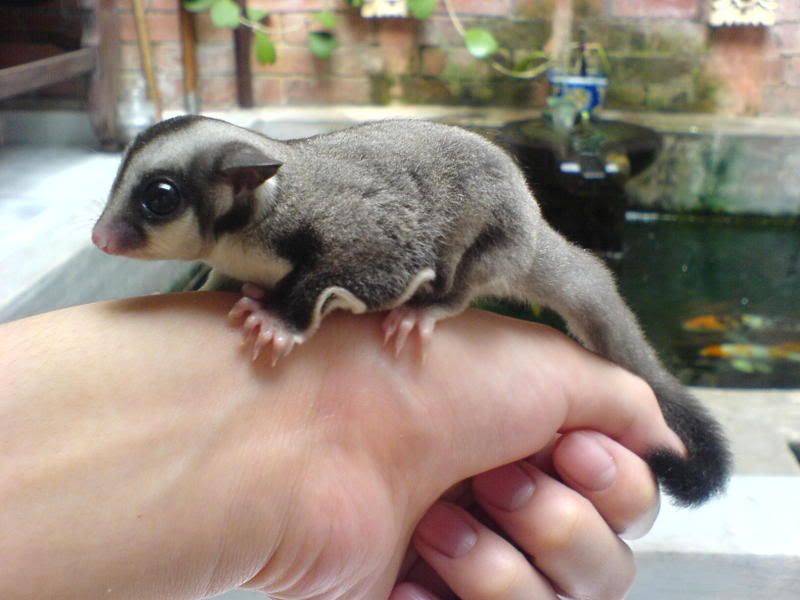
An adult sugar glider is about the size of a flying squirrel, approximately 5 to 7 inches long from tip of nose to base of tail. Adults in proper body condition weigh about 120g. The tail is fluffy, often curls on the end and usually is longer than the body length.

Sugar glider joeys are normally a nice slivery grey but as they age, they will shed away this soft joey coat and replace with their true colours. Some glider colours that we have here are the normal greys and a few shades of browns. Some would turn brown if they constantly stay in coconuts coz it stains the fur. You should not worry about the colour for each sugar glider is unique in its own little way.

Where to get a joey? What age and size?

Petshops and suppliers do sell Sugar Gliders but please be aware if the age and size. Some shops may tell you that the younger the joey, the better but do remember, these animals when young needs milk to stay healthy. Also, our local pet milk or cows milk is not suitable since marsupials cannot tolerate lactose that is higher than 3.5%.

A guide to know which is the right age and which is not.

QUOTE
According to Lisa from Suncoast...

"If you get gliders too young, the risk of them dying on you early is greatly increased. So here are some general guidelines that should apply in most cases.

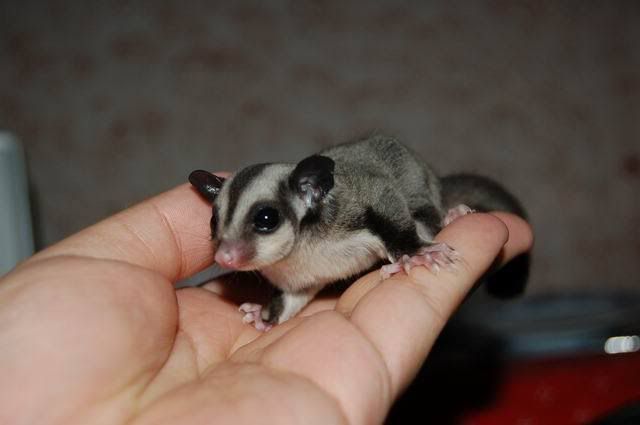
If you have an average sized hand, the body length (not including the tail) should be about the width of your hand, or slightly longer. If the body is smaller than the width of your hand, that baby may be too young. Also, the hair on the tail should be fluffy and full.  If the fur is laying somewhat flat on the tail, that baby is definitely too young. Tails start getting pretty fluffy around 6 weeks out of pouch age, so flat tail hair is a sure sign the joey is too young to be leaving home."


Pix sample:
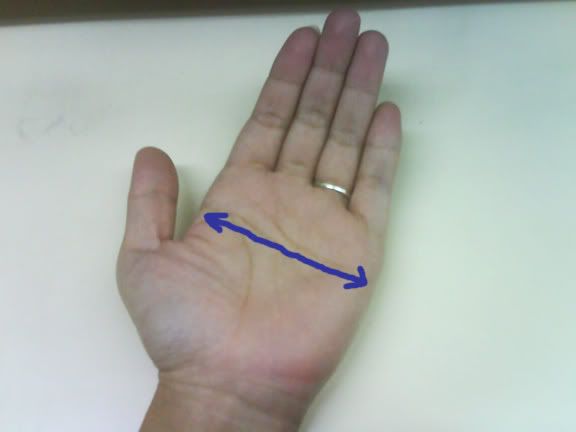
user posted image

Unless you have a bloody huge hand then thats a different story!

Until then, use this simple guide to measure a joey before purchasing them.

(And bear in mind, most of the joeys sold I see are smaller than the width of my hand there... sad.gif )

KP

Never get a joey that looks like this:
user posted image
Original photo by Hun

user posted image

user posted image

user posted image

Photos as reference from www.glideruniversity.org

Underaged sugar gliders..... never get joeys that look like the ones in these pictures. They still need their mother's milk and warmth, they need more attention and more work than properly weaned joeys. Those pics, the joeys are only 3 weeks old Out Of Pouch.... joeys should be separated when they are more than 8 weeks Out Of Pouch... and that is the minimum age. The best age is actually 3 months....

Some people have experience their joeys dying... WHY? Coz the joey is too young, it is depressed and stressed.... a joey that young that is depress will not have any appetite for food, will catch cold and die coz it gives up living.

You should be getting joeys that look like these:
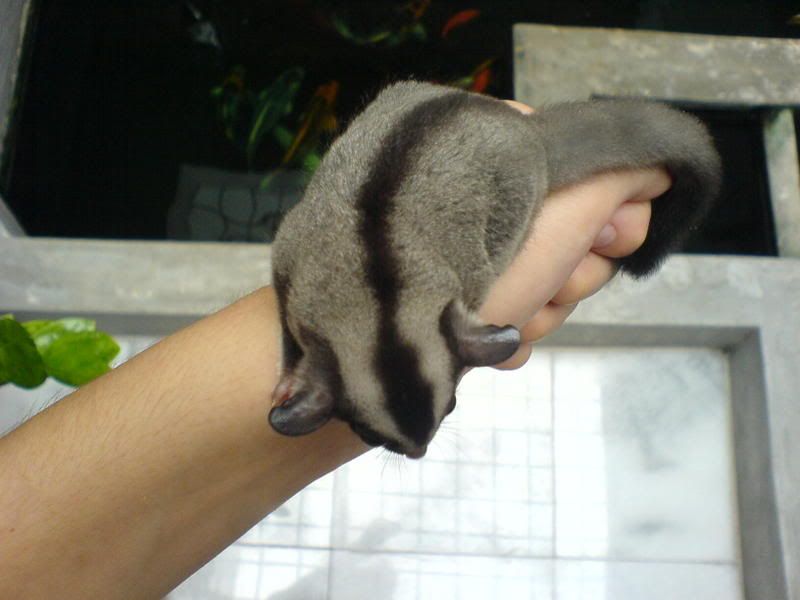
user posted image
user posted image
Orginal Photos by Reanne

user posted image
Original Photo by Hun

Do get joeys that are older than 8 weeks Out Of Pouch. Never trust what petshops says. If you would like to get from a supplier but have no idea how to see the age or if the seller is responsible, do PM Reanne, krynzpeaches or crazymouse_yyh for guidance and information.

There are many sellers and suppliers here in LYN, so please beware of them. Some may tempt you into getting an underage joey by giving you false information. Some may sell you a pair package in order for a quick sales. Do your research first before buying.

There are a few good homebreeders here but they only have a few joeys available once or twice a year, so this is why it is hard to come about homebreeders.

Sugar Gliders as Pets

Tame Sugar Gliders just make the perfect pocket pet for they can travel anywhere with us in a little bonding pouch. They got happy little personalities that love to play and have physical contact with us. These creatures need attention. They are 100% social animals that live in small colonies in the wild. When we keep them in captivity, we must be able to give them a lot of attention and time. Play, bond, touching and feeding are all little things that we must do each day in order for our gliders to be perfect little healthy pets.

Gliders can live 10 to 15 years in captivity so they are considered a long term commitment. Make sure you can actually care for the glider for about 10 years before you get one.

Gliders are not like dogs, where you can train it with a leash and harness or collar and they can do tricks and come when called. Sugar gliders got minds of toddlers or young children. They need to be socialized and trained as soon as you get them but do not train them as if you would train a puppy. No, they would not react to "Good Boy/Girl, shake hand and beg" kind of training and tricks. Gliders require a soft human touch when training. They can be trained to know their names, just be patient and repeat their names when you cuddle them, handle them, feed them and during play. Gliders will never know where to defecate and relieve themselves like cats and dogs. Litter boxes would not work. These creatures would do it anywhere they please.

Also, gliders are not really domesticated so they do have a few wild habits like scent marking, chewing and gnawing on items or us and also climbing all sorts of high places.

A fact to remember, sugar gliders glide, they do not fly so don't be a genius and try to make your glider fly like a bird. Sugar gliders have a gliding membrane that connects their front paws to their back feet. They will spread open when there is a need to glide. This is why harnesses and leashes should never be on them for it could tear the membrane and hurt them.

Important items to have before purchasing a glider!

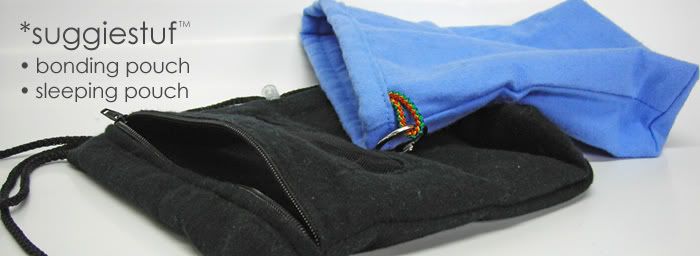
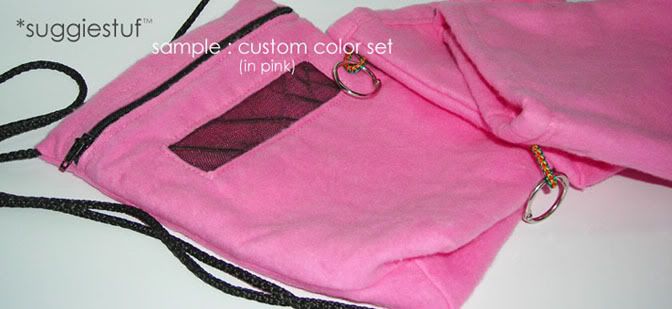
- A bounding Pouch and sleeping pouch
- A large cage suitable for the glider in the long run
- Fruits and glider mix (eg: GliderSLURP!(tm)) with supplements
- A container of mealworms or crickets
- Knowledge on sugar gliders and joey care
- Get in touch with someone that has experience with gliders.


Males or Females?

It is best not to get a male and female pair. Why is that so? Well, a glider can live for 8 to 12 years on average. A glider can readily breed once mature, some would start breeding at 8 months old while some start only at 2 years. Yes, it may sound tempting to have little joeys but can you be that dedicated? To sell one off can also be heartbreaking for you. So to avoid such pain and also overbreeding for gliders, you should either have a single sex pair or get the male castrated if with a female.

Is there any difference with males and females? Physically yes, females have a pouch on their tummy, it is like a belly button-kind of opening. Males would have their testicles looking like hanging cherries. The males when they mature, would develop a bald patch on its head. This is normal. The bald patch is the scent gland. Males have another scent gland on their chest and also at the anal area. Females do have scent glands to but only at the anal area.

Males musk, means covering their scent all over their territory. Females will mark but very little.

2 males can get along well if there are no females around. But 2 males can fight if a female is about coz they would fight over breeding rights. 2 females get along well too.

If you want to keep a male without all the musking and territorial attitude, get it neutered at a qualified and experience vet. Remember, your pet can live up to 10 years so make the right decision.

If you are thinking about breeding, please please please do read the caresheets and also research more on glider breeding. This is not simple and in the long run, over breeding can stress a glider and can cause it to have a short life span. Not healthy for them.

----------------------------------------------------------------------------------------------------------------------------------

General Breeding Information

In this forum, we do not encourage breeding if you do not have the time and knowledge but here are a few websites to guide you if you are curious to know. Also it has pictures and about joey growth:

http://www.petsugargliders.com/sggrowth.php

About milk for gliders:
http://www.pygmypets.com/sg8.html

Good Care Sheets:
http://www.sugarglidercentral.com/wiki/ind...ider_Care_Sheet
http://www.exoticpetvet.com/breeds/sugarglider.htm
http://www.sugar-gliders.com/sugar-glider-care.htm
http://ksks.essortment.com/sugarglidercar_rdxi.htm
http://www.sugargliderbabies.com/info.htm
http://www.thesugarshack.com/
http://thepetglider.com/index/
http://www.glideruniversity.org/index/cont...tegory/5/19/64/
http://www.glideruniversity.org/index/cont...tegory/5/25/64/
http://www.glideruniversity.org/index/content/view/36/64/

This post has been edited by crazymouse_yyh: Apr 22 2008, 10:51 AM
TScrazymouse_yyh
post Feb 26 2008, 07:16 PM

www.suggiesathome .wordpress.com
Group Icon
Elite
12,047 posts

Joined: Nov 2005
From: Setapak


Housing

Adult gliders can tolerate a temperature range of 18°-31°C. If you ever keep in an air condition room, never keep the cage directly under the air flow of the glider could catch a cold. Recommended temperature for an air cond room with gliders would be 23°C to 26°C. Gliders in air cond rooms would need warm bedding like fleece or old tshirts to keep them warm in their pouches. Why pouches? Firstly, it is soft and warm, it is also very comfortable and easy to clean and wash. Try and avoid hideboxes for hamsters and birds, coconuts with holes, plastic bird houses. These things just causes your glider to hide more from you and it is hard to clean and also to get your glider out of the hidebox or coconut. A timid glider may become over protective of it's coconut or box and will be harder to tempt it out than a glider that is in a sleeping pouch. Fabric for the pouches should be absorbent materials such as fleece or cotton because it keeps humidity from building up inside, and also "breathe" so that moisture and smells don't build up. It's also easy to wash. If you use materials such as plastic or glazed ceramic, your gliders will eventually take on a brownish tinge as their fur is stained by the trapped moisture, and they probably won't smell as nice as they should.

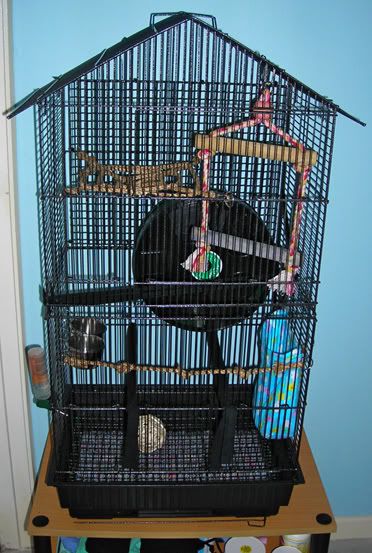
As for cages, the bigger it is, the better for gliders! Do not be fooled by people saying that hamster cages are good enough or fish tanks. Even small bird cages are too small for them.

Here are some pictures from the Internet as an example of suitable cages:

user posted image
Dimension: 30"Length x 18"Depth x 55"Height.

user posted image
Dimension: 18" x 14" x 34"

user posted image
Dimensions: 60" tall x 30" wide x 30" deep

user posted image
Dimensions: 19" X 28" X 72

user posted image
Cage is available at Pet Shack(Sunway Mentari), Pet Safari(Ikano), Petaling Street petshops, depending on quality, prices are around RM100 or more.

Websites on sugar glider cages, even a How To page:
http://exoticpets.about.com/cs/sugarglider...rglidercage.htm
http://www.angelfire.com/tx/facehugger/cageplans.html

You can use coconut decorative pots but make sure they are not glazed. Polished ones are ok.
http://forum.lowyat.net/index.php?act=Atta...=post&id=214243

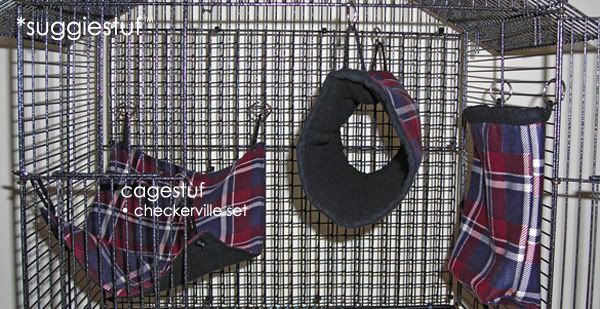
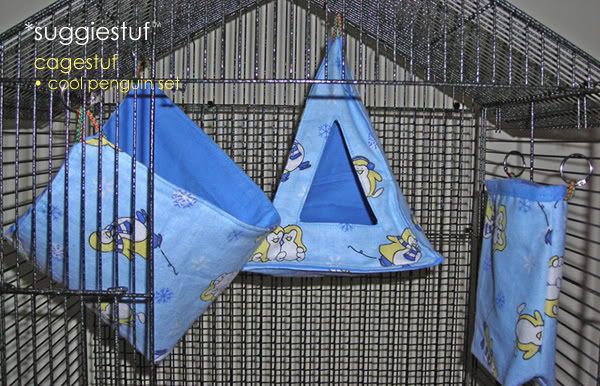
You can get creative with cage accessories. You can use plastic link chains, twine rope, nylon rope, hammocks, flower pots... the list just goes on with your creativity. Check out Garage Sales for sleeping pouches that are a must have for gliders.

user posted image
Wooden toys for birds do make excellent toys for gliders.

Gliders are arboreal, they need lots of climbing exercise. You can get hold of ExoTerra Vines and make a creeping perch for your gliders to climb up on. Get hold of safe non-toxic branches and use natural fine twine to create climbing ladders or stands, make it up to your own creativity.

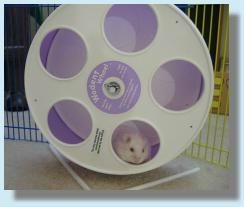
Besides climbing material, gliders do love to run on wheels so getting a quality wheel is good for their health. The safest wheel for gliders are Wodent Wheels, which are available only at Pet Shack. So get yourself a wheel. No other places carry this wonderful wheel which your glider would enjoy running and playing on.

user posted image

Bedding and Cage Substrate

Now it must seem that sugar gliders look like rodents, so some petshops would recommend you to buy hamster wood shavings for your gliders. This is a very big mistake. Never use hamster wood shavings on gliders for the wood would secrete phenols which could cause lung damage in the long run.

Gliders love to sleep in their hideboxes or coconuts or sleeping pouches but they do love it when there is something soft for snuggling. Do not give our normal bath towels. You can just use plain old soft tissue paper. Fleece pieces could be made into blankets. Another safe material would be our cotton tshirts. Get 1 of those Rm3.90 cotton tshirts from Carrefour or Giant hypermarkets and cut the shirt into little pieces. Make sure there are no strings or holes in it. The reason why tissue paper, fleece and cotton tshirts are recommended is that very often gliders like to chew and kick around the material. Stringy towels or holey cloths would tangle the gliders, causing the lost of limbs or worst, death from suffocation. Also, never use sponge or pure cotton.

As for cage substrate, always make sure there is a wire mesh separating the gliders from the substrate at least with a 1 inch gap. You can use plain old newspaper, corn cob bedding, Breeder's Celect Recycled Paper cat litter, Litter Star silicon cat litter pellets or Careline Wood base cat litter. All this can be found in Pet Safari.

For cage accessories, you can contact krynzpeaches

For cages good for gliders, you can contact jtl


This post has been edited by crazymouse_yyh: Feb 27 2008, 11:25 PM
TScrazymouse_yyh
post Feb 26 2008, 08:08 PM

www.suggiesathome .wordpress.com
Group Icon
Elite
12,047 posts

Joined: Nov 2005
From: Setapak


Bonding

The very first day you get your glider, it would obviously be a bit scared and needs to adjust it's new surroundings. Place the joey in its pouch and let it have some alone time in the cage. Move the cage to a darker part of the room away from loud noises. Place an old shirt that you have worn into the cage or drape it on top of the cage so that the glider can at least get a whiff of your scent. Place some food and water and let your glider adjust for a day without much disturbance.

The following day. Get your joey or glider accustom to you by touch it. Then have it inside the bonding pouch and carry with you during the day. Gliders are nocturnal animals, means they sleep during the day and are active late at night. Carrying them in a bonding pouch during their sleeping period quickens the bonding process. They like to be against our warm body, hearing our voice, getting our smell and scent into their system. It feels comforting. Don't expect that a glider or joey would become tame in 1 day or 1 week. This bonding process takes months to become successful. Once the glider gets used to our smell, our voice and our warmth, they will look up to use like a friend or companion instead of someone who just feeds and cleans them.

Do remember, they are still animals so gliders will bite, scratch, make noises or try to run away if they feel scared or uncomfortable. So patience is the key. Also, these smart animals know how to "bully" their owners. Some will show anger by biting or attacking or crabbing. This is normal. Never be afraid of such things. Be brave and handle the glider so that it knows you aren't afraid of it. In future, your glider will learn to respect you properly.

Joeys are also easier and faster to tame and bond than adults. Most of the adults in the market are captive bred but they are wild at heart coz they have never been tamed or handled. So Adult gliders need extra time and extra attention when it comes to bonding and taming.

Some questions that came up...

My glider is tame, but he won't return to me. What should I do?
Every glider has a different personality so not all would return to their owners. When you let a glider out of its cage, make sure to glider-proof the room. Sugar gliders are intelligent animals but they do have a mind of their own. Some are comfortable to stay on you and won't leave you alone. Some prefer to play and explore only returning occasionally to make sure you are still there while some just prefer to play away by themselves. Treat them as individuals with attitude.

My sugar gliders have started to bite. Is this normal? What can we do to discourage this?
This is quite normal in bonded gliders. What is the exact reason? Nobody knows why but we can make assumptions. In the wild, sugar gliders gnaw on their favourite trees. Since we are large beings, we may feel like trees to them. Also, bored gliders do like to play bite and gnaw on fingers. Some biting can also be a sign of hunger. If your glider does this as a habit everyday to you, then teach it that biting gives unpleasant things. Everytime your glider bites you hard, blow into its face and say "NO". Most gliders hate it when we blow into their faces.

Example of pouches and cage accessories for sugar gliders:

user posted image
user posted image
user posted image
user posted image

Original photos by krynzpeaches

Must Sugar Gliders be Kept in a Pair?

There are many cases against keeping sugar gliders alone due to their nature in living in a colony of gliders. Keeping gliders in at least a pair is recommended because many people cannot give half of their time to their gliders.

Gliders can die from loneliness so there is no way to keep a glider alone locked up in the cage for most of its life.

Gliders can certainly be kept alone if the owner is able to spend tons of time with the glider (we're talking about at least 12 hours). This is easier than it's been made out to be. Gliders kept singly will only require 1 hour of play-time but snuggling up to their owner, seeing them every hour or two, receiving strokes murmurs from their owners is what keeps the glider from being lonely. Being pocket pets, gliders can be brought to almost everywhere so they're easy enough to keep by your side for 12 hours or more.

But then if you get 1 gliders at once and try to bond with them, they may not bond as quickly or as closely to you. The best would be obtaining a single glider first, bond and tame it... and in about 2 months time get your 2nd glider to bond and tame. Bonding is alot of hard work but it totally pays off when you see how well and friendly your glider is to you.

Most of us here keep our gliders at least about 10 hours a day on us. We bring them to college, outings or work places in their bonding pouches. Will it cause any trouble? Well, for joeys, they can make noises like crabbing and hissing but this is only a phase. Once they get used to you and your routine, they will sleep like logs in their pouches. Of course, do check with the rules and regulations of your work place or college if they are against pets.


Glider Scent

Male sugar gliders have a scent gland in the middle of the top of their head, which causes the typical bald spot in the center of the wide part of the black stripe there. Another gland is located in the middle of their chest. A third gland, an anal one, is shared by males and females alike. The females also have a scent gland in their pouch.

The male's forehead and chest glands are used in marking his territory and his mates with his scent. Gliders produce at least three distinct odors. One is a sweet, flowery smell; another I don't know how to describe, but it is not really offensive. It can get relatively strong at times, when they are breeding, but after a few days it dies away again. The third is a pungent smell that is produced by the anal gland when a glider is afraid.

Gliders use urine to mark their territory, so you will need to clean their cages and furnishings periodically. Otherwise though, they are very clean little animals.
TScrazymouse_yyh
post Feb 26 2008, 08:10 PM

www.suggiesathome .wordpress.com
Group Icon
Elite
12,047 posts

Joined: Nov 2005
From: Setapak


Diet/Nutrion written by krynzpeaches

A good and balanced diet can make all the difference not only to humans, but Sugar Gliders too! This will ensure a healthy and long happy life as well as a more clean and slightly better smelling environment wink.gif

Like the saying "We are what we eat..." So don't take lightly on their diet.

Sugar gliders thrive on sweet substance just like their name, however they cannot take simple sugar like we do, the sweetness must come from natural sources such as fruits. In the wild they require sweet substance from nectar, tree sap, manna, honeydew and fruits, so in captivity, to simulate as close to this, we must provide them with a variety of fresh fruits daily.

Sugar gliders are omnivorous meaning, they don't only need fruits in their diet but insects too for their protein intake. In the wild they get to chase and eat a variety type of insects, but in captivity we normally give them farm raised* meal worms, crickets or boiled chicken meat for their protein. Although there are other types of insects that can be given to sugar gliders, unfortunately we do not have them available here in Malaysia.

DO NOT feed your sugar gliders insects that is captured in your backyard or house compound area, they may contain harmful pesticides that can cause illness to your sugar glider.

For captive sugar gliders, it is also very important to provide them with a daily staple food which can either be a pre-set feeds** that are meant for omnivorous animals or mixes. Unfortunately there is NO pre-set feeds available for sugar gliders in Malaysia. Luckily mixes are something that we can whip up ourselves or be purchased on LYN smile.gif To make your own mixes, there are plenty of the recipes available in the net, however, personally I feel that we need to make a few adjustments to the recipes in the net to accommodate our sugar gliders in Malaysia. Watch out for cereal, alot of baby food cereal in Malaysia contains milk and soya, which is not good for a glider's health.


Here's a breakdown of the 3 main food category intake for captive sugar glider. Always feed to a ratio of 60% fruits and vegetables and 40% protein. (Increase the protein to 50% for breeding sugar gliders especially moms with joey/s In Pouch or Nursing.)

1) A fresh source of fruits or vegetables. The fruits or vegetables are best to be chopped into grab size pieces as sugar glider likes to grab hold of their food by hand to eat them.
*For a list of fruits and vegetables that is has been fed to our local captive sugar gliders plus some remarks about it, click on the spoiler below.*

» Click to show Spoiler - click again to hide... «


2) A fresh source of protein. Farm raised* mealworms or crickets or boiled chicken meat. Be sure to always gut load your mealworms or crickets first before feeding your sugar glider smile.gif

3) A daily staple of mix. (This is a must since we do not have any other pre-set feeds** for their staple diet.)

Vitamins and Calcium supplements (and other supplements) is a need for captive sugar glider to ensure a balance and healthy diet. Most of the food sources provided still lack of vitamins and especially calcium. By giving them these extra supplements, we can ensure them of a long and healthy life wink.gif

Most recommended vitamins and calcium supplements (like Vionate and Rep Cal) are unfortunately NOT available here in Malaysia, however there are other brands that has been found similar to these in Malaysia which is Repti-Vite and Repti-Cal. Vitamins and calcium supplements are normally sprinkled on top of their daily food serving. Not more than a pinch per glider and not more than one serving per day. Means if you have added the supplements to their mix, DO NOT add them to their other foods. Too much of the supplements can be as harmful as not giving them at all.

Another great supplement that can be added to their diet is yogurt. Yogurt is high in protein and calcium plus bacterial cultures that promotes the absorption of calcium better. You can feed them plain low fat yogurt or choose to indulge them in some naturally flavored ones. Not more than 1 teaspoon per glider 2 or 3 times a week only. Avoid getting fat-free yogurt. The best are low-fat yogurt for our gliders.

Finally, ensure that fresh clean water is available at all time. Water bottles such as the ones used for hamsters are highly recommended compared to water in dish bowls because water in dish bowls will get easily contaminated by their food, poo and pee.

Some NO foods / CAUTION foods and why.

1) NO corn - Although sugar gliders will readily dive into it, we must not include corn in their diet because the phosphorus content is higher than any other food, thus do not offer any benefits to sugar gliders except more phosphorus that could lead to bone deficiency.

2) NO avocado - Very high in fat.

3) CAUTION on grapes - Although there is still research going on about this, we must caution on the intake of grapes or raisins due to some death in sugar gliders that points to some of the substance found only in grapes. I'd say better safe than sorry.

4) NO iceberg lettuce - Non nutritional value and can cause watery poo!

5) NO chocolates - Chocolates are a NO-NO to all animals. It causes a toxic chemical reaction in most animals.

6) CAUTION on high fat content food - Nuts especially are high in fat. Some will offer sun flower seeds to their sugar gliders, but do this sparingly and strictly as treats not a part of their diet.

7) NO fried food - Again, very high in fat.

8) NO cat or dog food as a staple- Although most commercial breeders feed their sugar gliders with cat or dog food, they just merely want to substitute the fresh food that needs to be prepared daily, to something easy and lasting to eat without considering their long term health and not to mention - Cheap. Cat food is designed for cats, same goes with dog food. They are not meant for sugar glider. Not to mention that cat or dog food can cause lumpy jaw (because it is hard), intestinal blockage and kidney failure in the long run. You can ONLY feed it as a treat.

* Farm raised mealworms or crickets are those you can buy from our local pet shops.
** Pre-set feeds are those commercial dry staple food specially for sugar gliders.
TScrazymouse_yyh
post Feb 26 2008, 10:26 PM

www.suggiesathome .wordpress.com
Group Icon
Elite
12,047 posts

Joined: Nov 2005
From: Setapak


A list of fruits we can get locally to feed our gliders:

Apples - Fuji, Gala, Golden, any variety is ok, as long not Granny Smith coz that is sour. Do not feed apples every night. The phosphorus level is higher than calcium.

Oranges - only feed ONCE a week. Feed along with the skin but make sure you scrub the skin clean. Only a small portion. Oranges are acidic, it can cause health problems if given too much, especially young joeys. It benefits in small portions as it has a good amount of calcium but just take note of the acidic side of it.

Watermelon - high in water and also minerals, it can also cause watery poop. So feed in moderation.

BlueBerries - high in antioxidants, a juicy treat for most gliders. Berries are very good for gliders. Take note that you can find fresh blueberries at ColdStorage, Carrefour, Jusco, and basically any hypermarket or supermarket that caters to expatriates.

Strawberries - not very high in calcium but good enough. You can find fresh ones be it from Korea, Camerons, America, Australia or Egypt strawberries.

Honeydew - one fruit that alot of gliders love to eat.

Papaya - a good source of calcium. Don't feed papaya alone. Feed a fruit that is higher in fiber, like apples so that the poop stays firm.

Sweet potato - cooked ones of course. A small amount is good for fiber and carbohydrates.

Rose Apple/Jambu air - make sure you get the large sweet ones. Can find at most market places, high in calcium.

Ciku - a sweet treat, not all gliders may like ciku.

Pineapple - give small amounts like once a week. Only feed very ripe pineapples. Never feed more than a cube. The enzymes benefits the digestion.

Sugar Apple/Custard Apple - Google to find the picture. This fruit is grown locally, is high in calcium and very sweet. Remember to get rid of the seeds.

Kiwi - High in Vitamin C and fiber, it is good in moderation.

Sun Melon/Rock Melon/Cantaloupe - a crunchy melon which is a bit better than honey dew.

Banana - it is high in potassium, but very high in phosphorus, so only give this like once a week but as a little treat. Never a meal.

Starfruit - high in vitamin C as well, make sure all seeds taken out.

Cherry Tomatoes - 1 little tomato every few days is good enough. It is high in vitamin C and also minerals. If you notice lots of seeds, then scoop it out. Never give any green vines or leaves of a tomato plant as that is very VERY toxic.

Plum, Nectarine and Peach - Make sure you take out the stone(seed). Good source of vitamins and minerals

Cherries - excellent fruit with vitamins, antioxidants and also calcium. Can get from Cold Storage or Fruit sellers in certain areas.

Water Chestnut - good source of fiber, limit amounts.

Durian - some gliders love it. Take care not to give too much and also no seeds.

Nangka/Jack Fruit - An exotic flavour, some may not like it.

Mango - loved by most gliders, it is packed with goodness.

Lemon skin and orange skin - High High High in calcium!

Persimmon - Good fiber, calcium and phosphorus level also same.

Grapes - Only give seedless ones. Also, do not give everyday. Like with oranges and pineapple, give once a week and only 1 grape per glider.

Rambutan - Sweet nectar to gliders. Make sure no seeds.

Lychee and Longan - Do not feed so much. These are high in chemicals, so always remove the skin and wash properly before feeding to your gliders.

Figs - Cold Storage and also supermarket catering to expatriates carry these. High in Calcium.

Cucumber - High in water. Make sure you de-seed it as well. No skin.

Celery - Good source of fiber and vitamins. Good calcium ratio as well.

Sawi/Choy Sum - High in calcium.


TScrazymouse_yyh
post Feb 26 2008, 10:27 PM

www.suggiesathome .wordpress.com
Group Icon
Elite
12,047 posts

Joined: Nov 2005
From: Setapak


Diseases and Disorders - written by bonai -

Sugar gliders are excellent in hiding their illness, so make sure you're always alert about your gliders when they are sick. If your pet shows signs of illness, do not give it any medications unless prescribed by your veterinarian. Remember that with the appearance of any clinical signs, a qualified veterinarian should be allowed to make a definitive diagnosis. Identifying and treating diseases in their early stages is the key to successful treatment and cure. Like many other exotic species that become ill, sick sugar gliders are very fragile, and require prompt veterinary attention.

Obesity (Same). Treatment -Avoid overfeeding; enlarge living space to encourage more climbing and exercise.

Hyperparathyroidism (Weakness, muscle tremors, fractures). Treatment - Caused by nutritional imbalance and calcium deficiency; review and correct diet; calcium supplements.

Head alopecia (Hair loss in the center of the head). Treatment - Normal in some males; identifies the location of ascent gland.

Abdominal "lumps" (Apparent lumps on the stomach of a female glider). Treatment - Again, this is normal; these "lumps" are baby sugar gliders in their mom's pouch!

Lack of or decline in appetite. Treatment - Can be caused by stress (lack of companionship, too much light, temperature fluctuations), may cause blindness, damaged teeth, other illness.

Enteritis (Diarrhea) Treatment - Caused by parasites and/or bacterial infections; treat accordingly; improve sanitation and reduce stress.

Overeating/overdrinking; pacing; excess vocalization. Treatment - Usually caused by boredom; insecurity (lack of adequate hiding places); lack of social interaction; housing too small; correct underlying cause.

Blindness (Partial or complete loss of sight) Treatment - Thought to be dietary in origin; often seen in obese gliders.

Rear-end paralysis (Weakness or paralysis of the hindlimbs) Treatment - Due to poor diet coupled with a lack of exercise; stress may also play a role; treat by correcting diet and increasing size of living quarters.

Incoordination (Falling from branches; bounces into walls) Treatment - Can be caused by blindness, rear-end paralysis, obesity, foot disorders, sprains and fractures; treatment should address the underlying cause.

Recommended vets:
(these vets are known to treat sugar gliders)

1) Dr Yeoh

YEOH VETERINARY CLINIC & SURGERY
126, Jln SS 24/2, Tmn Megah, 47301 PJ, Selangor
Tel: 03-78048684
Fax: 03-78052350
Dr Yeoh can neuter male gliders safely.
Call to make an appointment

2) Dr Jenny

HANDS "N" PAWS
C-17G, Jalan PJU 1/45,
Aman Suria Damansara, 47301 PJ
Tel: 03-78046539
Dr Jenny can neuter male gliders safely.
Call before you go coz Dr Jenny is not always around. She works on weekends.

This post has been edited by crazymouse_yyh: Apr 8 2008, 12:20 PM
TScrazymouse_yyh
post Feb 26 2008, 10:28 PM

www.suggiesathome .wordpress.com
Group Icon
Elite
12,047 posts

Joined: Nov 2005
From: Setapak


Upcoming Sugar Glider Community Events!

Mini glider GATHERING at AmCorp Mall.


Date: 20th April 2008

Time : 12 noon onwards

Venue: Starbucks Coffee.

Number to call: 012 2274728

Place: Take a LRT, Putra LRT, stop at Taman Jaya station, cross the road to AmCorp Mall.

Map
user posted image

Directions from various places, it is here:
http://www.eacap.com/localmap.asp


List of members going:


1. crazymouse
2. krynzpeaches
3. saramic
4. thejamz
5. ggMing
6. emino
7. EvanSoon
8. Reanne + few people
9. thisiskj + olivia
10. spinel-sun
11. cukin
12. klubbkidd
13. Eugenechai + friend


Sugar glider gathering/workshop at Pet Safari, Ikano.

Date: Not in April anymore. Postpone to June.

Details will be updated later.


This post has been edited by crazymouse_yyh: Apr 18 2008, 11:11 AM
TScrazymouse_yyh
post Feb 26 2008, 10:30 PM

www.suggiesathome .wordpress.com
Group Icon
Elite
12,047 posts

Joined: Nov 2005
From: Setapak


Pet shops that carry glider accessories.


Pet Shack
user posted image
View the map to know.

Carries cages, a nice variety of sugar glider accessories and necessities. The only shop carrying WODENT WHEELS for gliders, hamsters and hedgehogs. Safest and most recommended wheel.

Contact: 603- 5637 4536

Operation Hours
Tue - Sat : 11am to 9pm
Sun : 11am to 7pm
Mon : Closed

102 Block A Mentari Business Park
Jalan PJS 8/2
Bandar Sunway
46150 Petaling Jaya
Selangor, Malaysia

Pet Safari
They carry certain items and accessories for gliders. You can find good sized cages, substrate for cages. Metal bowls and bird toys.

PLC Pet Safari (KL) Sdn. Bhd.
S1, IKANO Power Centre,
No. 2, Jalan PJU 7-2,
(Level 2), Mutiara Damansara,
47800 Petaling Jaya, Selangor Darul Ehsan, Malaysia.

Tel: +603-7724 1578
Fax: +603-7724 1527

Operating Hours . 10am - 10pm


This post has been edited by crazymouse_yyh: Apr 8 2008, 12:17 AM
bonai
post Feb 26 2008, 10:33 PM

Regular
******
Senior Member
1,254 posts

Joined: Dec 2007
From: Kuala Lumpur


rclxms.gif huray v5 rclxms.gif
emino
post Feb 26 2008, 10:34 PM

IG - riezforester
*******
Senior Member
5,967 posts

Joined: Oct 2004
From: Malaysia... Duh!


Registering for duty!
kikiz
post Feb 26 2008, 10:41 PM

Getting Started
**
Junior Member
84 posts

Joined: Aug 2007


YYAYYYY TO V5

Though I hardly post. But I'm usually on everyday for any updates and news !!~~
malowie
post Feb 26 2008, 11:08 PM

Casual
***
Junior Member
418 posts

Joined: Nov 2006
V5!!!!!!!!! rclxms.gif rclxms.gif rclxms.gif
hackerzx
post Feb 26 2008, 11:22 PM

Hackerzx Prime
*****
Senior Member
929 posts

Joined: Jan 2006


CONGRAT from me and lollypop ~
Jamien
post Feb 27 2008, 04:46 AM

Look at all my stars!!
*******
Senior Member
2,647 posts

Joined: Dec 2007


^^ Congrats! V5 liao! So fast!
ayiesz
post Feb 27 2008, 06:18 AM

Selamat Hari Raya
*******
Senior Member
2,778 posts

Joined: Jan 2003
From: about:robots
new threads biggrin.gif
silverwineus
post Feb 27 2008, 09:47 AM

On my way
****
Senior Member
514 posts

Joined: Oct 2007
WELCOME V5 AND GOODBYE V4, YEH icon_rolleyes.gif icon_rolleyes.gif


Added on February 27, 2008, 9:50 amThanks Hun for the informative list for reference!!

This post has been edited by silverwineus: Feb 27 2008, 09:50 AM
onezkatana
post Feb 27 2008, 10:27 AM

Getting Started
**
Junior Member
170 posts

Joined: Jan 2007


user posted image

can i give this oat to my SG..
spel'it
post Feb 27 2008, 03:00 PM

Casual
***
Junior Member
319 posts

Joined: Jan 2008


Just to share sum news with u guys. Koochee sprained her leg yesterday. I dun know whether she fell or tripped on sumthing.

Cheekoo he woke me up at 4.30am this morning. When i went to see wut its all about, Koochee was moving around with her hind left leg unmoved. I was so worried n was crying like mad. And brought her to sleep with me on the bed. *I remember Dr Jenny said, that a few cases, the joeys cannot even use their hind legs due to unsufficient nutrien. That kinda freaks me out so so much.*

Then at 9am i brought her to the vet and he gave me a pure calcium supplement to help reduce the 'bengkak'. She shud be ok in a few days.

I just need to restrict her movement a bit. Hope she'll recover then.

Anyway, thanks reanne for helping!

This post has been edited by spel'it: Feb 27 2008, 04:04 PM
White Palace
post Feb 27 2008, 03:03 PM

Angel - Top Maltese 2006 @ Best Malaysian Bred In Show
*******
Senior Member
2,309 posts

Joined: May 2006
From: Kepong, Kuala Lumpur


Oh... poor koochee, hope she will get well soon!
spel'it
post Feb 27 2008, 03:04 PM

Casual
***
Junior Member
319 posts

Joined: Jan 2008


Owh....n btw "Congrats for V5!" thumbup.gif


Added on February 27, 2008, 3:05 pm
QUOTE(White Palace @ Feb 27 2008, 03:03 PM)
Oh... poor koochee, hope she will get well soon!
*
Thanks White Palace. Yeah i really hope she'll recover soon!

This post has been edited by spel'it: Feb 27 2008, 03:05 PM

125 Pages  1 2 3 > » Top
Topic ClosedOptions
 

Change to:
| Lo-Fi Version
0.0288sec    0.72    6 queries    GZIP Disabled
Time is now: 17th December 2025 - 08:10 PM