🇮🇩 Empty salons: Indonesia’s transgender women count cost of COVIDSource:
https://www.aljazeera.com/news/2020/12/23/h...ountcostofcovid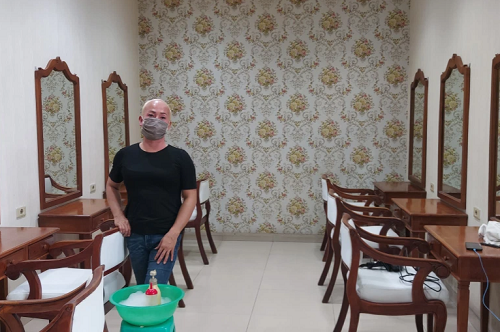
Medan, Indonesia –
Iwan is transgender, and a
“micro-minority” in Indonesia.
Before COVID-19, he employed four other transgender peopleas hairdressers and makeup artists at his
Anna Sui Salon in Medan in North Sumatra, but now he can
afford to hire
only one.“We used to have
10 to 15 customers a day, now we haven’t had a customer in over a week,” Iwan said. “Maybe we get
one customer every two weeks now. It’s been that way
since the pandemic started in March.”
Salon work and the wedding industry are two of only a few sectors in Indonesia that
offer employment opportunities to those who are
openly transgender.“People in the transgender community are still c
onsidered ‘deviant’ in much of Indonesian society,” said Irna Minauli, a psychologist in Medan. “They are
stigmatised and bullied. However, they are
accepted in a few narrow sectors such as the
beauty industry.”Antonius Remigius Abi who teaches
ethics at the Faculty of Law at Santo Thomas Catholic University in Medan, tells Al Jazeera that,
“a mistaken school of thought has built up that transgender people are
‘abnormal’ in Indonesian society”.
The lecturer regularly
discusses the transgender community in his
classes, and says tha
t students often criticise the community based on narrow perceptions of sexual behaviour and gender identity. All of this, he continues, has an
impact on transgender visibility in civil society.
“From an
ethical perspective, every human being is
equal and must be respected. However, the transgender community are
rarely accepted to work in public spaces other than salons or the entertainment industry in Indonesia,” he said.
Indonesia has been the
most badly affected country in Southeast Asia by the pandemic with more than
20,000 deaths reported since March. The archipelago currently has nearly
127,000 active confirmed cases of coronavirus, and the
beauty industry has been
severely affected.Forced to closeWhile the
Anna Sui Salon has employed
dozens of transgender workers over the years, Iwan says
business has been so slow they now only have Emmy, 40, who has worked as a hairdresser there for 10 years. They say it is lucky that
Iwan owns the building where the salon is located and
does not have to pay rent.“If we were still renting, we would have
had to close by now,” Iwan said. “I have friends in the
transgender community who also own salons and many of them have
had to close as they couldn’t afford to pay their rent any more. Some of my friends have
laid off all their staff and just call them in on a
freelance basis when someone makes an appointment.”
Iwan says many transgender employees in the beauty industry
use social media to get clients and do home visits, something which is
no longer popular during the pandemic when people are
fearful of outside workers coming to their homes and unable to afford
non-essential services like beauty treatments.
Shinta Ratri, the head of Pondok Pesantren Waria Al-Fatah in Yogyakarta, believed to be the
first transgender madrassa, or
Islamic boarding school, in the world, tells Al Jazeera many transgender people are struggling because of the pandemic.
“The impact of COVID-19 has
reduced the transgender community’s
income by 60 percent,” she said. “They are finding it
hard to pay for accommodation and they only have enough money to cover
basics like food. That is why many of them are so
stressed.”As it is
almost impossible for members of the transgender community to
get jobs in more stable sectors such as education or the civil service, Pondok Pesantren Waria Al-Fatah has set up a
food security training programme for 20 people for two months to
help them d
iversify their employment opportunities.“We have also set up
a fundraising programme to help pay costs for
60 members of the transgender community and have set up
mental health support for 20 more,” she added.
DisparagingAcross Indonesia, members of the transgender community often have
difficulties accessing formal government support, because of the
stigma surrounding gender identity and the fact that many of them are undocumented or have
documents that do not reflect their identities.Both Iwan and Emmy are disparaging of the government response to COVID-19, saying that they have received
no financial aid or subsidies.“We didn’t even get help to pay our electricity bills. Nothing,” said Iwan.
“Yet four
government officials have just been arrested for
corruption, including the social affairs minister while we are struggling,” said Emmy, who adds that they like to watch
political commentary on TikTok since there is
little else to do at the salon.
On 6 December, Juliari Batubara,
Indonesia’s social affairs minister, was arrested on
corruption charges regarding
food aid earmarked for those
affected by the pandemic after taking bribes from contractors in charge of supplying food parcels.


 Dec 24 2020, 08:34 AM


 Quote
Quote








 0.0333sec
 0.45
0.45
 5 queries
 GZIP Disabled