

LYN Catholic Fellowship V02 (Group), For Catholics (Roman or Eastern)
LYN Catholic Fellowship V02 (Group), For Catholics (Roman or Eastern)
|
|
 Nov 16 2017, 01:28 PM Nov 16 2017, 01:28 PM
|
 
Junior Member
225 posts Joined: Mar 2008  
|
|
|
|
|
|
|
Nov 16 2017, 02:06 PM
|
|
Junior Member
225 posts Joined: Mar 2008
|
Seeking What’s Wise …
Lord, may I be a seeker, a follower of Your light may I have the wisdom like the Magi’s had that night. May I travel the distance, regardless of how far may I be willing to go to wherever You are. May I have the resolve, to follow where You lead may I see to Your will I must be willing to heed. May I have the tenacity, not to ever quit may I be to Your ways determined to submit. May I have the fortitude, to journey into what’s wise may I have the stamina so Your path I’ll recognize. Lord, may I always seek You, like the Magi’s did that night may I have the courage . . . to follow after wisdom’s light! By Deborah Ann “Wisdom is the reflection of eternal light, the spotless mirror of the power of God, the image of his goodness. And she, who is one, can do all things…” – Wisdom 7:26-27 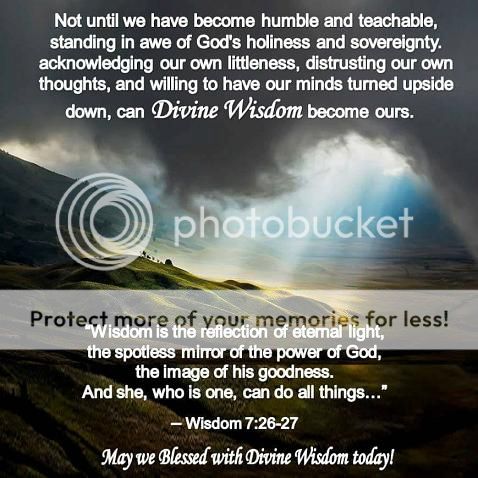 Source: https://www.facebook.com/groups/1663218997255048/ |
|
|
Nov 16 2017, 05:54 PM
|

Senior Member
3,577 posts Joined: Apr 2006
|
AsiaNews.it
Mass for a deceased underground priest. Card. Zen asks for God ‘s grace to save the Church in China and the Holy See from the 'precipice' by Li Yuan Fr. Wei Heping, 41, died in mysterious circumstances, his body dumped in a river in Taiyuan (Shanxi). For the police claim he committed suicide. Family members are not allowed to even see the autopsy report. For Card. Zen the Holy See (which "is not necessarily the Pope") seeks a compromise at all costs with the Chinese government, risking "to sell out the faithful Church". Justice and Peace publish a booklet about Fr. Wei, not to forget. Hong Kong (AsiaNews) - Card. Joseph Zen, Emeritus Bishop of Hong Kong, has asked God to save the Holy See "from the brink of the precipice and not sell out the faithful Church [to the Chinese government]". The cardinal expressed his concerns in his homily recalling Fr. Wei Heping (alias Yu Heping), who died two years ago in mysterious and suspicious circumstances. The Mass was held last night in the Church of St. Jude, organized by the Diocesan Commission for Justice and Peace. Pointing out that "the Holy See is not necessarily the Pope," the cardinal remarked that in recent years, in which an initial dialogue between Beijing and the Vatican is taking place, the Holy See has often remained silent about the grave events of the Chinese Church such as death of Fr. Wei, the captivity of Msgr. Giacomo Su Zhimin, the destruction of crosses and churches in Zhejiang. "Dialogue - said Card. Zen - is important and necessary. However, it [the Holy See] is too optimistic about the communist regime. It has depended on its diplomacy instead of faith. It does not have a bottom line to reach an agreement." He continued “The Holy See is ceaselessly compromising and has even arrived at the point of selling itself out to appease. This is by no means what God expects of the Church and by no means faithful to the mission that Christ gave the Apostles. " These comments seem to have been provoked by some news the Cardinal has recently received and which is "very shocking". Previously, Card. Zen had thought the negotiations were stalled, that "the Pope was more cautious" perhaps because "Beijing had expressed other demands on which he could not agree." Without mentioning the diocese, the emeritus bishop of Hong Kong said that "they are pushing for an evil plan: to ask faithful bishops to resign in order to leave room for illicit and excommunicated bishops. This is a bolt out of the blue! And it is the approach of a huge disaster for the Church. " "Someone - he added - might think I'm using the Mass to complain. No, I think Fr. Wei is using my mouth to communicate. These words serve to let us know what kind of grace we are asking for today. " The body of Fr. Wei, an active 41-year-old priest of the underground community, was found in suspicious circumstances in the Ren River, near Taiyuan City (Shanxi) on November 8, 2015. He had been expected to return the day before from a trip to Liaoning Province. According to ecclesial sources, who closely followed his case, the autopsy revealed a wide hemorrhagic area in the right part of the brain, but there were no visible wounds on the skin. The police concluded that he had committed suicide and archived the case. To the family of Fr. Wei was not allowed to have a copy of the autopsy report and they asked to reopen the investigation but the police refused. A faithful in the underground community thanked Card. Zen for remembering Fr. Wei and the Church's difficulties in China, and said she was saddened after reading the Cardinal's homily, posted today on his blog: "After reading this, my heart bleeds. As the cardinal said, maybe we should retreat to a cave and weep. But my heart does not give me peace. " The Justice and Peace Commission, which organized the Mass for Fr. Wei also published a paper and electronic booklet titled "Peace Pilgrim", symbolically using his name (Heping means "peace") and his tireless commitment to evangelization (see here). The booklet contains articles written by his family, friends, and faithful who received catechism from him, hoping that Catholics will not forget Fr. Wei, before the truth about his death is revealed. The text also includes a reflection of the priest and his opinion on the relations between China and the Vatican, entitled "Time belongs to God". In it he said there should be no hurry to make an agreement, if the political situation is not yet ready.  11/11/2017 12:40:00 - East Asia China Hong Kong 2003 © All rights reserved - AsiaNews C.F. e P.Iva: 00889190153 - GLACOM® |
|
|
Nov 17 2017, 12:34 PM
|
|
Junior Member
225 posts Joined: Mar 2008
|
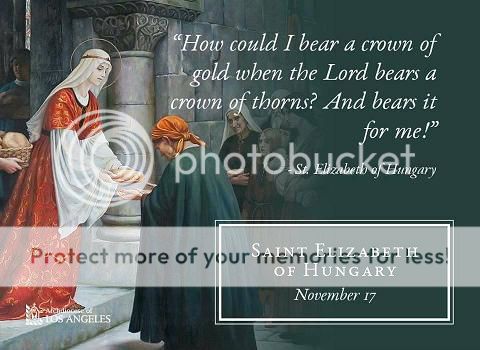
Memorial of Saint Elizabeth of Hungary, Religious
Lectionary: 495  Reading 1 (Wis 13:1-9) All men were by nature foolish who were in ignorance of God, and who from the good things seen did not succeed in knowing him who is, and from studying the works did not discern the artisan; But either fire, or wind, or the swift air, or the circuit of the stars, or the mighty water, or the luminaries of heaven, the governors of the world, they considered gods. Now if out of joy in their beauty they thought them gods, let them know how far more excellent is the Lord than these; for the original source of beauty fashioned them. Or if they were struck by their might and energy, let them from these things realize how much more powerful is he who made them. For from the greatness and the beauty of created things their original author, by analogy, is seen. But yet, for these the blame is less; For they indeed have gone astray perhaps, though they seek God and wish to find him. For they search busily among his works, but are distracted by what they see, because the things seen are fair. But again, not even these are pardonable. For if they so far succeeded in knowledge that they could speculate about the world, how did they not more quickly find its Lord? Responsorial Psalm (Ps 19:2-3, 4-5ab) R. The heavens proclaim the glory of God. The heavens declare the glory of God, and the firmament proclaims his handiwork. Day pours out the word to day, and night to night imparts knowledge. R. The heavens proclaim the glory of God. Not a word nor a discourse whose voice is not heard; Through all the earth their voice resounds, and to the ends of the world, their message. R. The heavens proclaim the glory of God. Alleluia (Lk 21:28) R. Alleluia, alleluia. Stand erect and raise your heads because your redemption is at hand. R. Alleluia, alleluia. Gospel (Lk 17:26-37) Jesus said to his disciples: "As it was in the days of Noah, so it will be in the days of the Son of Man; they were eating and drinking, marrying and giving in marriage up to the day that Noah entered the ark, and the flood came and destroyed them all. Similarly, as it was in the days of Lot: they were eating, drinking, buying, selling, planting, building; on the day when Lot left Sodom, fire and brimstone rained from the sky to destroy them all. So it will be on the day the Son of Man is revealed. On that day, someone who is on the housetop and whose belongings are in the house must not go down to get them, and likewise one in the field must not return to what was left behind. Remember the wife of Lot. Whoever seeks to preserve his life will lose it, but whoever loses it will save it. I tell you, on that night there will be two people in one bed; one will be taken, the other left. And there will be two women grinding meal together; one will be taken, the other left." They said to him in reply, "Where, Lord?" He said to them, "Where the body is, there also the vultures will gather."  REFLECTIONS: WORD Today 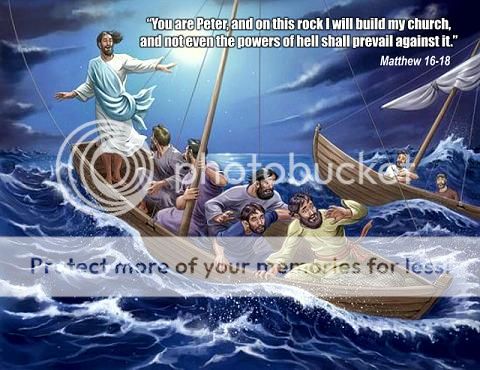 The First Reading says, "Anyone who does not know God is simply foolish. Such people look at the good things around them and still fail to see the living God. They have studied the things he made, but they have not recognized the one who made them." (Wisdom 13:1, GNT Bible) Indeed we live in an age of foolish godlessness. We master the complex sciences of nature and the human body; we know their abilities, capacities and limitations. But we abuse them both, using nature for quick gain without responsibility, and using our bodies for pleasure without consequence. Jesus warns that "In the days before the flood, people enjoyed banquets, parties and weddings right up to the time Noah entered his boat and the great flood came to destroy them all." (Luke 17:27) We see the terrifying warning signs in nature and the appalling symptoms of corruption in human society, but we just foolishly bandage the surface wound with palliative solutions but ignore the underlying deadly infection of godlessness. Before it's too late, let us be wise and stop playing god and get on board the rock-solid teachings of the Church, the unsinkable Boat of Jesus (Matthew 16:18) and unfailing vehicle of Christianity for 2,000 years. SHOUT TO THE LORD Source: https://www.facebook.com/CatholicMassReflec...801456456818778  |
|
|
Nov 17 2017, 01:24 PM
|
|
Junior Member
225 posts Joined: Mar 2008
|
 |
|
|
Nov 18 2017, 12:54 AM
|
|
Senior Member
3,577 posts Joined: Apr 2006
|
“Way of the Future” is a new religious organization whose officially approved statutes say its goal is to “develop and promote the realization of a Godhead based on Artificial Intelligence” in order to “contribute to the betterment of society”.
Behind this initiative is a major Silicon Valley figure, Anthony Levandowski, a 37-year-old engineer, and the father of Waymo, Google’s self-driving car. In September of 2017, the American magazine Wired revealed that the engineer wants to “promote the realization of a Godhead based on Artificial Intelligence”. The project would seem laughable if he were not a follower of a dangerous school of thought: transhumanism. The idea behind transhumanism is for man to one day be absorbed by machines, and this idea is gradually leaving scientific ideology behind and creeping into the religious field. Anthony Levandowski also believes in the “concept of singularity” that for transhumanists means the day computers will surpass man and enter new era. “Transhumanism is a progressive and religious form of delirium, which is likely to spread in France and the West,” warns Natalia Trouiller, director of a communications association. Why? “First of all, because of humanity’s perpetual temptation to save itself through its own strength,” she explains, before adding, “then because of the contemporary world’s fascination with Gnosticism, which consists in seeing the body as a hindrance and dreaming of being rid of it”. Sources : La Croix/Wired More here: https://www.theguardian.com/technology/2017...ony-levandowski |
|
|
|
|
|
Nov 18 2017, 10:06 AM
Show posts by this member only | IPv6 | Post
#487
|
|
Junior Member
225 posts Joined: Mar 2008
|
QUOTE(yeeck @ Nov 18 2017, 12:54 AM) “Way of the Future” is a new religious organization whose officially approved statutes say its goal is to “develop and promote the realization of a Godhead based on Artificial Intelligence” in order to “contribute to the betterment of society”. Trans-what??? Trans-fatty acids arrrrhhh? Da flying Cat6A monster is awakened! ... Behind this initiative is a major Silicon Valley figure, Anthony Levandowski, a 37-year-old engineer, and the father of Waymo, Google’s self-driving car. In September of 2017, the American magazine Wired revealed that the engineer wants to “promote the realization of a Godhead based on Artificial Intelligence”. The project would seem laughable if he were not a follower of a dangerous school of thought: transhumanism. The idea behind transhumanism is for man to one day be absorbed by machines, and this idea is gradually leaving scientific ideology behind and creeping into the religious field. Anthony Levandowski also believes in the “concept of singularity” that for transhumanists means the day computers will surpass man and enter new era. “Transhumanism is a progressive and religious form of delirium, which is likely to spread in France and the West,” warns Natalia Trouiller, director of a communications association. Why? “First of all, because of humanity’s perpetual temptation to save itself through its own strength,” she explains, before adding, “then because of the contemporary world’s fascination with Gnosticism, which consists in seeing the body as a hindrance and dreaming of being rid of it”. Sources : La Croix/Wired More here: https://www.theguardian.com/technology/2017...ony-levandowski     |
|
|
Nov 18 2017, 06:44 PM
|
|
Senior Member
3,577 posts Joined: Apr 2006
|
On October 16, 2017, the president of the Republic of Nepal, Bidhya Devi Bhandari, promulgated an “anti-conversion” law that was adopted by Parliament on August 8. This new law will have consequences for the Christian minority in the country.
“Criminal Code 2074” is the name of the new law that aims to limit religious proselytism in Nepal. According to the newly implemented law, any person convicted of having converted someone to another religion is to be punished with five years in prison and a 50,000-rupee fine (about $500 USD ). The amount of prison time and the heavy fine, which represents over half of the Nepalese average annual income ($762 in 2014), shows just how important conversions are in this republic where over 81% of the population of 31 million is Hindu; 9% is Buddhist, 4.4% is Muslim, and 1.4% is Christian. Fr. Bill Robins, S.J., a missionary in the country, believes it best to remain calm: “Despite the presence of an 'anti-conversion law' that limits religious freedom and criminalizes a religious conversion, Christians in Nepal will continue to contribute to building a healthy, peaceful and harmonious society,” he told Agenzia Fides. One factor remains unknown: in India, similar laws have been the cause of many situations of harassment and arbitrary imprisonment. Is it a coincidence? The law was promulgated on the same day that Nepal was elected as one of the 15 new members of the Human Rights Council at the UN General Assembly. Sources : NepalChurch.com/Fides/EDA/infochretienne |
|
|
Nov 20 2017, 02:10 PM
|
|
Junior Member
225 posts Joined: Mar 2008
|
 This post has been edited by khool: Nov 21 2017, 12:34 PM |
|
|
Nov 21 2017, 12:21 PM
|
|
Junior Member
225 posts Joined: Mar 2008
|
Monday of the Thirty-third Week in Ordinary Time
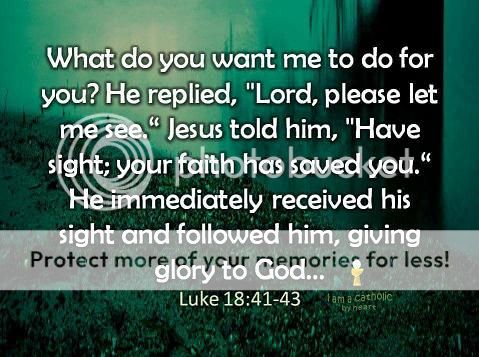
Lectionary: 497  Reading 1 (1 Mc 1:10-15, 41-43, 54-57, 62-63) [From the descendants of Alexander's officers] there sprang a sinful offshoot, Antiochus Epiphanes, son of King Antiochus, once a hostage at Rome. He became king in the year one hundred and thirty seven of the kingdom of the Greeks. In those days there appeared in Israel men who were breakers of the law, and they seduced many people, saying: "Let us go and make an alliance with the Gentiles all around us; since we separated from them, many evils have come upon us." The proposal was agreeable; some from among the people promptly went to the king, and he authorized them to introduce the way of living of the Gentiles. Thereupon they built a gymnasium in Jerusalem according to the Gentile custom. They covered over the mark of their circumcision and abandoned the holy covenant; they allied themselves with the Gentiles and sold themselves to wrongdoing. Then the king wrote to his whole kingdom that all should be one people, each abandoning his particular customs. All the Gentiles conformed to the command of the king, and many children of Israel were in favor of his religion; they sacrificed to idols and profaned the sabbath. On the fifteenth day of the month Chislev, in the year one hundred and forty-five, the king erected the horrible abomination upon the altar of burnt offerings and in the surrounding cities of Judah they built pagan altars. They also burned incense at the doors of the houses and in the streets. Any scrolls of the law which they found they tore up and burnt. Whoever was found with a scroll of the covenant, and whoever observed the law, was condemned to death by royal decree. But many in Israel were determined and resolved in their hearts not to eat anything unclean; they preferred to die rather than to be defiled with unclean food or to profane the holy covenant; and they did die. Terrible affliction was upon Israel. Responsorial Psalm (Ps 119:53, 61, 134, 150, 155, 158) R. Give me life, O Lord, and I will do your commands. Indignation seizes me because of the wicked who forsake your law. R. Give me life, O Lord, and I will do your commands. Though the snares of the wicked are twined about me, your law I have not forgotten. R. Give me life, O Lord, and I will do your commands. Redeem me from the oppression of men, that I may keep your precepts. R. Give me life, O Lord, and I will do your commands. I am attacked by malicious persecutors who are far from your law. R. Give me life, O Lord, and I will do your commands. Far from sinners is salvation, because they seek not your statutes. R. Give me life, O Lord, and I will do your commands. I beheld the apostates with loathing, because they kept not to your promise. R. Give me life, O Lord, and I will do your commands. Alleluia (Jn 8:12) R. Alleluia, alleluia. I am the light of the world, says the Lord; whoever follows me will have the light of life. R. Alleluia, alleluia. Gospel (Lk 18:35-43) As Jesus approached Jericho a blind man was sitting by the roadside begging, and hearing a crowd going by, he inquired what was happening. They told him, "Jesus of Nazareth is passing by." He shouted, "Jesus, Son of David, have pity on me!" The people walking in front rebuked him, telling him to be silent, but he kept calling out all the more, "Son of David, have pity on me!" Then Jesus stopped and ordered that he be brought to him; and when he came near, Jesus asked him, "What do you want me to do for you?" He replied, "Lord, please let me see." Jesus told him, "Have sight; your faith has saved you." He immediately received his sight and followed him, giving glory to God. When they saw this, all the people gave praise to God.  REFLECTIONS: WORD Today 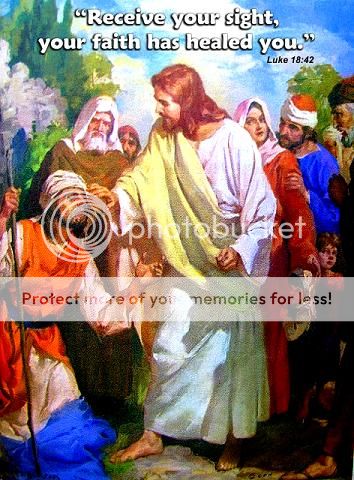 This week is the final week of the Church liturgical calendar, or the annual schedule of Mass readings. The First Readings will be from the two books Maccabees. They narrate the events in Jerusalem between the return of the Jews from Babylonian and the birth of Jesus Christ. In this period (350 BC to 63 BC), Jerusalem was invaded and came under Greek rule, then Syrian rule, and then Roman rule. These powerful foreign nations forced their pagan ways on Jerusalem. In today's reading, the Syrian King and many Jewish collaborators try to erase God by burning the Bible and rejecting God's Commandments. They introduce godless practices and entertainment. Today, powerful foreign nations continue to do the same things to our country the Philippines. Pornography flows in like a mighty flood through the internet and flows out taking naked pictures of our little boys and girls to pedophiles worldwide. In every corner of our cities and towns are internet cafes where children play online games where they kill non-stop. Quietly, subtly, and with the use of unlimited dollars, rich foreign nations have successfully hammered in the passage of artificial contraception law that promote casual sex. Now there are exploratory talks about legal abortion (the last-resort contraception) and same-sex unions. There is a new bill proposing "dissolution of marriage", another name for divorce. In 2014 there was even a bill filed in Senate for euthanasia ("mercy killing"). Then there is the extra-judicial killing of suspected criminals. And the sad thing is that in this predominantly Catholic country, these crossless solutions that end life, dissolve marriage and destroy the family has many supporters. In the Gospel, Jesus continues His march to Jerusalem where He knew the cross awaited Him, where He would willingly give up His life that we may live. A blind man calls out to Jesus, "Lord, let me see." Jesus gave him sight and he followed Jesus to Jerusalem and the cross. Let us ask Jesus to open our spiritual eyes and make us see the evil in the growing culture of death. The last Sunday of the Church liturgical calendar (this coming Sunday) is the grand celebration of Christ the King. May we never forget that it is Jesus Christ we follow, the King of our lives, our homes, our family and our country. Source: https://www.facebook.com/CatholicMassReflec...802617043369386  |
|
|
Nov 21 2017, 12:28 PM
|
|
Junior Member
225 posts Joined: Mar 2008
|
Do You Trust Him?
I know God knows what’s best. I know I don’t. I know he cares. Such words come easily when the water is calm. But when you’re looking at a wrecked car or a suspicious-looking mole, when war breaks out or thieves break in, do you trust him? Scripture, from Old Testament to New, from prophets to poets to preachers, renders one unanimous chorus: God directs the affairs of humanity. No leaf falls without God’s knowledge. No dolphin gives birth without his permission. No wave crashes on the shore apart from his calculation. God has never been surprised. Not once. I am the one who creates the light and makes the darkness. I am the one who sends good times and bad times. I, the Lord, am the one who does these things. (Isa 45:7) Some find the thought impossible to accept. One dear woman did. After I shared these ideas in a public setting, she asked to speak with me. Husband at her side, she related the story of her horrible childhood. First abused, then abandoned by her father. Unimaginable and undeserved hurts scar her early memories. Through tear-filled eyes she asked, “Do you mean to tell me God was watching the whole time?” The question vibrated in the room. I shifted in my chair and answered, “Yes, he was. I don’t know why he allowed your abuse, but I do know this. He loves you and hurts with you.” She didn’t like the answer. But dare we say anything else? Dare we suggest that God dozed off? Abandoned his post? That heaven sees but can’t act? That our Father is kind but not strong, or strong but doesn’t care? I wish she could have spoken to Joseph. His brothers abused him, selling him into slavery. Was God watching? Yes. And our sovereign God used their rebellious hearts to save a nation from famine and the family of the Messiah from extinction. As Joseph told them, “God turned into good what you meant for evil” (Gen 50:20). Best of all would have been a conversation with Jesus himself. He begged God for a different itinerary: a crossless death. From Gethsemane’s garden Christ pleaded for a Plan B. Redemption with no nails. “Father, if you are willing, please take this cup of suffering away from me. Yet I want your will, not mine. Then an angel from heaven appeared and strengthened him” (Luke 22:42–43). Did God hear the prayer of his Son? Enough to send an angel. Did God spare his Son from death? No. The glory of God outranked the comfort of Christ. So Christ suffered, and God’s grace was displayed and deployed. Are you called to endure a Gethsemane season? Have you “been granted for Christ’s sake, not only to believe in Him, but also to suffer for His sake” (Phil. 1:29)? If so, then come thirsty and drink deeply from his Lordship. He authors all itineraries. He knows what is best. No struggle will come your way apart from his purpose, presence, and permission. What encouragement this brings! You are never the victim of nature or the prey of fate. Chance is eliminated. You are more than a weather vane whipped about by the winds of fortune. Would God truly abandon you to the whims of drug-crazed thieves, greedy corporate raiders, or evil leaders? Perish the thought! QUOTE When you pass through the waters, I will be with you; And through the rivers, they will not overflow you. When you walk through the fire, you will not be scorched, Nor will the flame burn you. For I am the Lord your God. (Isa 43:2–3) We live beneath the protective palm of a sovereign King who superintends every circumstance of our lives and delights in doing us good. Nothing comes your way that has not first passed through the filter of his love. Learn well the song of sovereignty: I know God knows what’s best. Pray humbly the prayer of trust: “I trust your Lordship. I belong to you. Nothing comes to me that hasn’t passed through you.” A word of caution: The doctrine of sovereignty challenges us. Study it gradually. Don’t share it capriciously. When someone you love faces adversity, don’t insensitively declare, “God is in control.” A cavalier tone can eclipse the right truth. Be careful. And be encouraged. God’s ways are always right. They may not make sense to us. They may be mysterious, inexplicable, difficult, and even painful. But they are right. “And we know that God causes everything to work together for the good of those who love God and are called according to his purpose for them” (Rom. 8:28) by Max Lucado “For the Son of Man has come to seek and to save what was lost." – Luke 19:10  |
|
|
Nov 21 2017, 12:32 PM
|
|
Junior Member
225 posts Joined: Mar 2008
|
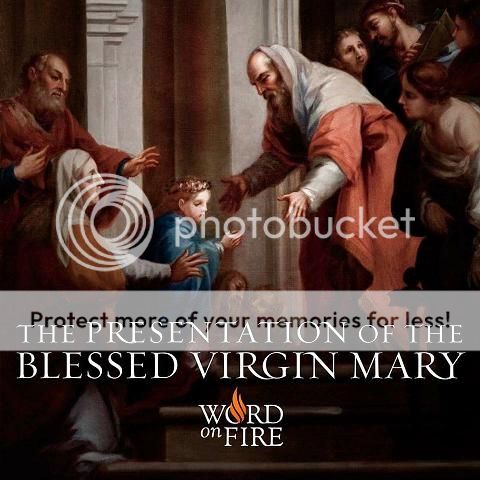
Memorial of the Presentation of the Blessed Virgin Mary
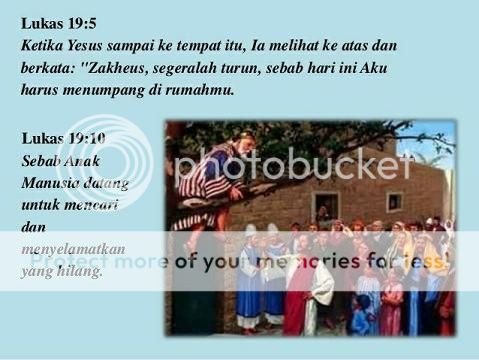
Lectionary: 498  Reading 1 (2 Mc 6:18-31) Eleazar, one of the foremost scribes, a man of advanced age and noble appearance, was being forced to open his mouth to eat pork. But preferring a glorious death to a life of defilement, he spat out the meat, and went forward of his own accord to the instrument of torture, as people ought to do who have the courage to reject the food which it is unlawful to taste even for love of life. Those in charge of that unlawful ritual meal took the man aside privately, because of their long acquaintance with him, and urged him to bring meat of his own providing, such as he could legitimately eat, and to pretend to be eating some of the meat of the sacrifice prescribed by the king; in this way he would escape the death penalty, and be treated kindly because of their old friendship with him. But Eleazar made up his mind in a noble manner, worthy of his years, the dignity of his advanced age, the merited distinction of his gray hair, and of the admirable life he had lived from childhood; and so he declared that above all he would be loyal to the holy laws given by God. He told them to send him at once to the abode of the dead, explaining: "At our age it would be unbecoming to make such a pretense; many young people would think the ninety-year-old Eleazar had gone over to an alien religion. Should I thus pretend for the sake of a brief moment of life, they would be led astray by me, while I would bring shame and dishonor on my old age. Even if, for the time being, I avoid the punishment of men, I shall never, whether alive or dead, escape the hands of the Almighty. Therefore, by manfully giving up my life now, I will prove myself worthy of my old age, and I will leave to the young a noble example of how to die willingly and generously for the revered and holy laws." Eleazar spoke thus, and went immediately to the instrument of torture. Those who shortly before had been kindly disposed, now became hostile toward him because what he had said seemed to them utter madness. When he was about to die under the blows, he groaned and said: "The Lord in his holy knowledge knows full well that, although I could have escaped death, I am not only enduring terrible pain in my body from this scourging, but also suffering it with joy in my soul because of my devotion to him." This is how he died, leaving in his death a model of courage and an unforgettable example of virtue not only for the young but for the whole nation. Responsorial Psalm (PS 3:2-3, 4-5, 6-7) R. The Lord upholds me. O LORD, how many are my adversaries! Many rise up against me! Many are saying of me, "There is no salvation for him in God." R. The Lord upholds me. But you, O LORD, are my shield; my glory, you lift up my head! When I call out to the LORD, he answers me from his holy mountain. R. The Lord upholds me. When I lie down in sleep, I wake again, for the LORD sustains me. I fear not the myriads of people arrayed against me on every side. R. The Lord upholds me. Alleluia (1 Jn 4:10b) R. Alleluia, alleluia. God loved us, and sent his Son as expiation for our sins. R. Alleluia, alleluia. Gospel (Lk 19:1-10) At that time Jesus came to Jericho and intended to pass through the town. Now a man there named Zacchaeus, who was a chief tax collector and also a wealthy man, was seeking to see who Jesus was; but he could not see him because of the crowd, for he was short in stature. So he ran ahead and climbed a sycamore tree in order to see Jesus, who was about to pass that way. When he reached the place, Jesus looked up and said, "Zacchaeus, come down quickly, for today I must stay at your house." And he came down quickly and received him with joy. When they saw this, they began to grumble, saying, "He has gone to stay at the house of a sinner."  because this man too is a descendant of Abraham. For the Son of Man has come to seek and to save what was lost."  REFLECTIONS: WORD Today 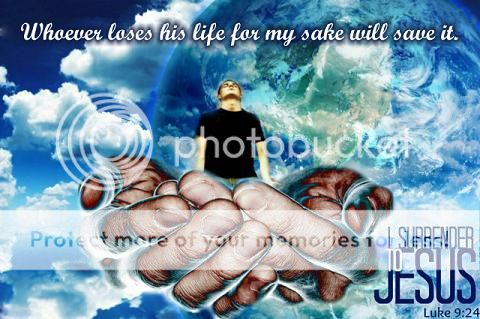 When he was about to die under the blows, he groaned and said: "The Lord in his holy knowledge knows full well that, although I could have escaped death, I am not only enduring terrible pain in my body from this scourging, but also suffering it with joy in my soul because of my devotion to him." -2 Maccabees 6: In the First Reading, the Jew Eleazar was beaten to death because he loved God and would not break His law. He was an Old Testament martyr of God the Father. Fear of death is the biggest obstacle to love. Fear of poverty stops us from donating. Fear of losing face stops us from preaching the Word of God. Fear of getting sick stops us from going to Mass because it's raining. Fear of loss of beauty stops us from kneeling because it would scar our knees. Fear stops love - and love is the greatest commandment of Jesus. Martyrs and Saints gave up health and wealth in order to love totally like Jesus. In the Gospel, the very rich man Zacchaeus, surrendered his social standing and shamelessly climbed a tree just to see Jesus. And he surrendered half his huge wealth in exchange of having Jesus in his home. Jesus says, "Whoever wants to save their life will lose it (in hell), but whoever loses their life for Me will save it (in heaven)." -Luke 9:24 Let us make it part of our prayer to ask God to increase our love and decrease our fears. FELLOWSHIP OF THE UNASHAMED Source: https://www.facebook.com/CatholicMassReflec...802893976675026  This post has been edited by khool: Nov 21 2017, 02:25 PM |
|
|
Nov 21 2017, 12:35 PM
|
|
Junior Member
225 posts Joined: Mar 2008
|
VENERATION IN PRAYER
As we venerate the glorious memory of the most holy Virgin Mary, grant, we pray, O Lord, through her intercession, that we, too, may merit to receive from the fullness of your grace. Through our Lord Jesus Christ, your Son, who lives and reigns with you in the unity of the Holy Spirit, one God, for ever and ever. 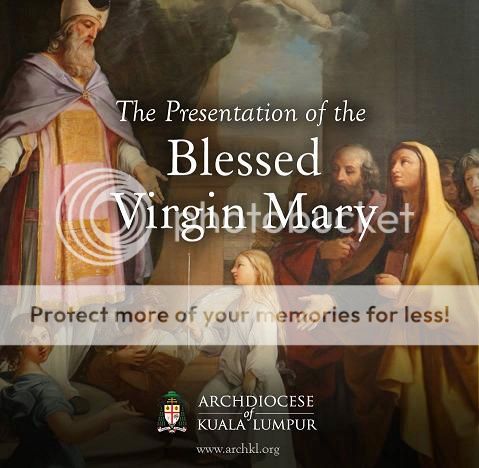 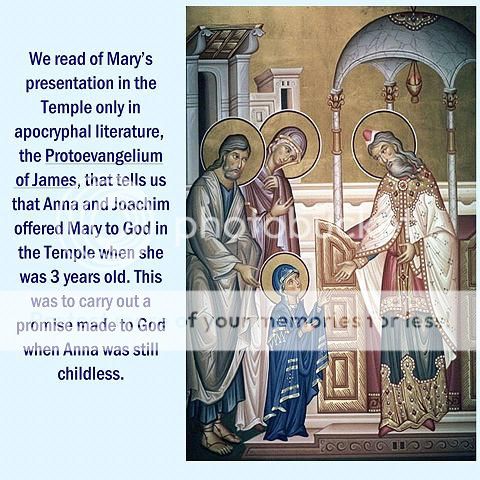 This post has been edited by khool: Nov 21 2017, 02:26 PM |
|
|
|
|
|
Nov 21 2017, 01:56 PM
|
|
Junior Member
225 posts Joined: Mar 2008
|
  This post has been edited by khool: Nov 21 2017, 02:31 PM |
|
|
Nov 22 2017, 11:27 AM
|
|
Junior Member
225 posts Joined: Mar 2008
|
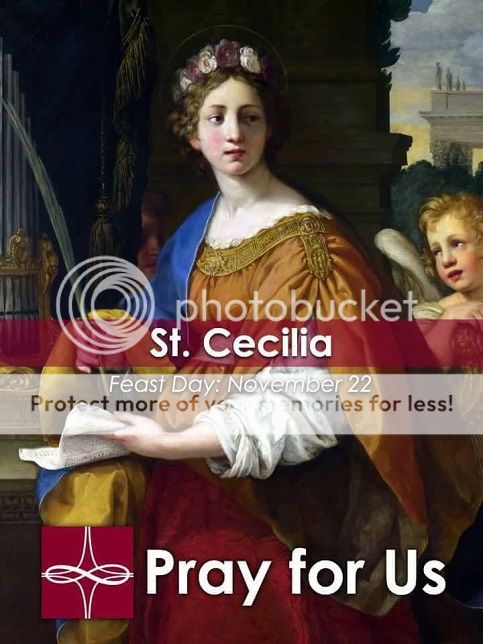
Memorial of Saint Cecilia, Virgin and Martyr
Lectionary: 499 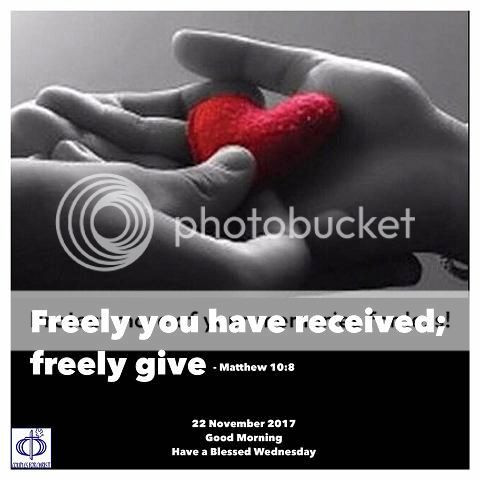 Reading 1 (2 Mc 7:1, 20-31) It happened that seven brothers with their mother were arrested and tortured with whips and scourges by the king, to force them to eat pork in violation of God's law. Most admirable and worthy of everlasting remembrance was the mother, who saw her seven sons perish in a single day, yet bore it courageously because of her hope in the Lord. Filled with a noble spirit that stirred her womanly heart with manly courage, she exhorted each of them in the language of their ancestors with these words: "I do not know how you came into existence in my womb; it was not I who gave you the breath of life, nor was it I who set in order the elements of which each of you is composed. Therefore, since it is the Creator of the universe who shapes each man's beginning, as he brings about the origin of everything, he, in his mercy, will give you back both breath and life, because you now disregard yourselves for the sake of his law." Antiochus, suspecting insult in her words, thought he was being ridiculed. As the youngest brother was still alive, the king appealed to him, not with mere words, but with promises on oath, to make him rich and happy if he would abandon his ancestral customs: he would make him his Friend and entrust him with high office. When the youth paid no attention to him at all, the king appealed to the mother, urging her to advise her boy to save his life. After he had urged her for a long time, she went through the motions of persuading her son. In derision of the cruel tyrant, she leaned over close to her son and said in their native language: "Son, have pity on me, who carried you in my womb for nine months, nursed you for three years, brought you up, educated and supported you to your present age. I beg you, child, to look at the heavens and the earth and see all that is in them; then you will know that God did not make them out of existing things; and in the same way the human race came into existence. Do not be afraid of this executioner, but be worthy of your brothers and accept death, so that in the time of mercy I may receive you again with them." She had scarcely finished speaking when the youth said: "What are you waiting for? I will not obey the king's command. I obey the command of the law given to our fathers through Moses. But you, who have contrived every kind of affliction for the Hebrews, will not escape the hands of God." Responsorial Psalm (Ps 17:1bcd, 5-6, 8b and 15) R. Lord, when your glory appears, my joy will be full. Hear, O LORD, a just suit; attend to my outcry; hearken to my prayer from lips without deceit. R. Lord, when your glory appears, my joy will be full. My steps have been steadfast in your paths, my feet have not faltered. I call upon you, for you will answer me, O God; incline your ear to me; hear my word. R. Lord, when your glory appears, my joy will be full. Keep me as the apple of your eye; hide me in the shadow of your wings. But I in justice shall behold your face; on waking, I shall be content in your presence. R. Lord, when your glory appears, my joy will be full. Alleluia (See Jn 15:16) R. Alleluia, alleluia. I chose you from the world, to go and bear fruit that will last, says the Lord. R. Alleluia, alleluia. Gospel (Lk 19:11-28) While people were listening to Jesus speak, he proceeded to tell a parable because he was near Jerusalem and they thought that the Kingdom of God would appear there immediately. So he said, "A nobleman went off to a distant country to obtain the kingship for himself and then to return. He called ten of his servants and gave them ten gold coins and told them, 'Engage in trade with these until I return.' His fellow citizens, however, despised him and sent a delegation after him to announce, 'We do not want this man to be our king.' But when he returned after obtaining the kingship, he had the servants called, to whom he had given the money, to learn what they had gained by trading. The first came forward and said, 'Sir, your gold coin has earned ten additional ones.' He replied, 'Well done, good servant! You have been faithful in this very small matter; take charge of ten cities.' Then the second came and reported, 'Your gold coin, sir, has earned five more.' And to this servant too he said, 'You, take charge of five cities.' Then the other servant came and said, 'Sir, here is your gold coin; I kept it stored away in a handkerchief, for I was afraid of you, because you are a demanding man; you take up what you did not lay down and you harvest what you did not plant.' He said to him, 'With your own words I shall condemn you, you wicked servant. You knew I was a demanding man, taking up what I did not lay down and harvesting what I did not plant; why did you not put my money in a bank? Then on my return I would have collected it with interest.' And to those standing by he said, 'Take the gold coin from him and give it to the servant who has ten.' But they said to him, 'Sir, he has ten gold coins.' He replied, 'I tell you, to everyone who has, more will be given, but from the one who has not, even what he has will be taken away. Now as for those enemies of mine who did not want me as their king, bring them here and slay them before me.'" After he had said this, he proceeded on his journey up to Jerusalem.  REFLECTIONS: WORD Today  Today's parable in the Gospel is about the use of the gifts of time, treasure and talents God entrusted us His servants to invest in His Kingdom. Jesus describes three kinds of servants... 1. The Rebel: He rejects the Kingship of God (Lk 19:14), using his gifts only for his own satisfaction, or maybe to build up his own glory. He may claim to believe in God, but not the God who reveals Himself through the Bible and through His prophet the Church. The Rebel constructs a god made in his own image. He will be judged severely and terribly when Jesus returns (verse 27). 2. The Timid Believer: He is God-fearing and devout in prayer, but he is afraid and ashamed to do anything else (v 20-21), unsure of God's gifts and guidance. When his little talents fade away, and his resources run out, no more is given to him and be wasted (v 26). 3. The Productive Faithful: Firmly believing in God's promises, this servant boldly invests his talents and energies to make God's Kingdom a better place to live in (v. 16-19). He does not mind making mistakes and being shamed while serving his Master. To him, God constantly adds more grace... God expects us to use our gifts to bring others to Him and expand His Kingdom. But why does He want us to do this when He can surely do it on His own with His infinite powers? Because He loves us and wants us to share the fullness of life with His Perfect Son Jesus Christ. Busy with Jesus, we don't have time for vice and sin. Serving the Lord keeps us healthy, holy and happy. I'VE GOT THE JOY DOWN IN MY HEART Source: https://www.facebook.com/CatholicMassReflec...511320058099745  |
|
|
Nov 22 2017, 01:28 PM
|
|
Junior Member
225 posts Joined: Mar 2008
|
 |
|
|
Nov 24 2017, 11:17 AM
|
|
Junior Member
225 posts Joined: Mar 2008
|
WHY DO WE CELEBRATE CHRIST THE KING SUNDAY?
This celebration, officially known as the 'Solemnity of Jesus Christ, King of the Universe,' was instituted by Pope Pius XI in 1925 in response to the rapidly growing secularization of the world. The times we live in is undoubtedly marked by growing disbelief in the presence of God, much less in the salvation needed by men and brought about by the sacrifice of Jesus Christ. At first, Christ the King was celebrated on the last Sunday of October, but we now observe it on the last Sunday in Ordinary Time (this year, on November 26). It is only fitting that the liturgical calendar begins and ends with the celebration of the eternal Kingship of the Son of God. Jesus Christ, after all, is our first beginning and last end --the Alpha and the Omega. Indeed, many of the Church's celebrations are intended to always remind us of the eternal and supreme kingship of Jesus Christ. This kingship is not nominal or ceremonial, like the constitutional monarchs of today, but a real and powerful imperium. He first came as the merciful savior; we prepare for His second coming to judge the living and the dead. This particular solemnity celebrates Jesus' supremacy over all kingdoms, governments, and powers on earth. It reminds us that no matter how powerful human beings and institutions can be, they will always be subject to decay and destruction. Only the crown of Jesus Christ will last forever. Only in Him do we find salvation, only in Him do we find life and true happiness everlasting. "My Kingdom is not of this world," Jesus declared before Pilate (cf. John 18:36). To whom, then, do we give our allegiance? To this world or to Christ? The choice is yours to make. CHRIST THE KING, MAY YOUR KINGDOM COME! 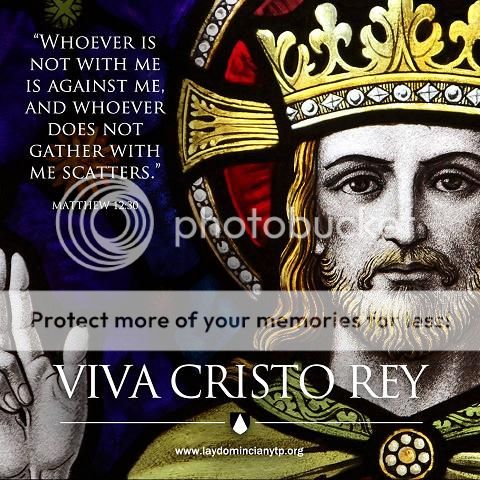 Source: https://www.facebook.com/LayDominicanYTP/ph...671321956411809 |
|
|
Nov 24 2017, 11:21 AM
|
|
Junior Member
225 posts Joined: Mar 2008
|
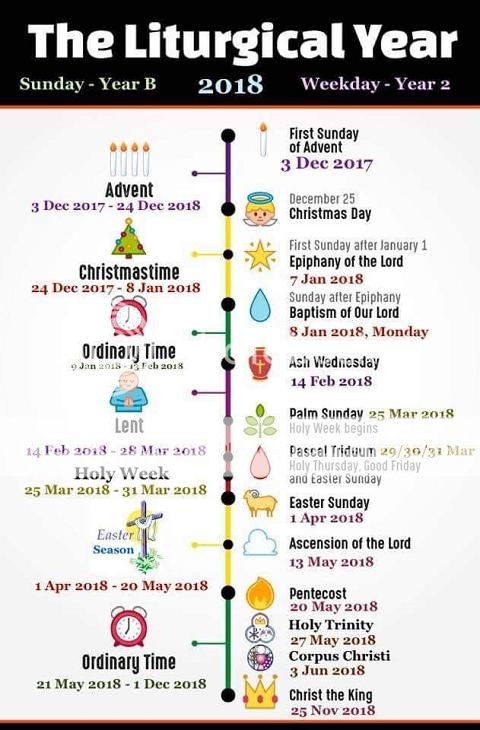
For 2018, uses missal Year 'B'
 |
|
|
Nov 24 2017, 01:28 PM
|
|
Junior Member
225 posts Joined: Mar 2008
|
 This post has been edited by khool: Nov 24 2017, 01:56 PM |
|
|
Nov 24 2017, 01:41 PM
|
|
Senior Member
3,577 posts Joined: Apr 2006
|
Should the Feast of Christ the King Be Celebrated in October or November?
Peter Kwasniewski 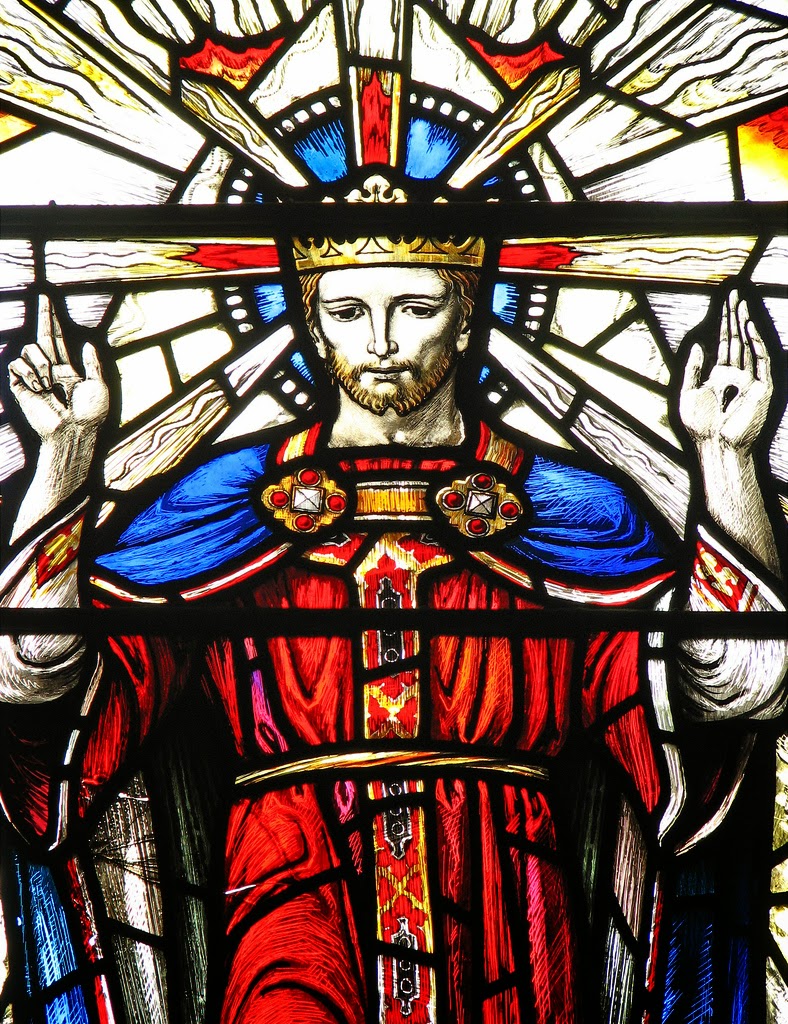 With the revival of the traditional Roman Mass throughout the Church, a number of rather significant calendar differences between old and new make themselves increasingly felt by the faithful and those who minister to them. We are all aware, but no one better than our dedicated clergy, that almost every Sunday of the year would demand two different homilies if the same priest, intending to preach on the readings of the day, celebrated Masses in both the Ordinary and Extraordinary Forms. One of the most egregious differences between the two calendars is the location of the Feast of the Kingship of Our Lord Jesus Christ. In the old calendar, it is always celebrated on the last Sunday of the month of October, right before All Saints. In the new calendar, however, it is the last Sunday of the liturgical year, leading up to the First Sunday of Advent. In practice, the gap between these is often as great as a month. In bi-formal parishes or chapels, the priest is advised to keep that October homily handy for November. Noting the existence of this difference is not nearly as interesting as asking why there should be such a difference, particularly in a feast of such recent origin. After all, Pope Pius XI instituted the feast in 1925, and already, by 1970, it had been moved. To answer this question, we need to look first at the reasons given by Pope Pius XI himself for choosing the last Sunday of October: Therefore by Our Apostolic Authority We institute the Feast of the Kingship of Our Lord Jesus Christ to be observed yearly throughout the whole world on the last Sunday of the month of October—the Sunday, that is, which immediately precedes the Feast of All Saints. … The last Sunday of October seemed the most convenient of all for this purpose, because it is at the end of the liturgical year, and thus the feast of the Kingship of Christ sets the crowning glory upon the mysteries of the life of Christ already commemorated during the year, and, before celebrating the triumph of all the Saints, we proclaim and extol the glory of him who triumphs in all the Saints and in all the Elect. Make it your duty and your task, Venerable Brethren, to see that sermons are preached to the people in every parish to teach them the meaning and the importance of this feast, that they may so order their lives as to be worthy of faithful and obedient subjects of the divine King. (Encyclical Letter Quas Primas, 28-29) Pius XI’s intention, as can be gleaned from n. 29, is to emphasize the glory of Christ as terminus of His earthly mission, a glory and mission visible and perpetuated in history by the saints. Hence the feast falls shortly before the Feast of All Saints, to emphasize that what Christ inaugurated in His own person before ascending in glory, the saints then instantiate and carry further in human society, culture, and nations. It is a feast primarily about celebrating Christ’s ongoing kingship over all reality, including this present world, where the Church must fight for the recognition of His rights, the actual extension of His dominion to all domains, individual and social. Indeed, there's also the obvious fact, unmentioned in Quas Primas but surely in everyone's mind, that the last Sunday in October had, for centuries, been celebrated as Reformation Sunday. A Catholic counter-feast, reminding the world not only of the comprehensive Kingship of Jesus Christ—so often denied socially and culturally by various teachings of Protestantism—but also of the worldwide kingly authority of His Church, would certainly be a reasonable application of the principle lex orandi, lex credendi. In the liturgical reforms following the Second Vatican Council, its place was changed to the last Sunday of the Church year—that is, so that one week later would fall the first Sunday of Advent. This new position emphasizes rather the eschatological dimension of Christ’s kingship: the Kingdom of Jesus Christ, though begun in time, is here present “as in a mystery” (as Lumen Gentium phrases it) and in a “crucified” way. This Kingdom will be perfected and fully manifested only at the end of time, with the Second Coming. Hence in the new calendar the feast comes at the very end of the Church’s year, as the summation of the whole of salvation history and the symbol of what we hope for: expectantes … adventum salvatoris nostri Jesu Christi, as the liturgy in the Ordinary Form proclaims after the Lord’s Prayer. Though both placements are defensible, it would seem that Pius XI’s intention, consistent with the encyclical as a whole, was more to insist on the rights of Jesus Christ here and now, and the corresponding duties of men and nations on earth. As Pius XI explains: The empire of our Redeemer embraces all men. To use the words of Our immortal predecessor, Pope Leo XIII: “His empire includes not only Catholic nations, not only baptized persons who, though of right belonging to the Church, have been led astray by error, or have been cut off from her by schism, but also all those who are outside the Christian faith; so that truly the whole of mankind is subject to the power of Jesus Christ.” Nor is there any difference in this matter between the individual and the family or the State; for all men, whether collectively or individually, are under the dominion of Christ. In him is the salvation of the individual, in him is the salvation of society. … If, therefore, the rulers of nations wish to preserve their authority, to promote and increase the prosperity of their countries, they will not neglect the public duty of reverence and obedience to the rule of Christ. … When once men recognize, both in private and in public life, that Christ is King, society will at last receive the great blessings of real liberty, well-ordered discipline, peace and harmony. (Quas Primas 18-19) From this vantage, which certainly does not sound like the language of Dignitatis Humanae or the postconciliar diplomacy of the Church, it is hard to resist thinking that the eschatological perspective betrays weak knees before the challenge of modern secularization, as well as hesitation about the perceived “triumphalism” of the earlier papal social teaching. In other words, the kingship of Christ is palatable and proclaimable so long as its realization comes at the end of time, and does not impinge too much on the political and social order right now—or on the Church’s responsibility to convert the nations, invigorate their cultures, and transform their laws by the light of the Faith. This suspicion is confirmed by an examination of changes made to the liturgy for this feast, where direct references to Christ’s kingship over States and rulers have been suppressed, as Michael Davies documents in The Second Vatican Council and Religious Liberty (Long Prairie, MN: The Neumann Press, 1992), 243-51. In particular, the hymn for the First Vespers of the feast was significantly modified. The following verses (given here in a literal translation) were simply removed altogether: The wicked mob screams out: “We don’t want Christ as king!,” While we, with shouts of joy, hail Thee as the world’s supreme king. May the rulers of the world publicly honor and extol Thee; May teachers and judges reverence Thee; May the laws express Thine order And the arts reflect Thy beauty. May kings find renown In their submission and dedication to Thee. Bring under Thy gentle rule Our country and our homes. Glory be to Thee, O Jesus, Supreme over all secular authorities; And glory be to the Father and the loving Spirit Through endless ages. Amen. (There were several other significant changes in the Novus Ordo liturgy of the feast, all tending in the same direction of the silent denial of Christ's kingship over nations, peoples, rulers. See Davies for a full account.) What lesson does all of this have for us? The very first expression of the Kingship of Christ over man is found in the natural moral law that comes from God Himself; the highest expression of His kingship is the sacred liturgy, where material elements and man’s own heart are offered to God in union with the divine Sacrifice that redeems creation. Today, we are witnessing the auto-demolition of the Church on earth, certainly in the Western nations, as both the faithful and their shepherds run away and hide from the reality of the Kingship of Christ, which places such great demands on our fallen nature and yet promises such immense blessings in time and eternity. The relentless questioning of basic moral doctrine (especially in the area of marriage and family), the continual watering down of theology and asceticism, the devastation of the liturgy itself—all these are so many rejections of the authority of God and of His Christ. They arise, the kings [and presidents and prime ministers] of the earth, princes [in the Church] plot against the Lord and his Anointed. “Come, let us break their fetters, come, let us cast off their yoke.” He who sits in the heavens laughs; the Lord is laughing them to scorn. Then he will speak in his anger, his rage will strike them with terror. “It is I who have set up my king on Sion, my holy mountain.” … Now, O kings, understand, take warning, rulers of the earth; serve the Lord with awe, and trembling, pay him your homage. … Blessed are they who put their trust in Him! (Psalm 2) Those vital and urgent truths for which Pius XI instituted the very feast of the Kingship of Christ—are they still alive, are they still being preached and taught, are they the lifeblood of the Church’s every liturgy, apostolate, pastoral program? Are we are looking at a feast whose time has passed? The places where the original feast is still celebrated on its original day have, in my experience, some awareness of what this is all about, and nurture a desire to live according to these truths. May the Novemberites sooner or later rediscover the full depth and breadth of this feast as its institutor conceived it. (Photo of stained glass window courtesy of Fr. Lawrence Lew, O.P.) https://rorate-caeli.blogspot.com/2014/10/s...st-king-be.html |
| Change to: |  0.0334sec 0.0334sec
 0.43 0.43
 6 queries 6 queries
 GZIP Disabled GZIP Disabled
Time is now: 11th December 2025 - 02:38 PM |
 Quote
Quote