

This post has been edited by khool: Nov 7 2017, 02:32 PM
LYN Catholic Fellowship V02 (Group), For Catholics (Roman or Eastern)
|
|
 Nov 7 2017, 02:30 PM Nov 7 2017, 02:30 PM
|
 
Junior Member
225 posts Joined: Mar 2008  
|
This post has been edited by khool: Nov 7 2017, 02:32 PM |
|
|
|
|
|
Nov 8 2017, 12:59 PM
|
|
Junior Member
225 posts Joined: Mar 2008
|
Come, See, & Experience
The Real Presence of the Lord 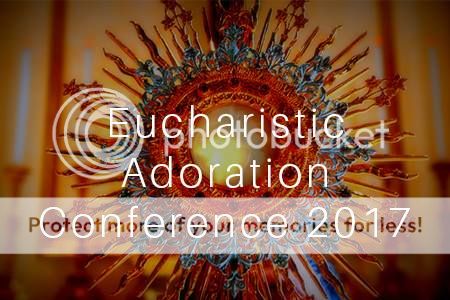 Saturday, 11th November 2017 8:30 am till 4:00 pm Church of St Ignatius, Petaling Jaya LIVE Broadcast @ http://TV.ArchKL.org/ *Kid Friendly!!* |
|
|
Nov 8 2017, 12:59 PM
|
|
Junior Member
225 posts Joined: Mar 2008
|
QUOTE(Roman Catholic @ Nov 8 2017, 12:22 AM) Test Helloooooo! Peace be with you!!!     |
|
|
Nov 8 2017, 01:07 PM
|
|
Junior Member
225 posts Joined: Mar 2008
|
Wednesday of the Thirty-first Week in Ordinary Time
Lectionary: 487  Reading 1 (Rom 13:8-10) Brothers and sisters: Owe nothing to anyone, except to love one another; for the one who loves another has fulfilled the law. The commandments, You shall not commit adultery; you shall not kill; you shall not steal; you shall not covet, and whatever other commandment there may be, are summed up in this saying, namely, You shall love your neighbor as yourself. Love does no evil to the neighbor; hence, love is the fulfillment of the law. Responsorial Psalm (Ps 112:1b-2, 4-5, 9) R. Blessed the man who is gracious and lends to those in need. or: R. Alleluia. Blessed the man who fears the LORD, who greatly delights in his commands. His posterity shall be mighty upon the earth; the upright generation shall be blessed. R. Blessed the man who is gracious and lends to those in need. or: R. Alleluia. He dawns through the darkness, a light for the upright; he is gracious and merciful and just. Well for the man who is gracious and lends, who conducts his affairs with justice. R. Blessed the man who is gracious and lends to those in need. or: R. Alleluia. Lavishly he gives to the poor; his generosity shall endure forever; his horn shall be exalted in glory. R. Blessed the man who is gracious and lends to those in need. or: R. Alleluia. Alleluia (1 Pt 4:14) R. Alleluia, alleluia. If you are insulted for the name of Christ, blessed are you, for the Spirit of God rests upon you. R. Alleluia, alleluia. Gospel (Lk 14:25-33) Great crowds were traveling with Jesus, and he turned and addressed them, "If anyone comes to me without hating his father and mother, wife and children, brothers and sisters, and even his own life, he cannot be my disciple. Whoever does not carry his own cross and come after me cannot be my disciple. Which of you wishing to construct a tower does not first sit down and calculate the cost to see if there is enough for its completion? Otherwise, after laying the foundation and finding himself unable to finish the work the onlookers should laugh at him and say, 'This one began to build but did not have the resources to finish.' Or what king marching into battle would not first sit down and decide whether with ten thousand troops he can successfully oppose another king advancing upon him with twenty thousand troops? But if not, while he is still far away, he will send a delegation to ask for peace terms. In the same way, everyone of you who does not renounce all his possessions cannot be my disciple."  REFLECTIONS: WORD Today 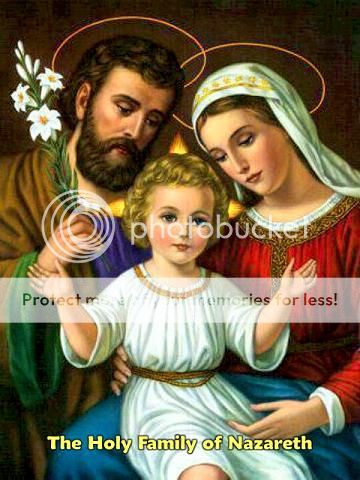 Rock stars and TV networks would go to great lengths in order to please and keep their followers and fans. But not Jesus! He did not give His followers false promises or hide anything. He told them the real cost of being His disciple. In the Gospel, a great crowd followed Him on the way to Jerusalem where He knew the cross awaited. He turned to them and said, "If anyone comes to me without hating his father and mother, wife and children, brothers and sisters, and even his own life, he cannot be my disciple. Whoever does not carry his own cross and come after me cannot be my disciple." Huh?! Didn't He command us to love one another? Even His great disciple St. Paul echoed Him, "Love one another; for the one who loves another has fulfilled the law." (First Reading) So is Jesus driving His followers away with this self-contradicting and horrible teaching? No, Jesus, the Wisdom from Heaven is teaching us something profound. Hyperbole (exaggeration for emphasis) was a popular style of speaking in Jesus' time. Elsewhere Jesus also used hyperbole and told us to pluck out our eyes and cut off our hands if they cause us to sin. It is for emphasis. In "hating" our family, Jesus is teaching us that as vital as family is, it cannot take first place in our heart. That place is reserved for the One who loves us the most - God Himself - who sacrificed HIS beloved Son to die for the rest of His family. In loving and following His Father's will (the cross) above family, health, and even His own life, Jesus showed us the pattern to follow. Strangely, a man who follows Jesus and loves God first and foremost, in fact acquires much greater self-sacrificing love for his family, second only to the Lord, above business, vice and other women. Jesus is Divine Wisdom! LET US PRAY: QUOTE O Holy Family of Nazareth, you show us that a holy family is a venue where all the members discern and help each other find and follow their vocation, their mission in the Kingdom of God. You show us that family ties and love are made much stronger the more each member subordinates his love for the family to the greater love of God. Holy Family of Jesus, Mary and Joseph, unite us against all man-made "wisdom" that sabotage God's plan for the family; protect us against the materialistic and individualistic values of the world that split us apart. Make my family holy; enlighten our hearts and minds that our love for each other will endure the more by the measure that we fall in love together with God above all. Source: https://www.facebook.com/CatholicMassReflec...797939850503772 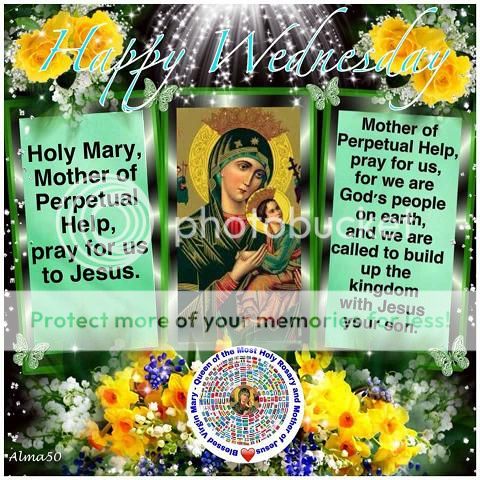 This post has been edited by khool: Nov 8 2017, 01:09 PM |
|
|
Nov 8 2017, 01:28 PM
|
|
Junior Member
225 posts Joined: Mar 2008
|
 |
|
|
Nov 8 2017, 02:25 PM
|
|
Junior Member
225 posts Joined: Mar 2008
|
The Love of Solitude and Silence
Seek a suitable time for leisure and meditate often on the favors of God. Leave curiosities alone. Read such matters as bring sorrow to the heart rather than occupation to the mind. If you withdraw yourself from unnecessary talking and idle running about, from listening to gossip and rumors, you will find enough time that is suitable for holy meditation. Very many great saints avoided the company of men wherever possible and chose to serve God in retirement. "As often as I have been among men," said one writer, "I have returned less a man." We often find this to be true when we take part in long conversations. It is easier to be silent altogether than not to speak too much. To stay at home is easier than to be sufficiently on guard while away. Anyone, then, who aims to live the inner and spiritual life must go apart, with Jesus, from the crowd. No man appears in safety before the public eye unless he first relishes obscurity. No man is safe in speaking unless he loves to be silent. No man rules safely unless he is willing to be ruled. No man commands safely unless he has learned well how to obey. No man rejoices safely unless he has within him the testimony of a good conscience. More than this, the security of the saints was always enveloped in the fear of God, nor were they less cautious and humble because they were conspicuous for great virtues and graces. The security of the wicked, on the contrary, springs from pride and presumption, and will end in their own deception. Never promise yourself security in this life, even though you seem to be a good religious, or a devout hermit. It happens very often that those whom men esteem highly are more seriously endangered by their own excessive confidence. Hence, for many it is better not to be too free from temptations, but often to be tried lest they become too secure, too filled with pride, or even too eager to fall back upon external comforts. If only a man would never seek passing joys or entangle himself with worldly affairs, what a good conscience he would have. What great peace and tranquillity would be his, if he cut himself off from all empty care and thought only of things divine, things helpful to his soul, and put all his trust in God. No man deserves the consolation of heaven unless he persistently arouses himself to holy contrition. If you desire true sorrow of heart, seek the privacy of your cell and shut out the uproar of the world, as it is written: "In your chamber bewail your sins." There you will find what too often you lose abroad. Your cell will become dear to you if you remain in it, but if you do not, it will become wearisome. If in the beginning of your religious life, you live within your cell and keep to it, it will soon become a special friend and a very great comfort. In silence and quiet the devout soul advances in virtue and learns the hidden truths of Scripture. There she finds a flood of tears with which to bathe and cleanse herself nightly, that she may become the more intimate with her Creator the farther she withdraws from all the tumult of the world. For God and His holy angels will draw near to him who withdraws from friends and acquaintances. It is better for a man to be obscure and to attend to his salvation than to neglect it and work miracles. It is praiseworthy for a religious seldom to go abroad, to flee the sight of men and have no wish to see them. Why wish to see what you are not permitted to have? "The world passes away and the concupiscence thereof." Sensual craving sometimes entices you to wander around, but when the moment is past, what do you bring back with you save a disturbed conscience and heavy heart? A happy going often leads to a sad return, a merry evening to a mournful dawn. Thus, all carnal joy begins sweetly but in the end brings remorse and death. What can you find elsewhere that you cannot find here in your cell? Behold heaven and earth and all the elements, for of these all things are made. What can you see anywhere under the sun that will remain long? Perhaps you think you will completely satisfy yourself, but you cannot do so, for if you should see all existing things, what would they be but an empty vision? Raise your eyes to God in heaven and pray because of your sins and shortcomings. Leave vanity to the vain. Set yourself to the things which God has commanded you to do. Close the door upon yourself and call to you Jesus, your Beloved. Remain with Him in your cell, for nowhere else will you find such peace. If you had not left it, and had not listened to idle gossip, you would have remained in greater peace. But since you love, sometimes, to hear news, it is only right that you should suffer sorrow of heart from it. The Imitation of Christ Thomas a Kempis (1380-1471) 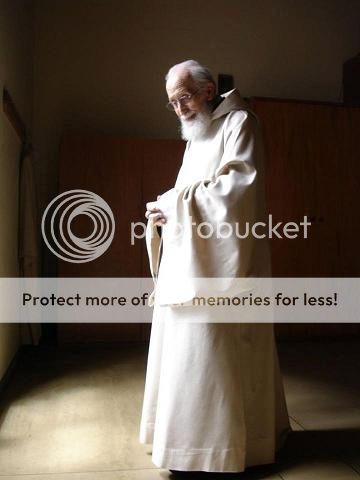 Source: https://www.facebook.com/groups/16632189972...78721325704812/ |
|
|
|
|
|
Nov 8 2017, 06:24 PM
|
|
Junior Member
225 posts Joined: Mar 2008
|
the following question has been asked:
QUOTE Since we are located in different various parishes around the country, for those who would like to assist (just 1 from each parish will do), to ask all levels in Sunday School education of our faith, if the Holy Bible is still being used class OR has it been replaced with something else? an answer would be most appreciated from anyone serving in Sunday School around Malaysia when answering, however please refer to brother @RomanCatholic as I am posting on his behalf Tq & GBU!!! This post has been edited by khool: Nov 8 2017, 06:27 PM |
|
|
Nov 9 2017, 09:11 AM
|

Senior Member
3,577 posts Joined: Apr 2006
|
QUOTE(khool @ Nov 8 2017, 06:24 PM) the following question has been asked: Shouldn't it be the Catechism rather than only the Holy Bible?an answer would be most appreciated from anyone serving in Sunday School around Malaysia when answering, however please refer to brother @RomanCatholic as I am posting on his behalf Tq & GBU!!! |
|
|
Nov 9 2017, 09:23 AM
|
|
Senior Member
3,577 posts Joined: Apr 2006
|
Wow the heresies spreading on the Protestant thread, implying that God gives something bad to His people.
|
|
|
Nov 9 2017, 09:30 AM
|

Junior Member
155 posts Joined: May 2007
|
Hmm ... I thought most Protestants are Fundamentalist, i.e. they rely only on The Bible; where in the Holy Book is it mentioned that God sometimes does bad things (or simply let bad things happened ... Job's one can be argued...) to us?
|
|
|
Nov 9 2017, 09:35 AM
|
|
Senior Member
3,577 posts Joined: Apr 2006
|
QUOTE(r2t2 @ Nov 9 2017, 09:30 AM) Hmm ... I thought most Protestants are Fundamentalist, i.e. they rely only on The Bible; where in the Holy Book is it mentioned that God sometimes does bad things (or simply let bad things happened ... Job's one can be argued...) to us? To permit bad things to happen as opposed to being the source of evil, that's the difference. What was implied in the other thread is being the source of evil.This post has been edited by yeeck: Nov 9 2017, 09:35 AM |
|
|
Nov 9 2017, 10:10 AM
|
|
Junior Member
155 posts Joined: May 2007
|
Waaat??? Are they real Christians?
If they imply that God is the source of evil, it's like they think that God is bipolar or has dual personality, or they're verging towards polytheism (got a God who is Good, and another who is Evil) ... becoz it's hard to reconcile that a God who is Love, and can be Hateful as well. |
|
|
Nov 9 2017, 10:21 AM
|
|
Junior Member
225 posts Joined: Mar 2008
|
QUOTE(yeeck @ Nov 9 2017, 09:11 AM) Shouldn't it be the Catechism rather than only the Holy Bible? Actually, it is both ... Sunday School for Catholics in Malaysia follow a set syllabus with text books that has been localized. Based on catechism and also Sacred Scripture. I serve in Sunday School ... hehehe! |
|
|
|
|
|
Nov 9 2017, 10:32 AM
|
|
Junior Member
225 posts Joined: Mar 2008
|
QUOTE(r2t2 @ Nov 9 2017, 10:10 AM) Waaat??? Are they real Christians? well ... the mormon's believe in big gods and little gods, mini gods and gods-in-the-works ... if i am not mistaken?If they imply that God is the source of evil, it's like they think that God is bipolar or has dual personality, or they're verging towards polytheism (got a God who is Good, and another who is Evil) ... becoz it's hard to reconcile that a God who is Love, and can be Hateful as well. |
|
|
Nov 9 2017, 10:54 AM
|
|
Senior Member
3,577 posts Joined: Apr 2006
|
-duplicate-
This post has been edited by yeeck: Nov 9 2017, 11:13 AM |
|
|
Nov 9 2017, 10:54 AM
|
|
Senior Member
3,577 posts Joined: Apr 2006
|
What did St Paul mean by Faith and Works of the Law?
by Dr Taylor Marshall Faith and works, right? But have you ever met a Protestant or Evangelical who insists that we are saved by “faith alone”? If so, this post is for you: Faith and Works of the Law Saint Paul continually insists that we are justified apart from “works of the law.” Is this not also implicitly confirming that we are justified by faith alone? To answer this question, we must first discover what Saint Paul meant by “works of the law.”  Saint Paul, the Apostle of Faith Paul used the phrase “works of the law” six times and only within Romans and Galatians. Here’s the full list within context: For no human being will be justified in his sight by works of the law, since through the law comes knowledge of sin (Rom 3:20). For we hold that a man is justified by faith apart from works of law (Rom 3:28). Yet we know that a man is not justified by works of the law but through faith in Jesus Christ, so we also have believed in Christ Jesus, in order to be justified by faith in Christ, and not by works of the law, because by works of the law shall no one be justified (Gal 2:16). Let me ask you only this: Did you receive the Spirit by works of the law, or by hearing with faith? (Gal 3:2) Does he who supplies the Spirit to you and works miracles among you do so by works of the law, or by hearing with faith? (Gal 3:5) For all who rely on works of the law are under a curse. For it is written, ‘Cursed be every one who does not abide by all things written in the book of the law, and do them’ (Gal 3:10). When Saint Paul speaks of the “works of the law,” he refers to what we know as the six hundred and thirteen precepts of the Torah, such as Jewish prohibitions against eating pork, the mandate of circumcision, and the observance of Passover. The Three Kinds of Precepts in the Old Testament According to Moses, these precepts of the Old Law fall into three divisions: “the precepts, the ceremonies, and the judgments” (Deut 6:1). Saint Thomas Aquinas and the Christian tradition recognize Moses’ threefold division as (1) the moral precepts, (2) the ceremonial precepts, and (3) the judicial precepts of the Old Law of Moses. First, the moral precepts are those precepts known to us as the Ten Commandments—the basic moral law of God for men. Second, the ceremonial precepts relate to such things as the Jewish teaching regarding circumcision on the eighth day and the kosher prohibition against eating pork. Third, the judicial precepts are the civil laws governing the nation of Israel as a political state. Saint Paul’s epistles to the Romans and to the Galatians are particularly concerned with baptized Christians who wrongly believed that the observance of the circumcision and the other ceremonial precepts were necessary for salvation. Some Roman and Galatian Christians had wrongly concluded that a Christian must believe in Jesus and obey the ceremonial precepts of Moses in order to be saved. Against this error, Saint Paul presents faith in Christ as opposed to the “works of the law.” In his historical context, Saint Paul rejected any attempt to bind Christians to the ceremonial law. In other words, Paul did not believe that Christians should receive circumcision or abstain from pork. What are Works of the Law? So then, when Saint Paul wrote: “Man is justified by faith apart from works of the law,” did he simply mean that Christians are not justified by the ceremonial law? Or did Paul mean that Christians are not justified by works of any sort? To put the question another way, when Saint Paul refers to “works of the law” did he mean “works of the ceremonial law,” or did he mean “all works without distinction”? The way we answer this important question determines how we understand “works” with regard to grace and faith. It would seem that contemporary Protestant scholars associated with the so-called “New Perspective on Paul,” such as E.P. Sanders and James Dunn, tend to interpret the “works of the law” as simply referring to circumcision and the ceremonial law. Amateur Catholic apologists also appeal to this interpretation in order to shake off their Protestant interlocutors. Their argument goes something like this: “When Paul writes that a man is justified by faith apart from works of the law, he means that a man is justified apart from keeping the ceremonial law required by Jewish circumcision. Paul is not arguing against works in general but against Jewish ceremonial works.” This explanation conveniently protects the role of the moral law and faith within justification—something universally affirmed by the Catholic Church. Notably, Saint Jerome defended this interpretation of “works of the law” as merely the ceremonial precepts of the Old Law. Certainly, within Saint Paul’s immediate historical context, he is concerned chiefly with the ceremonial precepts of Moses. We know this because Saint Paul taught that the Gentile Christians should not keep the ceremonial precepts of Judaism—they were not to be circumcised and they were not restricted by the Jewish calendar or Jewish dietary regulations. Nevertheless, Saint Paul includes the moral precepts (for example, “thou shalt not covet”) as belonging to the “works of the law” (Rom 7:6-8). Consequently, the Catholic Church has officially followed the interpretation of Saint Augustine, who taught that the phrase “works of the law” refers to the entire Law of Moses—to the moral precepts, to the ceremonial precepts, as well as to the judicial precepts. Augustine recognized the “works of the law” referred specifically to the ceremonial precepts in their Jewish context, but he also understood that the message extended to a general interpretation of “works.” The Council of Trent and the Augustinian Tradition Corresponding to this Augustinian tradition, the Catholic Church, at the Council of Trent, declared with Paul that none of the works of the law could justify a man: Canon I. If any one says that man may be justified before God by his own works, whether done through the teaching of human nature, or that of the law, without the grace of God through Jesus Christ—let him be anathema. This canon from the Council of Trent demonstrates that the Catholic Church does not distinguish between “works” and “works of the law” when stating that a man is not justified by “works of the law.” Instead, the Catholic Church condemns anyone who attempts to justify himself “by his own works,” regardless of whether the works belong to the moral precepts or to the ceremonial precepts of the law. Hence, one cannot be justified even if he perfectly fulfilled the moral precepts of the Ten Commandments, since these do not equip a man for the beatific vision of God’s essence. The ceremonial precepts (“do not eat swine’s flesh”) cannot transform us into the righteousness of Christ. Moreover, not even obedience to the moral precepts (“thou shalt not kill”) can fill us with the Holy Spirit. The Council of Trent elaborates: We are therefore said to be justified freely, because that none of those things which precede justification—whether faith or works—merit the grace itself of justification. For, if it be a grace, it is not now by works, otherwise, as the same Apostle says, grace is no more grace. Grace remains primary in Catholic teaching. Neither faith nor works merit our justification. Justification is received by faith and perfected by works of charity, but it is not earned by works alone. Yes, prevenient grace is needed even for our initial faith in Christ. No man can be justified simply by observing the moral law found in the Ten Commandments. This is the authentic Catholic teaching of the Catholic Church. “And without faith it is impossible to please God” (Heb 11:6). There is a synergy between faith and works, as James teaches (Jas 2:24). It is not faith alone. It is not works alone. It is faith first and works following—each flowing from the wellspring of grace springing from the wounded side of the crucified Christ. Do the Ten Commandments Apply to Christians? We would be wrong to assume that Saint Paul taught that the moral precepts of the Ten Commandments no longer applied to Christians. “Do we then overthrow the law by this faith? By no means! On the contrary, we uphold the law” (Rom 3:31). We have already established how Saint Paul teaches that good works in themselves cannot justify the sinner. However, this does not entail that works have no role in our salvation. Many Protestants wrongly believe that Catholics hold to justification by works alone since we do not believe in justification by faith alone. For the Catholic, works without faithful love are worthless. The Catholic does not believe that one must choose between either faith or works. Instead, the Catholic Church exhorts her children to both faith and works. Saint Paul confirms that faith alone is not enough: If I have all faith, so as to remove mountains, but have not love, I am nothing. If I give away all I have, and if I deliver my body to be burned, but have not love, I gain nothing (1 Cor 13:2-3). Faith Without Love? Faith cannot be alone because it must be accompanied by love. Moreover, love is not passive but active. Love works. Love operates. Saint Paul summed up the Catholic doctrine of justification perfectly in Galatians when he wrote, “For in Christ Jesus neither circumcision nor uncircumcision is of any avail, but faith working through love” (Gal 5:6). Faith working through love. This is the Catholic doctrine of justification. Faith in Christ must be informed by love for Christ. This is a working faith. As our Lord Jesus Christ explained, “If you love me, you will keep my commandments” (Jn 14:15). A faith that is opposed to obedience is a faith without love. It is not saving faith. |
|
|
Nov 9 2017, 10:57 AM
|
|
Junior Member
225 posts Joined: Mar 2008
|
eh ... bro yeeck, how come got double post arrrr?
|
|
|
Nov 9 2017, 11:26 AM
|

Senior Member
875 posts Joined: Jul 2016
|
Even as an atheist, I find this video and song beautiful and hopeful in its own merits (seeing that Christmas is coming and all), especially when it's sang by different languages:
Look at the man at 1:28 as he sighs in relief, truly a beautiful and poetic sight as he now realises his burden has been lifted. To an atheist like me, even with the lack of belief in a god, this is a very hopeful message to take in, and it reminds me of the following poetic and beautiful piece: “Come to Me, all you who labor and are heavy laden, and I will give you rest. Take My yoke upon you and learn from Me, for I am gentle and lowly in heart, and you will find rest for your souls. For My yoke is easy and My burden is light” (Matthew 11:28–30) |
|
|
Nov 9 2017, 12:08 PM
|
|
Junior Member
225 posts Joined: Mar 2008
|
QUOTE(Hoka Nobasho @ Nov 9 2017, 11:26 AM) Even as an atheist, I find this video and song beautiful and hopeful in its own merits (seeing that Christmas is coming and all), especially when it's sang by different languages: God bless and thank you! Look at the man at 1:28 as he sighs in relief, truly a beautiful and poetic sight as he now realises his burden has been lifted. To an atheist like me, even with the lack of belief in a god, this is a very hopeful message to take in, and it reminds me of the following poetic and beautiful piece: “Come to Me, all you who labor and are heavy laden, and I will give you rest. Take My yoke upon you and learn from Me, for I am gentle and lowly in heart, and you will find rest for your souls. For My yoke is easy and My burden is light” (Matthew 11:28–30) |
|
|
Nov 9 2017, 12:24 PM
|
|
Junior Member
225 posts Joined: Mar 2008
|
Feast of the Dedication of the Lateran Basilica in Rome
Lectionary: 671 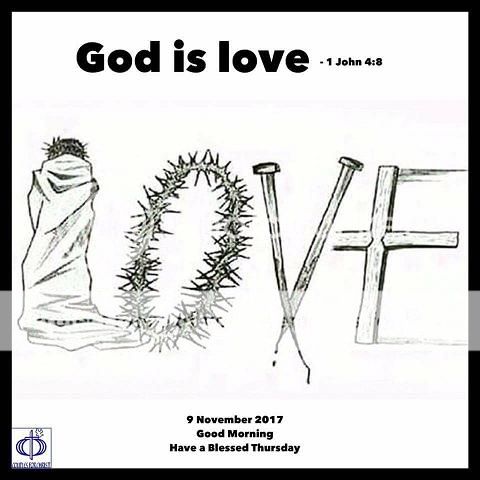 Reading 1 (Ez 47:1-2, 8-9, 12) The angel brought me back to the entrance of the temple, and I saw water flowing out from beneath the threshold of the temple toward the east, for the façade of the temple was toward the east; the water flowed down from the southern side of the temple, south of the altar. He led me outside by the north gate, and around to the outer gate facing the east, where I saw water trickling from the southern side. He said to me, "This water flows into the eastern district down upon the Arabah, and empties into the sea, the salt waters, which it makes fresh. Wherever the river flows, every sort of living creature that can multiply shall live, and there shall be abundant fish, for wherever this water comes the sea shall be made fresh. Along both banks of the river, fruit trees of every kind shall grow; their leaves shall not fade, nor their fruit fail. Every month they shall bear fresh fruit, for they shall be watered by the flow from the sanctuary. Their fruit shall serve for food, and their leaves for medicine." OR (1 Cor 3:9c-11, 16-17) Brothers and sisters: You are God's building. According to the grace of God given to me, like a wise master builder I laid a foundation, and another is building upon it. But each one must be careful how he builds upon it, for no one can lay a foundation other than the one that is there, namely, Jesus Christ. Do you not know that you are the temple of God, and that the Spirit of God dwells in you? If anyone destroys God's temple, God will destroy that person; for the temple of God, which you are, is holy. Responsorial Psalm (Ps 46:2-3, 5-6, 8-9) R. The waters of the river gladden the city of God, the holy dwelling of the Most High! God is our refuge and our strength, an ever-present help in distress. Therefore, we fear not, though the earth be shaken and mountains plunge into the depths of the sea. R. The waters of the river gladden the city of God, the holy dwelling of the Most High! There is a stream whose runlets gladden the city of God, the holy dwelling of the Most High. God is in its midst; it shall not be disturbed; God will help it at the break of dawn. R. The waters of the river gladden the city of God, the holy dwelling of the Most High! The LORD of hosts is with us; our stronghold is the God of Jacob. Come! behold the deeds of the LORD, the astounding things he has wrought on earth. R. The waters of the river gladden the city of God, the holy dwelling of the Most High! Alleluia (2 Chr 7:16) R. Alleluia, alleluia. I have chosen and consecrated this house, says the Lord, that my name may be there forever. R. Alleluia, alleluia. Gospel (Jn 2:13-22) Since the Passover of the Jews was near, Jesus went up to Jerusalem. He found in the temple area those who sold oxen, sheep, and doves, as well as the money-changers seated there. He made a whip out of cords and drove them all out of the temple area, with the sheep and oxen, and spilled the coins of the money-changers and overturned their tables, and to those who sold doves he said, "Take these out of here, and stop making my Father's house a marketplace." His disciples recalled the words of Scripture, Zeal for your house will consume me. At this the Jews answered and said to him, "What sign can you show us for doing this?" Jesus answered and said to them, "Destroy this temple and in three days I will raise it up." The Jews said, "This temple has been under construction for forty-six years, and you will raise it up in three days?" But he was speaking about the temple of his Body. Therefore, when he was raised from the dead, his disciples remembered that he had said this, and they came to believe the Scripture and the word Jesus had spoken. 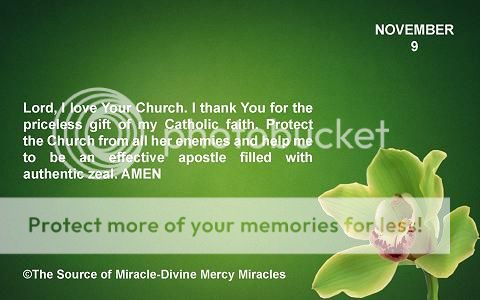 REFLECTIONS: WORD Today 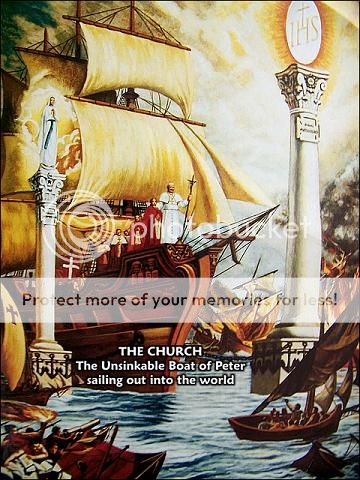 "Religion does not save" is the claim of misguided people who have no sense of history but simply take bits and pieces of the Bible then claim they have the whole truth. The Bible did not fall from heaven; it was compiled by the Catholic religion in 393 AD. Christianity did not teletransport ala Star Trek from Israel to the Philippines, it was brought by the Catholic religion in 1521. Without the Church, we would still be lost. It's the same story with other countries around the world. For the first 1500 years of Christianity, it was the Catholic religion that sailed to the seven continents bringing Christ's salvation. Today we celebrate the Feast of the Dedication of the Lateran Basilica in Rome. It was dedicated on Nov. 9, 324, Built before the old St. Peter's Basilica (year 360), this cathedral is the headquarters of the Pope when he sits as the Bishop of Rome. Thus, it is the Mother of all churches in the world. For centuries the waters of Baptism flowed out her doors (First Reading), bringing Christ's salvation first to the nations under the Roman Empire, and then across the vast oceans of the globe, building up God's worldwide temple (Second Reading), the Body of Christ that was destroyed and killed in Jerusalem but which God raised up again in 3 days (Gospel). Let us celebrate our faith at the Holy Mass today. It is only at the Mass where "he who eats my flesh and drinks my blood has eternal life." (John 6:54) Let us thank Jesus for His religion that saves! Source: https://www.facebook.com/CatholicMassReflec...798402637124160  |
| Change to: |  0.0260sec 0.0260sec
 0.27 0.27
 6 queries 6 queries
 GZIP Disabled GZIP Disabled
Time is now: 10th December 2025 - 03:38 AM |
 Quote
Quote