

LYN Catholic Fellowship V02 (Group), For Catholics (Roman or Eastern)
|
|
 Nov 9 2017, 02:45 PM Nov 9 2017, 02:45 PM
|
 
Junior Member
225 posts Joined: Mar 2008  
|
|
|
|
|
|
|
Nov 10 2017, 01:55 PM
|

Senior Member
3,577 posts Joined: Apr 2006
|
QUOTE(Roman Catholic @ Nov 9 2017, 09:27 PM) I am not quite sure that I am able too follow you with that one. Please explain a little more. I don't think that is correct. Divine Revelation and the Deposit of Faith is transmitted to successive generations in Sacred Scripture and Sacred Tradition (through the teaching authority and interpretation of the Magisterium).What I am sure is this, Catechism is drawn from the Holy Bible itself, the same source that the Magisterium draws from, like Living Water, under the guidance of the Holy Spirit. Thanks khool for your kind assistance. Great to be connected again.  |
|
|
Nov 10 2017, 03:47 PM
|
|
Junior Member
225 posts Joined: Mar 2008
|
Memorial of Saint Leo the Great, Pope and Doctor of the Church
Lectionary: 489 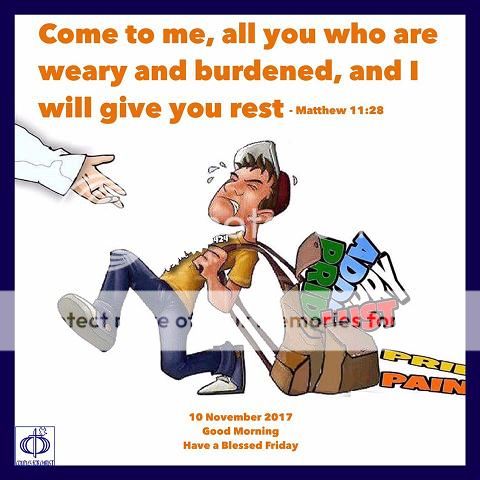 Reading 1 (Rom 15:14-21) I myself am convinced about you, my brothers and sisters, that you yourselves are full of goodness, filled with all knowledge, and able to admonish one another. But I have written to you rather boldly in some respects to remind you, because of the grace given me by God to be a minister of Christ Jesus to the Gentiles in performing the priestly service of the Gospel of God, so that the offering up of the Gentiles may be acceptable, sanctified by the Holy Spirit. In Christ Jesus, then, I have reason to boast in what pertains to God. For I will not dare to speak of anything except what Christ has accomplished through me to lead the Gentiles to obedience by word and deed, by the power of signs and wonders, by the power of the Spirit of God, so that from Jerusalem all the way around to Illyricum I have finished preaching the Gospel of Christ. Thus I aspire to proclaim the Gospel not where Christ has already been named, so that I do not build on another's foundation, but as it is written: Those who have never been told of him shall see, and those who have never heard of him shall understand. Responsorial Psalm (Ps 98:1, 2-3ab, 3cd-4) R. The Lord has revealed to the nations his saving power. Sing to the LORD a new song, for he has done wondrous deeds; His right hand has won victory for him, his holy arm. R. The Lord has revealed to the nations his saving power. The LORD has made his salvation known: in the sight of the nations he has revealed his justice. He has remembered his kindness and his faithfulness toward the house of Israel. R. The Lord has revealed to the nations his saving power. All the ends of the earth have seen the salvation by our God. Sing joyfully to the LORD, all you lands; break into song; sing praise. R. The Lord has revealed to the nations his saving power. Alleluia (1 Jn 2:5) R. Alleluia, alleluia. Whoever keeps the word of Christ, the love of God is truly perfected in him. R. Alleluia, alleluia. Gospel (Lk 16:1-8) Jesus said to his disciples, "A rich man had a steward who was reported to him for squandering his property. He summoned him and said, 'What is this I hear about you? Prepare a full account of your stewardship, because you can no longer be my steward.' The steward said to himself, 'What shall I do, now that my master is taking the position of steward away from me? I am not strong enough to dig and I am ashamed to beg. I know what I shall do so that, when I am removed from the stewardship, they may welcome me into their homes.' He called in his master's debtors one by one. To the first he said, 'How much do you owe my master?' He replied, 'One hundred measures of olive oil.' He said to him, 'Here is your promissory note. Sit down and quickly write one for fifty.' Then to another he said, 'And you, how much do you owe?' He replied, 'One hundred measures of wheat.' He said to him, 'Here is your promissory note; write one for eighty.' And the master commended that dishonest steward for acting prudently. For the children of this world are more prudent in dealing with their own generation than the children of light." 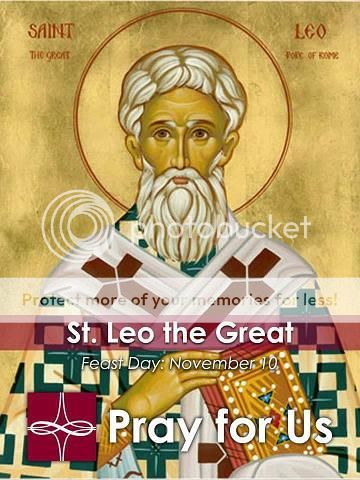 REFLECTIONS: WORD Today 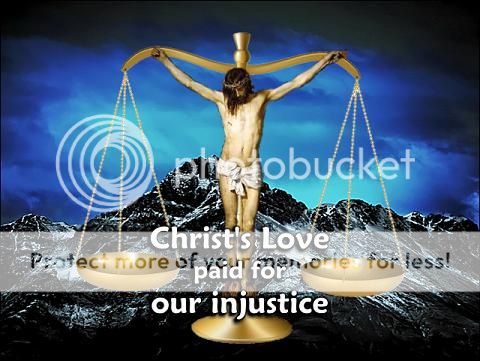 In today's Gospel, Jesus tells us the parable of a business manager who is discovered to be cheating by his master/business owner. He is ordered by the master to render an accounting of the monies and goods left with him to manage. Jesus is reminding us that sooner or later, we too must face God and give final accounting of the gifts of time, talent and treasure that He has given us to manage. All of us too are guilty of cheating on God ("All have sinned." Romans 3:23). We know and accept this, but we like to pardon ourselves, saying that on judgment day, God's love will triumph over the demands of justice. Indeed, this is true - but only IF we too during our lives make God's command to love triumph over our demands for justice. "If you forgive other people when they sin against you, your heavenly Father will also forgive you. But if you do not forgive others their sins, your Father will not forgive your sins." (Matthew 6:14-15) The clever manager reduced the amounts on the promissory notes of his master's business debtors by taking out his commissions which he would now be unable to collect anyway because of his crimes. Thus he made their loans easier to pay. He did this so that they will feel indebted to him and would help him later when he was jobless. He would still be collecting his commissions! Clever indeed. Like the manager, we too can 'cheat' and escape God's justice by helping reduce the debts that others owe to God. We can do this too by forgiving those who have sinned against us and waive the justice due to us,Thus we lighten their payables to God. Then the debtors and offenders we decide to forgive and made friends again, will surely help us and pray for us when we will be 'fired' in purgatory. Clever indeed! But why wait for purgatory at all? The very best way to "cheat" and escape God’s justice is available right now. It is by going to Confession and make His Son pay for our sins! This kind of "cheating" God approves and smiles upon. Let us be clever and act quickly. Video: JESUS PAID IT ALL Source: https://www.facebook.com/CatholicMassReflec...798763237088100  |
|
|
Nov 10 2017, 03:49 PM
|
|
Junior Member
225 posts Joined: Mar 2008
|
 |
|
|
Nov 13 2017, 12:03 PM
|
|
Junior Member
225 posts Joined: Mar 2008
|
Memorial of Saint Frances Xavier Cabrini, Virgin
Lectionary: 491 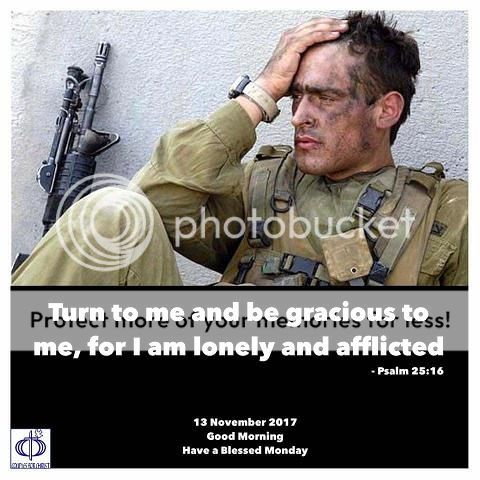 Reading 1 (Wis 1:1-7) Love justice, you who judge the earth; think of the Lord in goodness, and seek him in integrity of heart; Because he is found by those who test him not, and he manifests himself to those who do not disbelieve him. For perverse counsels separate a man from God, and his power, put to the proof, rebukes the foolhardy; Because into a soul that plots evil, wisdom enters not, nor dwells she in a body under debt of sin. For the holy Spirit of discipline flees deceit and withdraws from senseless counsels; and when injustice occurs it is rebuked. For wisdom is a kindly spirit, yet she acquits not the blasphemer of his guilty lips; Because God is the witness of his inmost self and the sure observer of his heart and the listener to his tongue. For the Spirit of the Lord fills the world, is all-embracing, and knows what man says. Responsorial Psalm (Ps 139:1b-3, 4-6, 7-8, 9-10) R. Guide me, Lord, along the everlasting way. O LORD, you have probed me and you know me; you know when I sit and when I stand; you understand my thoughts from afar. My journeys and my rest you scrutinize, with all my ways you are familiar. R. Guide me, Lord, along the everlasting way. Even before a word is on my tongue, behold, O LORD, you know the whole of it. Behind me and before, you hem me in and rest your hand upon me. Such knowledge is too wonderful for me; too lofty for me to attain. R. Guide me, Lord, along the everlasting way. Where can I go from your spirit? From your presence where can I flee? If I go up to the heavens, you are there; if I sink to the nether world, you are present there. R. Guide me, Lord, along the everlasting way. If I take the wings of the dawn, if I settle at the farthest limits of the sea, Even there your hand shall guide me, and your right hand hold me fast. R. Guide me, Lord, along the everlasting way. Alleluia (Phil 2:15d, 16a) R. Alleluia, alleluia. Shine like lights in the world, as you hold on to the word of life. R. Alleluia, alleluia. Gospel (Lk 17:1-6) Jesus said to his disciples, "Things that cause sin will inevitably occur, but woe to the one through whom they occur. It would be better for him if a millstone were put around his neck and he be thrown into the sea than for him to cause one of these little ones to sin. Be on your guard! If your brother sins, rebuke him; and if he repents, forgive him. And if he wrongs you seven times in one day and returns to you seven times saying, 'I am sorry,' you should forgive him." And the Apostles said to the Lord, "Increase our faith." The Lord replied, "If you have faith the size of a mustard seed, you would say to this mulberry tree, 'Be uprooted and planted in the sea,' and it would obey you." 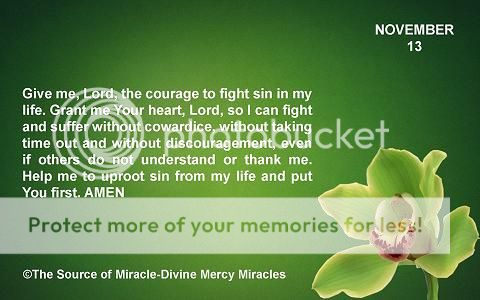 REFLECTIONS: WORD Today 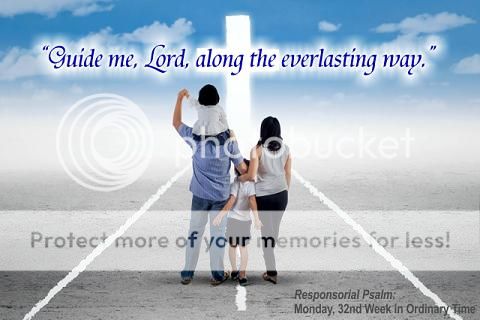 Why are children getting pregnant and going into crime ever younger in every new generation? Because the earlier generation led them to it! In today's Gospel, Jesus warns us parents and elders about the terrible punishment facing those who lead innocent children to sin through bad example. Knowingly or unknowingly, we are all guilty. Jesus cites our refusal to forgive. It is our prime example to children of disobeying God's commandment to love. Children will not see the beauty of walking with Jesus when they have elders living disorderly, rebellious lives where God's Will is placed second to man's. Let us teach our children the Wisdom of Jesus in the Bible and show them the peace, harmony and wholeness of life lived by His Word. We will see better generations of children as we watch in heaven. YAHWEH, YOU ARE NEAR Source: https://www.facebook.com/CatholicMassReflec...799953360302421  |
|
|
Nov 13 2017, 12:33 PM
|
|
Senior Member
3,577 posts Joined: Apr 2006
|
QUOTE(Roman Catholic @ Nov 10 2017, 08:55 PM) Once there was a Catholic lawyer who couldn't forgive his previous Parish Priest now matter how hard he tried at the confessional. No matter what he did, he simply failed to forgive this particular priest. The priest will have to answer to God during judgement, but during our own confession, we should confess our own sins and not mention those of others.Then this lawyer had a conversation with his friend one day, an uneducated Catholic man who was deeply in Scriptures & Jesus Christ. Strangely the discussion somehow led this lawyer to say things which were only kept in a confessional. It wasn't long the cat was out of the bag and the idea of non-forgiveness arose was because of what the priest had said during the homily, "Commit bigger sins and don't waste time with small trivial ones!" So the lawyer added, "How can this be ? A Catholic priest encouraging his flock to commit greater sin, shouldn't it be the other way round ?" With sadness his friend frantically & quietly, said a prayer knowing very well this was already way way beyond him. As he has never heard of anything similar before and how was he to address the issue of forgiveness of the heart, since that's clearly stated in the Holy Bible. So, was it correct or incorrect for the priest to say of such things to his parishioners, when in fact he should be encouraging his parishioners of repentance. Do you think the uneducated friend, whom the lawyer confided in, was able to find an answer in the Holy Bible to soothe desperately the heart in need of forgiveness ? What do you think ? |
|
|
|
|
|
Nov 13 2017, 01:30 PM
|
|
Junior Member
225 posts Joined: Mar 2008
|
 |
|
|
Nov 13 2017, 11:16 PM
|
|
Senior Member
3,577 posts Joined: Apr 2006
|
QUOTE(Roman Catholic @ Nov 13 2017, 07:44 PM) Yeeck, when people walk up for assistance this is what I see, wounded sheep looking for the Good Shepherd and I more than happy to guide them using the Holy Bible like any servant. That is no confession definitely for I do not have the authority to forgive sins nor do I seek or want it. Hmm a bit lost on what you typed there. Who misunderstood whom? My response is only based on what was typed.Out of the blue, these words came hearing the pleas of the lawyer, "My friend, you have totally misunderstood what the priest was actually saying! What the priest was actually saying indirectly under in the influence of the Holy Spirit is this, "Stop making a mockery of the Sacrement of Penance without any real repentance for Kingdom of heaven is near!" "Have you not heard the Scriptures which says it's better to lose an eye or a limb and enter into the Kingdom of Heaven than to keep those and not enter. Go then and find out what it means." The Catholic priest was and is correct for the words used were not his and there is nothing to answer for. It's us the laities who has been separated from the Word of God for too long that our eyes no longer see and our ears no longer hear just liked what's written in the Scriptures by the prophets of old. As a laity, I doubt the Magesterium would ever open the vault of the Vatican for me even if they did, there is nothing I could possibly understand out of the Deposit of Faith but what I am truly grateful to our living God is for the gift of the Holy Bible and the Holy Spirit, so that I shall no longer walk in darkness! This is definitely not exclusive to me alone for anyone else can have this too. I reckon the only question left is what do you do with it, once you've asked for it. Everything emanates from the Holy Bible, no question about that, even Catechism. Divine Revelation will always be in line with the Catholic Churches teaching and once you really "tuned-in", you will soon notice that the words use is identical to the priest during the Mass, for it's always the same Spirit, the Spirit of God. As for the question posed by khool on my behalf, I guess nobody shall be replying and I will now sent the letter to be published as I have been told to do, about the absence of the Holy Bible not only in Sunday School but also in our life's. God bless. 🙏🏻 You wrote "Everything emanates from the Holy Bible, no question about that, even Catechism. Divine Revelation will always be in line with the Catholic Churches teaching and once you really "tuned-in", you will soon notice that the words use is identical to the priest during the Mass, for it's always the same Spirit, the Spirit of God. " This is unfortunately incorrect. John 21:25 "But there are also many other things which Jesus did; which, if they were written every one, the world itself, I think, would not be able to contain the books that should be written." |
|
|
Nov 14 2017, 10:44 AM
|
|
Junior Member
225 posts Joined: Mar 2008
|
QUOTE(Roman Catholic @ Nov 10 2017, 08:55 PM) Once there was a Catholic lawyer who couldn't forgive his previous Parish Priest now matter how hard he tried at the confessional. No matter what he did, he simply failed to forgive this particular priest. Dear Bro RC (easier to type, hope you don't mind?)Then this lawyer had a conversation with his friend one day, an uneducated Catholic man who was deeply in Scriptures & Jesus Christ. Strangely the discussion somehow led this lawyer to say things which were only kept in a confessional. It wasn't long the cat was out of the bag and the idea of non-forgiveness arose was because of what the priest had said during the homily, "Commit bigger sins and don't waste time with small trivial ones!" So the lawyer added, "How can this be ? A Catholic priest encouraging his flock to commit greater sin, shouldn't it be the other way round ?" With sadness his friend frantically & quietly, said a prayer knowing very well this was already way way beyond him. As he has never heard of anything similar before and how was he to address the issue of forgiveness of the heart, since that's clearly stated in the Holy Bible. So, was it correct or incorrect for the priest to say of such things to his parishioners, when in fact he should be encouraging his parishioners of repentance. Do you think the uneducated friend, whom the lawyer confided in, was able to find an answer in the Holy Bible to soothe desperately the heart in need of forgiveness ? What do you think ? I was actually planning to ask for more information on this scenario, and on if it was based on a true account. I guess all that is settled ya? Thank God ... phew ...  Now, to answer your questions(s): Now, to answer your questions(s):a. "... So, was it correct or incorrect for the priest to say of such things to his parishioners, when in fact he should be encouraging his parishioners of repentance. ..." At least, I hope this is a question(?) the context by which the priest made this statement would be most helpful, under what circumstances was it made would be good. however, on the surface level, the priest is not really wrong in making such a statement. A sin is still a sin, be it a venial and /or a mortal, and needs confession whatever the nature. if the sin is venial in nature, then the confiteor recited during the welcoming rites of mass should be more than sufficient. a mortal sin, qould require a proper confession to a priest in the sacrament of confession, done with a contrite heart and mind after sufficient soul searching. Mortal vs Venial sins: A brief explanation b. "... Do you think the uneducated friend, whom the lawyer confided in, was able to find an answer in the Holy Bible to soothe desperately the heart in need of forgiveness ? ..." short answer: yes!!!! long answer: able to find where in the Bible? easy, somehow your question somewhat preceded the answer just by a couple of days. if you were to read my posting of yesterday's daily readings, 13 November 2017, it's there ... to cherry pick the verse itself ... Luke 17:3-4; further enforced by the succeeding verses five (5) and six (6). in addition, I am sure you are also familiar with this other verse, Matthew 18: 21-22 (NRSV CE); "Then Peter came and said to him, “Lord, if another member of the church[d] sins against me, how often should I forgive? As many as seven times?” Jesus said to him, “Not seven times, but, I tell you, seventy-seven times. ...". in short, always be ready to forgive. after all, is it not a commandment Christ to be merciful? again, this is the gospel reading from a few Sundays ago, Luke 6:30-36; " Give to everyone who begs from you; and if anyone takes away your goods, do not ask for them again. Do to others as you would have them do to you. “If you love those who love you, what credit is that to you? For even sinners love those who love them. 33 If you do good to those who do good to you, what credit is that to you? For even sinners do the same. If you lend to those from whom you hope to receive, what credit is that to you? Even sinners lend to sinners, to receive as much again. But love your enemies, do good, and lend, expecting nothing in return. Your reward will be great, and you will be children of the Most High; for he is kind to the ungrateful and the wicked. Be merciful, just as your Father is merciful.". Which is what Frankie used as a slogan for 2016's extraordinary year of Jubilee correct? 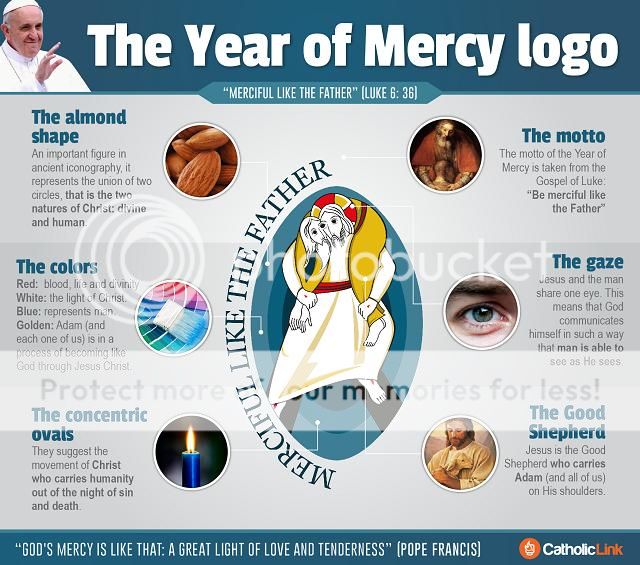 hope this answer is alright for you? God bless!   |
|
|
Nov 14 2017, 12:03 PM
|
|
Junior Member
225 posts Joined: Mar 2008
|
Tuesday of the Thirty-second Week in Ordinary Time
Lectionary: 492 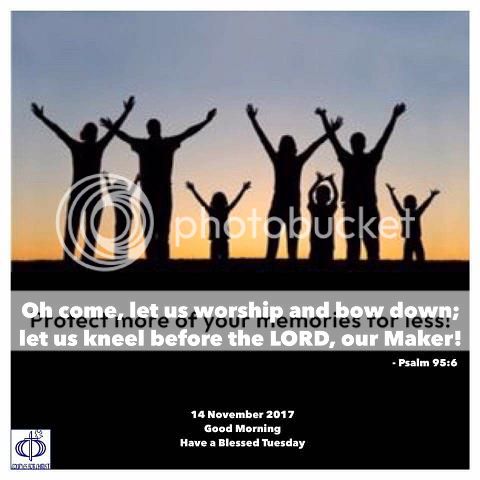 Reading 1 (Wis 2:23–3:9) God formed man to be imperishable; the image of his own nature he made them. But by the envy of the Devil, death entered the world, and they who are in his possession experience it. But the souls of the just are in the hand of God, and no torment shall touch them. They seemed, in the view of the foolish, to be dead; and their passing away was thought an affliction and their going forth from us, utter destruction. But they are in peace. For if before men, indeed, they be punished, yet is their hope full of immortality; Chastised a little, they shall be greatly blessed, because God tried them and found them worthy of himself. As gold in the furnace, he proved them, and as sacrificial offerings he took them to himself. In the time of their visitation they shall shine, and shall dart about as sparks through stubble; They shall judge nations and rule over peoples, and the Lord shall be their King forever. Those who trust in him shall understand truth, and the faithful shall abide with him in love: Because grace and mercy are with his holy ones, and his care is with his elect. Responsorial Psalm (Ps 34:2-3, 16-17, 18-19) R. I will bless the Lord at all times. I will bless the LORD at all times; his praise shall be ever in my mouth. Let my soul glory in the LORD; the lowly will hear me and be glad. R. I will bless the Lord at all times. The LORD has eyes for the just, and ears for their cry. The LORD confronts the evildoers, to destroy remembrance of them from the earth. R. I will bless the Lord at all times. When the just cry out, the LORD hears them, and from all their distress he rescues them. The LORD is close to the brokenhearted; and those who are crushed in spirit he saves. R. I will bless the Lord at all times. Alleluia (Jn 14:23) R. Alleluia, alleluia. Whoever loves me will keep my word, and my Father will love him, and we will come to him. R. Alleluia, alleluia. Gospel (Lk 17:7-10) Jesus said to the Apostles: "Who among you would say to your servant who has just come in from plowing or tending sheep in the field, 'Come here immediately and take your place at table'? Would he not rather say to him, 'Prepare something for me to eat. Put on your apron and wait on me while I eat and drink. You may eat and drink when I am finished'? Is he grateful to that servant because he did what was commanded? So should it be with you. When you have done all you have been commanded, say, 'We are unprofitable servants; we have done what we were obliged to do.'" 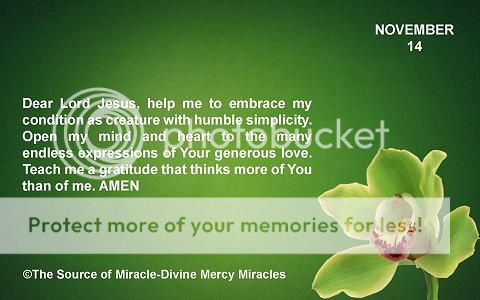 REFLECTIONS: WORD Today 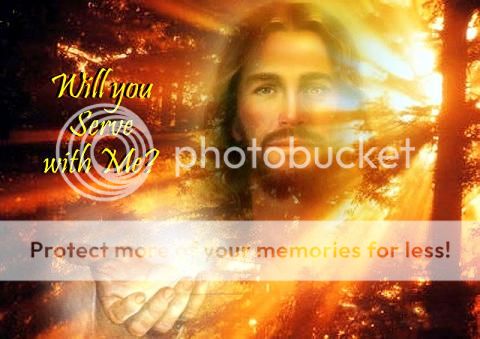 Jesus says, "When you have done all you were ordered to do, say: We are unworthy servants, we have only done our duty." - Luke 17:10, Gospel Jesus is reminding us of our proper position in relation to our Creator. We do need this humbling reminder because there are times that we do good deeds like give donations or serve at church expecting honor, respect or other forms of payment. In fact, all things that God deems good and beneficial are already put in place, ready to be picked up by the faithful who love God and who accept the work He offers, even if it is rough and difficult. When we do accept, we are contributing time, talent and treasure - materials that God uses to build a just and merciful society for the good of His entire human family, including ourselves. That God deems us worthy to be given any part at all in building His Kingdom, is a great and mighty honor for which we ought to fall down on our knees and say, "I will bless the Lord at all times!" (Responsorial Psalm) When we willingly accept the crosses that come with the job as part of our growth and as our grateful offering, we join the great Saints led by our Mother Mary in saying, "Behold, I am the servant of the Lord. Be it done to me according to thy word." If we do this, we are assured that "Those who have put their trust in God will come to understand the truth of His ways. Those who have been faithful will live with Him in His love, for He is kind and merciful to the ones whom He has chosen." (Wisdom 2:9, First Reading) And so, let us ask not what the Kingdom can do for us, but what we can do for the Kingdom. I WILL SERVE THEE Source: http://www.facebook.com/CatholicMassReflec...800303293600761 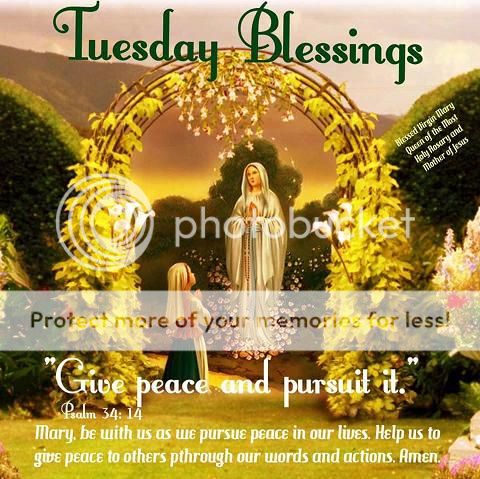 |
|
|
Nov 14 2017, 02:01 PM
|
|
Junior Member
225 posts Joined: Mar 2008
|
  |
|
|
Nov 14 2017, 02:19 PM
|
|
Senior Member
3,577 posts Joined: Apr 2006
|
Communism (mixed in with materialism) is still well and alive today.
https://www.thestar.com.my/news/regional/20...illagers-urged/ |
|
|
Nov 14 2017, 04:05 PM
|
|
Junior Member
225 posts Joined: Mar 2008
|
THE REWARDS OF THE JUST AND DUTIFUL SERVANT
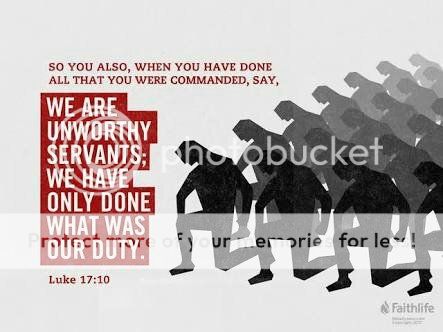 SCRIPTURE READINGS: [ Wis 2:23 – 3:9; Ps 33:2-3,16-19; Lk 17:7-10 ] It is natural that we look for gratitude and rewards for what we do. Even if we do not seek material rewards or benefits, we would expect at least that those whom we serve are grateful for what we have done. Otherwise we will be discouraged, because we feel that we are not appreciated. Indeed, when appreciation is not forthcoming, many will be slighted and feel hurt. They will stop serving or giving. This explains why in the first reading, we read that this is more so when a good and just man suffers for doing what is right and good. Again, we all expect the good to be rewarded and the just to be blessed. But when they suffer injustices, we find it difficult to accept. As the author of Wisdom says, “In the eyes of the unwise, they did appear to die, their going looked like a disaster; their leaving us like annihilation.” Indeed, the suffering of good and holy people is seen as tragic. In the gospel, Jesus gives us His perspective of the reward of a servant. He said, a servant’s duty is to serve the master:“Which of you, with a servant ploughing or minding sheep, would say to him when he returned from the fields, ‘Come and have your meal immediately?’ Would he not be more likely to say, ‘Get my supper laid; make yourself tidy and wait on me while I eat and drink. You can eat and drink yourself afterwards’” The truth is that the place of a servant is to serve. Only in serving can he or she find himself or herself. This explains why Jesus said, we should not be looking for any reward or gratitude from those whom we serve. This is because we are doing what we are called to do. Hence, Jesus postulated, “Must he be grateful to the servant for doing what he was told? So with you: when you have done all you have been told to do, say, ‘We are merely servants: we have done no more than our duty.’” In other words, we are all called to live out our vocation in life. Regardless what we do or who we are, our calling is to be a servant of others through our vocation. It is when we live out our identity as servants that we find ourselves, our fulfillment and our meaning for existence. Unless we live out our identity, we will live a conflicted life. Those who are not faithful to their responsibilities in life are not living an integrated life. They contradict what they are called to be and to do. Unless we find unity of life between who we are and what we are called to do, and do accordingly, there will be a lack of peace within our hearts. The reward of being faithful to our servant hood, our vocation, our life is the joy of being our true self and allowing the doing to flow from our being. There is no other reward greater than the joy of satisfaction, fulfillment, self-realization and a clear conscience. This is true for one who lives a just and good life and yet suffers injustice. As the author of Wisdom says, their suffering and death appear to the unwise as a punishment, a disaster, an annihilation and a tragedy. But the truth is that those who suffer unjustly “are in peace” because they suffer for what is right and true. Their conscience is clear and their suffering and even death is a witness to the truth that they proudly stand for. Indeed, “the souls of the virtuous are in the hands of God. No torment shall ever touch them.” For the unwise, their suffering means a failure of their mission, but for the just man, “their hope was rich with immortality; slight was their affliction, great will their blessings be”. Indeed what greater life can one have than to be true to oneself, and to be ready to die for one’s beliefs? When we fail to stand up for our beliefs and be true to ourselves, we lose our self-dignity. It shows that we lack courage and we are simply dancing to the tunes of the world, not what is true but what is popular. Eventually, we lose our direction and our conscience is not at peace because what we do is contrary to what we believe in our hearts. Besides being faithful to themselves when the just suffer, they take their sufferings as moments in which they purify themselves in love and faith. “God has put them to the test and proved them worthy to be with him; he has tested them like gold in a furnace, and accepted them as a holocaust. When the time comes for his visitation they will shine out; as sparks run through the stubble, so will they.” Through suffering, especially unjust and innocent suffering, we grow in grace and in the capacity to be detached from the passing values of life. So we should not be afraid to suffer because when we see sufferings positively, they teach us humility, purify our motives in service, strengthen our will, and help us to go beyond the sensual comfort to seek for inner peace and joy. Unjust suffering is not only good for the ones who suffer but it is also meant for those who look upon their sufferings. Apparently, such unjust suffering is absurd, but only innocent and helpless suffering evokes the compassion and the sentiments of their fellowmen. We have more sympathy for the underdogs when they are helpless and marginalized than those who can fight back when they are attacked. This was the case of the Suffering Servant of Isaiah when he wrote, “As many were astonished at him – his appearance was so marred, beyond human semblance and his form beyond that of the sons of men – so shall he startle many nations; kings shall shut their mouths because of him; for that which has not been told them they shall see, and that which they have not heard they shall understand.” (Isa 52:14f) When Jesus died on the cross, the centurion who witnessed the whole event praised God and exclaimed, “Certainly this man was innocent!” (Lk 23:47) We also read, “And all the multitudes who assembled to see the sight, when they saw what had taken place, returned home beating their breasts. (Lk 23:48) We are moved by innocent and unjust suffering. By our innocent suffering and humble service, we will be a reprimand to those who are evil. “They shall judge nations, rule over peoples, and the Lord will be their king for ever.” Jesus for us is a model of this servant that was faithful to Himself and as a result, suffered unjustly. Jesus’ identity was that of a servant. He told the disciples, “It shall not be so among you; but whoever would be great among you must be your servant, and whoever would be first among you must be your slave; even as the Son of man came not to be served but to serve, and to give his life as a ransom for many.” (Mt 20:26-28) The letter to the Philippians summarizes the servant hood of the Lord in these words, “Christ Jesus, who, though he was in the form of God, did not count equality with God a thing to be grasped, but emptied himself, taking the form of a servant, being born in the likeness of men. And being found in human form he humbled himself and became obedient unto death, even death on a cross.” (Phil 2:6-8) We too are called to be like Jesus, to be the Suffering Servant for God and for others. This is our calling in life. Our identity as sons and daughters of God is to be like a servant as God is to us. The author of Wisdom says, “God made man imperishable, he made him in the image of his own nature; it was the devil’s envy that brought death into the world, as those who are his partners will discover.” God’s life is love, service and self-emptying. Indeed, servant hood marks the life of every Christian. Jesus said, “If any man would come after me, let him deny himself and take up his cross and follow me. For whoever would save his life will lose it, and whoever loses his life for my sake will find it.” (Mt 16:24f) Only by walking in the way of servant hood and, when necessary, suffering for doing what is right and good, can we share in Christ’s exaltation. We are assured in the first reading that “they who trust in him will understand the truth, those who are faithful will live with him in love; for grace and mercy await those he has chosen.” We will share in the resurrection of Christ because we share in His suffering and death. (cf Rom 8:17)Indeed, the joy of being united with the Lord and sharing in His life of grace and peace is worth the suffering. Hence, with the psalmist, let us in good times and in bad, say, “I will bless the Lord at all times, his praise always on my lips; in the Lord my soul shall make its boast. The humble shall hear and be glad. The Lord is close to the broken hearted; those whose spirit is crushed he will save.” SourcE: http://empoweringgoans.com/2017/11/13/the-...utiful-servant/ |
|
|
|
|
|
Nov 15 2017, 11:00 AM
|
|
Junior Member
225 posts Joined: Mar 2008
|
The 3 legged stool
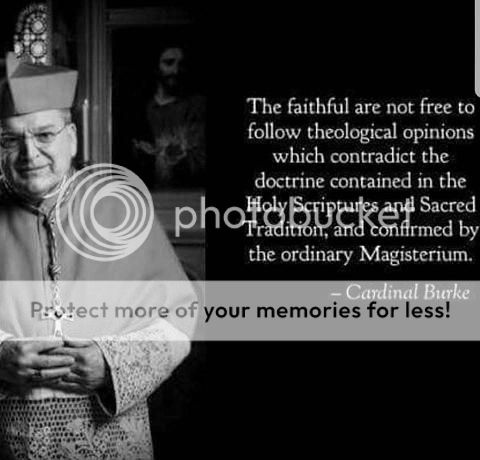 Sacred Tradition <-> Sacred Scripture <-> Magisterial Teaching. Dogma cannot go against implicit or explicit scripture. St. Paul says spiritual things need to be spiritually examined and the sensual man percieveth not these things. Scripture as understood by the disciples of the apostles had very deep spiritual meaning, not just a literalist meaning. Also many things were lived and understood through Sacred Tradition because of persecution. Catechism of the Catholic Church : Part One - The Profession of Faith 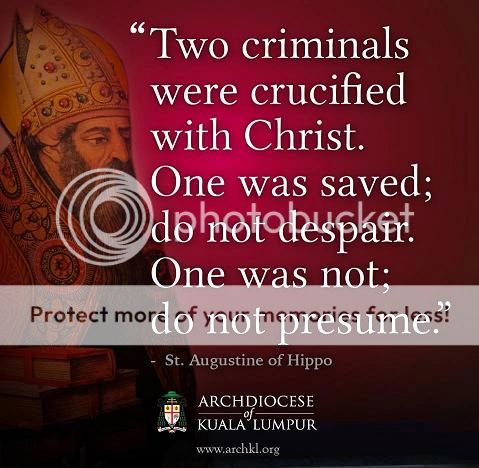 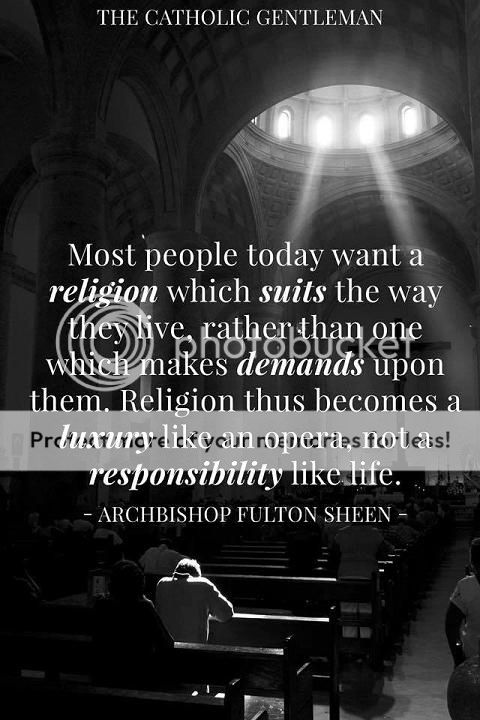 This post has been edited by khool: Nov 15 2017, 12:17 PM |
|
|
Nov 15 2017, 11:30 AM
|
|
Junior Member
225 posts Joined: Mar 2008
|
Wednesday of the Thirty-second Week in Ordinary Time
Lectionary: 493  Reading 1 (Wis 6:1-11) Hear, O kings, and understand; learn, you magistrates of the earth's expanse! Hearken, you who are in power over the multitude and lord it over throngs of peoples! Because authority was given you by the Lord and sovereignty by the Most High, who shall probe your works and scrutinize your counsels. Because, though you were ministers of his kingdom, you judged not rightly, and did not keep the law, nor walk according to the will of God, Terribly and swiftly shall he come against you, because judgment is stern for the exalted– For the lowly may be pardoned out of mercy but the mighty shall be mightily put to the test. For the Lord of all shows no partiality, nor does he fear greatness, Because he himself made the great as well as the small, and he provides for all alike; but for those in power a rigorous scrutiny impends. To you, therefore, O princes, are my words addressed that you may learn wisdom and that you may not sin. For those who keep the holy precepts hallowed shall be found holy, and those learned in them will have ready a response. Desire therefore my words; long for them and you shall be instructed. Responsorial Psalm (Ps 82:3-4, 6-7) R. Rise up, O God, bring judgment to the earth. Defend the lowly and the fatherless; render justice to the afflicted and the destitute. Rescue the lowly and the poor; from the hand of the wicked deliver them. R. Rise up, O God, bring judgment to the earth. I said: "You are gods, all of you sons of the Most High; yet like men you shall die, and fall like any prince." R. Rise up, O God, bring judgment to the earth. Alleluia (1 Thes 5:18) R. Alleluia, alleluia. In all circumstances, give thanks, for this is the will of God for you in Christ Jesus. R. Alleluia, alleluia. Gospel (Lk 17:11-19) As Jesus continued his journey to Jerusalem, he traveled through Samaria and Galilee. As he was entering a village, ten lepers met him. They stood at a distance from him and raised their voice, saying, "Jesus, Master! Have pity on us!" And when he saw them, he said, "Go show yourselves to the priests." As they were going they were cleansed. And one of them, realizing he had been healed, returned, glorifying God in a loud voice; and he fell at the feet of Jesus and thanked him. He was a Samaritan. Jesus said in reply, "Ten were cleansed, were they not? Where are the other nine? Has none but this foreigner returned to give thanks to God?" Then he said to him, "Stand up and go; your faith has saved you."  REFLECTIONS: WORD Today 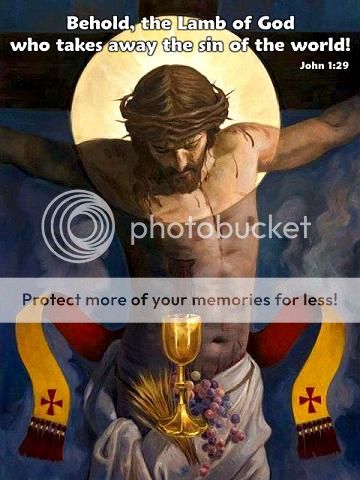 In the Gospel, Jesus is resolutely marching toward Jerusalem where He would offer His life as sacrifice to save all humanity. He came across ten lepers who, by law, stood at a distance. They called out to Him and begged Him for mercy and healing. In Jesus' time, leprosy was an incurable disease suffered by the victim till death. They were outcasts of society who could not live with normal people. They had to live in caves (if they were lucky to find one) outside of town. Nobody took care of them; they were the original "living dead." Moved with love and mercy for them whom He would also die to save, Jesus healed them all. We can only imagine the immense joy they felt for being saved from living death and restored back to their families. Jesus wanted nothing from them except their love, but to His great sadness, only one came back to Him in gratitude and thanksgiving... ALL of us too were once lepers with the incurable disease of sin. We were bound to suffer that disease till eternal death in hell. Only the healing grace of Christ's sacrifice restored us to health. His death and resurrection gave us a second chance at life and restored us back into the family of God. Without His sacrifice, we would still be prodigal sons and daughters wallowing in the pigsty of our old lives. Have you thanked Jesus lately for saving you? The God who loves much can hurt much. The Greek word for thanksgiving is "eukharistia" from which comes our modern "Eucharist". The Holy Mass is the Eucharistic, thanksgiving celebration of Jesus' mighty sacrifice of love. There the Living God will pour out even more grace to make our lives not just mud-free but beautiful, living the fullness of life with Him. Let us go and thank Jesus daily. THE TREMENDOUS VALUE OF ONE HOLY MASS Source: https://www.facebook.com/CatholicMassReflec...800655083565582 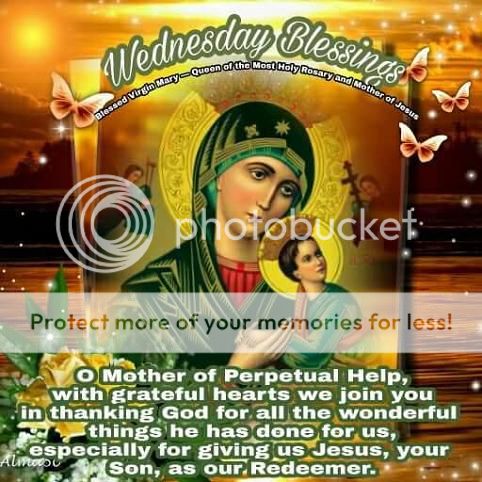 |
|
|
Nov 15 2017, 01:34 PM
|
|
Junior Member
225 posts Joined: Mar 2008
|
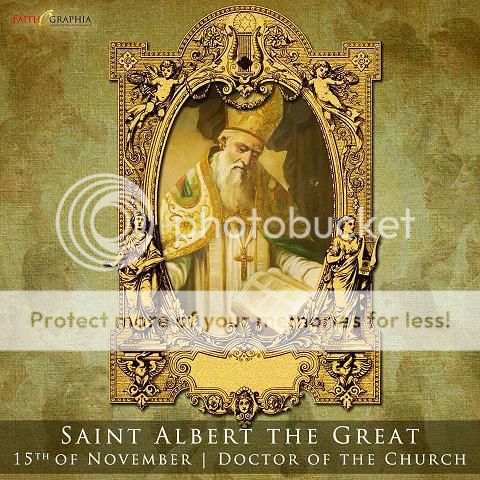 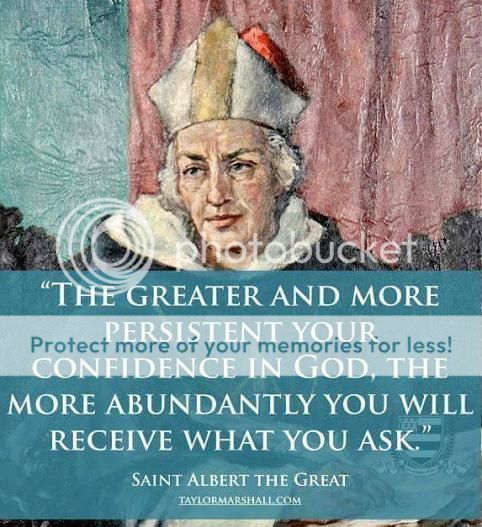 |
|
|
Nov 15 2017, 02:35 PM
|
|
Junior Member
225 posts Joined: Mar 2008
|
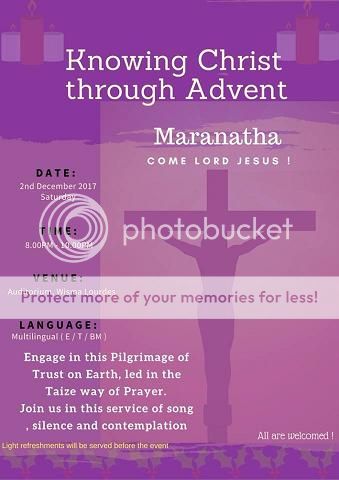 |
|
|
Nov 15 2017, 03:42 PM
|
|
Senior Member
3,577 posts Joined: Apr 2006
|
|
|
|
Nov 16 2017, 11:05 AM
|
|
Junior Member
225 posts Joined: Mar 2008
|
Blood, Water, and the Sacraments
 John’s Gospel records one of the most well-known elements of the story of Jesus’ crucifixion: the spear in his side. Jesus died pretty quickly, so to make sure he really was dead, a Roman soldier stabbed him with a spear (John 20:34). When he did this, blood and water flowed out from the wound, and this event has stuck firmly in the minds of many Christians ever since. However, what is not nearly as well known is that when this happens, John brings the narrative to a screeching halt and addresses his readers directly: QUOTE “He who saw it has borne witness—his testimony is true, and he knows that he tells the truth—that you also may believe.” (John 19:35) John makes a point to tell us that this really happened. He was there, and he saw the blood and water flow from Jesus’ pierced side. Why is this so important? Why does John make sure we know that he was not making this up? At first, we might be tempted to think that it’s because this event fulfills some prophecies from Scripture (John 19:36-37). However, John points out fulfilled prophecies elsewhere (for example, John 2:17, 19:24), but this is the only time he stops the narrative to point out that the event really happened. As a result, there has to be some deeper meaning to this event, some spiritual significance that John wants us to see in it. Let’s examine the passage and see just what that deeper meaning is. “I Thirst” To begin, we need to go back a few verses to the scene of Jesus’ death: QUOTE “After this Jesus, knowing that all was now finished, said (to fulfil the scripture), ‘I thirst.’ A bowl full of vinegar stood there; so they put a sponge full of the vinegar on hyssop and held it to his mouth. When Jesus had received the vinegar, he said, ‘It is finished’; and he bowed his head and gave up his spirit.” (John 19:28-30) There is a lot going on in this passage, so let’s start with Jesus’ words “I thirst.” They seem fairly straightforward, but when we look at them more closely, questions begin to arise. He said this only when he knew that he was about to die (“knowing that all was now finished”), but why would he wait till then? He was going to die in a few moments, so why even bother? This is a clue that there is something more here than meets the eye. Yes, Jesus was genuinely thirsty and really did want to quench that thirst, but his words also contain a second, deeper meaning. On a spiritual level, they tell us something about his impending death. Specifically, these words call to mind an event that happened near the beginning of John’s Gospel. The Samaritan Woman The only other place in this Gospel where Jesus asks for a drink is his encounter with a Samaritan woman at a well. He asks for a drink when they first meet (John 4:7), and then after a short exchange, he offers her some water (John 4:10-15). Specifically, he offers her “living water” that will result in eternal life. This conversation mirrors the scene of Jesus’ death perfectly: they both begin with Jesus asking for a drink and then end with him becoming a source of water. This parallel sheds significant light on the meaning of Jesus’ death. By highlighting Jesus’ request for a drink on the cross, John was subtly telling us that the water that flowed from Jesus’ side (we’ll get to the blood later) was a symbol of the living water he offered to the Samaritan woman. The Holy Spirit And what was that living water? John does not tell us right away; instead, we have to wait a few chapters for an explanation: QUOTE “On the last day of the feast, the great day, Jesus stood up and proclaimed, ‘If any one thirst, let him come to me and drink. He who believes in me, as the scripture has said, “Out of his heart shall flow rivers of living water.”’ Now this he said about the Spirit, which those who believed in him were to receive.” (John 7:37-39) Here we finally learn what this “living water” is, and it’s the Holy Spirit. However, there is a problem. In this passage, Jesus says that this water will flow from believers, but both in his conversation with the Samaritan woman and at his crucifixion, it comes from him. The problem, I would suggest, is with our English translations. In the original Greek, the text can be translated as I have quoted it above, or it can be translated to mean that the “rivers of living water” will flow from Jesus himself. That may seem strange to English speakers, but ancient Greek sentence structure is very different from that of modern English, so either translation is possible. Now, while the grammar of the text is ambiguous, in the context of the entire Gospel of John, the translation I am proposing makes more sense. We see Jesus depicted as the source of this living water everywhere else it appears, so it makes sense that he would be its source here as well. As a result, when we put this all together, we can see that the water that flows from Jesus’ side at his death represents the Holy Spirit. It symbolizes the gift of the Spirit that Jesus won for us by His sacrifice on the cross. A Novel Phrase And in case there’s any doubt, there is one more piece to this puzzle. When John narrates Jesus’ death, he says that Jesus “gave up his spirit” (John 19:30). Again, this seems simple enough, but there is a deeper meaning here as well. The Greek literally means that Jesus “handed over the spirit,” and this phrase was never used as a euphemism for death in ancient Greek literature. John made it up, and that has to be significant. If he had meant it to refer to Jesus’ death and nothing more, he would have used another, more common expression. However, he instead chose to make up a new one, and he must have done so for a reason. You may be able to guess why John described Jesus’ death this way. By saying that he “handed over the spirit,” John was teaching us that at Jesus’ death, he handed over the Holy Spirit to his followers, thereby confirming everything we’ve seen about the symbolism of the water that flowed from his side. However, this leaves us with one last question: what about the blood? The Sacraments In John’s Gospel, the word “blood” appears with its normal meaning in only one other passage (elsewhere, we find it only as part of an idiom referring to birth). In a sermon dubbed by scholars the “Bread of Life Discourse,” Jesus tells us repeatedly that we must eat his flesh and drink his blood (John 6:53-56), a clear reference to the Eucharist. Consequently, in the context of this Gospel, the blood that flows from Jesus’ side has to symbolize the Eucharist. Once we realize this, we can see that the water has a sacramental meaning as well. Like the phrase John used to describe Jesus’ death, this water also has a double meaning. In addition to symbolizing the Holy Spirit in general, it also represents baptism. Towards the beginning of John’s Gospel, Jesus describes baptism as a birth “of water and the Spirit” (John 3:5), so just as the blood calls to mind his words about the Eucharist, so too does the water call to mind these words about baptism. And if we think about it, this dual meaning makes perfect sense. Baptism is the first time we receive the Holy Spirit and the prerequisite for receiving the Spirit in other ways, so it’s fitting that the water would symbolize both baptism and the Spirit. The Importance of the Sacraments Now that we’ve seen what the blood and water symbolize, we have one final question to answer: What does this all mean when we put it together? In other words, is there any relation between the sacraments and Jesus’ gift of the Holy Spirit? Yes, there is. By linking the Spirit with baptism and the Eucharist, John is telling us that we receive Jesus’ parting gift to us primarily through the sacraments. Granted, the blood and water that flowed from Jesus’ side only call to mind two of them, but as Catholics, we can extrapolate from that and conclude that God gives us the Spirit in all seven sacraments. This is extremely important because the Holy Spirit enables our faith (1 Corinthians 12:3), our good works (Romans 8:3-4), and our prayer (Romans 8:15, 1 Corinthians 12:3), the three pillars of the Christian life. Simply put, we can’t be Christians without the Spirit, and we can’t have the Spirit without the sacraments. Source: http://catholicexchange.com/blood-water-sacraments |
|
|
Nov 16 2017, 12:08 PM
|
|
Junior Member
225 posts Joined: Mar 2008
|
Thursday of the Thirty-second Week in Ordinary Time
Lectionary: 494  Reading 1 (Wis 7:22b–8:1) In Wisdom is a spirit intelligent, holy, unique, Manifold, subtle, agile, clear, unstained, certain, Not baneful, loving the good, keen, unhampered, beneficent, kindly, Firm, secure, tranquil, all-powerful, all-seeing, And pervading all spirits, though they be intelligent, pure and very subtle. For Wisdom is mobile beyond all motion, and she penetrates and pervades all things by reason of her purity. For she is an aura of the might of God and a pure effusion of the glory of the Almighty; therefore nought that is sullied enters into her. For she is the refulgence of eternal light, the spotless mirror of the power of God, the image of his goodness. And she, who is one, can do all things, and renews everything while herself perduring; And passing into holy souls from age to age, she produces friends of God and prophets. For there is nought God loves, be it not one who dwells with Wisdom. For she is fairer than the sun and surpasses every constellation of the stars. Compared to light, she takes precedence; for that, indeed, night supplants, but wickedness prevails not over Wisdom. Indeed, she reaches from end to end mightily and governs all things well. Responsorial Psalm (Ps 119:89, 90, 91, 130, 135, 175) R. Your word is for ever, O Lord. Your word, O LORD, endures forever; it is firm as the heavens. R. Your word is for ever, O Lord. Through all generations your truth endures; you have established the earth, and it stands firm. R. Your word is for ever, O Lord. According to your ordinances they still stand firm: all things serve you. R. Your word is for ever, O Lord. The revelation of your words sheds light, giving understanding to the simple. R. Your word is for ever, O Lord. Let your countenance shine upon your servant, and teach me your statutes. R. Your word is for ever, O Lord. Let my soul live to praise you, and may your ordinances help me. R. Your word is for ever, O Lord. Alleluia (Jn 15:5) R. Alleluia, alleluia. I am the vine, you are the branches, says the Lord: whoever remains in me and I in him will bear much fruit. R. Alleluia, alleluia. Gospel (Lk 17:20-25) Asked by the Pharisees when the Kingdom of God would come, Jesus said in reply, "The coming of the Kingdom of God cannot be observed, and no one will announce, 'Look, here it is,' or, 'There it is.' For behold, the Kingdom of God is among you." Then he said to his disciples, "The days will come when you will long to see one of the days of the Son of Man, but you will not see it. There will be those who will say to you, 'Look, there he is,' or 'Look, here he is.' Do not go off, do not run in pursuit. For just as lightning flashes and lights up the sky from one side to the other, so will the Son of Man be in his day. But first he must suffer greatly and be rejected by this generation."  REFLECTIONS: WORD Today  In the Gospel, the Pharisees ask Jesus when the Kingdom of God will come. Like them, we may also be wondering what "Your Kingdom come" in the Our Father means. What is this kingdom? Where is it coming from? When is it arriving? Jesus came down from heaven to start building the Kingdom of God. At the start of His pubic ministry, He said to the people, "Repent for the Kingdom of heaven is at hand." (Matthew 4:17). In the Rosary, this is the Third Luminous Mystery, "The Proclamation of the Coming of the Kingdom of God." For us today, citizenship in the Kingdom starts with Baptism when the Holy Spirit comes down from heaven to live with us. "In every generation she passes into holy souls and makes them friends of God and prophets." (First Reading) Throughout our lives, the Holy Spirit gently guides us into friendship with the Father by living the Gospel of the Son, then promoting it (being prophets). This means that side by side with Jesus, we too "must suffer and be rejected by this generation." (Gospel) Like Jesus we sacrifice our comforts and securities for the good of others, and we reject the false values of the world and in turn be rejected by it. God's Kingdom has come when, by the way we live, a piece of heaven comes down to earth. BLEST ARE THEY - THE KINGDOM OF GOD IS THEIRS Source: https://www.facebook.com/CatholicMassReflec...801062420191515  This post has been edited by khool: Nov 17 2017, 12:28 PM |
| Change to: |  0.1519sec 0.1519sec
 0.53 0.53
 6 queries 6 queries
 GZIP Disabled GZIP Disabled
Time is now: 10th December 2025 - 09:41 AM |
 Quote
Quote