Eternal Father, I offer you the Sacred Heart of Jesus, with all his love, all his sufferings and all his merits: -To expiate all the sins I have committed this day and during all my life. Glory be to the Father, and to the Son, and to the Holy Spirit. As it was in the beginning, is now, and ever shall be, world without end. Amen. -To purify the good I have done in my poor way this day and during all my life. Glory be to the Father, and to the Son, and to the Holy Spirit. As it was in the beginning, is now, and ever shall be, world without end. Amen. -To supply for the good I ought to have done and that I have neglected this day and during all my life. Glory be to the Father, and to the Son, and to the Holy Spirit. As it was in the beginning, is now, and ever shall be, world without end. Amen
Tuesday of the Twenty-sixth Week in Ordinary Time Lectionary: 456
Reading 1 (Zec 8:20-23)
Thus says the LORD of hosts: There shall yet come peoples, the inhabitants of many cities; and the inhabitants of one city shall approach those of another, and say, "Come! let us go to implore the favor of the LORD"; and, "I too will go to seek the LORD." Many peoples and strong nations shall come to seek the LORD of hosts in Jerusalem and to implore the favor of the LORD. Thus says the LORD of hosts: In those days ten men of every nationality, speaking different tongues, shall take hold, yes, take hold of every Jew by the edge of his garment and say,
"Let us go with you, for we have heard that God is with you."
Responsorial Psalm (Ps 87:1b-3, 4-5, 6-7)
R. God is with us.
His foundation upon the holy mountains the LORD loves: The gates of Zion, more than any dwelling of Jacob. Glorious things are said of you, O city of God! R. God is with us.
I tell of Egypt and Babylon among those that know the LORD; Of Philistia, Tyre, Ethiopia: "This man was born there." And of Zion they shall say: "One and all were born in her; And he who has established her is the Most High LORD." R. God is with us.
They shall note, when the peoples are enrolled: "This man was born there." And all shall sing, in their festive dance: "My home is within you." R. God is with us.
Alleluia (Mk 10:45)
R. Alleluia, alleluia. The Son of Man came to serve and to give his life as a ransom for many. R. Alleluia, alleluia.
Gospel (Lk 9:51-56)
When the days for Jesus to be taken up were fulfilled, he resolutely determined to journey to Jerusalem, and he sent messengers ahead of him. On the way they entered a Samaritan village to prepare for his reception there, but they would not welcome him because the destination of his journey was Jerusalem. When the disciples James and John saw this they asked, "Lord, do you want us to call down fire from heaven to consume them?" Jesus turned and rebuked them, and they journeyed to another village.
REFLECTION: WORD Today
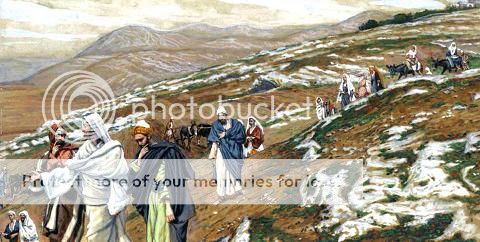
In the Gospel, Jesus has determined that it is time for Him to accomplish the final part of His earthly mission, which is to offer His life as a sacrifice for our salvation. He starts the 100-kilometer journey from Galilee to Jerusalem in the south. His disciples follow Him.
Along the way, a Samaritan village refuses to receive Him and give Him common hospitality. Two hotheaded disciples suggest that He destroy the village with a rain of fire. He sharply scolds them for thinking this way, and then He continues onward to the next town ...
This reminds us modern-day disciples that Jesus forces no one to follow Him. Everyone must decide freely (as we did) and we are not to condemn those who are not yet ready. We are to preach the Good News and teach doctrine in a pastoral way, like a shepherd calling his flock to green pasture and fresh waters.
If they hear from our voice and see in our lives the beauty of walking with Jesus, on their own they will ask, "Let us go with you, for we have heard that God is with you." (1st Reading)
Memorial of Saint Francis of Assisi Lectionary: 457
Reading 1 (Neh 2:1-8)
In the month Nisan of the twentieth year of King Artaxerxes, when the wine was in my charge, I took some and offered it to the king. As I had never before been sad in his presence, the king asked me, "Why do you look sad? If you are not sick, you must be sad at heart." Though I was seized with great fear, I answered the king: "May the king live forever! How could I not look sad when the city where my ancestors are buried lies in ruins, and its gates have been eaten out by fire?" The king asked me, "What is it, then, that you wish?" I prayed to the God of heaven and then answered the king: "If it please the king, and if your servant is deserving of your favor, send me to Judah, to the city of my ancestors' graves, to rebuild it." Then the king, and the queen seated beside him, asked me how long my journey would take and when I would return. I set a date that was acceptable to him, and the king agreed that I might go.
I asked the king further: "If it please the king, let letters be given to me for the governors of West-of-Euphrates, that they may afford me safe-conduct until I arrive in Judah; also a letter for Asaph, the keeper of the royal park, that he may give me wood for timbering the gates of the temple-citadel and for the city wall and the house that I shall occupy." The king granted my requests, for the favoring hand of my God was upon me.
Responsorial Psalm (Ps 137:1-2, 3, 4-5, 6)
R. Let my tongue be silenced if I ever forget you!
By the streams of Babylon we sat and wept when we remembered Zion. On the aspens of that land we hung up our harps. R. Let my tongue be silenced if I ever forget you!
Though there our captors asked of us the lyrics of our songs, And our despoilers urged us to be joyous: "Sing for us the songs of Zion!" R. Let my tongue be silenced if I ever forget you!
How could we sing a song of the LORD in a foreign land? If I forget you, Jerusalem, may my right hand be forgotten! R. Let my tongue be silenced if I ever forget you!
May my tongue cleave to my palate if I remember you not, If I place not Jerusalem ahead of my joy. R. Let my tongue be silenced if I ever forget you!
Alleluia (Phil 3:8-9)
R. Alleluia, alleluia. I consider all things so much rubbish that I may gain Christ and be found in him. R. Alleluia, alleluia.
Gospel (Lk 9:57-62)
As Jesus and his disciples were proceeding on their journey, someone said to him, "I will follow you wherever you go." Jesus answered him, "Foxes have dens and birds of the sky have nests, but the Son of Man has nowhere to rest his head." And to another he said, "Follow me." But he replied, "Lord, let me go first and bury my father." But he answered him, "Let the dead bury their dead. But you, go and proclaim the Kingdom of God." And another said, "I will follow you, Lord, but first let me say farewell to my family at home." Jesus answered him, "No one who sets a hand to the plow and looks to what was left behind is fit for the Kingdom of God."
REFLECTION: WORD Today
"I will follow you wherever you go," someone said to Jesus in (Gospel)
After our spiritual seminar or retreat, filled with love and faith, we too promised Jesus we will follow Him forever. Oh how we burned with passion back then!
But now weeks or years have passed. Is the passion still there? Are we still following Jesus? Or has spiritual lethargy returned?
Following Jesus needs God's grace and our strong will. The seminar was God's GRACE; the weeks and years that follow requires our WILL. God refills His grace through daily Bible reading, Holy Mass and prayer meetings. Then we must will to serve the Lord, for without works, faith dies.
Serving the Lord through our family alone may not be enough as Jesus implies in today's Gospel, for family is basically an extension of our self. It is an obligation that must be done, not a voluntary service. As we do our duty toward family, we also need to make time and volunteer to serve the Lord in at least small ways outside of home. In the neighborhood, church, or faith community.
Or our country, like Nehemiah in the First Reading (440+ BC). He was deeply in love with the Lord but he was not a spiritual leader. God needed him to serve the physical needs of his nation Israel. The New American Bible has this to say of him:
"Nehemiah was a man of action who rebuilt the walls of Jerusalem and introduced administrative reforms... dedicated to the single purpose of the welfare of his people. He was an administrator of good practical sense combined with deep faith in God... His generous dedication of talents to the service of God and His people remains an example of undiminished force for laymen today."
Because Nehemiah responded to God's call to serve, God provided him with great administrative talents. Then God softened the heart of King Artaxerxes of Persia under whom Nehemiah served during the Jewish exile. The King granted him a leave of absence plus all the lumber from the King's forest to rebuild the walls of Jerusalem. As the people worked to restore the walls, their faith was also rehabilitated.
"Let my tongue be silenced if I ever forget you!" (Responsorial Psalm)
Our tongue, muscles and passion for Jesus will grow cold, weaken and die in silence should we refuse to serve the Him. Let us pray and ask for a venue of service for Jesus and His people. God is sure to grant it, together with the needed time, health, resources and passion to do it. Plus the reward of joy and fulfillment in walking with Jesus.
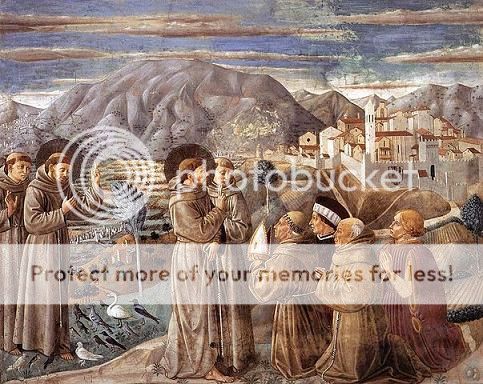
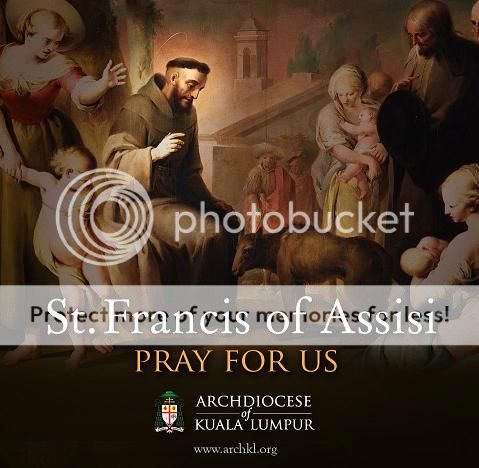
IMAGE: Scenes from the Life of St Francis (Scene 7) | Benozzo Gozzoli
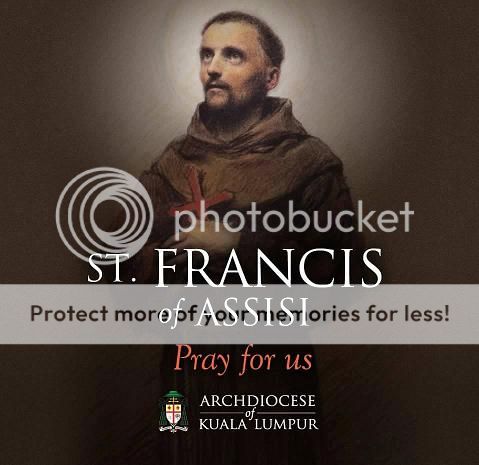
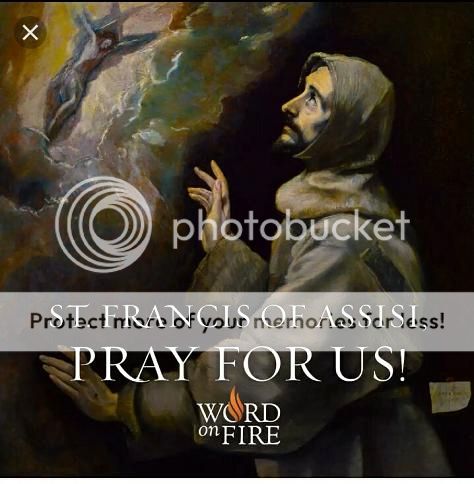
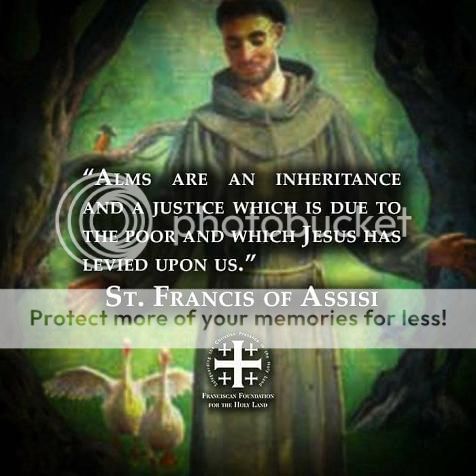
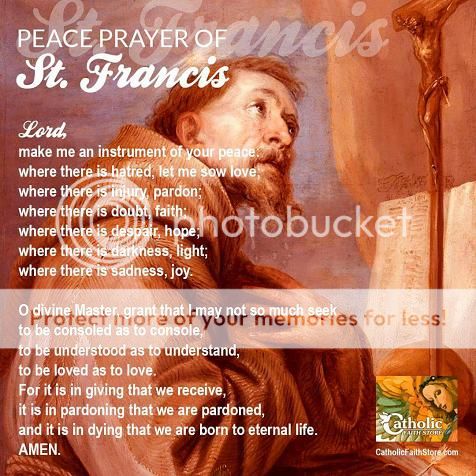
October 4 is the Feast of St. Francis of Assisi, “the little beggar”, who is perhaps the most popular saint in history. Who was this great saint?
Francis Bernardone was born in 1182 in Assisi, Italy. His baptismal name was John, but his father renamed him Franceso, in honor of his love for France. The son of a wealthy merchant, Francis had time and money to host lavish banquets for young nobles who proclaimed him “King of Feasts.” Parties and selling cloth left Francis little time for God.
A handsome, charming and educated young man, he spent his early life leading young nobles to parties. He dreamed of knighthood and longed for the adventurous life of chivalry. In pursuit of that dream, he joined in the war between Assisi and Perugia at the age of 20.
In that war, Francis fought with youthful enthusiasm, but was wounded and taken prisoner. Spending the next year in a dungeon, he contracted malaria. Ransomed by his father, a more reflective Francis returned to Assisi. Sickness overtook him and in that languishing experience he heard the first stirrings of a vocation to peace and justice.
The military victories of Count Walter of Brienne revived Francis’ desire for knighthood. Under Brienne’s command, he hoped to win his favor and become a knight. On his way to join Brienne, Francis stopped in Spoleto and heard the shocking news of his death. Overcome by depression, his malaria returned.
One night a mysterious voice asked him, “Who do you think can best reward you, the Master or the servant?” Francis Answered, “The Master.” The voice continued, “Why do you leave the Master for the servant?” Francis realized the servant was Count Walter. He left Spoleto convinced God had spoken to him.
From that moment on, Francis began to care for the sick and the poor — especially the lepers — convinced that this was what God had called him to do. When Francis took a diseased man’s face in his hands and kissed it, the man was healed of all malformation.
A further call came in 1205, when, in a dramatic moment of prayer in the abandoned Church of San Damiano, Francis heard a voice coming from the crucifix which challenged him to rebuild the church. At first he thought it meant that he should rebuild San Damiano, so he sold some of his father’s cloth to raise money to build the Church at San Damiano. His father, who was already upset about the life he was leading, took him to court, where he was ordered to pay back the money. Francis complied with a dramatic gesture, renouncing his inheritance and handing his expensive clothing to him as well. Dressed only in a workman’s smock, he left town and spent the next two years as a hermit, taking a vow of poverty and dedicating his life his life to God.
Francis begged for his food, wore old clothes, and preached peace. He began to attract followers, and in 1209 with the papal blessing he founded the Friars Minor (Franciscans). Then in 1212 with St. Clare of Assisi he founded the “Poor Ladies,” now known as the “Poor Clares.” He also founded the “Third Order of Penance” (the Third Order) which included lay people. He was the first person (recorded) to receive the stigmata (the five wounds of Christ) in 1224. Out of humility Francis never accepted the priesthood but remained a deacon all his life. He had a great love for animals. His ardent love of God merited him the name “Seraphic.”
Francis died at the age of 44, on October 4, 1226 at Portiuncula, Italy. He was canonized by Pope Gregory IX less than two years later.
St. Francis of Assisi is the patron saint of: animals, archeologists, ecology, families, Italy, merchants, messengers, metal workers, and peace.
“But as for me, I desire this privilege from the Lord, that never may I have any privilege from man, except to do reverence to all, and to convert the world by obedience to the Holy Rule rather by example than by word.”
~The Little Flowers of St. Francis: Chapter 50
QUOTE
“If we endure things patiently and with gladness thinking on the sufferings of our blessed Lord, and bearing all for the love of Him: herein is perfect joy.”
~ The Voice of the Saints, TAN Books, 1965, page 127
Thursday of the Twenty-sixth Week in Ordinary Time Lectionary: 458
Reading 1 (Neh 8:1-4a, 5-6, 7b-12)
The whole people gathered as one in the open space before the Water Gate, and they called upon Ezra the scribe to bring forth the book of the law of Moses which the LORD prescribed for Israel. On the first day of the seventh month, therefore, Ezra the priest brought the law before the assembly, which consisted of men, women, and those children old enough to understand. Standing at one end of the open place that was before the Water Gate, he read out of the book from daybreak until midday, in the presence of the men, the women, and those children old enough to understand; and all the people listened attentively to the book of the law. Ezra the scribe stood on a wooden platform that had been made for the occasion. He opened the scroll so that all the people might see it (for he was standing higher up than any of the people); and, as he opened it, all the people rose. Ezra blessed the LORD, the great God, and all the people, their hands raised high, answered, "Amen, amen!" Then they bowed down and prostrated themselves before the LORD, their faces to the ground. As the people remained in their places, Ezra read plainly from the book of the law of God, interpreting it so that all could understand what was read. Then Nehemiah, that is, His Excellency, and Ezra the priest-scribe and the Levites who were instructing the people said to all the people: "Today is holy to the LORD your God. Do not be sad, and do not weep"– for all the people were weeping as they heard the words of the law. He said further: "Go, eat rich foods and drink sweet drinks, and allot portions to those who had nothing prepared; for today is holy to our LORD. Do not be saddened this day, for rejoicing in the LORD must be your strength!" And the Levites quieted all the people, saying, "Hush, for today is holy, and you must not be saddened." Then all the people went to eat and drink, to distribute portions, and to celebrate with great joy, for they understood the words that had been expounded to them.
Responsorial Psalm (Ps 19:8, 9, 10, 11)
R. The precepts of the Lord give joy to the heart.
The law of the LORD is perfect, refreshing the soul; The decree of the LORD is trustworthy, giving wisdom to the simple. R. The precepts of the Lord give joy to the heart.
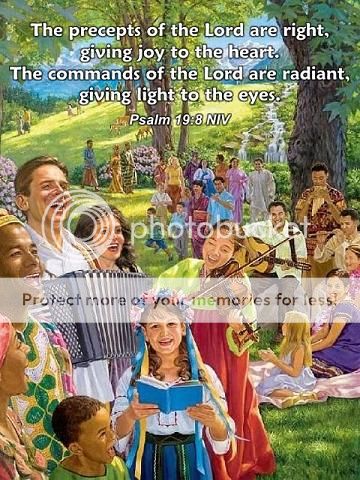
The precepts of the LORD are right, rejoicing the heart; The command of the LORD is clear, enlightening the eye; R. The precepts of the Lord give joy to the heart.
The fear of the LORD is pure, enduring forever; The ordinances of the LORD are true, all of them just. R. The precepts of the Lord give joy to the heart.
They are more precious than gold, than a heap of purest gold; Sweeter also than syrup or honey from the comb. R. The precepts of the Lord give joy to the heart.
Alleluia (Mk 1:15)
R. Alleluia, alleluia. The Kingdom of God is at hand; repent and believe in the Gospel. R. Alleluia, alleluia.
Gospel (Lk 10:1-12)
Jesus appointed seventy-two other disciples whom he sent ahead of him in pairs to every town and place he intended to visit. He said to them, "The harvest is abundant but the laborers are few; so ask the master of the harvest to send out laborers for his harvest. Go on your way; behold, I am sending you like lambs among wolves. Carry no money bag, no sack, no sandals; and greet no one along the way. Into whatever house you enter, first say, 'Peace to this household.' If a peaceful person lives there, your peace will rest on him; but if not, it will return to you. Stay in the same house and eat and drink what is offered to you, for the laborer deserves his payment. Do not move about from one house to another. Whatever town you enter and they welcome you, eat what is set before you, cure the sick in it and say to them, 'The Kingdom of God is at hand for you.' Whatever town you enter and they do not receive you, go out into the streets and say, 'The dust of your town that clings to our feet, even that we shake off against you.' Yet know this: the Kingdom of God is at hand. I tell you, it will be more tolerable for Sodom on that day than for that town."
REFLECTION: WORD Today
How would you feel if you were told the cure to your cancer? Or how to win the heart of your crush? Or how to compute the winning lotto numbers? Excited and happy of course, right?
Such was the reaction of the ancient Jews in the First Reading. They cried for joy and celebrated when the Word of God was read out to them. Their nation had been destroyed by the sins of their fathers. Many generations of their ancestors after Kings David and Solomon (1000 BC) became increasingly godless in spite the many prophets God sent to teach and warn them.
Finally, in 586 BC, God stopped protecting their nation and allowed the foreign kingdom of Babylon to defeat and totally destroy Jerusalem, including the Temple of God. The Jews were taken captive to distant Babylon. But 70 years later, in His mercy and by His divine providence, God brought them back to Jerusalem and they rebuilt the city and the Temple of God.
Then hearing the Word of God (particularly the first 5 books of the Old Testament) read to them, they knew now what went wrong and how to fix the cancer. They knew now how to reclaim the heart of God, and they knew now how to receive the wealth of right relationship with Him. And they cried in gratitude and joy.
"The precepts (laws) of the Lord give joy to the heart." (Responsorial Psalm)
Such should be our attitude too. Our nation is in similar state of moral and political ruin. We parents bear a big part of the blame for teaching our children only worldly survival skills and material success, neglecting the Word of God. So they grow up lusting for immoral wealth and caring only for themselves, ruining the nation.
The Word of God is like the map of a buried treasure. It shows us the way to a priceless relationship with God on earth and the path to the infinite riches of heaven. That is why it is called the Good News. In the Gospel, Jesus sends 72 nameless disciples to preach the Good News in the towns where He himself was about to come. They are nameless because Jesus wants to put our names in that list. We are the ones He expects to prepare people for His arrival, starting with our own family.
If we had been in error, if we had been teaching our little girls to wear skimpy clothes and lewd dance steps, if we had been allowing our little boys to play murderous video games and watch pornography, if we had been too busy with livelihood and lax in our responsibility to keep our family within the protective fence of the precepts of God and the Church, then we may have to think twice before blaming only corrupt politicians and drug lords for the nation's woes. Maybe they had parents like us.
But it's never too late, "Do not be grieved, for the joy of the LORD is your strength." (First Reading)
Jesus commands us to preach the Gospel. Let us teach the next generation to read and love the Word of God. All good things flow from it.
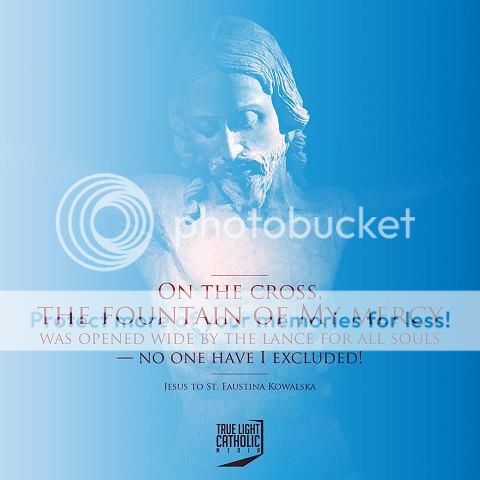
St. Faustina Kowalska, whose feast we celebrated yesterday, 05 September 2017 ,was told many wondrous things by Jesus, especially about His great desire that all people trust in His infinite mercy no matter what.
"My daughter, write that the greater the misery of a soul, the greater its right to My mercy; urge all souls to trust in the unfathomable abyss of My mercy, because I want to save them all. On the cross, the fountain of My mercy was opened wide by the lance for all souls – no one have I excluded!" - Diary of St. Faustina no. 1182
Friday of the Twenty-sixth Week in Ordinary Time Lectionary: 459
Reading 1 (Bar 1:15-22)
During the Babylonian captivity, the exiles prayed: "Justice is with the Lord, our God; and we today are flushed with shame, we men of Judah and citizens of Jerusalem, that we, with our kings and rulers and priests and prophets, and with our ancestors, have sinned in the Lord's sight and disobeyed him. We have neither heeded the voice of the Lord, our God, nor followed the precepts which the Lord set before us. From the time the Lord led our ancestors out of the land of Egypt until the present day, we have been disobedient to the Lord, our God, and only too ready to disregard his voice. And the evils and the curse that the Lord enjoined upon Moses, his servant, at the time he led our ancestors forth from the land of Egypt to give us the land flowing with milk and honey, cling to us even today. For we did not heed the voice of the Lord, our God, in all the words of the prophets whom he sent us, but each one of us went off after the devices of his own wicked heart, served other gods, and did evil in the sight of the Lord, our God."
Responsorial Psalm (Ps 79:1b-2, 3-5, 8, 9)
R. For the glory of your name, O Lord, deliver us.
O God, the nations have come into your inheritance; they have defiled your holy temple, they have laid Jerusalem in ruins. They have given the corpses of your servants as food to the birds of heaven, the flesh of your faithful ones to the beasts of the earth. R. For the glory of your name, O Lord, deliver us.
They have poured out their blood like water round about Jerusalem, and there is no one to bury them. We have become the reproach of our neighbors, the scorn and derision of those around us. O LORD, how long? Will you be angry forever? Will your jealousy burn like fire? R. For the glory of your name, O Lord, deliver us.
Remember not against us the iniquities of the past; may your compassion quickly come to us, for we are brought very low. R. For the glory of your name, O Lord, deliver us.
Help us, O God our savior, because of the glory of your name; Deliver us and pardon our sins for your name's sake. R. For the glory of your name, O Lord, deliver us.
Alleluia (Ps 95:8)
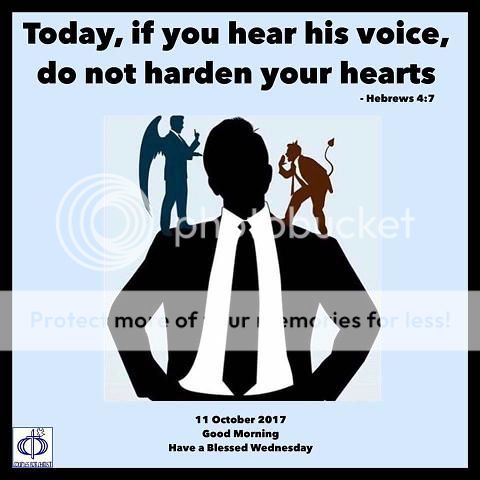
R. Alleluia, alleluia. If today you hear his voice, harden not your hearts. R. Alleluia, alleluia.
Gospel (Lk 10:13-16)
Jesus said to them, "Woe to you, Chorazin! Woe to you, Bethsaida! For if the mighty deeds done in your midst had been done in Tyre and Sidon, they would long ago have repented, sitting in sackcloth and ashes. But it will be more tolerable for Tyre and Sidon at the judgment than for you. And as for you, Capernaum, 'Will you be exalted to heaven? You will go down to the netherworld.'
REFLECTION: WORD TOday
The First Reading (587 years before Jesus came) is a public confession of the Jews taken as captives and exiled in distant Babylon. They are suffering because of their sin of disobedience. They admit and repent that their nation was conquered and the people scattered because they refused to listen to the prophets God authorized and sent to speak for Him. "Instead, we did as we pleased and went on our own evil way."
In the Gospel, the Son of God is very frustrated, angry even, at the people in the towns where He had performed many of His great miracles. They loved His miracles but refused His corrections. They would not repent their sins because they were not yet suffering the consequences suffered by their ancestors in Babylon.
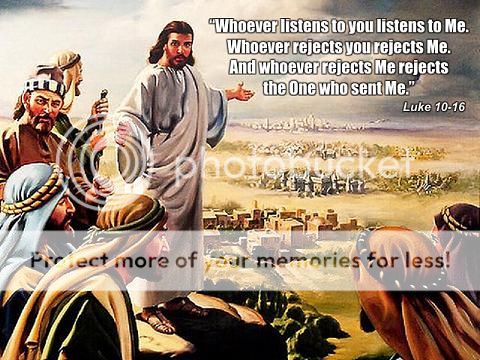
Jesus then authorized and sent His disciples to speak for Him. He told them, "Whoever listens to you listens to Me. Whoever rejects you rejects Me. And whoever rejects Me rejects the One who sent Me."
Later, just before He died, Jesus authorized them to perform the miracle of Transubstantion, turning bread and water into His Body and Blood (Matthew 26:26-28). And still later, just before He ascended back to Heaven, Jesus once more sent them saying, "Go therefore and make disciples of all nations... teaching them all that I have commanded you." (Matthew 28:19-20)
Following the mandate of Jesus for 2000 years, the Church went to all nations bringing the Holy Eucharist and making disciples of all men, teaching them that they may not suffer the consequences suffered by the ancient Jews.
Every Sunday we go to church and witness the Great Miracle of plain bread and water turning into the Body and Blood of Christ. We love the miracle, but are we obeying the Church that Jesus authorized and sent to do the miracle? Do we repent our sins in private Confession? Whoever rejects His messenger rejects God.
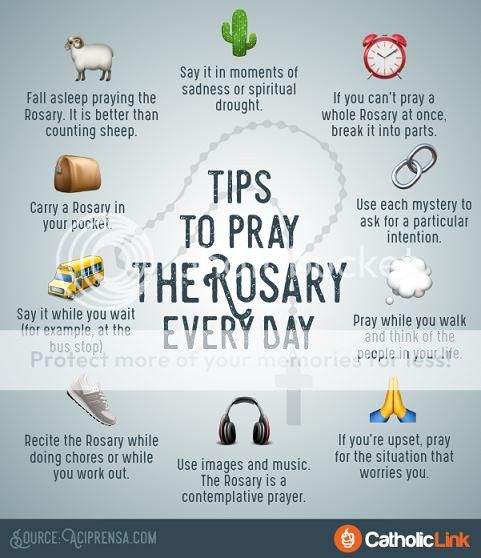
Thousands gather to pray rosary at Poland’s borders
On Saturday, 7 October 2017, the feast of Our Lady of the Rosary, thousands of Polish Catholics gathered along their country’s border to pray for peace, as well as for the future and salvation of Poland and the world.
The event, entitled “Rosary at the Borders,” was organized by a lay movement called the Solo Dios Basta Foundation (God Alone Suffices). It was supported by the Polish Bishop’s Conference and was sponsored by several state-owned companies. Approximately 90 percent of the country, beloved home of the Polish Pope St. John Paul II, identifies as Catholic.
According to the New York Times, participants gathered for prayer at 320 churches near the border of Poland as well as in 4,000 designated prayer zones.
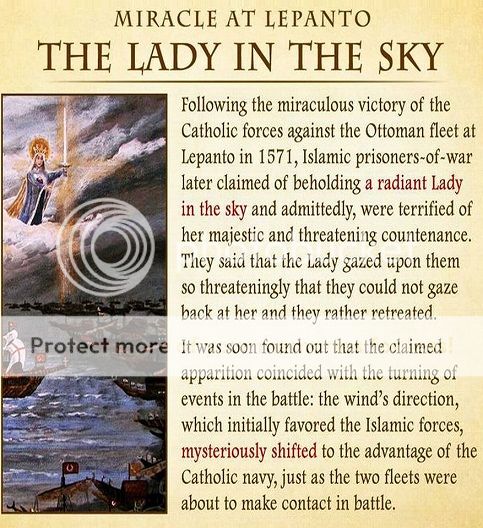
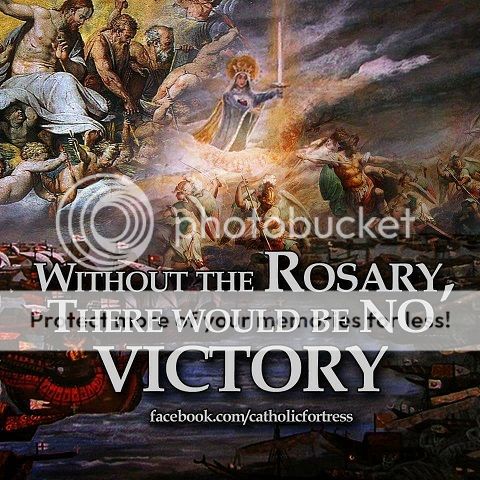
The prayer took place on the feast of Our Lady of the Rosary, which also commemorates the anniversary of the Battle of Lepanto, during which Mary, through the prayer of the rosary, is credited for a key victory against the Ottoman Empire.
It also fell a week before the 100th anniversary of the final apparition of Our Lady of Fatima, who encouraged the world to pray the rosary for peace.
The rosary is “a powerful weapon in the fight against evil,” states the official website for the event.
“Let’s pray for other nations of Europe and the world to understand that we need to return to the Christian roots of European culture if we want Europe to remain Europe,” Archbishop Marek Jedraszewski said in his homily on Saturday, according to the New York Times.
The event’s website noted that in almost every major Marian apparition, Mary asks that the rosary be recited.
“Mary is the Queen of Poland, she has been taking care of us for generations, in critical moments of history she has always been with us, and we are with her. As a rescue for the world, Our Lady points to the prayer of the Rosary.”
Organizers anticipated at least 1 million participants in the majority-Catholic country, though officials have said they do not yet have the final numbers for the event.
Tuesday of the Twenty-seventh Week in Ordinary Time Lectionary: 462
Reading 1 (Jon 3:1-10)
The word of the LORD came to Jonah a second time: "Set out for the great city of Nineveh, and announce to it the message that I will tell you." So Jonah made ready and went to Nineveh, according to the LORD's bidding. Now Nineveh was an enormously large city; it took three days to go through it. Jonah began his journey through the city, and had gone but a single day's walk announcing, "Forty days more and Nineveh shall be destroyed," when the people of Nineveh believed God; they proclaimed a fast and all of them, great and small, put on sackcloth.
When the news reached the king of Nineveh, he rose from his throne, laid aside his robe, covered himself with sackcloth, and sat in the ashes. Then he had this proclaimed throughout Nineveh, by decree of the king and his nobles: "Neither man nor beast, neither cattle nor sheep, shall taste anything; they shall not eat, nor shall they drink water. Man and beast shall be covered with sackcloth and call loudly to God; every man shall turn from his evil way and from the violence he has in hand. Who knows, God may relent and forgive, and withhold his blazing wrath, so that we shall not perish." When God saw by their actions how they turned from their evil way, he repented of the evil that he had threatened to do to them; he did not carry it out.
Responsorial Psalm (Ps 130:1b-2, 3-4ab, 7-8)
R. If you, O Lord, mark iniquities, who can stand?
Out of the depths I cry to you, O LORD LORD, hear my voice! Let your ears be attentive to my voice in supplication. R. If you, O Lord, mark iniquities, who can stand?
If you, O LORD, mark iniquities, LORD, who can stand? But with you is forgiveness, that you may be revered. R. If you, O Lord, mark iniquities, who can stand?
Let Israel wait for the LORD, For with the LORD is kindness and with him is plenteous redemption; And he will redeem Israel from all their iniquities. R. If you, O Lord, mark iniquities, who can stand?
Alleluia (Lk 11:28)
R. Alleluia, alleluia. Blessed are those who hear the word of God and observe it. R. Alleluia, alleluia.
Gospel (Lk 10:38-42)
Jesus entered a village where a woman whose name was Martha welcomed him. She had a sister named Mary who sat beside the Lord at his feet listening to him speak. Martha, burdened with much serving, came to him and said, "Lord, do you not care that my sister has left me by myself to do the serving? Tell her to help me." The Lord said to her in reply, "Martha, Martha, you are anxious and worried about many things. There is need of only one thing. Mary has chosen the better part and it will not be taken from her."
REFLECTION: WORD Today
"Faith without works is dead." (James 2:26)
But the opposite is also true, works are dead without faith. Both must be present if we are to grow in Christian maturity.
In the Gospel, Jesus is visiting the home of His friends Lazarus, Martha and Mary. Immediately Martha rushes to the kitchen to serve Jesus. Then, harassed and overburdened, she complains to Jesus that Mary her sister is not helping but just listening to Him.
Jesus gently tells her, "Martha, Martha, you are anxious and worried about many things," and that Mary is doing "the better part."
Jesus is reminding Martha and us that listening to His Word is vital if we are to act on it. Otherwise we will be working for ourselves, not for God. We will be relying on our limited strength, not God's power. We will be anxious and worried, and our work prone to error.
We also remember Jesus telling us elsewhere that He is the Vine and we are His branches. If we hope to be fruitful, we must stay connected to Him. "Without Me, you can do nothing." (John 15:5)
The First Reading is a powerful demonstration. Yesterday, Jonah would not listen to God. He went on his way and his life was stormy and scary. Today, he finally listens to God and goes to work, evangelizing Nineveh, a pagan city some 500 miles (800 kms.) north-east of Jerusalem.
"Now Nineveh was an enormously large city; it took three days to go through it." It is thus estimated to have been 60 miles (almost 100 kms.) in diameter. But in just 1 day of preaching, the whole city was on its knees! From the lowest slave to the mighty king, everyone repented their sins. The impossible happened because God was working though Jonah.
Read the Bible at the start of each day. Listen to God and keep His message at heart. Then our day will be peaceful and our works will be blessed.
In his letter to the Philippians, St. Paul tells us how to live out our salvation in terms that are sobering and startling:
QUOTE
So then, my beloved, obedient as you have always been, not only when I am present but all the more now when I am absent, work out your salvation with fear and trembling. For God is the one who, for his good purpose, works in you both to desire and to work (Philippians 2:12-13).
This statement stands in stark contrast to a popular misunderstanding of salvation as a single complete act—a sort of bolt of divine lightning that changes us instantly and forever. It also militates against a widespread contemporary tendency to view the issue of salvation in completely rosy terms, minus all those things that are inconsistent with a modern therapeutic mentality—things like hell and fear.
In an important way, Paul’s words also affirm a vital plank of traditional Christian doctrine on salvation—that good works belong to the economy of salvation, that some effort, some element of cooperation on our part is necessary. Listen closely to his words. Paul is surprisingly explicit: work out your salvation. The translation here is an accurate one of the Greek katergazomai, whose root ergon means work and is the source of our words energy and ergonomic.
Of course, the next verse makes an extremely important clarification: For God is the one who, for his good purpose, works in you both to desire and to work.
We work, but it is really God who works through us. Here we have an extraordinary affirmation of the traditional teaching on the relationship between God’s grace and our free will. Here is St. Thomas Aquinas’ brief synopsis in the Summa Theologica:
QUOTE
Free-will is the cause of its own movement, because by his free-will man moves himself to act. But it does not of necessity belong to liberty that what is free should be the first cause of itself, as neither for one thing to be cause of another need it be the first cause. God, therefore, is the first cause, Who moves causes both natural and voluntary. And just as by moving natural causes He does not prevent their acts being natural, so by moving voluntary causes He does not deprive their actions of being voluntary: but rather is He the cause of this very thing in them; for He operates in each thing according to its own nature (Question 83, Article 1, Reply to Objection 3).
The last line is the key to the whole. He operates in each thing according to its own nature. In other words, God moves inanimate things lacking free will according to their nature. The rock falls due to the immutable laws of gravity: it has no choice in the matter. His operation on the rock does not change its nature. Likewise, He operates within us without changing our nature, which includes free will.
This is exactly what Paul seems to be saying (as Aquinas himself points out). He states not just that God works through us, but that he works through us in a way that we too work. And not only that but also his working through us causes us to desire His goodness. That word, desire, is also sometimes translated as will, which is a valid translation of the Greek thelein. (This word may be familiar to some readers in the term Monothelitism, a seventh-century heresy which held that Christ had only one will, thereby denying the fullness of His humanity in what was essentially a throwback to the older Monophysite controversy.)
Paul’s exhortation is set in the context of His majestic hymn to the Incarnation and must be understood in this context, according to Dennis Hamm, SJ, a Catholic biblical commentator. Here is the full text of this well-known and beloved hymn:
QUOTE
Who, though he was in the form of God, did not regard equality with God something to be grasped. Rather, he emptied himself, taking the form of a slave, coming in human likeness; and found human in appearance, he humbled himself, becoming obedient to death, even death on a cross. Because of this, God greatly exalted him and bestowed on him the name that is above every name, that at the name of Jesus every knee should bend, of those in heaven and on earth and under the earth, and every tongue confess that Jesus Christ is Lord, to the glory of God the Father (Philippians 2:6-11).
Now the mystery of how God works within us while preserving our own free will is recast in light of the mystery of the Incarnation. Sometimes the way the Incarnation is described makes it possible to forget its utterly radical paradoxical meaning. The term Incarnation itself means the taking on of flesh. But Jesus’ humanity was more than a cloak of flesh around His humanity. (That view is close to the heresy of Docetism, by the way.) Being fully human meant having a human soul, intellect, and will co-existing fully with the divine intellect and will.
If God then can become fully human while retaining the fullness of His divinity, then He can certainly move our wills without causing us to losing anything of our humanity—of which the free will is an essential aspect. Of course this remains a mystery, one that is ultimately centered in Christ.
Paul’s hymn to Christ not only illuminates his statement on salvation but gives its further practical weight. In the hymn he depicts Christ’s Incarnational life as an act of obedience that went all the way to the cross. So also, in verse 12, Paul couches our work of salvation as obedience. We can infer, then, that in the same way ‘working’ out our salvation means imitating the example of Christ in assenting to the will of the Father to the point of taking up our crosses (Luke 9:23).
The Incarnational context also illuminates Paul’s somewhat unnerving phrase at the end of verse 13—work out your salvation with fear and trembling. As Hamm points out this is an allusion to an Old Testament phrase for how we should approach the presence of God. As Psalm 2:11 puts it, “Serve the Lord with fear; exult with trembling.” Likewise, Jeremiah 33:9, “They shall fear and tremble because of all the prosperity I give it.”
Now as Christians, we are able to work out our salvation in ‘fear and trembling’ because of the Incarnation, which has made God present to us. He is both present to us through saints like Paul. But He is present even in their absence—working through us in ways most intimate and mysterious, transforming our very will and desire. It is a truth so awesome that we should tremble not only with fear but also with joy even to think of it.
Wednesday of the Twenty-seventh Week in Ordinary Time Lectionary: 463
Reading 1 (Jon 4:1-11)
Jonah was greatly displeased and became angry that God did not carry out the evil he threatened against Nineveh. He prayed, "I beseech you, LORD, is not this what I said while I was still in my own country? This is why I fled at first to Tarshish. I knew that you are a gracious and merciful God, slow to anger, rich in clemency, loath to punish. And now, LORD, please take my life from me; for it is better for me to die than to live." But the LORD asked, "Have you reason to be angry?"
Jonah then left the city for a place to the east of it, where he built himself a hut and waited under it in the shade, to see what would happen to the city. And when the LORD God provided a gourd plant that grew up over Jonah's head, giving shade that relieved him of any discomfort, Jonah was very happy over the plant. But the next morning at dawn God sent a worm that attacked the plant, so that it withered. And when the sun arose, God sent a burning east wind; and the sun beat upon Jonah's head till he became faint. Then Jonah asked for death, saying, "I would be better off dead than alive."
But God said to Jonah, "Have you reason to be angry over the plant?" "I have reason to be angry," Jonah answered, "angry enough to die." Then the LORD said, "You are concerned over the plant which cost you no labor and which you did not raise; it came up in one night and in one night it perished. And should I not be concerned over Nineveh, the great city, in which there are more than a hundred and twenty thousand persons who cannot distinguish their right hand from their left, not to mention the many cattle?"
Responsorial Psalm (Ps 86:3-4, 5-6, 9-10)
R. Lord, you are merciful and gracious.
Have mercy on me, O Lord, for to you I call all the day. Gladden the soul of your servant, for to you, O Lord, I lift up my soul. R. Lord, you are merciful and gracious.
For you, O Lord, are good and forgiving, abounding in kindness to all who call upon you. Hearken, O LORD, to my prayer and attend to the sound of my pleading. R. Lord, you are merciful and gracious.
All the nations you have made shall come and worship you, O Lord, and glorify your name. For you are great, and you do wondrous deeds; you alone are God. R. Lord, you are merciful and gracious.
Alleluia (Rom 8:15bc)
R. Alleluia, alleluia. You have received a spirit of adoption as sons through which we cry: Abba! Father! R. Alleluia, alleluia.
Gospel (Lk 11:1-4)
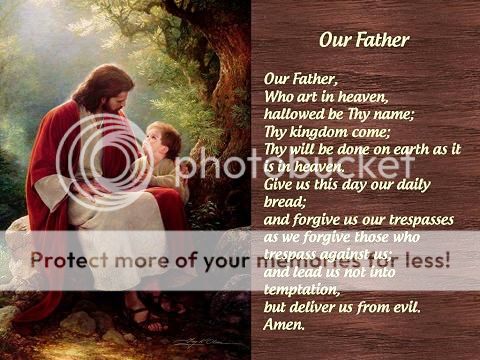
Jesus was praying in a certain place, and when he had finished, one of his disciples said to him, "Lord, teach us to pray just as John taught his disciples." He said to them, "When you pray, say:
Father, hallowed be your name, your Kingdom come. Give us each day our daily bread and forgive us our sins for we ourselves forgive everyone in debt to us, and do not subject us to the final test."
Reflections: WORD Today
In the Lord's Prayer, Jesus teaches us to ask our Father, "Forgive us our sins for we ourselves forgive everyone." (Gospel)
But in the First Reading, Jonah, prophet of God and devout temple-goer, wanted only the first part of the prayer, not the second. God forgave him his sin of disobedience, saved him from death by drowning, and then mercifully gave him a second chance. But when God gave the Ninevites the same treatment, he was angry. He wanted God to kill his enemies.
Jesus asks us, promoters of God and devout church-goers, to be one with Him in praying "Your Kingdom come." This needs us to be more understanding of the faults and failures of fellow sinners, allowing for justifying circumstances we may know nothing about; To be merciful as our heavenly Father is merciful to tax collectors, prostitutes and drug offenders, rather than cheering their murder; And to pray that they, like us, be given 70x7 more chances.
Our Father, reform my will and let Yours be done. Amen.


 Oct 2 2017, 05:28 PM


 Quote
Quote









 2.7204sec
 0.25
0.25
 7 queries
 GZIP Disabled