LYN Catholic Fellowship V02 (Group), For Catholics (Roman or Eastern)
LYN Catholic Fellowship V02 (Group), For Catholics (Roman or Eastern)
|
|
 Oct 23 2017, 01:19 PM Oct 23 2017, 01:19 PM
Return to original view | Post
#321
|
 
Junior Member
225 posts Joined: Mar 2008  
|
|
|
|
|
|
|
Oct 23 2017, 11:36 PM
Return to original view | Post
#322
|
|
Junior Member
225 posts Joined: Mar 2008
|
 |
|
|
Oct 24 2017, 03:03 PM
Return to original view | Post
#323
|
|
Junior Member
225 posts Joined: Mar 2008
|
Tuesday of the Twenty-ninth Week in Ordinary Time
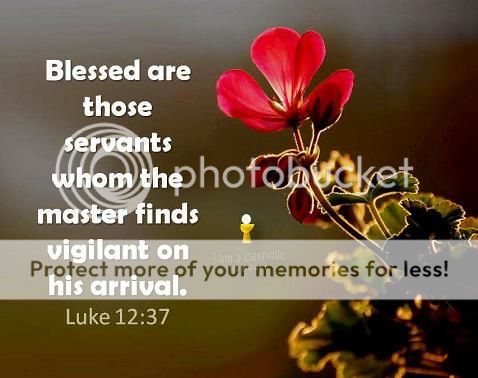
Lectionary: 474 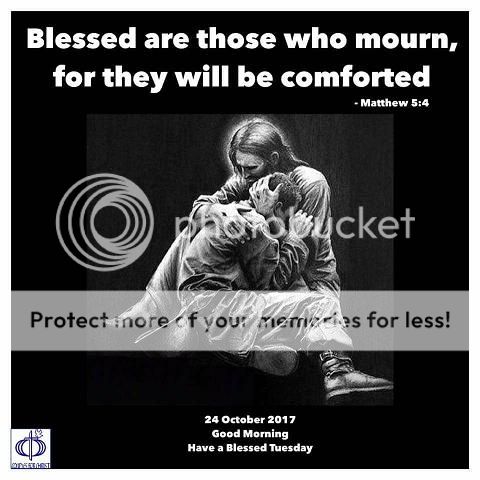 Reading 1 (Rom 5:12, 15b, 17-19, 20b-21) Brothers and sisters: Through one man sin entered the world, and through sin, death, and thus death came to all men, inasmuch as all sinned. If by that one person's transgression the many died, how much more did the grace of God and the gracious gift of the one man Jesus Christ overflow for the many. For if, by the transgression of the one, death came to reign through that one, how much more will those who receive the abundance of grace and the gift of justification come to reign in life through the one Jesus Christ. In conclusion, just as through one transgression condemnation came upon all, so, through one righteous act acquittal and life came to all. For just as through the disobedience of one man the many were made sinners, so, through the obedience of the one the many will be made righteous. Where sin increased, grace overflowed all the more, so that, as sin reigned in death, grace also might reign through justification for eternal life through Jesus Christ our Lord. Responsorial Psalm (Ps 40:7-8a, 8b-9, 10, 17) R. Here I am, Lord; I come to do your will. Sacrifice or oblation you wished not, but ears open to obedience you gave me. Burnt offerings or sin offerings you sought not; then said I, "Behold I come." R. Here I am, Lord; I come to do your will. "In the written scroll it is prescribed for me, To do your will, O my God, is my delight, and your law is within my heart!" R. Here I am, Lord; I come to do your will. I announced your justice in the vast assembly; I did not restrain my lips, as you, O LORD, know. R. Here I am, Lord; I come to do your will. May all who seek you exult and be glad in you, And may those who love your salvation say ever, "The LORD be glorified." R. Here I am, Lord; I come to do your will. Alleluia (Lk 21:36) R. Alleluia, alleluia. Be vigilant at all times and pray that you may have the strength to stand before the Son of Man. R. Alleluia, alleluia. Gospel (Lk 12:35-38) Jesus said to his disciples: "Gird your loins and light your lamps and be like servants who await their master's return from a wedding, ready to open immediately when he comes and knocks. Blessed are those servants whom the master finds vigilant on his arrival. Amen, I say to you, he will gird himself, have them recline at table, and proceed to wait on them. And should he come in the second or third watch and find them prepared in this way, blessed are those servants."  REFLECTION: WORD Today 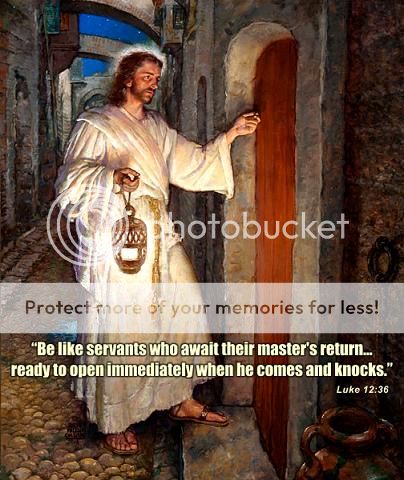 Today Jesus tells us to be ready for His return, to "be like servants who await their master's return... ready to open immediately when he comes and knocks." (Luke 12:36) If He finds us so, Jesus says He will change places with us. He will sit us at a table for a meal and serve us Himself. The Queen of England or the Emperor of Japan will never serve us as waiters. But God Almighty will! Jesus says so, therefore He will do so, of that there is no question. At the Last Supper, He did serve His friends with His own Body and Blood, then He washed their feet - even as He knew they would soon betray, deny and desert Him at the cross. He did not care that they will sin in the future. All He cared for was that they were intimate friends AT THE PRESENT MOMENT. Jesus does return and knock every day, disguised as someone needing some of our time, talent or treasure. He's not interested in our past or what we promise to do once we win the lotto; He asks only for our love at the present moment, to respond "Here I am, Lord; I come to do your will." (Responsorial Psalm) The past is history and the future a mystery. The present is the only real moment we can offer to God. The faster we open the door, the sooner He can embrace us and serve us His love. Source: https://www.facebook.com/CatholicMassReflec...792475291050228  |
|
|
Oct 24 2017, 03:08 PM
Return to original view | Post
#324
|
|
Junior Member
225 posts Joined: Mar 2008
|
 |
|
|
Oct 24 2017, 05:14 PM
Return to original view | Post
#325
|
|
Junior Member
225 posts Joined: Mar 2008
|
QUOTE(yeeck @ Oct 24 2017, 04:26 PM) 500 Years of the Protestant Revolution - (1) How Luther viewed the Holy Roman Church (Strong Language) Source: https://rorate-caeli.blogspot.com/2016/01/l...in-his-own.htmlIn solemn and mournful remembrance of the events surrounding the grievous actions of Martin Luther, that split Europe and deprived hundreds of millions of souls of the benefits of sacramental life, we will post again important articles on the matter. *** Martin Luther and the Catholic Church a guest-post by John R. T. Lamont (2016) "HERE I STAND": Luther's version of the "NON SERVIAM"(Gedaechtniskirche, Speyer) A number of favourable comments about Martin Luther have been made by Catholic authorities to mark the occasion of the 500th anniversary of the Reformation in 2017. In particular, the Pontifical Council for Christian Unity, whose president is Cardinal Kurt Koch, has issued a Catholic-Lutheran ‘Common Prayer’ for 500 years of Reformation together with the Lutheran World Federation. This ‘Common Prayer’ includes the following prayers: ‘Help us to rejoice in the gifts that have come to the Church through the Reformation’, and ‘The ecumenical journey enables Lutherans and Catholics to appreciate together Martin Luther’s insight into and spiritual experience of the gospel of the righteousness of God, which is also God’s mercy’; ‘Thanks be to you O God for the many guiding theological and spiritual insights that we have all received through the Reformation.’ This is not of course an initiative of the magisterium of the Church, but it is as effective in forming the beliefs of Catholics as a magisterial statement, since it is presented in the media as a position of the Church. This initiative urgently requires comment and criticism from faithful Catholics. The best way to criticise Luther is by citing his own words. Unfortunately these words are often very obscene and repugnant, and a strong stomach is needed to peruse them. It is regretted that the necessities of the times should make it important to recall these writings to the notice of Catholics. The first element of Luther’s thought that should be addressed is his view of the Roman Catholic Church. His mature views on this topic were presented in a letter on the Roman Papacy, ‘Against the Roman Papacy, An Institution of the Devil’, that he published in 1545. The letter was illustrated with woodcuts of startling obscenity, which will not be reproduced here. The offensive and blasphemous remarks in the letter are of course deplored by Rorate Caeli - and are given here in illustration of the man now praised by Cardinals and high prelates. *** Against the Roman Papacy, An Institution of the Devil Martin Luther The Most Hellish Father, St. Paul III, in his supposed capacity as the bishop of the Roman church, has written two briefs to Charles V, our lord emperor, wherein he appears almost furious, growling and boasting, according to the example of his predecessors, that neither an emperor nor anyone else has the right to convoke a council, even a national one, except solely the pope; he alone has the power to institute, ordain, and create everything which is to be believed and done in the church. He has also issued a papal bull (if one may speak like that) for about the fifth time; now the council is once again to take place in Trent, but with the condition that no one attend except his own scum, the Epicureans and those agreeable to him; whereupon I felt great desire to reply, with God’s grace and aid. Amen! …. Meanwhile, we see and hear what a masterly conjurer the pope is. He is like a magician who conjures gulden into the mouths of silly people, but when they open their mouths they have horse dirt in them. So this shameful fop Paul III calls for a council now for the fifth time, so that anyone who hears the words must think he is serious. But before we can turn around, he has conjured horse dirt into our mouths, for he wants to have a council over which he can exercise his power, and whose decisions he could trample on. The very devil himself would thank him for such a council, and no one but the miserable devil, together with his mother, his sister, and his whoring children, pope, cardinals, and the rest of his devilish scum in Rome will get there. … These three words, “free, Christian, German,” are to the pope and the Roman court nothing but sheer poison, death, devil, and hell; he cannot stand them, nor see or hear them. That’s the way it is! It is certain that he would rather let himself be torn to pieces and would rather become Turkish or devilish or whatever else would help him. … This is the language of the see in Rome, so that when he grants a free council, you may henceforth also understand it in Roman: when they say “free,” it means captive” with us Germans; when they say “white,” you must understand “black”; when they say “the Christian church,” you must understand “the scum of all the scoundrels in Rome”; when they call the emperor a “son of the church,” it is as much as to say he is the most accursed man on earth, who they wish were in hell so that they would have the empire; when they call Germany the praiseworthy nation, it means the beasts and barbarians who are not worthy to feed on the pope’s dung, like the Italian Campanus (as one says) did when he had been in Germany (not to his disadvantage) and, on returning to the Italian frontier, turned his back on Germany, squatted, bared his behind, and said, “Aspice nudatas, Barbara terra, nates,” “Look here, you beasts, look up my ass.” … Someone may think here that I am satisfying my own desire with such scornful, wounding, stinging words to the pope. O Lord God, I am far, far too insignificant to deride the pope. For over six hundred years now he has undoubtedly derided the world, and has laughed up his sleeve at its corruption in body and soul, goods and honour. He does not stop and he cannot stop, as St. Peter calls him in II Peter 2 [:14], “insatiable for sin.” No man can believe what an abomination the papacy is. A Christian does not have to be of low intelligence, either, to recognize it. God himself must deride him in the hellish fire, and our Lord Christ, St. Paul says in II Thessalonians 2 [:8], “will slay him with the breath of his mouth and destroy him by his glorious coming.” I only deride, with my weak derision, so that those who now live and those who will come after us should know what I have thought of the pope, the damned Antichrist, and so that whoever wishes to be a Christian may be warned against such an abomination. … Those in Rome have been practiced and well versed in such rascality and roguery for over four hundred years now, as one can see from the pope’s decretals and all the histories of emperors. Just look how the poor lawyers are plagued, patching, unifying, and smoothing the Roman rascality with glosses before they can give it any sort of shape; it is just as though a furrier patched up a bad pelt on which neither the skin nor the fur is any good, and which is moreover full of spit, pus, and excrement! … If [the popes] have not been able to kill the emperors with treachery and every diabolical wickedness, it is nevertheless their definite intention, and their regret has always been that their bloodthirsty, murderous, evil intentions have been foiled and prevented. The descendants of the emperor Phocas, their founder and regicide, are, as was said, desperate, thorough arch rascals, murderers, traitors, liars, the very scum of all the most evil men on earth as is said in Rome itself. They embellish themselves with the names of Christ, St. Peter, and the church, even though they are full of all the worst devils in hell-full, full, and so full that they can do nothing but vomit, throw, and blow out devils! You will say that this is true when you read the histories of how they have treated the emperors. … Until now we had to believe that the pope was the head of the church, the most holy, the savior of all Christendom. Now we see that he, with his Roman cardinals, is nothing but a desperate scoundrel, the enemy of God and man, the destroyer of Christendom, and Satan’s bodily dwelling, who, through him, only harms both church and state, like a werewolf, and mocks and laughs up his sleeve when he hears that such hurts God or man more of this later. … And even if they would be reformed in a council which really is not possible and the pope and cardinals should promise in blood to observe it, it would still be wasted trouble and labor; they would only grow worse afterward than they were before, as happened after the Council of Constance. For since they believe that there is no God, no hell, no life after this life, and live and die like a cow, sow, or other animal, II Peter 2 [:12], it is to them ridiculous to keep seals and letters, and reform. That is why it would be best for the emperor and estates of the empire to let the blasphemous, abominable rascals and damned scum of Satan in Rome just go to the devil. … Thus this pope of Sodomists, this founder and master of all sins, here wants to push sin and damnation off onto Emperor Charles, although he knows quite well that his rascally tongue lies abominably. And such accursed villains want to convince the world that they are head of the church, the mother of all churches, and masters of the faith. Why even if we were stones and wooden blocks, we could see by their works throughout all the world that they are lost, desperate children of the devil and also mad, crude asses in Scripture. Someone probably would like to curse them so that they might be struck down by lightning and thunder, burned by hellish fire, have the plague, syphilis, epilepsy, the plague of St. Anthony, leprosy, carbuncles, and all the plagues but these are all caresses, and God has long ago punished them with greater plagues, just like God’s despisers and blasphemers should be punished, Romans 1 [:26, 27], namely, that in sanity they have become so obviously mad and raving that they do not know whether they are or want to be male or female; they are not ashamed in the presence of women, and their mothers, sisters, and grandmothers are among those forced to see and hear such things of them, to their great distress. Shame on you, popes, cardinals, and whatever you are at the curia, that you are not afraid of the cobblestones upon which you ride, which would like to swallow you! … The imperial laws have much to say about how to handle furious, insane, mad people. How much greater the need is here to put into stocks, chains, and prisons the pope, cardinals, and the whole Roman See, who have not become raving mad in the usual way, but who rage so horribly that at one time they want to be men, at another women, and never know at any one time when their mood will strike them. We Christians should nevertheless believe that such raving and lunatic Roman hermaphrodites have the Holy Spirit and are the heads, masters, and teachers of Christendom! But I must stop here, or save what I could write further against the papal briefs and bulls, for my head is weak, and I feel that I might not get everything said, and yet I still have not gotten to the points I had intended to make in this book. … These extracts from the letter convey its message accurately, although the entire text (which is quite long) contains passages that are considerably more vulgar and obscene than those given here. In connection with Luther and Lutheranism, it is important to call attention to the fact that Cardinal Koch and the Pontifical Council for Promoting Christian Unity have also recently issued a document on relations between Catholics and Jews, entitled ‘The Gifts and Calling of God are irrevocable’. Its stated goal is to contribute to ‘enriching and intensifying the theological dimension of Jewish-Catholic dialogue’. Like the document on Lutheranism, it has no magisterial authority, but has been presented as the official position of the Church. In the light of the Pontifical Council’s praise for ‘Martin Luther’s insight into and spiritual experience of the gospel of the righteousness of God’, it is opportune to recall Luther’s position on the Jews. Luther initially hoped that Jews would all convert to Lutheranism, and made some positive assertions about them, but when they declined to do so he changed his tune. His mature thought on Jews and Judaism is expressed in his work ‘On the Jews and their Lies’. Its main recommendations are as follows: *** On the Jews and their Lies Martin Luther What shall we Christians do with this rejected and condemned people, the Jews? Since they live among us, we dare not tolerate their conduct, now that we are aware of their lying and reviling and blaspheming … I shall give you my sincere advice: First, to set fire to their synagogues or schools and to bury and cover with dirt whatever will not burn, so that no man will ever again see a stone or cinder of them. … Second, I advise that their houses also be razed and destroyed. For they pursue in them the same aims as in their synagogues. Instead they might be lodged under a roof or in a barn, like the gypsies. … Third, I advise that all their prayer books and Talmudic writings, in which such idolatry, lies, cursing, and blasphemy are taught, be taken from them. ... Fourth, I advise that their rabbis be forbidden to teach henceforth on pain of loss of life and limb. … Fifth, I advise that safe-conduct on the highways be abolished completely for the Jews. … Sixth, I advise that usury be prohibited to them, and that all cash and treasure of silver and gold be taken from them and put aside for safekeeping. … Seventh, I recommend putting a flail, an ax, a hoe, a spade, a distaff, or a spindle into the hands of young, strong Jews and Jewesses and letting them earn their bread in the sweat of their brow, as was imposed on the children of Adam. For it is not fitting that they should let us accursed Goyim toil in the sweat of our faces while they, the holy people, idle away their time behind the stove, feasting and farting, and on top of all, boasting blasphemously of their lordship over the Christians by means of our sweat. No, one should toss out these lazy rogues by the seat of their pants. … In brief, dear princes and lords, those of you who have Jews under your rule: if my counsel does not please you, find better advice, so that you and we all can be rid of the unbearable, devilish burden of the Jews. … Now let me commend these Jews sincerely to whoever feels the desire to shelter and feed them, to honor them, to be fleeced, robbed, plundered, defamed, vilified, and cursed by them, and to suffer every evil at their hands -- these venomous serpents and devil’s children, who are the most vehement enemies of Christ our Lord and of us all. And if that is not enough, let him stuff them into his mouth, or crawl into their behind and worship this holy object. Then let him boast of his mercy, then let him boast that he has strengthened the devil and his brood for further blaspheming our dear Lord and the precious blood with which we Christians are redeemed. Then he will be a perfect Christian, filled with works of mercy for which Christ will reward him on the day of judgment, together with the Jews in the eternal fire of hell! The absurdity of the Pontifical Council for Christian Unity issuing both these documents within a month of each other (Dec. 12th 2015 for the one on Lutheranism, Jan. 11th 2016 for the document on Catholics and Jews) is too patent to require comment.  |
|
|
Oct 24 2017, 06:39 PM
Return to original view | Post
#326
|
|
Junior Member
225 posts Joined: Mar 2008
|
  |
|
|
|
|
|
Oct 25 2017, 02:39 PM
Return to original view | Post
#327
|
|
Junior Member
225 posts Joined: Mar 2008
|
Wednesday of the Twenty-ninth Week in Ordinary Time
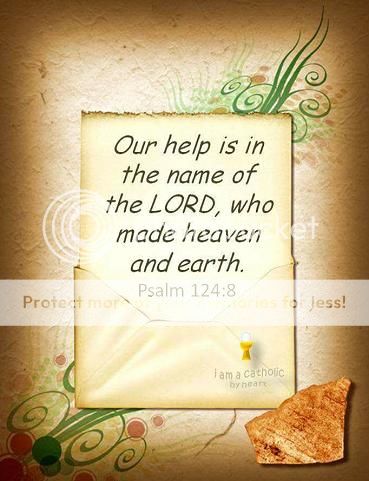
Lectionary: 475  Reading 1 (Rom 6:12-18) Brothers and sisters: Sin must not reign over your mortal bodies so that you obey their desires. And do not present the parts of your bodies to sin as weapons for wickedness, but present yourselves to God as raised from the dead to life and the parts of your bodies to God as weapons for righteousness. For sin is not to have any power over you, since you are not under the law but under grace. What then? Shall we sin because we are not under the law but under grace? Of course not! Do you not know that if you present yourselves to someone as obedient slaves, you are slaves of the one you obey, either of sin, which leads to death, or of obedience, which leads to righteousness? But thanks be to God that, although you were once slaves of sin, you have become obedient from the heart to the pattern of teaching to which you were entrusted. Freed from sin, you have become slaves of righteousness. Responsorial Psalm (Ps 124:1b-3, 4-6, 7-8) R. Our help is in the name of the Lord. Had not the LORD been with us, let Israel say, had not the LORD been with us– When men rose up against us, then would they have swallowed us alive; When their fury was inflamed against us. R. Our help is in the name of the Lord. Then would the waters have overwhelmed us; The torrent would have swept over us; over us then would have swept the raging waters. Blessed be the LORD, who did not leave us a prey to their teeth. R. Our help is in the name of the Lord. We were rescued like a bird from the fowlers' snare; Broken was the snare, and we were freed. Our help is in the name of the LORD, who made heaven and earth. R. Our help is in the name of the Lord. Alleluia (Mt 24:42a, 44) R. Alleluia, alleluia. Stay awake! For you do not know when the Son of Man will come. R. Alleluia, alleluia. Gospel (Lk 12:39-48) Jesus said to his disciples: "Be sure of this: if the master of the house had known the hour when the thief was coming, he would not have let his house be broken into. You also must be prepared, for at an hour you do not expect, the Son of Man will come." Then Peter said, "Lord, is this parable meant for us or for everyone?" And the Lord replied, "Who, then, is the faithful and prudent steward whom the master will put in charge of his servants to distribute the food allowance at the proper time? Blessed is that servant whom his master on arrival finds doing so. Truly, I say to you, he will put him in charge of all his property. But if that servant says to himself, 'My master is delayed in coming,' and begins to beat the menservants and the maidservants, to eat and drink and get drunk, then that servant's master will come on an unexpected day and at an unknown hour and will punish the servant severely and assign him a place with the unfaithful. That servant who knew his master's will but did not make preparations nor act in accord with his will shall be beaten severely; and the servant who was ignorant of his master's will but acted in a way deserving of a severe beating shall be beaten only lightly. Much will be required of the person entrusted with much, and still more will be demanded of the person entrusted with more."  REFLECTION: WORD Today 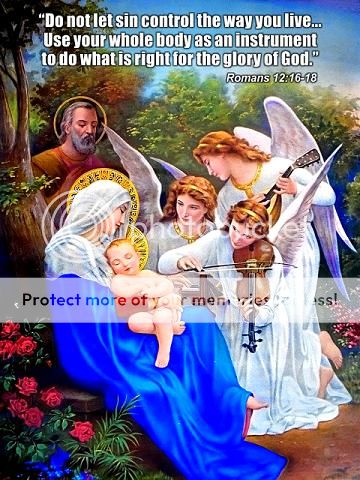 St. Paul speaks to us in the First Reading, "Brothers and sisters: Sin must not reign over your mortal bodies so that you obey their desires." When a child sits before a piano, he is "free" to bang away any awful noise. This is not true freedom. This is slavery to selfish animaldesires that hut other people's ears and lives. But when he submits to the discipline of education and daily practice, to be humble and accept the rules, then will learn to master his unruly passions. He will grow to be truly free to express his inner self and play music delightful to the ears. Freedom then is not doing whatever we want. It is the ORDERED LIBERTY to do what is good. This is the principle the Church uses in recommending natural family planning methods over artificial contraceptives. The first instills self-discipline on both husband and wife, the second discards any need for self-control - or even marriage. St. Paul continues, "Do not let any part of your body become an instrument of evil to serve sin. Instead, give yourselves completely to God, for you were dead, but now you have new life. So use your whole body as an instrument to do what is right for the glory of God." (Romans 6:13 NLT) Christ freed us from the slavery of Satan and sin. And He has now become our new master, the orchestra Maestro whose baton brings out the best of our individual talents and gifts. In the Gospel, Jesus says, "A faithful, sensible servant is one to whom the master can give the responsibility of managing his other household servants and feeding them. If the master returns and finds that the servant has done a good job, there will be a reward." (Luke 12:42-43 NLT) God gives each of us different talents. Some have good voices, some are good at piano, others at violin or flute or cymbals. All are important to Him. Each one of us is free to express his life but responsible to contribute to the grand orchestra of God, to be happy members living in harmony with each other, playing divine symphony, here on earth and continuing for all eternity. Source: http://www.facebook.com/CatholicMassReflec...792888844342206  |
|
|
Oct 25 2017, 02:52 PM
Return to original view | Post
#328
|
|
Junior Member
225 posts Joined: Mar 2008
|
 |
|
|
Oct 31 2017, 10:57 AM
Return to original view | Post
#329
|
|
Junior Member
225 posts Joined: Mar 2008
|
Tuesday of the Thirtieth Week in Ordinary Time
Lectionary: 480 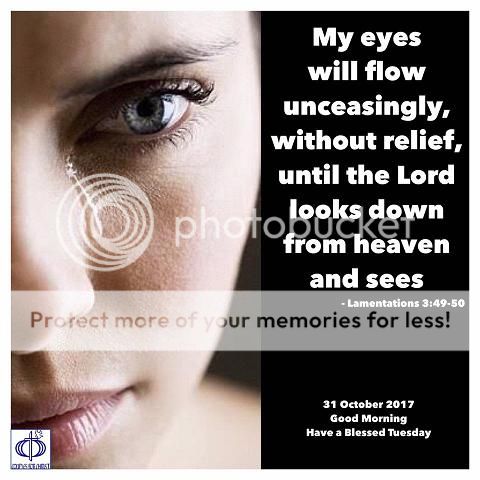 Reading 1 (Rom 8:18-25) Brothers and sisters: I consider that the sufferings of this present time are as nothing compared with the glory to be revealed for us. For creation awaits with eager expectation the revelation of the children of God; for creation was made subject to futility, not of its own accord but because of the one who subjected it, in hope that creation itself would be set free from slavery to corruption and share in the glorious freedom of the children of God. We know that all creation is groaning in labor pains even until now; and not only that, but we ourselves, who have the firstfruits of the Spirit, we also groan within ourselves as we wait for adoption, the redemption of our bodies. For in hope we were saved. Now hope that sees for itself is not hope. For who hopes for what one sees? But if we hope for what we do not see, we wait with endurance. Responsorial Psalm (Ps 126:1b-2ab, 2cd-3, 4-5, 6) R. The Lord has done marvels for us. When the LORD brought back the captives of Zion, we were like men dreaming. Then our mouth was filled with laughter, and our tongue with rejoicing. R. The Lord has done marvels for us. Then they said among the nations, "The LORD has done great things for them." The LORD has done great things for us; we are glad indeed. R. The Lord has done marvels for us. Restore our fortunes, O LORD, like the torrents in the southern desert. Those that sow in tears shall reap rejoicing. R. The Lord has done marvels for us. Although they go forth weeping, carrying the seed to be sown, They shall come back rejoicing, carrying their sheaves. R. The Lord has done marvels for us. Alleluia (See Mt 11:25) R. Alleluia, alleluia. Blessed are you, Father, Lord of heaven and earth; you have revealed to little ones the mysteries of the Kingdom. R. Alleluia, alleluia. Gospel (Lk 13:18-21) Jesus said, "What is the Kingdom of God like? To what can I compare it? It is like a mustard seed that a man took and planted in the garden. When it was fully grown, it became a large bush and the birds of the sky dwelt in its branches." Again he said, "To what shall I compare the Kingdom of God? It is like yeast that a woman took and mixed in with three measures of wheat flour until the whole batch of dough was leavened."  REFLECTIONS: WORD Today 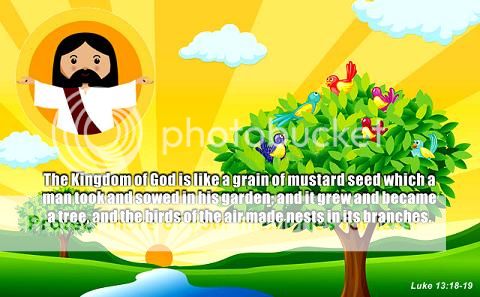 The Kingdom of God is a vast complex organism of loving relationships in which the many parts live as one under the rule and kingship of God. We know if God is our King if we are living by the Gospel of Jesus, more specifically the Beatitudes (Matthew, chapters 5-7). To make us understand how the Kingdom lives and grows, Jesus gives us today two parables, the "Parable of the Mustard Seed" and "the Parable of the Yeast." The Kingdom started with Jesus, the tiny 'mustard seed' (the 1st parable) planted by the Father in faraway Israel. Through the Spirit-powered Church spreading the Gospel of Jesus, God's Kingdom is growing into a mighty tree with roots and branches all over the world. But as we can see, Satan's culture of death and corruption seems to be growing faster than the Kingdom! This culture is the 'dough' of the 2nd parable into which the woman (our Mother the Church) inserts her baptized Christian children like 'yeast'. Yeast is tiny plant-seeds that bakers insert in small amounts into dough (moist flour). The yeast thrives in the dough; it reproduces and spreads through the entire dough. As it lives and reproduces, it breaths out gasses in tiny bubbles that make the dough rise and make the baked bread soft and delicious. We baptized Christians who truly allow the Holy Spirit to guide us, to be the Soul of our souls can be small in number. But planted into the secular culture of the world, we are like yeast breathing out the fruits of the Spirit that St. Paul talks about in the First Reading (Romans 8:23). The fruits of the Holy Spirit are: Charity, Joy, Peace, Patience, Kindness, Goodness, Faithfulness, Gentleness and Self-control (Galatians 5:22-23). These delicious fruits of Christ's Tree (the Cross) and fragrant Breath of the Holy Spirit will soften and expand the hearts of those around us that are shriveling, collapsing and hardening in the world's culture of selfishness and greed. The world is the battlefield between the Kingdom of God and the culture of evil. Bearing fruit on the right side needs us to be in consistent communion with Christ and to sink deep our roots into Mother Church. This is even more crucial for those whom God have transplanted in distant lands far from home for His purpose. Let us pray: O Holy Spirit of God, protect us from dissipating and disappearing into the culture. Pour on us grace upon grace that we may be different, and make a difference for Jesus. Source: https://www.facebook.com/CatholicMassReflec...795028717461552  |
|
|
Oct 31 2017, 01:26 PM
Return to original view | Post
#330
|
|
Junior Member
225 posts Joined: Mar 2008
|
 |
|
|
Oct 31 2017, 05:43 PM
Return to original view | Post
#331
|
|
Junior Member
225 posts Joined: Mar 2008
|
Litany of The SAINTS
 Lord, have mercy on us. Lord, have mercy on us. Christ, have mercy on us. Christ, have mercy on us. Lord, have mercy on us. Lord, have mercy on us. Christ, hear us. Lord, have mercy on us. Christ, have mercy on us. Christ, graciously hear us. God, the Father of heaven, have mercy on us. God the Son, Redeemer of the world, have mercy on us. God the Holy Spirit, have mercy on us. Holy Trinity, one God, Have mercy on us. Holy Mary, Pray for us. Holy Mother of God, Pray for us. Holy Virgin of virgins, Pray for us. St. Michael, Pray for us. St. Gabriel, Pray for us. St. Raphael, Pray for us. All you Holy Angels and Archangels, Pray for us. St. John the Baptist, Pray for us. St. Joseph, Pray for us. All you Holy Patriarchs and Prophets, pray for us. St. Peter, Pray for us. St. Paul, Pray for us. St. Andrew, Pray for us. St. James, Pray for us. St. John, Pray for us. St. Thomas, Pray for us. St. James, Pray for us. St. Philip, Pray for us. St. Bartholomew, Pray for us. St. Matthew, Pray for us. St. Simon, Pray for us. St. Jude, Pray for us. St. Matthias, Pray for us. St. Barnabas, Pray for us. St. Luke, Pray for us. St. Mark, Pray for us. All you holy Apostles and Evangelists, Pray for us. All you holy Disciples of the Lord, Pray for us. All you holy Innocents, pray for us. St. Stephen, Pray for us. St. Lawrence, Pray for us. St. Vincent, Pray for us. Sts. Fabian and Sebastian, Pray for us. Sts. John and Paul, Pray for us. Sts. Cosmas and Damian, Pray for us. All you holy Martyrs, Pray for us. St. Sylvester, Pray for us. St. Gregory, Pray for us. St. Ambrose, Pray for us. St. Augustine, Pray for us. St. Jerome, Pray for us. St. Martin, Pray for us. St. Nicholas, Pray for us. All you holy Bishops and Confessors, Pray for us. All you holy Doctors, pray for us. St. Anthony, Pray for us. St. Benedict, Pray for us. St. Bernard, Pray for us. St. Dominic, Pray for us. St. Francis, Pray for us. All you holy Priests and Levites, Pray for us. All you holy Monks and Hermits, pray for us. St. Mary Magdalene, Pray for us. St. Agatha, Pray for us. St. Lucy, Pray for us. St. Agnes, Pray for us. St. Cecilia, Pray for us. St. Anastasia, Pray for us. St. Catherine, Pray for us. St. Clare, Pray for us. All you holy Virgins and Widows, Pray for us. All you holy Saints of God, pray for us. Lord, be merciful, Lord , your people. From all evil, Lord, save your people. From all sin, Lord ,save your people. From your wrath, Lord, save your people. From a sudden and unprovided death, Lord, save your people. From the snares of the devil, Lord, save your people. From anger, hatred, and all ill-will, Lord, save your people. From the spirit of uncleanness, Lord, save your people. From lightning and tempest, Lord , your people. From the scourge of earthquake, Lord, save your people. From plague, famine, and war, Lord, save your people. From everlasting death, Lord, save your people. By the mystery of your holy Incarnation, Lord ,save your people. By your Coming, Lord, save your people. By your Birth, Lord save your people. By your Baptism and holy fasting, Lord, save your people. By your Cross and Passion, Lord, save your people. By your Death and Burial, Lord, save your people. By your holy Resurrection, Lord, save your people. By your wonderful Ascension, Lord, save your people. By the coming of the Holy Spirit, Lord , your people. On the day of judgment, Lord, save your people. Be merciful to us sinners, Lord, hear our prayer. That you will spare us, Lord , hear our prayer. That you will pardon us, Lord, hear our prayer. That it may please you to bring us to true penance, Lord, hear our prayer. Guide and protect your holy Church, Lord, hear our prayer. Preserve in holy religion the Pope, and all those in holy Orders, Lord, hear our prayer. Humble the enemies of holy Church, Lord, hear our prayer. Give peace and unity to the whole Christian people, Lord , hear our prayer. Bring back to the unity of the Church all those who are straying, and bring all unbelievers to the light of the Gospel, Lord, hear our prayer. Strengthen and preserve us in your holy service, Lord, hear our prayer. Raise our minds to desire the things of heaven, Lord, hear our prayer. Reward all our benefactors with eternal blessings, Lord, hear our prayer. Deliver our souls from eternal damnation, and the souls of our brethren, relatives, and benefactors, Lord, hear our prayer. Give and preserve the fruits of the earth, Lord , hear our prayer. Grant eternal rest to all the faithful departed, Lord, hear our prayer. That it may please You to hear and heed us, Jesus, Son of the Living God, Lord, hear our prayer. Lamb of God, who takes away the sins of the world, Spare us, O Lord! Lamb of God, who takes away the sins of the world, Graciously hear us, O Lord! Lamb of God, who takes away the sins of the world, Have mercy on us. Christ, hear us, Christ, graciously hear us Lord Jesus, hear our prayer. Lord Jesus, hear our prayer. Lord, have mercy on us. Lord, have mercy on us. Christ, have mercy on us. Christ, have mercy on us. Lord, have mercy on us. Lord, have mercy on us. 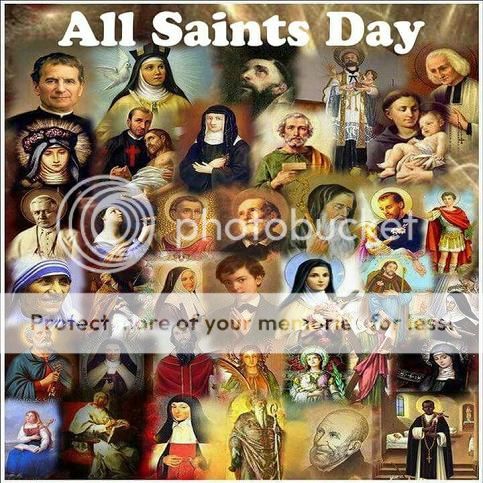 |
|
|
Oct 31 2017, 05:50 PM
Return to original view | Post
#332
|
|
Junior Member
225 posts Joined: Mar 2008
|
CHRISTIAN HOPE FOR A NEW HEAVEN AND A NEW EARTH
 In this world, we cannot avoid suffering because of sin and imperfections. We suffer because creation has been affected by sins. It is destroyed by the selfishness of humanity. One of the most obvious consequences is the destruction of the ecological system that has resulted in climate changes, global warming, freak weather and natural disasters. We have been poor stewards of creation. For a long time, scientists have warned of the possible destruction of our planet if the situation continues, as the destruction of ecology will lead to global warming, floods and many things will die eventually. On the level of humanity, sin has also destroyed the peaceful and harmonious relationship among us all. Because of selfishness, irresponsibility, greed and fear, we compete against each other and seek to grab more for ourselves, depriving others of their basic needs. There is so much injustice in the world because of dishonesty and cheating. People are discriminated and marginalized. This has resulted in violence, civil disorder and even wars. Poverty and discrimination are also breeding grounds for terrorism to grow. Political, religious and corporate leaders are often tempted to seek their interests not the good of others. When that happens, credibility and trust in our leaders are eroded. On the level of the individual, we are under the bondage of sin and evil. We are selfish and we succumb to the temptations of the flesh, of lust, gluttony and greed. We are jealous and envious of others. We feel insecure about our well-being and whether we are loved. We become possessive of others and of things. Our ego prevents us from listening to others. Our pride, especially of intellect, hinders us from welcoming others who are different from us. We seek to impose our views and ideas on others. All such actions cause division, disunity and rob us of our peace and unity. We quarrel, fight and hurt each other. For this reason, God wants to give us a New Heaven and a New Earth. “For behold, I create new heavens and a new earth; and the former things shall not be remembered or come into mind. I will rejoice in Jerusalem, and be glad in my people; no more shall be heard in it the sound of weeping and the cry of distress.” (Isa 65:17, 19) St John also shared with us his vision. “When I saw a new heaven and a new earth; for the first heaven and the first earth had passed away, and the sea was no more. And I saw the holy city, new Jerusalem, coming down out of heaven from God, prepared as a bride adorned for her husband; and I heard a great voice from the throne saying, “Behold, the dwelling of God is with men. He will dwell with them, and they shall be his people, and God himself will be with them; he will wipe away every tear from their eyes, and death shall be no more, neither shall there be mourning nor crying nor pain any more, for the former things have passed away.” (Rev 21:1-4) Consequently, St Paul urges us to look ahead of what is in store for us as Christians. “I think that what we suffer in this life can never be compared to the glory, as yet unrevealed, which is waiting for us.” We can look forward with confidence to a glorious future that lies ahead of us even as we groan on this earth. For this to happen, God allows the decadence to take place so that we will not cling to this earth. “It was not for any fault on the part of creation that it was made unable to attain its purpose, it was made so by God.” Unless, we see the misery of this life and the imperfections of creation, we will not long for something greater and more perfect to come. If life is too good on this earth, we would want to cling on to this earth forever. But God has something greater for us. Indeed, God allows us to suffer illness and pains so that when the time comes for us to let go, we could let go more easily. Old age, illness and suffering are all part and parcel of God’s plan to help us to detach ourselves from this world so that we can depart for a better and more complete world to come. What will happen to creation? St Paul first speaks of creation as a whole, animate and inanimate matter. He said, “Creation still retains the hope of being freed, like us, from its slavery to decadence, to enjoy the same freedom and glory as the children of God.” Although we do not know exactly what will happen to creation, plants and animals and all things of this earth, we know that they will be in Christ and all will be transformed and perfected. This is what St Paul wrote, “He is before all things, and in him all things hold together. For in him all the fulness of God was pleased to dwell, and through him to reconcile to himself all things, whether on earth or in heaven, making peace by the blood of his cross.” (Col 1:17, 19) He further explained, “For he has made known to us in all wisdom and insight the mystery of his will, according to his purpose which he set forth in Christ as a plan for the fulness of time, to unite all things in him, things in heaven and things on earth.” (Eph 1:9f) But not just for creation; we will also be set free and reclaim our dignity as sons and daughters of God. “The whole creation is eagerly waiting for God to reveal his sons.” Indeed, the calling and destiny of humanity is even higher than that of creation because we are called to share in the “freedom and glory as the children of God.” In other words, we will share in the fullness of life and love with God, participating in the Trinitarian love of the Father, the Son and the Holy Spirit. Our bodies will be glorified and resurrected like our Lord. This hope of ours is a substantiated hope, not just a wishful thinking. This is because we already have a foretaste of it. St Paul wrote, “From the beginning till now the entire creation, as we know, has been groaning in one great act of giving birth; and not only creation, but all of us who possess the first-fruits of the Spirit.” The Holy Spirit is the living presence of God in our hearts. “In him you also, who have heard the word of truth, the gospel of your salvation, and have believed in him, were sealed with the promised Holy Spirit, who is the guarantee of our inheritance until we acquire possession of it, to the praise of his glory.” (Eph 1:13f) He is the love of God poured into our hearts. (Rom 5:5) Anyone who is filled with the Holy Spirit feels the closeness of God. This is the same intimacy Jesus had with His Father. This is the same joy that saints in their mystical experience have entered into when they experience the intimacy and love of God. That is why those who have encountered God, deeply desire to be with Him and have no fear of death or of separation from this life. This kingdom is also a reality in this life as a beginning. The parables in today’s gospel illustrate the budding of the Kingdom of God. The parable of the Mustard Seed speaks of the gradual growth of the Kingdom of God. It begins small but it ends big. “It grew and became a tree, and the birds of the air sheltered in its branches.” So too, the Church, which started with 12 apostles, today has more than two billion Christians in the world, of which about half are Catholics. The Kingdom of God is also compared to the woman with the yeast. She “took and mixed in with three measures of flour till it was leavened all through.” Again, when the gospel is spread in society, it will bring light to humanity and it will salt the earth, give life and renewed humanity along the lines of the gospel. It can be said that much of humanity has been infused with the Spirit of the gospel directly or indirectly. So, while “we too groan inwardly as we wait for our bodies to be set free” we must cooperate in building the kingdom of God on earth. “For we must be content to hope that we shall be saved – our salvation is not in sight, we should not have to be hoping for it if it were – but, as I say, we must hope to be saved since we are not saved yet – it is something we must wait for with patience.” We need to live out the gospel life and announce the Good News of salvation to all by words and deeds. On our part, we need to grow in virtues, to live the blessed life that the Lord has taught us in the beatitudes. We must strive to live a life of justice tempered by compassion, charity and love. Unless we grow in this direction, the parables of the Mustard Seed and the Yeast can work against us. For these parables can also be interpreted in terms of the complacency of the Church as the structure and institution grow. We can become corrupt and allow evil to enter into the Church because of the lack of integrity. We can allow worldliness to ruin the Church of God if we are not alert and cautious. Source: http://empoweringgoans.com/2017/10/31/chri...nd-a-new-earth/ |
|
|
Oct 31 2017, 06:02 PM
Return to original view | Post
#333
|
|
Junior Member
225 posts Joined: Mar 2008
|
All Saints 2017
Inflamed by a Tremendous Yearning 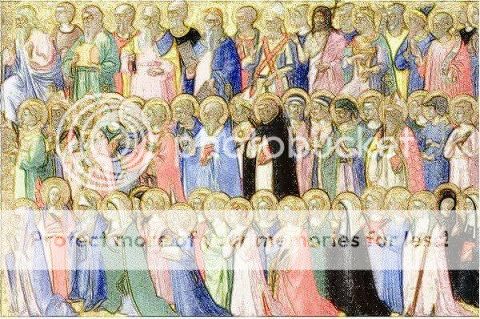 It would seem totally unfair for me to single out one particular saint when our feast calls for us to contemplate the whole plethora of them – the entire sanctoral pantheon of heaven. But, the reason for this special mention would soon become obvious. I would like to introduce you to one of my personal favourites, St. Bernard of Clairvaux, the twelfth century abbot and reformer, a pastor and Doctor of the Church, celebrated for centuries as a man of great intellect and greater holiness. If you have a fascination about the mysterious Knights Templar (perhaps for the wrong reasons, due to the ridiculous associations with the Free Masons as popularized by that piece of literary hogwash, Dan Brown’s Da Vinci Code), you may be interested to know that St Bernard was instrumental in the foundation of that order of military monks. Though largely unknown to our present generation of Catholics, he has left us a legacy of writings and homilies and one single Marian prayer that continues to be part of our treasure trove of Catholic prayers – the Memorare. Although he may not have been its author, he is certainly its greatest promoter. He deserves special mention today because I would like to begin with the blunt and perhaps unexpected question he asked in a homily given on the occasion of the Solemnity of All Saints. “Why should our praise and glorification, or even the celebration of this feast day mean anything to the saints? What do they care about earthly honours when their heavenly Father honours them by fulfilling the faithful promise of the Son? What does our commendation mean to them? The saints have no need of honour from us; neither does our devotion add the slightest thing to what is theirs. Clearly, if we venerate their memory, it serves us, not them.’’ St. Bernard provides this beautiful answer to his own list of rhetorical questions, “when I think of them, I feel myself inflamed by a tremendous yearning.” What is this ‘tremendous yearning’ which he speaks of? St Bernard explains that this ‘tremendous yearning’ is twofold in nature. With regards to the first level of yearning: “Calling the saints to mind inspires, or rather arouses in us, above all else, a longing to enjoy their company, so desirable in itself. We long to share in the citizenship of heaven, to dwell with the spirits of the blessed, to join the assembly of patriarchs, the ranks of the prophets, the council of apostles, the great host of martyrs, the noble company of confessors and the choir of virgins. In short, we long to be united in happiness with all the saints …” When we commemorate the saints, we are also inflamed with another yearning: “that Christ our life may also appear to us as He appeared to them and that we may one day share in His glory… When Christ comes again, His death shall no longer be proclaimed, and we shall know that we also have died, and that our life is hidden with Him. The glorious head of the Church will appear and His glorified members will shine in splendor with Him, when He forms this lowly body anew into such glory as belongs to Himself, its head.” St Bernard reminds us that we do not simply honour the saints from a distance like dotting fans. No, that would not be enough. By contemplating the saints, we ‘yearn’, we long, and we aspire to be with them, to be in their company, but most importantly, we yearn to ‘become’ them, to be united with Christ who is head of this glorified body, for that is what a saint is meant to be. If Beauty is the compelling power of Truth, then the Beauty of the Saints draws us not to themselves but into the presence of Divine Truth Himself. When we pause to consider the lives of the saints, it inspires us to long for holiness in our own lives, and the path of holiness. But the path of holiness isn’t something sterile and saccharine. As Pope Benedict and Pope Francis have always reminded us, the path of holiness always passes through the Way of the Cross. Today, on this Solemn Feast of All Saints, we are standing with John the Seer and seeing what he saw, the huge number impossible to count, of people from every nation. We are seeing all those believers who have gone before us and have arrived at the heavenly goal, which we’re still travelling to. And then the question comes, “Do you know who these people are?” This question isn’t really concerned about naming each and every one of those saints arrayed in the presence of God. Rather, the question is, “Do we know what a saint is?” “Do we know what it means to stand before God in everlasting life?” And here’s the answer, “These are the people who...have washed their robes white again in the blood of the Lamb” (Rev 7:14). What does it mean? It’s worth trying to understand. Let’s say this: the robe is our humanity, the blood of the Lamb is the power of Christ’s passion, His suffering and death, and white is the colour of closeness to God. So a saint is someone whose humanity, whose life, has been brought to God, been made god-like, by the power of the Cross, by the power of the self-offering Christ the Lamb made on the Cross. There, on the Cross, the naked Christ gave us back our robe and covered our nakedness wrought by sin. On the Cross, He showed us our truest and deepest vocation as human beings. But apart from showing us the Cross, the saints also remind us of things that are changeless, timeless. Things we need to remember and hold onto right now. Things like Courage, Sacrifice, Holiness and Hope. For all the trials and hardships that the world has known, through the centuries, ordinary people have stepped forward to live out those ideals. Now, many of you may protest that most Christians will never get the privilege of becoming a ‘red’ martyr, one who gives his life for his faith. But then, all are called to be ‘white’ martyrs, martyrs in their own right, in living faithfully the vocation of holiness in their own respective circumstances. Daily life, the demands of family and work, marriage and parenthood, tending to others’ needs, dealing with the things that go wrong: it’s through all that, most usually, Christ’s love is to be lived. We can either chose mediocrity or we can choose the same path by living it with heroic acts of faith, humility and fidelity. That too, is the path of holiness. There was a time when immoral behaviour was seen as a form of social rebellion. But today, immorality has become the new ordinary, the new norm. Today, it is saintly behaviour which is counter-cultural and even considered subversive in our society. There is a quiet rebellion by many courageous and heroic men and women who strive to live lives faithful to the gospel and to the dictates of their conscience. However, they are thrown against a whole bulwark of mockery, ridicule, hatred, and even persecution from a society who believes that they have lost their minds. It’s not hard to understand why. As the erudite Venerable Fulton Sheen once said, “The wicked fear the good, because the good are a constant reproach to their consciences.” Today’s feast throws a challenge to all of us, “Don’t go with the flow,” for as Fulton Sheen reminds us, even “dead bodies float downstream.” More than ever we shall have to be strong in the faith. We hear the rallying cry of St Bernard on this great solemnity, “Come, brothers, let us at length spur ourselves on. We must rise again with Christ, we must seek the world which is above and set our mind on the things of heaven. Let us long for those who are longing for us, hasten to those who are waiting for us, and ask those who look for our coming to intercede for us. We should not only want to be with the saints, we should also hope to possess their happiness. While we desire to be in their company, we must also earnestly seek to share in their glory. Do not imagine that there is anything harmful in such an ambition as this; there is no danger in setting our hearts on such glory.” Source: https://michaelckw.blogspot.my/2017/10/infl...s-yearning.html |
|
|
|
|
|
Nov 2 2017, 02:35 PM
Return to original view | Post
#334
|
|
Junior Member
225 posts Joined: Mar 2008
|
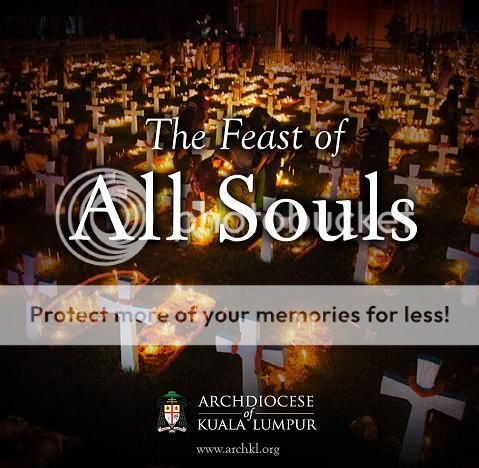
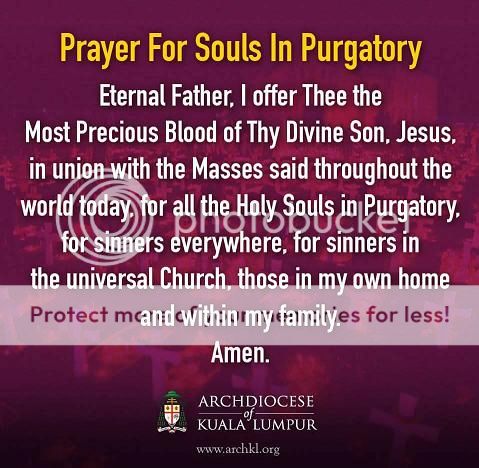
The Commemoration of All the Faithful Departed (All Souls)
Lectionary: 668 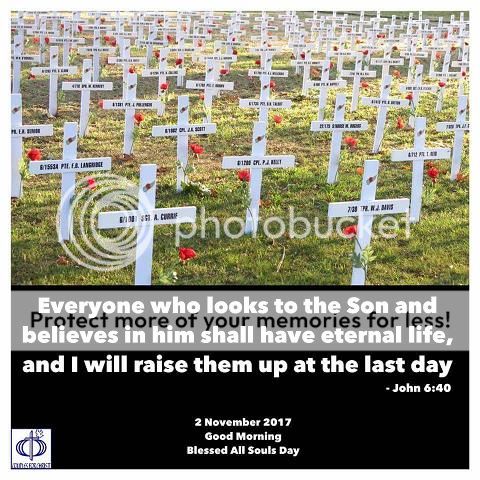 Reading 1 (Wis 3:1-9) The souls of the just are in the hand of God, and no torment shall touch them. They seemed, in the view of the foolish, to be dead; and their passing away was thought an affliction and their going forth from us, utter destruction. But they are in peace. For if before men, indeed, they be punished, yet is their hope full of immortality; chastised a little, they shall be greatly blessed, because God tried them and found them worthy of himself. As gold in the furnace, he proved them, and as sacrificial offerings he took them to himself. In the time of their visitation they shall shine, and shall dart about as sparks through stubble; they shall judge nations and rule over peoples, and the LORD shall be their King forever. Those who trust in him shall understand truth, and the faithful shall abide with him in love: because grace and mercy are with his holy ones, and his care is with his elect. Responsorial Psalm (Ps 23:1-3a, 3b-4, 5, 6) R. The Lord is my shepherd; there is nothing I shall want. or: R. Though I walk in the valley of darkness, I fear no evil, for you are with me. The LORD is my shepherd; I shall not want. In verdant pastures he gives me repose; beside restful waters he leads me; he refreshes my soul. R. The Lord is my shepherd; there is nothing I shall want. or: R. Though I walk in the valley of darkness, I fear no evil, for you are with me. He guides me in right paths for his name's sake. Even though I walk in the dark valley I fear no evil; for you are at my side with your rod and your staff that give me courage. R. The Lord is my shepherd; there is nothing I shall want. or: R. Though I walk in the valley of darkness, I fear no evil, for you are with me. You spread the table before me in the sight of my foes; You anoint my head with oil; my cup overflows. R. The Lord is my shepherd; there is nothing I shall want. or: R. Though I walk in the valley of darkness, I fear no evil, for you are with me. Only goodness and kindness follow me all the days of my life; and I shall dwell in the house of the LORD for years to come. R. The Lord is my shepherd; there is nothing I shall want. or: R. Though I walk in the valley of darkness, I fear no evil, for you are with me. Reading 2 (Rom 5:5-11) Brothers and sisters: Hope does not disappoint, because the love of God has been poured out into our hearts through the Holy Spirit that has been given to us. For Christ, while we were still helpless, died at the appointed time for the ungodly. Indeed, only with difficulty does one die for a just person, though perhaps for a good person one might even find courage to die. But God proves his love for us in that while we were still sinners Christ died for us. How much more then, since we are now justified by his Blood, will we be saved through him from the wrath. Indeed, if, while we were enemies, we were reconciled to God through the death of his Son, how much more, once reconciled, will we be saved by his life. Not only that, but we also boast of God through our Lord Jesus Christ, through whom we have now received reconciliation. Reading 2 (Rom 5:5-11) Brothers and sisters: Hope does not disappoint, because the love of God has been poured out into our hearts through the Holy Spirit that has been given to us. For Christ, while we were still helpless, died at the appointed time for the ungodly. Indeed, only with difficulty does one die for a just person, though perhaps for a good person one might even find courage to die. But God proves his love for us in that while we were still sinners Christ died for us. How much more then, since we are now justified by his Blood, will we be saved through him from the wrath. Indeed, if, while we were enemies, we were reconciled to God through the death of his Son, how much more, once reconciled, will we be saved by his life. Not only that, but we also boast of God through our Lord Jesus Christ, through whom we have now received reconciliation. Alleluia (Mt 25:34) R. Alleluia, alleluia. Come, you who are blessed by my Father; inherit the kingdom prepared for you from the foundation of the world. R. Alleluia, alleluia. Gospel (Jn 6:37-40) Jesus said to the crowds: "Everything that the Father gives me will come to me, and I will not reject anyone who comes to me, because I came down from heaven not to do my own will but the will of the one who sent me. And this is the will of the one who sent me, that I should not lose anything of what he gave me, but that I should raise it on the last day. For this is the will of my Father, that everyone who sees the Son and believes in him may have eternal life, and I shall raise him on the last day." 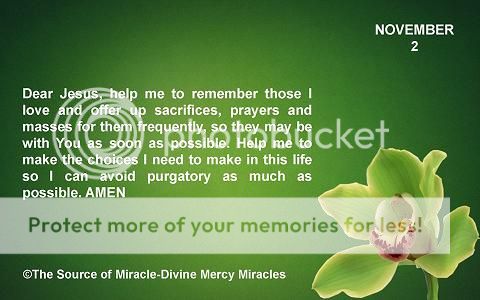 REFLECTION: WORD Today 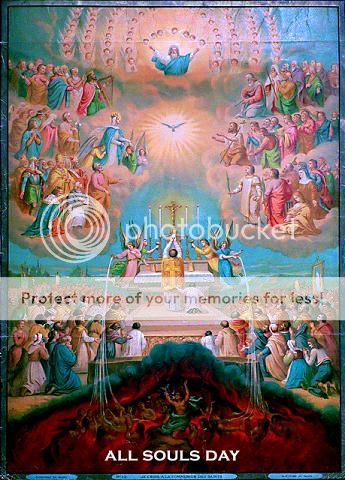 Today is the Commemoration of All the Faithful Departed (All Souls). Continuing the tradition of the earliest Christians, we too pray for our beloved dead. In the catacombs of Rome, written on the graves of the earliest followers of Christ were prayers for the dead. From the very start of Christianity, Liturgies (public prayers) of James the Apostle (Jerusalem church), Mark the Evangelist (Alexandria church), and Peter (Roman church) all included prayers for the dead. All Souls Day is a reminder of the great continuity and interaction of all of God’s creation. Just as St. Paul prayed for his dead friend Onesiphorus (2 Timothy 1:18), we also pray for mercy for our beloved dead because we are members of the one unbreakable Body of Christ (the Church Militant, the Church Suffering, and the Church Triumphant), and we commune with all other parts in prayer through Jesus, the Head of the Church. Yesterday we asked the triumphant Saints in heaven to pray for us here (the militant and struggling). Today we pray for the souls in purgatory who are already "saved but only as through fire" (1 Corinthians 3:15). They undergo the fire of purification for being somehow partially lacking in "holiness without which no one will see the Lord." (Hebrews 12:14) These souls can no longer pray for themselves. Love and prayer runs the Kingdom of God. Let us offer Masses and indulgences for all the holy souls in purgatory for their speedy passage to heaven, including those whom no one remembers. We can count on their prayers when our turn for purification comes. "The smoke of the incense rose with the prayers of the saints from the hand of the angel before God." (Revelation 8:4) A Blessed All Souls Day! Source: https://www.facebook.com/CatholicMassReflec...795774550720302 ST. FAUSTINA VISITS PURGATORY PLENARY AND PARTIAL INDULGENCES  |
|
|
Nov 2 2017, 02:39 PM
Return to original view | Post
#335
|
|
Junior Member
225 posts Joined: Mar 2008
|
|
|
|
Nov 2 2017, 02:48 PM
Return to original view | Post
#336
|
|
Junior Member
225 posts Joined: Mar 2008
|
THE FEAST OF ALL SOULS, NOVEMBER 2, 2017
A PRAYER FOR THE DEPARTED ONES 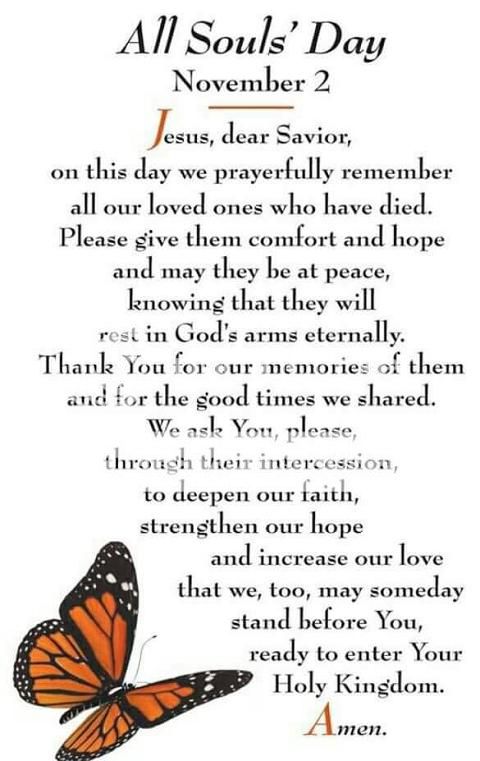 God our Father, Your power brings us to birth, Your providence guides our lives, and by Your command we return to dust. Lord, those who die still live in Your presence, their lives change but do not end. I pray in hope for my family, relatives and friends, and for all the dead known to You alone. In company with Christ, Who died and now lives, may they rejoice in Your kingdom, where all our tears are wiped away. Unite us together again in one family, to sing Your praise forever and ever. Amen.   |
|
|
Nov 2 2017, 04:24 PM
Return to original view | Post
#337
|
|
Junior Member
225 posts Joined: Mar 2008
|
We are the Church, if we include Them
Commemoration of All the Faithful Departed (All Souls) 2017 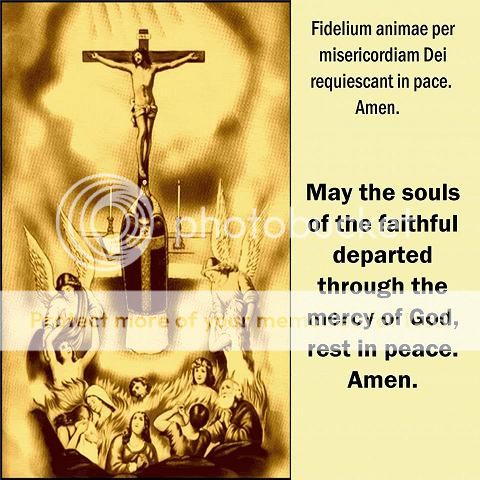 Many people suffer from an over exaggerated sense of self-importance, whether as individuals or collectively as a group. A dead give-away is when they begin almost every sentence with the royal ‘we’. Some feel that whenever they speak, they do so as a representative of the rest of the world or at least of its majority. They imagine themselves as the focal point of reference, the centre of the universe, the Solar system’s centrifugal axis where all other planets must find their orbit. Psychiatrists have a term for this – it’s called ‘Narcissistic Personality Disorder.’ The Church too has sometimes been subjected to this egocentric and megalomaniac worldview. Thus the declaration, “We are Church!” When speaking of the Church, it has become quite fashionable to say – “We are Church.” The reason for its popularity and attraction is because it implies a kind of democratisation of the Church; an identification of the Church with its grassroots rather than with the hierarchical elite. For those who may not be aware, ‘We Are Church’ is also the name of an organisation of dissenters, a church “reform” group that was started in the German-speaking world some years ago and has now spread to other countries. You would find the usual trendy, politically correct dissenter on their menu: women priests (for), clerical celibacy (against), homosexual sex (for), contraceptives (against), abortion (for) etc. What most Catholics are not aware of is that the above label or way of describing the Church is not just highly inadequate, but also distorts the vastly complicated ecclesiology of the Church. The Church is not just the sum total of its living members but also encompasses the members who are separated by the boundaries of death. Death does not sever their membership in the Church of Christ. GK Chesterton, one of the most famous converts to Christianity at the turn of the 20th century argued that if one wishes to apply the principles of democracy to the Church, especially in the area of its teachings or Sacred Tradition, then one must speak of "a democracy of the dead", a democracy that extends through time, encompassing all Christians who have come before the present generation and all Christians who will follow hereafter. So, to those who flaunt the problematic ‘We are Church’ slogan whenever they wish to dictate or pontificate to others, this is going to be news for you – ‘You are in the minority!’ But there is a proper context when we wish to use the pronoun, “we.” When we say: “We are Church” – well, it is true: that is what we are, we are not just anybody. But the “we” is more extensive than the group that asserts those words. The “we” is the whole community of believers, today and in all times and places. Who is this ‘greater we’? The answer lies in the liturgical celebrations of these two days. Today’s Commemoration of All the Faithful Departed and yesterday’s Solemnity of All Saints, remind us that whenever we use the pronoun “we”, we must necessarily refer to those not living in present company. When discussing this greater conception of the Church under the doctrine of the Communion of Saints, the Church, the Mystical Body of Christ, has been traditionally described in a threefold manner as the Church Militant, the Church Suffering and the Church Triumphant. The saints and angels in heaven compose the Church triumphant, because they have gained the crown of victory. The souls in purgatory compose the Church suffering, because they still have to expiate for their sins before they can enter heaven. The faithful on earth, that’s us, compose the Church militant, because we have to struggle ceaselessly against the enemies of their souls, the world, the flesh and the devil. But there is only one Church, one Mystical Body of Christ, because its members are united by supernatural bonds, incapable of being severed even in death with one another and with Christ, their Head, thus resembling the parts and head of the living human body. Today, on All Souls Day, the Church reminds us of our duty to pray for the dead. St. Augustine says: “Prayer is the key by which we open the gates of heaven to the suffering souls.” The Church teaches us that just as we love and respect our living brethren, so do we love and respect those of them who have departed this life. We express our love for our departed relatives and friends through prayer. Death and burial cannot sever the Christian love which united the living with those once living and now deceased. We pray for the faithful dead not because we believe that God's mercy can only be triggered by our intercession, but because it is our life task to hold in our minds and hearts those who are given to us through kindred and affinity, and as friends, colleagues and neighbours. This task transcends the boundaries of life and death. Today’s commemoration teaches us an important truth about the Church - there is interdependence among the members of the Church – no one lives for himself alone, but for the entire body. Every good a member does perfects the whole Body, of which he is a part. We need to be always in the sync with the rest of the Body, especially with its Head, and not constantly plot to overthrow it with our own plans of Church-domination. This supernatural fellowship where all three Churches commune together, praying for one another is known as the doctrine of the Communion of Saints. The Church Triumphant prays for the Church Militant, who in turn prays for the Church Suffering. We, the faithful who comprise the Church Militant, pray to the Church Triumphant, for their intercession and they, in turn, plead with the Lord on our behalf. The Church Suffering cannot pray for themselves; therefore, they cannot hope for the intercession of the Saints in Heaven without the Church Militant, praying on their behalf. This interplay has been described by some authors as a great philharmonic orchestra with God as its supreme maestro. It is really awesome when you think of the integral part each of us plays in God’s Symphony of Salvation. Thus, the doctrine of the Communion of Saints, though one of the least understood or known, is one of the most consoling dogmas of the Church. The doctrine injects the necessary antidote for humility to our hubris-filled notion of Church. ‘We’ are not Church, only a part of the Mystical Body of Christ, a small minority in fact. Thus, we must defer to the wisdom of the majority, those who have reached the perfection of heaven, the Church Triumphant. Source: http://michaelckw.blogspot.my/ |
|
|
Nov 3 2017, 10:02 AM
Return to original view | Post
#338
|
|
Junior Member
225 posts Joined: Mar 2008
|
QUOTE(r2t2 @ Oct 31 2017, 04:48 PM) https://www.theguardian.com/news/2017/oct/2...st-pope-francis more importantly. may we know what is your opinion on this article?What's your opinion on the article, bro-n-sis in Christ? Excerpts:- "This mixture of hatred and fear is common among the pope’s adversaries. Francis, the first non-European pope in modern times, and the first ever Jesuit pope, was elected as an outsider to the Vatican establishment, and expected to make enemies. But no one foresaw just how many he would make. From his swift renunciation of the pomp of the Vatican, which served notice to the church’s 3,000-strong civil service that he meant to be its master, to his support for migrants, his attacks on global capitalism and, most of all, his moves to re-examine the church’s teachings about sex, he has scandalised reactionaries and conservatives. To judge by the voting figures at the last worldwide meeting of bishops, almost a quarter of the college of Cardinals – the most senior clergy in the church – believe that the pope is flirting with heresy." "With more than a billion followers, the Catholic church is the largest global organisation the world has ever seen, and many of its followers are divorced, or unmarried parents. To carry out its work all over the world, it depends on voluntary labour. If the ordinary worshippers stop believing in what they are doing, the whole thing collapses. Francis knows this. If he cannot reconcile theory and practice, the church might be emptied out everywhere. His opponents also believe the church faces a crisis, but their prescription is the opposite. For them, the gap between theory and practice is exactly what gives the church worth and meaning. If all the church offers people is something they can manage without, Francis’s opponents believe, then it will surely collapse." "The curia, as the Vatican bureaucracy is known, grew more powerful, stagnant and corrupt. Very little action was taken against bishops who sheltered child-abusing priests. The Vatican bank was infamous for the services it offered to money-launderers. The process of making saints – something John Paul II had done at an unprecedented rate – had become an enormously expensive racket. (The Italian journalist Gianluigi Nuzzi estimated the going rate for a canonisation at €500,000 per halo.) The finances of the Vatican itself were a horrendous mess. Francis himself referred to “a stream of corruption” in the curia. ..... The curia, he said “sees and looks after the interests of the Vatican, which are still, for the most part, temporal interests. This Vatican-centric view neglects the world around us. I do not share this view, and I’ll do everything I can to change it.” He said to the Italian newspaper La Repubblica: “Heads of the church have often been narcissists, flattered and thrilled by their courtiers. The court is the leprosy of the papacy.” "The church, says Francis, should be a hospital, or a first-aid station. People who have been divorced don’t need to be told it’s a bad thing. They need to recover and to piece their lives together again. The church should stand beside them, and show mercy. At the first synod of the bishops in 2015, this was still a minority view. A liberal document was prepared, but rejected by a majority. A year later, the conservatives were in a clear minority, but a very determined one. Francis himself wrote a summary of the deliberations in The Joy of Love. It is a long, reflective and carefully ambiguous document. The dynamite is buried in footnote 351 of chapter eight, and has taken on immense importance in the subsequent convulsions. The footnote appends a passage worth quoting both for what it says and how it says it. What it says is clear: some people living in second marriages (or civil partnerships) “can be living in God’s grace, can love and can also grow in the life of grace and charity, while receiving the Church’s help to this end”. Even the footnote, which says that such couples may receive communion if they have confessed their sins, approaches the matter with circumspection: “In certain cases, this can include the help of the sacraments.” Hence, “I want to remind priests that the confessional must not be a torture chamber, but rather an encounter with the Lord’s mercy.” And: “I would also point out that the Eucharist ‘is not a prize for the perfect, but a powerful medicine and nourishment for the weak’.” “By thinking that everything is black and white,” Francis adds, “we sometimes close off the way of grace and growth.” |
|
|
Nov 6 2017, 04:22 PM
Return to original view | Post
#339
|
|
Junior Member
225 posts Joined: Mar 2008
|
Monday of the Thirty-first Week in Ordinary Time
Lectionary: 485  Reading 1 (Rom 11:29-36) Brothers and sisters: The gifts and the call of God are irrevocable. Just as you once disobeyed God but have now received mercy because of their disobedience, so they have now disobeyed in order that, by virtue of the mercy shown to you, they too may now receive mercy. For God delivered all to disobedience, that he might have mercy upon all. Oh, the depth of the riches and wisdom and knowledge of God! How inscrutable are his judgments and how unsearchable his ways! For who has known the mind of the Lord or who has been his counselor? Or who has given him anything that he may be repaid? For from him and through him and for him are all things. To God be glory forever. Amen. Responsorial Psalm (Ps 69:30-31, 33-34, 36) R. Lord, in your great love, answer me. But I am afflicted and in pain; let your saving help, O God, protect me. I will praise the name of God in song, and I will glorify him with thanksgiving. R. Lord, in your great love, answer me. "See, you lowly ones, and be glad; you who seek God, may your hearts revive! For the LORD hears the poor, and his own who are in bonds he spurns not." R. Lord, in your great love, answer me. For God will save Zion and rebuild the cities of Judah. They shall dwell in the land and own it, and the descendants of his servants shall inherit it, and those who love his name shall inhabit it. R. Lord, in your great love, answer me. Alleluia (Jn 8:31b-32) R. Alleluia, alleluia. If you remain in my word, you will truly be my disciples, and you will know the truth, says the Lord. R. Alleluia, alleluia. Gospel (Lk 14:12-14) On a sabbath Jesus went to dine at the home of one of the leading Pharisees. He said to the host who invited him, "When you hold a lunch or a dinner, do not invite your friends or your brothers or sisters or your relatives or your wealthy neighbors, in case they may invite you back and you have repayment. Rather, when you hold a banquet, invite the poor, the crippled, the lame, the blind; blessed indeed will you be because of their inability to repay you. For you will be repaid at the resurrection of the righteous."  REFLECTIONS: WORD Today 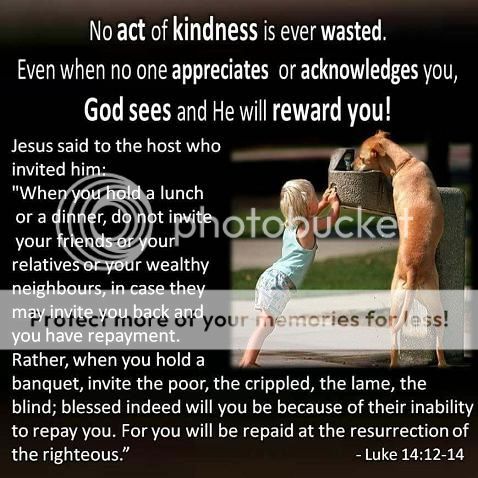 The First Reading reminds us of our Heavenly Father's totally selfless love in providing us everything we need in life. With God there is no give-&-take, but only give-&-give - to those who love Him, those who hate Him, and even those who don't believe in Him. No service we do for God, or any charity we show toward neighbor, can never make God owe us anything, for there is nothing that He had not created and given to us. He loved us first, and we only respond in gratitude. In the Gospel, Jesus reminds us to love like His Father: "When you hold a banquet, invite the poor, the crippled, the lame, the blind. Blessed indeed will you be because of their inability to repay you. For you will be repaid at the resurrection of the righteous." Jesus Himself gave His life to save His enemies (us sinners) without expecting any payment, and He continues to invite everyone to His banquet (the Eucharist) to share in His divine live without any payment. O my Lord Jesus, forgive me for the times I desired recognition, respect and reward for doing my duty in the Kingdom. Walk with me in this new week and help me see everyone we meet through the eyes of our Father. Amen. Source: https://www.facebook.com/CatholicMassReflec...797271180570639 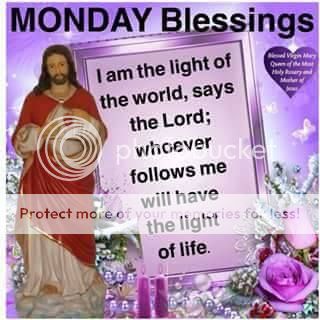 This post has been edited by khool: Nov 6 2017, 04:23 PM |
|
|
Nov 6 2017, 04:25 PM
Return to original view | Post
#340
|
|
Junior Member
225 posts Joined: Mar 2008
|
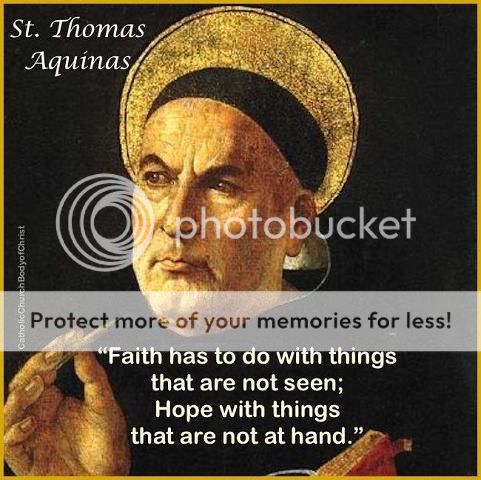 This post has been edited by khool: Nov 6 2017, 04:26 PM |
| Change to: |  0.1140sec 0.1140sec
 0.27 0.27
 7 queries 7 queries
 GZIP Disabled GZIP Disabled
Time is now: 6th December 2025 - 10:24 PM |
 Quote
Quote