And taking them out could mean activating them 1 way or another; like a car - leaving it in storage, battery disconnected, tanks drained, tires deflated etc. is different from keeping it ready to use ie launch.
This post has been edited by KLboy92: Nov 16 2016, 08:12 PM
Joined: Jun 2007
From: 3°50'**.**"N - 103°16'**.**"E
QUOTE(KLboy92 @ Nov 16 2016, 05:30 PM)
As ever, I believe its budget issue as well as operational requirements 6 Kedahs x 8 missiles x about EUR 1m each = Rm224 million
Thats not chump change. Even if we arm just 2 Kedahs at a time, thats Rm75M... its the choice between up gunning the Kedahs with token* antiship weapons or buying another 1.5 LMS platforms... choose.
*with the vast array of SAMs and CIWS in existence the best antship weapon is a sublaunched torpedo. Thats the Western doctrine anyway.
P.s. RAM missile is the same price and come in 21 round launcher... you figure that price out I already Damn it looks big!
The ships are old. If it saves money to decom then, we should. Similar to UK Armed Forces, suck up a capability gap for 5-10 years then come back into the game with a bigger wallet
For kedah to be economical equip it is planned to be done in one go there is a plane to equip the kedah class about couple of years ago but since the economy is not so good I believe then plan was scraped or put it on hold IIRC it is when the NSM was first rumored planned to be inserted into the service
Indonesian National Search & Rescue Agency (Basarnas) to buy 13 more AS365N3+ Dauphin helicopters from PT DI.
QUOTE
Basarnas Akan Beli 13 Heli Dauphin Lagi dari DI
November 15, 2016
Kepala Basarnas Marsdya TNI F.H. Bambang Soelistyo. Sumber gambar: A. Darmawan
Basarnas akan beli 13 unit helikopter AS365 Dauphin lewat PT Dirgantara Indonesia. Heli jenis ini dipilih untuk melengkapi tiga helikopter yang kini sudah dimiliki sehingga jumlahnya akan genap jadi satu skadron. Komitmen ini diambil sebagai upaya untuk ikut mendukung pengembangan industri strategis dalam negeri. Demikian ungkap Kepala Basarnas Marsdya TNI F.H. Bambang Soelistyo dalam jumpa pers usai Serah Terima Dua Helikopter AS365N3+ Dauphin, Selasa (15/11) di Hanggar DI, Bandung.
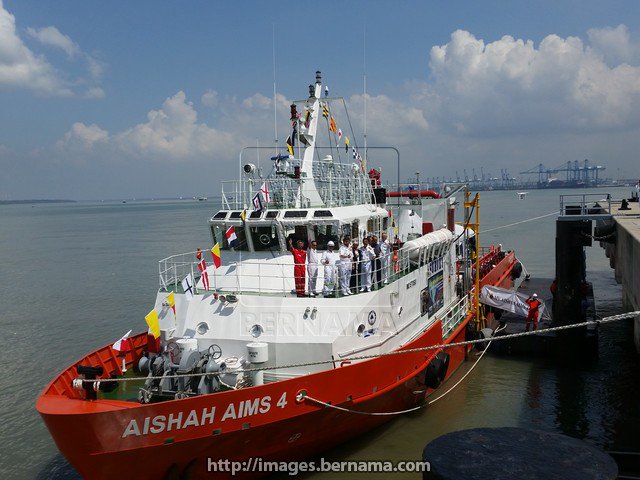
BTW yesterday some good news: RMN Receives MV Aishah Aims 4 For Hydrographic Survey
PELABUHAN KLANG, Nov 15 (Bernama) -- The Royal Malaysian Navy (RMN) today received the MV Aishah Aims 4 vessel which is capable of carrying out a broad and comprehensive hydrographic data survey of the country's territorial waters.
RMN chief Admiral Datuk Seri Ahmad Kamarulzaman Ahmad Badaruddin said the vessel was obtained through a lease contract to replace the RMN's two existing hydrographic survey vessels, 'KD Mutiara' and 'KD Perantau', which would be phased out in stages.
"For instance, the function of the 40-year-old KD Mutiara cannot be optimised fully as it requires high operational and maintenance costs. The annual expenditure to operate KD Mutiara and KD Perantau costs between RM25 million and RM30 million.....
Joined: Feb 2014
From: Somewhere in the pacific, or indian ocean
QUOTE(Fat & Fluffy @ Nov 16 2016, 05:53 PM)
as expected... entah siapa earlier tok kok
it just a leasing service nothing unusual about that and tldm previously have also used commercial services (mast sdn bhd) to map out the south china sea its just a stopgap measure until their dedicated lms ship?/module? comes along as the mv aishah is not a dedicated hydrographic survey ship
This post has been edited by DDG_Ross: Nov 16 2016, 09:17 PM
Joined: Feb 2014
From: Somewhere in the pacific, or indian ocean
QUOTE(KLboy92 @ Nov 16 2016, 07:31 PM)
I dunno, if atreyu can explain why we do not use them if they are "lying around"...?
Wild-ass guess here: perhaps they have an operational lifespan, if we take them out of store and install that means they start to depreciate already, in a few years will need to buy replacement?
exocet mm38 have long been out-of-production but many navies still can be seen carrying it around maybe mbda give really great support? periodic replacement? meh who knows?
exocet mm38 have long been out-of-production but many navies still can be seen carrying it around maybe mbda give really great support? periodic replacement? meh who knows?
MBDA is giving support for now, and as ayanami_tard said offering update to the much better MM40 Block 3
Sea and launched missiles are contained in their own protective crates which also acts as their launch platforms. The crates are pretty environment-proof as they are sealed and waterproofed. The solid fuel also are pretty stable and long-lasting. Only the air-launched version is 'naked' at launch but these are also crated until used.
Just need to do regular diagnostics to make sure systems are ok.
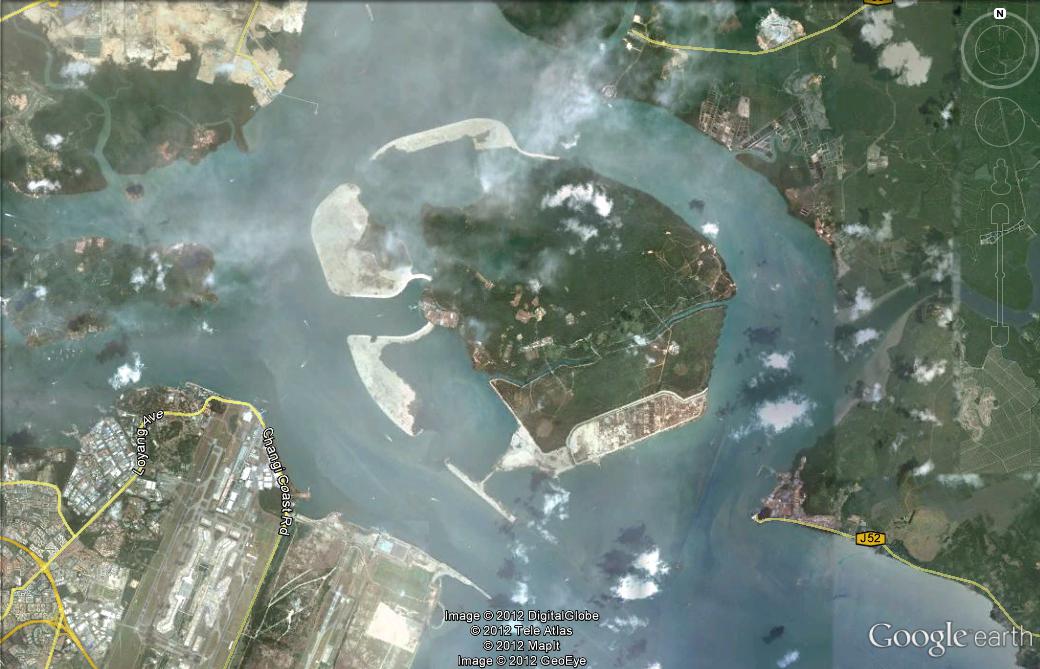
Pulau Tekong to get extra land the size of two Toa Payoh towns using new reclamation method
SINGAPORE - A new method of land reclamation will be adopted at the north-western tip of Pulau Tekong, adding new land the size of two Toa Payoh towns for military training purposes,[/B] National Development Minister Lawrence Wong said on Wednesday (Nov 16).
The empoldering method involves [B]building a dike around the area to be reclaimed and draining water from it, creating a low-lying tract of land below sea level, called a polder. The polder is buffered from the sea by a dike, and water levels in the polder are controlled by drains and pumps.
The dike will measure 10km long, up to 15m wide at its crest and stand about 6m above sea level.
Compared to the traditional method of infilling with sand, this will reduce the amount of sand needed for reclamation and save on upfront construction costs, said the Housing Board, which is the agent appointed by the Ministry of National Development to carry out land reclamation works on behalf of the Government.
To ensure that the project is cost-effective, safe and environmentally sensitive, the HDB said it is working closely with Professor Kees d'Angremond from the Netherlands - an authority on polder development and longtime adviser to Singapore on reclamation.
While polders may be new to Singapore, Professor d'Angremond said they have been built in the Netherlands for the past 2,000 years.
These polders were primitive ones built by farmers who wanted to protect their land against flooding, he said.
Safety of the polders are ensured through methods such as the building of strong dikes, determining the height of the dike in relation to expected sea levels and wave action, as well as having a grass cover on the inner dike slope to ensure it does not erode, Professor d'Angremond said.
"As Dutchmen we are convinced that it is a good solution for the future, but I think it is very wise that your Government has decided to call it a pilot polder and to do quite a lot of testing on the polder before you decide to apply the method in other places."
"That means also that we will do a lot of research in polders together to see whether we can make further improvements that are really dedicated to the conditions in Singapore."
The HDB will call for a tender by the end of this year and construction will commence at the end of 2017. The reclamation project is slated for completion in 2022.
Mindef will maintain the 810ha polder land upon its completion, while the drainage system, dike, water pumping stations and canals will be maintained by national water agency PUB.
The reclaimed area on the island will also have 21km of roads - the combined length of East Coast Parkway - and 29km of drains.
The HDB said an environmental study has been carried out to ensure that there will not be any significant impact on the surrounding marine environment and marine life.
"The study has found that the environmental impact due to the development of the polder would be minimal," said the HDB.
It added that surrounding areas with mangroves and other plant life will be conserved and protected.
Mr Wong told reporters during a site visit on Wednesday that Singapore has been studying the empoldering method for some time to reduce its reliance on sand for reclamation purposes.
“The polder project is important also for another reason, which is that it helps us to build capabilities,” he said.
“Because in the long term, we know that we are facing the threat of climate change, sea levels rising, and we are low-lying in Singapore. So with this project, I think that the experience that we gain in learning how to build dikes, in learning how to manage coastal areas, this will be very important for us as we deal with the threat of climate change in the longer term.
“So this is really a project not just about expanding our physical space but also about building up capabilities and making ourselves a more resilient nation in the longer term."
He said he will not rule out adopting empoldering for future reclamation projects, and also cited challenges such as the disruption in sand supply as a good reason to adopt the method.
The method will lead to a "significant amount" of savings in sand and cost, Mr Wong said, but did not reveal any figures.
"But we do expect significant savings in sand and also in construction costs," he said.
When asked why Pulau Tekong needs more land, he said that the country is "always in need of more land".
"For this particular expansion, it's going to be used for Singapore Armed Forces (SAF) training. But the needs for land continue to grow, whether it's for military, for housing, for commercial uses," he said.
"We are always looking at options to expand. And by expanding Tekong, providing SAF more space for their training needs, which are growing, we can free up land in the main Singapore island for other developmental purposes," he added.
US panel urges probe on whether China weakening US militarily
WASHINGTON: A U.S. advisory commission warned on Wednesday that China's growing military might may make it more likely to use force to pursue its interests and called for a government probe into how far outsourcing to China has weakened the U.S. defence industry.
The annual report of the U.S.-China Economic and Security Review Commission pointed to a growing threat to U.S. national security from Chinese spying, including infiltration of U.S. organizations, and called on Congress to bar Chinese state enterprises from acquiring control of U.S. firms.
The release of the report to Congress comes a week after Donald Trump won the U.S. presidential election. Trump, an outspoken Republican who has vowed to take a tougher line in trade and security dealings with China than President Barack Obama, will take office on Jan. 20.
The panel is a bipartisan body set up in 2000 to monitor the national security implications of the U.S. trade and economic relationship with China and to make recommendations to Congress for legislative and administrative action.
Its report also called on Congress to back more frequent U.S. Navy freedom-of-navigation operations in the South China Sea, one of the world's busiest trade routes where China's building of artificial islands with military facilities has raised concerns about future freedom of movement. Beijing and its neighbours have conflicting territorial claims there.
The commission said ongoing reforms of the People's Liberation Army would strengthen Beijing's hand and noted that China was close to completing its first domestically produced aircraft carrier.
"China’s pursuit of expeditionary capabilities, coupled with the aggressive trends that have been displayed in both the East and South China Seas, are compounding existing concerns about China’s rise among U.S. allies and partners in the greater Asia," the report said.
“Given its enhanced strategic lift capability, strengthened employment of special operations forces, increasing capabilities of surface vessels and aircraft, and more frequent and sophisticated experience operating abroad, China may also be more inclined to use force to protect its interests,” it said.
The panel said that U.S. responses to the threat from Chinese intelligence gathering had suffered from a lack of a coordinated effort by U.S. intelligence agencies.
It said Congress should also direct the U.S. Government Accountability Office to prepare a report "examining the extent to which large-scale outsourcing of manufacturing activities to China is leading to the hollowing out of the U.S. defence industrial base."
"This report should also detail the national security implications of a diminished domestic industrial base (including assessing any impact on U.S. military readiness), compromised U.S. military supply chains, and reduced capability to manufacture state-of-the-art military systems and equipment," it said.
The commission's report also recommended that Congress call on the U.S. State Department to produce educational materials to alert U.S. citizens overseas and students going to China to the dangers of recruitment efforts by Chinese agents.
(Reporting by David Brunnstrom; Editing by Cynthia Osterman)
This post has been edited by Fat & Fluffy: Nov 16 2016, 11:45 PM
Royal Navy to lose missiles and be left only with guns
QUOTE
Royal Navy warships will be left without anti-ship missiles and be forced to rely on naval guns because of cost-cutting, the Ministry of Defence has admitted.
The Navy’s Harpoon missiles will retire from the fleet’s frigates and destroyers in 2018 without a replacement, while there will also be a two year gap without helicopter-launched anti-shipping missiles.
Naval sources said the decision was “like Nelson deciding to get rid of his cannons and go back to muskets” and one senior former officer said warships would "no longer be able to go toe-to-toe with the Chinese or Russians".
Harpoon missiles are unlikely to be replaced for up to a decade, naval sources said, leaving warships armed only with their 4.5in Mk 8 guns for anti-ship warfare. Helicopter-launched Sea Skua missiles are also going out of service next year and the replacement Sea Venom missile to be carried by Wildcat helicopters will not arrive until late 2020.
One Naval source said: “We will be losing our missile capability in total for two years. We will still have the gun, but the range of that is about 17 miles, compared to Harpoon, which is about 80 miles”.
The source said the new helicopter-launched Sea Venom missile will have a shorter range than the Harpoon and helicopters are also vulnerable to bad weather and being shot down.
“The moment you put it up against a frigate or a destroyer, you will be inside their weapons range,” the source added.
Rear-Adml Chris Parry, said: "It's a significant capability gap and the Government is being irresponsible. It just shows that our warships are for the shop window and not for fighting."
Lord West of Spithead, a former First Sea Lord, said: “This is just another example of where the lack of money is squeezing and making the nation less safe.
“We will have this gap of several years without missiles. Well, that’s fine if you don’t have to fight anybody in the meantime.”
The Royal Air Force has long axed its own anti-ship missiles.
Nick Childs, a naval expert at the International Institute for Strategic Studies, said Britain was cutting its anti-ship missiles just as America had decided they were becoming more critical to maritime fighting.
“It must be a great concern that this capability is going to be removed without immediate or direct replacement because we are moving into an era of concern about a more contested maritime environment,” he said.
A spokesman for the Navy said: “All Royal Navy ships carry a range of offensive and defensive weapons systems. Backed by a rising defence budget and a £178 billion equipment plan, upgrade options to all our weapons are kept under constant review.”


 Military Thread V22
  Nov 16 2016, 08:11 PM


 Quote
Quote












 0.0306sec
 0.54
0.54
 6 queries
 GZIP Disabled