Welcome Guest ( Log In | Register )

Bump Topic Topic Closed RSS Feed
11 Pages  1 2 3 > » Bottom

Outline · [ Standard ] · Linear+

> Military Thread V22

views
     
MilitaryMadness
post Sep 19 2016, 07:41 AM

Regular
******
Senior Member
1,302 posts

Joined: Oct 2010
From: Over your shoulder


QUOTE(azriel @ Sep 18 2016, 12:50 PM)
It can't be helped. Navies usually costs a lot more than any other service branches to arm and maintain. Even US military allocates nearly half of all its $ 600 Billion USD resources to the US Navy alone.


Entity
Army $244.9 billion 31.8%
Marine Corps $40.6 billion 4% Total Budget taken allotted from Department of Navy
Navy $379.8 billion 43.4% Excluding Marine Corps
Air Force $170.6 billion 22%

sos

If want good Navy, you have to dump massive amounts of money on it, no choice.

This post has been edited by MilitaryMadness: Sep 19 2016, 07:48 AM
MilitaryMadness
post Sep 19 2016, 08:26 AM

Regular
******
Senior Member
1,302 posts

Joined: Oct 2010
From: Over your shoulder


'Murica, in a nutshell. Blatant patriotism, 24-7 surveillance, militarized police and fat dudes. laugh.gif

user posted image

This post has been edited by MilitaryMadness: Sep 19 2016, 08:30 AM
MilitaryMadness
post Sep 19 2016, 11:59 AM

Regular
******
Senior Member
1,302 posts

Joined: Oct 2010
From: Over your shoulder


Today I learned: Britain planned a D-Day assault on Malaya with 100,000 soldiers

user posted image
Planned landing beaches of Operation Zipper

After British has successfully beaten back the Japanese Army in Burma, plans were drawn up by Lord Mountbatten to invade Malaya and eventually liberate Singapore from the Japanese. The plan was split up into three stages, the landing operation (Operation Zipper), the drive south towards Singapore (Operation Mailfist) and the drive north to clear peninsular Malaya up to the Thai border (Operation Broadsword).

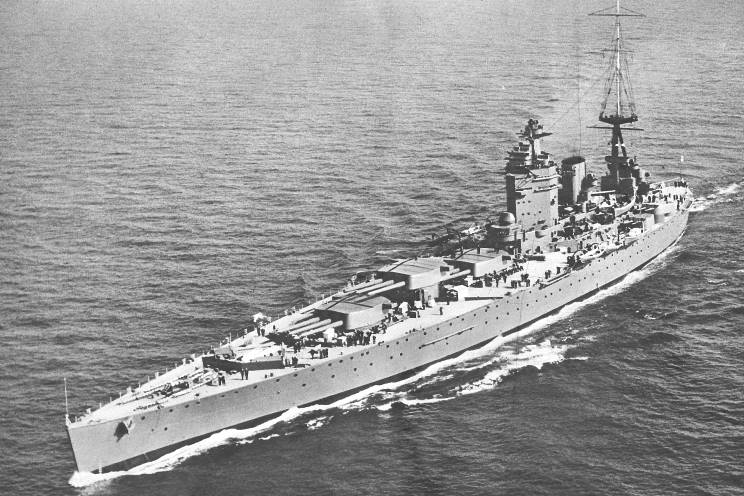
The landing operation, Operation Zipper, was to be launched in September 1945. It called for a large task force headed by the Battleship HMS Nelson and 2 escort carriers (HMS Attacker and HMS Hunter) to launch from India and Burma. Air support from 500 aircraft based in Burma, Ceylon and Cocos Islands was also arranged. The plan was for the landing force to land near Port Swettenham (Port Klang) and Port Dickson and secure them as staging areas for further operations. Two Divisions of Commonwealth troops and a Brigade of British Troops totaling nearly 50,000 men were allocated for the landing force. Japanese resistance was expected to be light to medium. A diversionary operation by Force 136, led by Tun Ibrahim Ismail were to launch attacks to try and convince the Japanese that any landings will be conducted on the Kra Isthmus, north of Malaya.

user posted image
The Battleship HMS Nelson

The drive south towards Singapore, Operation Mailfist, was to be launched after the landing force has succesfully secured their objectives, scheduled as December 1945. Two further Commonwealth troops Divisions and a British Brigade are to be landed as soon as the port is secured and advance south through the Malayan Peninsula to liberate Singapore. The plan was to advance south through the coastal plains with Naval fire support provided by the Battleship and air support from the two escort carriers. Planning timetables expected the offensive would reach Singapore on March 1946. Two Monitors (MHS Roberts and HMS Abercrombie), special bombardment ships with two 15-inch cannons each were to bombard Japanese defences on Singapore Island in a preparatory operation.

The drive north to secure the Malayan peninsula, Operation Broadsword, was to be conducted simultaneously as Operation Mailfist. Smaller resources were allocated for this operation as Japanese defences were expected to concentrate on defending Singapore and only light resistance is expected elsewhere. Further operations to secure the peninsula's East Coast and recapture Northern Borneo would later be planned with US support from the Philippines.

In the end, Operation Zipper was rendered moot by the Japanese surrender in August 1945, after the dropping of the US Atomic bombs on Japan. As the the invasion task force has not fully assembled yet at the time, a small detachment sailed towards Singapore to secure it from the surrendered Japanese Army under Operation Tiderace. After parts of the fleet landed to secure North and central Malaya (Penang island and Morib beach) a force led by the Heavy cruiser HMS Sussex landed unopposed on Keppel Harbor.

user posted image
A memorial indicating the landing of 46th Indian Beach group on Morib beach, part of Operation Tiderace

During the afternoon of 9 September, General Sheishiro Itagaki, accompanied by Vice Admiral Shigeru Fukudome and his aides, were brought aboard HMS Sussex in Keppel Harbour to discuss the surrender. They were received by Lieutenant-General Sir Philip Christison and Major-General Robert Mansergh. By 1800 hours, the Japanese had surrendered their forces on the island. An estimated 77,000 Japanese troops from Singapore surrendered, plus another 26,000 from Malaya.

user posted image
Formal surrender of Japanese forces in South East Asia. Lord Mountbatten is seated in the center of the allied delegates, in his white Royal Navy uniform.

The formal surrender of Japanese forces in South East Asia was signed on 12 September at Singapore City Hall. Lord Mountbatten arrived in Singapore to personally receive the articles of Japanese Surrender from General Itagaki. Thus ended the Japanese occupation of South East Asia.

MilitaryMadness
post Sep 19 2016, 12:22 PM

Regular
******
Senior Member
1,302 posts

Joined: Oct 2010
From: Over your shoulder


QUOTE(MilitaryMadness @ Sep 19 2016, 11:59 AM)
Today I learned: Britain planned a D-Day assault on Malaya with 100,000 soldiers

The drive north to secure the Malayan peninsula, Operation Broadsword, was to be conducted simultaneously as Operation Mailfist. Smaller resources were allocated for this operation as Japanese defences were expected to concentrate on defending Singapore and only light resistance is expected elsewhere. Further operations to secure the peninsula's East Coast and recapture Northern Borneo would later be planned with US support from the Philippines.
*
Key point. I wonder if in some alternate reality, this actually happened. hmm.gif

If the US atomic bombs weren't dropped, Malaya would have a different history.

This post has been edited by MilitaryMadness: Sep 19 2016, 12:25 PM
MilitaryMadness
post Sep 19 2016, 12:42 PM

Regular
******
Senior Member
1,302 posts

Joined: Oct 2010
From: Over your shoulder


QUOTE(thpace @ Sep 19 2016, 10:36 AM)
Now it just a electronic module. No longer those gimbal mounted systems. It quite common nowdays in case gps signal lost, inertia guidance take over temporary before gps signal is regain.
*
Although still common for ATGMs to still have a gimbal-mounted gyro stabilization system, to keep the missile steady in flight. Whenever you hear a distinctive CHWEEEE whining sound just before an ATGM is launched, that's the gyro spinning up. laugh.gif

This post has been edited by MilitaryMadness: Sep 19 2016, 12:43 PM
MilitaryMadness
post Sep 20 2016, 09:41 AM

Regular
******
Senior Member
1,302 posts

Joined: Oct 2010
From: Over your shoulder


QUOTE(KLboy92 @ Sep 20 2016, 02:42 AM)
who is Tun Ibrahim Ismail? I do not recall the name from what I read about Force 136.
Seeing as other than Pinoys and Burmese we are the only nation left in SEA involved in WW2, yes we were verrrrrry lucky.
*
Sad when Malaysians don't even know who he was. We should have schools named after him. sad.gif

user posted image
Force 136, with (in the centre row) Ibrahim Ismail (third from left), Yeop Mahidin (third from right) and Abdul Razak Hussein (far right)

Tun Ibrahim Ismail, who died on 23rd December 2010 aged 88, was a Special Operations Executive officer who pulled off a daring 10-month triple-cross while a prisoner of the Japanese during the Second World War; he later went on to be head of Malaysia's armed forces.

Sos
MilitaryMadness
post Sep 20 2016, 11:53 AM

Regular
******
Senior Member
1,302 posts

Joined: Oct 2010
From: Over your shoulder


QUOTE(KLboy92 @ Sep 20 2016, 11:15 AM)
see if I can find. I wiki-ed him. Yeah sounds like he should be in Sejarah textbooks.
Also it pisses me off when people occasionally dig up Tun Abdul Razak's photo in a Japanese uniform and straightaway brand him as traitor. Meanwhile documents and testimonies from Malaysia and UK have already established him as a mole in service of the British SOE and Force 136.

user posted image

This post has been edited by MilitaryMadness: Sep 20 2016, 11:54 AM
MilitaryMadness
post Sep 20 2016, 02:45 PM

Regular
******
Senior Member
1,302 posts

Joined: Oct 2010
From: Over your shoulder


QUOTE(KLboy92 @ Sep 20 2016, 02:00 PM)
have you read The Jungle Is Neutral by Spencer Chapman? he was the guy in charge of Force 136 ops in Semenanjung
*
Bizarrely, aside from some early sabotage action immediately after the Japanese occupation, Chapman spent nearly all of his time desperately hiding in the jungle, evading Japanese patrols until the end of the war.
MilitaryMadness
post Sep 20 2016, 04:45 PM

Regular
******
Senior Member
1,302 posts

Joined: Oct 2010
From: Over your shoulder


QUOTE(KLboy92 @ Sep 20 2016, 04:04 PM)
Frankly most of the manpower resisting the Japanese were the chinese resistance groups, with 1 or 2 Force 136 advisors in each group. And there were plenty of cells in Singapore ofc which led to Changi Beach... but because of politics and the Communist insurgency this is de-emphasised in our history rolleyes.gif
*
For me, by their later infamy and misdeeds during the Darurat and Communist Insurgency era, the communist chinese resistance groups, at least, have totally negated and forfeited all the 'jasa-jasa' they have done during WW2. bye.gif

For example Chin Peng wants to be remembered as a hero who fought in WW2, but is he asking us to ignore what he did after?

This post has been edited by MilitaryMadness: Sep 20 2016, 04:52 PM
MilitaryMadness
post Sep 21 2016, 07:10 AM

Regular
******
Senior Member
1,302 posts

Joined: Oct 2010
From: Over your shoulder


As always, bila KYPMbangi come in, mesti ada crash. laugh.gif

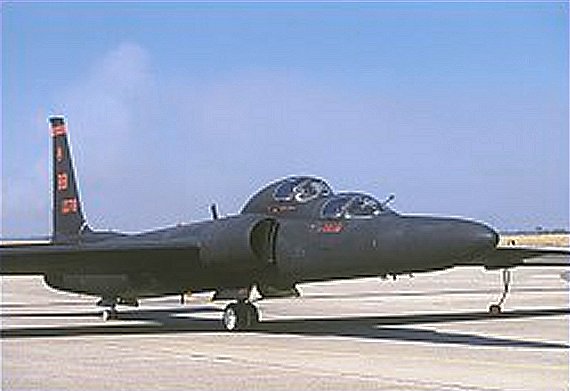
Anyway the picture above is a standard U-2. A TU-2S is a pilot training aircraft, so it has 2 cockpits, like this:

user posted image

This post has been edited by MilitaryMadness: Sep 21 2016, 07:16 AM
MilitaryMadness
post Sep 21 2016, 11:16 AM

Regular
******
Senior Member
1,302 posts

Joined: Oct 2010
From: Over your shoulder


Asian people wear carrier vest look damn small la.
MilitaryMadness
post Sep 21 2016, 01:43 PM

Regular
******
Senior Member
1,302 posts

Joined: Oct 2010
From: Over your shoulder


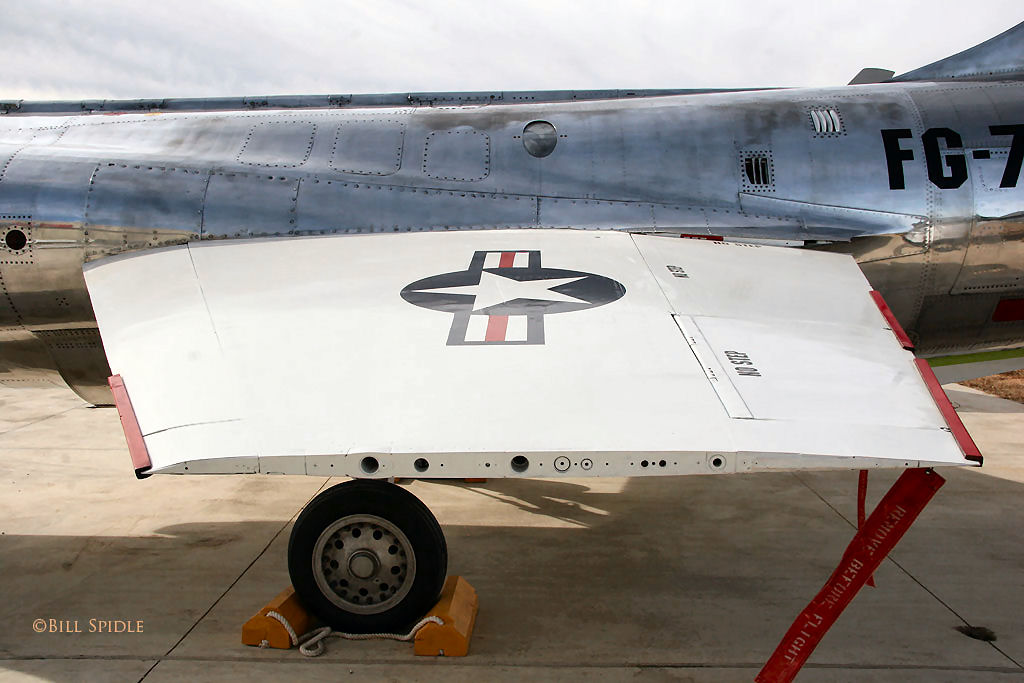
Today I learned: The Lockheed F-104 Starfighter had razor-sharp wings

user posted image

The Lockheed F-104 Starfighter's trapezoid wing was so thin and sharp, especially near the wingtip, that protective guards were put in place before ground maintenance operations to prevent ground crew from hitting it and injuring themselves. laugh.gif
MilitaryMadness
post Sep 21 2016, 03:37 PM

Regular
******
Senior Member
1,302 posts

Joined: Oct 2010
From: Over your shoulder


QUOTE(junkyman @ Sep 21 2016, 03:23 PM)
Argentina current best choice will be Mirage F1 from France or opt for Pakistan / China build JF-17. Korean made K-50 just too expensive and face protest from the British
*
Wouldn't those be a little old?

Even Iran-Iraq and Gulf war eras Saddam used them.
MilitaryMadness
post Sep 27 2016, 10:35 AM

Regular
******
Senior Member
1,302 posts

Joined: Oct 2010
From: Over your shoulder


Unless you are a Chinese shipyard, I thought if take 1 year to build frigate-sized ship is usual timeframe?
MilitaryMadness
post Sep 27 2016, 10:47 AM

Regular
******
Senior Member
1,302 posts

Joined: Oct 2010
From: Over your shoulder


Yemenis unveil 'Burkan-1' long-range tactical ballistic missile

user posted image

The Yemeni forces that Saudi Arabia is fighting have unveiled a ballistic missile that they claim has a range of more than 800 km, which would enable them to hit the port city of Jiddah.

Yemen's SABA news agency reported on 2 September that the Burkan-1 (Arabic: Volcano) is a modified 'Scud' that was developed by the Missile Research and Development Centre of the military's ballistic missile force, which is allied with the Ansar Allah (Houthi) group against Saudi-backed forces loyal to ousted President Abd Rabbuh Mansur Hadi.

SABA reported that the Burkan-1 has a diameter of 88 cm, a length of 12.5 m, a total weight of 8,000 kg, and a 500 kg warhead. That would make it the same diameter as a standard Soviet R-17 (SS-1C 'Scud-B') ballistic missile, but more than 1.5 m longer than a conventionally armed R-17, and around 2,000 kg heavier even though the warhead weighs roughly half as much.

The Al-Masirah television channel that supports Ansar Allah and allied military forces released a video showing three 'Scud'-type missiles that were labelled as Burkan-1s, as well as footage purportedly showing one being launched. Neither the missile nor the launcher could be seen in the latter footage, which was filmed at night.


MilitaryMadness
post Sep 28 2016, 10:19 AM

Regular
******
Senior Member
1,302 posts

Joined: Oct 2010
From: Over your shoulder


Just another day in Syria:
user posted image

laugh.gif
MilitaryMadness
post Sep 28 2016, 04:58 PM

Regular
******
Senior Member
1,302 posts

Joined: Oct 2010
From: Over your shoulder


Today I learned: Indonesians purchased 25 Tu-16 "Badger' bombers way back in the 1960s, in preparation for war with the Netherlands over West Irian

Ever since independence in 1949, Indonsia has always coveted the territory of West Irian. Under president Sukarno, Indonesian military forces continually raided the territory, which was then was still ruled under the Dutch colonial government. This culminated in the breaking off of diplomatic relations between the two countries.

QUOTE
user posted image
Plan for Operation Trikora
In 1961, the Indonesians launched 'Operasi Trikora' to capture West Irian from the dutch authorities. In 1962, Indonesian incursions into the territory in the form of paratroop drops and the naval landings of guerrillas were used to step up the Indonesian Foreign Minister Subandrio's diplomatic confrontation with the Dutch.

Operation Trikora was to unfold in three phases, infiltration, exploitation and consolidation, all under cover of the Indonesian Air Force. The plan called first for the insertion of small bands Indonesian troops by sea and by air drop who would then draw Dutch forces away from areas where the exploitation phase would stage full scale amphibious landings and paratroops operations to seize key locations. The consolidation phase would then expand Indonesian control over the whole of Western New Guinea.

The Indonesian Air Force began to fly attack missions in the area from bases on surrounding islands. Meanwhile amphibious raids by the Indonesian Navy and Marines were intensified.

By the summer of 1962, the Indonesian military had begun planning a large-scale amphibious and air assault against Biak, the Netherlands' main power base in West Irian. This operation would have been known as Operation Jayawijaya ("Victory over colonialism") and would have included a substantial task force of 60 ships including several which had been supplied by Sukarno's Soviet and Eastern Bloc allies, including the heavy cruiser KRI Irian (ex-Ordzhonikidze) along with 16,000 soldiers and Marines. This force was to be commanded by General Suharto (the future president).

user posted image
KRI Irian

To strengthen their hand, Indonesia purchased 26 Soviet Tupolev Tu-16 'Badger' heavy bombers along with a number of KS-1 'Kennel' Anti Ship missiles . These were ordered to sink any Dutch naval vessels trying to resist the planned invasion, especially the light carrier HMNLS Karel Doorman, with its jet-powered Sea Hawk naval fighters, which was identified as a major threat. The Karel Doorman was at that time docked in Frematle, Australia ready to be deployed.

user posted image
A TNI-AU Tu-16 heavy bomber, armed with two KS-1 missiles

On 15 August 1962, the Netherlands, unwilling and unable to wage a protracted war on the other side of the world, agreed to meet Indonesian officials. They later signed the New York Agreement in which the Netherlands ceded the territory of West Irian to a UN administrative state, with a view of later integration with Indonesia. Due to this agreement, Operation Jayawijaya was called off. Indonesia occupied West Irian in 1963 and renamed in 'Irian Jaya'.

MilitaryMadness
post Sep 29 2016, 07:52 AM

Regular
******
Senior Member
1,302 posts

Joined: Oct 2010
From: Over your shoulder


QUOTE(Frozen_Sun @ Sep 28 2016, 08:57 PM)
Walk under it, while rubbing its belly....a hint of old metallic and oil scent....it does tingle inside.
*
Sadly the TNI-AU couldn't maintain the Badgers for long though. The 30th September 1965 coup and the policy of realignment to the western world by president Suharto subsequently cut off Indonesia from Soviet supply and maintenance experts needed to maintain the Badgers. All Tu-16s were grounded in 1968 and they were finally decommissioned in 1970. They were barely in service for a decade. sad.gif

user posted image
A TNI-AU Tu-16 Badger test-firing the KS-1 'Kennel' Anti-ship missile

Seriously though, back in the 1950s, 1960s and 1970s when Malaysia had barely an armed forces, Indonesia had many very modern military assets at the time.

This post has been edited by MilitaryMadness: Sep 29 2016, 07:57 AM
MilitaryMadness
post Sep 29 2016, 08:24 AM

Regular
******
Senior Member
1,302 posts

Joined: Oct 2010
From: Over your shoulder


I found an anecdote about a Tu-16 ordered to do an overfly of KL as a show of force. It was detected by the RAF and was jammed all the way until it was forced to return to Medan.

QUOTE
Tu-16 terlibat penuh dalam kampanye Trikora dan Dwikora. Hanya saja, Dwikora lebih banyak memberikan kesan kepada Suwandi. Sebutlah suatu malam, Suwandi diperintahkan Komodor Leo Wattimena terbang di atas Kuala Lumpur. “Leo yang memerintahkan, dia juga ikut,” aku Suwandi.

Skenarionya lebih kurang begini: Tu-16 terbang dari Medan dan akan show of force di atas Kualalumpur. Untuk menipu radar lawan, pesawat Il-28 Beagle yang diterbangkan Oloan Silalahi disuruh berputar-putar di atas Belawan. Tapi apa yang terjadi. Baru saja pesawat memasuki wilayah udara Singapura, mendadak seluruh lampu padam. Inggris yang mengetahui kedatangan bomber menakutkan itu, langsung bertindak. Tu-16 di-jammed!

Kapten Suwandi yang sebenarnya belum diizinkan terbang malam oleh Dan Wing 003 Letkol Suyitno, sempat kehilangan akal. Avionik tidak berfungsi, sistem navigasi dibuat macet. Tapi tidak ada waktu lagi untuk berdebat. Dia langsung memutar arah pesawat, dan segera mengontak lewat radio tower Medan. Begitulah, lewat tuntunan radio dan kompas magnetik, dia menyusuri “jalan” ke Medan hingga mendarat dengan selamat.

sos
MilitaryMadness
post Sep 29 2016, 04:10 PM

Regular
******
Senior Member
1,302 posts

Joined: Oct 2010
From: Over your shoulder


Today I learned: In 1961, India launched an invasion of the Portugese territory of Goa

One of the problems vexing the Indian prime minister Jawarhalal Nehru in the 1950s was what to do about Goa. It was still a Portuguese colony – as it had been for four and a half centuries – and the Portuguese dictator Antonio Salazar had no intention of letting go of it. On 11 December 1961, 17th Infantry Division and attached troops of the Indian Army were ordered by Nehru to advance into Goa to capture Panaji and Mormugão under Operation Vijay. The main thrust on Panaji was to be made by the 50th Para Brigade Group—one of the Indian Army's most elite airborne units—led by Brigadier Sagat Singh from the north. Another thrust was to be carried by 63rd Indian Infantry Brigade from the east. A deceptive thrust, in company strength, was to be made from the south along the Majali-Canacona-Margao axis.

user posted image
Map of Goa, India

Although the Indian 50th Para Brigade was charged with merely assisting the main thrust conducted by the 17th Infantry, its units moved rapidly across minefields, roadblocks and four riverine obstacles to be the first to reach Panaji.

Hostilities at Goa began at 9:45 on 17 December 1961, when a unit of Indian troops attacked and occupied the town of Maulinguém in north east Goa, killing two Portuguese soldiers in the process. The Portuguese 2nd EREC (esquadrão de reconhecimento—reconnaissance squadron), stationed near Maulinguém, asked for permission to engage the Indians, but permission was refused at about 13:45. The Portuguese had scant hopes of resisting the Indian invasion, given they only had 3,000 soldiers and armed police to defend the territory. Meanwhile the Indians dispatched nearly 30,000 soldiers and numerous air and naval support in the operation.

user posted image
Indian Air Force Canberras bombed Portuguese positions in Goa

By the evening of 18 December, most of Goa had been overrun by advancing Indian forces, and a large party of more than two thousand Portuguese soldiers had taken position at the military base at Alparqueiros at the entrance to the port town of Vasco da Gama. Per the Portuguese strategy code named Plano Sentinela the defending forces were to make their last stand at the harbour, holding out against the Indians until Portuguese naval reinforcements could arrive. Orders delivered from the Portuguese President called for a scorched earth policy—that Goa was to be destroyed before it was given up to the Indians.

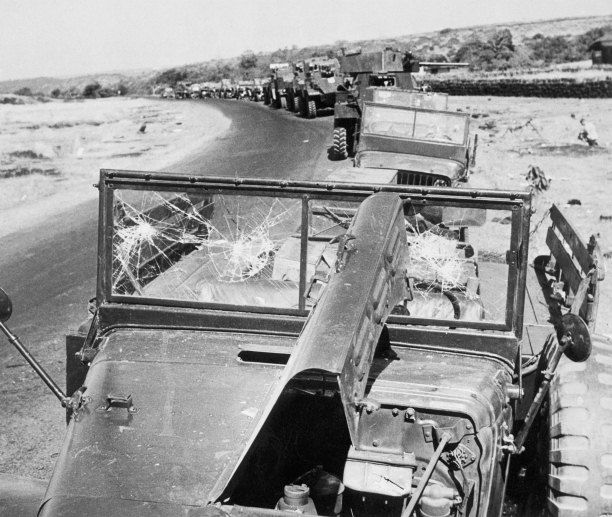
user posted image
Damaged Portuguese military vehicles convoy lie abandoned

Despite his orders from Lisbon, Governor General Manuel António Vassalo e Silva took stock of the numerical superiority of the Indian troops, as well as the food and ammunition supplies available to his forces and took the decision to surrender. He later described his orders to destroy Goa as "um sacrifício inútil" (a useless sacrifice). He did not know it then, but Portugal was actually unable to send any naval vessels, due to Egyptian president Gamal Abdel Nasser denying them access to the Suez canal.

user posted image
The Indian Chief of Army Staff, General Pran Thapar (far right) with deposed Governor General of Portuguese India Manuel António Vassalo e Silva (back to camera) discuss surrender terms

The official Portuguese surrender was conducted in a formal ceremony held at 2030 hours on 19 December when Governor General Manuel António Vassalo e Silva signed the instrument of surrender bringing to an end 451 years of Portuguese Rule in Goa.

user posted image
Portuguese POWs being repatriated to Portugal

11 Pages  1 2 3 > » 
Bump Topic Topic ClosedOptions New Topic
 

Change to:
| Lo-Fi Version
0.1284sec    0.40    7 queries    GZIP Disabled
Time is now: 7th December 2025 - 11:53 PM