Welcome Guest ( Log In | Register )

18 Pages < 1 2 3 4 5 > » Bottom

Outline · [ Standard ] · Linear+

 Venturing into Agriculture & Aquaculture, Co-Ordination & Implementation is KEY

views
     
TSParaOpticaL
post Mar 31 2007, 10:07 PM

Planter - Durian, Jackfruit, Papaya
*******
Senior Member
2,348 posts

Joined: Dec 2004
From: Ch3r@s


QUOTE(siaokia @ Mar 31 2007, 08:10 PM)
Thanks for the answer...  smile.gif  then now i know whats the problem... about the exercise thing...  is it we gv them a bigger area to swim can solve the problem or gv them a bigger force of water flow?
*
not necessary a bigger area. depends on how you rear the fish...

too big the area also no point as you cant make all the fish "exercise"
TSParaOpticaL
post Apr 1 2007, 12:00 PM

Planter - Durian, Jackfruit, Papaya
*******
Senior Member
2,348 posts

Joined: Dec 2004
From: Ch3r@s


QUOTE(AsiaPartTime @ Apr 1 2007, 01:44 AM)
Hi guys, really fun to read this post. I am almost going into agri industry. Currently, I am helping my brother to market his Aquarium Fish trading business. If anyone know some breeder on aquarium fish, please share your contact.

Hi Para, why don't you try to breed aquarium fish? The market is better.

Btw, my family oso have 100 hectars of durian farm. my advice to you guys, dun plant durian, the market is too saturated oredi. everytime hv to depends on those Singaporean bcos all my durians are export to singapore. So, No point plant durian.

we start to venture into new farming, livestock on cow. it is good because we can use their SHIT as organic fertilizer for my durians trees. hahahahah.

i am interested on the gathering too. When is the next session.
*
AsiaPartTime,

i have thought about it but since i have my own goal so i will be going into Consumer Fishes.

i think after a few more gathering session we can start a informal information centre.
hehe

next session should be in early May.
TSParaOpticaL
post Apr 2 2007, 02:57 PM

Planter - Durian, Jackfruit, Papaya
*******
Senior Member
2,348 posts

Joined: Dec 2004
From: Ch3r@s


QUOTE(draggy @ Apr 1 2007, 11:01 PM)
I wonder how many person in this thread own a farm , plantation or land......
*
i will be looking around for some farm land when my project takes off..


QUOTE(AsiaPartTime @ Apr 2 2007, 11:26 AM)
Consumer fish is abit hard. those restaurants like to hold ur payment. last time my brotehr used to supply seafood fish like prawn to them, their payment really bad.

anyway, with ur facility, u can convert into breeding any kind of fish easily.

Do you have any water from jungle? fresh water , not paip water for ur farm?
*
yeah i heard about those notorious restaurants. but what i can do is only do Cash payment. you pay cash then i supply. there are lots of restaurants if you supply is good

yeah i can convert anytime if the commercial fish is really poor then i might change tactic.

yes i have a stream passing thru the farm. so i get "spring jungle water"
TSParaOpticaL
post Apr 3 2007, 06:09 PM

Planter - Durian, Jackfruit, Papaya
*******
Senior Member
2,348 posts

Joined: Dec 2004
From: Ch3r@s


QUOTE(AsiaPartTime @ Apr 2 2007, 08:19 PM)
with ur "spring jungle water", your fish will grow faster and high quality. Where is your farm?
*
yeah because of the spring water...
fish will be better and save cost...

my farm is at Hulu Langat.


QUOTE(rexis @ Apr 3 2007, 12:26 AM)
Its already an information center here  biggrin.gif

Para, have you thought about replicating the river environment to make your fish tastier? Like adding in some water jet stream, make some artificial waterfall, etc. ust a thought. Not sure how will it end up like but for sure will add COST, hahaha.

Theres another article i read about is this guy rearing talapia in prawn pool with salt water, the end result is a tastier and better meat texture fish compare to freshwater talapia. (note: talapia can survive in both fresh and salt water, can do by slowly increasing the salt content, just dont them straight away into sea!)

Oh yeah, i know you should not rear talapia tongue.gif any idea about what fish yet?

How about learn to breed fish? Then sell baby fish? Like that you only need a few adult fish and the proper skill and your fish farm can start production right away.
*

though its an info center but we need to organise it properly.
rearing tilapia could be a choice if i can market it to the right place.


QUOTE(cktwai @ Apr 3 2007, 05:00 PM)
HI Para,

Most of the things i got it from the same place at PWTC smile.gif

HEre's what i have:-

1. LEaflets on Mixed Farming Production System
2. Leaflets on Sistem Perladangan Campuer Berasaskan Tanaman Padi Aerobik
3. Leaftlets on New Cost Effective Feed for Red Tilapia.

There's also two technologies on fish feeding which i find are ridiculous inventions. Too expensive and not useful.

The feed for red tilapia is actually in production for small scale. I suppose if you buy like 3 kg a month they will have supplies. smile.gif

What fish are you planning to farm ??? 

Anyway, if you guys want to setup an information centre, i could put up a website where everyone can post information...

PAra... is there anymore land available near your area ??? YOur area is also within my reach... smile.gif
*
yeah i saw those above.

funny thing about the expo is that cant commercialise it anytime soon so i dont understand why they display a commercial contact no. wasting time and space.

i think that one is from MARDI about the fish feed. i might go and ask and might try and buy to test it out.

about the information centre hope you can start a simple website or something if possible ?

how is the fibreglass coming ? about the area i dont think Langat would be a good place for you except you are ready to pay about RM 200k per acre ?


This post has been edited by ParaOpticaL: Apr 3 2007, 06:10 PM
TSParaOpticaL
post Apr 11 2007, 07:58 AM

Planter - Durian, Jackfruit, Papaya
*******
Senior Member
2,348 posts

Joined: Dec 2004
From: Ch3r@s


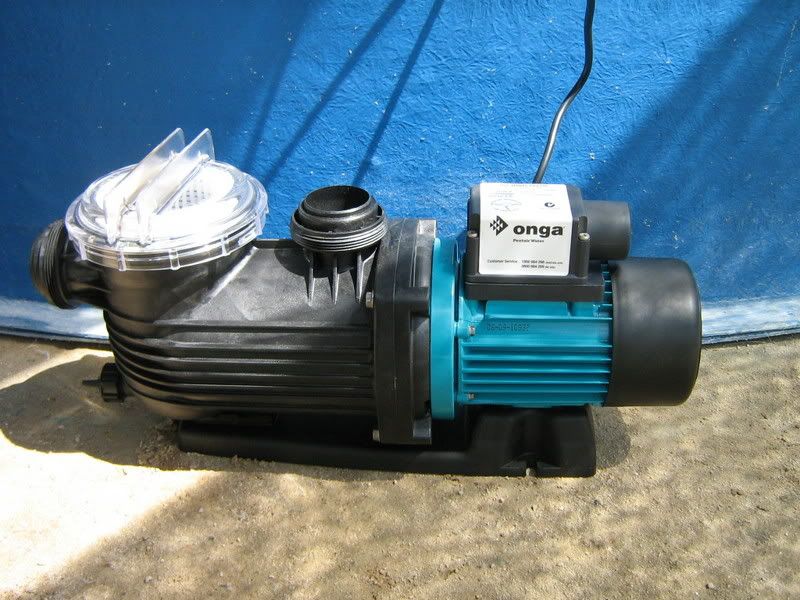
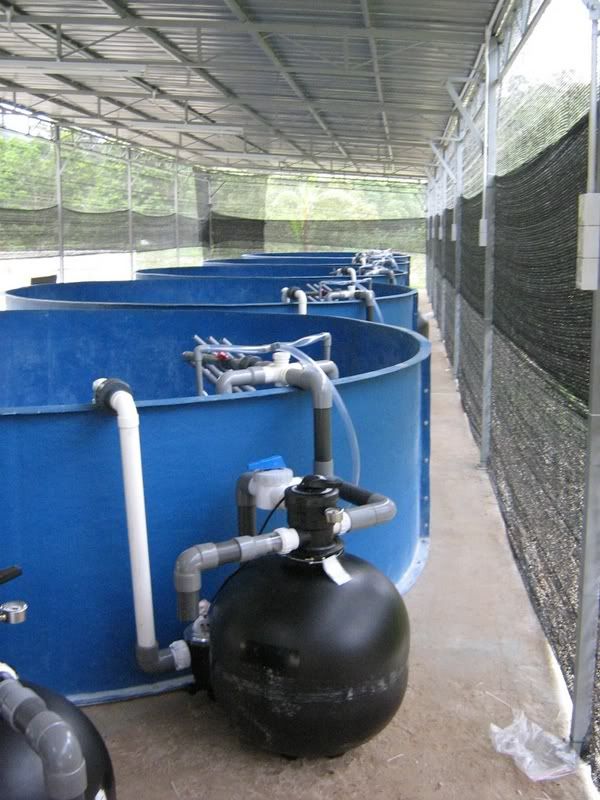
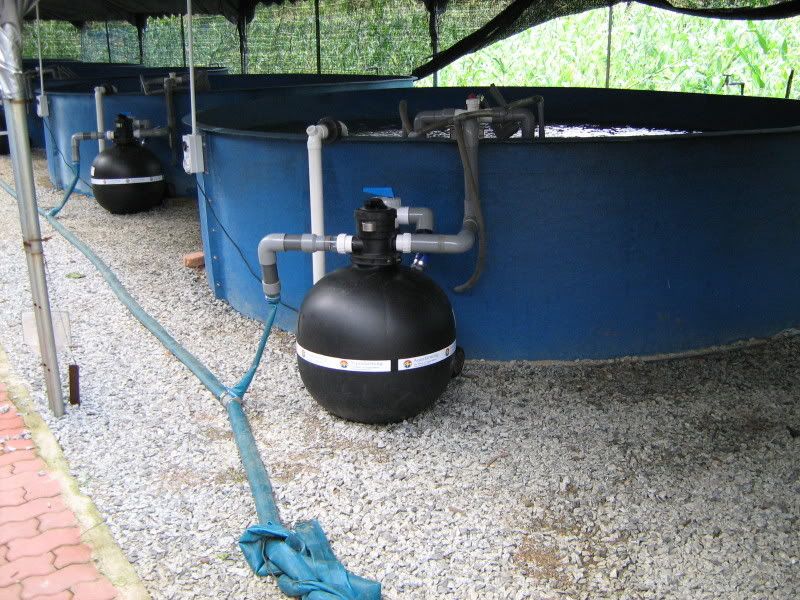
Last Update before i go to Hong Kong @ 12 Apr

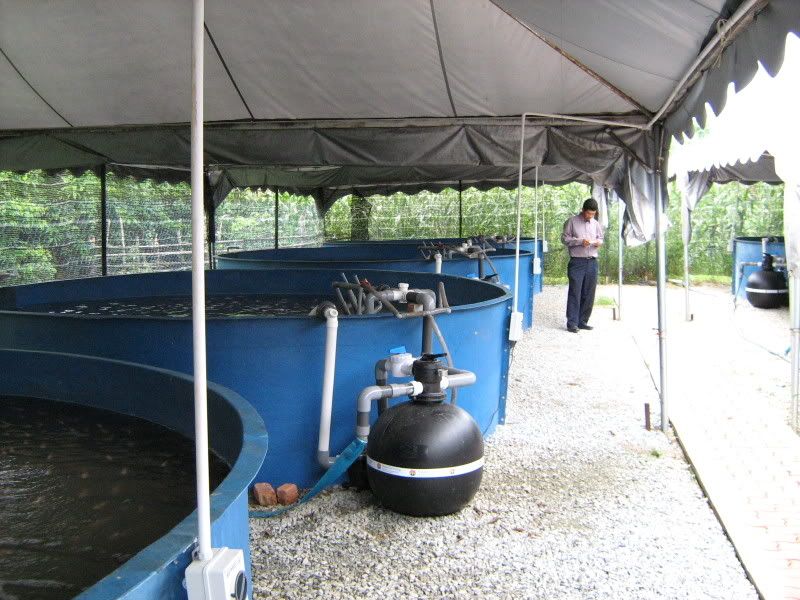
The Pump
user posted image

My Tanks in a Row
user posted image

Individual Tank
user posted image

TSParaOpticaL
post May 2 2007, 06:58 AM

Planter - Durian, Jackfruit, Papaya
*******
Senior Member
2,348 posts

Joined: Dec 2004
From: Ch3r@s


i had just gotten back from Terengganu for my Recirculating Aquaculture System (RAS) will update when i get back to the office. exciting things about this Aquaculture getting me crazy about the opportunities.
TSParaOpticaL
post May 2 2007, 08:57 PM

Planter - Durian, Jackfruit, Papaya
*******
Senior Member
2,348 posts

Joined: Dec 2004
From: Ch3r@s


QUOTE(AsiaPartTime @ May 2 2007, 03:13 PM)
Can you share more on the opportunities? We are waiting for it smile.gif
*
dont worry will post up the opportunity with photos also by the week.
lots of things to sort out.

biggrin.gif

--------------------

QUOTE(Ripp87 @ May 2 2007, 07:13 AM)
whoa, can't believe there's so many pros here in lowyat. im thinking about venturing into palm oil plantation. anyone any idea how to manage?
*
what kind of land size are you talking about ?

for palm oil plantation if the land is too small like 50 acres and below no point in doing it as there might not be enough ROI.

This post has been edited by ParaOpticaL: May 3 2007, 12:10 PM
TSParaOpticaL
post May 3 2007, 08:54 AM

Planter - Durian, Jackfruit, Papaya
*******
Senior Member
2,348 posts

Joined: Dec 2004
From: Ch3r@s


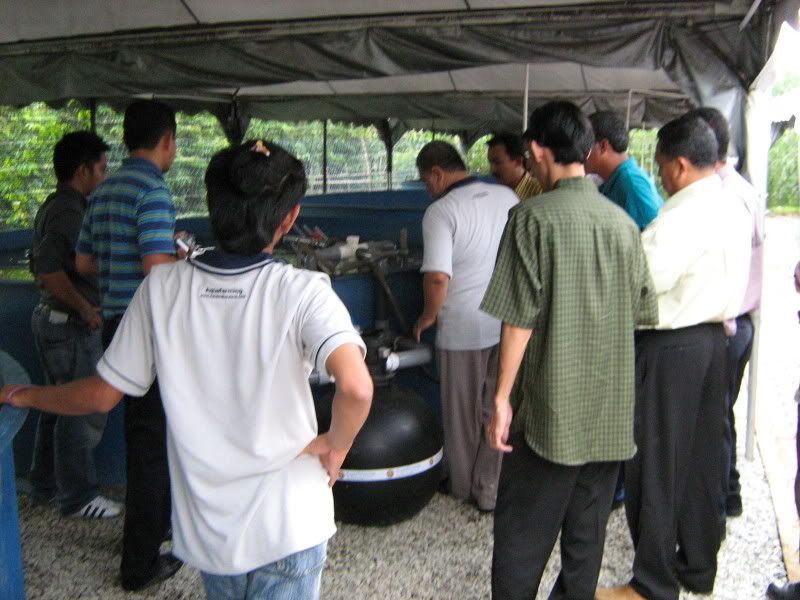
Just gotten back from Terengganu for training.


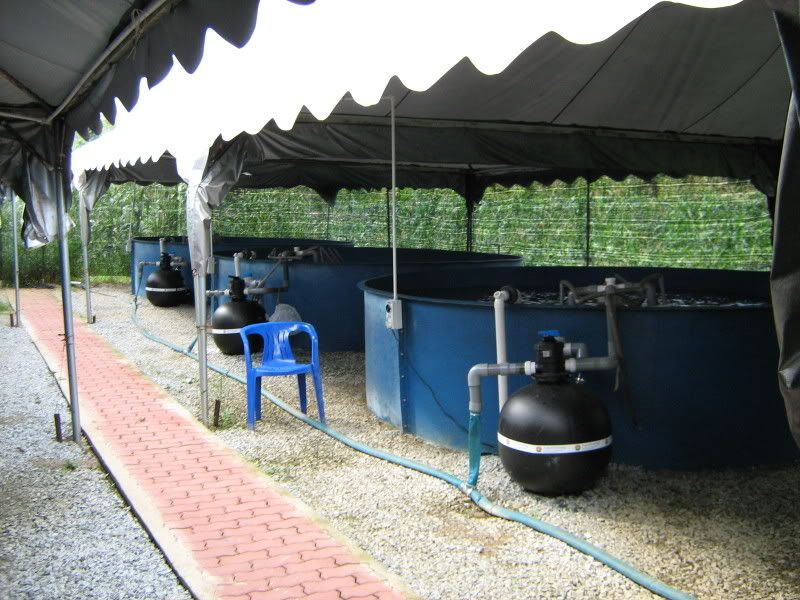
Tanks arrangement I
user posted image

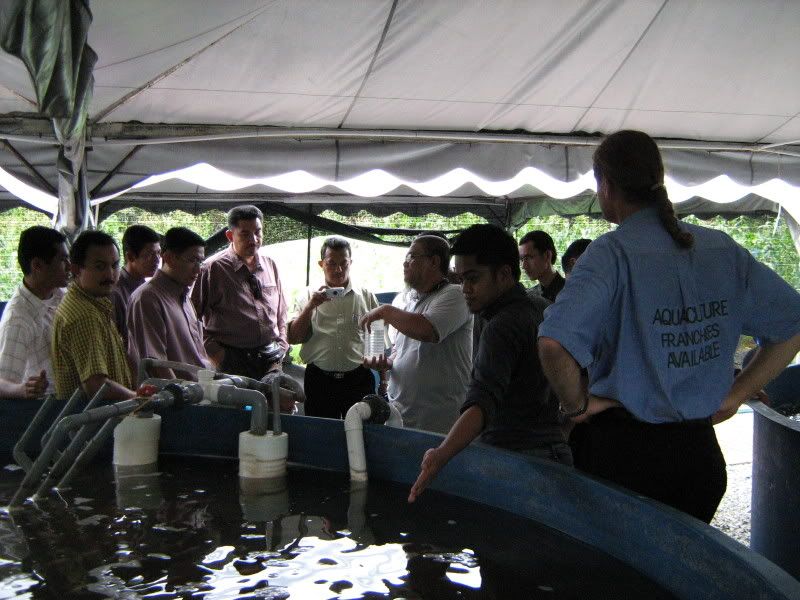
Explanation of Usage I
user posted image

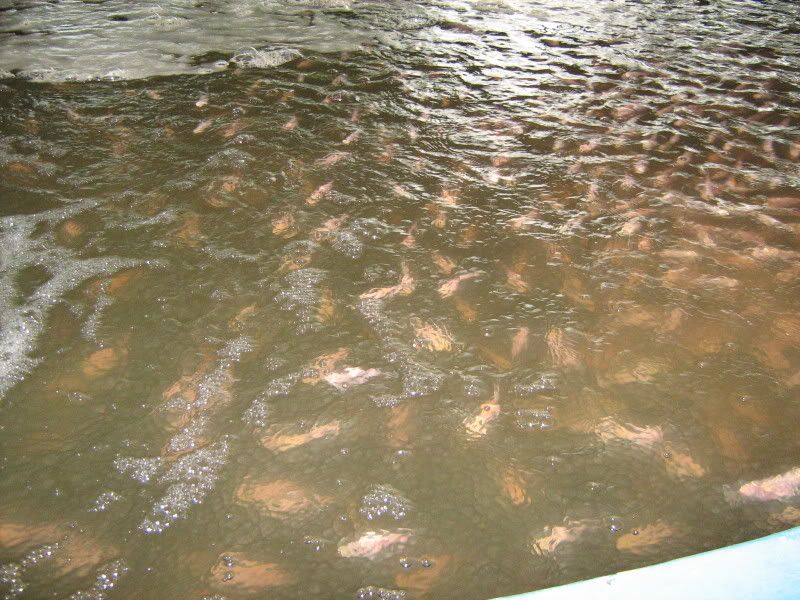
10,000 red tilapias
user posted image


Explanation of Usage II

user posted image

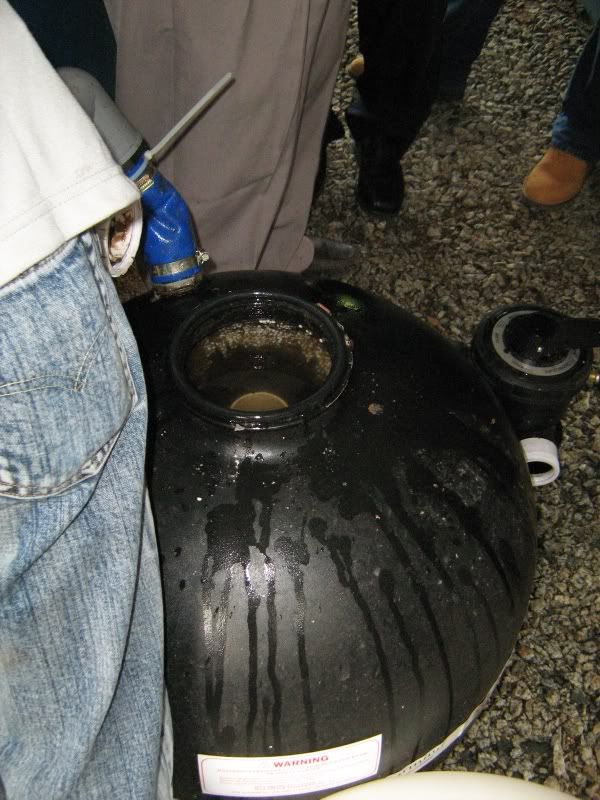
What's Inside
user posted image


Tanks arrangement II

user posted image

Tanks arrangement III
user posted image

This post has been edited by ParaOpticaL: May 3 2007, 12:13 PM
TSParaOpticaL
post May 12 2007, 11:57 AM

Planter - Durian, Jackfruit, Papaya
*******
Senior Member
2,348 posts

Joined: Dec 2004
From: Ch3r@s


Here is one of the opportunities.

This Kuruma Prawn is a gift in the Japanese Market. It fetches around
Aus $ 70 - Aus $ 120.

----------------------------------------------------

http://www2.dpi.qld.gov.au/fishweb/2695.html

Kuruma prawns
Penaeus japonicus

Officers of the Bribie Island Aquaculture Research Centre, revised by Ross Lobegeiger, Bribie Island Aquaculture Research Centre, DPI&F.

The kuruma prawn, Penaeus japonicus is a subtropical prawn native to the Indo-West Pacific and extending to the Red Sea and Africa. The northern coast of Queensland represented the southern limit of its distribution until the discovery of a small population near Mackay. The culture of the kuruma prawn in Australia has developed in response to lucrative Japanese markets. The majority of prawns are flown live to Japan.

Culture environment

Kuruma prawns are commonly found in the sandy bottom of the open ocean at depths of 10 - 40 metres. They are nocturnal animals burrowing in sand by day and feeding and spawning by night. Maximum growth rates are achieved in 25-35 parts per thousand (ppt) salinity. Kuruma prawns do not tolerate low salinity and a sudden drop will result in mortality.

Temperatures for optimum production range between 25oC and 30oC and feeding will stop at 15oC. These temperature requirements limit production to one crop during the summer months in areas south of Mackay. Excessively high water temperatures also affect production and cause problems when harvesting. The kuruma prawn does not culture well in tropical areas.

Kuruma prawns are grown in purpose built earthen ponds adjacent to good supplies of seawater. Ponds are approximately 0.8 to 1.5 hectares in size and are 1.5 to 2.0 metres deep. Ponds should have gently sloping bottoms that allow complete drainage and dry out of the pond floor. Steep pond sides (1:2 slope) will prevent benthic algal growth and minimise wading bird predation. Pond walls tend to be lined to prevent excessive soil particles eroding and settling on pond bottoms. Kuruma prawns also require that the pond floor be covered with 10-15 cm of sand to allow for their natural burrowing habit.

Breeding and post larvae production

Prawn larvae are produced in hatcheries from pond-reared spawners or broodstock collected from wild populations. The majority of these spawners are gonadally mature and when transferred to the hatchery will spawn in response to environmental manipulation or eyestalk ablation. Kuruma females will produce up to 0.8 million eggs per 100 gram of body weight. The eggs are hatched and then pass through a number of larval stages until the post larval (PL) stage is reached. The PLs are normally sold to the growout farms for stocking ponds when they are 15 days old (PL 15). Due to the majority of farms producing their crops over the summer period the greatest demand for PLs occurs from August to November.


Growout


Between harvests the pond bottoms are dried and waste and sediments from the previous crops are removed from the centre of the ponds. The sand bottom is renovated and dried and some extra sand may be added. Prior to filling the ponds are limed. The ponds are filled through screened inlets and left for 7-10 days before stocking. Kuruma PLs are generally stocked at 30 PLs per square metre with a range of 25 to 60 per m2. Organic fertilisers are used to maintain healthy algal blooms.

These blooms are essential to achieving good survival and fast growth rates. Careful feeding is necessary to achieve viable production. The prawns are fed two to three times at night and feeding trays are used to more accurately monitor feed rates. The major component of kuruma artificial feed is an expensive mix of high protein fish and squid meal. The prawn diet is presented in a pellet form that is water stable and of a size suitable for the particular growth stage. Food conversion ratio (FCR) for kuruma prawns is usually around 2.5 kg of feed to produce 1 kg of prawn (FCR 2.5:1).

Good water quality conditions are essential to maximise survival and growth rates. High aeration is vital to keep the sandy bottom well oxygenated and suitable for burrowing. Dissolved oxygen (DO) levels must be maintained at greater than 4 parts per million (4 ppm). Both paddle wheel and propeller aspirators are used. Ammonia levels of 0.2 milligrams per litre will affect growth and are lethal at 1.5 mg per litre. Avoiding overstocking and excessive feeding can control ammonia levels. Kuruma prawns appear to tolerate a range of turbidity levels. As a stable water regime is vital, measurement of all water parameters should occur regularly. Within 6 months the prawns reach marketable size and with good survival (greater than 80%) production of 3 to 4 tonnes per hectare can be achieved.

Harvesting

Harvesting normally starts in March - April and continues through to July - August. The crop is normally partially harvested by using traps or wing nets set at night when the prawns are active. The traps are baited and the larger prawns are trapped inside while the smaller prawns escape. The wing nets channel the swimming prawns into a tunnel and then into a box net. The prawns are slowly cooled in two stages down to 12oC to 14oC before packing. The graded prawns are then packed in cool, moist wood shavings or sawdust in 1 kg packs. These packs are then placed in insulated boxes, which maintain the 12oC to 14oC range, and flown to Japan. Survival rates of 95% can be achieved using this technique.
TSParaOpticaL
post May 21 2007, 07:56 AM

Planter - Durian, Jackfruit, Papaya
*******
Senior Member
2,348 posts

Joined: Dec 2004
From: Ch3r@s


thank you for your time to give us this recipe...hehe

------------------------------

Agro sector a goldmine worth RM6b, says PM from NST

KUALA BERANG: High-impact projects in agriculture can generate about RM6.3 billion in revenue for the country by 2010, according to government estimates.
"Agriculture is business. High-impact projects in this sector will not only provide jobs and create new sources of wealth for the people but also revenue for the country," Prime Minister Datuk Seri Abdullah Ahmad Badawi said yesterday.

He said the government had identified 61 areas covering 36,905 hectares where 39 high-impact projects in the agriculture sector could be created by 2010.

"These projects will benefit more than 22,000 participants, including graduates, fishermen and the hardcore poor," he said after visiting the country's largest aquaculture project at Sungai Como in Tasik Kenyir.


The project covers 2,800ha and 240 participants, who will manage 6,000 fish cages. The government has allocated RM50 million for its development.

Project participants only have to worry about raising the fish, mainly red tilapia, while marketing has been assigned to a private firm. This arrangement will ensure the long-term viability of the project.

Abdullah said the commercial production of high-value freshwater fish in the Sungai Como project would provide sustainable income for the participants.

The involvement of a range of people, especially graduates who were serious about agriculture, could spearhead the transformation of the sector, particularly in the fisheries sub-sector, he said.

He said graduates could help prove sceptics wrong, especially those in the rural areas.

"The agriculture sector is a goldmine for those willing to follow good agricultural practice. Graduates could also play an important role by taking the lead in agro-based industries.

"We are also hoping that the private sector will exploit the potential in aquaculture."

For Terengganu, he said, the launching of the high-impact project at Sungai Como notched another success for the Barisan Nasional government in its efforts to create wealth for the people, especially fishermen.

Abdullah singled out fishermen as the target group as they were often associated with poverty.

"By participating in aquaculture, they will be able to earn a steady income all year round."

Earlier, at the launch of the Aquaculture Industrial Zone at Sekolah Kebangsaan Tapah, Abdullah urged the private sector to promote agricultural exports.

The government has targeted the production of 662,000 tonnes of marine fish, freshwater fish and seaweed by 2010. Currently, the output was only 250,000 tonnes.

Abdullah said he also wanted to see small-scale farmers progress from production to marketing and to diversify into other agricultural sub-sectors.

"Their success will open the eyes of the people who will see the wealth of opportunities in this sector."

Abdullah also directed federal government agencies and the Johor government to ensure only genuine flood victims receive assistance.

"There are those who are opportunistic and pretend to be victims of the flood. They (agencies) must be careful to ensure only the genuine victims receive assistance.

"What is more important is that those who have been identified must be given the assistance immediately. Don't wait," he said.

The prime minister was responding to a question on the grouses by some flood victims who complained that financial assistance was slow and hampered by bureaucratic red tape.

Some of them had claimed that some agencies had requested that victims surrender their water and electricity bills to prove that they were actually flood victims.

Abdullah said the quantum of financial aid to the victims was approved by the state government with co-operation from federal agencies.
TSParaOpticaL
post May 21 2007, 07:59 AM

Planter - Durian, Jackfruit, Papaya
*******
Senior Member
2,348 posts

Joined: Dec 2004
From: Ch3r@s


A TV Programme for Agri + Aqua Entrepreneur

----------------------------------------------

Planting the seeds for agriculture from NST

KUALA LUMPUR: Catch the debut of Seeds, a hip programme on agriculture for youth and budding entrepreneurs, over ntv7 on Sunday.
The 30-minute programme at 5pm takes a fresh look at the sector, highlighting the upbeat side of the industry and showcasing how lucrative it can be.

The 13 episodes are being brought to viewers by CIMB Group with co-sponsorship by Sime Darby Bhd.

CIMB Group chief executive officer Datuk Nazir Razak said Seeds was expected to inspire youths to participate actively in agri-businesses.

"We want to create awareness of the potential of agriculture as an industry as well as develop a positive image of the sector," he said at the launch of the programme here yesterday.
Through Seeds, budding agropreneurs can get tips on various aspects of agricultural-based business, including research and development, innovation, branding, marketing, human capital and even funding.

The programme will also feature the success stories of agropreneurs including customers of CIMB Bank and Commerce-Ventures, the venture capital arm of CIMB Group.

Sime Darby chief executive officer Datuk Ahmad Zubir Murshid said not much had been said about the industry so far.

"In Europe, farmers are rich but here people think that farmers are poor. We need to encourage more people to be interested in agriculture," he said.

The show was conceptualised, designed and produced by AcaraKita Sdn Bhd, a communications company.

Its communications director Siti Hajjar Abd Kader said many young businessmen had made millions in agriculture over the years.

"Seeds will take viewers to these success stories, giving them the opportunity to see how it was done. One can even pick up tips from them," she said.

The programme will be hosted by Nazrudin Rahman, more popularly known as Naz, of ntv7's Breakfast Show.

"Even the Prime Minister Datuk Seri Abdullah Ahmad Badawi, who is featured in episode one of Seeds, is very excited about the show. We had the opportunity to see how our leader, who is passionate about agriculture, tends to his secret fruit garden," Siti Hajjar said.

"The show will also feature guest hosts including Malaysia's number one singer, Datuk Siti Nurhaliza Taruddin, Celena Khor of 3R, Juliana Ibrahim and Lydia Ibtisan of Puteri Impian."


This post has been edited by ParaOpticaL: May 25 2007, 12:37 PM
TSParaOpticaL
post May 25 2007, 12:38 PM

Planter - Durian, Jackfruit, Papaya
*******
Senior Member
2,348 posts

Joined: Dec 2004
From: Ch3r@s


2007/05/21

Reaping a bounty from red tilapia


http://www.nst.com.my/Current_News/NST/Mon...1080639/Article

TASIK KENYIR: Four months ago, Mohd Izuddin Mohd Rozali left his computer networking business for a new challenge.
And now, the 26-year-old may have found his niche.

Izuddin manages an aquaculture project at Sungai Como. It yielded its first harvest of red tilapia on Saturday.

Nearly a tonne of tilapia, weighing between 500 and 750g each, were fished from their holding pens and sold at the price of RM5 per kilogramme. The fish were for markets in Kuala Lumpur and Johor, for processing into fillet.

"This is only the beginning. I am now managing 200 fish cages, but by the end of this year, the number will be increased to 1,000 cages. There will be more work and I will face a bigger challenge.
"And, I am happy that leaving what was a comfortable job is paying off. The income is good."

His degree and skills from his old job, however, have made managing the project easier.

The project has also proven that the Aquaculture Industry Zone, covering 2,800ha at Sungai Como, could not have been better situated. The clean water has enabled Izuddin to raise premium quality fish.

The success of the project has attracted attention from the private sector and importers. State Fisheries Department director Munir Mohd Nawi praised Izuddin's commitment and said unemployed graduates should emulate it.

"We have a big area for this industry. Even participants - 11 groups, each comprising 10 members - in the aquaculture programme for the hardcore poor are doing good business.

"Their programme started much earlier and they are now selling about one tonne of red tilapia a month to buyers in the local market."

He said the department was in the process of obtaining accreditation under the Aquaculture Certification Scheme, which recognises good aquaculture practices.

"This is important as the recognition will enable breeders to export the red tilapia to Europe. The certification will allow buyers to identify fish coming from a premium source.

"Malaysia cannot compete based on quantity, but we have the edge if we go for quality."
TSParaOpticaL
post May 25 2007, 07:35 PM

Planter - Durian, Jackfruit, Papaya
*******
Senior Member
2,348 posts

Joined: Dec 2004
From: Ch3r@s


QUOTE(rexis @ May 25 2007, 03:11 PM)
It is especially inspiring whenever I read about any IT guy venturing into this field, or any other field. One really should not limit themselves by a piece a paper.

Some said with a higher education cert will open up more opportunities to us, but I think this piece of paper just limiting one self. Thats what decide someone to be an accountant or analyst, that is a limitation. In the end, even if you hate accounting or programming so much, you have to bear with it.

Open up yourself for greater opportunities.

---------

Dont have any direction? Want to know what you will become after 5 or even 10 years? There is a fast way to get some idea about it. Just look at your boss, or any of your senior colleagues, and ask yourself, do you really want to be like them?

Find an inspiration, and follow their path. At least you know what you want and what you need to do.
*
hey brother... i am an Accounting guy turning to Aquaculture...

so i think both fields also are very big opportunities. 5 yrs down the road i plan to make at least RM 1,000,000.00

which i sincerely think its achievable.
TSParaOpticaL
post May 29 2007, 09:12 AM

Planter - Durian, Jackfruit, Papaya
*******
Senior Member
2,348 posts

Joined: Dec 2004
From: Ch3r@s


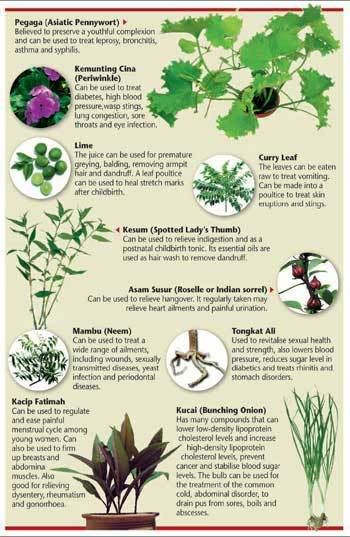
Medicinal herbs in your garden
By : Nisha Sabanayagam


user posted image


KUALA LUMPUR: The next time you accidentally step on a weed in your garden, take a closer look.
It might be one of those commonly overlooked wild plants that have medicinal properties.

A good example is the bayam duri (spiny amaranth), a noxious weed that is found in just about any Malaysian garden.

This coarse plant, with its sharp spines, can be used to treat internal bleeding, diarrhoea, excessive menstruation and snake bite.

The bayam duri and many other Malaysian garden weeds, which can be used to treat conditions ranging from the common cold to sexually transmitted diseases, are featured in the Healing Herbs of Malaysia.
This coffee table book, published by Felda, catalogues the healing properties of a hundred common plants, including many fruits and flowering species found in the country.

Examples include the mild limau purut (kaffir lime), which can prevent premature greying, the common pegaga (asiatic pennywort) which helps to preserve a youthful complexion and the innocuous asam gelugur (garcinia) which may assist in weigh loss.

Author Dr Wan Hassan Wan Enbong lamented the fact that only 50 local plant species were being used in the country's herbal industry and even fewer were being scientifically evaluated for their medicinal properties.

This is a real waste because Malaysia has over 2,000 native species that have been reported to have herbal or medicinal properties, said Wan Hassan, a specialist in tropical agriculture, food science and technology, nutrition and animal husbandry.

"There is big money in the herbal business but there is also a lack of awareness," he added.

Wan Hassan said the herbal medicine business was worth about RM5 billion a year in Malaysia and was growing at a rate of 15 per cent per year.

"Ironically, 90 per cent of the raw materials for the industry are being imported," said Wan Hassan.

Even herbs that have been commercialised, said Wan Hassan, were not being exploited efficiently.

For example, he added, kacip fatimah and tongkat ali could be used to treat a variety of ailments but they have mostly been promoted as sex-enhancing herbs.

For example, he said, he used to suffer from chronic rhinitis and always had a handkerchief to his nose.

"But after I took tongkat ali, my ailment improved within a month," he said.

He said part of the reason the book was published was to create interest among students and scientists to study local herbs because the industry was virtually untapped.

"It could bring so much riches to the country if properly cultivated," he said.

It took Wan Hassan and his photographer partner Mus-taffa Mahmood about 11 months to complete the book. He said the idea for the book was mooted by Felda.

"The text is simple and interesting. I tried to think of everything in layman's terms," he added.

Mustaffa's photography work has adorned, in full or part, more than 30 coffee table books of various titles.

The book is available through mail order at RM290 per copy.

Enquiries may be directed to Wan Hassan at 012-3769020.


TSParaOpticaL
post May 30 2007, 01:02 PM

Planter - Durian, Jackfruit, Papaya
*******
Senior Member
2,348 posts

Joined: Dec 2004
From: Ch3r@s


QUOTE(cplng @ May 29 2007, 11:11 PM)
Newbie - to Lowyat as well as to Aquaculture.
Have always been wanting to find out more about Aquaculture, and thought this thread was the best thus far.
Have been looking at MalaysiaLand for some time already, STAC as well.
In fact, today (29th May) Star Paper, someone wanted to sell his aquaculture business in Semenyih. Check biz for sale.

I'm interested in the next meeting/get together. Always believe people with same ideas should rub shoulders together.

Let me know.
cheers.
*
hi cplng,

thank you and hope you enjoyed the thread thus far.

about the biz for sale i have been there. am not sure about his REAL intention to sell the ponds. but his ponds are BEHIND Nirvana Memorial Park

selling around RM 120k+ if not mistaken.


QUOTE(cktwai @ May 30 2007, 11:35 AM)
Hi,

Not sure about the semenyih one but my friend (someone dealing with antibiotics for fishes and prawns) told me that have to becareful when buying ponds for prawn farming. Some areas are infected with disease.
*
very true. if you suspect someone selling very cheap and way below market must be careful.

if really buy also dont worry. just drain all the water and let it under the sun and kill the bacteria and disinfect it then should be ok.

--------------------------

i am putting my 1st batch of fishes in tentatively on the 11th June 2007

TSParaOpticaL
post May 31 2007, 02:53 PM

Planter - Durian, Jackfruit, Papaya
*******
Senior Member
2,348 posts

Joined: Dec 2004
From: Ch3r@s


QUOTE(rexis @ May 30 2007, 04:43 PM)
Not only applicable to pond, but to land or any property as well. Who knows the cheap land you bought actually was a JE pig burial ground...

If bought a non suitable pond(or land) for your prawns also nevermind, just find another suitable product, talapia? Or even use it to plant lotus(lotus has market). Remember, be flexible a bit.

First batch of what fish? You finally decided to breed sook hock?
*
yes your thinking is very true. we as human must be flexible in our ventures no matter what.

i have 6 tanks but i start with 4 tanks 1st.

a) Soon Hock
b) Patin
c) Baung
d) Tilapia


QUOTE(AsiaPartTime @ May 31 2007, 09:19 AM)
wow sock hock is a big market man. send up to genting gotong jaya. very good market over there.
*
wah...Genting GohTong Jaya big market ar ?
hmm i must try to market there. drool.gif drool.gif
hehe
thanks

QUOTE(naim_mahmood @ May 31 2007, 09:35 AM)
hi guys.

great action paraoptical.. u really make it real.

icon_rolleyes.gif
*
thank you. hope it will work out. biggrin.gif
TSParaOpticaL
post Jun 26 2007, 07:07 PM

Planter - Durian, Jackfruit, Papaya
*******
Senior Member
2,348 posts

Joined: Dec 2004
From: Ch3r@s


wow this is the 'new' Jatropha Biofuel...

thanks for the invaluable info.
TSParaOpticaL
post Jul 12 2007, 02:59 PM

Planter - Durian, Jackfruit, Papaya
*******
Senior Member
2,348 posts

Joined: Dec 2004
From: Ch3r@s


This herb is 1st grown by the Japanese. Read from a Herb magazine very difficult to be planted here but it had been done before.

-----------------------------

IMMORTALITY HERB


Source : WiKiPeDiA

Gynostemma pentaphyllum, also called jiaogulan (Chinese: 绞股蓝; Pinyin: jiǎogǔlán) is an herbaceous vine of the family Cucurbitaceae (cucumber or gourd family) indigenous to the southern reaches of China, southern Korea and Japan. Jiaogulan is best known as an herbal medicine reputed to have powerful antioxidant and adaptogenic effects that increase longevity.
Contents


Uses

Jiaogulan is used as a natural sweetener in Japan and is known as an adaptogen and antioxidant and has been found to increase superoxide dismutase (SOD) which is a powerful endogenous cellular antioxidant. Studies have found it increases the activities of macrophages, T lymphocytes and natural killer cells and that it acts as a tumor inhibitor. Due to its adaptogenic effects it is frequently referred to as "Southern Ginseng," although it is not closely related to true Panax ginseng. Its adaptogenic constituents include the triterpenoid saponins gypenosides which are closely structurally related to the ginsenosides from the well-known medicinal plant ginseng. It has been shown to lower cholesterol levels in human studies.

The plant is best known for its use as an herbal medicine in traditional Chinese medicine, although its inclusion in Wu Qi-Jun's 1848 botany book Zhi Wu Ming Shi Tu Kao Chang Bian discusses a few medicinal uses and seems to be the earliest known documentation of the herb. Prior to that, Jiaogulan was cited as a survival food in Zu Xio's 1406 book Materia Medica for Famine. Until recently it was a locally known herb used primarily in regions of southern China. It is described by the local inhabitants as the immortality herb, because people within the Guizhou Province, where jiaogulan tea is drunk regularly, have a history of living to a very old age.Most research has been done since the 1960s when the Chinese realized that it might be an inexpensive source for adaptogenic compounds, taking pressure off of ginseng stock.

Adaptogenic herbs are nontoxic in normal doses, produce a nonspecific defensive response to stress, and have a normalizing influence on the body. They normalize the hypothalamic-pituitary-adrenal axis (HPA axis). As defined, adaptogens constitute a new class of natural, homeostatic metabolic regulators. However they are also functional at the level of allostasis which is a more dynamic reaction to long term stress, lacking the fixed reference points of homeostasis. Jiaogulan is a calming adaptogen which is also useful in formula with codonopsis for jet lag and altitude sickness.


Alternate names


Western languages such as English and German commonly refer to the plant as jiaogulan. Other names include:

* Chinese: xiancao (仙草, literally "immortal grass"; more accurately "herb of immortality")
* English: five-leaf ginseng, poor man's ginseng, miracle grass, fairy herb, sweet tea vine, gospel herb
* Japanese: amachazuru (kanji: 甘茶蔓; hiragana: あまちゃずる; literally amacha=sweet, cha=tea, zuru=vine)
* Korean language: dungkulcha (덩굴차) or dolwe (돌외)
* Latin: Gynostemma pentaphyllum or Vitis pentaphyllum
* Thai: jiaogulan (เจียวกู่หลาน)
* Vietnamese: Giảo cổ lam

One U.S.-based company markets jiaogulan under the name "Panta". At least one U.S. company markets jiaogulan under the name "Penta Concentrate" for lowering cholesterol.
TSParaOpticaL
post Aug 1 2007, 03:00 PM

Planter - Durian, Jackfruit, Papaya
*******
Senior Member
2,348 posts

Joined: Dec 2004
From: Ch3r@s


RM1.6b push for industry
http://www.thestar.com.my/news/story.asp?f...4263&sec=nation

KUALA LUMPUR: Another ambitious national plan in the aquaculture industry worth RM1.6bil will be introduced by the end of the year.

It involves 39 projects spread over 25,000ha of land in all states for the farming of prawns, cockles, crabs and other types of marine produce.

"It is a government-initiated programme but driven by the private sector. I am liberal and a bit more flexible on these projects.

"Locals and foreign investors are welcome to participate," Agriculture and Agro-based Industry Minister Tan Sri Muhyiddin Yassin told reporters at the National Fishermen Association (Persatuan Nelayan Kebangsaan, Nekmat) annual general meeting.

He said the Government would invest RM300mil to build the primary infrastructure.

Asked if investors would be subjected to any affirmative-action plan, Muhyiddin stressed that it would be an open project to spur the aquaculture industry and help double production to about 600,000 tonnes a year.

The ministry had enlisted a merchant bank to prepare a prospectus for each of the 39 projects.

The prospectuses, which will list out, among other things, the project viability, marketing and financial analyses, are expected to be ready by the end of the year.

If things go as planned, the projects will start by the middle of next year.

Earlier, Muhyiddin called on fishermen to embrace change and be ready to be "transformed".

"Malay fishermen have this emotional thing about wanting to own boats. As long as they have one, they are happy. But not many fully utilise the boats to catch fish.

"Under the transformation programme, we urge fishermen to form small groups to co-own bigger and better boats. They can venture out into deeper waters to catch fish," he said.
TSParaOpticaL
post Aug 29 2007, 08:25 AM

Planter - Durian, Jackfruit, Papaya
*******
Senior Member
2,348 posts

Joined: Dec 2004
From: Ch3r@s


QUOTE(rexis @ Aug 14 2007, 02:54 PM)
ishh ishh, when i google for mushroom growing information, it lead back to here....
*
yo rexis brother...

there is a mushroom course going on @ Tampin.
saw it in the AgroWorld.

another thing is there is another agri magazine no colour also providing mushroom course, but i dont have the details.


18 Pages < 1 2 3 4 5 > » Top
 

Change to:
| Lo-Fi Version
0.0312sec    1.14    7 queries    GZIP Disabled
Time is now: 14th December 2025 - 11:51 AM