Welcome Guest ( Log In | Register )

Outline · [ Standard ] · Linear+

 Venturing into Agriculture & Aquaculture, Co-Ordination & Implementation is KEY

views
     
jameslionhart
post Jul 4 2012, 04:02 PM

On my way
****
Senior Member
586 posts

Joined: Sep 2005


A guy with 0% knowledge in agriculture here! My friend have two parcel of 5 acre land in Seremban. We are planning to venture into agriculture but don't know how and what to do about it. It was his family land anyway. 5 years was given for trials.
TSParaOpticaL
post Jul 4 2012, 05:58 PM

Planter - Durian, Jackfruit, Papaya
*******
Senior Member
2,348 posts

Joined: Dec 2004
From: Ch3r@s


which part of seremban is your land in ??

what's your time & money committment to this venture ?


QUOTE(jameslionhart @ Jul 4 2012, 04:02 PM)
A guy with 0% knowledge in agriculture here! My friend have two parcel of 5 acre land in Seremban. We are planning to venture into agriculture but don't know how and what to do about it. It was his family land anyway. 5 years was given for trials.
*
MrFarmer
post Jul 4 2012, 07:04 PM

Casual
***
Junior Member
478 posts

Joined: Mar 2011
From: Sabah


QUOTE(Michael J. @ Jul 4 2012, 10:32 AM)
Mr Farmer:

Thank you. You are very right about knowing one's capabilities. Agriculture is a very engaging affair, and your crops are very finicky "lovers", so to speak; show them a little less attention and care, and there's a high chance of them running out on you.
One thing I've learnt from small-holdings elsewhere (not Malaysia), is the importance of adding value. Sometimes even small added value could make a whole difference towards the final sell. What I mean by value adding are things as seemingly insignificant as bunching your produce together, or pre-packaging them, to more elaborate methods such as cooking them up into ready-to eat meal to take home from the Pasar Tani.

And seriously, the value the small holder can gain is quite stark. Eg., a sweet potato farmer regularly harvests rogue leaves and stems and sells them for RM1 per fistfull bunch. He often sells up to RM200 of the leaves and stems at the weekly farmer's market. If he had sold by weight, he would probably get about 3/4 only. Similarly, his wife grills up fresh sweet potatoes, and sells them about RM2.50 - RM3.00 each (around 400g-500g weight). That's about double the average retail value for fresh tubers.

Obviously, a small holder would not be able to value add everything he/she has cultivated and sell them like the above. But if you can target to have about 30% or maybe 50% of your crop value added, you would be doing pretty well; i.e. sell all your grade A/B produce at the best prices, value add your slightly lower grade produce and sell it for immediate consumption. Now don't go all "aiyoh, sell low grade stuff to people.."; low grade in this instance does not mean spoilt produce, but rather good quality, yet not meeting the size/weight mark, eg. grade C tilapia weight around 400g = still tasty, but fetches very low prices.
*
MJ, it's always so inspiring chatting with you.
Speaking of sweet potatoes, my sweet potatoes patch had dried up due to the long dry spell. Don't think I can do any harvest for this Raya. cry.gif

Yes, value added & break bulk is a good strategy. 2 months back bought wholesale 1 1/2 ton of ginger, prices tumbled due to bumper harvest. After we graded the ginger, the A sold to market wholesaler & retailer, B sold to Restaurant and C sold off as seeds (kept half for our new planting).
Even rejects (not spoiled products) can be sold. Reject like even shapes, slight insect bites & etc, can be sold to village market (of course like MJ mentioned, low price). Rejects can also be used as animal feed.


Added on July 4, 2012, 7:46 pm
QUOTE(jameslionhart @ Jul 4 2012, 04:02 PM)
A guy with 0% knowledge in agriculture here! My friend have two parcel of 5 acre land in Seremban. We are planning to venture into agriculture but don't know how and what to do about it. It was his family land anyway. 5 years was given for trials.
*
Welcome jameslionhart.
I too was at 0% 2 years back. Now I'm at maybe 3% smile.gif No worries, you shall get by if you put effort into it. Anyway, you have your friend to help too. Two heads are always better than 1. Also lots of forumer here with vast experience.
Would suggest you get to know the land first. Check out the land, check and confirm the boundary (get a copy of the land title and location map) with land office. While surveying the land, if it's no cleared land, do note all the wild plants /trees in the land. Check out the access roads. You mentioned two parcel, check out the location between them (logistic).
Then sit down with your friend to have a long discussion about your plans, target , expectation, responsibility etc. Do pen down the final discussion. Most importantly, knows what you both are getting into. You may also want to devise a back up exit plan, just in case you need to cut lost.

Also you are lucky to have 5 years as trial. When I took over the farm (my ex-partner resigned with 3 day's notice), I only gave it a 5 months period (Oct 2011 till Feb 2012) to see if we (helper & me) have the potential to arrest the negative cash flow.

But then if it is on a non commercial basis, then things are much simpler, just clear land and plant as your heart wishes. Good luck. Do keep us updated on your progress.
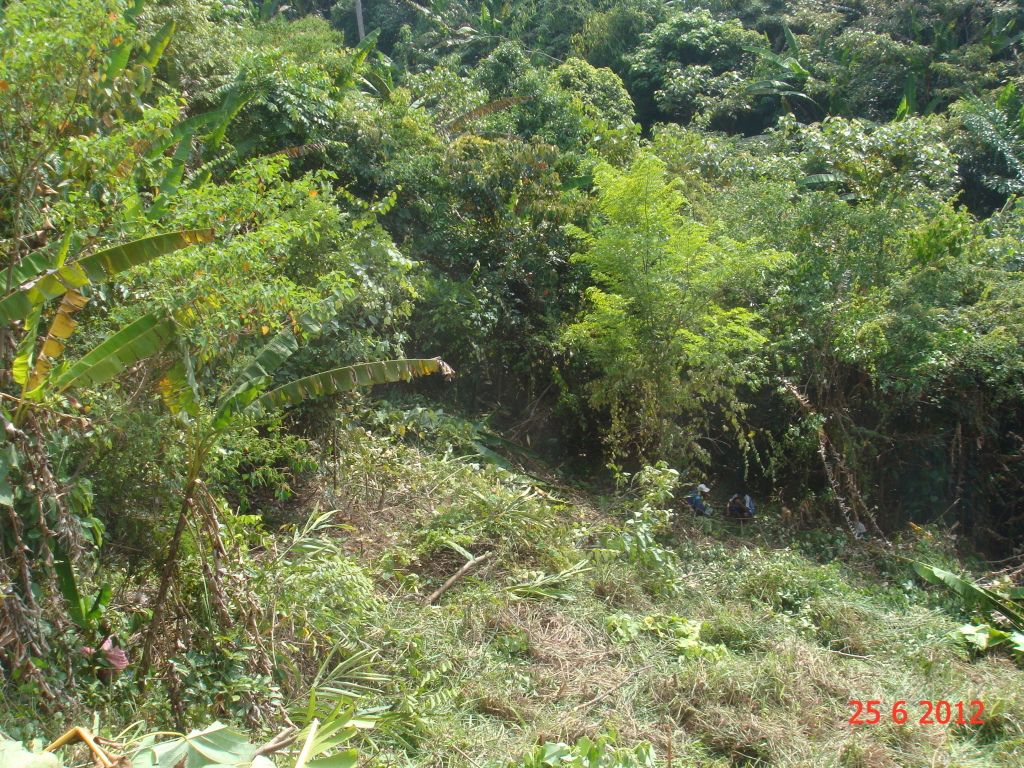
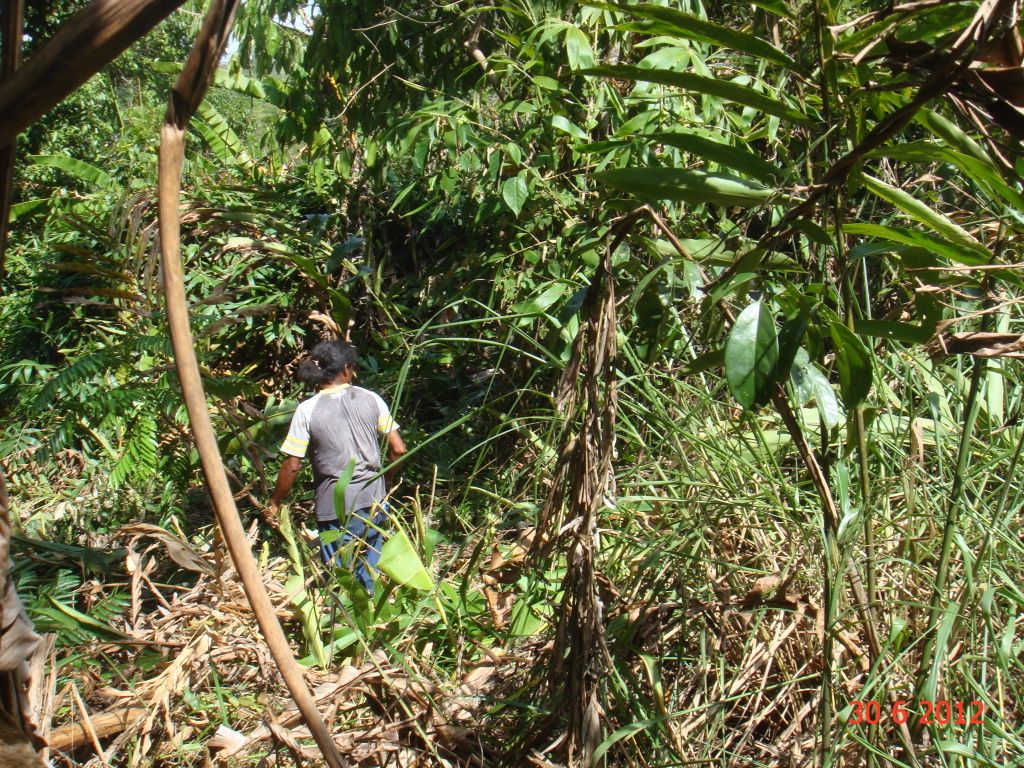
Clearing land, high gradient.
user posted image
user posted image

This post has been edited by MrFarmer: Jul 4 2012, 07:46 PM
jameslionhart
post Jul 5 2012, 03:39 AM

On my way
****
Senior Member
586 posts

Joined: Sep 2005


QUOTE(ParaOpticaL @ Jul 4 2012, 05:58 PM)
which part of seremban is your land in ??

what's your time & money committment to this venture ?
*
Somewhere near Port Dickson, basically we guys have a lot of time and very low/limited resources. LoL, was looking into option and suggestion. Didn't really know anything about fruits, vege or livestock.

This post has been edited by jameslionhart: Jul 5 2012, 03:40 AM
TSParaOpticaL
post Jul 5 2012, 07:26 AM

Planter - Durian, Jackfruit, Papaya
*******
Senior Member
2,348 posts

Joined: Dec 2004
From: Ch3r@s


Hi Bro,

wow that's near. i am located in Mantin.

if you are looking for cash flow and then re-investing later into the land.

i would suggest for short term you plant a mixture of Banana + Papaya (fruit less than 1 year), then mid to long term crop would be jackfruit (2-3 years only fruit) or Durian (5-7 years only fruit)

There is a farmer near Raub whom planted 4 acres. His production per week is 18 tonnes. which is a crazy amount....


QUOTE(jameslionhart @ Jul 5 2012, 03:39 AM)
Somewhere near Port Dickson, basically we guys have a lot of time and very low/limited resources. LoL, was looking into option and suggestion. Didn't really know anything about fruits, vege or livestock.
*
jameslionhart
post Jul 5 2012, 03:38 PM

On my way
****
Senior Member
586 posts

Joined: Sep 2005


QUOTE(ParaOpticaL @ Jul 5 2012, 07:26 AM)
Hi Bro,

wow that's near. i am located in Mantin.

if you are looking for cash flow and then re-investing later into the land.

i would suggest for short term you plant a mixture of Banana + Papaya (fruit less than 1 year), then mid to long term crop would be jackfruit (2-3 years only fruit) or Durian (5-7 years only fruit)

There is a farmer near Raub whom planted 4 acres. His production per week is 18 tonnes. which is a crazy amount....
*
So roughly how much to start up boss?
MrFarmer
post Jul 5 2012, 08:44 PM

Casual
***
Junior Member
478 posts

Joined: Mar 2011
From: Sabah


Just to share.
http://www.youtube.com/watch?feature=playe...d&v=SCW22p-huHw

So anyone doing chicken ? biggrin.gif
Michael J.
post Jul 6 2012, 09:38 AM

On my way
****
Senior Member
596 posts

Joined: Jan 2006


Mr Farmer:

This is a very inspiring and interesting clip. Thank you for sharing with all of us.

Just like DQ Farm has shown, chicken farming can be integrated with fruit tree farming, goat farming, and even organic fertilizer production. On a 1 acre site, you can easily raise 800 chickens and more alongside your fruit trees like durians, banana, and mangoes.

Some calculations for a 1 acre integrated durian farm:

46 durian trees
800 chickens + pens and egg pens
8 goats + 200sqft composting shed

You may add in water collection troughs around your land borders, and put up a pump house, and even rear some fish in those troughs/canals.

Anyway, some economics on the above upon farm maturity:
Durians: Average 100 fruits per tree a year @ 1.5kg @ RM4/kg = RM27,600
Chickens: Assume 620 chickens @ 1.5kg per bird @ RM15/kg = RM13,950
Eggs: Assume 180 layers @ 1 egg per day @ 365 @ RM0.40 each = RM26,280
Goat: Assume 1 Male + 3 Females will produce 4 kids a year @ 40kg per kid at maturity @ RM15 per kg = RM2,400
Compost: Assume 2,560kg a year @ RM2 per kg = RM5,120
Earthworms: Would mostly be used to supplement chicken feed. = RM0

Grand Total = RM75,350 in revenue
Nett (Assume 30% profit) = RM22,605

Now remember about what I said about value adding? If you only value added 30% of your produce, you'd get this:
30% of RM75,350 = RM22,605
Value Addition Factor (Food based) = 2.35 = RM53,121
Grand total = RM105,866
Nett (Assume @ 30%) = RM31,759

Do bear in mind I only assumed 30% nett profit; the value adding part can have broader margins up to 40% or more, depending on what kind of value adding is done, and in what way it is done.

So as you can see, smallholding isn't a "poor-man's business". The main challenge is of course finding the right market, and tackling the "quantity over quality" mentality.

But the potentials are high. Just take chicken for instance. If you could just capture 0.001% of the domestic chicken market and sell as free range, you're looking at 9,800kg production a year @ RM15/kg, or RM147,000 revenue a year. If you can do free range chicken eggs production with just 20% of those chickens, you're looking at adding almost RM200,000 extra to the pot. And yes, free range chicken eggs are expensive; supermarkets here sell them at about RM0.45 each, while wetmarkets sell at RM0.40 each.


Edited 6/7/2012:

Can't remember if I had uploaded this before, but here it is anyway.
Cultivation of Banana and Plantains in the South Pacific

This post has been edited by Michael J.: Jul 6 2012, 04:45 PM

MrFarmer
post Jul 9 2012, 08:20 PM

Casual
***
Junior Member
478 posts

Joined: Mar 2011
From: Sabah


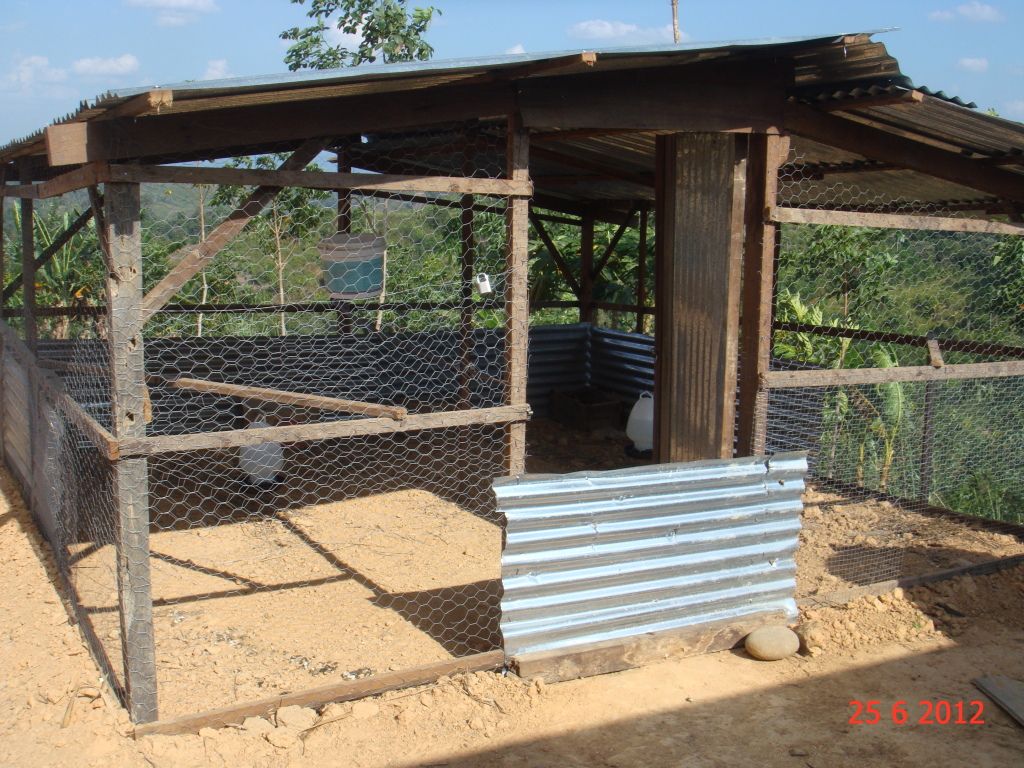
I think integrating chicken with the farm should be encouraged as this can be started independently from the plants. Low start-up capital. Turn around time is also not that long. Feeding cost is minimal as we can feed them with the rejects. It shall create some supplement income while waiting for farm to mature. It helps fertilizing the plants. This can also be continued even after plants had matured as it is not affected by the canopy.


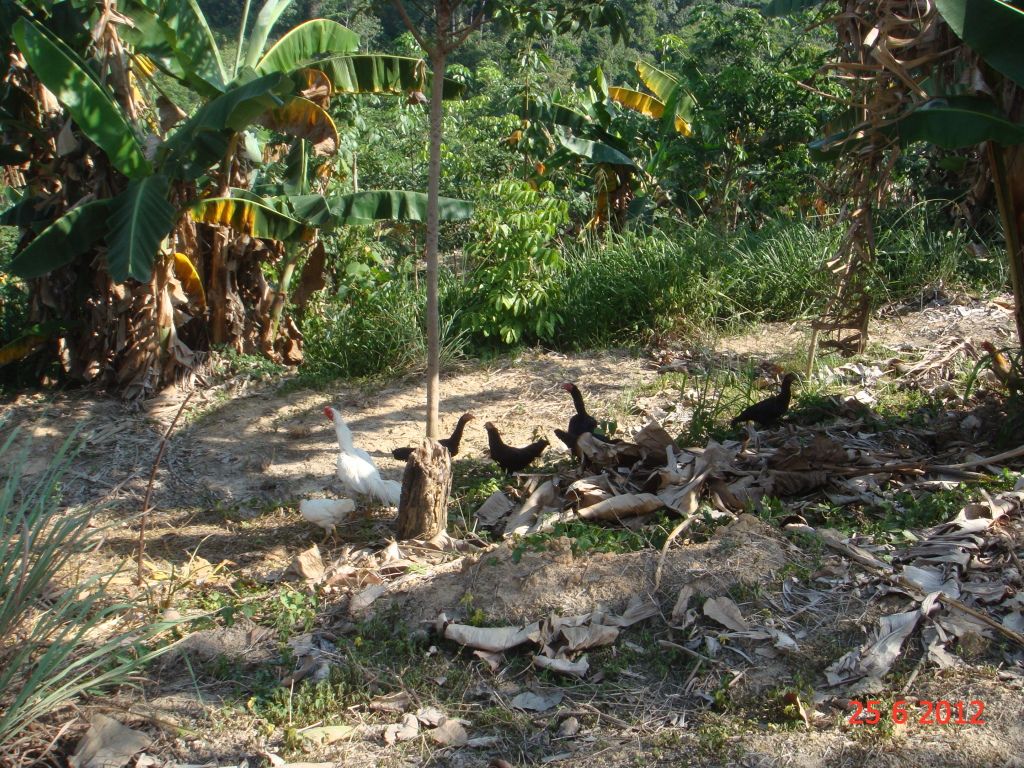
Had just restart my stalled chicken project after much consideration. Have 1 cock & 7 hens at the moment. It'll take a long time before hitting 800 biggrin.gif . Anyway just targeting 50 in the short term.

Problem with these Malay Village Chicken, they are very violent & territorial. I think these could be from the fighting breed. Already had 2 dead (1 cock & 1 hen) within the first week. Planning to build mini colony of maybe 50 to 100 strong each. Another problem is that they wonder quite a distance from their coop, hence limiting the number of colonies. Anyway, shall try to sort this at a later stage. Good news is that they are already laying eggs.

Am thinking of ways to improve their coop, to make it more pleasing to them. Happy chickens breed faster.

One thing I've learned in farming, don't even count your chicks, even after they had hatched tongue.gif
user posted image
user posted image
Michael J.
post Jul 10 2012, 09:15 AM

On my way
****
Senior Member
596 posts

Joined: Jan 2006


Mr Farmer:

As always (sigh) I can't view pictures from my present location. But if it is those chickens with long neck, short combs, and stilt-like legs, then you have fighter breeds. The males are particularly vicious, and may even attack people. Females are less vicious, but still very aggressive.

Actually, if you do have a large enough population of chooks, you could selectively breed the good ones. "Good" in this instance does not just mean weight or egg-laying abilities, but also character. A gentle, docile, submissive and calm character is almost always at the top of of my animal breeding programs. Even roosters that hadn't been castrated were developed to be non-aggressive.

If you are intent on breeding chooks, and don't want to get pecked and scratched whenever you enter your farm, you could try Holland/Rhode Island Red. Males are a lot less aggressive, more submissive, but not necessarily more docile. Holland/Rhode Island Red females are extremely good egg layers (1 egg/bird each day), and very fecund. The females may be squabblish, but having a rooster present would help minimise such incidences. They love human presence, and if particularly fond of a person, will follow him/her everywhere. They grow a lot more slowly, takes about 2.5-3 months to reach full maturity and weight (~1.5-2kg), and have glorious, flavoursome reddish-yellow meat when cooked.

Free-ranging them would help develop the meat flavor more, but as they are a more active bird, the meat can become a little too firm for most people accustomed to factory-farmed chicken. They love soft grass and leafy vegetables)!), and will go after slugs and bugs with passion. The females will need a regular supply of calcium once they start egg laying. In the marketplace, this breed often fetches about RM15/kg or more when free ranged, and old hens also fetch good prices once they've stop laying eggs.

Ideally, you should have 1 male to every 8 females, but for a group of 50, you may only need 5 mature males to stimulate egg-laying; at most, 50% of the group should be males, otherwise fights could become serious. Or you could castrate the non-breeding males to produce capons.
TSParaOpticaL
post Jul 10 2012, 09:28 PM

Planter - Durian, Jackfruit, Papaya
*******
Senior Member
2,348 posts

Joined: Dec 2004
From: Ch3r@s


Will be heading to Johor tomorrow with my Sifu and we will be visiting some farms that he consults and take lots of pictures and show you guys their rights & wrongs... biggrin.gif

=======================

The latest edition which is the JULY 2012 Edition of the Newsletter is out.

http://www.mediafire.com/?gc6ln9z536bsvg5
MrFarmer
post Jul 10 2012, 10:13 PM

Casual
***
Junior Member
478 posts

Joined: Mar 2011
From: Sabah


QUOTE(Michael J. @ Jul 10 2012, 09:15 AM)
Mr Farmer:

As always (sigh) I can't view pictures from my present location. But if it is those chickens with long neck, short combs, and stilt-like legs, then you have fighter breeds. The males are particularly vicious, and may even attack people. Females are less vicious, but still very aggressive.

Actually, if you do have a large enough population of chooks, you could selectively breed the good ones. "Good" in this instance does not just mean weight or egg-laying abilities, but also character. A gentle, docile, submissive and calm character is almost always at the top of of my animal breeding programs. Even roosters that hadn't been castrated were developed to be non-aggressive.

If you are intent on breeding chooks, and don't want to get pecked and scratched whenever you enter your farm, you could try Holland/Rhode Island Red. Males are a lot less aggressive, more submissive, but not necessarily more docile. Holland/Rhode Island Red females are extremely good egg layers (1 egg/bird each day), and very fecund. The females may be squabblish, but having a rooster present would help minimise such incidences. They love human presence, and if particularly fond of a person, will follow him/her everywhere. They grow a lot more slowly, takes about 2.5-3 months to reach full maturity and weight (~1.5-2kg), and have glorious, flavoursome reddish-yellow meat when cooked.

Free-ranging them would help develop the meat flavor more, but as they are a more active bird, the meat can become a little too firm for most people accustomed to factory-farmed chicken. They love soft grass and leafy vegetables)!), and will go after slugs and bugs with passion. The females will need a regular supply of calcium once they start egg laying. In the marketplace, this breed often fetches about RM15/kg or more when free ranged, and old hens also fetch good prices once they've stop laying eggs.

Ideally, you should have 1 male to every 8 females, but for a group of 50, you may only need 5 mature males to stimulate egg-laying; at most, 50% of the group should be males, otherwise fights could become serious. Or you could castrate the non-breeding males to produce capons.
*
Oh no, most of our chickens are what you've described. The cock is definitely, 4 (out of 7) of the hens are also. I don't think they'll attack humans (not yet anyway). They seems to response to "call" (we make the same sound during feeding). They always come to our shed especially during lunch break as they are always bits of food.
The Holland/Rhode Island are the broiler type of chicken? Maybe I can buy some chicks and mix them with the hopefully soon to come chicks. Wonder how the "Mum" shall take in the foster chicks. Let's see how they fare in the next couples of months.
Michael J.
post Jul 11 2012, 11:05 AM

On my way
****
Senior Member
596 posts

Joined: Jan 2006


Mr. Farmer:

Holland/Rhode Island Reds are dual purpose chickens. The males can grow very large, albeit slower than Cornish Game Hens (i.e. the white coloured lethargic chickens). Most of the males I've reared reached 3-3.5kg in about 2 months. They have excellent meat, good meat-to-bone ratio, and is sweet. The fat is buttery and a deep D24 durian flesh yellow, while the meat is orange-red, not white or pink; no fear about excessive fat, especially if they are allowed to free range. My family would cook herbal soup using these chickens, and even the bone marrow tastes sweet.

The females are very prolific egg-layers, laying on average 1 egg a day. Very young hens would be a little inconsistent, but once fully matured in a few weeks after the first eggs, they will be laying consistently. Also, old hens would also begin laying inconsistently towards the end of their "careers". My family kept only one of the old females, as a brooder. This was an exceptional cases, as Rhode Island Reds aren't always good brooders (i.e. they don't sit and "hatch" the eggs).

If you do intend to cross breed your chickens, do have a female bantam (serama) or silky (fluffy-wooly white feathered chicken with black face, legs, and skin) on hand. Silkies are particularly good brooders, and will gladly hatch any egg you give her. I used bantams and silkies to hatch all my poultry, including guinea fowl, quail, ducks, and of course other chickens.

Speaking about cross-breeding, crossing the Malay chicken with Rhode Island Reds isn't actually advisable. Nothing really wrong, except the offspring would be somewhat "downgraded" compared to the Rhode Island Red. Malay chickens are not prolific layers, don't develop a lot of meat on the bone, and this less desirable aspect does pass on to the offspring. Of course, if your intention is to improve the Malay chicken, then I suppose it is ok. Or if you want to develop a breed which you can pluck more easily (i.e. remove the feathers). But with a good breeding plan, I am confident you would be able to develop a good, large bird with acceptable egg-laying abilities.


Added on July 11, 2012, 11:41 am
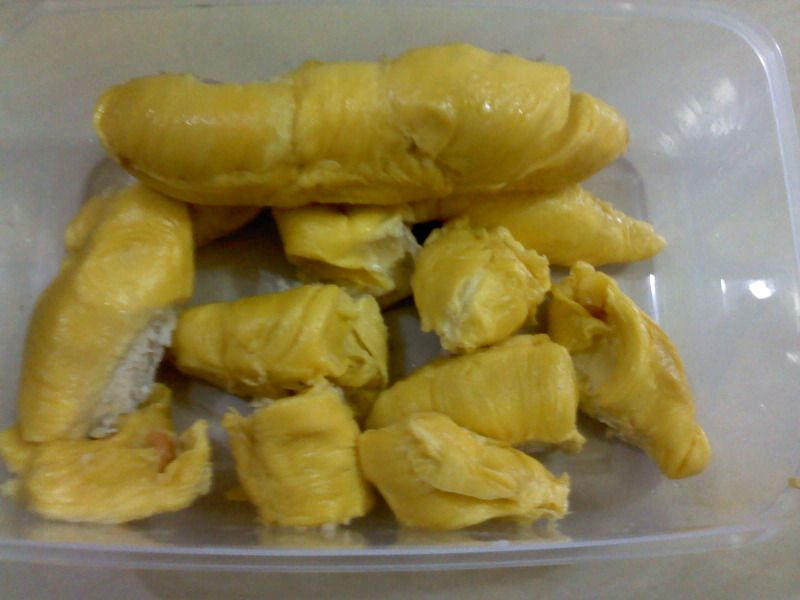
Anyway, after yet another all nighter, I was stressed beyond comprehension and needed a let out. So I decided to go durian hunting again. This time I targeted the cheaper varieties, as a comparison to the pricier ones:

Addition list and description of durians tasted so far:

Variety: D4
Location: Batu Kurau
Fruit: Oblique, near perfect. Moderately sized.
Smell: Smells faintly of raw gula melaka.
Aril: Whitish yellow, perfectly formed. Moderate-thin flesh. Many small seeds per locule (4-5), bullet shaped. Taste is horrendous, no sweetness, quite bland, but has soft notes of raw gula melaka. Unusual, but uninteresting.

Variety: D187
Location: Segamat
Fruit: Heart shaped, brown-green thin rind. Sharp, moderately wide thorns.
Smell: Aromatic, not very pungent.
Aril: Light yellow arils, very creamy almost milky, dry; but quite thin. Sweet taste, contains many seeds per locule (3-4), some shrunken. Seeds are small, and ovoid shaped.

Variety: D8(?)
Location: KL (Sungai Buloh)
Fruit: Oblong shaped, full bearing locules all around. Tightly packed sharp thorn, which space out a little towards the bottom. Moderately large fruit.
Smell: Not very pungent smell.
Aril: White arils, very creamy, but thin. Sweet, creamy, milky texture. A lot of seeds per locule (5-6), but are small fully formed seeds. Seeds are somewhat trapezoid in shape.

Variety: D30 (?)
Location: Bentong, Pahang
Fruit: Heart shaped (like beef heart), densely packed thorns, recurved at the top.
Smell: Aroma not very pungent.
Aril: Yellow arils (flesh), very creamy, sweet but thin. Many seeds per locule (4-5), which are small-medium sized, ovoid shaped.


Special note about the first entry: It was such a turn-off that I got depressed. Fortunately the other durians were still acceptable (by me), so I wasn't sulking for long. It was also the fruit with the most yield (2 nasi bungkus boxes). I will be using these seeds as my "experimentation" materials, since they gave me so many seeds to work on.

This post has been edited by Michael J.: Jul 11 2012, 11:41 AM
Kg Teratai
post Jul 11 2012, 06:00 PM

Getting Started
**
Junior Member
85 posts

Joined: Jan 2012
Hi Para,

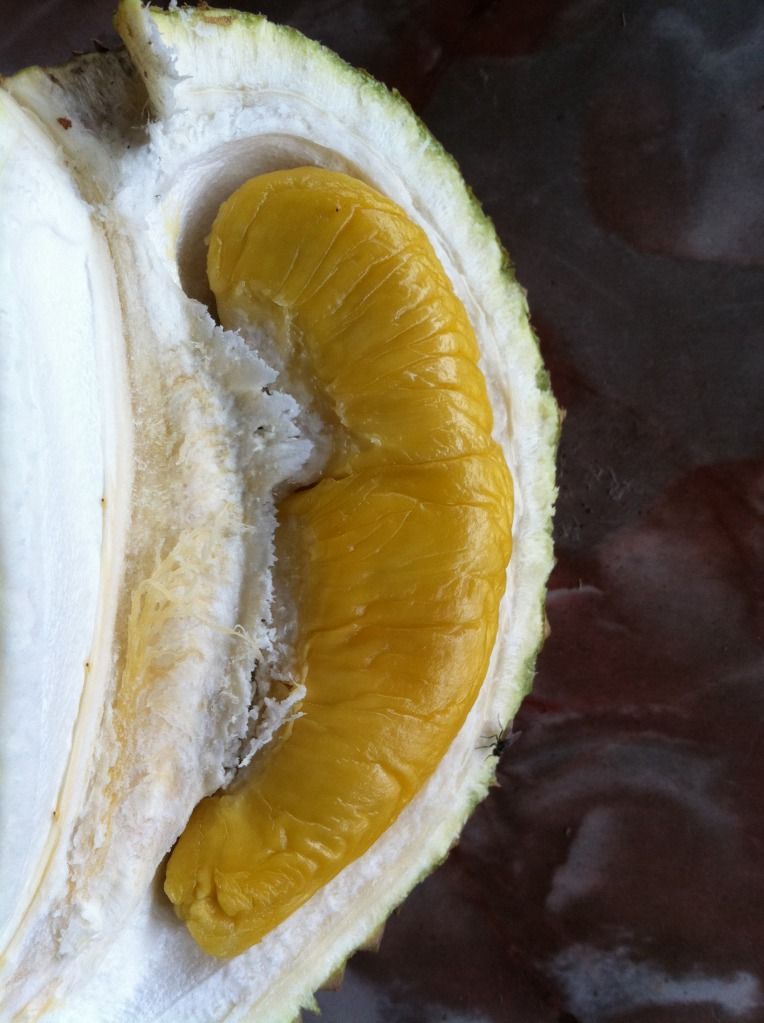
As promised, this is the musang king in my village. The D24 in my area also have not ripe issue. Therefore, the price is very cheap for D24.

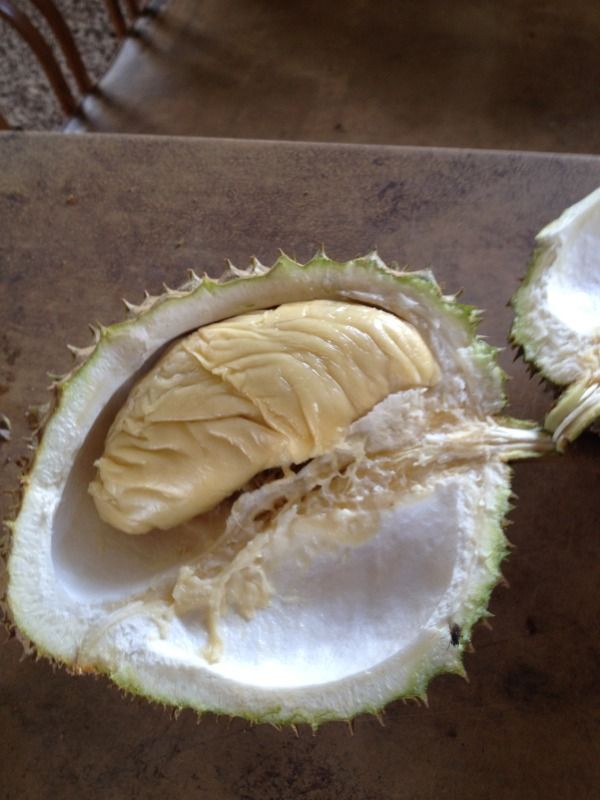
user posted image

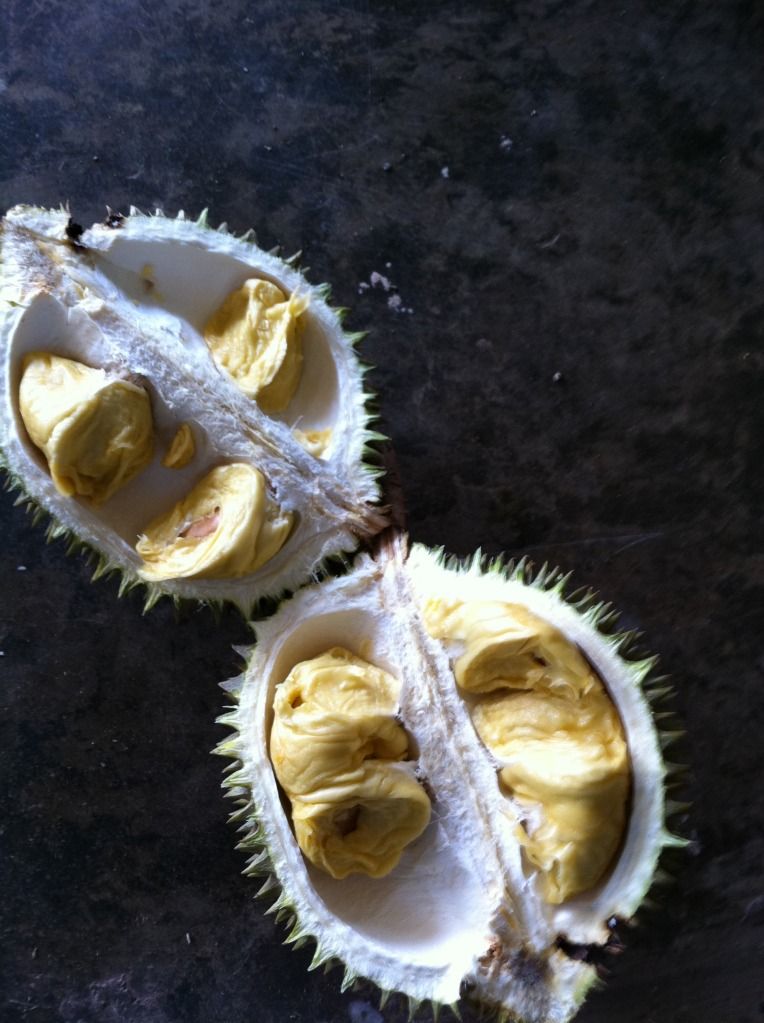
This is one of my favor. Only available at my farm. Original tree is already dead.

user posted image

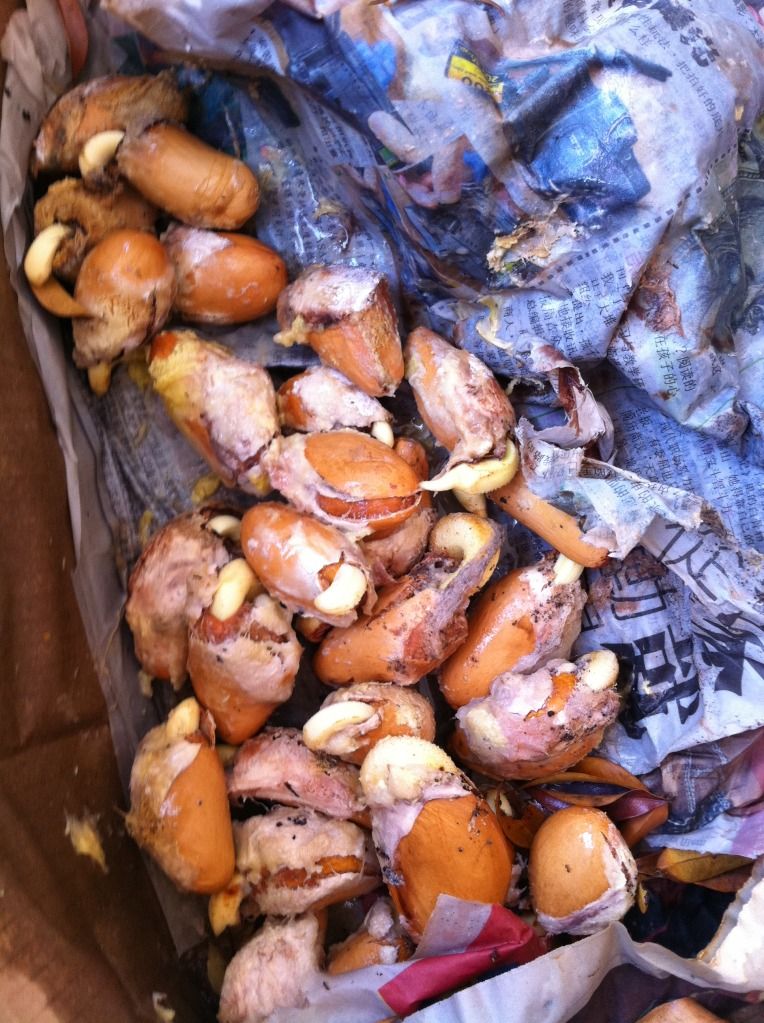
I also try a mini project with durian seeds, later I will graft it with musang king.

The seed geminated after few days
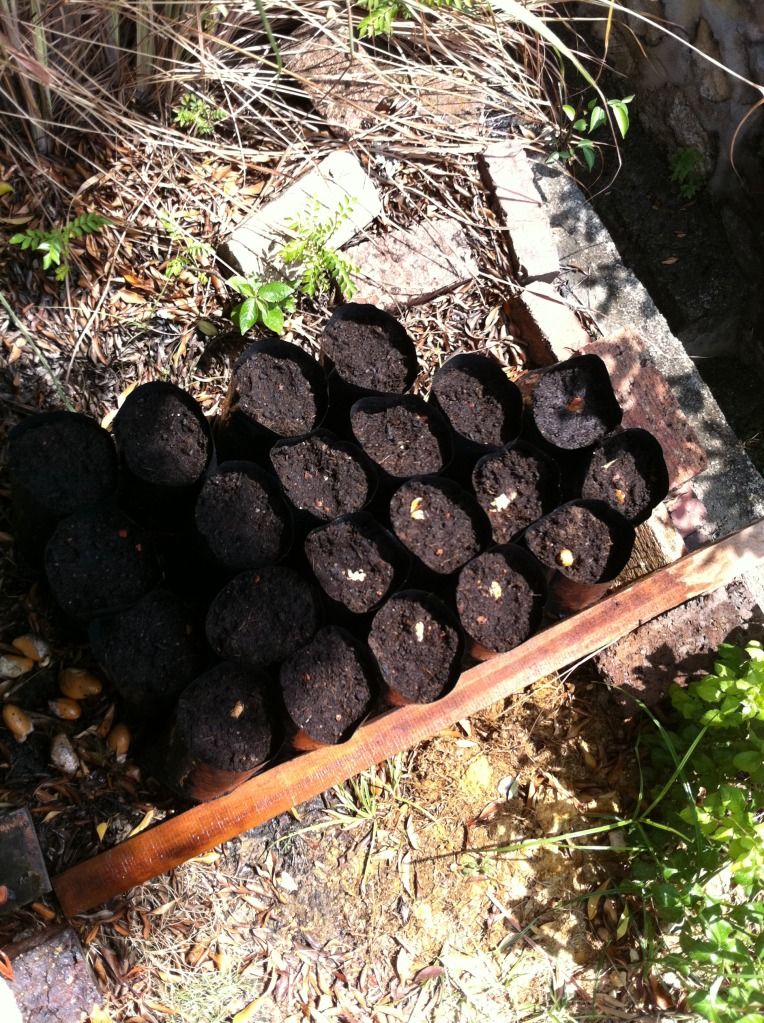
user posted image

1st week.

user posted image

TSParaOpticaL
post Jul 14 2012, 11:38 AM

Planter - Durian, Jackfruit, Papaya
*******
Senior Member
2,348 posts

Joined: Dec 2004
From: Ch3r@s


Hi Bros,

This is Buloh Kasap
user posted image


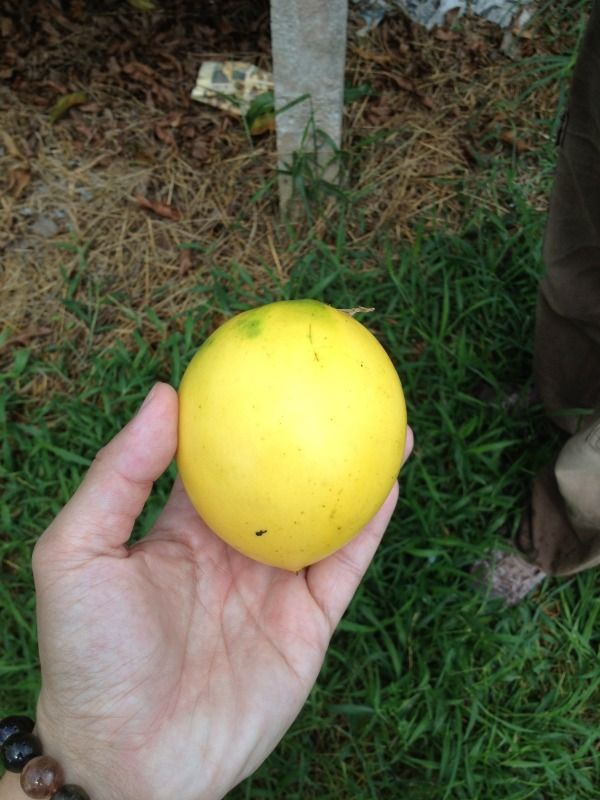
Abiu ... Golden Fruit
user posted image


This Musang King is good quality
QUOTE(Kg Teratai @ Jul 11 2012, 06:00 PM)
Hi Para,

As promised, this is the musang king in my village. The D24 in my area also have not ripe issue. Therefore, the price is very cheap for D24.

user posted image
Kg Teratai
post Jul 16 2012, 02:57 PM

Getting Started
**
Junior Member
85 posts

Joined: Jan 2012
Wow... buluh kasap. I always have an impression that this buluh kasap is originated from a town near segamat.

this type taste is very bitter(very good) when have it in the right session. Loving it.


TSParaOpticaL
post Jul 17 2012, 07:43 AM

Planter - Durian, Jackfruit, Papaya
*******
Senior Member
2,348 posts

Joined: Dec 2004
From: Ch3r@s


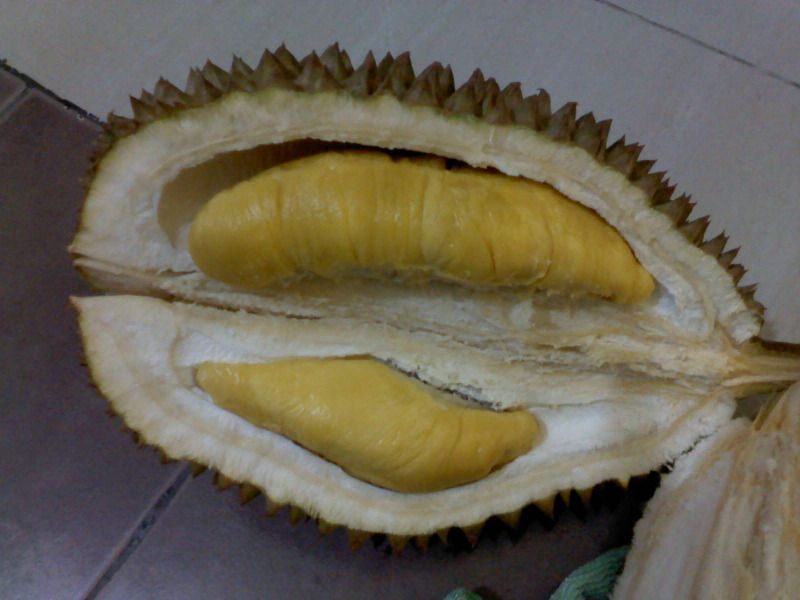
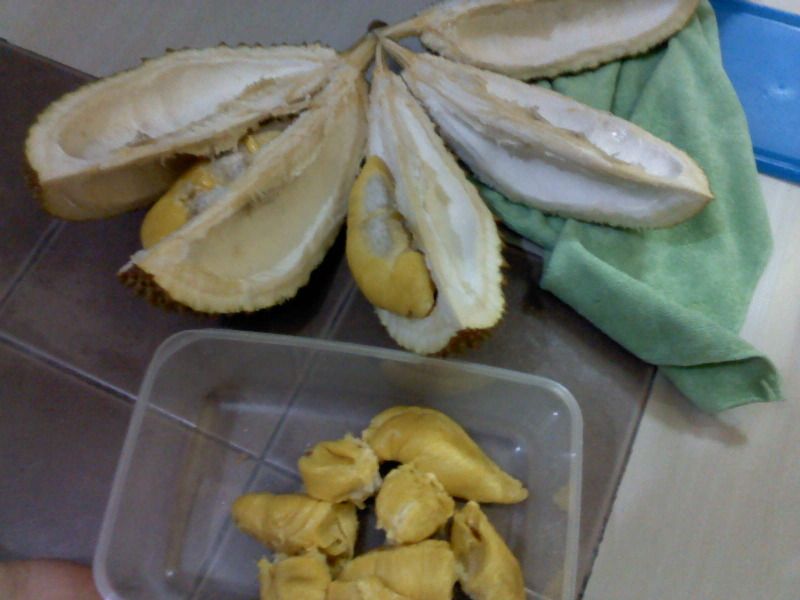
As promised, These are my Musang King produced from my farm. Sorry for the poor picture quality as it was taken by my wife.

user posted image

user posted image

user posted image


=============================================

Yes Buloh Kasap is a clone originated from somewhere in Segamat. The taste is quite good.


QUOTE(Kg Teratai @ Jul 16 2012, 02:57 PM)
Wow... buluh kasap. I always have an impression that this buluh kasap is originated from a town near segamat.

this type taste is very bitter(very good) when have it in the right session. Loving it.
*
Kg Teratai
post Jul 19 2012, 10:48 AM

Getting Started
**
Junior Member
85 posts

Joined: Jan 2012
Hi All,

I have a question regard the bud grafting durian tree.

When bud grafting the durian tree, do we use the plastic tape to cover the whole bud grafting area? Should we cover all bud grafting area except the eye part? I can not recall this part. I used to see my mother doing it. But that is 20 years ago... really can not recall it already.

Michael J.
post Jul 19 2012, 12:08 PM

On my way
****
Senior Member
596 posts

Joined: Jan 2006


Kg Teratai:

Here's a link:
http://www.youtube.com/watch?v=1ItTtshaBko


Kg Teratai
post Jul 19 2012, 02:59 PM

Getting Started
**
Junior Member
85 posts

Joined: Jan 2012
Hi MJ,

I have watched this link, it mention use the plastic tape to cover. But it does not really tell it cover all except the eye or cover all.


119 Pages « < 63 64 65 66 > » Top
 

Change to:
| Lo-Fi Version
0.0286sec    0.80    6 queries    GZIP Disabled
Time is now: 20th December 2025 - 12:33 AM