Welcome Guest ( Log In | Register )

Outline · [ Standard ] · Linear+

 Venturing into Agriculture & Aquaculture, Co-Ordination & Implementation is KEY

views
     
Michael J.
post Jun 20 2012, 09:29 AM

On my way
****
Senior Member
596 posts

Joined: Jan 2006


kabyss87:

Mushrooms have a very good market in Malaysia, actually. It's just that due to the highly perishable nature of the crop, you will need to have a very targeted market. Supermarkets have no issues with returning damanged or spoilt unmarketed goods back to you. And yes, they will try to claim "compensation".

I will suggest that you try it out on a hobby scale first. Don't take the plunge, as being hasty can be just as bad as being too slow.

As Mr Farmer has mentioned, those crops are good as a start. Okra in particular is a good and rewarding plant, so is sweet potato. For me, I prefer sweet potato, as you get two different crop (its leaves and stems can be sold as a vegetable, while the root can be harvested later for sale also).

Mr Farmer:

MARDI should have those papaya seeds you're looking for. You can ask from your local DOA extension office about this.

As for the Musang King durian, as far I know, it is a clone (D197). Meaning the fruit and seed may look typical of Musang King, but the genetics of the seedlings that sprout from such seeds may be completely different. You would be better off doing bark grafting than growing from seeds.

I would suggest you look for D2 seedlings, and graft D197 onto the plant. D2 are known for its disease tolerance, especially root rot and canker. The only thing is D2 does not yield well (could be genetics). Otherwise, you could try D10 or D109 also. Both these clones have good yielding (bears a lot of fruit) track records, but poor quality fruits (taste not so good).

But that saying, there is no harm with germinating those seeds. You never know if any one of them might turn out to be something different, but even more impressive. That's how many popular fruit trees came into being anyway, like the Hass avocado. It was a rejected sapling, originally. One guy bought it and planted it anyway, and it turned out to be a fantastic tasting fruit.
Kg Teratai
post Jun 20 2012, 05:31 PM

Getting Started
**
Junior Member
85 posts

Joined: Jan 2012
I thought seed from D197 Musang king is not able to germinate. It is because the seed is too small, personally, i have never see D197 seed germinate before. That is why all the musang king tree are bark grafting. Correct me if I am wrong, I wanna try it if I can.

Michael J.
post Jun 20 2012, 05:31 PM

On my way
****
Senior Member
596 posts

Joined: Jan 2006


Just to add on a little:

Durians are typically self-incompatible plants. Meaning they need to cross pollinate in order to bear fruit. Now durians are mostly pollinated by bats at night (between 5pm to 6am), although pollen release occurs around 7pm, and by 11pm almost all parts of the flower has fallen off, except the pistil (female part).


Added on June 20, 2012, 5:34 pmKg Teratai:

Actually, it can germinate. But the germination rate is very very low, and the seedlings are normally quite weak. Bark grafting is done to produce enough planting materials, which are also more vigorous and have better chances of surviving.

This post has been edited by Michael J.: Jun 20 2012, 05:34 PM
TSParaOpticaL
post Jun 20 2012, 05:49 PM

Planter - Durian, Jackfruit, Papaya
*******
Senior Member
2,348 posts

Joined: Dec 2004
From: Ch3r@s


For the Eksotica, what i did was to buy it from a RELIABLE pasar malam seller and take the seeds from there and germinate. haha...

am trying to try to germinate the d197 later when i get their seeds

anyone have an idea on how to germinate Durian Seeds ??
i dont have any idea sorry....


QUOTE(MrFarmer @ Jun 19 2012, 07:55 PM)
Hi People,

Am looking for quality Papaya Seeds, such as Eksotica 1, 2 or 3.  Any ideas where to get these from?

Musang King (Mau San Wong).
Thinking of germinating these from the seeds, but the seed of these clone looks pretty small, wondering if these can germinate.  biggrin.gif  Got about 30 of these, after finishing our durian feast.

*
Michael J.
post Jun 20 2012, 08:37 PM

On my way
****
Senior Member
596 posts

Joined: Jan 2006


Para:

Durian seed need to sow soon after taking it out from the fruit, i.e. within a few hours. If you can't sow it so soon, then wash it clean, keep it in a container with some water, and keep it in a dark damp place. I keep durian seeds I want to germinate in my bathroom. You may keep it is the fridge, provided it is not too cold.

To germinate, I prefer starting them in a shallow dish of water in a dark place (i.e. my bathroom). Once the roots peep out about 2-3 cm, then I will sow them in bags of damp soil. These I will keep in a shaded area in my garden, and make sure to dampen the bags every other day if it isn't too hot. When initially growing, they can drink a lot of water.

Bro, the Eksotika, like all hybrid materials, will not grow true-to-type lar.... Meaning, the plant are a mixture of different varieties, so the genetics is mixed up. If you take the seeds from this mixed-up variety and plant, then you will get mixed up seedlings as well. Some may turn out better, but most will be perform worse.

It is a different story if you don't mind chapalang kind of plants. Actually, it is a good thing if you look at it differently; at least from whatever that grows, you can choose which one you like the most, pollinate those, and save those seeds. Then the few next cycles, you would probably get more uniform type of plant lor. Just make sure the seeds you save from hybrids are not Plant Variety Protected (PVP) seeds; otherwise, if the seed company finds out, they can sue you kow kow (eg. like what Monsanto has been doing to INDIVIDUAL FARMERS).


MrFarmer
post Jun 20 2012, 08:58 PM

Casual
***
Junior Member
478 posts

Joined: Mar 2011
From: Sabah


Thanks Guys,

The main reason that am attempting planting with seeds is that I do not have the source for budstick at the moment. Also it's just an experiment. Maybe I'm better off just getting some grafted trees from the nearby nursery.

Say for fruit trees, can we use the grafted (but not fruiting yet) trees for source of budstick? I see some nursery is doing this for rubber trees. Not sure if this works for fruit trees.

Shall try the local Mardi office here for the Eksotica.

Have some Mau San Wong and assorted seeds with me and shall plant them in the next few days. Shall keep you guys informed if they do germinate. Yes, the seeds of the Mau San Wong looks very small, I think the germination shall be very poor. From my experience on the Avocado seeds, the bigger the seeds, the better the germination.

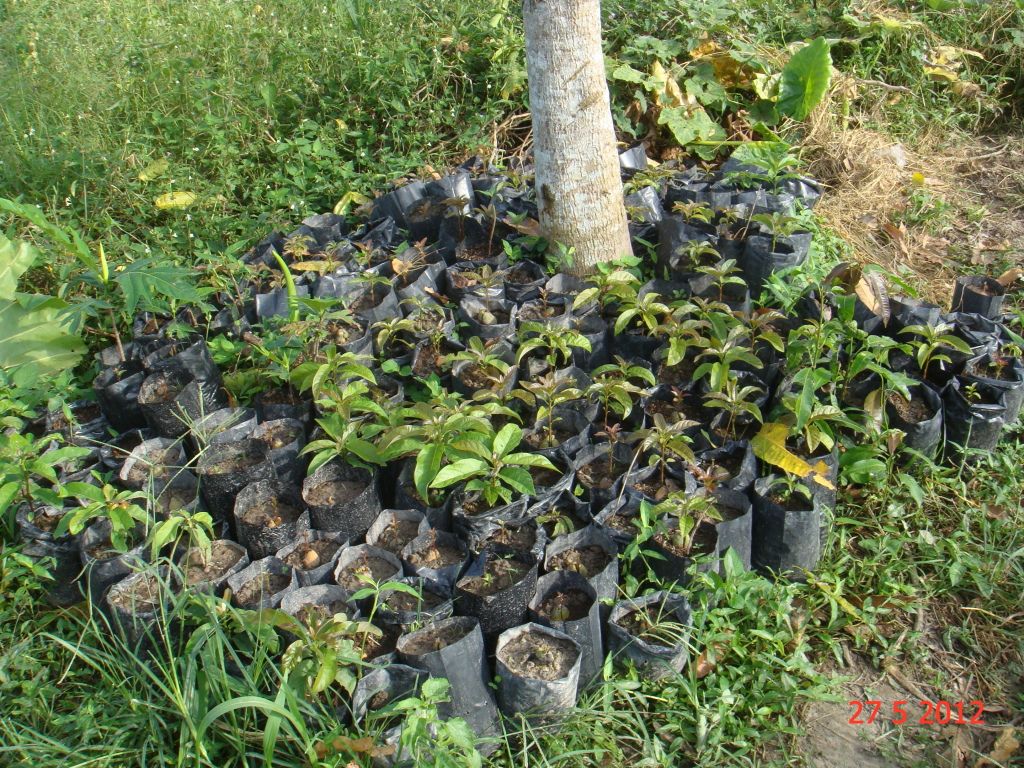
user posted image

About 120 plants of Avocado. Should be ready soon for me to try grafting soon. Problem is that I do not have a good source of budstick. I am thinking of just getting the budstick from the 4 fruiting trees in our farm. Don't even know what variety it is (maybe West Indian?).
Say any tips on doing grafting? Had been watching lots of grafting from youtube biggrin.gif


Added on June 20, 2012, 9:12 pm
QUOTE(Michael J. @ Jun 20 2012, 08:37 PM)
Para:

Durian seed need to sow soon after taking it out from the fruit, i.e. within a few hours. If you can't sow it so soon, then wash it clean, keep it in a container with some water, and keep it in a dark damp place. I keep durian seeds I want to germinate in my bathroom. You may keep it is the fridge, provided it is not too cold.

To germinate, I prefer starting them in a shallow dish of water in a dark place (i.e. my bathroom). Once the roots peep out about 2-3 cm, then I will sow them in bags of damp soil. These I will keep in a shaded area in my garden, and make sure to dampen the bags every other day if it isn't too hot. When initially growing, they can drink a lot of water.

Bro, the Eksotika, like all hybrid materials, will not grow true-to-type lar.... Meaning, the plant are a mixture of different varieties, so the genetics is mixed up. If you take the seeds from this mixed-up variety and plant, then you will get mixed up seedlings as well. Some may turn out better, but most will be perform worse.

It is a different story if you don't mind chapalang kind of plants. Actually, it is a good thing if you look at it differently; at least from whatever that grows, you can choose which one you like the most, pollinate those, and save those seeds. Then the few next cycles, you would probably get more uniform type of plant lor. Just make sure the seeds you save from hybrids are not Plant Variety Protected (PVP) seeds; otherwise, if the seed company finds out, they can sue you kow kow (eg. like what Monsanto has been doing to INDIVIDUAL FARMERS).
*
Yes, was storing the washed seeds in the fridge, with double bags. Outer one heat sealed. Don't want the smell coming out to foul the plane. May get kicked off the plane for this biggrin.gif

Passed thru' without any incident. Reached my farm in the evening. Was thinking of just planting it in polybags. Now, I shall try out your method.

My present batch of papaya, I too took the seeds from the fruits that I tasted good (and from strong plant of our trial batch). Even though, it's Chapalang, was thinking that it suits the local climate & condition.

Here the market do not accept yellow/orange flesh papaya. I wonder why. I tasted some that is very sweet and aromatic.

This post has been edited by MrFarmer: Jun 20 2012, 09:12 PM
Michael J.
post Jun 21 2012, 08:51 AM

On my way
****
Senior Member
596 posts

Joined: Jan 2006


Mr Farmer:

There is really no issue with planting "chapalang" kind of plants, if you're in it for the passion lar. Most of the time, it becomes an issue with commercial, factory farms (i.e. those large, monocrop farms).

Personally, I prefer variation. That way I would be able to select the most unusual plants to keep and breed for future collection. I once bred a chili plant that originated from hybrid parents which produced about 4kg of crop a season. It's offspring also produced similar quantities. Unfortunately, I misplaced the seeds, although I gave away quite a lot of seeds to other people. I don't think many people would have planted it though; the chili fruits that formed were wrinkly and "old" looking, definitely not like those smooth-straight looking hybrids you see in supermarkets.

But the crux of the matter is that if one has the passion for agriculture, and isn't in it solely for the profits, then seed saving and plant breeding will be fun. And the cool thing about having such passion is that it isn't limited to just plants, but also animals. Otherwise, how the hell did so many varieties come into being? Like Forrest Gump would say, and I paraphrase: "Plant breeding is like a box of chocolates.... You never what you're gonna get!"

Also, Mr Farmer has hit the nail on the head when he said "adapted to local environment". This is something very important. As Para would probably know with his lettuce experiment, just because it is labelled "heat tolerant" does not mean it will grow at any temperature range. Having locally adapted varieties freely on hand is what makes agriculture ventures successful. Yes, the yield of the local variety may not be as high as another variety, or even a hybrid, but it is the variety most well suited to tolerate and withstand the diseases and other stressors of the area.


Added on June 21, 2012, 10:07 amMAHA Negeri Sembilan 2012

MAHA Negeri Sembilan, next week at Paroi.


Added on June 21, 2012, 10:16 amCell Aquaculture

Thought you guys would like to know, Cell Aquaculture is building a 250 ton high-density RAS facility in Malaysia, which will be located in Pagoh (Johor). It is expected to be completed in 6 months.


Added on June 21, 2012, 10:16 amCell Aquaculture

Thought you guys would like to know, Cell Aquaculture is building a 250 ton high-density RAS facility in Malaysia, which will be located in Pagoh (Johor). It is expected to be completed in 6 months.

This post has been edited by Michael J.: Jun 21 2012, 10:16 AM
TSParaOpticaL
post Jun 22 2012, 04:17 PM

Planter - Durian, Jackfruit, Papaya
*******
Senior Member
2,348 posts

Joined: Dec 2004
From: Ch3r@s


Hi Bros,

anyone of you had purchased any worms recently ?
if yes please recommend some...thanks am thinking of "inviting them to my farm" tq
MrFarmer
post Jun 23 2012, 10:34 PM

Casual
***
Junior Member
478 posts

Joined: Mar 2011
From: Sabah


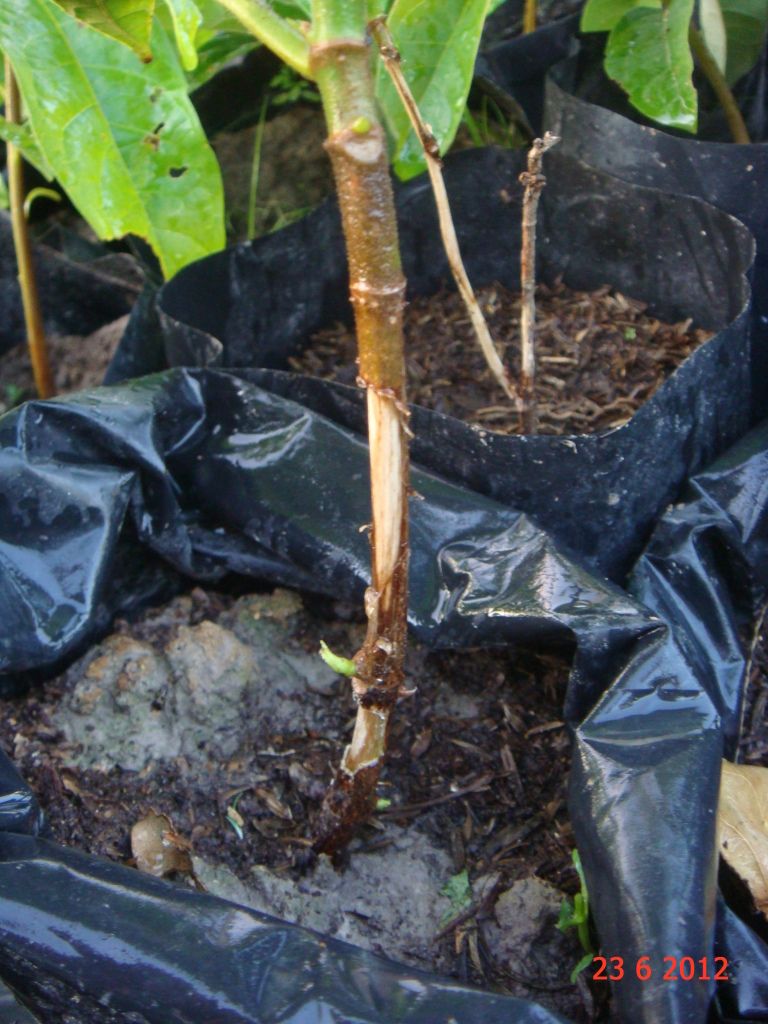
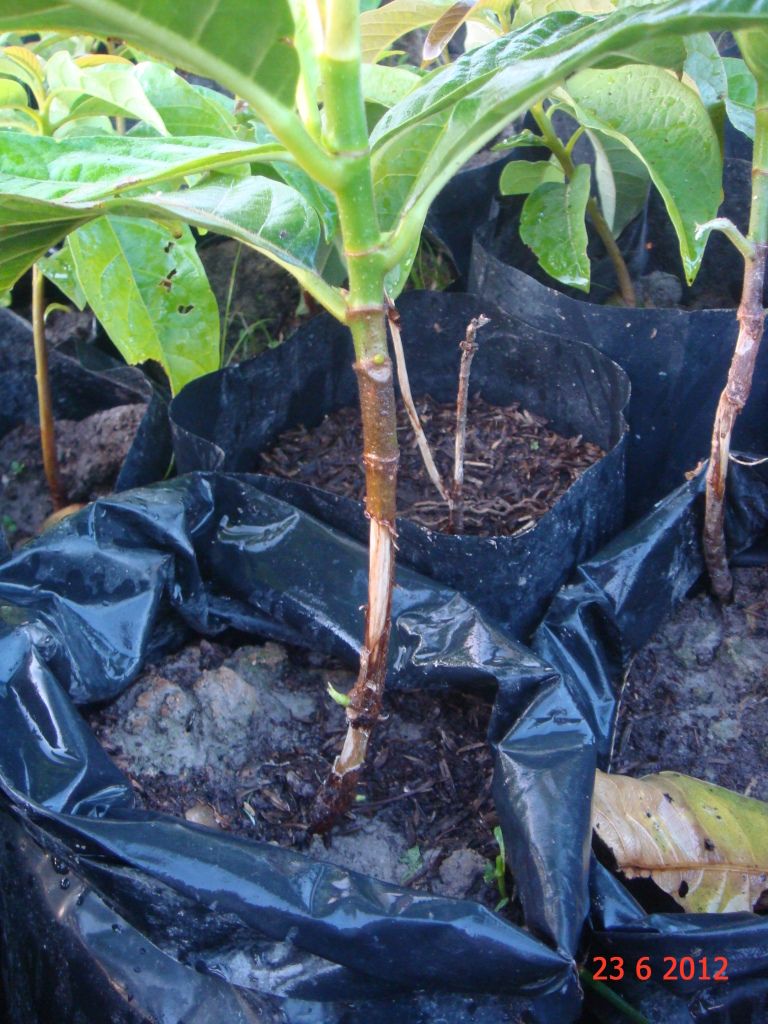
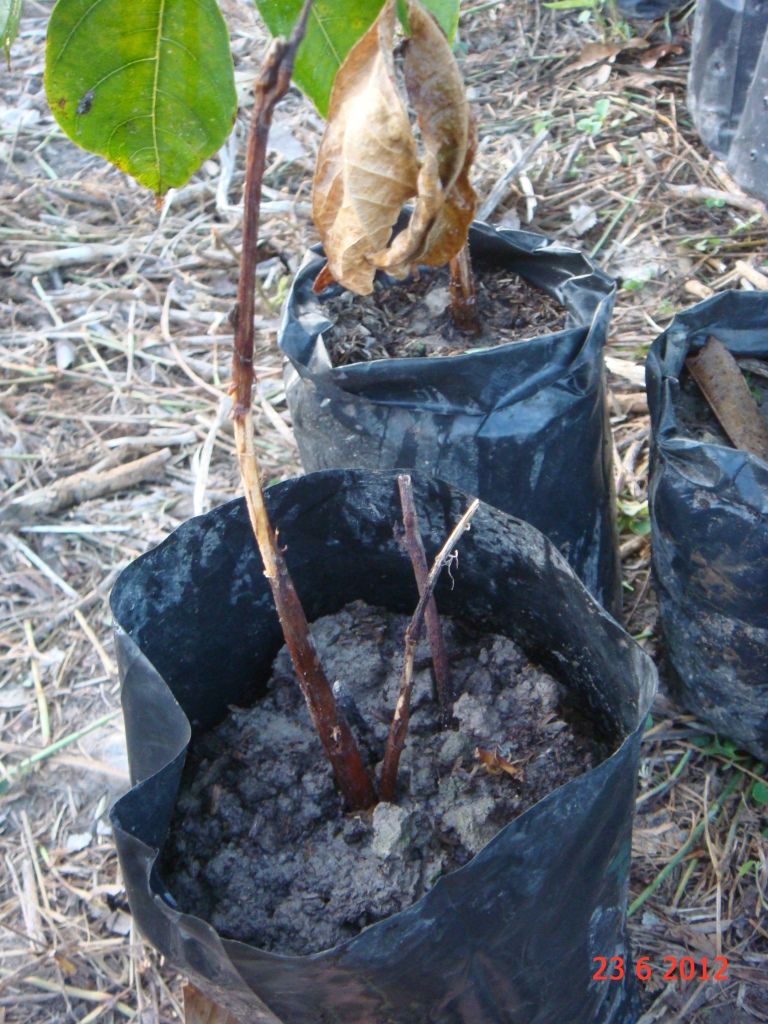
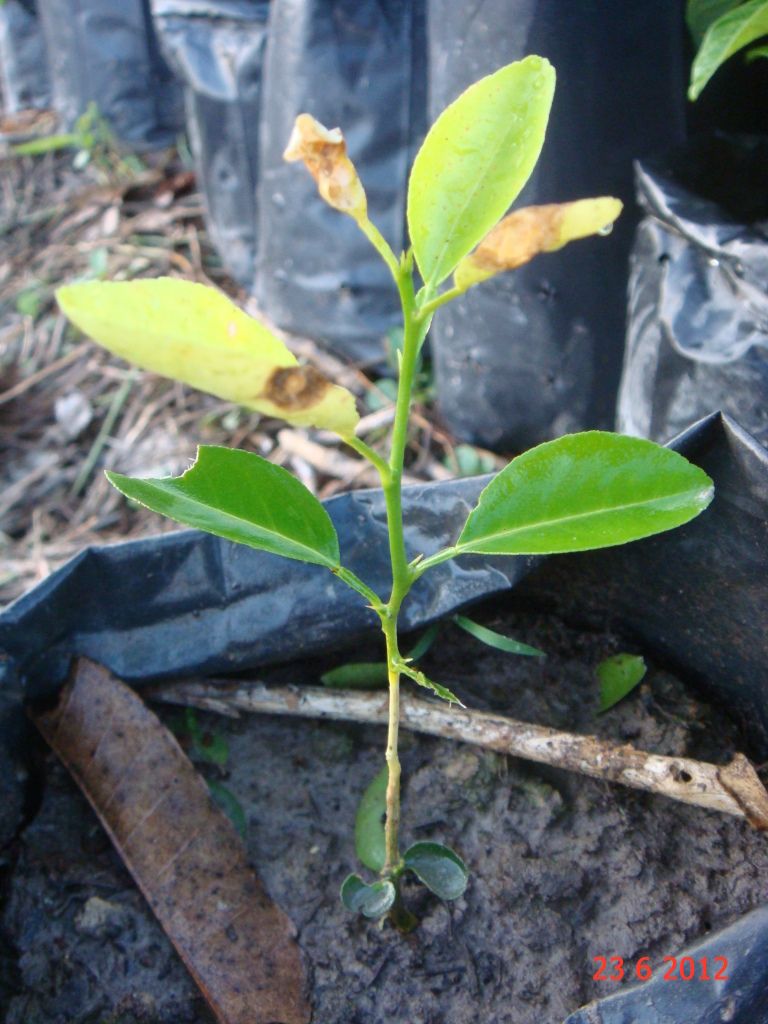
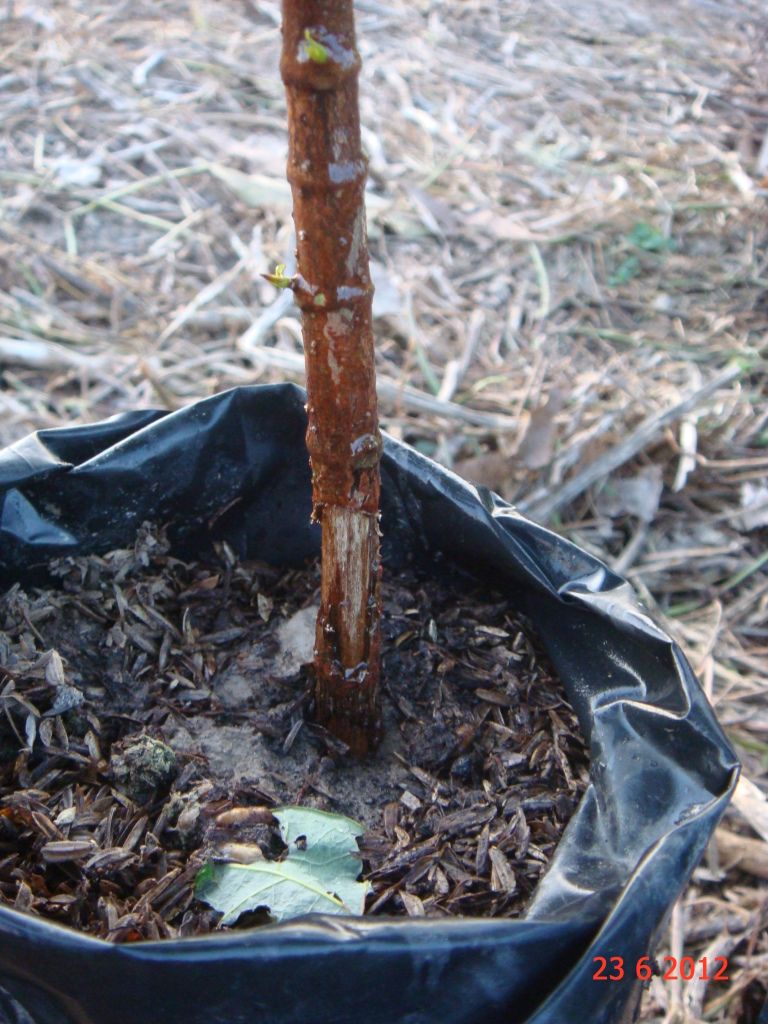
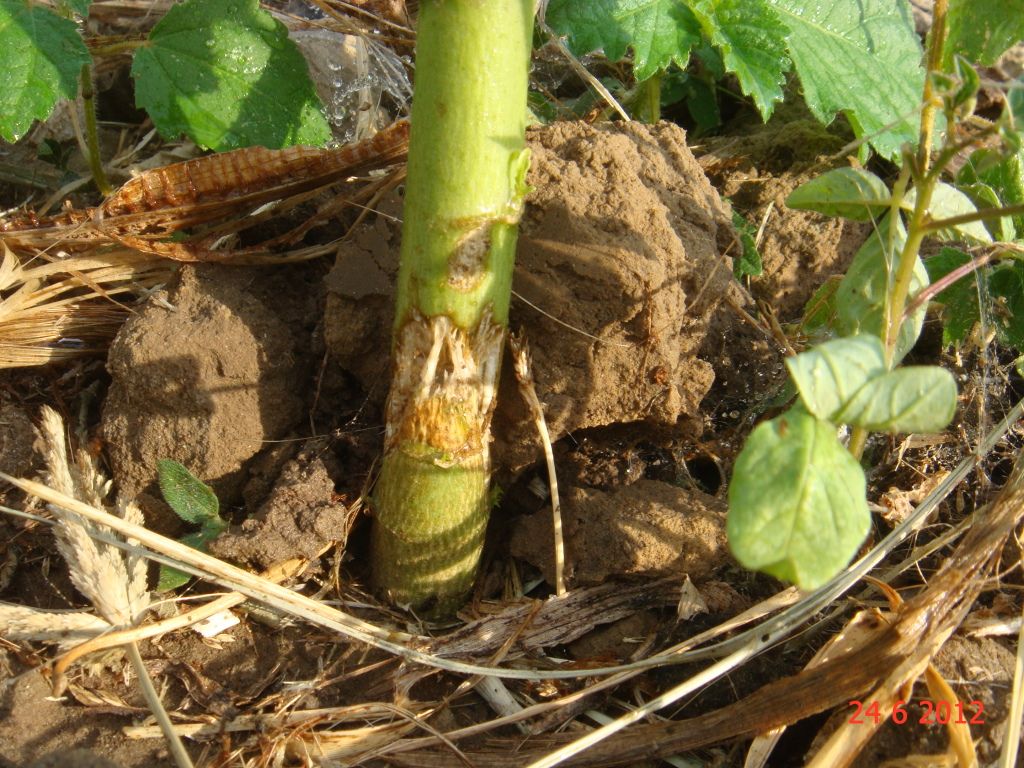
These dry spell is getting worse, it's been more than 2 weeks without rain here. River, creek and pond is drying up. Was checking on my plant-lets in my nursery. Just found that couple of plants had developed these problem.
user posted image
user posted image
user posted image
user posted image
user posted image

It's causing the bark to peel off and wooden-ing of the stem. It's affecting all of the Breadfruit plants (6) and 2 had died off. It's also affect the lime (1 out of 5). Am sure it's not due to the hot spell. Fungus, Bacteria or virus? Soil or water borne? I don't think it's affecting the Avocados. Or over watering and caused stem rots like the papaya?
Michael J.
post Jun 25 2012, 12:53 PM

On my way
****
Senior Member
596 posts

Joined: Jan 2006


Mr Farmer:

Hmmm...... Sorry I can't see the pictures from here. But based on your description, it sounds to be due to sun scalding, followed by infection by phytophtora fungus. Tell me, do you water early in the evenings, about 4-5pm? Or earlier, shortly after mid-day?

Although literature on sun scalding will show it to be something more of a problem in temperate regions, the fact is sun scalding happens to plants wherever there are drastic shifts in temperature. In the tropics, what happens is that in the daytime, temperatures are excessively high, followed by sharp drops in temperature during evenings or night time. In Malaysia, the normal daytime temperature is anywhere between 28C to 33C or maybe 1-2 degrees higher; night temperatures in most cases are also still quite high, around 26C-28C in the lowlands, which is about 2-5 degrees shifts. This isn't a very drastic change, and plant cells can adapt quite well to this, usually through the uptake of water and other metabolites.

However, problem comes when temperatures soar till around 35C, and then plummet to 26C. The nearly 10C change in temperature will shock the plant, causing the cells to keep "drinking" water without restraint, leading to "bursting" barks and splitting along the trunk. The same condition can occur even under normal temperature ranges, whereby cool water is applied to plants on a hot day, leading to sharp shifts in soil and bark temperatures, thereby stimulating the plant to go into thermal regulation mode. That's why most growers and gardeners will tell you, "Don't water plants during the afternoon sun!". They don't normally explain why, but this is part of the reasoning.

Now once a wound is created, it will allow easy access to plant pathogens and other nasty stuff. Disease causing fungi like phytophtora are commonly present in tropical soil, especially those with very high amount of woody/organic matter. Not all species of phytophtora are habitual plant-killers, but when given the chance, they can kill.

It is hard to determine the severity of the infection at this stage (as I can't view the photos). But if the bark area has some black or dark appearance, the chances are the disease is already in an advance stage, and saving the plant would be difficult. If it isn't a rare or expensive plant, you might want to consider getting replacements.


Added on June 26, 2012, 2:05 pmGood day all.

For all of you aspiring (and on-going) durian growers, a little information about the wonderful of durians.

http://durianinfo.blogspot.com/


This post has been edited by Michael J.: Jun 26 2012, 02:05 PM
MrFarmer
post Jun 26 2012, 06:51 PM

Casual
***
Junior Member
478 posts

Joined: Mar 2011
From: Sabah


QUOTE(Michael J. @ Jun 25 2012, 12:53 PM)
Mr Farmer:

Hmmm...... Sorry I can't see the pictures from here. But based on your description, it sounds to be due to sun scalding, followed by infection by phytophtora fungus. Tell me, do you water early in the evenings, about 4-5pm? Or earlier, shortly after mid-day?

Although literature on sun scalding will show it to be something more of a problem in temperate regions, the fact is sun scalding happens to plants wherever there are drastic shifts in temperature. In the tropics, what happens is that in the daytime, temperatures are excessively high, followed by sharp drops in temperature during evenings or night time. In Malaysia, the normal daytime temperature is anywhere between 28C to 33C or maybe 1-2 degrees higher; night temperatures in most cases are also still quite high, around 26C-28C in the lowlands, which is about 2-5 degrees shifts. This isn't a very drastic change, and plant cells can adapt quite well to this, usually through the uptake of water and other metabolites.

However, problem comes when temperatures soar till around 35C, and then plummet to 26C. The nearly 10C change in temperature will shock the plant, causing the cells to keep "drinking" water without restraint, leading to "bursting" barks and splitting along the trunk. The same condition can occur even under normal temperature ranges, whereby cool water is applied to plants on a hot day, leading to sharp shifts in soil and bark temperatures, thereby stimulating the plant to go into thermal regulation mode. That's why most growers and gardeners will tell you, "Don't water plants during the afternoon sun!". They don't normally explain why, but this is part of the reasoning.

Now once a wound is created, it will allow easy access to plant pathogens and other nasty stuff. Disease causing fungi like phytophtora are commonly present in tropical soil, especially those with very high amount of woody/organic matter. Not all species of phytophtora are habitual plant-killers, but when given the chance, they can kill.

It is hard to determine the severity of the infection at this stage (as I can't view the photos). But if the bark area has some black or dark appearance, the chances are the disease is already in an advance stage, and saving the plant would be difficult. If it isn't a rare or expensive plant, you might want to consider getting replacements.


*
user posted image

MJ, yeas, you were right, was watering these plants during hot afternoon, as due to this hot drought weather, it's already killing most of my new plants.
Wondering how long shall this weather last. Rivers, creeks and our pond is drying up.
Michael J.
post Jun 26 2012, 06:51 PM

On my way
****
Senior Member
596 posts

Joined: Jan 2006


Mr Farmer:

I've finally managed to have a good long look at the photos you've posted here.


Added on June 26, 2012, 6:53 pmBut I have to ask you a question: Do you have squirrel problems as well?

This post has been edited by Michael J.: Jun 26 2012, 06:53 PM
MrFarmer
post Jun 27 2012, 07:57 PM

Casual
***
Junior Member
478 posts

Joined: Mar 2011
From: Sabah


QUOTE(Michael J. @ Jun 26 2012, 06:51 PM)
Mr Farmer:

I've finally managed to have a good long look at the photos you've posted here.


Added on June 26, 2012, 6:53 pmBut I have to ask you a question: Do you have squirrel problems as well?
*
Hmmh, not that I know of in this farm. Only lots of chickens (neighbor's, 4 sides).
Michael J.
post Jun 28 2012, 08:35 AM

On my way
****
Senior Member
596 posts

Joined: Jan 2006


Mr Farmer:

Hmm.. Well the reason I'm asking is because squirrels are known to chew on sapling bark, or even mature tree bark when there's a drought spell. Their way of getting water.

But I'm assuming that even though your river, creeks and ponds are running out of water, somewhere somehow there are puddle or shallow pools of water at your place right? If those non-permanent, but available bodies of water are present, then they may not be as keen to nibble on saplings.


Added on June 28, 2012, 9:14 amSeparately, I've been on a durian hunt. Well actually, I've been hunting for durians at my local durian stall. My goal was to try as many different varieties of durians as I could find. It is one thing to read about them, look at some pictures, and go "uhm hmmm", but it is a completely different thing to actually eat them.

Also, I'm collecting some seeds from each variety to germinate. Although most of them would probably be open pollinated, and thus hybrids, it has come to my attention that no new varieties had been added to the registry since the early 1990s. So maybe, just maybe, it is high time to find Malaysia's Next Top Durian.

My list and description of durians tasted so far:

Variety: D28
Location: Mantin
Fruit: Somewhat oblique or teardrop shaped, small thorns at the top, progressing into large, broad, widely spaced thorns towards the bottom.
Smell: Aromatic, not strongly pungent. Pleasant, reminds one of D24
Aril: Golden yellow arils (flesh), very creamy, very thick, sweet with slight bitter tang on the finish. Extremely filling. Few seeds per locule, which are moderately large. Seeds are somewhat trapezoid shaped.

Variety: D144
Location: Mantin
Fruit: Kidney shaped, with moderately long, well packed thorns, which are very sharp.
Smell: Aromatic, not very pungent.
Aril: Light yellow arils, creamy, a little runny, but thin. Sweet with almost un-noticeable bitter tang on the bite. Quite a few seeds per locule, some shrunken, which are quite large compared to total pulp content. Seeds are bullet shaped.

Variety: D2
Location: KL (Banting origin)
Fruit: Kidney shaped, with noticeable reduction of locules on one side. Moderately spaced thorns, which are sharp, but somewhat pliable.
Smell: Intensely aromatic, sharp sweet smell that can be overpowering in a closed room.
Aril: Whitish arils (flesh), very creamy, very thick but slightly runny, sweet with strong bitter notes on the bite till finish. Extremely filling, but addictive. Few seeds per locule, many shrunken. Only 3 locules contained arils, the other two locules were sharply reduced. Seeds which are moderately sized, ovoid with tapered end.

Variety: D88 (?)
Location: KL (Banting origin)
Fruit: Heart shaped (like beef heart), densely packed thorns, recurved at the top.
Smell: Aroma not noticeable before opening. Once opened, is moderately pungent.
Aril: Whitish grey arils (flesh), very creamy, mederately thick, sweet with slight bitter tang on the finish. Many seeds per locule (4-5), which are small-medium sized, and has distinctive black "brush" marks on the sides. Shows some signs of uneven ripening, but is generally good eating once dropped from tree.

Variety: D103 (?)
Location: KL (Banting origin)
Fruit: Perfectly globose fruit, with short, even, and widely spaced sharp thorns. Yellow-green colored.
Smell: Aromatic, with some pungency. Can be overpowering in a closed room.
Aril: Whitish yellow arils (flesh), creamy but runny, and very sticky. EXTREMELY BITTER ON THE FIRST BITE. Taste mellows significantly after consuming first pip, with slight hints of vodka. Many small seeds per locule (3-4), but mostly are shrunken and reduced. Pleasant to eat in alternation with a sweet durian. Seeds are ovoid, but flattish.


One thing I'd like to note about the last few entries, is that about 1-2 hour after eating them, there is a tendency to get drowsy. Not sure if it is due to any "additional" stuff in the durians (read: agrochemicals), or if the vodka taste has anything to do with it (natural alcohol compounds). I had some of my best sleeps ever in the past two days when I started eating those durians.

This post has been edited by Michael J.: Jun 28 2012, 09:14 AM
TSParaOpticaL
post Jun 28 2012, 08:31 PM

Planter - Durian, Jackfruit, Papaya
*******
Senior Member
2,348 posts

Joined: Dec 2004
From: Ch3r@s


Bro suddenly you are on a durian hunt...lolx...

btw i might give you a call tomorrow or saturday morning since i am still collecting some durian and trying to germinate them.

i think i have not so good memory on what you told me....zzz... sorry to disturb you bro...

trying the d28 seeds


QUOTE(Michael J. @ Jun 28 2012, 08:35 AM)
Separately, I've been on a durian hunt. Well actually, I've been hunting for durians at my local durian stall. My goal was to try as many different varieties of durians as I could find. It is one thing to read about them, look at some pictures, and go "uhm hmmm", but it is a completely different thing to actually eat them.

Also, I'm collecting some seeds from each variety to germinate. Although most of them would probably be open pollinated, and thus hybrids, it has come to my attention that no new varieties had been added to the registry since the early 1990s. So maybe, just maybe, it is high time to find Malaysia's Next Top Durian.

My list and description of durians tasted so far:

Variety: D28
Location: Mantin
Fruit: Somewhat oblique or teardrop shaped, small thorns at the top, progressing into large, broad, widely spaced thorns towards the bottom.
Smell: Aromatic, not strongly pungent. Pleasant, reminds one of D24
Aril: Golden yellow arils (flesh), very creamy, very thick, sweet with slight bitter tang on the finish. Extremely filling. Few seeds per locule, which are moderately large. Seeds are somewhat trapezoid shaped.

Variety: D144
Location: Mantin
Fruit: Kidney shaped, with moderately long, well packed thorns, which are very sharp.
Smell: Aromatic, not very pungent.
Aril: Light yellow arils, creamy, a little runny, but thin. Sweet with almost un-noticeable bitter tang on the bite. Quite a few seeds per locule, some shrunken, which are quite large compared to total pulp content. Seeds are bullet shaped.

Variety: D2
Location: KL (Banting origin)
Fruit: Kidney shaped, with noticeable reduction of locules on one side. Moderately spaced thorns, which are sharp, but somewhat pliable.
Smell: Intensely aromatic, sharp sweet smell that can be overpowering in a closed room.
Aril: Whitish arils (flesh), very creamy, very thick but slightly runny, sweet with strong bitter notes on the bite till finish. Extremely filling, but addictive. Few seeds per locule, many shrunken. Only 3 locules contained arils, the other two locules were sharply reduced. Seeds which are moderately sized, ovoid with tapered end.

Variety: D88 (?)
Location: KL (Banting origin)
Fruit: Heart shaped (like beef heart), densely packed thorns, recurved at the top.
Smell: Aroma not noticeable before opening. Once opened, is moderately pungent.
Aril: Whitish grey arils (flesh), very creamy, mederately thick, sweet with slight bitter tang on the finish. Many seeds per locule (4-5), which are small-medium sized, and has distinctive black "brush" marks on the sides. Shows some signs of uneven ripening, but is generally good eating once dropped from tree.

Variety: D103 (?)
Location: KL (Banting origin)
Fruit: Perfectly globose fruit, with short, even, and widely spaced sharp thorns. Yellow-green colored.
Smell: Aromatic, with some pungency. Can be overpowering in a closed room.
Aril: Whitish yellow arils (flesh), creamy but runny, and very sticky. EXTREMELY BITTER ON THE FIRST BITE. Taste mellows significantly after consuming first pip, with slight hints of vodka. Many small seeds per locule (3-4), but mostly are shrunken and reduced. Pleasant to eat in alternation with a sweet durian. Seeds are ovoid, but flattish.
One thing I'd like to note about the last few entries, is that about 1-2 hour after eating them, there is a tendency to get drowsy. Not sure if it is due to any "additional" stuff in the durians (read: agrochemicals), or if the vodka taste has anything to do with it (natural alcohol compounds). I had some of my best sleeps ever in the past two days when I started eating those durians.
*
Michael J.
post Jun 29 2012, 08:23 AM

On my way
****
Senior Member
596 posts

Joined: Jan 2006


Para:

No prob. Germinating durian seeds is quite easy actually. You just need to choose seeds which are full (i.e. not shrunken, shrivelled, or poorly formed), wash them thoroughly, and place them in a container with 1cm of water in a cool dark place. They usually germinate within 2-3 days; mine germinated within 1 day.

PS: Just to be sure you are selecting good seeds to germinate, fill up a small bucket with water, and pop the seeds into that bucket. If it floats, it means it won't germinate. If it sinks, then the chances of germination is much better. This is provided, of course, the seeds are from fresh or chilled durians, and not the frozen ones; the latter may still germinate, but the chances are low.
Awakened_Angel
post Jul 1 2012, 06:45 PM

Look at all my stars!!
*******
Senior Member
2,703 posts

Joined: May 2007
From: where you need wings and awakened to reach
which is better? a concrete pool or a fiberglass pool for aquaculture?

got a piece of land, plan bit aquaculture...

thanks
Michael J.
post Jul 2 2012, 12:36 PM

On my way
****
Senior Member
596 posts

Joined: Jan 2006


Awakened_Angel:

Both have pros and cons. Any specifc area you want to know? Because your question is too general..... eg., do you want to know if concrete pool is better than fibreglass pool in terms of disease management? or durability? price factor? water chemistry control? flocculation control? how about temperature control? etc.

But more importantly, you need to know if the land you have is actually suitable for aquaculture, and for which kind. I'm assuming you've done some homework and therefore your confidence that it is suitable for aquaculture.

Now concrete pools will require excavating the land to some depth, and then building up the cement sides and base. If your land is soft with significant groundwater movement, then there is a risk of earth shifting, which will result in cracks in your concrete pool. If you soil is too dense, water seeping underneath your concrete pool could result cause the pool to be lifted out from the ground (I got experience this first hand with my own concrete pond).

Fibreglass tanks are very expensive (about RM20,000 easily for a 48,000 liter good quality tank), and likewise the system to support it. Most will need to be kept under a shade house, as UV irradiation will damage the tanks in the long run. However, these tanks can be placed above ground with less risk of baulking over (a situation where the sides give way due to the pressure exerted by the huge volume of water), and are easier to clean and manage. Any soil defects can be corrected or adjusted, and there are less issues with soil "breathability".


This is a general statement, aimed at most of us:
Do know your land before committing to any agri venture. Just because your neighbours are planting or growing something, it does not mean your land is well suited for it. One should aim to cultivate whatever that is most suited to the land and excel in it, rather than cultivate what seems like the biggest money-maker but fare moderately (or poorly) in its cultivation.

Eg: Musang King may earn you RM20-RM30 per kg, but if your tree only yield 20 fruits a year, how much better would that be compared to cultivating a D101 which brings on RM9 per kg, but 100 fruit per year?
MrFarmer
post Jul 3 2012, 08:54 PM

Casual
***
Junior Member
478 posts

Joined: Mar 2011
From: Sabah


QUOTE(Michael J. @ Jul 2 2012, 12:36 PM)


This is a general statement, aimed at most of us:
Do know your land before committing to any agri venture. Just because your neighbours are planting or growing something, it does not mean your land is well suited for it. One should aim to cultivate whatever that is most suited to the land and excel in it, rather than cultivate what seems like the biggest money-maker but fare moderately (or poorly) in its cultivation.

Eg: Musang King may earn you RM20-RM30 per kg, but if your tree only yield 20 fruits a year, how much better would that be compared to cultivating a D101 which brings on RM9 per kg, but 100 fruit per year?
*
Guys, MJ had gave a very sound advise for all aspiring would be "Agripreneurs". Would like to add "know you capabilities" as well. Planning on paper is much easier. Agriculture I reckon is like a love affair, and there is lots of external forces, even if you had done all the correct things, it doesn't means that you can expect the stated (targeted) harvest. This is one of the reason why some firms goes on contract farming.
For a commercial venture, we still need to convert the harvest into cash.


Initially I was thinking of replacing all of the Saba Bananas to higher value type, like Berangan, Emas and others. Now I know that, they have different characteristic, the lower value ones are most probably easier to handle.
Michael J.
post Jul 4 2012, 10:32 AM

On my way
****
Senior Member
596 posts

Joined: Jan 2006


Mr Farmer:

Thank you. You are very right about knowing one's capabilities. Agriculture is a very engaging affair, and your crops are very finicky "lovers", so to speak; show them a little less attention and care, and there's a high chance of them running out on you.


One thing I've learnt from small-holdings elsewhere (not Malaysia), is the importance of adding value. Sometimes even small added value could make a whole difference towards the final sell. What I mean by value adding are things as seemingly insignificant as bunching your produce together, or pre-packaging them, to more elaborate methods such as cooking them up into ready-to eat meal to take home from the Pasar Tani.

And seriously, the value the small holder can gain is quite stark. Eg., a sweet potato farmer regularly harvests rogue leaves and stems and sells them for RM1 per fistfull bunch. He often sells up to RM200 of the leaves and stems at the weekly farmer's market. If he had sold by weight, he would probably get about 3/4 only. Similarly, his wife grills up fresh sweet potatoes, and sells them about RM2.50 - RM3.00 each (around 400g-500g weight). That's about double the average retail value for fresh tubers.

Obviously, a small holder would not be able to value add everything he/she has cultivated and sell them like the above. But if you can target to have about 30% or maybe 50% of your crop value added, you would be doing pretty well; i.e. sell all your grade A/B produce at the best prices, value add your slightly lower grade produce and sell it for immediate consumption. Now don't go all "aiyoh, sell low grade stuff to people.."; low grade in this instance does not mean spoilt produce, but rather good quality, yet not meeting the size/weight mark, eg. grade C tilapia weight around 400g = still tasty, but fetches very low prices.

This post has been edited by Michael J.: Jul 4 2012, 10:35 AM

119 Pages « < 62 63 64 65 > » Top
 

Change to:
| Lo-Fi Version
0.0263sec    0.62    6 queries    GZIP Disabled
Time is now: 19th December 2025 - 10:45 PM