Welcome Guest ( Log In | Register )

119 Pages « < 53 54 55 56 57 > » Bottom

Outline · [ Standard ] · Linear+

 Venturing into Agriculture & Aquaculture, Co-Ordination & Implementation is KEY

views
     
MrFarmer
post Mar 9 2012, 10:34 AM

Casual
***
Junior Member
478 posts

Joined: Mar 2011
From: Sabah


QUOTE(Michael J. @ Mar 4 2012, 02:17 AM)
Mr Farmer:

Land cost really depends on where you are located. Some land may be really cheap in Sabah or Sarawak, but the access roads and other logistics will literally kill you. More pricey land often has better access roads. I know Sabah Development Corporation is planning on clearing up massive tracks of land around the Ranau region, apparently they are also building access roads to the area. Maybe you could check with them on the Ranau area, or anywhere else they are currently targeting?

Exclusing land cost, according to some of the larger plantations in Sabah and Sarawak, their cost of development is something like RM18,000 + RM10,000 + RM10,000 for the first three years of land preparation and development, including planting cost, creating access roads etc. I can't name those companies, but they are really big, listed companies.

And as far as I can tell you, since Sabah and Sarawak don't have unions for plantations like we do here (I believe there are some push for this though), companies there are not "forced" to pay the wages in accordance to the MAPA-NUPW agreements. However, I believe the government-instilled minimum wage policy will also include plantation companies in Sabah and Sarawak. And on top of that, transportation costs is a lot more higher, and mills are far between, so I would say your minimum acreage should be at least double that in Peninsular. According to the same companies above, it normally takes them to begin earning clean profits after the 12th year of planting, compared to the 8 years in Peninsular (do bear in mind, this includes the cost of buying over the land).
Hi MJ, going back to my farm (back to the hills) this afternoon, sent off my guests last night.

I am only familiar on the western side of Sabah (inclusive of Ranau). I "heard" there are development in most major area towards agriculture in Sabah. The figures quoted above is acres/hectors? I remember reading from Lembaga Getah (Sabah) that their developmental cost is about $14,800 / hect. Land clearing, access road (within the land), and planting for rubber trees.
I guess we could do it at a much lower cost on a small holder basis (where the owner/partner is involve to minimize cost).

Sooner or later, the union thing / minimum wages shall take effect in Sabah too. At least I think it's easier to source for foreign labor here than in Penisular. Just applied for 5 person on my own, am still waiting for the final approval on 15th March. Applying the permit on our own saves a lot of $. Levi for plantation workers is only $510 per head.

Transport cost is definitely higher here, but over the western coast, the mills are quite close and lots of collection centers. The Only problem is they collect on credit, payment once a month. Most of the lands that I had seen, already have ex-timber trials, hence not too bad. Just need to maintain it. Just need to worry about the roads within your land.
I had been estimating that a minimum acreage of 70 acres (in 1 location) to be feasible commercially.
Shall try to find out more on Rubber Vs Palm Oil, maybe there is an opportunity in knocking.

Michael J.
post Mar 9 2012, 03:01 PM

On my way
****
Senior Member
596 posts

Joined: Jan 2006


Mr Farmer:

The figure is on per hectare basis. Thanks for pointing that out. It is too ingrained in me that I often forget others are not aware which unit I am using... Haa...

Is the RM14,800 total costs or yearly cost? Is definitely plausible that rubber development costs less that oil palm, as the seedling cost of oil palm alone is pretty darn high. But also keep in mind that oil palm does not require intensive labor, processing, or costly maintenance. Get it right from the start, and just maintain standards along the way is enough. In addition, the land that was being developed was moderate peat soil, so a lot more extra money needed to prepare the land.

I'm not too familiar with rubber pricing for smallholders, but I believe latex is now about RM7-RM8 per kg farmgate? So 1 hectare with about 2 tons of yield per year should bring in about RM16,000 or so, whereas for oil palm, 25 tons at RM640 per ton FFB will also give RM16,000.

The difference, however, is in the biology and harvesting of the crop. Rubber takes almost 4-6 years before first harvest, and harvesting requires almost daily tapping before sunrise. Although it does mean work is normally done before lunchtime, and the farmer can do other things later in the day, it is still requires daily work. For oil palm, first significant harvest is usually after 2-3 years of cultivation, and harvesting is only done about twice a month with each round of harvest likely taking not more than 3 days of work.

Sure, I believe we should try to find out more about this, but maybe give more focus on rubber. I believe there are already too many threads on oil palm.

ps: I think I should clarify some things about rubber tapping - the frequency of tapping is actually dependent on three things:- (a) Type of clone and normal internal pressure of rubber trees (b) Application (or not) of ethylene (c ) Type of cut (tapping system).

There are a few types of clones which allows for almost daily rubber tappings, but I don't believe they are available here in Malaysia. Furthermore, those clones tend to be selected to adapt to higher rainfall and ground water retention, i.e. the quality of latex is more watery compared to RRIM clones which have thicker and higher quality latex. For most RRIM clones, tapping is done about 2-3 times a week.

The tapping duration is also dependent on the skill of the tapper. Very experienced tappers can complete tapping a tree in about 20 seconds, so in about 3 hours, 500 trees (a standard hectare) can be cleared. In Malaysia, some of our clones can be planted at about 700 trees per hectare, but even then, tapping is normally completed before 9am, plus 2-4 hours for the latex to run, with collection and delivery of latex normally finished before lunchtime. Cup lumps and tree lace are collected either in the evenings, or the next day.

Talking about opportunities in rubber, do you guys know that rubber is listed as one of the NKEAs under agriculture? Just a short news article for your reading pleasure:

http://www.theborneopost.com/2012/02/26/hi...er-to-the-fore/

http://thestar.com.my/metro/story.asp?sec=...arawak/10051787


This post has been edited by Michael J.: Mar 9 2012, 03:59 PM
MrFarmer
post Mar 10 2012, 07:01 PM

Casual
***
Junior Member
478 posts

Joined: Mar 2011
From: Sabah


QUOTE(Michael J. @ Mar 9 2012, 03:01 PM)
Mr Farmer:

The figure is on per hectare basis. Thanks for pointing that out. It is too ingrained in me that I often forget others are not aware which unit I am using... Haa...

Is the RM14,800 total costs or yearly cost? Is definitely plausible that rubber development costs less that oil palm, as the seedling cost of oil palm alone is pretty darn high. But also keep in mind that oil palm does not require intensive labor, processing, or costly maintenance. Get it right from the start, and just maintain standards along the way is enough. In addition, the land that was being developed was moderate peat soil, so a lot more extra money needed to prepare the land.

I'm not too familiar with rubber pricing for smallholders, but I believe latex is now about RM7-RM8 per kg farmgate? So 1 hectare with about 2 tons of yield per year should bring in about RM16,000 or so, whereas for oil palm, 25 tons at RM640 per ton FFB will also give RM16,000.

The difference, however, is in the biology and harvesting of the crop. Rubber takes almost 4-6 years before first harvest, and harvesting requires almost daily tapping before sunrise. Although it does mean work is normally done before lunchtime, and the farmer can do other things later in the day, it is still requires daily work. For oil palm, first significant harvest is usually after 2-3 years of cultivation, and harvesting is only done about twice a month with each round of harvest likely taking not more than 3 days of work.

Sure, I believe we should try to find out more about this, but maybe give more focus on rubber. I believe there are already too many threads on oil palm.

ps: I think I should clarify some things about rubber tapping - the frequency of tapping is actually dependent on three things:- (a) Type of clone and normal internal pressure of rubber trees (b) Application (or not) of ethylene (c ) Type of cut (tapping system).

There are a few types of clones which allows for almost daily rubber tappings, but I don't believe they are available here in Malaysia. Furthermore, those clones tend to be selected to adapt to higher rainfall and ground water retention, i.e. the quality of latex is more watery compared to RRIM clones which have thicker and higher quality latex. For most RRIM clones, tapping is done about 2-3 times a week.

The tapping duration is also dependent on the skill of the tapper. Very experienced tappers can complete tapping a tree in about 20 seconds, so in about 3 hours, 500 trees (a standard hectare) can be cleared. In Malaysia, some of our clones can be planted at about 700 trees per hectare, but even then, tapping is normally completed before 9am, plus 2-4 hours for the latex to run, with collection and delivery of latex normally finished before lunchtime. Cup lumps and tree lace are collected either in the evenings, or the next day.

Talking about opportunities in rubber, do you guys know that rubber is listed as one of the NKEAs under agriculture? Just a short news article for your reading pleasure:

http://www.theborneopost.com/2012/02/26/hi...er-to-the-fore/

http://thestar.com.my/metro/story.asp?sec=...arawak/10051787
*
Thanks for the links MJ.
14.8K is the total (average) cost.
Base on the data that I've collected, my estimate for Palm Oil & Rubber should be about the same (depending on market fluctuation).
Was thinking that due to local condition, high transportation cost, Rubber may have an edge over Palm oil due to lower weight & easier logistic. Also Rubber get paid cash here, but Palm Oil is on credit, monthly account.
Saplings are cheaper for Rubber, range from $3.50 to $5.50
End of the day, I guess it's the experience that counts, whether the planter is more comfortable with Rubber or Palm Oil.
Michael J.
post Mar 11 2012, 03:28 PM

On my way
****
Senior Member
596 posts

Joined: Jan 2006


Mr Farmer:

RM14,800 for total development cost is cheap, and totally acceptable for rubber. Thanks for pointing out the price of rubber saplings. Based on these prices, then there isn't much difference in cost for planting 1 hectare with oil palm or rubber (i.e. 700 rubber saplings would cost about RM2,450 vs. 148 oil palm seedlings costing RM2,960).

Sorry, but what estimates? Returns? Development costs? At current prices, yes, the returns are comparable. Also, it is quite likely that much of the machines used on larger plantations are not required for smallholdings, therefore making development costs cheaper. I believe one JCB is more than enough to get all the job done on a few hectares of land within a single day. But as I've pointed out, there is still a difference in biology and inputs which makes the cultivation and harvesting of either crop unique to its own.

From a business point of view, it makes a lot more sense to do cash business rather than credit. If the oil palm fruit buyers seem to have trouble paying in cash, or are reluctant to do so, then maybe rubber is a better choice. Over here, many mills and collection centers for oil palm bunches pay cash upfront.

And yes, you are absolutely right. Experience counts. Not to badmouth rubber, but it was only in the recent years that natural rubber has been getting fair prices. Before 2003, rubber prices really sucked, and synthetic rubber was very dominant in the marketplace. Fortunately (or unfortunately), petroleum prices started skyrocketing, making synthetic rubbers expensive, and thus a return to natural rubber. From just controlling about 30% of the market share, natural rubber has now bounced back to controlling nearly 50% of the market share. And this trend is expected to continue. Who knows, maybe we'll see natural rubber taking on 70% of the market again, like before the Korean war.


Added on March 12, 2012, 11:23 amfyi: http://truesunray.com/gallery1.html

In case anyone trying to get rubber seedlings.

This post has been edited by Michael J.: Mar 12 2012, 11:23 AM
chinyen
post Mar 12 2012, 04:06 PM

Enthusiast
*****
Senior Member
754 posts

Joined: Jul 2009
QUOTE(ParaOpticaL @ Mar 8 2012, 11:19 AM)
Michael J, where do you think i can get reliable broiler chicken supplier ??? maybe those "CHOY YUEN" or "KONG NECK" or "KAMPUNG" breed ???

very frustrated with the supplier here in Semenyih...cause always mix the male until mostly i reared those male chickens = very less meat compared to female....

Side note : turkey is very difficult to cook properly as per Michael J. you cook wrongly then your RM 50-60 is up in smokes ala Smoked Turkey...and market wise its chicken definitely

if you plan to rear for festival then can give it a try...
*
there's a supplier in Bahau, NS who rears many types of chicken. But, unfortunately..i dun hv his no...sorry a. As for turkey..i'm not sure bout the cooking part...have not cooked one myself...^^ ...will update u guys when i try ...hehe..Thanks to all Shifus....
MrFarmer
post Mar 12 2012, 07:03 PM

Casual
***
Junior Member
478 posts

Joined: Mar 2011
From: Sabah


QUOTE(Michael J. @ Mar 11 2012, 03:28 PM)


Added on March 12, 2012, 11:23 amfyi: http://truesunray.com/gallery1.html

In case anyone trying to get rubber seedlings.
*
Thanks MJ, for the link. Didn't know that there a nursery there @ Bongawan. Am looking at the RRIM3001 which they claim they have.
Am also thinking of starting a small nursery, but don't have any grafting experience. Wonder if it's difficult. Had "thrown" about 40 rubber seeds on to ground last week. Waiting for it to germinate, then transfer to poly bag. Shall use these to try our hands on budding.

If it works, then shall get some certified clones and use it to harvest bud stick. Start a nursery, then plant some rubber trees.
Michael J.
post Mar 13 2012, 08:25 AM

On my way
****
Senior Member
596 posts

Joined: Jan 2006


Mr Farmer:

That's a good way to begin. I'm doing something similar now, but it is more for fun and self education. The seeds I'm using are from feral populations in Penang, the remnants of the very early rubber clones. High variability within the grove, which is very good news for "plant breeders". Heheh.

Grafting isn't difficult, actually. Once you get the hang of things, it's a breeze. It is the maintaining part that is more challenging.


Speaking of variability, I would like to share a little bit on an experiment I did using domesticated guppies. The aim of the experiment was to develop an alternative breeding method with the same advantages to the commonly used line breeding technique, but without the drawbacks. FYI, line breeding is a very powerful breeding method that is very selective, resulting in the creation of many unique lines of animals, plants etc. The selectively bred lines have the advantage of being very stable (i.e. it doesn't change form easily), and when used to create hybrids, produces very strong hybrids with great vigour. However, the main drawbacks are that such lines carry with them many genetic diseases, are usually less prolific (low reproductive ability), and take up a lot of space during the selection process.

The method I developed is based on mass selection method, which means instead of going for very specific individuals, I target groups of individuals. I started off with low grade delta tail red guppy males, which were then added to a population of commonplace roundtail guppy females with red/yellow tails (as the gene controlling red and yellow pigments are related). Once this original population of guppies began breeding, I then added in spadetail red guppy males, which bred with not only the adult females, but later with their 1st generation offspring as well. I added one more population of roundtail guppy females with maroon tails, and then left the population to develop on their own by natural selective pressures.

The results were amazing, I have to say. All individuals are blond skinned. The males have Endler-type body markings in red/yellow pigments, and a bright red tail form I would like to call "halfmoon", just like the halfmoon betta fishes popular in the past. The females have pale yellow tail with streaks of red, which are closer to roundtail, and not very broad. For me, this population is very stable, as every successive generation closely matches the parents, with only very little variability (mostly in body markings), although the major attributes such as fin form and color stays the same.

My inspiration came from observing zebra herds. These herds can be huge during migration periods, numbering thousands, but are usually small, with just a few dozen individuals. I always wondered how did zebras maintain their population genetics, given their usually small herds, without leading to any serious genetic diseases. I noticed that population mixing during the migration periods resulted in individuals moving in and out of herds. So I theorized that by adding or changing certain individuals within a breeding population, it is possible to keep the gene pool wide and active enough to mitigate genetic diseases, while at the same still maintain some sort of conformity amongst the population. Given, that is, the contributing populations already have some level of conformity at the start.

My second experiment involved a different color group, the turquoise/blue guppies (delta tail males, round tail females). This population is still not very stable as I also started them much later. The offsprings are still a mixture, and sometimes I get young fish with red tails and dark blue bodies (tuxedo-form). Also, most of the population still have "seed" markings on their tails, which denotes some level of divergence still present in the population. Fortunately, the "seed" patterns are a dark blue or turquoise color, which is only noticeable when viewed upclose. However, I'm glad to notice that all individuals have either a turquoise or dark blue body with strong irridescence covering at least 70% on the body. My aim is to develop a population with solid color and irridescence over 95% of the body, and a firm color for the tail.

In all cases, natural selection resulted in weak individuals being culled or killed on their own. I do artificially intervene in this process, especially with the turquoise/blue guppies, by removing the red tail individuals and keeping them in a separate tank where I'm doing a third, more extreme genetic mixing experiment.


Anyway, that's for fish. I've also initiated a similar project for cacao, which is where chocolate comes from. Cacao is a real finicky plant, prone to diseases, and are extremely selective of the pollen source it requires to produce crop. FYI, most cacao do not accept pollen from itself or a close relative, and needs a pollen donor that is at least >60% distant in genetics in order to produce crop. My aim, is to develop a stable, disease tolerant population of rare cacao trees that are able to accept not only pollen from close relatives that are <50% distant, but also pollen from itself (i.e. self pollinating). So far, my collection has been derived from feral populations established in abandoned estates nearly 50-60 years ago. However, my approach differs a little in that I primarily target trees that are isolated from other cacao trees (at least 100m away, or more). So far, I've only sampled 1 tree, with the other collection being taken from more commonly found trees with unique structure and attributes. Trees that I select are largely the rare Trinitario variety, while the lone tree (which happens to be able to self pollinate) is a Criollo, a near extinct variety of cacao with white seeds. My hope is that by combining the genetics of Trinitario and Criollo, I could create a population of stable Criollo in Malaysia.

This post has been edited by Michael J.: Mar 13 2012, 09:23 AM
Kg Teratai
post Mar 13 2012, 12:06 PM

Getting Started
**
Junior Member
85 posts

Joined: Jan 2012
Hi All,

Managed to visit back the farm on 3rd Mar.

Here are the yields that I have recorded foe past 6 times for 5 arches,

10 Dec 1.5 tonnes
24 Dec 1.67 tonnes
7 Jan 0.81 tonnes
29 Jan 1.4 tonnes
13 Feb 0.78 tonnes
3 Mar 1 tonnes

Fertelizer was applied on 15 Feb with Zeolite 30 packs, NK 30 packs and Borex 2 packs.

Those weeds are growing very fast. Weed control will be put in this month.

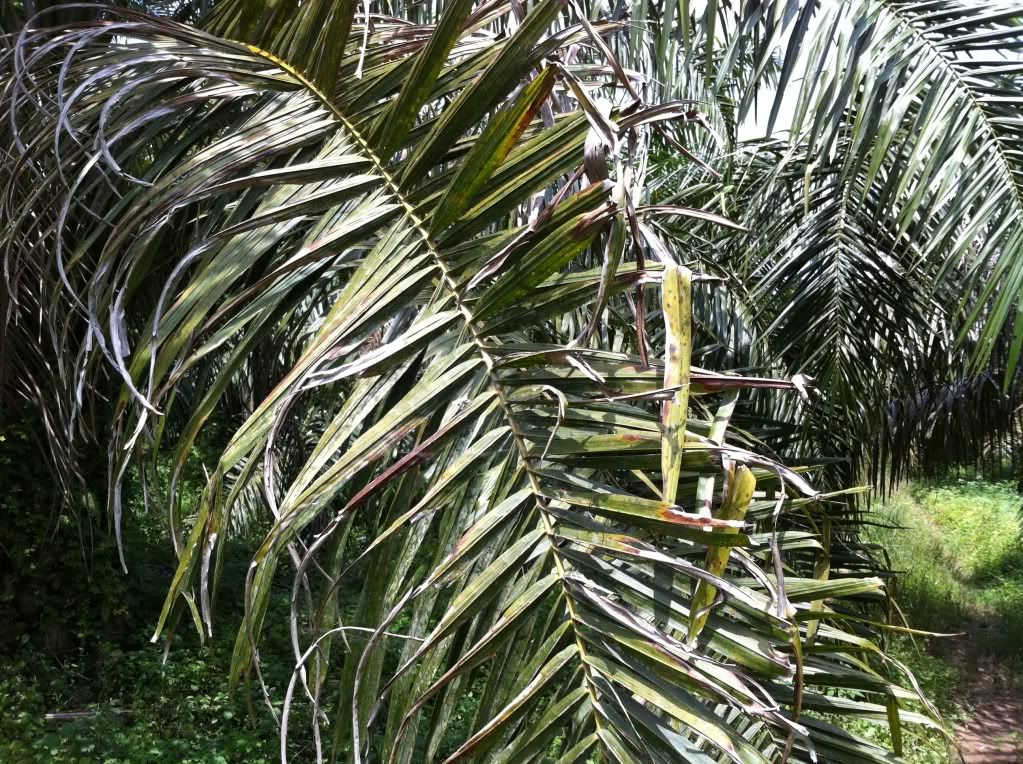
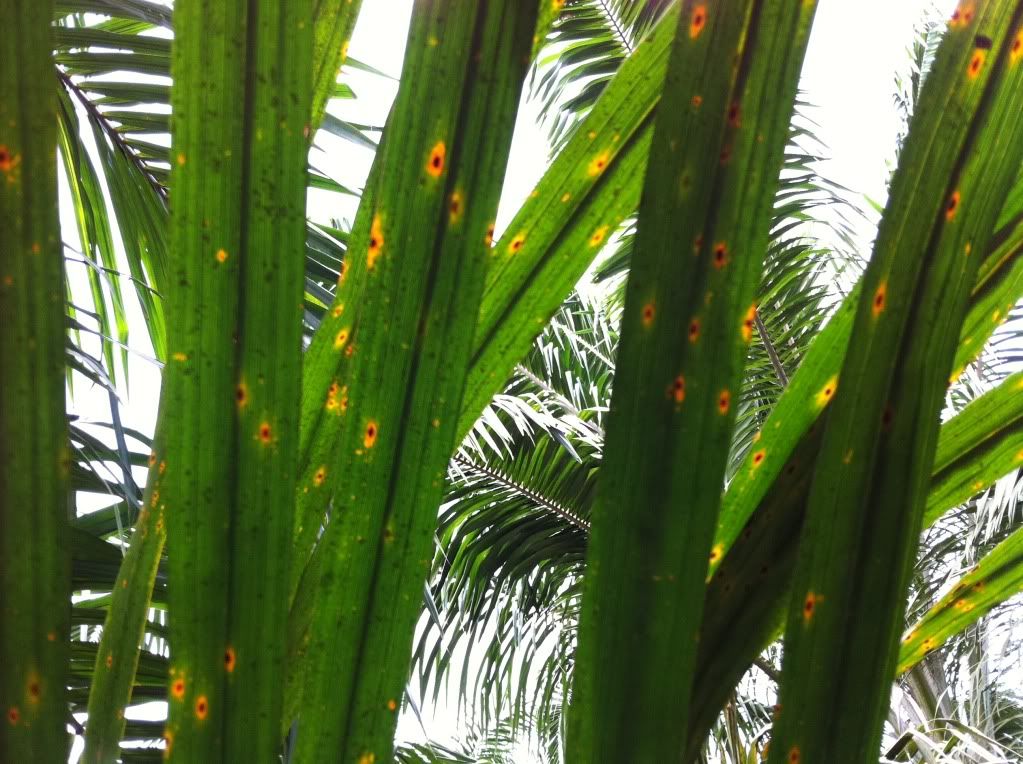
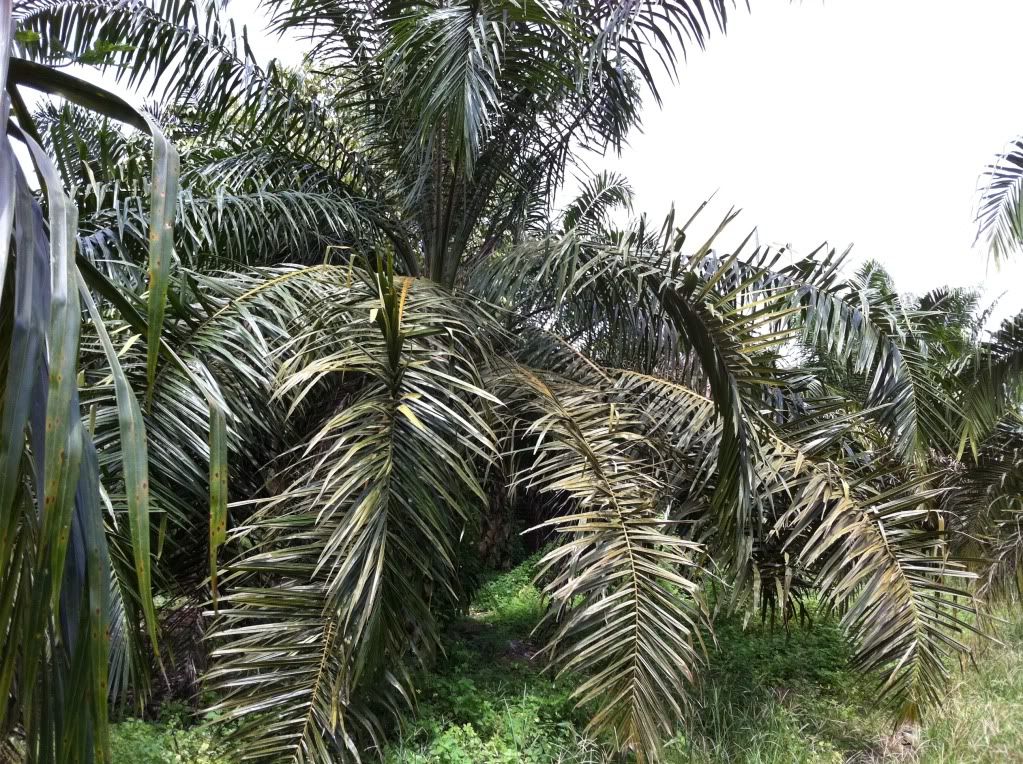
However, the trees still show the symptoms that are lack of boron. I attached some photos for viewing.

I have one question here. How long it takes to show the effect of fertilization?

user posted image

user posted image

user posted image

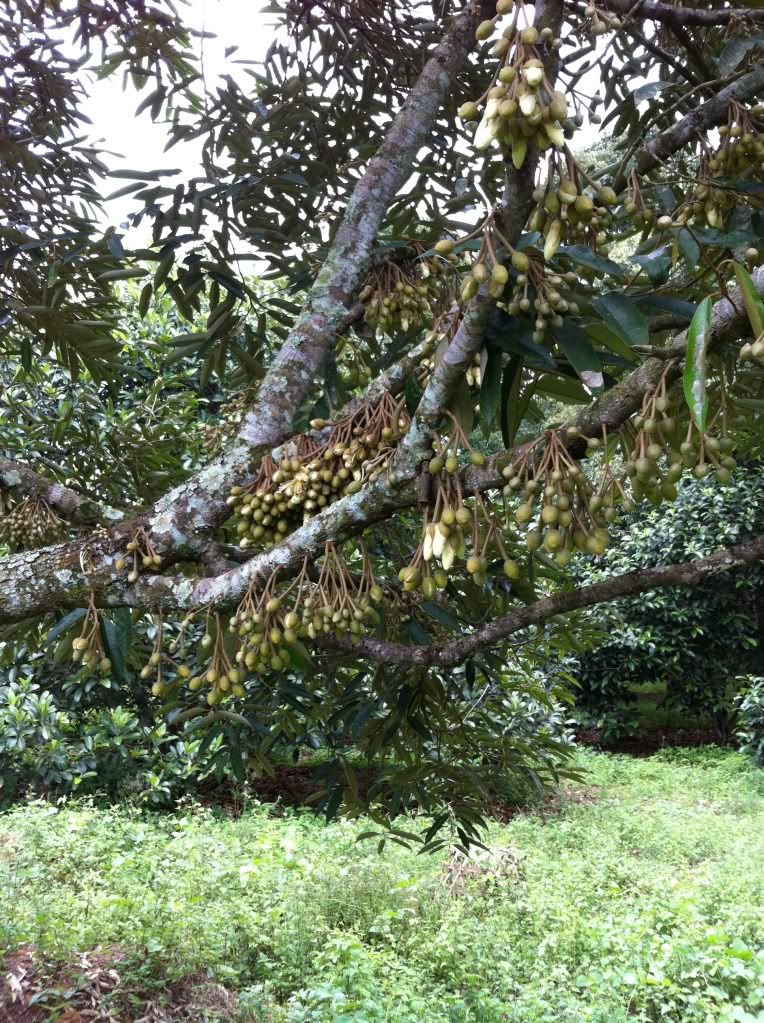
In the durian farm.

The durian session will start June or July. biggrin.gif

user posted image

This post has been edited by Kg Teratai: Mar 13 2012, 12:11 PM
Michael J.
post Mar 13 2012, 12:18 PM

On my way
****
Senior Member
596 posts

Joined: Jan 2006


Kg Teratai:

Hmm... It's alright, I suppose. Did you have a lot of rain during August-October 2011?

The effect of fertilizer can take up to a full year before showing its impact. Especially for boron problem, you will only see its impact with the later, much younger leaves that emerge.
Kg Teratai
post Mar 13 2012, 02:01 PM

Getting Started
**
Junior Member
85 posts

Joined: Jan 2012
Hi Michael J,

A lots of rain happened at Nov-Dec, even now it also rain a lots. Let see if the situation have been improved. If it is not getting better, then I should review the feterlization plan again in May.

I thought it should show the impact even after one month the feterlization has been applied.
Michael J.
post Mar 13 2012, 05:28 PM

On my way
****
Senior Member
596 posts

Joined: Jan 2006


Kg Teratai:

Nope. The biology of oil palm is a little different from short term annual crops. The nutrients are first stored in the trunk, before being released to other parts of the palm. That's why in the past, when fertilizer costs was very high, some planters thought it was "smart" to disregard the advice of agronomists, and drop fertilizer input altogether. Their reasoning: "The soil sure got some nutrients one mar... And oil palm yield still no difference after 6 months, means right decision lor". That is, until the yield of their palms drop drastically (almost 50%) the same time next year.

It is always preferable to reduce fertilizer input rather than completely cut it out.

This post has been edited by Michael J.: Mar 13 2012, 05:28 PM
Pain4UrsinZ
post Mar 13 2012, 05:45 PM

Regular
******
Senior Member
1,861 posts

Joined: Dec 2008
From: In The HELL FIRE


any information abt shrimp or prawn raising?
MrFarmer
post Mar 13 2012, 07:48 PM

Casual
***
Junior Member
478 posts

Joined: Mar 2011
From: Sabah


QUOTE(Michael J. @ Mar 13 2012, 08:25 AM)
Mr Farmer:

That's a good way to begin. I'm doing something similar now, but it is more for fun and self education. The seeds I'm using are from feral populations in Penang, the remnants of the very early rubber clones. High variability within the grove, which is very good news for "plant breeders". Heheh.

Grafting isn't difficult, actually. Once you get the hang of things, it's a breeze. It is the maintaining part that is more challenging.
Speaking of variability, I would like to share a little bit on an experiment I did using domesticated guppies. The aim of the experiment was to develop an alternative breeding method with the same advantages to the commonly used line breeding technique, but without the drawbacks. FYI, line breeding is a very powerful breeding method that is very selective, resulting in the creation of many unique lines of animals, plants etc. The selectively bred lines have the advantage of being very stable (i.e. it doesn't change form easily), and when used to create hybrids, produces very strong hybrids with great vigour. However, the main drawbacks are that such lines carry with them many genetic diseases, are usually less prolific (low reproductive ability), and take up a lot of space during the selection process.


*
I'm getting seeds from unknown source (simply picked). I always though the the characteristic of the clone is base on the tree where we harvest the bud. How important a role is the seed? I see even LGM and independent nursery is doing the same (seeds from unknown source). Any advantages or disadvantages on using seeds from grafted trees of old seed planted trees?

Maintenance again I though it's suppose to be simple, watering daily and apply fertilizer. Can elaborate the maintaining part? Getting worried now.

Sorry, your experiment on hybrid breeding of guppy is too complicated for a newbie like me rclxub.gif Shall check back with you when I reached a higher level.

Speaking of Hybrid. Planted some F1 hybrid Ash gourd. Grew very vigorously with good harvest. Left 3 big gourd and waited for these to ripe and tried to use it for the next season. Planted these seeds a week ago, none germinated. Any reasons? Is it possible for the supplier to make the hybrid seeds infertile? Shall try again with the last fruit.


Added on March 13, 2012, 7:54 pm
QUOTE(Michael J. @ Mar 13 2012, 05:28 PM)
Kg Teratai:

Nope. The biology of oil palm is a little different from short term annual crops. The nutrients are first stored in the trunk, before being released to other parts of the palm. That's why in the past, when fertilizer costs was very high, some planters thought it was "smart" to disregard the advice of agronomists, and drop fertilizer input altogether. Their reasoning: "The soil sure got some nutrients one mar... And oil palm yield still no difference after 6 months, means right decision lor". That is, until the yield of their palms drop drastically (almost 50%) the same time next year.

It is always preferable to reduce fertilizer input rather than completely cut it out.
*
Had an experience with sweet corn (hybrid 45 days), the process is very slow that even when I try to correct the deficiency, it did not work during the life span of the crops.

Say I notice that some Palm Oil planters here are converting to spraying liquid fertilizer, both on the trees and ground. Am looking at the advantage & disadvantage.


Added on March 13, 2012, 7:58 pm
QUOTE(Kg Teratai @ Mar 13 2012, 12:06 PM)

In the durian farm.

The durian session will start June or July.  biggrin.gif

user posted image
*
Say, any method of minimizing flower drops? Wishing to have a durian plantation......

This post has been edited by MrFarmer: Mar 13 2012, 07:58 PM
Michael J.
post Mar 14 2012, 11:05 AM

On my way
****
Senior Member
596 posts

Joined: Jan 2006


MrFarmer:

You are right to say the characteristics of the clone is based on the parent tree where the bud had been collected. However, the seed (i.e. rootstock) material also plays a very critical role in the success of the grafting/cloning process. If the rootstock isn't vigourous, chances are the budded graft would not take, and would have difficulty with surviving and growing. Growing directly from seeds have some advantages and disadvantages. For one, sowing seeds take a longer time to grow to planting stage. Two, you can never be sure of the quality of the material when planting seeds, even if it is taken from a field made up entire of clones. A simple reasoning to this is that different seeds, different genetic mix, so un-uniformed output. Bud grafting i.e. cloning means you are taking from the very best of proven trees, and mass producing them. This often means that your output will be uniform and consistent. The advatage of planting seeds is that you often can get massive amounts of materials at a time, and won't be dependent on the availability of budwood for grafting, or require the skill of trained grafters.


Haa.... Yea, I was just excited over my experiment results. No worries about it. The crux of the experiment is about developing a sustainable population of high performance breeds, that are fertile, able to continously reproduce over time, and face little genetic defects.


Bro, you cannot plant seeds taken from F1 hybrids and expect the same plants to form lar. For one, as you say, many hybrids do not produce viable offspring, i.e. they are sterile. For those that aren't sterile, the resulting offspring will not resemble the parents in terms of yield, vigour, flavor etc. How do I explain this.... It has to do with genetics and gene inheritance.

Ok, lets take two varieties of gourds, say Gourd A and Gourd B. They are remotely related to each other, with Gourd A having a genetic makeup of AA and Gourd B having a genetic makeup of BB. When Gourd A and Gourd B are cross pollinated to produce seeds, the offspring will have a genetic makeup that combine half of Gourd A and half of Gourd B, which is AB.

AA + BB => AB + AB

This offspring AB is known as the F1 Hybrid. It will have the best characteristics of both its parents, Gourd A and Gourd B, like strong vigour, big juicy fruits, sweet taste etc. This is known as hybrid vigour, or as breeders call it, heterosis.

However, heterosis is often a one hit wonder, meaning only the F1 Hybrid will have this kind of superior performance. If the F1 Hybrid was to breed with a sibling F1 Hybrid, what happens is regression, which is a reversion to the parent-type, or a degradation in hybrid vigour. What I mean is this:

AB +AB => 1xAA + 1xBB + 2xAB (physical regression)

Even though you might see there are some offspring that are genetically similar to the F1 Hybrid, the inbreeding with its sibling causes physical regression, i.e. a loss in hybrid vigour. This could be attributed to accumulation of defective genes due to the inbreeding. For growers, this often means a sharp reduction is yield, quality etc.

If the F1 Hybrid were to be cross pollinated with another, diffent variety or species, then hybrid vigour is likely prolonged. Eg., if Hybrid AB is crossed with Gourd C, what you might get is this:

AB + CC => 1xAC + 1xBc

However, the offspring will no longer be uniform, although performance wise they could be just as good.


Now, the examples I've given above are hybrids created from crossing between varieties that are closely related, so the seeds they produce can still germinate. In many cases, seed producers create non-compatible hybrids, i.e. they cross pollinate two different species or genus of plants to produce a hybrid. This hybrid is often sterile due to an imbalance in the genes inherited, i.e. cannot reproduce. An often quoted example is the hybrid between a horse and a donkey, called a mule. The mule is unable to breed because the genetic imbalance in its cells "suicides" the procreating cells, including embryonic cells. Likewise is the case in many plant hybrids; the seed may form, but the embryos die due to this genetic imbalance, and thus do not germinate.

Many seed producers actually favour hybrid seeds, because it literally forces growers to buy seeds from them. In this way, they can control the seed market and demand, and therefore make money. Personally, I'm not very supportive of this, but then again, without hybrids, it is simply impossible to feed 7 billion people, or 9 billion people in the next 18 year's time. Unless some cataclysm happens and wipes out 50% of the human population.


Yes, even with annuals, sometimes correcting an error when it appears may not give a quick enough result. Liquid fertilzers have a number of pros and cons. Pros are: (i) It is more readily absorbed by the palms (ii) It is often easier to apply (subjective) (iii) It is more targeted approach, as fertilizer absorbtion is most efficient through the leaves and roots. Cons include: (i) It is actually more costly when comparing active ingredient to volume (ii) It still leaches off just as easily as granular fertilizers (iii) Storage becomes a big problem.

Take note these are just a few points, but I think you get the gist. One could theoretically crush granular fertilizers and mix to water, but one also has to bear in mind that chemical fertilizers can scorch leaves, so the right volume to water ratio must be determined before doing so.

I'll leave the durian question to the right person to answer. From an agronomic point of view, you really don't want too many flowers/fruits on a tree. Having "just enough" is better than over production and stressing the tree, which could kill it in the long run. Also, although more flowers does equal more fruits, but more fruits equal smaller sized fruits, and smaller sized fruits equal lower grade, which in turn means less income per unit.

This post has been edited by Michael J.: Mar 14 2012, 11:10 AM
TSParaOpticaL
post Mar 14 2012, 06:29 PM

Planter - Durian, Jackfruit, Papaya
*******
Senior Member
2,348 posts

Joined: Dec 2004
From: Ch3r@s


Bro be careful for what you wish for...haha


On the Durian side, i will be able to answer this when i get back from Raub next week as i will be meeting him to check on some durian farms and their downfall and how we can minimize flower dropping...


QUOTE(Michael J. @ Mar 14 2012, 11:05 AM)
MrFarmer:

Unless some cataclysm happens and wipes out 50% of the human population.


I'll leave the durian question to the right person to answer. From an agronomic point of view, you really don't want too many flowers/fruits on a tree. Having "just enough" is better than over production and stressing the tree, which could kill it in the long run. Also, although more flowers does equal more fruits, but more fruits equal smaller sized fruits, and smaller sized fruits equal lower grade, which in turn means less income per unit.
*
MrFarmer
post Mar 14 2012, 08:37 PM

Casual
***
Junior Member
478 posts

Joined: Mar 2011
From: Sabah


QUOTE(Michael J. @ Mar 14 2012, 11:05 AM)
MrFarmer:
I'll leave the durian question to the right person to answer. From an agronomic point of view, you really don't want too many flowers/fruits on a tree. Having "just enough" is better than over production and stressing the tree, which could kill it in the long run. Also, although more flowers does equal more fruits, but more fruits equal smaller sized fruits, and smaller sized fruits equal lower grade, which in turn means less income per unit.
*
Spoke with a friend doing "Red Prawn". He limits it to 25~30 fruits per tree. He says he get big fruits.
Me, experimenting with Banana, limiting it to 7~8 combs. Good fruit size. Just had a Berangan, but we were late in wrapping it. Black dots had appeared.
TSParaOpticaL
post Mar 15 2012, 08:56 AM

Planter - Durian, Jackfruit, Papaya
*******
Senior Member
2,348 posts

Joined: Dec 2004
From: Ch3r@s


if the durian tree is sufficiently fertilised then they are able to bear alot of fruits.

bro, what do you mean by having 7-8 combs ? 7-8 combs per tree ??

QUOTE(MrFarmer @ Mar 14 2012, 08:37 PM)
Spoke with a friend doing "Red Prawn". He limits it to 25~30 fruits per tree. He says he get big fruits.
Me, experimenting with Banana, limiting it to 7~8 combs. Good fruit size. Just had a Berangan, but we were late in wrapping it. Black dots had appeared.
*
Michael J.
post Mar 15 2012, 09:33 AM

On my way
****
Senior Member
596 posts

Joined: Jan 2006


Para:

I think he meant that for each bunch, leave only 7-8 good combs to remain and develop. Banana bunches normally have up to 12 or more combs, but those combs that develop after the 8th comb or so tend become smaller, which means they get lower prices (Grade C or worse). Most normal berangan should be cared for like that, with exception of some newer varieties which can bear up to 12 combs of minimum grade B. But I don't think those are commercially available in Malaysia. Maybe can check with MINT (Malaysia Institute of Nuclear Technology). I remember they had some partnership program with UPM and private companies like UP, KLK, AAR etc.
Kg Teratai
post Mar 15 2012, 03:34 PM

Getting Started
**
Junior Member
85 posts

Joined: Jan 2012
QUOTE
Kg Teratai:

Nope. The biology of oil palm is a little different from short term annual crops. The nutrients are first stored in the trunk, before being released to other parts of the palm. That's why in the past, when fertilizer costs was very high, some planters thought it was "smart" to disregard the advice of agronomists, and drop fertilizer input altogether. Their reasoning: "The soil sure got some nutrients one mar... And oil palm yield still no difference after 6 months, means right decision lor". That is, until the yield of their palms drop drastically (almost 50%) the same time next year.

It is always preferable to reduce fertilizer input rather than completely cut it out.
Hi Michael J,

It is always good to know what is short for the tree then I can apply the fertilizer accordinly. I don't intend to reduce the ferterlizer at this moment until it is bring me the right productivity.

QUOTE
Say, any method of minimizing flower drops? Wishing to have a durian plantation......
QUOTE
Spoke with a friend doing "Red Prawn". He limits it to 25~30 fruits per tree. He says he get big fruits.
Hi Mr Farmer,

As I know, there is no way to prevent minimizing the flower drops from downfall. If any forumer know the tactics, please share.

I never have a chance to taste the real "Red Prawn" from Penang. Is your friend's farm in Penang? Really wanna try the Red Prawn and Black Thorn from Penang. If the tree only carry 25-30 fruits, then the fruit should be big. It is also depends the tree's age. Most of the planters I know in Johor and Pahang will keep as maximum number of durian fruit as possible if the tree can carry. Only very few planters will cut the fruit off the tree in order to make sure the fruit grow bigger.

QUOTE
On the Durian side, i will be able to answer this when i get back from Raub next week as i will be meeting him to check on some durian farms and their downfall and how we can minimize flower dropping...
Hi Para,

Any tactis to share?


MrFarmer
post Mar 15 2012, 06:20 PM

Casual
***
Junior Member
478 posts

Joined: Mar 2011
From: Sabah


QUOTE(Michael J. @ Mar 15 2012, 09:33 AM)
Para:

some newer varieties which can bear up to 12 combs of minimum grade B.
*
Would sure like to lay my hands on these !


Added on March 15, 2012, 6:26 pm
QUOTE(Kg Teratai @ Mar 15 2012, 03:34 PM)
Hi Michael J,

Hi Mr Farmer,

As I know, there is no way to prevent minimizing the flower drops from downfall. If any forumer know the tactics, please share.

I never have a chance to taste the real "Red Prawn" from Penang. Is your friend's farm in Penang? Really wanna try the Red Prawn and Black Thorn from Penang. If the tree only carry 25-30 fruits, then the fruit should be big. It is also depends the tree's age. Most of the planters I know in Johor and Pahang will keep as maximum number of durian fruit as possible if the tree can carry. Only very few planters will cut the fruit off the tree in order to make sure the fruit grow bigger.
*
Friend farm is in Sabah, about 100 Km from mine. Was told that they initially ship the Red Prawn from Peninsular, bit by bit via courier (long story). Anyway, his farm is along the trunk road linking Sabah with Brunei & Sarawak. He get very good price selling his produce himself (retail) along the road side. The taste is beyond words.

This post has been edited by MrFarmer: Mar 15 2012, 06:26 PM

119 Pages « < 53 54 55 56 57 > » Top
 

Change to:
| Lo-Fi Version
0.0277sec    0.44    6 queries    GZIP Disabled
Time is now: 18th December 2025 - 04:50 AM