2015 a Pivotal Year for China’s Cyber Armies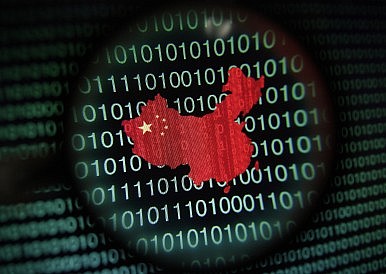
QUOTE
Throughout 2015 Chinese authorities took a number of steps to professionalize their cyber warfare forces. This process began with a series of frank admissions by the Chinese of not only their cyber capabilities, but also their future plans for their cyber forces. For one thing, following a decade of blanket denials, the People’s Liberation Army (PLA) have now explicitly confirmed the existence of both civilian and military network warfare units within the Chinese government. In May this year, China’s Ministry of National Defense expressed its desire to reorganize its forces to win “informationized local wars” in its first published white paper on military strategy.
QUOTE
These moves to develop a more focused cyber warfare force paralleled a campaign to solidify and enforce the idea of “Internet sovereignty.” First brought to the global stage in November 2014 during the inaugural World Internet Conference, the concept of Internet sovereignty has been vigorously pushed by Chinese diplomats on numerous occasions throughout 2015. In January, acting through the Shanghai Cooperation Organization, China formally submitted a proposal to the United Nations for an International Code of Conduct on Information Security. The proposal reaffirmed the rights of states to exercise control over Internet content and infrastructure within their borders in the interests of their national security. At a July meeting of the World Summit of the Information Society, China’s UN ambassador again advocated a strong role for states in Internet governance stressing that they should not be marginalized by independent enterprises and NGOs.
QUOTE
The most illustrative example of this occurred in March, when Chinese hackers used malicious code to hijack the accounts of millions of users of the popular Chinese search engine Baidu. The infected computers were unknowingly directed to launch a massive, week-long DDoS attack against the servers of Github and its partner sites GreatFire and CN-NYTimes. The attacks were the first known use of the “Great Cannon,” a weapon experts believe allows China’s censors to not just filter information entering China but to also selectively and discretely attack the sources of undesirable Web content.
QUOTE
Virtual private networks (VPNs), long in the cross hairs of Chinese authorities, were also prime targets for offensive cyberattacks this year. Many popular services such as VyprVPN, Astrill, and StrongVPN have reportedly been blocked outright or substantially impaired. Watering hole attacks have also been used against certain sites as has new malicious software capable of bypassing anonymity settings of VPNs and the Tor network in order to siphon the personal data of users of certain websites. A number of hacking collectives have also weaponized VPN servers marketed to local Chinese, using seemingly legitimate Web traffic to launch attacks on foreign organizations and governments.
QUOTE
Historians may look back on 2015 as an important inflection point in the development of China’s national cybersecurity strategy.
http://thediplomat.com/2015/12/2015-a-pivo...s-cyber-armies/ 

 Military Thread V19
  Dec 19 2015, 04:47 PM


 Quote
Quote










 0.0287sec
 0.25
0.25
 6 queries
 GZIP Disabled