

Official theme song for World Youth Day 2016, Krakow, Poland!
(English Version)
(Polish version, original)
Amen!


This post has been edited by khool: Jan 18 2016, 10:38 AM
LYN Catholic Fellowship V01 (Group), For Catholics (Roman or Eastern)
|
|
 Jan 18 2016, 10:34 AM Jan 18 2016, 10:34 AM
|
 
Junior Member
225 posts Joined: Mar 2008  
|
"Blessed Are The Merciful" California [English] version of the 2016 WYD hymn
Official theme song for World Youth Day 2016, Krakow, Poland! (English Version) (Polish version, original) Amen! This post has been edited by khool: Jan 18 2016, 10:38 AM |
|
|
|
|
|
Jan 18 2016, 07:20 PM
|

Senior Member
1,920 posts Joined: Jan 2009
|
Jan 19 2016, 12:51 AM |
|
|
|
|
|
Jan 19 2016, 01:48 PM
|
|
Junior Member
225 posts Joined: Mar 2008
|
Hehehe!!!
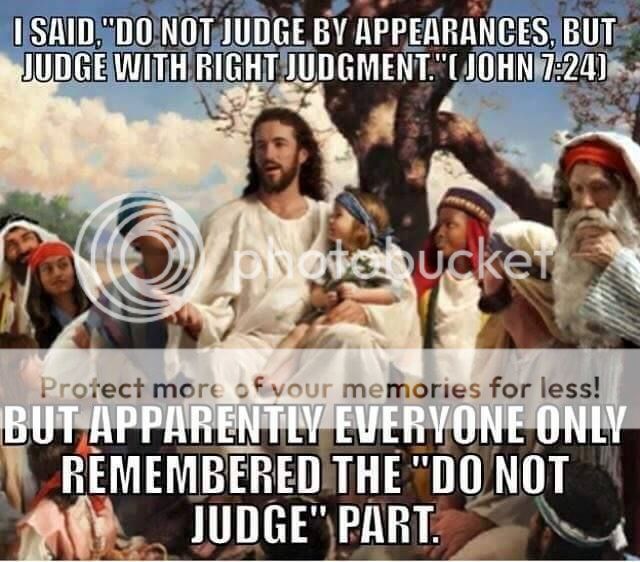 |
|
|
Jan 19 2016, 02:14 PM
|
|
Junior Member
225 posts Joined: Mar 2008
|
Abit late; last Sunday's Readings, but, still a good read and reflection ...
Scripture Speaks: The Wedding at Cana by Gayle Somers (Source)  At the start of His public ministry, Jesus attended a wedding in Cana. Why was this the perfect setting for Him to work His first miraculous sign? Gospel (Read Jn 2:1-11) St. John tells us that after Jesus called and assembled His disciples, “there was a marriage at Cana in Galilee, and the mother of Jesus was there.” It is interesting, isn’t it, that right at the start of St. John’s description of Jesus’ public ministry, His mother gets first mention in this story. “Jesus and His disciples were also invited to the wedding,” but “the mother of Jesus” is the one on whom the action pivots. St. John never refers to her as “Mary” in his Gospel. We know from Scripture and tradition that Mary and John lived as mother and son from the time of the Crucifixion. We might expect his description of her to be in more familiar terms. Because St. John’s Gospel is considered to be profoundly interpretive in its report of the details of Jesus’ life, we can legitimately wonder if his reference to Mary as “the mother of Jesus” has a deeper meaning than simply their biological relationship. Indeed, it does. Recall that the prologue of this Gospel evokes the Creation: “In the beginning was the Word” (Jn 1:1). St. John wants us to be thinking about the early chapters of Genesis, both the glory we see there and the shadow cast by sin. The only hope for redemption after the Fall will be the fulfillment of a promise made by God. In speaking to the Serpent, He says: “I will put enmity [a battle] between you and the woman, and between your seed and her seed” (Gn 3:15). In many subtle ways throughout his Gospel, St. John lets us know that “the woman” and “her seed” have finally appeared. Their battle against the Serpent has now been enjoined. Thus it is that in describing Mary in this story as “the mother of Jesus,” St. John makes more vivid her connection to God’s promise in Genesis. In this episode at Cana, it is Mary who is alert to the details of the wedding celebration—perhaps it was the wedding of a near relative. Running out of wine was awkward and embarrassing for the bridegroom, but why would Mary think the problem should be referred to Jesus? He was, after all, an itinerant rabbi, not a wine steward! We have so many questions about this scene, don’t we? The mystery is intensified when we see that Jesus wasn’t thinking about this wedding as the occasion of His first public “sign.” Even when Mary comes to Him, there seems to be some resistance from Jesus: “Woman, how does your concern affect Me?” This is an English translation of a Hebrew idiom. We are helped to understand it with a quote from the Ignatius Catholic Study Bible—New Testament: QUOTE [This Hebrew idiom] typically presupposes some perceived tension between two parties having contrary perspectives (Judg 11:12; 1 Kings 17:18; Mk 5:7), though not always (2 Chron 35:21). When the idiom is used in response to a person’s request … the speaker sometimes capitulates to the expressed will of the other (2 Kings 3:13) and sometimes not (2 Sam 16:10). Here… Jesus complies with Mary’s request, and Mary herself appears perfectly confident that Jesus will respond favorably to her petition. In effect, Jesus would not have initiated the miracle at Cana, but neither would Jesus refuse His Mother’s prompting. (ICSB-NT, pg 164) So, why was Mary, so absorbed in the details of the wedding, moved to expect a miracle from Jesus to solve this problem? We don’t know for sure, but we have to wonder if, as she participated in the wedding festivities with her Son in attendance, she recalled that His work, being God’s Son, too, was to be the flesh-and-blood presence of the Bridegroom to God’s people. During the long history of the Jews, God expressed His covenant relationship with them as a “marriage” (more on this in our First Reading). In Genesis, the marriage of Adam and Eve was fractured by sin. Sadly, God’s covenant with His people was also greatly marred by sin. The Jews spurned their loving “Husband.” However, the prophets foretold a restoration of the marriage. Mary knew that Jesus was born to mend this shattered covenant; He was the Bridegroom Who would purify the Bride. Mary, as the new Eve, prompted her Son to fulfill His vocation in this richly meaningful wedding setting. In this, she undid what Eve had done in the Garden, when she prompted her bridegroom to sin. This was Mary’s first public act of advocacy on behalf of God’s people, a work she continues to do for all her children in the Church. Jesus performs the miracle, transforming the water into the “best” wine. To make this possible, the servants had to listen to Mary’s directive: “Do whatever He tells you.” These are Mary’s last words in the Gospel. They continue to ring out over the centuries to all of us who discover that our lives have no wine—that we are living on the water of sin, meaninglessness, and fear. The Bridegroom has come to transform all this. We simply need to do whatever He tells us. Possible response: Blessed Mother, I thank you for your loving advocacy for us in the details of our lives that matter so much to us. First Reading (Read Isa 62:1-5) This is one of the Old Testament prophecies in which God explicitly promises to be the Bridegroom of His people: “For the Lord delights in you and makes your land His spouse. As a young man marries a virgin, your Builder shall marry you; and as a bridegroom rejoices in his bride, so shall your God rejoice in you.” All her life, Mary had heard these prophecies. Is it any wonder that at the wedding at Cana, she was full of expectation of what her Son could do for His people? Possible response: Heavenly Father, help me remember today that You rejoice over us, Your people in the Church. Psalm (Read Ps 96:1-3, 7-10) In the Gospel, St. John tells us that when Jesus turned the water into wine, He “revealed His glory, and His disciples began to believe in Him.” The psalmist today gives us words to use as we ponder and praise not only this historical event but also the fact that in our new lives in Christ, the glory of the Lord continues to be revealed—the water of our lives is transformed into the wine of grace and peace, of joy inexpressible. In thanksgiving for this miracle, we should be ready to do what our responsorial says: “Proclaim His marvelous deeds to all the nations.” Possible response: The psalm is, itself, a response to our other readings. Read it again prayerfully to make it your own. Second Reading (Read I Cor. 12:4-11) If we ask, in a practical way, what it means for the water of our lives to be turned into wine, this passage from St. Paul’s epistle to the Corinthians gets us started on an answer. He writes about how, as a result of our baptism and faith in Jesus, the Holy Spirit pours into us wonderful gifts that make present on earth God’s own divine life. The gifts differ, of course, but “one and the same Spirit produces all of these, distributing them individually to each person as He wishes.” This life of God in us was what was lost in the Garden. The Bridegroom, beginning at the wedding in Cana, came to restore it. Possible response: Lord Jesus, thank You for sharing Your life with Your people, the Church. Help us be faithful stewards of the gifts You have lavished on us. Source: http://catholicexchange.com/scripture-spea...wo5cdM.facebook Have a blessed week ahead! |
|
|
Jan 19 2016, 11:18 PM
|

Senior Member
3,577 posts Joined: Apr 2006
|
 |
|
|
Jan 19 2016, 11:46 PM
|

Senior Member
726 posts Joined: Sep 2014
|
Is the St. Peter’s Basilica the biggest church in the world?
|
|
|
|
|
|
Jan 20 2016, 12:04 AM
|
|
Senior Member
3,577 posts Joined: Apr 2006
|
QUOTE(tinarhian @ Jan 19 2016, 11:46 PM) Is the St. Peter’s Basilica the biggest church in the world? https://en.wikipedia.org/wiki/List_of_large...gs_in_the_world This post has been edited by yeeck: Jan 20 2016, 12:06 AM |
|
|
Jan 20 2016, 12:07 AM
|
|
Senior Member
726 posts Joined: Sep 2014
|
QUOTE(yeeck @ Jan 20 2016, 12:04 AM) hmm. I see. But I'm not looking for the biggest Pentecostal church la. |
|
|
Jan 20 2016, 12:48 AM
|
|
Senior Member
3,577 posts Joined: Apr 2006
|
Sermon for the Second Sunday after the Epiphany
Fr. Richard G. Cipolla St. Mary's Norwalk January 17, 2016  The Wedding Feast of Cana “At a certain point the wine ran out, and Jesus’ mother told him, ‘They have no more wine.’ Jesus replied, ‘Woman, how does this concern of yours involve me? My hour has not yet come’. His mother instructed those waiting on table, ‘Do whatever he tells you.’” (John 2: 3-5) The changing of water into wine, always the gospel for this Sunday, the third sign of the Epiphany: the adoration of Christ by the Wise Men, the Baptism of Christ, and the changing of water into wine. This is the first miracle of Jesus and the first of the seven signs in the gospel of John, the signs that point to who Jesus is, the signs that show forth his glory, in a hidden way, for his glory is only shown forth finally on the cross. This is a most homely miracle: no healing here, no miraculous feeding, no casting out of demons. It surely pales before the raising of Lazarus, the final sign before the glorification of the Passion and Resurrection. But it is such a wonderful miracle. It is purely gratuitous; it is overflowing with extra. The water changed into wine gives pleasure to the wedding guests; the choice wine was saved for last. And so much of it! Six jars of twenty-five gallons apiece. But that is not the heart of this gospel. The heart of this gospel is the manifestation of Christ to his disciples. But close to this heart, beating simultaneously with it, is the meaning of Mary’s role in our redemption. The heart of this gospel is Jesus Christ; but the wedding feast at Cana is where the biblical foundations of devotion to Mary are found, those foundations that end as they must, as all devotions must, at the foot of the Cross. One of the fundamental differences between Catholicism and Protestantism is the role of Mary in faith and piety. Devotion to Mary is one of the constants of the Catholic faith, and it is this devotion that is the evidence of a living faith in Christ. The rejection in Protestantism of Mary’s role in Christian faith has had the result of a widespread loss of understanding of who Jesus is. For without Mary, the reality of Jesus Christ is compromised. They have no more wine. Woman, how does this concern of yours involve me? My hour has not yet come. Does not this exchange between Jesus and his mother give us pause? His address to her: Woman. Not Mother: Woman. We can rush to point out that this was a polite form of address in Semitic culture. The problem here is the translation. There is no way to say this in English as it would have been said in Aramaic. But the meaning of the gospel does not ultimately depend on language and culture. The conversation between Jesus and his mother—and please note that John the Evangelist never calls Mary by her name: he always refers to her as the mother of Jesus—this conversation is important to Christian faith because of what it says about Mary and the therefore about Jesus, for Mary always points to Jesus. Where do we begin in understanding this conversation? We begin with the Revelation of St. John, where the Woman—that is the term used—is that mysterious, symbolic figure who is a key figure in the drama of salvation. She is the Woman who gives birth to the male child and enters into conflict with the dragon serpent. The imagery here forces us back to the third chapter of Genesis, to the Fall, where enmity is place between the serpent and the woman, between the serpent’s seed and her seed. In Revelation the Woman in birth pangs brings forth a male child who is the Messiah and is taken up into heaven. The great dragon, identified as the ancient serpent of Genesis by Revelation, frustrated by the child’s ascension, turn against the Woman and her offspring. Tradition understands this Woman as the people of God, the new Israel. Tradition understands this Woman as the Church who continues on earth after the Ascension, persecuted but protecting her children. But the Tradition of the Church identifies this woman, the Woman, also as Mary, the mother of Jesus, the mother of the Messiah. For it is Mary who is the symbol of the Church in the deepest sense, Mary who is the mother of the Church, but above all, Mary who is the new Eve, who by her Yes overturns the bondage and death of Eve’s No. This is the context is which we must understand the conversation between Mary and Jesus at the wedding feast at Cana. It is Mary, the mother of the Messiah, the new Eve, who utters the words: they have no wine. This is not only a fact; it is a request to perform a sign that will show the glory of God in the Savior of the world. But before Jesus performs this sign, he must make clear his refusal of Mary’s intervention—how does this concern of yours involve me? She cannot have any role in his ministry. His signs must reflect the absolute sovereignty of his Father, not any human or family agency. What he must do, he must do alone, he who was born not by blood, not be carnal desire, nor by man’s willing it, but by God. But it is the new Eve who makes this request. It is the handmaid of the Lord who makes this request. And so just as Eve’s request of Adam brought sin into the world, so Mary’s request is the occasion of Jesus’ epiphany to his disciples, the first manifestation of his glory. And this request is granted: the water is changed into wine. But Mary’s ministry, her role in the redemption, must wait, must wait until the glorification of her Son, the final manifestation, the final epiphany. It is only at the final battle between the Son and the serpent that is waged on the Cross: it is only the hour of passion, death, and resurrection and ascension. Here is Mary’s fundamental role, her ministry. It is as the Woman: Woman, behold your Son! Here is the final struggle of the Woman with the serpent. It is here that she is entrusted with offspring whom she must protect in the continuing struggle between Satan and the followers of the Messiah. Here at the foot of the cross is Mary, mother of the Church. Here Mary is our mother, our protector, we who are the offspring of the Church, we who have been born again at the font by water and the Holy Spirit. Here is our Lady of Perpetual Help, here is our succour, our light, our sweetness and our hope, here is the Mother of all Christians, enveloping us in her mantle, the mantle that warmed the hillside of Tepeyac so that roses bloomed in the winter. So many words, too many words, all of this, so much breathing out into the void! But how else to say this which must be said? Much better to go to Chartres to see who Mary is in the stone of the vaulting that soars to heaven and in the windows filled with the deep blue and blood red glass that speak so eloquently of beauty, of the Woman, and the glory of her Son. Much better to go to Torcello to see the Byzantine mosaic in the apse of the cathedral and see in that severe gold and blue the steely courage of the Theotokos, the bearer of God. Much better to go to my grandmother’s parish church in Campagna to see the heartbreaking statue of the Madonna Addolorata, our Lady of Sorrows, her heart pierced by swords, lovingly dressed in her liturgical outfits, her fragile porcelain face marked by tears, and here understand the deep suffering love that is Mary’s love for her Son and for the Church. Much better to join in singing the solemn tone of the Salve Regina, for it is the act of singing this hymn that the deepest understanding takes place, that water into wine makes sense, that my life in Christ makes sense—that Love makes sense. |
|
|
Jan 21 2016, 10:54 AM
|
|
Junior Member
225 posts Joined: Mar 2008
|
Some reflections for this week, for Malaysian Catholics
*Source: From my BEC Whatsapp group* If u like to know how it ended for our catholic bro Bernard Then,, read below..... (Written n reflected by Mildred Lopez.) REFLECTIONS DURING THE WAKE AND FUNERAL OF BERNARD THEN . As I entered the parlor I was greeted by Bernard's sister. She spoke of the many graces that came to them as a result of this tragedy. While it was difficult to find Bernard, to bring him back from Philippines was smooth sailing. Father Jo jo SJ had gone to be with the family. He did not know them so had asked for an officer to tell the family that a priest wanted to meet them. At a place prepared he then said a mass. Had reflections with them and accompanied them home. At every step of the way they felt God's presence with them. And though they did not comprehend the murder of Bernard, God was firmly in charge. Bernard she said was kidnapped on the feast of the Ascension. And the day he was cremated in Manila was the feast of St Francis Ferdinand, a Spaniard, who was ordained a Dominican friar in Manila. He was a great witness and so was beheaded. But many of his captors converted to Christianity afterwards. She said that this ordeal was an awakening never to take life as we know it for granted. Life like a flash it can be taken away from us. So we must live always aware of the presence of God. . I was introduced to an old lady with a quiet smile. It was Bernard's mother. As I hugged her I could feel her strength. I commented 'aunty you are so strong' She said 'God gave Bernard to me for 39years and now HE has taken him back'. Friends I have not seen such faith as this family's in the face of such a heinous tragedy, in all my life. It is a family that trusts God completely. . I then went forward to sprinkle holy water on the tiny box with a crucifix that held Bernard's ashes. As I prayed for the repose of his soul, a great surge came over me. As I opened my eyes I came to the realization that even though I may think that I am tall, beautiful big and accomplished, I am only an insignificant handful of ash that can be contained in a tiny vessel. . In his very moving homily Fr Albertto SJ said that like Christ, said to a hungry and blood thirsty people, Bernard said This is my body , take it.... . All monies given to the wife of Bernard is donated to the slump children in the Philippines so that in Bernard's death there will be new life. . In place of the eulogy, Bernard's brother Gerard spoke : - of the ordeal the family endured while waiting for Bernard's return. It was a contrast of feeling hopeless and expecting the worst in the face of fear and yet yet hoping for the best , that Bernard will return. -He spoke of the need for mercy and forgiveness and not vengeance, hard as it is for the family , it is necessary for healing and new life. - he appealed to the government to deliver on what they are entrusted to do ie to protect and care for all the people in its charge. - for his slain brother Bernard he prayed: May the road rise up to meet you May the wind be always at your back May the sun shine warm upon your face And rains fall soft upon your fields And until we meet again May God hold you in the palm of HIS hands Gloria in Excelsis Deo. Amen! |
|
|
Jan 23 2016, 12:49 AM
|
|
Senior Member
3,577 posts Joined: Apr 2006
|
https://www.lifesitenews.com/news/lutherans...ith-pope-report
I'm not sure what to make of this. What on earth is happening? |
|
|
Jan 23 2016, 07:07 AM
|
|
Junior Member
225 posts Joined: Mar 2008
|
QUOTE(yeeck @ Jan 23 2016, 12:49 AM) https://www.lifesitenews.com/news/lutherans...ith-pope-report Hmmm ... no official word from Vatican yet. Best to wait and see, patience is always a virtue I say ... I'm not sure what to make of this. What on earth is happening? |
|
|
Jan 24 2016, 08:14 AM
|
|
Junior Member
225 posts Joined: Mar 2008
|
Keep on praising Him always! Amen!
|
|
|
|
|
|
Jan 25 2016, 10:55 PM
|
|
Junior Member
225 posts Joined: Mar 2008
|
How Are Communion Wafers Made?
God bless everyone! Source: http://ucatholic.com/blog/how-are-communion-wafers-made/ |
|
|
Jan 27 2016, 12:43 AM
|
|
Senior Member
3,577 posts Joined: Apr 2006
|
|
|
|
Jan 27 2016, 08:03 AM
|
|
Junior Member
225 posts Joined: Mar 2008
|
LOL ... Absolutely hilarious!!!!
 Catholic Problems |
|
|
Jan 28 2016, 03:03 PM
|
|
Senior Member
3,577 posts Joined: Apr 2006
|
Found the following interesting article because I've always been rather annoyed with the usage of the term "Father God" even by some Catholics lately. No one ever used the word "Son God" or "Spirit God", so I was wondering where on earth did this term "Father God" came from?
Who is Father God? (Strange: The Bible Never Mentions "Father God") A relatively new term is now used in our Churches which references and addresses God. The phrase of which we are concerned is whereby Christians address God in Heaven, that is our "Heavenly Father" with the phrase: "Father God". Many public prayers and Christian articles are peppered with a phrase referring to: ... Father God Where does this term "Father God" come from and what does it mean? But before we begin to look at this term, it will be prudent for the reader to recall where in their favorite Bible version does this phrase appear? It is not necessary to grab a concordance at this time or do a word search on a computer Bible program. Can a Bible reader from memory recall ever seeing this term? Neither the Old Testament or the New Testament uses the phrase "Father God" in the most popular Bible versions. Just who is "Father God"? First, we examine the word "God" in our English Bibles and we note that it comes from the Greek word "Theos". This is Strong's number 2316. This is where we get our word "theology" from and when scripture refers to God with a capital "G", it refers to the true God who created heaven and earth, and not the false gods referred to elsewhere. The word "God" in the New Testament refers to a general name of deity, that is, the Godhead, which we refer to as "The Trinity". The trinity is the acknowledgment of a concept whereby the "One God" of Israel is identified specifically as consisting of three members, which includes: God the Father, the first person in the trinity Christ, the second person of the trinity Holy Spirit, the third person in the trinity So now we know that the Bible is using the word "God" to refer to all of the above in the New Testament. Now we turn our attention to the word "Father" which is the Greek word "Pater" which is Strong's number 3962. The word "Father" when associated with deity can refer to one of two things... The Father of our Lord Jesus Christ Our Father in Heaven The context of the passage will tell us in which sense it is being used, but "Father" with reference to deity always refers to the first person of the Trinity... Now when these two words are put together we have the common and popular phrase: "Father God"... Immediately we see that there are two problems with this phrase. First, we have a grammatical error and second, we have a theological problem which becomes apparent... The grammatical error with the phrase "Father God" occurs because the first word "Father" identifies specifically the first person of the trinity. The second word "God" refers to one or all of the trinity depending on the context in how it is used... This doesn't make grammatical sense.. For example, would you introduce you earthly father to an acquaintance as your "Father Man"? Father refers specifically to your biological father, but "man" refers to: an adult male person, as distinguished from a boy or a woman. a member of the species Homo sapiens or all the members of this species collectively, without regard to sex: e.g., prehistoric man. the human individual as representing the species, without reference to sex; the human race; humankind: e.g., Man hopes for peace, but prepares for war. How about introducing your sister as "Sister Man" which would make man refer to Homo sapiens or how about "Sister Woman"? Your English teacher would reprimand you severely for using such nonsense. No, the correct statement of introduction would be for example, " I want you to meet a WOMAN who has been most influential in my life, my SISTER Edith, etc... You begin with the general category of WOMAN and then identify specifically which woman you are talking about, in this case, your SISTER... followed by specifically her name Edith... (Note: if your sister's name were say, Bill, short for Billie, then you might want to follow it up with a specific identification that Bill is a woman, but that is an exception, and not standard practice...) So the phrase "Father God" is categorically and grammatically incorrect... Next, we note that the first word "Father" refers specifically to the first person of the trinity... The second word "God" may include all of the persons of the trinity or one person of the trinity depending on the context of the passage... So based on our understanding of who God is and who the "Father" is, we have an obvious theological problem. The phrase "Father God" is the same as saying... "Father God => God the Father, God the son, Jesus Christ, or God, The Holy Spirit". This implies that all members of the trinity are "Father" which is not true. All are God, but not all can be or ever should addressed as "Father". So by using this phrase it is in effect identifying three as the father... Father: God the Father Father: Jesus Christ the Father Father: Holy Spirit the Father The third and final reason the Phrase "Father God" is incorrect is by referring to the ultimate authority on the subject. That authority is "The Word of God" commonly known as the Bible... We can quickly do a word or phrase search using our most popular Bible software program on any of the most popular Bible versions to see where the phrase "Father God" is used. The Bible search engines return a consistent result: "Phrase not found". Should the Christian be surprised to find that such a phrase does not exist? A search for the phrase "Father God" was performed using our computer Bible program on the following Bible versions: KJV (King James Version) NKJV (New King James Version) NASV (New American Standard Version) NIV (New International Version) RSV (Revised Standard Version) Our search engine returned the result: -- Father God found 0 times--. Do the findings tell you anything? The inspired writers of our New Testament never used "Father God" when addressing God... The inspired writers of our Old Testament never used "Father God" when addressing God... So when you hear Christians addressing God as "Father God", where do they get it? Is it not odd to read the Bible from cover to cover and learn all the names of God and then start addressing God as "Father God" whereas the Bible writers never used it? The non-Biblical phrase "Father God" is completely unbiblical, grammatically incorrect, and theologically incorrect. Yet this 2-word phrase resounds from Church pulpits from Preacher/Teachers some of which have a Doctrinal degree in Theology. This has trickled down to the Christian lay person who mimics this phrase as if it has some divine origin... The result is that the Word of God has been tampered with and such a non-Biblical phrase has now permeated the Churches... Who would ever do such a thing as introduce such a phrase as this into common Christian vocabulary that involves our God the Father in Heaven who has manifested Himself in the person of Jesus Christ and revealed Himself to us in the Scriptures by the indwelling Holy Spirit? Now this particular issue is a problem that the astute Bible student needs to be aware of. Although, not on the same level as the unpardonable sin, when placed alongside a host of other doctrinal errors regarding the Word of God, it is certainly worthy of honorable mention. It can be well noted how Christians are influenced by thoughts, ideas, and now phrases which are completely unbiblical. It is highly unlikely that any Bible student could read their Bible from cover to cover and then start referring to our "Heavenly Father" as: "Father God"... Where could they possibly come up with such a phrase since it is never used that way in the scriptures and then use it profusely? Are there not enough examples in the Bible whereby a Christian could learn to address God the Father, God the Son, and God the Holy Spirit? This unbiblical phrase is a reflection on our Seminaries and seminary graduates who ascend to Church pulpits to reveal how such sloppy theology is tolerated and promoted. On the laymen's side, it reveals how influential and easily this type of doctrinal error is absorbed by the Christian community. This is just another example of how this generation with all of our Bible translations, Lexicons, concordances, Greek interlinears, and study aids manage to usurp the power, authority, and inspiration of the written "Word of God". 2 Timothy 3:16 16) All Scripture is given by inspiration of God, and is profitable for doctrine, for reproof, for correction, for instruction in righteousness, The verses below are Biblical examples to show how we are to address deity, in particular, the God and Father of our Lord Jesus Christ... God the Father (or Father God?) Act_2:33 Therefore being exalted to the right hand of God, and having received from the Father the promise of the Holy Spirit, He poured out this which you now see and hear. Rom_1:7 To all who are in Rome, beloved of God, called to be saints: Grace to you and peace from God our Father and the Lord Jesus Christ. Rom_15:6 that you may with one mind and one mouth glorify the God and Father of our Lord Jesus Christ. 1Co_1:3 Grace to you and peace from God our Father and the Lord Jesus Christ. 1Co_8:6 yet for us there is one God, the Father, of whom are all things, and we for Him; and one Lord Jesus Christ, through whom are all things, and through whom we live. 1Co_15:24 Then comes the end, when He delivers the kingdom to God the Father, when He puts an end to all rule and all authority and power. 2Co_1:2 Grace to you and peace from God our Father and the Lord Jesus Christ. 2Co_1:3 Blessed be the God and Father of our Lord Jesus Christ, the Father of mercies and God of all comfort, 2Co_11:31 The God and Father of our Lord Jesus Christ, who is blessed forever, knows that I am not lying. Gal_1:1 Paul, an apostle (not from men nor through man, but through Jesus Christ and God the Father who raised Him from the dead), Gal_1:3 Grace to you and peace from God the Father and our Lord Jesus Christ, Gal_1:4 who gave Himself for our sins, that He might deliver us from this present evil age, according to the will of our God and Father, Eph_1:2 Grace to you and peace from God our Father and the Lord Jesus Christ. Eph_1:3 Blessed be the God and Father of our Lord Jesus Christ, who has blessed us with every spiritual blessing in the heavenly places in Christ, Eph_1:17 that the God of our Lord Jesus Christ, the Father of glory, may give to you the spirit of wisdom and revelation in the knowledge of Him, Eph_4:6 one God and Father of all, who is above all, and through all, and in you all. Eph_5:20 giving thanks always for all things to God the Father in the name of our Lord Jesus Christ, Eph_6:23 Peace to the brethren, and love with faith, from God the Father and the Lord Jesus Christ. Php_1:2 Grace to you and peace from God our Father and the Lord Jesus Christ. Php_2:11 and that every tongue should confess that Jesus Christ is Lord, to the glory of God the Father. Php_4:20 Now to our God and Father be glory forever and ever. Amen. Col_1:2 To the saints and faithful brethren in Christ who are in Colosse: Grace to you and peace from God our Father and the Lord Jesus Christ. Col_1:3 We give thanks to the God and Father of our Lord Jesus Christ, praying always for you, Col_2:2 that their hearts may be encouraged, being knit together in love, and attaining to all riches of the full assurance of understanding, to the knowledge of the mystery of God, both of the Father and of Christ, Col_3:17 And whatever you do in word or deed, do all in the name of the Lord Jesus, giving thanks to God the Father through Him. 1Th_1:1 Paul, Silvanus, and Timothy, To the church of the Thessalonians in God the Father and the Lord Jesus Christ: Grace to you and peace from God our Father and the Lord Jesus Christ. 1Th_1:3 remembering without ceasing your work of faith, labor of love, and patience of hope in our Lord Jesus Christ in the sight of our God and Father, 1Th_3:11 Now may our God and Father Himself, and our Lord Jesus Christ, direct our way to you. 1Th_3:13 so that He may establish your hearts blameless in holiness before our God and Father at the coming of our Lord Jesus Christ with all His saints. 2Th_1:1 Paul, Silvanus, and Timothy, To the church of the Thessalonians in God our Father and the Lord Jesus Christ: 2Th_1:2 Grace to you and peace from God our Father and the Lord Jesus Christ. 2Th_2:16 Now may our Lord Jesus Christ Himself, and our God and Father, who has loved us and given us everlasting consolation and good hope by grace, 1Ti_1:2 To Timothy, a true son in the faith: Grace, mercy, and peace from God our Father and Jesus Christ our Lord. 2Ti_1:2 To Timothy, a beloved son: Grace, mercy, and peace from God the Father and Christ Jesus our Lord. Tit_1:4 To Titus, a true son in our common faith: Grace, mercy, and peace from God the Father and the Lord Jesus Christ our Savior. Phm_1:3 Grace to you and peace from God our Father and the Lord Jesus Christ. Jas_1:27 Pure and undefiled religion before God and the Father is this: to visit orphans and widows in their trouble, and to keep oneself unspotted from the world. Jas_3:9 With it we bless our God and Father, and with it we curse men, who have been made in the similitude of God. 1Pe_1:2 elect according to the foreknowledge of God the Father, in sanctification of the Spirit, for obedience and sprinkling of the blood of Jesus Christ: Grace to you and peace be multiplied. 1Pe_1:3 Blessed be the God and Father of our Lord Jesus Christ, who according to His abundant mercy has begotten us again to a living hope through the resurrection of Jesus Christ from the dead, 2Pe_1:17 For He received from God the Father honor and glory when such a voice came to Him from the Excellent Glory: "This is My beloved Son, in whom I am well pleased." 2Jn_1:3 Grace, mercy, and peace will be with you from God the Father and from the Lord Jesus Christ, the Son of the Father, in truth and love. Jud_1:1 Jude, a bondservant of Jesus Christ, and brother of James, To those who are called, sanctified by God the Father, and preserved in Jesus Christ: Rev_1:6 and has made us kings and priests to His God and Father, to Him be glory and dominion forever and ever. Amen. |
|
|
Jan 28 2016, 03:06 PM
|
|
Senior Member
1,920 posts Joined: Jan 2009
|
Mr Yeeck... Long time ago there was discussion about miracles in your thread, with nihil obstat status... few saints have their miracle recorded well.
do you mind share the link again ? or the post or the material ? thanks a lot |
|
|
Jan 28 2016, 04:34 PM
|
|
Senior Member
3,577 posts Joined: Apr 2006
|
QUOTE(de1929 @ Jan 28 2016, 03:06 PM) Mr Yeeck... Long time ago there was discussion about miracles in your thread, with nihil obstat status... few saints have their miracle recorded well. Not sure which one you are referring to.....Perhaps search back this thread and find it, cause I couldn't find anything that you mentioned.do you mind share the link again ? or the post or the material ? thanks a lot |
|
|
Jan 28 2016, 05:46 PM
|
|
Junior Member
225 posts Joined: Mar 2008
|
QUOTE(yeeck @ Jan 28 2016, 03:03 PM) Found the following interesting article because I've always been rather annoyed with the usage of the term "Father God" even by some Catholics lately. No one ever used the word "Son God" or "Spirit God", so I was wondering where on earth did this term "Father God" came from? Not just "Father God", "Father Lord" also being used surreptitiously. Who is Father God? (Strange: The Bible Never Mentions "Father God") A relatively new term is now used in our Churches which references and addresses God. The phrase of which we are concerned is whereby Christians address God in Heaven, that is our "Heavenly Father" with the phrase: "Father God". Many public prayers and Christian articles are peppered with a phrase referring to: ... Father God Where does this term "Father God" come from and what does it mean? But before we begin to look at this term, it will be prudent for the reader to recall where in their favorite Bible version does this phrase appear? It is not necessary to grab a concordance at this time or do a word search on a computer Bible program. Can a Bible reader from memory recall ever seeing this term? Neither the Old Testament or the New Testament uses the phrase "Father God" in the most popular Bible versions. Just who is "Father God"? First, we examine the word "God" in our English Bibles and we note that it comes from the Greek word "Theos". This is Strong's number 2316. This is where we get our word "theology" from and when scripture refers to God with a capital "G", it refers to the true God who created heaven and earth, and not the false gods referred to elsewhere. The word "God" in the New Testament refers to a general name of deity, that is, the Godhead, which we refer to as "The Trinity". The trinity is the acknowledgment of a concept whereby the "One God" of Israel is identified specifically as consisting of three members, which includes: God the Father, the first person in the trinity Christ, the second person of the trinity Holy Spirit, the third person in the trinity So now we know that the Bible is using the word "God" to refer to all of the above in the New Testament. Now we turn our attention to the word "Father" which is the Greek word "Pater" which is Strong's number 3962. The word "Father" when associated with deity can refer to one of two things... The Father of our Lord Jesus Christ Our Father in Heaven The context of the passage will tell us in which sense it is being used, but "Father" with reference to deity always refers to the first person of the Trinity... Now when these two words are put together we have the common and popular phrase: "Father God"... Immediately we see that there are two problems with this phrase. First, we have a grammatical error and second, we have a theological problem which becomes apparent... The grammatical error with the phrase "Father God" occurs because the first word "Father" identifies specifically the first person of the trinity. The second word "God" refers to one or all of the trinity depending on the context in how it is used... This doesn't make grammatical sense.. For example, would you introduce you earthly father to an acquaintance as your "Father Man"? Father refers specifically to your biological father, but "man" refers to: an adult male person, as distinguished from a boy or a woman. a member of the species Homo sapiens or all the members of this species collectively, without regard to sex: e.g., prehistoric man. the human individual as representing the species, without reference to sex; the human race; humankind: e.g., Man hopes for peace, but prepares for war. How about introducing your sister as "Sister Man" which would make man refer to Homo sapiens or how about "Sister Woman"? Your English teacher would reprimand you severely for using such nonsense. No, the correct statement of introduction would be for example, " I want you to meet a WOMAN who has been most influential in my life, my SISTER Edith, etc... You begin with the general category of WOMAN and then identify specifically which woman you are talking about, in this case, your SISTER... followed by specifically her name Edith... (Note: if your sister's name were say, Bill, short for Billie, then you might want to follow it up with a specific identification that Bill is a woman, but that is an exception, and not standard practice...) So the phrase "Father God" is categorically and grammatically incorrect... Next, we note that the first word "Father" refers specifically to the first person of the trinity... The second word "God" may include all of the persons of the trinity or one person of the trinity depending on the context of the passage... So based on our understanding of who God is and who the "Father" is, we have an obvious theological problem. The phrase "Father God" is the same as saying... "Father God => God the Father, God the son, Jesus Christ, or God, The Holy Spirit". This implies that all members of the trinity are "Father" which is not true. All are God, but not all can be or ever should addressed as "Father". So by using this phrase it is in effect identifying three as the father... Father: God the Father Father: Jesus Christ the Father Father: Holy Spirit the Father The third and final reason the Phrase "Father God" is incorrect is by referring to the ultimate authority on the subject. That authority is "The Word of God" commonly known as the Bible... We can quickly do a word or phrase search using our most popular Bible software program on any of the most popular Bible versions to see where the phrase "Father God" is used. The Bible search engines return a consistent result: "Phrase not found". Should the Christian be surprised to find that such a phrase does not exist? A search for the phrase "Father God" was performed using our computer Bible program on the following Bible versions: KJV (King James Version) NKJV (New King James Version) NASV (New American Standard Version) NIV (New International Version) RSV (Revised Standard Version) Our search engine returned the result: -- Father God found 0 times--. Do the findings tell you anything? The inspired writers of our New Testament never used "Father God" when addressing God... The inspired writers of our Old Testament never used "Father God" when addressing God... So when you hear Christians addressing God as "Father God", where do they get it? Is it not odd to read the Bible from cover to cover and learn all the names of God and then start addressing God as "Father God" whereas the Bible writers never used it? The non-Biblical phrase "Father God" is completely unbiblical, grammatically incorrect, and theologically incorrect. Yet this 2-word phrase resounds from Church pulpits from Preacher/Teachers some of which have a Doctrinal degree in Theology. This has trickled down to the Christian lay person who mimics this phrase as if it has some divine origin... The result is that the Word of God has been tampered with and such a non-Biblical phrase has now permeated the Churches... Who would ever do such a thing as introduce such a phrase as this into common Christian vocabulary that involves our God the Father in Heaven who has manifested Himself in the person of Jesus Christ and revealed Himself to us in the Scriptures by the indwelling Holy Spirit? Now this particular issue is a problem that the astute Bible student needs to be aware of. Although, not on the same level as the unpardonable sin, when placed alongside a host of other doctrinal errors regarding the Word of God, it is certainly worthy of honorable mention. It can be well noted how Christians are influenced by thoughts, ideas, and now phrases which are completely unbiblical. It is highly unlikely that any Bible student could read their Bible from cover to cover and then start referring to our "Heavenly Father" as: "Father God"... Where could they possibly come up with such a phrase since it is never used that way in the scriptures and then use it profusely? Are there not enough examples in the Bible whereby a Christian could learn to address God the Father, God the Son, and God the Holy Spirit? This unbiblical phrase is a reflection on our Seminaries and seminary graduates who ascend to Church pulpits to reveal how such sloppy theology is tolerated and promoted. On the laymen's side, it reveals how influential and easily this type of doctrinal error is absorbed by the Christian community. This is just another example of how this generation with all of our Bible translations, Lexicons, concordances, Greek interlinears, and study aids manage to usurp the power, authority, and inspiration of the written "Word of God". 2 Timothy 3:16 16) All Scripture is given by inspiration of God, and is profitable for doctrine, for reproof, for correction, for instruction in righteousness, The verses below are Biblical examples to show how we are to address deity, in particular, the God and Father of our Lord Jesus Christ... God the Father (or Father God?) Act_2:33 Therefore being exalted to the right hand of God, and having received from the Father the promise of the Holy Spirit, He poured out this which you now see and hear. Rom_1:7 To all who are in Rome, beloved of God, called to be saints: Grace to you and peace from God our Father and the Lord Jesus Christ. Rom_15:6 that you may with one mind and one mouth glorify the God and Father of our Lord Jesus Christ. 1Co_1:3 Grace to you and peace from God our Father and the Lord Jesus Christ. 1Co_8:6 yet for us there is one God, the Father, of whom are all things, and we for Him; and one Lord Jesus Christ, through whom are all things, and through whom we live. 1Co_15:24 Then comes the end, when He delivers the kingdom to God the Father, when He puts an end to all rule and all authority and power. 2Co_1:2 Grace to you and peace from God our Father and the Lord Jesus Christ. 2Co_1:3 Blessed be the God and Father of our Lord Jesus Christ, the Father of mercies and God of all comfort, 2Co_11:31 The God and Father of our Lord Jesus Christ, who is blessed forever, knows that I am not lying. Gal_1:1 Paul, an apostle (not from men nor through man, but through Jesus Christ and God the Father who raised Him from the dead), Gal_1:3 Grace to you and peace from God the Father and our Lord Jesus Christ, Gal_1:4 who gave Himself for our sins, that He might deliver us from this present evil age, according to the will of our God and Father, Eph_1:2 Grace to you and peace from God our Father and the Lord Jesus Christ. Eph_1:3 Blessed be the God and Father of our Lord Jesus Christ, who has blessed us with every spiritual blessing in the heavenly places in Christ, Eph_1:17 that the God of our Lord Jesus Christ, the Father of glory, may give to you the spirit of wisdom and revelation in the knowledge of Him, Eph_4:6 one God and Father of all, who is above all, and through all, and in you all. Eph_5:20 giving thanks always for all things to God the Father in the name of our Lord Jesus Christ, Eph_6:23 Peace to the brethren, and love with faith, from God the Father and the Lord Jesus Christ. Php_1:2 Grace to you and peace from God our Father and the Lord Jesus Christ. Php_2:11 and that every tongue should confess that Jesus Christ is Lord, to the glory of God the Father. Php_4:20 Now to our God and Father be glory forever and ever. Amen. Col_1:2 To the saints and faithful brethren in Christ who are in Colosse: Grace to you and peace from God our Father and the Lord Jesus Christ. Col_1:3 We give thanks to the God and Father of our Lord Jesus Christ, praying always for you, Col_2:2 that their hearts may be encouraged, being knit together in love, and attaining to all riches of the full assurance of understanding, to the knowledge of the mystery of God, both of the Father and of Christ, Col_3:17 And whatever you do in word or deed, do all in the name of the Lord Jesus, giving thanks to God the Father through Him. 1Th_1:1 Paul, Silvanus, and Timothy, To the church of the Thessalonians in God the Father and the Lord Jesus Christ: Grace to you and peace from God our Father and the Lord Jesus Christ. 1Th_1:3 remembering without ceasing your work of faith, labor of love, and patience of hope in our Lord Jesus Christ in the sight of our God and Father, 1Th_3:11 Now may our God and Father Himself, and our Lord Jesus Christ, direct our way to you. 1Th_3:13 so that He may establish your hearts blameless in holiness before our God and Father at the coming of our Lord Jesus Christ with all His saints. 2Th_1:1 Paul, Silvanus, and Timothy, To the church of the Thessalonians in God our Father and the Lord Jesus Christ: 2Th_1:2 Grace to you and peace from God our Father and the Lord Jesus Christ. 2Th_2:16 Now may our Lord Jesus Christ Himself, and our God and Father, who has loved us and given us everlasting consolation and good hope by grace, 1Ti_1:2 To Timothy, a true son in the faith: Grace, mercy, and peace from God our Father and Jesus Christ our Lord. 2Ti_1:2 To Timothy, a beloved son: Grace, mercy, and peace from God the Father and Christ Jesus our Lord. Tit_1:4 To Titus, a true son in our common faith: Grace, mercy, and peace from God the Father and the Lord Jesus Christ our Savior. Phm_1:3 Grace to you and peace from God our Father and the Lord Jesus Christ. Jas_1:27 Pure and undefiled religion before God and the Father is this: to visit orphans and widows in their trouble, and to keep oneself unspotted from the world. Jas_3:9 With it we bless our God and Father, and with it we curse men, who have been made in the similitude of God. 1Pe_1:2 elect according to the foreknowledge of God the Father, in sanctification of the Spirit, for obedience and sprinkling of the blood of Jesus Christ: Grace to you and peace be multiplied. 1Pe_1:3 Blessed be the God and Father of our Lord Jesus Christ, who according to His abundant mercy has begotten us again to a living hope through the resurrection of Jesus Christ from the dead, 2Pe_1:17 For He received from God the Father honor and glory when such a voice came to Him from the Excellent Glory: "This is My beloved Son, in whom I am well pleased." 2Jn_1:3 Grace, mercy, and peace will be with you from God the Father and from the Lord Jesus Christ, the Son of the Father, in truth and love. Jud_1:1 Jude, a bondservant of Jesus Christ, and brother of James, To those who are called, sanctified by God the Father, and preserved in Jesus Christ: Rev_1:6 and has made us kings and priests to His God and Father, to Him be glory and dominion forever and ever. Amen. Honestly, before I met my wife and got married, I never heard of both terms ever being used. It was either, "Father", "Jesus Christ", "Lord" or "Holy Spirit" for me. Must be a thing for the 'others' Seriously, that kind of usage makes it sound like one is referring to some heathen god of Norse origin like "Odin Father" ... |
|
Topic ClosedOptions
|
| Change to: |  0.0338sec 0.0338sec
 0.72 0.72
 6 queries 6 queries
 GZIP Disabled GZIP Disabled
Time is now: 7th December 2025 - 05:59 AM |
 Quote
Quote