



LYN Catholic Fellowship V01 (Group), For Catholics (Roman or Eastern)
|
|
 Apr 17 2016, 03:32 PM Apr 17 2016, 03:32 PM
Return to original view | Post
#361
|
 
Junior Member
225 posts Joined: Mar 2008  
|
|
|
|
|
|
|
Apr 17 2016, 06:57 PM
Return to original view | Post
#362
|
|
Junior Member
225 posts Joined: Mar 2008
|
This post has been edited by khool: Apr 17 2016, 06:57 PM |
|
|
Apr 18 2016, 02:07 PM
Return to original view | Post
#363
|
|
Junior Member
225 posts Joined: Mar 2008
|
The Divine Shepherd
 The Lord is my shepherd, I shall not want. He makes me lie down in green pastures; He leads me beside still waters; He restores my soul. He leads me in right paths for his name’s sake. Even though I walk through the darkest valley, I fear no evil; for you are with me; your rod and your staff - they comfort me. You prepare a table before me in the presence of my enemies; you anoint my head with oil; my cup overflows. Surely goodness and mercy shall follow me all the days of my life, and I shall dwell in the house of the Lord my whole life long. - Psalm 23 |
|
|
Apr 20 2016, 11:19 AM
Return to original view | Post
#364
|
|
Junior Member
225 posts Joined: Mar 2008
|
QUOTE(yeeck @ Apr 20 2016, 10:49 AM) Interesting list of heresies from Wikipedia: the last on the list, the prosperity heresy ... is that referring to liberation theology or something else?https://en.wikipedia.org/wiki/List_of_Christian_heresies  |
|
|
Apr 20 2016, 11:39 AM
Return to original view | Post
#365
|
|
Junior Member
225 posts Joined: Mar 2008
|
QUOTE(yeeck @ Apr 20 2016, 11:29 AM) Prosperity heresy = 'prosperity gospel' heresy. The most notable preacher of prosperity gospel is Joel Osteen. oh, THAT prosperity heresy ... funny, my wife doesn't like him, and she is from a Protie background. |
|
|
Apr 20 2016, 11:40 AM
Return to original view | Post
#366
|
|
Junior Member
225 posts Joined: Mar 2008
|
 |
|
|
|
|
|
Apr 20 2016, 02:48 PM
Return to original view | Post
#367
|
|
Junior Member
225 posts Joined: Mar 2008
|
QUOTE(yeeck @ Apr 20 2016, 11:58 AM) It would be good for everyone, Catholics included, to see if at one time or another they held to some of the teachings listed in that Wiki page. e.g. some of the earlier heresies have been resurrected in modern day groups like Jehovah Witnesses. I laughed that there was even such a heresy I didn't even knew existed: Bro Yeeck, u ever encountered the JW before? I have, in Oz-land ... they told me that they do not believe that Jesus is the son of God, really dunno what to make of these yahoos ... Sabellianism - Belief that the Father, Son, and Holy Spirit are three characterizations of one God, rather than three distinct "persons" in one God. (This is a common mistake I would say for some people when they try to explain the mystery of the Holy Trinity.) Triclavianism - Belief that three, rather than four nails were used to crucify Christ and that a Roman soldier pierced him with a spear on the left, rather than right side. (I was like...duh!!!! There are groups that made this a dogma????)  |
|
|
Apr 22 2016, 05:58 PM
Return to original view | Post
#368
|
|
Junior Member
225 posts Joined: Mar 2008
|
 |
|
|
Apr 23 2016, 09:33 AM
Return to original view | Post
#369
|
|
Junior Member
225 posts Joined: Mar 2008
|
 |
|
|
Apr 23 2016, 03:17 PM
Return to original view | Post
#370
|
|
Junior Member
225 posts Joined: Mar 2008
|
¡Viva Cristo Rey!
The Cristeros versus the Mexican Revolution Source: Christopher Check Imagine going to confession on a Saturday afternoon only to find no priest available. You drive to nearby—or even distant—churches and encounter only frustrated parishioners facing the same situation. A couple with a new baby cannot find a priest to baptize him. The last time anyone in the group attended Mass was months ago. This nightmare gives some sense of the profound evil that gripped Mexico nearly a century ago. Socialist historians from Mexico and Russia have argued that the Cristeros were superstitious peasants manipulated by elites who felt threatened by the revolution’s promise of progress and justice. To make such arguments they had to ignore the facts of the story (the wealthy of Mexico, including practicing Catholics, opposed the uprising), as well as the eleven centuries of Catholic militancy that informed it. Seduced by Marxist errors and Masonic superstitions, revolutionaries declared war on the Catholic Church. They seized control of the government and, in 1917, wrote a socialist constitution packed with anticlerical articles with the goal of marginalizing the Church’s influence—if not driving her from Mexico altogether. Backed by the full force of federal law, the Revolutionary Government confiscated all Church property, including hospitals, monasteries, convents, and schools. Priests were forbidden to wear clerics in public. They were not allowed to express opinions on politics, even in private conversation. They could not seek justice in the Mexican courts. To take a religious vow became a criminal act. All foreign clergy were deported. In 1926, the president of Mexico, Plutarco Elias Calles, added teeth to the persecution with additions to the penal code. The "Calles Law," as it came to be known, called for uniform enforcement throughout the country of the Constitution’s anticlerical articles. It threatened severe sanctions for violations and for government officials who failed to enforce them. "As long as I am President of the Republic, the Constitution of 1917 will be obeyed," he vowed, saying he would not be moved by the "wailing of sacristans or the pujidos (groans) of the over-pious" (David C. Bailey, ¡Viva Cristo Rey!: The Cristero Rebellion, and the Church-State Conflict in Mexico, 65). Self-Proclaimed Enemies of God Calles was, in one sense, just another anticlerical revolutionary in a century-old series of anticlerical revolutionaries. For him the Church represented a past he wished to see liquidated. Unable to operate under these conditions, the Mexican bishops, after agonized deliberations and consultation with the Holy See, suspended public worship on July 31, 1926. Three bishops went into hiding; the rest left the country in exile. The next day, for the first time in more than four hundred years, no priest in Mexico ascended ad altare Dei to offer the holy sacrifice of the Mass. Priests who remained in Mexico faced two choices: cooperation with the government or a life on the run. Those who cooperated were forced to abandon their parishes, to move to urban areas, and to register with their state governments—which now had the power to set clerical quotas. In the state of Tobasco, for example, Governor Tomás Canabal restricted the number of priests in his state to six, one for every thirty thousand citizens. He demanded these six take wives. In true Marxist fashion, he renamed his capital city, San Juan Bautista (St. John the Baptist), to Villa Hermosa (beautiful villa), and named his children Lenin, Lucifer, and Satan. His business card identified him as "The Personal Enemy of God." A courageous minority of priests refused to register. They went into hiding and roamed Mexico by night and in disguise, doing their best to bring the sacraments to the faithful. If caught, they were arrested, fined, jailed, and sometimes tortured and executed. Following the suspension of public worship, the National League for the Defense of Religious Liberty, an organization formed by middle-class Catholic intellectuals, circulated a petition signed by two million Mexicans demanding constitutional reform. Their cries were ignored; the government went so far as to deny the petition existed. The people responded with a nationwide boycott of government transportation services, energy, and entertainment. The boycott failed because Mexico’s wealthy—including many practicing Catholics—felt the sting of the boycott and complained to the government. Federal police were sent in to break up picket lines. By January 1927, many of the faithful concluded that they had exhausted all peaceful means of protest. The Mexican landowning peasant class in the rural west took up arms. Bishops: Fight or Flight? Was this the effect that the bishops had desired? In the case of a few, perhaps, yes. Bishop Leopoldo Lara y Torres of Tacambaro wrote to Calles telling him that the bishops were prepared to seal their protest "in blood." The fiery tactics of Bishop Francisco Orozco y Jiménez of Guadalajara made Rome nervous; he endured three exiles for his public opposition to the government. Bishop José de Jesús Manríquez y Zárate of Huejulta had been arrested once already for circulating tracts condemning Calles and for using his pulpit to denounce his administration. Bishop Zárate would later help supply the Cristeros, and he even considered taking the field with them. For most of the bishops, however, suspension of public worship was a non-violent protest designed to bring popular pressure on the government. The non-violent view was shared by Jose Anacleto Gonzáles Flores, the heroic scholar and founder of the Catholic-action organization the Unión Popular. As street demonstrations devolved into street violence, however, Flores reluctantly joined forces with the National League’s René Capistrán Garza in a nationwide call to arms. Flores told his followers that they were headed for Calvary. QUOTE If one of you should ask me what sacrifice I am asking of you in order to seal the pact we are going to celebrate, I will tell you in two words: your blood. If you want to proceed, stop dreaming of places of honor, military triumphs, braid, luster, victories, and authority over others. Mexico needs a tradition of blood in order to cement its free life of tomorrow. For that work my life is available, and for that tradition I ask yours. (Bailey, ¡Viva Cristo Rey! , 110) Flores was martyred after an ordeal of brutal torture during which he was hung by his thumbs while federal soldiers skinned the soles of his feet. Before he died, he accomplished much more than organizing a military uprising. He and the leaders of the Unión Popular operated catechesis programs for children and adults and relief efforts for the poor. Flores understood that a military victory would be hollow if there were no Catholic Mexico to replace Revolutionary Mexico. He was beatified in 1999 by Pope John Paul II.No Support from Northern Neighbors When the Cristeros took up arms in January 1927, they had very few arms to take up, only their battle cry, "¡ Viva Cristo Rey!" The uprising occurred almost simultaneously in small towns and villages in a dozen western states including Zacatecas, Jalisco, Guanajuato, Durango, Michoacán, and Colima. Hundreds of small, poorly organized bands of sharecroppers and rancheros bearing machetes and a few rifles took over local municipalities by disarming the garrisons at federal outposts, as well as local police and militia units. Lack of a long-term plan, however, took some of the steam out of these initial victories. Capistrán Garza had been a great one for creating pious fervor, but he was not the man to organize an armed rebellion. His job, as he saw it, was to cross the border and stir up sympathy for the Cristero cause among U.S. Catholics, sympathy that would translate into large gifts of cash with which to buy desperately needed ammunition. Garza knew that American support would dictate the outcome of the war, but the U.S. bishops were reluctant to give any sign of supporting an armed rebellion against a government recognized by the United States. Meanwhile, most of the Mexican bishops were looking for a negotiated settlement. Garza’s northern sojourn yielded almost no fruit. Knowing nothing of the diplomatic bargaining that their uprising had generated, the Cristeros pressed ahead with their war for the soul of Mexico. In some regions they were clearly winning; in others, at least they were holding their own. Taking over one rural village at a time, they began not only better to organize their army, but also to organize alternate governments in the territories they had liberated. They controlled a wide swath of towns and cities in the state of Zacatecas. The region of Coalcomán in western Michoacán sent Calles formal notification of its succession from Mexico. Municipal governments under Cristero control collected taxes for the war effort but also discharged the ordinary functions of civil government, such as school administration. Deeply conscious of the Christian nature of their movement, Cristero lawmakers took a hard line on moral behavior. Unmarried couples were required to marry or separate. Prostitution, gambling, and public drunkenness were severely punished, and rape could draw a sentence of death. Catholic social justice informed Cristero economic policy, which forbade speculation in corn and other crops afflicted by shortages resulting from the war. Women Wage War of Secrecy The war raged for thirty months. The federal government attempted to deny Cristero victories, but in fact—and in spite of severe shortages of ammunition—Catholic soldiers defeated federal units in operations ranging from large cavalry engagements on the plains of Jalisco to guerilla operations in the mountains of Durango. The American military attaché described the "remarkable tenacity" of the Cristeros and the general disorder of the federal army. The Cristeros lived by a strict moral code, one that stood in strict contrast to the behavior of federal troops, who were frequently drunk or stoned and who terrorized the civilian population with pillage and rape. Consequently, public sympathy for the Cristeros was strong. For example, there was an extensive logistics network run by the Feminine Brigades of St. Joan of Arc, a Catholic women’s organization affiliated with the Unión Popular. These women devised creative and clandestine ways to keep soldiers supplied: special vests for smuggling ammunition out of federal factories and secret workshops for the production of homemade explosives, such as grenades made out of jelly tins. These courageous twenty-five thousand ladies also carried messages—written on silk and hidden within the soles of shoes—between units. All of their activities were carried out under an oath of secrecy. No evidence indicates that the oath was ever broken. The heroic efforts of the Joan of Arc Brigades notwithstanding, the Cristero army never had enough ammunition to win a decisive victory. Too often, in the heat of battle, they had to disengage so as to live to fight another day. On several occasions they were reduced to rolling boulders (called "Hail Marys" and "Our Fathers") down a hill on advancing federal troops. Although the federal army was badly led and plagued by high rates of desertion, they were never short of arms and ammunition—supplied by the U.S. government. In at least one battle, American pilots provided air support for the federal army. Stalemate, albeit one that could last for years, seemed to be the best for which the Cristeros could hope. "Animated by a Spirit of Good Will" Plutarco Calles felt threatened nonetheless. The war was costing the government ninety-six million pesos a year, more than a third of its annual budget. This figure did not include the harm to his economy in reduced agricultural production (for which Calles’ scorched-earth policy was to blame). Worse perhaps, his policy of relocating some 30 percent of the rural population of Mexico to urban areas in an effort to eliminate the Cristero support network was only provoking widespread resentment. Half a million Mexicans left the country, forming California’s first wave of Mexican immigration. By the end of the fighting, military deaths approached one hundred thousand, 60 percent of which were federal troops. Although Calles continued to call the shots, he turned over the presidency to his hand-picked successor, Emilio Portes Gil. Whether it was Portes Gil’s more moderate positions on religious questions or Calles’ growing fear that the Cristeros would never be defeated ("they are annihilating us," he told Gil), the Mexican government at last came to the bargaining table. The man who negotiated the settlement was the U.S. ambassador to Mexico, Dwight Morrow (whose daughter Anne married Charles Lindbergh). Calles and Portes Gil knew that if the Mexican bishops restored public worship, the armed resistance would fade. Pope Pius XI would permit the restoration of public worship only if he believed that the persecution of the Church would abate and that Church property would be restored. Calles and Portes Gil had no plans to change the constitution, but they were willing to hint that enforcement could be relaxed. On June 21, 1929, Mexico City’s Archbishop Pascual Díaz and Archbishop Ruiz y Flores, the Apostolic Delegate, along with Portes Gil, issued statements to the press. The Mexican episcopal statement was brief, citing the spirit of good will in which negotiations had taken place and a desire that the restoration of public worship would "lead the Mexican people, animated by a spirit of good will, to cooperate in all moral efforts undertaken for the welfare of all the people of the country" (Bailey, ¡Viva Cristo Rey! , 312). Portes Gil assured the people of Mexico that the Constitution did not intend "to destroy the identity of the Catholic Church" nor "to intervene in any way with its spiritual functions" and that he was prepared to listen to "any complaints . . . regarding injustices . . . committed by undue application of the laws" (Bailey, ¡Viva Cristo Rey! , 312). He clarified that the registration of clergy did not mean that the government could register clergy not appointed by ecclesiastical authority. He added that religious instruction could take place within the confines of a church, but not in schools, and that any law of Mexico was subject to appeal by one of her citizens. On these two noncommittal statements, los arreglos (agreements) were brokered. Ruiz y Flores and Díaz had given the most generous interpretation possible to Pius XI’s demand that Church property be restored: "In so far as could reasonably be expected," they told Morrow. Portes Gil told them that Church property not being used by the government would be returned immediately, but that the Church could give the government time to vacate buildings currently occupied. Gil also ordered a total amnesty for all Cristeros, including free rail passes to return to their homes. Officers were permitted to keep their sidearms and horses. At the conclusion of the meeting, the two bishops drove directly to the Basilica of Our Lady of Guadalupe and knelt at the high altar in thanksgiving. Public worship was restored. The faithful packed the churches. Word came from Pius XI to the Cristeros asking them to lay down their arms. Over the next three months, in obedience to the Holy Father, some more reluctantly than others, that is exactly what they did. Betrayal, Persecution, and Mass Executions But within a few months of the arreglos, signs emerged that all was not well. A significant number of churches, schools, and rectories remained in government hands. Ruiz y Flores and Díaz attempted to meet with the president but were ignored. When they at last met with Portes Gil’s successor, Pascual Ortiz Rubio (also hand-picked by Calles) and asked him to honor his predecessor’s promises, they were told that Portes Gil had promised nothing. Meanwhile, the Cristeros who were not willing to move out of their states were taken prisoner and executed. The "annihilation of Catholic militants after the 1929 agreement" (Bailey, ¡Viva Cristo Rey! , 294) lasted for several years. There were mass executions in Jalisco, and reports of Cristero veterans being hunted down and killed lasted until the 1950s. It is not known how many thousands of them lost their lives after the war had been declared over. The worst years for the Church in Mexico were 1934 and 1935. In this period Graham Greene set his novel The Power and the Glory, in which a "whiskey priest" fights persecution and his own weaknesses. Most state governments closed the churches. Priests practically vanished, as they were again on the run. Less than a tenth of those who had served the faithful in 1925 were permitted to operate a decade later. In truth, the number was fewer, since those who wanted to practice legally had to marry. In 1934 there were 334 registered priests for fifteen million Mexicans. Schoolteachers in Yucatán and Michoacán were required to take a public oath of atheism and to promise to teach against the Catholic religion. Archbishop Díaz’s episcopal palace was never returned. He was thrown in jail for a time and then forced to rent rooms where he could find them. Fearing to lose their property, few were willing to rent to the aged priest. He died hated by the Mexican government and not altogether loved by Catholic militants who felt he had betrayed their cause. Doubtless it was Díaz’s voice that at last convinced Pius XI to call for an end to the Cristero uprising. However, we can render no just judgment on the members of the hierarchy who sought an end to the Cristiada without bearing in mind that the Church is not a political movement. It is an institution for the care of souls. We may wish ever to see the Church triumph over her enemies, but her path must be the path of her founder, a steady march to Calvary. Pius XI and his bishops needed first and foremost to restore the sacraments to the Mexican faithful, even if the circumstances under which they were to be dispensed were trying. They negotiated in good faith, which is more than can be said for anyone else at the bargaining table. The Seed of the Church The Mexican Church’s climb out of the hell of the Revolution has been slow, and it is not finished. Mexican schoolchildren, to the extent that they even hear the story of the Cristeros, are as likely as not to get the socialist spin. Well into the 1970s, Catholic schools received regular inspections to ensure use of government textbooks. Religion could not be taught—only "values." Not until the 1980s were the anticlerical articles repealed. Not until the late 1990s, with the beatifications and canonizations of the Martyrs of the Mexican Revolution by John Paul II and, in 2005, Benedict XVI, did a sympathetic public awareness of the Cristeros resurface. Nonetheless, the Calles Law may be off the books, but anticlerical sentiment remains, especially in the popular media, which fumed about "opening old wounds" when last summer Miss Mexico wore a dress honoring the Cristeros. When bishops in Mexico spoke against new laws permitting abortion, the press behaved as if they had no business commenting on a "political" matter. "The blood of the martyrs is the seed of the Church." After Tertullian wrote those words a century would pass before the Edict of Milan. How and when God will perfect the sacrifices of the Mexican Martyrs is up to him. For our part we can contemplate the ferocity with which the Church was persecuted not long ago in our own backyard, and the zeal of the faithful who defended her with Catholic hearts forged in centuries of fighting the enemies of Jesus Christ. SIDEBARS Mexico’s Tarcisius: José Sánchez del Río In 1913, in the state of Michoacán, a boy was born to Macario and Maria Sánchez del Río. They called him José. Macario and Maria were cattle ranchers who loved Jesus Christ with all their hearts and who reared their four children, of whom José was the third, to do the same. José cultivated a strong devotion to the Blessed Virgin of Guadalupe and said his rosary each day with great care. He instructed the other young children of his town in the Catholic faith, and encouraged them to make holy hours before the Blessed Sacrament. José loved to play marbles with his companions, and he learned to ride and care for horses. When José was thirteen, his older brothers, Macario and Miguel, left home to join the Cristeros. José desired to join them, but his mother forbade it. For a year he begged her to let him go. "Mother," he said, "Will you deny me the chance to go to heaven, and so soon?" At last his mother relented, and with tears in her eyes watched her youngest son ride off to join the crusade. The Cristero commander in José’s town refused the boy’s appeal to enlist, so he made his way some twenty or thirty miles to the next town, Cotija, where he presented himself to the Cristero commander, Prudencio Mendoza. "What contribution can so small a boy make to our army?" "I ride well. I know how to tend horses, clean weapons and spurs, and how to fry beans and tortillas." Mendoza was inspired by the boy’s grit, so he made him the aide of the Cristero General Rubén Guízar Morfin. Impressed by José’s service, Morfin promoted him to bugler. His job was to ride alongside the general in combat, carrying his battle standard and delivering the general’s orders with his horn. The soldiers of José’s regiment, inspired by his piety and fervor, nicknamed him Tarcisius after the Roman altar boy who died protecting the Blessed Sacrament from a pagan mob. On February 6, 1928, the Cristero army was overwhelmed by the federal army in fierce and bloody combat outside of Cotija. General Morfin’s horse was shot, and it looked as if he would soon be captured by the federal troops. José leapt off of his horse. "General!" he shouted. "Take my mount and escape to safety. You are of far greater importance to the Cristero cause than I am." Helping Morfin up into the saddle, José delivered a hard swat across the backside of the horse and sent it galloping away. He then took his rifle and bandolier and, taking cover behind a rock, began shooting the federal soldiers closing around him. At last the boy ran out of ammunition, and standing up shouted to the enemy, "I have not surrendered. I have only stopped shooting you because I am out of cartridges." When the federal soldiers saw that they had been fired upon by a boy, they seized him in a fury. They put José in irons and dragged him off to the local church, which they had converted into a jail, a stable for their horses, and a coop for roosters they used in cockfights. These they had leashed to the church’s monstrance. Jose scolded the soldiers for desecrating a holy place. "Now we will see, hombrecito, how tough you are!" they sneered. To test his resolve, they forced José to watch as they took another captured Cristero, tortured him, and hanged him from a telegraph pole. Instead of looking away, José encouraged the prisoner, telling him that they would soon meet up in heaven. For two days, José was locked in the sacristy of the church, during which time he wrote to his mother, telling her that he had no fear, that he had welcomed the will of God and looked forward to dying in the light of our Lord. The captain of the guard offered José his freedom in exchange for information about the Cristeros, including the names of the people who were supplying them. José refused, so they pinned him down and cut the skin off the soles of his feet. At eleven at night, they marched José to the cemetery on the edge of town, all the while telling him that if he would deny Jesus Christ they would spare his life. "¡ Viva Cristo Rey!" shouted José, the rallying cry of the Cristeros. "¡ Viva Cristo Rey!" over and over as he limped in his bloodied feet over the gravel and twigs. "Long Live Christ the King! Long Live the Virgin of Guadalupe!" At the graveyard, José was pushed into a shallow grave. Struggling to his feet he again shouted, "¡ Viva Cristo Rey!" To avoid the sound of gunfire, the commander of the firing squad ordered his men to stab the boy with their bayonets. "¡ Viva Cristo Rey!" Again the bayonet into his side. "¡ Viva Santa Maria de Guadalupe!" "Say ‘Death to Christ the King’ and save your life!" demanded the captain of the guard. "¡ Viva Cristo Rey!" The captain lost all patience and drew his own pistol. The first bullet struck José in the head, knocking him to the ground. As blood pooled next to his face, José, in a final act of defiance against the enemies of Jesus Christ who had taken over his country, dipped his hand in his blood and with it drew a cross in the dirt, then touched his lips to the cross. Six more bullets at point-blank range sent the martyr into the arms of his Savior. Torture and Death While Cristeros often spared the lives of captured federal soldiers, the reverse was not true. Cristeros who were captured in battle were executed after undergoing torture designed to force the Catholic soldiers to reveal military secrets and to deny the faith. Electric shock, burning with blow torches, hanging by thumbs, and broken bones were common. It was also common to drag prisoners behind a horse and then quarter them alive. A widespread form of torture was to flay the soles of the feet and force the victim to walk on rock salt. Nonetheless, many Cristero prisoners died bravely, and the accounts of their deaths inspired their brothers-in-arms. Priests captured by the Mexican government, whether they were actively serving with the Cristeros or had simply refused to register with the government, were hanged or shot. Among them was the sixty-two year old Fr. Mateo Correa Magallanes, who refused to tell federal officers what Cristero prisoners had told him in confession. Most famous of the martyred priests is Bl. Miguel Pro, unjustly implicated in a failed assassination attempt on Calles’ successor, Álvaro Obregón. Pro died before a firing squad with his arms outstretched like our Lord crucified, shouting "¡ Viva Cristo Rey!" Calles ordered the execution photographed, hoping that the grisly images would discourage Catholics supporting the Cristeros. But the photos had the opposite effect, and soon Calles was forbidding papers to print them. Although Fr. Pro himself was not part of any armed rebellion, his martyrdom inspired others to take up arms in support of the Cristeros. Source: Christopher Check |
|
|
Apr 24 2016, 03:43 PM
Return to original view | Post
#371
|
|
Junior Member
225 posts Joined: Mar 2008
|
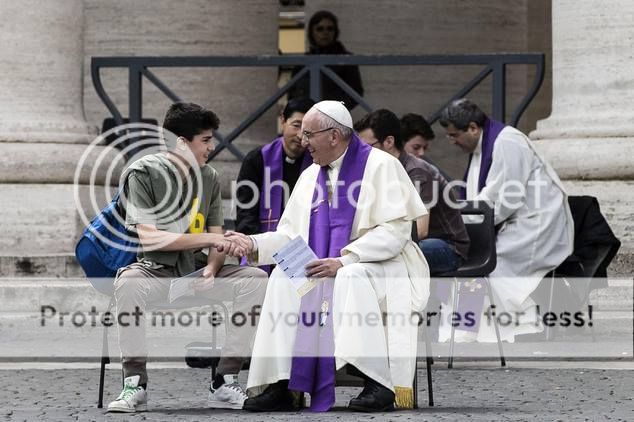
Bless me ... errr ... father (???), for I have sinned???? ...
  |
|
|
Apr 25 2016, 07:56 AM
Return to original view | Post
#372
|
|
Junior Member
225 posts Joined: Mar 2008
|
Regina Caeli / Queen of Heaven (Prayer for Eastertide)
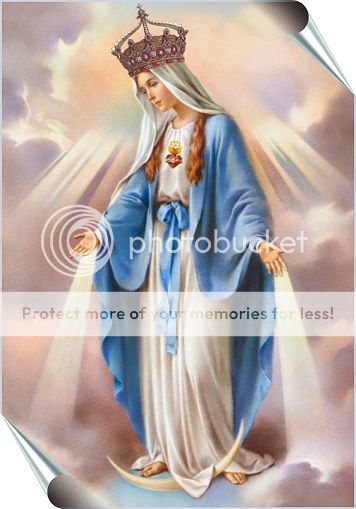 (In Latin) V. Regina cæli, lætare, alleluia: R. Quia quem meruisti portare, alleluia, V. Resurrexit, sicut dixit, alleluia, R. Ora pro nobis Deum, alleluia. V. Gaude et lætare, Virgo Maria, alleluia. R. Quia surrexit Dominus vere, alleluia. Oremus. Deus, qui per resurrectionem Filii tui, Domini nostri Iesu Christi, mundum lætificare dignatus es: præsta, quæsumus, ut per eius Genitricem Virginem Mariam, perpetuæ capiamus gaudia vitæ. Per eundem Christum Dominum nostrum. R. Amen. (In English) V. Queen of Heaven, rejoice, alleluia. R. For He whom you did merit to bear, alleluia. V. Has risen, as he said, alleluia. R. Pray for us to God, alleluia. V. Rejoice and be glad, O Virgin Mary, alleluia. R. For the Lord has truly risen, alleluia. Let us pray. O God, who gave joy to the world through the resurrection of Thy Son, our Lord Jesus Christ, grant we beseech Thee, that through the intercession of the Virgin Mary, His Mother, we may obtain the joys of everlasting life. Through the same Christ our Lord. R. Amen. |
|
|
Apr 25 2016, 08:39 AM
Return to original view | Post
#373
|
|
Junior Member
225 posts Joined: Mar 2008
|
 |
|
|
|
|
|
Apr 27 2016, 08:02 AM
Return to original view | Post
#374
|
|
Junior Member
225 posts Joined: Mar 2008
|
Peter is the Rock, God called him the Rock, God named him the Rock when he first approached him, before giving him the keys of authority and dynastic succession of his Kingdom which signified his ambassadorship. He is the rock in the same church that God said is the pillar and foundation of truth and will teach the angels the manifold wisdom of God. He is the rock in the same church God said, “if they do not believe even the church treat them as heathens and publicans”. The same church he calls bread and wine his body and blood in, the same church that Paul calls the veil and the flesh of Christ his bride whom he loves and nurtures and the gates of hell will not prevail against. The truths of the manifold wisdom of God are brought out through his bride, according to Gods timeline not ours. “In the end all will be revealed.”
In Isaiah 22 the keys signify one who is to be a father (Papa, Pope) to his people. In the same way Abraham (father) was the rock and foundation of unity in the Old Testament Peter is the rock, father and foundation of unity in the new. (To Timothy my true son in the faith. Your father Abraham rejoiced to see my day) “Bottom line: Christ spoke Aramaic and nicknamed Simon "Kepha," ("Cephas") which means "Rock." Most of the New Testament was written in Greek (or translated into Greek, as is possible in the case of Matthew's Book), and Kepha was translated as "Petros" or "Petra" (depending on stylistic needs of the context), which both mean "Rock." In our English Bibles, "Petros" and "Petra" get translated into "Peter." 1 Peter IS "the Rock," the earthly head of Christ's Church as Christ Himself states in Matthew 16. This would be as if you and I, speaking English and discussing someone named Mary, were quoted by an Italian who wrote her name as "Maria," which a Frenchman translated as "Marie". (Although many Protestant scholars now agree with Peter being the rock, due to the fallacy of Sola Scriptura) “Many Protestants try to get around Matthew 16:15-19 by pointing to 1 Corinthians 10:3-5 "And did all drink the same spiritual drink: for they drank of that spiritual Rock that followed them: and that Rock was Christ." But this is something no Catholic would disagree with! Yes, the SPIRITUAL Rock, Christ, the High Priest and Head of the Church, authorized Peter to be the earthly Rock, His Vicar, of the Church -- the father of the New Covenant, just as God the Father made Abraham the earthly father of the Old Covenant (Isaiah 51:1-2) while remaining the ultimate, SPIRITUAL Father of that Covenant.” “For you are all the children of God by faith, in Christ Jesus. 27For as many of you as have been baptized in Christ, have put on Christ. 28There is neither Jew nor Greek: there is neither bond nor free: there is neither male nor female. For you are all one in Christ Jesus. 29And if you be Christ's, then are you the seed of Abraham, heirs according to the promise.” Peter does not just hold authority over the Jews who he focused on but the Gentiles also. It was Peter who baptized the first Gentile into the church. It was Peters dream that led to the abolishment of the laws of the flesh in the mosaic law, for the entire church which is saved by grace. “I pray for them. I am not praying for the world, but for those you have given me, (Peter you are rock, Peter feed my sheep that the Father has given me) for they are yours. 10 All I have is yours, and all you have is mine. And glory has come to me through them. 11 I will remain in the world no longer, but they are still in the world, and I am coming to you. Holy Father, protect them by the power of[b] your name, the name you gave me, so that they may be one as we are one.” One Lord one Faith One Baptism, One Doctrine One bread, one body one soul of the church in prayer. “You are my friends, if you do the things that I command you…You have not chosen me: but I have chosen you; and have appointed you, that you should go, and should bring forth fruit; and your fruit should remain… 18If the world hate you, know ye, that it hath hated me before you. 19If you had been of the world, the world would love its own: but because you are not of the world, but I have chosen you out of the world, therefore the world hateth you… If they have persecuted me, they will also persecute you: if they have kept my word, THEY WILL KEEP YOUR ALSO. 21But all these things they will do to you for my name's sake: because they know not him who sent me. 22If I had not come, and spoken to them, they would not have sin; but now they HAVE NO EXCUSE FOR SIN 23He that hateth me, hateth my Father also. 24If I had not done among them the works that no other man hath done, they would not have sin; but now they have both seen and hated both me and my Father. ( Those who partake of the one bread are part of the one body. Saul why do you persecute me?) “And not for them only do I pray, but for them also who THROUGH THEIR WORD shall believe in me; 21That THEY MAY BE ONE, as thou, Father, in me, and I in thee; that they also may be one in us; that the world MAY BELIEVE thou hast sent me.” Eastern Patriarchs looking to the rock St. Epiphanius, Archbishop of Salamis (385) Holy men are therefore called the temple of God, because the Holy Spirit dwells in them; as that Chief of the Apostles testifies, he that was found to be blessed by the Lord, because the Father had revealed unto him. To him then did the Father reveal His true Son; and the same (Peter) furthermore reveals the Holy Spirit. This was befitting in the First of the Apostles, that firm Rock upon which the Church of God is built, and the gates of hell shall not prevail against it. The gates of hell are heretics and heresiarchs. For in every way was the faith confirmed in him who received the keys of heaven; who looses on earth and binds in heaven. For in him are found all subtle questions of faith. He was aided by the Father so as to be (or lay) the Foundation of the security (firmness) of the faith. He (Peter) heard from the same God, 'feed my lambs'; to him He entrusted the flock; he leads the way admirably in the power of his own Master. (Epiphanius, T. ii. in Anchor). Sergius, Metropolitain of Cyprus (649) Writing to Pope Theodore: O Holy Head, Christ our God hath destined thy Apostolic See to be an immovable foundation and a pillar of the Faith. For thou art, as the Divine Word truly saith, Peter, and on thee as a foundation-stone have the pillars of the Church been fixed. (Sergius Ep. ad Theod. lecta in Sess. ii. Concil. Lat. anno 649) 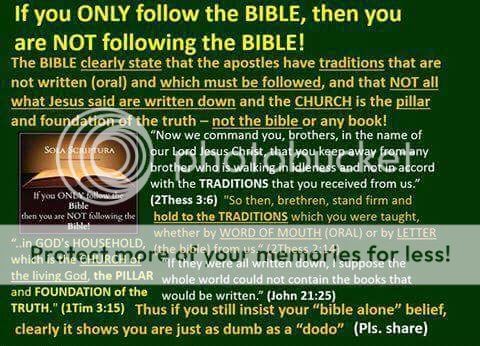 |
|
|
Apr 27 2016, 08:03 AM
Return to original view | Post
#375
|
|
Junior Member
225 posts Joined: Mar 2008
|
BELIEVE IN THE LORD JESUS CHRIST AND YOU WILL BE SAVED.
Every understanding that Catholics and Protestants agree on go back to the church of the first martyrs, everything we don't agree on, starts at the Reformation and gets more and distorted by denominations at that point. The fork in the road that created the new traditions is Sola Scriptura, which of course did not exist in the church of the first martyrs. Man does not live by bread alone but by every word of God. Hold fast to the traditions and the church is a pillar and foundation of truth are just a few of those words we are called to live by. The verse to believe and you will be saved, is a summation of the entire word which includes baptism into the only church that existed at the time. The just man liveth by faith because you cannot truly live in true faith unless you are a just man. Charity does not rejoiceth in iniquity but rejoiceth in truth. Faith without works is dead. Dead works is the rituals of mosaic law, circumcision and sin and instantaneous grace given freely is baptism which destroys original sin and active sin up to the point of Baptism, giving you entrance through the narrow gate into the flesh of Christ which is the rule of heaven on earth. We have been saved. Baptism now saves you. We are being saved. This IS MY BODY. I work out my salvation in fear and trembling. The fear of God is the beginning of wisdom and knowledge of the holy is prudence. Without holiness no man shall see God. Be holy as I am holy. Obey your prelates who have the rule over you because they watch over your souls. Receive the Holy Spirit whose sins you forgive are forgiven... Is anyone sick among you call for the priest and he will anoint you with oil. We can have eternal salvation. Charity covereth a multitude of sins. He who endures till the end will be saved. I will come and judge everyone according to their works. Love God with your whole heart whole soul whole mind and you will fulfill the law. You cannot truly love God and not follow truth when exposed to it. The meek shall inherit the earth. Repent and be baptized and your sins will be forgiven. The church is the pillar and foundation of truth. That the manifold wisdom of God may be made known to the principalities and powers in heavenly places through the church. A new and living way through the veil which is His flesh. Who ever hateth his own flesh no one loveth and nourisheth his own flesh as Christ does the church. Those who partake of the one bread are part of the one body. To believe is to believe in the flesh of Christ Gods church. Otherwise you believe in your own image of God through your own interpretation of scripture tainted by your own environmental influence and ego and concupiscence. 41000 different denominations and counting cannot be wrong. |
|
|
Apr 27 2016, 08:04 AM
Return to original view | Post
#376
|
|
Junior Member
225 posts Joined: Mar 2008
|
Always understand the Gospels and letters are being written to those inside the church dedicated to the doctrine and the breaking of the bread and the prayers living according to one Lord one faith one baptism in which Paul calls us to obedience to the faith in charity in a church that as a sign of unity God told Peter to feed His sheep.
You cannot apply scripture to yourself unless you first read it through the eyes of the church God established. You can quote verses until the cows come home but unless you start from the right foundation your interpretation will be lacking. The Bible is designed to be understood through the one church God established. God said He will send the Holy Spirit the spirit of truth to His church which he calls His bride. 350 years after Christianity began the Catholic Church put the Bible together. The Holy Spirit needed to be with the church in order for this to have happen. The church is called the pillar and foundation of truth, God will be with this church for all time. Christ was born of a woman in the fullness of time. In the fullness of time prophecy is fulfilled. Isaiah prophesied that we will go up to the mountain of the Lord to learn the ways of God. Christ called the church a City on a hill that could not be hidden. James declares the the prophecy fulfilled that the Kingdom of David has been re established. God said He would build His church and the gates of hell shall not prevail against it. Obviously His church is the pillar and foundation of truth which can only be one church existing in His truth since Pentecost. In this church the apostles established Bishops Presbyters/ priests and deacons and kept Gods precepts. For as often as you shall eat this bread and drink this cup you shall show the death of the Lord until he comes again. Where is this re established Kingdom of David on earth today that teaches us the ways of God for all time? 13And after they had held their peace, James answered, saying: Men, brethren, hear me. 14Simon hath related how God first visited to take of the Gentiles a people to his name. 15And to this agree the words of the prophets, as it is written: 16After these things I will return, and will rebuild the tabernacle of David, which is fallen down; and the ruins thereof I will rebuild, and I will set it up: 17That the residue of men may seek after the Lord, and all nations upon whom my name is invoked, saith the Lord, who doth these things. 18To the Lord was his own work known from the beginning of the world. Unless you see scripture from this rock you will always destroy your clay pots on it. |
|
|
Apr 27 2016, 08:06 AM
Return to original view | Post
#377
|
|
Junior Member
225 posts Joined: Mar 2008
|
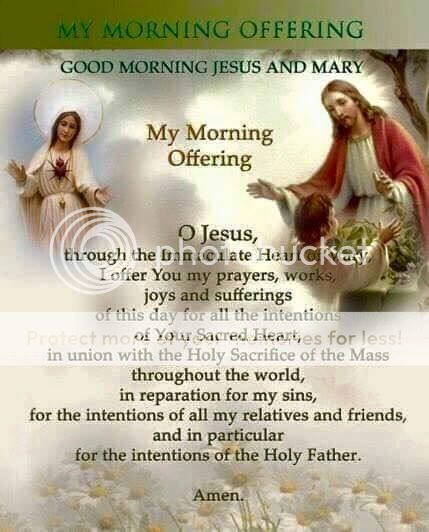
Have a blessed day, my fellow brothers and sisters in Christ! Amen!
 |
|
|
Apr 27 2016, 08:17 AM
Return to original view | Post
#378
|
|
Junior Member
225 posts Joined: Mar 2008
|
Woman behold your son.
Son behold your mother. The disciple whom He loved took her into his home. Woman what is there between me and thee? And I will put enmity between you and the woman, and between your seed and her seed. 26For you are all the children of God by faith, in Christ Jesus. 27For as many of you as have been baptized in Christ, have put on Christ. 28There is neither Jew nor Greek: there is neither bond nor free: there is neither male nor female. For you are all one in Christ Jesus. 29And if you be Christ's, then are you the seed of Abraham, heirs according to the promise. And the dragon was angry against the woman: and went to make war with the rest of her seed, who keep the commandments of God, and have the testimony of Jesus Christ. If you love me you will keep my commandments. Do this in memory of me. He has done great things to me. All generations shall call me blessed. Hail you who have been perfected in grace. How is it that the mother of my Lord should come to me? He shall be a sign of contradiction and a sword will pierce your heart so that the thoughts of many may be revealed. 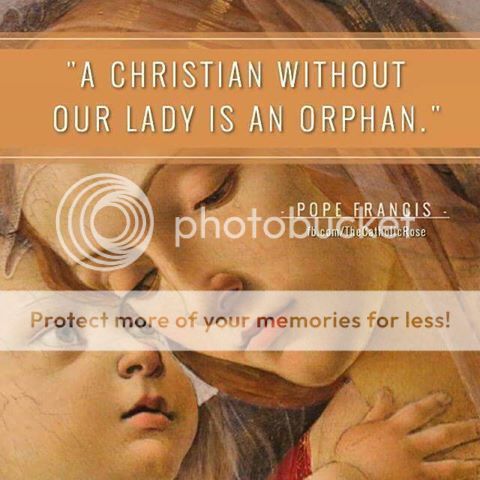 |
|
|
Apr 27 2016, 08:40 AM
Return to original view | Post
#379
|
|
Junior Member
225 posts Joined: Mar 2008
|
 Acts 15:1-6 Some who had come down from Judea were instructing the brothers, “Unless you are circumcised according to the Mosaic practice, you cannot be saved.” Because there arose no little dissension and debate by Paul and Barnabas with them, it was decided that Paul, Barnabas, and some of the others should go up to Jerusalem to the Apostles and presbyters about this question. They were sent on their journey by the Church, and passed through Phoenicia and Samaria telling of the conversion of the Gentiles, and brought great joy to all the brethren. When they arrived in Jerusalem, they were welcomed by the Church, as well as by the Apostles and the presbyters, and they reported what God had done with them. But some from the party of the Pharisees who had become believers stood up and said, “It is necessary to circumcise them and direct them to observe the Mosaic law.” The Apostles and the presbyters met together to see about this matter. |
|
|
Apr 27 2016, 02:33 PM
Return to original view | Post
#380
|
|
Junior Member
225 posts Joined: Mar 2008
|
What "No Salvation Outside the Church" Means
By: Jim Blackburn One of the most misunderstood teachings of the Catholic Church is this one: "Outside the Church there is no salvation" (Extra ecclesiam nulla salus). Those trying to grasp the meaning of this teaching often struggle with its formulations by various Church Fathers and Church Councils down through history. Of course, to understand an isolated formulation of any Church teaching, one must study the historical context within which it was written: why it was written, what was going on in the Church at the time, who the intended audience was, and so on. One must discover how the magisterium (teaching office) of the Church understands its own teaching. If someone fails to do this and chooses, rather, to simply treat a particular formulation as a stand-alone teaching, he runs the risk of seriously misunderstanding it. In recent times, the Church has recognized that its teaching about the necessity of the Catholic Church for salvation has been widely misunderstood, so it has "re-formulated" this teaching in a positive way. Here is how the Catechism of the Catholic Church begins to address this topic: "How are we to understand this affirmation, often repeated by the Church Fathers? Reformulated positively, it means that all salvation comes from Christ the Head through the Church which is his Body" (CCC 846). In keeping with the Church’s current spirit of ecumenism, this positive reformulation comes across less harshly than previous negative formulations. Even so, it remains quite controversial. So, let’s see how this new formulation squares with Scripture. Jesus, the Way The first part of the reformulated teaching—"all salvation comes from Christ the Head"—is quite easy for all Christians, even non-Catholics, to understand and embrace. It echoes Jesus’ own words recorded by John: "I am the way, and the truth, and the life; no one comes to the Father, but by me" (Jn 14:6). So, Christians unanimously agree on this first part. But is this all that needs to be said about how one may be saved? The Catholic Church has historically recognized the importance of explaining further the means through which salvation is offered through Christ. When speaking of salvation, Jesus offered more details than just his words quoted above. For example, consider these three verses: He who believes and is baptized will be saved. (Mk 16:16) [U]nless you repent you will all likewise perish. (Lk 13:3) [H]e who eats my flesh and drinks my blood has eternal life, and I will raise him up at the last day. (Jn 6:54) Notice that in these three verses Jesus associated salvation with baptism, confession, and the Eucharist, respectively. Catholics recognize that these sacraments are administered through the Church. In fact, in the case of the latter two, a validly ordained priest is necessary for their administration, so the sacrament of ordination must also be associated with salvation. A primary role of the Catholic Church in conjunction with salvation is becoming quite clear. This brings us to the second part of the Catechism’s formulation of the doctrine being considered: ". . . through the Church which is his Body." With Him or Against Him Since the sacraments are the ordinary means through which Christ offers the grace necessary for salvation, and the Catholic Church that Christ established is the ordinary minister of those sacraments, it is appropriate to state that salvation comes through the Church. This is not unlike the situation that existed prior to the establishment of the Catholic Church. Even before it was fully revealed that he was the Messiah, Jesus himself taught that "salvation is from the Jews" (Jn 4:22). He pointed the woman of Samaria to the body of believers existing at that time, through which salvation would be offered to all mankind: the Jews. In a similar fashion, now that the Messiah has established his Church, Jesus might say, "salvation is from the Catholics"! Recognizing this, we can see why the Church, especially during times of mass exodus (such as has happened in times when heresies have run rampant), has been even more forceful in the way it has taught this doctrine. Instead of simply pointing out how God offers salvation from Christ, through the Church, the Church has warned that there is no salvation apart from Christ, outside his Church. Since Jesus established the Catholic Church as necessary for salvation, those who knowingly and willingly reject him or his Church cannot be saved. We see this in Jesus’ teaching: "He who is not with me is against me, and he who does not gather with me scatters" (Mt 12:30). Also: "[I]f he [a sinning brother] refuses to listen even to the church, let him be to you as a Gentile and a tax collector" (Mt 18:17). Paul warned similarly: "As for a man who is factious, after admonishing him once or twice, have nothing more to do with him, knowing that such a person is perverted and sinful; he is self-condemned" (Ti 3:10-11). Having said all this, we must recognize that this doctrine is not as far reaching as some imagine it to be. People will sometimes ask, "Does this means non-Catholics are going to hell?" Not necessarily. Invincibly Ignorant The Church recognizes that God does not condemn those who are innocently ignorant of the truth about his offer of salvation. Regarding the doctrine in question, the Catechism of the Catholic Church (quoting Vatican II document Lumen Gentium, 16) states: This affirmation is not aimed at those who, through no fault of their own, do not know Christ and his Church: Those who, through no fault of their own, do not know the Gospel of Christ or his Church, but who nevertheless seek God with a sincere heart, and, moved by grace, try in their actions to do his will as they know it through the dictates of their conscience—those too may achieve eternal salvation. (CCC 847) Vatican II document Gaudium Et Spesteaches similarly on the possibility of salvation: All this holds true not only for Christians, but for all men of good will in whose hearts grace works in an unseen way. For, since Christ died for all men, and since the ultimate vocation of man is in fact one, and divine, we ought to believe that the Holy Spirit in a manner known only to God offers to every man the possibility of being associated with this paschal mystery. (22) This teaching is consistent with Jesus’ own teaching about those who innocently reject him: "If I had not come and spoken to them, they would not have sin" (Jn 15:22). But once a person comes to know the truth, he must embrace it or he will be culpable of rejecting it. We see this in Jesus’ words to the Pharisees: "If you were blind, you would have no guilt; but now that you say, ‘We see,’ your guilt remains" (Jn 9:41). Paul taught likewise concerning the Gentiles: When Gentiles who have not the law do by nature what the law requires, they are a law to themselves, even though they do not have the law. They show that what the law requires is written on their hearts, while their conscience also bears witness and their conflicting thoughts accuse or perhaps excuse them on that day when, according to my gospel, God judges the secrets of men by Christ Jesus. (Rom 2:14-16) Notice Paul’s carefully chosen words: "their conflicting thoughts accuse or perhaps excuse them." Paul did not say that those who are innocently ignorant of the truth will be saved; he simply keeps open the possibility of it. Similarly, he wrote: "[I]s God the God of Jews only? Is he not the God of Gentiles also? Yes, of Gentiles also, since God is one; and he will justify the circumcised on the ground of their faith and the uncircumcised through their faith" (Rom 3:29-30). Necessary for Salvation As we have seen, God introduced salvation to the world through his chosen people, the Jews. God’s revelation to the Jews found its fulfillment in Christ, the Messiah, who established the Catholic Church. The grace necessary for salvation continues to come from Christ, through his Church. Those who innocently do not know and embrace this might still attain salvation but those who knowingly and willingly choose to reject it, reject salvation on God’s terms. The Catechism (once again quoting Lumen Gentium) summarizes all this as follows: Basing itself on Scripture and Tradition, the Council teaches that the Church, a pilgrim now on earth, is necessary for salvation: the one Christ is the mediator and the way of salvation; he is present to us in his body which is the Church. He himself explicitly asserted the necessity of faith and baptism, and thereby affirmed at the same time the necessity of the Church which men enter through baptism as through a door. Hence they could not be saved who, knowing that the Catholic Church was founded as necessary by God through Christ, would refuse either to enter it or to remain in it. (CCC 846) Source: http://www.catholic.com/magazine/articles/...he-church-means |
|
Topic ClosedOptions
|
| Change to: |  0.1912sec 0.1912sec
 0.35 0.35
 7 queries 7 queries
 GZIP Disabled GZIP Disabled
Time is now: 12th December 2025 - 05:35 AM |
 Quote
Quote