


LYN Catholic Fellowship V01 (Group), For Catholics (Roman or Eastern)
LYN Catholic Fellowship V01 (Group), For Catholics (Roman or Eastern)
|
|
 Mar 29 2017, 04:24 PM Mar 29 2017, 04:24 PM
|
 
Senior Member
627 posts Joined: Jun 2009 
|
Mar 29 2017, 04:24 PM |
|
|
|
|
|
|
|
|
Apr 2 2017, 09:04 PM
|

Senior Member
3,576 posts Joined: Apr 2006 
|
|
|
|
Apr 3 2017, 10:49 AM
|
|
Senior Member
627 posts Joined: Jun 2009
|
Uncle Yee,
Can you help to interpret Canon 6 and 14 vis-a-vis Council of Toulouse 1229 A.D.? |
|
|
Apr 3 2017, 12:51 PM
|
|
Senior Member
3,576 posts Joined: Apr 2006
|
Council of Toulouse is a local council with specific disciplinary legislation to address the Albigensian heresy at that specific location at the time. It is not an ecumenical council.
|
|
|
Apr 9 2017, 11:26 AM
|

Junior Member
225 posts Joined: Mar 2008
|
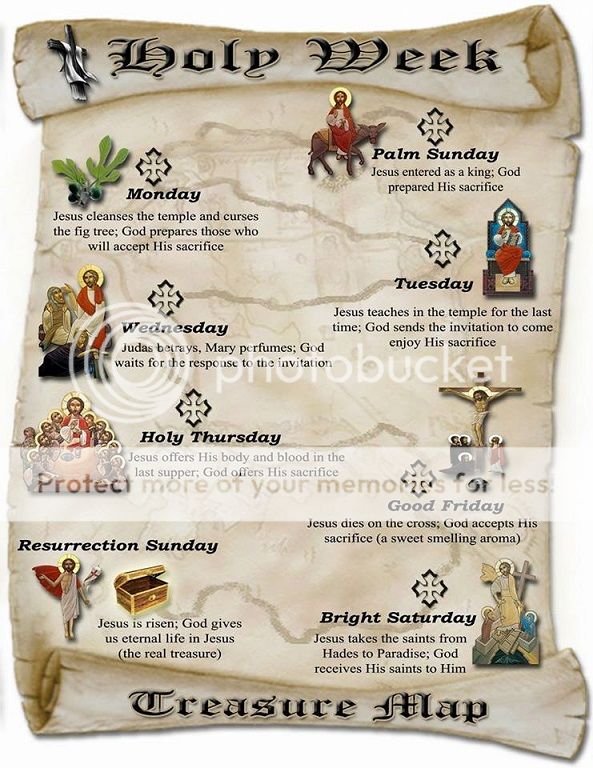
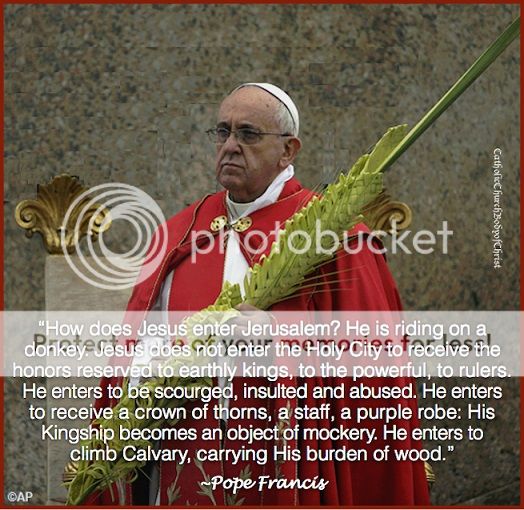
Palm Sunday 🌴 Blessed is he who comes in the name of the Lord ❤️
 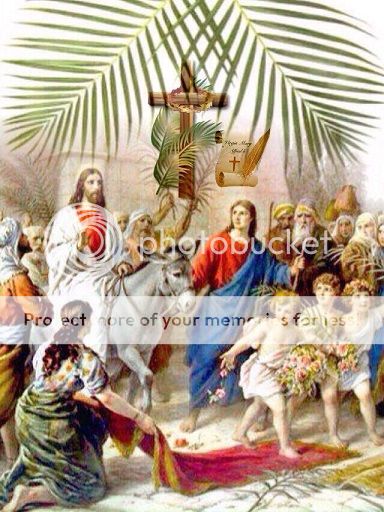 Amen! Amen! |
|
|
Apr 9 2017, 04:21 PM
|
|
Junior Member
225 posts Joined: Mar 2008
|
 |
|
|
|
|
|
Apr 10 2017, 08:28 AM
|
|
Junior Member
225 posts Joined: Mar 2008
|
 |
|
|
Apr 10 2017, 01:22 PM
|
|
Senior Member
3,576 posts Joined: Apr 2006
|
"A single tear shed at the remembrance of the Passion of Jesus is worth more than a pilgrimage to Jerusalem, or a year of fasting on bread and water."
--St. Augustine This post has been edited by yeeck: Apr 10 2017, 01:22 PM |
|
|
Apr 11 2017, 12:48 AM
|

Senior Member
1,699 posts Joined: Jun 2011 From: Home of Bak Kut Teh! :) 
|
|
|
|
Apr 12 2017, 03:08 AM
|
|
Senior Member
3,576 posts Joined: Apr 2006
|
Does God Want Sacrifice or Not?
When first introduced to praying the Psalms, I found some passages, especially of Psalms forty-nine and fifty, to be confusing on the subject of sacrifice. I knew they could not contradict either the rule of faith or each other, but I did not know how to resolve the apparent contradiction. In this case, as with most such cases, the resolution of a seeming contradiction in Holy Scripture brings with it some deeper insight into Divine Truth. This is probably a good example of what my friend Robert Hickson means when he says, as he often does, that “contrast clarifies the mind.” Here, then, are the passages that used to give me trouble. We begin with Psalm 49:8-12: [8] I will not reprove thee for thy sacrifices: and thy burnt offerings are always in my sight. [9] I will not take calves out of thy house: nor he goats out of thy flocks. [10] For all the beasts of the woods are mine: the cattle on the hills, and the oxen. [11] I know all the fowls of the air: and with me is the beauty of the field. [12] If I should be hungry, I would not tell thee: for the world is mine, and the fulness thereof. [13] Shall I eat the flesh of bullocks? or shall I drink the blood of goats? [14] Offer to God the sacrifice of praise: and pay thy vows to the most High. [15] And call upon me in the day of trouble: I will deliver thee, and thou shalt glorify me. At this point the Psalmist has changed from his own voice to speaking in the person of God Himself. One superficial reading of this section of the Psalm would have it that God does not want blood sacrifice, or even, more radically, that He is mocking the entire concept of animal sacrifice. One might imagine an anachronistic Israelite PETA member marshaling the passage forth in his effort to end cruelty to animals in divine worship. The brief note of introduction in the Challoner-Douay version is none too helpful for resolving our dilemma: “Deus deorum. The coming of Christ: who prefers virtue and inward purity before the blood of victims.” Reading that passage alone does not answer the question: Does God want sacrifice or not? The next passage is from Psalm 50:17-20: [17] O Lord, thou wilt open my lips: and my mouth shall declare thy praise. [18] For if thou hadst desired sacrifice, I would indeed have given it: with burnt offerings thou wilt not be delighted. [19] A sacrifice to God is an afflicted spirit: a contrite and humbled heart, O God, thou wilt not despise. [20] Deal favourably, O Lord, in thy good will with Sion; that the walls of Jerusalem may be built up. This is the fourth, and probably the most famous, of the seven penitential Psalms. King David composed it after his two-fold sin of adultery and murder when he lay with Bethsabee and then arranged for the death of her husband, Urias the Hethite, when the woman conceived. It was a horrible crime, only heightened by the goodness and personal loyalty of Urias to the man who had cuckolded him. Thankfully, Nathan the Prophet was on hand to rebuke David and bring him to penance. Thus was composed Psalm 50, which has been beautifully set to music by Gregorio Allegri, J.D. Zelenka, W.A. Mozart (in A minor and C minor), Leonardo Leo, and many other composers. As a penitential psalm, Psalm 50 is a beautiful expression of inward contrition and compunction of heart. But it does not answer our question, or, if the above passage does answer it, the answer would seem to be in the negative, for the penitent David declares, “For if thou hadst desired sacrifice, I would indeed have given it: with burnt offerings thou wilt not be delighted. A sacrifice to God is an afflicted spirit: a contrite and humbled heart, O God, thou wilt not despise.” Inward sacrifice, not the external rite is what God wants, and David seems to reject the latter with the contrary-to-fact clause, “if thou hadst desired sacrifice….” But then, in the last verse of the Psalm, that reading seems to be contradicted entirely, when the Royal Prophet declares, “[21] Then [after Jerusalem is built up] shalt thou accept the sacrifice of justice, oblations and whole burnt offerings: then shall they lay calves upon thy altar.” (Another passage from the Psalms, 39:7-10, would force me to go too long. Suffice it to say that Saint Paul, in Heb. 10:5-7, applies the Greek Septuagint version of this passage to Our Lord, thus giving us a deeper insight into what God wants by way of sacrifice.) Taken together, these seemingly contrary sentiments of “God doesn’t want all these animal sacrifices but inward contrition” on the one hand and “God wants sacrifice of animals” on the other are not contrary, but complementary. God does want sacrifice — indeed, He had mandated it in the Mosaic Law, which was binding in David’s day — but He wants that sacrifice joined to inward virtues of humility and contrition, as well as inward acts of adoration, thanksgiving, reparation, and petition. Moreover, for the faithful of the Old Covenant, the external rite was supposed to signify and elicit those very interior things. In speaking of “sacrifice,” so far, I been considering the various sacrifices of the Old Law. God clearly does not want those sacrifices any more. But does He still want sacrifice? Or are the Protestants right when they say that the Crucifixion of Our Lord settled that question once and for all, since the only acceptable Sacrifice was finally made, putting an end to all sacrifice? Of course God wants sacrifice. Sacrifice is the highest act of the virtue of religion. From the earliest Fathers of the Church, and with a stunning explicitness in Saint Ambrose, we learn that the Christian Church always had the cult of sacrifice continued in the Holy Mass, which is the unbloody representation of the same Sacrifice of Jesus Christ on the Cross. The Sacrifice of the Mass differs from Calvary only in its manner of offering. But what about other sacrifices? Does God want sacrifices from us? Here, we must make a distinction between sacrifice in the proper sense, and sacrifice in the figurative sense. According to Father Nicholas Gihr, in his monumental The Sacrifice of the Mass, in its strict and proper sense, “Sacrifice is a special act of divine service, and, as such, differs essentially from all other acts of worship. … By sacrifice we understand the offering of a visible object, effected through any change, transformation or destruction thereof, in order effectually to acknowledge the absolute Majesty and Sovereignty of God as well as man’s total dependence and submission. … Not every gift offered to God is a sacrifice. It greatly depends on the way and manner of offering. Some change or destruction of the gift must take place to constitute a sacrifice. An entire destruction of the gift, or such as is at least morally equivalent, pertains essentially to the idea of sacrifice; hence its outward form. Whatever has not been liturgically transformed, e.g. destroyed, cannot be a real sacrifice (sacrificium), but is only a religious gift (oblatio), essentially different from sacrifice.” In its figurative or broad sense, sacrifice can be applied to acts of virtue that both glorify God (as proper sacrifice does) and require some mortification of man’s sensual nature. As such, good acts peformed with a supernatural intention, that “cost” us some effort can be spoken of — improperly, figuratively, and broadly — as sacrifice. This is what Our Lady of Fatima called for when when She said, “pray much and make sacrifices for sinners, for many souls go to hell because there is no one to make sacrifices for them.” And also, “Sacrifice yourselves for sinners; and say often when you make some sacrifice, ‘My Jesus, it is for love of You, for the conversion of sinners, and in reparation for sins committed against the Immaculate Heart of Mary.’” Our Lord later told Sister Lucy that “The sacrifice required of every person is the fulfillment of his duties in life and the observance of My law. This is the penance that I now seek and require.” When I say that this is a broad, figurative or improper use of the term, I am using the technical language of philosophy and theology. I am not saying that Our Lord or Our Lady used the terms incorrectly. The distinction between sacrifice in these senses if very important to our theology of the Mass, for it — being the unbloody re-presentation (as in “presenting again”) of the Sacrifice of Christ on the Cross — is the one and only sacrifice in the strict and proper sense that we have in the New Covenant. So, to answer the question: Yes, from us, His Church, God still wants sacrifice in the strict sense, for what else did Jesus command at the Last Supper when He said, “Do this for a commemoration of me” (Luke 22:19)? “But,” one might object, “only the priest can offer that sacrifice, I can’t.” Ah, but you can, not in the way the ordained ministerial priest at the altar can, but in the way any of the baptized can offer the sacrifice with and under the ministerial priest, who is acting in the Person of Christ. It is for this reason that the priest turns around at the Orate Fratres and says, “Pray brethren that my sacrifice and yours be acceptable to God the Father almighty.” The egregious mistranslation in the English Novus Ordo of “our sacrifice” rather than “my sacrifice and yours” obliterated this distinction. (This has thankfully been fixed.) The “and yours” makes reference to the faithful, as members of the “royal priesthood” (1 Pet. 2:9) of the baptized, being able to co-offer this unique New Testament sacrifice with God’s ordained minister at the altar. In the words of Father Gihr, “The Eucharist is the Sacrifice of the whole Church; it is not exclusively the priest’s Sacrifice, but the property of the faithful also. They partake in a variety of ways in in different degrees in the offering of the Eucharistic Sacrifice, while the priest in their name and for their benefit alone completes the sacrificial action itself.” In the ancient Roman rite, the unbaptized catechumens, who were not yet deputed by Baptism to co-offer the Sacrifice of the Mass, were dismissed before the Canon of the Mass ever began. This is why the first part of the Mass is the “Mass of the Catechumens,” and the second, from the offertory on, is called the “Mass of the Faithful.” This custom still prevails in the Eastern Rites, where the dismissal of the catechumens is to this day sung by the deacon. And to the question, “Does God want sacrifice in the figurative and improper sense?”, the answer is also in the affirmative, given what was said above about the Fatima message. Such is also the message of the whole New Testament. In the Holy Mass, a sacrifice in the strict and proper sense of the word, the true religion still retains the cult of sacrifice. It is the immolation of the Man-God, whose merits, being divine, are of infinite value. Moreover, the very Manhood itself, that Sacred Humanity of Jesus, is sinless, spotless, and perfect in every way. Christ Our Lord’s action in the Mass is also an example to us. He who is both Priest and Victim offers Himself with a good and perfect Heart. By cultivating those virtues so beautifully expressed in the Psalms — faith, humility, hope, contrition, love of God, loyalty, promptitude in the divine service, etc. — our hearts will begin to resemble the Sacred Heart of Jesus, who, “by the Holy Ghost offered himself unspotted unto God” (Heb. 9:14) the Father for the glory of the Holy Trinity and for the salvation of men. In the Immaculate Heart of Mary, Brother André Marie, M.I.C.M. |
|
|
Apr 13 2017, 07:39 PM
|
|
Junior Member
225 posts Joined: Mar 2008
|
PRIEST INTERRUPTED
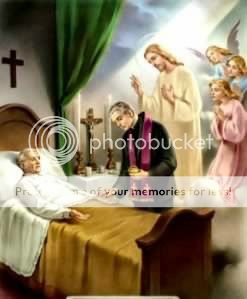 QUOTE I groaned. The message could not have come at a worse time. An urgent anointing. I had a thousand reasons to ignore it, a thousand justifications to refuse. I am in the middle of practice with the altar servers, et al. Tomorrow the Paschal Triduum starts. I want everything to go smoothly, the Liturgical movements, the Washing of the Feet, etc had to be precise, poetry in motion. The patient was out of Petaling District. She was in Kuala lumpur. No need to go. No one would blame you if you didn't. Yet she needed anointing. She was fading fast. "Let another priest do it. Its not my problem." "But what if she dies without being anointed?". "What if another priest cannot be contacted?" I excused myself from practice. Informed them it was an urgent anointing. Left early. Sped off to Ampang. Reached there to find the whole family had gathered. She had just stopped breathing. Her vital signs dropped. Her head & neck felt warm. The rest of her body had gone cold. I made it in the nick of time. I proceeded to anoint her, telling her that her loved ones are gathered round her. I tell them to whisper in her ear the brightest, most beautiful memory they have of her. I commend her to Christ, who alone is master of life and death. I stepped back, allowing her loved ones to hold her & speak the three most important words to her. I realise that as priest, our work is often interrupted, disrupted & unfinished. While I have the power to say, "No", I still have to consider the implications of saying, "Yes" or "No" accordingly. Had I not gone, no one would have anointed this lady. But my presence, was important for the family, to soothe them, to calm them down. to help them grieve. There is therefore a tension between working uninterrupted and working with interruptions.I pray I may always be allowed to walk this tight rope, between busyness & compassion, between detailed perfection & derailed imperfection. Musings of a priest, who is a near and dear friend of mine. His duty and devotion to his calling is a great testament to our faith. A fine example of a combination of love, sacrifice and dedication to our Lord. Despite commitments and obstacles thrown in his way, he still manages to attend to the needs of those placed under his care, those of His flock, even under extraordinary circumstances. May we as lay people show the same when it comes to serving Christ! This post has been edited by khool: Apr 13 2017, 07:42 PM |
|
|
Apr 17 2017, 11:03 AM
|
|
Senior Member
627 posts Joined: Jun 2009
|
Uncle Yee,
What do you think of this site? https://www.christiantoday.com/article/ther...tion/106453.htm Was Church of the Holy Sepulchre, built in 4th century, a site selected by Constantine? |
|
|
Apr 17 2017, 11:06 AM
|
|
Senior Member
627 posts Joined: Jun 2009
|
By the way Uncle Yee, why did Jesus in John 20:17 asked Mary Magdalene not to hold on to Him? Was it because He has not ascended to heaven and still have a mortal body or a "transitional body" before heavenly body so not touchable? What was the early church fathers' interpretation? What was Roman Catholic's interpretation?
|
|
|
|
|
|
Apr 21 2017, 02:46 PM
|
|
Senior Member
3,576 posts Joined: Apr 2006
|
Therefore, brethren, stand fast; and hold the traditions which you have learned, whether by word, or by our epistle. -- 2 Thessalonians 2:15
|
|
|
Apr 21 2017, 03:03 PM
|
|
Senior Member
627 posts Joined: Jun 2009
|
QUOTE(yeeck @ Apr 21 2017, 02:46 PM) Therefore, brethren, stand fast; and hold the traditions which you have learned, whether by word, or by our epistle. -- 2 Thessalonians 2:15 Matthew 15:3 (NASB) 3 And He answered and said to them, “Why do you yourselves transgress the commandment of God for the sake of your tradition?  Colossians 2:8 (NASB) 8 See to it that no one takes you captive through philosophy and empty deception, according to the tradition of men, according to the elementary principles of the world, [a]rather than according to Christ.  |
|
|
Apr 21 2017, 06:11 PM
|
|
Senior Member
3,576 posts Joined: Apr 2006
|
 Quasimodo Sunday. The first Sunday after Easter; so called because the “Introit” of the day begins with these words: “Quasi modo geniti infantes” (1 Pet. ii. 2). Also called “Low Sunday,” being the first Sunday after the grand ceremonies of Easter ("High Sunday"). |
|
|
Apr 24 2017, 02:14 AM
|
|
Senior Member
3,576 posts Joined: Apr 2006
|
 The Chinese government admitted its population control practices through four decades caused the abortion of 336 million unborn children. The Financial Times reported that on March 14 the Chinese Health ministry published the following statistics since 1971: 336 million abortions performed; 196 million sterilizations conducted; 403 million intrauterine devices inserted. The People’s Republic of China, the world’s most populous country and a Communist dictatorship, first set legal limits on population growth in 1971 and started its coercive “one-child” per couple program in 1979. This means that the country has carried out the largest single slaughter of human beings in the history of the world. To put this death toll into perspective, the Financial Times cites an array of statistics: the number is greater than the entire population of the world at the time of the Crusades; it is the equivalent of the combined current populations of the United States and Australia; more deaths resulted from Chinese population control policies than were caused by the Bubonic Plague in Europe or the Great Chinese Famine, more than all the people killed in the ten deadliest wars in human history, more than all the children that will be born in the world over the next ten years. Only God can truly apprehend the magnitude of this loss in just one country. (The American Life League estimates that there have been over 60 million elective abortions in the United States in the 44 years since the Roe v. Wade decision in 1973.) May God have mercy on our world. Sources: Financial Times; The Gospel Coalition, American Life League |
|
|
May 3 2017, 09:02 AM
|
|
Junior Member
225 posts Joined: Mar 2008
|
Feast of Saints Philip and James, Apostles
Lectionary: 561 Reading 1 (1 Cor 15:1-8) I am reminding you, brothers and sisters, of the Gospel I preached to you, which you indeed received and in which you also stand. Through it you are also being saved, if you hold fast to the word I preached to you, unless you believed in vain. For I handed on to you as of first importance what I also received: that Christ died for our sins in accordance with the Scriptures; that he was buried; that he was raised on the third day in accordance with the Scriptures; that he appeared to Cephas, then to the Twelve. After that, he appeared to more than five hundred brothers and sisters at once, most of whom are still living, though some have fallen asleep. After that he appeared to James, then to all the Apostles. Last of all, as to one born abnormally, he appeared to me. Responsorial Psalm (Ps 19:2-3, 4-5) R. Their message goes out through all the earth. or: R. Alleluia. The heavens declare the glory of God; and the firmament proclaims his handiwork. Day pours out the word to day; and night to night imparts knowledge. R. Their message goes out through all the earth. or: R. Alleluia. Not a word nor a discourse whose voice is not heard; Through all the earth their voice resounds, and to the ends of the world, their message. R. Their message goes out through all the earth. or: R. Alleluia. Alleluia (Jn 14:6b, 9c) R. Alleluia, alleluia. I am the way, the truth, and the life, says the Lord; Philip, whoever has seen me has seen the Father. R. Alleluia, alleluia. Gospel (Jn 14:6-14) Jesus said to Thomas, "I am the way and the truth and the life. No one comes to the Father except through me. If you know me, then you will also know my Father. From now on you do know him and have seen him." Philip said to him, "Master, show us the Father, and that will be enough for us." Jesus said to him, "Have I been with you for so long a time and you still do not know me, Philip? Whoever has seen me has seen the Father. How can you say, 'Show us the Father'? Do you not believe that I am in the Father and the Father is in me? The words that I speak to you I do not speak on my own. The Father who dwells in me is doing his works. Believe me that I am in the Father and the Father is in me, or else, believe because of the works themselves. Amen, amen, I say to you, whoever believes in me will do the works that I do, and will do greater ones than these, because I am going to the Father. And whatever you ask in my name, I will do, so that the Father may be glorified in the Son. If you ask anything of me in my name, I will do it." 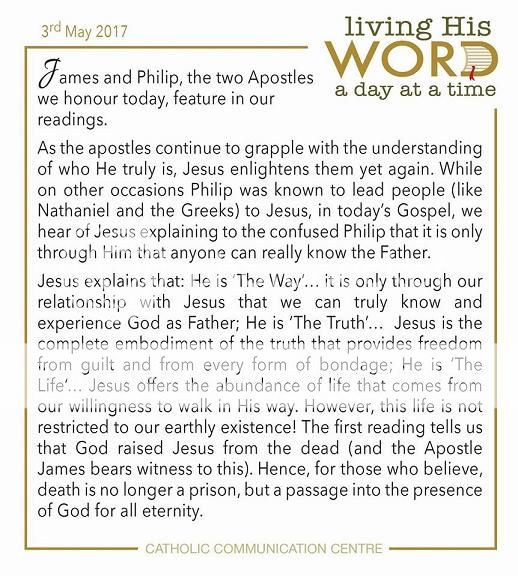 REFLECTION Whoever has seen me has seen the father. God is a mystery tremendum et fascinosum, one we dare not approach because the divine presence sears and elicits fear, and yet it is a presence that attracts and fascinates. One wants to go away but feels drawn. That is why people in the Bible thought that to see God is to die. Still, there is so much joy just to be in the divine presence. The psalmist sings, “One thing I ask of the Lord; this I seek: to dwell in the Lord’s house all the days of my life, to gaze on the Lord’s beauty, to visit his temple” (Ps 27:4). Philip asks Jesus, “Master, show us the Father, and that will be enough for us.” Here he echoes the ardent wish of Moses who asked the Lord, “Please let me see your glory!” (Ex 33:18). Moses was granted to see only the Lord’s “back” because, as the Lord said, “You cannot see my face, for no one can see me and live” (Ex 33:20). Jesus tells Philip, “Whoever has seen me has seen the Father.” The one who stands before Philip is a man. But he is the Logos-Incarnate. Believers penetrate the mystery of the Incarnation and declare, “We saw his glory, the glory as of the Father’s only Son” (Jn 1:14). Do you encounter the divine presence in your day-to-day life, as while beholding nature’s beauty and force and while relating with people you meet? SOURCE: “365 Days with the Lord 2017,” ST. PAULS Philippines, 7708 St. Paul Rd., SAV, Makati City (Phils.) http://www.ssp.ph/ |
|
|
May 4 2017, 01:37 AM
|
|
Senior Member
3,576 posts Joined: Apr 2006
|
Jews & Muslims Don’t Eat Pork, But Christians Do. Here’s Why…
Raising pigs is a vital staple of many farmers around the world and a major source of food for many areas. For as nearly as long as humans have been domesticating animals, humans have been raising pigs. Archaeological evidence suggests that pigs were domesticated from wild boar as early as 13,000–12,700 BC in the Near East in the Tigris Basin. But of the 3 major monotheistic faiths of the world – Christianity, Judaism, and Islam, only Christians consume pork, while the others consider the pig to be “unclean” or “haram”. Why is pork forbidden in those religions, but not in Christianity? The religious restriction of pigs goes back millennia. Both the Torah (Leviticus 11:7) and the Quran (An-Naĥl 16:115) explicitly forbid eating pigs. The view of the pig in the ancient world was that pigs were unclean because of their nature, for example, rolling in mud. Additionally, it was likely that because of farming and improper cooking methods at the time, the flesh of pigs was a common cause of bacterial infections. The view of pigs being unclean carried over to the very first Christians. Being that the Apostles were are all Jews, they followed the Old Covenant dietary laws. But as more and more gentiles were converted, there arose debate as to whether or not they were bound by Jewish dietary law also. In Acts 10, though, things change. Cornelius, a God-fearing Roman centurion, has a vision in which he is instructed to send for Saint Peter. At the time, it was forbidden for Jews to eat or associate with Gentiles. The next day, while the men who were sent to deliver Cornelius’ message to Peter were on their way, Saint Peter also had a vision. In his vision, “He saw heaven opened and something resembling a large sheet coming down, lowered to the ground by its four corners. In it were all the earth’s four-legged animals and reptiles and the birds of the sky. A voice said to him, “Get up, Peter. Slaughter and eat.” But Peter said, “Certainly not, sir. For never have I eaten anything profane and unclean.” The voice spoke to him again, a second time, “What God has made clean, you are not to call profane.” (Acts 10:11:15) After his vision, the men sent by Cornelius arrived and Peter accompanied them back to the Centurion’s home. When arriving, despite the restriction of Jews and Gentiles eating together, Peter baptized Cornelius and his entire family, and stayed with him. From that point on, and specifically decreed in Acts 15, Christians were not bound by the dietary restrictions against pork. This was the culmination of Jesus’ teaching in Matthew 15, where He says “It is not what enters one’s mouth that defiles that person, but what comes out of the mouth is what defiles one.” Today, there are millions of people around the world, particularly in desperately poor areas, who directly depend on pigs for livelihood. In many areas, raising pigs is the only feasible source of meat and is the difference between starvation and life. |
|
|
May 4 2017, 02:28 AM
|
|
Senior Member
3,576 posts Joined: Apr 2006
|
|
|
Topic ClosedOptions
|
| Change to: |  0.0386sec 0.0386sec
 0.33 0.33
 6 queries 6 queries
 GZIP Disabled GZIP Disabled
Time is now: 4th December 2025 - 04:49 PM |
 Quote
Quote
