


LYN Catholic Fellowship V01 (Group), For Catholics (Roman or Eastern)
LYN Catholic Fellowship V01 (Group), For Catholics (Roman or Eastern)
|
|
 Apr 19 2016, 01:03 AM Apr 19 2016, 01:03 AM
|
 
Senior Member
3,576 posts Joined: Apr 2006  
|
|
|
|
|
|
|
Apr 19 2016, 12:31 PM
|

Senior Member
2,547 posts Joined: Jun 2008 From: KL
|
QUOTE(yeeck @ Apr 18 2016, 05:35 PM) I've given the reasons why I think your intepretations are wrong. That's all. Again you twisted the context of what I am writing just like some group of people in this entire forum. I think you know which group I am implying to. I've read every single reply so far from you, and given the corresponding response. Didn't see the same thing happening the other way round. I am open to correction, but I've yet to see anything convincing to change my mind. It is Scripture which says the Church is the pillar and bulwark of the Truth and nowhere is "Bible alone" mentioned. Zilch. If you say 'my theology' is wrong on Mary, then show your understanding lah. Like I've repeated many times, show it, prove it. Don't just claim it. Oh now you are saying the Church is a man-made institution eh? Hmm...interesting. So we shouldn't have a Church eh? Not even the one founded by Christ Himself eh? Or maybe you are saying that Christ didn't found any Church here on earth? Which is which exactly? I'm getting more surprises from you every single time you post here.   I have given up debating on the scriptures with you because, I know that it is impossible to change your mind. After all, what's there to change when you have already highlighted that you view tradition as being even more important then scriptures. How is it possible to have a debate when the fact is you are just going to say that your views on those scriptures are correct because your church says so. Yeah, you did not see the same thing happening around when I wrote a huge block of text explaining myself and all you do is put in your pet verses provided by your church just to justify your claims. Scripture alone is not in the bible. Neither is holy trinity. And for your information, neither is the "sinless perfection" of Mary. So your point here is moot. Anyway, I think you have read the arguments pertaining to Mary. If anyone cannot deduce that Mary wasn't viewed as important by Jesus as how your church view Mary after reading the scriptures for many years, maybe God has determined that this knowledge really isn't for this person. No one would come to the conclusion about Mary from the catholic church lens through plain reading of the scriptures. My intention was not to debate on Mary but to highlight the differences. Again in your warped mind, you are implying I am doing that. It really shows that your mind isn't stable. The bible has something to say about someone who does not have a stable mind. It's from your favorite book btw. James 1 8 A double minded man is unstable in all his ways. When an institution values tradition over scriptures, it's no different from a man made institution. What is the standard then that this institution follows to. If tradition can be changed at whims or fancy, isn't it the people in charge of the institution that is responsible for what constitute the changes that After all, the catholic church has changed it's stance on certain view a few time. The fact of the matter is, traditions too have changed over the times. There were a few traditions that have only been introduced recently. No wonder non believers out there are saying that our religion evolves over time. Since James is your favorite book, I will recommend you to examine yourself because you have misrepresented me a few times to the point that it's really getting ridiculous. This post has been edited by sylar111: Apr 19 2016, 12:35 PM |
|
|
Apr 19 2016, 12:44 PM
|
|
Senior Member
3,576 posts Joined: Apr 2006
|
QUOTE(sylar111 @ Apr 19 2016, 12:31 PM) Again you twisted the context of what I am writing just like some group of people in this entire forum. I think you know which group I am implying to. Holy Trinity is implied in the bible, but definitely not Scripture alone. I have given up debating on the scriptures with you because, I know that it is impossible to change your mind. After all, what's there to change when you have already highlighted that you view tradition as being even more important then scriptures. How is it possible to have a debate when the fact is you are just going to say that your views on those scriptures are correct because your church says so. Yeah, you did not see the same thing happening around when I wrote a huge block of text explaining myself and all you do is put in your pet verses provided by your church just to justify your claims. Scripture alone is not in the bible. Neither is holy trinity. And for your information, neither is the "sinless perfection" of Mary. So your point here is moot. Anyway, I think you have read the arguments pertaining to Mary. If anyone cannot deduce that Mary wasn't viewed as important by Jesus after reading the scriptures for many years, maybe God has determined that this knowledge really isn't for this person. My intention was not to debate on Mary but to highlight the differences. Again in your warped mind, you are implying I am doing that. It really shows that your mind isn't stable. The bible has something to say about someone who does not have a stable mind. It's from your favorite book btw. James 1 8 A double minded man is unstable in all his ways. When an institution values tradition over scriptures, it's no different from a man made institution. What is the standard then that this institution follows to. If tradition can be changed at whims or fancy, isn't it the people in charge of the institution that is responsible for what constitute the changes that After all, the catholic church has changed it's stance on certain view a few time. The fact of the matter is, traditions too have changed over the times. There were a few traditions that have only been introduced recently. No wonder non believers out there are saying that our religion evolves over time. Since James is your favorite book, I will recommend you to examine yourself because you have misrepresented me a few times to the point that it's really getting ridiculous. It' to the point whereby calling "If anyone cannot deduce that Mary wasn't viewed as important by Jesus after reading the scriptures for many years, maybe God has determined that this knowledge really isn't for this person." -> So those who do after reading the scripture for many years, what say you?  You can go on and on with your ad hominems and write long blocks of text which claims many things but proves nothing, and not even biblically-based (if your position is Bible alone). Tradition does not change at whims or fancy. => In the 5th century, St. Vincent of Lerins saw that the people were faced with various errors and heresies of Donatus, Arius, Photinus, Pelagius and others, and gave them this good advice on how they could know with security the true Catholic Faith. Even if it is taught by distinguished men or Prelates, the bad doctrine should not be accepted by Catholics, who should cling to Tradition and what has been believed everywhere, always, and by all [quod ubique, quod semper, quod ab omnibus creditum est]. Actually, he stated: "I have continually given the greatest pains and diligence to inquiring, from the greatest possible number of men outstanding in holiness and in doctrine, how I can secure a type of fixed and, as it were, general, guiding principle for distinguishing the true Catholic Faith from the degraded falsehoods of heresy. "And the answer that I receive is always to this effect: That if I wish, or indeed if anyone wishes, to detect the deceits of heretics that arise and to avoid their snares and to keep healthy and sound in a robust faith, we ought, with the Lord's help, to fortify our faith in a twofold manner, first, that is, by the authority of God's Law, then, by the tradition of the Catholic Church. "Here, it may be, someone will ask: ‘Since the canon of Scripture is complete, and is in itself abundantly sufficient, what need is there to join to it the interpretation of the Church?’ The answer is that because of the profundity itself of Scripture, all men do not place the same interpretation upon it. The statements of the same writer are explained by different men in different ways, so much so that it seems almost possible to extract from it as many opinions as there are men. Novatian expounds in one way, Sabellius in another, Donatus in another, Arius, Eunomius and Macedonius in another, Photinus, Apollinaris and Priscillian in another, Jovinian, Pelagius and Caelestius in another, and latterly Nestorius in another. Therefore, because of the intricacies of error, which is so multiform, there is great need for the laying down of a rule for the exposition of Prophets and Apostles in accordance with the standard of the interpretation of the Catholic Church. "Now in the Catholic Church itself we take the greatest care to hold that which has been believed everywhere, always and by all. That is truly and properly 'Catholic,' as is shown by the very force and meaning of the word, which comprehends everything almost universally. We shall hold to this rule if we follow universality, antiquity, and consent. We shall follow universality if we acknowledge that one Faith to be true which the whole Church throughout the world confesses; antiquity if we in no wise depart from those interpretations which it is clear that our ancestors and fathers proclaimed; consent, if in antiquity itself, we keep following the definitions and opinions of all, or certainly nearly all, Bishops and Doctors alike. "What then will the Catholic Christian do, if a small part of the Church has cut itself off from the communion of the universal Faith? The answer is sure. He will prefer the healthiness of the whole body to the morbid and corrupt limb. "But what if some novel contagions try to infect the whole Church, and not merely a tiny part of it? Then he will take care to cleave to antiquity, which cannot now be led astray by any deceit of novelty. "What if in antiquity itself two or three men, or it may be a city, or even a whole province be detected in error? Then he will take the greatest care to prefer the decrees of the ancient General Councils, if there are such, to the irresponsible ignorance of a few men. "But what if some error arises regarding which nothing of this sort is to be found? Then he must do his best to compare the opinions of the Fathers and inquire their meaning, provided always that, though they belonged to diverse times and places, they yet continued in the faith and communion of the one Catholic Church; and let them be teachers approved and outstanding. And whatever he shall find to have been held, approved and taught, not by one or two only but by all equally and with one consent, openly, frequently, and persistently, let him take this as to be held by him without the slightest hesitation." (The Vincentian Canon, in Commonitorium, chap IV, 434, ed. Moxon, Cambridge Patristic Texts) |
|
|
Apr 19 2016, 01:46 PM
|
|
Senior Member
2,547 posts Joined: Jun 2008 From: KL
|
QUOTE(yeeck @ Apr 19 2016, 12:44 PM) Holy Trinity is implied in the bible, but definitely not Scripture alone. I think based on your reply, only the staunchest Catholics can really take your reply seriously. I know that you are just going to dismiss this as ad hominen attacks as usual. If you cannot take criticism as a man, it really shows your real character. BTW, you too have criticize me directly by comparing me with the Atheist. I did not dismiss those as ad hominen attack did i. "If anyone cannot deduce that Mary wasn't viewed as important by Jesus after reading the scriptures for many years, maybe God has determined that this knowledge really isn't for this person." -> So those who do after reading the scripture for many years, what say you? You can go on and on with your ad hominems and write long blocks of text which claims many things but proves nothing, and not even biblically-based (if your position is Bible alone). Tradition does not change at whims or fancy. => In the 5th century, St. Vincent of Lerins saw that the people were faced with various errors and heresies of Donatus, Arius, Photinus, Pelagius and others, and gave them this good advice on how they could know with security the true Catholic Faith. Even if it is taught by distinguished men or Prelates, the bad doctrine should not be accepted by Catholics, who should cling to Tradition and what has been believed everywhere, always, and by all [quod ubique, quod semper, quod ab omnibus creditum est]. Actually, he stated: "I have continually given the greatest pains and diligence to inquiring, from the greatest possible number of men outstanding in holiness and in doctrine, how I can secure a type of fixed and, as it were, general, guiding principle for distinguishing the true Catholic Faith from the degraded falsehoods of heresy. "And the answer that I receive is always to this effect: That if I wish, or indeed if anyone wishes, to detect the deceits of heretics that arise and to avoid their snares and to keep healthy and sound in a robust faith, we ought, with the Lord's help, to fortify our faith in a twofold manner, first, that is, by the authority of God's Law, then, by the tradition of the Catholic Church. "Here, it may be, someone will ask: ‘Since the canon of Scripture is complete, and is in itself abundantly sufficient, what need is there to join to it the interpretation of the Church?’ The answer is that because of the profundity itself of Scripture, all men do not place the same interpretation upon it. The statements of the same writer are explained by different men in different ways, so much so that it seems almost possible to extract from it as many opinions as there are men. Novatian expounds in one way, Sabellius in another, Donatus in another, Arius, Eunomius and Macedonius in another, Photinus, Apollinaris and Priscillian in another, Jovinian, Pelagius and Caelestius in another, and latterly Nestorius in another. Therefore, because of the intricacies of error, which is so multiform, there is great need for the laying down of a rule for the exposition of Prophets and Apostles in accordance with the standard of the interpretation of the Catholic Church. "Now in the Catholic Church itself we take the greatest care to hold that which has been believed everywhere, always and by all. That is truly and properly 'Catholic,' as is shown by the very force and meaning of the word, which comprehends everything almost universally. We shall hold to this rule if we follow universality, antiquity, and consent. We shall follow universality if we acknowledge that one Faith to be true which the whole Church throughout the world confesses; antiquity if we in no wise depart from those interpretations which it is clear that our ancestors and fathers proclaimed; consent, if in antiquity itself, we keep following the definitions and opinions of all, or certainly nearly all, Bishops and Doctors alike. "What then will the Catholic Christian do, if a small part of the Church has cut itself off from the communion of the universal Faith? The answer is sure. He will prefer the healthiness of the whole body to the morbid and corrupt limb. "But what if some novel contagions try to infect the whole Church, and not merely a tiny part of it? Then he will take care to cleave to antiquity, which cannot now be led astray by any deceit of novelty. "What if in antiquity itself two or three men, or it may be a city, or even a whole province be detected in error? Then he will take the greatest care to prefer the decrees of the ancient General Councils, if there are such, to the irresponsible ignorance of a few men. "But what if some error arises regarding which nothing of this sort is to be found? Then he must do his best to compare the opinions of the Fathers and inquire their meaning, provided always that, though they belonged to diverse times and places, they yet continued in the faith and communion of the one Catholic Church; and let them be teachers approved and outstanding. And whatever he shall find to have been held, approved and taught, not by one or two only but by all equally and with one consent, openly, frequently, and persistently, let him take this as to be held by him without the slightest hesitation." (The Vincentian Canon, in Commonitorium, chap IV, 434, ed. Moxon, Cambridge Patristic Texts) My point on the holy trinity is that the holy trinity is not stated explicitly from the scriptures. It's something that is deduced from the scripture. And the funny thing is, as per usual, you just blindly overlook the point on the "sinless perfection" of mary. Is this called answering all of my points when you just ignore the most important concern? It's impossible to discuss scripture with someone who is partially "blind". I mean when you purposely overlook certain points and then purposely put words in my mouth implying things that I did not say, how can we even have a discussion. The only verse that we have discussed seriously is on the issue of tradition. 2 Thessolonains 2:15. You just dismiss my interpretation as wrong just because your traditions said so. You point me a verse supporting your traditions and then when I prove to you that the entire passage does not imply catholic traditions from the context of the scripture, you just say that the passage does not explicitly says so. But then as I have implied earlier, discussing scripture with you is pointless since you hold that your tradition interpretation of scripture is infallible. BTW, there's a term for an organization that holds that their truth is infallible and whoever do not agree with them are considered hell bound. I think you know what that term is. Again you make the blanket statement that I am not scriptural based based just because my views are different from yours. I guess the only scriptural based Christians are those in the catholic church then because all of the Christians I know of will definitely not agree with you on scripture and you are probably going to term all of them unscriptural. That is how biased you are. If you can criticize others make sure you can take it otherwise you are no different from a hypocrite. The fact of the matter is, your "infallible" traditions have changed over time. You cannot deny that. It does make your tradition less "infallible" doesn't it? It seems right now that I am the one who is handling your hard questions and that you are the one who ignore or just dismiss my hard questions out of hand. It says much right? This post has been edited by sylar111: Apr 19 2016, 02:02 PM |
|
|
Apr 19 2016, 02:31 PM
|
|
Senior Member
3,576 posts Joined: Apr 2006
|
QUOTE(sylar111 @ Apr 19 2016, 01:46 PM) I think based on your reply, only the staunchest Catholics can really take your reply seriously. I know that you are just going to dismiss this as ad hominen attacks as usual. If you cannot take criticism as a man, it really shows your real character. BTW, you too have criticize me directly by comparing me with the Atheist. I did not dismiss those as ad hominen attack did i. This post has been edited by yeeck: Apr 19 2016, 02:32 PM>> Label me whatever you want. Again, as I've said before you need to show the proof for your claims. I was comparing your method of argument with the atheists, not you as in an individual being an atheist. My point on the holy trinity is that the holy trinity is not stated explicitly from the scriptures. It's something that is deduced from the scripture. And the funny thing is, as per usual, you just blindly overlook the point on the "sinless perfection" of mary. Is this called answering all of my points when you just ignore the most important concern? >> So tell me how did you deduce scripture alone when the there is no such understanding of scripture until the advent of the Protestants in the 16th century? If you want me to talk on the immaculate conception, I can post another article on that, but I was concentrating on you 'scripture alone' argument vs Tradition. Another article coming soon since you asked about this. It's impossible to discuss scripture with someone who is partially "blind". I mean when you purposely overlook certain points and then purposely put words in my mouth implying things that I did not say, how can we even have a discussion. >> Right. Just as I've repeated so many times, show the proof to your claims. So far, none, just some scripture verses which doesn't even mildly support what you are claiming. Yes, scripture says all scripture is good, inspired, etc, but NOWHERE did it say we are to refer to Scripture alone based on our own interpretation. Nothing of that sort. That's why I say this again, 'scripture alone' is unbiblical. The only verse that we have discussed seriously is on the issue of tradition. 2 Thessolonains 2:15. You just dismiss my interpretation as wrong just because your traditions said so. You point me a verse supporting your traditions and then when I prove to you that the entire passage does not imply catholic traditions from the context of the scripture, you just say that the passage does not explicitly says so. But then as I have implied earlier, discussing scripture with you is pointless since you hold that your tradition interpretation of scripture is infallible. BTW, there's a term for an organization that holds that their truth is infallible and whoever do not agree with them are considered hell bound. I think you know what that term is. >> Let Christ answer you on that. From Scripture. He told His Apostles, "He that heareth you, heareth me; and he that despiseth you, despiseth me; and he that despiseth me, despiseth him that sent me." Again you make the blanket statement that I am not scriptural based based just because my views are different from yours. I guess the only scriptural based Christians are those in the catholic church then because all of the Christians I know of will definitely not agree with you on scripture and you are probably going to term all of them unscriptural. That is how biased you are. If you can criticize others make sure you can take it otherwise you are no different from a hypocrite. >> The Eastern Orthodox and Oriental Orthodox churches which are far more ancient that the Protestants certainly disagrees with you on 'scripture alone'. The fact of the matter is, your "infallible" traditions have changed over time. You cannot deny that. It does make your tradition less "infallible" doesn't it? It seems right now that I am the one who is handling your hard questions and that you are the one who ignore or just dismiss my hard questions out of hand. It says much right? >> I absolutely deny your claims, regardless of how many times you repeat 'you cannot deny that', simply because you only made claims without proof. And the very fact that I spent time to answer all your posts answers your final question above.  |
|
|
Apr 19 2016, 02:34 PM
|
|
Senior Member
3,576 posts Joined: Apr 2006
|
What "Catholic" Means
The Greek roots of the term "Catholic" mean "according to (kata-) the whole (holos)," or more colloquially, "universal." At the beginning of the second century, we find in the letters of Ignatius the first surviving use of the term "Catholic" in reference to the Church. At that time, or shortly thereafter, it was used to refer to a single, visible communion, separate from others. The term "Catholic" is in the Apostles’, Nicene, and Athanasian creeds, and many Protestants, claiming the term for themselves, give it a meaning that is unsupported historically, ignoring the term’s use at the time the creeds were written. Early Church historian J. N. D. Kelly, a Protestant, writes: "As regards ‘Catholic,’ its original meaning was 'universal' or 'general.' . . . in the latter half of the second century at latest, we find it conveying the suggestion that the Catholic is the true Church as distinct from heretical congregations (cf., e.g., Muratorian Canon). . . . What these early Fathers were envisaging was almost always the empirical, visible society; they had little or no inkling of the distinction which was later to become important between a visible and an invisible Church" (Early Christian Doctrines, 190–1). Thus people who recite the creeds mentally inserting another meaning for "Catholic" are reinterpreting them according to a modern preference, much as a liberal biblical scholar does with Scripture texts offensive to contemporary sensibilities. Included in the quotes below are extracts from the first creeds to use the term "Catholic"; so that the term can be seen in its historical context, which is supplied by the other quotations. It is from this broader context that the meaning of the term in the creeds is established, not by one’s own notion of what the term once meant or of what it ought to mean. Ignatius of Antioch "Let no one do anything of concern to the Church without the bishop. Let that be considered a valid Eucharist which is celebrated by the bishop or by one whom he ordains [i.e., a presbyter]. Wherever the bishop appears, let the people be there; just as wherever Jesus Christ is, there is the Catholic Church" (Letter to the Smyrneans 8:2 [A.D. 110]). The Martyrdom of Polycarp "And of the elect, he was one indeed, the wonderful martyr Polycarp, who in our days was an apostolic and prophetic teacher, bishop of the Catholic Church in Smyrna. For every word which came forth from his mouth was fulfilled and will be fulfilled" (Martyrdom of Polycarp 16:2 [A.D. 155]). The Muratorian Canon "Besides these [letters of Paul] there is one to Philemon, and one to Titus, and two to Timothy, in affection and love, but nevertheless regarded as holy in the Catholic Church, in the ordering of churchly discipline. There is also one [letter] to the Laodiceans and another to the Alexandrians, forged under the name of Paul, in regard to the heresy of Marcion, and there are several others which cannot be received by the Church, for it is not suitable that gall be mixed with honey. The epistle of Jude, indeed, and the two ascribed to John are received by the Catholic Church (Muratorian fragment [A.D. 177]). Tertullian "Where was [the heretic] Marcion, that shipmaster of Pontus, the zealous student of Stoicism? Where was Valentinus, the disciple of Platonism? For it is evident that those men lived not so long ago—in the reign of Antonius for the most part—and that they at first were believers in the doctrine of the Catholic Church, in the church of Rome under the episcopate of the blessed Eleutherius, until on account of their ever restless curiosity, with which they even infected the brethren, they were more than once expelled" (Demurrer Against the Heretics 30 [A.D. 200]). Cyprian of Carthage "They alone have remained outside [the Church] who, were they within, would have to be ejected. . . . There [in John 6:68–69] speaks Peter, upon whom the Church would be built, teaching in the name of the Church and showing that even if a stubborn and proud multitude withdraws because it does not wish to obey, yet the Church does not withdraw from Christ. The people joined to the priest, and the flock clinging to their shepherd in the Church. You ought to know, then, that the bishop is in the Church and the Church in the bishops; and if someone is not with the bishop, he is not in the Church. They vainly flatter themselves who creep up, not having peace with the priest of God, believing that they are secretly in communion with certain individuals. For the Church, which is one and catholic, is not split or divided, but is indeed united and joined by the cement of priests who adhere to one another" (Letters 66[67]:8 [A.D. 253]). Council of Nicaea I "But those who say: ‘There was [a time] when he [the Son] was not,’ and ‘before he was born, he was not,’ and ‘because he was made from non-existing matter, he is either of another substance or essence,’ and those who call ‘God the Son of God changeable and mutable,’ these the Catholic Church anathematizes" (Appendix to the Creed of Nicaea [A.D. 325]). "Concerning those who call themselves Cathari [Novatians], that is, ‘the Clean,’ if at any time they come to the Catholic Church, it has been decided by the holy and great council that, provided they receive the imposition of hands, they remain among the clergy. However, because they are accepting and following the doctrines of the catholic and apostolic Church, it is fitting that they acknowledge this in writing before all; that is, both that they communicate with the twice married and with those who have lapsed during a persecution" (Canon 8). ... "Concerning the Paulianists who take refuge with the Catholic Church, a decree has been published that they should be fully baptized. If, however, any of these in times past have been in the clerical order, if indeed they have appeared spotless and above reproach, after being baptized, let them be ordained by the bishop of the Catholic Church" (Canon 9). Cyril of Jerusalem "[The Church] is called catholic, then, because it extends over the whole world, from end to end of the earth, and because it teaches universally and infallibly each and every doctrine which must come to the knowledge of men, concerning things visible and invisible, heavenly and earthly, and because it brings every race of men into subjection to godliness, governors and governed, learned and unlearned, and because it universally treats and heals every class of sins, those committed with the soul and those with the body, and it possesses within itself every conceivable form of virtue, in deeds and in words and in the spiritual gifts of every description" (Catechetical Lectures 18:23 [A.D. 350]). "And if you ever are visiting in cities, do not inquire simply where the house of the Lord is—for the others, sects of the impious, attempt to call their dens ‘houses of the Lord’—nor ask merely where the Church is, but where is the Catholic Church. For this is the name peculiar to this holy Church, the mother of us all, which is the spouse of our Lord Jesus Christ, the only-begotten Son of God" (ibid., 18:26). The Apostles’ Creed "I believe in the Holy Spirit, the holy catholic Church, the communion of saints, the forgiveness of sins, the resurrection of the body, and the life everlasting. Amen" (Apostles’ Creed [A.D. 360 version, the first to include the term "Catholic"]). Council of Constantinople I "I believe in the Holy Spirit, the Lord, the giver of life, who proceeds from the Father, who together with the Father and the Son is worshiped and glorified, who spoke through the prophets; in one, holy, catholic, and apostolic Church" (Nicene Creed [A.D. 381]). "Those who embrace orthodoxy and join the number of those who are being saved from the heretics, we receive in the following regular and customary manner: Arians, Macedonians, Sabbatians, Novatians, those who call themselves Cathars and Aristeri, Quartodecimians or Tetradites, Apollinarians— these we receive when they hand in statements and anathematize every heresy which is not of the same mind as the holy, catholic, and apostolic Church of God" (Canon 7). Augustine "We must hold to the Christian religion and to communication in her Church, which is catholic and which is called catholic not only by her own members but even by all her enemies. For when heretics or the adherents of schisms talk about her, not among themselves but with strangers, willy-nilly they call her nothing else but Catholic. For they will not be understood unless they distinguish her by this name which the whole world employs in her regard" (The True Religion 7:12 [A.D. 390]). "We believe in the holy Church, that is, the Catholic Church; for heretics and schismatics call their own congregations churches. But heretics violate the faith itself by a false opinion about God; schismatics, however, withdraw from fraternal love by hostile separations, although they believe the same things we do. Consequently, neither heretics nor schismatics belong to the Catholic Church; not heretics, because the Church loves God, and not schismatics, because the Church loves neighbor" (Faith and Creed 10:21 [A.D. 393]). ... ""If you should find someone who does not yet believe in the gospel, what would you [Mani] answer him when he says, ‘I do not believe’? Indeed, I would not believe in the gospel myself if the authority of the Catholic Church did not move me to do so" (ibid., 5:6). In the Catholic Church . . . a few spiritual men attain [wisdom] in this life, in such a way that . . . they know it without any doubting, while the rest of the multitude finds [its] greatest safety not in lively understanding but in the simplicity of believing. . . . [T]here are many other things which most properly can keep me in her bosom. The unanimity of peoples and nations keeps me here. Her authority, inaugurated in miracles, nourished by hope, augmented by love, and confirmed by her age, keeps me here. The succession of priests, from the very see of the apostle Peter, to whom the Lord, after his resurrection, gave the charge of feeding his sheep [John 21:15–17], up to the present episcopate, keeps me here. And last, the very name Catholic, which, not without reason, belongs to this Church alone, in the face of so many heretics, so much so that, although all heretics want to be called ‘Catholic,’ when a stranger inquires where the Catholic Church meets, none of the heretics would dare to point out his own basilica or house" (Against the Letter of Mani Called "The Foundation" 4:5 [A.D. 397]). Vincent of Lerins "I have often then inquired earnestly and attentively of very many men eminent for sanctity and learning, how and by what sure and so to speak universal rule I may be able to distinguish the truth of Catholic faith from the falsehood of heretical depravity; and I have always, and in almost every instance, received an answer to this effect: that whether I or anyone else should wish to detect the frauds and avoid the snares of heretics as they arise, and to continue sound and complete in the Catholic faith, we must, the Lord helping, fortify our own belief in two ways: first, by the authority of the divine law [Scripture], and then by the tradition of the Catholic Church. But here some one perhaps will ask, ‘Since the canon of Scripture is complete, and sufficient of itself for everything, and more than sufficient, what need is there to join with it the authority of the Church’s interpretation?’ For this reason: Because, owing to the depth of holy Scripture, all do not accept it in one and the same sense, but one understands its words in one way, another in another, so that it seems to be capable of as many interpretations as there are men. . . . Therefore, it is very necessary, on account of so great intricacies of such various errors, that the rule for the right understanding of the prophets and apostles should be framed in accordance with the standard of ecclesiastical and catholic interpretation" (The Notebooks 2:1–2 [A.D. 434]). Council of Chalcedon "Since in certain provinces readers and cantors have been allowed to marry, this sacred synod decrees that none of them is permitted to marry a wife of heterodox views. If those thus married have already had children, and if they have already had the children baptized among heretics, they are to bring them into the communion of the Catholic Church" (Canon 14 [A.D. 451]). |
|
|
|
|
|
Apr 19 2016, 02:44 PM
|
|
Senior Member
3,576 posts Joined: Apr 2006
|
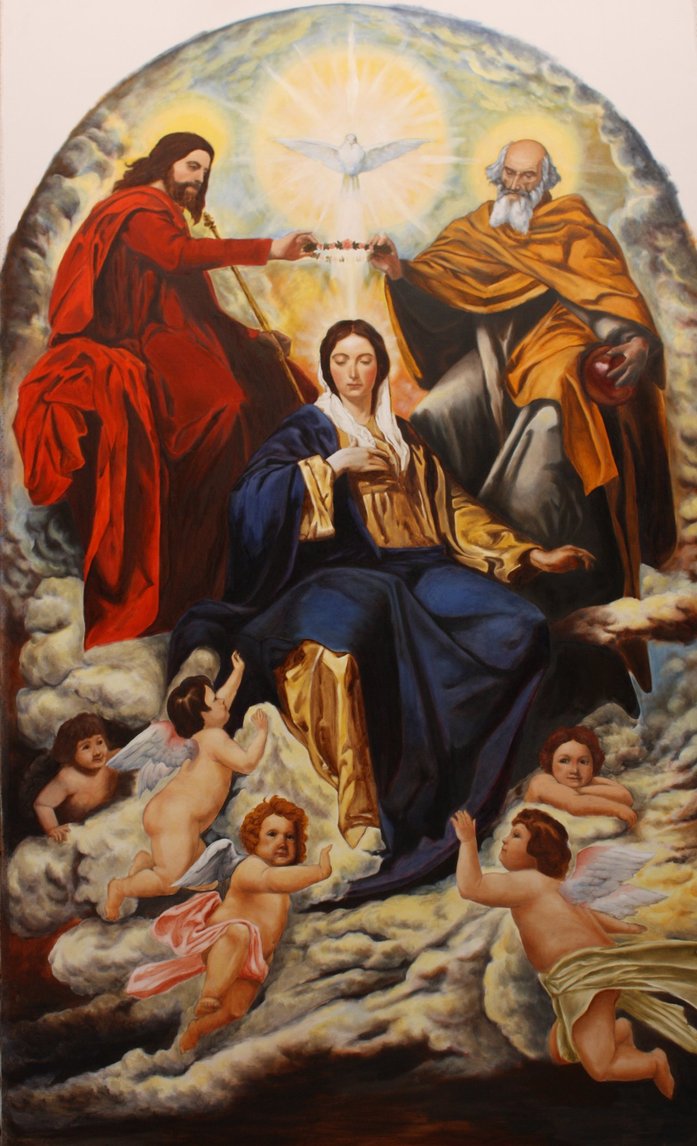 The Immaculate Conception It’s important to understand what the doctrine of the Immaculate Conception is and what it is not. Some people think the term refers to Christ’s conception in Mary’s womb without the intervention of a human father; but that is the Virgin Birth. Others think the Immaculate Conception means Mary was conceived "by the power of the Holy Spirit," in the way Jesus was, but that, too, is incorrect. The Immaculate Conception means that Mary, whose conception was brought about the normal way, was conceived without original sin or its stain—that’s what "immaculate" means: without stain. The essence of original sin consists in the deprivation of sanctifying grace, and its stain is a corrupt nature. Mary was preserved from these defects by God’s grace; from the first instant of her existence she was in the state of sanctifying grace and was free from the corrupt nature original sin brings. When discussing the Immaculate Conception, an implicit reference may be found in the angel’s greeting to Mary. The angel Gabriel said, "Hail, full of grace, the Lord is with you" (Luke 1:28). The phrase "full of grace" is a translation of the Greek word kecharitomene. It therefore expresses a characteristic quality of Mary. The traditional translation, "full of grace," is better than the one found in many recent versions of the New Testament, which give something along the lines of "highly favored daughter." Mary was indeed a highly favored daughter of God, but the Greek implies more than that (and it never mentions the word for "daughter"). The grace given to Mary is at once permanent and of a unique kind.Kecharitomene is a perfect passive participle of charitoo, meaning "to fill or endow with grace." Since this term is in the perfect tense, it indicates that Mary was graced in the past but with continuing effects in the present. So, the grace Mary enjoyed was not a result of the angel’s visit. In fact, Catholics hold, it extended over the whole of her life, from conception onward. She was in a state of sanctifying grace from the first moment of her existence. Fundamentalists’ Objections Fundamentalists’ chief reason for objecting to the Immaculate Conception and Mary’s consequent sinlessness is that we are told that "all have sinned" (Rom. 3:23). Besides, they say, Mary said her "spirit rejoices in God my Savior" (Luke 1:47), and only a sinner needs a Savior. Let’s take the second citation first. Mary, too, required a Savior. Like all other descendants of Adam, she was subject to the necessity of contracting original sin. But by a special intervention of God, undertaken at the instant she was conceived, she was preserved from the stain of original sin and its consequences. She was therefore redeemed by the grace of Christ, but in a special way—by anticipation. Consider an analogy: Suppose a man falls into a deep pit, and someone reaches down to pull him out. The man has been "saved" from the pit. Now imagine a woman walking along, and she too is about to topple into the pit, but at the very moment that she is to fall in, someone holds her back and prevents her. She too has been saved from the pit, but in an even better way: She was not simply taken out of the pit, she was prevented from getting stained by the mud in the first place. This is the illustration Christians have used for a thousand years to explain how Mary was saved by Christ. By receiving Christ’s grace at her conception, she had his grace applied to her before she was able to become mired in original sin and its stain. The Catechism of the Catholic Church states that she was "redeemed in a more exalted fashion, by reason of the merits of her Son" (CCC 492). She has more reason to call God her Savior than we do, because he saved her in an even more glorious manner! But what about Romans 3:23, "all have sinned"? Have all people committed actual sins? Consider a child below the age of reason. By definition he can’t sin, since sinning requires the ability to reason and the ability to intend to sin. This is indicated by Paul later in the letter to the Romans when he speaks of the time when Jacob and Esau were unborn babies as a time when they "had done nothing either good or bad" (Rom. 9:11). We also know of another very prominent exception to the rule: Jesus (Heb. 4:15). So if Paul’s statement in Romans 3 includes an exception for the New Adam (Jesus), one may argue that an exception for the New Eve (Mary) can also be made. Paul’s comment seems to have one of two meanings. It might be that it refers not to absolutely everyone, but just to the mass of mankind (which means young children and other special cases, like Jesus and Mary, would be excluded without having to be singled out). If not that, then it would mean that everyone, without exception, is subject to original sin, which is true for a young child, for the unborn, even for Mary—but she, though due to be subject to it, was preserved by God from it and its stain. The objection is also raised that if Mary were without sin, she would be equal to God. In the beginning, God created Adam, Eve, and the angels without sin, but none were equal to God. Most of the angels never sinned, and all souls in heaven are without sin. This does not detract from the glory of God, but manifests it by the work he has done in sanctifying his creation. Sinning does not make one human. On the contrary, it is when man is without sin that he is most fully what God intends him to be. The doctrine of the Immaculate Conception was officially defined by Pope Pius IX in 1854. When Fundamentalists claim that the doctrine was "invented" at this time, they misunderstand both the history of dogmas and what prompts the Church to issue, from time to time, definitive pronouncements regarding faith or morals. They are under the impression that no doctrine is believed until the pope or an ecumenical council issues a formal statement about it. This post has been edited by yeeck: Apr 19 2016, 02:45 PM |
|
|
Apr 19 2016, 04:42 PM
|
|
Senior Member
2,547 posts Joined: Jun 2008 From: KL
|
QUOTE(yeeck @ Apr 19 2016, 02:44 PM) The Immaculate Conception It’s important to understand what the doctrine of the Immaculate Conception is and what it is not. Some people think the term refers to Christ’s conception in Mary’s womb without the intervention of a human father; but that is the Virgin Birth. Others think the Immaculate Conception means Mary was conceived "by the power of the Holy Spirit," in the way Jesus was, but that, too, is incorrect. The Immaculate Conception means that Mary, whose conception was brought about the normal way, was conceived without original sin or its stain—that’s what "immaculate" means: without stain. The essence of original sin consists in the deprivation of sanctifying grace, and its stain is a corrupt nature. Mary was preserved from these defects by God’s grace; from the first instant of her existence she was in the state of sanctifying grace and was free from the corrupt nature original sin brings. When discussing the Immaculate Conception, an implicit reference may be found in the angel’s greeting to Mary. The angel Gabriel said, "Hail, full of grace, the Lord is with you" (Luke 1:28). The phrase "full of grace" is a translation of the Greek word kecharitomene. It therefore expresses a characteristic quality of Mary. The traditional translation, "full of grace," is better than the one found in many recent versions of the New Testament, which give something along the lines of "highly favored daughter." Mary was indeed a highly favored daughter of God, but the Greek implies more than that (and it never mentions the word for "daughter"). The grace given to Mary is at once permanent and of a unique kind.Kecharitomene is a perfect passive participle of charitoo, meaning "to fill or endow with grace." Since this term is in the perfect tense, it indicates that Mary was graced in the past but with continuing effects in the present. So, the grace Mary enjoyed was not a result of the angel’s visit. In fact, Catholics hold, it extended over the whole of her life, from conception onward. She was in a state of sanctifying grace from the first moment of her existence. Fundamentalists’ Objections Fundamentalists’ chief reason for objecting to the Immaculate Conception and Mary’s consequent sinlessness is that we are told that "all have sinned" (Rom. 3:23). Besides, they say, Mary said her "spirit rejoices in God my Savior" (Luke 1:47), and only a sinner needs a Savior. Let’s take the second citation first. Mary, too, required a Savior. Like all other descendants of Adam, she was subject to the necessity of contracting original sin. But by a special intervention of God, undertaken at the instant she was conceived, she was preserved from the stain of original sin and its consequences. She was therefore redeemed by the grace of Christ, but in a special way—by anticipation. Consider an analogy: Suppose a man falls into a deep pit, and someone reaches down to pull him out. The man has been "saved" from the pit. Now imagine a woman walking along, and she too is about to topple into the pit, but at the very moment that she is to fall in, someone holds her back and prevents her. She too has been saved from the pit, but in an even better way: She was not simply taken out of the pit, she was prevented from getting stained by the mud in the first place. This is the illustration Christians have used for a thousand years to explain how Mary was saved by Christ. By receiving Christ’s grace at her conception, she had his grace applied to her before she was able to become mired in original sin and its stain. The Catechism of the Catholic Church states that she was "redeemed in a more exalted fashion, by reason of the merits of her Son" (CCC 492). She has more reason to call God her Savior than we do, because he saved her in an even more glorious manner! But what about Romans 3:23, "all have sinned"? Have all people committed actual sins? Consider a child below the age of reason. By definition he can’t sin, since sinning requires the ability to reason and the ability to intend to sin. This is indicated by Paul later in the letter to the Romans when he speaks of the time when Jacob and Esau were unborn babies as a time when they "had done nothing either good or bad" (Rom. 9:11). We also know of another very prominent exception to the rule: Jesus (Heb. 4:15). So if Paul’s statement in Romans 3 includes an exception for the New Adam (Jesus), one may argue that an exception for the New Eve (Mary) can also be made. Paul’s comment seems to have one of two meanings. It might be that it refers not to absolutely everyone, but just to the mass of mankind (which means young children and other special cases, like Jesus and Mary, would be excluded without having to be singled out). If not that, then it would mean that everyone, without exception, is subject to original sin, which is true for a young child, for the unborn, even for Mary—but she, though due to be subject to it, was preserved by God from it and its stain. The objection is also raised that if Mary were without sin, she would be equal to God. In the beginning, God created Adam, Eve, and the angels without sin, but none were equal to God. Most of the angels never sinned, and all souls in heaven are without sin. This does not detract from the glory of God, but manifests it by the work he has done in sanctifying his creation. Sinning does not make one human. On the contrary, it is when man is without sin that he is most fully what God intends him to be. The doctrine of the Immaculate Conception was officially defined by Pope Pius IX in 1854. When Fundamentalists claim that the doctrine was "invented" at this time, they misunderstand both the history of dogmas and what prompts the Church to issue, from time to time, definitive pronouncements regarding faith or morals. They are under the impression that no doctrine is believed until the pope or an ecumenical council issues a formal statement about it. Scriptures are twisted, wrong assumptions are made, deliberate and unsubstantiated conclusion are made in the case of the New Eve to the point of being blasphemy I must say. and no protestants or non catholics would ever say that if Mary was without sin, she would be equal to God. He probably is confused with the fact that protestants say that only God can forgive sins. Protestants definitely believes that the saved are sinless once they go to heaven. In other words, saved people will be sinless when they die. So to even make a remark that "if Mary were without sin, she would be equal to God" shows that he is making things up to make his article look credible. Is this the kind of integrity that you want to be associated with? This post has been edited by sylar111: Apr 19 2016, 04:49 PM |
|
|
Apr 19 2016, 05:41 PM
|
|
Senior Member
3,576 posts Joined: Apr 2006
|
QUOTE(sylar111 @ Apr 19 2016, 04:42 PM) This whole article does not make sense and I will write a rebuttal later. I'm not sure if we are even on the same level of reading comprehension. I think the author is repeating the usual claim by Protestants that Catholics put Mary on the same level as God, that's all. No big deal. Nothing to do with integrity. Scriptures are twisted, wrong assumptions are made, deliberate and unsubstantiated conclusion are made in the case of the New Eve to the point of being blasphemy I must say. and no protestants or non catholics would ever say that if Mary was without sin, she would be equal to God. He probably is confused with the fact that protestants say that only God can forgive sins. Protestants definitely believes that the saved are sinless once they go to heaven. In other words, saved people will be sinless when they die. So to even make a remark that "if Mary were without sin, she would be equal to God" shows that he is making things up to make his article look credible. Is this the kind of integrity that you want to be associated with?  |
|
|
Apr 19 2016, 05:58 PM
|
|
Senior Member
3,576 posts Joined: Apr 2006
|
The Immaculate Conception in Scripture
Tim Staples  In my new book, Behold Your Mother - A Biblical and Historical Defense of the Marian Doctrines, I give eight reasons for belief in the Immaculate Conception: 1. Mary is revealed to be "full of grace" in Luke 1:28. 2. Mary is revealed to be the fulfillment of the prophetic "Daughter of Zion" of Zech. 2:10; Zeph. 3:14-16; Isaiah 12:1-6, etc. 3. Mary is revealed to be "the beginning of the new creation" in fufillment of the prophecy of Jer. 31:22. 4. Mary is revealed to possess a "blessed state" parallel with Christ's in Luke 1:42. 5. Mary is not just called "blessed" among women, but "more blessed than all women" (including Eve) in Luke 1:42. 6. Mary is revealed to be the spotless "Ark of the Covenant" in Luke 1. 7. Mary is revealed to be the "New Eve" in Luke 1:37-38; John 2:4; 19:26-27; Rev. 12, and elsewhere. 8. Mary is revealed to be free from the pangs of labor in fulfillment of Isaiah 66:7-8. Here, I will present some snippets from three of these biblical reasons for faith. But first, I must say I am sympathetic to my Protestant friends, and others, who struggle with this teaching of the Catholic Faith. Romans 3:23 says, “All have sinned and fallen short of the glory of God.” I John 1:8 adds, “If any man says he has no sin he is a liar and the truth is not in him.” These texts could not be clearer for millions of Protestants: “How could anyone believe Mary was free from all sin in light of these Scriptures? What’s more, Mary herself said, ‘My soul rejoices in God my savior’ in Luke 1:47. She clearly understood herself to be a sinner if she admits to needing a savior.” The Catholic Answer Not a few Protestants are surprised to discover the Catholic Church actually agrees that Mary was “saved.” Indeed, Mary needed a savior! However, Mary was “saved” from sin in a most sublime manner. She was given the grace to be “saved” completely from sin so that she never committed even the slightest transgression. The problem here is Protestants tend to emphasize God’s “salvation” almost exclusively to the forgiveness of sins actually committed. However, Sacred Scripture indicates that salvation can also refer to man being protected from sinning before the fact. Now to him who is able to keep you from falling and to present you without blemish before the presence of his glory with rejoicing, to the only God, our Savior through Jesus Christ our Lord, be glory, majesty, dominion, and authority, before all time and now and for ever (Jude 24-25). The great Franciscan theologian, Duns Scotus, explained ca. 600 years ago that falling into sin could be likened to a man approaching unaware a massive 20-feet deep ditch. If he falls into the ditch, he would need someone to lower a rope and save him. But if someone were to warn him of the danger ahead resulting in the man not falling into the ditch at all, he would have been saved from falling in the first place. Analogously, Mary was saved from sin by receiving the grace to be preserved from it. But she was still saved. The Exception[s] to the Rule But what about “all have sinned,” and “if any man says he has no sin he is a liar and the truth is not in him?” Wouldn’t “all” and/or “any man” include Mary? On the surface, this sounds reasonable. But this way of thinking carried to its logical conclusion would list Jesus Christ in the company of sinners as well. No Christian would dare say that! Yet, no Christian can deny the plain texts of Scripture declaring Christ’s full humanity either. Thus, if one is going to take I John 1:8 in a strict, literal sense, then any man would apply to Jesus as well! The truth is—and all Christians agree—Jesus Christ was an exception to Romans 3:23 and I John 1:8. And the Bible tells us he was in Hebrews 4:15: “Christ was tempted in all points even as we are and yet he was without sin.” The real question now is: are there any other exceptions to this rule? Yes, there are. In fact, there are millions of them. First of all, we need to recall that both of these texts—Romans 3:23 and I John 1:8—are dealing with personal rather than original sin. Romans 5:12 will deal with original sin. And there are two exceptions to that general biblical norm as well. But for now, we will simply deal with Romans 3:23 and I John 1:8. I John 1:8 obviously refers to personal sin because in the very next verse, St. John tells us, “If we confess our sins, he is faithful and just to forgive us our sins…” We do not confess original sin; we confess personal sins. The context of Romans 3:23 makes clear that it too refers to personal sin: None is righteous, no, not one; no one understands, no one seeks for God. All have turned aside, together they have gone wrong; no one does good, not even one. Their throat is an open grave. They use their tongues to deceive. The venom of asps is under their lips. Their mouth is full of curses and bitterness (Romans 3:10-14). Original sin is not something we do; it is something we’ve inherited. Romans chapter three deals with personal sin because it speaks of sins committed by the sinner. With this in mind, consider this: Has a baby in the womb or a child of two ever committed a personal sin? No, they haven’t (see Romans 9:11)! Or, how about the mentally challenged who do not have the use of their intellects and wills? These cannot sin because in order to sin a person has to know the act he is about to perform is sinful while freely engaging his will in carrying it out. Without the proper faculties to enable them to sin, children before the age of accountability and anyone who does not have the use of his intellect and will cannot sin. Right there you have millions of exceptions to Romans 3:23 and I John 1:8. The question remains: how do we know Mary is an exception to the norm of “all have sinned?” And more specifically, is there biblical support for this claim? Yes, there is. Indeed, there is much biblical support, but in this brief post I shall cite just three examples, among the eight, as I said before, that give us biblical support for this ancient doctrine of the Faith. 1. LUKE 1:28: And [the angel Gabriel] came to [Mary] and said, “Hail, full of grace, the Lord is with you!” But she was greatly troubled at the saying, and considered in her mind what sort of greeting this might be. And the angel said to her, “Do not be afraid, Mary, for you have found favor with God.” Many Protestants will insist this text to be little more than a common greeting of the Archangel Gabriel to Mary. “What would this have to do with Mary being without sin?” Yet, the truth is, according to Mary herself, this was no common greeting. The text reveals Mary to have been “greatly troubled at the saying and considered in her mind what sort of greeting this might be” (Luke 1:29, emphasis added). What was it about this greeting that was so uncommon for Mary to react this way? There are at least two key reasons: First, according to many biblical scholars as well as Pope St. John Paul II, the angel did more than simply greet Mary. The angel actually communicated a new name or title to her. In Greek, the greeting was kaire, kekaritomene, or “Hail, full of grace.” Generally speaking, when one greeted another with kaire, a name or title would almost be expected to be found in the immediate context. “Hail, king of the Jews” in John 19:3 and “Claudias Lysias, to his Excellency the governor Felix, greeting” (Acts 23:26) are two biblical examples of this. The fact that the angel replaces Mary’s name in the greeting with “full of grace” was anything but common. This would be analogous to me speaking to one of our tech guys at Catholics answers and saying, “Hello, he who fixes computers.” In our culture, I would just be considered weird. But in Hebrew culture, names, and name changes, tell us something that is permanent about the character and calling of the one named. Just recall the name changes of Abram to Abraham (changed from “father” to “father of the multitudes”) in Gen. 17:5, Saray to Sarah (“my princess” to “princess”) in Gen. 17:15, and Jacob to Israel (“supplanter” to “he who prevails with God”) in Gen. 32:28. In each case, the names reveal something permanent about the one named. Abraham and Sarah transition from being a “father” and “princess” of one family to being “father” and “princess” or “mother” of the entire people of God (see Romans 4:1-18; Is. 51:1-2). They become Patriarch and Matriarch of God’s people forever. Jacob/Israel becomes the Patriarch whose name, “he who prevails with God,” continues forever in the Church, which is called “the Israel of God” (Gal. 6:16). The people of God will forever “prevail with God” in the image of the Patriarch Jacob who was not just named Israel, but he truly became “he who prevails with God.” An entire tome could be written concerning the significance of God’s revelation of his name in Exodus 3:14-15 as I AM. God revealed to us volumes about his divine nature in and through the revelation of his name—God is pure being with no beginning and no end; he is all perfection, etc. What’s in a name? A lot according to Scripture! When you add to this the fact that St. Luke uses the perfect passive participle, kekaritomene, as his “name” for Mary, we get deeper insight into the meaning of Mary’s new name. This word literally means “she who has been graced” in a completed sense. This verbal adjective, “graced,” is not just describing a simple past action. Greek has the aorist tense for that. The perfect tense is used to indicate that an action has been completed in the past resulting in a present state of being. That’s Mary’s name! So what does it tell us about Mary? Well, the average Christian is not completed in grace and in a permanent sense (see Phil. 3:8-12). But according to the angel, Mary is. You and I sin, not because of grace, but because of a lack of grace, or a lack of our cooperation with grace, in our lives. This greeting of the angel is one clue into the unique character and calling of the Mother of God. Objection! One objection to the above is rooted in Eph. 2:8-9. Here, St. Paul uses the perfect tense and passive voice when he says, “For by grace you have been saved…” Why wouldn’t we then conclude all Christians are complete in salvation for all time? There seems to be an inconsistency in usage here. Actually, the Catholic Church understands that Christians are completed in grace when they are baptized. In context, St. Paul is speaking about the initial grace of salvation in Ephesians two. The verses leading up to Eph. 2:8-9, make this clear: … we all lived in the passions of our flesh, following the desires of body and mind, and so we were by nature children of wrath…even when we were dead in trespasses and sins…(by grace you have been saved)” (vss. 3-5). But there is no indication here, as there is with Mary, that the Christian is going to stay that way. In other words, Eph. 2:8-9 does not confer a name. In fact, because of original sin, we can guarantee that though we are certainly perfected in grace through baptism, ordinarily speaking, we will not stay that way after we are baptized; that is, if we live for very long afterward (see I John 1:8)! There may be times in the lives of Christians when they are completed or perfected in grace temporarily. For example, after going to confession or receiving the Eucharist well-disposed. We let God, of course, be the judge of this, not us, as St. Paul tells us in I Cor. 4:3-4: I do not even judge myself. I am not aware of anything against myself, but I am not thereby acquitted (Gr.—justified). It is the Lord who judges me. But only Mary is given the name “full of grace” and in the perfect tense indicating that this permanent state of Mary was completed. 2. An Ancient Prophecy—Genesis 3:15: Genesis 3:15 is often referred to by biblical scholars as the Protoevangelium. It is a sort of “gospel” before “the gospel.” This little text contains in very few words God’s plan of salvation which would be both revealed and realized in the person of Jesus Christ. Yet, when one reads the text, one cannot help but note that this prophetic woman seems to have what could be termed almost a disturbing prominence and importance in God’s providential plan: I will put enmity between you and the woman, and between your seed and her seed: he shall bruise your head, and you shall bruise his heel. Not only do we have the Virgin Birth here implied because the text says the Messiah would be born of “the seed of the woman” (the “seed” is normally of the man), but notice “the woman” is not included as “the seed” of the devil. It seems that both the woman and her seed are in opposition to and therefore not under the dominion of the devil and “his seed,” i.e., all who have original sin and are “by nature children of wrath” as St. Paul puts it in Eph. 2:3. Here, we have in seed form (pun intended), the fact that the woman—Mary—would be without sin, especially original sin, just as her Son—the Messiah—would be. The emphasis on Mary is truly remarkable in that the future Messiah was only mentioned in relation to her. There can be little doubt that a parallel is being drawn between Jesus and Mary and their absolute opposition to the devil. 3. Mary, Ark of the Covenant: The Old Testament ark of the Covenant was a true icon of the sacred. It was a picture of the purity and holiness God fittingly demands of those objects and/or persons most closely associated with himself and the plan of salvation. Because it would contain the very presence of God symbolized by three types of the coming Messiah—the manna, the Ten Commandments, and Aaron’s staff—it had to be most pure and untouched by sinful man (see II Sam. 6:1-9; Exodus 25:10ff; Numbers 4:15; Heb. 9:4). In the New Testament, the new and true Ark would not be an inanimate object, but a person—the Blessed Mother. How much more pure would the new and true Ark be when we consider the old ark was a mere “shadow” in relation to it (see Heb. 10:1)? This image of Mary as the Ark of the Covenant is an indicator that Mary would fittingly be free from all contagion of sin in order for her to be a worthy vessel to bear God in her womb. And most importantly, just as the Old Covenant ark was pristine from the moment it was constructed with explicit divine instructions in Exodus 25, so would Mary be most pure from the moment of her conception. God, in a sense, prepared his own dwelling place in both the Old and New Testaments. |
|
|
Apr 19 2016, 06:55 PM
|
|
Senior Member
2,547 posts Joined: Jun 2008 From: KL
|
QUOTE(yeeck @ Apr 19 2016, 05:41 PM) I'm not sure if we are even on the same level of reading comprehension. I think the author is repeating the usual claim by Protestants that Catholics put Mary on the same level as God, that's all. No big deal. Nothing to do with integrity. It seems that when you attack others by instigating that my reading comprehension is faulty, the one who is actually displaying a comprehension problem is you. The reason as to why Protestants in general feel that Catholics are worshiping Mary is actually though your actions.For example, saying your Hail Mary a thousand times, kneeling down towards Mary, giving her special names like Queen of Heaven which is actually another god for your information(Jeremiah 44:15), using Mary as a Good Luck Charm, etc. Unless you deny, Litany of the Blessed Virgin and The Garden of the Soul is clearly putting Mary on the par or if not slightly below God. Of course you can deny that those 2 things are not what all Catholics believe in. As I have stated, most protestants never ever stated that there is no possibility that a person can never be sinless. To state something that most protestants never claim, isn't that defamation? And you say that defamation has got nothing to do with integrity? Then we must have a different set of moral values then I guess. http://www.teachingtheword.org/apps/articl...5&columnid=5437 A Christian can not achieve perfection in this life but is able to the next. Jesus said something. 3 And why beholdest thou the mote that is in thy brother’s eye, but considerest not the beam that is in thine own eye? 4 Or how wilt thou say to thy brother, Let me pull out the mote out of thine eye; and, behold, a beam is in thine own eye? 5 Thou hypocrite, first cast out the beam out of thine own eye; and then shalt thou see clearly to cast out the mote out of thy brother’s eye. Maybe before you say that I have a reading comprehension problem, make sure to check on whether you have the same problem before judging me. You are really losing credibility as you post. Maybe read my post more carefully before you post your next reply will you? This post has been edited by sylar111: Apr 19 2016, 07:29 PM |
|
|
Apr 19 2016, 06:59 PM
|

Senior Member
627 posts Joined: Jun 2009
|
Would worshiping of Mary resembles Exodus 32?
 |
|
|
Apr 19 2016, 07:35 PM
|
|
Senior Member
2,547 posts Joined: Jun 2008 From: KL
|
QUOTE(shioks @ Apr 19 2016, 06:59 PM) Would worshiping of Mary resembles Exodus 32? According to them, they are not worshiping Mary. Just venerating her that's all. |
|
|
|
|
|
Apr 19 2016, 08:33 PM
|
|
Senior Member
627 posts Joined: Jun 2009
|
The scriptures say:
Philippians 4:6,7, "Do not be anxious about anything, but in every situation, by prayer and petition, with thanksgiving, present your requests to God. And the peace of God, which surpasses all comprehension, will guard your hearts and your minds in Christ Jesus." Ephesians 6:18, "And pray in the Spirit on all occasions with all kinds of prayers and requests. With this in mind, be alert and always keep on praying for all the Lord's people." (I would like to believe it's believers praying for other believers around the world in their present times). Daniel 9:17, "Now, our God, hear the prayers and petitions of your servant. For your sake, Lord, look with favor on your desolate sanctuary." We can go to God directly on our requests in the name of Jesus. Why would we want to create layers to present our requests? This literally translate into Jesus died in vain for our sins. The veil had never been broken. |
|
|
Apr 19 2016, 08:37 PM
|

Junior Member
110 posts Joined: Sep 2012
|
QUOTE(sylar111 @ Apr 19 2016, 07:35 PM) According to them, they are not worshiping Mary. Just venerating her that's all. Thank you Sylar111. That is exactly what we do.I think this dialogue has gone in circles for far too long. There seems to be a discordance between what Catholics practice and teach and what others think we practice. This seems to be especially so for our practice of honoring Mary, the saints and all of the heroes that have gone before us. You can rest assured that whatever the Church teaches (which is the same throughout the centuries), has its roots in Sacred Scripture and Sacred tradition which has been defended at length by Yeeck. If you would like to know more about the teachings of the Catholic faith, you will be best served to read the teachings and beliefs of the Church as espoused in The Catechism of the Catholic faith. It is easily available online. I would readily admit that if you look hard enough, you may come across some Catholics who actually put Mary at the same level as God. If you do find them, by all means, you have the churches blessing in correcting them and asking them to relearn the Catholic faith. In fact, this was actually done in the early history of the Catholic Church in a heresy called Collyridianism. The Church then stamped it out and it died off as a heresy. As for your examples - "saying your Hail Mary a thousand times" - most Catholics would gladly admit to this for it is one of our favorite prayers. If we understand Mary to be our mother in heaven, the first among us who has gone ahead, she who so willingly said "yes" to God and exhorted us to "Do whatever Jesus tells us to"; then the prayer makes perfect sense. It goes like this "Hail Mary, full of grace. Our Lord is with thee. Blessed art thou among women, and blessed is the fruit of thy womb, Jesus. Holy Mary, Mother of God, pray for us sinners, now and at the hour of our death. Amen. " "Kneeling down towards Mary" - if by doing this, a Catholic is putting Mary on the same pedestal with God, then by all means, let them be corrected. However it might be difficult to know whether one is worshiping another by kneeling down. Unfortunately I did exactly that when I proposed marriage to my wife. Much as I love her, I am very sure I did not put her on the same level as God. "giving her special names like Queen of Heaven" - as you would have seen in the Liturgy to the blessed virgin, we call her much more than just "Queen of Heaven". She is after all the true Queen Mother of the true King. Yes, the term "Queen of Heaven" in the Old Testament refers to the Goddesses of the pagans of old. Surely it could not have been referring to worship of Mary at a time before she was born. Just as Christmas used to be a pagan festival, it was replaced as a festival to commemorate the birth of Our Savior. "Mary as a Good Luck Charm" - no Catholic is taught to use anything as a good luck charm. It is idolatry. Again, feel free to correct any Catholic, or Christian for that matter, who uses any good luck charms. We thank you for your concern for the souls of Catholics. Please pray for us, and we will do the same for you. |
|
|
Apr 19 2016, 08:59 PM
|
|
Junior Member
110 posts Joined: Sep 2012
|
QUOTE(shioks @ Apr 19 2016, 08:33 PM) The scriptures say: Yes, of course one can go directly to God. But being humans, we also like to ask others to pray for us. Especially for the times when we are not able to pray for ourselves (too busy, asleep, sick, dying etc). Philippians 4:6,7, "Do not be anxious about anything, but in every situation, by prayer and petition, with thanksgiving, present your requests to God. And the peace of God, which surpasses all comprehension, will guard your hearts and your minds in Christ Jesus." Ephesians 6:18, "And pray in the Spirit on all occasions with all kinds of prayers and requests. With this in mind, be alert and always keep on praying for all the Lord's people." (I would like to believe it's believers praying for other believers around the world in their present times). Daniel 9:17, "Now, our God, hear the prayers and petitions of your servant. For your sake, Lord, look with favor on your desolate sanctuary." We can go to God directly on our requests in the name of Jesus. Why would we want to create layers to present our requests? This literally translate into Jesus died in vain for our sins. The veil had never been broken. And it makes a lot of sense to ask those who have gone before us, those who have fought the good fight and run the good race and who are living in communion with our Heavenly Father, to be our main cheer leaders in running the race. You might recall, even the rich man in the story of Lazarus, who was condemned, wanted to intercede for his remaining family who were still on earth. How much more must is be for our brothers and sisters in Christ who are now with God. The catholic church looks upon it all as a giant family. The church is also divided into the Church militant, the church suffering and the Church triumphant. Those who have gone before us to heaven is the church triumphant. We are in communion with them in worshiping our Heavenly Father. |
|
|
Apr 19 2016, 11:58 PM
|
|
Senior Member
3,576 posts Joined: Apr 2006
|
QUOTE(shioks @ Apr 19 2016, 08:33 PM) The scriptures say: Like I said before, the more the merrier. It's not creating layers. Think of it like more prayer requests storming Heaven...that's all. The chief steward could have gone directly to Jesus of course, but it was recorded as such in Scripture, and as everyone here agrees, all Scripture is inspired:Philippians 4:6,7, "Do not be anxious about anything, but in every situation, by prayer and petition, with thanksgiving, present your requests to God. And the peace of God, which surpasses all comprehension, will guard your hearts and your minds in Christ Jesus." Ephesians 6:18, "And pray in the Spirit on all occasions with all kinds of prayers and requests. With this in mind, be alert and always keep on praying for all the Lord's people." (I would like to believe it's believers praying for other believers around the world in their present times). Daniel 9:17, "Now, our God, hear the prayers and petitions of your servant. For your sake, Lord, look with favor on your desolate sanctuary." We can go to God directly on our requests in the name of Jesus. Why would we want to create layers to present our requests? This literally translate into Jesus died in vain for our sins. The veil had never been broken. And the third day, there was a marriage in Cana of Galilee: and the mother of Jesus was there. 2 And Jesus also was invited, and his disciples, to the marriage. 3 And the wine failing, the mother of Jesus saith to him: They have no wine. 4 And Jesus saith to her: Woman, what is that to me and to thee? my hour is not yet come. 5 His mother saith to the waiters: Whatsoever he shall say to you, do ye. -- John 2:1-5 "Whatsoever he shall say to you, do ye." That's Mary leading us to Jesus, not leading us astray as some would think with Catholic veneration of Mary. 1. A queen mother played a significant role in the establishment of her son upon the throne. "This does not simply mean that she conveyed 'royal blood' as a result of her marriage to the king, his father. There were usually many possible heirs to the throne and it often happened that the least likely candidate (from a legal point of view it was the first-born who should have succeeded to the throne) became king." Because the king had many wives, he entrusted the education of his children to their mothers. She chose the heir to the throne and hence she was responsible for his reign and closely linked with the exercise of his kingship. Applied to Mary, we can observe that she too is closely related to Christ's kingship and her whole being is involved in the spread of His kingdom. In contrast to many of the queen mothers, Mary did not seek the throne for her Son because of any personal ambition. Her ministry was one of service, to the point of sacrificing her motherly rights for our sake. 2. The queen mother in Israel had a powerful influence in the kingdom. This power and authority flows from her status as Gebirah (queen mother) and not from her as a person. In Israel the queen mother preceded her son in existence, sometimes she would rule in his stead (Cf. 2 Kings 10:13: "We are kinsmen of Ahaziah," they replied. "We are going down to visit the princes and the family of the queen mother" and at times also abuse her authority. (Cf. 2 Jeremiah 13:18: "Say to the king and to the queen mother: come down from your throne.") As Queen Mother Mary never rules in Christ's stead; she does not , command her Son, yet He is inclined to fulfill her wishes. Her authority in the kingdom is authentic but always dependent on the King. (Cf. John 2:5. 'Do whatever He tells you.') 3. The queen mother of Israel interceded in behalf of the subjects of the kingdom. She was their most powerful, and therefore preferred, advocate. Her specific place of honor and intercession is dramatically illustrated in the following passage from 1 Kings 2: 13-21: "Adonijah, son of Haggith, went to Bathsheba. the mother of Solomon. "Do you come as a friend?" she asked. "Yes," he answered and added. "I have something to ask to you." She replied, "Say it." So he said, "There is one favor I would ask of you. Do not refuse me." And she said, "Speak on." He said, "Please ask King Solomon, who will not refuse you, to give me Abishag the Shunamite for my wife." "Very well," replied Bathsheba, "I will speak to the king for you." Then Bathsheba went to King Solomon to speak to him for Adonijah, and the king stood up to meet her and paid her homage. Then he sat down upon his throne, and a throne was provided for the king's mother, who sat at his right. "There is one small favor l would ask of you," she said. "Do not refuse me." "Ask It, my mother," the king said to her, "for I will not refuse you. So she said, "Let Abishag the Shunamite be given to your brother Adonijah for his wife." Mary's queenly function consists in interceding on our behalf. It is anchored in her early role as Mother of the Redeemer and Mother of the redeemed. This post has been edited by yeeck: Apr 20 2016, 12:15 AM |
|
|
Apr 20 2016, 03:08 AM
Show posts by this member only | IPv6 | Post
#1218
|
|
Senior Member
2,547 posts Joined: Jun 2008 From: KL
|
QUOTE(yeeck @ Apr 19 2016, 11:58 PM) Like I said before, the more the merrier. It's not creating layers. Think of it like more prayer requests storming Heaven...that's all. The chief steward could have gone directly to Jesus of course, but it was recorded as such in Scripture, and as everyone here agrees, all Scripture is inspired: You are really funny. Did you even look at 1 Kings 2. And I mean the entire chapter. Anyway, you have totally discredited yourself. It shows. It really shows. It's a bad sign actually. When you pick a passage that actually speaks against you, maybe even God is not on your side. And I mean totally.And the third day, there was a marriage in Cana of Galilee: and the mother of Jesus was there. 2 And Jesus also was invited, and his disciples, to the marriage. 3 And the wine failing, the mother of Jesus saith to him: They have no wine. 4 And Jesus saith to her: Woman, what is that to me and to thee? my hour is not yet come. 5 His mother saith to the waiters: Whatsoever he shall say to you, do ye. -- John 2:1-5 "Whatsoever he shall say to you, do ye." That's Mary leading us to Jesus, not leading us astray as some would think with Catholic veneration of Mary. 1. A queen mother played a significant role in the establishment of her son upon the throne. "This does not simply mean that she conveyed 'royal blood' as a result of her marriage to the king, his father. There were usually many possible heirs to the throne and it often happened that the least likely candidate (from a legal point of view it was the first-born who should have succeeded to the throne) became king." Because the king had many wives, he entrusted the education of his children to their mothers. She chose the heir to the throne and hence she was responsible for his reign and closely linked with the exercise of his kingship. Applied to Mary, we can observe that she too is closely related to Christ's kingship and her whole being is involved in the spread of His kingdom. In contrast to many of the queen mothers, Mary did not seek the throne for her Son because of any personal ambition. Her ministry was one of service, to the point of sacrificing her motherly rights for our sake. 2. The queen mother in Israel had a powerful influence in the kingdom. This power and authority flows from her status as Gebirah (queen mother) and not from her as a person. In Israel the queen mother preceded her son in existence, sometimes she would rule in his stead (Cf. 2 Kings 10:13: "We are kinsmen of Ahaziah," they replied. "We are going down to visit the princes and the family of the queen mother" and at times also abuse her authority. (Cf. 2 Jeremiah 13:18: "Say to the king and to the queen mother: come down from your throne.") As Queen Mother Mary never rules in Christ's stead; she does not , command her Son, yet He is inclined to fulfill her wishes. Her authority in the kingdom is authentic but always dependent on the King. (Cf. John 2:5. 'Do whatever He tells you.') 3. The queen mother of Israel interceded in behalf of the subjects of the kingdom. She was their most powerful, and therefore preferred, advocate. Her specific place of honor and intercession is dramatically illustrated in the following passage from 1 Kings 2: 13-21: "Adonijah, son of Haggith, went to Bathsheba. the mother of Solomon. "Do you come as a friend?" she asked. "Yes," he answered and added. "I have something to ask to you." She replied, "Say it." So he said, "There is one favor I would ask of you. Do not refuse me." And she said, "Speak on." He said, "Please ask King Solomon, who will not refuse you, to give me Abishag the Shunamite for my wife." "Very well," replied Bathsheba, "I will speak to the king for you." Then Bathsheba went to King Solomon to speak to him for Adonijah, and the king stood up to meet her and paid her homage. Then he sat down upon his throne, and a throne was provided for the king's mother, who sat at his right. "There is one small favor l would ask of you," she said. "Do not refuse me." "Ask It, my mother," the king said to her, "for I will not refuse you. So she said, "Let Abishag the Shunamite be given to your brother Adonijah for his wife." Mary's queenly function consists in interceding on our behalf. It is anchored in her early role as Mother of the Redeemer and Mother of the redeemed. No wonder everytime I debate with you there is always that vibe around me that there is something wrong going on. Now I know why. Even with the other catholics, they at least try to present themselves in a logical way, you on the other hand. I really do not want to comment further. I do agree that a son has to listen to his parents. After all, even in the 10 commandments it is said that we should honor our parents. So it is natural that a son should listen to his mother. But out of all of the verses, you pick one that actually contradicts that. It probably means God is totally against you. I managed to figure out John 2:1-5 but I guess I should not feed pearls to swines anymore. To be honest, I wanted to refute your passage on John 2:1-5 but now that you provide a passage that actually goes against your point, I will leave everyone else here to be a judge. I am now convinced that right now yes, you were looking for the truth as a protestant. You forsake and then turn to Catholism. You actually become even more deceived. The verse you are using to prove your point discredit yourself actually totally. Maybe, you should start examining yourself as I have said earlier. This post has been edited by sylar111: Apr 20 2016, 03:14 AM |
|
|
Apr 20 2016, 10:49 AM
|
|
Senior Member
3,576 posts Joined: Apr 2006
|
Interesting list of heresies from Wikipedia:
https://en.wikipedia.org/wiki/List_of_Christian_heresies This post has been edited by yeeck: Apr 20 2016, 10:52 AM |
|
|
Apr 20 2016, 11:19 AM
|

Junior Member
225 posts Joined: Mar 2008
|
QUOTE(yeeck @ Apr 20 2016, 10:49 AM) Interesting list of heresies from Wikipedia: the last on the list, the prosperity heresy ... is that referring to liberation theology or something else?https://en.wikipedia.org/wiki/List_of_Christian_heresies |
|
Topic ClosedOptions
|
| Change to: |  0.0377sec 0.0377sec
 0.58 0.58
 6 queries 6 queries
 GZIP Disabled GZIP Disabled
Time is now: 5th December 2025 - 09:47 AM |
 Quote
Quote