Welcome Guest ( Log In | Register )

Bump Topic Topic Closed RSS Feed
13 Pages « < 6 7 8 9 10 > » Bottom

Outline · [ Standard ] · Linear+

> Military Thread V15, Gong Xi Fa Cai; Huat ah

views
     
BorneoAlliance
post Feb 27 2015, 08:04 AM

New Member
*
Newbie
0 posts

Joined: Dec 2014

Russia’s military exercises are way bigger than NATO’


If military strength and ability was determined solely by the number of soldiers participating in military exercises, Russia would be able to steamroll through NATO without much of a second thought.

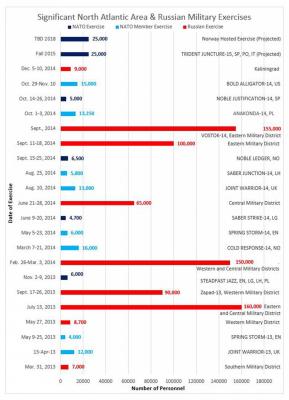
Since 2013, Russia has launched a number of military exercises with troop numbers regularly surpassing the 100,000 personnel mark. In comparison, the largest NATO member exercise during the same time frame took part in Norway in 2014 and had 16,000 personnel.

The following chart from The Atlantic Council sums up the vast numerical difference between Russian and NATO exercises.

This chart is not meant to be exhaustive, and it does not list the snap military exercises that Russia has recently undertaken near the Baltics. But it does illustrate a general Russian trend: for Moscow, bigger is better as far as shows of military strength go.

The size and timing of the Russian drills is significant. For instance, a February 26 to March 3, 2014 drill in Western and Central Russia functioned as a distraction as Russian troops moved into and effectively annexed Crimea.

Large-scale Russian drills that June featured 65,000 personnel and acted as a crucial show of strength. Those came just as Russia escalated the conflict in eastern Ukraine by providing pro-Moscow separatists with tanks and heavy military equipment.

The military exercise in December 2014 could function as a Russian show of force against Lithuania and Poland. The exercise was held in the Russian Baltic exclave of Kaliningrad, which borders the two states. Russian exercises like this might be one reason Lithuania is going to reintroduce military conscription starting in 2016.

In response to these Russian drills and the situation in Ukraine, NATO has sought to reassure its member states through frequent military exercises. But in most cases NATO drills are only a fraction as large as Russia’s.

Ultimately, though, military strength is better measured through financial resources, training, and experience. In this regard, Russia is still behind the NATO alliance.

NATO encompasses the majority of the states in Europe and North America. The US alone far outpaces the rest of the world in military spending. Considering Moscow would be at a huge disadvantage if it ever fought a war with the NATO states, its massive-scale military drills may be nothing more than bluster or a crude sort power projection.


Read more at http://www.businessinsider.my/russias-mili...H9scWBOT1ylJ.99


Attached thumbnail(s)
Attached Image Attached Image
BorneoAlliance
post Feb 27 2015, 10:00 AM

New Member
*
Newbie
0 posts

Joined: Dec 2014
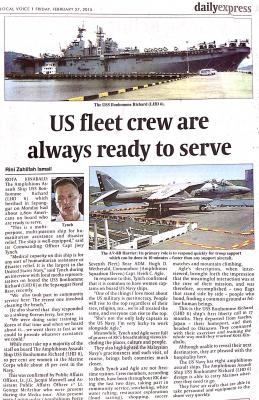
US fleet crew are always ready to serve


Attached thumbnail(s)
Attached Image
BorneoAlliance
post Feb 27 2015, 11:16 AM

New Member
*
Newbie
0 posts

Joined: Dec 2014


US Intelligence Chief Sees Spring Attack on Ukraine Port

WASHINGTON: Pro-Russian forces in eastern Ukraine will likely wait until the spring to attack the port of Mariupol, US intelligence chief James Clapper predicted Thursday, adding such a move did not seem imminent.

Clapper said Russian President Vladimir Putin's aim was to establish a land bridge to Crimea, which was annexed by Moscow a year ago after the fall of a pro-Moscow leader in Kiev.

"It is not our assessment that he (Putin) is bent on capturing or conquering all of Ukraine. He wants a whole entity composed of the two oblasts (regions) in eastern Ukraine which would include a land bridge to Crimea and perhaps a port in specifically Mariupol," Clapper told the Senate Armed Services Committee.

"We do not believe that an attack on Mariupol is imminent. I believe they will wait until the spring before they attack," he said.

Since a ceasefire brokered by European leaders went into effect on February 15, rebels have captured the key railhub of Debaltseve and were reported to be massing forces around Mariupol.

http://www.ndtv.com/world-news/us-intellig...42767?site=full

This post has been edited by BorneoAlliance: Feb 27 2015, 11:17 AM


Attached thumbnail(s)
Attached Image
BorneoAlliance
post Feb 27 2015, 02:21 PM

New Member
*
Newbie
0 posts

Joined: Dec 2014

Experts on Islamic State worry US is underestimating fight for Mosul
By Mitchell Prothero
McClatchy Foreign Staff
Published: February 26, 2015


IRBIL, Iraq (Tribune News Service) — U.S. commanders pressing for an attack on Mosul perhaps as early as this spring may be underestimating the importance of the city to its Islamic State occupiers, who are likely to put up a huge fight to retain their control, experts who’ve studied the extremist organization say.

Iraqi officials have been resisting what a U.S. Central Command briefer said last week were plans for the assault to begin in April or May and involve an Iraqi force of about 25,000.

“The mark on the wall that we are still shooting for is the April-May time frame,” the Centcom official, who spoke only anonymously under the conditions of the briefing, said in a conference call last Thursday. “As we dialogue with our Iraqi counterparts, we want them to go in that time frame, because as you get into Ramadan and the summer and the heat, it becomes problematic if it goes much later than that.”

In televised comments that aired Tuesday night in Baghdad, Iraq’s defense minister, Khaled Obeidi, blasted the briefer, saying it was irresponsible to alert the enemy to possible plans and that the decision on the timing of such an operation would be made by Iraqi officials in Iraq, not American officials in the United States.

“A military official should not disclose the date and time of an attack,” Obeidi said. “The timing is up to (Iraqi) military commanders. Where this American official got his information from, I don’t know.”

But another aspect of the Centcom briefing has raised concerns among analysts experienced with the Islamic State and its tactics and motivations: the briefer’s assertion that Mosul’s defense is in the hands of only 1,000 to 2,000 Islamic State fighters. That number underestimates how crucial Mosul, Iraq’s second-largest city, is to the Islamic State’s key goal: building a caliphate that erases long-established borders and attracts the support of Muslims from throughout the world.

“The conquest of Mosul marked the beginning of the formation of major contiguous territory spanning the Iraq-Syria borders,” said Aymenn al-Tamimi, an expert on the Islamic State who’s with the Middle East Forum, a U.S.-based research center. “The capture of Mosul was undoubtedly the main factor that led to the caliphate declaration.”

After Mosul fell June 10, the Islamic State moved quickly to establish itself as something other than a rogue armed group lashing out at governments it disliked. Less than three weeks after overrunning Mosul, the group announced the establishment of the caliphate and declared its leader, Abu Bakr al-Baghdadi, the caliph.

Al-Baghdadi “is the imam and caliph for Muslims everywhere,” the group’s spokesman, Abu Muhammad al-Adnani, said in an online statement June 29. To reinforce the notion that international boundaries would no longer be recognized, the group released a video clip, titled “Breaking the Borders,” of its fighters dismantling the border between Iraq and Syria.

Six days later, al-Baghdadi himself underscored the importance of Mosul to the Islamic State by preaching from the pulpit, or minbar, of the city’s Great Nuriddin Mosque, whose history dates to 1142. It was his first — and last — public appearance.

“God gave your mujahedeen brothers victory after long years of jihad and patience … so they declared the caliphate and placed the caliph in charge,” al-Baghdadi said then. “This is a duty on Muslims that has been lost for centuries.”

With the legitimacy of the group’s cross-border claim of authority at stake, analysts said they found it unlikely that the Islamic State would easily give up control of Mosul or dedicate such a small force to protecting it. Many hundreds of Islamic State troops were committed to the failed effort to capture Kobani, a far less important city on the Syria-Turkey border, and Kurdish forces only 12 miles from Mosul report near-daily attacks by hundreds of Islamic State troops.

“The idea that ISIS will vacate Mosul without a substantial fight is almost laughable,” J.M. Berger, an expert on the Islamic State who’s affiliated with the Brookings Institution’s Project on U.S. Relations with the Islamic World, said in an email. “The timing of the caliphate announcement with the capture of Mosul connects the credibility of the former to their ability to hold the latter in a pretty big way. The caliphate announcement was a clear signal they don’t intend to melt away into the hills.”

Adding to Mosul’s importance is its yearslong role as the primary source of financial support for the Islamic State, dating to its predecessor group, al-Qaida in Iraq. Records that U.S. forces captured from al-Qaida in Iraq show that Mosul has long been the extremists’ primary source of cash.

“The loss of Mosul would readily bring into question IS’ viability as a long-term project,” said al-Tamimi. “Mosul is the largest city in Iraq to fall under IS control and was its main financial hub for many years. Its status for IS cannot be overstated. In contrast, places like Tikrit are largely ghost towns now.”

Still, some analysts say the Islamic State would likely survive the loss of Mosul. Despite the city’s military and economic importance, the Islamic State’s current supporters would be unlikely to lose faith if Mosul fell back into government hands, said Will McCants, a former U.S. counterterrorism official now at Johns Hopkins University.

“Losing Mosul would be a major military blow to the Islamic State, but it will not dent its claim to be the caliphate reborn in the eyes of its jihadist supporters,” McCants said. “The capital of the historical caliphate moved around from time to time, so losing a capital does not Islamically damage the group’s legitimacy.”

Al-Tamimi and McCants doubt that the group will give up the city without a major fight, and they think the Islamic State is likely to commit much of its 30,000-man force to the fight.

“There’s no question Mosul is important to them,” said McCants.

Adding to concerns that U.S. planners are underestimating the size of the force that will be fielded to defend Mosul are worries that they’re overestimating how many Iraqi government troops will be ready for such an attack.

Kurdish military officials are openly skeptical that the Iraqi army, which was decimated by desertions in June as a much smaller Islamic State force overran Mosul and has suffered heavy casualties since, can provide the manpower that the Centcom briefer said would be available for a campaign to retake the city in a matter of weeks. They also say that an assault on Mosul primarily by Shiite Muslim militias, which are trained and equipped by Iran, would likely deepen Sunni Muslim support for the Islamic State.

All those concerns are being taken into account, the Centcom briefer said, and planners are open to the possibility that an assault on Mosul won’t happen till the fall.

“If they’re not ready, if the conditions are not set, if all the equipment they need is not physically there and they are trained to a degree to which they will be successful, we have not closed the door on continuing to slide (timing) to the right,” he said.

Prothero is a McClatchy special correspondent.

©2015 McClatchy Washington Bureau
Visit the McClatchy Washington Bureau at www.mcclatchydc.com
Distributed by Tribune Content Agency, LLC

http://www.stripes.com/news/middle-east/ex...-mosul-1.331786


Attached image(s)
Attached Image
BorneoAlliance
post Feb 27 2015, 06:07 PM

New Member
*
Newbie
0 posts

Joined: Dec 2014

China’s Neighbors Bulk Up Militaries

Despite Beijing’s efforts to cool tensions, many nations prepare for potential conflict

MANILA—China’s neighbors are moving forward with the modernization of their militaries with new fighter jets, submarines and other hardware, even as Beijing has tried to tamp down territorial tensions in the region.

The military buildup is an indication that many Asian countries see little reason to adjust their long-term preparations for potential friction with China, despite Beijing’s diplomatic and economic charm offensive.

China made a dramatic shift in its diplomatic approach at a summit in Beijing in November, adopting a more conciliatory tone. This included the first face-to-face meeting between Chinese President Xi Jinping and Japanese Prime Minister Shinzo Abe since both took power in 2012.

That came after China pledged to invest billions in regional ports and infrastructure, with great potential benefits for its neighbors.

Many Asian nations are participating in those programs or receiving other Chinese aid. But underlying sources of tension haven’t gone away.

It has only been half a year since Vietnamese and Chinese vessels were jostling off islands claimed by both countries after China parked a giant oil rig there. A few months after that, Indian and Chinese troops tussled for weeks in the Himalayas along the countries’ disputed border.

Vietnam recently received the third of six new Russian submarines, valued at about $2 billion in total—a landmark for a country that has never had submarines. It also ordered six Russian frigates and is increasing the size of its Sukhoi fighter-jet fleet to 36 planes.

Smaller nations like Vietnam don’t expect to seriously challenge China’s military, but want to make China think twice before pressing claims.

“At the minimum we have to decrease China’s ability to act with impunity,” a Philippine defense official said, recalling China’s 2012 capture of the disputed Scarborough Shoal.

A Vietnamese Foreign Ministry spokesman said Vietnam’s military programs weren’t aimed specifically at China. “The purchase of defense equipment is a normal practice of all countries in the world,” said Nguyen Thi Thai Thong.

Better-equipped countries, such as India and Japan, want China to respect them as military equals.

India is establishing a new mountain corps for deployment along its Himalayan boundaries. It is also testing ballistic missiles with a range of over 3,000 miles, which could strike inside China. In January, India test-fired one of the missiles from a mobile launcher for the first time at an island off its northeastern coast.

BULKING UP

Asian nations are making big investments in new military hardware. Some of the latest purchases (with seller in parentheses):

INDIA

126 Rafale fighter jets (France)
22 AH-64E Apache gunships (U.S.)
8 P-8I Poseidon maritime surveillance aircraft (U.S.)
INDONESIA

3 Chang Bogo-class submarines (South Korea)
24 F-16 fighter jets (U.S.)
16 Sukhoi Su-27/Su-30 jets (Russia)
8 AH-64E Apache gunships (U.S.)
JAPAN

4 helicopter carriers (Japan)
42 F-35 Lightning II stealth fighters (U.S)
17 V-22 Osprey tilt-rotor aircraft (U.S.)
MALAYSIA

2 Scorpene submarines (France)
6 Gowind-class frigates (France)
PHILIPPINES

12 FA-50 fighter/trainer jets (South Korea)
2 Hamilton-class cutters (U.S.)
VIETNAM

6 Kilo-class submarines (Russia)
6 Gepard-class frigates (Russia)
36 Sukhoi Su-30 jets (Russia)

Tokyo is setting up Japan’s first amphibious operations unit to defend East China Sea islands contested by China and is adding 42 F-35 Lightning II stealth fighters. Japan is increasing its defense budget by 2% in the fiscal year starting April 1.

China continues to outpace its neighbors in military spending—its military budget has grown around 10% annually for the past two decades.

The U.S. has encouraged its allies in Asia, particularly Japan, to build up military capability, which takes some pressure off Washington itself and also creates markets for U.S. weaponry.

India’s military hardware paraded before President Barack Obama in New Delhi in January included a Boeing Co. P-8I antisubmarine-warfare plane and Lockheed Martin C-130J transport aircraft, which could help rush troops and equipment to India’s Himalayan boundary with China.

Vietnam is poised to receive American surveillance aircraft and other systems as Washington and Hanoi improve diplomatic ties.

The U.S. partially lifted a long-standing arms embargo on Vietnam last October.

Still, a stronger Vietnamese military isn’t likely to deter any future moves by Beijing.

China has been “disconcerted” by Vietnam’s modernization plans, said Tim Huxley, executive director of IISS-Asia, a Singapore-based security think tank. But Zhang Baohui, a politics professor at Lingnan University in Hong Kong, said China is confident of its military superiority over the Vietnamese.

“The buildup of the weaker party won’t much motivate the stronger party,” he said.

Despite complaints from South China Sea neighbors, China continues to reclaim land to build new bases in disputed waters. Last month, Philippine officials said a new island capable of supporting a large Chinese airstrip at Fiery Cross Reef in the contested Spratly Islands was “50% complete.”

Vietnam showed that it, too, remains wary of Chinese activities in contested seas, joining Manila in denouncing Beijing’s land-reclamation projects. Pham Binh Minh, Vietnam’s deputy prime minister, visited Manila in late January for talks about upgrading the two countries’ security ties, partly to help block China’s regional expansion.

China says it has “indisputable sovereignty” over the Spratlys and the waters around them. “The relevant construction and maintenance that the Chinese government does on them are China’s legitimate rights,” the Defense Ministry said.

China has long argued that military modernization is normal. But Beijing has criticized Japan for easing restrictions on its Self-Defense Forces, saying Tokyo is “deliberately fabricating the China threat.” In 2013, after Tokyo launched its second helicopter carrier, China said it was “concerned over Japan’s constant expansion of its military equipment.”

Beijing spent five times more on defense than the ten Southeast Asian countries combined in 2013, according to Sipri, a Swedish security institute, with investments in stealth planes, aircraft carriers and other cutting-edge capabilities.

Meanwhile, its neighbors are also bulking up. The Philippines ordered a dozen Korean fighter jets valued at $410 million, and has earmarked $1.8 billion for new hardware over the next two years, including naval frigates.

Malaysia is in the market for new fighter jets and has recently received its first pair of submarines, bought from France for roughly $2.2 billion. Indonesia has plans to station newly purchased Korean submarines and U.S. Apache gunships near islands it deems vulnerable to Chinese encroachment.

China isn’t the only reason Asian countries are spending more on defense, of course. In Southeast Asia especially, countries have long had weak militaries in need of new equipment just to keep operating. Many of them have their own rivalries as well.

But taken together, the latest spending could just wind up raising the risks of a deadly confrontation if tensions worsen.

Some experts say stronger militaries elsewhere could change the strategic calculus for Beijing eventually, possibly making it more willing to negotiate settlements. “The last thing China wants is to surround itself with modern, capable militaries,” said Richard Javad Heydarian, a political science professor at De La Salle University in Manila. As its neighbors upgrade militarily, “China is bound to face greater risks of unwanted escalation and resistance.”

—Yuka Hayashi contributed to this article.

Write to Trefor Moss at Trefor.Moss@wsj.com

http://www.wsj.com/articles/chinas-neighbo...ries-1424996255


Attached thumbnail(s)

Attached Image
BorneoAlliance
post Feb 27 2015, 06:15 PM

New Member
*
Newbie
0 posts

Joined: Dec 2014

IRGC kicks off second day of major military drill

Iran’s Islamic Revolution Guards Corps (IRGC) has kicked off the second day of major military maneuvers code-named the Great Prophet 9 in the south and the southwestern parts of the country.

On the second day of the drill, which started at 09:00 am local time (0530 GMT) on Thursday, the Ground Force units of the IRGC are planned to conduct special exercises.


As many as 10 military divisions, including units of ground forces, artillery, ammunition, missiles, drones, and reconnaissance jets, will conduct operations in the second day of the drills.

The drills will be conducted within the framework of 6 operations, including stationary defense, mobile defense, ambush, and anti-heliborne defense.


Among the unique features of the second day of the drills are the non-detectability of all positions and the impossibility of identifying them by reconnaissance aircraft.


IRGC's message: Security to friends, destruction to foes

The message of the military maneuvers of the IRGC is “peace” for the friends of the Islamic Republic and destruction for Iran’s enemies, said Commander of the IRGC Ground Force Brigadier General Mohammad Pakpour on the sidelines of the second day of the war games on Thursday.

“Our message to our friends is peace and security, and to those who harbor the thought of threatening the Islamic Republic is to know that our might will destroy them,” the commander added.

He further noted that during the drills the IRCG forces put into practice the theoretical training they had already received.

Countering threats

Meantime, the second-in-command of the IRGC’s Ground Force, Brigadier General Abdullah Araqi, said that Thursday's maneuvers mainly featured passive defense drills, adding that the exercise is aimed at upgrading the IRGC’s capabilities to counter possible threats.

Camouflage and non-symmetrical warfare techniques were also rehearsed during the maneuvers, said the top commander.

Day 1 of the drills

The Great Prophet 9 military drill started on Wednesday morning, with maritime mine operations by speedboats as well as the firing of four coast-to-sea missiles in the Persian Gulf region and the Strait of Hormuz.

The first phase of the drill concluded later in the day with a parade of marine units and speedboats. In this phase of the drill, as many as 30 speedboats of the IRGC conducted quick mine-planting operations.


Various types of ballistic and sea-launched cruise missiles were fired, and nearly 400 rounds of 107-milimeter rockets struck a replica of a US aircraft carrier.

In the first phase of the military maneuvers, as many as 17 missile and ballistic missiles were fired from vessels, helicopters, and coastal missile systems belonging to the IRGC naval forces. Of the 17 missiles, 4 were ballistic missiles, of which 2 were Khalij Fars (Persian Gulf) and one was Fateh (Victorious)-110 and one was Zelzal (Temblor).

Among the senior military and political officials present at the site of the drill were the IRGC’s Commander Major General Mohammad Ali Ja’fari, Iran’s Parliament (Majlis) Speaker Ali Larijani, IRGC’s second-in-command, Brigadier General Hossein Salami, Rear Admiral Ali Fadavi, a commander of the IRGC Navy, and Commander of the Aerospace Division of the IRGC Brigadier General Amir-Ali Hajizadeh.


Larijani’s remarks

Meanwhile, Larijani (seen above holding binoculars) praised the military might of the IRGC, saying it can establish security in the region.

Larijani, who made the remarks on the sidelines of the first day of the drill on Wednesday, described the IRGC forces in the southern waters as “capable” and “watchful,” adding that the forces can “establish security” with the cooperation of security forces from other regional countries.

“There is no need for other [extra-territorial] countries to be present in the region,” Larijani said.

In the second phase of the military maneuvers, some drone targets were destroyed by as many as 100 vessels belonging to the IRGC Navy. The drones were targeted by Misaq shoulder-launched missiles and canons installed on speedboats.

A total of 20 new missiles, including underwater ones with a speed of 100 meters per second, were test-fired during the military exercises.

The drill also featured other military equipment, including speedboats equipped with naval radars, electronic communications systems, cruise missiles with a range of 25 kilometers, anti-ship medium-range missiles, medium- and large-caliber torpedoes, sea mines, heavy machine guns, rocket-launchers and shoulder-fired surface-to-air missiles.

Iran has conducted several drills to enhance the defense capabilities of its armed forces and to test modern military tactics and equipment.

The Islamic Republic has repeatedly said that its military might poses no threat to other countries, reiterating that its defense doctrine is based on deterrence.

IA/HJL/HMV

http://www.presstv.ir/Detail/2015/02/26/39...-of-major-drill


Attached thumbnail(s)
Attached Image Attached Image Attached Image Attached Image
BorneoAlliance
post Feb 27 2015, 06:46 PM

New Member
*
Newbie
0 posts

Joined: Dec 2014

India to purchase MSDF aircraft

NEW DELHI—India’s defense ministry intends to purchase US-2 amphibious rescue aircraft, the same model used by the Maritime Self-Defense Force, from Japan, The Yomiuri Shimbun has learned. According to the ministry’s sources, the ministry is expected to decide on the purchase officially at a meeting of a committee on defense procurement on Saturday at the earliest.

If this export will be realized, this will be the first full-scale export based on the new three principles on transferring defense equipment, which the Cabinet approved last April.

http://the-japan-news.com/news/article/0001965371


Attached thumbnail(s)
Attached Image
BorneoAlliance
post Feb 27 2015, 06:58 PM

New Member
*
Newbie
0 posts

Joined: Dec 2014

Russia Not Suing France Over Mistral Non-Delivery Yet © AFP 2015/ JEAN-SEBASTIEN EVRARD

France Must Deliver Mistral to Russia – French Ex-Foreign Minister

MOSCOW (Sputnik) — Russia has so far not taken legal action to conduct a preliminary assessment of damages caused by the non-delivery of the Mistral-class helicopter carrier by France, the deputy chairman of the Russian government's Military-Industrial Commission said Friday.

"No one has assessed anything so far, because we are in no hurry of slamming the door. There are some legal aspects, however, and the position and diplomacy that was made public also exists. No active actions from our side have been taken yet," Oleg Bochkarev said in an interview with RIA Novosti, answering a question on whether a preliminary assessment of damage due to the non-delivery of the Mistral-type carrier, the Vladivostok, is being conducted in commercial courts.

He explained that the Vladivostok was supposed to be delivered to Russia by France within the framework of the state defense order by the end of 2014.

The Sevastopol amphibious assault ship of the Mistral class at the STX Europe shipyard in Saint-Nazaire
© SPUTNIK/ GRIGORIY SISOEV

Pricey Politics: France May Pay €5 Mln a Month for Failing to Deliver Mistral
The delivery of two Mistral-class assault ships to Russia was agreed under a $1.5 billion deal between Russian state-run arms exporter Rosoboronexport and French shipbuilder DCNS, signed in 2011.

France was expected to deliver the first of the two helicopter carriers, the Vladivostok, by November 14, 2014. However, on November 25, French President Francois Hollande stated that the shipment would be suspended due to the alleged meddling of Moscow in the Ukrainian crisis.

In January, Russian Defense Minister Sergei Shoigu said the Russian side did not rule out the possibility of filing a suit against France within six months over its failure to deliver the Vladivostok ship, as the contract conditions remain unfulfilled.

Read more: http://sputniknews.com/politics/20150227/1...l#ixzz3SwS8PDaB


Attached thumbnail(s)
Attached Image
BorneoAlliance
post Feb 28 2015, 12:02 AM

New Member
*
Newbie
0 posts

Joined: Dec 2014

Daily: Serbia plans "several military exercises" with Russia

SOURCE: DANAS
BELGRADE -- The Belgrade-based daily Danas is on Friday quoting unnamed sources who said that Serbia "plans to hold several military exercises with Russia."

This would take place despite the negative comments from the EU and the United States, the paper reported, and noted that last year's drills held in Serbia with the participation of Russia's Airborne Troops (VDV) also received criticism from the same quarters.

The article cites information obtained from "sources close to the Ministry of Defense and the Serbian Army," who said Serbia's foreign policy has not changed "despite the Ukrainian crisis and EU's demands to harmonize it with the European policy."

That is the reason military exercises with Russia are planned for this year as well, the daily quoted its sources.

However, "there is still no precise information about their number, date, or location, as programs are still being determined," writes Danas, and adds it was unofficially told by the Ministry of Defense and the Serbian Army that "a final agreement on the military exercises will be reached in the coming days."

The newspaper noted that Foreign Minister Ivica Dacic on Thursday met with U.S. Secretary of State John Kerry, "a day after" Kerry spoke about Serbia being "in the line of fire" when it comes to relations between Washington and Moscow, and added that the conversation took place face to face.

"There has not been more precise information what they spoke about, in the context of Kerry's statement," the daily said, adding that Kerry during the "official part of the meeting" stressed that Serbia was taking on "an increasingly important role in many respects."

At the same time, Dacic told him that Serbia strives towards the EU and that its traditionally friendly relations with Serbia are "absolutely unrelated to its strategic orientation."

The newspaper reminded its readers that a recent report filed by EP rapporteur for Serbia Dacic McAllister, due to be adopted next month, expressed concern over the fact Serbia and Russia held joint military exercises at the height of the tensions between the EU and Russia, and that this remark was made "in the context of the call to Serbia to harmonize its foreign policy and introduce sanctions against Russia."

The first ever joint Serbian-Russian armed forces exercise was held in Nikinci northwest of Belgrade on November 14, 2014, and the daily said it was "interesting that information about this was kept secret, while the domestic public learned about it from the Russian Ministry of Defense."

"Although Serbian officials claimed that the information about the exercise was not secret, the fact it was not announced in the media in a timely manner was interpreted as the Serbian government's fear of receiving negative comments from the EU," Danas said, and added:

"Less than a month earlier Belgrade organized a military parade during Vladimir Putin's visit, on the occasion of the 70th anniversary of the liberation of Belgrade, which was the subject of criticism of some western officials. In July last year Serbia held military maneuvers with NATO countries as well - members of the armed forces of the U.S, Bulgaria, Romania, Azerbaijan, Macedonia, and Croatia. During the fall the VS held a military exercise with the marine forces of the U.S. European command and four regional countries."

http://www.b92.net/eng/news/politics.php?y...27&nav_id=93322


Attached thumbnail(s)
Attached Image
BorneoAlliance
post Feb 28 2015, 12:15 AM

New Member
*
Newbie
0 posts

Joined: Dec 2014

FIRST BARS-M SPY SATELLITE FOR RUSSIAN MILITARY FLIES ON SOYUZ-2-1A


RAE BOTSFORDFEBRUARY 27TH, 2015
At 6:01 a.m. EST (14:01 MSK, 11:01 GMT) Friday, a Soyuz-2-1a rocket lifted off from the Plesetsk Cosmodrome in the town of Mirny, north of Moscow, Russia, carrying the first Bars-M spy satellite for the Russian military. As is typical for classified Russian military missions, the launch was not broadcast.


Limited information has been made available, but the payload has not been kept a complete secret. Bars-M is a cartography satellite, designed to map the Earth from above to keep Russian military maps as up-to-date as possible. This particular series of mapping satellites will use digital imaging and, evidently, downlink the footage instead of using the old film-return technique to bring the maps back. Older cartography satellites relied on the ability to parachute spent film back to Earth for review and use.

Bars-M began its life in the 1990s as simply “Bars” and was created to be a replacement for the Kometa (Yantar-1KFT) satellites. The Kometa spacecraft were film-return satellites that the USSR developed in the 1970s and used, through the transition from USSR to Russia, from the 1980s to 2005. Each Kometa carried a TK-350 topographic camera TK-350 and a KVR-1000 high resolution camera in order to create large topographic maps. They used a Yantar bus module, which has been around since the 1960s and which was used recently on the Lotos-S satellite, and a Zenit-based film return capsule that could be re-used a few times.

Each Kometa could orbit for about 45 days before returning the film capsule, which meant the Soviet Union needed to launch them somewhat regularly in order to maintain accurate maps. According to a report from SEN, “The USSR tried to launch at least one orbital cartographer per year, however during the post-Soviet economic collapse of the 1990s, such missions became more and more infrequent.”

Accurate maps are no minor concern for soldiers in a combat zone. According to SEN, “Russian military maps were quickly growing obsolete. According to veterans of wars in Chechnya, inaccurate maps further complicated a nightmare scenario of urban warfare in this breakaway Russian republic.”

Thus the Bars project was born. It would be built on the Yantar bus as well, and would employ “topographic electro-optical imaging system consisting of a wide-angle and high-resolution camera and a set of laser altimeters,” according to Spaceflight101. However, in the early 2000s, the project halted due to issues with both funds and technical details. The delay “led to a decade-long gap in operational space-based cartography capabilities,” according to the same report.

The contract for the Bars-M satellites, the upgrade and reboot of the unfinished Bars, was signed in 2007 and included an expected first launch by 2012. TsSKB Progress, or Progress State Research and Production Space Centre, was contracted to develop a satellite bus different from the familiar Yantar. TsSKB-Progress operates under the jurisdiction of Roscosmos and is based in Samara, Russia. Leningrad Optical Mechanical Association (LOMO) developed and built the imaging system payload. Yet technical difficulties prevented it from being completed when desired, pushing that first launch to today, about three years late.

So far, the Russian military has ordered at least six satellites in this line. Each has a life expectancy of five years.

Regarding the launch vehicle, the 1a configuration of the Soyuz-2 rocket is essentially a modification of the Soyuz-U configuration, with a digital control panel. It is less powerful than its sister rocket, the Soyuz-2-1b, which has a third stage with a new RD-0124 engine, instead of the earlier RD-0110 found on the 1a.

Bars M-1 launch sequence as seen on Spaceflight Insider

The sequence of events that put the satellite into orbit. Image credit: Anatoly Zak/RussianSpaceWeb
As is typical of Soyuz rockets, it does not have the usual first stage that is jettisoned in its entirety once it has completed its task. Instead, the Soyuz has what is called a “core” stage with four liquid booster rockets strapped to it. These boosters, each of which is powered by a four-chamber RD-107A engine, are typically considered the “first” stage. Yet, the core stage ignites with them about 17 seconds before liftoff, and it continues to burn once the boosters have been jettisoned. Despite this, the core stage is generally considered the “second” stage.

The core stage uses an RD-108A engine, which has similarities to those RD-107A engines in the boosters. Both of these engines are manufactured by NPO Energomash, the same manufacturer of the often-discussed RD-180 engine known for its use on the first stage of each Atlas V rocket. The third stage on the Soyuz-2-1a is just the same as that of the Soyuz-U Launcher, with its RD-0110 engine developed by Chemical Automatics Design Bureau (also called KB Khimavtomatika or KBKhA).

Some Soyuz missions do require an additional stage, called the Fregat Upper Stage, to more precisely place a payload. This mission, however, is not one of them. The satellite will be placed directly into orbit after launch,

According to a report from NASASpaceFlight, the target orbit is believed to be “an elliptical transfer trajectory which will allow the spacecraft to manoeuvre itself into a sun-synchronous orbit,” and “at an altitude of approximately 700 kilometres (430 miles, 380 nautical miles) and an inclination in the region of 98.3 degrees.”

The Soyuz rocket family is perhaps most famous for being the launch vehicle for the Soyuz spacecraft. Both the rocket and capsule are currently the only means used for ferrying astronauts to and from the International Space Station (ISS). NASA has been endeavoring to change that situation with the Commercial Crew Transportation Capability (CCtCap) contracts.

The next Soyuz launch is the mission to carry the Expedition 43 crew to the ISS, currently slated for March 27 from the Baikonur Cosmodrome. The next launch of a Bars-M satellite is currently “expected to occur at some point next year, with a third satellite expected to fly around 2018,” according to NASASpaceFlight

http://www.spaceflightinsider.com/organiza...tary-heads-sky/


Attached thumbnail(s)
Attached Image Attached Image Attached Image Attached Image
BorneoAlliance
post Feb 28 2015, 08:57 AM

New Member
*
Newbie
0 posts

Joined: Dec 2014

Indonesia’s New Military Commands: A South China Sea Focus?

Last week, The Jakarta Post reported that the Indonesian military would focus its future operations in the western part of country to deal with foreign threats, including in the South China Sea. The report is interesting to consider given ongoing plans to restructure the Indonesian military’s commands over the next decade.

The newspaper quoted Indonesia’s outspoken military chief General Moeldoko as saying that Indonesia’s forces – which according to military plans would form joint regional commands (locally abbreviated Kogabwilhan) to be in place by 2024 – would focus on the west of the country, especially in Sumatra and Kalimantan given flash points like the South China Sea.

“In the future, we expect that the South China Sea will be a flash point. So a task force, such as the Kogabwilhan, will be very important,” Moeldoko said.

Put simply, the essence of the Kogabwilhan concept is to structure the military into multi-service regional commands consisting of a combination of army, air force and navy units and led by generals who would be able to respond quickly and flexibly to flash points with greater autonomy relative to the central leadership in Jakarta.

The Kogabwilhan idea is not a new one, and former Indonesian president Susilo Bambang Yudhoyono had begun plans to implement it as early as 2008. His successor and Indonesia’s current president Joko “Jokowi” Widodo agreed to continue with these ongoing plans last November.

The specifics, however, are still unclear. Moeldoko had previously proposed the establishment of three Kogabwilhan groups to Jokowi and his team. Geographically, the three groups were speculated to focus on the western, eastern and central parts of the country, and one was believed to be located in Sulawesi and a second in Papua. In line with this, The Jakarta Post report and Moeldoko’s comments might be simply suggest that the third Kogabwilhan group will indeed be located in the western part of the country and that it would focus its operations on dealing with foreign threats particularly in Sumatra and Kalimantan.

If so, that would seem to make sense. As military expert and researcher at Indonesia’s Center for Strategic and International Studies Iis Giandarsah says, “the most immediate flashpoints are located near the land and sea borders of Sumatra and Kalimantan.” While the threats are many, one of them would be the South China Sea. As I have written before, while Indonesia is technically not a claimant in the South China Sea disputes, Jakarta is increasingly concerned about how the nine-dash line overlaps with the waters surrounding the resource-rich Natuna Islands and has played a role in facilitating dispute resolution efforts more broadly. It is also in the process of building up its own capabilities.

That being said, it is important to keep two things in mind. First, the South China Sea focus in Indonesia’s joint commands is far from a novel development. Under Yudhoyono, Indonesia reportedly planned to have four Kogabwilhan groups with one of them heavily focused on the Natuna flash point.

Second, getting these commands finalized over the next few years is a challenge. Ensuring all services are equally represented within these commands is by itself revolutionary idea because the army has traditionally dominated things in Indonesia. Then there are other questions such as how leadership within these commands would work and the sorts of threats they should each be responsible for. It is important to keep these considerations in mind even as we learn more about Indonesia’s joint commands in the future.

http://thediplomat.com/2015/02/indonesias-...hina-sea-focus/


Attached image(s)
Attached Image
BorneoAlliance
post Feb 28 2015, 09:17 AM

New Member
*
Newbie
0 posts

Joined: Dec 2014

Boko Haram crisis: Regional force takes shape

Military chiefs from Nigeria, Chad, Cameroon, Benin and Niger are finalising their strategy for a 8,750-strong regional force to tackle the militant Islamist group Boko Haram.

In the last few weeks, the Multinational Joint Task Force has retaken several towns captured by the militants in north-eastern Nigeria.

Now, the regional chiefs are preparing for a major ground and air offensive due to start next month - and are meeting in Chad this week to set out the command structure.

The force will be led by a Nigerian commander, after which the position will rotate among the members.

'Common enemy'
It is not clear whether Brig Gen Enitan Ransome Kuti, who was in charge before the force was boosted, will remain its head.

He is highly respected but he and other senior officials were arrested in January by Nigerian military authorities after failing to fight off a Boko Haram attack on the force's headquarters in Baga in north-eastern Borno, one of three states under a state of emergency since 2013.

Nigeria 3,500
Chad 3,500
Cameroon 750
Niger 750
Benin 250
line
Relations between Nigerian and some its neighbours have not always been cordial but now, confronted by a common enemy, they have been forced to work together.

The smaller version of the task force had been co-operating on some aspects of cross-border security for more than a decade.

Porous borders
With extra troops it is hoped the force will be robust enough to take on the militants, who have shown they do not respect regional borders.

It will also have the behind the scenes support of France, the former colonial power of all those helping Nigeria.

The US has also promised to provide communication equipment and intelligence.

This is much needed across the vast and arid Sahel where surveillance is difficult along porous borders.

The beefed-up force wants to capitalise on recent victories - like the recapture of Baga, its headquarters, last week.

Soldiers have also found huge caches of arms, most of which the Boko Haram fighters had seized from Nigerian military armouries.

Rescuing schoolgirls
New supplies of equipment have boosted operations by the Nigerian military, which has been much criticised for its failure to stop the insurgents.

This has given rise to some optimism amongst its beleaguered infantry - some soldiers have told me they will not run away from battle as others have done in the past fearing Boko Haram's firepower.

Restoring Nigeria's territorial integrity and hunting down the insurgents in their hideouts - mostly in the forests and hills of Nigeria's north-east - will be one thing, but there is still the threat of bombings in urban areas.

The group still targets populated commercial areas, using women and children strapped with explosives. These will be more difficult to detect.


http://www.bbc.com/news/world-africa-31593802


Attached thumbnail(s)
Attached Image
BorneoAlliance
post Feb 28 2015, 01:39 PM

New Member
*
Newbie
0 posts

Joined: Dec 2014
USMC ability Demonstration at Camp Paradise Kota Belud Sabah

This post has been edited by BorneoAlliance: Feb 28 2015, 01:54 PM


Attached thumbnail(s)
Attached Image
BorneoAlliance
post Feb 28 2015, 06:39 PM

New Member
*
Newbie
0 posts

Joined: Dec 2014

SeeMe: DARPA Seeks Tiny Satellites to Map Terrain for US Troops © Raytheon

An American defense contractor is developing small satellites capable of quickly providing US ground troops with images of their surroundings.

In December, the Defense Advanced Research Projects Agency awarded a $1.5 million contract to Raytheon to develop the satellites.

The technology has been named the SeeMe satellite – after DARPA's quest for Space Enabled Effects for Military Engagements. It is about the size of a water cooler and is cheaper to make and launch than the typical hardware sent into orbit, Business Insider reported.

DARPA wants to give the world Terminator vision.

With the SeeMe satellite, designers aimed to advance satellite imagery from a strategic to a tactical asset – one that could, for example, give individual soldiers an idea of what lies beyond their field of vision.

"It's really about two things," Randy Gricius, director of Raytheon's space innovations group, told Business Insider. "It's about persistence – having the data pretty much anytime [a soldier] needs it – and about him being able to control it."

Gricius estimated that it would take only 24 SeeMe satellites no more than 90 minutes to provide images of the ground anywhere within an area half the size of the United States.

DARPA said that soldiers will be able to use the satellites with existing handheld devices to receive an image of their precise location. SeeMe could eliminate the need for a command post to serve as a sort of middleman between soldiers and satellites, hastening the transfer of information.

SeeMe satellites are designed to reenter the atmosphere and burn up without a trace after two or three months in low orbit. Larger models can function in space for years or even decades.

Pentagon's DARPA Works on New Generation of Smarter Insect-Drones
Designers are using off-the-shelf materials that are available to the public to keep costs under $500,000 per unit, Business Insider reported.

"They're literally off the shelf," Gricius said about processors used in the satellites. "You can go on a catalog and order them today.”

The processors – similar to the ones found in inexpensive personal computers – still have to be proven space-worthy, along with the other materials. Typical satellites come equipped with “space-qualified parts,” which are hardened and have been tested to prove they can survive in space.

Raytheon aims to launch a SeeMe satellite aboard a rocket in September. If it is in working order after 90 days of testing, the SeeMe may be used by the US military.


Read more: http://sputniknews.com/news/20150228/10188...l#ixzz3T2D1FHiY


Attached thumbnail(s)
Attached Image
BorneoAlliance
post Feb 28 2015, 06:42 PM

New Member
*
Newbie
0 posts

Joined: Dec 2014
QUOTE(thpace @ Feb 28 2015, 06:38 PM)
Why kuching instead of sabah if pinoy?
*
A friend whatsapp saw 3 migs at Labuan airport today.
BorneoAlliance
post Feb 28 2015, 07:30 PM

New Member
*
Newbie
0 posts

Joined: Dec 2014
QUOTE(KYPMbangi @ Feb 28 2015, 06:44 PM)
so they transiting from semenanjung > kuching > labuan
*
Do the migs flying direct kuantan to labuan have enough fuel?
BorneoAlliance
post Feb 28 2015, 10:20 PM

New Member
*
Newbie
0 posts

Joined: Dec 2014
US to Send Arms to Ukraine Using Private Contractors - Hacker Group © REUTERS/ Gleb Garanich

Washington plans to use Western private military contractors to deliver weapons to Ukraine. Once arms are delivered, these companies will send their “volunteers” who will come to make good use of these weapons.

The United States plans to use private military contractors to deliver arms to Kiev, Ukrainian hacker group CyberBerkut reports.

Inconvenient Truth: Hackers Reveal True Number of Ukrainian Army Casualties

“We, CyberBerkut, got access to files stored on the electronic device that belonged to an employee of the private military contractor “Green Group”, who recently visited Kiev with a US military delegation. The documents reveal that the United States is still mulling over the idea of supplying lethal weapons to Kiev, but first, it would like to gain the support of its European allies.” – said the statement published on CyberBerkut website.

Washington plans to use Western private military contractors to deliver weapons to Ukraine. These companies, of course, would deliver arms “voluntarily”, out of kindness. Moreover, once weapons are delivered to Ukraine, these companies will send volunteers to come and fight against Donbas forces in Eastern Ukraine, CyberBerkut says.

Hackers Leak US Document Scans With Plans to Supply Weapons to Kiev

CyberBerkut is a group of anonymous hackers who oppose the current government in Kiev. The group has already done a few high-profile hacks that changed the course of conversation about the situation in Ukraine. Victoria Nuland's famous words "F**k the EU!" and her secret plot to assemble a post-coup government in Kiev became public after CyberBerkut leaked the recording. The group also leaked information about snipers at the Maidan Square, shooting indiscriminately at both police and protesters last year. Last month, CyberBerkut obtained classified information that exposed massive casualties and terrible morale among Kiev forces attacking eastern Ukraine.


Read more: http://sputniknews.com/military/20150228/1...l#ixzz3T37Xpmac


Attached thumbnail(s)
Attached Image
BorneoAlliance
post Mar 1 2015, 11:06 AM

New Member
*
Newbie
0 posts

Joined: Dec 2014
US Marines set Kota Belud hills ablaze with firepower


Attached thumbnail(s)
Attached Image Attached Image
BorneoAlliance
post Mar 1 2015, 12:22 PM

New Member
*
Newbie
0 posts

Joined: Dec 2014


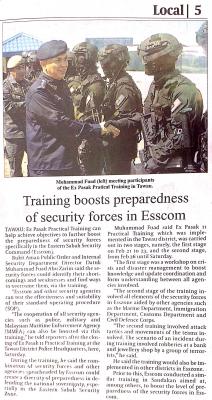
Ex Pasak Practical Training ESSCOM


Attached thumbnail(s)
Attached Image
BorneoAlliance
post Mar 1 2015, 03:44 PM

New Member
*
Newbie
0 posts

Joined: Dec 2014

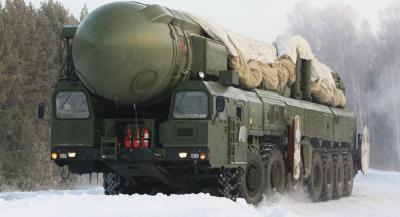
Russia’s SMF Ready to Repel a ‘Lightning-Speed’ Nuclear Strike © Sputnik/ Alexandr Kryazhev

Russian Strategic Missile Forces will parry all nuclear attacks and punish the enemy with a devastating retaliatory

© SPUTNIK/ RAMIL SITDIKOV

Russia’s Strategic Missile Forces Check Combat Readiness During Drills

The Russian Strategic Missile Forces are prepared to shield the country from a nuclear attack under any circumstances, the SMF Central Command’s chief said.

“If we have to accomplish a task of repelling a “lightning-speed” nuclear strike, this objective will be attained within a prescribed period”, Andrei Burbin told RSN Radio on Saturday. He added the SMF are ready to deliver a retaliatory nuclear strike “unhesitatingly”.

He emphasized that the geographic position of Russia’s missile units protects them from destruction by “any global strike”.

The Major General also said that the SMF are successfully implementing the rearmament plan. In 2020, 98 percent of the SMF systems will be new.

Currently, more than 6,000 people carry out the daily combat duty in the SMF of Russia.


Read more: http://sputniknews.com/military/20150301/1...l#ixzz3T7MXXymU


Attached thumbnail(s)
Attached Image

13 Pages « < 6 7 8 9 10 > » 
Bump Topic Topic ClosedOptions New Topic
 

Change to:
| Lo-Fi Version
0.0977sec    0.54    7 queries    GZIP Disabled
Time is now: 11th December 2025 - 05:10 PM