Welcome Guest ( Log In | Register )

Bump Topic Topic Closed RSS Feed
13 Pages « < 5 6 7 8 9 > » Bottom

Outline · [ Standard ] · Linear+

> Military Thread V15, Gong Xi Fa Cai; Huat ah

views
     
BorneoAlliance
post Feb 25 2015, 07:56 AM

New Member
*
Newbie
0 posts

Joined: Dec 2014

Pentagon Provides Iraq $17.9Mln in Equipment, Supplies to Fight ISIL © East News/ Michael Curvin

US Department of Defense stated that the United States is assisting Iraq with the necessary equipment and supplies to help that country fight more effectively the Islamic State.
WASHINGTON (Sputnik) — The United States is assisting Iraq with the necessary equipment and supplies to help that country fight more effectively the Islamic State (ISIL), according to a US Department of Defense statement.

“The Defense Department has expedited $17.9 million in equipment and supplies — some of which have already been delivered — to the Iraqi government,” the statement said.

One Bundle US Airdrop Not Enough Equipment to Give Enemy Advantage: Pentagon Spokesperson
The supplied equipment includes 232 Hellfire missiles; 250 mine-resistant ambush-protected vehicles; thousands of Kevlar helmets and body armour; 10,000 M-16 rifles; 10,000 M-68 close-combat optical red-dot sights; 200 Harris vehicle-mounted radios, and 23,000 light weapons magazines, according to the statement.
The Pentagon explained that deliveries of the equipment began in early January and are set to continue this week.

The Iraqi forces have retaken at least 700 kilometers of territory previously occupied by the ISIL, but the fight against the terrorist group is far from over, US Army Colonel Steve Warren said in the statement.

The ISIL is a Sunni militant group that has taken over large portions of Syria and Iraq, and declared a caliphate. The United States and the anti-ISIL coalition began carrying out airstrikes against ISIL targets in Iraq in August 2014, and expanded the air campaign to Syria in September, though without Syrian government approval.


Read more: http://sputniknews.com/military/20150225/1...l#ixzz3Si4cTAMg


Attached thumbnail(s)
Attached Image
BorneoAlliance
post Feb 25 2015, 10:23 AM

New Member
*
Newbie
0 posts

Joined: Dec 2014
US Navy cleans Likas Beach


Attached thumbnail(s)
Attached Image
BorneoAlliance
post Feb 25 2015, 10:26 AM

New Member
*
Newbie
0 posts

Joined: Dec 2014
No sign of IS threat


Attached thumbnail(s)
Attached Image
BorneoAlliance
post Feb 25 2015, 06:42 PM

New Member
*
Newbie
0 posts

Joined: Dec 2014
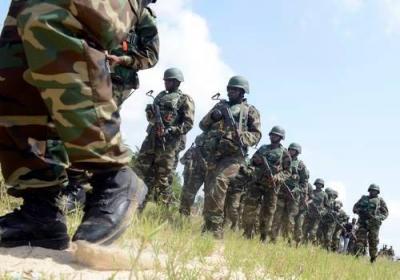
Nigeria​n​ military destroy terrorist havens in five communities


The Nigerian military ha​s succeeded in destroying terrorists’ hideouts in five communities – Baga, Gwoza, Sambisa, Bama and Pulka – in the North Eastern Nigeria, ​PRNigeria has said.

The media outlet​,​ which distributes press releases for security agencies in Nigeria​,​ released a video showing an aerial bombardment of a location.

PRNigeria said the ​attack occurred during an operation involving the Air Force and some ground troops.
In the two-minute video, people could be seen scampering within a settlement while houses were being razed down from the airstrikes.

Also, people were ​seen​ running in-between trees and homes in search for safety.

​The Nigerian military has raised its momentum against the Boko Haram sect in the last two weeks.

On Monday, in a statement, the Defence spokesperson, Chris Olukolade, said the military’s six-week operation have been successful.

Mr. Olukolade also noted that the cordon and search operation have revealed that many of the terrorists disguise as women to evade arrest.

http://www.premiumtimesng.com/news/top-new...ommunities.html


Attached thumbnail(s)
Attached Image
BorneoAlliance
post Feb 25 2015, 09:29 PM

New Member
*
Newbie
0 posts

Joined: Dec 2014

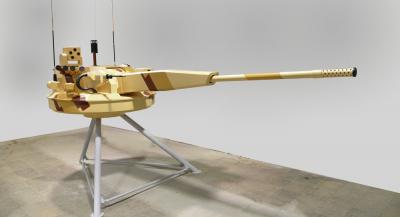
Russia Signs Arms Deal With UAE to Supply AU-220M Automatic Turret Module © Photo: Uralvagonzavod Press Service


The new turret will be integrated with a new Emirati armored fighting vehicle, as Russia continues finding new partners for defense cooperation.

Russia will integrate the AU-220M, a 5-mm automatic turret with an armored vehicle built by the United Arab Emirates, following a memorandum signed by Russia's Rosoboronexportprom and UAE's Emirates Defense Technology (EDT) during the IDEX-2015 defense expo in Abu Dhabi.

The AU-220M module is designed for armored vehicles, both new and undergoing modernization. The naval version of the module is capable of hitting targets on land, air and sea, with a horizontal range of 12 kilometer and a vertical range of 8 kilometers.

The module will be integrated with an 8x8 platform produced by EDT, presumably the Enigma Armored Modular Fighting Vehicle (AMFV).

The AU-220M is manufactured by the Burevestnik Central Research Institute, part of the Uralvagonzavod corporation.


Read more: http://sputniknews.com/russia/20150225/101...l#ixzz3SlN87XZO


Attached thumbnail(s)
Attached Image
BorneoAlliance
post Feb 25 2015, 09:53 PM

New Member
*
Newbie
0 posts

Joined: Dec 2014

WATCH: Iranian cruise missiles blow up life-size replica of American aircraft carrier


Iran fired hundreds of missiles in a military drill on Wednesday, including two ballistic missiles which blew up an Iranian-built, life-size replica of a US aircraft carrier in the Strait of Hormuz, Iranian and Arab media outlets reported.

The model of the aircraft carrier was completely destroyed by the missiles, according to the reports.

Senior Iranian officials attended the exercise, including Parliament Speaker Ali Larijani and Revolutionary Guards commander, Gen. Ali Jafari.

An Iranian military helicopter fired two cruise missiles at the model of the US carrier in the course of the drill.

The commander of Iran's Navy had said last April that Iran had built "a life-size replica of an American aircraft carrier, 202 meters long, in order to destroy it during military maneuvers."

He added that "the Americans, and the entire world, know that the American Navy is one of our targets, and it will take us 50 seconds to destroy every US warship."

During the military exercise, titled, "The Great Prophet," the Iranian military booby-trapped the Strait of Hormuz and fired surface-to-surface Fateh-110 missiles some 300 km.

According to the reports, the Iranians also fired surface-to-sea missiles that can travel some 5 kilometers and evade radar detection.

http://www.jpost.com/Middle-East/WATCH-Ira...-carrier-392156


Attached thumbnail(s)
Attached Image
BorneoAlliance
post Feb 25 2015, 11:08 PM

New Member
*
Newbie
0 posts

Joined: Dec 2014

India Considering Russian Shipyard for Construction of Advanced Warship © Sputnik/ Igor Zarembo

MOSCOW (Sputnik) — India is considering whether to place an order for four more warships with Russia's Yantar shipyard that has already built six frigates for the Indian Navy, the shipyard's acting chief executive told RIA Novosti on Wednesday.

"We will explore the possibility of new orders to build [vessels] for the Indian fleet. In any case, India has already said it is interested in acquiring four more advanced modified ships," Oleg Shumakov, acting CEO of Yantar shipyard, located in Russia's Kaliningrad exclave on the Baltic Sea, said.

Representatives of the shipyard are expected to discuss the question of future contracts during talks in India later in February, Shumakov added.

He described the shipyard's experience in building Talwar-class frigates for the Indian Navy as "fruitful and mutually beneficial."

In July 2014, the shipbuilding firm delivered the last of the three guided missile frigates to India, in accordance with a $1.6-billion contract signed in 2006. Each frigate was armed with eight BrahMos supersonic cruise missiles, jointly developed by Russia and India.


Read more: http://sputniknews.com/business/20150225/1...l#ixzz3SllayUlA


Attached thumbnail(s)
Attached Image
BorneoAlliance
post Feb 26 2015, 07:30 AM

New Member
*
Newbie
0 posts

Joined: Dec 2014

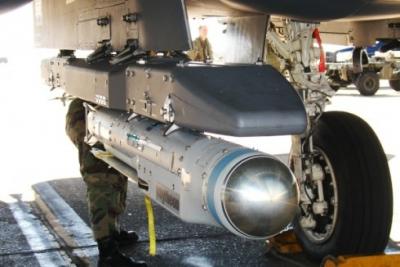
Small Diameter Bomb II Completes Live Fire Test Destroying T-72 Tank
by KRIS OSBORN on FEBRUARY 25, 2015


SDB IIAir Force F-15 Eagle recently destroyed a moving –model T-72 tank during a live-fire test of the Small Diameter Bomb II at White Sands Missile Range, N.M., service leaders said.

“Just this month we had a successful live fire mission. It was an F-15E that targeted a moving T-72 tank surrogate. We’re still analyzing the data to get the details of it but the visual indicated it was a direct hit,” Lt. Gen. Ellen Pawlikowski, military deputy for Air Force acquisition, told Military​.com in an interview.

The test earlier this month was the final live fire mission required for the developmental weapons program to move toward what’s called a “Milestone C” full rate production decision, she added.

Pentagon acquisition chief Frank Kendall is expected to approve full-rate production of the weapon by May of this year — a move which would clear the path for large-scale manufacturing and delivery of the Small Diameter Bomb II, or SDB II, later this year.

Ultimately, the Air Force plans to acquire 12,000 SDB II weapons — which will enter service by 2017, service officials said.

“This was the graduation exercise. This is what the warfighter is going to drop on the bad guys. It is the end to end test. The warhead performed as expected and we ended up putting steel on target which is what the goal is,” Jeff White, senior manager, business development, Raytheon, told Military​.com.

White explained that the model tank was moving at tactically relevant battle speeds when it was destroyed by the SDB II during the live-fire test.

“Just because you hit a target that does not mean you achieved the right kill metrics. That is what the Air Force is doing right now, analyzing the target to make sure the target destruction was at the right level for the test,” White added.

Depending upon the test outcome, there can be catastrophic kill tests or mobility kills designed only to stop a target from moving, he explained.

“Each test has its own metrics,” White said.

The SDB II is a new air-dropped bomb that can pinpoint targets from long distances, destroy stationary or moving targets and change course in flight using a two-way data link, Raytheon and Air Force officials said.

The Small Diameter Bomb II represents a technological departure from previously fielded precision-guided air-dropped weapons because of its ability to track and hit moving targets from long distances.

Most of the testing of the SBD II thus far has been on an Air Force F-15 Eagle fighter jet, however the weapon has also been fitted and tested on the F-35 Joint Strike Fighter. Engineers are also working on plans to integrate the bomb onto the F/A-18E/F Super Hornet and F-16 as well, Raytheon officials said.

GPS and laser-guided weapons such as Joint Direct Attack Munitions have been around for decades, however, they have primarily been designed for use against fixed or stationary targets.

A key part of the SDB II is a technology called a “tri-mode” seeker — a guidance system which can direct the weapon using millimeter wave radar, uncooled imaging infrared guidance and semi-active laser technology.

“The really transformational thing about this product is the fact that our seeker, our tri-mode seeker, allows us to prosecute both those moving and stationary targets from standoff distances to exceed 40 nautical miles both on land and at sea,” Mike Jarrett, vice president, air warfare systems, Raytheon, said last summer at the Farnborough Air Show, London.

A tri-mode seeker provides a range of guidance and targeting options typically not used together in one system. Millimeter wave radar gives the weapon an ability to navigate through adverse weather, conditions in which other guidance systems might encounter problems reaching or pinpointing targets.

Imaging infrared guidance allows the weapon to track and hone in on heat signatures such as the temperature of an enemy vehicle. With semi-active laser technology, the weapon can be guided to an exact point using a laser designator or laser illuminator coming from the air or the ground.

Also, the SBD II brings a new ability to track targets in flight through use of a two-way Link 16 and UHF data link, Raytheon officials said.

“The millimeter wave radar turns on first. Then the data link gives it a cue and tells the seeker where to open up and look. Then it turns on its IR (infrared) which uses heat seeking technology,” White said.

The SBD II is engineered to weigh only 208 pounds, a lighter weight than most other air dropped bombs, so that eight of them can fit on the inside of an F-35 Joint Strike Fighter, White explained.

If weapons are kept in an internal weapons bay and not rested on an external weapons pod, then an aircraft can succeed in retaining its stealth properties because the shapes or contours of the weapons will not be visible to enemy radar.

About 105 pound of the SDB II is an explosive warhead which encompasses a “blast-frag” capability and a “plasma-jet” technology designed to pierce enemy armor, White explained.

The SDB II also has the ability to classify targets, meaning it could for example be programmed to hit only tanks in a convoy as opposed to other moving vehicles. The weapon can classify tanks, boats or wheeled targets, White added.

The Pentagon and Raytheon have already invested more than $700 million into SBD II development, Raytheon officials said.

– Kris Osborn can be reached at kris.osborn@military.com


Read more: http://defensetech.org/2015/02/25/small-di.../#ixzz3SnobkX1C
Defense.org

This post has been edited by BorneoAlliance: Feb 26 2015, 07:31 AM


Attached thumbnail(s)
Attached Image
BorneoAlliance
post Feb 26 2015, 07:51 AM

New Member
*
Newbie
0 posts

Joined: Dec 2014

F-35 helmet uses retinal projection to give pilots a “God’s eye view”

In less economically dominant nations than the United States, large purchases of military technology tend to get a lot more attention. In Australia, for instance, a $12 billion purchase of 72 super-advanced F-35 fighter jets has sparked a major political scandal. But an even smaller number has been turning heads recently: $55 million. That’s about how much Australia will have to spend to outfit each of its F-35’s with a helmet, which cost $770,000 each.

This helmet is necessary for the fighter to fly, and incorporates some of the most advanced sensing and display technology in the world. The F-35 helmet is truly a next-generation piece of headgear, offering, as Air Force Gen. Mike Hostage put it, “a God’s-eye-view” of the ground.

The helmet can do this because its function is integrated into the very design of the plane itself. Unlike pretty much every tactical fighter produced in recent memory, the F-35 does not feature a heads-up display (HUD) in the plane itself, but leaves that function entirely to the helmet.

This means that the plane is far more difficult to fly effectively (basically impossible) without the helmet, but it also means that the HUD is visible no matter where the pilot is looking. Twist your neck around to get a view of the jet back, up, and to the left, and you can still see the tactical information you need the most. Spy a target and the helmet can display all its vital statistics, from name to distance, and even suggest the best weapon to use at different distances and speeds.


However, pilots have long had HUDs in one form or another, and they’ve always been able to look up, at least a bit — it’s in looking down that the F-35’s helmet really breaks new ground. The new F-35’s are each fitted with six Distributed Aperture Systems (DAS), which collect information about the ground below and the air around the fighter plane. This data is then digitized both as video and data, with labels and flight paths layered over as necessary.

When a pilot looks down, the helmet mounted display (HMD) lets them see certain information about the ground below. From a target vehicle driving down a highway to a flight path toward a distant airstrip, pilots can now extend their situational awareness further than the physical window of the plane.

F35 2Of course, a visual apparatus this advanced can’t just be snapped on like a common Oculus Rift– each of the helmets has to be custom moulded to the particular pilot thanks to a detailed 3D head scan, and thus cannot be worn by anyone else. Engineers take very precise pupillary measurements so the helmet can be built to keep the display in view no matter how the pilot looks about.

This means that if a pilot retires, they can’t just pass their helmet on to the next recruit; Australians will be on the hook to pay for a replacement. If it were me, that’s where I would start arguing that I should be able to take the helmet home with me when I retire, but knowing the military they’d probably get all uptight about it.

The amount of internal communication in the plane is rather incredible. The helmet is doing dynamic head- and eye-tracking to figure out what it must display, then querying the external sensors on the particular information it needs to display, processing that information to add HUD elements like target indicators and friend-or-foe labels, and displaying that information in real time.

It does seem as though the modern F-35 pilot is gearing up to be something for a cyber-warrior, bridging the gap between the physical air force and the drone brigades. Once “real” pilots have gotten used to seeing most of the surrounding environment as green wire-frames anyway, well, might as well do it within a half-hour’s drive of home.

http://www.geek.com/chips/f-35-helmet-uses...e-view-1616488/


Attached thumbnail(s)
Attached Image Attached Image
BorneoAlliance
post Feb 26 2015, 07:58 AM

New Member
*
Newbie
0 posts

Joined: Dec 2014
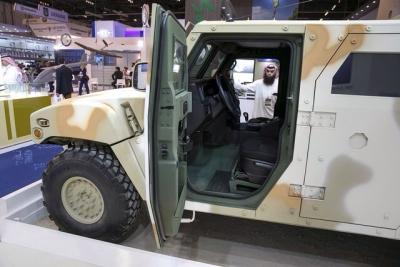
Idex 2015: Kia personnel carrier is too cool for school

Kia's $200,000 armoured personnel carrier, set to go into production next year, on display at Idex. Silvia Razgova

February 25, 2015 Updated: February 25, 2015 08:36 PM

You probably won’t take this eight-seater from Kia on the school run.

The Korean car maker known for affordability and reliability revealed the latest addition to its range – a US$200,000 armoured personnel carrier that is set to go into production next year. Tucked among the stands occupied by the world’s biggest arms makers, Kia was an unlikely exhibitor at the International Defence Exhibition and Conference, which wraps up in the capital today.

But the Middle East market for military vehicles is increasingly in the sights of the $45 billion turnover company, according to its assistant manager Chae Yongki.

“We mainly supply the Korean military but we are now looking at opportunities to support other countries,” he said. Kia sold more than 2.9 million vehicles last year, an increase of almost 6 per cent on a year earlier.

The company, which is South Korea’s sole military vehicle supplier, already sells to 20 countries, primarily in Asia. It wants to extend that footprint into new markets including the Middle East.

But it faces stiff competition in a crowded marketplace.

Armoured personnel carriers used by armies from around the world were on wide display at the defence industry gathering.

business@thenational.ae

http://www.thenational.ae/business/technol...cool-for-school


Attached thumbnail(s)
Attached Image
BorneoAlliance
post Feb 26 2015, 09:00 AM

New Member
*
Newbie
0 posts

Joined: Dec 2014

UAE Armed Forces in Dh4b deals for military equipment

Haseeb Haider / 25 February 2015

British firm Raytheon Systems will provide radars worth Dh11 million.

Abu Dhabi — The UAE Armed Forces have signed seven agreements worth Dh3.955 billion to procure helicopters, radars and rifles with local and foreign defence companies.

At a media briefing on Tuesday, spokesman for the UAE GHQs Major General Dr Obaid Al Ketbi said that a Tawazun Holding Company’s unit M/s Dynamics will supply “ultra precision” guided bombs — Al Tariq.

Al Tariq is a family of strap-on bomb kit systems, custom made for Mk81, Mk82 and Mk83 bombs, expertly utilising GPS/INS guidance, increased targeting accuracy by utilising Semi Active Laser or Imaging Infrared seekers, according to the website of the Abu Dhabi based company Tawazun Dynamics. Al Tariq provides users with all weather, day/night operational capabilities. The UAE Armed Forces signed a deal with Italy’s Augusta Westland to procure nine helicopters type 139 valuing Dh732 million.

UAE Armed Forces in Dh4b deals for military equipment

Maj-Gen Al Ketbi said out of nine helicopters, six would be used for search and rescue operations and remaining three would be used for VIPs flights. A Tawazun Holding company Caracal, which manufactures guns and pistols, has won a contract to supply 80,000 CAR-816 rifles in a deal valuing Dh763 million.

Switzerland’s Rheinmentall Air Defence has got a deal to supply technical support and spares for the Sky Guard cannon systems amounting to Dh34 million.

French firm Thales Communications and Security will supply technical support, maintenance of the sign systems in a deal valuing Dh21 million. The UAE Armed Forces awarded a deal to Emirates Advanced Research and Technology Holding (EARTH) for the development of Oshkosh military vehicles (M-ATV), boost technical support and improve maintenance through provision of spare parts and services. The contract is valued at Dh864 million.

British firm Raytheon Systems will provide radars worth Dh11 million.

Speaking about the local defence manufacturing industry’s recent strides, Maj-Gen Al Ketbi said that no doubt they have made a mark by producing world class weapon systems and hardware.

He said that the government is encouraging them and that’s the reason they are getting extremely good response from the foreign buyers, who have shown great interest in their products and services. However, he avoided to answer a question regarding any deals they have got, saying it’s a confidential matter between the buyer and the supplier.

http://www.khaleejtimes.com/biz/inside.asp...ion=uaebusiness


Attached thumbnail(s)
Attached Image
BorneoAlliance
post Feb 26 2015, 11:14 AM

New Member
*
Newbie
0 posts

Joined: Dec 2014
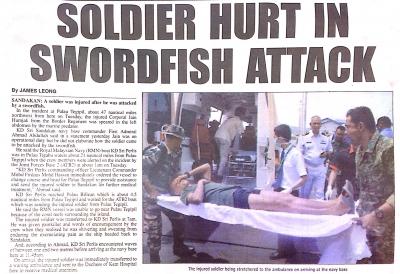
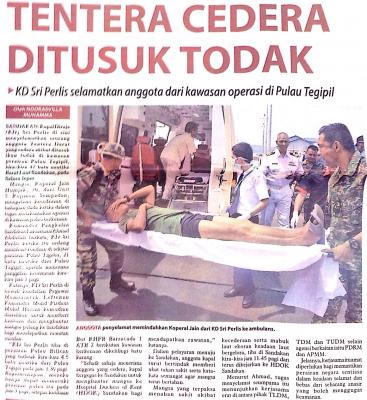
Malaysian Soldier hurt in swordfish attack


Attached thumbnail(s)
Attached Image Attached Image
BorneoAlliance
post Feb 26 2015, 11:18 AM

New Member
*
Newbie
0 posts

Joined: Dec 2014
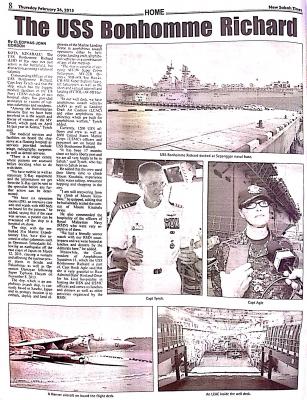
The USS Bonhomme Richard LHD6


Attached thumbnail(s)
Attached Image
BorneoAlliance
post Feb 26 2015, 05:18 PM

New Member
*
Newbie
0 posts

Joined: Dec 2014
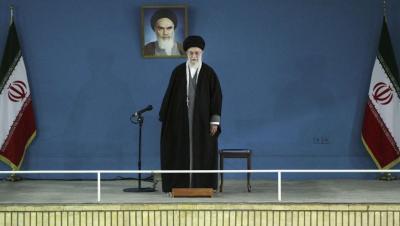
How Israel’s military stopped Netanyahu attacking Iran


A release of top-secret documents indicates that Israel’s prime minister, Benjamin Netanyahu, has exaggerated – and possibly lied – with his repeated claims that Iran is on the brink of a nuclear bomb.

In September 2012, Netanyahu, armed with a cartoon, put it very bluntly at the UN General Assembly:

By next spring, at most by next summer at current enrichment rates, [Iran] will have finished the medium enrichment and move on to the final stage. From there, it’s only a few months, possibly a few weeks before they get enough enriched uranium for the first bomb.
However, as Netanyahu spoke, his military and intelligence services were assessing that Tehran was not enriching uranium to a level beyond that needed for a civil programme. They conclude: “Iran at this stage is not performing the activity necessary to produce weapons.”

With the prime minister trying to block a nuclear agreement between Iran and the 5+1 powers (US, Britain, France, Germany, China, and Russia), the timing of the leak is significant. But it’s only part of a bigger story.

In autumn 2012, the Israeli military and intelligence community were holding Netanyahu back from air strikes on Iran that could have sparked a regional war.

The final reckoning

As early as 2010, Netanyahu and the then defence minister of Israel, Ehud Barak, issued orders for the military to be on notice to attack Iran within a few hours. The military’s chief of staff, Lieutenant-General Gabi Ashkenazi, and the head of Mossad, Meir Dagan, both objected.

According to a report by Irael’s Channel Two, Ashkenazi said air strikes would be “a strategic mistake” because of the risk of war, while Dagan said they were “illegal” and called for a decision by the full cabinet decision.

Rather than press a confrontation, Netanyahu withdrew the orders. But he remained defiant: “In the final reckoning, the responsibility lies with the prime minister and as long as I am prime minister, Iran will not have the atomic bomb.”

In the summer of 2012, Netanyahu and Barak then tried once again to lay the foundations for an attack. Despite ongoing nuclear talks between Iran and the 5+1 powers, Tehran was increasing its stock of centrifuges and 20% enriched uranium. The amount was still short of that for further enrichment yielding even one warhead; however, Netanyahu declared that a “red line” had been crossed. Barak reportedly told his US counterpart Leon Panetta that: “If you take military action, we will greatly appreciate it and give you full credit. However, if you fail to act, we will take action.”


Thinking big. EPA/Gali Tibbon
Israel’s top military and intelligence staff faced a key decision: accept the air strikes or stand up to the prime minister. Unanimously – from the chief of staff, Benny Gantz, to the air force and army commanders to the head of Mossad – they chose to oppose action.

Barak held a series of meetings with the commanders, but they held firm in their warnings of the consequence of a regional war, even if the initial attack on Iran was successful. Frustrated, the defence minister said the generals had been frightened because of Israel’s far-from-successful conflict with Hezbollah in Lebanon in 2006.

The military and intelligence staff had checked Netanyahu’s initial push – but, with the prime minister preparing to go to the UN, they still had to hold the line.

Fortunately, the Obama administration was on their side.

Enter The Americans

Weeks after Barack Obama became US president in 2009, General Ashkenazi, went to Washington with the message that Israel considered air strikes on Iran’s nuclear facilities a “serious option”.

The response of US diplomatic and military officials was direct: we are seeking a political resolution to the challenge of Iran’s nuclear program. Do not attack.

So, while Netanyahu’s hostility to Obama simmered and was put on display through leaks from the prime minister’s office, the Israeli military and intelligence community were reinforcing the channel with their US colleagues, sharing information not only on Tehran’s latest manoeuvres but of those of their commanders-in-chief.

In summer 2012, that channel was used for a message to Washington: we need help with Netanyahu.

Obama dispatched the vice-chairman of the US Joint Chiefs of Staff, Admiral James A Winnefeld, to Israel. Officially, Winnefield was sent to “discuss the countries' continued military co-operation”. Officially, Winnefield would “discuss the countries' continued military cooperation”. Behind the scenes, he was bolstering the objections to the Iran attack.

And beyond the discreet US-Israeli co-operation, Tehran was also playing its part in blocking Netanyahu. In summer 2012, it began conversion of much of its 20% uranium into oxide powder, which cannot be further enriched to the 90% level needed for a bomb. Doing so, Iran ensured that its 20% stock remained below 210kg – the amount needed for potential enhancement to one nuclear weapon.

This change in Iran’s strategy – maintained to this day, with more than half of its 20%-enriched uranium converted into oxide powder and some into fuel plates – underpinned the Israeli intelligence assessment that has now been leaked. It undercut any basis for Netanyahu’s claim of an imminent “existential threat” requiring air strikes, even as he so confidently brandished his cartoon in New York.

Not backing down

So Netanyahu was blocked from beginning military action. But he never concedes defeat – and, sure enough, on March 3 2015, he will address the US Congress in the hope of disrupting Iran’s negotiations with the 5+1 powers and prevent a deal from being made by the July 1 deadline.

The irony is that Netanyahu will continue to have more support from many in Congress than from his own officials. His trip to Washington has been criticised by many in Israel as electioneering, coming as it does just ahead of polls for the Knesset on March 17. And Mossad seems to be briefing against Netanyahu still: in February 2015, representatives of Mossad reportedly warned “US senior officials” against any attempt to collapse the nuclear negotiations, for example, through new US sanctions on Tehran.

That claim may have been enhanced for the press by an Obama administration that wants to prevent any spoilage of the negotiations by Netanyahu. Still, this week’s leaked documents highlight the challenge Netanyahu faces: if the discussions with Iran do finally collapse, he will still have to overcome his own military to take the action he wants.

http://theconversation.com/how-israels-mil...king-iran-38009


Attached thumbnail(s)

Attached Image
BorneoAlliance
post Feb 26 2015, 07:19 PM

New Member
*
Newbie
0 posts

Joined: Dec 2014

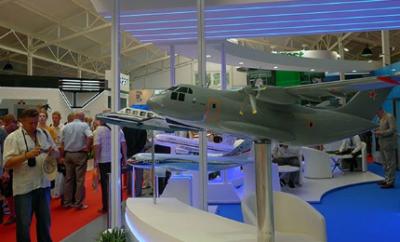
Il-112V Light Military Transport Aircraft, Russia

Il-112V is a twin-engine light military transport aircraft being developed by JSC Ilyushin Aviation Complex, a part of JSC United Aircraft Corporation (UAC), for the Ministry of Defence of the Russian Federation. It is set to replace the An-26 and An-72/74 twin-engine transport aircraft.

The Il-112V aircraft can be used for the transportation and airdropping of military personnel, light weapons and equipment, vehicles, and a variety of cargo. Il-112T, the civilian transport version of Il-112V, is designed for commercial cargo transportation services.

Two Il-112V prototypes, including one for static and fatigue tests and the other for flight tests, will be built initially. Construction and maiden flight of the prototypes is scheduled for completion in 2016. The first production aircraft is expected to be delivered in 2018.

A model aircraft of the Il-112V was exhibited at the Aero India 2015 air show held in Bangalore in February 2015.
Il-112V airlifter development

JSC Ilyushin Aviation Complex was selected to develop the airlifter in May 2003, but the manufacturing of the first prototype was halted due to design flaws in 2011.

The Russian Ministry of Defence unveiled plans to award a RUB7.9bn ($240m) contract for the development of the Il-112V in December 2013. The development was resumed in December 2014 when Ilyushin concluded a contract with the Russian Defence Ministry to carry out engineering and development work of the Il-112V.

A state contract for the supply of Il-112V production aircraft is expected to be signed in 2015.

The development and production of Il-112V will involve participation of 30 Russian enterprises and more than 50 aircraft component suppliers.

The aircraft will be manufactured by JSC Voronezh Aircraft Manufacturing Company (VASO), while JSC Klimov will supply the engine.

Aviastar-SP will provide fuselage panels and other airframe components, while Russian aircraft equipment supplier JSC Aviaagregat will develop a new retractable tricycle landing gear for the airlifter.

Design and features of Il-112V transport aircraft

The Il-112V light military transport aircraft features classic high-wing monoplane design with constant chord inner wings and tapered outer wings. The circular fuselage is designed to withstand heavy loads.

"The Il-112V aircraft can be used for the transportation and airdropping of military personnel, light weapons and equipment, vehicles, and a variety of cargo."

A T-tail configuration, which consists of a vertical stabiliser and a rudder, attaches the fuselage. The retractable tricycle landing gear will include a nose wheel unit and two main wheel units.

The aircraft can be operated from short / unpaved runways and can be automatically land on ICAO category II aerodromes. It can be manually land on poorly equipped aerodromes, or aerodromes without radio technical equipment.

A crew of two personnel can operate the airlifter. It has a maximum take-off weight of up to 20t, and payload capacity of 6t. The cargo cabin is attached with a loading ramp for loading and unloading of cargo, while the cabin is 11.2m long, 2.45m wide, and up to 2.4m high.

The aircraft is designed to carry out both transport and airlift missions under any geographic, climatic, and adverse weather conditions, during day and night.

Cockpit and avionics

A glass cockpit features on the light military transport aircraft, as does an advanced digital avionics suite incorporating navigation equipment, communications, flight displays and monitoring systems.
Engine and performance of Il-112V

The Il-112V will be powered by two Klimov TV7-117S / TV7-117SE modular turboprop engines, which generate a maximum take-off power of 2,800hp each. The engine is 2.14m long and 0.94m in diameter, and weighs 450kg, while the propulsion system consists of two six-bladed propellers.

Speeds ranging between 550km/h and 580km/h can be attained by the airlifter. It will have a maximum operational range of 6,000km flying at an altitude of 8,100m.

http://www.airforce-technology.com/project...sport-aircraft/


Attached thumbnail(s)
Attached Image
BorneoAlliance
post Feb 26 2015, 11:07 PM

New Member
*
Newbie
0 posts

Joined: Dec 2014
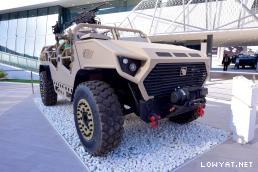
EDIC's NIMR Automotive unveils new Special Operations Vehicle (AJBAN SOV)

Abu Dhabi, February 26 2015: NIMR Automotive LLC, a light-medium weight military vehicle manufacturer based in Abu Dhabi, UAE and part of the Emirates Defence Industries Company (EDIC), an integrated national defence and services manufacturing platform, has increased its range of specialised vehicles with the launch of a new special operations prototype.

NIMR's first prototype special operations vehicle has undergone extensive evaluation trials in arid desert conditions over some of the harshest terrain in the region. Having been unveiled at IDEX 2015, there has been significant interest in the vehicle, particularly from the Middle East where the high mobility in desert conditions is most valuable. The series production version is due for completion before the end of the year and it to be manufactured in NIMR's facility in Abu Dhabi, UAE.

The new light special operations vehicle, launched at IDEX as part of their 2015 Line-up, is an open top 4x4 reconnaissance vehicle for 4 crew with an optional 5th seat. Designed for special operations, the platform provides excellent 360degree situational awareness and self-defence from a high-mounted gun ring and gun mounts at all crew positions. It can optionally be fitted with ballistic and blast protection.

NIMR CEO Dr Fahad Saif Harhara stated "We are extremely excited by the new vehicle variant to supplement the NIMR line-up. This accelerated development programme, resulting in the first
Vehicle ready for trialling within a 3month period, is testament to NIMR's engineering expertise and rapid prototyping capability. We anticipate that the final productionised version, to be built in the UAE, will attract significant number of orders from within the GCC region and beyond."

Designed for long range special operations missions, the large payload and fuel tank capacity allows for lengthy autonomous missions. Built on the latest proven NIMR 4x4 chassis the SOV is light and powerful, capable of accessing all terrains, due to the full independent suspension, and is fully air-transportable. This vehicle incorporates state-of-the-art communication systems and upgraded military specification power management system and can be fitted with a multitude of user specified equipment.

About NIMR

NIMR, a subsidiary of the Emirates Defence Industry Company (EDIC) delivers highly capable wheeled military vehicles that are designed for the harshest environments, across a diverse scope of mission requirements. NIMR's range of desert-proven 4x4 and 6x6 vehicles are available in armoured or non-armoured configurations, with modular configurable crew capacity and payload, where protection and mobility is the focus of our design activities.

Through engineering innovation, comprehensive testing and implementation of the highest standards in design and manufacturing NIMR provides exceptional vehicle reliability and best-in-class desert performance to ensure the protection of the vehicle crews that use them.

About Emirates Defence Industries Company (EDIC)
EDIC is the region's premier integrated national defence services and manufacturing platform, providing world-class facilities, technology and support services. Based in the UAE, the company brings together the combined capabilities of the UAE's defence industries into a single integrated platform to enhance value for our clients, shareholders, partners and other stakeholders.

Press contacts:
NIMR Media Relations Manager
Oliver Cribben-Pearse
Phone: +971 (0)2 492 7538
Mobile: +971 (0) 56 420 9502
opearse@nimr.ae

http://www.zawya.com/story/AD_NIMR_Automot...20150226085353/

This post has been edited by BorneoAlliance: Feb 26 2015, 11:08 PM


Attached image(s)
Attached Image
BorneoAlliance
post Feb 26 2015, 11:12 PM

New Member
*
Newbie
0 posts

Joined: Dec 2014
$5bn deals signed at Abu Dhabi Idex

Deals worth Dh18.328 billion ($5 billion) were signed at the International Defence Exhibition and Conference (Idex 2015), which concluded in Abu Dhabi, UAE, today.

There were 33 contracts signed during the event, which also included the third Naval Defence & Maritime Security Exhibition (Navdex) as well as the first edition of the Unmanned Systems Exhibition (Umex).

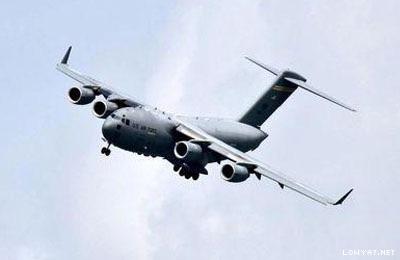
One of the major contracts signed today was by the UAE Armed Forces for the purchase of two C-17 aircraft from The Boeing Company, to enhance its existing fleet. The value of the deal is Dh2.273 billion.

The 12th edition of Idex received an overwhelming and positive response from exhibitions, visitors and partners with almost 50 per cent of indoor and outdoor exhibition space sold out for 2017, said a statement.

Idex this year saw more than 100,000 visitors and 159 delegates participating in the event and the conferences. The number of exhibitors soared to 1,200 international and local companies participating companies from 56 countries.

Filling 133,000 sq m at the Abu Dhabi National Exhibition Centre (Adnec), Idex, Navdex and Umex provided a platform to showcase emerging technology, equipment, trends and strategy.

Staff Major General Obaid Al Ketbi, chairman, Idex organising committee, said: “We have made significant progress with this edition of Idex, Navdex and Umex. Our promise with every edition is to bring the latest innovations and technologies in the defence space to the forefront for our stakeholders, partners and industry professionals."

Today’s other major deals Included:

• The UAE Armed Forces entered a deal with Abu Dhabi-based International Golden Group (IGG) to purchase various ammunition and defence solutions. The value of the deal is Dh67 million.

• The UAE Armed Forces will raise the capabilities and standards of naval vessels, through a deal with Etihad Ship Building, a local UAE company, to provide technical support. The value of the deal Dh19 million. - TradeArabia News Service

http://tradearabia.com/touch/article/IND/276402


Attached image(s)
Attached Image
BorneoAlliance
post Feb 26 2015, 11:32 PM

New Member
*
Newbie
0 posts

Joined: Dec 2014
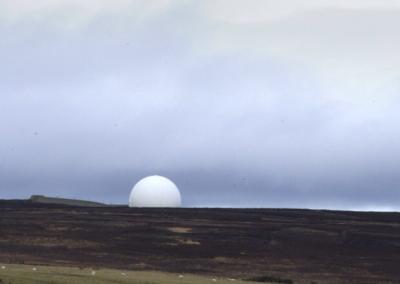
Celebrating 80 years of radar


Today marks the 80th anniversary of the first use of radar to detect an aircraft, an event which has particular significance in north Northumberland.

Work that started in a muddy field on a cold February day eight decades ago is continued today in the role played by RAF Boulmer.

That radar system built in the late 1930s has constantly evolved over the years as technology has made huge advances.

Today, the RAF maintains radar coverage of the UK through its Air Surveillance and Control System (ASACS) Force and military and civilian radars including the Lockheed Martin TPS77 radar at Remote Radar Head Brizlee Wood, just outside Alnwick.

Proud of its heritage, the ASACS Force still stands guard over the skies of the United Kingdom, 24 hours a day, seven days a week and 365 days a year, ready to react to any unknown aircraft approaching our shores.

It was at the centre of a drama in the skies above the English Channel last month as Typhoon fighters were scrambled to intercept two Russian bombers.

And last week, British fighter jets were almost certainly scrambled by RAF Boulmer to intercept Russian bombers off the coast of Cornwall.

Without the key contribution of radio direction finding (RDF), which later became known as radar (radio detection and ranging), there might have been a very different outcome to the Second World War.


In 1935, the UK was recovering from the Great Depression of the early 1930s, but government spending was still tightly controlled. War was coming and, as aircraft technology improved and the Germans swiftly increased the size of their air force, the UK appeared to be vulnerable to air attack.

The equation facing the Royal Air Force was relatively simple: Bomber speed was expected to double by the time war broke out, but the distance of targets in Britain from the coast remained the same, which meant that the RAF, without the strength to mount standing patrols over the entire country, needed twice as much warning of the arrival of enemy aircraft in order to defend against them.

Some new technology was needed to give the RAF the edge in order to prevail in the coming air battle.

The Air Ministry set up a committee, chaired by Sir Henry Tizard, to examine scientific advances to help air defence. One line of inquiry was to use radio waves to make a ‘death ray’ to attack enemy aircrew or equipment.


Robert Watson-Watt, head of the government’s Radio Research Laboratory, was asked what he thought of the possibility of such a weapon. Applying what was known about radio waves and heat transfer, he and his primary assistant Arnold Wilkins, wrote a note stating that, with current technology, a ‘death ray’ was impossible. However, they said, radio waves could probably be used to detect aircraft. This seemed to be the edge that the committee was seeking, but first the RAF wanted to see a practical demonstration.

The demonstration was a typically British affair. Lacking their own radio transmitter, Watson-Watt and Wilkins decided to use the BBC’s radio transmitter at Daventry, Northamptonshire.

Wilkins arrived with a Morris van in a field near Litchborough, about five miles away from Daventry, on the evening of February 25, 1935. He needed to set up some equipment for the following day, but the lights inside the van failed, forcing him to fumble around in the dark as he tried to connect delicate electrical equipment.

When he finally finished a few hours later, he found that the Morris had sunk into the mud in the field, which had frozen solid and the van was stuck.

Watson-Watt arrived the following morning with the Secretary of the Air Ministry Committee, Albert Rowe.


A RAF Heyford bomber had been tasked to fly over the demonstration for 20 miles, and to repeat this course between 9.45am and 10.30am. Such was the secrecy that even the RAF crew were not told the reason for their flight.

On the first pass, nothing was seen by the three men crouched in the back of the van, but on the second and third passes signals improved so that on the fourth and final pass the aircraft was tracked for more than four minutes, or about eight miles, using just the radio energy from the Daventry Transmitter reflected by the aircraft.

It was an astounding achievement, given that the idea had only been worked on for a month and the equipment had been cobbled together.

After the success of the demonstration, events moved quickly. A research station was set up. In June, aircraft were being tracked by RDF at 15 miles, by July it was 35 miles and by September 55 miles was possible.

In 1936, the first five of the Chain Home radar stations were opened to detect and track aircraft. By September 3, 1939, the outbreak of war, there were a total of 20 stations providing surveillance over the approaches to the UK from Europe.

From a standing start in February 1935, the RAF and its civilian scientists had provided a radar detection organisation, the Dowding System, that swung the balance of power in the direction of defence.

Later this year the RAF will celebrate the 75th anniversary of the Battle of Britain when the RAF fought desperately in the skies over the United Kingdom to defeat the German Luftwaffe in the summer of 1940.

A large part of that victory was due to the new invention which provided vital early warning of German air raids to the RAF air battle managers, then known as Fighter Controllers, who were able to scramble the Spitfires and Hurricanes of RAF Fighter Command.

http://www.northumberlandgazette.co.uk/new...radar-1-7127420


Attached thumbnail(s)
Attached Image
BorneoAlliance
post Feb 27 2015, 07:48 AM

New Member
*
Newbie
0 posts

Joined: Dec 2014
Chinese Naval Fleet Now Outnumbers US Combat Vessels © Flickr/ US Navy Page

China is at the forefront of building submarines and now has more than the United States, says a Navy admiral testifying before a congressional committee that is discussing future funding for US defense projects.
Vice Admiral Joseph Mulloy told legislators on Thursday that not only is China building “some fairly amazing submarines” but that the Chinese are carrying out more deployments and expanding their area of operations as part of an rapid military buildup.

“We know they are out experimenting and looking at operating, and clearly want to be in this world of advanced submarines,” Mulloy told committee members, according to Reuters.

US military officials are in the middle of a major push to stay ahead of the Chinese, said Mulloy, adding that while the Chinese submarines are inferior in quality compared to those from the US, there are more Chinese nuclear and diesel vessels than what the US has, even though the US has the world’s largest defense budget.

The US Navy has 71 commissioned submarines, while the Chinese have 77 principal surface combatant ships, 61 submarines, 55 large and medium amphibious ships, and about 85 missile-equipped smaller combatant ships.


Read more: http://sputniknews.com/us/20150226/1018809...l#ixzz3StjM9yoK


Attached thumbnail(s)
Attached Image
BorneoAlliance
post Feb 27 2015, 07:56 AM

New Member
*
Newbie
0 posts

Joined: Dec 2014

US Navy flies new plane over disputed South China Sea

As disputes over South China Sea islands continue, the US Navy has acknowledged flying its most advanced scout aircraft over the area, from a base in the Philippines, during the first three weeks of February.

Older P-3 Orion reconnaissance aircraft have flown from Philippine bases since 2012 under a bilateral agreement, according to Philippine Armed Forces spokesman Col. Restituto Padilla. This is the first time, however, that the newer P-8 Poseidon model was deployed.

Developed from the Boeing 737 civilian airliner, the P-8 entered service in November 2013. It is intended to eventually replace the P-3, in service since 1962, and is equipped with the latest sensors and electronics in the US Navy arsenal. The P-8 can even “pack a serious punch,” according to aviation analyst Tyler Rogoway.


The admission comes at a time of renewed tensions over the Spratly Islands, an archipelago of islands and reefs in the South China Sea claimed by China, Malaysia, Brunei, the Philippines, and Vietnam.

Beijing has rejected requests from Washington to halt construction on several of the islands. Chinese Defense Ministry spokesman Col. Yang Yujun told reporters in January that the construction is “legitimate and conducted in accordance with law.”

Earlier this week, the Philippine government announced it would not renew the work visas of 16 Chinese experts working at the national electric utility NGCP when they expire in July. China has a 40 percent stake in the NGCP.

Last week, Chinese Foreign Ministry spokeswoman Hua Chunying told reporters that “third countries should say less and stop stirring up trouble.”

Speaking in Tokyo on February 13, following a visit to China, Deputy US Secretary of State Anthony Blinken described the conflict over the islands in terms of energy trade and control of sea lanes.

“The true question at the heart of these conflicts is who controls access to Asia’s abundant energy resources,” Blinken said. “Almost a third of global crude oil and over half of global LNG passes through the South China Sea, making it one of the most important trade routes in the world.”

http://rt.com/usa/235895-navy-plane-china-sea/

This post has been edited by BorneoAlliance: Feb 27 2015, 07:57 AM


Attached thumbnail(s)
Attached Image

13 Pages « < 5 6 7 8 9 > » 
Bump Topic Topic ClosedOptions New Topic
 

Change to:
| Lo-Fi Version
0.0266sec    0.62    7 queries    GZIP Disabled
Time is now: 11th December 2025 - 09:27 AM