

This post has been edited by BorneoAlliance: Feb 23 2015, 07:11 PM
Attached thumbnail(s)
 Military Thread V15, Gong Xi Fa Cai; Huat ah
|
|
 Feb 23 2015, 07:11 PM Feb 23 2015, 07:11 PM
Return to original view | Post
#101
|
 
Newbie
0 posts Joined: Dec 2014 
|
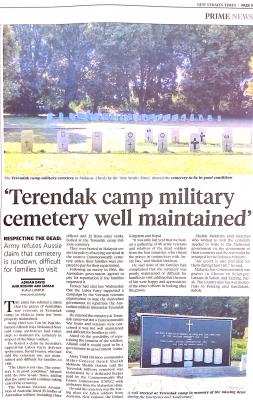
Terendak camp military cemetary well maintained & not rundown as claimed by Australian opposition party
This post has been edited by BorneoAlliance: Feb 23 2015, 07:11 PM Attached thumbnail(s)
|
|
|
Feb 23 2015, 07:44 PM
Return to original view | Post
#102
|
|
Newbie
0 posts Joined: Dec 2014
|
TEN REASONS WHY CHINA WILL HAVE TROUBLE FIGHTING A MODERN WAR The introduction of new weapons and platforms into the People’s Liberation Army (PLA) has captured the attention of much of the world for well over a decade. However, new equipment is only one element of the PLA’s long-term, multi-dimensional modernization process. There is much to be done and no one understands this better than the Chinese themselves. Based on what PLA commanders and staff officers write in their internal newspapers and journals, the force faces a multitude of challenges in order to close the perceived gaps between its capabilities and those of advanced militaries. New weapons, increasing defense budgets, and recently corruption tend to generate headlines in the Western press, but at least 10 other factors raise serious questions about the PLA’s current ability to fight a modern war against an advanced enemy (some of which are discussed in a new RAND report, to which I contributed a collection of sources): 1. Shared Command Responsibility From company level to the PLA’s highest headquarters, commanding officers share responsibility for their units’ actions with political officers who are responsible for “political work,” which involves insuring the PLA’s loyalty to the party through ideological training, officer promotions, the prosecution of the “three warfares” of psychological, media, and legal war, and maintaining morale and discipline. In the eyes of Western military officers, this situation violates the principle of war of “unity of command,” in which “all force operate under a single commander.” A major training trend over the past decade has been to improve political officers’ tactical proficiencies in the military tasks their units must conduct. In theory, commanders alone are authorized to make immediate tactical and operational decisions when necessary. However, at times there may be friction between commanders and their political counterparts. That situation may be exacerbated if corruption has permeated down to operational unit commanders and political officers. This shared responsibility system may suffice in peacetime situations, but it has not been tested under the stress of fast-moving, modern combat operations. 2. Army-Dominated Chain of Command and Force Structure Despite Beijing’s declaration that “China is a major maritime as well as land country,” the PLA’s force structure and leadership continue to be dominated by the Army. Based on numbers provided by the Chinese government, the Army (including the independent branch of the Second Artillery, the PLA’s nuclear and conventional missile force) comprises over 72 percent of the 2.3 million active duty force, with about 10 percent in the Navy and 17 percent in the Air Force. In mid-2014, China’s Army had 24 full generals (who wear three stars), the Navy had three full admirals, and the Air Force five. Currently, in the Central Military Commission (the highest military command and policy organization), the Army occupies six of the 10 seats for senior military leaders, while the Air Force has two, and the Navy and Second Artillery one each. These numbers may vary slightly over time, but the vast majority of the PLA’s senior leadership still wears green. Only Army officers have commanded the PLA’s seven military regions. Though China recognizes threats from the maritime direction have increased and its future campaigns will most likely have major naval or aerospace components, it has yet to modify its command structure to prepare for these realities. Changes to the PLA’s size, structure, and joint operations command system were announced in November 2013, but the details have yet to be revealed. Whatever changes are proposed, it is likely they will take several years to implement and trouble-shoot, likely causing disruptions and discontent along the way for those people and organizations who lose power and authority in these bureaucratic struggles. 3. Too Many Non-Combatant Headquarters Of the approximately 1.6 million personnel in the Army, 850,000 are assigned to the 18 group armies and a number of independent combat divisions and brigades, which comprise the Army’s main combat force. This means that roughly 750,000 Army personnel are found in local force units (mainly static border defense units), logistics units, schools and training bases, and an extensive system of provincial military district, military subdistrict, and county-level people’s armed forces department headquarters. These local headquarters are under the dual leadership of the PLA and the local civilian governments at the same level and oversee reserve and militia units and are responsible for conscription/enlistment, demobilization, and wartime mobilization. They were created decades ago when China’s transportation and communication infrastructure was underdeveloped and it was necessary to have military representatives physically present at every level of local governments. Currently tens of thousands of field grade officers are assigned to these headquarters. Because of improvements in China’s transportation and communication systems it may no longer be necessary for so many non-combatants to be stationed throughout the country. A significant reorganization and decrease in these local headquarters could help reduce the size of the PLA and, perhaps just as importantly, reduce the number of mid-level and lower-level officers tempted by opportunities for graft and corruption. Such a reorganization would likely face opposition from those who would lose their relatively cushy rear area jobs in the process. 4. Inexperienced Commanders and Staff As the PLA has stressed the need to improve its capabilities in combined arms and joint operations, a common criticism has been that “some” commanders and staff officers are not adequately prepared for the tasks of integrating multi-service and multi-arms operations. As a result, much training is conducted according to the slogan “A strong army first needs strong generals; before training the troops, first train the officers.” In particular, the PLA currently emphasizes command of joint operations at division and brigade/regiment level compared to most previous joint operations, which were commanded by Army officers at army or military region headquarters. Only in the past two years have Navy and Air Force officers commanded joint exercises. In late 2014, the PLA announced it has decided on a program “for the selection, training, evaluation and appointment of joint operation commanding officers, so as to improve the training of joint operation commanding officers.” However, nurturing qualified commanders and staff officers is a long-term process involving education, training, and experience gained through assignments at different organizational levels. 5. Understaffed Battalion Headquarters As the PLA has experimented with conducting combined arms operations at battalion level over the past decade it has learned that current regulations do not provide for enough personnel at battalion headquarters to adequately command and control supporting units, such as artillery and engineer units, assigned to reinforce infantry or armored battalions. Therefore, units throughout the PLA are attempting to find solutions to the problem by assigning officers or noncommissioned officers (NCOs) to assist the battalion commander in his operational duties. Increasing the size of the staff is necessary before the reinforced, combined arms battalion can become the “basic tactical unit” in the Army capable of executing independent operations as envisioned in many PLA writings. 6. NCO Corps Still Under Development In the late 1990s, the PLA initiated a program to create a professional NCO corps to assist the officer corps in leading troops and performing administrative duties. Over the past decade, NCO selection, education, and training have been emphasized and NCOs replaced officers in many duty positions. Roughly ten years after the start of this program, in 2009 the PLA announced it was adjusting the system by adding an additional senior NCO rank increasing the number of ranks from six to seven. Selected units are currently experimenting with assigning “master chiefs” battalion and brigade headquarters and trying to determine exactly what the duties of senior NCOs should be and how they relate to the officers above them. It is likely that a generation will pass before the PLA NCO corps becomes the “backbone” of the force, as NCOs are considered in other armies. 7. Multiple Generations of Equipment in Units Because of its size, the PLA faces the challenge of units in all services being equipped with multiple generations of weapons and systems. New equipment generally is introduced to units gradually over time so that some subordinate units have advanced equipment while other units have much older gear. For example, nearly half of over 6,500 tanks in Army are Type-59 or their variants (based on the Soviet T-55). This frequently leads to problems in interconnectivity in communications and computer systems. Moreover multiple generations of equipment in one unit complicates training, tactics, and especially supply and repair/maintenance. Units must constantly revise their tactics and methods of operation based on the technology available to them. Though the PLA has the goal of increasing standardization and interoperability among units, the fact of multiple generations of equipment greatly complicates achieving their development goals. 8. Insufficient Realism in Training Continuing the trend of the past 15 years, increasing realism in training is a major objective for the PLA. Chinese military writers frequently criticize “formalism” in training and “training for show” as undermining the value of exercises. Several “professional blue forces” have been created to serve as enemy units in confrontational training exercises in joint- and single-service exercises as well as mock combat between services. A major goal in nearly all training is to expose problems so that they can be overcome in future training. Despite the progress that the PLA has made in these efforts, the PLA leadership is aware of the force’s continuing shortcomings in training. Moreover, increasing realism in training will require additional funds, particularly for fuel and maintenance expenses and for more and better training areas and training simulators. 9. Air-to-Ground Support Still Under Development One of the most important examples of joint operations is air support to ground operations. As new aircraft, precision guided munitions, and means of communications are entering the PLA, the force continues to experiment in how to best conduct air-to-ground attack operations. Units appear still to be testing techniques for frontline ground units to control fixed- and rotary-wing aircraft in attacking enemy units in close proximity to their own positions, a function known as close air support. In 2014, the Air Force conducted its first public demonstration of an armed unmanned aerial vehicle executing a ground attack mission. Naval aviation units and the Air Force are just beginning to conduct joint operations with each other. 10. “The Peace Disease”: Lack of Combat Experience The PLA’s last major campaign against a foreign enemy, the short 1979 war with Vietnam, involved only the Army. The PLA considers the amphibious landing to capture Yijiangshan Island from Kuomintang forces in 1955 as its first and only joint combat experience. Both operations resulted in heavy PLA casualties. PLA writers commonly refer to its lack of recent modern combat experience as the “peace disease.” At present, only a very few of the PLA’s most senior officers have ever been in a combat situation; no NCO or private has ever been in battle. The PLA’s deployments to UN peacekeeping operations, on disaster relief missions, and to the Gulf of Aden in maritime escort activities are useful but do not substitute for combat experience. The PLA extensively studies the wars other countries have fought, but book learning or even its gradually improving training programs cannot compare to the stress of an extended deployment in a combat zone. Nonetheless, the PLA’s combat and deterrence capabilities gradually are increasing because of improvements in its personnel system, more realistic training, updated doctrine, enhanced logistics support, and the introduction of advanced weapons, communications, and computer systems. At the end of 2014, the Ministry of Defense spokesman noted, “After many years of painstaking efforts, the modernization of the Chinese armed forces has made notable achievements. But, of course, in certain areas, we are still lagging behind when compared with the most advanced militaries in the world and more efforts need to be made.” Conclusions Even taking into account the significant improvements in PLA capabilities, senior military leaders consider time and people to be more important for successful military modernization than money and equipment. Accordingly, their time horizon spans to mid-century in a multi-generational process of evolutionary development. Contrary to the assumption prevalent outside of China that PLA leaders are “hawks” urging aggressive or expansionist action, the factors outlined above, among others, could cause senior military leaders to advise caution in the use of force in private consultations with senior Communist Party leaders. Based on their knowledge of PLA capabilities and shortcomings, most senior PLA leaders probably prefer the use of deterrent measures and non-military means to achieve strategic objectives while the PLA continues to build its strength. An example can be seen in the East China Sea where non-military government entities have taken the lead in patrolling in the vicinity of the Diaoyu/Senkaku Islands with the PLA remaining mostly over the horizon. However, if China’s civilian leaders decide to commit the PLA to battle before its modernization is complete, as loyal servants of the Party, the PLA leadership will seek to defeat the enemy quickly and decisively using all units and capabilities available. But it will also prepare for protracted conflict. China’s chances of success will vary according to where and when the battle is fought and who the enemy is. PLA confidence in winning will increase the closer to China it can operate and preferably if it confronts a lower-technology, less skilled enemy not backed by a powerful friend or ally. Author’s note: A draft of this article was undergoing editing when the RAND report, China’s Incomplete Military Transformation, was released on February 11. As acknowledged in their report, I provided the RAND authors a database of Chinese articles I had been gathering for several years to support their effort. They used that information along with countless other sources in their work, but I was not otherwise involved in RAND’s analytical process, which concludes that the PLA suffers from “potentially serious weaknesses” that could limit its ability to fight and win future wars. As seen above, there are many areas of overlap in our analysis. Dennis J. Blasko, Lieutenant Colonel, U.S. Army (Retired), served 23 years as a Military Intelligence Officer and Foreign Area Officer specializing in China. Mr. Blasko served as an Army attaché in Beijing and Hong Kong from 1992-1996; in infantry units in Germany, Italy, and Korea; and in Washington at the Defense Intelligence Agency and Headquarters Department of the Army (Office of Special Operations). Mr. Blasko graduated from the United States Military Academy and Naval Postgraduate School and is the author of the book, The Chinese Army Today: Tradition and Transformation for the 21st Century. http://warontherocks.com/2015/02/ten-reaso...r/?singlepage=1 Attached thumbnail(s) 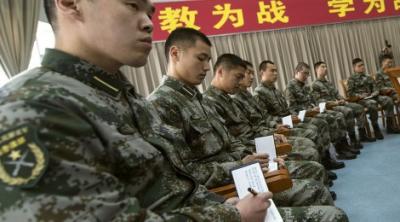
|
|
|
Feb 23 2015, 07:47 PM
Return to original view | Post
#103
|
|
Newbie
0 posts Joined: Dec 2014
|
Shaikh Mohammed, military chiefs and firms’ top brass present at Idex ’15
Haseeb Haider / 23 February 2015 This year’s edition of the Idex features more than 160 international delegations, led by defence ministers and military chiefs and other high-ranking government officials. Abu Dhabi — The International Defence Exhibition, or Idex, started in Abu Dhabi on Sunday, drawing weapon manufacturers and top military officials from across the globe. The show, which displayed some of the world’s most potent weapons and defence systems, was opened by His Highness Shaikh Mohammed bin Rashid Al Maktoum, Vice-President and Prime Minister of the UAE and Ruler of Dubai, and General Shaikh Mohammed bin Zayed Al Nahyan, Crown Prince of Abu Dhabi and Deputy Supreme Commander of the UAE Armed Forces, at the Abu Dhabi National Exhibition Centre. Also present was Sudanese President Omar Al Bashir. This year’s edition of the Idex features more than 160 international delegations, led by defence ministers and military chiefs and other high-ranking government officials. The grand opening ceremony provided a fitting commencement for one of the world’s most important defence exhibitions. The ceremony opened with a performance from the Military Marching Band of the UAE, while the Honour Guard of the Army of Belarus demonstrated a rifle drill. These were followed by a traditional music display from the Military Marching Band of the Republic of Korea. The show continued with a cultural performance celebrating the traditions and culture of the UAE. The second half of the show featured a live enactment of a fictional scenario in which an elite group of friendly forces liberated a port from terrorist control. The enactment featured air drops, low passing jet fly-bys, helicopter and naval support, gun battles and fast-moving pursuits involving tanks and armored cars, culminating in the successful liberation of the port. A fly-by from Al Fursan, the aerobatics demonstration team of the UAE Air Force, drawing the colours of the UAE national flag provided the finale to the show. Exhibitors are showcasing their latest innovations and best technologies to woo buyers from the region. Predator drones, tanks, heavy guns, armored vehicles and other military hardware are attracting military officials. Concurrently, the third edition of Navdex, the maritime security show, along with the first edition of Umex, an unmanned systems technology show, is drawing lot of interest. In 2013, the Idex attracted 1,112 exhibitors and over 80,000 visitors. The UAE Armed Forces had placed an order for weapons and defence systems valued at Dh14.1 billion that year. — haseeb@khaleejtimes.com For more news from Khaleej Times, follow us on Facebook at facebook.com/khaleejtimes, and on Twitter at @khaleejtimes http://www.khaleejtimes.com/kt-article-dis...ion=uaebusiness This post has been edited by BorneoAlliance: Feb 23 2015, 07:49 PM Attached thumbnail(s) 
|
|
|
Feb 23 2015, 08:15 PM
Return to original view | Post
#104
|
|
Newbie
0 posts Joined: Dec 2014
|
Russia's military budget may shrink 10 percent in 2015: Rostec ABU DHABI (Reuters) - Russia's military budget may shrink by around 10 percent in 2015, the chief executive of state-owned defence conglomerate Rostec said on Monday. The country's defence spending will be watched closely this year, mainly in view of events in Ukraine, with Western nations accusing Moscow of providing weapons and soldiers to a separatist revolt in the country's east. Russia denies it has troops in eastern Ukraine. Last month, Finance Minister Anton Siluanov said there should be a 10 percent cut across all sectors of government spending except for defence, which was considered ring-fenced by President Vladimir Putin. However, even favoured "power ministries" are beginning to feel the pressure of Russia's economic crisis and Sergei Chemezov -- a key ally of Putin and among those targeted by Western sanctions over Ukraine -- indicated on Monday that cuts could even impact the military. "It could shrink a bit, within 10 percent, but a decision is not yet made," Chemezov told a news conference on the sidelines of a defence conference in Abu Dhabi, the capital of the United Arab Emirates. Having argued in September that Western-imposed sanctions would not impact Russia's defence industry, Chemezov admitted changes were having to be made in response. "Sanctions have given us a kick to produce our own (equipment)," said Chemezov. "Before sanctions we procured from Ukraine, which has many defence plants and factories. By 2017, we plan to substitute all our imports." In the absence of high oil prices, which have slumped since hitting their peak in June, defence equipment would be a useful source of hard currency for the Russian authorities, and Chemezov said the current strong dollar was beneficial for its arms exports. Russia has an order book worth $40 billion dollars for weapons over the next three to four years, with the biggest buyers coming from India, China, the Middle East and Latin America, Chemezov added. Rostec has stakes in some of Russia's largest industries and partnerships with foreign companies, with interests in weapons, cars and metals. It is expecting to have recorded sales of 1.3 trillion roubles ($20.2 billion) in 2014, up from 1.04 trillion roubles in 2013, Chemezov said, adding results would be released in March. ($1 = 64.2850 roubles) (Writing by David French; Editing by Alison Williams and John Stonestreet) https://uk.news.yahoo.com/russias-military-...--business.html Attached thumbnail(s) 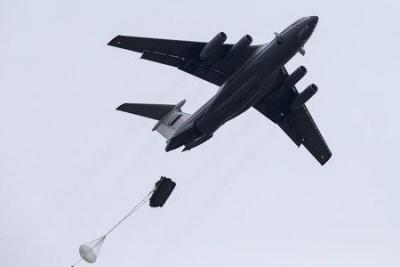
|
|
|
Feb 23 2015, 11:05 PM
Return to original view | Post
#105
|
|
Newbie
0 posts Joined: Dec 2014
|
Russian Official Says Victory Day Parade Will Feature Latest Military Tech © Sputnik/ Ramil Sitdikov
Ankara Discussing Possibility of Erdogan's Visit to Moscow for Victory Day Russia will present only the most advanced military equipment at the May 9 Victory Day Parade on Moscow's Red Square, according to Deputy Prime Minister Dmitry Rogozin, the Russian media reported. "We will show only the most sophisticated military hardware on Red Square on May 9. We will, for the first time, present the military equipment that is already being delivered to the Russian Army," Rogozin told WWII veterans during a meeting at the State Museum of Weapons in the Russian city of Tula on Monday. Rogozin expressed confidence that all those working in the country's defense industry will redouble their efforts amid the complicated situation in eastern Ukraine. "Today we have the enemy standing at out gate, with a fratricidal civil war continuing a few hundred kilometers from the Russian cities of Tula, Voronezh and Kursk. People are killed just because they want to speak in Russian, to study in Russian and to belong to the Russian world," Rogozin said. The 2015 Victory Day Parade is due to take place in Red Square on May 9 to commemorate the 70th anniversary of the capitulation of Nazi Germany in 1945, which formally ended hostilities in the Second World War in Europe. Read more: http://sputniknews.com/russia/20150223/101...l#ixzz3Sa4IosGy Attached thumbnail(s) 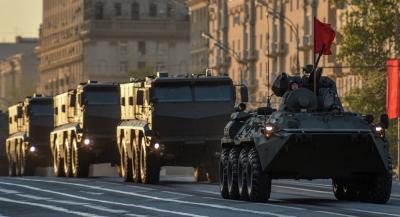
|
|
|
Feb 24 2015, 12:00 AM
Return to original view | Post
#106
|
|
Newbie
0 posts Joined: Dec 2014
|
Company Faces Federal Charges Over Military Equipment Deals With China CHICAGO (STMW) – The president of a west suburban supply company and a former employee were recently indicted on federal charges for illegally exporting and importing military components to manufacturers in China. Some of the materials exported include components used in night vision systems on the M1A1 Abrams tank, the U.S. Armed Forces’ main battle tank, according to a statement from the Department of Justice. Arlington Heights-based Vibgyor Optical Systems, it’s president and a former employee were charged in an indictment returned by a federal grand jury in January and made public this week, the statement said. Vibgyor tried to manufacture optics and optical systems, including items that were to be supplied to the Department of Defense, but instead of manufacturing the items domestically, as it claimed, Vibgyor sent the technical data and samples of military articles to manufacturers in China, the department said. The company then imported the items from China to sell to its customers, which included the DOD, the statement said. Bharat Victor Verma, 74, of Arlington Heights, who is president of Vibgyor and former Vibgyor employee Urvashi Sonia Verma, 40, of Chicago, were each charged in the indictment. Between November 2006 and March 2014, the defendants conspired to defraud the United States and violate both the Arms Export Control Act and International Traffic in Arms Regulations, the statement said. The Arms Export Control Act prohibits the export or import of defense articles and defense services without first obtaining a license from the U.S. Department of State and is one of the principal export control laws in the United States. Under the International Traffic in Arms Regulations, any person seeking to import items designated as defense articles on the United States Munitions Import List is required to obtain a permit to do so from the Bureau of Alcohol, Tobacco, Firearms and Explosives, the department said. Vibgyor won subcontracts to supply optical components and systems to DOD prime contractors by misrepresenting the manufacture location of the items it supplied, the department said. Bharat Verma falsely claimed the items supplied were manufactured domestically, when they actually had been manufactured in China. In addition to illegally providing technical data for a military item to China, Urvashi Verma attempted to ship an example of one of the military items to the Chinese manufacturer, the department said. Both are charged with one count of conspiracy to violate both the Arms Export Control Act and the International Traffic in Arms Regulations; one count of conspiracy to defraud the United States — each offense punishable by up to five years’ imprisonment — and one count of violating the Arms Export Control Act, which has a maximum penalty of 20 years in prison and a fine of up to $1 million, the statement said. The two were also charged with international money laundering, an offense with a maximum possible sentence of 20 years’ imprisonment and a fine up to $500,000. The defendants were scheduled to be arraigned Feb. 20. http://chicago.cbslocal.com/2015/02/23/com...als-with-china/ Attached thumbnail(s) 
|
|
|
Feb 24 2015, 12:05 AM
Return to original view | Post
#107
|
|
Newbie
0 posts Joined: Dec 2014
|
Japan set to loosen control over military introduced post WWII – report Japan wants to revise the existing law prioritizing civilian control over national self-defense forces, Japanese media reports. The idea of civilian participation in military decision-making was fostered following the defeat in WWII. This proposal, to amend current provisions and give more direct power to the Joint Staff Act, will require legislative change, the sources close to the Defense ministry told The Japan Times. The draft law is likely to be submitted to the National Diet as soon as the next week. The initiative of the further erosion the post-WWII legislature in Japan allegedly comes from SDF personnel, both acting and former officers currently occupying lawmaking positions in the Diet. Japan’s ruling Liberal-Democrat Party (LDP) has also proposed to adopt a permanent law outlining use of weapons by SDF personnel while on foreign missions. Currently, every time the SDF goes on an overseas mission, an ad hoc law has to be adopted. Vice President of the LDP, Masahiko Komura, believes this legislation will establish a framework preventing excessive use of force by SDF troops during operations abroad, the Japan Times wrote. Komura who heads of the coalition’s Committee for National Security, called for a party conference in Fukuoka on Saturday to consider the position of LDP’s coalition partner Komeito on the issue. Another innovation reportedly proposed by the LDP is revision of the wording of the existing law that allow the SDF to provide “logistic support” to the US armed forces only in case of “contingencies in areas surrounding Japan.” Komura proposed to eliminate the geographic qualification, insisting that “Any misleading phrase should be dropped” from the law and the concept of “areas surrounding Japan” should be omitted from the law as well. READ MORE: Japanese citizen sues govt. over military expansion attempts The law enacted in 1954 has considerably limited soldiers’ scope abroad, as the lessons of 1930s-1940s are still fresh in the memory, when the country was dragged into conflict with China and the Pacific War that followed. Read more Japan approves relaxed arms export rules The first call to change the law of civilians ruling the military came in 2009, when the system of senior civilian ministry officials directly aiding the defense minister was scrapped, thus partially returning self-reliance to the SDF. After over half a century of exemplary peaceful policies, Japan’s conservative government of Prime Minister Shinzo Abe is moving away from the pacifist stance fixed in the country’s post-WWII constitution. In 2014, Abe’s cabinet reversed a post-war constitutional ban on military operations abroad. Japan renounced war after the adoption of the 1947 constitution. This so-called “reinterpretation” enables Japan to come to the aid of the US or other allies, even if Japan is not the target of the attack, in a provision allowing “collective self-defense.” Previously, Japan’s military could only act if the country was under direct threat. READ MORE: Japan approves largest military budget since WWII Last month, the Japanese government approved the country’s largest military budget in 70 years, in a display of force to its highly militarized neighbors. Prime Minister Shinzo Abe's cabinet gave the green light to an unprecedented nearly 5 trillion yen ($42 billion) defense budget, which comes into force in April. http://rt.com/news/234635-japan-military-civilian-control/ Attached thumbnail(s) 
|
|
|
Feb 24 2015, 10:40 AM
Return to original view | Post
#108
|
|
Newbie
0 posts Joined: Dec 2014
|
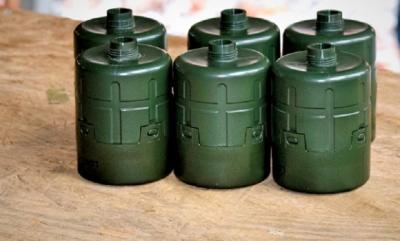
Stackable Grenades For A Bigger Boom Although fielded by the U.S. Special Operations Command since 2010, the Scalable Offensive Hand Grenade is now being tested at Ft. Benning for possible infantry use. The ordnance system will allow up to three devices to be connected depending on the size of the blast needed. So while a single unit can still be used as an anti-personnel grenade, combining them will also allow the operator to use them for breaching and demolition purposes. The grenade will have a shorter 3.5 second fuse time in comparison to the current issued M67’s four second fuse. While the M67 was filled with .4-pounds of Comp B, this new stackable grenade will have only .25-pounds of, so far, unidentified explosive material, which makes me wonder if you would need to use two of the new to get the same effect as one of the old. I guess time will tell how they will… stack up. ~Will http://www.funker530.com/stackable-grenade...-a-bigger-boom/ Attached thumbnail(s) 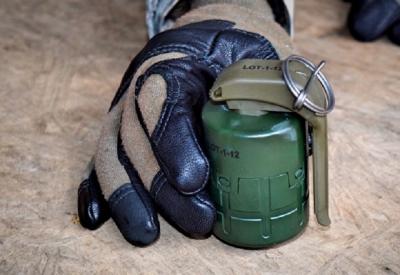
|
|
|
Feb 24 2015, 10:45 AM
Return to original view | Post
#109
|
|
Newbie
0 posts Joined: Dec 2014
|
Military expert: Russian snap military drills could turn into assaults on Baltic capitals The Baltic states are becoming increasingly unnerved by the growing number of Russian military drills close to their borders, Damien Sharkov of Newsweek reports, Since the start of the Ukrainian crisis, Russia has been staging military drills close to the Baltic regions at an increasingly common pace. Martin Hurt, the deputy director of Estonia’s International Centre for Defense and Security, believes that the increased frequency of the drills is meant to lull Europe into a false sense of security as the exercises become increasingly normal. “My take would be that the Russian authorities want to raise the readiness of their forces and also make European nations more relaxed to a new norm where the Russian Air Force often conduct snap exercises,” Hurt told Newsweek. “A realistic scenario against the Baltics would be a ‘normal’ Russian snap exercise that without notice turns into a quick assault on one or several of the Baltic states’ capitals,” Hurt continued. “Such an attack would have greater probability of success than the hybrid scenario we saw in Crimea.” A Russian invasion of the Baltic nations of Lithuania, Latvia, and Estonia would either lead to a continent wide war as NATO would be forced to respond to Russia’s attack, or, in the absence of a NATO response, a Russian invasion would shatter the defensive alliance. The Telegraph reported on February 20 that General Sir Adrian Bradshaw, deputy commander of NATO forces in Europe and one of Britain’s most senior generals, warned that Russian snap exercises could lead to a possible invasion of NATO territory. Bradshaw warned that the drills could be used “not only for intimidation and coercion but potentially to seize NATO territory, after which the threat of escalation might be used to prevent re-establishment of territorial integrity.” nato v. russia Mike Nudelman/Business Insider The Baltics are not alone in fearing the potential of Russian aggression beyond Ukraine. Sweden and Finland, neither of which are members of NATO, are also planning on expanding their defense cooperation against the backdrop of Russian tensions, Reuters reports. Aside from snap military drills, Russia has taken to provocative military demonstrations against NATO countries throughout Europe and North America. Most recently, Russian bombers flew close enough to British airspace to necessitate the scrambling of two British Typhoon fighters. Newsweek notes that “in the first ten months of 2014, 40 Russian military vessels had been spotted near Latvian waters, compared to only one in 2010.“ The provocations, according to Tom Nichols, a professor at the US Naval War College and a senior associate at the Carnegie Council on Ethics and International Affairs, are “not normal, it is not typical even of Soviet actions during the Cold War … [I]t clearly comes from the very top as an expression of Putin’s foreign policy.” As a best case scenario, the continuation of Russian provocation and snap military exercises could prove to be nothing more than bluster to distract from Moscow’s activities in Ukraine. At its worst, the provocations and drills could be an ongoing strategy to inure the West to Russian militarism in order to cloak a future invasion of the Baltics. Read more at http://www.businessinsider.my/military-exp...4vg3HI8cL60y.99 Attached thumbnail(s) 
|
|
|
Feb 24 2015, 11:16 AM
Return to original view | Post
#110
|
|
Newbie
0 posts Joined: Dec 2014
|
Malaysia, Canada join forces in military training programme -
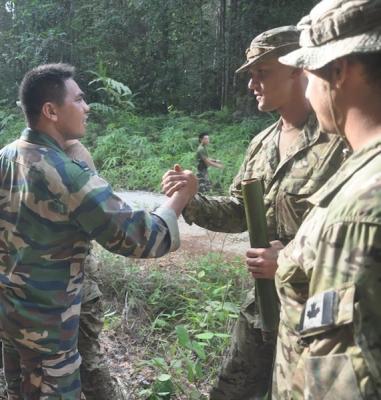
Military special forces from Canada and Malaysia last week concluded the first formal exercises of a comprehensive training exchange programme aimed at strengthening operational capabilities. The joint cooperation saw soldiers from both countries training each other in a jungle environment, while Malaysian forces are currently in Canada for training in cold weather operations and combat techniques. Speaking at a closing ceremony on February 19 to mark the completion of the joint training between the Canadian Special Operations Regiment and the Grup Gerak Khas of the Malaysian army, acting high commissioner Robert Burley praised the Malaysian soldiers, saying, “Canada’s world-class special forces are proud to engage with their Malaysian counterparts on this joint training. “It is a great example of our close partnership and shared commitment to enhancing security for our citizens,” he added. The ceremony was also attended by chief of staff for Canada’s Special Forces Colonel Alan Mulawyshyn, who travelled from Canada for the ceremony, and Colonel Zolkopli bin Hashim, deputy commander of 21 GGK. The US$4.2 million (RM12 million) training programme, which will extend over three years, is funded by the Department of National Defence and led by Canadian Special Operations Forces Command (Cansofcom) of the Canadian Armed Forces. Canada’s security and defence cooperation with Malaysia has seen over US$10 million (RM29 million) in recent and approved funding. Key areas of cooperation include counter-terrorism, nuclear security, migrant smuggling, and border security. During the visit of Prime Minister Stephen Harper to Malaysia in October 2013, the two countries signed a memorandum of understanding on security cooperation. – February 24, 2015. - See more at: http://www.themalaysianinsider.com/malaysi...h.obdUcLD3.dpuf A Cansofcom soldier greets a soldier from 21 GGK following the completion of bilateral military jungle training. – February 24, 2015.A Cansofcom soldier greets a soldier from 21 GGK following the completion of bilateral military jungle training. – February 24, 2015.Training and exchanges will take place in Canada and Malaysia until March 2017. This post has been edited by BorneoAlliance: Feb 24 2015, 11:17 AM Attached thumbnail(s) 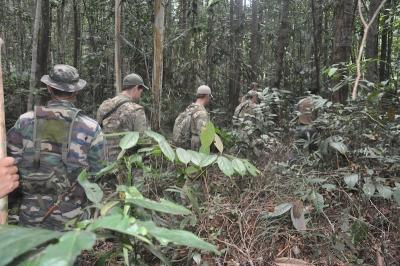
|
|
|
Feb 24 2015, 11:26 AM
Return to original view | Post
#111
|
|
Newbie
0 posts Joined: Dec 2014
|
Oshkosh Corp. introduces new military ambulance Oshkosh Corp. has introduced a new armored, all-terrain military ambulance aimed at improving urgent medical care in combat zones. The vehicle, displayed Monday at a military equipment trade show in the United Arab Emirates, is an off-road-capable, protected, tactical ambulance, according to the company, which built thousands of all-terrain military trucks used in the wars in Iraq and Afghanistan. The new vehicle is bigger than other combat ambulances, with more interior room for two patient litters, medical equipment and medical personnel, Oshkosh said. It's also armored against improvised explosive devices. Two wounded soldiers could be loaded into the vehicle in less than two minutes, minimizing exposure to enemy fire and allowing for an immediate evacuation. "An increasing number of troops and medics are suffering injuries, often life-threatening, while trying to deliver care and evacuate the injured in commercial-based ambulances," said retired U.S. Army Maj. Gen. John Urias, executive vice president of Oshkosh Corp. and president of the company's defense division. "Military medics must get to the injured quickly and safely regardless of the terrain or hazards, and then serve as a mobile emergency room during transit. This is the reality of unconventional warfare, which is defined by asymmetrical threats and the unpredictable situations that our U.S. troops and allies are facing every day," Urias said in an email interview from Abu Dhabi. The ambulance is to be built in Oshkosh. Some of its other features include a suspension system that delivers a smoother ride and an appearance that could allow it to blend into a convoy and not stand out as an ambulance. How quickly an injured soldier can be evacuated to a medical facility often makes the difference between living and dying, said Loren Thompson, chief operating officer of the Lexington Institute, an Arlington, Va., policy research group that studies military matters. "There's a debate in the Army about what sort of combat ambulances they need for the future...but having a rugged, well-equipped, well protected ambulance can be crucial to the survival of war fighters," Thompson said. Often a helicopter is the preferred way to evacuate an injured soldier. But a ground vehicle could be chosen depending on where the soldier is and how close he or she is to a medical facility, said Maj. Paul Rickert, spokesman for the Wisconsin National Guard. Oshkosh also has its TerraMax driverless vehicle technology on display at the International Defence Exhibition, which runs through Thursday in Abu Dhabi. The U.S. military hasn't deployed autonomous ground vehicles in Afghanistan or Iraq, but there's strong interest in the technology for the battlefield, according to Oshkosh. "In the Middle East, the Oshkosh TerraMax technology has the potential to serve as a force multiplier through what's known as one-to-many control, meaning one operator can supervise coordinated operations of three to five TerraMax-equipped vehicles from a distance," Urias said. "This has the potential to free up troops from vehicles to support other operations or ensure combat power remains in the fight. In an era of increasing threats and resource limitations, the use of unmanned systems like the TerraMax technology will enable the military to do more with less." The technology has advanced rapidly over the past three years, according to Oshkosh. Still, some are skeptical of the role of unmanned ground vehicles in combat. "It's a relatively simple thing to fly an unmanned aircraft, but ground terrain in war zones is so complex and unpredictable that it demands on-board intelligence. ...The front lines have become very fluid in the last generation, and you just can't know what you are driving into, manned or unmanned," Thompson said. http://www.jsonline.com/business/oshkosh-c...011.html?ipad=y Attached thumbnail(s) 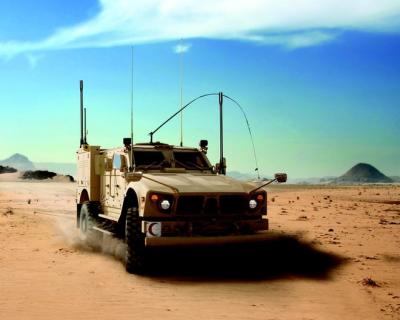
|
|
|
Feb 24 2015, 12:52 PM
Return to original view | Post
#112
|
|
Newbie
0 posts Joined: Dec 2014
|
Lockheed Martin stated that the US Navy conducted its 155th successful test of the Trident II D5 submarine-based ballistic missile. WASHINGTON (Sputnik) — The US Navy conducted its 155th successful test of the Trident II D5 submarine-based ballistic missile, the missile’s manufacturer Lockheed Martin said in a statement. “These latest test flights demonstrate the reliability of the D5 missile and the readiness of the entire Trident Strategic Weapon System every minute of every day,” Mathew Joyce, Lockheed Martin Vice President of Fleet Ballistic Missile Programs said in the statement on Monday. “The Navy program office, the submarine crews and the industry team never rest to ensure the safety, security and performance of this crucial deterrence system.” Trident II missile underwater launch © PHOTO: WIKIPEDIA US Navy Spends $302Min on Trident Nuclear Missiles - Pentagon Lockheed Martin explained that the test was conducted in the Pacific Ocean on Sunday using special test configuration kits. The Navy regularly conducts unarmed tests of the D5 missile, which is part of the United States’ submarine-based Trident nuclear arsenal. The D5 missile was first deployed on the US Navy’s Ohio class submarine and the United Kingdom’s Royal Navy Vanguard submarines in 1990. The D5 missile can travel 4,000 miles and carries multiple nuclear warheads. The submarine-based Trident nuclear ballistic system has been deployed since the 1950s as a key element of the United States’ nuclear deterrent posture. Read more: http://sputniknews.com/military/20150224/1...l#ixzz3SdQq2Hqj Attached thumbnail(s) 
|
|
|
Feb 24 2015, 01:02 PM
Return to original view | Post
#113
|
|
Newbie
0 posts Joined: Dec 2014
|
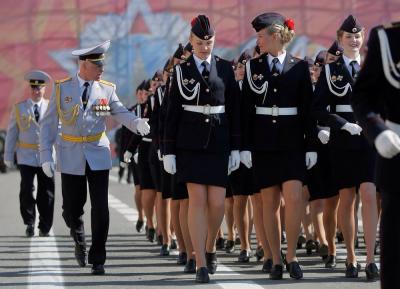
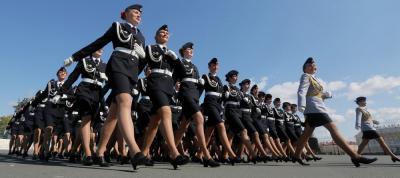
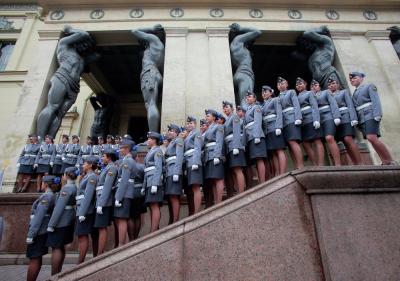
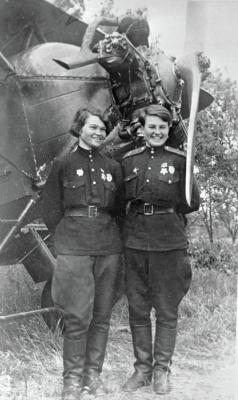
Lipstick and Kalashnikovs: Women in the Russian Armed Services
Read more: http://sputniknews.com/photo/20150223/1018...l#ixzz3SdT4KseN This post has been edited by BorneoAlliance: Feb 24 2015, 01:06 PM Attached thumbnail(s) 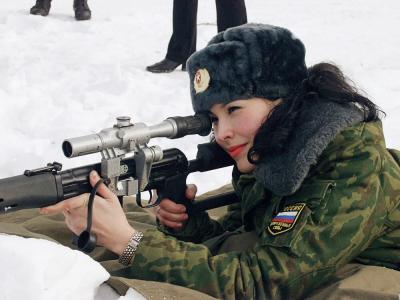

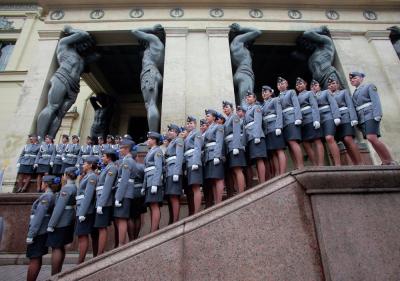
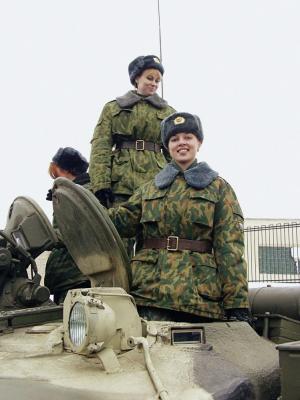
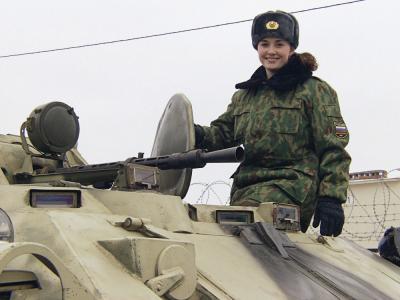
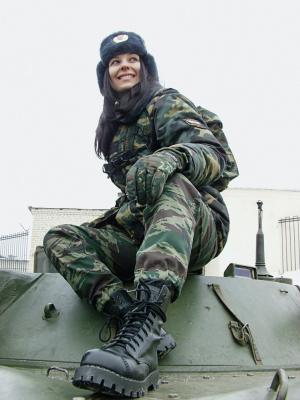
|
|
|
Feb 24 2015, 04:45 PM
Return to original view | Post
#114
|
|
Newbie
0 posts Joined: Dec 2014
|
Execution row: Indonesia rethinks Brazil military purchases JAKARTA, Feb 24 — Indonesia is re-evaluating the purchase of fighter jets and rocket launchers from Brazil, as a row between the two nations worsens over the execution of a Brazilian for drug offences, said the Jakarta Post, quoting Indonesia's vice president. Both countries have recalled their ambassadors in a tit-for-tat feud that began when Indonesia executed Brazilian citizen Marco Archer Cardoso Moreira and five others for drug offences last month. A second Brazilian national is among a second group of 11 prisoners due to be executed soon in Indonesia, which has some of the strictest drug trafficking laws in the world. Vice President Jusuf Kalla said the government was re-thinking the procurement of a squadron of 16 Brazil-made Embraer EMB-314 Super Tucano aircraft for Indonesia's air force, the newspaper reported. The Southeast Asian country was also considering cancelling an order for multiple launch rocket systems. Brazil and the Netherlands recalled their ambassadors from Indonesia shortly after the executions. Brazil took the further step of refusing to allow Indonesia's new ambassador to take part in a credentials ceremony, prompting the Southeast Asian country to recall him back to Jakarta in protest. Indonesia is also involved in a diplomatic dispute with Australia over the fate of two Australian members of the “Bali Nine” drug trafficking ring who are due to be executed soon. Indonesian President Joko Widodo, who took office in October, has pledged no clemency for drug offenders, despite pleas from the European Union, Brazil, Australia and Amnesty International. — Reuters - See more at: http://www.themalaymailonline.com/world/ar...h.5AvhnPlv.dpuf Attached thumbnail(s) 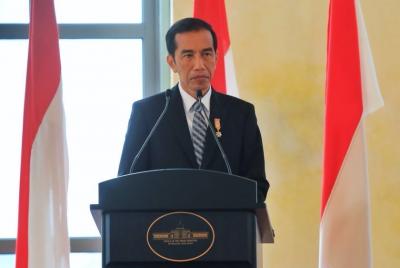
|
|
|
Feb 24 2015, 05:57 PM
Return to original view | Post
#115
|
|
Newbie
0 posts Joined: Dec 2014
|
Jordan sends military aid to Lebanon World Bulletin / News Desk The Lebanese army said Monday that it had received a "military gift" from Jordan, including armored personnel and artillery carriers. According to Lt. Gen. Manuel Karjian, deputy chief-of-staff of the Lebanese army, a ceremony was held at the Beirut naval base on Monday to mark receipt of the Jordanian military largesse. He added in a statement that the equipment included 30 M113 armored personnel carriers and 12 artillery carriers. In recent months, the Lebanese army has been locked in a struggle with two militant groups, both of whom are involved in the conflict in neighboring Syria. Since August of 2014, the two groups – the ISIS and the Al-Nusra Front – have gained a foothold in the mountains near the eastern Lebanese town of Arsal on the border with Syria. Last year, the two groups captured several Lebanese troops – and killed a number of others – in confrontations with the Lebanese army in the border town. http://www.worldbulletin.net/world/155598/...-aid-to-lebanon The equipment includes 30 M113 armored personnel carriers and 12 artillery carriers. Attached thumbnail(s) 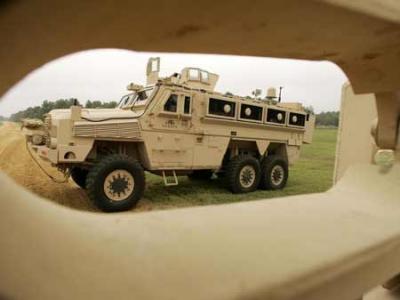
|
|
|
Feb 24 2015, 06:25 PM
Return to original view | Post
#116
|
|
Newbie
0 posts Joined: Dec 2014
|
F-35 procurement troubles may hurt military's relations with allies Internal document says tough procurement rules affect hundreds of foreign deals signed by the Forces The widening fallout from a botched program to replace Canada's aging CF-18 fighter jets may be damaging the military's relationships with its international allies. A defence briefing note says hundreds of arrangements the military has with allies to share facilities and services are being called into question, and must be reviewed as if they were formal supply contracts. $100B defence spending plan laid out for industry Military defeated in war over procurement reform The arrangements now are subject to a time-consuming procurement process that is tying the department in knots and leaving the military sometimes unable to commit to joint operations internationally. "Increasingly, Canada is viewed as a challenging partner with which to work," says the note, dated last August, outlining the problem for then deputy minister Richard Fadden. ISIL Cda Mission CF18s 20141003 Canada's participation in the ISIS mission is an example of a joint operation abroad. An internal document says Ottawa's new rules governing standing arrangements with the U.S. military and others could affect Canada's relationships with allies. (Sean Kilpatrick/Canadian Press) "Canada often struggles to meet timelines to participate in international co-operative activities. Recently we have [been] excluded from some partnership opportunities due to our inability to commit in a timely fashion to joint efforts." "This means additional costs will accrue to Canada going it alone." CBC News obtained the briefing document under the Access to Information Act. Under scrutiny are several hundred memorandums of understanding, or MOUs, that the Canadian Forces have signed with other militaries to share facilities, such as those on bases, or to jointly acquire goods and services. These standing arrangements help bind allied forces together, save money and speed the provisioning of joint operations that are often under time pressures. Net cast wide But such arrangements have been caught in a wide net cast by Public Works and cabinet to ensure none of the mistakes in the CF-18 file are repeated. Stung by the auditor general's 2012 report that lambasted the military's opaque process to buy F-35 fighter jets to replace the aging CF-18 fleet, the Harper government launched its own review, which found MOUs were at the heart of the problem. The military signed three MOUs with the U.S. in 1997, 2002 and 2006 committing Canada in some measure to the new F-35 fighter jets, but had not enlisted Public Works, which vets federal procurements. Public Works got involved only in 2010, as the procurement process fell into disarray. The finding has forced the military to review many of its other MOUs and send them to Public Works and the Treasury Board for vetting as possible procurement contracts in disguise. 'Obviously, there's going to be a lot more work up front.' — Dave Perry, defence analyst In the six months following a February 2014 directive on the new vetting policy, the Defence Department sent 221 MOUs to Public Works and the Treasury Board for review, creating "administrative complexity," says the document. The note cites one example, a Canada-U.S. arrangement in which each partner allows the other to use test facilities at reduced costs. The Canadian Forces have used American facilities 112 times since 2002, at a cost of $100 million. Had the new vetting regime been in place, time-consuming procurement submissions to the Treasury Board would have been required in at least 71 such cases, as sole-source contracts above a certain dollar threshold. The document does not identify any specific operations abroad that have been affected by the tighter rules. And defence spokeswoman Ashley Lemire did not respond to a series of requests for more details, providing only a general statement about MOUs. Loss of trust Dave Perry, senior analyst at the Canadian Defence and Foreign Affairs Institute, said the briefing note indicates the military has lost the trust of Public Works and the Treasury Board. That loss of trust by the centre was a key theme in Perry's study last month on how to repair the defence procurement process. His study also found that National Defence has understaffed its procurement arm, and he said the new vetting process for MOUs will add further pressures. "Obviously, there's going to be a lot more work up front," he said in an interview. "What this is doing is pulling everything up and putting it through the same kinds of checks and applications … that a formal procurement would have to do." Although there may be benefits from the new policy down the road, Perry said, there's a risk it may be capturing too many MOUs. It "wouldn't be the first instance with a procurement file where there's been an over-correction." Last week, newly appointed Defence Minister Jason Kenney said he would improve the way military procurements are conducted. "A working group of ministers will ensure a streamlined and co-ordinated decision-making — and that's not just talk," he told a defence conference in Ottawa. "I will do everything I can in this office to advance these critical procurement projects." Follow @DeanBeeby on Twitter Attached image(s)  |
|
|
Feb 24 2015, 07:12 PM
Return to original view | Post
#117
|
|
Newbie
0 posts Joined: Dec 2014
|
Frogmen Beware: New Russian Underwater Grenade Launcher Hits IDEX-2015 © Photo: Wikipedia / Vitaly V. Kuzmin Russia's JSC Bazalt has announced that it has launched mass production of the DP-64 "Nepryadva" double-barrel anti-sabotage grenade launcher, following an order from Russia's Defense Ministry, the head of the company's Science and Engineering Department, Pavel Sidorov told RIA Novosti. "The DP-64 is currently in mass production. In 2014 we got a sizable order from the Ministry of Defense, I can't disclose its exact volume and what units it will be supplied to, but it's for the Navy," Sidorov, the company's representative at the IDEX 2015 international defense expo in Abu Dhabi, UAE, told the agency. The grenade launcher is designed for the protection of ships from combat divers (frogmen) while on external raids, open anchorages and naval bases, as well as the protection of water-based structures, sea platforms such as oil rigs, and other important coastal and off-shore facilities. The grenade launcher's maximum effective range is 400 meters. Previously, the DP-64 grenade launcher, which is capable of firing at underwater targets, was only made in small batches for ship-based naval infantry, some units of the Federal Protective Service and the Russian Coast Guard, which is part of the FSB's border guard service. The DP-64 was developed in 1989 at the V.A. Degtyarev Plant in Kovrov, Vladimir region. It entered service in 1990. Read more: http://sputniknews.com/russia/20150224/101...l#ixzz3SeyI6me6 Attached thumbnail(s) 
|
|
|
Feb 24 2015, 09:50 PM
Return to original view | Post
#118
|
|
Newbie
0 posts Joined: Dec 2014
|
Special Report: How Iran's military chiefs operate in Iraq
(Reuters) - The face stares out from multiple billboards in central Baghdad, a grey-haired general casting a watchful eye across the Iraqi capital. This military commander is not Iraqi, though. He's Iranian. The posters are a recent arrival, reflecting the influence Iran now wields in Baghdad. Iraq is a mainly Arab country. Its citizens, Shi'ite and Sunni Muslims alike, have long mistrusted Iran, the Persian nation to the east. But as Baghdad struggles to fight the Sunni extremist group Islamic State, many Shi'ite Iraqis now look to Iran, a Shi'ite theocracy, as their main ally. In particular, Iraqi Shi'ites have grown to trust the powerful Iranian-backed militias that have taken charge since the Iraqi army deserted en masse last summer. Dozens of paramilitary groups have united under a secretive branch of the Iraqi government called the Popular Mobilisation Committee, or Hashid Shaabi. Created by Prime Minister Haider al-Abadi’s predecessor Nuri al-Maliki, the official body now takes the lead role in many of Iraq's security operations. From its position at the nexus between Tehran, the Iraqi government, and the militias, it is increasingly influential in determining the country's future. Until now, little has been known about the body. But in a series of interviews with Reuters, key Iraqi figures inside Hashid Shaabi have detailed the ways the paramilitary groups, Baghdad and Iran collaborate, and the role Iranian advisers play both inside the group and on the frontlines. Those who spoke to Reuters include two senior figures in the Badr Organisation, perhaps the single most powerful Shi'ite paramilitary group, and the commander of a relatively new militia called Saraya al-Khorasani. In all, Hashid Shaabi oversees and coordinates several dozen factions. The insiders say most of the groups followed a call to arms by Iraq's leading Shi'ite cleric Grand Ayatollah Ali al-Sistani. But they also cite the religious guidance of Ayatollah Ali Khamenei, the supreme leader of Iran, as a key factor in their decision to fight and – as they see it – defend Iraq. Hadi al-Amiri, the leader of the Badr Organisation, told Reuters: "The majority of us believe that ... Khamenei has all the qualifications as an Islamic leader. He is the leader not only for Iranians but the Islamic nation. I believe so and I take pride in it." He insisted there was no conflict between his role as an Iraqi political and military leader and his fealty to Khamenei. "Khamenei would place the interests of the Iraqi people above all else," Amiri said. FROM BATTLEFIELD TO HOSPITAL Hashid Shaabi is headed by Jamal Jaafar Mohammed, better known by his nom de guerre Abu Mahdi al-Mohandis, a former Badr commander who once plotted against Saddam Hussein and whom American officials have accused of bombing the U.S. embassy in Kuwait in 1983. Iraqi officials say Mohandis is the right-hand man of Qassem Soleimani, head of the Quds Force, part of Iran's Revolutionary Guard. Mohandis is praised by some militia fighters as "the commander of all troops" whose "word is like a sword above all groups." The body he heads helps coordinate everything from logistics to military operations against Islamic State. Its members say Mohandis' close friendships with both Soleimani and Amiri helps anchor the collaboration. The men have known each other for more than 20 years, according to Muen al-Kadhimi, a Badr Organisation leader in western Baghdad. "If we look at this history," Kadhimi said, "it helped significantly in organizing the Hashid Shaabi and creating a force that achieved a victory that 250,000 (Iraqi) soldiers and 600,000 interior ministry police failed to do." Kadhimi said the main leadership team usually consulted for three to four weeks before major military campaigns. "We look at the battle from all directions, from first determining the field ... how to distribute assignments within the Hashid Shaabi battalions, consult battalion commanders and the logistics," he said. Soleimani, he said, "participates in the operation command center from the start of the battle to the end, and the last thing (he) does is visit the battle's wounded in the hospital." Iraqi and Kurdish officials put the number of Iranian advisers in Iraq between 100 and several hundred - fewer than the nearly 3,000 American officers training Iraqi forces. In many ways, though, the Iranians are a far more influential force. Iraqi officials say Tehran’s involvement is driven by its belief that Islamic State is an immediate danger to Shi'ite religious shrines not just in Iraq but also in Iran. Shrines in both nations, but especially in Iraq, rank among the sect's most sacred. The Iranians, the Iraqi officials say, helped organize the Shi'ite volunteers and militia forces after Grand Ayatollah Sistani called on Iraqis to defend their country days after Islamic State seized control of the northern city of Mosul last June. Prime Minister Abadi has said Iran has provided Iraqi forces and militia volunteers with weapons and ammunition from the first days of the war with Islamic State. They have also provided troops. Several Kurdish officials said that when Islamic State fighters pushed close to the Iraq-Iran border in late summer, Iran dispatched artillery units to Iraq to fight them. Farid Asarsad, a senior official from the semi-autonomous Iraqi region of Kurdistan, said Iranian troops often work with Iraqi forces. In northern Iraq, Kurdish peshmerga soldiers "dealt with the technical issues like identifying targets in battle, but the launching of rockets and artillery – the Iranians were the ones who did that." Kadhimi, the senior Badr official, said Iranian advisers in Iraq have helped with everything from tactics to providing paramilitary groups with drone and signals capabilities, including electronic surveillance and radio communications. "The U.S. stayed all these years with the Iraqi army and never taught them to use drones or how to operate a very sophisticated communication network, or how to intercept the enemy's communication," he said. "The Hashid Shaabi, with the help of (Iranian) advisers, now knows how to operate and manufacture drones." A MAGICAL FIGHTER One of the Shi'ite militia groups that best shows Iran's influence in Iraq is Saraya al-Khorasani. It was formed in 2013 in response to Khamenei's call to fight Sunni jihadists, initially in Syria and later Iraq. The group is responsible for the Baghdad billboards that feature Iranian General Hamid Taghavi, a member of the Iranian Revolutionary Guard. Known to militia members as Abu Mariam, Taghavi was killed in northern Iraq in December. He has become a hero for many of Iraq's Shi'ite fighters. Taghavi "was an expert at guerrilla war," said Ali al-Yasiri, the commander of Saraya al-Khorasani. "People looked at him as magical." In a video posted online by the Khorasani group soon after Taghavi's death, the Iranian general squats on the battlefield, giving orders as bullets snap overhead. Around him, young Iraqi fighters with AK-47s press themselves tightly against the ground. The general wears rumpled fatigues and has a calm, grandfatherly demeanor. Later in the video, he rallies his fighters, encouraging them to run forward to attack positions. Within two days of Mosul's fall on June 10 last year, Taghavi, a member of Iran's minority Arab population, traveled to Iraq with members of Iran's regular military and the Revolutionary Guard. Soon, he was helping map out a way to outflank Islamic State outside Balad, 50 miles (80 km) north of Baghdad. Taghavi's time with Saraya al-Khorasani proved a boon for the group. Its numbers swelled from 1,500 to 3,000. It now boasts artillery, heavy machine guns, and 23 military Humvees, many of them captured from Islamic State. "Of course, they are good," Yasiri said with a grin. "They are American made." In November, Taghavi was back in Iraq for a Shi'ite militia offensive near the Iranian border. Yasiri said Taghavi formulated a plan to "encircle and besiege" Islamic State in the towns of Jalawala and Saadiya. After success with that, he began to plot the next battle. Yasiri urged him to be more cautious, but Taghavi was killed by a sniper in December. At Taghavi's funeral, the head of Iran's Supreme National Security Council, Ali Shamkhani, eulogized the slain commander. He was, said Shamkhani, one of those Iranians in Iraq "defending Samarra and giving their blood so we don't have to give our blood in Tehran." Both Soleimani and the Badr Organisation's Amiri were among the mourners. A NEW IRAQI SOUL Saraya al-Khorasani's headquarters sit in eastern Baghdad, inside an exclusive government complex that houses ministers and members of parliament. Giant pictures of Taghavi and other slain al-Khorasani fighters hang from the exterior walls of the group's villa. Commander Yasiri walks with a cane after he was wounded in his left leg during a battle in eastern Diyala in November. On his desk sits a small framed drawing of Iran's Khamenei. He describes Saraya al-Khorasani, along with Badr and several other groups, as "the soul" of Iraq’s Hashid Shaabi committee. Not everyone agrees. A senior Shi'ite official in the Iraqi government took a more critical view, saying Saraya al-Khorasani and the other militias were tools of Tehran. "They are an Iranian-made group that was established by Taghavi. Because of their close ties with Iranians for weapons and ammunition, they are so effective," the official said. Asarsad, the senior Kurdish official, predicts Iraq's Shi'ite militias will evolve into a permanent force that resembles the Iranian Revolutionary Guard. That sectarian force, he believes, will one day operate in tandem with Iraq's regular military. "There will be two armies in Iraq," he said. That could have big implications for the country’s future. Human rights groups have accused the Shi’ite militias of displacing and killing Sunnis in areas they liberate — a charge the paramilitary commanders vigorously deny. The militias blame any excesses on locals and accuse Sunni politicians of spreading rumors to sully the name of Hashid Shaabi. The senior Shi'ite official critical of Saraya al-Khorasani said the militia groups, which have the freedom to operate without directly consulting the army or the prime minister, could yet undermine Iraq's stability. The official described Badr as by far the most powerful force in the country, even stronger than Prime Minister Abadi. Amiri, the Badr leader, rejected such claims. He said he presents his military plans directly to Abadi for approval. His deputy Kadhimi was in no doubt, though, that the Hashid Shaabi was more powerful than the Iraqi military. "A Hashid Shaabi (soldier) sees his commander ... or Haji Hadi Amiri or Haji Mohandis or even Haji Qassem Soleimani in the battle, eating with them, sitting with them on the ground, joking with them. This is why they are ready to fight," said Kadhimi. "This is why it is an invincible force." (Editing By Simon Robinson and Richard Woods) http://www.reuters.com/article/2015/02/24/...N0LS0VD20150224 This post has been edited by BorneoAlliance: Feb 24 2015, 10:08 PM Attached thumbnail(s) 
|
|
|
Feb 24 2015, 10:23 PM
Return to original view | Post
#119
|
|
Newbie
0 posts Joined: Dec 2014
|
US Army Researching Bomb-Sniffing Elephants in South Africa © East News/ FLPA/Fabio Pupin AFRICA The US Army Research Office has taken interest in the work of a South African farmer who has been training African elephants to sniff out explosive devices. The US Department of Agriculture has told the Pittsburgh Zoo to stop using dogs to shepherd their African elephants, as it causes them undue stress. Sean Hensman, the operator of a game ranch about 130 km north of Pretoria, has had US Army researchers as guests at his ranch over the past five years. US Army Research Office chief scientist Stephen Lee notes that his team has been working "to better quantify" whether an elephant's sense of smell is superior to that of dogs for bomb-detecting purposes, noting that his team doesn't yet "believe we have a firm conclusion." The Army team has noted that one of the advantages of elephants over dogs is their excellent memory. "Dogs require constant training while the elephants seem to understand and remember the scent without the need for constant training." Moreover, unlike dogs, elephants are capable of picking up a scent from up to 100 meters away. Hensman's testing has included using a teenage male elephant trained to make his way past a row of buckets and to identify the one which has a swab laced with the scent of TNT stapled to its bottom. The elephant is trained to stop, raise his leg and salute once he smells out the bucket with the swab underneath. In exchange for finding the bucket, he is rewarded with marula, a fruit common in southern Africa. Testing has shown that the elephant finds the TNT-scented swab every time. Sean Hensman's interest in elephants' keen sense of smell stems from the interests of his father, Rory Hensman, who discovered while on a safari in Zimbabwe in the 1980s that a member of an elephant heard he had been watching had ended up tracking him instead, using his scent. Rory Hensman had ended up training 12 elephants for anti-poaching patrols, cattle-herding, and checking the condition of fencing around his farms in Zimbabwe. The Hensman family moved to South Africa after the Zimbabwean government seized his white family's farms; fortunately, he was able to bring his elephants with him. The bomb-sniffing elephants are not expected to be used on the battlefield itself; Lee noted that "we could bring scents from the field collected by unmanned robotic systems to the elephants for evaluation." Ultimately, the army is working to determine whether the biological structures found in elephants' trunks can be converted into technology which could assist soldiers in combat conditions. The first hints of elephants' amazing scent-based explosive-detection abilities came from Angola, a country which suffered from a brutal civil war between 1975 and 2002 where opposition forces were known to plant large numbers of mines in civilian areas, including fields of crops and forested areas. There, elephants have long been observed to avoid heavily mined areas, and sniffing out dangerous areas. Read more: http://sputniknews.com/africa/20150224/101...l#ixzz3Sfk1TxO6 Attached thumbnail(s) 
|
|
|
Feb 25 2015, 07:47 AM
Return to original view | Post
#120
|
|
Newbie
0 posts Joined: Dec 2014
|
At Kurdish front-line outpost, skepticism abounds about assault on Mosul OUTSIDE SULTAN ABDULLAH, Iraq (Tribune News Service) — Major Deliar Shouki, the commander of a string of Kurdish fire bases less than 20 miles from Mosul, admitted he was skeptical when he’d heard the news last week that a U.S. official had told Pentagon reporters that 25,000 Iraqi troops would attack the Islamic State-held city perhaps as soon as April. “There really is no Iraqi army, so I don’t know where they get the idea that they can train 25,000 soldiers in two months to fight house to house in Mosul,” he said on Friday as he gave a visiting journalist a tour of his men’s positions on the outskirts of the tiny hamlet of Sultan Abdullah, which lies about midway between Mosul and the Kurdish capital of Irbil. Only a few hundred yards of open ground separates his troops from the Islamic State positions, with Shouki’s men dug in deeply on the tops of hills and the Islamic State fighters occupying the tiny village below. Nearly every night, the area is the scene World War I-style battles as the extremists attempt to storm the Kurdish trenches, only to be thrown back, with heavy casualties. “It just seems to me like the Iraqi [Arabs] lack a certain morale to be soldiers, and I don’t want to directly accuse them of anything, but every time they fight Daash, they lose ground and equipment that ends up being used against us,” he said, using the Arabic acronym for the Islamic State. “It’s very suspicious and I don’t think they want to fight them.” Both Shouki and the American-made armored vehicle he uses to shuttle ammunition and evacuate the wounded from his front line area are examples of how the Kurdish peshmerga adapted after the Islamic State stormed into Mosul and took over much of northern and central Iraq last summer. Shouki isn’t exactly a major, it’s what his men call him. In fact, though, he’d retired from the peshmerga after years of fighting Saddam Hussein; when he volunteered to return as the Islamic State threatened, he was given command of one of the most bitterly contested sections of northern Iraq. And his command vehicle once carried U.S. troops before being given to the Iraqi army when the Americans left in 2011. It was captured by the Islamic State in June when the Iraqi Army abandoned its equipment and fled before the extremists’ advance. The peshmerga captured it in battle a few months ago and immediately put it to use. “We need more armored vehicles and heavier weapons,” Shouki explained. “We fight to defend Kurdistan and the coalition air strikes have been very helpful but we need [American] special forces ‘boots on the ground’ to help guide them in and heavier weapons if we are to drive them out of Iraq.” “Americans need to understand we are fighting them here for you because if they stay in Mosul and take Irbil, they’ll come to New York and Washington eventually,” he added. Over a hot lunch of chicken and eggplant brought to the base by a local family as a thank you to the troops, the commanders of this section of the front line dismissed the notion that any major operation led by the central government in Baghdad to recapture Mosul is imminent. “The Arabs can’t take Tikrit and Bayji,” laughed one, referring to two much smaller cities held by the Islamic State. “There is no Iraqi army, just Shiite militias.” Another dignitary, dressed in traditional Kurdish garb and heavily armed who declined to give his name but described his occupation as an “arms dealer for Kurdistan,” said the only capable fighting forces that the Iraqi Arabs can field are the Iranian-trained, -led and -equipped militias, which he said, to much agreement in the room, aren’t interested in Sunni Arab Mosul, for both sectarian and strategic reasons. “Shiite militias and Kurds are going into Sunni Arab Mosul?” he asked. “We Kurds will fight to protect our homeland but Mosul is not, it’s the Arabs’ home. And the Shiite only care about protecting Baghdad and their areas in the south from the Sunnis of Anbar,” the Iraqi province to the west of Baghdad that has largely fallen to the Islamic State. Adding to these concerns are the role of Shiite militias in the area south of the city of Kirkuk, which is now in Kurdish hands. The peshmerga lines and the Shiite militias’ operations intersect there, and tensions between the two forces occasionally flare into fighting, even though both are battling the the Islamic State. So far the incidents have been minor, but there are concerns they could become a major source of conflict, especially after recent statements by Shiite militia leaders that they would force the Kurds to allow them to deploy around oil-rich Kirkuk, a city the Kurds have vowed not to return to Arab control. Shouki said it’s possible the Kurds would cooperate in an assault on Mosul, but there were in his opinion many conditions that would need to be met: the government in Baghdad would have to assemble an army, give the Kurds significant amounts of weapons, and pay some of the nearly $6 billion it owes the Kurdish regional government. In addition, he said, Kurdish cooperation is likely to depend on the United States agreeing to put combat air controllers on the ground to ensure the accuracy of air strikes, something the Pentagon has said might be possible, but that would place U.S. troops in danger. “We are the only ones fighting and dying,” he said. That sacrifice is obvious at one of the tiny hillside fire bases overlooking Sultan Abdullah. The Kurds’ bunkers there were deep for protection from the better-equipped Islamic State artillery, and sand bags covered a series of trenches that were surrounded by barbed wire. The Kurds are better armed now than they were last summer, thanks to donations of gear from the United States and Germany and British logistical help that brought in large amounts of ammunition from former Soviet stockpiles. But the peshmerga still lack the heavy artillery and armored vehicles the Islamic State has. Pointing at his command vehicle, Shouki noted that the Iraqi army abandoned about 2,000 similar vehicles last June; his men have one, plus about dozen American-made Humvees mounted with heavy machine guns. Still, his men are able to hold off the Islamic State’s frontal assaults on their positions, thanks to the German anti-tank weapons they’ve been given – the Milan guided anti-tank missile and the Panzerfaust anti-tank rocket system. The men described a battle last Wednesday night, where under the cover of fog, Islamic State fighters – estimated in the hundreds – pushed to within 25 yards of these trenches, sparking a five-hour close quarters gunfight that left the peshmerga unsupported by coalition air power. “They told us we were on our own because both sides were too close to bomb,” said one peshmerga fighter as he stared down the barrel of his PKM medium machine gun through a slit in the sandbags at the Islamic State lines just a few hundred meters away. He described the pitched battle that followed. “Normally it’s harder to throw grenades up than down but in this case it was the opposite,” he said. “All the Daash guys had to do was get their grenades over our sandbags and that was it. But they were so close, we had to hold our grenades live for a few seconds so they would go off before they rolled past the Daash guys.” He pointed to dark shapes throughout the field. “You can still see a lot of their bodies, I don’t know how many but nobody can go out there to get them.” Shouki said in that fight they recovered 38 Islamic State fighter bodies, many snared on the barbed wire just outside the trenches, while his men lost one killed and six wounded, all from grenades. He claims the Islamic State death toll was likely much higher; once the Islamic State fighters retreated, coalition air power was able to go to work. “Daash is a lot less powerful now because of the planes,” he said. “They can still attack but we see them growing weaker because they can’t reinforce or retreat without getting hit. But we also get their best fighters attacking here because it is important, mostly foreign fighters with good training and discipline.” The same position was hit again Saturday, according to a text message from Shouki. This time, he said, 53 extremists were killed and about a dozen of his own men were wounded, but the bunkers and trenches held. http://www.stripes.com/news/middle-east/at...-mosul-1.331440 Attached thumbnail(s) 
|
| Bump Topic Topic ClosedOptions New Topic |
| Change to: |  0.0309sec 0.0309sec
 0.65 0.65
 7 queries 7 queries
 GZIP Disabled GZIP Disabled
Time is now: 11th December 2025 - 06:19 AM |
 Quote
Quote