Welcome Guest ( Log In | Register )

Bump Topic Topic Closed RSS Feed
13 Pages « < 2 3 4 5 6 > » Bottom

Outline · [ Standard ] · Linear+

> Military Thread V15, Gong Xi Fa Cai; Huat ah

views
     
BorneoAlliance
post Feb 20 2015, 07:32 PM

New Member
*
Newbie
0 posts

Joined: Dec 2014
Lying in the military is common, Army War College study says


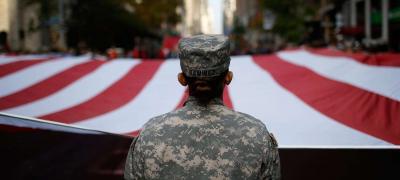
A group of U.S. soldiers stand in formation. A new Army War College study found that officers face a variety of pressures that make it easy to lie. (Photo by Staff Sgt. Adam Keith/Army)
A new study by Army War College professors found that not only is lying common in the military, the armed forces themselves may be inadvertently encouraging it.

The study, released Tuesday, was conducted by retired Army officers and current War College professors Leonard Wong and Stephen J. Gerras. They found that untruthfulness is “surprisingly common in the U.S. military even though members of the profession are loath to admit it.”

The paper’s release follows a series of high-profile incidents involving bad behavior across the services, including a still-widening corruption case involving senior Navy officers and at least two incidents in which Army generals were accused of sexual assault.

The new study found that many Army officers have become “ethically numb” in the face of overwhelming demands and the need to put their reputations on the line to verify that all required standards and training requirements have been met.

The issue affects the whole military, but the professors focused their effort on the Army because they are the most familiar with it, they wrote. They interviewed scores of officers, from captains to colonels, at several bases on the East Coast, many of whom bristled initially at the notion they colored the truth, the report said.

“When pressed for specifics on how they managed, officers tended to dodge the issue with statements such as, ‘You gotta make priorities, we met the intent, or we got creative,’ ” the report said. “Eventually words and phrases such as ‘hand waving, fudging, massaging, or checking the box’ would surface to sugarcoat the hard reality that, in order to satisfy compliance with the surfeit of directed requirements from above, officers resort to evasion and deception.”

“In other words, in the routine performance of their duties as leaders and commanders, U.S. Army officers lie,” the paper concludes.

Similar issues occur when reporting the maintenance and accountability of equipment, the completion of evaluation reports for lower-ranking officers, and even combat situations in Iraq and Afghanistan, the professors found. Junior leaders were required to develop a PowerPoint narrative of events in a unit while deployed, and avoided doing so, one senior officer told Wong and Gerras.


“Every contact with the enemy required a storyboard,” the senior officer said, according to the paper. “People did not report enemy contact because they knew the storyboard was useless and they didn’t want to go through the hassle.”

The study attributes the lies to “ethical fading,” in which outside factors subtly alter an ethical dilemma. The professors recommend reinforcing restraint and acknowledging ethical shortfalls in the military.

The issue has been addressed at high levels already. In one example, Army Gen. Chief of Staff Raymond T. Odierno released an ethics “white paper” last year underscoring the need to uphold strong values like honesty.

“This White Paper identifies an omission in our doctrine – the absence of an articulated, accessible, and understandable expression of the Army Ethic,” Odierno said in the document, released last July. “The Army Ethic does exist and emanates from our foundational heritage, beliefs, traditions, and culture. The intent, therefore, is not to invent the Army Ethic, but rather to glean its fundamental nature. Doing so is of urgent importance and is worthy of our collective wisdom and judgment.”

http://www.washingtonpost.com/news/checkpo...ege-study-says/


Attached thumbnail(s)
Attached Image
BorneoAlliance
post Feb 20 2015, 07:51 PM

New Member
*
Newbie
0 posts

Joined: Dec 2014

For Army General, Military Risks Self-Delusion If It Ignores Past Wars’ Lessons

For someone tasked with thinking about the future, Lt. Gen. H.R. McMaster is obsessed with the past.

In the hour he spent talking with reporters on Thursday morning, the historical lessons came fast and furious, as McMaster discussed Napoleon, the 2006 Lebanon War, Vietnam, the Korean War, the bombardment of London during World War II, and why combat vehicles were first designed during World War I to restore mobility on the Western Front.

But for McMaster, who leads the Army Capabilities Integration Center at its Training and Doctrine Command, the most relevant lessons for preparing the Army for the future come from the wars just fought in Iraq and Afghanistan. And forget 2025, the year McMaster is supposed to be planning for: Many of these lessons have direct implications for conflicts the United States is engaged in today, from Ukraine to Syria to Iraq.

“I think in many ways what we learn from the wars in Afghanistan and Iraq could in the future be as important as the outcomes of those wars,” McMaster said at a breakfast Thursday. “If we learn the wrong lessons, we’ll engage in the kind of self-delusion that we engaged in in the 1990s, which set us up for many of the difficulties that we encountered in Iraq and Afghanistan.”

The “Revolution in Military Affairs,” a concept popular inside defense policy circles in the 1990s, predicted that the U.S. military, armed with superior technology, would be able to easily defeat its enemies. The lingo of the time included terms like “full-spectrum dominance” and “rapid, decisive operations.”

“War was going to be fast, cheap, and efficient,” McMaster said.

After 12 years of war in Afghanistan and Iraq, more than $1 trillion spent, and U.S. troops now returning to Baghdad after leaving in 2011, that kind of thinking looks naïve and foolhardy.

“War is anything but certain, because of its human and political nature,” said McMaster, who’s been a longtime critic of the idea that technology can fundamentally change the bloody reality of war.

In his current role, McMaster is committed to making sure the Army accepts and embraces the hard-won lessons of Iraq and Afghanistan by including them in training and doctrine manuals. But some of these lessons’ implications apply to the broader U.S. government and are not within the Army’s power to change. “The Army does whatever the president or [defense] secretary asks it do,” McMaster said. But that didn’t keep him from warning about the consequences of repeating history’s mistakes.

“I’m not questioning any policy decisions, but Libya is an example of what happens when you don’t consolidate military gains,” McMaster said, referring to the U.S.-led NATO bombing campaign in 2011 that unseated Libyan dictator Muammar al-Qaddafi. Since then, Libya has been wracked by violence and infighting, a chaotic situation that has allowed the Islamic State to make inroads into the country.

In Iraq and Afghanistan, the military learned too late that its operations had to be part of a larger campaign that included diplomatic, development, and political efforts if it wanted to capitalize on battlefield wins, McMaster said.

For him, a key lesson out of Afghanistan — and one that is extremely relevant to today’s anti-Islamic State strategy — is to be careful of the proxies that you empower on the ground.

In Afghanistan, he said the United States used proxy militias to topple the Taliban. That unwittingly empowered the militias to morph into organized crime networks and otherwise engage in crime. It also left the door open for the Taliban to return and win over factions that were excluded from the political structure that was created with U.S. support.

In doing so, the militias “hollowed out institutions that we, the international community, were trying to build,” McMaster said.

A similar thing happened in Iraq after American troops left. Former Prime Minister Nouri al-Maliki, a Shiite, took advantage of his power to target and disenfranchise the country’s Sunni population, which in turn created feelings of mistrust that fueled the Islamic State’s rise.

Another takeaway from the wars in Iraq and Afghanistan is the need to understand the enemy and to explain what’s at stake to the American public, McMaster said.

That may already be the case in the fight against the Islamic State, which has mastered the art of propaganda to advertise its brutality. But otherwise, McMaster said, it’s difficult to convince Americans to be patient with, or agree to fund, wars.

“How many Americans can name the three Taliban groups?” McMaster said. “Can you imagine fighting a war in the past and not even be able to name the enemy?”

http://foreignpolicy.com/2015/02/19/for-ar...aq-afghanistan/


Attached thumbnail(s)
Attached Image
BorneoAlliance
post Feb 20 2015, 09:45 PM

New Member
*
Newbie
0 posts

Joined: Dec 2014
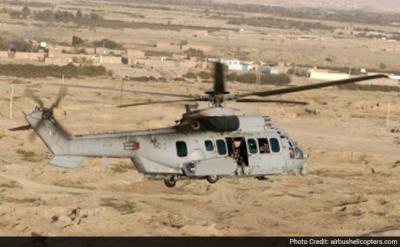
Airbus Talking to Tata, Reliance to Jointly Make Military Helicopters

BENGALURU: Airbus Helicopters said on Friday it is in talks with India's Mahindra and Mahindra, Reliance Industries and Tata Group to jointly make military helicopters, to comply with rules aimed at helping the nascent local defence industry.

The company, a unit of Airbus Group, is offering to build its light utility AS550 Fennec and the medium lift EC725 for India's armed forces, which are heavily dependent on an ageing fleet of Cheetah and Chetak helicopters.

"We are in the selection process, talking to different industries to form a JV (joint venture)," Rainer Farid, a senior Airbus Helicopters executive told Reuters on the sidelines of the Aero India airshow in Bengaluru on Friday.

Under Prime Minister Narendra Modi's "Make in India" initiative, foreign contractors used to selling directly to New Delhi must form partnerships with local companies and transfer more of the work to help grow the nascent defence industry.

India last year scrapped the planned acquisition of 197 light utility helicopters so that it could launch a new competition reserved for domestic companies that form joint ventures with foreign suppliers.

In addition to Airbus, other firms including US-based Sikorsky Aircraft and Russian Helicopters are also expected to bid for the order.

State-run Hindustan Aeronautics is the only Indian company producing helicopters, meaning that global defence firms are likely to have to partner with a private company building a product for the first time and from scratch.

Airbus executive Farid said that was a concern. "It is a tough task because you need to establish your vendors here which are not as existent as in other countries," he added.

http://www.ndtv.com/india-news/airbus-talk...41041?site=full


Attached thumbnail(s)
Attached Image
BorneoAlliance
post Feb 20 2015, 09:51 PM

New Member
*
Newbie
0 posts

Joined: Dec 2014
The U.S. Military Is Reportedly Looking at 3-D Printing to Help Wounded Soldiers

The U.S. military is reportedly looking into an idea that’s always seemed a little more like something straight out of a science-fiction novel.

The military is reportedly in talks with the University of Nevada to develop 3-D printed “twins” of American soldiers. The concept would require troops’ bodies to be scanned and images stored. Those images, in turn, would assist doctors and surgeons in developing 3-D printed prosthetic body parts should the soldiers ever become wounded in battle, according to 3DPrint.com.

“The idea is to image someone when they are in a healthy state so that the data is available if it’s needed at a later point,” James Mah, a clinical professor at the University of Nevada said.

“We have soldiers who get injured. They lose limbs and other tissues and it’s a challenge to reconstruct them in the field. but if they are imaged beforehand, you can send that over the internet and have a 3D printer in the field to produce the bone,” Mah said.

A similar method is already used among some in the medical field. Medical students, for example, use virtual operating tables that allow them to dissect and operate without ever needed an actual human body in front of them.

The tables are created in much the same way as what the military is reportedly looking to do for wounded veterans. With an X-ray, MRI or ultrasound, an exact replica of a human body can be engraved into the table, thus creating a virtual cadaver.

But this isn’t an entirely new innovation as doctors have been developing 3-D printed body parts for a few years now. In 2013, doctors were able to create a virtual windpipe for a baby born with a rare, life-threatening condition. Another example happened in 2012 when doctors used the technology to give a 2-year-old girl motion back in her arms.

TheBlaze reached out to a Pentagon spokesman asking for more information on existing plans, but no immediate response was received.

http://www.theblaze.com/stories/2015/02/19...unded-soldiers/

This post has been edited by BorneoAlliance: Feb 20 2015, 09:52 PM


Attached thumbnail(s)
Attached Image
BorneoAlliance
post Feb 20 2015, 10:59 PM

New Member
*
Newbie
0 posts

Joined: Dec 2014
Kyiv denies that Ukrainian troops left a lot of military hardware in Debaltseve

The information that Ukrainian troops left a lot of equipment behind when they left Debaltseve is not true, the headquarters of the military operation in Donbas says.

http://www.kyivpost.com/content/ukraine/ky...eve-381371.html


Attached thumbnail(s)
Attached Image
BorneoAlliance
post Feb 20 2015, 11:03 PM

New Member
*
Newbie
0 posts

Joined: Dec 2014
Philippine Rebels Claim 'Self-Defence' in Bloody Clash With Police

MANILA: Philippine Muslim rebels said today they acted purely in "self-defense" in a clash that killed 44 police commandos in the volatile south last month, despite police claims that they were ambushed.

January's botched anti-terror operation in Maguindanao province saw the single biggest loss of life of government forces in recent memory and has cast doubt over the peace process, sparking calls for the resignation of President Benigno Aquino.

The commandos were hunting for one of the world's most wanted terrorists, Bali bomber and Jemaah Islamiyah militant Zulkifli bin Hir, who initial DNA tests show was killed during the fighting.

While authorities claim police came under ambush by the Moro Islamic Liberation Front, who occupies the area where Zulkifli is believed to have been hiding, the Moro Islamic Liberation Front vice chairman gave a different version of events.

"They (rebels) did not ambush the PNP-SAF (commandos)," Ghazali Jaafar told local broadcaster ANC, adding the unannounced police presence gave the rebels the impression that they were under attack.

"The combatants did it in self-defence.... On that basis, they did no wrong," he said.

Civilians who were awakened from their sleep also joined in the fighting, thinking they too were under attack, Jaafar said.

"When a stranger enters your house, and you think your life is in danger, you have to defend yourself," he added.

Eighteen rebels were also killed during the chaotic 12-hour gun battle.

A finger that police cut from what was believed to be Zulkifli's body was sent to the FBI where a preliminary DNA test showed a "possible relationship" with one of the militant's relatives.

The US had offered a $5-million bounty for Zulkifli, a Malaysian bomb-maker who had been hiding in the southern Philippines for over a decade.

Jaafar said the Moro Islamic Liberation Front were still conducting an internal probe into the incident.

The Philippine police, military, human rights commission and justice department are also carrying out their own investigations.

In the wake of the incident parliament temporarily suspended hearings on a law that will implement the peace treaty, which will give the country's Muslim minority self-rule in the south.

The landmark peace deal, seen as a major legacy of Aquino, aims to end a decades-old rebellion that has claimed more than 120,000 lives.

http://www.ndtv.com/world-news/philippine-...h-police-741045

This post has been edited by BorneoAlliance: Feb 20 2015, 11:06 PM


Attached thumbnail(s)
Attached Image
BorneoAlliance
post Feb 20 2015, 11:17 PM

New Member
*
Newbie
0 posts

Joined: Dec 2014
Israel offers top-notch military technologies for 'Make in India' endeavour


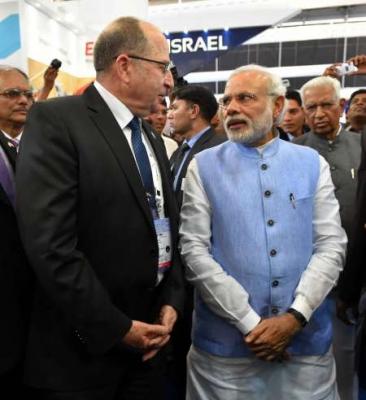
NEW DELHI: Israel has offered India all help with top-notch military technologies like the Iron Dome interceptor in tune with PM Narendra Modi's 'Make in India' policy, which includes indigenous defence production as a key thrust area.

Visiting Israeli defence minister Moshe Ya'alon on Thursday said he had discussed with Modi the "best way" to implement the 'Make in India' policy as well as further bolster the already robust bilateral defence ties. "The sky is the limit," said Ya'alon, the first-ever Israeli defence minister to visit India since bilateral diplomatic relations were established in 1992.

A tiny country which had kept its "hostile" neighbours at bay by developing new warfare technologies to intercept enemy missiles and rockets like the Iron Dome interceptor, Israel can cooperate closely in the defence-security arena with flexible technology transfer, he said.

Delivering the 6th R K Mishra memorial lecture, the Israeli minister, however, specified that bilateral security ties were not directed against any third country. "It's for mutual benefit. India and Israel share common values and interests. We are ready to share our technologies, know-how and experiences with India," he said.

Ya'alon also held discussions with defence minister Manohar Parrikar and home minister Rajnath Singh during his visit. Singh, who visited Israel last November, tweeted, "Israel has expressed its desire to share cutting-edge weapons technologies with India. Both the countries are willing to move forward."

Singh also asked Israel to take advantage of India raising FDI ceiling in defence sector to 49% and set up ventures enabling manufacturing in India.

Observing that non-military bilateral trade crossed $4 billion during January-November 2014, Singh said India's interest in a Free Trade Agreement (FTA) with Israel was particularly in the services sector. "We would need a good offer in services to make the FTA attractive for the Indian industry," he said.

Ya'alon's visit is a marked departure from the long-standing policy to keep bilateral military ties under wraps despite Israel being among the top three arms suppliers to India.

Having already inked deals and projects worth around $10 billion with Israel since the 1999 Kargil conflict, India is now close to finalising contracts for two additional Phalcon AWACS (airborne warning and control systems) and four aerostat radars, together worth well over $1.5 billion, as was first reported by TOI.

India already has three Phalcon AWACS in the shape of Israeli early-warning radar suites mounted on Russian IL-76 aircraft, which were inducted under a $1.1 billion tripartite agreement among India, Israel and Russia in 2004.

Similarly, India is going to buy four more aerostats after inducting two such EL/M-2083 radars, which are basically sensors mounted on blimp-like large balloons tethered to the ground, in 2004-2005 under a $145 million deal.

http://timesofindia.indiatimes.com/india/I...ow/46307051.cms


Attached thumbnail(s)
Attached Image
BorneoAlliance
post Feb 20 2015, 11:29 PM

New Member
*
Newbie
0 posts

Joined: Dec 2014
Military to create joint force in western Indonesia

The Indonesian Military (TNI) said it would focus its operations in the western part of the country, especially in Sumatra and Kalimantan, to deal with foreign threats.

The TNI said such efforts would be directed by a joint command known as Kogabwilhan.

“In the future, we expect that the South China Sea will be a flash point. So, a task force, such as the Kogabwilhan, will be very important,” Indonesian Military Chief Gen. Moeldoko said at the military headquarters in Cilangkap, West Jakarta, on Wednesday.

Kogabwilhan aims to pool the regional resources of the Army, the Navy and the Air Force into multi-service groups that will be positioned at certain defense flash points integral to preserving the country’s territorial integrity and sovereignty.

The operational areas will be divided into three parts, western, eastern and central.

Military expert and researcher in the Department of Politics and International Relations at the Centre for Strategic and International Studies (CSIS) Iis Gindarsah said it made sense for the TNI to prioritize Sumatra and Kalimantan.

“Most immediate flashpoints are located near the land and sea borders of Sumatra and Kalimantan,” Iis said.

Besides prioritizing Sumatra and Kalimantan, Moeldoko said Kogabwilhan was part of an effort to rearranging of the whole organization of the military in order to improve its operation.

The TNI is expected to set up a new operation command for the Air Force and a new division of the Army Strategic Reserves Command (Kostrad) under Kogabwilhan.

Moeldoko said President Joko “Jokowi” Widodo had been briefed on the plan, since it would involve transferring resources from local military commands, Air Force operation commands and the Navy to the new Kogabwilhan joint command.

“He has been informed about it and is considering when to make it official. We will just wait for a response from the government,” Gen. Moeldoko said.

Last week, Defense Ministry spokesperson Brig. Gen. Djundan Eko Bintoro confirmed that the Defense Ministry drafted regulations and budget proposals for the Kogabwilhan.

The TNI expects Kogabwilkan to be in place by 2024.

President Jokowi approved the plan and called on the TNI to swiftly implement it.

“As soon as possible, we will implement the plan. But first details for the plan should be finalized and then given to me,” Jokowi said after a meeting with TNI leadership in November last year. -

See more at: http://m.thejakartapost.com/news/2015/02/2...h.0IXtZnDF.dpuf


BorneoAlliance
post Feb 20 2015, 11:33 PM

New Member
*
Newbie
0 posts

Joined: Dec 2014
Ukraine gets Radarsat imagery while Canadian military faces shortages of data

Canada’s military will be providing Ukraine with satellite imagery even though it’s facing a critical shortage when it comes to acquiring such surveillance data for its own use, according to documents obtained by the Citizen.

The Conservative government received a request from the Ukrainians in September to provide the imagery from Canada’s Radarsat-2 satellite and concluded an agreement “so they can better track Russian and separatist troop movements with a caveat that information not be used for targeting purposes,” Defence Minister Jason Kenney said Thursday.

But Department of National Defence business planning documents for 2014-2015 show the Canadian Forces has warned it is facing a “critical shortage” when it comes to funding its own access to Radarsat-2 imagery.

Ongoing budget cuts by the Conservative government has left the military scrambling for that access. “The use of RADARSAT imagery in support of the Canadian Forces operations has been growing over the past years,” the planning documents warn but as part of cost savings, DND and the Canadian Forces have faced “an imposed reduction” on access for Radarsat-2.

The information from the documents follows a previous 2012 warning from DND about the limits it faced on acquiring Radarsat-2 imagery.

Federal departments were to receive $445 million worth of data collected by the Radarsat-2 satellite in exchange for the government’s financial contribution to the building of the satellite, which is owned and operated by MacDonald, Dettwiler and Associates Ltd. (MDA) of Richmond, B.C.

But the spacecraft has become so essential, particularly for the Canadian military’s surveillance of the country’s coastlines, that the federal government is fast using up its data credits.

Unless the government provides more money, it will use up its allotment of surveillance time by the summer of 2017, according to the 2012 records obtained by the Citizen using the access to information law.

The Canadian Space Agency, however, has said it is confident there will be enough Radarsat-2 data available for government departments. It has provided no details on whether it plans to purchase more access to satellite time.

Kenney’s press secretary, Lauren Armstrong, said in an email the satellite data will be transferred to Ukraine by the Canadian military.

The Conservative government refused to provide information on how much the provision of Radarsat-2 data will cost Canadian taxpayers and for what period it will be provided to Ukraine. There were no details on when Canada would start providing the imagery.

Nor was there an explanation about what safeguards would be put in place to ensure Ukraine’s military doesn’t use the surveillance data to target Russian or separatist forces.

NDP defence critic Jack Harris said it would make more sense to provide Radarsat-2 surveillance information to observers from the Organization for Security and Cooperation in Europe (OSCE) who have been called in to monitor the recently agreed-on ceasefire in Ukraine.

The Radarsat-2 satellite is unique in that it can provide surveillance data day or night and through heavy cloud cover.

Ukrainians have been fighting each other for the last year, with government troops battling rebels who want to separate. Russia has provided support to the separatist forces and Canada and NATO have accused Russia of sending troops and equipment to take part in the war. Russia denies that.

Canada has been one of the most vocal nations condemning Russia’s action.

Kenney said Canada has strongly supported Ukraine’s government but added Thursday that it has not agreed to provide lethal aid to the country’s military. Canada, however, has provided non-lethal equipment such as night vision goggles and bullet-proof vests.

Prime Minister Stephen Harper has also pledged $400 million in loans to help Ukraine’s near-bankrupt government. Some former Canadian diplomats, however, have suggested the Conservative government’s position on Ukraine is aimed at winning votes from Ukrainian-Canadians in the next federal election.

dpugliese@ottawacitizen.com

http://ottawacitizen.com/news/national/ukr...ortages-of-data


Attached thumbnail(s)
Attached Image
BorneoAlliance
post Feb 21 2015, 12:03 AM

New Member
*
Newbie
0 posts

Joined: Dec 2014
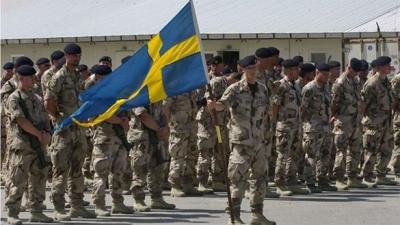
Finland and Sweden work on military alliance against Russia

Finland and Sweden - the countries that are not members of NATO - intend to strengthen their military cooperation. The two Scandinavian nations plan to establish their own naval task force.

Finland and Sweden made such a decision in light of Russia's growing military power and the need to control the Baltic region, Pravda.Ru reports.

Reportedly, Helsinki and Stockholm are concerned about the growing activity of Russian aircraft carriers in the Baltic Sea.

Sweden's Defence Minister Peter Hultqvist believes that Russia will weaken its influence in the Baltic region. It appears that both Sweden and Finland believe that Russia feels perfectly fine about NATO's growing activities right at its borders.

Pravda.Ru has repeatedly published materials about Russian aircraft performing only regular training flights and supervisory actions that did not have a goal to infringe upon the security of other countries.

http://english.pravda.ru/news/world/20-02-...weden_russia-0/


Attached thumbnail(s)
Attached Image
BorneoAlliance
post Feb 21 2015, 12:07 AM

New Member
*
Newbie
0 posts

Joined: Dec 2014
http://thediplomat.com/2015/02/the-philipp...ants-us-drones/

This post has been edited by BorneoAlliance: Feb 21 2015, 12:10 AM
BorneoAlliance
post Feb 21 2015, 12:08 AM

New Member
*
Newbie
0 posts

Joined: Dec 2014
The Philippine Military Wants US Drones

The Philippines is eying U.S. drones following the recent policy shift by the Obama administration to ease restrictions on their export and sale, local media reported February 18.

According to ABS-CBN News, military spokesman Colonel Restituto Padilla said that the while Philippines did not want armed drones, it would be interested in drones that could be used for intelligence and surveillance operations.

Meanwhile, BusinessWorld, a leading Philippine business newspaper, reported that Harold M. Cabunoc, a spokesman for the Armed Forces of the Philippines, said that while the drones would indeed give the military “an edge in information gathering and in armed confrontations,” the country’s interest is primarily in their potential for humanitarian assistance and disaster relief (HADR).

National Defense Public Affairs Service Chief Arsenio R. Andalong also confirmed to BusinessWorld that the military’s primary interest in acquiring drones would be for HADR operations.

“In general, drones will certainly enhance any country’s defense posture. In our case, however, their potential contribution to HADR is probably more important,” Andolong said.

“Our planners would first have to assess the technology’s efficiency and the effectiveness vis-à-vis our capabilities,” he added.

Last week, The Diplomat reported that the Obama administration had established a policy for the export of commercial and military drones – including armed ones – following a lengthy review. The move opens up the possibility of Washington equipping its allies such as the Philippines, even though this would still be done under strict conditions and recipient nations need to agree to certain “end-use assurances.”

The use of U.S. drones in the Philippines is not without controversy. While the two allies inked an Enhanced Defense Cooperation Agreement last year to boost military ties, some voices continue to oppose strengthening links in this dimension. Some Philippine legislators have expressed alarm at the discovery and alleged use of U.S. drones in Philippine operations over the past few years, which they say undermine Philippine sovereignty.

There have also been some media reports suggesting that U.S. drones were involved in the lead-up to a controversial January 25 Philippine police operation to get Malaysian terrorist and bomb expert Zulkifli bin Hir – more popularly known as Marwan – who was on the Federal Bureau of Investigation’s (FBI) most wanted list. As The Diplomat reported previously, though evidence suggests the operation ended up killing Marwan, it resulted in one of the largest single day losses for the Philippine police in the nation’s history and has threatened to undermine a historic peace deal between the government and Muslim rebels.

http://thediplomat.com/2015/02/the-philipp...ants-us-drones/

This post has been edited by BorneoAlliance: Feb 21 2015, 12:10 AM


Attached image(s)
Attached Image
BorneoAlliance
post Feb 21 2015, 12:22 AM

New Member
*
Newbie
0 posts

Joined: Dec 2014
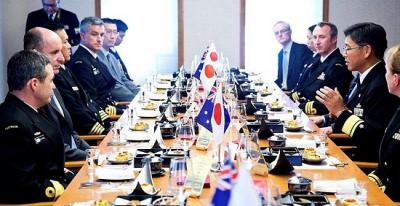
Japan could soon authorise its military to defend Australian troops

The sight of Australian troops defending Japanese forces during Iraq's post-war reconstruction raised hackles in certain quarters in both countries. Sent there for reconstruction, the engineers from Japan's Self-Defence Forces (JSDF) were constitutionally prohibited from opening fire on Iraqi insurgents unless fired on first.

A decade later, Japan may finally be able to return Australia's favour, should Japanese Prime Minister Shinzo Abe's plans on collective-self defence become reality (along with a proposed submarine deal). According to analysts, it's all part of a blossoming 'special relationship' in which Australia has become Japan's second-most important security partner in the Asia Pacific.

On 12 February, Japan's top business daily, Nikkei, quoted a senior Japanese Defence Ministry official as saying that Tokyo was considering allowing the JSDF to help defend Australian troops in the event of an attack 'during joint exercises or surveillance,' as part of a broader push by the Abe Government against the nation's pacifist constitution and its military restrictions.

The new provision would match arrangements with US forces agreed by Japan's cabinet last July, and could potentially extend to the JSDF providing non-combat rear area logistical and intelligence support to Australian forces in regional contingencies, such as on the Korean Peninsula.

Justifying the planned change, the Japanese official told Nikkei, 'If the SDF is authorised to protect only American forces, they would not be able to come to the aid of Australian forces even if they are attacked during joint exercises.' The newspaper said the Japanese Government and Abe's ruling Liberal Democratic Party (LDP) would 'discuss adding Australian forces to this arrangement given that Tokyo is deepening its security ties with Canberra.'

In more fuel for talk about an emerging 'quasi-alliance' between Japan and Australia, the newspaper also noted both nations' defence-sharing framework and plans to conduct joint in-flight refueling and other exercises in Guam this month, along with US forces.

However, a stumbling block for Abe exists in the form of Buddhist-backed Komeito, the junior partner in the LDP-led ruling coalition, which is opposed to any further legislative changes beyond those agreed last year. Abe relies upon Komeito for a majority in the upper house, but has already attracted criticism from the junior partner over reported plans to backtrack on an official war apology, known as the Murayama Statement.

The two parties have started negotiations on the proposed reinterpretation of the constitution to allow Japan to defend its allies, with the Government and LDP aiming to finalise related bills by the end of March, for submission to parliament in May. But Komeito Deputy Secretary-General Tetsuo Saito has told Bloomberg that the process could be delayed. 'If proposals are put forward that we have not debated, I don't know if we will reach a conclusion by the end of March,' he said.

Narushige Michishita, professor at Japan's National Graduate Institute for Policy Studies, said the proposed rule change concerning Australia was 'only reasonable' given current support for US forces.

'This is not about the JSDF and Australian forces fighting together, but a more important wartime cooperation (than just peacekeeping operations) that we might be able to undertake in the future,' he said. 'My gut feeling is that it will be realised because it is what we have already promised to do to the United States. It would be extremely awkward for us not to provide the same support to Australia while doing so to the United States.'

Michishita said the prospect of Japanese and Australian troops joining combat missions, such as against Islamic State in Syria, was 'not an option' given opposition both in parliament and among the Japanese public. Opinion polls show there is no majority support for Abe's proposed changes, so the Prime Minister is treading warily despite having recently won re-election.

No secret deal

Michishita also denied claims of a 'secret' submarine deal between Abe and Australian Prime Minister Tony Abbott, who during last year's meeting in Australia talked about a 'special relationship' between the two US allies. However, he said Tokyo faced obstacles in placating Australian political pressure for local manufacturing of the Soryu subs, which former Australian Defence Minister David Johnston described as 'the best conventional submarine in the world.'

'Realistically, there's a limit as to how much we can do for Australia to acquire the submarines at a reasonable cost, and in a reasonably built manner. Certainly Japan could subcontract some manufacturing to Australian shipbuilders, but doing it too much would increase the cost and potentially undermine their capability,' Michishita said.

'Australia has to find a balance between the objectives of local employment and acquiring cutting-edge submarines in good condition and at relatively low cost. Ultimately, it's going to be a political decision for Mr Abbott.'

Regardless of the outcome, Michishita said Australia had become Japan's second-most important defence ally in the region behind the US, although a cautious approach to strengthening ties was critical. 'We should take a step-by-step approach to enhancing security ties – we don't want to antagonise China as we'd like to improve peace and stability in the region and not disrupt it,' he said.

Professor Rory Medcalf, head of ANU's National Security College, says any submarine deal with Japan would not 'lock Australia into a military alliance with Japan – that's a false concern that's been raised in some quarters.'

Japanese troops protecting Australian Diggers? Joint submarine exercises in the Pacific? Scenarios that long would have seemed a fantasy have suddenly become very real, providing Abe and Abbott can negotiate their own domestic political minefields first.

Photo courtesy of Australian Defence Image Library.

http://www.lowyinterpreter.org/post/2015/0...LCC=2633800429&


Attached thumbnail(s)
Attached Image
BorneoAlliance
post Feb 21 2015, 12:34 AM

New Member
*
Newbie
0 posts

Joined: Dec 2014
Russia Developing New Nuclear Powered Destroyer

Currently, the Russian Naval Forces have only one nuclear powered warship, the guided-missile heavy cruiser Pyotr Velikiy.

Russia is developing a new generation destroyer with a nuclear propulsion system, Russian Navy Commander Viktor Chirkov told journalists Friday.

"Currently, we are conducting research and development works on the creation of a new generation destroyer with a special propulsion system. Our priority goal is building a nuclear powered ship," he said.


Read more: http://sputniknews.com/politics/20150220/1...l#ixzz3SIsxkDb3


Attached thumbnail(s)
Attached Image
BorneoAlliance
post Feb 21 2015, 03:39 PM

New Member
*
Newbie
0 posts

Joined: Dec 2014
Putin: Russia’s military strength is unmatchable

http://www.businessinsider.my/putin-russia...QZDDCqmM0uT1.97


Attached thumbnail(s)
Attached Image
BorneoAlliance
post Feb 21 2015, 03:43 PM

New Member
*
Newbie
0 posts

Joined: Dec 2014
Slightly More Americans Say U.S. Is No. 1 Military Power

WASHINGTON, D.C. -- As the U.S. military takes on an active role in the fight against the Islamic State group, slightly more Americans, 59%, say the U.S. is the No. 1 military power in the world. This is up six percentage points from February 2014, before the U.S. military became involved in the fight against the Islamic State group, also known as ISIS. Fewer Americans (38%) now say the U.S. is only one of several leading military powers, down from 44% a year ago.

Americans' Views on How U.S. Military Ranks

These results come from Gallup's annual World Affairs poll, conducted Feb. 8-11, 2015. The U.S. military has expanded its operations significantly since this time last year, regularly conducting air strikes in Iraq and Syria in an effort to root out Islamic extremists. Additionally, the U.S. now provides military training to anti-government rebels in Syria and the prospect of sending military aid to the besieged Ukrainian government looms large. The U.S. military also played a crucial role in helping countries in West Africa battle the deadly Ebola virus outbreak.

This expanded workload for the U.S. military may be driving the uptick in the percentage of Americans who say the U.S. military is the top in the world, rather than one of several competing powers. While a majority of Americans have said the U.S. has the world's top military power since this question was first asked in 1993, the percentage who say this remains below the high of 64% recorded in 2010. In the following years, as the U.S. continued to withdraw troops from a long-term engagement in Iraq and Afghanistan, smaller percentages of Americans said the U.S. was No. 1 militarily.

Older Americans Less Likely Than Young to Say U.S. Is No. 1 Militarily

Older Americans are less likely than their younger counterparts to say the U.S. is No. 1 militarily. A slim majority of U.S. adults aged 50 and older (54%) say the U.S. is top militarily, well below the 64% of Americans younger than 50 who say the same. Older adults are more likely to have clearer memories of the Cold War and the military prestige the U.S. enjoyed after the fall of the Soviet Union. As such, these older Americans may be more likely to feel that U.S. military power is not as strong now as it was then.

U.S. Views on Stength of U.S. Military, by Age

Strong Majority Says It Is Important for U.S. Military to Be No. 1

About two-thirds of U.S. adults (68%) say it is important for the U.S. to be No. 1 in the world militarily, up six points from two years ago. Overall, Americans have consistently said it is important for the U.S. military to be No. 1 in the world over the past two decades, emphasizing the importance most Americans place on their country's military preponderance.

Importance of the U.S. to Be No. 1 in the World Militarily

Bottom Line

As the U.S. military takes a more active role on the world stage relative to the past few years, more Americans believe their military is superior. While the U.S. identity has many facets -- its inventive economy, democratic tradition and history of being a "melting pot" -- America's formidable military has been an important source of national pride. Even after two unpopular military engagements in Iraq and Afghanistan, most Americans continue to see the military power of the U.S. as an important component of the country's global standing.

Survey Methods

Results for this Gallup poll are based on telephone interviews conducted Feb. 8-11, 2015, with a random sample of 837 adults, aged 18 and older, living in all 50 U.S. states and the District of Columbia. For results based on the total sample of national adults, the margin of sampling error is ±4 percentage points at the 95% confidence level. All reported margins of sampling error include computed design effects for weighting.

Each sample of national adults includes a minimum quota of 50% cellphone respondents and 50% landline respondents, with additional minimum quotas by time zone within region. Landline and cellular telephone numbers are selected using random-digit-dial methods.

http://www.gallup.com/poll/181646/slightly...tary-power.aspx


Attached thumbnail(s)
Attached Image
BorneoAlliance
post Feb 21 2015, 03:49 PM

New Member
*
Newbie
0 posts

Joined: Dec 2014
Plan to buy drones for Canadian military dogged by problems, audit shows

A project to buy drones for the Canadian Forces has been dogged by a lack of oversight and information as well as unclear objectives, resulting in years of delays, a Department of National Defence audit has found.

The recently released audit found the requirements were not clear and there was not enough information to justify the purchase of the unmanned aerial vehicles at a cost of more than $1 billion.

“Rationale and analysis in the draft business case and draft project brief were insufficient to facilitate an informed investment decision and did not comply with Treasury Board and DND standards,” according to the audit examining the Joint Unmanned Surveillance Targeting and Acquisition System (JUSTAS).

Auditors also blamed the delay on the Afghanistan mission, since the military had to put in place a project to lease drones for that war. Aerospace firms also contributed to the problems by not providing enough financial information on their products, the audit noted.

In addition, the turnover of military staff and the unclear procurement process resulted in more delays.

The various options for a drone purchase were outlined in 2005 for air force officers. In the run-up to the 2006 election, Stephen Harper promised that under a Conservative government, Goose Bay, N.L., would become home to a new squadron operating long-range drones. Once in power, the Tories reiterated the pledge.

But the Canadian military has been trying for years to get JUSTAS off the ground. Better oversight would have helped reduce the delays, the audit found.

RCAF spokesman Capt. Alexandre Munoz said the service has accepted the recommendations from the auditors to improve the procurement process and changes have been made.

A civilian project manager was brought in and proper documentation has been developed, the auditors pointed out.

Munoz noted that a JUSTAS contract is expected to be awarded between 2019 and 2020.

“The full scope of testing will commence with the selection of the manufacturer and award of the contract and continue through to the delivery of the final aircraft,” Munoz explained. “Operational testing will occur throughout the life of the unmanned aircraft system as equipment, tactics or missions are changed to ensure optimal use of the capability.”

The drones were originally supposed to be operating as early as 2010. That was then pushed back to early 2012 and again changed to 2017 by military officers as they dealt with delays.

In 2012, the Citizen reported the RCAF had determined it needed 369 people if it wanted to create a new squadron for unmanned aircraft as promised by Harper. Finding those people was a problem, according to the military.

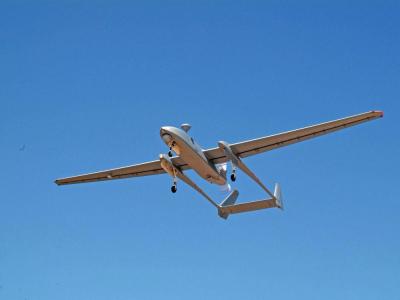
During the Afghan war, the government approved the lease of Israeli-built Heron unmanned aircraft from MacDonald Dettwiler and Associates in Richmond, B.C.

During the Libyan war in 2011, senior Canadian defence leaders pitched the idea of spending up to $600 million for armed drones to take part in that conflict. They wanted to purchase Predator drones built in the U.S.

Documents obtained by the Citizen showed that military leaders saw the Libyan war as a possible way to move the stalled JUSTAS program forward. According to a briefing presented to then-Defence minister Peter MacKay, they pointed out the purchase of such aircraft for the Libyan conflict could kick-start their larger drone project.

The war, however, was in its final stages when the briefing was provided and the proposal didn’t get approval from the Conservative government.

dpugliese@ottawacitizen.com

Twitter.com/davidpugliese
http://ottawacitizen.com/news/national/pla...ems-audit-shows


Attached thumbnail(s)
Attached Image
BorneoAlliance
post Feb 21 2015, 03:56 PM

New Member
*
Newbie
0 posts

Joined: Dec 2014
Why is the U.S. military sharing details about a planned assault on Mosul? Some possibilities

A senior U.S. military official disclosed on Thursday a working timeline for when Iraqi troops may assault Mosul, a city of more than 1 million people that has been under the control of the Islamic State since June. It is expected to be a signature battle against the militant group: Mosul is Iraq’s second-largest city, and there are believed to be at least 2,000 enemy fighters there.

The senior official, speaking to a room full of reporters at the Pentagon, said the assault could begin in April or May and will require between 20,000 and 25,000 Iraqi troops, with the United States in a still-unspecified support role. That has prompted backlash from some observers, including Sen. John McCain (R.-Ariz.), the chairman of the Senate Armed Services Committee.

“It was deeply disturbing to read today than an official from U.S. Central Command, in an official briefing to the media, provided detailed operational information regarding coalition plans to retake Mosul from ISIL,” McCain and Sen. Lindsay Graham (R.-S.C.) said in a letter to President Obama on Friday. “Never in our memory can we recall an instance in which our military has knowingly our own war plans to our enemies.”

McCain and Graham added that the disclosure could put the lives of U.S. and Iraqi troops in danger, and that they want to know who provided the media briefing and whether they had White House permission to release the information.

It’s a stretch to blame Obama when a senior U.S. military official releases details about a plan formed in conjunction with Iraqi officials. But the tweets above provide a pretty good sampling of the knee-jerk reaction to it.

Asked to respond to the furor, another official with U.S. Central Command said Friday that the organization is trying to remain transparent about U.S. operations in Iraq and provide “more detail and fidelity” about them.

He also noted that the plan to take back Mosul has been discussed for months, including by Iraqi Prime Minister Haider al-Abadi in an interview with the BBC this week. The Iraqi leader told the news organization that he hoped Mosul would be liberated within a few months, but declined to provide more details on when it could occur.

The Centcom official defended the decision to share details Thursday and said the plan is subject to change.

“All of that stuff could be subject to change based on future assessments,” he said. “We are not committed to launching a Mosul offensive on a specific date.”


At the Pentagon, another official said “not one word of operational value” to the Islamic State was released Thursday. Officials appeared to make the case that the information released Thursday has value as a part of psychological operation, in which information is released in an attempt to influence the enemy and civilians in an area of military operations.

“It was all very much big arrow, little map, and highlighted Iraqi commitment to taking back the city and provided some data points to underscore the scope and general timeline of the operation,” the Pentagon official said, speaking on background. “Putting out the date forced [the Islamic State] into a defensive crouch, which saps their energy.”

U.S. military officials have forecast large operations in the past when it suits them. In fall 2004, for example, U.S. commanders made it clear they planned to take back the city of Fallujah in western Iraq from insurgents, allowing those who wished to flee the city to do so. Some 3,500 to 4,000 enemy fighters were in the city when the Second Battle of Fallujah — the bloodiest of the U.S. war in Iraq — began Nov. 7, 2004, said Maj. Gen. Lawrence D. Nicholson in an interview with Checkpoint around the 10th anniversary of the battle.

U.S. Marines also disclosed they were planning to assault the Taliban stronghold of Marja in Afghanistan in January 2010, a few weeks before the battle began. That raised questions at the time whether U.S. commanders were attempting to influence the Taliban with psychological operations.

It isn’t clear what will occur with Mosul. For now, U.S. troops will continue to train Iraqi soldiers for the battle. About 2,000 have graduated already, and another 3,400 are currently in training, the Centcom official said Thursday.

This post was updated with information about the letter McCain and Graham sent the White House.

http://www.washingtonpost.com/news/checkpo...-possibilities/

This post has been edited by BorneoAlliance: Feb 21 2015, 03:57 PM


Attached thumbnail(s)
Attached Image
BorneoAlliance
post Feb 21 2015, 06:05 PM

New Member
*
Newbie
0 posts

Joined: Dec 2014
The 7 Coolest High-Tech Projects The Military Is Currently Working On


It’s the Defense Advanced Research Projects Agency’s job to lead the military’s march into the future, capability-wise. Looking through DARPA’s technology requests and current projects reveals some amazing future tech:

1. Close air support on target in six minutes
DARPA's persistent close air support program will allow ground controllers to more quickly request and receive close air support

Close air support allows troops to call in airplanes and helicopters to attack enemy ground forces. With the current tactics and resources, it generally takes 30 to 60 minutes for pilots to get to the fight and drop their bombs. Persistent Close Air Support, or PCAS, looks to drop this to six minutes by allowing ground fighters to tap a point on a digital map and have the pilot immediately receive the geo coordinates along with a flight plan and bombing solution.

2. On-demand satellite launches

Airborne Launch Assist Space Access is a convoluted name for a program, but it has a tantalizing promise: satellites in orbit within 24 hours of a request for less than $1 million. The satellites would be placed in a rocket attached to a jet. The jet would then fly to the upper atmosphere and release the rocket, and its satellite, into orbit.

3. Soldier super senses

DARPA's project, squad x core technologies, will allow ground troops to see information from across the battlefield

Squad X core technology services aims to give troops better situational awareness by linking them into all the sensors on the battlefield, including new ones mounted on the troops themselves. Squad leaders would be able to see the status of their squad, video feeds from nearby drones and aircraft, and targets in the area.

4. Intuitive prosthetics

HAPTIX, Hand Proprioception and Touch Interfaces, is working to make prosthetics that not only work like biological limbs, but feel like biological limbs. This should allow amputees to do more things more quickly with their prosthetics and even allow more amputees to return to combat. (The video above shows a soldier testing a prototype arm while climbing a rock wall.)

5. Firefighting robots
DARPA project firefighting robot SAFFiR

The Shipboard Autonomous Firefighting Robot, or SAFFiR, is designed to work on Navy ships fighting fires and identifying hot spots before they light off. In testing last November, SAFFiR successfully fought a small fire on a decommissioned ship.

6. Drones that hunt in packs
DARPA program seeks drones that hunt as a pack

The Collaborative Operations in Denied Environment, or CODE, is designed to reverse the human to robot ratio, taking it from multiple humans per drone to multiple drones per human.

7. Electricity as medicine
DARPA project ElectRX will allow doctors to use electrical impulses in the enrve endings to diagnose and treat problems with the body's natural healing processes

The human body is designed to heal itself, but sometimes extreme trauma can cause the electrical impulses that control healing processes to go haywire. ElectRx will allow doctors to record nerve processes in healthy bodies and then prescribe stimuli to correct the electrical storm in patients with post traumatic stress disorder, traumatic brain injury, autoimmune disorders, or even physical injury.

http://www.wearethemighty.com/cool-darpa-projects-2015-02


Attached thumbnail(s)
Attached Image Attached Image Attached Image Attached Image Attached Image
BorneoAlliance
post Feb 21 2015, 09:52 PM

New Member
*
Newbie
0 posts

Joined: Dec 2014

Air Force Launches New Air Supremacy Effort for 2030
by KRIS OSBORN on FEBRUARY 20, 2015


The U.S. Air Force is launching a new air-supremacy effort designed to identify and develop next-generation technologies to maintain America’s air dominance through 2030 at the same time the future of stealth is being questioned.

The service has stood up teams to experiment and conduct technology demonstrations to identify innovations that will guide the service and its platforms into future in which the Air Force expects to face more threats from advanced militaries like China or North Korea, Lt. Gen. Ellen Pawlikowski, military deputy for Air Force acquisition, told Military​.com.

“We are going to be facing adversaries that are as modern as we are if not more so. This provides us the opportunity to leverage the entire world market of technology development through our collaborative activity with our allies,” she said.

The effort, which includes work with the Air Force Research Laboratory and the Pentagon’s research arm, DARPA, is looking at a wide range of future applications including hypersonics, stealth, advanced sensors, cyber technologies, drones, space systems and directed energy weapons, Pawlikowski said.

“We’re taking a more enterprising look at understanding and exploring the capabilities we are going to need in the future,” she said. “It is not just looking at a next-generation fighter but looking at these issues in the context of leveraging all of the capabilities that can accomplish that.”

Overall, the new Air Force initiative plans to use a lot of modeling and simulations to assess and verify the validity of new or emerging technologies, Pawlikowski said.

When it comes to hypersonic flight, Pawlikowski emphasized that the service will not only explore hypersonic weapons but also hypersonic aircraft designed to carry and deliver the weapons.

In addition, Pawlikowski said the effort will look to defeat the rapidly improving air defense systems. Many experts and analysts have made the point that stealth or low-observable technologies are less effective as faster computers processors, sensors and radar can jump between multiple frequencies and help locate stealth aircraft at increasingly longer distances.

Pawlikowski said stealth technologies will continue to evolve as a way to meet these emerging threats from more advanced air-defense systems. She did not specifically reference the Air Force’s new Long Rang Strike Bomber, or LRS-B, slated to enter service in the 2020’s – but she did say stealth applications are evolving far beyond their original or initial configurations.

“Air defense technology has matured and is now able to counter some of the aspects of stealth. This is part of what has to happen as we continue to evolve stealth technology. Stealth is not an on and off thing. The stealth aircraft that we have in development today are very different than the original stealth that we talked about,” Pawlikowski said.

Not much information about the LRS-B is available publically, however Pawlikowski did say the service plans to award a developmental deal for the platform later this year and plans to ultimately acquire between 80-to-100 bombers. Air Force officials have said the aircraft is slated to cost roughly $550 million each.

Despite the suggestion that stealth technology will benefit from future innovations, Pawlikowski emphasized that stealth by itself is not necessarily the sole answer to the evolving or maturing threats presented by modern air defenses.

“We can’t count on stealth to do everything for us. Stealth combined with other attributes that will allow us to deal with that threat. Speed and stealth are extremely important but also they don’t stand alone because when you are talking about air superiority it boils down to being able to act and react more quickly than you adversary can,” Pawlikowski said.

Pawlikowski’s stance on stealth’s future was not too far off those of Chief of Naval Operations, Adm. Jonathan Greenert, who suggested in public comments that stealth technology may be losing its effectiveness in today’s modern technological environment.

“You know that stealth may be over-rated,” Greenert said during a speed at the Office of Naval Research Naval Future Force Science and Technology Expo, Washington D.C. “I don’t want to necessarily say that it’s over but let’s face it, if something moves fast through the air and disrupts molecules in the air and puts out heat – I don’t care how cool the engine can be – it’s going to be detectable.”

Greenert made these comments in the context of a discussion about the F/A-XX program designed to replace the F/A-18, however some analysts have wondered publically about the Navy’s level of enthusiasm for the stealth carrier variant of the F-35, the F-35C. However, the Navy has expressed great support for the F-35C and highlighted its first-ever historic landing on an aircraft carrier in November of last year.

One analyst argued that even it stealth is less effective than it may have been several decades ago in light of global technological progress — it is by no means irrelevant and worthy of further pursuit.

“Just because potential enemies are developing ways to detect low observable aircraft does not mean you should stop trying to avoid detection. At the end of the day it is a good thing to be detected later rather than earlier,” Richard Aboulafia, vice president of analysis at the Teal Group, a Virginia-based consultancy, told Military​.com.

Aboulafia also agreed with Pawlikowski when it comes to additional attributes assisting stealth or low-observable technology.

“It is an endless battle between offense and defense. Maybe there is something to be said for combat air performance on top of stealth. That was what the F-22 was — stealth plus great kinematics, speed and lethality.”

– Kris Osborn can be reached at Kris.Osborn@military.com


Read more: http://defensetech.org/2015/02/20/air-forc.../#ixzz3SO4OzNf4
Defense.org


Attached thumbnail(s)
Attached Image

13 Pages « < 2 3 4 5 6 > » 
Bump Topic Topic ClosedOptions New Topic
 

Change to:
| Lo-Fi Version
0.0503sec    0.17    7 queries    GZIP Disabled
Time is now: 9th December 2025 - 08:14 AM