

Ya, i agree ! Pana TV solid la...
Panasonic Viera TV Fan Club V.5, Plasma, LCD & LED
Panasonic Viera TV Fan Club V.5, Plasma, LCD & LED
|
|
 Oct 10 2020, 05:57 PM Oct 10 2020, 05:57 PM
|
 
Senior Member
852 posts Joined: Jan 2003 
|
Ya, i agree ! Pana TV solid la...
|
|
|
|
|
|
Oct 20 2020, 08:02 AM
|

Junior Member
107 posts Joined: Jun 2018 
|
QUOTE(eymc @ Sep 27 2020, 02:27 AM) well if you are paying for panasonic price After some research, found out that Panasonic TVs (Android TV) are manufactured by Skyworth but using Panasonic's own "Vivid Digital Pro" video engine.i am sure u want it made by panasonic ! if OEM better buy china brands. (hisense) as for android maybe you can buy separately. OEM is not pana's panel. No point already !  Watch this review and you can see the menu are almost similar, even the rear connections. This post has been edited by Ciypher: Oct 20 2020, 08:19 PM |
|
|
Oct 30 2020, 09:17 AM
|
|
Junior Member
1 posts Joined: Jan 2020
|
Hi guys just curious to ask. Does panasonic HX650 model support 5hz wifi?
|
|
|
Oct 30 2020, 11:23 AM
Show posts by this member only | IPv6 | Post
#1604
|

All Stars
18,503 posts Joined: Oct 2007 From: P.Jaya
|
What HX655 model bring new ?
|
|
|
Oct 30 2020, 11:27 AM
Show posts by this member only | IPv6 | Post
#1605
|
|
All Stars
18,503 posts Joined: Oct 2007 From: P.Jaya
|
What HX655 model bring new ?
Hexa Chroma Drive, IPS but no Dolby Vision ? This post has been edited by stasio: Oct 30 2020, 11:28 AM |
|
|
Oct 30 2020, 07:38 PM
|
|
Junior Member
107 posts Joined: Jun 2018
|
QUOTE(stasio @ Oct 30 2020, 11:27 AM) What HX655 model bring new ? Maybe that's the reason the 65" is going for RM1999. Save on the License fee..Hexa Chroma Drive, IPS but no Dolby Vision ? |
|
|
|
|
|
Oct 31 2020, 07:06 PM
|
|
Junior Member
302 posts Joined: Sep 2013
|
just realized it seem hx740 downgrade from predecessor gx740 because does not has hexachrome pro need to pick hx800
|
|
|
Nov 13 2020, 09:48 PM
Show posts by this member only | IPv6 | Post
#1608
|

Newbie
10 posts Joined: Jun 2012
|
hi all sifus, based on the photos, may I know what happened to the tv screen? The tv is 49fx600k, just 2 years old.
My parents said the screen became like this while watching tv, they said no water leaking, no hitting the screen. Becos of cmco, I can’t cross state (tv is at parent’s house in Penang) so I can’t be in front of the tv. Normally how long is the warranty period for this to? Thanks in advance for your advice. 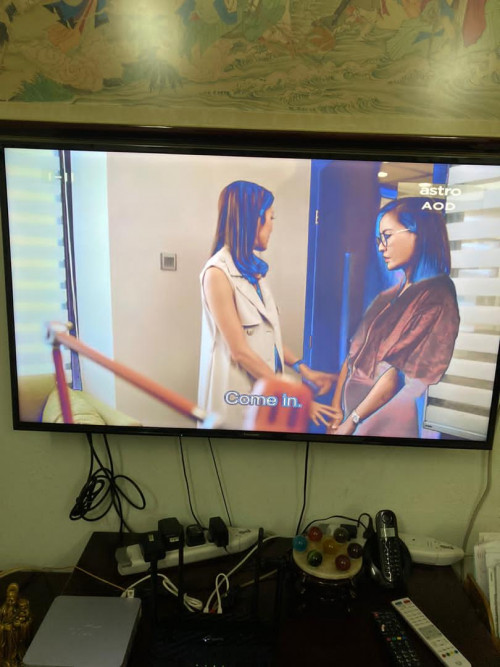 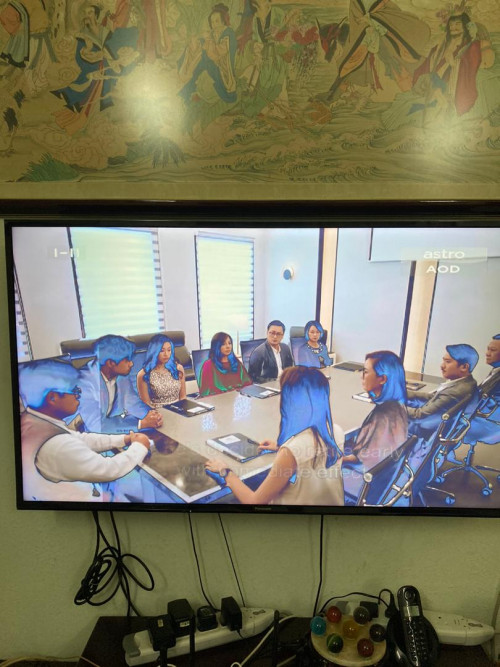 |
|
|
Nov 16 2020, 01:53 PM
|

Junior Member
245 posts Joined: Aug 2012
|
I see many people here arguing GX800 (MY version, IPS) "local dimming".
Let me share my 1 year experience with this TV. From what I see this TV not just doing CE dimming (frame dimming). The implementation is similar like Samsung NU8000 local dimming with edge backlight. I guess it was 16 zones vertical zone local dimming. But for this Panasonic TV I cant see it goes beyond 2 zones. It just half-half zone control vertically. So in actual video scenes, this would not help much. Unless if you see a video with half side picture being dark, and another side is bright then this local dimming quite obvious. Whatever it is Panasonic still got logic to call this "local dimming" because it can control >1 zone. I have both NU8000 (65") and GX800 (55") |
|
|
Nov 16 2020, 01:56 PM
|
|
Junior Member
245 posts Joined: Aug 2012
|
Few weeks ago Panasonic pushed an update to enable Atmos in Netflix
 Better late than never! |
|
|
Nov 16 2020, 02:59 PM
Show posts by this member only | IPv6 | Post
#1611
|

Senior Member
1,109 posts Joined: Sep 2007 From: Kuala Lumpur
|
QUOTE(ruzaini88 @ Nov 16 2020, 01:53 PM) I see many people here arguing GX800 (MY version, IPS) "local dimming". These so called " zones " can also happen in pre-programming algorithm within the software dimming , 1-6 or 6-12 zones .Let me share my 1 year experience with this TV. From what I see this TV not just doing CE dimming (frame dimming). The implementation is similar like Samsung NU8000 local dimming with edge backlight. I guess it was 16 zones vertical zone local dimming. But for this Panasonic TV I cant see it goes beyond 2 zones. It just half-half zone control vertically. So in actual video scenes, this would not help much. Unless if you see a video with half side picture being dark, and another side is bright then this local dimming quite obvious. Whatever it is Panasonic still got logic to call this "local dimming" because it can control >1 zone. I have both NU8000 (65") and GX800 (55") That is not a local dimming system because even SDR TV can do that . All it has to do is turn off the half or quarter of the LED ARRAY in the backlight , it doesn't actually control its backlight to the same manner as NU8000 or even the new X90H . To add to the argument , GX800 has a typical brightness of 300 cd/m2 . And if the local dimming system is effective , it will be way higher than 300 cd/m2 . This suggest GX800 either has an inactive Local Dimming system or has none . I haven't actually crack open a GX800 to check . At the end of the day we care about the result . Since either of the answer lead to the same result - it doesn't nearly improve the Picture Quality like a FALD TV like X90H do , it is pointless to argue about its existence . |
|
|
Nov 16 2020, 05:05 PM
Show posts by this member only | IPv6 | Post
#1612
|
|
Senior Member
1,124 posts Joined: Oct 2004
|
any good 50" TV Panasonic?
|
|
|
Nov 16 2020, 05:20 PM
|
|
Junior Member
245 posts Joined: Aug 2012
|
QUOTE(Convael @ Nov 16 2020, 02:59 PM) These so called " zones " can also happen in pre-programming algorithm within the software dimming , 1-6 or 6-12 zones . My point here it is still local dimming. I dont want to touch about FALD topic.That is not a local dimming system because even SDR TV can do that . All it has to do is turn off the half or quarter of the LED ARRAY in the backlight , it doesn't actually control its backlight to the same manner as NU8000 or even the new X90H . To add to the argument , GX800 has a typical brightness of 300 cd/m2 . And if the local dimming system is effective , it will be way higher than 300 cd/m2 . This suggest GX800 either has an inactive Local Dimming system or has none . I haven't actually crack open a GX800 to check . At the end of the day we care about the result . Since either of the answer lead to the same result - it doesn't nearly improve the Picture Quality like a FALD TV like X90H do , it is pointless to argue about its existence . From electrical hardware point of view, you need to have by zone LED controller to achieve this. The fundamental is same for edge lit Local Dimming or full array Local Dimming. Those differences are number of zones and impact to the picture. Thats it. I didn't do measurement with this TV but I have done simple video test for both NU8000 and GX800 in dark room. White box moving video from side to side (horizontally) Easily I see NU8000 able to control the edge LEDs by zone (~16), but same video on GX800 work differently where I could see only 2 LED zones. In a way for me I still see the impact of this local dimming in this TV. I cant agree this " it doesn't nearly improve the Picture Quality like a FALD TV like X90H do , it is pointless to argue about its existence ." Make no sense to compare with FALD. I am not arguing here, I am just sharing my experience and trying to explain electrical design. Local dimming not only for full array! It can also be implemented in edge lit! Software algorithm pixel dimming (so called micro dimming by some makers) is another story. It is not local dimming. Obviously. Beware of chinese TV makers This post has been edited by ruzaini88: Nov 16 2020, 05:24 PM |
|
|
|
|
|
Nov 16 2020, 06:00 PM
Show posts by this member only | IPv6 | Post
#1614
|
|
Senior Member
1,109 posts Joined: Sep 2007 From: Kuala Lumpur
|
QUOTE(ruzaini88 @ Nov 16 2020, 05:20 PM) In a way for me I still see the impact of this local dimming in this TV. There is no argument here really , I did not come to that verdict out of speculation.I cant agree this " it doesn't nearly improve the Picture Quality like a FALD TV like X90H do , it is pointless to argue about its existence ." Make no sense to compare with FALD. I am not arguing here, I am just sharing my experience and trying to explain electrical design. We know that the most important factor to consider for TV's picture quality is the contrast rating , which is the measurement from the brightest part to the darkest part of the screen . The whole purpose of local dimming was to enhance these aspects . Therefore making the brightest part brighter , darkest part darker , directly contribute to the increase of contrast numbers . There are 2 types of local dimming system in the TV market right now : The FALD . In a typical fashion , FALD is able to divide the whole backlight system into multiple zones of lights , darkening selected zones while boost white of the brighter portion. Which is also why , TV with more zones is usually has much higher contrast ratio when Local Dimming is on . Obviously the GX800 does not fall into this category so we will stop talking about this . Moving on , we have the second type of local dimming which is edge-lit , like what you saw on NU8000 . QUOTE Local dimming not only for full array! It can also be implemented in edge lit! Due to its nature of being edge-lit , these TV can only improve on boosting the brightness because it lacks the more advance zones to shelter the backlight completely [ due to it lighting up the pixels from the edge of the screen]. The cons being , when it lights up the screen it usually brighten up the entire column , hence doesn't improve the dynamic range as well as the FALD . You are correct in a sense that we already have a great example of it which is the NU8000 . Being an edge-lit local dimming TV , it is able to shoot past 800 nits . That is a whole lot of headroom for HDR compare to GX800 . If we go by your logic , the GX800 should belong to this category assuming it does really has a local dimming . Now back to the question , where is the benefit of having this type of local dimming system ? The sole advantage of being an edge-lit L.D is you still get a pretty good boost on the luminance like the NU8000. Merely having a peak brightness of 300 cd/m2 , the sole benefit of edge-lit Local Dimming is almost non-existent . It is definitely not an FALD therefore the enhancement of having deeper black levels have vanished as well . It doesn't boost its white or black levels , therefore bringing nothing on the table on the perspective of picture quality . To be fair the TV is still fairly decent for having WCG and good accuracy OOTB but those benefits has nothing to do with its local dimming system . This post has been edited by Convael: Nov 16 2020, 06:12 PM |
|
|
Nov 16 2020, 08:34 PM
Show posts by this member only | IPv6 | Post
#1615
|
|
All Stars
18,503 posts Joined: Oct 2007 From: P.Jaya
|
^
Hi guys, just found video of HX800 calibration (hope same as GX800) and is very similar what you talking above. https://www.youtube.com/watch?v=8LKXXJ80ijs For arround RM25 you can get complete calibrated picture of various TV's: https://payhip.com/tvcalibrationwithdarko |
|
|
Nov 16 2020, 08:40 PM
|
|
Junior Member
47 posts Joined: Nov 2010
|
QUOTE(ruzaini88 @ Nov 16 2020, 01:56 PM) Few weeks ago Panasonic pushed an update to enable Atmos in Netflix May I ask for which TV model and how to check if Dobly Atmos is enabled in Netflix app?Better late than never! Thank you. |
|
|
Nov 17 2020, 10:30 AM
|
|
Junior Member
245 posts Joined: Aug 2012
|
QUOTE(leonardchin @ Nov 16 2020, 08:40 PM) May I ask for which TV model and how to check if Dobly Atmos is enabled in Netflix app? I mean for GX800.Thank you. |
|
|
Nov 17 2020, 11:02 AM
|
|
Junior Member
245 posts Joined: Aug 2012
|
QUOTE(Convael @ Nov 16 2020, 06:00 PM) There is no argument here really , I did not come to that verdict out of speculation. The same exact Malaysian GX800 is in Germany as well. (IPS, edge lit)We know that the most important factor to consider for TV's picture quality is the contrast rating , which is the measurement from the brightest part to the darkest part of the screen . The whole purpose of local dimming was to enhance these aspects . Therefore making the brightest part brighter , darkest part darker , directly contribute to the increase of contrast numbers . There are 2 types of local dimming system in the TV market right now : The FALD . In a typical fashion , FALD is able to divide the whole backlight system into multiple zones of lights , darkening selected zones while boost white of the brighter portion. Which is also why , TV with more zones is usually has much higher contrast ratio when Local Dimming is on . Obviously the GX800 does not fall into this category so we will stop talking about this . Moving on , we have the second type of local dimming which is edge-lit , like what you saw on NU8000 . Due to its nature of being edge-lit , these TV can only improve on boosting the brightness because it lacks the more advance zones to shelter the backlight completely [ due to it lighting up the pixels from the edge of the screen]. The cons being , when it lights up the screen it usually brighten up the entire column , hence doesn't improve the dynamic range as well as the FALD . You are correct in a sense that we already have a great example of it which is the NU8000 . Being an edge-lit local dimming TV , it is able to shoot past 800 nits . That is a whole lot of headroom for HDR compare to GX800 . If we go by your logic , the GX800 should belong to this category assuming it does really has a local dimming . Now back to the question , where is the benefit of having this type of local dimming system ? The sole advantage of being an edge-lit L.D is you still get a pretty good boost on the luminance like the NU8000. Merely having a peak brightness of 300 cd/m2 , the sole benefit of edge-lit Local Dimming is almost non-existent . It is definitely not an FALD therefore the enhancement of having deeper black levels have vanished as well . It doesn't boost its white or black levels , therefore bringing nothing on the table on the perspective of picture quality . To be fair the TV is still fairly decent for having WCG and good accuracy OOTB but those benefits has nothing to do with its local dimming system . https://www.panasonic.com/de/consumer/flach...x-55gxw904.html I have seen some measurement number of this TV before, for HDR it goes nearly 570nits. Review 1 : https://www.chip.de/test/panasonic-tx-55gxw...-im-test_116241 Review 2: https://www.panasonic.com/de/consumer/flach...x-55gxw904.html End of the day it is all about user experience. I like GX800 PQ way more better than NU8000. Most of my family members agree too. As an IPS tv it looks teribble in dark room..thats all This post has been edited by ruzaini88: Nov 17 2020, 11:21 AM |
|
|
Nov 17 2020, 06:45 PM
|

Junior Member
406 posts Joined: Dec 2007 From: Penang 
|
QUOTE(Ciypher @ Oct 30 2020, 07:38 PM) Maybe that's the reason the 65" is going for RM1999. Save on the License fee.. hello there, mind to share the 65" Panasonic model? I'm in the market for an entry level 65" TV just for Astro home usage.Only managed to find Hisense 65" TV's around RM2K and below. For Hisense DV it goes above RM2K barrier. |
|
|
Nov 17 2020, 07:24 PM
|
|
Junior Member
107 posts Joined: Jun 2018
|
QUOTE(arvind13 @ Nov 17 2020, 06:45 PM) hello there, mind to share the 65" Panasonic model? I'm in the market for an entry level 65" TV just for Astro home usage. Referring to the HX655 at Panasonic website.Only managed to find Hisense 65" TV's around RM2K and below. For Hisense DV it goes above RM2K barrier. arvind13 liked this post
|
| Change to: |  0.0278sec 0.0278sec
 0.52 0.52
 6 queries 6 queries
 GZIP Disabled GZIP Disabled
Time is now: 5th December 2025 - 08:06 PM |
 Quote
Quote