QUOTE(platinum_12 @ Nov 17 2013, 05:52 AM)
Most people think, to hire an engineer is a waste of money. In this case, it maybe right if u r lucky, if u r not lucky enough, you will end up spending much more. I've seen so many failed reno, from 2 inch crack till the owner need to redo d structure all over again including d existing structure. All this are due to foundation settlement. What can u do then if that is hapening? Replaster the crack? It will reappear in no time unles u do something to stop the setlement. But d qn is how? pray to god? Redo d foting?
If owner dont have money, why renovate ur house from d first place? In this case, sinbe its a double story, I strongly advice, if u want to do it, please do it properly, let the prof do their job fist. Dont solely trust d indon, they dont even learn physics. Even u go to court u have to hire a lawyer, if u sick u seek doctor. Yes u can straight go to court to defend ur self, n u can straight away go to pharmacy to buy medicine. But.. know what i mean.
You are right, want to do do it properly, but hiring an engineer is only partly correct and may be a waste of money as nobody is checking on the work of the engineer. There is no check and balance. The major part of it is construct it correctly.
Cracks. When we talk about crack, where the crack is? Crack is not always due to subsidence. The most common problem with crack is Cold Joint and shrinkage of new concrete. What appear of a crack between the existing main building and the new extension usually is due to poor joint. As concrete cure (especially the first year) is shrink alot. As it shrink it is pulling themselves together, as such it is pulling away from the existing new building and so cracks appear there. This is only one of the reason concrete crack there due to poor cold joints. It has nothing to do with subsidence. The proper way to prevent such crack is to dig out the existing main building rebar from its beams and columns and hook join to the new concrete rebar then pour concrete. When concrete set or cure over the years as it shrink, due to the hooking of the rebar the existing building is holding the new extension from pulling away and therefore no crack at the cold joints.
There are other types of crack which also got nothing to do with subsidence or due to new extension foundation sinking/subsidence. The foundation, footing and column and beams are hook together in concrete as one piece but not the brick walls and if cracks appear between this one piece and the walls then it is due to, again, poor cold joint between them. such cracks usually appear at the top of the brick walls and beam due to wall concrete shrinkage and gravitational pull. Less obvious is the crack along the column and brick wall, and again this got nothing to do with sinking.
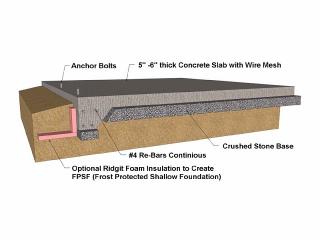
Why spend your money on a "suspicious" engineer (suspicious because no check and balance) when it is so much cheaper to build a slab (called slab foundation) reinforced with the footing as one single piece and yet much secure foundation

See pic of a slab foundation
 This post has been edited by stevie8: Nov 17 2013, 02:32 PM

 Nov 15 2013, 10:58 PM


 Quote
Quote





 0.0247sec
 0.61
0.61
 6 queries
 GZIP Disabled