Facing with the raising petrol price, i think its good time to discuss about how to increase the fuel efficiency of our car. I'm not talking about driving behaviour (ie light foot driving style), because that is commonly known already. What would like to discuss are other methods.
1) Engine Oil.
» Click to show Spoiler - click again to hide... «
use 10w-30 or 5w30 engine oil. Reason i bring this out is because i think 10w-40 EO is too common in malaysia already. in my case, i found that the authorised service centre i went always pour in 10w-40 EO (HX-7) without thinking. whereas my car can actually use xw-30 as recommended in owner's manual. So on my previous service, i get my own 5w-30 oil (HX-7E) and the foreman/technician says ok to use

Also, found out that the SC always like to fill the EO until pass the 'full' mark on my dip stick. i think this is bad for FC also. for my next service, i intend to hunt for Liqui Moly MOS2 10w-30 SS

can refer to this post for some
Engine Oil Review.
Investment cost: almost/close to zero, because we've to change EO periodically anyway and the EO price are almost same (i meant if same grade and same class). Furthermore, we change EO at least 5,000 km so if an EO gives FC improvement of from example 12km/l to 13km/l, you would've saved 32.05L (RM67.30) of fuel over 5,000km. If OCI is 7k km, then 44.87L (RM94.28)
2) Tyre Pressure.
» Click to show Spoiler - click again to hide... «
always maintain tyre pressure at optimum pressure. i think this is the easiest 'fix' that people tend to forget/ignore.

i always see a lot of under inflated tyres running on the road. For me i usually just pump the tyre each time i pump petrol, as best as i can. Properly inflated tyre has lower rolling resistance due to it can retain the round shape better, as oppose to under inflated.
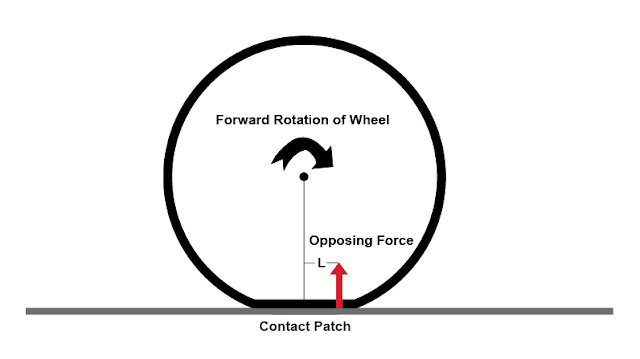
"The U.S. Department of Energy says that for every 1-psi drop in pressure, you can expect your gas mileage to lower by 0.4 percent."
source"some tire manufacturers advise that just 5 psi below placard pressure could lessen a tire's tread life by as much as 25%"
sourceInvestment cost: none/ some little sweat under the sun

to use the free air pump at petrol station. Lets say a car's recommended tyre pressure is 31psi, and you forgot to inflate in 1-2 months and now the pressure in your tyre is 21 psi. That's 4% more fuel used. lets says your drive 300km / week, which means 2400km in 2 months. assume your normal FC is 12km/l, you would have used 200L of petrol. but because your tyre pressure is low, you're using 4% more fuels, which means 8L (RM16.8) more fuel used. PLUS you wear it faster (more $$ wasted off

).
3) Low Rolling Resistance Tyre. (LRR)
» Click to show Spoiler - click again to hide... «
I see in LYN most ppl like to discuss about performance tyre, which one is grippier, etc. Also i think many tyre shop don't really carry Eco tyre, and generally public knowledge on eco tyres are quite low i think. The exception is XM2, quite well known somehow. But i dunno is it because of its LRR qualities or simply because of its brand name.. Also, most LRR tyres comes with a very high treadwear rating. Meaning it can tahan for reaaalll long. The traction are not as good as performance tyre as expected, but then, should be sufficiently safe for normal usage already. (those well known brands)
Investment cost: quite high depending on your tyre size & preferred tyre brand. Lets say your car is again 12km/l, after changing to LRR tyres, you get 13km/l. Lets say the LRR last for 50,000km, you would've saved 320.51L (RM673.07). If tyre can last longer, then saves even more
Choices on Eco tyres4) Use of friction reducing Engine Oil Additives
» Click to show Spoiler - click again to hide... «
this method i myself am not sure really works or not, and if works, really worth or not. Currently i'm testing Bluechem Oil System Care 200ml / bottle / RM 45. It says 200ml is good for 7litre of engine oil, so on my small engine, i just pour in half bottle, which makes it RM 22.50 per each OCI. Well beside the claim of better FC, it also claim to reduce wear, protect engine, etc as usual, and oh it claimed to be TUV approved

. So if the cost is recoverable through fuel saving, then might enjoy some other benefits as well like smoother engine, etc.
Investment cost: RM 22.50 per OCI. Lets say i do oil change at each 5k km, and assume car has 12km/l FC. This additive need to increase the FC to at least 12.35km/l in order to justify its own cost. If OCI is 7k km, then FC need to increase at least to 12.25km/l. But how do i measure that 0.35km/l increment??? myself also dunno hahahha. Meaning it needs to at least increase the FC to 13km/l for me to felt its usefulness.
5) Myth Fuel Saving Devices.
» Click to show Spoiler - click again to hide... «
devices like Cigarette lighter voltage stabilizer, magnetic clips on fuel lines, etc... are BIG NO NO. They just DON'T WORK

. Refer to
this post to understand more
6) Updated: Iridium Spark Plug
» Click to show Spoiler - click again to hide... «
Change to Iridium spark plug, which is suppose to SPARK better, thus combust more complete, and thus save fuel. Under research.
7) Updated: High Flow Air Filter
» Click to show Spoiler - click again to hide... «
Change the standard paper type air filter to reputable filter such as K&N. Theory is that the air intake is less restritive, therefore the engine loss less power when drawing the air in, and therefore better FC. However the investment cost is very very high. And there's the risk that it filters less efficiently, meaning micro dust might make it into your engine and reduce your engine life. Under research.
My setup currently:
1) Shell Helix HX-7E 5w-30 SS (next candidate: LM MOS 10w30 SS)
2) 36-37 psi (my car's recommended pressure is 33-35 psi. pump over a bit because tyre is 'hot' when arrive at petrol station)
3) Bridgestone Ecopia EP150 165/65R14 (i heard that Mirage comes with EP150 as OE tyre. I bet it is one of the factor to achieve its claimed 21km/l

)
4) Bluechem Oil System Care
5) duh. none.
The problem is I've serviced the car with HX-7E, changed to EP150, and used the EO additive in a relatively short period. So if the FC has improved, i dun really know which is the contributing factor..

note that all the calculations above are assumptions only... please take it with a pinch of salt. if got mistake.. please point it out and forgive me ya.
so guys.. any comment, disagreement, or better suggestion?? or do you think those i invested is more costlier than the fuel saved? opinion opinions
This post has been edited by efaceninja: Dec 4 2013, 03:30 PM 

 Ideas to Increase Fuel Efficiency, Combat fuel price hike with normal car
 Sep 15 2013, 10:54 AM, updated 13y ago


 Quote
Quote




 0.0230sec
 0.49
0.49
 5 queries
 GZIP Disabled