

600sf if one person.
I need space to keep my collection.
This post has been edited by Srbn: Aug 4 2014, 08:50 AM
Would You buy Microhomes?
Would You buy Microhomes?
|
|
 Aug 4 2014, 08:49 AM Aug 4 2014, 08:49 AM
|
 
Junior Member
166 posts Joined: Jun 2014 
|
600sf if one person.
I need space to keep my collection. This post has been edited by Srbn: Aug 4 2014, 08:50 AM |
|
|
|
|
|
Aug 4 2014, 08:58 AM
|

Senior Member
4,146 posts Joined: Oct 2012
|
QUOTE(Babizz @ Aug 4 2014, 08:28 AM) If 400k, can get V Residensi-2, 2 bedroom. Close to Tropicana Metropark I think tak ada lagi , go anyone listing? QUOTE(gogo2 @ Aug 4 2014, 08:28 AM) Microhome = low cost flat not that bad YETMicrohome = poverty RM350k = income RM4k Income RM4k = poverty line in KL  QUOTE(Babizz @ Aug 4 2014, 08:38 AM) duno what crap this is but 4k per person is lower middle income in KL! agreeAs a matter of fact 4k is the median income of KL people. QUOTE(Srbn @ Aug 4 2014, 08:49 AM) 600sf if one person. http://www.imoney.my/articles/10-propertie...-income-earnersI need space to keep my collection. |
|
|
Aug 4 2014, 09:00 AM
|
|
Senior Member
4,146 posts Joined: Oct 2012
|
QUOTE For middle income earners, it is time to realise that things are very different now and you will need to rethink your property buying strategy in order to get in the game before it’s really too late. from the above report |
|
|
Aug 4 2014, 09:04 AM
|

All Stars
18,672 posts Joined: Jan 2003 From: Penang 
|
QUOTE(EnergyAnalyst @ Aug 4 2014, 08:58 AM) not that bad YET You mean, not that bad YET. So microhome is stupid? |
|
|
Aug 4 2014, 09:12 AM
|
|
Senior Member
4,146 posts Joined: Oct 2012
|
QUOTE(gogo2 @ Aug 4 2014, 09:04 AM) You mean, not that bad YET. So microhome is stupid? i emphasize....YET  but you need to prepare years a head when it is THAT BAD but you need to prepare years a head when it is THAT BADmicrohomes are Proactive steps |
|
|
Aug 4 2014, 09:16 AM
|
|
All Stars
18,672 posts Joined: Jan 2003 From: Penang
|
QUOTE(EnergyAnalyst @ Aug 4 2014, 09:12 AM) i emphasize....YET You mean prepare by building it first? but you need to prepare years a head when it is THAT BADmicrohomes are Proactive steps  |
|
|
|
|
|
Aug 4 2014, 09:26 AM
|
|
All Stars
18,672 posts Joined: Jan 2003 From: Penang
|
QUOTE(Babizz @ Aug 4 2014, 08:38 AM) duno what crap this is but 4k per person is lower middle income in KL! If RM4k is median, combined salary would be RM8k. Sound like buying RM600k condo is affordable. As a matter of fact 4k is the median income of KL people. |
|
|
Aug 4 2014, 09:30 AM
|
|
Senior Member
4,146 posts Joined: Oct 2012
|
QUOTE(gogo2 @ Aug 4 2014, 09:16 AM) You mean prepare by building it first? Developers should take lessons:http://www.huffingtonpost.ca/2014/05/07/sm..._n_5282611.html Tutup 
Buka 
This post has been edited by EnergyAnalyst: Aug 4 2014, 09:39 AM |
|
|
Aug 4 2014, 09:33 AM
|

All Stars
12,532 posts Joined: Feb 2013
|
QUOTE(gogo2 @ Aug 3 2014, 07:26 PM) If RM4k is median, combined salary would be RM8k. Sound like buying RM600k condo is affordable. Yes memang but not everyone is married  some wanna be single/haven't find the right one some wanna be single/haven't find the right one |
|
|
Aug 4 2014, 10:41 AM
|
|
Senior Member
4,526 posts Joined: Mar 2006
|
i think the best way to start is to buy a shelter 1st and improve your stay every 5 years. for rapid improvement, do it every 3 years.
|
|
|
Aug 4 2014, 01:37 PM
|

Junior Member
486 posts Joined: Dec 2013
|
700sf 1 bed 1 bath..consider small or not?
|
|
|
Aug 4 2014, 01:54 PM
|
|
All Stars
12,532 posts Joined: Feb 2013
|
QUOTE(gogocan @ Aug 3 2014, 11:37 PM) 700sf 1 bed 1 bath..consider small or not? Dam big. microhome is 200-250 sq ft i think |
|
|
Aug 4 2014, 01:58 PM
|
|
Senior Member
989 posts Joined: Feb 2008
|
QUOTE(gogo2 @ Aug 4 2014, 09:26 AM) If RM4k is median, combined salary would be RM8k. Sound like buying RM600k condo is affordable. rm600k is considered affordable, below it people will will grab like crazy. |
|
|
|
|
|
Aug 4 2014, 02:23 PM
|
|
Junior Member
486 posts Joined: Dec 2013
|
QUOTE(Babizz @ Aug 4 2014, 01:54 PM) Dam big. microhome is 200-250 sq ft i think So which one preferable?250sf 1bed or 520sf 2 bed (i.e Menara U) |
|
|
Aug 4 2014, 02:25 PM
|
|
All Stars
18,672 posts Joined: Jan 2003 From: Penang
|
QUOTE(gogocan @ Aug 4 2014, 02:23 PM) So which one preferable?250sf 1bed or 520sf 2 bed (i.e Menara U) Sound like ONS place. I would prefer 520psf for ONS. |
|
|
Aug 4 2014, 02:34 PM
|
|
All Stars
12,532 posts Joined: Feb 2013
|
QUOTE(gogo2 @ Aug 4 2014, 12:25 AM) Sound like ONS place. I would prefer 520psf for ONS. Both also bad idea ultra high density middle class condo's near train lines is a good idea. Only for first time homeowners. |
|
|
Aug 4 2014, 03:20 PM
|
|
Senior Member
4,526 posts Joined: Mar 2006
|
min 500psf
|
|
|
Aug 18 2014, 04:00 PM
|
|
Senior Member
4,146 posts Joined: Oct 2012
|
https://www.edgeprop.my/content/1092400/mal...iny-home-making
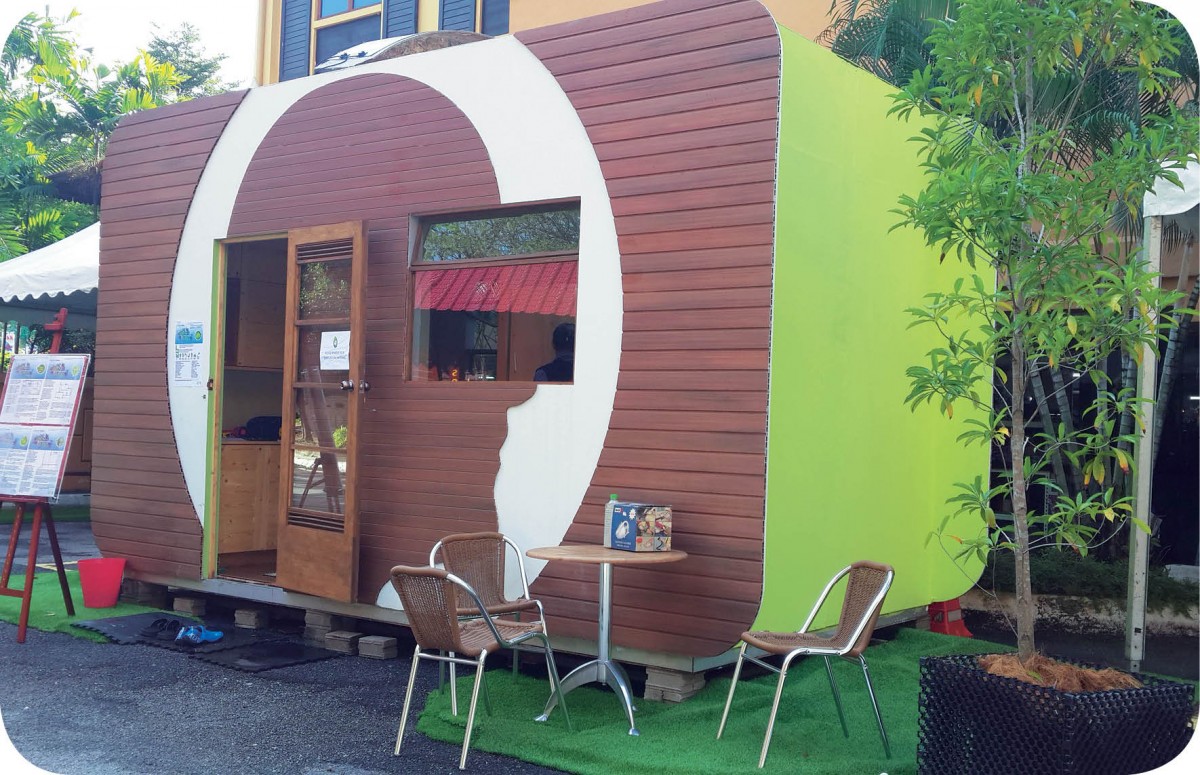 Malaysia’s zero-energy tiny home in the making Facebook Twitter Tiny home 1 The tiny home is off-grid, zero waste, carbon neutral and water efficient. (Images by Greenman’s Tiny Home) NATALIE KHOO March 14, 2017 | Updated 3 years ago IN hot and humid Malaysia, when one hears the word off-grid, zero-waste, carbon neutral and water-efficient homes, what comes to mind are uncomfortable basic dwellings. However, Matthias Gelber, who is known as the Green Man, is set on a path of changing this perception. The German who currently resides in Malaysia often speaks on environmental issues to raise awareness among Malaysians and Southeast Asians. In his latest project, he plans to educate locals on how they can make their homes more eco-friendly, by building Malaysia’s first eco-responsive tiny home. Dubbed Greenman’s Tiny Home, the experimental home can be seen at the Kuala Lumpur Craft Complex until March 15, after which it will be moved to the Construction Research Institute of Malaysia (CREAM) at Jalan Chan Sow Lin, Kuala Lumpur. It measures only 2.5m by 4.5m and is 120 sq ft, the size of a standard parking lot. Due to its compact size, it is portable and can be moved to various locations, making it a suitable means of housing victims of floods and other natural disasters. It uses biodegradable products and is built from reclaimed construction waste. A sustainable water conservation system and a waste management system have also been incorporated into the design for recycling and composting waste. The home is also fully functional on its own and doesn’t need any external power supply, water or sewerage treatment. “People think that in Malaysia, it is impossible to live without air-conditioning. Low-cost homes are often like saunas. They are so hot within and people scrimp and save to buy air-cons for their homes. Not only is this an environmental problem, but it is also a social problem. We want to address this issue by showing that it is possible to live in a house with low operational cost without sacrificing the comforts of life,” says Gelber. “I got the inspiration to kick-start this project when I read on major environmental trends. Tiny homes are mushrooming in North America in a big way where they have very low carbon footprint. I thought to myself, wouldn’t it be great if we can do this in Malaysia?” Gelber recounts. Gelber: When people come and see the work we have done and learn from it, we have done our job. He then set up a team comprising environmentalists Dr Paul D’Arcy and Dennis McMahon; the founder of Asean Cleantech Network, Shamini B Nair; and an ecopreneur and carpenter, Harith Ridzuan of Harith Green Carpenter. The team worked hand-in-hand with CREAM. Several sponsors came on board to fund this project including Parexgroup Sdn Bhd, Duralite (M) Sdn Bhd, Saint-Gobain Malaysia Sdn Bhd, One Tech (M) Sdn Bhd, Suncrox Sdn Bhd, Sequoia Sdn Bhd, Tarkett Malaysia, Kokopeili Rainwater Harvesting Solutions, GRM Composite Wood (M) Sdn Bhd, Gyproc Malaysia, ECOLOO GreenTech Malaysia Sdn Bhd, LG Global Building Materials (M) Sdn Bhd, Buteline Malaysia Sdn Bhd, E-Plus Global Sdn Bhd, Strategic Public Relations Sdn Bhd and Polar Stomp Enterprise. An ongoing experiment According to Gelber, after some research on building materials, they decided to build the walls of the home using a lightweight material also known as wood wool cement panels. “The panels have a high insulation level and are made from a composite material of timber and cement, so they ensure the house stays cool without the need for air-cons. The timber being used are sustainably planted timber,” explains Gelber, adding that the materials used in the experiment are all readily available and easily sourced locally. “These materials absorb carbon dioxide, unlike concrete slabs which radiate heat,” Gelber adds. The house will also be elevated above the ground using pillars similar to a typical kampung house. “This will facilitate ventilation from the ground to reduce interior heat,” he explains. The house will also feature a rainwater harvesting system while waste from the toilet will be used to fertilise crops or plants. It will also be solar powered. The house is powered by a basic module consisting 65 watts of flexible thin film solar panel, 100 ampere-hour deep cycle lead acid battery and a solar charge controller. The house also uses a direct current system to power the house, avoiding any inefficiency of energy conversion as opposed to using an alternating current. D’Arcy, the environmentalist working on this project, highlights that the house will be transportable due to its small size. “More often than not, we have the tendency to build things bigger than what we need. Tiny means it is not overly-excessive but still useable,” says D’Arcy, noting that the whole concept is about the intelligent use of space and responding to the changing climate conditions. The total cost to build the house is around RM60,000-RM65,000. Construction of the house prototype began in September last year and was completed last month. Pick and choose When asked if the team plans to commercialise the project, Gelber says the main thing is to educate the public, and perhaps even developers, to carry it out on a bigger scale. “You can pick and choose the components according to your needs. We are not saying that the house must be completely zero-grid energy or you must use rainwater harvesting. Pick what features you like and incorporate them in your own house based on what is most suitable. The size is also not necessarily fixed. If you have a bigger family, you can upscale the house accordingly,” Gelber elaborates. “What we want to do is to provide a platform for people to come and learn. I have done hundreds of talks, but I have learned that what is most important is for people to see and touch an actual sample. I want people to know that you don’t need the Green Man to build the house for you. You can do it on your own. When people come and see the work we have done and learn from it, we have done our job,” concludes Gelber. 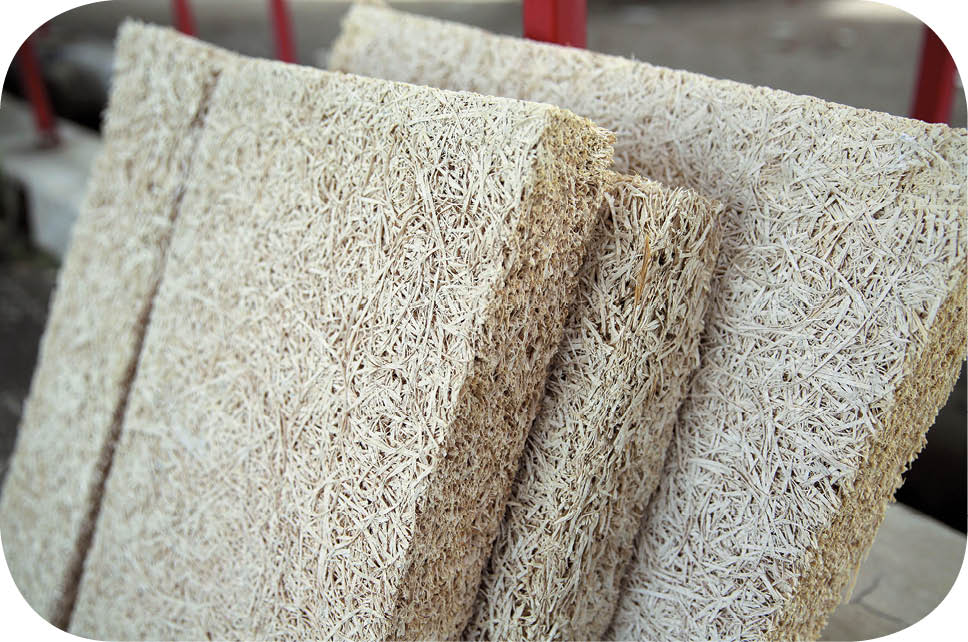 Wood wool cement panels used to build the walls of the home. 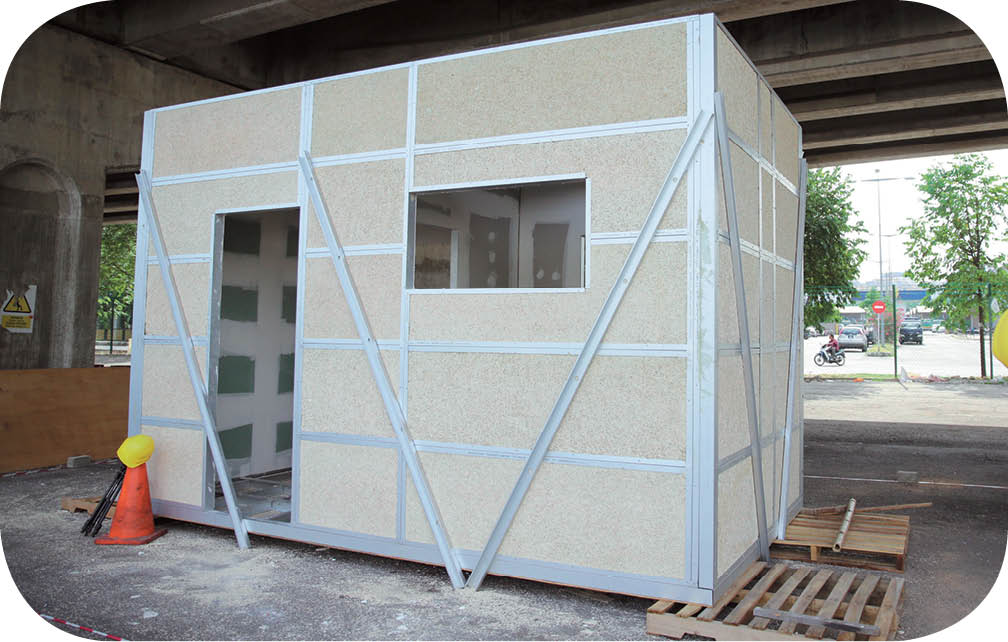 Work in progress of the tiny home back in October last year. 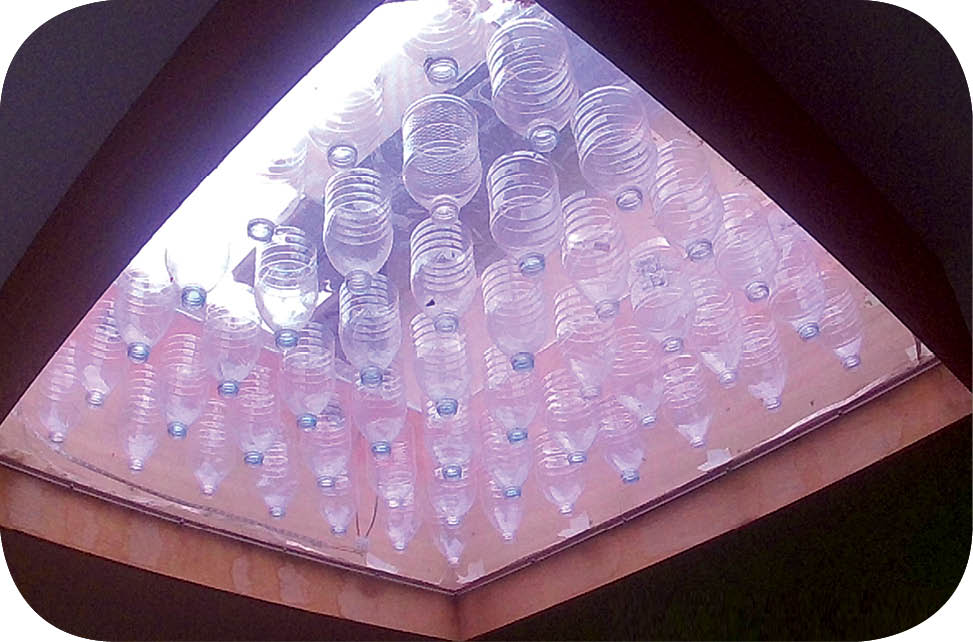 Plastic bottles used as funnels allow hot air to escape from the tiny home. This story first appeared in TheEdgeProperty.com pullout on March 10, 2017. This post has been edited by EnergyAnalyst: Mar 9 2021, 11:38 PM |
|
|
Mar 23 2018, 06:35 AM
|
|
Senior Member
4,146 posts Joined: Oct 2012
|
https://www.nst.com.my/amp/news/nation/2018...-future-kl-ites
 QUOTE Go micro: Are micro-homes the future for KL-ites? FEBRUARY 11, 2018 @ 8:48AM BY SUZANNA PILLAY KUALA LUMPUR: Can excessive car spaces in Kuala Lumpur’s city core be converted into micro homes to create new living spaces for people to move back into the city? It is one of the more novel ideas of communal living being showcased at the WUF9 Village, part of UN-Habitat’s 9th World Urban Forum (WUF9) that Kuala Lumpur is hosting until 13 February at the KL Convention Centre. The WUF9 Village which will be hosted at Medan Pasar, in the city centre is a collaborative effort by WUF9 local organizer Urbanice, Kuala Lumpur City Hall (DBKL) and Think City. Think City is a community-focused urban regeneration organization under Khazanah Nasional Berhad. Two single-unit micro homes with a shared space have been erected at Medan Pasar for a month to test the feasibility of the communal living concept, said Think City's Programme Director, Partnerships Lee Jia Ping. The idea is to look into the possibility of creating a wider range of affordable housing options that are attractive to attract more citizens to live in the city. According to a Think City study conducted on the 214ha area of the historic core, around 54,000 people worked in the area but only 4,800 are residents. " Each micro-home is roughly the size of two DBKL carpark lots, each measuring 2.5m x 5m, side by side. These parking lots could be freed up if more commuters use shared transport options like the MRT, Grab and Uber to commute, instead of their own vehicles. The idea is to convert excessive DBKL car park lots into micro homes with shared gardens, community spaces and other facilities that can be accessed by the whole community. " Aside from micro homes, another option being looked at to increase housing in the historic core is the repurposing of older commercial buildings in the area for temporary or permanent residential use, said Lee. Other WUF 9 Village events and activities will take place within a heritage building – 2Hang Kasturi. The Art Deco Heritage building built in 1937 will host a social enterprise market hall, a co-working space, interactive exhibition on liveability and a sensory urban experience. Visitors will also be able to see other regeneration projects throughout the historic core including parklets, a reimagined bus stop and a mural painting activity. It is not the city itself that is the issue, Lee said, but the lack of content in the city that is the challenge. " When we programme events and activities in the area, they are well- attended. We are now trying to create activities for people who work there, while simultaneously introducing more housing to encourage people to want to live there. It is a multi-pronged approach. We are not looking at any demographic, but rather the right psychographics to come back into the city. We want a young energy to come back into the city .You can be 50 and young at heart. " Lee said an area particularly of concern lay within a one kilometre radius from the Masjid Jamek area, running from Sheraton Hotel Kuala Lumpur all the way down to the border of Kampung Attap. She said Think City wanted to raise the economic vibrancy of the area by offering a diversity of offerings. " There is not much diversity in residence, demographic, like restaurants, retail and services here. Malaysians have left in droves for the suburbs. At the moment with no intervention, the vacuum is being filled predominantly by male migrants under the age of 40. Currently in the area you can only see services that cater to this group." This post has been edited by EnergyAnalyst: Jun 20 2020, 09:21 PM |
|
|
Mar 23 2018, 09:27 AM
|

Senior Member
3,459 posts Joined: Jan 2009
|
QUOTE(yrh0413 @ Jan 17 2013, 01:08 PM) Singapore already enforced new policies on Shoebox flats... those with 100-500sqft. Sure or not - 100 sf for a flat is just too small ? |
| Change to: |  0.0232sec 0.0232sec
 1.52 1.52
 6 queries 6 queries
 GZIP Disabled GZIP Disabled
Time is now: 25th December 2025 - 12:01 AM |
 Quote
Quote