short version:
1. Amoled shows punchy, vibrant but un-naturall colour. Plus point.
2. Amoled cannot get to 300ppi (ie. iPhone Retina screen's region). Hence S3 211ppi resolution. 3. Pentile arrangement of amoled results in 1 less colour per pixel (RED-GREEN-BLUE, so either RG or GB or RB).
Key point above:
With all the limitations of amoled, the last resort by Samsung is increase the screen size, sacrifice on PPI to gain brightness. This is good because consumer likes big screen phone.
Translation
» Click to show Spoiler - click again to hide... «
First affirms that this article purely to do the technical discussion of the AMOLED AMOLED panel is almost all of oligopoly by Samsung, it made the Samsung version of the version you want to mess can be greatly out, thank you.
Speaking of AMOLED technology first brought to mass production of mobile phones, hard to imagine, in fact, the BenQ domestic manufacturers, this panel is AUO production, but then the screen life is too short, the stigma problem can not be solved, yield too low, and finally a pity to give up continue to develop down. I did not expect after years of this technology by Samsung to flourish, Super AMOLED hand into the large viewing angle, high contrast, as well as the immediate cause of a very bright color saturation on the market a big splash on the market currently only Samsung production-Super AMOLED, accounting for 90% market share, Samsung's own flagship phone, become almost exclusively, the current Samsung Galaxy S series hot buy AMOLED can be said that one of the main hero.
Has been since 2010 the iPhone 4 at another awesome retina screen, 300 ppi, the ultra-high phase density of prime order beyond the reach of other competitors, until the past six months to catch up with Apple's footsteps, although 300ppi this the human eye limits much preached by Apple in people's minds, but has indeed become a fait accompli standard, it is my observation, close to 300 ppi (pixel per inch: every inch Pixel points) contained still visible pixel point, but it is undeniable, ultra-high-resolution screen of the iPhone 4 retina, fonts, like a printed publication, image is more beautiful and attractive. When I first saw the moving of the the IP4 retina screen, I still printed phase profound.
Originally by the AMOLED pioneering, with AMOLED yield improvement, Samsung AMOLED release to more manufacturers (such as Nokia, HTC, Motorola), but evolution in the follow-up SLCD, coupled with the Retina Display retinal screen since.AMOLED and SLCD has become a rival situation. But since the publication of the 5/3 the Galaxy the S3, but I see the AMOLED worry, Samsung began struggling AMOLED evolutionary bottleneck.
As we all know why the Samsung is the first use of the AMOLED screen in the Galaxy S and HTC Desire, why is PenTile arrangement you? Forum has been said because of yield problems, but I do not think so, then what is the problem? Sell aoff the child, first let's take a look at several vendors in the past three years, the flagship mobile phone Pixel density:
The above table is Samsung, HTC and Sony (SE) of three-year flagship machine, the screen size and resolution list, value, the AMOLED PenTile arrangement of the situation, each pixel only GB of GR two-color, realresolution of only 2/3 of the original specifications, so the more the value one in the far right and restore back to the real resolution.
Let's look at Sony and HTC's flagship phone, the past three years, Pixel density line chart, we can see that not only is more to do the greater number of panel ", but the resolution and pixel density is becoming higher and higher, until the beginning of this year finally broken through the 300ppi mark means that to IP4 this retinal screen leading is about two years, until this year to catch up.
The above two diagrams, you can see the trend line is upward, that is, has been in progress, look at the Samsung S-II to reach 217ppi, a few days ago just to the S III but also down to 204ppi, the following diagram Samsung phasepigment density line chart, it is obvious seems to be marking time, from 300ppi or distance ....
See this plan the first reaction is that the S-II is RGB direct real arrangement, so the highest density of phase factors, these two days the S III is Pentile arrangement, so the decline, but the Galaxy Nexus is Pentile arranged ppi value, but to achieve211 Oh, by the last we can know that P row instead of vertical not yield problems, PenTile is not original sin, but the the AMOLED fundamental design problem, because AMOLED pixels simply do!
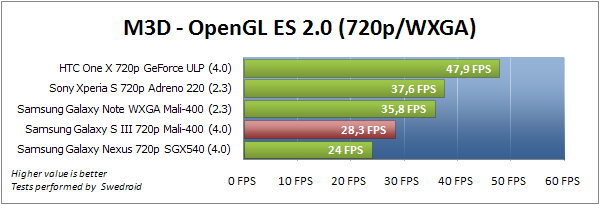
A lot of people look at this map are relatively Pentile arrangement and true RGB than 1 pixel less people the same color, but I do not see this, compare the rightmost One X and what is the difference, you do not think AMOLED black barsarea SLCD many? dark side of the jargon is called the black matrix (black matrix), referred to as BM, is used to shade, to differentiate the two sub-pixel inter-light, so as not to interfere with each other, because the AMOLED is self-luminous,may be this reason BM districts must do great, you can see the vertical AMOLED is the same One, X emitting area of a lot less. Everyone says the AMOLED brightness than LCD, AMOLED self-luminous relationship, but developed to a high resolution of the moment, AMOLED, the BM District does not do small, the expense of the only luminous Pixel District, which is why the Nexus the Galaxy ppi value reached 211, but Samsung to take a secondary product to google, the brightness is insufficient, in fact not the case, high-resolution brightness sacrifice. Made the PenTile arranged not yield problems, which can be sub-pixel less, increase the light-emitting area.
Everyone's flagship phone today almost all the high resolution 720p Samsung's annual flagship phone less than this value? But even the P rows of 4.65-inch Nexus Galaxy are the brightness is insufficient, I can RGB arrangement?it not suicidal? a last resort, to increase the screen size, at the expense of the ppi value in exchange for screen brightness. Another size than the opponent, the screen consumers prefer to serve multiple purposes, why not?
In fact, regardless of the reason why AMOLED biggest problem is that pixels can not be doing a "small" to correspond to high resolution, screen size can only be used to grow up, but high quality have Takaso pigment density, which is ppi value of AMOLED technology no way to do it, so that in the high-definition LCD still can not be AMOLED replace, of course, LCD brightness attenuation larger will be the pixel density, but it seems AMOLED the problem is still difficult than LCD.
It can be seen if the ppi value to compare the AMOLED almost uncompetitive at all, even restore the AMOLED specification density (green line), or almost all fall 300ppi, Huawei can be easily won AMOLED In addition to colorsaturation, high contrast, I can not really see which of AMOLED win the SLCD, not to mention the AMOLED mark there screen life.
Reading this article, it is clear by the end of each manufacturers Note 5.3-inch products from, and use the 1080 resolution screen
The following figure is the use of Super AMOLED Plus (RGB vertical) of the product, look out of phase factors can not do "small" exigencies of the small number of products, the Tab 7.7 or use of the "big screen" to complete a high-resolution degrees.
See to the AMOLED ppi value limit is about 220 to Note II to use 1080p resolution AMOLED become almost impossible task, even if Samsung want to get the 6-inch P row or reach a 245ppi. To 5 inches above products use 1080p already reached the human eye can not distinguish between the 440ppi, but the 5-inch 720p naked eye there will be particles (less than 300 ppi), is necessary to improve the resolution, the standard specification is 1080p, and consumers will hardware native support for 1080p.
In addition if the Note as an imaginary enemy, 5.5 inches is a suitable product, This product uses 1080p ppi value is about 400ppi, should still be able to reach to the LCD manufacturing process, but the AMOLED hardly. If your opponent out 1080p, Samsung is also sticking to AMOLED? Or Samsung can do the the 260ppi above AMOLED?? (P row)
As the scaling of semiconductor process technology, the LCD in recent years has been by leaps and bounds from 150ppi to the more than 340ppi, then up not make much sense, but it can be said to have reached a perfect resolution, contrast, color AMOLED, in recent years can only swim walk in 150ppi to 220ppi, arranged Pentile persists annoying jagged edges on text display Figure phase display can not be achieved IP4S such as printing fine, it takes the fullness together color is unable to meet the high-end consumers needs. Or Samsung will be up until then? Let's wait and see.



 May 5 2012, 10:04 PM


 Quote
Quote just thought about sharing it because it did made me LOL about it. i din notice it until now






 0.0507sec
 0.65
0.65
 7 queries
 GZIP Disabled