While APEC summit was on - going, another summit for going on in Indonesia, ASEAN Defence Minister's Meeting ( ADMM )
joined by ASEAN, SEA members, Australia, USA, China, Russia, New Zealand, India, South Korea, Japan and others.
Myanmar banned due to coup and civil war.
talks about regional, and global security matters. events that are destabilizing the region.
-----------------------------------
While Biden Calls Xi a dictator, his cabinet approve for more direct miltary to miltary talks between china and america.
And china agrees.
This is after their DoD release a china power report to their congress.
Obv indicators, China wants to world power in 2 decades, many advanced been made in all aspects.
many details on South China Sea, global/foreign policy, internal development and deployment, ukr-rus, military capabilities, taiwan war games.
in the report, USA also claims, China does not want to co-operate with the Americans, or engage in formal highlevel talks, since the 2000s.
something about China always blueballing the Americans.
 2023_MILITARY_AND_SECURITY_DEVELOPMENTS_INVOLVING_THE_PEOPLES_REPUBLIC_OF_CHINA.PDF
 ( 4.22mb )
Number of downloads: 2 VT: 6e1985b5ed48fd8157eb3633207abd4abeeed4b7f7089e00a75e55023f6b95f7
» Click to show Spoiler - click again to hide... «
Austin Encouraged After Biden Secures China's Pledge to Resume Mil-to-Mil Talks
Austin welcomed the progress while in Jakarta, Indonesia – the final leg of his ninth official visit to the Indo-Pacific. The visit showcased the growing cooperation among the U.S. and its like-minded partners in the region.
"As you know, we had been open to meeting with [Chinese leaders] here in Jakarta, but we're encouraged by recent news from the White House on the planned resumption of military-to-military communications," Austin said.
"You've heard me say before that there is no substitute for consistent and substantive dialogue between senior leaders," he said. "So, we'll continue to seek practical discussions with [the Chinese] from a senior leader level to the working level."
The plan to resume military-to-military talks at senior levels, including between theater commanders, was one of several agreements reached during Biden's meeting with Xi on Wednesday in Woodside, Calif.
The two leaders also discussed the resumption of bilateral efforts to combat global illicit drug manufacturing and trafficking, including fentanyl. They also discussed the need to address the risks of advanced artificial intelligence systems and improve artificial intelligence safety.
Defense officials have repeatedly raised concerns over China's lack of communication with U.S. military leaders, noting that Beijing has consistently denied or ignored U.S. requests for defense engagements at multiple levels.
Those concerns have been amplified as U.S. officials observe increasingly provocative and risky behavior on the part of China's military.
Defense officials have noted a steep rise in risky and aggressive intercepts by China's military of U.S. aircraft operating in international airspace in accordance with international law.
According to the most recent China Military Power Report, the U.S. has documented more than 180 coercive and risky air intercepts against U.S. aircraft in the region between 2021 and 2023.
That is more risky intercepts in the past two years than in the past decade, according to the report.
Austin said today that, while it is too soon to tell whether China's pledge to resume military-to-military dialogue signals a broader intent to dial back provocations in the region, it is critical that the two countries maintain open lines of communication.
"I won't make any predictions about China's future behavior," Austin said. "What I will say is that we will continue to need the mechanism to manage crises and make sure we prevent things from spiraling out of control from time to time."
"That's even more important if activities in the region have increased – if unhelpful things like close intercepts ... have increased" he said. "[That's] all the more reason that senior leaders need to be able to talk to each other."
China's increasingly provocative behavior, however, has far from derailed U.S. engagement in the Indo-Pacific as evidenced by Austin's latest trip to the region.
Austin visited India, South Korea and Indonesia, where he engaged with counterparts throughout the region and continued what defense officials describe as historic momentum with allies and partners throughout the region.
While in India, Austin met with Indian Defense Minister Rajnath Singh amid what Austin described as a "transformative period in U.S.-India relations" as the two countries expand their defense industrial cooperation and enhance interoperability between their militaries.
Those discussions culminated in a new agreement to move forward with the coproduction of armored infantry vehicles, the leaders announced, building upon progress highlighted this summer when the two countries announced they would partner in producing jet engines.
The countries also discussed steps to strengthen supply chain security and integrate the distribution of goods from U.S. and Indian firms, Austin said following today's talks.
While in South Korea, Austin held talks with South Korean Defense Minister Shin Won-sik and Japanese Defense Minister Kihara Minoru.
Those discussions built upon the progress made in deepening the ties among the three countries at the August summit among President Joe Biden, Japanese Prime Minister Fumio Kishida and South Korean President Yoon Suk Yeol at Camp David, Maryland.
Austin also participated alongside his South Korean counterpart in the 55th Security Consultative Meeting, an annual capstone event marking the long-standing U.S.-South Korean defense relationship.
This year's meeting built upon Biden and Yoon's commitment to further bolstering the U.S.-South Korean alliance amid growing nuclear threats posed by North Korea.
During the session, Austin and his South Korean counterpart shared their vision for the future of the alliance, which they recognize as a "staple for peace and stability on the Korean Peninsula and in the Indo-Pacific region and a stalwart protector of international norms."
Austin also participated in the inaugural United Nations Command defense ministers' meeting on his final day in South Korea.
In Indonesia, he attended the Association of Southeast Asian Nations Defense Ministers' Meeting-Plus.
The summit includes representation from China, Russia, India, Japan, South Korea, Australia and New Zealand in addition to the 10 ASEAN member states and the U.S.
During the forum, Austin held bilateral discussions with his counterparts from the Philippines, Indonesia and Thailand.
The secretary also participated in an informal meeting with ASEAN counterparts where he detailed plans to implement the U.S.-ASEAN Comprehensive Strategic Partnership.
That partnership includes the emerging leaders defense program and a new gender adviser initiative that the U.S. will support alongside ASEAN partners.
"A common thread across all of my engagements here in Indonesia, in the Republic of Korea and India, has been our shared commitment to a free and open Indo-Pacific," Austin said. "We've heard our allies and partners express their support for this goal and we're working closely with our ASEAN friends to promote a regional order based on the rule of law, respect for sovereignty and territorial integrity."
He added that the engagements mark a continuation of what has been "an historic year" of initiatives to advance defense and security cooperation throughout the region, adding that the U.S. will continue to make progress with like-minded partners throughout the region.
"We have been out in the region, throughout," Austin said. "Even though we're busy in Europe [and] we're busy in the Middle East, we're here in the Indo-Pacific."
"This is my ninth trip to the region as secretary of defense," he said. "I think that sends a powerful message and reassures our allies and partners."
------
ADMM and ADMM-plus meetings agree with two state solution for Isreal and Palestine Issue based on the pre-1967 borders
in accordance with international law and the relevant UN Security Council resolutions.
Meeting calls for an immediate lasting humanitarian truce, prioritising civilian protection,
including Asean nationals, and an unconditional release of hostages.
» Click to show Spoiler - click again to hide... «
JAKARTA: Asean Defence Ministers have called for the swift establishment of a humanitarian corridor to facilitate unimpeded delivery of aid to those affected by the conflict in Gaza.
They raised their growing concerns over the escalating situation in the Middle East during the 17th Asean Defence Ministers’ Meeting (ADMM) and 10th ADMM-plus meeting, according to the chairman’s statement.
Stressing the seriousness, the statement said member states also urged for immediate attention and constructive dialogue to address the ongoing conflict.
“The meeting supported the initiation of peace negotiations aimed at achieving a two-state solution based on the pre-1967 borders in accordance with international law and the relevant UN Security Council resolutions,” the statement read, Bernama reported.
Defence Minister Datuk Seri Mohamad Hasan and his Asean counterparts met for a two-day meeting, chaired by Indonesian Defence Minister Prabowo Subianto, which concluded on Thursday.
The ministers also confirmed their support for the Asean-Gulf Cooperation Council Leaders’ statement on Gaza’s development and the Asean Foreign Ministers’ statement on the recent escalation of armed conflicts in the Middle East.The meeting called for an immediate, lasting humanitarian truce, prioritising civilian protection, including Asean nationals, and an unconditional release of hostages.
It urged the United Nations, especially the Security Council, to prevent conflict escalation and emphasise protecting civilians, especially Palestinians.
----------------------
India Calls for result-oriented cooperation with ADMM-plus for enhancing maritime security in the region.
Recognising that terrorism is a serious threat to international peace and security.
India and USA discussed ways to expand the India-US partnership to address emerging challenges and further strengthen the common efforts towards a more secure world.
Both resolved to advance defence technology cooperation with joint research in emerging areas.
----------------------
Senior Colonel Zhang Xiaogang, PLA DoD man, said in a press release Thursday that during the ADMM, the Chinese side called on all parties to practice genuine multilateralism, uphold a correct concept of security, insist on peaceful consultations and refrain from conflict and confrontation, so as to assume responsibility for the peaceful development of the world.
China firmly supports ASEAN's central position in the regional framework, and stands ready to work with the ADMM-Plus members for joint development and cooperation, so as to make positive contributions to regional peace and tranquility, he noted.
US SecDef Lloyd Austin met with Philippine Secretary of National Defense Gilberto Teodoro Jr in Jakarta on Thursday. Austin said the US commitment to defending the Philippines' sovereignty is "ironclad." The two officials criticized China in recent South China Sea disputes, and reaffirmed shared vision of "a free and open Indo-Pacific."
CCP claims
QUOTE
The regional peace and stability pursued by the ASEAN members is completely different from the concept and practice of the "free and open Indo-Pacific" advocated by the US, which aims to create divisions and bloc confrontation.
ASEAN members are willing to work with China to make the region a place of peace, prosperity and hope, Li said.
"They do not want a new Cold War, let alone replicate the Ukraine crisis in the region."
The Philippines' approach of introducing the US into the region and acting as a US proxy for it is not welcome among other ASEAN members, and it is clear that the Philippines is alone on this issue, Li remarked.
Indon Defence Minister Prabowo Subianto - "Without peace and stability, it is impossible to attract investment, promote trade or ensure the well-being of our peoples and societies,"


 Nov 11 2023, 08:36 PM


 Quote
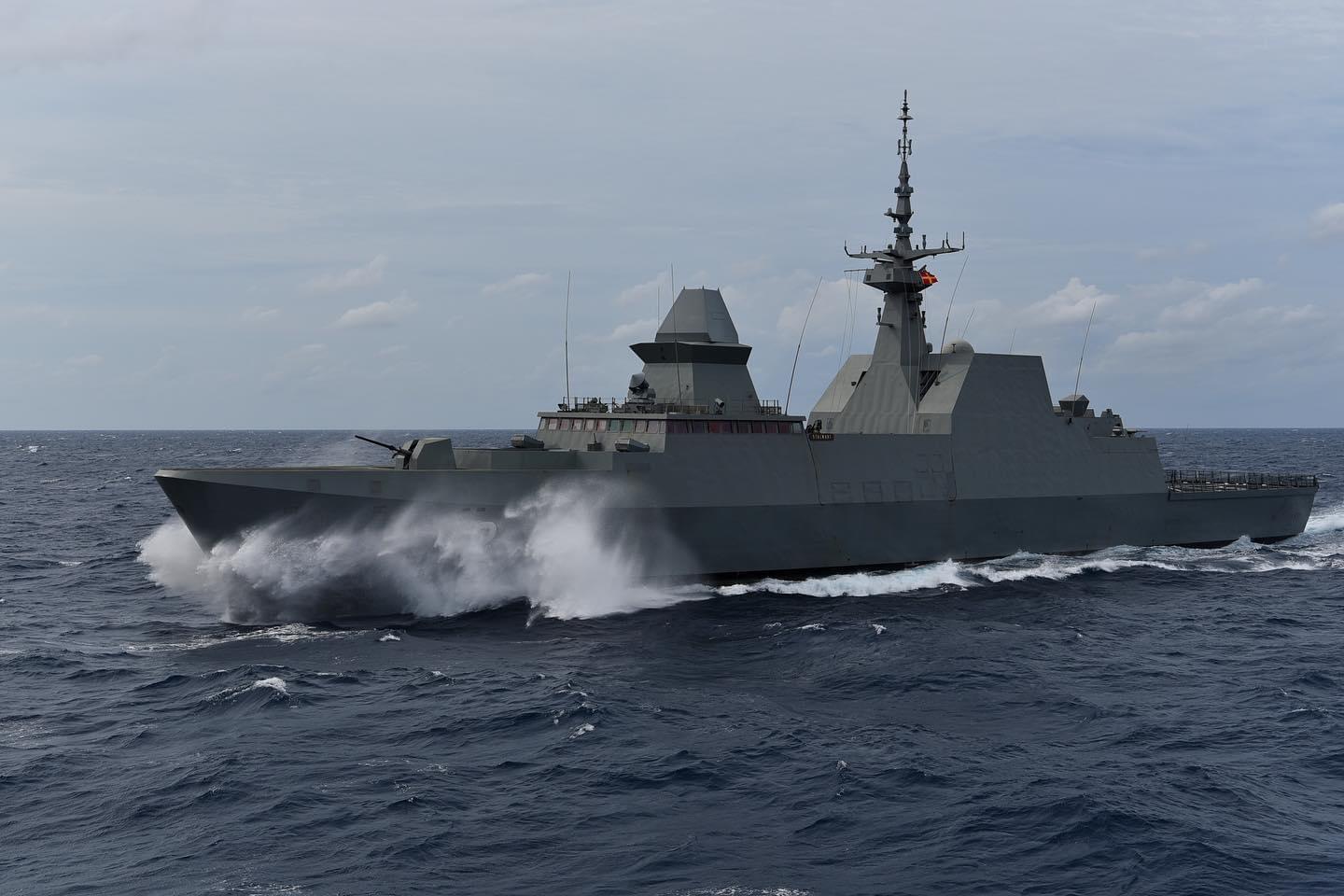
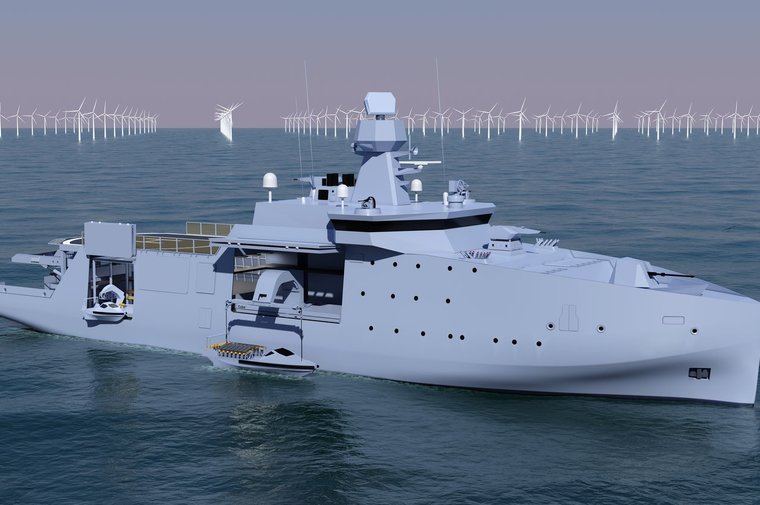
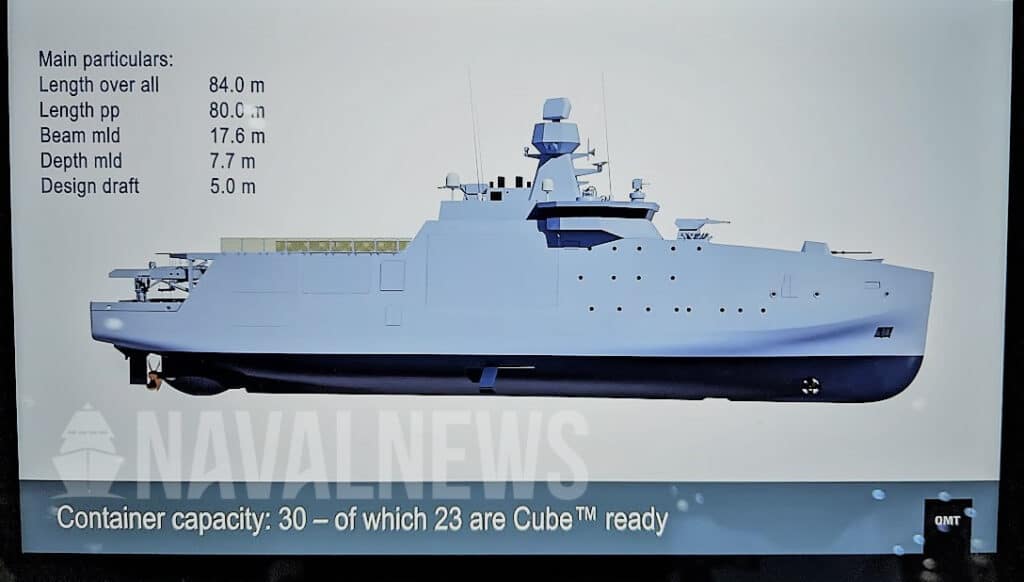
Quote )) or soon-to-be mid-life upgraded formidable class multi mission frigates or JMMS lha/lhd light carriers.











 0.0384sec
 0.85
0.85
 6 queries
 GZIP Disabled