QUOTE(Al-Benis bin Hugh Mungus @ May 30 2021, 10:13 AM)
Of course the French may impose embargoes. Even the Russians may impose embargoes on Indonesia if the country ever crosses Russian interest - the Soviet Union, Russia's predecessor state, had done exactly this after 1965 - this fact is a given and well-understood. The entire point learned by the Indonesia that had the experience of being embargoed by the Soviet Union, the EU and the US is that none of them can be trusted to be a sole or majority supplier of Indonesian defense equipment for major and critical platforms, hence the insistence on multiplicity of sources. The idea being that they are a lot less likely to place embargoes in lockstep with one another, ensuring that at least some assets in any class would be usable in the event that an embargo is placed by a source country.
And of course, not all countries' interests are equally vast. France may be a great power whose island territories in the Indian Ocean and the Pacific put their core interests right next to Indonesia's doorstep, but they are far and away a much weaker power (compared to the US & China) which must seek cooperation with regional powers to maintain their interests. This helps constrain any decision by France - and by extension, the EU - that would strongly jeopardize French relations with Indonesia. Russia, on the other hand, is a greatly diminished and distant power and is therefore unlikely to have interests Indonesia is likely to cross, so they are a better supplier in terms of not constraining Indonesia's freedom of action. The US and China, the former being the current global hegemon with equally global interests and the latter being a rising superpower keen to break out of its containment within the so-called First Island Chain are the two countries Indonesia would most likely cross at some point in the future - depending on its choices - and so make poor choices as defense suppliers.
Being a large country straddling one of the most geostrategically important locations on Earth - especially more recently in the context of geostrategic competition between the US and China - Indonesia cannot hope to avoid crossing one major power or another forever. It is also unwilling to subordinate itself to the interest of any foreign power, hence its insistence on entering no alliance and its continuous swinging between the major powers as partners of choice at any point in time - part of the so-called dynamic equilibrium - to encourage great power competition. Therefore, at some point in time, someone somewhere would not agree with its choices and so seek to constrain its behavior, arms embargo being a viable tool for employment in such a scenario.
Of course, the safest course of action for a country like Indonesia is to source its armaments domestically, ensuring the greatest freedom of action least constrained by any external state's interest. But, for obvious reasons, this is not viable at the present time. The country had certainly made progress in this field and attempts had been made to adopt foreign technology for domestic manufacture of defense equipment, including by making them a requirement of major arms purchases from the time of the Yudhoyono presidency. Having said that, defense was, for a long time, not a government priority.
Indonesia may have made great strides in economic development, lifting itself from the poorest country in the world in 1949 to a middle-income country today, yet the need to deliver on infrastructure, economic growth and social development continue to weigh on government resources and diminish its ability to invest in defense and, commensurately, localized manufacturing and R&D. Although it is perfectly possible for Indonesia to lift defense spending to 1% of GDP from the current 0.8%, perhaps even to 1.5% if it decides to be ambitious, it will not militarize to the same extent as China or the US - and certainly not Singapore, which had often broadcasted its readiness to spend up to 6% of its GDP on defense - anytime in the foreseeable future.
So until then, imports of major advanced equipment cannot be avoided, so multiplicity of sources will continue to be the only viable way of maintaining its diplomatic and geopolitical independence.
The point I was addressing in my afore-mentioned post was that they should buy US and not because of the potential of embargoes. This argument is clearly flawed as you have pointed out yourself. Even the EU can impose embargoes. Secondly, I also raised the issue of having a small air-force in the case of Indo, and the need to harmonize the logistical train. You feel that there should be a zoo of an air-force. I think differently i.e. you will face cost, logistical, training and jointness issues when you buy items from all over the world. That is same reason why the RMAF does not want any more Suks.
Indonesias GDP per cap is $4,256. And >10% of her population lives beneath the poverty line. It is a trifle obfuscating to merely state that they are a middle income country. There is a long way 2 go certainly. And this shows in its almost frantic efforts to secure friendly loans to modernize its increasingly ageing military or confused decisions to buy aircraft from used Typhoons, Rafales, F35, F15s, dozens of submarines, frigates, etc. And yet purchases were not made. In some cases e.g. F35s and F15EX, they are unlikely to get the go-ahead from the US.
So, youll need to take such claims with a pinch of salt each time.
A modern Indo military will actually help the other littoral states in SEA in keeping this region free from being a Chinese lake until it has moderated their behaviour. The other powers including the US cannot do it sans the support of SEA littoral states. This is so important right now.
This post has been edited by Mai189: May 30 2021, 07:52 PM 

 May 29 2021, 05:49 PM


 Quote
Quote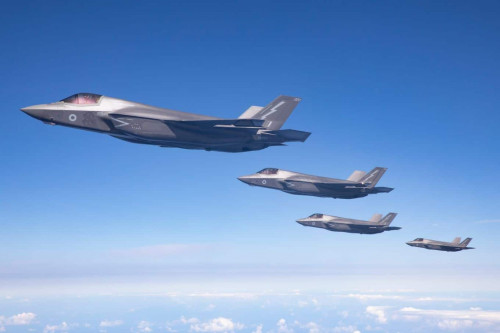


 0.1050sec
 0.29
0.29
 7 queries
 GZIP Disabled