Basically, Sg can 3d print warships and/or warship parts in future. It is a more efficient/faster way of construction with high quality control and (so long the templates are accurate) near-zero defect.
This follows another MOU between DSTA and TKMS to 3d print submarines/submarine parts:
Live so long believe 100% in the suzerainty of his state as US clients state.
never realized Indo claim a de jure leadership role in ASEAN
Is there even a 100% client state now that the cold war is over?
Asean is fragmented. The indos somehow think they a natural leader. The Msians think they are 2 - depends on who is in charge. Esp TDM. But Msias a mess. The thais are divided. The vietnamese think their time has come and wants 2 lead a crusade against China. The Burmese think their time has come until the latest coup. Sgs thinks everyone else is corrupt and somewhat down the evolutionary ladder.
But one things for sure. There wont be a united Asean and practically all major global powers (indo isnt one) wants 2 be here. It isnt a bad thing. And yes, Malaysia wants it that way.
Our Country should also participate on the Project too !!!!!!!!!
Absolutely not. We should not buy a brand new plane fresh from the production line. Not unless you are prepared 2 endure bugs, production defects, quality control issues, compatability issues, etc. Who is going bear the cost?
Looks aside, you are buying from a country which has not produced planes of that nature ever.
Further, the KF 21 is not even 5th gen in spite of some calling it so. To get there, requires structural changes, better electronics and data fusion at a level only the US has right now. Note: Korea had to turn to US for assistance on some of the tech but the US is not in a position to release many for security reasons. Even buyers of F35 do not get access to many of the tech.
The only 5th gen jet that Malaysia needs to consider is the f35 due 2 cost, maturity, technology and simply the spiral upgrades to the aircraft by the US e.g. electronics, software, sensors, etc. for which the community of f35 users will benefit. See the Hornets - Msia benefitted from the free upgrades from US.
So yes, Msia should get the LCA and sustain the hornets or Suks until F35s are available for sale to non-partner and non-close ally countries circa estimate post 2035. Save up. No point getting a Rafale or Typhoon or F15 now as these aircraft will be considered old tech after 2030-35.
This post has been edited by Mai189: Jan 6 2022, 10:44 AM
The Indos are in it partly for prestige reasons - national pride and i suppose they wanted f35s but the US will not release.
But we need to note that Indo have not paid their part of the development cost (even as a junior partner) or bought any so far.
Apart from existing budgetary problems, this is also likely due to the realisation that it may not be technically sustainable in the long run. More costs will be required for structural and tech updates and integration of non domestic systems e.g. weapons and updates. You also cannot compete with the US, Europe or even perhaps Russia on updates as these countries have large tech bases and more $$$.
Also, the market for late 4.5 gen jets is saturated. It may not sell as it is late. Countries will hedge for 5th gen planes.
On 5th gen jets, ill be like the f16 and f18 situation which out sold every other jet. In this case, itll be the f35s because of the benefits i cited above. Countries not so friendly with the US will go for Russian or Chinese alternatives. So the KF 21 is unlikely 2 sell.
This post has been edited by Mai189: Jan 6 2022, 11:36 AM
A lot of people go ga ga over pics and concepts. It is another thing altogether 2 operationalise the concepts. One should follow the loyal wingman development by Boeing-Australia and see how difficult it has been. Developing the UAV chassis is one thing but to develop the brains, AI and connective systems is another thing al2gether.
This post has been edited by Mai189: Jan 6 2022, 12:25 PM
A lot of people go ga ga over pics and concepts. It is another thing altogether 2 operationalise the concepts. One should follow the loyal wingman development by Boeing-Australia and see how difficult it has been. Developing the UAV chassis is one thing but to develop the brains, AI and connective systems is another thing al2gether.
Just fyi 2 put things in perspective. South Korea was only able to build the Kf 21 after Lockheed and General Electric provided some tech and guidance=assistance. Meanwhie Elbit and Elta of Israel provided terrain following/avoidance sensors and radar.
South Korea is just not there yet in terms of building aerial vehicles at that level. Maybe they could do it by themselves in future. But not now.
But it also why Msia should not touch this jet and go for 5th gen jets from the US or Europe.
Taiwans F16Vs - nice pics. The F16Vs (new or upgraded) is the latest version of the F16. SGs F16s are upgraded to this standard 2 albeit i believe with a few changes using israeli systems.
Basically turns the F16 to an advanced 4.5gen fighter:
Just fyi 2 put things in perspective. South Korea was only able to build the Kf 21 after Lockheed and General Electric provided some tech and guidance=assistance. Meanwhie Elbit and Elta of Israel provided terrain following/avoidance sensors and radar.
South Korea is just not there yet in terms of building aerial vehicles at that level. Maybe they could do it by themselves in future. But not now.
But it also why Msia should not touch this jet and go for 5th gen jets from the US or Europe.
I cited radar. The koreans are getting it from israel:
It remains to be seen if the US will release top end AESA radars e.g. the Sabr radar on the F16V for the KF 21. Why should they? If you want a US radar buy a US plane.
Looks like Israel will know a lot abt the kf 21s electronics. Other sensors are also provided for by Israel.
It remains to be seen if the US will release top end AESA radars e.g. the Sabr radar on the F16V for the KF 21. Why should they? If you want a US radar buy a US plane.
Looks like Israel will know a lot abt the kf 21s electronics. Other sensors are also provided for by Israel.
Hahaha. Israel radar and many many israeli sub systems.
Now you know why the KF 21 plays second fiddle to the F35.
But seriously, if you are serious about getting a new 4.5 gen aircraft, the f16v, F15Sg/QA/EX or SHs or even Typhoons are better. You get better radar, electronics, weapon support, etc.
This post has been edited by Mai189: Jan 6 2022, 11:09 PM
The KF 21 is in this group - second tier of light to medium fighters; 1st tier being 4.5th, 5th or 6th gen jets from US and Europe.
There is no way the KF 21can be better than the ones from US or Europe given its systems, radar and sensors. Even the construction methods and materials can be different which impacts RCS, aero-dynamics, etc.
Save up. Post 2035, RMAF can buy F35s. Look beyond pretty promotional pictures with aspirational capabilities, weapons, etc.
This post has been edited by Mai189: Jan 7 2022, 11:10 AM
Assembly is assembly or some parts produced under licensed from the original builders. Many countries do it for national pride but it comes at a cost.
Sometimes you just roll your eyes at the kind of news with the descriptors used coming from Indo. The now cancelled Aussie short fin barracuda project costs almost $100 billion Australian dollars. And the design is outsourced to Naval Group.
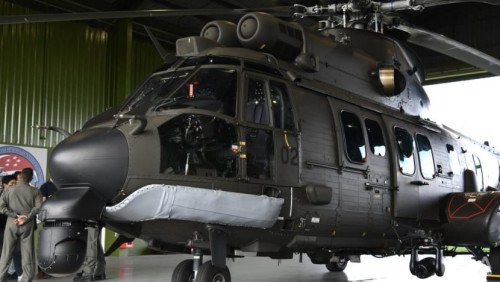
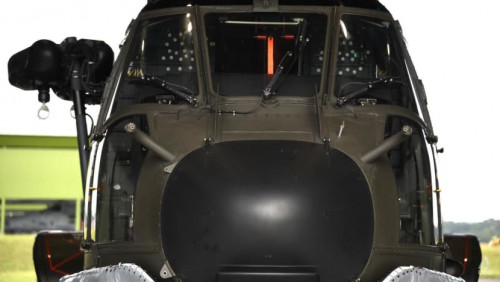
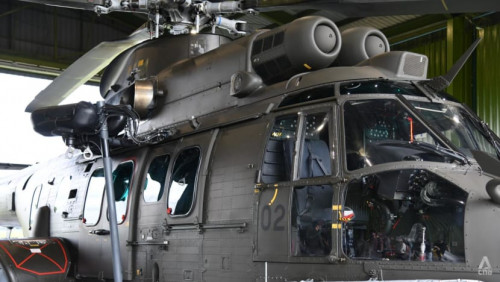
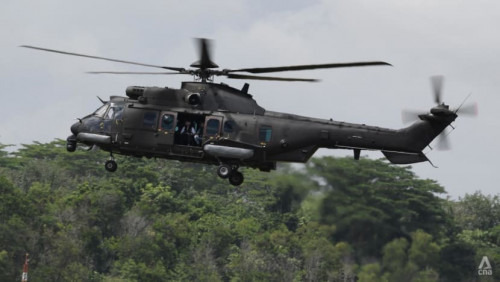
RSAF unveils new H225M helicopter with better range, manoeuvring to replace Super Pumas
SINGAPORE: It might look largely similar to its predecessor, the Super Puma, but the Republic of Singapore Air Force’s (RSAF) new medium lift helicopter, the H225M, can fly better and farther.
The Airbus-made H225M can be used for search and rescue (SAR), aeromedical evacuation, as well as humanitarian assistance and disaster relief operations. Reporters got a first up close and personal look at the helicopter at Sembawang Air Base on Wednesday (Dec 15).
“With its high load capacity, easy cabin access, combined with fast cruise speed, long range and in-flight agility, the H225M helicopter provides the flexibility needed for the RSAF to be more effective and capable in meeting operational demands,” the Ministry of Defence (MINDEF) said in a fact sheet on Wednesday.
The H225M payload capacity supports one of the following: About 30 personnel, 11 stretchers with medical support, or up to 4,750kg of underslung cargo. It can fly up to 740km before needing to refuel, about 20 per cent more than the Super Pumas, which have been in service since 1983.
MINDEF had announced in November 2016 that it will buy the H225Ms to replace the ageing Super Pumas, although the previously projected delivery of end-2020 was delayed to early 2021 onwards due to the COVID-19 pandemic.
The new helicopter is part of the helicopter group under RSAF’s Participation Command, which can insert troops, drop supplies or provide air defence to influence ground and maritime battles.
Lieutenant Colonel (LTC) Oh Chun Keong, 43, commander of the tactical air support group under the same command, said the RSAF will take delivery of the H225M in phases, according to operational requirements. Defense News reported in March that the final number will likely be around 30 helicopters.
“The Super Pumas have been serving as a workhorse of the RSAF over the last 30-over years. It’s timely for us to renew our capabilities to future-proof ourselves,” LTC Oh said, adding that most of the Super Puma’s current missions will be transferred to the H225M.
Over more than three decades, the Super Pumas have participated in humanitarian missions locally and abroad, inserted special forces in counterterrorism exercises, and carried the state flag during the National Day Parade.
The H225M is still being operationalised, with the first batch of pilots and air crew specialists – all trained for the Super Puma – starting overseas flying training in early 2020 and is now training locally. There is no indication yet on when the helicopter will be fully operationalised.
BETTER RANGE AND MANOEUVRABILITY
But H225M pilot Captain (CPT) Darryl Chong, 26, said the new helicopter has already left a good first impression.
“There is greater flexibility for us to achieve our missions when there is longer range capability for the aircraft,” he said. “When we compare it to the Super Pumas, even though (the H225M) is more manoeuvrable, it’s also more stable.”
CPT Chong said the H225M comes with a “better version” of everything the Super Puma has, including more reliable gyros that help manoeuvre the helicopter.
“We are trying to work the H225M into bettering existing processes,” he added. “The closest analogy I can give you is just like upgrading your car. Plain and simple, it’s a better aircraft.”
Besides flying, the H225M can also perform its missions more effectively. For instance, its extra hoist and longer cable come in handy during SAR missions.
A pair of hoists allow for redundancy when pulling up casualties, while a longer cable enables the helicopter to hover higher when faced with tall obstacles, like a ship’s mast.
“The other thing is it has a new and improved motor, which actually gives us a faster winching speed,” said 3rd Warrant Officer Dinesh Kumar Suppiah, 41, an air crew specialist with the H225M.
“When it comes to rescue, time is precious. And by having a faster winching speed, we are able to insert the winchman and extract the casualties in a very fast manner where every second counts.”
URGENT SEARCH AND RESCUE
On Wednesday, Senior Minister of State for Defence Heng Chee How watched a demonstration of how a time-critical SAR mission begins at the air base.
As a siren rang through the hangar, logistics personnel hurried out to a parked Super Puma before towing it out to the tarmac. In a nearby container, two pairs of pilots and air crew specialists on 24-hour standby geared up and sprinted out. The helicopter needs to be airborne within minutes.
At a nearby medical squadron, a doctor and a medic rushed out in an ambulance with sirens blaring. The ambulance brought them to the helicopter, which by then had turned on its rotors.
The chopping sounds grew louder, the medical personnel boarded, and the Super Puma – painted in distinct red-and-white SAR colours – lurched forward, made a right turn and took off.
The helicopter sooon banked left and hovered close to the ground, and a crew member was winched down to raise a dummy casualty on a stretcher.
The RSAF responds to an average of two SAR activations a month, including attending to merchant vessels with sick or injured crew in the South China Sea.
On Nov 26, a Super Puma was activated to evacuate a cruise ship crew member, who had suffered a heart attack, to Singapore General Hospital.
Mr Heng, who also took part in a familiarisation flight on the H225M, said the new helicopter will “more than well” attend to the role of the Super Pumas.
“We want to make best use of whatever we have, but at the same time, we always cast our eyes to the future and also (are) very sensitive to the sort of the threats that we have to face up to,” he said.
“And therefore, answer the question: What sort of capabilities do we need, whether by way of lift, or by way of attack, or by way of defence? This is an example of an asset that we are upgrading, and this is a process that will continue.”
^ In the same event..RSAF also revealed that it has upgraded its Bolide Anti air missiles to the latest Bolide NG version:
Saab RBS 70 NG MANPADS in Service with Republic of Singapore Air Force
A new video published by the Singapore Ministry of Defense has confirmed that the Saab RBS 70 New Generation (RBS 70 NG) Short-range Air Defense (SHORAD) Man-portable air-defence system (MANPADS) simulator has been delivered to the only city-island-nation. The Republic of Singapore Air Force (RSAF) has procured the Saab RBS 70 NG MANPADS as part of its air defense renewal efforts. The announcement was made by the RSAF chief, Maj Gen Kelvin Khong, in a Singapore Airshow interview. The new system, which is a rectangular sighting window, can be seen at the 1:42 mark of the video. The previous system employs a circular window.
The RSAF’s Divisional Air Defence Group (DAG) has been operating the RBS 70 since 1980, but it was upgraded with the Bolide missile in 2011. However, weighing 35kg, it required another person to carry the 15kg clip-on thermal sights. Originally designed and manufactured by the Swedish defense firm of Bofors Defence (now Saab Bofors Dynamics, since 2000). The RBS 70 is operational with the Swedish Armed Forces and has also been exported to 18 countries worldwide, including Australia, Argentina, Bahrain, Brazil, the Czech Republic, Finland, Germany, Indonesia, Iran, Ireland, Latvia Norway, Pakistan, Singapore, Thailand, Tunisia, and the UAE.
The RBS 70 NG’s integrated digital sights with thermal function bring a reduced weight of 25kg, which will be welcomed by RSAF personnel as they usually deploy these MANPADS on buildings in various air defense scenarios. The mount, incompatible with older sights, is also the interface for the IFF and tracking radar. The digital system means that commanders can share the operator’s view of the target, enabling better decision-making, especially in peacetime scenarios. The NG’s external tracking function enables the missile to utilize its full range of 9km as minute thumb movements during manual tracking means the missile readjusts itself and loses energy faster.
In addition to superb MANPAD benefits, RBS 70 NG’s sight has been specially designed for even greater flexibility and modularity. The system’s cutting-edge design also means that it can integrate with various vehicles, and has networked and remote-control compatibility. Of interest is how the RSAF will motorize the RBS 70 NG, with the incumbent V-200 already slated for retirement. A new possibility is URO VAMTAC 4×4 vehicles, but the back-blast safety radius of 60° and 2m mean the driver’s cab would be in the way unless the firing mount is raised. the RSAF is currently evaluating other systems for the DAG, these are likely to replace the M113 Mechanised Igla system.
Mai's note: The Bolide NG allows SG to launch anti air missiles from various terrain esp. areas motorised anti-air units like the Spyder or Iglas or Asters or Mistrals may have difficulty operating from. Or operate far out in contested territory.
This post has been edited by Mai189: Jan 8 2022, 10:09 PM
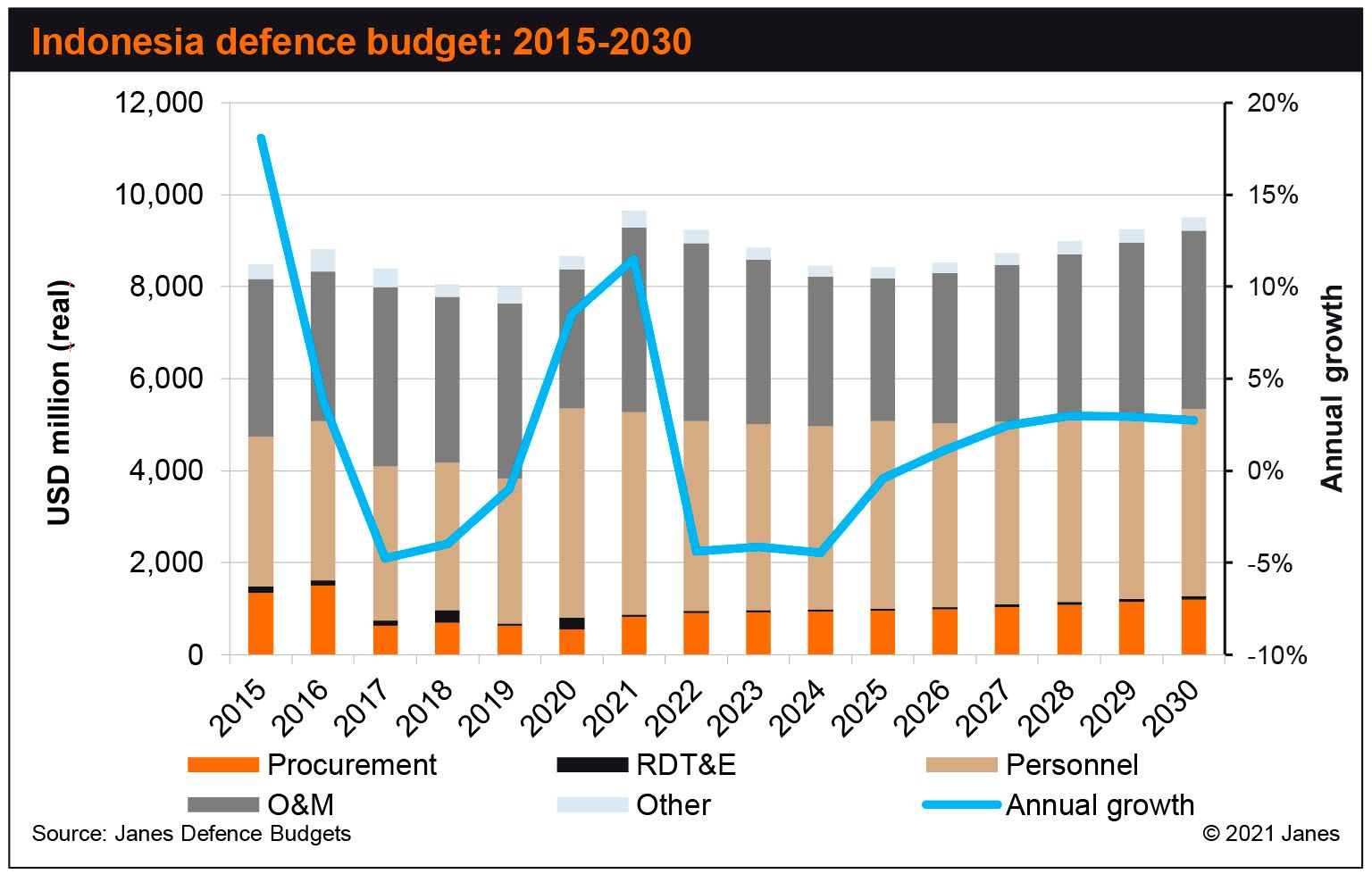
This would be dependent on the Indonesian Government’s continuous support to fund the Ministry of Defense (MOD), which has received its highest ever budget for budget year 2022 reaching IRP133.9 trillion (US$9.33 billion).
Thats a bigger navy than the Royal Navy or Australian navy or German navy with substantially lower yearly defence budget. This minimum force was revealed many years ago and surfaces from time to time on forums and blogs.
Australia spends about $34 billion USD yearly. I dont bother mentioning UK's defence budget.
Apart from making noise in the press or via defence enthusiasts or signing documents on the intent to buy these or that equipment, the most critical question is where are the equipment? Indonesia is borrowing to spend. Msia could also do it but the risks are high.
Have the loans been obtained for the Rafale, F15s, KFXs (nevermind the money owned)? Where are the Arrowheads, FREMMs, dozens of submarines apart from occasional news of progress in negotiations or somewhat some progress in loans?
This post has been edited by Mai189: Feb 6 2022, 07:01 PM
This is contingent on foreign loans to be approved in the first place - which is why you find many of the afore-mentioned defence announcements falling short of fruition because the Indo are still looking for funds to borrow.
Indonesia's government debt as of Dec 2021 is around USD $484 billion (nearly 4X the size of its foreign reserves).
Indonesia is also attempting to borrow hundreds of billions more 2 build its new capital.
This post has been edited by Mai189: Feb 6 2022, 06:30 PM
That is what they plan, but can the nation take the burden of that much debt?
Look at their orbat.
I always say relook what they they claim - when it comes to Indo.
If they say they want 100 of something, theyll actually end up with less than a 3rd of that.
How many Rafales did they "actually" buy? 6. Is it even brand new or has the latest tech on board. Also, one must take into account that f15s (latest blocks), typhoons, rafales, suks, etc. are from the early 2000s in terms of design. Esp by 2030.
This post has been edited by Mai189: Feb 10 2022, 06:25 PM


 Jan 2 2022, 05:08 PM


 Quote
Quote




 0.1050sec
 0.49
0.49
 7 queries
 GZIP Disabled