12MP + 20MP dual camera Large ƒ/1.75* aperture 20MP front camera AI-powered beautify Qualcomm® Snapdragon™ 660 Flagship-level processor 5.99'' FHD+ 18:9 Full screen display Android One** Latest innovations from Google** 3010mAh(typ)
Processor & Memory 4+32GB / 4+64GB / 6+128GB Qualcomm® Snapdragon™ 660 AIE Flagship-level Processor with AI Engine *Available storage and RAM are less than the total memory due to storage of the operating system and software pre-installed in the device.
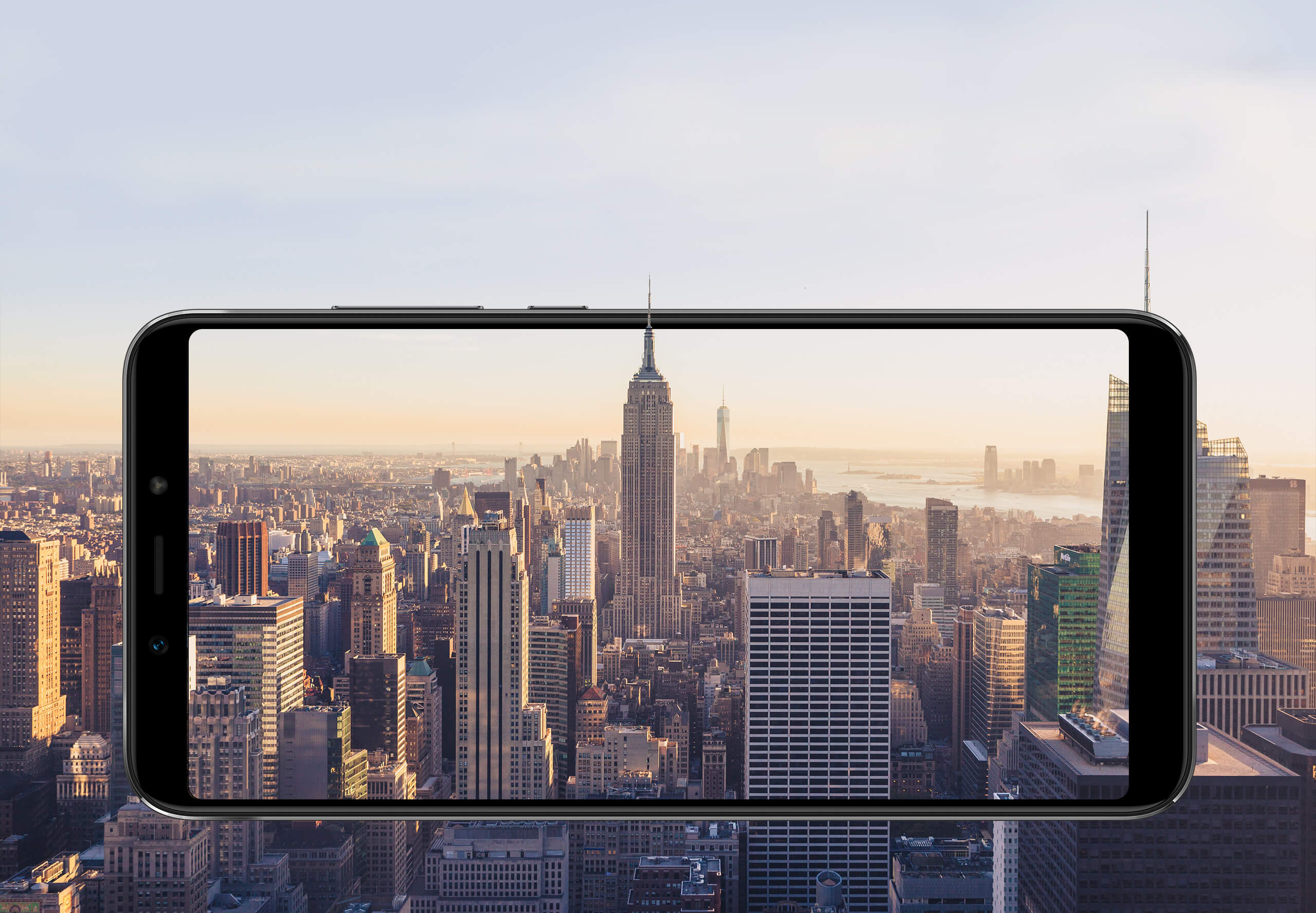
Display 18:9 Full screen display 5.99'' large display 2160x1080 FHD+, 403 PPI, 1500:1 contrast ratio
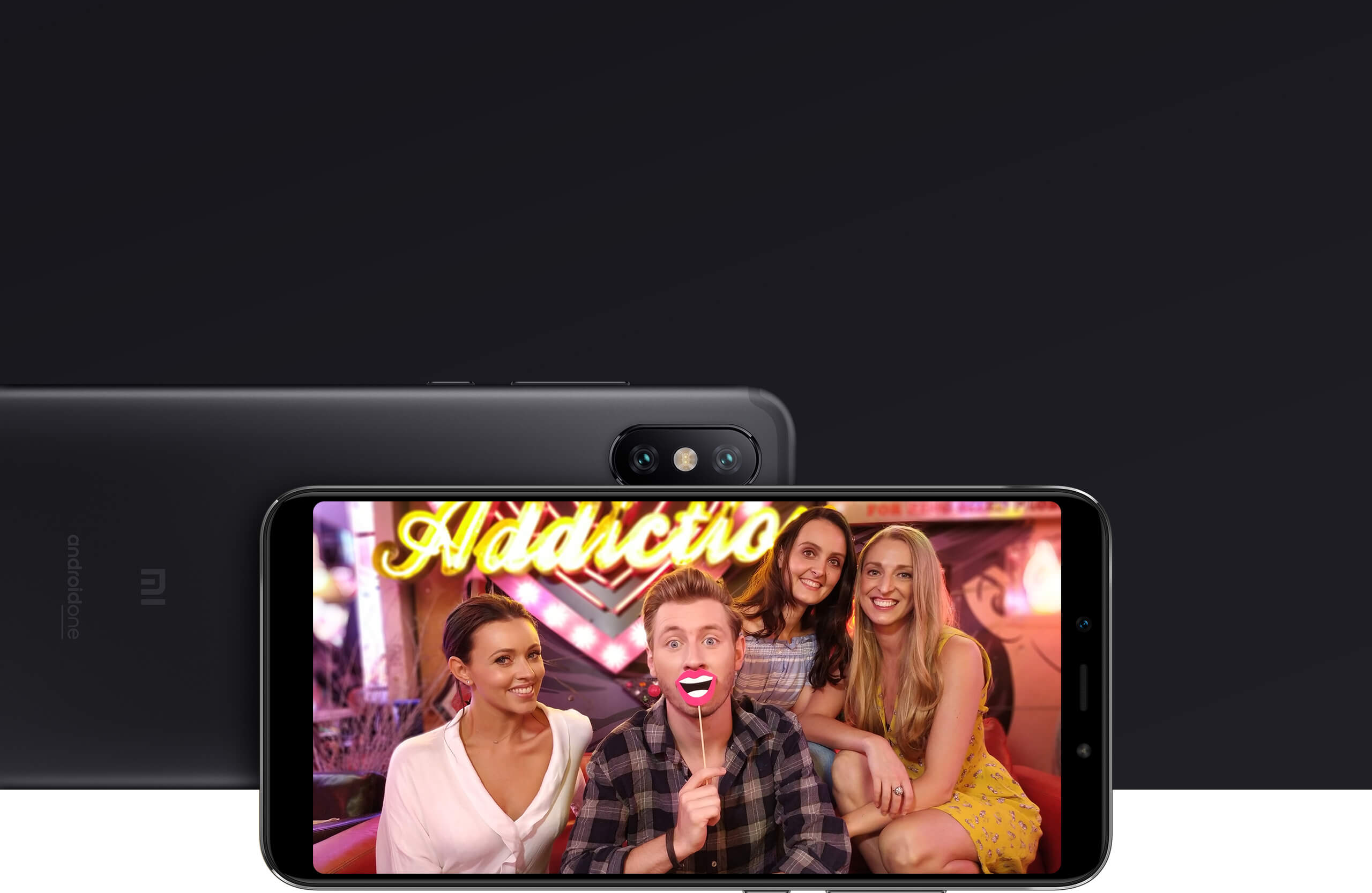
Camera 20MP AI Camera Front Camera: 20MP, SONY IMX376; 4-in-1 Super Pixel based on pixel binning, 2.0μm pixels; large f/2.2 aperture Rear Camera: 12MP, SONY IMX486; 1.25μm pixels, large f/1.75* aperture Rear Camera: 20MP, SONY IMX376; 4-in-1 pixel binning technique, 2.0μm pixels,f/1.75* large aperture Front Camera AI powered portrait mode AI-powered Beautify 4.0 HDR 4500K soft-toned selfie light Selfie timer Face recognition Group selfie Rear Camera AI Dual Camera Background blurring in portrait mode Single color tempertature flash Light enhancement technology HDR imaging technology Panorama mode Burst mode Face recognition AI Beautify 4.0 Group selfie Video 4K video shooting 3840x2160 30fps 1080p video shooting 1920x1080 30fps 720p video shooting 1280x720 30fps 480p video shooting 720x480 30fps slow motion video 720p 120fps
Networks and Connectivity 4G dual SIM Dual Nano-SIM card slot Bands GSM:B2/B3/B5/B8 WCDMA:B1/B2/B4/B5/B8 LTE FDD:B1/B2/B3/B4/B5/B7/B8/B20 LTE TDD:B38/B40 Dual SIM usage When using two SIM cards, one will support 4G while the other will not. *For 4G network support, please contact the local service provider for more information. Wireless 802.11 a/b/g/n/ac; 2.4G WiFi/5G WiFi/WiFi Direct/WiFi Display; Bluetooth 5.0
Supports H.265 /HEVC (Main profile), H.264 (Baseline/Main/High profile), MPEG4 (Simple profile/ASP), and VC-1 (Simple/Main/Advanced profile) video formats. Supports PCM, AAC/AAC+/eAAC+, MP3, AMR–NB and WB, FLAC, and WAV audio formats Package Contents Mi A2 / Power adapter / USB cable / SIM eject tool /Type-C to Audio adapter/ User guide / Clear soft case *Camera specifications as displayed in the camera settings may be rounded up from actual figure. Consult the product's official specification page for the precise camera specifications. **Google and Android One are trademarks of Google LLC.
GEEKY RANJIT IS BACK!
*Discussion is open for all with more further work in progress for this thread!
This post has been edited by jovigrunge: Nov 29 2018, 08:14 PM
Xiaomi’s Mi A2 + Mi A2 Lite available now in Malaysia!
Available in 2 variants: 💾4GB RAM + 64GB ROM 💾6GB RAM + 128GB ROM
key features: • 5.99" FULLView | FULL HD+ display • Snapdragon 660, 14nm Octa-core • DUAL 12MP + 20MP main camera • 20MP selfie camera with flash • DUAL sim slot | ANDROID OREO • 3000 mAh battery | Fast charging
The Mi A2 goes on sale in Malaysia starting this Friday from RM999
Xiaomi Malaysia has finally revealed the pricing and availability for its Mi A2 and Mi A2 Lite for our local market. These are Xiaomi’s latest Android One smartphones that offer a pure stock Android experience. The Mi A2 will be on sale starting this Friday, 3 August while the affordable Mi A2 Lite will be released later on 18 August.
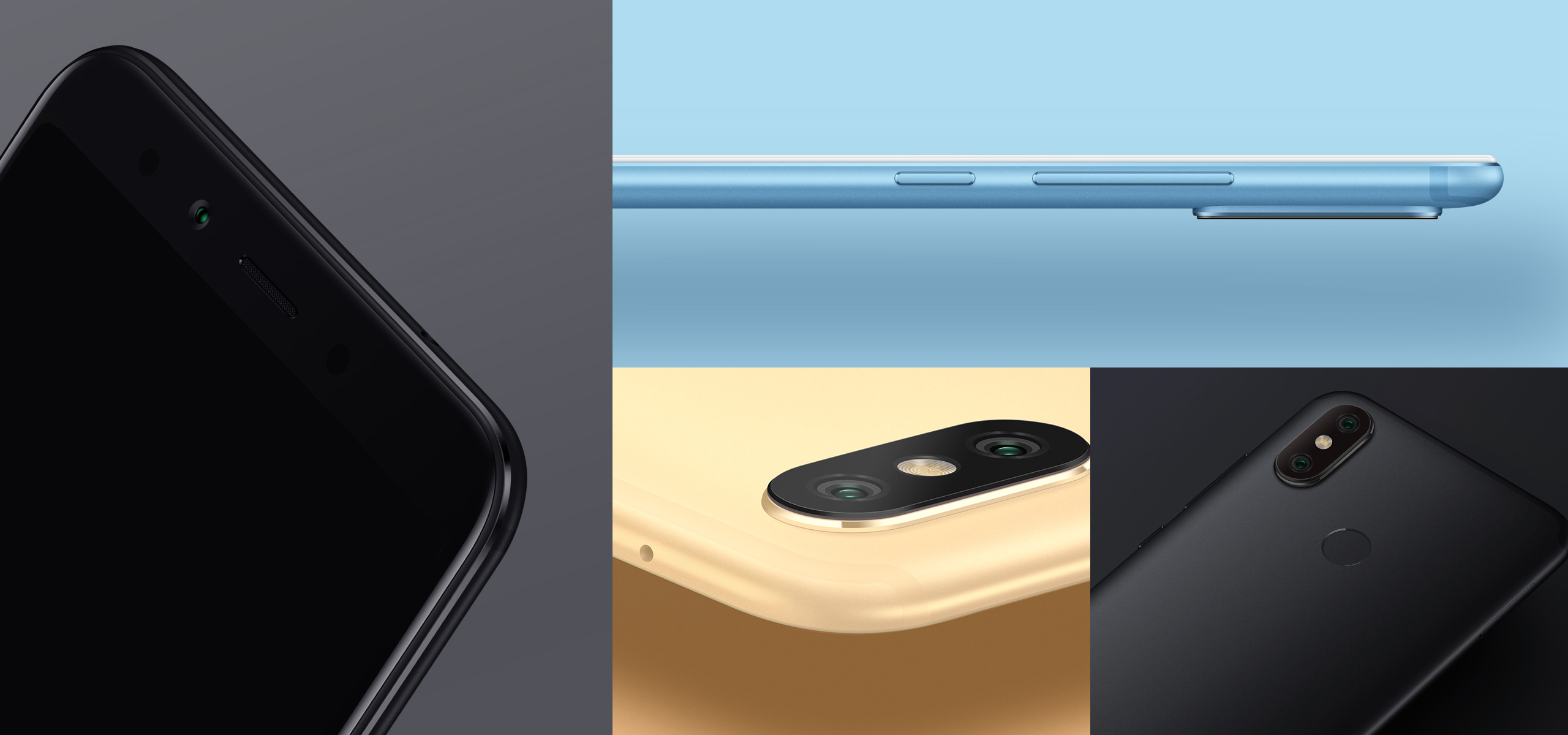
The Mi A2 is available in Black, Gold and Blue, and below is the Malaysian pricing:
Mi A2 4GB RAM + 64GB storage – RM999 Mi A2 6GB RAM + 128GB storage – RM1,199
According to Xiaomi, you can buy the Mi A2 from their official store on Lazada and they will also have their consumer launch on the same day at their physical Mi Store in KLCC. It will go on sale at other dealers and Mi reseller stores on the next day.
Mi A2 Lite pricing in Malaysia The Mi A2 Lite is also available in Black, Gold and Blue, and Malaysia is only getting a single variant:
Mi A2 Lite 3GB RAM + 32GB storage – RM699
The Mi A2 Lite will be available starting on 18 August 2018.
Qualcomm Snapdragon 636 vs 660 Comparison: How Different Are They?
If you look at the popular mid-range smartphones, you'd see a bulk of them powered by Qualcomm's 600-series processors. The popularity of the 600-series can be attributed to the fact that they bring superior experience to mobile phones (and hence, for the users).[/size][/B]
While the Snapdragon 625, 630 and 626 are some of the most popular processors, 2017 saw two new additions to the family — the Snapdragon 660 and 636 mobile platform.
Seen in the Nokia 7 plus and Redmi Note 5 Pro, these two platforms are now considered the most powerful chipsets in the 600-series. Needless to say, they provide a major boost to performance, gaming, and battery life.
For those who are unaware, the Snapdragon 636 replaces the highly popular Snapdragon 630, while the Snapdragon 660 is the substitute for the Snapdragon 653.
So, are these just incremental updates that Qualcomm has pushed out, or is there more to them than it meets the eye? Well, let's find out!
SPECIFICATIONS THAT MATTER
Property Snapdragon 636 Snapdragon 660 Manufacturing Process 14-nm 14-nm Architecture 64-bit 64-bit CPU 8x Kryo 260 CPU up to 1.8 GHz 8x Kryo 260 CPU up to 2.2 GHz GPU Adreno 509 Adreno 512 (Vulkan API) RAM Dual Channel LPDDR4/4x 1333 MHz Dual Channel LPDDR4/4x 1866 MHz Display Support Up to FHD+ (18:9) Up to QHD and WQXGA Camera Dual Qualcomm Spectra 160 ISP up to 24MP and 16MP Dual Qualcomm Spectra 160 ISP up to 24MP and 16MP Video Capture and Playback Up to 4K UHD video capture @ 30FPS & 4K Ultra HD video playback Up to 4K UHD video capture @ 30FPS & 4K Ultra HD video playback Charging Qualcomm Quick Charge 4.0 Qualcomm Quick Charge 4.0 Security Qualcomm Processor Security, Application Security, Smart Camera Hardware Token, Qualcomm Processor Security, Application Security, Smart Camera
PERFORMANCE IMPROVEMENTS
The Snapdragon 660 is the highest performing SOC in Qualcomm's mid-tier range as of now and one of the key areas of improvement is the fabrication process.
While the old Snapdragon 653 was developed using the 28nm fabrication process, Qualcomm has bumped up the Snapdragon 660 with the 14nm LPP FinFET process from Samsung. What makes the 14nm fabrication process unique is the improvement in the field of energy efficiency, heat control, and the overall performance.
Another highlight is the introduction of the Kryo 260 cores, thus giving an additional boost to the CPU power. In fact, the Snapdragon 660 is the first chipset with Kryo cores, thus making it a bit expensive. The Kryo 260 uses a combination of four 64-bit ARM semi-custom Cortex-A73 'performance' cores clocked at 2.2GHz and four Cortex-A53 'efficiency' cores clocked at 1.7GHz.
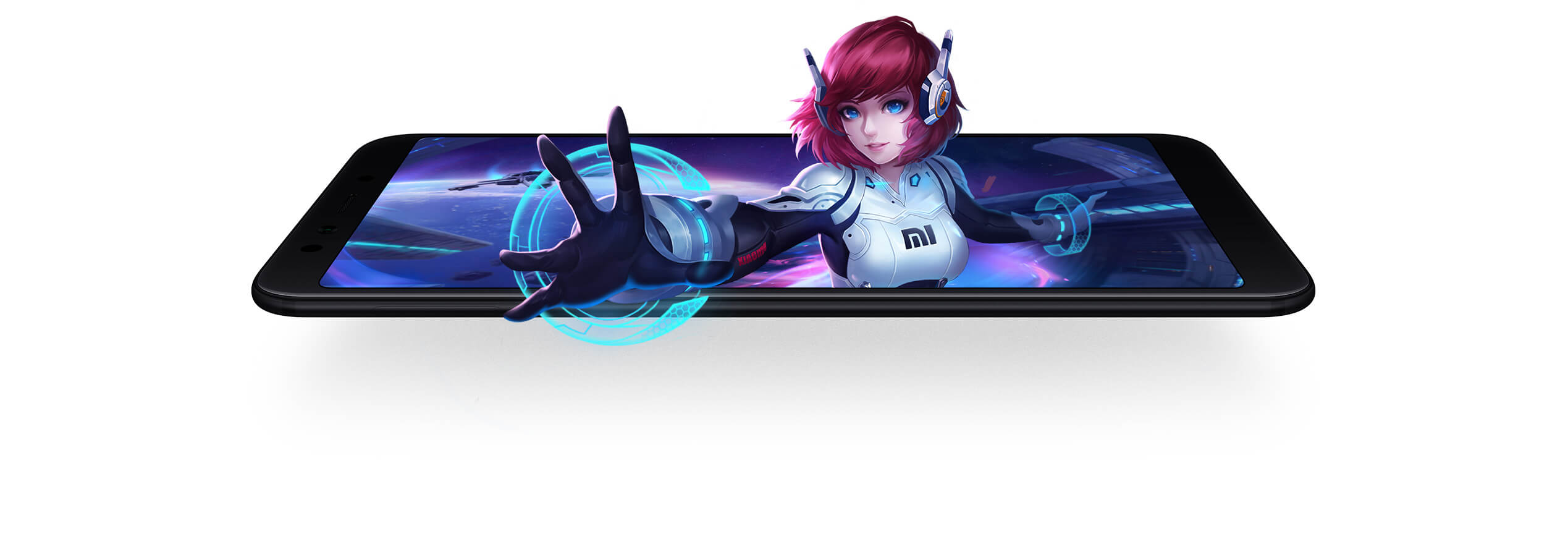
This cluster of cores offers low latency and improved task-sharing capacities. When it comes to the GPU, the Snapdragon 660 houses an Adreno 512 GPU. This brings the gaming advantage to the Snapdragon 660 as it supports some of the latest graphics APIs such as the Vulkan API.
The Snapdragon 636 share almost same specifications as the Snapdragon 660, including the 14-nm fabrication process and Kryo 260 cores. However, what stands out is the clock speed and the GPU.
Instead of being clocked at 2.2 GHz, the Snapdragon 636 runs at 1.8Ghz. Plus, with the upgrade in the graphics department, the Snapdragon 660 is a gamer-friendly platform.
IMPROVEMENTS IN THE CAMERA FIELD
When it comes to the camera department, both mobile platforms sport almost similar features. Both the Snapdragon 636 and 660 come with Qualcomm Clear Sight camera features.
One of the major highlights of Clear Sight is the ability to capture more light in low-light areas, thus leading to noise reduction in photos. Apart from that, in keeping up with the dual camera trend, both the mobile platforms support optical zoom for cameras with different focal lengths, depth mapping for portrait mode, and EIS for videos.
DISPLAY RESOLUTION
The Snapdragon 660 is optimized for WQHD displays (2560x1600). On the contrary, the Snapdragon 636 can power displays up to 2220x1080.
If you look around, most of the mid-range phones now support displays up to FHD+, including the Nokia 7 plus.
CHARGING SPEED
On papers, with Quick Charge 4.0, you can get a whopping 5 hours of battery life in under 5 minutes while charging a 2750mAH battery unit. Given that most of the phone's batteries hover around the 2700mAh-3500mAh bracket, hopefully there won't be a significant leap in the charging time.
In reality, though, it remains to be seen whether OEMs will actually enable this feature. Currently, neither Redmi Note 5 Pro nor Nokia 7 plus supports Quick Charge. In fact, even the premium phones such as the Samsung Galaxy S8/S9 do not enable this feature.
ARTIFICIAL INTELLIGENCE
Artificial Intelligence in phones is the talk of the town and thankfully, the Snapdragon 660 and 635 do not disappoint. Both the mobile platforms support Qualcomm's Neural Processing Engine (NPE) SDK.
This SDK works with some of the most popular AI frameworks such as Caffe/Caffe2, and Google’s TensorFlow.
In layman's terms, the inclusion of NPE means that app developers can tap into the API for developing AI-related apps. For instance, a camera app that uses image recognition to put funny filters.
SO, TO CONCLUDE
The Qualcomm Snapdragon 636 and 660 are similar in many respects, especially when it comes to camera specs and the charging technology. Performance wise, though they appear to be similar, the different clock frequencies and GPU help to push the Snapdragon 660 up the ladder by several notches.
Also, if we were to look at the benchmark scores, there is a significant difference between the two. As per a report by GSMArena, the Snapdragon 660 on the Nokia 7 plus managed to score a whopping 141822 points, while the Xiaomi Redmi Note 5 Pro scored 112649 points.
In a nutshell, we can say that the Snapdragon 660 is an overclocked version of the Snapdragon 636, with improved graphics. For the gamer in you, a phone powered by the Snapdragon 660 would be the ideal choice.
Mi A2 Vs Mi A2 Lite: Everything different between new Xiaomi Android One phones
Unlike last year, Xiaomi has launched not one, but two Android One phones, aka the Mi A2 and the Mi A2 Lite this year. The Mi A2 is successor to the Mi A1 from last year, while the Mi A2 Lite is a toned down version of the Mi A2. One of the reasons behind launching two Android One phones this year could be the pricing. The Mi A2 Lite is a lot more expensive than the Mi A1, at least if the European pricing is to be gone by.
The Lite is an entry-level option for those looking for all the goodness of Xiaomi hardware and stock Android, according to the company, while the Mi A2 would cater to those looking for a more flagship level of Android One experience. Because Xiaomi will be offering the Mi A2 in standard and Lite versions, buyers will have more options to choose from. Sadly, only the Mi A2 will be coming to India which means buyers may have to shell out more this time round as opposed to last year when they could pick up the Mi A1 for as low as around Rs 15,000.
Right off the bat, both the phones rock the same Android 8.1 Oreo software, and also both these phones come with dual rear cameras, and full metal bodies. But there are differences seemingly justifying the price difference between them. Here's a closer look.
1.While the Mi A2 is a rebranded Mi 6X, the Mi A2 Lite is a rehashed Redmi 6 Pro. Both the Mi 6X and the Redmi 6 Pro have already been launched in China, with Xiaomi's custom MIUI software. The Mi A2 and the Mi A2 Lite, on the other hand, run vanilla Android, or more precisely, vanilla Android 8.1 Oreo software out-of-the-box
2.The Mi A2 comes with a 5.99-inch full-HD+ display with a 2160x1080p resolution and 403ppi pixel density. Also, it supports an unusual aspect ratio of 18:9, as against the more traditional 16:9. The phone measures 7.3mm in thickness and is protected up-top by Corning Gorilla Glass 5. The Mi A2 Lite, on the other hand, comes with a 5.84-inch full-HD+ display with a 2280x1080 pixel resolution, 19:9 aspect ratio and 432ppi pixel density. Yes, it has a notch.
3.The Mi A2 is powered by a Qualcomm Snapdragon 660 processor while the Mi A2 Lite is powered by Xiaomi's tried and tested Qualcomm Snapdragon 625 processor.
4.The Mi A2 will be available in as many as three versions: 4GB RAM and 32GB storage, 4GB RAM and 64GB storage, and 6GB RAM and 128GB storage. The Mi A2 Lite will be available in two versions: 3GB RAM and 32GB storage, and 4GB RAM and 64GB storage. Both the phones support expandable storage.
5.Both the phones support dual-SIM and 4G LTE. The Mi A2 does not have a headphone jack. The Mi A2 Lite has one.
6.The main highlight of the Mi A2, according to Xiaomi, is its camera setup. The dual camera module on the back of the Mi A2 comes with one 12-megapixel sensor (Sony IMX 486 sensor) and another 20-megapixel sensor (Sony IMX 376 sensor). Both the sensors have an f/1.75 aperture. The main sensor has large pixels while the secondary sensor supports pixel binning that should result in all-round good low-light photos. The Mi A2 dual camera setup ships with lots and lots of AI and is therefore capable of churning out machine learning algorithms to produce good quality portraits or photos with shallow of depth of field. The Mi A2 can also intelligently switch between primary and secondary sensor depending on the available light, according to Xiaomi. The dual camera setup is further assisted by a dual-LED (dual-tone) flash. The Mi A2 Lite has a more basic dual camera system on the rear consisting of a 12+5 MP combination.
7.On the front, the Mi A2 comes with a 20-megapixel camera with soft LED flash. The Mi A2 Lite has a 5-megapixel front-facing camera.
8.The Mi A2 is backed by a 3,010mAh battery, and charges over USB Type-C with support for fast charging (Quick Charge 3.0) packed in. The Mi A2 Lite is backed by a larger 4,000mAh battery but charges over standard micro-USB.
9.The Mi A2 will start at 249 Euros (roughly Rs 20,071) for the base version with 4GB RAM and 32GB storage going all the way to 349 Euros (roughly Rs 28,131) for the top-end version with 6GB RAM and 128GB storage. The Mi A2 will also be available in 4GB RAM and 64GB storage version for 279 Euros (roughly Rs 22,489). The Mi A2 Lite, meanwhile, starts at 179 Euros (roughly Rs 14,437) for the base version with 3GB RAM and 32GB storage going all the way to 229 Euros for the top-end version with 4GB RAM and 64GB storage (roughly Rs 18,470).
10.Xiaomi will launch the Mi A2 in India on August 8. The company is not bringing the Mi A2 Lite to India, at least for now.
This post has been edited by jovigrunge: Aug 6 2018, 08:41 PM


 Jul 26 2018, 09:55 PM, updated 7y ago







 Quote
Quote





 0.0257sec
 0.36
0.36
 6 queries
 GZIP Disabled