Welcome Guest ( Log In | Register )

3 Pages  1 2 3 >Bottom

Outline · [ Standard ] · Linear+

 LYN Catholic Fellowship V02 (Group), For Catholics (Roman or Eastern)

views
     
TSyeeck
post May 23 2017, 01:49 PM, updated 2y ago

Look at all my stars!!
*******
Senior Member
3,573 posts

Joined: Apr 2006


Continuing where we left off from V01 https://forum.lowyat.net/topic/3512530

No one can be in the Church of Christ without professing the ensemble of the truths of Catholic Faith, being in unity with the Chair of Peter and receiving the same Seven Sacraments. The only Christian is one who accepts Our Lord Jesus Christ and the Church he established. Who can have God for Father and not accept the Church for Mother? (Pope Pius IX, Singulari quidem of March 17, 1856) Who can accept the spouse Christ, and not his mystical bride the Church? Who can separate the Head, the only begotten Son of God, from the body, which is His Church? (Pope Leo XIII, Satis cognitum of June 29, 1896).

This post has been edited by yeeck: Jun 19 2017, 02:33 PM
khool
post May 23 2017, 02:13 PM

Getting Started
**
Junior Member
225 posts

Joined: Mar 2008


QUOTE(yeeck @ May 23 2017, 01:49 PM)
Continuing where we left off from V01 https://forum.lowyat.net/topic/3512530
*
errr ... you forgot to put a link to here in the old page lehhhhh!!! ... tongue.gif biggrin.gif

khool
post May 23 2017, 02:14 PM

Getting Started
**
Junior Member
225 posts

Joined: Mar 2008


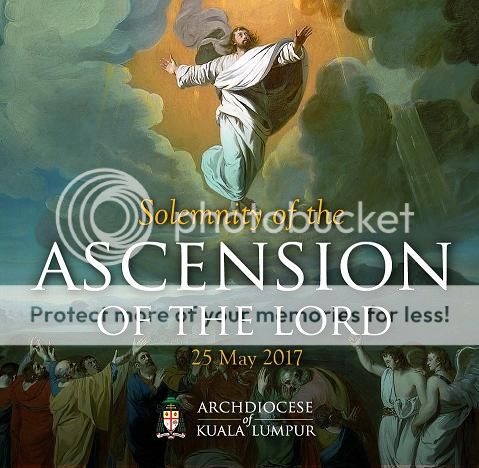
May 25, 2017 (Thursday) : Solemnity of the Ascension of the Lord

Mass Times for Churches in KL Archdiocese rclxms.gif rclxms.gif rclxms.gif rclxm9.gif rclxm9.gif rclxm9.gif

https://archkl.org/index.php/en/solemnity-o...ion-of-the-lord

This post has been edited by khool: May 23 2017, 02:14 PM
khool
post May 24 2017, 09:05 AM

Getting Started
**
Junior Member
225 posts

Joined: Mar 2008


Wednesday of the Sixth Week of Easter
Lectionary: 293


user posted image

Reading 1 (Acts 17:15, 22—18:1)

After Paul's escorts had taken him to Athens,
they came away with instructions for Silas and Timothy
to join him as soon as possible.

Then Paul stood up at the Areopagus and said:
"You Athenians, I see that in every respect
you are very religious.
For as I walked around looking carefully at your shrines,
I even discovered an altar inscribed, 'To an Unknown God.'
What therefore you unknowingly worship, I proclaim to you.
The God who made the world and all that is in it,
the Lord of heaven and earth,
does not dwell in sanctuaries made by human hands,
nor is he served by human hands because he needs anything.
Rather it is he who gives to everyone life and breath and everything.
He made from one the whole human race
to dwell on the entire surface of the earth,
and he fixed the ordered seasons and the boundaries of their regions,
so that people might seek God,
even perhaps grope for him and find him,
though indeed he is not far from any one of us.
For 'In him we live and move and have our being,'
as even some of your poets have said,
'For we too are his offspring.'
Since therefore we are the offspring of God,
we ought not to think that the divinity is like an image
fashioned from gold, silver, or stone by human art and imagination.
God has overlooked the times of ignorance,
but now he demands that all people everywhere repent
because he has established a day on which he will 'judge the world
with justice' through a man he has appointed,
and he has provided confirmation for all
by raising him from the dead."

When they heard about resurrection of the dead,
some began to scoff, but others said,
"We should like to hear you on this some other time."
And so Paul left them.
But some did join him, and became believers.
Among them were Dionysius,
a member of the Court of the Areopagus,
a woman named Damaris, and others with them.

After this he left Athens and went to Corinth.

Responsorial Psalm (Ps 148:1-2, 11-12, 13, 14)

R. Heaven and earth are full of your glory.
or:
R. Alleluia.


Praise the LORD from the heavens;
praise him in the heights.
Praise him, all you his angels;
praise him, all you his hosts.
R. Heaven and earth are full of your glory.
or:
R. Alleluia.


Let the kings of the earth and all peoples,
the princes and all the judges of the earth,
Young men too, and maidens,
old men and boys.
R. Heaven and earth are full of your glory.
or:
R. Alleluia.


Praise the name of the LORD,
for his name alone is exalted;
His majesty is above earth and heaven.
R. Heaven and earth are full of your glory.
or:
R. Alleluia.


He has lifted up the horn of his people;
Be this his praise from all his faithful ones,
from the children of Israel, the people close to him.
Alleluia.
R. Heaven and earth are full of your glory.
or:
R. Alleluia.


Alleluia (Jn 14:16)

R. Alleluia, alleluia.
I will ask the Father
and he will give you another Advocate
to be with you always.
R. Alleluia, alleluia.

Gospel (Jn 16:12-15)
Jesus said to his disciples:
"I have much more to tell you, but you cannot bear it now.
But when he comes, the Spirit of truth,
he will guide you to all truth.
He will not speak on his own,
but he will speak what he hears,
and will declare to you the things that are coming.
He will glorify me,
because he will take from what is mine and declare it to you.
Everything that the Father has is mine;
for this reason I told you that he will take from what is mine
and declare it to you."

REFLECTION

He will not speak on his own. Jesus has come down from heaven to reveal the “name” or mysteries of God. He prays to the Father at the Last Supper, “This is eternal life, that they should know you, the only true God… I revealed your name to those whom you gave me out of the world… the words you gave to me I have given to them, and they accepted them and truly understood that I came from you” (Jn 17:3, 6, 8).

The Spirit of truth that will come after Jesus will not have “new revelations” about the Father. Rather, he will take from what is Jesus’ and declare it to the disciples. Jesus says that what he says and who he is cannot be fully understood by the disciples in the present state. But when the Spirit comes with Jesus’ glorification, he will guide the disciples to all truth about Jesus—above all, that he is the Messiah and the Son of God.

When the Gospel of John was written, many of the actions and words of Jesus were already clear to the disciples because of the grace of the Spirit and the light of Jesus’ glorification. An example is Jesus’ declaration about the temple. Jesus tells the Jews, “Destroy this temple and in three days I will raise it up” (Jn 2:19). The evangelist clarifies, “But he was speaking about the temple of his body. Therefore, when he was raised from the dead, his disciples remembered that he had said this” (Jn 2:21-22, emphasis added).

Ponder on the things that are “clearer” to you now because of certain events and of the wisdom that comes with the passage of time.

SOURCE: “365 Days with the Lord 2017,” ST. PAULS Philippines, 7708 St. Paul Rd., SAV, Makati City (Phils.) http://www.ssp.ph/

TSyeeck
post May 24 2017, 06:10 PM

Look at all my stars!!
*******
Senior Member
3,573 posts

Joined: Apr 2006


user posted image

Ye men of Galilee, why wonder you, looking up to heaven? alleluia. He shall so come as you have seen Him going up into heaven, alleluia, alleluia, alleluia. -- (Ps. 44. 2). O clap your hands, all ye nations; shout unto God, with the voice of exultation. V.: Glory to the Father . . . -- Ye men of Galilee, why wonder you . . .

EPISTLE ¤ Acts 1. 1-11
Lesson from the Acts of the Apostles.

[Our Lord's instructions to His disciples. Ascension into Heaven of Our Lord.]

The former treatise I made, O Theophilus, of all things which Jesus began to do and to teach, until the day on which, giving commandments by the Holy Ghost to the Apostles whom He had chosen, He was taken up: to whom also He showed Himself alive after His Passion by many proofs, for forty days appearing to them and speaking of the Kingom of God. And eating together with them, He commanded them that they should not depart from Jerusalem, but should wait for the promise of the Father, which you have heard (saith He) by My mouth; for John indeed baptized with water, but you shall be baptized with the Holy Ghost not many days hence. They therefore who were come together asked Him, saying: Lord, wilt Thou at this time restore again the kingdom of Israel? But He said to them: It is not for you to know the times or moments which the Father hath put in His own power: but you shall receive the power of the Holy Ghost coming upon you, and you shall be witnesses unto Me in Jerusalem, and in all Judea and Samaria, and even to the uttermost part of the earth. And when He had said these things, while they looked on, He was raised up: and a cloud received Him out of their sight. And while they were beholding Him going up to heaven, behold two men stood by them in white garments, who also said: Ye men of Galilee, why stand you looking up to heaven? This Jesus, who is taken up from you into heaven, shall so come as you have seen Him going into heaven.

Alleluia, alleluia. V.: God is ascended with a shout, and the Lord with the sound of a trumpet. Alleluia. V.: (Ps. 67. 18). The Lord is in Sinai, in the holy place; ascending on high He hath led captivity captive.

GOSPEL ¤ Mark 16. 14-20
† Continuation of the holy Gospel according to St. Mark.

[Instructions of Our Lord Jesus Christ to His disciples: He sends them into the whole world to preach the Gospel.]

At that time Jesus appeared to the eleven as they were at table: and He upbraided them with their incredulity and hardness of heart, because they did not believe them who had seen Him after He was risen again. And He said to them: Go ye into the whole world and preach the Gospel to every creature. He that believeth and is baptized shall be saved: but he that believeth not shall be condemned. And these signs shall follow them that believe: In My Name they shall cast out devils; they shall speak with new tongues; they shall take up serpents; and if they shall drink any deadly thing, it shall not hurt them; they shall lay their hands upon the sick, and they shall recover. And the Lord Jesus, after He had spoken unto them, was taken up into heaven and sitteth on the right hand of God. But they going forth preached everywhere, the Lord working withal, and confirming the word with signs that followed.
khool
post May 25 2017, 09:18 AM

Getting Started
**
Junior Member
225 posts

Joined: Mar 2008


The Ascension of the Lord
Lectionary: 58


user posted image

Reading 1 (Acts 1:1-11)

In the first book, Theophilus,
I dealt with all that Jesus did and taught
until the day he was taken up,
after giving instructions through the Holy Spirit
to the apostles whom he had chosen.
He presented himself alive to them
by many proofs after he had suffered,
appearing to them during forty days
and speaking about the kingdom of God.
While meeting with them,
he enjoined them not to depart from Jerusalem,
but to wait for "the promise of the Father
about which you have heard me speak;
for John baptized with water,
but in a few days you will be baptized with the Holy Spirit."

When they had gathered together they asked him,
"Lord, are you at this time going to restore the kingdom to Israel?"
He answered them, "It is not for you to know the times or seasons
that the Father has established by his own authority.
But you will receive power when the Holy Spirit comes upon you,
and you will be my witnesses in Jerusalem,
throughout Judea and Samaria,
and to the ends of the earth."
When he had said this, as they were looking on,
he was lifted up, and a cloud took him from their sight.
While they were looking intently at the sky as he was going,
suddenly two men dressed in white garments stood beside them.
They said, "Men of Galilee,
why are you standing there looking at the sky?
This Jesus who has been taken up from you into heaven
will return in the same way as you have seen him going into heaven."

Responsorial Psalm (Ps 47:2-3, 6-7, 8-9)

R. God mounts his throne to shouts of joy: a blare of trumpets for the Lord.
or:
R. Alleluia.


All you peoples, clap your hands,
shout to God with cries of gladness,
for the LORD, the Most High, the awesome,
is the great king over all the earth.
R. God mounts his throne to shouts of joy: a blare of trumpets for the Lord.
or:
R. Alleluia.


God mounts his throne amid shouts of joy;
the LORD, amid trumpet blasts.
Sing praise to God, sing praise;
sing praise to our king, sing praise.
R. God mounts his throne to shouts of joy: a blare of trumpets for the Lord.
or:
R. Alleluia.


For king of all the earth is God;
sing hymns of praise.
God reigns over the nations,
God sits upon his holy throne.
R. God mounts his throne to shouts of joy: a blare of trumpets for the Lord.
or:
R. Alleluia.


Reading 2 (Eph 1:17-23)

Brothers and sisters:
May the God of our Lord Jesus Christ, the Father of glory,
give you a Spirit of wisdom and revelation
resulting in knowledge of him.
May the eyes of your hearts be enlightened,
that you may know what is the hope that belongs to his call,
what are the riches of glory
in his inheritance among the holy ones,
and what is the surpassing greatness of his power
for us who believe,
in accord with the exercise of his great might,
which he worked in Christ,
raising him from the dead
and seating him at his right hand in the heavens,
far above every principality, authority, power, and dominion,
and every name that is named
not only in this age but also in the one to come.
And he put all things beneath his feet
and gave him as head over all things to the church,
which is his body,
the fullness of the one who fills all things in every way.

Alleluia (Mt 28:19a, 20b)

R. Alleluia, alleluia.
Go and teach all nations, says the Lord;
I am with you always, until the end of the world.
R. Alleluia, alleluia.

Gospel (Mt 28:16-20)
The eleven disciples went to Galilee,
to the mountain to which Jesus had ordered them.
When they saw him, they worshiped, but they doubted.
Then Jesus approached and said to them,
"All power in heaven and on earth has been given to me.
Go, therefore, and make disciples of all nations,
baptizing them in the name of the Father,
and of the Son, and of the Holy Spirit,
teaching them to observe all that I have commanded you.
And behold, I am with you always, until the end of the age."

user posted image

REFLECTION

A little while. When bidding good-bye to the disciples, Jesus declares that his impending absence will only be for “a little while” (Greek mikron). While this may refer to a short time—like the time from Jesus’ death to his resurrection on the third day—mikron points to the sorrow that will be soon replaced by great joy: “You will weep and mourn, while the world rejoices; you will grieve, but your grief will become joy” (v 20).

From the perspective of God’s “eternity,” pain, sorrow, absence, or time itself is only a “little while.” The disciples will see Jesus again after his resurrection, and they will rejoice (cf Jn 20:20). Still, the glorification of Jesus will mark his “absence” because he will return to the Father, and they will no longer see him as before. But the believers will continue experiencing his presence in the community guided by the Consoler, the Holy Spirit.

In the light of this, grief and trials are “little” and cannot be compared with the promised joy. St. Paul writes, “I consider that the sufferings of this present time are as nothing compared with the glory to be revealed for us” (Rom 8:18).

“Although you have not seen him you love him; even though you do not see him now yet believe in him, you rejoice with an indescribable and glorious joy, as you attain the goal of [your] faith, the salvation of your souls” (1 Pt 1:8-9).

SOURCE: “365 Days with the Lord 2017,” ST. PAULS Philippines, 7708 St. Paul Rd., SAV, Makati City (Phils.) http://www.ssp.ph/

khool
post May 25 2017, 09:23 AM

Getting Started
**
Junior Member
225 posts

Joined: Mar 2008


THE ASCENSION OF OUR LORD : ITS REPERCUSSIONS IN OUR CHRISTIAN LIFE.

user posted image

In the 1st reading of today’s Mass, the Acts of the Apostles recount the last apparition and last instructions of Our Lord Jesus Christ on earth before ascending into heaven:

“’It is not for you to know the times or seasons that the Father has established by his own authority. But you will receive power when the Holy Spirit comes upon you, and you will be my witnesses in Jerusalem, throughout Judea and Samaria, and to the ends of the earth.’ WHEN HE HAD SAID THIS, AS THEY WERE LOOKING ON, HE WAS LIFTED UP, AND A CLOUD TOOK HIM FROM THEIR SIGHT (Acts 1:7-9).”
St Luke, in his Gospel, added: “LIFTING UP HIS HANDS HE BLESSED THEM. WHILE HE BLESSED THEM, HE PARTED FROM THEM, AND WAS CARRIED UP INTO HEAVEN (Lk 24:50-51).”

WHAT DOES OUR LORD’S ASCENSION SIGNIFY?

With Our Lord’s Ascension into heaven, He once more demonstrates that He is God. His humanity is glorified with His Ascension. The Catechism teaches us that:

1. “Christ's Ascension marks the DEFINITIVE ENTRANCE OF JESUS' HUMANITY INTO GOD'S HEAVENLY DOMAIN, whence he will come again (cf. Acts 1:11)…

2. As “the head of the Church”, Jesus “PRECEDES US INTO THE FATHER'S GLORIOUS KINGDOM so that WE, THE MEMBERS OF HIS BODY, MAY LIVE IN THE HOPE OF ONE DAY BEING WITH HIM FOR EVER…”

3. Moreover, Our Lord Jesus Christ, “having entered the sanctuary of heaven once and for all, INTERCEDES CONSTANTLY FOR US AS THE MEDIATOR WHO ASSURES US OF THE PERMANENT OUTPOURING OF THE HOLY SPIRIT (Catechism of the Catholic Church, n. 665-667).”

At the same time, Our Lord upon opening the minds of the Apostles to understand the scriptures and that all that has been written about Him in the law of Moses and the prophets have to be fulfilled told them in the Gospel of St. Luke:

“Thus it is written, that the Christ should suffer and on the third day rise from the dead, and THAT REPENTANCE AND FORGIVENESS OF SINS SHOULD BE PREACHED IN HIS NAME TO ALL NATIONS, BEGINNING FROM JERUSALEM. YOU ARE WITNESSES OF THESE THINGS. 49 And behold, I send the promise of my Father upon you; but stay in the city, until you are clothed with power from on high (Lk 24:46-48).”

He instructed the Apostles to be his witnesses not only in Jerusalem but all throughout the world, giving them thus their APOSTOLIC MISSION, as narrated also by St. Mark: “GO INTO THE WHOLE WORLD AND PROCLAIM THE GOSPEL TO EVERY CREATURE. WHOEVER BELIEVES AND IS BAPTIZED WILL BE SAVED; WHOEVER DOES NOT BELIEVE WILL BE CONDEMNED (Mk 16:15-16).”

After having seen the significance of Our Lord’s Ascension into heaven, we can now tackle its REPERCUSSIONS in our daily Christian life. The Ascension of Our Lord has the following practical implications in our daily life.

1. It CONFIRMS and STRENGTHENS OUR FAITH IN THE DIVINITY OF OUR LORD JESUS CHRIST, Perfect God-Perfect Man.
2. By virtue of our Baptism, WE, CHRISTIANS, ARE ALSO CALLED TO BE CHRIST’S WITNESSES in our surroundings and CALLED AS WELL TO DO APOSTOLATE with the people around us. APOSTOLATE CONSISTS IN BRINGING SOULS CLOSER TO CHRIST through our prayer, our sacrifices, our good example, our timely and amiable understanding and advices and sincere friendship wherever God has placed us.
3. It should inspire us to “LOOK INTENTLY AT THE SKY (Acts 1:10)”, that is, to DIRECT OUR GAZE TOWARDS THE SUPERNATURAL AND LIFT OUR HEARTS AND OUR SPIRIT TO HEAVEN, SEEKING AND LOVING “THE THINGS OF THE ABOVE” WHILE WE CARRY OUT OUR DAILY ORDINARY ACTIVITIES, thereby, FOSTERING the virtue of HOPE, that one day, with God’s grace, WE SHALL BE UNITED WITH HIM. This is nothing but living a CONTEMPLATIVE LIFE IN THE MIDDLE OF THE WORLD.

As St. Josemaria wrote: “I will never share the opinion — though I respect it — of those who separate prayer from active life, as if they were incompatible.

WE CHILDREN OF GOD HAVE TO BE CONTEMPLATIVES: PEOPLE WHO, IN THE MIDST OF THE DIN OF THE THRONG, KNOW HOW TO FIND SILENCE OF SOUL IN A LASTING CONVERSATION WITH OUR LORD, people who know how to look at him as they look at a Father, as they look at a Friend, as they look at someone with whom they are madly in love (Forge, n. 738).”

Dear friends, although Our Lord ascended and gloriously entered into heaven, He hasn’t abandoned us: He has sent us the Holy Spirit, He is physically, truly and substantially present in the Tabernacle and hidden behind the most ordinary duties of our everyday life at the same time, present in our soul in grace with God the Father and God the Holy Spirit.

Let us then seek Him earnestly, with our mind, heart and soul in the midst of our daily occupations. Let us also take seriously of our apostolic responsibility to be His witnesses and gain souls for love of Him and for His Glory. These we ask God through Our Lady, Queen of the Apostles, Queen of Heaven!

Source: https://www.facebook.com/Catholicsstrivingforholiness

khool
post May 25 2017, 09:25 AM

Getting Started
**
Junior Member
225 posts

Joined: Mar 2008


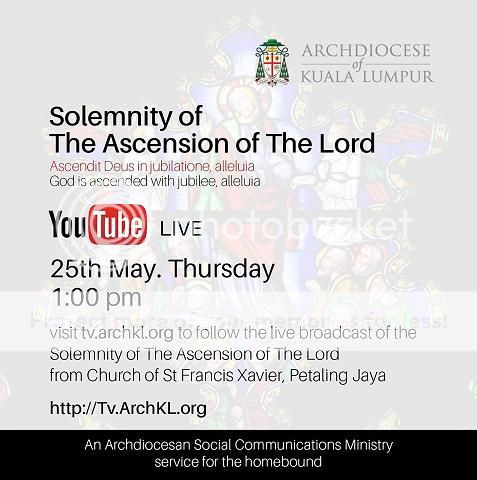
Ascension Day Mass: Live Telecast ...

user posted image

Brothers and sisters in Christ ... Please join in the celebration!
khool
post May 26 2017, 09:11 AM

Getting Started
**
Junior Member
225 posts

Joined: Mar 2008


Memorial of Saint Philip Neri, Priest
Lectionary: 295


user posted image

Reading 1 (Acts 18:9-18)

One night while Paul was in Corinth, the Lord said to him in a vision,
"Do not be afraid.
Go on speaking, and do not be silent, for I am with you.
No one will attack and harm you,
for I have many people in this city."
He settled there for a year and a half
and taught the word of God among them.

But when Gallio was proconsul of Achaia,
the Jews rose up together against Paul
and brought him to the tribunal, saying,
"This man is inducing people to worship God contrary to the law."
When Paul was about to reply, Gallio spoke to the Jews,
"If it were a matter of some crime or malicious fraud,
I should with reason hear the complaint of you Jews;
but since it is a question of arguments over doctrine and titles
and your own law, see to it yourselves.
I do not wish to be a judge of such matters."
And he drove them away from the tribunal.
They all seized Sosthenes, the synagogue official,
and beat him in full view of the tribunal.
But none of this was of concern to Gallio.

Paul remained for quite some time,
and after saying farewell to the brothers he sailed for Syria,
together with Priscilla and Aquila.
At Cenchreae he had shaved his head because he had taken a vow.

Responsorial Psalm (Ps 47:2-3, 4-5, 6-7)

R. God is king of all the earth.
or:
R. Alleluia.


All you peoples, clap your hands,
shout to God with cries of gladness,
For the LORD, the Most High, the awesome,
is the great king over all the earth.
R. God is king of all the earth.
or:
R. Alleluia.


He brings people under us;
nations under our feet.
He chooses for us our inheritance,
the glory of Jacob, whom he loves.
R. God is king of all the earth.
or:
R. Alleluia.


God mounts his throne amid shouts of joy;
the LORD, amid trumpet blasts.
Sing praise to God, sing praise;
sing praise to our king, sing praise.
R. God is king of all the earth.
or:
R. Alleluia.


Alleluia (See Lk 24:46, 26)

R. Alleluia, alleluia.
"Christ had to suffer and to rise from the dead,
and so enter into his glory."
R. Alleluia, alleluia.

Gospel (Jn 16:20-23)

Jesus said to his disciples:
"Amen, amen, I say to you, you will weep and mourn,
while the world rejoices;
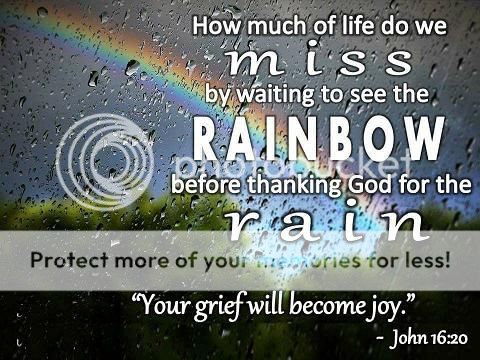
you will grieve, but your grief will become joy.
When a woman is in labor, she is in anguish because her hour has arrived;
but when she has given birth to a child,
she no longer remembers the pain because of her joy
that a child has been born into the world.
So you also are now in anguish.
But I will see you again, and your hearts will rejoice,
and no one will take your joy away from you.
On that day you will not question me about anything.
Amen, amen, I say to you,
whatever you ask the Father in my name he will give you."

user posted image

REFLECTION

When a woman is in labor. Strictly speaking, John does not contain parables like the ones we find in the Synoptic gospels. Instead, John has paroimia or figures of speech that are akin to parables. An example is an image used by Jesus to shed light on His passion. At His “departure,” the disciples will grieve, but He will rise from the dead, and their sorrow will turn to joy. To illustrate this, Jesus points to the woman experiencing anguish at childbirth. But when the child is born, pain is easily replaced by joy.

Jesus’ imagery has roots in the scriptural portrayal of birth pangs that mothers experience. This is even presented as a consequence of the Fall. To the woman, the Lord said, “I will intensify your toil in childbearing; in pain you shall bring forth children” (Gn. 3:16). Birth pangs also allude to the time before salvation, like the “birth pangs” of Israel before the coming of the Day of the Lord. The book of Revelation (12:5) mentions the pain of the woman who delivers a male child, destined to rule all nations (a reference to the Messiah). And while the people of God await their final salvation, they likewise experience birth pangs. St. Paul writes, “We know that all creation is groaning in labor pains even until now… as we wait for adoption, the redemption of our bodies” (Rom. 8:22-23).

Recall a painful experience that later turned to a happy moment.
What lesson do you draw from this experience?

SOURCE: “365 Days with the Lord 2017,” ST. PAULS Philippines, 7708 St. Paul Rd., SAV, Makati City (Phils.) http://www.ssp.ph/

khool
post May 26 2017, 09:11 AM

Getting Started
**
Junior Member
225 posts

Joined: Mar 2008


user posted image

toda_erika_II
post May 27 2017, 05:14 PM

rawr~~
****
Senior Member
540 posts

Joined: Mar 2008
Why does the Orthodox Bible have more books than the Catholic Bible?


It is true that there are some additional books (such as 3 & 4 Maccabees) which are commonly (but not necessarily formally) found in modern, published Eastern Orthodox Old Testaments. Now, I make this distinction between "commonly" and "formally" because the simple reality is that the modern Eastern Orthodox Church does not possess a formal, universally-approved Biblical canon. Rather, there is some confusion among Eastern Orthodox as to which books properly constitute the canon of the Bible. And, to understand this, you have to understand what "canon" originally referred to and how the canon of the Christian Bible (that is, the Biblical canon of the Catholic Church) actually came into being in the first place.

The term "canon" means is that a book is approved for reading at the Divine Liturgy --that is, the Mass. This is what "canon" (a Greek word meaning "rule") originally referred to. The "canonical" books were those books which were approved for reading at the Liturgy.

Books which were not approved for reading at the Liturgy were called "apocryphal" (or "hidden"), and so excluded from the Liturgy. Among the "apocryphal" books, some were considered to be very orthodox and even inspired (but still not approved for public reading at the Liturgy), and others were considered to be uninspired or to contain errors (or even to be outright heretical). Only the "canonical" books were approved for reading at the Liturgy (the Mass).

Before the late 4th Century, each city-church had its own, local "canon" of the Bible, and these local canons differed from city-church to city-church ---some local canons including books which are currently excluded from our present Bible (such as 1 Clement to the Corinthians, or the Epistle of Barnabas, or the Book of Enoch, etc.), and some local canons excluding books which are currently included in our present Bible (such as the Epistle of James, and Hebrews, and 2 Peter, and 2 & 3 John, Jude, and Revelation). The reason that city-churches had different local canons is because city-churches had different local Liturgies --that is, the Liturgy (form of worship) in the city-church of Rome was different from the Liturgy (form of worship) in the city-Church of Corinth, or the city-church of Ephesus, or Antioch, or Jerusalem, etc. This included the yearly Liturgical calendar, with different city-churches celebrating different local feast days on any given date.

Since the feast days differed, so did the corresponding readings for those feast days; and since there were only so many Liturgical readings (from so many canonical books) that a city-church could have in a given year, this limited the number of books in the local canon of that city-church.

As the Church entered the 4th Century, there was no such thing as one, universal "Bible"
(one universal Scriptural canon, which the entire, universal Church shared in common).

When the Arian heresy ripped the Church apart (pitting bishop against bishop, and city-church against city-church), this created an enormous problem, since you had different bishops (Arian vs. Catholic) quoting from different books (or sets of books) in defense of either Arianism or Catholic Trinitarianism. Needless to say, this complicated and prolonged the controversy, and made Arianism much harder to defeat. Well, by the year 382, when the Arian heresy was finally defeated, Pope St. Damasus of Rome (who had been the librarian for the church of Rome prior to becoming Pope) took it upon himself to correct this problem, and to guarantee that it would not happen again, by initiating steps for the formation of a universal canon of Scripture which all city-churches would hold in common, which would eliminate any book which even implied Arianism (or other condemned heresies).

To "start the ball rolling" on this, Pope Damasus promoted a Biblical canon which was a synthesis of the canon of the city-church of Rome and that of the city-church of Alexandria --the two leading city-churches of the universal Church. Damasus then turned this proposed canon over to the bishops of North Africa for analysis and debate. And he did this for four reasons:

North Africa was not part of the theology schools of either Alexandria or Antioch, which were the two intellectual factions that had caused the Arian controversy.
North Africa had the most bishops per capita of anywhere in the universal Church at the time, so they would reflect a good sample of universal opinion among the bishops.
The North African Church had a traditional custom of meeting in council (either at Carthage or at Hippo) every two years, which would give them the ability to hash things out effectively; and
Many of the North African bishops were renowned scholars, such as St. Augustine of Hippo, who participated in the debate and helped to formulate the canon.
So, at both the councils of Hippo (393) and at Carthage (397), the North African bishops worked out the final canon of the both the Old and New Testaments for the universal Church. This is the present canon of the Catholic Church, which the North Africans then submitted to Rome for final ratification. Now, we're not sure when this final ratification was given, but we do know that, by A.D. 405, Pope St. Innocent I was promoting the so-called "canon of Carthage" (397) throughout the Western Church. Rome would also have sent rescripts of its decison (final ratification of the Carthaginian canon) to Alexandria, the 2nd See of the universal Church and the primate in the East, with the expectation that Alexandria (as Eastern primate)would disseminate it throughout the East.

However, while Alexandria apparently (as it always did) followed the lead of Rome and accepted the Carthaginian canon, there was a major problem in the other Eastern patriarchate of Antioch (which represented the other half of the Eastern Church at the time), given that Antioch, at the time, was torn by internal schism, with two (and sometimes three) Catholic bishops all claiming to be the rightful Patriarch of Antioch! So, because of this, the canon of Carthage was never initially implemented or effectively accepted throughout the Patriarchate of Antioch; and since Constantinople (the Eastern imperial capital) was the Liturgical dependant of Antioch (the Byzantine Rite being a modified form of the Antiochian Rite), Constantinople never initally implemented the canon of Carthage either. And, because of this, well into the 8th Century, you have Byzantine and Antiochian fathers, such as St. John Damascene, recognizing books like 1 Clement to the Corinthians or the Book of Enoch as canonical works!

Now, this was modified somewhat when, at both the Byzantine Council of Trullo (692) and the Ecumenical Council of Nicaea II (787), both the church of Constantinople and the church of Antioch (along with Rome and Alexandria) recognized the binding canons of the Council of Carthage (397). This of course included the Carthaginian Biblical canon, which is thus TECHNICALLY binding on the modern Eastern Orthodox Church. :-) Yet, in terms of practice, the Antiochian (and thus Byzantine) parts of the Eastern Orthodox Church continued to use pre-Carthaginian books in their local canons ...and for the simple reason that these books (e.g. 3 & 4 Maccabees or the apocryphal Esdras, etc.) were always read in the church of Antioch. The fact that the council of Carthage excluded these books (because they contain some problematic material) was ignored. And it's because of this neglect of the Carthaginian canon (as authorized by both Trullo and Nicaea II) that modern Eastern Orthodoxy (coming out of the Antiochian Liturgical tradition) often include such books in their published canons today. Yet, technically, they SHOULD consider themselves bound by Trullo's and Nicaea II's authorization of Carthage. :-)

In addition to this, there is the fact that Greek Orthodox Churches (especially) have a more fluid (less formal or legalistic) notion of how the idea of a "canonical book" should be applied. For example, in the Greek Orthodox Liturgy, they have NEVER read from the Book of Revelation. And, because of this, many modern Greeks will claim that Revelation is "not canonical." ...because they do not read from it in their Greek Liturgy. Now, the fact that the Russian Orthodox Church does read from Revelation in their, Russian Liturgy is beside the point. So, for the Eastern Orthodox, "canonical" does not really refer to a univesally-agreed upon canon, but to the common regional practice of specific Churches. Uunfortunately, this has led some modern Greek and Antiochian Orthodox to claim that the Book of Revelation is "not inspired" and/or "not binding" on them, which is a modernist revision (a heretical novelty), which no ancient Greek or Antiochian would ever claim. For, what their forefathers would say is that Revelation (or another book like it) is still Divinely inspired, but just not canonical (i.e., not approved for reading at their Liturgy). And, for those Easterners who did recognze the binding authority of the Cathaginian canon, they would of course say that Revelation is universally binding (i.e., canonical in a universal sense), but simply not part of their local Liturgical canon.

http://catholicbridge.com/orthodox/why_ort...om_catholic.php


This post has been edited by toda_erika_II: May 27 2017, 05:22 PM
toda_erika_II
post May 27 2017, 05:20 PM

rawr~~
****
Senior Member
540 posts

Joined: Mar 2008

5 Myths about 7 Books
MARK SHEA


People don't talk much about the deuterocanon these days. The folks who do are mostly Christians, and they usually fall into two general groupings: Catholics — who usually don't know their Bibles very well and, therefore, don't know much about the deuterocanonical books, and Protestants — who may know their Bibles a bit better, though their Bibles don't have the deuterocanonical books in them anyway, so they don't know anything about them either. With the stage thus set for informed ecumenical dialogue, it's no wonder most people think the deuterocanon is some sort of particle weapon recently perfected by the Pentagon.

The deuterocanon (ie. "second canon") is a set of seven books — Sirach, Tobit, Wisdom, Judith, 1 and 2 Maccabees, and Baruch, as well as longer versions of Daniel and Esther — that are found in the Old Testament canon used by Catholics, but are not in the Old Testament canon used by Protestants, who typically refer to them by the mildly pejorative term "apocrypha." This group of books is called "deuterocanonical" not (as some imagine) because they are a "second rate" or inferior canon, but because their status as being part of the canon of Scripture was settled later in time than certain books that always and everywhere were regarded as Scripture, such as Genesis, Isaiah, and Psalms.

Why are Protestant Bibles missing these books? Protestants offer various explanations to explain why they reject the deuterocanonical books as Scripture. I call these explanations "myths" because they are either incorrect or simply inadequate reasons for rejecting these books of Scripture. Let's explore the five most common of these myths and see how to respond to them.

Myth 1

The deuterocanonical books are not found in the Hebrew Bible. They were added by the Catholic Church at the Council of Trent after Luther rejected it.

The background to this theory goes like this: Jesus and the Apostles, being Jews, used the same Bible Jews use today. However, after they passed from the scene, muddled hierarchs started adding books to the Bible either out of ignorance or because such books helped back up various wacky Catholic traditions that were added to the gospel. In the 16th century, when the Reformation came along, the first Protestants, finally able to read their Bibles without ecclesial propaganda from Rome, noticed that the Jewish and Catholic Old Testaments differed, recognized this medieval addition for what it was and scraped it off the Word of God like so many barnacles off a diamond. Rome, ever ornery, reacted by officially adding the deuterocanonical books at the Council of Trent (1545-1563) and started telling Catholics "they had always been there."

This is a fine theory. The problem is that its basis in history is gossamer thin. As we'll see in a moment, accepting this myth leads to some remarkable dilemmas a little further on.

The problems with this theory are first, it relies on the incorrect notion that the modern Jewish Bible is identical to the Bible used by Jesus and the Apostles. This is false. In fact, the Old Testament was still very much in flux in the time of Christ and there was no fixed canon of Scripture in the apostolic period. Some people will tell you that there must have been since, they say, Jesus held people accountable to obey the Scriptures. But this is also untrue. For in fact, Jesus held people accountable to obey their conscience and therefore, to obey Scripture insofar as they were able to grasp what constituted "Scripture."

Consider the Sadducees. They only regarded the first five books of the Old Testament as inspired and canonical. The rest of the Old Testament was regarded by them in much the same way the deuterocanon is regarded by Protestant Christians today: nice, but not the inspired Word of God. This was precisely why the Sadducees argued with Jesus against the reality of the resurrection in Matthew 22:23-33: they couldn't see it in the five books of Moses and they did not regard the later books of Scripture which spoke of it explicitly (such as Isaiah and 2 Maccabees) to be inspired and canonical. Does Jesus say to them "You do greatly err, not knowing Isaiah and 2 Maccabees"? Does He bind them to acknowledge these books as canonical? No. He doesn't try to drag the Sadducees kicking and screaming into an expanded Old Testament. He simply holds the Sadducees accountable to take seriously the portion of Scripture they do acknowledge: that is, He argues for the resurrection based on the five books of the Law. But of course, this doesn't mean Jesus commits Himself to the Sadducees' whittled-down canon.

When addressing the Pharisees, another Jewish faction of the time, Jesus does the same thing. These Jews seem to have held to a canon resembling the modern Jewish canon, one far larger than that of the Sadducees but not as large as other Jewish collections of Scripture. That's why Christ and the Apostles didn't hesitate to argue with them from the books they acknowledged as Scripture. But as with the Sadducees, this doesn't imply that Christ or the Apostles limited the canon of Scripture only to what the Pharisees acknowledged.

When the Lord and His Apostles addressed Greek-speaking Diaspora Jews, they made use of an even bigger collection of Scripture — the Septuagint, a translation of the Hebrew Scriptures into Greek — which many Jews (the vast majority, in fact) regarded as inspired Scripture. In fact, we find that the New Testament is filled with references to the Septuagint (and its particular translation of various Old Testament passages) as Scripture. It's a strange irony that one of the favorite passages used in anti-Catholic polemics over the years is Mark 7:6-8. In this passage Christ condemns "teaching as doctrines human traditions." This verse has formed the basis for countless complaints against the Catholic Church for supposedly "adding" to Scripture man-made traditions, such as the "merely human works" of the deuterocanononical books. But few realize that in Mark 7:6-8 the Lord was quoting the version of Isaiah that is found only in the Septuagint version of the Old Testament.

But there's the rub: The Septuagint version of Scripture, from which Christ quoted, includes the Deuterocanonical books, books that were supposedly "added" by Rome in the 16th century. And this is by no means the only citation of the Septuagint in the New Testament. In fact, fully two thirds of the Old Testament passages that are quoted in the New Testament are from the Septuagint. So why aren't the deuterocanonical books in today's Jewish Bible, anyway? Because the Jews who formulated the modern Jewish canon were a) not interested in apostolic teaching and, b) driven by a very different set of concerns from those motivating the apostolic community.

In fact, it wasn't until the very end of the apostolic age that the Jews, seeking a new focal point for their religious practice in the wake of the destruction of the Temple, zeroed in with white hot intensity on Scripture and fixed their canon at the rabbinical gathering, known as the "Council of Javneh" (sometimes called "Jamnia"), about A.D. 90. Prior to this point in time there had never been any formal effort among the Jews to "define the canon" of Scripture. In fact, Scripture nowhere indicates that the Jews even had a conscious idea that the canon should be closed at some point. (toda's note; Council of Javneh could have been only a myth also)

The canon arrived at by the rabbis at Javneh was essentially the mid-sized canon of the Palestinian Pharisees, not the shorter one used by the Sadducees, who had been practically annihilated during the Jewish war with Rome. Nor was this new canon consistent with the Greek Septuagint version, which the rabbis regarded rather xenophobically as "too Gentile-tainted." Remember, these Palestinian rabbis were not in much of a mood for multiculturalism after the catastrophe they had suffered at the hands of Rome. Their people had been slaughtered by foreign invaders, the Temple defiled and destroyed, and the Jewish religion in Palestine was in shambles. So for these rabbis, the Greek Septuagint went by the board and the mid-sized Pharisaic canon was adopted. Eventually this version was adopted by the vast majority of Jews — though not all. Even today Ethiopian Jews still use the Septuagint version, not the shorter Palestinian canon settled upon by the rabbis at Javneh. In other words, the Old Testament canon recognized by Ethiopian Jews is identical to the Catholic Old Testament, including the seven deuterocanonical books (cf. Encyclopedia Judaica, vol. 6, p. 1147).

But remember that by the time the Jewish council of Javneh rolled around, the Catholic Church had been in existence and using the Septuagint Scriptures in its teaching, preaching, and worship for nearly 60 years, just as the Apostles themselves had done. So the Church hardly felt the obligation to conform to the wishes of the rabbis in excluding the deuterocanonical books any more than they felt obliged to follow the rabbis in rejecting the New Testament writings. The fact is that after the birth of the Church on the day of Pentecost, the rabbis no longer had authority from God to settle such issues. That authority, including the authority to define the canon of Scripture, had been given to Christ's Church.

Thus, Church and synagogue went their separate ways, not in the Middle Ages or the 16th century, but in the 1st century. The Septuagint, complete with the deuterocanononical books, was first embraced, not by the Council of Trent, but by Jesus of Nazareth and his Apostles.

Myth 2


Christ and the Apostles frequently quoted Old Testament Scripture as their authority, but they never quoted from the deuterocanonical books, nor did they even mention them. Clearly, if these books were part of Scripture, the Lord would have cited them.

This myth rests on two fallacies. The first is the "Quotation Equals Canonicity" myth. It assumes that if a book is quoted or alluded to by the Apostles or Christ, it is ipso facto shown to be part of the Old Testament. Conversely, if a given book is not quoted, it must not be canonical.

This argument fails for two reasons. First, numerous non-canonical books are quoted in the New Testament. These include the Book of Enoch and the Assumption of Moses (quoted by St. Jude), the Ascension of Isaiah (alluded to in Hebrews 11:37), and the writings of the pagan poets Epimenides, Aratus, and Menander (quoted by St. Paul in Acts, 1 Corinthians, and Titus). If quotation equals canonicity, then why aren't these writings in the canon of the Old Testament?

Second, if quotation equals canonicity, then there are numerous books of the protocanonical Old Testament which would have to be excluded. This would include the Song of Songs, Ecclesiastes, Esther, Obadiah, Zephaniah, Judges, 1 Chronicles, Ezra, Nehemiah, Lamentations and Nahum. Not one of these Old Testament books is ever quoted or alluded to by Christ or the Apostles in the New Testament.

The other fallacy behind Myth #2 is that, far from being ignored in the New Testament (like Ecclesiastes, Esther, and 1 Chronicles) the deuterocanonical books are indeed quoted and alluded to in the New Testament. For instance, Wisdom 2:12-20, reads in part, "For if the just one be the son of God, he will defend him and deliver him from the hand of his foes. With revilement and torture let us put him to the test that we may have proof of his gentleness and try his patience. Let us condemn him to a shameful death; for according to his own words, God will take care of him."

This passage was clearly in the minds of the Synoptic Gospel writers in their accounts of the Crucifixion: "He saved others; he cannot save himself. So he is the king of Israel! Let him come down from the cross now, and we will believe in him. He trusted in God; let Him deliver him now if he wants him. For he said, ÔI am the Son of God'" (cf. Matthew 27:42-43).

Similarly, St. Paul alludes clearly to Wisdom chapters 12 and 13 in Romans 1:19-25. Hebrews 11:35 refers unmistakably to 2 Maccabees 7. And more than once, Christ Himself drew on the text of Sirach 27:6, which reads: "The fruit of a tree shows the care it has had; so too does a man's speech disclose the bent of his mind." Notice too that the Lord and His Apostles observed the Jewish feast of Hanukkah (cf. John 10:22-36). But the divine establishment of this key feast day is recorded only in the deuterocanonical books of 1 and 2 Maccabees. It is nowhere discussed in any other book of the Old Testament. In light of this, consider the importance of Christ's words on the occasion of this feast: "Is it not written in your Law, ÔI have said you are gods'? If he called them Ôgods,' to whom the word of God came — and the Scripture cannot be broken — what about the One Whom the Father set apart as His very own and sent into the world?" Jesus, standing near the Temple during the feast of Hanukkah, speaks of His being "set apart," just as Judas Maccabeus "set apart" (ie. consecrated) the Temple in 1 Maccabees 4:36-59 and 2 Maccabees 10:1-8. In other words, our Lord made a connection that was unmistakable to His Jewish hearers by treating the Feast of Hanukkah and the account of it in the books of the Maccabees as an image or type of His own consecration by the Father. That is, He treats the Feast of Hanukkah from the so-called "apocryphal" books of 1 and 2 Maccabees exactly as He treats accounts of the manna (John 6:32-33; Exodus 16:4), the Bronze Serpent (John 3:14; Numbers 21:4-9), and Jacob's Ladder (John 1:51; Genesis 28:12) — as inspired, prophetic, scriptural images of Himself. We see this pattern throughout the New Testament. There is no distinction made by Christ or the Apostles between the deuterocanonical books and the rest of the Old Testament.

Myth 3


The deuterocanonical books contain historical, geographical, and moral errors, so they can't be inspired Scripture.

This myth might be raised when it becomes clear that the allegation that the deuterocanonical books were "added" by the Catholic Church is fallacious. This myth is built on another attempt to distinguish between the deuterocanonical books and "true Scripture." Let's examine it.

First, from a certain perspective, there are "errors" in the deuterocanonical books. The book of Judith, for example, gets several points of history and geography wrong. Similarly Judith, that glorious daughter of Israel, lies her head off (well, actually, it's wicked King Holofernes' head that comes off). And the Angel Raphael appears under a false name to Tobit. How can Catholics explain that such "divinely inspired" books would endorse lying and get their facts wrong? The same way we deal with other incidents in Scripture where similar incidents of lying or "errors" happen.

Let's take the problem of alleged "factual errors" first. The Church teaches that to have an authentic understanding of Scripture we must have in mind what the author was actually trying to assert, the way he was trying to assert it, and what is incidental to that assertion.

For example, when Jesus begins the parable of the Prodigal Son saying, "There was once a man with two sons," He is not shown to be a bad historian when it is proven that the man with two sons He describes didn't actually exist. So too, when the prophet Nathan tells King David the story of the "rich man" who stole a "poor man's" ewe lamb and slaughtered it, Nathan is not a liar if he cannot produce the carcass or identify the two men in his story. In strict fact, there was no ewe lamb, no theft, and no rich and poor men. These details were used in a metaphor to rebuke King David for his adultery with Bathsheba. We know what Nathan was trying to say and the way he was trying to say it. Likewise, when the Gospels say the women came to the tomb at sunrise, there is no scientific error here. This is not the assertion of the Ptolemiac theory that the sun revolves around the earth. These and other examples which could be given are not "errors" because they're not truth claims about astronomy or historical events.

Similarly, both Judith and Tobit have a number of historical and geographical errors, not because they're presenting bad history and erroneous geography, but because they're first-rate pious stories that don't pretend to be remotely interested with teaching history or geography, any more than the Resurrection narratives in the Gospels are interested in astronomy. Indeed, the author of Tobit goes out of his way to make clear that his hero is fictional. He makes Tobit the uncle of Ahiqar, a figure in ancient Semitic folklore like "Jack the Giant Killer" or "Aladdin." Just as one wouldn't wave a medieval history textbook around and complain about a tale that begins "once upon a time when King Arthur ruled the land," so Catholics are not reading Tobit and Judith to get a history lesson.

Very well then, but what of the moral and theological "errors"? Judith lies. Raphael gives a false name. So they do. In the case of Judith lying to King Holofernes in order to save her people, we must recall that she was acting in light of Jewish understanding as it had developed until that time. This meant that she saw her deception as acceptable, even laudable, because she was eliminating a deadly foe of her people. By deceiving Holofernes as to her intentions and by asking the Lord to bless this tactic, she was not doing something alien to Jewish Scripture or Old Testament morality. Another biblical example of this type of lying is when the Hebrew midwives lied to Pharaoh about the birth of Moses. They lied and were justified in lying because Pharaoh did not have a right to the truth — if they told the truth, he would have killed Moses. If the book of Judith is to be excluded from the canon on this basis, so must Exodus.

With respect to Raphael, it's much more dubious that the author intended, or that his audience understood him to mean, "Angels lie. So should you." On the contrary, Tobit is a classic example of an "entertaining angels unaware" story (cf. Heb. 13:2). We know who Raphael is all along. When Tobit cried out to God for help, God immediately answered him by sending Raphael. But, as is often the case, God's deliverance was not noticed at first. Raphael introduced himself as "Azariah," which means "Yahweh helps," and then rattles off a string of supposed mutual relations, all with names meaning things like "Yahweh is merciful," "Yahweh gives," and "Yahweh hears." By this device, the author is saying (with a nudge and a wink), "Psst, audience. Get it?" And we, of course, do get it, particularly if we're reading the story in the original Hebrew. Indeed, by using the name "Yahweh helps," Raphael isn't so much "lying" about his real name as he is revealing the deepest truth about who God is and why God sent him to Tobit. It's that truth and not any fluff about history or geography or the fun using an alias that the author of Tobit aims to tell.

Myth 4

The deuterocanonical books themselves deny that they are inspired Scripture.

Correction: Two of the deuterocanonical books seem to disclaim inspiration, and even that is a dicey proposition. The two in question are Sirach and 2 Maccabees. Sirach opens with a brief preface by the author's grandson saying, in part, that he is translating grandpa's book, that he thinks the book important and that, "You therefore are now invited to read it in a spirit of attentive good will, with indulgence for any apparent failure on our part, despite earnest efforts, in the interpretation of particular passages." Likewise, the editor of 2 Maccabees opens with comments about how tough it was to compose the book and closes with a sort of shrug saying, "I will bring my own story to an end here too. If it is well written and to the point, that is what I wanted; if it is poorly done and mediocre, that is the best I could do."

That, and that alone, is the basis for the myth that the deuterocanon (all seven books and not just these two) "denies that it is inspired Scripture." Several things can be said in response to this argument.

First, is it reasonable to think that these typically oriental expressions of humility really constitute anything besides a sort of gesture of politeness and the customary downplaying of one's own talents, something common among ancient writers in Middle Eastern cultures? No. For example, one may as well say that St. Paul's declaration of himself as "one born abnormally" or as being the "chief of sinners" (he mentions this in the present, not past tense) necessarily makes his writings worthless.

Second, speaking of St. Paul, we are confronted by even stronger and explicit examples of disclaimers regarding inspired status of his writings, yet no Protestant would feel compelled to exclude these Pauline writings from the New Testament canon. Consider his statement in 1 Corinthians 1:16 that he can't remember whom he baptized. Using the "It oughtta sound more like the Holy Spirit talking" criterion of biblical inspiration Protestants apply to the deuterocanonical books, St. Paul would fail the test here. Given this amazing criterion, are we to believe the Holy Spirit "forgot" whom St. Paul baptized, or did He inspire St. Paul to forget (1 Cor. 1:15)?

1 Corinthians 7:40 provides an ambiguous statement that could, according to the principles of this myth, be understood to mean that St. Paul wasn't sure that his teaching was inspired or not. Elsewhere St. Paul makes it clear that certain teachings he's passing along are "not I, but the Lord" speaking (1 Cor. 7:10), whereas in other cases, "I, not the Lord" am speaking (cf. 1 Cor. 7:12). This is a vastly more direct "disclaimer of inspiration" than the oblique deuterocanonical passages cited above, yet nobody argues that St. Paul's writings should be excluded from Scripture, as some say the whole of the deuterocanon should be excluded from the Old Testament, simply on the strength of these modest passages from Sirach and 2 Maccabees.

Why not? Because in St. Paul's case people recognize that a writer can be writing under inspiration even when he doesn't realize it and doesn't claim it, and that inspiration is not such a flat-footed affair as "direct dictation" by the Holy Spirit to the author. Indeed, we even recognize that the Spirit can inspire the writers to make true statements about themselves, such as when St. Paul tells the Corinthians he couldn't remember whom he had baptized.

To tweak the old proverb, "What's sauce for the apostolic goose is sauce for the deuterocanonical gander." The writers of the deuterocanonical books can tell the truth about themselves — that they think writing is tough, translating is hard, and that they are not sure they've done a terrific job — without such admissions calling into question the inspired status of what they wrote. This myth proves nothing other than the Catholic doctrine that the books of Sacred Scripture really were composed by human beings who remained fully human and free, even as they wrote under the direct inspiration of God.

Myth 5


The early Church Fathers, such as St. Athanasius and St. Jerome (who translated the official Bible of the Catholic Church), rejected the deuterocanonical books as Scripture, and the Catholic Church added these books to the canon at the Council of Trent.

First, no Church Father is infallible. That charism is reserved uniquely to the pope, in an extraordinary sense and, in an ordinary sense, corporately to all the lawful bishops of the Catholic Church who are in full communion with the pope and are teaching definitively in an ecumenical council. Second, our understanding of doctrine develops. This means that doctrines which may not have been clearly defined sometimes get defined. A classic example of this is the doctrine of the Trinity, which wasn't defined until A.D. 325 at the Council of Nicaea, nearly 300 years after Christ's earthly ministry. In the intervening time, we can find a few Fathers writing before Nicaea who, in good faith, expressed theories about the nature of the Godhead that were rendered inadequate after Nicaea's definition. This doesn't make them heretics. It just means that Michael Jordan misses layups once in awhile. Likewise, the canon of Scripture, though it more or less assumed its present shape — which included the deuterocanonical books — by about A.D. 380, nonetheless wasn't dogmatically defined by the Church for another thousand years. In that thousand years, it was quite on the cards for believers to have some flexibility in how they regarded the canon. And this applies to the handful of Church Fathers and theologians who expressed reservations about the deuterocanon. Their private opinions about the deuterocanon were just that: private opinions.

And finally, this myth begins to disintegrate when you point out that the overwhelming majority of Church Fathers and other early Christian writers regarded the deuterocanonical books as having exactly the same inspired, scriptural status as the other Old Testament books. Just a few examples of this acceptance can be found in the Didache, The Epistle of Barnabas, the Council of Rome, the Council of Hippo, the Third Council of Carthage, the African Code, the Apostolic Constitutions, and the writings of Pope St. Clement I (Epistle to the Corinthians), St. Polycarp of Smyrna, St. Irenaeus of Lyons, St. Hippolytus, St. Cyprian of Carthage, , Pope St. Damasus I, the , St. Augustine, and Pope St. Innocent I.

But last and most interesting of all in this stellar lineup is a certain Father already mentioned: St. Jerome. In his later years St. Jerome did indeed accept the Deuter-ocanonical books of the Bible. In fact, he wound up strenuously defending their status as inspired Scripture, writing, "What sin have I committed if I followed the judgment of the churches? But he who brings charges against me for relating the objections that the Hebrews are wont to raise against the story of Susanna, the Son of the Three Children, and the story of Bel and the Dragon, which are not found in the Hebrew volume (ie. canon), proves that he is just a foolish sycophant. For I wasn't relating my own personal views, but rather the remarks that they [the Jews] are wont to make against us" (Against Rufinus 11:33 [A.D. 402]). In earlier correspondence with Pope Damasus, Jerome did not call the deuterocanonical books unscriptural, he simply said that Jews he knew did not regard them as canonical. But for himself, he acknowledged the authority of the Church in defining the canon. When Pope Damasus and the Councils of Carthage and Hippo included the deuterocanon in Scripture, that was good enough for St. Jerome. He "followed the judgment of the churches."

Martin Luther, however, did not. And this brings us to the "remarkable dilemmas" I referred to at the start of this article of trusting the Protestant Reformers' private opinions about the deuterocanon. The fact is, if we follow Luther in throwing out the deuterocanonical books despite the overwhelming evidence from history showing that we shouldn't (ie. the unbroken tradition of the Church and the teachings of councils and popes), we get much more than we bargained for.

For Luther also threw out a goodly chunk of the New Testament. Of James, for example, he said, "I do not regard it as the writing of an Apostle," because he believed it "is flatly against St. Paul and all the rest of Scripture in ascribing justification to works" (Preface to James' Epistle). Likewise, in other writings he underscores this rejection of James from the New Testament, calling it "an epistle full of straw . . . for it has nothing of the nature of the gospel about it" (Preface to the New Testament).

But the Epistle of James wasn't the only casualty on Luther's hit list. He also axed from the canon Hebrews, Jude, and Revelation, consigning them to a quasi-canonical status. It was only by an accident of history that these books were not expelled by Protestantism from the New Testament as Sirach, Tobit, 1 and 2 Maccabees and the rest were expelled from the Old. In the same way, it is largely the ignorance of this sad history that drives many to reject the deuterocanonical books.

Unless, of course, we reject the myths and come to an awareness of what the canon of Scripture, including the deuterocanonical books, is really based on. The only basis we have for determining the canon of the Scripture is the authority of the Church Christ established, through whom the Scriptures came. As St. Jerome said, it is upon the basis of "the judgment of the churches" and no other that the canon of Scripture is known, since the Scriptures are simply the written portion of the Church's apostolic tradition. And the judgment of the churches is rendered throughout history as it was rendered in Acts 15 by means of a council of bishops in union with St. Peter. The books we have in our Bibles were accepted according to whether they did or did not measure up to standards based entirely on Sacred Tradition and the divinely delegated authority of the Body of Christ in council and in union with Peter.

The fact of the matter is that neither the Council of Trent nor the Council of Florence added a thing to the Old Testament canon. Rather, they simply accepted and formally ratified the ancient practice of the Apostles and early Christians by dogmatically defining a collection of Old Testament Scripture (including the deuterocanon) that had been there since before the time of Christ, used by our Lord and his apostles, inherited and assumed by the Fathers, formulated and reiterated by various councils and popes for centuries and read in the liturgy and prayer for 1500 years.

When certain people decided to snip some of this canon out in order to suit their theological opinions, the Church moved to prevent it by defining (both at Florence and Trent) that this very same canon was, in fact, the canon of the Church's Old Testament and always had been.

Far from adding the books to the authentic canon of Scripture, the Catholic Church simply did its best to keep people from subtracting books that belong there. That's no myth. That's history


http://www.catholiceducation.org/en/religi...ut-7-books.html

toda_erika_II
post May 27 2017, 05:32 PM

rawr~~
****
Senior Member
540 posts

Joined: Mar 2008
I see only yeeck and khool?
thanks both of you for keeping this thread on life support....
khool
post May 28 2017, 03:34 PM

Getting Started
**
Junior Member
225 posts

Joined: Mar 2008


QUOTE(toda_erika_II @ May 27 2017, 05:32 PM)
I see only yeeck and khool?
thanks both of you for keeping this thread on life support....
*
You are most welcome ... notworthy.gif notworthy.gif notworthy.gif

I cannot speak for Bro Yeeck, but for myself, I try to post in the hope of providing other fellow LYN Catholics who do not have the chance to get daily readings and reflections because of the demands of today's lifestyle. I view it as a great honour for the opportunity to bring the joy of reading the word of God to our brothers and sisters in Christ.

I also welcome others to post here for prayer intentions ... "where two or three are gathered in My name, there I will be" ... prayers daily is now more important than ever!

khool
post May 29 2017, 09:07 AM

Getting Started
**
Junior Member
225 posts

Joined: Mar 2008


Monday of the Seventh Week of Easter
Lectionary: 297


user posted image

Reading 1 (Acts 19:1-8)

While Apollos was in Corinth,
Paul traveled through the interior of the country
and down to Ephesus where he found some disciples.
He said to them,
"Did you receive the Holy Spirit when you became believers?"
They answered him,
"We have never even heard that there is a Holy Spirit."
He said, "How were you baptized?"
They replied, "With the baptism of John."
Paul then said, "John baptized with a baptism of repentance,
telling the people to believe in the one who was to come after him,
that is, in Jesus."
When they heard this,
they were baptized in the name of the Lord Jesus.
And when Paul laid his hands on them,
the Holy Spirit came upon them,
and they spoke in tongues and prophesied.
Altogether there were about twelve men.

He entered the synagogue, and for three months debated boldly
with persuasive arguments about the Kingdom of God.

Responsorial Psalm (Ps 68:2-3ab, 4-5acd, 6-7ab)

R. Sing to God, O kingdoms of the earth.
or:
R. Alleluia.


God arises; his enemies are scattered,
and those who hate him flee before him.
As smoke is driven away, so are they driven;
as wax melts before the fire.
R. Sing to God, O kingdoms of the earth.
or:
R. Alleluia.


But the just rejoice and exult before God;
they are glad and rejoice.
Sing to God, chant praise to his name;
whose name is the LORD.
R. Sing to God, O kingdoms of the earth.
or:
R. Alleluia.


The father of orphans and the defender of widows
is God in his holy dwelling.
God gives a home to the forsaken;
he leads forth prisoners to prosperity.
R. Sing to God, O kingdoms of the earth.
or:
R. Alleluia.


Alleluia (Col 3:1)

R. Alleluia, alleluia.
If then you were raised with Christ,
seek what is above,
where Christ is seated at the right hand of God.
R. Alleluia, alleluia.

Gospel (Jn 16:29-33)

The disciples said to Jesus,
"Now you are talking plainly, and not in any figure of speech.
Now we realize that you know everything
and that you do not need to have anyone question you.
Because of this we believe that you came from God."
Jesus answered them, "Do you believe now?
Behold, the hour is coming and has arrived
when each of you will be scattered to his own home
and you will leave me alone.
But I am not alone, because the Father is with me.
I have told you this so that you might have peace in me.
In the world you will have trouble,
but take courage, I have conquered the world."

user posted image

REFLECTION

I have conquered the world. In John, the “world” has different connotations. It may mean the natural world created by God or humanity that lives in the world. But often, the world has a negative meaning — a world that is at enmity with God, a world ruled by the devil, and a world opposed to Jesus and His teaching. This last is the world that Jesus refers to when He tells His disciples, “In the world you will have trouble” (v 33b). Despite His miracles-signs showing that Jesus is from God, His detractors, who harden their hearts against Him, see Him only as a blasphemer, a Law-breaker, one who leads people astray. They even think that in seeking to kill Jesus, they give praise to God. Now, the faithful disciples share the fate of the Master, and later in persecuting them as well, their persecutors will think that they are doing the will of God.

But Jesus says, “Take courage, I have conquered the world” (v 33). Indeed, His enemies will succeed to have Him put to death, but His death will be His vindication. He will rise again, which is the Father’s glorification of His Son. His death — the sign of His total love — also marks the defeat of the devil and the world that prefers darkness because its deeds are evil.

What are your fears? What do you fear most?

Do you draw courage from your faith in Jesus who has conquered the world?

SOURCE: “365 Days with the Lord 2017,” ST. PAULS Philippines, 7708 St. Paul Rd., SAV, Makati City (Phils.) http://www.ssp.ph/

TSyeeck
post May 29 2017, 12:42 PM

Look at all my stars!!
*******
Senior Member
3,573 posts

Joined: Apr 2006


QUOTE(toda_erika_II @ May 27 2017, 05:32 PM)
I see only yeeck and khool?
thanks both of you for keeping this thread on life support....
*
Hi toda_erika_II,

Where are you from and which parish do you frequent?
toda_erika_II
post May 29 2017, 12:49 PM

rawr~~
****
Senior Member
540 posts

Joined: Mar 2008
QUOTE(yeeck @ May 29 2017, 12:42 PM)
Hi toda_erika_II,

Where are you from and which parish do you frequent?
*
from sarawak.
our lady of Guadalupe, puchong.
TSyeeck
post May 29 2017, 12:50 PM

Look at all my stars!!
*******
Senior Member
3,573 posts

Joined: Apr 2006


Awesome. Welcome.
khool
post May 29 2017, 01:47 PM

Getting Started
**
Junior Member
225 posts

Joined: Mar 2008


Pentecost (Whitsunday)


A feast of the universal Church which commemorates the Descent of the Holy Ghost upon the Apostles, fifty days after the Resurrection of Christ, on the ancient Jewish festival called the "feast of weeks" or Pentecost (Exodus 34:22; Deuteronomy 16:10). Whitsunday is so called from the white garments which were worn by those who were baptised during the vigil; Pentecost ("Pfingsten" in German), is the Greek for "the fiftieth" (day after Easter).

Whitsunday, as a Christian feast, dates back to the first century, although there is no evidence that it was observed, as there is in the case of Easter; the passage in 1 Corinthians 16:8 probably refers to the Jewish feast. This is not surprising, for the feast, originally of only one day's duration, fell on a Sunday; besides it was so closely bound up with Easter that it appears to be not much more than the termination of Paschal tide.

That Whitsunday belongs to the Apostolic times is stated in the seventh of the (interpolated) fragments attributed to St. Irenæus. In Tertullian (On Baptism 19) the festival appears as already well established. The Gallic pilgrim gives a detailed account of the solemn manner in which it was observed at Jerusalem ("Peregrin. Silviæ", ed. Geyer, iv). The Apostolic Constitutions (Book V, Part 20) say that Pentecost lasts one week, but in the West it was not kept with an octave until at quite a late date. It appears from Berno of Reichenau (d. 1048) that it was a debatable point in his time whether Whitsunday ought to have an octave. At present it is of equal rank with Easter Sunday. During the vigil formerly the catechumens who remained from Easter were baptized, consequently the ceremonies on Saturday are similar to those on Holy Saturday.

The office of Pentecost has only one Nocturn during the entire week. At Terce the "Veni Creator" is sung instead of the usual hymn, because at the third hour the Holy Ghost descended. The Mass has a Sequence, "Veni Sancte Spiritus" the authorship of which by some is ascribed to King Robert of France. The colour of the vestments is red, symbolic of the love of the Holy Ghost or of the tongues of fire. Formerly the law courts did not sit during the entire week, and servile work was forbidden. A Council of Constance (1094) limited this prohibition to the first three days of the week. The Sabbath rest of Tuesday was abolished in 1771, and in many missionary territories also that of Monday; the latter was abrogated for the entire Church by Pius X in 1911. Still, as at Easter, the liturgical rank of Monday and Tuesday of Pentecost week is a Double of the First Class.

In Italy it was customary to scatter rose leaves from the ceiling of the churches to recall the miracle of the fiery tongues; hence in Sicily and elsewhere in Italy Whitsunday is called Pascha rosatum. The Italian name Pascha rossa comes from the red colours of the vestments used on Whitsunday. In France it was customary to blow trumpets during Divine service, to recall the sound of the mighty wind which accompanied the Descent of the Holy Ghost. In England the gentry amused themselves with horse races. The Whitsun Ales or merrymakings are almost wholly obsolete in England. At these ales the Whitsun plays were performed. At Vespers of Pentecost in the Oriental Churches the extraordinary service of genuflexion, accompanied by long poetical prayers and psalms, takes place. (Cf. Maltzew, "Fasten-und Blumen Triodion", p. 898 where the entire Greco-Russian service is given; cf. also Baumstark, "Jacobit. Fest brevier", p. 255.) On Pentecost the Russians carry flowers and green branches in their hands.

Source: http://www.newadvent.org/cathen/07409a.htm

khool
post May 30 2017, 08:56 AM

Getting Started
**
Junior Member
225 posts

Joined: Mar 2008


Tuesday of the Seventh Week of Easter
Lectionary: 298


user posted image

Reading 1 (Acts 20:17-27)

From Miletus Paul had the presbyters
of the Church at Ephesus summoned.
When they came to him, he addressed them,
"You know how I lived among you
the whole time from the day I first came to the province of Asia.
I served the Lord with all humility
and with the tears and trials that came to me
because of the plots of the Jews,
and I did not at all shrink from telling you
what was for your benefit,
or from teaching you in public or in your homes.
I earnestly bore witness for both Jews and Greeks
to repentance before God and to faith in our Lord Jesus.
But now, compelled by the Spirit, I am going to Jerusalem.
What will happen to me there I do not know,
except that in one city after another
the Holy Spirit has been warning me
that imprisonment and hardships await me.
Yet I consider life of no importance to me,
if only I may finish my course
and the ministry that I received from the Lord Jesus,
to bear witness to the Gospel of God's grace.

"But now I know that none of you
to whom I preached the kingdom during my travels
will ever see my face again.
And so I solemnly declare to you this day
that I am not responsible for the blood of any of you,
for I did not shrink from proclaiming to you the entire plan of God."

Responsorial Psalm (Ps 68:10-11, 20-21)

R. Sing to God, O kingdoms of the earth.
or:
R. Alleluia.


A bountiful rain you showered down, O God, upon your inheritance;
you restored the land when it languished;
Your flock settled in it;
in your goodness, O God, you provided it for the needy.
R. Sing to God, O kingdoms of the earth.
or:
R. Alleluia.


Blessed day by day be the Lord,
who bears our burdens; God, who is our salvation.
God is a saving God for us;
the LORD, my Lord, controls the passageways of death.
R. Sing to God, O kingdoms of the earth.
or:
R. Alleluia.


Alleluia (Jn 14:16)

R. Alleluia, alleluia.
I will ask the Father
and he will give you another Advocate
to be with you always.
R. Alleluia, alleluia.

Gospel (Jn 17:1-11a)

Jesus raised his eyes to heaven and said,
"Father, the hour has come.
Give glory to your son, so that your son may glorify you,
just as you gave him authority over all people,
so that your son may give eternal life to all you gave him.
Now this is eternal life,
that they should know you, the only true God,
and the one whom you sent, Jesus Christ.
I glorified you on earth
by accomplishing the work that you gave me to do.
Now glorify me, Father, with you,
with the glory that I had with you before the world began.

"I revealed your name to those whom you gave me out of the world.
They belonged to you, and you gave them to me,
and they have kept your word.
Now they know that everything you gave me is from you,
because the words you gave to me I have given to them,
and they accepted them and truly understood that I came from you,
and they have believed that you sent me.
I pray for them.
I do not pray for the world but for the ones you have given me,
because they are yours, and everything of mine is yours
and everything of yours is mine,
and I have been glorified in them.
And now I will no longer be in the world,
but they are in the world, while I am coming to you."

user posted image

REFLECTION

I pray for them. The Gospel begins Jesus’ long prayer at the Last Supper. Since the 16th century, this has been called the High Priestly Prayer. In truth, in his public ministry, Jesus never claims priestly dignity nor are priestly functions attributed to him. The letter to the Hebrews explains: “It is clear that our Lord arose from Judah, and in regard to that tribe Moses said nothing about priests” (7:14). Nonetheless, the same letter calls Jesus our High Priest, not in the order of Levitical priests but “according to the order of Melchizedek”—by virtue of “the power of a life that cannot be destroyed” through his death and glorification (Heb 7:16-17). Now in heaven, our High Priest intercedes for us before God’s throne.

At the Last Supper, Jesus speaks as intercessor, with words addressed directly to the Father. As the priests in Israel interceded for the people, so Jesus prays for the disciples whom he is leaving behind as he is about to return to the Father. He prays for his immediate and future disciples because he knows that his mission to reveal God will be carried out from generation to generation. As he is sent by the Father, so he sends his disciples, and many more will be sent in his name in the future. As the heavenly High Priest, he intercedes for all those who reveal the Father’s name to the world.

SOURCE: “365 Days with the Lord 2017,” ST. PAULS Philippines, 7708 St. Paul Rd., SAV, Makati City (Phils.) http://www.ssp.ph/

khool
post May 30 2017, 02:02 PM

Getting Started
**
Junior Member
225 posts

Joined: Mar 2008


Saint Joan of Arc, patroness of soldiers

user posted image

The saint of the day for May 30th is the courageous warrior Saint Joan of Arc, French national heroine, who was born in Domremy, France, 1412 and died in Rouen, France, 1431.

At the age of 13, Joan began to hear the voices of Saints Michael the Archangel, Margaret of Antioch, and Catherine of Alexandria, telling her that she had been chosen to free her country from the English. Joan’s apparitions instructed her to find the true king of France and help him reclaim his throne. She resisted for more than three years, but finally went to Charles VII in Chinon and told him of her visions.

After overcoming opposition from churchmen and courtiers, she was given a small army with which she raised the siege of Orleans on May 8, 1429. Carrying a banner that read “Jesus, Mary”, she led the troops into battle.

She followed the famous campaign of the Loire during which the English were decisively beaten, and Charles was crowned at Rheims, on July 17, 1429. When she was captured by the Burgundians during the defense of Compiegne, Joan was sold to the English for 10 thousand francs. She was then put on trial by an ecclesiastical court conducted by Cauchon, Bishop of Beauvais, a tool of the English. Although she astounded her judges by her answers, she was condemned to death as a heretic, and burned at the stake on May 30. In 1456, her case was re-tried, and Joan was acquitted (23 years too late). She was canonized by Pope Benedict XV in 1920.

Joan’s heroic virtues were plentiful. She was trustful of God, courageous in battle, benevolent in victory, and merciful toward those who betrayed her.

St. Joan of Arc is the patroness of: France, martyrs, prisoners, people ridiculed for their piety, rape victims, soldiers, Women’s Army Corps, WAVES (Women Appointed for Voluntary Emergency Service).

Saint Quote

“About Jesus Christ and the Church, I simply know they’re just one thing, and we shouldn’t complicate the matter.” ~ Joan of Arc, as recorded at her trial

Prayer of St. Joan of Arc For Healing
Composed by Andrea Oefinger
Holy Saint Joan, compassionate to the sick and wounded, who, while on earth, nursed so many back to health, hear me.
You who wished to see no one injured or in discomfort, pray for me and guide me through this difficult time.
Daughter of God, wounded many times in battle, I petition you for healing (here mention your request here) so that I may be better able to serve God in whatever capacity HE wishes. Intercede for me.
It may not be in God’s will for my body to be healed, for my sufferings may help another or my own soul. If my request is not granted, help me to remain strong, and instead be healed emotionally and spiritually. Amen.


Prayer of St. Joan of Arc For Healing
Composed by Andrea Oefinger

Holy Saint Joan, compassionate to the sick and wounded, who, while on earth, nursed so many back to health, hear me.
You who wished to see no one injured or in discomfort, pray for me and guide me through this difficult time.
Daughter of God, wounded many times in battle, I petition you for healing (here mention your request here) so that I may be better able to serve God in whatever capacity HE wishes. Intercede for me.
It may not be in God’s will for my body to be healed, for my sufferings may help another or my own soul. If my request is not granted, help me to remain strong, and instead be healed emotionally and spiritually. Amen.

To Joan of Arc – By St. Therese of Lisieux

When God, the Lord of hosts gave you the victory,
You drove the strangers out, made crowned your monarch, too.
Then, Joan, your name became renowned in history.
Our greatest conquerors all pale compared with you.
A fleeting glory, though! You needed to possess
That aureole, a saint’s which never can grow dim,
Your Love held out to you His cup of bitterness,
You drank; and humankind rejected you, like Him.
For, in a lightless cell, weighed down by heavy chains,
There then were rained on you the strangers’ cruel jeers.
No friend of yours was found to share with you your pains.
None was there to step forth and wipe away your tears.
That darkness in your jail more radiance projects
Than did the Crowning, when such high acclaim you got!
The luster you have now, in glory, it reflects:
What was it brought it you? Betrayal – that is what.
If God had not, from love unto His Passion come
And in this vale of tears sought death, betrayal, thus,
Our suffering would then have been so burdensome!…
Yet now we love it: for it’s treasure now for us.
– Via Collected Poems of St. Therese of Lisieux, Translated by Ann Bancroft, (Zondervan, 1996)

user posted image

Source: http://www.jeanmheimann.com/2017/05/saint-...oness-soldiers/

khool
post May 31 2017, 11:38 AM

Getting Started
**
Junior Member
225 posts

Joined: Mar 2008


Feast of the Visitation of the Blessed Virgin Mary
Lectionary: 572


user posted image

Reading 1 (Zep 3:14-18a)

Shout for joy, O daughter Zion!
Sing joyfully, O Israel!
Be glad and exult with all your heart,
O daughter Jerusalem!
The LORD has removed the judgment against you,
he has turned away your enemies;
The King of Israel, the LORD, is in your midst,
you have no further misfortune to fear.
On that day, it shall be said to Jerusalem:
Fear not, O Zion, be not discouraged!
The LORD, your God, is in your midst,
a mighty savior;
He will rejoice over you with gladness,
and renew you in his love,
He will sing joyfully because of you,
as one sings at festivals.

or

Rom 12:9-16 (Brothers and sisters:)

Let love be sincere;
hate what is evil,
hold on to what is good;
love one another with mutual affection;
anticipate one another in showing honor.
Do not grow slack in zeal,
be fervent in spirit,
serve the Lord.
Rejoice in hope,
endure in affliction,
persevere in prayer.
Contribute to the needs of the holy ones,
exercise hospitality.
Bless those who persecute you,
bless and do not curse them.
Rejoice with those who rejoice,
weep with those who weep.
Have the same regard for one another;
do not be haughty but associate with the lowly;
do not be wise in your own estimation.

Responsorial Psalm (Isaiah 12:2-3, 4bcd, 5-6)

R. Among you is the great and Holy One of Israel.

God indeed is my savior;
I am confident and unafraid.
My strength and my courage is the LORD,
and he has been my savior.
With joy you will draw water
at the fountain of salvation.
R. Among you is the great and Holy One of Israel.

Give thanks to the LORD, acclaim his name;
among the nations make known his deeds,
proclaim how exalted is his name.
R. Among you is the great and Holy One of Israel.

Sing praise to the LORD for his glorious achievement;
let this be known throughout all the earth.
Shout with exultation, O city of Zion,
for great in your midst
is the Holy One of Israel!
R. Among you is the great and Holy One of Israel.

Alleluia (See Lk 1:45)

R. Alleluia, alleluia.
Blessed are you, O Virgin Mary, who believed
that what was spoken to you by the Lord would be fulfilled.
R. Alleluia, alleluia.

Gospel (Lk 1:39-56)

Mary set out
and traveled to the hill country in haste
to a town of Judah,
where she entered the house of Zechariah
and greeted Elizabeth.
When Elizabeth heard Mary's greeting,
the infant leaped in her womb,
and Elizabeth, filled with the Holy Spirit,
cried out in a loud voice and said,
"Most blessed are you among women,
and blessed is the fruit of your womb.
And how does this happen to me,
that the mother of my Lord should come to me?
For at the moment the sound of your greeting reached my ears,
the infant in my womb leaped for joy.
Blessed are you who believed
that what was spoken to you by the Lord
would be fulfilled."

And Mary said:
"My soul proclaims the greatness of the Lord;
my spirit rejoices in God my Savior,
for he has looked with favor on his lowly servant.
From this day all generations will call me blessed:
the Almighty has done great things for me,
and holy is his Name.

He has mercy on those who fear him
in every generation.
He has shown the strength of his arm,
he has scattered the proud in their conceit.
He has cast down the mighty from their thrones,
and has lifted up the lowly.
He has filled the hungry with good things,
and the rich he has sent away empty.
He has come to the help of his servant Israel
for he has remembered his promise of mercy,
the promise he made to our fathers,
to Abraham and his children for ever."

Mary remained with her about three months
and then returned to her home.

user posted image

REFLECTION

How does this happen to me…? Some Bible scholars see in the Visitation story an allusion to the Virgin Mary as the “Ark of the Covenant,” one of the many titles in her litany. Given Luke’s propensity for symbolism and allusion, this may not altogether be farfetched. Can Luke be alluding to the story of David bringing the Ark of the Covenant to Jerusalem?

David and all the Israelites brought up the ark of the Lord with shouts of joy (cf 1 Sm 6:15). Some verses earlier, he had expressed his fear and unworthiness by saying, “How can the ark of the Lord come to me?” (1 Sm 6:9). There are verbal similarities to the narrative of Luke. And if, in former times, the Shekinah or the presence of the Lord was “contained” in the ark, now the new ark is the womb of the Virgin Mary, containing God’s permanent presence among his people: the Word-made-flesh.

Joy and gladness because of the Lord’s visitation: we are reminded of it by the Preface of John the Baptist in the Mass: “His birth brought great rejoicing; even in the womb he leapt for joy, so near was man’s salvation.” In the ancient world, the coming of a great ruler brought rejoicing to the populace. Rome grandiosely proclaimed September 23, the birthday of Emperor Augustus: “the birthday of the god marked the beginning of the good news for the world.” Luke contradicts this propaganda by saying that it is the coming of Jesus that is the real good news and the cause of true joy. The Baptist feels it while still in the womb.

Does your visit bring joy to people? Are you happy to receivevisitors? Why?

SOURCE: “365 Days with the Lord 2017,” ST. PAULS Philippines, 7708 St. Paul Rd., SAV, Makati City (Phils.) http://www.ssp.ph/


TSyeeck
post May 31 2017, 01:58 PM

Look at all my stars!!
*******
Senior Member
3,573 posts

Joined: Apr 2006


1IF I speak with the tongues of men, and of angels, and have not charity, I am become as sounding brass, or a tinkling cymbal. 2And if I should have prophecy and should know all mysteries, and all knowledge, and if I should have all faith, so that I could remove mountains, and have not charity, I am nothing. 3And if I should distribute all my goods to feed the poor, and if I should deliver my body to be burned, and have not charity, it profiteth me nothing.

4Charity is patient, is kind: charity envieth not, dealeth not perversely; is not puffed up; 5Is not ambitious, seeketh not her own, is not provoked to anger, thinketh no evil; 6Rejoiceth not in iniquity, but rejoiceth with the truth; 7Beareth all things, believeth all things, hopeth all things, endureth all things.

8Charity never falleth away: whether prophecies shall be made void, or tongues shall cease, or knowledge shall be destroyed. 9For we know in part, and we prophesy in part. 10But when that which is perfect is come, that which is in part shall be done away. 11When I was a child, I spoke as a child, I understood as a child, I thought as a child. But, when I became a man, I put away the things of a child. 12We see now through a glass in a dark manner; but then face to face. Now I know I part; but then I shall know even as I am known. 13And now there remain faith, hope, and charity, these three: but the greatest of these is charity.

1 Cor 13
TSyeeck
post Jun 1 2017, 07:45 PM

Look at all my stars!!
*******
Senior Member
3,573 posts

Joined: Apr 2006


user posted image

In 1219, the sultan Malik al-Kamil received St. Francis of Assisi in Damietta and posed to him a question: “Your Lord teaches in the Gospels that you should not return evil for evil nor refuse your mantle to someone who wants to take your tunic. Therefore, you Christians should not invade our lands.”

To which the Blessed Francis replied: “I think you have not read the whole Gospel. Elsewhere, indeed, it is said: ‘If your eye causes you to sin, pluck it out and cast it from you.’ With that Jesus wanted to teach us that when a man has a relative, however beloved he must be, even if he was as dear as the apple of our eyes, if he tempted us to turn away from the faith and love of our God we should be resolved to separate, alienate and eradicate him from us. For all this, Christians act according to justice when they invade your lands and fight you, for you blaspheme the name of Christ and fight to take away from His religion as many as you can. However, if you want to know, confess and worship the Creator and Redeemer of the world, I will love you as myself.’ All those present were taken with admiration by his response

(Fonti Francescane, 3rd Section, Altre Testimonianze Francescane, N° 2691, as quoted in Crusade Magazine, May/June 2015, p. 9).

Prior to the battle of Damietta, Francis received a prophetic vision that the crusaders would lose the battle. He hesitatingly revealed his vision which was dismissed. The battle went forward, and the crusaders lost.

The crusaders losses were many. As one chronicler wrote--John the Baptist gained many companions that day due to the great many beheadings. "This horror befell about fifty horsemen, of the Knights Templar, thirty of the Germans, and over twenty Hospitallers."

Remarkably it was the loss at Damietta that gave St Francis the opportunity to finally meet the Sultan face to face in an attempt to convert him to the Christian faith.

St Francis sought permission to enter the camp of the Sultan from the Papal Legate who was hesitant to grant permission since al Kamil had reportedly stated that "anyone who brought him the head of a Christian should be awarded with Byzantine gold pieces". Eventually when confronted with the insistence and persistence of St Francis, the Papal legate allowed Francis and one companion, Brother Illuminato, to go into the Muslim camp.

Early documents all agree that upon entering the camp Francis and Illuminato were treated very roughly. One account states that they were insulted and beaten yet showed no fear even when threatened with torture and death. They kept repeating to their captors the word for "SULTAN" and were eventually dragged before him.

St Francis and Illuminato informed the Sultan that they were messengers sent from God. An early writing purports to contain the essence of their first words to the Sultan: "If you do not wish to believe we will commend your soul to God because we declare that if you die while holding to your law you will be lost; God will not accept your soul. For this reason we have come to you. They added that they would demonstrate the truth of Christianity to al-Kamil and his imams.

Surprisingly the Sultan was captivated by the sincerity of the men's concern for his eternal salvation. Al-kamil willingly listened to St Francis and permitted them great liberty in their preaching.

The Sultan told his imams that beheading Francis and Illuminato would be an unjust recompense for their efforts, since they had arrived with the praiseworthy intention of seeking his personal salvation. He said to Francis: "I am going to go counter to what my religious advisors demand and will not cut off your heads...you have risked your own lives in order to save my soul."

The Franciscans were the guests of the Sultan for many days. During that time the Sultan made certain that the men's wounds were taken care of.

Rega points out that although it might seem unusual that the Sultan would seemingly be so attracted to Christianity we must remember that Francis was one of the most charismatic and remarkable saints that the Church has ever seen.

There is a question as to whether the Sultan had a deathbed conversion to the faith as a result of his encounter with Francis. One historian writes wrote that: al-Kamil before dismissing the friar, privately asked him to pray that God would reveal to me the law and the faith that is more pleasing to Him. Illuminato remarked that the Sultan, after hearing Francis fervently preach the Gospel, always had the Christian faith imprinted on his heart."

According to the Little Flower of St Francis which is a widely read historical account of the first friars lives, Francis prophesied that the Sultan would have a deathbed conversion. After Francis' death he appeared to two friars and instructed them to find the Sultan and teach him the faith. It is also reported in the Little Flower that the Sultan instructed his sentinels to watch for two friars in the ports. When the friars were found the Sultan received them with great joy. "The friars after instructing al-Kamil in the faith, administered the Sacrament of Baptism to the dying Sultan and 'his soul was saved through the merits of St Francis'".

This post has been edited by yeeck: Jun 1 2017, 07:52 PM
TSyeeck
post Jun 3 2017, 12:44 AM

Look at all my stars!!
*******
Senior Member
3,573 posts

Joined: Apr 2006


But the fruit of the Spirit is, charity, joy, peace, patience, benignity, goodness, longanimity, mildness, faith, modesty, continency, chastity. Against such there is no law.

Galatians 5:22-23

This post has been edited by yeeck: Jun 3 2017, 12:44 AM
TSyeeck
post Jun 5 2017, 01:04 AM

Look at all my stars!!
*******
Senior Member
3,573 posts

Joined: Apr 2006


khool
post Jun 5 2017, 11:01 AM

Getting Started
**
Junior Member
225 posts

Joined: Mar 2008


user posted image

khool
post Jun 6 2017, 08:59 AM

Getting Started
**
Junior Member
225 posts

Joined: Mar 2008


Tuesday of the Ninth Week in Ordinary Time
Lectionary: 354


user posted image

Reading 1 (Tb 2:9-14)

On the night of Pentecost, after I had buried the dead,
I, Tobit, went into my courtyard
to sleep next to the courtyard wall.
My face was uncovered because of the heat.
I did not know there were birds perched on the wall above me,
till their warm droppings settled in my eyes, causing cataracts.
I went to see some doctors for a cure
but the more they anointed my eyes with various salves,
the worse the cataracts became,
until I could see no more.
For four years I was deprived of eyesight, and
all my kinsmen were grieved at my condition.
Ahiqar, however, took care of me for two years,
until he left for Elymais.

At that time, my wife Anna worked for hire
at weaving cloth, the kind of work women do.
When she sent back the goods to their owners, they would pay her.
Late in winter on the seventh of Dystrus,
she finished the cloth and sent it back to the owners.
They paid her the full salary
and also gave her a young goat for the table.
On entering my house the goat began to bleat.

I called to my wife and said: "Where did this goat come from?
Perhaps it was stolen! Give it back to its owners;
we have no right to eat stolen food!"
She said to me, "It was given to me as a bonus over and above my wages."
Yet I would not believe her,
and told her to give it back to its owners.
I became very angry with her over this.
So she retorted: "Where are your charitable deeds now?
Where are your virtuous acts?
See! Your true character is finally showing itself!"

Responsorial Psalm (Ps 112:1-2, 7-8, 9)

R. The heart of the just one is firm, trusting in the Lord.
or:
R. Alleluia.


Blessed the man who fears the LORD,
who greatly delights in his commands.
His posterity shall be mighty upon the earth;
the upright generation shall be blessed.
R. The heart of the just one is firm, trusting in the Lord.
or:
R. Alleluia.


An evil report he shall not fear;
his heart is firm, trusting in the LORD.
His heart is steadfast; he shall not fear
till he looks down upon his foes.
R. The heart of the just one is firm, trusting in the Lord.
or:
R. Alleluia.


Lavishly he gives to the poor;
his generosity shall endure forever;
his horn shall be exalted in glory.
R. The heart of the just one is firm, trusting in the Lord.
or:
R. Alleluia.


Alleluia (Eph 1:17-18)

R. Alleluia, alleluia.
May the Father of our Lord Jesus Christ
enlighten the eyes of our hearts,
that we may know what is the hope
that belongs to his call.
R. Alleluia, alleluia.

Gospel (Mk 12:13-17)
Some Pharisees and Herodians were sent
to Jesus to ensnare him in his speech.
They came and said to him,
"Teacher, we know that you are a truthful man
and that you are not concerned with anyone's opinion.
You do not regard a person's status
but teach the way of God in accordance with the truth.
Is it lawful to pay the census tax to Caesar or not?
Should we pay or should we not pay?"
Knowing their hypocrisy he said to them,
"Why are you testing me?
Bring me a denarius to look at."
They brought one to him and he said to them,
"Whose image and inscription is this?"
They replied to him, "Caesar's."
So Jesus said to them,
"Repay to Caesar what belongs to Caesar
and to God what belongs to God."
They were utterly amazed at him.

user posted image

REFLECTION

Repay to Caesar… And to God. The Jews in Jesus’ time pay to the Roman officials a census tax of one denarius (equivalent to the daily wage). The coins they use bear the image of Emperor Tiberius, “son of the divine Augustus.” We now find Jesus in Jerusalem under the direct rule of the Roman procurator Pontius Pilate. The Pharisees, who usually are anti-Romans and have no love for the Herodian rulers, join forces with the Herodians to trap Jesus with a politically loaded question.

On the lawfulness of the census tax, Jesus declares, “Repay to Caesar what belongs to Caesar and to God what belongs to God” (v 17). While recognizing the legitimacy of civil authority (Roman or Herodian), he sets it in its proper place: it covers only one part of life. God, on the other hand, covers the whole of life. One’s duty towards God and that towards civil authority, although distinct, are not completely separate, but are united and governed by the principle of accomplishing the will of God in all things.

In our time, the principle of “separation of Church and State” is often referred to but is used to suit one’s interest. Our devotion to God does not detract us from our civil responsibilities. On the other hand, secular authorities should not curtail freedom of conscience, the choice of the person to exercise his or her faith in a manner fit.

How does your faith inspire you to be a responsible citizen of the country?

SOURCE: “365 Days with the Lord 2017,” ST. PAULS Philippines, 7708 St. Paul Rd., SAV, Makati City (Phils.) http://www.ssp.ph/

khool
post Jun 6 2017, 09:00 AM

Getting Started
**
Junior Member
225 posts

Joined: Mar 2008


user posted image

TSyeeck
post Jun 6 2017, 01:16 PM

Look at all my stars!!
*******
Senior Member
3,573 posts

Joined: Apr 2006


Ephesians 5:5-8- “For this ye know, that no whoremonger, nor unclean person, nor covetous man, who is an idolater, hath any inheritance in the kingdom of Christ and of God. Let no man deceive you with vain words: for because of these things cometh the wrath of God upon the children of disobedience. Be not ye therefore partakers with them. For ye were sometimes darkness, but now are ye light in the Lord: walk as children of light.”
TSyeeck
post Jun 6 2017, 01:33 PM

Look at all my stars!!
*******
Senior Member
3,573 posts

Joined: Apr 2006


Why We Are Not Bound by Everything in the Old Law

The Ontario Consultants on Religious Tolerance ask on their Web site (religioustolerance.org), "If we hold to Leviticus’ statements as being a blanket condemnation of homosexuality, do we then also obey the rest of the old law?"

They go on to explain with examples:

* "If a man has recently married, he must not be sent to war or have any other duty laid on him. For one year he is to be free to stay at home and bring happiness to the wife he has married." (Deut. 24:5). Does ANYONE keep this law? Could you manage a whole year without a paycheck?
* "Do not hate your brother in your heart." (Lev. 19:17). Don’t hate your siblings, even while growing up, or else you have broken the entirety of the law.
* "Do not cut the hair at the sides of your head or clip off the edges of your beard." (Lev. 19:27). Don’t shave! Ever!
It seems that the Ontario Consultants wish to make the following point: Since Christians do not follow to the letter every one of the 613 laws found in the Old Testament, we should not expect those who suffer from same-sex attraction to observe Old Testament laws on homosexuality.


Meanwhile . . .


On another front, the Eternal Gospel Church in West Palm Beach, Florida (a Seventh-day Adventist group) takes out full-page ads in newspapers around the country condemning Sunday worship in favor of Saturday worship. One such ad reports, "Church officials met . . . to establish Sunday as the official religion throughout all of Christianity, and to excommunicate and persecute those who kept the seventh-day Sabbath."

This action is then pitted against Exodus 20:10, which requires keeping holy the Sabbath day—Saturday—not Sunday, the church says.

It seems that the Eternal Gospel Church believes that the early Church had no authority to designate Sunday as a Christian day of worship when God so clearly had already set aside Saturday for that purpose. Their stance, in contrast to the Ontario Consultants on Religious Tolerance, apparently, is that at least some Old Testament laws are binding on Christians.

With all this confusion what are we to do? Scrap all Old Testament laws? Observe all of them? Pick and choose?


Jesus, the Law’s Fulfillment


The answer is: none of the above. Old Testament law, as such, is not binding on Christians. It never has been. In fact, it was only ever binding on those to whom it was delivered—the Jews (Israelites). That said, some of that law contains elements of a law that is binding on all people of every place and time. Jesus and Paul provide evidence of this in the New Testament.

Matthew’s Gospel enlightens us to Jesus’ teaching concerning Old Testament law:

[A Pharisee lawyer] asked him a question, to test him. "Teacher, which is the great commandment in the law?" And he said to him, "You shall love the Lord your God with all your heart, and with all your soul, and with all your mind. This is the great and first commandment. And a second is like it, You shall love your neighbor as yourself. On these two commandments depend all the law and the prophets." (Matt. 22:34-40)
In saying this, Jesus declared the breadth of the new law of his new covenant which brings to perfection the old law. He explained further to his disciples:

"Think not that I have come to abolish the law and the prophets; I have come not to abolish them but to fulfill them. For truly, I say to you, till heaven and earth pass away, not an iota, not a dot, will pass from the law until all is accomplished. Whoever then relaxes one of the least of these commandments and teaches men so, shall be called least in the kingdom of heaven; but he who does them and teaches them shall be called great in the kingdom of heaven." (Matt. 5:17-19)
How could Jesus fulfill the Old Testament law without relaxing it? The Catechism of the Catholic Church states, "The Law has not been abolished, but rather man is invited to rediscover it in the person of his Master who is its perfect fulfillment" (CCC 2053).

A Catholic Commentary on Holy Scripture explains,

The solemnity of our Lord’s opening pronouncements and his clear intention of inaugurating a new religious movement make it necessary for him to explain his position with regard to the [Old Testament law]. He has not come to abrogate but to bring it to perfection, i.e. to reveal the full intention of the divine legislator. The sense of this "fulfilling" . . . is the total expression of God’s will in the old order . . . Far from dying . . . the old moral order is to rise to a new life, infused with a new spirit. (861)

How Jesus Perfects OT Law


Old Testament law included many dietary regulations which were instituted as a preparation for his teaching on the moral law. Jesus discussed these laws:

"Hear me, all of you, and understand: there is nothing outside a man which by going into him can defile him; but the things which come out of a man are what defile him." And when he had entered the house, and left the people, his disciples asked him about the parable. And he said to them, "Then are you also without understanding? Do you not see that whatever goes into a man from outside cannot defile him, since it enters, not his heart but his stomach, and so passes on?" (Thus he declared all foods clean.) (Mark 7:14-19)
The Catechism explains, "Jesus perfects the dietary law, so important in Jewish daily life, by revealing its pedagogical meaning through a divine interpretation . . . What comes out of a man is what defiles a man. For from within, out of the heart of man, come evil thoughts . . ." (CCC 582). Paul taught similarly concerning other Old Testament law:

[L]et no one pass judgment on you in questions of food and drink or with regard to a festival or a new moon . . . These are only a shadow of what is to come; but the substance belongs to Christ . . . Why do you submit to regulations, "Do not handle, Do not taste, Do not touch" (referring to things which all perish as they are used), according to human precepts and doctrines? These have indeed an appearance of wisdom in promoting rigor of devotion and self-abasement and severity to the body, but they are of no value in checking the indulgence of the flesh. (Col. 2:16-17; 20-23)
In this passage we can see that Paul recognized that much of the Old Testament law was instituted to set the stage for the new law that Christ would usher in. Much of the old law’s value could be viewed in this regard.


Jesus’ teaching about the Sabbath indicates similar value in part of the Old Testament regulation of the Sabbath:

Jesus went through the grainfields on the Sabbath; his disciples were hungry, and they began to pluck heads of grain and to eat. But when the Pharisees saw it, they said to him, "Look, your disciples are doing what is not lawful to do on the Sabbath." He said to them, "Have you not read what David did, when he was hungry, and those who were with him: how he entered the house of God and ate the bread of the Presence, which it was not lawful for him to eat nor for those who were with him, but only for the priests? Or have you not read in the law how on the Sabbath the priests in the temple profane the Sabbath, and are guiltless? I tell you, something greater than the temple is here. And if you had known what this means, ‘I desire mercy, and not sacrifice,’ you would not have condemned the guiltless. For the Son of man is lord of the Sabbath." (Matt. 12:1-8)
Clearly, Jesus indicated that he—not the Old Testament—had authority over the Sabbath, and its regulation was not as rigid as the Pharisees thought. In fact, once Jesus would endow the hierarchy of his Church with his own authority (Matt. 16:19; 18:18), regulation of worship would become the domain of the Church.


The Law That’s Rooted in Reason


It is important to point our here that the obligation to worship is something all people of every place and time can know simply through the use of reason. It is knowledge built into the human conscience as part of what is called the "natural law." Paul makes note of such law when discussing those of his own time who were never bound by Old Testament law: "When Gentiles who have not the law do by nature what the law requires, they are a law to themselves, even though they do not have the law. They show that what the law requires is written on their hearts . . ." (Rom. 2:14-15a).

The Ten Commandments are often cited as examples of the natural law. Christians are obliged to follow the laws cited in the Ten Commandments not because they are cited in the Ten Commandments—part of Old Testament law—but because they are part of the natural law—for the most part.

Certainly we can know by reason alone that certain actions are immoral—e.g., to kill the innocent, to take what does not belong to us, to cheat on our spouses, etc.

Similarly, we can know by reason alone that we are obliged to worship our Creator. But can we really know in the same way that such worship should take place on Saturday every week? Of course not! That part of the Sabbath commandment is not part of the natural law at all but was simply a law imposed upon the Jews for the discipline of their nation. Other people had the authority to choose for themselves the time they set aside for worship. For Christians now, it makes sense to do this on Sunday.

The Catechism of the Catholic Church explains,

The celebration of Sunday observes the moral commandment inscribed by nature in the human heart to render to God an outward, visible, public, and regular worship as a sign of his universal beneficence to all. Sunday worship fulfills the moral command of the Old Covenant, taking up its rhythm and spirit in the weekly celebration of the Creator and Redeemer of his people. (CCC 2176)
Old Testament law required, as a discipline, that the Jews worship on Saturday. Similarly, the Church obliges Catholics to worship on Sunday, the day of the Lord’s Resurrection.


Like the majority of the law found in the Ten Commandments, the Church’s teaching on the immorality of homosexual activity is part of the natural law. People of every time and place can know this through reason alone and are bound by it even without explicit teaching on it. It wasn’t absolutely necessary for God to include such teaching in Old Testament law, nor was it absolutely necessary to include it in the New Testament. Even so, the New Testament contains ample teaching in this regard. (For a fuller treatment of this issue, see "Homosexuality," This Rock, April 2006.)


The Law That Binds


So, to answer the Ontario Consultants on Religious Tolerance and the Eternal Gospel Church, Christians are bound to the law of Christ which, of course, includes the natural law.

Old Testament law contains elements of natural law—e.g., the condemnation of homosexual activity—to which Christians are bound for that reason, not because of their inclusion in the Old Testament. Christians do not have liberty on these issues.

Also, Christians are not and have never been bound by Old Testament law for its own sake, and those elements of Old Testament law which are not part of the natural law—e.g., the obligation to worship on Saturday —were only ever binding on the Jews. Christians do have liberty on those issues.
khool
post Jun 6 2017, 03:03 PM

Getting Started
**
Junior Member
225 posts

Joined: Mar 2008


eh Bro Yeeck ... Wassup with the Sunday worship thingy? I thought the Church settled this once and for all a long time ago?

Some silly SDA-sad-sack or LDS-LSD popper / angel groupie spewing again arrrr?

khool
post Jun 7 2017, 09:27 AM

Getting Started
**
Junior Member
225 posts

Joined: Mar 2008


Wednesday of the Ninth Week in Ordinary Time
Lectionary: 355


user posted image

Reading 1 (Tb 3:1-11a, 16-17a)

Grief-stricken in spirit, I, Tobit, groaned and wept aloud.
Then with sobs I began to pray:

"You are righteous, O Lord,
and all your deeds are just;
All your ways are mercy and truth;
you are the judge of the world.
And now, O Lord, may you be mindful of me,
and look with favor upon me.
Punish me not for my sins,
nor for my inadvertent offenses,
nor for those of my ancestors.

"We sinned against you,
and disobeyed your commandments.
So you handed us over to plundering, exile, and death,
till you made us the talk and reproach of all the nations
among whom you had dispersed us.

"Yes, your judgments are many and true
in dealing with me as my sins
and those of my ancestors deserve.
For we have not kept your commandments,
nor have we trodden the paths of truth before you.

"So now, deal with me as you please,
and command my life breath to be taken from me,
that I may go from the face of the earth into dust.
It is better for me to die than to live,
because I have heard insulting calumnies,
and I am overwhelmed with grief.

"Lord, command me to be delivered from such anguish;
let me go to the everlasting abode;
Lord, refuse me not.
For it is better for me to die
than to endure so much misery in life,
and to hear these insults!"

On the same day, at Ecbatana in Media,
it so happened that Raguel's daughter Sarah
also had to listen to abuse,
from one of her father's maids.
For she had been married to seven husbands,
but the wicked demon Asmodeus killed them off
before they could have intercourse with her,
as it is prescribed for wives.
So the maid said to her:
"You are the one who strangles your husbands!
Look at you!
You have already been married seven times,
but you have had no joy with any one of your husbands.
Why do you beat us? Is it on account of your seven husbands,
Because they are dead?
May we never see a son or daughter of yours!"

The girl was deeply saddened that day,
and she went into an upper chamber of her house,
where she planned to hang herself.

But she reconsidered, saying to herself:
"No! People would level this insult against my father:
'You had only one beloved daughter,
but she hanged herself because of ill fortune!'
And thus would I cause my father in his old age
to go down to the nether world laden with sorrow.
It is far better for me not to hang myself,
but to beg the Lord to have me die,
so that I need no longer live to hear such insults."

At that time, then, she spread out her hands,
and facing the window, poured out her prayer:

"Blessed are you, O Lord, merciful God,
and blessed is your holy and honorable name.
Blessed are you in all your works for ever!"

At that very time,
the prayer of these two suppliants
was heard in the glorious presence of Almighty God.
So Raphael was sent to heal them both:
to remove the cataracts from Tobit's eyes,
so that he might again see God's sunlight;
and to marry Raguel's daughter Sarah to Tobit's son Tobiah,
and then drive the wicked demon Asmodeus from her.

Responsorial Psalm (Ps 25:2-3, 4-5ab, 6 and 7bc, 8-9)

R. To you, O Lord, I lift my soul.

In you I trust; let me not be put to shame,
let not my enemies exult over me.
No one who waits for you shall be put to shame;
those shall be put to shame who heedlessly break faith.
R. To you, O Lord, I lift my soul.

Your ways, O LORD, make known to me;
teach me your paths,
Guide me in your truth and teach me,
for you are God my savior.
R. To you, O Lord, I lift my soul.

Remember that your compassion, O LORD,
and your kindness are from of old.
In your kindness remember me,
because of your goodness, O LORD.
R. To you, O Lord, I lift my soul.

Good and upright is the LORD;
thus he shows sinners the way.
He guides the humble to justice,
he teaches the humble his way.
R. To you, O Lord, I lift my soul.

Alleluia (Jn 11:25a, 26)

R. Alleluia, alleluia.
I am the resurrection and the life, says the Lord;
whoever believes in me will never die.
R. Alleluia, alleluia.

Gospel (Mk 12:18-27)

Some Sadducees, who say there is no resurrection,
came to Jesus and put this question to him, saying,
"Teacher, Moses wrote for us,
If someone's brother dies, leaving a wife but no child,
his brother must take the wife
and raise up descendants for his brother.
Now there were seven brothers.
The first married a woman and died, leaving no descendants.
So the second brother married her and died, leaving no descendants,
and the third likewise.
And the seven left no descendants.
Last of all the woman also died.
At the resurrection when they arise whose wife will she be?
For all seven had been married to her."
Jesus said to them, "Are you not misled
because you do not know the Scriptures or the power of God?
When they rise from the dead,
they neither marry nor are given in marriage,
but they are like the angels in heaven.
As for the dead being raised,
have you not read in the Book of Moses,
in the passage about the bush, how God told him,
QUOTE
I am the God of Abraham, the God of Isaac,
and the God of Jacob?
He is not God of the dead but of the living.
You are greatly misled."


user posted image

REFLECTION

When they rise from the dead. Belief in the resurrection is an integral element in popular Jewish piety. The second benediction of the Shemoneh ‘Esreh (18 Benedictions) declares, “Blessed are you, O Lord, who raises the dead.” In John, Martha speaks to Jesus of the fate of her dead brother Lazarus, “I know he will rise, in the resurrection on the last day” (Jn 11:24).

The Sadducees, who are an aristocratic party consisting of the high priestly and other leading families of Jerusalem, reject this belief. This, for them, is a later innovation on the Law of Moses. Referring to the Mosaic provision for levirate marriage (cf Dt 25:5ff), they bring to Jesus the case of a woman married to seven husbands to ridicule the belief in the resurrection with their question, “At the resurrection… whose wife will she be?” (v 23).

Jesus tells the Sadducees that they are mistaken. In opposition to the Jewish conception that earthly relationships will be resumed after the resurrection… Jesus declares that the resurrection-life is comparable to the life enjoyed by the angels, centered and focused on communion with God. Moreover, life does not end with death. God is not the God of the dead but of the living. The salvation promised by God to the patriarchs and their descendants will not have the final word in death but contains implicitly the assurance of the resurrection.

Do you believe that in death life is changed, not ended?

SOURCE: “365 Days with the Lord 2017,” ST. PAULS Philippines, 7708 St. Paul Rd., SAV, Makati City (Phils.) http://www.ssp.ph/

khool
post Jun 8 2017, 09:50 AM

Getting Started
**
Junior Member
225 posts

Joined: Mar 2008


Thursday of the Ninth Week in Ordinary Time
Lectionary: 356


user posted image

Reading 1 (Tb 6:10-11; 7:1bcde, 9-17; 8:4-9a)

When the angel Raphael and Tobiah had entered Media
and were getting close to Ecbatana,
Raphael said to the boy,
"Tobiah, my brother!"
He replied: "Here I am!"
He said: "Tonight we must stay with Raguel, who is a relative of yours.
He has a daughter named Sarah."

So he brought him to the house of Raguel,
whom they found seated by his courtyard gate.
They greeted him first.
He said to them, "Greetings to you too, brothers!
Good health to you, and welcome!"
And he brought them into his home.

Raguel slaughtered a ram from the flock
and gave them a cordial reception.
When they had bathed and reclined to eat, Tobiah said to Raphael,
"Brother Azariah, ask Raguel to let me marry
my kinswoman Sarah."
Raguel overheard the words; so he said to the boy:
"Eat and drink and be merry tonight,
for no man is more entitled
to marry my daughter Sarah than you, brother.
Besides, not even I have the right to give her to anyone but you,
because you are my closest relative.
But I will explain the situation to you very frankly.
I have given her in marriage to seven men,
all of whom were kinsmen of ours,
and all died on the very night they approached her.
But now, son, eat and drink.
I am sure the Lord will look after you both."
Tobiah answered,
"I will eat or drink nothing until you set aside what belongs to me."

Raguel said to him: "I will do it.
She is yours according to the decree of the Book of Moses.
Your marriage to her has been decided in heaven!
Take your kinswoman;
from now on you are her love, and she is your beloved.
She is yours today and ever after.
And tonight, son, may the Lord of heaven prosper you both.
May he grant you mercy and peace."
Then Raguel called his daughter Sarah, and she came to him.
He took her by the hand and gave her to Tobiah with the words:
"Take her according to the law.
According to the decree written in the Book of Moses
she is your wife.
Take her and bring her back safely to your father.
And may the God of heaven grant both of you peace and prosperity."
Raguel then called Sarah's mother and told her to bring a scroll,
so that he might draw up a marriage contract
stating that he gave Sarah to Tobiah as his wife
according to the decree of the Mosaic law.
Her mother brought the scroll,
and Raguel drew up the contract, to which they affixed their seals.

Afterward they began to eat and drink.
Later Raguel called his wife Edna and said,
"My love, prepare the other bedroom and bring the girl there."
She went and made the bed in the room, as she was told,
and brought the girl there.
After she had cried over her, she wiped away the tears and said:
"Be brave, my daughter.
May the Lord grant you joy in place of your grief.
Courage, my daughter."
Then she left.

When the girl's parents left the bedroom
and closed the door behind them,
Tobiah arose from bed and said to his wife,
"My love, get up.
Let us pray and beg our Lord to have mercy on us
and to grant us deliverance."
She got up, and they started to pray
and beg that deliverance might be theirs.
And they began to say:

"Blessed are you, O God of our fathers,
praised be your name forever and ever.
Let the heavens and all your creation
praise you forever.
You made Adam and you gave him his wife Eve
to be his help and support;
and from these two the human race descended.
You said, 'It is not good for the man to be alone;
let us make him a partner like himself.'
Now, Lord, you know that I take this wife of mine
not because of lust,
but for a noble purpose.
Call down your mercy on me and on her,
and allow us to live together to a happy old age."

They said together, "Amen, amen," and went to bed for the night.

Responsorial Psalm (Ps 128:1-2, 3, 4-5)

R. Blessed are those who fear the Lord.

Blessed are you who fear the LORD,
who walk in his ways!
For you shall eat the fruit of your handiwork;
Blessed shall you be, and favored.
R. Blessed are those who fear the Lord.

Your wife shall be like a fruitful vine
in the recesses of your home;
Your children like olive plants
around your table.
R. Blessed are those who fear the Lord.

Behold, thus is the man blessed
who fears the LORD.
The LORD bless you from Zion:
may you see the prosperity of Jerusalem
all the days of your life.
R. Blessed are those who fear the Lord.

Alleluia (2 Tm 1:10)

R. Alleluia, alleluia.
Our Savior Jesus Christ has destroyed death
and brought life to light through the Gospel.
R. Alleluia, alleluia.

Gospel (Mk 12:28-34)

One of the scribes came to Jesus and asked him,
"Which is the first of all the commandments?"
Jesus replied, "The first is this:
Hear, O Israel!
The Lord our God is Lord alone!
You shall love the Lord your God with all your heart,
with all your soul, with all your mind,
and with all your strength.
The second is this:
You shall love your neighbor as yourself.
There is no other commandment greater than these."
The scribe said to him, "Well said, teacher.
You are right in saying,
He is One and there is no other than he.
And to love him with all your heart,
with all your understanding,
with all your strength,
and to love your neighbor as yourself
is worth more than all burnt offerings and sacrifices."
And when Jesus saw that he answered with understanding,
he said to him, "You are not far from the Kingdom of God."
And no one dared to ask him any more questions.

user posted image

REFLECTION

The first of all the commandments. A revered rabbi in Israel, Simon the Just, is credited with this maxim: “The world rests on three things: the Law, the sacrificial worship, and expressions of love.” The prophets, on the other hand, affirm the superiority of moral life over cultic sacrifice. The prophet Hosea records God’s declaration: “It is loyalty that I desire, not sacrifice, and knowledge of God rather than burnt offerings” (Hos 6:6).
.
In the Gospel, a scribe asks Jesus which is the first—the most important—of the commandments. The scholars of the Law have found 613 commands in Scriptures. Jesus points to the most familiar command that the Jews recite daily: the Shema Israel (“Hear, O Israel”) from Dt 6:4-5. He adds to it the command focused on the neighbor from Lv 19:18. The commandment of love touches on our relationship with God and our neighbor. The Decalogue, another “summary” of God’s commands, speaks of our responsibilities towards God and our fellow human beings.

The scribe, pictured in a favorable light, agrees with Jesus and declares the superiority of the double commandment of love over ritual sacrifices. Open to the proclamation of Jesus, he is “not far from the Kingdom of God” (v 34).

“Owe nothing to anyone, except to love one another; for the one who loves another has fulfilled the law” (Rom 13:8).

SOURCE: “365 Days with the Lord 2017,” ST. PAULS Philippines, 7708 St. Paul Rd., SAV, Makati City (Phils.) http://www.ssp.ph/

TSyeeck
post Jun 8 2017, 10:32 AM

Look at all my stars!!
*******
Senior Member
3,573 posts

Joined: Apr 2006


PRESUMPTION

(Latin praesumere, "to take before", "to take for granted").

Presumption is here considered as a vice opposed to the theological virtue of hope. It may also be regarded as a product of pride. It may be defined as the condition of a soul which, because of a badly regulated reliance on God's mercy and power, hopes for salvation without doing anything to deserve it, or for pardon of his sins without repenting of them. Presumption is said to offend against hope by excess, as despair by defect. It will be obvious, however, to one who ponders what is meant by hope, that this statement is not exact. There is only a certain analogy which justifies it. As a matter of fact we could not hope too much, assuming that it is really the supernatural habit which is in question.

Suarez ("De spe", disp. 2a, sect. 3, n. 2) enumerates five ways in which one may be guilty of presumption, as follows:

by hoping to obtain by one's natural powers, unaided, what is definitely supernatural, viz. eternal bliss or the recovery of God's friendship after grievous sin (this would involve a Pelagian frame of mind);
a person might look to have his sins forgiven without adequate penance (this, likewise, if it were based on a seriously entertained conviction, would seem to carry with it the taint of heresy);
a man might expect some special assistance from Almighty God for the perpetration of crime (this would be blasphemous as well as presumptuous);
one might aspire to certain extraordinary supernatural excellencies, but without any conformity to the determinations of God's providence. Thus one might aspire to equal in blessedness the Mother of God;
finally, there is the transgression of those who, whilst they continue to lead a life of sin, are as confident of a happy issue as if they had not lost their baptismal innocence.
The root-malice of presumption is that it denies the supernatural order, as in the first instance, or travesties the conception of the Divine attributes, as in the others. Theologians draw a sharp distinction between the attitude of one who goes on in a vicious career, precisely because he counts upon pardon, and one whose persistence in wrongdoing is accompanied, but not motivated, by the hope of forgiveness. The first they impeach as presumption of a very heinous kind; the other is not such specifically. In practice it happens for the most part that the expectation of ultimate reconciliation with God is not the cause, but only the occasion, of a person's continuing in sinful indulgence. Thus the particular guilt of presumption is not contracted.
TSyeeck
post Jun 8 2017, 10:48 AM

Look at all my stars!!
*******
Senior Member
3,573 posts

Joined: Apr 2006


Imaging the Holy Ghost

user posted image


THE HOLY GHOST is sometimes called the “neglected” or “forgotten” Person of the Trinity. It is easy to see why He would be. The First Person is easy to image as a benevolent Father with all the familiar signs of a venerable patriarch. The Son is easiest of all to image by virtue of the Incarnation, by which He shares a nature common to us. To picture Him in the Crib, on the shore of Lake Genesareth, in the Temple, or on the Cross is not difficult because of His Sacred Humanity. But that One of the Blessed Trinity who was manifested as tongues of fire, as a dove, and as a luminous cloud is less easily grasped as a Person with whom we can have a personal relationship.

There is certainly much we can know about the Holy Ghost. Doctrinally, we can study the truth defended by the First Council of Constantinople, namely, that He is a distinct divine Person in the Godhead — this, in opposition to the Macedonian heresy, whose votaries were called the Pneumatomachoi (that is, the “fighters against the Spirit”) by the orthodox faithful. At that same doctrinal level, we can study the “Relations” in the Holy Trinity, without which we would not have the Persons. We can also study the controversy surrounding the Filioque, and many and other aspects of the Third Person in relation to the other Two in Trinitarian theology. Mystically, we can consider His Gifts, how those Gifts are related to the virtues, and His Fruits. We also know that, contrary to a certain proto-charismatic heresy of the Thirteenth Century, we are presently in the Age of the Holy Ghost, which is not a distinct dispensation from that of the Son.

But, for all that, He is still hard to grasp as a Person.

This is as it should be, and for a couple of reasons. When someone hides, we have to go looking for Him. Being less easily brought to our imagination, the Third Person hides a bit, and is therefore to be sought. So, He should be more difficult to image, because we are supposed to experience Him in a subtle way in the depths of our own souls by deepening our prayer life. This is how the great saints come to know the Holy Ghost, in what theologians call a “quasi-experiential knowledge.”

Fundamentally, and in a more objective and universal way, we are meant to seek Him, see Him, and hear Him in the Church, as He was seen and heard in the preaching of Saint Peter on that first Pentecost Day of the New Testament, and in all the acts of the Apostles. I say “acts” without capitalizing the word, because I mean the acts themselves and not the inspired canonical book that relates them. It was only when they had been “endued with power from on high” (Luke 24:49) that the Apostles were able to carry out these acts, including their apostolic preaching, their inspiration to write the canonical books, their miracles, or their heroic fortitude unto martyrdom. It is to the Third Person that all these things are appropriated.

The book of Acts is sometimes called “the Gospel of the Holy Ghost” because it relates this activity of the Spirit through the Apostles. In fact, the only time we “hear” the voice of the Holy Spirit is in that book. Therein, we read of Saints Barnabas and Paul (still as yet, but not for long, called Saul) being given a divine mission through the “prophets and doctors” who, “as they were ministering to the Lord, and fasting, the Holy Ghost said to them: Separate me Saul and Barnabas, for the work whereunto I have taken them” (13:2).

Another reason, I believe, that the Holy Ghost is less easily imaged as a person is because His mission is to keep us fixed on the Man-God, Jesus. He is called the Spirit of the Son (Gal. 4:6), the Spirit of Christ (Rom. 8:9), and the Spirit of Jesus Christ (Phil. 1:19). What the Holy Ghost does is not to usher in a new dispensation of His own, a third covenant, or an Age of the Holy Ghost distinct from the Age of the Son; no, what the Holy Ghost does is build on and continue the mission of Jesus Christ.

The Holy Ghost is the Spirit of Christ, who forms diverse individuals into the one Body of Christ that is the Church, just as He moved over the primordial waters in the creation to bring about order (Gen. 1:2). He stands in relation to the Church as the soul does to the human body and is therefore called “the Soul of the Church.”

Because He is the Soul of the Church, it is therefore reasonable to appropriate Church unity to the Holy Ghost. In the human person, it is the soul that maintains the various material organs of the body as a unity. When the soul leaves the body, the body quite literally falls apart. This is what the Holy Ghost does for the Church. What Saint Paul calls, “the unity of the Spirit in the bond of peace” (Eph. 4:3) the Apostle later describes in these terms: “From whom the whole body, being compacted and fitly joined together, by what every joint supplieth, according to the operation in the measure of every part, maketh increase of the body, unto the edifying of itself in charity” (Eph. 4:16).

To help us better image the Holy Ghost, I would like to relate the reasons that Saint Thomas Aquinas gives for why the Holy Ghost appeared as a dove and as fire. I would then like to comment on six different titles given to the Third Person.

According to Saint Thomas (ST IIIa, Q. 39, A. 6), the Holy Ghost appears as a dove for four reasons. “First, on account of the disposition required in the one baptized — namely, that he approach in good faith: since as it is written (Wisdom 1:5): ‘The holy spirit of discipline will flee from the deceitful.’ For the dove is an animal of a simple character, void of cunning and deceit: whence it is said (Matthew 10:16): ‘Be ye simple as doves’.” Second, in order to designate the seven gifts of the Holy Ghost (which explanation is too lengthy for our space, but can be read here). “Thirdly, the Holy Ghost appeared under the form of a dove on account of the proper effect of baptism, which is the remission of sins and reconciliation with God: for the dove is a gentle creature. Wherefore, as Chrysostom says, (Hom. xii in Matth.), ‘at the Deluge this creature appeared bearing an olive branch, and publishing the tidings of the universal peace of the whole world: and now again the dove appears at the baptism, pointing to our Deliverer’.” And “Fourthly, the Holy Ghost appeared over our Lord at His baptism in the form of a dove, in order to designate the common effect of baptism — namely, the building up of the unity of the Church. Hence it is written (Ephesians 5:25-27): ‘Christ delivered Himself up . . . that He might present . . . to Himself a glorious Church, not having spot or wrinkle, or any such thing . . . cleansing it by the laver of water in the word of life.’ Therefore it was fitting that the Holy Ghost should appear at the baptism under the form of a dove, which is a creature both loving and gregarious. Wherefore also it is said of the Church (Canticles 6:8): ‘One is my dove’.”

To the Angelic Doctor, the Holy Ghost appeared on the Apostles as tongues of fire for two reasons: “First, to show with what fervor their hearts were to be moved, so as to preach Christ everywhere, though surrounded by opposition. And therefore He appeared as a fiery tongue. Hence Augustine says (Super Joan., Tract. vi): Our Lord ‘manifests’ the Holy Ghost ‘visibly in two ways’ — namely, ‘by the dove coming upon the Lord when He was baptized; by fire, coming upon the disciples when they were met together . . . In the former case simplicity is shown, in the latter fervor . . . We learn, then, from the dove, that those who are sanctified by the Spirit should be without guile: and from the fire, that their simplicity should not be left to wax cold. Nor let it disturb anyone that the tongues were cloven . . . in the dove recognize unity’.” And “Secondly, because, as Chrysostom says (Gregory, Hom. xxx in Ev.): ‘Since sins had to be forgiven,’ which is effected in baptism, ‘meekness was required’; this is shown by the dove: ‘but when we have obtained grace we must look forward to be judged’; and this is signified by the fire.”

And here are six titles of the Holy Ghost that might help us better image Him:

Holy Spirit (or Holy Ghost) — Spirit means breath, and the Third Person proceeds from the first Two as a breath of love. He is therefore called uncreated Charity.

Spirit of Truth — Our Lord Himself gives the Holy Ghost this name: “But when he, the Spirit of truth, is come, he will teach you all truth” (John 16:13).

Gift — The Church’s liturgy calls Him the “best gift of God above” (Veni Creator Spiritus) and also, the “Giver of gifts” (Veni Sancte Spiritus). According to Saint Thomas, “Gift” is the proper name of the Holy Ghost because a gift, being a gratuitous donation, flows from love, and the Holy Ghost proceeds from the Father and the Son as Love. Therefore, the Holy Ghost is the “first Gift.” Saint Thomas ends these thoughts by citing Saint Augustine (De Trin. xv, 24): “By the gift, which is the Holy Ghost, many particular gifts are portioned out to the members of Christ.”

Paraclete — Jesus calls the Holy Ghost, “another Paraclete” (John 14:16), the first Paraclete being Our Lord Himself. A Paraclete is one who, as the Greek etymology suggests, is “called to our side.” The words means both an advocate and a comforter, or, more generally, a helper.

Finger of the Father’s right hand — This also comes from the Veni Creator Spiritus and it references the Holy Ghost’s artisanship of our souls, and also the fact that Jesus Himself worked by the Holy Ghost in doing what He did: “But if I by the finger of God cast out devils; doubtless the kingdom of God is come upon you” (Luke 11:20).

Seal — He is called this by various Fathers of the Church. Volume III of Our Quest for Happiness cites Saint Cyril of Alexandria on the point: “He imprints Himself invisibly on the souls which receive Him as a seal on wax, and thus communicating His own likeness to our nature, retraces therein the beauty of the divine archetype, and restores in men the image of God.”

Perhaps the personhood of the Spirit is most easily grasped when we consider Him in relation to His Bride, the Blessed Virgin Mary. It was by the Holy Ghost’s spousal “overshadowing” of Our Lady that She conceived Our Lord. And that first joyful mystery of the Rosary is what the Holy Ghost and the Blessed Virgin Mary continue all throughout time by begetting and perfecting the members of the Mystical Body of Christ.

In the Immaculate Heart of Mary,
Brother André Marie, M.I.C.M.
khool
post Jun 8 2017, 03:08 PM

Getting Started
**
Junior Member
225 posts

Joined: Mar 2008


We must forget how to count
(Most Holy Trinity 2017)


Once a year we dust off the Holy Trinity, have a look at it and then put it back on the shelf. Perhaps, we even tell ourselves. “Okay, next year, if I have the time, I will try to give it a closer look.” The mental gymnastics of trying to make three, square with one is just too demanding and off-putting. But asking, why three persons and not just one, may tantamount to asking “why is the sky so high”? Notice that we Christians have four gospels, not just one. One might have thought that we could have stopped with one, saying to ourselves, “Let’s just go with Matthew (for example).” But no, an effusive, ubiquitous and overflowing-with-love God requires at least four gospels to talk about God and Christ. So, merely speaking of God in a one-dimensional way would certainly be presenting an impoverished idea of God.

user posted image

One of the church fathers said, “When we talk about the Trinity, we must forget how to count.” He was simply recognizing that, at first glance, the Trinity is a mathematical impossibility. After all, how can one equal three? We must throw away our math, not because the Trinity is a logical muddle, but because we need a different kind of logic. It took St Augustine, fifteen books to try to think about it, because God is God and we are not. Because God comes to us with a complexity and effusiveness, an ubiquity and a plenitude that boggle our modest minds; it is no wonder that we have trouble thinking about God. No wonder the Trinity boggles our imaginations too. I am sure that is probably the right way to put it. The problem with the Trinity is not that this is a bunch of nonsense, but that God is God, and in God’s particularly glorious, mysterious and effusive way, we the creatures and the recipients of a love so deep, cannot find words to describe it. When we think about the Trinity, we must forget how to count.

I guess we can move pass the mental block of talking about so lofty an idea as the Trinity by not starting to think of the Trinity as some incomprehensible doctrine of the Church, though the mystery of God would always be beyond our comprehension. Think of the Trinity as our earnest, though somehow groping, attempt to put into words what has been revealed to us of the overflowing love of God. Christians are not those who believe in some amorphous, vague and abstract concept of God. Christians believe in a highly personal, interactive God who has chosen to reveal Himself to us as the Trinity. Christians are those who believe that God is best addressed as God the Father, God the Son, and God the Holy Spirit, all three are One, and we do so not because of mere speculation, but because this very God had intentionally revealed Himself to us in this manner. Christians don’t have to keep going back to the drawing table to come up with a new version of a deity that fits his personal taste. Any such deity would not truly be God, but an abstraction of our minds, made in our image and likeness. No! Christianity does not present a speculative idea of God but a God who has fully revealed Himself and now expects us to relate to Him and worship Him as Three Persons in One.

It is true that when God came to us in the flesh, in the person of the Son, the Incarnate Word, God did not say, “Call me by my proper name, ‘Trinity.’” You don’t have to be challenged by skeptics to survey the Bible to come to the conclusion that the word “Trinity” can be found nowhere in the pages therein. Coming from someone who has read the Bible, many times, I can only say that they are right! The word “Trinity” does not appear at all. The reason is simple. God didn’t have to. We did. That is, on the basis of our experience of God as complex, ubiquitous and overflowing with love as the Father, the Son and the Holy Spirit, all three attested to in many verses in the Bible, we just naturally started speaking of God as Trinity. The Bible didn’t have to use the word “Trinity” but the Bible certainly spoke of God as three persons.

Early on in his massive treatise on the Most Holy Trinity, St Augustine, the great Doctor of the West, had seven statements about God that could summarise his entire work. The Father is God. The Son is God. The Holy Spirit is God. The Son is not the Father. The Father is not the Holy Spirit. The Holy Spirit is not the Son. And then, after these six statements, he adds one more: There is only one God.

In other words, Christians are not tritheists, we do not believe in three Gods as the Mormons do. Neither do Christians subscribe to some form of modalism – One God who appears in different forms, assumes different avatars, or wear different hats. The oneness of God is crucial to our faith. Not just as a concept but because it points to the way in which we are called to live. We are called to be one as the Father, the Son and the Holy Spirit are one. Each has their own distinct role in the godhead. So within the unity we also see diversity. As Christians who worship one God, Father, Son and Holy Spirit, we are called to reflect their life to the world. So the divisions in the church are not just a sin, they are a sin against the nature of God.

The Trinity lives in a perfect community of love and we are called to grow together in love. Thus, the call to live in community is the call to reflect the love of God in whose image we are made. Love cannot be just an abstraction or a word. Love must always have its object. There must always be something or someone to love. It was not enough for the Trinity to exist alone as a community of love, sufficient unto itself. So it was out of love that the world was created in all its wonder and diversity. And it was love that called man out of nothingness and placed him as the crown of creation, granting him the very spark of divinity, the ability to freely choose whether to accept that love or to reject it. Love is part of our DNA.

God the Holy Trinity didn’t create the world like a wind up clock and set it on its way, whilst watching from a distance. God continues to love and to involve Himself in creation, with and sometimes despite our help. God is constantly reaching out to the world, drawing it to Himself. This was the mission of Christ and continues to be the mission of the Church. A Church that doesn’t reach out, that does not draw in, is not a church formed by the effusive Trinity. Likewise, a Christian who doesn’t want, in love, to go out and tell somebody is not one who is formed by the relentlessly reaching out and drawing in that is the Trinity. Each of us too, as members of that Church, have a fundamental duty, which is in our very nature, our very DNA, to reach out to others and draw them into the communion with Christ, and through Christ, into communion with the Father and the Holy Spirit. This is mission of evangelisation.

Thank God that our relationship with God is not dependent upon us taking the initiative. The Trinity refuses to leave it all up to us. In Jesus Christ, through the promptings of the Holy Spirit, in the wonder of creation that bears the permanent imprint of the Father Creator, the Trinity keeps reaching toward us, keeps leaving hints for us, indications that we live every moment of our lives upheld by a living, resourceful and ever out-reaching God. If we are to be true to our calling as Christians we also need to learn more about the Trinity. Not just once a year on Trinity Sunday, but in a way that infuses the whole of our faith; so that our lives reflect the life of the Trinity, so that it affects the way we live as Christians. The Fathers of the Church were right when they told us to stop counting. Yes, when we think about the Trinity, we must forget how to count – we must remember to start loving.

Source: http://michaelckw.blogspot.my/2017/06/we-m...t-to-count.html

TSyeeck
post Jun 8 2017, 05:06 PM

Look at all my stars!!
*******
Senior Member
3,573 posts

Joined: Apr 2006


-sorry, double post-

This post has been edited by yeeck: Jun 8 2017, 05:14 PM
TSyeeck
post Jun 8 2017, 05:07 PM

Look at all my stars!!
*******
Senior Member
3,573 posts

Joined: Apr 2006


The Unity of the Catholic Church

by St. Cyprian of Carthage (A.D. 200? - 258)


user posted image

Chapter 4


If anyone considers and examines these things, there is no need of a lengthy discussion and arguments. Proof for faith is easy in a brief statement of the truth. The Lord speaks to Peter: 'I say to thee,' He says, 'thou art Peter, and upon this rock I will build my church, and the gates of hell shall not prevail against it. And I will give thee the keys of the kingdom of heaven; and whatever thou shalt bind on earth shall be bound also in heaven, and whatever thou shalt loose on earth shall be loosed also in heaven.' Upon him, being one, He builds His Church, and although after His resurrection He bestows equal power upon all the Apostles, and says: 'As the Father has sent me, I also send you. Receive ye the Holy Spirit: if you forgive the sins of anyone, they will be forgiven him; if you retain the sins of anyone, they will be retained,' yet that He might display unity, He established by His authority the origin of the same unity as beginning from one. Surely the rest of the Apostles also were that which Peter was, endowed with an equal partnership of office and of power, but the beginning proceeds from unity, that the Church of Christ may be shown to be one. This one Church, also, the Holy Spirit in the Canticle of Canticles designates in the person of the Lord and says: 'One is my dove, my perfect one is but one, she is the only one of her mother, the chosen one of her that bore her.' Does he who does not hold this unity think that he holds the faith? Does he who strives against the Church and resists her think that he is in the Church, when too the blessed Apostle Paul teaches this same thing and sets forth the sacrament of unity saying: 'One body and one Spirit, one hope of your calling, one Lord, one faith, one baptism, one God'?

Chapter 5


This unity we ought to hold firmly and defend, especially we bishops who watch over the Church, that we may prove that also the episcopate itself is one and undivided. Let no one deceive the brotherhood by lying; let no one corrupt the faith by a perfidious prevarication of the truth. The episcopate is one, the parts of which are held together by the individual bishops. The Church is one which with increasing fecundity extend far and wide into the multitude, just as the rays of the sun are many but the light is one, and the branches of the tree are many but the strength is one founded in its tenacious root, and, when many streams flow from one source, although a multiplicity of waters seems to have been diffused from the abundance of the overflowing supply nevertheless unity is preserved in their origin. Take away a ray of light from the body of the sun, its unity does not take on any division of its light; break a branch from a tree, the branch thus broken will not be able to bud; cut off a stream from its source, the stream thus cut off dries up. Thus too the Church bathed in the light of the Lord projects its rays over the whole world, yet there is one light which is diffused everywhere, and the unity of the body is not separated. She extends her branches over the whole earth in fruitful abundance; she extends her richly flowing streams far and wide; yet her head is one, and her source is one, and she is the one mother copious in the results of her fruitfulness. By her womb we are born; by her milk we are nourished; by her spirit we are animated.

Chapter 6

The spouse of Christ cannot be defiled; she is uncorrupted and chaste. She knows one home, with chaste modesty she guards the sanctity of one couch. She keeps us for God; she assigns the children whom she has created to the kingdom. Whoever is separated from the Church and is joined with an adulteress is separated from the promises of the Church, nor will he who has abandoned the Church arrive at the rewards of Christ. He is a stranger; he is profane; he is an enemy. He cannot have God as a father who does not have the Church as a mother. If whoever was outside the ark of Noe was able to escape, he too who is outside. the Church escapes. The Lord warns, saying: 'He who is not with me is against me, and who does not gather with me, scatters.' He who breaks the peace and concord of Christ acts against Christ; he who gathers somewhere outside the Church scatters the Church of Christ. The Lord says: 'I and the Father are one.' And again of the Father and Son and the Holy Spirit it is written: 'And these three are one.' Does anyone believe that this unity which comes from divine strength, which is closely connected with the divine sacraments, can be broken asunder in the Church and be separated by the divisions of colliding wills? He who does not hold this unity, does not hold the law of God, does not hold the faith of the Father and the Son, does not hold life and salvation.

The Unity of the Catholic Church, cc. 4-6.
khool
post Jun 8 2017, 05:08 PM

Getting Started
**
Junior Member
225 posts

Joined: Mar 2008


errrr ... double post??
khool
post Jun 8 2017, 05:22 PM

Getting Started
**
Junior Member
225 posts

Joined: Mar 2008


QUOTE(yeeck @ Jun 8 2017, 05:06 PM)
-sorry, double post-
*
hehe, no worries ... we know you are inspired and filled with the Holy Spirit!!! rclxm9.gif rclxm9.gif rclxms.gif rclxms.gif biggrin.gif biggrin.gif icon_rolleyes.gif icon_rolleyes.gif thumbsup.gif

This post has been edited by khool: Jun 8 2017, 05:23 PM
khool
post Jun 9 2017, 09:59 AM

Getting Started
**
Junior Member
225 posts

Joined: Mar 2008


Friday of the Ninth Week in Ordinary Time
Lectionary: 357


user posted image

Reading 1 (Tb 11:5-17)

Anna sat watching the road by which her son was to come.
When she saw him coming, she exclaimed to his father,
"Tobit, your son is coming, and the man who traveled with him!"

Raphael said to Tobiah before he reached his father:
"I am certain that his eyes will be opened.
Smear the fish gall on them.
This medicine will make the cataracts shrink and peel off from his eyes;
then your father will again be able to see the light of day."

Then Anna ran up to her son, threw her arms around him,
and said to him,
"Now that I have seen you again, son, I am ready to die!"
And she sobbed aloud.

Tobit got up and stumbled out through the courtyard gate.
Tobiah went up to him with the fish gall in his hand,
and holding him firmly, blew into his eyes.
"Courage, father," he said.
Next he smeared the medicine on his eyes, and it made them smart.
Then, beginning at the corners of Tobit's eyes,
Tobiah used both hands to peel off the cataracts.

When Tobit saw his son, he threw his arms around him and wept.
He exclaimed, "I can see you, son, the light of my eyes!"
Then he said:

"Blessed be God,
and praised be his great name,
and blessed be all his holy angels.
May his holy name be praised
throughout all the ages,
Because it was he who scourged me,
and it is he who has had mercy on me.
Behold, I now see my son Tobiah!"

Then Tobit went back in, rejoicing and praising God with full voice
for everything that had happened.
Tobiah told his father that
the Lord God had granted him a successful journey;
that he had brought back the money;
and that he had married Raguel's daughter Sarah,
who would arrive shortly,
for she was approaching the gate of Nineveh.

Tobit and Anna rejoiced
and went out to the gate of Nineveh
to meet their daughter-in-law.
When the people of Nineveh saw Tobit walking along briskly,
with no one leading him by the hand, they were amazed.
Before them all Tobit proclaimed
how God had mercifully restored sight to his eyes.
When Tobit reached Sarah, the wife of his son Tobiah,
he greeted her: "Welcome, my daughter!
Blessed be your God for bringing you to us, daughter!
Blessed is your father, and blessed is my son Tobiah,
and blessed are you, daughter!
Welcome to your home with blessing and joy.
Come in, daughter!"
That day there was joy for all the Jews who lived in Nineveh.

Responsorial Psalm (Ps 146:1b-2, 6c-7, 8-9a, 9bc-10)

R. Praise the Lord, my soul!
or:
R. Alleluia.


Praise the LORD, O my soul;
I will praise the LORD all my life;
I will sing praise to my God while I live.
R. Praise the Lord, my soul!
or:
R. Alleluia.


The LORD keeps faith forever,
secures justice for the oppressed,
gives food to the hungry.
The LORD sets captives free.
R. Praise the Lord, my soul!
or:
R. Alleluia.


The LORD gives sight to the blind.
The LORD raises up those who are bowed down;
the LORD loves the just.
The LORD protects strangers.
R. Praise the Lord, my soul!
or:
R. Alleluia.


The fatherless and the widow he sustains,
but the way of the wicked he thwarts
The LORD shall reign forever,
your God, O Zion, through all generations! Alleluia.
R. Praise the Lord, my soul!
or:
R. Alleluia.


Alleluia (Jn 14:23)

R. Alleluia, alleluia.
Whoever loves me will keep my word,
and my Father will love him
and we will come to him.
R. Alleluia, alleluia.

Gospel (Mk 12:35-37)
As Jesus was teaching in the temple area he said,
"How do the scribes claim that the Christ is the son of David?
David himself, inspired by the Holy Spirit, said:

The Lord said to my lord,
'Sit at my right hand
until I place your enemies under your feet.'

David himself calls him 'lord';
so how is he his son?"
The great crowd heard this with delight.

user posted image

REFLECTION

DAVID HIMSELF CALLS HIM “LORD.” When Jesus teaches in Jerusalem, He has to face influential people like the Pharisees, Sadducees, and Herodians who, unlike the rural folk in Galilee, are not open to His teachings. These people pose “loaded” questions to Him: On paying taxes to Caesar, on the resurrection, and the first of the commandments. Jesus answers so well that “no one dared to askHim any more questions” (Mk 12:34).

Now, it is Jesus’ turn to ask. The teachers of the Law, basing themselves on scriptural passages, teach that the Messiah is the son of David. Now, in Psalm 110:1 which is attributed to David, David himself calls the Messiah “lord.” Since the father is greater than the son, David could not call the son of David “lord.” No answer is given, and the crowd hears this with delight because Jesus pins down his detractors. They themselves probably do not know the answer.

The Christians in Mark’s time would also hear this with delight because they knew the answer. It is in the opening words of the Gospel itself: “The beginning of the gospel of Jesus Christ [the Son of God]” (Mk. 1:1). Jesus the Messiah is the descendant of David “according to the flesh” (in his humanity), but he is the Son of God according to the spirit of holiness, i.e., conceived through the power of the Holy Spirit (cf Rom. 1:3-5). David is right to call Him “lord” because Jesus is the divine Messiah.

Have you read the infancy narratives of Matthew and Luke? What do they say about the origin of Jesus?

SOURCE: “365 Days with the Lord 2017,” ST. PAULS Philippines, 7708 St. Paul Rd., SAV, Makati City (Phils.) http://www.ssp.ph/

khool
post Jun 9 2017, 10:02 AM

Getting Started
**
Junior Member
225 posts

Joined: Mar 2008


user posted image

khool
post Jun 9 2017, 10:04 AM

Getting Started
**
Junior Member
225 posts

Joined: Mar 2008


user posted image

user posted image

user posted image

TSyeeck
post Jun 9 2017, 12:31 PM

Look at all my stars!!
*******
Senior Member
3,573 posts

Joined: Apr 2006


No, I say to you: but unless you shall do penance (repent), you shall all likewise perish.

--Our Lord Jesus Christ (Luke 13:3)
TSyeeck
post Jun 9 2017, 02:40 PM

Look at all my stars!!
*******
Senior Member
3,573 posts

Joined: Apr 2006


The Secret Catholics of Saudi Arabia
By Billy Ryan - June 8, 2017

In Saudia Arabia, Religious freedom is virtually non-existent. The Government does not provide legal recognition or protection for freedom of religion, and it is severely restricted in practice. In fact, all citizens are considered by the state to be Muslim by default, with this policy extending so as far as to unborn children still in the womb.

Despite the intense religious restrictions, the universality of the Catholic Faith is truly shown by over a million followers of the one true Church living in the country.

In Saudi Arabia, conversion from Islam to any other religion is considered apostasy by the state, which carries with it the possibility of punishment by death. The government also has a department, called the Committee for the Propagation of Virtue and the Prevention of Vice, intended to enforce these laws and promote religious uniformity in the country. Still, well over a million faithful Catholics live in Saudi Arabia and are forced to practice the Faith in private for fear of punishment.

The largest population of Catholics are immigrants from the Philippines, who come to the country as expatriates for work. Although Saudi Arabia comes under the jurisdiction of the Apostolic Vicariate of Northern Arabia, it has no dioceses or churches. Thus, community members hold private Masses in their homes.

One member of the underground community is a Philipino man, whose name we will not publish for his safety, working in the country since 1992. He is a member of an international Catholic lay ecclesial movement, which has about 3,000 hidden members in Saudi Arabia. He says that community members hold Masses in private residences, constantly moving from house to house to avoid detection. Masses are also occasionally held in foreign embassies.

“There are houses identified and we determine who goes to what house,” [Name redacted] said, adding that each Mass is usually attended by about 80 people. There is freedom but you should not create noise unlike some of our brothers. Their praise and worship events usually create noise.”

Almost a decade ago in 2008, the Vatican was in talks with the government of Saudi Arabia to establish a Catholic Church in the country, but the state government decided against it. Today, the future is unclear whether or not the country will allow for churches to be built. What is certain, is that the Catholic Faith is as alive and well as ever.
khool
post Jun 9 2017, 04:47 PM

Getting Started
**
Junior Member
225 posts

Joined: Mar 2008


user posted image

user posted image

user posted image

TSyeeck
post Jun 11 2017, 02:37 PM

Look at all my stars!!
*******
Senior Member
3,573 posts

Joined: Apr 2006


user posted image
TSyeeck
post Jun 11 2017, 02:57 PM

Look at all my stars!!
*******
Senior Member
3,573 posts

Joined: Apr 2006


"God cannot be God without man"


On June 7th, the Holy Father Pope Francis delivered a catechesis on the Our Father during his General Audience. The center of his message was that far from being a God distant and unconcerned with man, God is intimately close to man and cares deeply about his affairs. He longs for man's salvation with divine paternity; this is why Christians call God "Father", and the pope called us to reflect on what a revolutionary concept it is to understand God as a Father.

In the course of these reflections, Francis made the following statement, which has raised many eyebrows:
The Gospel of Jesus Christ shows us that God cannot stay without us: He will never be a God “without man”; it is He Who cannot stay without us, and this is a great mystery! God cannot be God without man: the great mystery is this! (General Audience, June 7th, 2017)

Protestants and certain Catholics alike have come out with accusations of heresy or blasphemy against the pope on account of these statements. The accusation is that Pope Francis is teaching that God some how requires man - that the divine substance stands in need of humanity in order for it to be complete, for God to be God. If this were true, this would make God's omnipotence dependent upon man, the Creator dependent upon the creature, and entirely invert the relationship between God and man.

Such would be a very problematic position indeed!

I have been critical of Francis' speech in the past, both in his manner and content; I even wrote an ebook chronicling a series of theological concerns arising from his encyclical Laudato Si. I am certainly no papolater; I'm not one of those people who feels the necessity to offer a knee-jerk defense of every word that comes out of the pope's mouth, least of all in a very low-level, non-biding, non-authoritative pronouncement like a General Audience.

That being said, I do not think what Francis said here was blasphemous or heretical. Sloppy? Yes. Poorly worded? Definitely. Heresy? I don't think so.

First, we must remember that there are two ways to consider God. We may speak of the "theological Trinity" (sometimes called the "immanent Trinity") or the "economic Trinity." When we speak of the theological Trinity, we are speaking in terms of what God is in and of Himself without reference to His creation - to the mysterious inner life of God Himself. When we speak about the economic Trinity, we are speaking about God with reference to the economy of creation - God in relation to creation. The theological Trinity speaks of who God is, the economic Trinity what God does in relation to the world.

When we are speaking about the salvation of the human race, we are speaking of the economic Trinity. Understood in and of Himself, God does not "need" man or anything other than Himself. He is perfectly self-sufficient and blessed in His own nature. He is all-powerful and all-knowing and needs nothing whatsoever. As Acts 17:25 says, God stands in need of nothing. Creation needs Him; He does not need creation. God is perfectly self-sufficient.

But God did not remain solitary. He freely created mankind, and in creating man out of love, He bound Himself to the fate of man, in the sense that He continues to seek man and provide for man's welfare, even when man rejects Him. From beginning to end, God is initiator of man's salvation. He is the one who calls man to communion, who sent His Son to die, and who constantly prepares man's heart to receive Him via grace. God is the initiator of man's salvation in every sense.


Thus, though God does not "need" man in an absolute sense, within the economy of salvation He cannot stop seeking man. God is faithful and has promised to provide for man's redemption. He cannot fail to seek man anymore than He could lie or betray His word.

The source of this is not any necessity that binds God's will, but the free choice of God Himself, who created man out of love and continually seeks after Him. The Catechism of the Catholic Church sums this up well when it says:
Through an utterly free decision, God has revealed himself and given himself to man. This he does by revealing the mystery, his plan of loving goodness, formed from all eternity in Christ, for the benefit of all men. God has fully revealed this plan by sending us his beloved Son, our Lord Jesus Christ, and the Holy Spirit (CCC 50).


Francis says the Gospel of Christ reveals that God cannot stay without us. Though God communicated to man in many ways throughout salvation history, His definitive revelation to man comes through Jesus Christ. "In many and various ways God spoke of old to our fathers by the prophets, but in these last days he has spoken to us by a Son" (Heb. 1:1-2). The people of the Old Testament knew that God was loving, but the depth of His great love are revealed by the mission of the Son and His atoning death on the cross.


This love is perfected in the Incarnation and Crucifixion. God does not need man, but at the Incarnation He forever united Himself to human nature in Mary's womb. The Incarnation is the permanent union of the divine nature with human nature. Thus, since the Incarnation, Francis is right to say God will never be a God without man. Christ will never not be a God-Man. The Incarnation permanently bonds God to human nature and forever orients all God's saving acts in the world towards mankind. In the economy of salvation, the acts of God are always ordered towards man's beatitude. "God cannot stay without us", yes, in the sense that God can no more abandon mankind than He can undo the Incarnation. The Incarnation was a total and irrevocable commitment of God to mankind.

Again, the Catechism says, "Although man can forget God or reject him, He never ceases to call every man to seek him" (CCC 30).

Is it then true that "God cannot be God without man"? Not if we take this to refer absolutely, to the theological Trinity; of course, the divine nature needs nothing to be complete. But the whole focus of the pope's homily was God inasmuch as He is a Father to His people; in other words, the economic Trinity, God within the economy of human salvation. And within the economy of salvation, God has permanently and irrevocably committed Himself to the calling, redemption, and glorification of mankind. As long as creation endures, God cannot un-orient Himself from mankind. For God to be what He claims to be, He cannot be without man. He cannot abandon man. He has promised He would not. "Lo, I am with you always, even unto the end of the age" (Matt. 28:20).


Thus, I think those who find Francis' words here heretical are not sufficiently grasping the concept of God's permanent orientation towards man within the economy of salvation. Some are citing verses like Daniel 4:35 and Acts 17:24-25 as evidence that Francis has taught heresy. The passage from Daniel merely notes that God is all-powerful and can exercise His will unhindered; the passage from Acts 17 states that God does not need anything. Neither of these undermine the pope's words; if God is all-powerful, as Daniel teaches, then He can voluntarily bind Himself to His creation through all His salvific acts, especially the Incarnation; and since God does not need anything according to His divine nature, as Acts 17 teaches, then the fact that God is so faithful in His relentless pursuit of man is even more marvelous.

God does "need" to do certain things that He has voluntarily bound Himself to. It's like asking does God " need" to forgive the original sin of a person coming to baptism under the right conditions? Considered absolutely, no, but considered in terms of God's salvific works, in terms of what He Himself promised to accomplish through baptism, then yes, God does "need" to remit original sin through baptism - otherwise we would have no confidence in the efficacy of the sacraments. But it must be stressed that this "necessity" is not any kind of compulsion that moves God from without, but rather it flows from God's faithfulness to His own promises. The only thing that binds God is His own word.

Could Francis have worded this better? Could he have perhaps been more sensitive to how his statements could be taken? Could he have perhaps offered more precise distinctions. Would such a clumsy theological statement probably have been censored a hundred years ago? Affirmative on all counts. But I don't think there is anything inherently heretical in these statements, understood rightly. His words are sloppy and confusing, per the norm, but in this case there is nothing to cry afoul of.
whispering
post Jun 11 2017, 04:08 PM

New Member
*
Junior Member
17 posts

Joined: Feb 2007
yeeck, I understand the Pope has a pastor. How does it work? I thought the Pope is infallible but then why he needs a pastor?

This post has been edited by whispering: Jun 11 2017, 04:39 PM
TSyeeck
post Jun 11 2017, 10:39 PM

Look at all my stars!!
*******
Senior Member
3,573 posts

Joined: Apr 2006


QUOTE(whispering @ Jun 11 2017, 04:08 PM)
yeeck, I understand the Pope has a pastor.  How does it work?  I thought the Pope is infallible but then why he needs a pastor?
*
I'm not quite sure what kind of pastor you meant. If you mean the Protestant kind of pastor, no. But if you mean a confessor or spiritual director, then yes, the pope can have that. Infallibility does not equal impeccability because the Pope is still human. What infallibility means is that in specified circumstances the Pope is incapable of error in pronouncing dogma.
TSyeeck
post Jun 13 2017, 12:01 AM

Look at all my stars!!
*******
Senior Member
3,573 posts

Joined: Apr 2006


The Athanasian Creed

Whosoever will be saved, before all things it is necessary that he hold the catholic faith. Which faith except every one do keep whole and undefiled; without doubt he shall perish everlastingly. And the catholic faith is this: That we worship one God in Trinity, and Trinity in Unity; Neither confounding the Persons; nor dividing the Essence. For there is one Person of the Father; another of the Son; and another of the Holy Ghost. But the Godhead of the Father, of the Son, and of the Holy Ghost, is all one; the Glory equal, the Majesty coeternal. Such as the Father is; such is the Son; and such is the Holy Ghost. The Father uncreated; the Son uncreated; and the Holy Ghost uncreated. The Father unlimited; the Son unlimited; and the Holy Ghost unlimited. The Father eternal; the Son eternal; and the Holy Ghost eternal. And yet they are not three eternals; but one eternal. As also there are not three uncreated; nor three infinites, but one uncreated; and one infinite. So likewise the Father is Almighty; the Son Almighty; and the Holy Ghost Almighty. And yet they are not three Almighties; but one Almighty. So the Father is God; the Son is God; and the Holy Ghost is God. And yet they are not three Gods; but one God. So likewise the Father is Lord; the Son Lord; and the Holy Ghost Lord. And yet not three Lords; but one Lord. For like as we are compelled by the Christian verity; to acknowledge every Person by himself to be God and Lord; So are we forbidden by the catholic religion; to say, There are three Gods, or three Lords. The Father is made of none; neither created, nor begotten. The Son is of the Father alone; not made, nor created; but begotten. The Holy Ghost is of the Father and of the Son; neither made, nor created, nor begotten; but proceeding. So there is one Father, not three Fathers; one Son, not three Sons; one Holy Ghost, not three Holy Ghosts. And in this Trinity none is before, or after another; none is greater, or less than another. But the whole three Persons are coeternal, and coequal. So that in all things, as aforesaid; the Unity in Trinity, and the Trinity in Unity, is to be worshipped. He therefore that will be saved, let him thus think of the Trinity.

Furthermore, it is necessary to everlasting salvation; that he also believe faithfully the Incarnation of our Lord Jesus Christ. For the right Faith is, that we believe and confess; that our Lord Jesus Christ, the Son of God, is God and Man; God, of the Substance [Essence] of the Father; begotten before the worlds; and Man, of the Substance [Essence] of his Mother, born in the world. Perfect God; and perfect Man, of a reasonable soul and human flesh subsisting. Equal to the Father, as touching his Godhead; and inferior to the Father as touching his Manhood. Who although he is God and Man; yet he is not two, but one Christ. One; not by conversion of the Godhead into flesh; but by assumption of the Manhood into God. One altogether; not by confusion of Substance [Essence]; but by unity of Person. For as the reasonable soul and flesh is one man; so God and Man is one Christ; Who suffered for our salvation; descended into hell; rose again the third day from the dead. He ascended into heaven, he sitteth on the right hand of God the Father Almighty, from whence he will come to judge the living and the dead. At whose coming all men will rise again with their bodies; And shall give account for their own works. And they that have done good shall go into life everlasting; and they that have done evil, into everlasting fire. This is the catholic faith; which except a man believe truly and firmly, he cannot be saved.
unknown warrior
post Jun 13 2017, 08:45 AM

/k/ Legend
*******
Senior Member
6,240 posts

Joined: Jul 2005
Morning Fellow Christians.

Hi Yeeck, wsup. laugh.gif

Hope we can foster friendship.

This post has been edited by unknown warrior: Jun 13 2017, 08:53 AM
khool
post Jun 13 2017, 09:10 AM

Getting Started
**
Junior Member
225 posts

Joined: Mar 2008


Memorial of Saint Anthony of Padua, Priest and Doctor of the Church
Lectionary: 360


user posted image

Reading 1 (2 Cor 1:18-22)

Brothers and sisters:
As God is faithful, our word to you is not "yes" and "no."
For the Son of God, Jesus Christ, who was proclaimed to you by us,
Silvanus and Timothy and me,
was not "yes" and "no," but "yes" has been in him.
For however many are the promises of God, their Yes is in him;
therefore, the Amen from us also goes through him to God for glory.
But the one who gives us security with you in Christ
and who anointed us is God;
he has also put his seal upon us
and given the Spirit in our hearts as a first installment.

Responsorial Psalm (Ps 119:129, 130, 131, 132, 133, 135)

R. Lord, let your face shine on me.

Wonderful are your decrees;
therefore I observe them.
R. Lord, let your face shine on me.

The revelation of your words sheds light,
gives understanding to the simple.
R. Lord, let your face shine on me.

I gasp with open mouth
in my yearning for your commands.
R. Lord, let your face shine on me.

Turn to me in pity
as you turn to those who love your name.
R. Lord, let your face shine on me.

Steady my footsteps according to your promise,
and let no iniquity rule over me.
R. Lord, let your face shine on me.

Let your countenance shine upon your servant,
and teach me your statutes.
R. Lord, let your face shine on me.

Alleluia (Mt 5:16)

R. Alleluia, alleluia.
Let your light shine before others
that they may see your good deeds and glorify your heavenly Father.
R. Alleluia, alleluia.

Gospel (Mt 5:13-16)
Jesus said to his disciples:
"You are the salt of the earth.
But if salt loses its taste, with what can it be seasoned?
It is no longer good for anything
but to be thrown out and trampled underfoot.
You are the light of the world.
A city set on a mountain cannot be hidden.
Nor do they light a lamp and then put it under a bushel basket;
it is set on a lampstand,
where it gives light to all in the house.
Just so, your light must shine before others,
that they may see your good deeds
and glorify your heavenly Father."

user posted image

REFLECTION

To god belongs the glory. Jesus often instructs his followers not to publicize the good they have done; it is better to keep such things in secret that their Father may reward them.

In the Gospel, he says that there is really nothing wrong in revealing their good deeds provided that his Father gets the glory. This revelation of their good deeds as the glory of the Father will make them “light for others.”

We may do good but not become agents of light if we arrogate the glory. That is why it is good to examine our motivation even when we participate in activities that we believe are God- and other-oriented. If our intention is to gain the applause and approval of others, it means that we do not at all become light for them. In fact, we may end up showing more darkness, worse than those who do evil and do not try to hide their selfishness under the cover of goodness.

Working for the glory of God can be tricky because we, humans, may hide our real intentions. We have so many urgings and unconscious desires that are uncovered only when we honestly confront ourselves. A psychological survey made in seminaries decades ago revealed that the hidden intention of many seminarians was that they saw the priesthood as a way out of poverty. Indeed, we may make sacrifices because we hunger for the approval of others and feel good when affirmed.

When a person gives God the glory for his good actions, he becomes a vehicle of God’s presence on earth, a bastion of humility, which makes him attractive to others. People flock to him not because he does good but because in his person shines the glory of God. He becomes a “city set on a mountain” (v 14).

This explains the charm of St. Teresa of Kolkata to people; even Communists sought this elderly bent figure, because she truly reflected the glory of God. Her disinterested service for the poorest of the poor was a revelation that a human being is indeed a carrier of divine glory, provided that one dies to selfishness and pride and centers one’s life on God.

According to a legend, Francis of Assisi one day told his faithful friend Bro. Leo that they would go to the market and preach. Bro. Leo happily agreed and accompanied this “living saint.” They passed through the entrance, the byways and passages, the stalls displaying animals and selling meat, and the vegetable and fruit corners until they got out of the marketplace. Bro. Leo was surprised and asked Francis whether they would return because they had gone there to preach and all that they did was to walk through. Francis responded, “We already did. People have seen us.”

SOURCE: “365 Days with the Lord 2017,” ST. PAULS Philippines, 7708 St. Paul Rd., SAV, Makati City (Phils.) http://www.ssp.ph/

This post has been edited by khool: Jun 13 2017, 09:36 AM
khool
post Jun 13 2017, 09:33 AM

Getting Started
**
Junior Member
225 posts

Joined: Mar 2008


St. Anthony of Padua: Hammer of Heretics

June 13th is the feast day of one of the most beloved saints of the Catholic church, Saint Anthony of Padua. Saint Anthony was the saint canonized the most quickly in the history of the Church, his canonization taking place a mere eleven months after his death. In 1946 he was proclaimed a Doctor of the Church. He was a Franciscan friar who lived during the lifetime of the founder of the Franciscan order, Saint Francis of Assisi.

Saint Anthony was born in Lisbon, Portugal, in 1195 and became known as Saint Anthony “of Padua” because he founded a convent near that Italian city where he spent the last years of his life. He died near Padua in 1231 when he was just thirty-six years old. He was the foremost preacher in his day.

user posted image

At fifteen years of age Saint Anthony had relinquished a life of nobility, wealth, and honor, and chose instead to live a life in service to God among the order known as the Augustinians. Some years later he witnessed the dead bodies of martyred Franciscan friars being taken through the town where he was stationed. Filled with zeal to follow Christ even more completely after the example of these martyrs, Saint Anthony entered the Franciscan order and traveled to Morocco to preach to the Moors. However, ill health prevented him from this task and he was forced to return to Italy. There he lived a quiet and secluded life, spending his time in prayer, study, and priestly duties. At this time, no one had any idea of his giftedness as a preacher and teacher of theology.

It wasn’t until a turn of events left an ordination service without a prepared homily that Saint Anthony’s talents as a preacher came to light. With no one prepared to speak, he was pressed by the other friars in attendance (both Franciscans and Dominicans) to take on the impromptu task. He hesitated, but was encouraged by the others to speak “whatever the spirit of God gave him to say.”

user posted image

Anthony proceeded to preach with great brilliance, to the shock of all in attendance. His time spent praying, serving God, studying the Scriptures, and living a life of poverty, chastity, and obedience as prescribed by the Franciscan order prepared him to be used mightily by God.

He was then appointed as the first Franciscan friar to teach theology to the other friars. Later he was sent to preach to heretics who were spreading false doctrines far and wide, and he often converted from their erroneous path. His zeal, oratory skill, and many conversions won him the title “Hammer of Heretics.”

In saint statues and prayer cards Saint Anthony is often depicted holding a book to emphasize his great learning, or a lily to emphasize his purity, as well as the Infant Jesus. (Unfortunately, he is rarely depicted holding a hammer to emphasize his oratory skill against the heretics!)

Saint Anthony reminds us that life is very short, and the eternal rewards of living a life completely committed to Jesus are very great. A quote from one of his sermons serves as a mini autobiography of this great saint:

“The saints are like the stars. In his providence Christ conceals them in a hidden place that they may not shine before others when they might wish to do so. Yet they are always ready to exchange the quiet of contemplation for the works of mercy as soon as they perceive in their heart the invitation of Christ.”

user posted image

Read more from St. Anthony of Padua online from the Franciscan Archives

Source: https://www.catholiccompany.com/getfed/st-a...e=socialnetwork

This post has been edited by khool: Jun 13 2017, 09:38 AM
khool
post Jun 13 2017, 09:41 AM

Getting Started
**
Junior Member
225 posts

Joined: Mar 2008


PRAYER - in Disneyland!


Thank you Father Rob! biggrin.gif

TSyeeck
post Jun 14 2017, 12:51 AM

Look at all my stars!!
*******
Senior Member
3,573 posts

Joined: Apr 2006


Infallibility is NOT Impeccability

user posted image

Amongst the Catholic doctrines most troublesome to many Protestants (and many Orthodox, too) is that of papal infallibility. Perhaps it conjures up visions of flabella and the sedia gestatoria, or a not-so-subtle Vatican form of mind control, or even an abuse of our valued freedom of conscience.

Actually, it’s a rather straightforward sign of God’s love for His Church.

First of all, papal infallibility is not to be confused with impeccability. Most people understand this, but there are some who think Catholics are supposed to believe that the Pope cannot sin. Infallibility has nothing to do with the absence of sin. It’s a charism – a gift – which God imparts. Although it is rightly referred to as “papal infallibility," nonetheless it is something shared with the whole body of Catholic bishops. Although they do not have this charism individually, they do exercise the gift when they teach in doctrinal unity with the Successor of St. Peter. This is defined in Lumen Gentium, n. 25:

Although the individual bishops do not enjoy the prerogative of infallibility, they can nevertheless proclaim Christ’s doctrine infallibly. This is so, even when they are dispersed around the world, provided that while maintaining the bond of unity among themselves and with Peter’s successor, and while teaching authentically on a matter of faith or morals, they concur in a single viewpoint as the one which must be held conclusively. This authority is even more clearly verified when, gathered together in an ecumenical council, they are teachers and judges of faith and morals for the universal Church. Their definitions must then be adhered to with the submission of faith.

Despite the myths held by some, the Pope doesn’t wake up in the morning and think to himself, “I think I shall proclaim something infallibly today,” nor are Catholics inhabitants of an ecclesiastical Wonderland in which they are required to believe “six impossible things before breakfast.”

So what is papal infallibility? It is defined in the First Dogmatic Constitution on the Church of Christ, Pastor Aeternus, Chapter 4, n. 9:

Therefore, faithfully adhering to the tradition received from the beginning of the Christian faith, to the glory of God our savior, for the exaltation of the Catholic religion and for the salvation of the Christian people, with the approval of the Sacred Council, we teach and define as a divinely revealed dogma that when the Roman Pontiff speaks EX CATHEDRA, that is, when, in the exercise of his office as shepherd and teacher of all Christians, in virtue of his supreme apostolic authority, he defines a doctrine concerning faith or morals to be held by the whole Church, he possesses, by the divine assistance promised to him in blessed Peter, that infallibility which the divine Redeemer willed his Church to enjoy in defining doctrine concerning faith or morals. Therefore, such definitions of the Roman Pontiff are of themselves, and not by the consent of the Church, irreformable.

This was confirmed by the Fathers of the Second Vatican Council in Lumen Gentium, n. 25:

And this infallibility with which the Divine Redeemer willed His Church to be endowed in defining doctrine of faith and morals, extends as far as the deposit of Revelation extends, which must be religiously guarded and faithfully expounded. And this is the infallibility which the Roman Pontiff, the head of the college of bishops, enjoys in virtue of his office, when, as the supreme shepherd and teacher of all the faithful, who confirms his brethren in their faith, by a definitive act he proclaims a doctrine of faith or morals. And therefore his definitions, of themselves, and not from the consent of the Church, are justly styled irreformable, since they are pronounced with the assistance of the Holy Spirit, promised to him in blessed Peter, and therefore they need no approval of others, nor do they allow an appeal to any other judgment. For then the Roman Pontiff is not pronouncing judgment as a private person, but as the supreme teacher of the universal Church, in whom the charism of infallibility of the Church itself is individually present, he is expounding or defending a doctrine of Catholic faith.

The doctrine of papal infallibility did not abruptly appear in the 19th century. It was found implicitly from the earliest days of the Church, and indeed has its foundation in Holy Scripture itself. In St. John’s Gospel (21:15-17) Christ makes it clear to St. Peter that he, Peter, is to tend the flock and feed the sheep; in St. Luke’s Gospel (22:32) our Lord tells Peter that He will pray for him, so that his faith will not fail, and for him to strengthen the other apostles; in St. Matthew’s Gospel (16:18) Christ proclaims Peter to be the Rock on which He would build His Church.

The Church, founded by our divine Saviour, was commanded by Him to teach everything that He had revealed to His apostles (St. Matthew 28:20), and He promised them that they would be guided into all truth by the Holy Spirit (St. John 16:13). As the teaching authority of the Church, along with the primacy of St. Peter and his successors, was more and more comprehended, there came a clearer understanding of the protection God provides through the gift of infallibility. From the scriptural testimony, on through such witnesses as St. Cyprian of Carthage and St. Augustine of Hippo, it is clear the Church has always understood that God reveals and safeguards His truth through this charism.

There is an erroneous idea that a formal statement of infallible truth marks the occasion when the Church only began to teach a particular doctrine – in other words, that belief in papal infallibility began in only in 1870. However, infallible pronouncements are usually made only when some doctrine has been called into question. Most doctrines have never been doubted by the large majority of Catholics, and so have never required a formal and infallible statement. We see this even with a cursory reading of the Catechism, where most of the doctrines outlined in its pages require no corresponding papal document to confirm what is simply part of the ordinary magisterium of the Church.

If we scratch the surface of most arguments against the doctrine of papal infallibility, we will often find that there is confusion between infallibility and impeccability (“look at the sinful popes in history”), along with an independent streak of protestantism (“no one is going to tell me what I have to believe”). I find it to be both amazing and amusing, that those who are most vociferous against papal infallibility present their arguments with a certitude which could only be described as infallible.

It takes no great leap of faith to accept the fact that the God who created the universe and raises the dead, would also ensure that His children are given the truth. That He protects His Vicar on earth from solemnly defining something as true, if it’s really false, not only harmonizes with Scripture, but it is reflected in the unbroken history of the Church. We should derive great comfort from the doctrine of infallibility, because it’s a beautiful act of God’s divine love.
khool
post Jun 15 2017, 09:16 AM

Getting Started
**
Junior Member
225 posts

Joined: Mar 2008


Thursday of the Tenth Week in Ordinary Time
Lectionary: 362


user posted image

Reading 1 (2 Cor 3:15—4:1, 3-6)

Brothers and sisters:
To this day, whenever Moses is read,
a veil lies over the hearts of the children of Israel,
but whenever a person turns to the Lord the veil is removed.
Now the Lord is the Spirit and where the Spirit of the Lord is,
there is freedom.
All of us, gazing with unveiled face on the glory of the Lord,
are being transformed into the same image from glory to glory,
as from the Lord who is the Spirit.

Therefore, since we have this ministry through the mercy shown us,
we are not discouraged.
And even though our Gospel is veiled,
it is veiled for those who are perishing,
in whose case the god of this age
has blinded the minds of the unbelievers,
so that they may not see the light of the Gospel
of the glory of Christ, who is the image of God.
For we do not preach ourselves but Jesus Christ as Lord,
and ourselves as your slaves for the sake of Jesus.
For God who said, Let light shine out of darkness,
has shone in our hearts to bring to light
the knowledge of the glory of God
on the face of Jesus Christ.

Responsorial Psalm (Ps 85:9ab and 10, 11-12, 13-14)

R. The glory of the Lord will dwell in our land.

I will hear what God proclaims;
the LORD–for he proclaims peace to his people.
Near indeed is his salvation to those who fear him,
glory dwelling in our land.
R. The glory of the Lord will dwell in our land.

Kindness and truth shall meet;
justice and peace shall kiss.
Truth shall spring out of the earth,
and justice shall look down from heaven.
R. The glory of the Lord will dwell in our land.

The LORD himself will give his benefits;
our land shall yield its increase.
Justice shall walk before him,
and salvation, along the way of his steps.
R. The glory of the Lord will dwell in our land.

Alleluia (Jn 13:34)

R. Alleluia, alleluia.
I give you a new commandment:
love one another as I have loved you.
R. Alleluia, alleluia.

Gospel (Mt 5:20-26)

Jesus said to his disciples:
"I tell you, unless your righteousness surpasses that
of the scribes and Pharisees,
you will not enter into the Kingdom of heaven.

"You have heard that it was said to your ancestors,
You shall not kill; and whoever kills will be liable to judgment.
But I say to you, whoever is angry with his brother
will be liable to judgment,
and whoever says to his brother,
Raqa, will be answerable to the Sanhedrin,
and whoever says, 'You fool,' will be liable to fiery Gehenna.
Therefore, if you bring your gift to the altar,
and there recall that your brother
has anything against you,
leave your gift there at the altar,
go first and be reconciled with your brother,
and then come and offer your gift.
Settle with your opponent quickly while on the way to court with him.
Otherwise your opponent will hand you over to the judge,
and the judge will hand you over to the guard,
and you will be thrown into prison.
Amen, I say to you,
you will not be released until you have paid the last penny."

user posted image

REFLECTION

Whoever is angry. In fulfilling the Law of Moses, Jesus points not just to the prohibition of certain acts but to the very root that may give rise to the acts themselves. The fifth commandment of the Decalogue declares, “You shall not kill” (Ex 20:13). “Whoever kills will be liable to judgment” is not an exact quotation from the Old Testament, but a man who strikes a mortal blow is to be punished by death (cf Ex 21:12).

Jesus goes to the root of evil by prohibiting anger, the motive behind murder. There are ways of killing a person even without a mortal blow. It is “killing softly,” as when a person insults another by saying “Raqa” (fool or imbecile). One can also kill by silent treatment, acting as if the other person does not exist.

As one can show love and care by simple acts of kindness, by a smile, or by a touch, so one can show anger and hatred by bodily language or by avoidance. The commandment against murder also covers words and actions that hurt the feelings of another person. And so, as the song goes, “Please be careful with my heart!”

Human as we are, we cannot avoid getting hurt and so we entertain anger, grudge, or revenge. How do you empty your heart of these emotions?

SOURCE: “365 Days with the Lord 2017,” ST. PAULS Philippines, 7708 St. Paul Rd., SAV, Makati City (Phils.) http://www.ssp.ph/

khool
post Jun 15 2017, 09:19 AM

Getting Started
**
Junior Member
225 posts

Joined: Mar 2008


PRAYER FOR THE STRENGTH TO FORGIVE

user posted image

Faultless Lord, enduring death for me,
You have consummated the debt of my sins:
Your sacrifice of forgiveness was absolute!
Grant me the strength to also forgive others,
To excuse their transgressions against me.
So I may truly reflect this spiritual fruit,
Obliterate any persistent feelings of malice.
Let each trespass end as a closing chapter,
My continuing on the road of righteousness.
Forgive my sins as I aspire to forgive others.
You are truly archetypical of forgiveness.
You are a most forgiving Lord!


Source: http://catholicgo.org/prayer-for-the-strength-to-forgive/

khool
post Jun 15 2017, 09:24 AM

Getting Started
**
Junior Member
225 posts

Joined: Mar 2008


QUOTE(unknown warrior @ Jun 13 2017, 08:45 AM)
Morning Fellow Christians.

Hi Yeeck, wsup.  laugh.gif

Hope we can foster friendship.
*
Hello and welcome, may the Lord be with you!

This post has been edited by khool: Jun 15 2017, 09:27 AM
unknown warrior
post Jun 15 2017, 09:30 AM

/k/ Legend
*******
Senior Member
6,240 posts

Joined: Jul 2005
QUOTE(khool @ Jun 15 2017, 09:24 AM)
Hello and welcome, may the Lord be with you!
*
Hi Khool, thanks, I pray much grace be with you and your bro Yeeck.

Hope we can foster friendship and keep encouraging others.

Though we may not fully agree with each other's doctrine but I believe that doesn't mean I need to treat you as enemies.

I believe we can show others good example and trait of a Christian by being united in the Love of God.

Peace. icon_rolleyes.gif
khool
post Jun 15 2017, 09:36 AM

Getting Started
**
Junior Member
225 posts

Joined: Mar 2008


QUOTE(unknown warrior @ Jun 15 2017, 09:30 AM)
Hi Khool, thanks, I pray much grace be with you and your bro Yeeck.

Hope we can foster friendship and keep encouraging others.

Though we may not fully agree with each other's doctrine but I believe that doesn't mean I need to treat you as enemies.

I believe we can show others good example and trait of a Christian by being united in the Love of God. 

Peace.  icon_rolleyes.gif
*
Amen Amen! thumbup.gif thumbup.gif thumbup.gif

khool
post Jun 15 2017, 10:00 AM

Getting Started
**
Junior Member
225 posts

Joined: Mar 2008


Truth Himself speaks truly or there's nothing true

Corpus Christi, 18 June 2017


user posted image

One of the most famous and, for me, indisputably the most beautiful of Eucharistic Hymns is the Adoro te Devote, popularly but inadequately rendered in English as “Humbly we adore Thee.” The writer of this hymn is St Thomas Aquinas, whose whole life is worth reading, but for me, this one episode really stands out. Towards the end of his life, when at Salerno, he was labouring over the third part of his great treatise, Against the Pagans (Summa Contra Gentiles), dealing with Christ’s Passion and Resurrection, a sacristan saw him late one night kneeling before the altar and heard a voice, coming, it seemed, from the crucifix, which said, “Thou hast written well of Me, Thomas; what reward wouldst thou have?” To which Thomas replied, “Nothing but Thyself, Lord.”


» Click to show Spoiler - click again to hide... «


A brief homily could never do justice to the monumental Eucharist theology of this Great Doctor of the Church. One can pour over his treatise on the Eucharist in the Summa Theologiae, or one can figuratively sit at the feet of St Thomas by reading his magisterial Commentary on the Sixth Chapter of St John’s Gospel, the “Bread of Life” discourse. However, even for St Thomas, theological explanations, in the end, have to give way to poetry, to hymnody, as in the great Eucharistic hymns he composed for the Divine Office for the Feast of Corpus Christi, Adoro te Devote, being among them.

One would soon come to realise that this hymn is born of years of contemplation on St Thomas’ part, of countless Masses he celebrated fervently, of hours spent sitting before the Tabernacle; they are born of a heart caught up in love and wonder. Here are the first two verses of my favourite translation of the original Latin by Gerard Manley Hopkins:

Godhead here in hiding, whom I do adore,
Masked by these bare shadows, shape and nothing more,
See, Lord, at your service low lies here a heart
Lost, all lost in wonder at the God you are.


And in the second verse, we are given the basis, the foundation for our belief in the Real Presence of Jesus in the Blessed Sacrament.

Seeing, touching, tasting are in thee deceived:
How says trusty hearing? that shall be believed;
What God's Son has told me, take for truth I do;
Truth Himself speaks truly or there's nothing true.


The profound words of St Thomas are most fitting for us today as we listen to the words of John 6 at this Mass. When we encounter Christ in the Eucharist, we are faced with a choice; it is not just to eat or not to eat, but rather to believe or not to believe. There is no middle ground. We can’t 'sort of believe' the Eucharist is Jesus’ Body and Blood. And this can put many of us at a quandary, we are either blown away by God’s inconceivable love for us in this Sacrament, or we struggle to understand how this works … and thus, struggle to believe.

St Thomas, a man of sharp intellect and impeccable reason, came to understand the Mass not in just a dry intellectual way, but he let himself be drawn into the very depths of this mystery of encounter with Our Lord Jesus Christ in the Eucharist. For him, to believe in Christ’s presence, body and blood, soul and divinity in the Eucharist wasn’t unreasonable, it simply exceeds the capacity of our reason. The last phrase of the second paragraph gives us a peek into why St Thomas believes:

“What God's Son has told me, take for truth I do;
Truth Himself speaks truly or there's nothing true.”


Yes, truth exists and is knowable through reason. But here’s the trouble: we are not big enough to grasp the entirety of truth through reason alone. Why? Because we have limited minds, as we have all found out one time or another. So why should I need someone to tell me what truth is? Because I’m not big enough to come to it myself! Who is? Who can fully comprehend truth? Who can speak with utmost reliability on the fullness of truth? Well, Truth himself. And our name for Truth is Christ. “Truth Himself speaks truly or there’s nothing true.”

It is not that we figure out Jesus and His ways, but simply that Jesus is the witness par excellence worth believing. He is the Way, the Truth and the Life. Even if we don’t fully understand all there is to know about the Eucharist, we can fully believe in the Eucharist because Jesus is credible, “Truth Himself speaks truly.” And this is what Truth Incarnate tells us: “I am the Bread of Life.” “This is My Body; this is My Blood.” And “Unless you eat the Flesh of the Son of Man and drink His Blood, you do not have life within you.” And “For my flesh is true food and my blood is true drink.” And you and I have faith in the Real Presence of Jesus in the Holy Eucharist precisely because Jesus told us so. St. Cyril confirms this by saying: ‘Do not doubt whether this is true, but rather receive the words of the Saviour in faith, for since He is the truth, He cannot lie.’ “Truth Himself speaks truly, or there’s nothing true.” If He’s not worth believing then there is nothing worth believing.

Every time when we make regular acts of faith in the Real Presence of Jesus in the Eucharist by genuflecting reverently before the Sacramental Presence on our altars, spend Holy Hours in the presence of Our Eucharistic Lord exposed for our adoration, point to the Tabernacle and instruct our young children that, “Jesus is there,” and whenever, we celebrate the Solemnity of the Body and Blood of Christ, we once again reaffirm our faith, the faith of the Church, in professing and believing that the whole Christ is “truly, really, substantially present,” body, blood, soul, and divinity, under the appearances of bread and wine. Our faith in the reality of Christ’s presence is based on objective reality, and not on the manner by which the Eucharist affects us subjectively. In other words, we say we believe that Christ is really present in the Eucharist despite how we may feel or think about it. The objective reality of Christ’s presence is based on the truth of His words which we hear at every Mass: “This is my Body … This is my Blood.” For this Truth Himself speaking truly “or there’s nothing true.”

In an age where we can no longer trust the ability of our senses to abstract reality, where man no longer trusts in his ingenuity and in his ability to find solutions to the global problems, where we have lost trust in our institutions and structures, the Church holds up the Body and Blood of Christ as that beacon of stability, of objective reality, of objective Truth. The Truth of Christ’s presence in the Eucharist is not just a philosophical concept among the many philosophies that propose ways of examining knowledge and reality. When we gaze upon the Blessed Sacrament, we see God’s endearing love, His fidelity to the promise that He will always be with us till the end of time. When we look upon the Blessed Sacrament, we see the Incarnate Son of God, who gave up His life on the Cross for our redemption. When our eyes pierce the sacramental veil of this Great Mystery, we see our salvation. And all this is true -not just a product of our minds, a figment of our imagination, or a fevered delusion. It is True, “or there is nothing true.”

The Catechism of the Catholic Church reminds us that “the Church and the world have a great need for Eucharistic worship. Jesus awaits us in this sacrament of love. Let us not refuse the time to go to meet Him in adoration, in contemplation full of faith, and open to making amends for the serious offenses and crimes of the world. Let our adoration never cease.” (CCC #1380)

And I pray and hope, that if the Lord were to ask us that very same question He asked St Thomas, “What reward would you have of me?” Our only answer would be, “Nothing, but Thyself, Lord! Nothing but Thyself.” Yes, everything in this world will come to an end — except the presence of Christ. As Ronald Knox describes it:

QUOTE
“All the din and clatter of the streets, all the great factories which dominate our landscape are only echoes and shadows if you think of them for a moment in the light of eternity; the reality is in here, is there above the altar, is that part of it which our eyes cannot see and our senses cannot distinguish. . . . When death brings us into another world, the experience will not be that of one who falls asleep and dreams, but that of one who wakes from a dream into the full light of day. Here, we are so surrounded by the things of sense that we take them for the full reality. Only sometimes we have a glimpse which corrects that wrong perspective. And above all when we see the Blessed Sacrament enthroned, we should look up towards that white disc which shines in the monstrance as towards a chink through which, just for a moment, the light of the other world shines through”.


Source: http://michaelckw.blogspot.my/2017/06/trut...-or-theres.html

This post has been edited by khool: Jun 15 2017, 12:04 PM
khool
post Jun 15 2017, 10:23 AM

Getting Started
**
Junior Member
225 posts

Joined: Mar 2008


user posted image

TSyeeck
post Jun 15 2017, 12:14 PM

Look at all my stars!!
*******
Senior Member
3,573 posts

Joined: Apr 2006


user posted image
khool
post Jun 16 2017, 11:31 AM

Getting Started
**
Junior Member
225 posts

Joined: Mar 2008


Friday of the Tenth Week in Ordinary Time
Lectionary: 363


user posted image

Reading 1 (2 Cor 4:7-15)

Brothers and sisters:
We hold this treasure in earthen vessels,
that the surpassing power may be of God and not from us.
We are afflicted in every way, but not constrained;
perplexed, but not driven to despair;
persecuted, but not abandoned;
struck down, but not destroyed;
always carrying about in the Body the dying of Jesus,
so that the life of Jesus may also be manifested in our body.
For we who live are constantly being given up to death
for the sake of Jesus,
so that the life of Jesus may be manifested in our mortal flesh.

So death is at work in us, but life in you.
Since, then, we have the same spirit of faith,
according to what is written, "I believed, therefore I spoke,"
we too believe and therefore speak,
knowing that the one who raised the Lord Jesus
will raise us also with Jesus
and place us with you in his presence.
Everything indeed is for you,
so that the grace bestowed in abundance on more and more people
may cause the thanksgiving to overflow for the glory of God.

Responsorial Psalm (Ps 116:10-11, 15-16, 17-18)

R. To you, Lord, I will offer a sacrifice of praise.
or:
R. Alleluia.


I believed, even when I said,
"I am greatly afflicted";
I said in my alarm,
"No man is dependable."
R. To you, Lord, I will offer a sacrifice of praise.
or:
R. Alleluia.


Precious in the eyes of the LORD
is the death of his faithful ones.
O LORD, I am your servant;
I am your servant, the son of your handmaid;
you have loosed my bonds.
R. To you, Lord, I will offer a sacrifice of praise.
or:
R. Alleluia.


To you will I offer sacrifice of thanksgiving,
and I will call upon the name of the LORD.
My vows to the LORD I will pay
in the presence of all his people.
R. To you, Lord, I will offer a sacrifice of praise.
or:
R. Alleluia.


Alleluia (Phil 2:15d, 16a)

R. Alleluia, alleluia.
Shine like lights in the world,
as you hold on to the word of life.
R. Alleluia, alleluia.

Gospel (Mt 5:27-32)

Jesus said to his disciples:
"You have heard that it was said, You shall not commit adultery.
But I say to you,
everyone who looks at a woman with lust
has already committed adultery with her in his heart.
If your right eye causes you to sin,
tear it out and throw it away.
It is better for you to lose one of your members
than to have your whole body thrown into Gehenna.
And if your right hand causes you to sin,
cut it off and throw it away.
It is better for you to lose one of your members
than to have your whole body go into Gehenna.

"It was also said,
Whoever divorces his wife must give her a bill of divorce.
But I say to you,
whoever divorces his wife (unless the marriage is unlawful)
causes her to commit adultery,
and whoever marries a divorced woman commits adultery."

user posted image

REFLECTION

Lust… Adultery. As “greater holiness” taught by Jesus demands that anger be removed from the heart because it may lead to murder prohibited by the fifth commandment, so the sixth commandment that forbids adultery prohibits also lustful looks, the “adultery of the eyes.” Jesus says that from within people, from their hearts, come such evils as unchastity, adultery, and licentiousness. These defile a person (cf Mk. 7:31-23). Since sexual impulses are strong and compulsive, efforts must be made so as not to fall into adultery and fornication. Occasions that lead to lust are to be avoided.

Here, Jesus does not say that women are not to be looked at and appreciated. But women are to be respected, not seen as mere sexual objects. He Himself is at ease with this humanity, including His sexuality. He enjoys the company of men and women; some women follow Him as His disciples.

One way of avoiding sexual pitfalls is respecting “boundaries” set by one’s state of life and that of another. Do you respect persons or do you see them more as objects of desire?

SOURCE: “365 Days with the Lord 2017,” ST. PAULS Philippines, 7708 St. Paul Rd., SAV, Makati City (Phils.) http://www.ssp.ph/

khool
post Jun 16 2017, 11:32 AM

Getting Started
**
Junior Member
225 posts

Joined: Mar 2008


user posted image

khool
post Jun 16 2017, 11:38 AM

Getting Started
**
Junior Member
225 posts

Joined: Mar 2008


user posted image
TSyeeck
post Jun 16 2017, 02:50 PM

Look at all my stars!!
*******
Senior Member
3,573 posts

Joined: Apr 2006


The Eight Jesuits Say "We Believe That We Survived Because We Were Living The Message Of Fatima. We Lived And Prayed The Rosary Daily In That Home."

user posted image

Father Hubert Shiffer was one of these eight Jesuit survivors. He was 30 when the atomic bomb exploded at Hiroshima and lived another 33 years in good health. He recounted his experiences at Hiroshima during the Eucharistic Congress held in Philadelphia (USA) in 1976. At that time, all eight members of the Jesuit community were still alive. Fr. Shiffer, on the morning of August 6, 1945, he had just finished Mass, went into the rectory and sat down at the breakfast table, and had just sliced a grapefruit, and had just put his spoon into the grapefruit when there was a bright flash of light. His first thought was that it was an explosion in the harbor (this was a major port where the Japanese refueled their submarines.)
Then, in the words of Fr. Schiffer: "Suddenly, a terrific explosion filled the air with one bursting thunderstroke. An invisible force lifted me from the chair, hurled me through the air, shook me, battered me, whirled me 'round and round like a leaf in a gust of autumn wind."
The next thing he remembered, he opened his eyes and he was laying on the ground. He looked around and there was NOTHING in any direction: the railroad station and buildings in all directions were leveled to the ground. The only physical harm to himself was that he could feel a few pieces of glass in the back of his neck. As far as he could tell, there was nothing else physically wrong with himself. After the conquest of the Americans, their army doctors and scientists explained to him that his body
would begin to deteriorate because of the radiation. To the doctors amazement, Fr. Schiffer's body contained no radiation or ill-effects from the bomb. Conclusion: There are no physical laws to explain why the Jesuits were untouched in the Hiroshima airblast. There is no other actual or test data where a structure such as this was not totally destroyed at this standoff distance by an atomic weapon. All who were at this range from the epicenter should have received enough radiation to be dead within at most a matter of minutes if nothing else happened to them. There is no known way to design a uranium-235 atomic bomb, which could leave such a large discrete area intact while destroying everything around it immediately outside the fireball (by shaping the
plasma). Not only did they all survive with (at most) relatively minor injuries, but they all lived well past that awful day with no radiation sickness, no loss of hearing, or any other visible long term defects or maladies. Naturally, they were interviewed numerous times (Fr. Schiffer said over 200 times) by scientists and health care people about their remarkable experience.
The eight Jesuits say "we believe that we survived because we were living the message of Fatima. We lived and prayed the rosary daily in that home." Fr. Shiffer feels that he received a protective shield from the Blessed Mother which protected him from all radiation and ill-effects. Fr. Schiffer attributes this to devotion to the Blessed Mother, and his daily Fatima Rosary; "in that house the Holy Rosary was recited together every day."
Of course the secular scientists are speechless and incredulous at this explanation - and they are sure there is some "real" explanation - but at the same time over 50 years later the scientists are still absolutely bamboozled when it comes to finding a plausible scenario to explain the missionary's unique escape from the hellish power of that bomb. From a scientific viewpoint, what happened to those Jesuits at Hiroshima still defies all human logic from the laws of physics as understood today (or at any time in the future). It must be concluded that some other (external) force was present whose power and/or capability to transform energy and matter as it relates to humans is beyond current comprehension; a plausibility argument for the existence of a Creator who left his "calling card" at Hiroshima.

http://www.pdtsigns.com/hirosh.html
SUSsylar111
post Jun 16 2017, 05:20 PM

Look at all my stars!!
*******
Senior Member
2,547 posts

Joined: Jun 2008
From: KL


Notice that someone actually posted a reconciliation "plea" on your thread. Hmmm. I know this does not sound very Christian. But perhaps you should waited maybe say 1 weak or even waited for his next reply before responding? I mean sometimes it can be fun to see how low a person can actually go.

You know the real reason why he posted this reconciliation "plea" to you right? And that is why you ignored his plea until the next day.

Of course. I know that we have major disputes and that to be honest, I have never changed my opinion of you guys. But then I think morally, you guys are probably a little better compared to that guy. At least you guys have doctrines. This guy is a chameleon.

Well. I mean you never sense anything weird when this guy suddenly pops up? The desperation is really great I mean considering most of the contents in this thread is only posted by 2 of you.

Anyway up to you though. I find it ironic that for an organization that preaches on morality, you guys are willing to compromise. Hope it is not because of our previous differences because frankly I dun care. I just want to see how desperate this guy really is right now. Because I think you can really observe that at this point of time.
TSyeeck
post Jun 16 2017, 05:32 PM

Look at all my stars!!
*******
Senior Member
3,573 posts

Joined: Apr 2006


QUOTE(sylar111 @ Jun 16 2017, 05:20 PM)
Notice that someone actually posted a reconciliation "plea" on your thread. Hmmm. I know this does not sound very Christian. But perhaps you should waited maybe say 1 weak or even waited for his next reply before responding? I mean sometimes it can be fun to see how low a person can actually go.

You know the real reason why he posted this reconciliation "plea" to you right? And that is why you ignored his plea until the next day.

Of course. I know that we have major disputes and that to be honest, I have never changed my opinion of you guys. But then I think morally, you guys are probably a little better compared to that guy. At least you guys have doctrines. This guy is a chameleon.

Well. I mean you never sense anything weird when this guy suddenly pops up? The desperation is really great I mean considering most of the contents in this thread is only posted by 2 of you.

Anyway up to you though. I find it ironic that for an organization that preaches on morality, you guys are willing to compromise. Hope it is not because of our previous differences because frankly I dun care. I just want to see how desperate this guy really is right now. Because I think you can really observe that at this point of time.
*
Obviously you do care because you are still sticking around. laugh.gif

And what did we compromise on? He may have his issues but as far as I can see you are always thinking negatively about others. If both of you have some personal feud, go take your fight elsewhere. Maybe start your own church where only those who agrees with you are welcome. laugh.gif

This post has been edited by yeeck: Jun 16 2017, 05:36 PM
SUSsylar111
post Jun 16 2017, 05:53 PM

Look at all my stars!!
*******
Senior Member
2,547 posts

Joined: Jun 2008
From: KL


QUOTE(yeeck @ Jun 16 2017, 05:32 PM)
Obviously you do care because you are still sticking around.  laugh.gif

And what did we compromise on? He may have his issues but as far as I can see you

are always thinking negatively about others. If both of you have some personal feud, go take your fight elsewhere. Maybe start your own church where only those who agrees with you are welcome.  laugh.gif
*
that was pretty fast? actually i do not even need to start my church. i am already garnering support. you see. despite my negativity. i am still gaining support. nah its because someone pm me thats all. see. i do not even need to read threads to know what us going on.i guess you change your stance pretty fast. one moment you seem to think that his church is not the real church. one moment the recouncillation. i guess i now know the real reason for the recouncillation. but then it took you guys 1 day to recouncil right. i think you know the real reason for him coming to you but then you just have to gang up against me right. oops i am commenting in a public arena.

negativity? guess you are also in his bandwagon. good job.

but it really does not take a rocket scientist to realize he is very nervous right now that is unless your name starts with y

This post has been edited by sylar111: Jun 16 2017, 06:00 PM
TSyeeck
post Jun 16 2017, 06:01 PM

Look at all my stars!!
*******
Senior Member
3,573 posts

Joined: Apr 2006


QUOTE(sylar111 @ Jun 16 2017, 05:53 PM)
that was pretty fast? actually i do not even need to start my church. i am already garnering support. you see. despite my negativity. i am still gaining support. nah its because someone pm me thats all. see. i do not even need to read threads to know what us going on.i guess you change your stance pretty fast. one moment you seem to think that his church is not the real church. one moment the recouncillation. i guess i now know the real reason for the recouncillation. but then it took you guys 1 day to recouncil right. i think you know the real reason for him coming to you but then you just have to gang up against me right. oops i am commenting in a public arena.

negativity? guess you are also in his bandwagon. good job
*
Yes, I still think his church is not the real Church, so what reconciliation are you talking about? You have an issue with English? Or ADHD or something like that? Even if I disagree with him, I don't need to be rude to him. Is that something new to you? Congrats on the new found support btw. Enjoy it while it lasts.

This post has been edited by yeeck: Jun 16 2017, 06:05 PM
SUSsylar111
post Jun 16 2017, 06:10 PM

Look at all my stars!!
*******
Senior Member
2,547 posts

Joined: Jun 2008
From: KL


QUOTE(yeeck @ Jun 16 2017, 06:01 PM)
Yes, I still think his church is not the real Church, so what reconciliation are you talking about? You have an issue with English? Or ADHD or something like that?
*
i think you know what i am talking about. wow that quick response and the intense reply. looks like the hatred is still there. great. it shows that the real jesus christ is on my side. now it is not really rocket science as to why you took so long to reply to that guy but you sprung up immediately when i visited your thread. i mean you are slow but the public is not as slow as you. i guess when a common rival shows up, you have yo show the same hostility and speed right.

by the way you suddenly seem very christian. i wonder why you never replied like that before. or that is your actual true hidden self that only surface when a threat comes in.

good testimony for your church by the way.
TSyeeck
post Jun 16 2017, 06:11 PM

Look at all my stars!!
*******
Senior Member
3,573 posts

Joined: Apr 2006


QUOTE(sylar111 @ Jun 16 2017, 06:10 PM)
i think you know what i am talking about. wow that quick response and the intense reply. looks like the hatred is still there. great. it shows that the real jesus christ is on my side. now it is not really rocket science as to why you took so long to reply to that guy but you sprung up immediately when i visited your thread. i mean you are slow but the public is not as slow as you. i guess when a common rival shows up, you have yo show the same hostility and speed right.

by the way you suddenly seem very christian. i wonder why you never replied like that before. or that is your actual true hidden self that only surface when a threat comes in.

good testimony for your church by the way.
*
laugh.gif Go ahead. Spew more. laugh.gif laugh.gif laugh.gif
SUSsylar111
post Jun 16 2017, 06:13 PM

Look at all my stars!!
*******
Senior Member
2,547 posts

Joined: Jun 2008
From: KL


QUOTE(yeeck @ Jun 16 2017, 06:11 PM)
laugh.gif Go ahead. Spew more. laugh.gif  laugh.gif  laugh.gif
*
haha. nah not wasting my time. but i am sure my post alone will bring more views to your thread. no one even visits your thread. poor thing.

i just find it ironic that you dun have a clue as to what i am talking about when it is so obvious.


and you readily lick up the morsels that this guy feeds you all in the name of "unity". lets not pretend that you did got the idea that i am "bitter" from none other then you know who.

thanks for your "prompt" reply.

This post has been edited by sylar111: Jun 16 2017, 06:25 PM
TSyeeck
post Jun 16 2017, 06:15 PM

Look at all my stars!!
*******
Senior Member
3,573 posts

Joined: Apr 2006


Yes, oh mighty popular sylar. Please don't stop. notworthy.gif
TSyeeck
post Jun 16 2017, 06:21 PM

Look at all my stars!!
*******
Senior Member
3,573 posts

Joined: Apr 2006


Know Thyself: St. Teresa of Avila on Humility

user posted image

How do we gain true humility? How well do we really know ourselves?

Recently, for spiritual reading I’ve been reading St. Teresa of Avila’s Interior Castle. It’s a book I tried to read before, but it was a bit forced, and never had much impact.

This time, I feel like she wrote that book just for me. Right to my soul. God’s timing, huh?

The idea that has recently captured me, and changed my life recently, is her talk of self knowledge. An idea early on in the book, one that I had brushed over before, but for some reason not taken too seriously (I’d been stuck in an outer mansion).

Self Knowledge and Humility

Teresa’s talk of self knowledge relates to humility. Humility on its own, as a virtue, can be rather forced. It isn’t true humility if you are solely endeavoring to be humble. However, with self knowledge, you are first made truly humble.

Humility is secret. You are aware of your actions, thoughts and their effects, and where you need God’s grace in your life. Rather than outwardly seeking to appear humble, we truly gain the virtue. We endeavour to grow and change for the better.

Self knowledge is so important that, even if you were raised right up to the heavens, I should like you never to relax your cultivation of it; so long as we are on this earth, nothing matters more to us than humility. (St. Teresa of Avila, Interior Castle)

Self knowledge can be a tough thing to face. Like seeing in the mirror all your flaws. And we become aware of our need for God. We realise our failings. The areas we need to grow in. And that we can’t do it on our own. We need divine help. And for the knowledge of ourselves in the first place, we need God. It is cyclical.

We shall never succeed in knowing ourselves unless we seek to know God: let us think of his greatness and then come back to our own baseness; by looking at his purity we shall see our foulness; by meditating upon his humility, we shall see how far we are from being humble. (St. Teresa of Avila, Interior Castle)

Lord, I need You, oh, I need You /Every hour I need You /My one defense, my righteousness /Oh God, how I need You (Matt Maher, “Lord I Need You”)

Prayer and Self Knowledge

The secret is prayer and meditation. Knowledge of God brings self knowledge.

If we turn from self towards God, our understanding and our will become nobler and readier to embrace all that is good: if we never rise above the slough of our own miseries we do ourselves a great disservice. (St Teresa of Avila, Interior Castle)

St. Teresa speaks of how we get stuck in thinking solely of ourselves, ironically suffering from a lack of self knowledge. We have a fixed idea of ourselves, thinking that we are humble, yet being self obsessed. This is a trick of the devil to prevent us really knowing ourselves and the way of God. We seek satisfaction in things that aren’t actually fulfilling, that we think we need but we won’t find true happiness in.

But with prayer and self knowledge, we gain perspective. We are able to really “walk” with God, to open our eyes to His graces in our lives and how we respond to them. To better make decisions. To be joyful and to greater give ourselves as gifts for others. To live our lives as a prayer.

How can we grow in self knowledge?
TSyeeck
post Jun 16 2017, 06:29 PM

Look at all my stars!!
*******
Senior Member
3,573 posts

Joined: Apr 2006


OVERCOMING SINFUL ANGER

If you read anything by St. Francis de Sales, you come away with the impression that he was patience incarnate. He talks endlessly about the wonderful benefits of meekness, gentleness, and kindness—especially to those who deserve it least.

Yet, many don’t realize that this great saint struggled for most of his life with a fiery temper and an intense impatience. By his own admission, it took him nearly 20 years to overcome these tendencies. It is a testament to his fierce battle against self that he is known and remembered for the exact opposite virtues of patience and gentleness, rather than those that came easily to his nature.

OVERCOMING ANGER

At one point or another, we have likely all had moments where we feel that flash of blinding rage come on. We lose control in these moments, saying and doing things that we later regret. I know this has happened to me, anyway, and to be completely frank, temper is something I struggle with.

Anger doesn’t have to manifest itself only in moments of passion however; it can also come in the form of a latent bitterness and unforgiveness over past wrongs that festers for many years. Anger can be explosive, or it can also be silently passive-aggressive.

4127iX+22bL._SY344_BO1,204,203,200_But despite the power of angry emotions, we are not helpless against them. The saints and masters of the spiritual life have left us a wealth of advice on conquering our passions, including temper, and they demonstrate by their lives that even the most intense feelings of anger can and must be overcome.

There’s one little book in particular that is helpful for those who struggle with anger, whether it be a quick temper or seething resentment: Overcoming Sinful Anger by Father T.G. Morrow. In this short, compact little book, Fr. Morrow addresses the causes of anger and deftly synthesizes the remedies. His style is accessible as it is succinct, and illustrative stories are sprinkled throughout. His advice is applicable to everyone, whether one struggles with a fierce temper or not.

THE GOSPEL AND RELATIONSHIPS

I recommend Fr. Morrow’s work primarily because it acknowledges that the Gospel is ultimately a matter of relationships, namely our relationship to both God and our neighbor. If our relationship with our neighbor is damaged, our relationship with God is also damaged. Jesus put this fact plainly in the Sermon on the Mount: “If you are offering your gift at the altar and there remember that your brother or sister has something against you, leave your gift there in front of the altar. First go and be reconciled to them; then come and offer your gift” (Matt. 5:-23-24).

In other words, reconciliation with our neighbor must always precede a right relationship with God. The only conditional petition in the Lord’s prayer is about right relationships—“Forgive us our trespasses as we forgive those who trespass against us.” Our Lord makes it clear that if we do not forgive others, we shouldn’t expect forgiveness ourselves: “If you do not forgive others their sins, your Father will not forgive your sins” (Matthew 6:15).

BIG SINS, LITTLE SINS

When we think of grave sins, we are too often think only of think of things like adultery or cold-blooded murder. If we don’t do these things, we think we are alright spiritually. And yet Jesus makes it quite clear that, while it is more subtle, anger is a form of murder and that it has grave consequences to our souls (see Matt. 5:22). St. Paul, too, mentions anger alongside adultery in his list of sins that will keep people out of heaven (see Gal. 5:20-21).

In short, anger is not something we can tolerate in our lives, for it is deadly to our souls. As Fr. Morrow writes:

For the real Christian, it’s not where we’re from that counts the most, but where we would like to go one day. Explosive anger is not something you want to have with you when you leave this planet. It will profoundly dampen your ability to enter the Kingdom.

If you have a problem with exploding anger and you want to be a Christian, you absolutely must work hard to overcome it. You cannot simply say, “Well, that’s me,” if you want to be friends with the Lord.

CONCLUSION

Fr. Morrow’s little book, Overcoming Sinful Anger, is an excellent resource in the battle against anger. Whether your explode in anger several times a day or struggle with forgiving past hurts, this book is sure to have advice for you that is as practical as it is simple. I highly recommend it.

It is often said that admitting you have a problem is the first step to resolving it. If we are humble enough to admit we struggle with anger, we can certainly overcome it by God’s grace. Like any growth in the spiritual life, extinguishing the fires of anger will take time and determination, but the struggle will be worth it.

https://www.catholicgentleman.net/2015/03/o...g-sinful-anger/
TSyeeck
post Jun 17 2017, 01:50 AM

Look at all my stars!!
*******
Senior Member
3,573 posts

Joined: Apr 2006


user posted image
user posted image


This post has been edited by yeeck: Jun 17 2017, 01:51 AM
unknown warrior
post Jun 17 2017, 02:26 AM

/k/ Legend
*******
Senior Member
6,240 posts

Joined: Jul 2005
QUOTE(yeeck @ Jun 16 2017, 06:21 PM)
Know Thyself: St. Teresa of Avila on Humility

user posted image

How do we gain true humility? How well do we really know ourselves?

Recently, for spiritual reading I’ve been reading St. Teresa of Avila’s Interior Castle. It’s a book I tried to read before, but it was a bit forced, and never had much impact.

This time, I feel like she wrote that book just for me. Right to my soul. God’s timing, huh?

The idea that has recently captured me, and changed my life recently, is her talk of self knowledge. An idea early on in the book, one that I had brushed over before, but for some reason not taken too seriously (I’d been stuck in an outer mansion).

Self Knowledge and Humility

Teresa’s talk of self knowledge relates to humility. Humility on its own, as a virtue, can be rather forced. It isn’t true humility if you are solely endeavoring to be humble. However, with self knowledge, you are first made truly humble.

Humility is secret. You are aware of your actions, thoughts and their effects, and where you need God’s grace in your life. Rather than outwardly seeking to appear humble, we truly gain the virtue. We endeavour to grow and change for the better.

Self knowledge is so important that, even if you were raised right up to the heavens, I should like you never to relax your cultivation of it; so long as we are on this earth, nothing matters more to us than humility. (St. Teresa of Avila, Interior Castle)

Self knowledge can be a tough thing to face. Like seeing in the mirror all your flaws. And we become aware of our need for God. We realise our failings. The areas we need to grow in. And that we can’t do it on our own. We need divine help. And for the knowledge of ourselves in the first place, we need God. It is cyclical.

We shall never succeed in knowing ourselves unless we seek to know God: let us think of his greatness and then come back to our own baseness; by looking at his purity we shall see our foulness; by meditating upon his humility, we shall see how far we are from being humble. (St. Teresa of Avila, Interior Castle)

Lord, I need You, oh, I need You /Every hour I need You /My one defense, my righteousness /Oh God, how I need You (Matt Maher, “Lord I Need You”)

Prayer and Self Knowledge

The secret is prayer and meditation. Knowledge of God brings self knowledge.

If we turn from self towards God, our understanding and our will become nobler and readier to embrace all that is good: if we never rise above the slough of our own miseries we do ourselves a great disservice. (St Teresa of Avila, Interior Castle)

St. Teresa speaks of how we get stuck in thinking solely of ourselves, ironically suffering from a lack of self knowledge. We have a fixed idea of ourselves, thinking that we are humble, yet being self obsessed. This is a trick of the devil to prevent us really knowing ourselves and the way of God. We seek satisfaction in things that aren’t actually fulfilling, that we think we need but we won’t find true happiness in.

But with prayer and self knowledge, we gain perspective. We are able to really “walk” with God, to open our eyes to His graces in our lives and how we respond to them. To better make decisions. To be joyful and to greater give ourselves as gifts for others. To live our lives as a prayer.

How can we grow in self knowledge?
*
QUOTE(yeeck @ Jun 16 2017, 06:29 PM)
OVERCOMING SINFUL ANGER

If you read anything by St. Francis de Sales, you come away with the impression that he was patience incarnate. He talks endlessly about the wonderful benefits of meekness, gentleness, and kindness—especially to those who deserve it least.

Yet, many don’t realize that this great saint struggled for most of his life with a fiery temper and an intense impatience. By his own admission, it took him nearly 20 years to overcome these tendencies. It is a testament to his fierce battle against self that he is known and remembered for the exact opposite virtues of patience and gentleness, rather than those that came easily to his nature.

OVERCOMING ANGER

At one point or another, we have likely all had moments where we feel that flash of blinding rage come on. We lose control in these moments, saying and doing things that we later regret. I know this has happened to me, anyway, and to be completely frank, temper is something I struggle with.

Anger doesn’t have to manifest itself only in moments of passion however; it can also come in the form of a latent bitterness and unforgiveness over past wrongs that festers for many years. Anger can be explosive, or it can also be silently passive-aggressive.

4127iX+22bL._SY344_BO1,204,203,200_But despite the power of angry emotions, we are not helpless against them. The saints and masters of the spiritual life have left us a wealth of advice on conquering our passions, including temper, and they demonstrate by their lives that even the most intense feelings of anger can and must be overcome.

There’s one little book in particular that is helpful for those who struggle with anger, whether it be a quick temper or seething resentment: Overcoming Sinful Anger by Father T.G. Morrow. In this short, compact little book, Fr. Morrow addresses the causes of anger and deftly synthesizes the remedies. His style is accessible as it is succinct, and illustrative stories are sprinkled throughout. His advice is applicable to everyone, whether one struggles with a fierce temper or not.

THE GOSPEL AND RELATIONSHIPS

I recommend Fr. Morrow’s work primarily because it acknowledges that the Gospel is ultimately a matter of relationships, namely our relationship to both God and our neighbor. If our relationship with our neighbor is damaged, our relationship with God is also damaged. Jesus put this fact plainly in the Sermon on the Mount: “If you are offering your gift at the altar and there remember that your brother or sister has something against you, leave your gift there in front of the altar. First go and be reconciled to them; then come and offer your gift” (Matt. 5:-23-24).

In other words, reconciliation with our neighbor must always precede a right relationship with God. The only conditional petition in the Lord’s prayer is about right relationships—“Forgive us our trespasses as we forgive those who trespass against us.” Our Lord makes it clear that if we do not forgive others, we shouldn’t expect forgiveness ourselves: “If you do not forgive others their sins, your Father will not forgive your sins” (Matthew 6:15).

BIG SINS, LITTLE SINS

When we think of grave sins, we are too often think only of think of things like adultery or cold-blooded murder. If we don’t do these things, we think we are alright spiritually. And yet Jesus makes it quite clear that, while it is more subtle, anger is a form of murder and that it has grave consequences to our souls (see Matt. 5:22). St. Paul, too, mentions anger alongside adultery in his list of sins that will keep people out of heaven (see Gal. 5:20-21).

In short, anger is not something we can tolerate in our lives, for it is deadly to our souls. As Fr. Morrow writes:

For the real Christian, it’s not where we’re from that counts the most, but where we would like to go one day. Explosive anger is not something you want to have with you when you leave this planet. It will profoundly dampen your ability to enter the Kingdom.

If you have a problem with exploding anger and you want to be a Christian, you absolutely must work hard to overcome it. You cannot simply say, “Well, that’s me,” if you want to be friends with the Lord.

CONCLUSION

Fr. Morrow’s little book, Overcoming Sinful Anger, is an excellent resource in the battle against anger. Whether your explode in anger several times a day or struggle with forgiving past hurts, this book is sure to have advice for you that is as practical as it is simple. I highly recommend it.

It is often said that admitting you have a problem is the first step to resolving it. If we are humble enough to admit we struggle with anger, we can certainly overcome it by God’s grace. Like any growth in the spiritual life, extinguishing the fires of anger will take time and determination, but the struggle will be worth it.

https://www.catholicgentleman.net/2015/03/o...g-sinful-anger/
*
Good One Bro. biggrin.gif
tinarhian
post Jun 19 2017, 01:15 AM

Enthusiast
*****
Senior Member
726 posts

Joined: Sep 2014
QUOTE(sylar111 @ Jun 16 2017, 06:13 PM)
haha. nah not wasting my time. but i am sure my post alone will bring more views to your thread. no one even visits your thread. poor thing.

i just find it ironic that you dun have a clue as to what i am talking about when it is so obvious.
and you readily lick up the morsels that this guy feeds you all in the name of "unity". lets not pretend that you did got the idea that i am "bitter" from none other then you know who.

thanks for your "prompt" reply.
*
I don't get it why as a Christian, you seem hell-bent on mocking, accusing, hating others (especially if they don't agree with you) ?

Why? Is it worth your time and effort?

Just move on dude.
khool
post Jun 19 2017, 04:04 AM

Getting Started
**
Junior Member
225 posts

Joined: Mar 2008


Anima Christi

user posted image

Soul of Christ, sanctify me.
Body of Christ, save me.
Blood of Christ, inebriate me.
Water from the side of Christ, wash me.
Passion of Christ, strengthen me.
O good Jesus, hear me.
Within Thy wounds, hide me.
Let me never be separated from You
Defend me from the malignant enemy,
Call me at the hour of death,
Bid me come to You,
That I may praise You in the company Of Your Saints, for all eternity. Amen.

TSyeeck
post Jun 19 2017, 10:26 AM

Look at all my stars!!
*******
Senior Member
3,573 posts

Joined: Apr 2006


The Whore of Babylon

In another tract, Hunting the Whore of Babylon, we looked at nine arguments given by fundamentalist Dave Hunt for his claim that the Catholic Church is the Whore of Babylon from Revelation 17–18. His arguments are typical of those used by fundamentalist anti-Catholics and are easily proven wrong. (See that tract for details).

But we can go beyond a mere critique of the shallow anti-Catholic arguments like Hunt’s. There is irrefutable evidence in Revelation 17–18 (the chapters Fundamentalists love to quote againstthe Catholic Church) that proves that it is impossible for the Catholic Church to be the Whore.


A Vision in the Wilderness


When John introduces the Whore in Revelation 17, he tells us: "Then one of the seven angels who had the seven bowls came and said to me, ‘Come, I will show you the judgment of the great harlot who is seated upon many waters, with whom the kings of the earth have committed fornication, and with the wine of whose fornication the dwellers on earth have become drunk.’ And he carried me away in the Spirit into a wilderness, and I saw a woman sitting on a scarlet beast which was full of b.asphemous names, and it had seven heads and ten horns. The woman was arrayed in purple and scarlet, and bedecked with gold and jewels and pearls, holding in her hand a golden cup full of abominations and the impurities of her fornication; and on her forehead was written a name of mystery: ‘Babylon the great, mother of harlots and of earth’s abominations.’ And I saw the woman, drunk with the blood of the saints and the blood of the martyrs of Jesus. When I saw her I marveled greatly" (Rev. 17:1–6).

This passage tells us several things about the Whore: (1) She is an international power, since she "sits on many waters," representing different peoples (17:15), and she has committed fornication with "the kings of the earth," and she has inflamed "the dwellers on earth" with her fornication. (2) She is connected with the seven-headed Beast from Revelation 13:1–10. That Beast was a major pagan empire, since its symbolism combined animal elements from four other major pagan empires (compare Rev. 13:1–2 with Dan. 7:1–8). (3) The Woman is connected with royalty, since she is dressed in the royal color purple. (4) The Woman is rich, for she is "bedecked with gold and jewels and pearls, holding in her hand a golden cup." (5) She has committed some kind of fornication, which in Scripture is often a symbol of false religion—lack of fidelity to the God who created heaven and earth. (6) She is symbolically known as Babylon. (7) She is a central cause of "abominations" in the land, abominations being a reference to practices, especially religious practices, that are offensive to God. And (8) she persecutes Christians "the saints and . . . martyrs of Jesus."

While the rest of her description could refer to a number of things, the symbolic designation "Babylon" narrows it down to two: pagan Rome and apostate Jerusalem. It is well known that the early Church Fathers referred to pagan Rome as "Babylon"; however, there are also indications in Revelation that the Whore might be apostate Jerusalem. Historically, a number of commentators, both Protestant and Catholic, have adopted this interpretation.


The Seven Heads


Continuing in Revelation, the angel begins to explain to John the woman’s symbolism: "This calls for a mind with wisdom: the seven heads are seven mountains on which the woman is seated; they are also seven kings, five of whom have fallen, one is, the other has not yet come, and when he comes he must remain only a little while" (Rev. 17:9–10).

Fundamentalists argue that these seven mountains must be the seven hills of ancient Rome. However the Greek word here, horos, is almost always translated "mountain" in Scripture. Mountains are often symbols of kingdoms in Scripture (cf. Ps. 68:15; Dan. 2:35; Obad. 8–21; Amos 4:1, 6:1), which might be why the seven heads also symbolize seven kings. The mountains could stand for a series of seven kings, five of whom have already fallen.

This passage gives us a key rule of Bible interpretation which is often denied by Fundamentalists: A symbol does not have to refer to one and only one thing. Here Scripture itself tells us that the heads refer both to seven mountains and seven kings, meaning the symbol has multiple fulfillments. Thus there is not a one-to-one correspondence in the Bible between symbols and their referents.

Also, the mountains could be a reference to pagan Rome, yet the Whore could still be a reference to apostate Jerusalem. In this case, her sitting on the Beast would not indicate a geographical location but an alliance between the two powers. The Whore (Jerusalem) would be allied with the Beast (Rome) in persecuting "the saints and . . . martyrs of Jesus." (Note that the Whore also sits on many waters, which we are told are many peoples, [cf. 17:15]. The context makes it clear that here her "sitting" on something does not refer to a geographical location.)

This passage gives us one reason why the Catholic Church cannot be the Whore. We are told that the heads "are also seven kings, five of whom have fallen, one is, the other has not yet come." If five of these kings had fallen in John’s day and one of them was still in existence, then the Whore must have existed in John’s day. Yet Christian Rome and Vatican City did not. However, pagan Rome did have a line of emperors, and the majority of commentators see this as the line of kings to which 17:10 refers. Five of these emperors are referred to as having already fallen, one as still reigning in John’s time, and another yet to come. Since Jerusalem had no such line of kings in the first century, this gives us evidence that the Beast (though not the Whore) is Rome.


The Ten Horns


The angel also interprets for John the meaning of the Beast’s ten horns: "And the ten horns that you saw are ten kings who have not yet received royal power, but they are to receive authority as kings for one hour, together with the beast. These are of one mind and give over their power and authority to the beast; they will make war on the Lamb, and the Lamb will conquer them, for he is Lord of lords and King of kings, and those with him are called and chosen and faithful" (17:12–14).

This shows us that the Beast is allied with ten lower rulers and with their own territories. Some Fundamentalists bent on making this apply to modern times and the Catholic Church have argued that the horns refer to the European Community (EC) and a revived Roman empire with the Catholic Church at its head. The problem is that there are ten kings, but there are now manymore than ten nations in the EC.

However, what we are told about the horns does fit one of the other candidates we have for the Whore—apostate Jerusalem. The angel tells John: "And the ten horns that you saw, they and the beast will hate the harlot; they will make her desolate and naked, and devour her flesh and burn her up with fire, for God has put it into their hearts to carry out his purpose by being of one mind and giving over their royal power to the beast, until the words of God shall be fulfilled" (17:16–17).

If the Whore is Jerusalem and the Beast is Rome (with the ten horns as vassal states), then the prophecy makes perfect sense. The alliance between the two in persecuting Christians broke down in A.D. 66–70, when Rome and its allied forces conquered Israel and then destroyed, sacked, and burned Jerusalem, just as Jesus prophesied (Luke 21:5–24).


The Whore’s Authority


Finally the angel tells John: "And the woman that you saw is the great city which has dominion over the kings of the earth" (17:18). This again points to pagan Rome or apostate Jerusalem. In the case of the former, the dominion would be political; in the case of the latter, it could be a number of things. It could be spiritual dominion in that Jerusalem held the religion of the true God. It could be a reference to the manipulation by certain Jews and Jewish leaders of gentiles into persecuting Christians.

It could even be political, since Jerusalem was the center of political power in Canaan and, under the authority of the Romans, it ruled a considerable amount of territory and less powerful peoples. On this thesis "the kings of the earth" would be "the kings of the land" (the Greek phrase can be translated either way). Such local rulers of the land of Canaan would naturally resent Jerusalem and wish to cooperate with the Romans in its destruction—just as history records they did. Local non-Jewish peoples were used by the Romans in the capture of Jerusalem.


The hub of world commerce


Continuing in chapter 18, John sees the destruction of the Whore, and a number of facts are revealed which also show that she cannot be the Catholic Church. For one, she is depicted as a major center of international trade and commerce. When it is destroyed in chapter 18, we read that "the merchants of the earth [or land] weep and mourn for her, since no one buys their cargo any more" (18:11) and "all shipmasters and seafaring men, sailors and all whose trade is on the sea . . . wept and mourned, crying out, ‘Alas, alas, for the great city, where all who had ships at sea grew rich by her wealth!’" (18:17–19).

Pagan Rome was indeed the hub of world commerce in its day, supported by its maritime trading empire around the Mediterranean, but Christian Rome is not the hub of world commerce. After the Reformation, the economic center of power was located in Germany, Holland, England, and more recently, in the United States and Japan.


Persecuting apostles and prophets


When the Whore falls we read, "‘Rejoice over her, O heaven! Rejoice, saints and apostles and prophets! God has judged her for the way she treated you’. . . . In her was found the blood of prophets and of the saints, and of all who have been killed on the earth" (18:20, 24). This shows that the Whore persecuted not just Christians, but apostles and prophets. Apostles existed only in the first century, since one of the requirements for being an apostle was seeing the risen Christ (1 Cor. 9:1). Prophets existed as a group only in the Old Testament and in the first century (Acts 11:27–28, 13:1, 15:32, 21:10).

Since the Whore persecuted apostles and prophets, the Whore must have existed in the first century. This totally demolishes the claim that Christian Rome or Vatican City is the Whore. Rome was not a Christian city at that time, and Vatican City did not even exist, so neither of them could be the Whore. Furthermore, Fundamentalists continually (though wrongly) claim that Catholicism itself did not exist in the first century, meaning that based on their very own argument Catholicism could not be the Whore!

Fundamentalists are fond of conjecturing that in the last days there will be a "revived Roman empire," such as the one that persecuted Christians in the first century. Yet they never draw the inference that this empire would be headed by a revived pagan Rome, with the bishop of Rome leading the Christian underground, just as he did in the first century.

Still, Revelation 18:20 and 18:24 prove that the Whore had to be a creature of the first century, which, in the Fundamentalist view, the Catholic Church was not. Thus, on their own view, their identification of the Catholic Church with the Whore is completely impossible! Only ancient, pagan Rome or apostate Jerusalem could possibly be the Whore.


If Not the Whore, the Bride


The fact that the Catholic Church is singled out by Fundamentalists as the Whore reveals that they intuit the fact it has an important role in God’s plan. No other church gets accused of being the Whore—only the Catholic Church. And it is understandable why: The Catholic Church is the largest Christian body, larger than all other Christian bodies put together, suggesting a prominent place in God’s plan. Fundamentalists assume, without objectively looking at the evidence, that the Catholic Church cannot be the Bride of Christ, so it must be the Whore of Babylon.

Yet the evidence for its true role is plain. The First Vatican Council taught that "the Church itself . . . because of its marvelous propagation, its exceptional holiness, and inexhaustible fruitfulness in all good works; because of its Catholic unity and invincible stability, is a very great and perpetual motive of credibility and an incontestable witness of its own divine mission" (On the Catholic Faith 3).

So why is the Bride maligned as the Whore? Jesus himself answered the question: "If they have called the master of the house Beelzebul, how much more will they malign those of his household" (Matt. 10:25). "If the world hates you, know that it has hated me before it hated you. If you were of the world, the world would love its own; but because you are not of the world . . . the world hates you. Remember the word that I said to you, ‘A servant is not greater than his master.’ If they persecuted me, they will persecute you" (John 15:18–20).


NIHIL OBSTAT: I have concluded that the materials
presented in this work are free of doctrinal or moral errors.
Bernadeane Carr, STL, Censor Librorum, August 10, 2004

IMPRIMATUR: In accord with 1983 CIC 827
permission to publish this work is hereby granted.
+Robert H. Brom, Bishop of San Diego, August 10, 2004
unknown warrior
post Jun 19 2017, 10:58 AM

/k/ Legend
*******
Senior Member
6,240 posts

Joined: Jul 2005
QUOTE(yeeck @ Jun 19 2017, 10:26 AM)
The Whore of Babylon

In another tract, Hunting the Whore of Babylon, we looked at nine arguments given by fundamentalist Dave Hunt for his claim that the Catholic Church is the Whore of Babylon from Revelation 17–18. His arguments are typical of those used by fundamentalist anti-Catholics and are easily proven wrong. (See that tract for details).

But we can go beyond a mere critique of the shallow anti-Catholic arguments like Hunt’s. There is irrefutable evidence in Revelation 17–18 (the chapters Fundamentalists love to quote againstthe Catholic Church) that proves that it is impossible for the Catholic Church to be the Whore.


A Vision in the Wilderness
When John introduces the Whore in Revelation 17, he tells us: "Then one of the seven angels who had the seven bowls came and said to me, ‘Come, I will show you the judgment of the great harlot who is seated upon many waters, with whom the kings of the earth have committed fornication, and with the wine of whose fornication the dwellers on earth have become drunk.’ And he carried me away in the Spirit into a wilderness, and I saw a woman sitting on a scarlet beast which was full of b.asphemous names, and it had seven heads and ten horns. The woman was arrayed in purple and scarlet, and bedecked with gold and jewels and pearls, holding in her hand a golden cup full of abominations and the impurities of her fornication; and on her forehead was written a name of mystery: ‘Babylon the great, mother of harlots and of earth’s abominations.’ And I saw the woman, drunk with the blood of the saints and the blood of the martyrs of Jesus. When I saw her I marveled greatly" (Rev. 17:1–6).

This passage tells us several things about the Whore: (1) She is an international power, since she "sits on many waters," representing different peoples (17:15), and she has committed fornication with "the kings of the earth," and she has inflamed "the dwellers on earth" with her fornication. (2) She is connected with the seven-headed Beast from Revelation 13:1–10. That Beast was a major pagan empire, since its symbolism combined animal elements from four other major pagan empires (compare Rev. 13:1–2 with Dan. 7:1–8). (3) The Woman is connected with royalty, since she is dressed in the royal color purple. (4) The Woman is rich, for she is "bedecked with gold and jewels and pearls, holding in her hand a golden cup." (5) She has committed some kind of fornication, which in Scripture is often a symbol of false religion—lack of fidelity to the God who created heaven and earth. (6) She is symbolically known as Babylon. (7) She is a central cause of "abominations" in the land, abominations being a reference to practices, especially religious practices, that are offensive to God. And (8) she persecutes Christians "the saints and . . . martyrs of Jesus."

While the rest of her description could refer to a number of things, the symbolic designation "Babylon" narrows it down to two: pagan Rome and apostate Jerusalem. It is well known that the early Church Fathers referred to pagan Rome as "Babylon"; however, there are also indications in Revelation that the Whore might be apostate Jerusalem. Historically, a number of commentators, both Protestant and Catholic, have adopted this interpretation.


The Seven Heads
Continuing in Revelation, the angel begins to explain to John the woman’s symbolism: "This calls for a mind with wisdom: the seven heads are seven mountains on which the woman is seated; they are also seven kings, five of whom have fallen, one is, the other has not yet come, and when he comes he must remain only a little while" (Rev. 17:9–10).

Fundamentalists argue that these seven mountains must be the seven hills of ancient Rome. However the Greek word here, horos, is almost always translated "mountain" in Scripture. Mountains are often symbols of kingdoms in Scripture (cf. Ps. 68:15; Dan. 2:35; Obad. 8–21; Amos 4:1, 6:1), which might be why the seven heads also symbolize seven kings. The mountains could stand for a series of seven kings, five of whom have already fallen.

This passage gives us a key rule of Bible interpretation which is often denied by Fundamentalists: A symbol does not have to refer to one and only one thing. Here Scripture itself tells us that the heads refer both to seven mountains and seven kings, meaning the symbol has multiple fulfillments. Thus there is not a one-to-one correspondence in the Bible between symbols and their referents.

Also, the mountains could be a reference to pagan Rome, yet the Whore could still be a reference to apostate Jerusalem. In this case, her sitting on the Beast would not indicate a geographical location but an alliance between the two powers. The Whore (Jerusalem) would be allied with the Beast (Rome) in persecuting "the saints and . . . martyrs of Jesus." (Note that the Whore also sits on many waters, which we are told are many peoples, [cf. 17:15]. The context makes it clear that here her "sitting" on something does not refer to a geographical location.)

This passage gives us one reason why the Catholic Church cannot be the Whore. We are told that the heads "are also seven kings, five of whom have fallen, one is, the other has not yet come." If five of these kings had fallen in John’s day and one of them was still in existence, then the Whore must have existed in John’s day. Yet Christian Rome and Vatican City did not. However, pagan Rome did have a line of emperors, and the majority of commentators see this as the line of kings to which 17:10 refers. Five of these emperors are referred to as having already fallen, one as still reigning in John’s time, and another yet to come. Since Jerusalem had no such line of kings in the first century, this gives us evidence that the Beast (though not the Whore) is Rome.


The Ten Horns
The angel also interprets for John the meaning of the Beast’s ten horns: "And the ten horns that you saw are ten kings who have not yet received royal power, but they are to receive authority as kings for one hour, together with the beast. These are of one mind and give over their power and authority to the beast; they will make war on the Lamb, and the Lamb will conquer them, for he is Lord of lords and King of kings, and those with him are called and chosen and faithful" (17:12–14).

This shows us that the Beast is allied with ten lower rulers and with their own territories. Some Fundamentalists bent on making this apply to modern times and the Catholic Church have argued that the horns refer to the European Community (EC) and a revived Roman empire with the Catholic Church at its head. The problem is that there are ten kings, but there are now manymore than ten nations in the EC.

However, what we are told about the horns does fit one of the other candidates we have for the Whore—apostate Jerusalem. The angel tells John: "And the ten horns that you saw, they and the beast will hate the harlot; they will make her desolate and naked, and devour her flesh and burn her up with fire, for God has put it into their hearts to carry out his purpose by being of one mind and giving over their royal power to the beast, until the words of God shall be fulfilled" (17:16–17).

If the Whore is Jerusalem and the Beast is Rome (with the ten horns as vassal states), then the prophecy makes perfect sense. The alliance between the two in persecuting Christians broke down in A.D. 66–70, when Rome and its allied forces conquered Israel and then destroyed, sacked, and burned Jerusalem, just as Jesus prophesied (Luke 21:5–24).


The Whore’s Authority
Finally the angel tells John: "And the woman that you saw is the great city which has dominion over the kings of the earth" (17:18). This again points to pagan Rome or apostate Jerusalem. In the case of the former, the dominion would be political; in the case of the latter, it could be a number of things. It could be spiritual dominion in that Jerusalem held the religion of the true God. It could be a reference to the manipulation by certain Jews and Jewish leaders of gentiles into persecuting Christians.

It could even be political, since Jerusalem was the center of political power in Canaan and, under the authority of the Romans, it ruled a considerable amount of territory and less powerful peoples. On this thesis "the kings of the earth" would be "the kings of the land" (the Greek phrase can be translated either way). Such local rulers of the land of Canaan would naturally resent Jerusalem and wish to cooperate with the Romans in its destruction—just as history records they did. Local non-Jewish peoples were used by the Romans in the capture of Jerusalem.


The hub of world commerce
Continuing in chapter 18, John sees the destruction of the Whore, and a number of facts are revealed which also show that she cannot be the Catholic Church. For one, she is depicted as a major center of international trade and commerce. When it is destroyed in chapter 18, we read that "the merchants of the earth [or land] weep and mourn for her, since no one buys their cargo any more" (18:11) and "all shipmasters and seafaring men, sailors and all whose trade is on the sea . . . wept and mourned, crying out, ‘Alas, alas, for the great city, where all who had ships at sea grew rich by her wealth!’" (18:17–19).

Pagan Rome was indeed the hub of world commerce in its day, supported by its maritime trading empire around the Mediterranean, but Christian Rome is not the hub of world commerce. After the Reformation, the economic center of power was located in Germany, Holland, England, and more recently, in the United States and Japan.


Persecuting apostles and prophets
When the Whore falls we read, "‘Rejoice over her, O heaven! Rejoice, saints and apostles and prophets! God has judged her for the way she treated you’. . . . In her was found the blood of prophets and of the saints, and of all who have been killed on the earth" (18:20, 24). This shows that the Whore persecuted not just Christians, but apostles and prophets. Apostles existed only in the first century, since one of the requirements for being an apostle was seeing the risen Christ (1 Cor. 9:1). Prophets existed as a group only in the Old Testament and in the first century (Acts 11:27–28, 13:1, 15:32, 21:10).

Since the Whore persecuted apostles and prophets, the Whore must have existed in the first century. This totally demolishes the claim that Christian Rome or Vatican City is the Whore. Rome was not a Christian city at that time, and Vatican City did not even exist, so neither of them could be the Whore. Furthermore, Fundamentalists continually (though wrongly) claim that Catholicism itself did not exist in the first century, meaning that based on their very own argument Catholicism could not be the Whore!

Fundamentalists are fond of conjecturing that in the last days there will be a "revived Roman empire," such as the one that persecuted Christians in the first century. Yet they never draw the inference that this empire would be headed by a revived pagan Rome, with the bishop of Rome leading the Christian underground, just as he did in the first century.

Still, Revelation 18:20 and 18:24 prove that the Whore had to be a creature of the first century, which, in the Fundamentalist view, the Catholic Church was not. Thus, on their own view, their identification of the Catholic Church with the Whore is completely impossible! Only ancient, pagan Rome or apostate Jerusalem could possibly be the Whore.


If Not the Whore, the Bride
The fact that the Catholic Church is singled out by Fundamentalists as the Whore reveals that they intuit the fact it has an important role in God’s plan. No other church gets accused of being the Whore—only the Catholic Church. And it is understandable why: The Catholic Church is the largest Christian body, larger than all other Christian bodies put together, suggesting a prominent place in God’s plan. Fundamentalists assume, without objectively looking at the evidence, that the Catholic Church cannot be the Bride of Christ, so it must be the Whore of Babylon.

Yet the evidence for its true role is plain. The First Vatican Council taught that "the Church itself . . . because of its marvelous propagation, its exceptional holiness, and inexhaustible fruitfulness in all good works; because of its Catholic unity and invincible stability, is a very great and perpetual motive of credibility and an incontestable witness of its own divine mission" (On the Catholic Faith 3).

So why is the Bride maligned as the Whore? Jesus himself answered the question: "If they have called the master of the house Beelzebul, how much more will they malign those of his household" (Matt. 10:25). "If the world hates you, know that it has hated me before it hated you. If you were of the world, the world would love its own; but because you are not of the world . . . the world hates you. Remember the word that I said to you, ‘A servant is not greater than his master.’ If they persecuted me, they will persecute you" (John 15:18–20).
NIHIL OBSTAT: I have concluded that the materials
presented in this work are free of doctrinal or moral errors.
Bernadeane Carr, STL, Censor Librorum, August 10, 2004

IMPRIMATUR: In accord with 1983 CIC 827
permission to publish this work is hereby granted.
+Robert H. Brom, Bishop of San Diego, August 10, 2004
*
Actually hillsong was also accused of the same.... tongue.gif (joking), But for me personally how God ignore Catholics? I don't think so. That is why I don't judge the catholics as a Christian myself, I consider you guys as the first Church and that you are brothers, only that there disagreement over doctrinal believes.

But that doesn't invalidate your Salvation and neither mine. Peace guys.

This post has been edited by unknown warrior: Jun 20 2017, 08:57 AM
khool
post Jun 20 2017, 09:57 AM

Getting Started
**
Junior Member
225 posts

Joined: Mar 2008


Tuesday of the Eleventh Week in Ordinary Time
Lectionary: 366


user posted image

Reading 1 (2 Cor 8:1-9)

We want you to know, brothers and sisters, of the grace of God
that has been given to the churches of Macedonia,
for in a severe test of affliction,
the abundance of their joy and their profound poverty
overflowed in a wealth of generosity on their part.
For according to their means, I can testify,
and beyond their means, spontaneously,
they begged us insistently for the favor of taking part
in the service to the holy ones,
and this, not as we expected,
but they gave themselves first to the Lord
and to us through the will of God,
so that we urged Titus that, as he had already begun,
he should also complete for you this gracious act also.
Now as you excel in every respect,
in faith, discourse, knowledge, all earnestness,
and in the love we have for you,
may you excel in this gracious act also.

I say this not by way of command,
but to test the genuineness of your love
by your concern for others.
For you know the gracious act of our Lord Jesus Christ,
that for your sake he became poor although he was rich,
so that by his poverty you might become rich.

Responsorial Psalm (Ps 146:2, 5-6ab, 6c- 7, 8-9a)

R. Praise the Lord, my soul!
or:
R. Alleluia.


Praise the LORD, my soul!
I will praise the LORD all my life;
I will sing praise to my God while I live.
R. Praise the Lord, my soul!
or:
R. Alleluia.


Blessed he whose help is the God of Jacob,
whose hope is in the LORD, his God,
Who made heaven and earth,
the sea and all that is in them.
R. Praise the Lord, my soul!
or:
R. Alleluia.


Who keeps faith forever,
secures justice for the oppressed,
gives food to the hungry.
The LORD sets captives free.
R. Praise the Lord, my soul!
or:
R. Alleluia.


The LORD gives sight to the blind.
The LORD raises up those who were bowed down;
the LORD loves the just.
The LORD protects strangers.
R. Praise the Lord, my soul!
or:
R. Alleluia.


Alleluia (Jn 13:34)

R. Alleluia, alleluia.
I give you a new commandment:
love one another as I have loved you.
R. Alleluia, alleluia.

Gospel (Mt 5:43-48)
Jesus said to his disciples:
"You have heard that it was said,
You shall love your neighbor and hate your enemy.
But I say to you, love your enemies
and pray for those who persecute you,
that you may be children of your heavenly Father,
for he makes his sun rise on the bad and the good,
and causes rain to fall on the just and the unjust.
For if you love those who love you, what recompense will you have?
Do not the tax collectors do the same?
And if you greet your brothers only,
what is unusual about that?
Do not the pagans do the same?
So be perfect, just as your heavenly Father is perfect."

user posted image

REFLECTION

Love your enemies The commandment to love one’s neighbor is a quotation from Lv 19:18, but the reminder of the verse – “and hate your enemy” – is not from Scriptures. It probably came from an oral commentary inferred from the distinction between the Israelites / Jews and the pagans. To “hate” here means to “love less” or not to put on equal footing, as in the expression, “I loved Jacob but hated Esau” (Rom 9:13).

Against the popular Jewish understanding of love limited to a fellow Jew / Israelite, Jesus extends the love-commandment to one’s “enemies,” i.e., outsiders. The sole motive is, “that you maybe children of your heavenly Father” (v 45). God may be the God of Abraham, Isaac, and Jacob, but he is also the God and Father of all peoples. His choice of Israel is not an end to itself, but that through Israel, his blessing may go to the Gentiles as well. Proof of his care for everyone is the working of nature: the sun shines and the rain falls on people without distinction. To be “perfect” like the heavenly Father is to love the way the Father lovers – all embracing, without discrimination.

It is humanly impossible to love everybody with the same intensity and attention. But love must be inclusive, not exclusive. Have you “un-friended” someone lately? How?

SOURCE: “365 Days with the Lord 2017,” ST. PAULS Philippines, 7708 St. Paul Rd., SAV, Makati City (Phils.) http://www.ssp.ph/

khool
post Jun 20 2017, 11:13 AM

Getting Started
**
Junior Member
225 posts

Joined: Mar 2008


Ten Rules For A Happy Day…

user posted image

1. TODAY I WILL NOT STRIKE BACK...
if someone is rude, if someone is impatient, if someone is unkind, I will not respond in a like manner.

2. TODAY I WILL ASK GOD TO BLESS MY 'ENEMY'...
If I come across someone who treats me harshly or unfairly, I will quietly ask God to bless that individual. I understand "enemy" could be a family member, neighbor, co-worker or stranger.

3. TODAY I WILL BE CAREFUL ABOUT WHAT I SAY...
I will carefully choose and guard my words being certain that I do not spread gossip.

4. TODAY I WILL GO THE EXTRA MILE...
I will find ways to help share the burden of another person.

5. TODAY I WILL FORGIVE...
I will forgive any hurts or injuries that come my way.

6. TODAY I WILL DO SOMETHING NICE FOR SOMEONE, BUT I WILL DO IT IN SECRET...
I will reach out anonymously and bless the life of another.

7. TODAY I WILL TREAT OTHERS THE WAY I WISH TO BE TREATED...
I will practice the golden rule. "Do Unto others as I would have them do unto me"- with EVERYONE I encounter.

8. TODAY I WILL RAISE THE SPIRITS OF SOMEONE WHO IS DISCOURAGED...
My smile, my words, my expression of support, can make the difference to someone who is wrestling with life.

9. TODAY I WILL NURTURE MY BODY...
I will eat less... I will eat only healthy foods. I will thank God for my body.

10. TODAY I WILL GROW SPIRITUALLY...
I will spend a little more time in prayer today. I will begin reading something spiritual or inspirational; I will find a quiet place (at some point during this day) and listen to God's voice.

“Love your enemies and pray for those who persecute you, that you may be children of your Heavenly Father,” – Matthew 5:44-45

khool
post Jun 20 2017, 02:15 PM

Getting Started
**
Junior Member
225 posts

Joined: Mar 2008


Farewell to a dedicated educator

user posted image

THE Reverend Brother Felix Donohue (pic), former principal of La Salle Petaling Jaya (LSPJ), passed away on Sunday, June 18 as we celebrated Fathers Day. It is most apt to acknowledge the contributions and sacrifice of Brother Felix who was our beloved father figure at school.

He left Ireland as a young lad, giving up everything to educate a motley bunch of delinquents like us – and he did this for decades!

As students, we found Brother Felix to be stern. This no-nonsense aura was further personified by his tall presence and white robe that he wore coupled with his signature deep voice. His heavily Irish-accented greeting, “Selamat pagi, murid murid”, still reverberates in our memories today. Some of us used to call him the “White Ghost” – in reverence, of course.

Being a boys’ school, one can imagine the chaos that teachers go through daily. However, there was a certain decorum and respect that even the most “havoc” among us reserved for Brother Felix.

He was the line that we never crossed. If at all, the backbone of La Salle PJ then was Brother Felix. It was that disciplined, stern and focused nature which many of us would later appreciate Brother Felix for – after leaving school.

Sapienta Et Caritas (Wisdom and Love) is LSPJ’s motto. During our school days, we did not value it as much. It was later in our lives that we came to realise how teachers and leaders like Brother Felix moulded us based on that motto. Knowledge is available everywhere but to impart wisdom, which is really the essence of social, economic and spiritual development, requires special “teachers”.

Brother Felix’s actions and sacrifice taught us much. His dedicated sense of duty and service educated students of all races and religions to be better human beings and to serve their country and society with dedication and morality. And all this he achieved via his own brand of compassion, which we perhaps call “tough love”.

Thank you for the wisdom, Brother Felix. La Sallians are a successful bunch today. Having left school 30 years ago and now reconnecting with my schoolmates on social media, I can see that many of them are doing extremely well in life.

As a trainer in the finance industry, I can often single out a La Sallian among my participants. All of us collectively agree and attribute this “X Factor” to the quality of the LSPJ education, the school spirit and dedicated educators and teachers like Brother Felix.

Without this “Wisdom and Love”, many of us would not be where we are today.

By the way, I was born a Buddhist and no one ever tried to proselytise me at LSPJ. This validates the notion that the brother directors were dedicated educators. It is a pity there are so few of them today. Brother Felix has indeed left a legacy.

We La Sallians consider ourselves a family regardless of race or religion. This is evident in our LSPJ Class of 1987 social media platforms; we even call ourselves “braders”.

While the family mourns the passing of our father figure, he will be glad to know his efforts were never in vain as the spirit and legacy of La Salle lives on in all the students who have passed the hallowed halls of LSPJ.

And as we sing the school song and rally, remember to lift our hearts and loudly sing for our beloved Bother Felix J. Donohue – a wonderful, selfless person and a dedicated educator!

LIM TIEN CHEE

On behalf of La Salle PJ Class of 1987

Source: http://www.thestar.com.my/opinion/letters/...AB4XwyCFQEqs.99

khool
post Jun 20 2017, 02:21 PM

Getting Started
**
Junior Member
225 posts

Joined: Mar 2008


user posted image

Wake will be in Paul Miki Room, Church of St Francis Xavier (Basement), from Monday 19th June.
Funeral Mass is on Thursday, 22nd June, 10 am,
at Church of St. Francis Xavier

LIVE Broadcast of funeral Mass @ http://Tv.ArchKL.org

khool
post Jun 21 2017, 09:31 AM

Getting Started
**
Junior Member
225 posts

Joined: Mar 2008


Memorial of Saint Aloysius Gonzaga, Religious
Lectionary: 367


user posted image

Reading 1 (2 Cor 9:6-11)

Brothers and sisters, consider this:
whoever sows sparingly will also reap sparingly,
and whoever sows bountifully will also reap bountifully.
Each must do as already determined, without sadness or compulsion,
for God loves a cheerful giver.
Moreover, God is able to make every grace abundant for you,
so that in all things, always having all you need,
you may have an abundance for every good work.
As it is written:

He scatters abroad, he gives to the poor;
his righteousness endures forever.

The one who supplies seed to the sower and bread for food
will supply and multiply your seed
and increase the harvest of your righteousness.

You are being enriched in every way for all generosity,
which through us produces thanksgiving to God.

Responsorial Psalm (Ps 112:1bc-2, 3-4, 9)

R. Blessed the man who fears the Lord.
or:
R. Alleluia.


Blessed the man who fears the LORD,
who greatly delights in his commands.
His posterity shall be mighty upon the earth;
the upright generation shall be blessed.
R. Blessed the man who fears the Lord.
or:
R. Alleluia.


Wealth and riches shall be in his house;
his generosity shall endure forever.
Light shines through the darkness for the upright;
he is gracious and merciful and just.
R. Blessed the man who fears the Lord.
or:
R. Alleluia.


Lavishly he gives to the poor;
his generosity shall endure forever;
his horn shall be exalted in glory.
R. Blessed the man who fears the Lord.
or:
R. Alleluia.


Alleluia (Jn 14:23)

R. Alleluia, alleluia.
Whoever loves me will keep my word,
and my Father will love him
and we will come to him.
R. Alleluia, alleluia.

Gospel (Mt 6:1-6, 16-18)

Jesus said to his disciples:
"Take care not to perform righteous deeds
in order that people may see them;
otherwise, you will have no recompense from your heavenly Father.
When you give alms, do not blow a trumpet before you,
as the hypocrites do in the synagogues and in the streets
to win the praise of others.
Amen, I say to you, they have received their reward.
But when you give alms,
do not let your left hand know what your right is doing,
so that your almsgiving may be secret.
And your Father who sees in secret will repay you.

"When you pray, do not be like the hypocrites,
who love to stand and pray in the synagogues and on street corners
so that others may see them.
Amen, I say to you, they have received their reward.
But when you pray, go to your inner room, close the door,
and pray to your Father in secret.
And your Father who sees in secret will repay you.

"When you fast, do not look gloomy like the hypocrites.
They neglect their appearance,
so that they may appear to others to be fasting.
Amen, I say to you, they have received their reward.
But when you fast, anoint your head and wash your face,
so that you may not appear to others to be fasting,
except to your Father who is hidden.
And your Father who sees what is hidden will repay you."

user posted image

REFLECTION

When you fast… The only fast prescribed by the Torah of Moses is that of the Yom Kippur or the Day of Atonement (cf Lv 16:31). Regular fasting becomes common in later Judaism when pious Jews fast twice a week out of devotion. Some occasionally fast out of grief.

Some, however, as Jesus warns in the Gospel, fast to win the admiration of neighbors who will regard them as men of superior piety. This is manifested through obvious external signs: exaggeration of traditional signs of fasting, like putting ashes on heads, or disfiguring one’s appearance.

Jesus’ followers will last, and Jesus teaches them why and how. They will fast in solidarity with him, the Bridegroom who will someday be taken away from them. Their fasting will not take another form of disguise. Still, joy – not fasting or grief – is the mark of their discipleship. Jesus inaugurates a new relationship with God characterized by the joy of salvation, akin to the joy of the wedding banquet.

Do you fast at all? For what reason? What good does fasting do to your soul?

SOURCE: “365 Days with the Lord 2017,” ST. PAULS Philippines, 7708 St. Paul Rd., SAV, Makati City (Phils.) http://www.ssp.ph/

khool
post Jun 21 2017, 09:32 AM

Getting Started
**
Junior Member
225 posts

Joined: Mar 2008


The Litany of the Sacred Heart of Jesus

user posted image

The Litany of the Sacred Heart of Jesus is a popular prayer found in many Catholic prayer books. It is a great prayer to recite before or after Mass, during Eucharistic Adoration, for the month of the Sacred Heart in June, and any time we need to increase our faith, hope, and charity.

It is the heart of Jesus that was pierced on the cross for our redemption; not just for mankind in general, but for each person in particular. This popular litany honors and praises that Sacred Heart which suffered and died out of inexpressible love for each one of us.

QUOTE
Lord, have mercy.
Christ, have mercy.
Lord, have mercy.

Christ, hear us. Christ, graciously hear us.

God, the Father of Heaven, have mercy on us.
God the Son, Redeemer of the world, have mercy on us.
God the Holy Spirit, have mercy on us.
Holy Trinity, One God, have mercy on us.

Heart of Jesus, Son of the Eternal Father, have mercy on us.
Heart of Jesus, formed by the Holy Spirit in the womb of the Virgin Mother, have mercy on us.
Heart of Jesus, substantially united to the Word of God, have mercy on us.
Heart of Jesus, of Infinite Majesty, have mercy on us.
Heart of Jesus, Sacred Temple of God, have mercy on us.
Heart of Jesus, Tabernacle of the Most High, have mercy on us.
Heart of Jesus, House of God and Gate of Heaven, have mercy on us.
Heart of Jesus, burning furnace of charity, have mercy on us.
Heart of Jesus, abode of justice and love, have mercy on us.
Heart of Jesus, full of goodness and love, have mercy on us.
Heart of Jesus, abyss of all virtues, have mercy on us.
Heart of Jesus, most worthy of all praise, have mercy on us.
Heart of Jesus, king and center of all hearts, have mercy on us.
Heart of Jesus, in whom dwells the fullness of divinity, have mercy on us.
Heart of Jesus, in the Father was well pleased, have mercy on us.
Heart of Jesus, desire of everlasting life, have mercy on us.
Heart of Jesus, patient and most merciful, have mercy on us.
Heart of Jesus, enriching all who invoke you, have mercy on us.
Heart of Jesus, fountain of life and holiness, have mercy on us.
Heart of Jesus, propitiation for our sins, have mercy on us.
Heart of Jesus, loaded down with opprobrium, have mercy on us.
Heart of Jesus, bruised for our offenses, have mercy on us.
Heart of Jesus, obedient to death, have mercy on us.
Heart of Jesus, pierced with a lance, have mercy on us.
Heart of Jesus, source of consolation, have mercy on us.
Heart of Jesus, our life and resurrection, have mercy on us.
Heart of Jesus, victim for our sins, have mercy on us.
Heart of Jesus, salvation for those who trust in you, have mercy on us.
Heart of Jesus, hope of those who die in you, have mercy on us.
Heart of Jesus, delight of all the saints, have mercy on us.

Lamb of God, who takes away the sins of the world, spare us, O Lord.
Lamb of God, who takes away the sins of the world, graciously hear us, O Lord.
Lamb of God, who takes away the sins of the world, have mercy on us.

V. Jesus, meek and humble of heart,
R. Make our own heats like yours.

Let us pray. Almighty and eternal God, look upon the heart of Your most beloved Son and upon the praises and satisfaction which he offers You in the name of sinners; and to those who implore Your mercy, in Your great goodness, grant forgiveness in the name of the same Jesus Christ, Your Son, who lives and reigns with Your forever and ever.  Amen.
Source: https://www.catholiccompany.com/getfed/pray...y-sacred-heart/


This post has been edited by khool: Jun 21 2017, 09:39 AM
TSyeeck
post Jun 21 2017, 11:12 AM

Look at all my stars!!
*******
Senior Member
3,573 posts

Joined: Apr 2006


But the fruit of the Spirit is, charity, joy, peace, patience, benignity, goodness, longanimity, - Galatians 5:22

If anyone claims to be filled with the Holy Spirit but does not have these fruits, know that he/she is nothing but a liar.

This post has been edited by yeeck: Jun 21 2017, 11:12 AM
TSyeeck
post Jun 22 2017, 02:33 AM

Look at all my stars!!
*******
Senior Member
3,573 posts

Joined: Apr 2006


Keep yourselves in the love of God, waiting for the mercy of our Lord Jesus Christ, unto life everlasting. - Jude 1:21
khool
post Jun 22 2017, 10:51 AM

Getting Started
**
Junior Member
225 posts

Joined: Mar 2008


Thursday of the Eleventh Week in Ordinary Time
Lectionary: 368


user posted image

Reading 1 (2 Cor 11:1-11)

Brothers and sisters:
If only you would put up with a little foolishness from me!
Please put up with me.
For I am jealous of you with the jealousy of God,
since I betrothed you to one husband
to present you as a chaste virgin to Christ.
But I am afraid that, as the serpent deceived Eve by his cunning,
your thoughts may be corrupted
from a sincere and pure commitment to Christ.
For if someone comes and preaches another Jesus than the one we preached,
or if you receive a different spirit from the one you received
or a different gospel from the one you accepted,
you put up with it well enough.
For I think that I am not in any way inferior to these "super apostles."
Even if I am untrained in speaking, I am not so in knowledge;
in every way we have made this plain to you in all things.

Did I make a mistake when I humbled myself so that you might be exalted,
because I preached the Gospel of God to you without charge?
I plundered other churches by accepting from them
in order to minister to you.
And when I was with you and in need, I did not burden anyone,
for the brothers who came from Macedonia
supplied my needs.
So I refrained and will refrain from burdening you in any way.
By the truth of Christ in me,
this boast of mine shall not be silenced
in the regions of Achaia.
And why? Because I do not love you?
God knows I do!

Responsorial Psalm (Ps 111:1b-2, 3-4, 7-8)

R. Your works, O Lord, are justice and truth.
or:
R. Alleluia.


I will give thanks to the LORD with all my heart
in the company and assembly of the just.
Great are the works of the LORD,
exquisite in all their delights.
R. Your works, O Lord, are justice and truth.
or:
R. Alleluia.


Majesty and glory are his work,
and his justice endures forever.
He has won renown for his wondrous deeds;
gracious and merciful is the LORD.
R. Your works, O Lord, are justice and truth.
or:
R. Alleluia.


The works of his hands are faithful and just;
sure are all his precepts,
Reliable forever and ever,
wrought in truth and equity.
R. Your works, O Lord, are justice and truth.
or:
R. Alleluia.


Alleluia (Rom 8:15bc)

R. Alleluia, alleluia.
You have received a spirit of adoption as sons
through which we cry: Abba! Father!
R. Alleluia, alleluia.

Gospel (Mt 6:7-15)

Jesus said to his disciples:
"In praying, do not babble like the pagans,
who think that they will be heard because of their many words.
Do not be like them.
Your Father knows what you need before you ask him.

"This is how you are to pray:

'Our Father who art in heaven,
hallowed be thy name,
thy Kingdom come,
thy will be done,
on earth as it is in heaven.
Give us this day our daily bread;
and forgive us our trespasses,
as we forgive those who trespass against us;
and lead us not into temptation,
but deliver us from evil.'
"If you forgive others their transgressions,
your heavenly Father will forgive you.
But if you do not forgive others,
neither will your Father forgive your transgressions."

user posted image

REFLECTION

This is how you are to pray. In praying, Jesus warns against two attitudes: First, the hypocrisy of the Pharisees who go on their way to let people see they are praying and so will be rewarded with people’s praise. The second is the superstitions of the pagans who “babble” when they pray.

Pagans look on prayers as a kind of incantation, and chanted them over and over. Some recite a litany of divine names, hoping to hit on the secret name that would force a response from the deity. Some think that if they say the right words or formula, they will get what they want.

Rejecting a kind of magical conception of prayer aimed at securing God’s attention, Jesus calls for simplicity and trust. While pagans think to draw the gods’ attention or overcome their indifference, Jesus teaches that God is a Father who knows the needs of His children before they can even voice these. The petitions addressed to the Father, rather than disclosing information, are our way of expressing our trust and confidence in God.

Do you know the common Catholic prayers? Do you also pray without words, in mind and spirit, from the heart?

SOURCE: “365 Days with the Lord 2017,” ST. PAULS Philippines, 7708 St. Paul Rd., SAV, Makati City (Phils.) http://www.ssp.ph/

This post has been edited by khool: Jun 22 2017, 11:27 AM
khool
post Jun 22 2017, 11:07 AM

Getting Started
**
Junior Member
225 posts

Joined: Mar 2008


Our Father ...

There's a great chance we've prayed the Our Father hundreds of times. But do we truly pay attention to the words? Here, a simple guide to remember the richness of the Lord's prayer.

user posted image

Source: https://www.facebook.com/catholiclink1/phot...?type=3&theater

khool
post Jun 22 2017, 11:19 AM

Getting Started
**
Junior Member
225 posts

Joined: Mar 2008


7 Great Habits For Catholic Families to Develop

God’s plan for the family is to be a model of the love of the Holy Trinity. “The Christian family is a communion of persons, a sign and image of the communion of the Father and the Son in the Holy Spirit. In the procreation and education of children it reflects the Father’s work of creation. It is called to partake of the prayer and sacrifice of Christ.” (CCC 2205)

Every family is called to holiness and it is our job as parents to make Christ the center of the home. How can you build a culture of faith within your family? What is the best way to teach your children about God and the ways of the Catholic Church?

It is no easy task! The best place to begin is with prayer. We don’t have all the answers, but God does. Establish a regular prayer time each day and ask the Lord to give you wisdom in your parenting. We can also learn from the Saints and holy men and women who have gone before us.

This easy to understand infographic will help you become aware of 7 habits that Catholic families should try to develop. Take some time to talk about this with your spouse and your children. Brainstorm ideas on how you can incorporate the faith into your daily activities. What would you add to this list?

user posted image

Source: http://catholic-link.org/2017/06/21/7-habi...campaign=buffer

TSyeeck
post Jun 23 2017, 01:27 AM

Look at all my stars!!
*******
Senior Member
3,573 posts

Joined: Apr 2006


Saint John Fisher, pray for us - "I die for the Faith of the Holy Catholic Church"

user posted image

After the lieutenant of the Tower had received the writ for his execution, because it was then very late, and the prisoner asleep, he was loath to dis-ease him from his rest. But in the morning, before five of the clock, he came to him in his chamber, in the Bell-tower, finding him yet asleep in his bed, and waking him, told him, he was come to him on a message from the king, to signify unto him, that his pleasure was he should suffer death that forenoon. "Well," quoth the bishop, "if this be your errand, you bring me no great news; for I have looked a long time for this message, and I must humbly thank his Majesty, that it pleaseth him to rid me from all this worldly business. Yet let me by your patience sleep an hour or two; for I have slept very ill this night, not for any fear of death, I thank God, but by reason of my great infirmity and weakness."

"The king's pleasure is farther," said the lieutenant, "that you shall use as little speech as may be, especially of any thing touching his Majesty, whereby the people should have any cause to think of him, or his proceedings, otherwise than well." "For that," said he, "you shall see me order myself, as, by God's grace, neither the king, nor any man else, shall have occasion to mislike of my words." With which answer the lieutenant departed from him; and so the prisoner, falling again to rest, slept soundly two hours and more; and, after he was awaked, called to his man to help him up; but first commanded him to take away his shirt-of-hair, which customably he wore, and to convey it privily out of the house; and, instead thereof, to lay him forth a clean white shirt, and all the best apparel he had, as cleanly brushed as might be. And, as he was arraying himself, his man, seeing in him more curiosity and care for the fine and cleanly wearing of his apparel that day, than was wont, demanded of him, what this sudden change meant, saying, that his lordship knew well enough, that he must put off all again within two hours, and lose it. "What of that?" said he: "Dost not thou mark, that this is our marriage-day? and that it behoveth us therefore to use more cleanliness for solemnity thereof?"

About nine of the clock the lieutenant came again, and, finding him almost ready, said, he was now come for him. Then said he to his man, "Reach me my furred tippet to put about my neck." "O, my lord!" said the lieutenant, "what need ye be so careful for your health for this little time, being, as yourself knows, not much above an hour?" "I think no otherwise," said, he, "but yet, in the mean time, I will keep myself as well as I can. For I tell you truth; though I have, I thank our Lord, a very good desire and willing mind to die at this present, and so trust of his infinite mercy and goodness he will continue it, yet will I not willingly hinder my health in the mean time one minute of an hour, but still prolong the same, as long as I can, by such reasonable ways and means as Almighty God hath provided for me." And, with that, taking a little book in his hand, which was a New Testament lying by him, he made a cross on his forehead, and went out of his prison-door with the lieutenant, being so weak as that he was scant able to go down the stairs; wherefore, at the stairs' foot he was taken up in a chair between two of the lieutenant's men, and carried to the Tower-gate, with a great number of weapons about him, to be delivered to the sheriff of London for execution.

And, as they were come to the uttermost precinct of the liberties of the Tower, they rested there with him a space, till such time as one was sent before to know in what readiness the sheriffs were to receive him; during which space he rose out of his chair, and standing on his feet, leaned his shoulder to the wall, and lifting his eyes towards heaven, he opened a little book in his hand, and said, "O Lord! this is the last time that ever I shall open this book; let some comfortable place now chance unto me, whereby I thy poor servant may glorify thee in this my last hour." And, with that, looking into the book, the first thing that came to his sight were these words: Hæc est autem vita aeterna, ut cognoscant te solum verum Deum, et quem misisti Jesum Christum. Ego te glorificavi super terram, opus consummavi quod dedisti mihi, etc., John xvii. 3, and with that he shut the book together, and said, "Here is even learning enough for me to my life's end." And so, the sheriff being ready for him, he was taken up again among certain of the sheriff's men, with a new and much greater company of weapons than was before, and carried to the scaffold on the Tower-hill, otherwise called East Smithfield, himself praying all the way, and recording upon the words which he before had read.

When he was come to the foot of the scaffold, they that carried him offered to help him up the stairs; but, said he, "Nay, masters, seeing I am come so far, let me alone, and ye shall see me shift for myself well enough!" and so went up the stairs without any help, so lively that it was a marvel to them that before knew his debility and weakness. But as he was mounting the stairs, the south-east sun shined very bright in his face; whereupon he said to himself these words, lifting up his hands, Accedite ad eum et illuminamini, et facies vestræ non confundentur. By that time he was upon the scaffold it was about ten o'clock; where the executioner, being ready to do his office, kneeled down to him, as the fashion is, and asked him forgiveness. "I forgive thee," said he, "with all my heart, and I trust thou shall see me overcome this storm lustily." Then was his gown and tippet taken from him, and he stood in his doublet and hose in sight of all the people, whereof there was no small number assembled to see the execution.

Being upon the scaffold, he spake to the people in effect as followeth:—"Christian people, I am come hither to die for the faith of Christ's Holy Catholic Church; and, I thank God, hitherto my stomach hath served me very well thereunto, so that yet I have not feared death; wherefore I desire you all to help and assist with your prayers, that, at the very point and instant of death's stroke, I may in that very moment stand steadfast without fainting in any one point of the Catholic faith, free from any fear. And I beseech Almighty God of his infinite goodness to save the king and this realm, and that it may please him to hold his holy hand over it, and send the king a good council." These words he spake with such a cheerful countenance, such a stout and constant courage, and such a reverent gravity, that he appeared to all men, not only void of fear, but also glad of death.

After these few words by him uttered, he kneeled down on both his knees, and said certain prayers. Among which, as some reported, one was the hymn of Te Deum laudamus to the end; and the psalm, In te, Domine, speravi. Then came the executioner and bound an handkerchief about his eyes; and so the bishop, lifting up his hands and heart to heaven, said a few prayers, which were not long, but fervent and devout: which being ended, he laid his head down over the midst of a little block, where the executioner, being ready with a sharp and heavy axe, cut asunder his slender neck at one blow; which bled so abundantly, that many, saith my author, wondered to see so much blood issue out of so lean and slender a body, though, in my judgment, that might rather have translated the wonder from his leanness to his age, it being otherwise a received tradition, that lean folk have the most blood in them.

Thus died John Fisher, in the seventy-seventh year of his age, on the two-and-twentieth of June, being St. Alban's day.

[As written by Protestant minister Thomas Fuller in his Church History of Britain.]
khool
post Jun 23 2017, 09:24 AM

Getting Started
**
Junior Member
225 posts

Joined: Mar 2008


Solemnity of Most Sacred Heart of Jesus
Lectionary: 170


user posted image

Reading 1 (Dt 7:6-11)

Moses said to the people:
"You are a people sacred to the LORD, your God;
he has chosen you from all the nations on the face of the earth
to be a people peculiarly his own.
It was not because you are the largest of all nations
that the LORD set his heart on you and chose you,
for you are really the smallest of all nations.
It was because the LORD loved you
and because of his fidelity to the oath he had sworn your fathers,
that he brought you out with his strong hand
from the place of slavery,
and ransomed you from the hand of Pharaoh, king of Egypt.
Understand, then, that the LORD, your God, is God indeed,
the faithful God who keeps his merciful covenant
down to the thousandth generation
toward those who love him and keep his commandments,
but who repays with destruction a person who hates him;
he does not dally with such a one,
but makes them personally pay for it.
You shall therefore carefully observe the commandments,
the statutes and the decrees that I enjoin on you today."

Responsorial Psalm (Ps 103:1-2, 3-4, 6-7, 8, 10)

R. The Lord's kindness is everlasting to those who fear him.

Bless the LORD, O my soul;
all my being, bless his holy name.
Bless the LORD, O my soul;
and forget not all his benefits.
R. The Lord's kindness is everlasting to those who fear him.

He pardons all your iniquities,
heals all your ills.
He redeems your life from destruction,
crowns you with kindness and compassion.
R. The Lord's kindness is everlasting to those who fear him.

Merciful and gracious is the LORD,
slow to anger and abounding in kindness.
Not according to our sins does he deal with us,
nor does he requite us according to our crimes.
R. The Lord's kindness is everlasting to those who fear him.

Reading 2 (1 Jn 4:7-16)

Beloved, let us love one another,
because love is of God;
everyone who loves is begotten by God and knows God.
Whoever is without love does not know God, for God is love.
In this way the love of God was revealed to us:
God sent his only Son into the world
so that we might have life through him.
In this is love:
not that we have loved God, but that he loved us
and sent his Son as expiation for our sins.
Beloved, if God so loved us,
we also must love one another.
No one has ever seen God.
Yet, if we love one another, God remains in us,
and his love is brought to perfection in us.

This is how we know that we remain in him and he in us,
that he has given us of his Spirit.
Moreover, we have seen and testify
that the Father sent his Son as savior of the world.
Whoever acknowledges that Jesus is the Son of God,
God remains in him and he in God.
We have come to know and to believe in the love God has for us.

God is love, and whoever remains in love
remains in God and God in him.

Alleluia (Mt 11:29ab)

R. Alleluia, alleluia.
Take my yoke upon you, says the Lord;
and learn from me, for I am meek and humble of heart.
R. Alleluia, alleluia.

Gospel (Mt 11:25-30)

At that time Jesus exclaimed:
"I give praise to you, Father, Lord of heaven and earth,
for although you have hidden these things
from the wise and the learned
you have revealed them to little ones.
Yes, Father, such has been your gracious will.
All things have been handed over to me by my Father.
No one knows the Son except the Father,
and no one knows the Father except the Son
and anyone to whom the Son wishes to reveal him.

"Come to me, all you who labor and are burdened,
and I will give you rest.
Take my yoke upon you and learn from me,
for I am meek and humble of heart;
and you will find rest for yourselves.
For my yoke is easy, and my burden light."

user posted image

REFLECTION

Meek and humble of heart. The Gospel tells us of Jesus’ humility. He is “meek and humble of Heart.” Humility is derived from the Latin humus, which is translated as ground or soil. A humble person feels close to the dust of the ground from which he came (cf Gn 3:19). He does not aspire to be on the level of the divine.

As the Son of the eternal Father, Jesus belongs to the sphere of the divine. That is why His heart is “sacred.” But Jesus does not cling to His equality with God; rather He empties Himself and becomes a man. He further humbles Himself by dying on the cross (cf Phil. 2:6-8). This He does to show His loving obedience to the Father who gives his only Son to the world that we may have eternal life through Him (cf Jn 3:16).

The Sacrd Heart of Jesus is also the icon of the Father who is revealed to us as the “Father of compassion and God of all encouragement” (2 Cor 1:3).

Just us Jesus invites the weary and the burdened to find rest in Him, so He reveals God as Abba/Father who has only love and forgiveness for all His children, especially the prodigal ones. God is not a God of the wise and the learned, of philosophers and theologians. He is the God of the childlike, those without power, without voice, without anything to boast of. God is the God of the brokenhearted and the weary. His heart is the heart of the Abba which is broken by the rebellion of his children, but which is filled with joy at their return.

Pray to the Lord to give you a heart similar to his.

SOURCE: “365 Days with the Lord 2017,” ST. PAULS Philippines, 7708 St. Paul Rd., SAV, Makati City (Phils.) http://www.ssp.ph/

khool
post Jun 23 2017, 09:44 AM

Getting Started
**
Junior Member
225 posts

Joined: Mar 2008


Amen! Amen!

Sometimes, we are too quick to decide. Let God be a part of your life! Remember he has a plan for you, and the way to discover it is through prayer.

user posted image

2 Corinthians 5:1-10 New Revised Standard Version Catholic Edition

For we know that if the earthly tent we live in is destroyed, we have a building from God, a house not made with hands, eternal in the heavens. For in this tent we groan, longing to be clothed with our heavenly dwelling - if indeed, when we have taken it off we will not be found naked. For while we are still in this tent, we groan under our burden, because we wish not to be unclothed but to be further clothed, so that what is mortal may be swallowed up by life. He who has prepared us for this very thing is God, who has given us the Spirit as a guarantee.

So we are always confident; even though we know that while we are at home in the body we are away from the Lord— for we walk by faith, not by sight. Yes, we do have confidence, and we would rather be away from the body and at home with the Lord. So whether we are at home or away, we make it our aim to please him. For all of us must appear before the judgment seat of Christ, so that each may receive recompense for what has been done in the body, whether good or evil.

khool
post Jun 23 2017, 04:09 PM

Getting Started
**
Junior Member
225 posts

Joined: Mar 2008


Should You Sing at Mass Even If You Can’t Carry a Tune?

Sometimes the choir sounds so beautiful at Mass that it’s tempting to not join in singing. You’re inclined to just sit back, relax and enjoy the show.

But, that’s just it. This isn’t a show. This is Mass. This is our highest form of worship and prayer and it is not a spectator sport.

We are called to fully give of ourselves in order to be a part of the prayer of the Mass. Even if you’re not the best singer in the Church, we are told to “make a joyful noise to the Lord, all the earth; break forth into joyous song and sing praises” (Psalm 98:4-6).

Why should even the worst of singers break forth in song at Mass? Here are 5 reasons everyone needs to sing.

1. The ability to sing is a gift from God.

Last year when we had the opportunity to visit a nursing home with my son’s choir, I noticed one woman in a wheelchair swaying her body to the rhythm of the music, trying to clap her hands, and desperately looking as if she wanted to burst out in song herself. But, she couldn’t. She had lost the ability to speak or sing. We often take for granted that it is a gift to be able to make a joyful noise.

2. When we sing at Mass it is an act of obedience.

There are many Bible verses that encourage us to sing to the Lord, making it clear that this is something God desires from us. In Matthew 26:30 we are told that even Jesus sang hymns. When we don’t really want to sing, but do it anyway, it shows God that we are willing to put Him above all else.

3. Singing unites us as the Body of Christ.

When we sing together, we become united in our prayer and praise to God. It builds the community within the Church by reminding us that we are one in the Lord in the same way that our voices join together as one.

4. We can learn and memorize scripture through singing.

Many of the words we sing at Mass can be found in Scripture. In your own experience, I’m sure you’ve learned that it is easier to remember a song or a jingle than merely memorize text. The same is true for the Word of God. I’m sure that you can recite the lyrics to several hymns off the top of your head right now.

5. Singing is a form of prayer.

This is the most important reason that you should sing during the Mass. St. Augustine said that “He who sings prays twice.” Our song is praise offering to the Lord. The lyrics are more than just words, they are the prayer of heart.

“The musical tradition of the universal Church is a treasure of inestimable value, greater even than that of any other art.” – Catechism of the Catholic Church 1156

Remember, when you sing with joy to God, He hears the prayer of your heart. Even if it sounds a bit off key to everyone else, God is pleased with your desire to praise Him.


One way to prepare yourself to sing more at Mass is to learn the music. Take time to listen to the songs and get comfortable with singing them in your own home or car. Don’t worry about what you sound like, just pray the words and sing with joy to the Lord.

Kyrie ...


Gloria ...


Sanctus ...


Source: http://catholic-link.org/2017/03/10/sing-m...campaign=buffer

This post has been edited by khool: Jun 23 2017, 04:45 PM
TSyeeck
post Jun 23 2017, 05:03 PM

Look at all my stars!!
*******
Senior Member
3,573 posts

Joined: Apr 2006


Act of Reparation to the Sacred Heart of Jesus
Ordered to be recited annually at the feast of the Sacred Heart of Jesus
by Pope Pius XI

user posted image

O Sweet Jesus, whose overflowing charity for men is requited by so much forgetfulness, negligence and contempt, behold us prostrate before Thine altar eager to repair by a special act of homage the cruel indifference and injuries to which Thy loving Heart is everywhere subject.

Mindful alas! that we ourselves have had a share in such great indignities, which we now deplore from the depths of our hearts, we humbly ask Thy pardon and declare our readiness to atone by voluntary expiation not only for our own personal offenses, but also for the sins of those, who, straying far from the path of salvation, refuse in their obstinate infidelity to follow Thee, their Shepherd and Leader, or renouncing the vows of their baptism, have cast off the sweet yoke of Thy law.

We are now resolved to expiate each and every deplorable outrage committed against Thee; we are determined to make amends for the manifold offenses against Christian modesty in unbecoming dress and behavior, for all the foul seductions laid to ensnare the the feet of the innocent, for the frequent violation of Sundays and holidays, and the shocking blasphemies uttered against Thee and Thy Saints.

We wish also to make amends for the insults to which Thy Vicar on earth and Thy priests are subjected for the profanation, by conscious neglect or terrible acts of sacrilege, of the very Sacrament of Thy divine love; and lastly for the public crimes of nations who resist the rights and the teaching authority of the Church which Thou hast founded.

Would O divine Jesus, we were able to wash away such abominations with our blood! We now offer, in reparation for these violations of Thy divine honor, the satisfaction Thou didst once make to Thy eternal Father on the cross and which Thou dost continue to renew daily on our altars; we offer it in union with the acts of atonement of Thy Virgin Mother and all the Saints and of the pious faithful on earth; and we sincerely promise to make recompense, as far as we can with the help of Thy grace, for all neglect of Thy great love and for the sins we and others have committed in the past.

Henceforth we will live a life of unwavering faith, of purity of conduct, of perfect observance of the precepts of the Gospel and especially that of Charity.

We promise to the best of our power to prevent others from offending Thee and to bring as many as possible to follow Thee.

O loving Jesus, through the intercession of the Blessed Virgin Mary, our model in reparation, deign to receive the voluntary offering we make of this act of expiation; and by the crowning gift of perseverance keep us faithful unto death in our duty and allegiance we owe to Thee, so that we may all one day come to that happy home, where Thou with the Father and the Holy Ghost livest and reignest God, world without end. Amen.


tinarhian
post Jun 23 2017, 11:42 PM

Enthusiast
*****
Senior Member
726 posts

Joined: Sep 2014
I believed Catholic got its own hand signs for ritual or prayers right? I'm just curious.

Later people (like Sylar) maybe confused it for Satanic hand sign or something. tongue.gif
unknown warrior
post Jun 24 2017, 09:50 AM

/k/ Legend
*******
Senior Member
6,240 posts

Joined: Jul 2005
QUOTE(yeeck @ Jun 21 2017, 11:12 AM)
But the fruit of the Spirit is, charity, joy, peace, patience, benignity, goodness, longanimity, - Galatians 5:22

If anyone claims to be filled with the Holy Spirit but does not have these fruits, know that he/she is nothing but a liar.
*
QUOTE(yeeck @ Jun 22 2017, 02:33 AM)
Keep yourselves in the love of God, waiting for the mercy of our Lord Jesus Christ, unto life everlasting. - Jude 1:21
*
+ 2 Likes. thumbup.gif
khool
post Jun 24 2017, 09:56 AM

Getting Started
**
Junior Member
225 posts

Joined: Mar 2008


Solemnity of the Nativity of Saint John the Baptist
Mass during the Day
Lectionary: 587


user posted image

Reading 1 (Is 49:1-6)

Hear me, O coastlands,
listen, O distant peoples.
The LORD called me from birth,
from my mother's womb he gave me my name.
He made of me a sharp-edged sword
and concealed me in the shadow of his arm.
He made me a polished arrow,
in his quiver he hid me.
You are my servant, he said to me,
Israel, through whom I show my glory.

Though I thought I had toiled in vain,
and for nothing, uselessly, spent my strength,
yet my reward is with the LORD,
my recompense is with my God.
For now the LORD has spoken
who formed me as his servant from the womb,
that Jacob may be brought back to him
and Israel gathered to him;
and I am made glorious in the sight of the LORD,
and my God is now my strength!
It is too little, he says, for you to be my servant,
to raise up the tribes of Jacob,
and restore the survivors of Israel;
I will make you a light to the nations,
that my salvation may reach to the ends of the earth.

Responsorial Psalm (Ps 139:1b-3, 13-14ab, 14c-15)

R. I praise you, for I am wonderfully made.

O LORD, you have probed me, you know me:
you know when I sit and when I stand;
you understand my thoughts from afar.
My journeys and my rest you scrutinize,
with all my ways you are familiar.
R. I praise you, for I am wonderfully made.

Truly you have formed my inmost being;
you knit me in my mother's womb.
I give you thanks that I am fearfully, wonderfully made;
wonderful are your works.
R. I praise you, for I am wonderfully made.

My soul also you knew full well;
nor was my frame unknown to you
When I was made in secret,
when I was fashioned in the depths of the earth.
R. I praise you, for I am wonderfully made.

Reading 2 (Acts 13:22-26)

In those days, Paul said:
"God raised up David as king;
of him God testified,
I have found David, son of Jesse, a man after my own heart;
he will carry out my every wish.
From this man's descendants God, according to his promise,
has brought to Israel a savior, Jesus.
John heralded his coming by proclaiming a baptism of repentance
to all the people of Israel;
and as John was completing his course, he would say,
'What do you suppose that I am? I am not he.
Behold, one is coming after me;
I am not worthy to unfasten the sandals of his feet.'

"My brothers, sons of the family of Abraham,
and those others among you who are God-fearing,
to us this word of salvation has been sent."

Alleluia (See Lk 1:76)

R. Alleluia, alleluia.
You, child, will be called prophet of the Most High,
for you will go before the Lord to prepare his way.
R. Alleluia, alleluia.

Gospel (Lk 1:57-66, 80)

When the time arrived for Elizabeth to have her child
she gave birth to a son.
Her neighbors and relatives heard
that the Lord had shown his great mercy toward her,
and they rejoiced with her.
When they came on the eighth day to circumcise the child,
they were going to call him Zechariah after his father,
but his mother said in reply,
"No. He will be called John."
But they answered her,
"There is no one among your relatives who has this name."
So they made signs, asking his father what he wished him to be called.
He asked for a tablet and wrote, "John is his name,"
and all were amazed.
Immediately his mouth was opened, his tongue freed,
and he spoke blessing God.
Then fear came upon all their neighbors,
and all these matters were discussed
throughout the hill country of Judea.
All who heard these things took them to heart, saying,
"What, then, will this child be?"
For surely the hand of the Lord was with him.
The child grew and became strong in spirit,
and he was in the desert until the day
of his manifestation to Israel.

user posted image

REFLECTION

What… will this child be? In a style called diptych or narratives in “two frames,” Luke narrates the conception and birth both of John the Baptist and of Jesus. The parallelism also serves to bring out that Jesus is the greater one. Although wondrous signs accompany the conception and birth of John, he is not the Awaited One, the Messiah of God. Rather, he is a prophet who prepares the way of the Lord, as his father Zechariah prophesies (cf v 76). The name John or Yohanan means “God favors” and this is seen in the neighbors and relatives acknowledging the great mercy given to Elizabeth (and Zechariah), and they rejoice with her (cf Lk 1:14, 58).

As the son of a priest, John is supposed to be trained in the Temple services. Instead, he grows up in the desert, far from the luxury in which the Jerusalem priestly aristocracy lives. By his attire, diet, and preaching, John presents himself more like a prophet than a priest. John wears clothing made of camel’s hair and a leather belt around his waist. This garb makes him resemble the prophet Elijah the Tishbite who was described to King Ahaziah as wearing “a hairy garment with a leather belt around his waist” (2 Kgs 1:8). He is thus presented not as a prophet in general; he is the “new Elijah” who will call for reconciliation before the advent of the Lord.

Like Zechariah and Elizabeth, do you experience God’s “graciousness”? In what way?

SOURCE: “365 Days with the Lord 2017,” ST. PAULS Philippines, 7708 St. Paul Rd., SAV, Makati City (Phils.) http://www.ssp.ph/

khool
post Jun 24 2017, 09:57 AM

Getting Started
**
Junior Member
225 posts

Joined: Mar 2008


user posted image

For Malaysia, the holy days of obligation are as follows:

a. Ascension Day
b. Assumption of Mother Mary
c. All Saints Day
d. Christmas Day

God Bless! biggrin.gif thumbup.gif rclxm9.gif rclxms.gif


This post has been edited by khool: Jun 24 2017, 10:00 AM
khool
post Jun 24 2017, 10:09 AM

Getting Started
**
Junior Member
225 posts

Joined: Mar 2008


His eye is on the Sparrow
Twelfth Sunday in Ordinary Time Year A


user posted image

Over the years, I’ve become quite an expert of all sorts at self-pity. Some of you may know the feeling, “No one cares about me.” “No one understands me.” “No one really bothers about my well-being.” To help me ascertain the intensity of the feeling, I’ve come up with an index of three degrees. Starting at the lowest level, there is, “NBC” – “Nobody’s child.” Followed by the next level of intensity, “NBLM” “Nobody loves me.” “Ouch!” But the one that tops the barometer of self-loathing is “EHM” “Everybody hates me.” This may have more to do with the fear of not being loved than the fear of being insulted or rejected. Perhaps, this index may come in useful when you have to negotiate the hills and valleys of community life. It’s not hard to feel misunderstood, alienated, estranged and wronged when you are in the company of strangers, minus the family members, friends and acquaintances. But on second thought, better watch out for them too! Often enough, the nastiest sting often comes from those who are the closest. In a tight space, we often end up rubbing more than shoulders and elbows, rather we seem to successfully rub each other’s ego in the wrong way.

I guess that’s what a little leaven of self-doubt and poor self-esteem does to us. Our Lord had warned us of the leaven of the Pharisees, the putrid, demoralising, bitter negativity that usually begins in small ways and that are often dismissed as too minor for our attention. But it is this leaven, when allowed to fester and breed, that will infect our entire outlook of things. It often begins with the way we view ourselves – as insignificant, not worthy of love or attention, and then it is projected unto others who are blamed as the catalyst and cause of our woes. Rather than expecting and watching out for the insults and mud that will be flung at us by others, we should honestly acknowledge that we are capable of doing greater damage to ourselves than we realise.

Perhaps, the reason why we see so little value in ourselves is because we fail to see how much value we have in the eyes of God. This is at the heart of what Jesus conveys in today’s gospel. Out of all the things He could have chosen, Jesus chose the sparrow; a bird so common, it was practically worthless. Sparrows do not draw attention to themselves. Sparrows are not majestic like eagles. Bird watchers, who seem to have a fascination for all sorts of feathered friends, don’t go sparrow-watching. No, sparrows are in-descript as you see them momentarily flutter by. During the time of Jesus, a person could buy two sparrows at the price of one cent. If one were to pay two cents, a free bird was thrown in. This must have been one of the earliest recorded super value deals. We may not esteem the tiny sparrow, but the Lord tells us that not one sparrow is forgotten before God. He uses this buy-four-get-one-free practice to illustrate how much God values every single life. If God is concerned about the tiny sparrow, how much greater must His concern be for man! If God notices, values, and cares about a tiny sparrow, then how much more must God notice, value, and care about us.

While it is a great encouragement to know that God values the seemingly insignificant sparrow, it is even more encouraging that He values us so much that He takes an interest in every possible detail about us. The Lord revealed the extent of God’s interest by stating that “every hair on your head has been counted.” There is no place we can go, no word we can say, no act too small for God’s notice. If God can give so much value to the tiny worthless sparrow and the insignificant strain of hair, what more, the entire person. As one rotund comedian often commented about her size, “There is so much more of me to Love.”

There are many, many things in this world that argue well as to the worthlessness of man. What is a man to the world? That is one soul among billions that inhabit this third planet from the sun. All the world itself, I suppose, is so put together that a man might have reason to think that whether he lives or dies- what is it? Like a pebble on a beach or just like one other star in the sky? Who are we on the earth, and what is our earth in its universe? When I stare into the skies, the eternal silence of the infinite terrifies me. When they tell us of the light years and billions of light years that separate the earth from other planets, the stars and the galaxies in this universe, in this great cosmic creation; and when they tell us our galaxy is one of the smallest of all, and our earth is one of the smallest planets around the sun –– when you read those astronomical figures, what is a man on the earth? What is your life, or mine?

That is the reason science, with all its promise of a better future, often ends in defeatism and despair. That is the reason infidelity is dead and cold. That is the reason why it is so essential that you and I have to embrace the promise of Christ. That is the reason why the Lord assures us that even if it came to the seemingly insignificant extra sparrow which no one pays attention to, thrown in for nothing – but, God saw it when it fell to the ground. It is the old and neglected, the poor and the homeless, the one who has lost his way or his faith, the one who suffers loneliness and depression, or the newly formed embryo in a mother’s womb, the one who no one sees, but God sees them all. God knows, God understands, because each single person is truly precious and valuable in His eyes, even when the person doesn’t seem to be worthy or deserving of it. Not a single one falls that God didn’t see it.

During moments of self-doubt, during times of home-sickness, during days of loneliness and disaffection, when we are tempted to think, “No one cares for me” or “No one loves me”, as we plod along with heavy hearts and sore feet, let us always remember the truth of what the Lord says at the very end of today’s gospel. Not even the tiny sparrows escape the notice of God. “Every hair on your head has been counted. So there is no need to be afraid; you are worth more than hundreds of sparrows.”

Some of you may remember this gospel song popularised by the movie Sister Act, “The Eye of the Sparrow,” written by Mrs Civilla Martin at the turn of the 20th century. In 1904, Mrs. Martin, went to visit a bedridden friend in New York. She asked the woman if she ever got discouraged because of her physical condition. Her friend quickly responded: “Mrs. Martin, how can I be discouraged when my heavenly Father watches over each little sparrow and I know He loves and cares for me?” On her journey back home, Mrs. Martin completed the writing of her new text, which has since been a source of much encouragement to many.

Why should I feel discouraged, why should the shadows come, why should my heart be lonely and long for Heaven and home, when Jesus is my portion? My constant Friend is He: His eye is on the sparrow, and I know He watches me...
“Let not your heart be troubled,” His tender word I hear, and resting on His goodness, I lose my doubts and fears; though by the path He leadeth but one step I may see: His eye is on the sparrow, and I know He watches me...
Whenever I am tempted, whenever clouds arise, when songs give place to sighing, when hope within me dies, I draw the closer to Him; from care He sets me free; His eye is on the sparrow, and I know He watches me...


Let’s face it: It is hard to remember, hard to live without fear, hard to live with the assurance of God’s profuse care of even us. But our perspective changes when we remember, “His eye is on the sparrow, and I know He watches me.”

Source: http://michaelckw.blogspot.my/

God bless, and have a wonderful Holy Spirit filled weekend my brothers and sisters in Christ! rclxm9.gif rclxm9.gif rclxms.gif rclxms.gif thumbup.gif thumbup.gif

khool
post Jun 25 2017, 02:29 PM

Getting Started
**
Junior Member
225 posts

Joined: Mar 2008


Twelfth Sunday in Ordinary Time
Lectionary: 94


user posted image

Reading 1 (Jer 20:10-13)

Jeremiah said:
"I hear the whisperings of many:
'Terror on every side!
Denounce! let us denounce him!'
All those who were my friends
are on the watch for any misstep of mine.
'Perhaps he will be trapped; then we can prevail,
and take our vengeance on him.'
But the LORD is with me, like a mighty champion:
my persecutors will stumble, they will not triumph.
In their failure they will be put to utter shame,
to lasting, unforgettable confusion.
O LORD of hosts, you who test the just,
who probe mind and heart,
let me witness the vengeance you take on them,
for to you I have entrusted my cause.
Sing to the LORD,
praise the LORD,
for he has rescued the life of the poor
from the power of the wicked!"

Responsorial Psalm (Ps 69:8-10, 14, 17, 33-35)

R. Lord, in your great love, answer me.

For your sake I bear insult,
and shame covers my face.
I have become an outcast to my brothers,
a stranger to my children,
Because zeal for your house consumes me,
and the insults of those who blaspheme you fall upon me.
R. Lord, in your great love, answer me.

I pray to you, O LORD,
for the time of your favor, O God!
In your great kindness answer me
with your constant help.
Answer me, O LORD, for bounteous is your kindness;
in your great mercy turn toward me.
R. Lord, in your great love, answer me.

"See, you lowly ones, and be glad;
you who seek God, may your hearts revive!
For the LORD hears the poor,
and his own who are in bonds he spurns not.
Let the heavens and the earth praise him,
the seas and whatever moves in them!''
R. Lord, in your great love, answer me.

Reading 2 (Rom 5:12-15)

Brothers and sisters:
Through one man sin entered the world,
and through sin, death,
and thus death came to all men, inasmuch as all sinned—
for up to the time of the law, sin was in the world,
though sin is not accounted when there is no law.
But death reigned from Adam to Moses,
even over those who did not sin
after the pattern of the trespass of Adam,
who is the type of the one who was to come.

But the gift is not like the transgression.
For if by the transgression of the one the many died,
how much more did the grace of God
and the gracious gift of the one man Jesus Christ
overflow for the many.

Alleluia (Jn 15:26b, 27a)

R. Alleluia, alleluia.
The Spirit of truth will testify to me, says the Lord;
and you also will testify.
R. Alleluia, alleluia.

Gospel (Mt 10:26-33)

Jesus said to the Twelve:
"Fear no one.
Nothing is concealed that will not be revealed,
nor secret that will not be known.
What I say to you in the darkness, speak in the light;
what you hear whispered, proclaim on the housetops.
And do not be afraid of those who kill the body but cannot kill the soul;
rather, be afraid of the one who can destroy
both soul and body in Gehenna.
Are not two sparrows sold for a small coin?
Yet not one of them falls to the ground without your Father's knowledge.
Even all the hairs of your head are counted.
So do not be afraid; you are worth more than many sparrows.
Everyone who acknowledges me before others
I will acknowledge before my heavenly Father.
But whoever denies me before others,
I will deny before my heavenly Father."

user posted image

REFLECTION

We are in the hands of a loving father. In the preface to his book Let Go of Fear, Carlos Valles shares how on a leisurely bicycle ride in a lonely countryside road he is stopped by an unusual sight. In the low grass is a cobra, half coiled, half-erect, with its hood spread out and its tongue flickering danger. On the branch of a nearby bush is perched a little bird paralyzed with fear. The bird has wings, but is unable to fly. It has a larynx, but is unable to sing. It is frozen, stiff, mesmerized. Fear holds the bird. Though the vast expanse of the sky is open to it, the prey cannot escape.

Fear haunts all of us. We worry about persons, events, things. We fret over job and possessions, health of body and spirit, welfare and security of loved ones. We are afraid of the varied dangers that threaten our life and disturb our peace of mind. These concerns explain our frantic efforts and frazzled nerves; they visit as nightmares in our troubled sleep.

In the Gospel, the Apostles have reason to be apprehensive about their mission of proclaiming the Kingdom and witnessing to Jesus. True, their Master has just given them authority to expel unclean spirits and to heal diseases. But he has also warned them that their message will not find an easy hearing. They will be entering dens of wolves, filled with hostile forces bent to kill them. They will be maligned and haled before courts, persecuted and murdered.

Jesus addresses their apprehensions by bidding them three times: “Do not be afraid.” They are not to allow themselves to be intimidated or to be crippled by fear.

He tells them that there is nothing concealed that will not be revealed, and no secret that will not be known. The message that they have listened to attentively and received from him they are to speak with boldness.

Jesus also says that the disciples need not fear the things or people who can hurt superficially but cannot harm the spirit. No bodily harm human beings can inflict approximates the real death that only separation from God brings.

Finally, Jesus assures the Apostles that they have no reason to be afraid of anything because they are in God’s hands. The heavenly Father’s loving care extends not only to big things like armies in battle, but also to intimate little details like the life of a sparrow. If God attends to sparrows, an entire flock of which is nowhere near the worth of a human being, how much more does he look after the disciples whose every hair is numbered.

How comforting it is to know that God’s providential care for us is always there, even in the smallest details of our lives. Our concerns and preoccupations, our misfortunes and tragedies, our nightmares and disasters — these are all in the hands of a loving Father. Despite appearances, God is absolutely in control. There is nothing to fear.

SOURCE: “365 Days with the Lord 2017,” ST. PAULS Philippines, 7708 St. Paul Rd., SAV, Makati City (Phils.) http://www.ssp.ph/

khool
post Jun 25 2017, 02:31 PM

Getting Started
**
Junior Member
225 posts

Joined: Mar 2008


Be Not Afraid

Our commitment to Christ will be put to the test.

We will hear whispered warnings and denunciations, as Jeremiah does in today’s First Reading. Even so-called friends will try to trap and trip us up.

For His sake we will bear insults and be made outcasts—even in our own homes, we hear in today’s Psalm.

As Jeremiah tells us, we must expect that God will challenge our faith in Him, and probe our minds and hearts, to test the depths of our love.

“Do not be afraid,” Jesus assures us three times in today’s Gospel.

user posted image

As Jeremiah tells us, we must expect that God will challenge our faith in Him, and probe our minds and hearts, to test the depths of our love.

“Do not be afraid,” Jesus assures us three times in today’s Gospel.

Though He may permit us to suffer for our faith, our Father will never forget or abandon us. As Jesus assures us today, everything unfolds in His Providence, under His watchful gaze—even the falling of the tiniest sparrow to the ground. Each one of us is precious to Him.

Steadfast in this faith, we must resist the tactics of Satan. He is the enemy who seeks the ruin of our soul in Gehenna, or hell.

We are to seek God, as the Psalmist says. Zeal for the Lord’s house, for the heavenly kingdom of the Father, should consume us, as it consumed Jesus (see Jn 2:17). As Jesus bore the insults of those who blasphemed God, so should we (see Rm 15:3).

By the gracious gift of himself, Jesus bore the transgressions of the world, Paul tells us in today’s Epistle. In rising from the dead, He has shown us that God rescues the life of the poor, that He does not spurn His own when they are in distress. In His great mercy, He will turn toward us, as well. He will deliver us from the power of the wicked.

That is why we proclaim His name from the housetops, as Jesus tells us. That is why we sing praise and offer thanksgiving in every Eucharist. We are confident in Jesus’ promise—that we who declare our faith in Him before others will be remembered before our heavenly Father.

Source: http://stpaulcenter.com/reflections/be-not...n-ordinary-time

khool
post Jun 27 2017, 10:41 AM

Getting Started
**
Junior Member
225 posts

Joined: Mar 2008


Tuesday of the Twelfth Week in Ordinary Time
Lectionary: 372


user posted image

Reading 1 (Gn 13:2, 5-18)

Abram was very rich in livestock, silver, and gold.

Lot, who went with Abram, also had flocks and herds and tents,
so that the land could not support them if they stayed together;
their possessions were so great that they could not dwell together.
There were quarrels between the herdsmen of Abram's livestock
and those of Lot's. (At this time the Canaanites and the Perizzites were occupying the land.)

So Abram said to Lot:
"Let there be no strife between you and me,
or between your herdsmen and mine, for we are kinsmen.
Is not the whole land at your disposal?
Please separate from me.
If you prefer the left, I will go to the right;
if you prefer the right, I will go to the left."
Lot looked about and saw how well watered
the whole Jordan Plain was as far as Zoar,
like the LORD's own garden, or like Egypt.
(This was before the LORD had destroyed Sodom and Gomorrah.)
Lot, therefore, chose for himself the whole Jordan Plain
and set out eastward.
Thus they separated from each other;
Abram stayed in the land of Canaan,
while Lot settled among the cities of the Plain,
pitching his tents near Sodom.
Now the inhabitants of Sodom were very wicked
in the sins they committed against the LORD.

After Lot had left, the LORD said to Abram:
"Look about you, and from where you are,
gaze to the north and south, east and west;
all the land that you see I will give to you
and your descendants forever.
I will make your descendants like the dust of the earth;
if anyone could count the dust of the earth,
your descendants too might be counted.
Set forth and walk about in the land, through its length and breadth,
for to you I will give it."
Abram moved his tents and went on to settle
near the terebinth of Mamre, which is at Hebron.
There he built an altar to the LORD.

Responsorial Psalm (Ps 15:2-3a, 3bc-4ab, 5)

R. He who does justice will live in the presence of the Lord.

He who walks blamelessly and does justice;
who thinks the truth in his heart
and slanders not with his tongue.
R. He who does justice will live in the presence of the Lord.

Who harms not his fellow man,
nor takes up a reproach against his neighbor;
By whom the reprobate is despised,
while he honors those who fear the LORD.
R. He who does justice will live in the presence of the Lord.

Who lends not his money at usury
and accepts no bribe against the innocent.
He who does these things
shall never be disturbed.
R. He who does justice will live in the presence of the Lord.

Alleluia (Jn 8:12)

R. Alleluia, alleluia.
I am the light of the world, says the Lord;
whoever follows me will have the light of life.
R. Alleluia, alleluia.

Gospel (Mt 7:6, 12-14)

Jesus said to his disciples:
"Do not give what is holy to dogs, or throw your pearls before swine,
lest they trample them underfoot, and turn and tear you to pieces.

"Do to others whatever you would have them do to you.
This is the Law and the Prophets.

"Enter through the narrow gate;
for the gate is wide and the road broad that leads to destruction,
and those who enter through it are many.
How narrow the gate and constricted the road that leads to life.
And those who find it are few."

user posted image

REFLECTION

DO TO OTHERS. Jesus’ saying, “Do to others whatever you would have them do to you” (v 12), has been known as the Golden Rule since the 18th century. The rule, in essence, encapsulates the Law and the Prophets. This is not distinctly Christian as in antiquity there were many variations of this saying, although in the negative form. Tobit reminds his son Tobiah, “Do to no one what you yourself hate” (Tb 4:15). Rabbi Hillel, a contemporary of Jesus, is reported to have said, “What is hateful to you, do not do to your fellow creatures.” The negative formulation may also be found among sages of other faiths.

On the other hand, the Law and the Prophets — or the essence of the Scriptures — would be summarized in other ways. Jesus Himself says that the commandment of love of God and neighbor is the first and the sum of all the commandments (cf Mk 12:30-31). And the Apostle Paul declares, “Love does no evil to the neighbor; hence, love is the fulfillment of the law” (Rom 13:10).

The Golden Rule—in the positive or negative form—is so basic that it is almost implanted in our conscience. If we use common sense or are in our right mind, we will avoid doing to others what we would not like done to ourselves. But Jesus opens a wider vista for doing good. One does not just refrain from harming; one goes out to do good to others.

In your dealings with other people, are you guided by the Golden Rule? Have you followed this lately?

SOURCE: “365 Days with the Lord 2017,” ST. PAULS Philippines, 7708 St. Paul Rd., SAV, Makati City (Phils.) http://www.ssp.ph/

TSyeeck
post Jun 27 2017, 04:01 PM

Look at all my stars!!
*******
Senior Member
3,573 posts

Joined: Apr 2006


QUOTE(tinarhian @ Jun 23 2017, 11:42 PM)
I believed Catholic got its own hand signs for ritual or prayers right? I'm just curious.

Later people (like Sylar) maybe confused it for Satanic hand sign or something.  tongue.gif
*
His writings are typical of what Jack Chick would spew. Conspiracies etc. His presumptions of what he thinks others believe in takes the cake. Attends protestant churches but does not believe in what they believe in. Awesome right? Should have just created his own church as suggested earlier.

user posted image

This post has been edited by yeeck: Jun 27 2017, 06:12 PM
TSyeeck
post Jun 27 2017, 06:14 PM

Look at all my stars!!
*******
Senior Member
3,573 posts

Joined: Apr 2006


Are the Freemasons Finally Exposing their Long-Held Secrets?

The Bern Historical Museum is organizing an exposition from June 15 to September 3, 2017, under the title “Top Secret: The Freemasons”.

In June 1717, exactly 300 years ago, four London lodges combined to form the first Masonic "obedience": the Grand Lodge of London. This date marks the birth of the modern institution of Freemasonry. To commemorate the event, the Bern Historical Museum, with the collaboration of a lodge in Bern, is organizing this display.

The goal of the exhibition is to attempt to dispel the so-called persistent prejudices against this secret society. The exhibition, which is very didactic, shows the emergence of Freemasonry at the time of the Enlightenment, the way it promoted liberalism throughout the 19th century, and the “witch hunt” the secret societies claim to have undergone under the Fascist Italian and Nazi regimes.

Visitors are presented with some Masonic signs and symbols – those the lodges were willing to divulge. Another showcase that will be sure to draw attention: a representation of the famous “Chamber of Reflection”, with a skull and a candle, where the candidate is placed for a time in order to meditate upon his mortal nature and his motives for wishing to join the lodge, reasons which he must afterwards put into writing.

We must not forget the heart of the lodge, the “Temple”, where the ceremonies are held. Before entering this room that is ordinarily reserved for the initiated, sightseers will first see a showcase with a model of the Temple of Solomon, made according to the original temple described in the Old Testament.

A Whitewashing of History


Of course, visitors will keep in mind that this abundance of occult signs is really just a captatio benevolentiae, aimed at presenting Freemasonry as sympathetic, helping them forget how profoundly anti-Christian it is.

But nobody can be mistaken. The exposition in Bern knows who its enemy is: the Catholic Church. It mentions that, at the time of the Enlightenment, “Masonic tolerance was a threat” in the eyes of the Church. The exhibition, which clearly has no fear of amalgams, also recalls that in southern Europe, the Inquisition relentlessly hounded the Freemasons, just like the Nazis in the 20th century.

In order to emotionally mark visitors, they are shown an illustration of the Masonic legend that shows the Portuguese Inquisition torturing John Coustos, a stonemason born in Bern to Huguenot parents, who settled in Portugal, where he was condemned to penal servitude for being a Freemason in 1744.

But the exposition does avoid mentioning all the Catholic magisterium’s doctrinal condemnations of Freemasonry over the past two centuries and more, beginning with the pontifical bull In Eminenti Apostolatus, thundered by Clement XII on April 28, 1738. This document pronounced a latae sententiae excommunication against Catholics belonging to the lodges. After being repeated by the popes many times, this condemnation was inscribed in the 1917 Pio-Benedictine Code.

Current Statements from the Church


The new Code of Canon Law promulgated in 1983 by the Vatican no longer explicitly mentions the condemnation, but it still prescribes a penalty for anyone who “joins an association which plots against the Church”, and an interdict – which deprives a person of the sacraments, of participating in the divine office, and of burial in consecrated ground –for those who “promote or direct an association of this kind”.

Along the same lines, on November 26, 1983, John Paul II approved a “Declaration on Masonic Associations”. It was signed by Cardinal Joseph Ratzinger, Prefect of the Congregation for the Doctrine of the Faith at the time, and it insists that “the Church’s negative judgment in regard to Masonic associations remains unchanged since their principles have always been considered irreconcilable with the doctrine of the Church and therefore membership in them remains forbidden.” The declaration mentions in passing that “the faithful who enroll in the Masonic associations are in a state of grave sin and may not receive Holy Communion.”

If the Church is severe in her judgment on Freemasonry, it is because there are grave reasons to condemn it. The first is naturalism, that is not so much a denial of the existence of God as a refusal to recognize the consequences of His existence in the natural order. Thus society should be organized, according to the “brothers”, as if God did not exist.

Another motive for condemnation: the doctrinal relativism that hides behind the mask of “tolerance”. The Masonic method – as Richard Dupuy, Grand Master of the Grand Lodge of France, publicly stated on July 20, 1968, at the Convention of his obedience – consists in “perpetually questioning everything we know”. On the religious level, the disastrous consequence of this relativism is the refusal of all dogma and all revelation. Not to mention the moral level, where every sort of deviation becomes possible.

Lastly, the sworn “secrecy” of the Freemasons is denounced by the Church in the name of her Divine Founder’s own words: “For every one that doth evil hateth the light, and cometh not to the light, that his works may not be reproved; but he that doth truth, cometh to the light, that his works may be made manifest, because they are done in God” (Jn. 3:20-21)

Sources: cath.ch / Musée d’Histoire de Berne
khool
post Jun 28 2017, 09:15 AM

Getting Started
**
Junior Member
225 posts

Joined: Mar 2008


Memorial of Saint Irenaeus, Bishop and Martyr
Lectionary: 373


user posted image

Reading 1 (Gn 15:1-12, 17-18)

The word of the LORD came to Abram in a vision:

"Fear not, Abram!
I am your shield;
I will make your reward very great."

But Abram said,
"O Lord GOD, what good will your gifts be,
if I keep on being childless
and have as my heir the steward of my house, Eliezer?"
Abram continued,
"See, you have given me no offspring,
and so one of my servants will be my heir."
Then the word of the LORD came to him:
"No, that one shall not be your heir;
your own issue shall be your heir."
He took him outside and said:
"Look up at the sky and count the stars, if you can.
Just so," he added, "shall your descendants be."
Abram put his faith in the LORD,
who credited it to him as an act of righteousness.

He then said to him,
"I am the LORD who brought you from Ur of the Chaldeans
to give you this land as a possession."
"O Lord GOD," he asked,
"how am I to know that I shall possess it?"
He answered him,
"Bring me a three-year-old heifer, a three-year-old she-goat,
a three-year-old ram, a turtledove, and a young pigeon."
Abram brought him all these, split them in two,
and placed each half opposite the other;
but the birds he did not cut up.
Birds of prey swooped down on the carcasses,
but Abram stayed with them.
As the sun was about to set, a trance fell upon Abram,
and a deep, terrifying darkness enveloped him.

When the sun had set and it was dark,
there appeared a smoking fire pot and a flaming torch,
which passed between those pieces.
It was on that occasion that the LORD made a covenant with Abram,
saying: "To your descendants I give this land,
from the Wadi of Egypt to the Great River the Euphrates."

Responsorial Psalm (Ps 105:1-2, 3-4, 6-7, 8-9)

R. The Lord remembers his covenant for ever.
or:
R. Alleluia.


Give thanks to the LORD, invoke his name;
make known among the nations his deeds.
Sing to him, sing his praise,
proclaim all his wondrous deeds.
R. The Lord remembers his covenant for ever.
or:
R. Alleluia.


Glory in his holy name;
rejoice, O hearts that seek the LORD!
Look to the LORD in his strength;
seek to serve him constantly.
R. The Lord remembers his covenant for ever.
or:
R. Alleluia.


You descendants of Abraham, his servants,
sons of Jacob, his chosen ones!
He, the LORD, is our God;
throughout the earth his judgments prevail.
R. The Lord remembers his covenant for ever.
or:
R. Alleluia.


He remembers forever his covenant
which he made binding for a thousand generations—
Which he entered into with Abraham
and by his oath to Isaac.
R. The Lord remembers his covenant for ever.
or:
R. Alleluia.


Alleluia (Jn 15:4a, 5b)

R. Alleluia, alleluia.
Remain in me, as I remain in you, says the Lord;
whoever remains in me will bear much fruit.
R. Alleluia, alleluia.

Gospel (Mt 7:15-20)
Jesus said to his disciples:
"Beware of false prophets, who come to you in sheep's clothing,
but underneath are ravenous wolves.
By their fruits you will know them.
Do people pick grapes from thornbushes, or figs from thistles?
Just so, every good tree bears good fruit,
and a rotten tree bears bad fruit.
A good tree cannot bear bad fruit,
nor can a rotten tree bear good fruit.
Every tree that does not bear good fruit will be cut down
and thrown into the fire.
So by their fruits you will know them."

user posted image

REFLECTION

Beware of false prophets. Scriptures attest to the phenomenon of persons claiming to be prophets alongside the authentic messengers of God. The latter call the former “false prophets.” Since they come in “sheep’s clothing,” acting like the real prophets, they are hard to distinguish. Some indicators that they are false are: Their oracles do not come true, they give a false sense of security, and they avoid speaking the “hard truth” of the divine oracle.

With regard to the Christian message, false prophets are bent on preaching the easy way — hence, the easier way of following Jesus that guarantees good feelings and rewards. They embrace that part of the Gospel that makes life smooth and exciting: they have little or nothing to say about the demands of Jesus. They do not mention the cross. They love the advantages that leadership affords them.

Believers should beware of leaders who say only nice things and hide the painful truth about the faith. True prophets - like true friends - should be honest, even if honesty sometimes hurts.

Who are the friends who have been true to you? In what ways?

SOURCE: “365 Days with the Lord 2017,” ST. PAULS Philippines, 7708 St. Paul Rd., SAV, Makati City (Phils.) http://www.ssp.ph/

khool
post Jun 28 2017, 09:16 AM

Getting Started
**
Junior Member
225 posts

Joined: Mar 2008


Saint of the Day:St Irenaeus

user posted image

St Irenaeus, “Father of Catholic Theology”, as he has been
called, came from a Christian family living in Asia Minor (Turkey). Soon after being ordained a priest, Irenaeus was sent to Lyons, the principal city of Gaul, to assist his countryman, Bishop St Pothinus.

As Bishop of Lyons (in France) for some 24 years, Irenaeus succeeded in gaining many new converts to the faith and rebuilding Churches in Gaul. Having studied the Scriptures exhaustively and mastered both the Greek and oriental philosophies, on which the Gnostic heresies (Gnosticism: Salvation comes from knowledge which is the exclusive possession of a small group) were based, he was able to set forth their absurdities and to refute their claims by Catholic tradition as well as by the Scriptures.

His book Proof of the Apostolic Preaching, a presentation of the doctrines of the faith for the use of lay people and written in dialogue form, emphasizes the recapitulation of all things in Christ, the new Adam; that Mary, the Theotokos, is the new Eve; the Eucharist is both a Sacrament containing the real presence and the true sacrifice of the New Law; and that the body will rise again.

In c.190, Irenaeus, whose name means “lover of peace”, facilitated the establishment of peace between Pope Victor I and the Eastern Churches in relation to the latter’s refusal to conform to the Roman practice concerning the Easter date. According to St Jerome, St Irenaeus died a Martyr’s death under Septimius Severus.

Reflection: “When we come to the public service of God, we come as it were in a formidable body, to do violence to him, and to storm heaven by prayer; and this violence is most pleasing to God” (St Irenaeus).

khool
post Jun 28 2017, 09:29 AM

Getting Started
**
Junior Member
225 posts

Joined: Mar 2008


JUNE 29: STS. PETER AND PAUL (2). St. Paul’s Operative Faith and the Interior Struggle to Do God’s Will

In one of the comments written by a non-Catholic to one of my posts in a Christian group, I was advised to “STOP STRUGGLING” (commenting on the title of our FB page and weblog) for FAITH is the only necessary thing to be saved, basing himself on St. Paul, and “WORKS” are not necessary. He also told me to meditate on this: Sola Fide …only faith in Jesus can save…

user posted image

Well, obviously he is a non-Catholic and told him that I concur that faith in Jesus is necessary for salvation…but differing from his view and non-Catholic interpretation and hermeneutics, I answered that it has to be an OPERATIVE FAITH, A FAITH SHOWN IN WORKS (Had he only read the book of St. James…which I hope is included in his bible for Luther didn’t consider it canonical as it goes against his thesis of sola fides, aside from sola Scriptura, and had wanted it removed from the original Catholic biblical canon from which our other Christian brothers derived their bible). Moreover, ST. PAUL HIMSELF HAD TO STRUGGLE IN ORDER TO DO GOD’S WILL!

In the 2nd reading of today’s solemnity when the entire Catholic Church celebrates Sts. Peter and Paul, I cannot help but meditate on it where St. Paul recounts how he “competed” and “finished the race,” i.e., the vocation he had received from Our Lord to preach to all the Gentiles, a task which he carried out with a passionate zeal to preach the Good news, after realizing that his life in and for Christ is all that really matters and everything else he considers as rubbish.

“I, Paul, am already being poured out like a libation, and the time of my departure is at hand. I have competed well; I have finished the race; I have kept the faith. From now on the crown of righteousness awaits me, which the Lord, the just judge, will award to me on that day, and not only to me, but to all who have longed for his appearance.
The Lord stood by me and gave me strength, so that through me the proclamation might be completed and all the Gentiles might hear it. And I was rescued from the lion’s mouth. The Lord will rescue me from every evil threat and will bring me safe to his heavenly Kingdom. To him be glory forever and ever. Amen.” (2 Tm 4:6–8, 17–18)

All these, St. Paul willingly fulfilled, without worrying about the tribulations, dangers, sufferings, apparent failures that may assail him coupled with the interior difficulties he had to confront, that “old man” who pulls him away from what he knew he had to do, that “law” in his members which alienates him from doing what he saw was right, from doing God’s will.

My point is: St. Paul had to struggle with all these! He knows that faith in Jesus Christ is what justifies us but he does not ignore the necessity of interior struggle in order to “complete the race” and receive the “crown of righteousness”.

Dear friends: Faith AND works. Not only faith (sola fides), but works as well = operative faith in order to be saved! St Paul himself taught us in his Hymn to Charity in the 1st Letter to the Corinthians of the different manifestations of love:

“Love is patient and kind, love is not jealous or boastful; it is not arrogant or rude. Love does not insist on its own way; it is not irritable or resentful; it does not rejoice at wrong, but rejoices in the right.Love bears all things, believes all things, hopes all things, endures all things” (1Cor 13:4-7)

But in order for us to really believe and to really love, day in and day out, we have to struggle to correspond to God’s grace in order to overcome the old man, the law in our members which separates us from doing God’s will, our vocation to holiness and apostolate and to acquire the necessary virtues with God’s grace and this requires struggle on our part.

Let us meditate on the following words of St. Josemaria:

"We cannot stay still. We must keep going ahead toward the goal st. Paul marks out: “It is not I who live, it is Christ that lives in me.” This is a high and very noble ambition, this identification with Christ, this holiness. But there is no other way if we are to be consistent with the divine life God has sown in our souls in baptism. To advance we must progress in holiness. Shying away from holiness implies refusing our Christian life its natural growth. The fire of God’s love needs to be fed. It must grow each day, gathering strength in our soul; and a fire is maintained by burning more things. If we don’t feed it, it may die.

Remember what st Augustine said: “If you say ‘enough,’ you are lost. Go further, keep going. Don’t stay in the same place, don’t go back, don’t go off the road.” … Am I advancing in my faithfulness to christ, in my desire for holiness, in a generous apostolate in my daily life, in my ordinary work among my colleagues?"
St. Josemaria, “Christ is Passing By,” n. 58.

Source: https://www.facebook.com/Catholicsstrivingf...hc_ref=NEWSFEED

khool
post Jun 28 2017, 02:09 PM

Getting Started
**
Junior Member
225 posts

Joined: Mar 2008


“Blessed be God who lives forever,
because his kingdom lasts throughout all ages.

user posted image

For he afflicts, and he shows mercy;
he leads down to Hades in the lowest regions of the earth,
and he brings up from the great abyss,
and there is nothing that can escape his hand.

Acknowledge him before the nations, O children of Israel;
for he has scattered you among them.

He has shown you his greatness even there.
Exalt him in the presence of every living being,
because he is our Lord and he is our God;
he is our Father and he is God forever.

He will afflict you for your iniquities,
but he will again show mercy on all of you.
He will gather you from all the nations
among whom you have been scattered.

If you turn to him with all your heart and with all your soul,
to do what is true before him,
then he will turn to you
and will no longer hide his face from you.
So now see what he has done for you;
acknowledge him at the top of your voice.
Bless the Lord of righteousness,
and exalt the King of the ages.
In the land of my exile I acknowledge him,
and show his power and majesty to a nation of sinners:
‘Turn back, you sinners, and do what is right before him;
perhaps he may look with favor upon you and show you mercy.’

As for me, I exalt my God,
and my soul rejoices in the King of heaven.

Let all people speak of his majesty,
and acknowledge him in Jerusalem.

O Jerusalem, the holy city,
he afflicted you for the deeds of your hands,
but will again have mercy on the children of the righteous.

Acknowledge the Lord, for he is good,
and bless the King of the ages,so that his tent may be rebuilt in you in joy.
May he cheer all those within you who are captives,and love all those within you who are distressed,to all generations forever.

A bright light will shine to all the ends of the earth;many nations will come to you from far away,
the inhabitants of the remotest parts of the earth to your holy name,bearing gifts in their hands for the King of heaven.
Generation after generation will give joyful praise in you;the name of the chosen city will endure forever.

Cursed are all who speak a harsh word against you;cursed are all who conquer you and pull down your walls,
all who overthrow your towers and set your homes on fire.But blessed forever will be all who revere you.

Go, then, and rejoice over the children of the righteous,for they will be gathered together and will praise the Lord of the ages.

Happy are those who love you,and happy are those who rejoice in your prosperity.
Happy also are all people who grieve with you because of your afflictions;
for they will rejoice with you and witness all your glory forever.

My soul blesses the Lord, the great King!
For Jerusalem will be built as his house for all ages.
How happy I will be if a remnant of my descendants should survive to see your glory and acknowledge the King of heaven.
The gates of Jerusalem will be built with sapphire and emerald,and all your walls with precious stones.
The towers of Jerusalem will be built with gold,and their battlements with pure gold.
The streets of Jerusalem will be paved with ruby and with stones of Ophir.

The gates of Jerusalem will sing hymns of joy,and all her houses will cry, ‘Hallelujah!
Blessed be the God of Israel!’and the blessed will bless the holy name forever and ever.”

khool
post Jun 28 2017, 03:59 PM

Getting Started
**
Junior Member
225 posts

Joined: Mar 2008


21 Benefits of Making the Sign of the Cross

The Sign of the Cross is a simple gesture yet a profound expression of faith for both Catholic and Orthodox Christians. As Catholics, it’s something we do when we enter a church, after we receive Communion, before meals, and every time we pray. But what exactly are we doing when we make the Sign of the Cross? Here are 21 things:

user posted image

1. Pray

We begin and end our prayers with the Sign of the Cross, perhaps not realizing that the sign is itself a prayer. If prayer, at its core, is “an uprising of the mind to God,” as St. John Damascene put it, then the Sign of the Cross assuredly qualifies. “No empty gesture, the sign of the cross is a potent prayer that engages the Holy Spirit as the divine advocate and agent of our successful Christian living,” writes Bert Ghezzi.

2. Open ourselves to grace

As a sacramental, the Sign of the Cross prepares us for receiving God’s blessing and disposes us to cooperate with His grace, according to Ghezzi.

3. Sanctify the day

As an act repeated throughout the key moments of each day, the Sign of the Cross sanctifies our day. “At every forward step and movement, at every going in and out, when we put on our clothes and shoes, when we bathe, when we sit at table, when we light the lamps, on couch, on seat, in all the ordinary actions of daily life, we trace upon the forehead the sign,” wrote Tertullian.

4. Commit the whole self to Christ

In moving our hands from our foreheads to our hearts and then both shoulders, we are asking God’s blessing for our mind, our passions and desires, our very bodies. In other words, the Sign of the Cross commits us, body and soul, mind and heart, to Christ. (I’m paraphrasing this Russian Orthodox writer.) “Let it take in your whole being - body, soul, mind, will, thoughts, feelings, your doing and not-doing—and by signing it with the cross strengthen and consecrate the whole in the strength of Christ, in the name of the triune God,” said twentieth century theologian Romano Guardini.

5. Recall the Incarnation

Our movement is downward, from our foreheads to our chest “because Christ descended from the heavens to the earth,” Pope Innocent III wrote in his instructions on making the Sign of the Cross. Holding two fingers together - either the thumb with the ring finger or with index finger—also represents the two natures of Christ.

6. Remember the Passion of Our Lord

Fundamentally, in tracing out the outlines of a cross on ourselves, we are remembering Christ’s crucifixion. This remembrance is deepened if we keep our right hand open, using all five fingers to make the sign—corresponding to the Five Wounds of Christ.

7. Affirm the Trinity

In invoking the name of God the Father, the Son, and the Holy Spirit, we are affirming our belief in a triune God. This is also reinforced by using three fingers to make the sign, according to Pope Innocent III.

8. Focus our prayer on God

One of the temptations in prayer is to address it to God as we conceive of Him - the man upstairs, our buddy, a sort of cosmic genie, etc. When this happens, our prayer becomes more about us than an encounter with the living God. The Sign of the Cross immediately focuses us on the true God, according to Ghezzi: “When we invoke the Trinity, we fix our attention on the God who made us, not on the God we have made. We fling our images aside and address our prayers to God as he has revealed himself to be: Father, Son, and Holy Spirit.”

9. Affirm the procession of Son and Spirit

In first lifting our hand to our forehead we recall that the Father is the first person the Trinity. In lowering our hand we “express that the Son proceeds from the Father.” And, in ending with the Holy Spirit, we signify that the Spirit proceeds from both the Father and the Son, according to Francis de Sales.

10. Confess our faith

In affirming our belief in the Incarnation, the crucifixion, and the Trinity, we are making a sort of mini-confession of faith in words and gestures, proclaiming the core truths of the creed.

11. Invoke the power of God’s name

In Scripture, God’s name carries power. In Philippians 2:10, St. Paul tells us that “at the name of Jesus every knee should bend, of those in heaven and on earth and under the earth.” And, in John 14:13-14, Jesus Himself said, “And whatever you ask in my name, I will do, so that the Father may be glorified in the Son. If you ask anything of me in my name, I will do it.”

12. Crucify ourselves with Christ

Whoever wishes to follow Christ “must deny himself” and “take up his cross” as Jesus told the disciples in Matthew 16:24. “I have been crucified with Christ,” St. Paul writes in Galatians 2:19. “Proclaiming the sign of the cross proclaims our yes to this condition of discipleship,” Ghezzi writes.


13. Ask for support in our suffering

In crossing our shoulders we ask God “to support us - to shoulder us - in our suffering,” Ghezzi writes.

14. Reaffirm our baptism

In using the same words with which we were baptized, the Sign of the Cross is a “summing up and re-acceptance of our baptism,” according to then-Cardinal Joseph Ratzinger.

15. Reverse the curse

The Sign of the Cross recalls the forgiveness of sins and the reversal of the Fall by passing “from the left side of the curse to the right of blessing,” according to de Sales. The movement from left to right also signifies our future passage from present misery to future glory just as Christ “crossed over from death to life and from Hades to Paradise,” Pope Innocent II wrote.

16. Remake ourselves in Christ’s image

In Colossians 3, St. Paul uses the image of clothing to describe how our sinful natures are transformed in Christ. We are to take off the old self and put on the self “which is being renewed … in the image of its creator,” Paul tells us. The Church Fathers saw a connection between this verse and the stripping of Christ on the cross, “teaching that stripping off our old nature in baptism and putting on a new one was a participation in Christ’s stripping at his crucifixion,” Ghezzi writes. He concludes that we can view the Sign of the Cross as “our way of participating in Christ’s stripping at the Crucifixion and his being clothed in glory at his resurrection.” Thus, in making the Sign of the Cross, we are radically identifying ourselves with the entirety of the crucifixion event - not just those parts of it we can accept or that are palatable to our sensibilities.

17. Mark ourselves for Christ

In ancient Greek, the word for sign was sphragis, which was also a mark of ownership, according to Ghezzi. “For example, a shepherd marked his sheep as his property with a brand that he called a sphragis,” Ghezzi writes. In making the Sign of the Cross, we mark ourselves as belong to Christ, our true shepherd.

18. Soldier on for Christ

The sphragis was also the term for a general’s name that would be tattooed on his soldiers, according to Ghezzi. This too is an apt metaphor for the Christian life: while we can be compared to sheep in the sense of following Christ as our shepherd we are not called to be sheepish. We instead are called to be soldiers of Christ. As St. Paul wrote in Ephesians 6, “Put on the armor of God so that you may be able to stand firm against the tactics of the devil. … take the helmet of salvation and the sword of the Spirit, which is the word of God.”

19. Ward off the devil

The Sign of the Cross is one of the very weapons we use in that battle with the devil. As one medieval preacher named Aelfric declared, “A man may wave about wonderfully with his hands without creating any blessing unless he make the sign of the cross. But, if he do, the fiend will soon be frightened on account of the victorious token.” In another statement, attributed to St. John Chrysostom, demons are said to “fly away” at the Sign of the Cross “dreading it as a staff that they are beaten with.” (Source: Catholic Encyclopedia.)

20. Seal ourselves in the Spirit

In the New Testament, the word sphragis, mentioned above, is also sometimes translated as seal, as in 2 Corinthians 1:22, where St. Paul writes that, “the one who gives us security with you in Christ and who anointed us is God; he has also put his seal upon us and given the Spirit in our hearts as a first installment.” In making the Sign of the Cross, we are once again sealing ourselves in the Spirit, invoking His powerful intervention in our lives.

21. Witness to others

As a gesture often made in public, the Sign of the Cross is a simple way to witness our faith to others. “Let us not then be ashamed to confess the Crucified. Be the Cross our seal made with boldness by our fingers on our brow, and on everything; over the bread we eat, and the cups we drink; in our comings in, and goings out; before our sleep, when we lie down and when we rise up; when we are in the way, and when we are still,” wrote St. Cyril of Jerusalem.

Source: http://epicpew.com/21-benefits-making-sign-cross/

khool
post Jun 28 2017, 04:02 PM

Getting Started
**
Junior Member
225 posts

Joined: Mar 2008


user posted image

user posted image

user posted image

khool
post Jun 29 2017, 10:05 AM

Getting Started
**
Junior Member
225 posts

Joined: Mar 2008


Solemnity of Saints Peter and Paul, Apostles (Mass during the Day)
Lectionary: 591


user posted image

Reading 1 (Acts 12:1-11)

In those days, King Herod laid hands upon some members of the Church to harm them.
He had James, the brother of John, killed by the sword,
and when he saw that this was pleasing to the Jews
he proceeded to arrest Peter also.
–It was the feast of Unleavened Bread.–
He had him taken into custody and put in prison
under the guard of four squads of four soldiers each.
He intended to bring him before the people after Passover.
Peter thus was being kept in prison,
but prayer by the Church was fervently being made
to God on his behalf.

On the very night before Herod was to bring him to trial,
Peter, secured by double chains,
was sleeping between two soldiers,
while outside the door guards kept watch on the prison.
Suddenly the angel of the Lord stood by him
and a light shone in the cell.
He tapped Peter on the side and awakened him, saying,
"Get up quickly."
The chains fell from his wrists.
The angel said to him, "Put on your belt and your sandals."
He did so.
Then he said to him, "Put on your cloak and follow me."
So he followed him out,
not realizing that what was happening through the angel was real;
he thought he was seeing a vision.
They passed the first guard, then the second,
and came to the iron gate leading out to the city,
which opened for them by itself.
They emerged and made their way down an alley,
and suddenly the angel left him.
Then Peter recovered his senses and said,
"Now I know for certain
that the Lord sent his angel
and rescued me from the hand of Herod
and from all that the Jewish people had been expecting."

Responsorial Psalm (Ps 34:2-3, 4-5, 6-7, 8-9)

R. The angel of the Lord will rescue those who fear him.

I will bless the LORD at all times;
his praise shall be ever in my mouth.
Let my soul glory in the LORD;
the lowly will hear me and be glad.
R. The angel of the Lord will rescue those who fear him.

Glorify the LORD with me,
let us together extol his name.
I sought the LORD, and he answered me
and delivered me from all my fears.
R. The angel of the Lord will rescue those who fear him.

Look to him that you may be radiant with joy,
and your faces may not blush with shame.
When the poor one called out, the LORD heard,
and from all his distress he saved him.
R. The angel of the Lord will rescue those who fear him.

The angel of the LORD encamps
around those who fear him, and delivers them.
Taste and see how good the LORD is;
blessed the man who takes refuge in him.
R. The angel of the Lord will rescue those who fear him.

Reading 2 (2 Tm 4:6-8, 17-18)

I, Paul, am already being poured out like a libation,
and the time of my departure is at hand.
I have competed well; I have finished the race;
I have kept the faith.
From now on the crown of righteousness awaits me,
which the Lord, the just judge,
will award to me on that day, and not only to me,
but to all who have longed for his appearance.

The Lord stood by me and gave me strength,
so that through me the proclamation might be completed
and all the Gentiles might hear it.
And I was rescued from the lion's mouth.
The Lord will rescue me from every evil threat
and will bring me safe to his heavenly Kingdom.
To him be glory forever and ever. Amen.

Alleluia (Mt 16:18)

R. Alleluia, alleluia.
You are Peter and upon this rock I will build my Church,
and the gates of the netherworld shall not prevail against it.
R. Alleluia, alleluia.

Gospel (Mt 16:13-19)

When Jesus went into the region of Caesarea Philippi
he asked his disciples,
"Who do people say that the Son of Man is?"
They replied, "Some say John the Baptist, others Elijah,
still others Jeremiah or one of the prophets."
He said to them, "But who do you say that I am?"
Simon Peter said in reply,
"You are the Christ, the Son of the living God."
Jesus said to him in reply, "Blessed are you, Simon son of Jonah.
For flesh and blood has not revealed this to you, but my heavenly Father.
And so I say to you, you are Peter,
and upon this rock I will build my Church,
and the gates of the netherworld shall not prevail against it.
I will give you the keys to the Kingdom of heaven.
Whatever you bind on earth shall be bound in heaven;
and whatever you loose on earth shall be loosed in heaven."

user posted image

REFLECTION

Upon this rock. As the culmination of Jesus’ public ministry in Galilee, Simon confesses him as the Messiah, the Son of the living God. This faith is arrived at not by human introspection, but by divine revelation. Because of this faith-confession, Simon becomes Peter, the petra-rock on which Jesus will build his Church.

But the high point of Simon Peter’s “career” is also the start of his fall. Because he thinks of Jesus as a glorious Messiah who should not know failure, weakness, suffering, and death, he becomes a skandalon, a stone over which people stumble. Only after he has learned from his own failures—his threefold denial of Jesus during the passion—and after the risen Jesus has appeared to him, does Simon prove to be the “rock” which supports the faith of the believers.

We find in Paul a parallel of Peter. Paul became an Apostle because God revealed his Son to him (cf Gal 1:16). Now he is in the same situation of weakness (cf 2 Tm 4:6-8). The veteran of missionary journeys and countless struggles for the faith is by now an old man, in prison, lonely, and desirous of the company of his close collaborators. He feels that death is imminent. But he is not one to despair of his situation. Faith tells him that his departure from this earth means happiness for him. He has fought the good fight of proclaiming the Gospel. The Lord has always stood with him and given him strength. The Lord will certainly take care of him as now he prepares for the final witness: death by martyrdom.

Why are Peter and Paul considered the two great “pillars” of the Christian faith?

user posted image

SOURCE: “365 Days with the Lord 2017,” ST. PAULS Philippines, 7708 St. Paul Rd., SAV, Makati City (Phils.) http://www.ssp.ph/

TSyeeck
post Jun 29 2017, 06:24 PM

Look at all my stars!!
*******
Senior Member
3,573 posts

Joined: Apr 2006


user posted image
khool
post Jun 30 2017, 08:11 AM

Getting Started
**
Junior Member
225 posts

Joined: Mar 2008


Friday of the Twelfth Week in Ordinary Time
Lectionary: 375


user posted image

Reading 1 (Gn 17:1, 9-10, 15-22)

When Abram was ninety-nine years old, the LORD appeared to him
and said: "I am God the Almighty.
Walk in my presence and be blameless."

God also said to Abraham:
"On your part, you and your descendants after you
must keep my covenant throughout the ages.
This is my covenant with you and your descendants after you
that you must keep:
every male among you shall be circumcised."

God further said to Abraham:
"As for your wife Sarai, do not call her Sarai;
her name shall be Sarah.
I will bless her, and I will give you a son by her.
Him also will I bless; he shall give rise to nations,
and rulers of peoples shall issue from him."
Abraham prostrated himself and laughed as he said to himself,
"Can a child be born to a man who is a hundred years old?
Or can Sarah give birth at ninety?"
Then Abraham said to God,
"Let but Ishmael live on by your favor!"
God replied: "Nevertheless, your wife Sarah is to bear you a son,
and you shall call him Isaac.
I will maintain my covenant with him as an everlasting pact,
to be his God and the God of his descendants after him.
As for Ishmael, I am heeding you: I hereby bless him.
I will make him fertile and will multiply him exceedingly.
He shall become the father of twelve chieftains,
and I will make of him a great nation.
But my covenant I will maintain with Isaac,
whom Sarah shall bear to you by this time next year."
When he had finished speaking with him, God departed from Abraham.

Responsorial Psalm (Ps 128:1-2, 3, 4-5)

R. See how the Lord blesses those who fear him.

Blessed are you who fear the LORD,
who walk in his ways!
For you shall eat the fruit of your handiwork;
blessed shall you be, and favored.
R. See how the Lord blesses those who fear him.

Your wife shall be like a fruitful vine
in the recesses of your home;
Your children like olive plants
around your table.
R. See how the Lord blesses those who fear him.

Behold, thus is the man blessed
who fears the LORD.
The LORD bless you from Zion:
may you see the prosperity of Jerusalem
all the days of your life.
R. See how the Lord blesses those who fear him.

Alleluia (Mt 8:17)

R. Alleluia, alleluia.
Christ took away our infirmities
and bore our diseases.
R. Alleluia, alleluia.

Gospel (Mt 8:1-4)

When Jesus came down from the mountain, great crowds followed him.
And then a leper approached, did him homage, and said,
"Lord, if you wish, you can make me clean."
He stretched out his hand, touched him, and said,
"I will do it. Be made clean."
His leprosy was cleansed immediately.
Then Jesus said to him, "See that you tell no one,
but go show yourself to the priest,
and offer the gift that Moses prescribed;
that will be proof for them."

user posted image

REFLECTION

Be made clean. Leprosy in the Bible is not strictly equivalent to Hansen’s disease. The word is loosely used for unspecified skin diseases (cf Lv 13) that are regarded not only as ailments of the body but also as forms of uncleanness meriting separation from the community and its socio-religious life (cf Lv 13:45-46). A leper is numbered among the “living dead” because he is seen as stricken by God due to sin and because he is practically cut off from the life of the living.

It is assumed that God could intervene in this terrible state through his messengers and cure the leper. Hence, the Torah of Moses lays down the regulations for the priest to make the diagnosis of anyone claiming to be cured as well as the rites of purification for admission back to the community. This is why, after curing the leper, Jesus tells him, “Go show yourself to the priest, and offer the gift that Moses prescribed.” In curing the leper that the Law cannot, Jesus shows He is above the Law, but He does not set it aside. He instructs the healed leper to follow the Law.

What sicknesses or situations segregate people from the community today? Do you have the care of Jesus inspiring you to approach the afflicted?

SOURCE: “365 Days with the Lord 2017,” ST. PAULS Philippines, 7708 St. Paul Rd., SAV, Makati City (Phils.) http://www.ssp.ph/

khool
post Jun 30 2017, 03:20 PM

Getting Started
**
Junior Member
225 posts

Joined: Mar 2008


God bless Father Gregory!

Today, I was irritated. I had my whole schedule for the day, planned out. From morning till mid-night. The time was 10.25am. I was stepping out of my office to go to do my hospital visits. Sr. had already informed me we have 20 patients to see. I needed to be on time. But still, there was a person, standing outside my office, completely unscheduled, who wanted to see me.

I checked myself. Something in his face looked like there was more to it than that. I could not dismiss him. I hurriedly texted an apology to Sr. I decided to hear him out. That's when I found out the whole story. He was caring for his sick mother. She was home-bound. Cooked for her. Fed her. It had been a long illness. Now that she had passed on, he felt empty. Pointless. He felt he wanted to join her. He hears her calling to him in his dreams. I recognized the signs. He was grieving. Depressed.

He obviously loved her. And she him. So, I turned the question round to him. "If your mother were still alive today, what do you think she would say to you?". In between his tears, he said, " She would want me to live. Carry on."

" If that's the case, why do you want to join her? Live, then, my son!"

So, I was late by fifteen minutes today. Yes, I apologized to sister. But being late is not the end of the world. Sometimes, God may not speak to us in the scheduled, the planned. Sometimes, he speaks to us in the unscheduled, in the unplanned. He sends us someone at the 11th hour. Do we make these unscheduled visits a moment to encounter Jesus, or do we set forth rejection to those who have the audacity to transgress our inner sanctum.

I pray for humility, Lord. That I may see you in the little, the lost, the last, the least, and, may I add, the lonely. That I may encounter you in the broken-hearted, in those who have lost the will to live. And may I bring them comfort, peace, love and mercy.

Source: https://www.facebook.com/gregory.chan1/post...498805563248386

TSyeeck
post Jul 1 2017, 01:18 AM

Look at all my stars!!
*******
Senior Member
3,573 posts

Joined: Apr 2006


A Boy, His Parents, Doctors, and the Government

Today, the case of a little boy who is soon to die.

His name is Charlie.

He was born looking quite normal, about 10 months ago, in England, but he suffered from a rare, and lethal, cellular condition for which no cure is known.

After many months of care in a British hospital, doctors told his parents that they could do nothing more.

However, his parents, Chris Gard and Connie Yates, learned of new -- but still experimental -- treatments in the United States.

Thinking they might try to heal Charlie with these treatments, they raised more than $1.5 million through an internet appeal to take him from England to America.

But doctors in England argued that the parents were not really considering Charlie's best interests.

The British doctors argued that what the parents proposed was really to "experiment" on their child, so the British doctors refused to accept the parents' proposal to remove the child from the hospital and fly him to America, all the while attached to special life support breathing equipment, which he needs to stay alive.

The parents appealed the decision, taking the matter to British courts.

But at each level, the British court system sided with the doctors and the hospital.

The proposal to withdraw the child from the hospital was rejected.

The parents recently made a final appeal, to the European Court (I do not understand what the European Court has to do with a British family and hospital, especially since Brexit, but evidently the European Court has some sort of jurisdiction in Britain). The European Court earlier this week rejected the parents' appeal.

And so, the British hospital is reportedly about to take little Charlie off of life support, and, according to all accounts, Charlie will soon expire due to an inability to breathe on his own. (The latest reports suggest that the hospital has decided to give the parents another day or two with the child, before taking him off of the respirator; link).

This evening at 7 p.m. in St. Peter's Square in Rome there will be a Rosary prayed for Charlie and his parents, and all involved in this case.

Of course parental emotion sometimes trumps reason. Parents will attempt everything possible to save their children, even refusing to accept the fact that a certain situation cannot be healed or cured by medical means.

But in this case, where the parents in their desperation found the funds to try one last possibility to heal their child, it seems that the doctors, the courts, and the European Court, should grant the parents their right, as parents, to have the ultimate responsibility for their child, and allow them to do everything they can to save his life.

So what has occurred in this case seems a miscarriage of justice.

And, this case could be become a precedent in future for limiting the rights of parents to care for their children.

For this reason, it is an important case and worth knowing about.

For the Vatican, Archbishop Vincenzo Paglia, head of the Pontifical Academy for Life, issued a statement today reaffirming the Church's teaching that it is immoral to end any human life by an intentional act, including by suspending nutrition or hydration ("non si può mai porre in essere alcun gesto che metta fine intenzionalmente a un’esistenza umana compresa la sospensione della nutrizione e dell’idratazione”).

"The will of the parents must be respected and heard" ("va rispettata e ascoltata anzitutto la volontà dei genitori"), Paglia said.

But he then added: "At the same time, it is necessary to also help them to recognize the burdensome peculiarity of their situation, such that they cannot be left alone to take such sorrowful decisions" ("al contempo, è necessario aiutare anche loro a riconoscere la peculiarità gravosa della loro condizione, tale per cui non possono essere lasciati soli nel prendere decisioni così dolorose").

May eternal light shine upon Charlie, and may he rest in peace, and may his parents be comforted in their sorrow.

===================

Here is a BBC account of this case (link):

Charlie Gard parents lose European court appeal

27 June 2017

Judges at the European Court of Human Rights have rejected a plea from the parents of terminally-ill baby Charlie Gard to intervene in his case.

Chris Gard and Connie Yates lost their final legal bid to take their son to the US for treatment.

Specialists at Great Ormond Street Hospital believe Charlie has no chance of survival.

The court agreed, concluding that further treatment would "continue to cause Charlie significant harm."

Charlie is thought to be one of 16 children in the world to have mitochondrial depletion syndrome, a condition which causes progressive muscle weakness and brain damage.

His parents had previously seen a Supreme Court challenge to continue Charlie's life support fail.

European Court judges have now concluded it was most likely Charlie was "being exposed to continued pain, suffering and distress" and undergoing experimental treatment with "no prospects of success... would offer no benefit."

They said the application presented by the parents was "inadmissible" and said the court's decision was "final."

The court "also considered that it was appropriate to lift the interim measure" which had required doctors to continue providing life support treatment to Charlie.

BBC health correspondent Fergus Walsh said it is likely Charlie's life support machine will be turned off within a few days following discussions between the hospital and his family.

Charlie Gard: Timeline of parent's legal battle:

3 March 2017: Mr Justice Francis starts to analyse the case at a hearing in the Family Division of the High Court in London

11 April: Mr Justice Francis says doctors can stop providing life-support treatment

3 May: Charlie's parents ask Court of Appeal judges to consider the case

23 May: Three Court of Appeal judges analyse the case

25 May: Court of Appeal judges dismiss the couple's appeal

8 June: Charlie's parents lose fight in the Supreme Court

20 June: Judges in the European Court of Human Rights start to analyse the case after lawyers representing Charlie's parents make written submissions

27 June: Judges in the European Court of Human Rights refuse to intervene

Charlie's parents, from Bedfont, west London, raised £1.3m on a crowdfunding site to pay for the experimental treatment in the US.
Ms Yates had already indicated the money would go towards a charity for mitochondrial depletion syndromes if Charlie did "not get his chance."

"We'd like to save other babies and children because these medications have been proven to work and we honestly have so much belief in them.

"If Charlie doesn't get this chance, we will make sure that other innocent babies and children will be saved," she said.

Great Ormond Street Hospital said the decision marked "the end of what has been a very difficult process" and its priority was to "provide every possible support to Charlie's parents as we prepare for the next steps."

"There will be no rush to change Charlie's care and any future treatment plans will involve careful planning and discussion," a hospital spokesman said.

In April a High Court judge ruled against the trip to America and said Charlie should be allowed to die with dignity.

Three Court of Appeal judges upheld the ruling in May and three Supreme Court justices dismissed a further challenge by the parents.

==============

And here is information about the case from the website of the London hospital where Charlie has been since last October (link):

Frequently asked questions about the Charlie Gard court case

Great Ormond Street Hospital for Children (GOSH) has been contacted by many people who share our concern for Charlie, and his parents, and ask for information about the very difficult decisions surrounding Charlie’s care.

As this is a very complex case, we have provided the information below in the form of an FAQ to help those contacting us to understand how Charlie is being cared for at Great Ormond Street Hospital.

Full details about Charlie’s treatment remains confidential and the content of the FAQs is based solely on information that is already in the public domain as a result of the court process. No new information is included out of respect for Charlie and his family.

We hope that those contacting the hospital respect the confidentiality of Charlie and his family and so appreciate that we cannot respond to individual requests for information.

If you would like to read the full details of the legal decisions, please refer to the following sources:

High Court decision on the British and Irish Legal Information Institute website.

Court of Appeal decision on the British and Irish Legal Information Institute website.

Supreme Court decision available from the UK Supreme Court's You Tube channel.

Who is Charlie Gard?

Charlie Gard is a GOSH patient who is currently in our intensive care unit.

What is his condition?

Charlie’s condition is exceptionally rare. He suffers from an inherited mitochondrial disease called infantile onset encephalomyopathic mitochondrial DNA depletion syndrome, referred to generally as “MDDS”.

Charlie suffers specifically from the RRM2B mutation of MDDS.(1)
Charlie’s brain, muscle and ability to breathe are all severely affected. In addition, Charlie has congenital deafness and a severe epilepsy disorder. Charlie's heart, liver and kidneys are also affected.(1)

Charlie has severe progressive muscle weakness and cannot move his arms or legs or breathe unaided.(1)

Charlie's eyelids cannot stay open and his eyes point in different directions because of muscular weakness. Charlie’s retina would struggle to develop and his brainwaves suggest that he is not going to be able to lay down normal visual patterns that should be learned at an early age. Eyesight is not something you’re born with, it develops over time.(2)

Why is there no treatment available at GOSH?

There is no cure for Charlie’s condition which is terminal. GOSH explored various treatment options, including nucleoside therapy, the experimental treatment that one hospital in the US has agreed to offer now that the parents have the funds to cover the cost of such treatment. GOSH concluded that the experimental treatment, which is not designed to be curative, would not improve Charlie’s quality of life.

How did GOSH come to this decision about his treatment?

GOSH’s clinicians had to balance whether this experimental treatment was in his best interests or not.

One of the factors that influenced this decision was that Charlie’s brain was shown to be extensively damaged at a cellular level. The clinician in the US who is offering the treatment agrees that the experimental treatment will not reverse the brain damage that has already occurred.

The entire highly experienced UK team, all those who provided second opinions and the consultant instructed by the parents all agreed that further treatment would be futile – meaning it would be pointless or of no effective benefit.(1)

Why is there a court process?

When parents do not agree about a child’s future treatment, it is standard legal process to ask the courts to make a decision. This is what happened in Charlie’s case.

What is the legal process?

GOSH applied to the High Court for judges to decide whether withdrawal of ventilation and providing palliative care instead of experimental treatment was in Charlie’s best interests.(1)

The High Court ruled this was in Charlie’s best interests on 11 April 2017.
Charlie’s parents then appealed to the Court of Appeal.

The Court of Appeal ruled on 25 May 2017 that the High Court decision still stood and that it would be in Charlie’s best interests to be allowed to die with dignity.

The parents have applied to appeal to the Supreme Court. The Supreme Court ruled on 8 June 2017 that the Court of Appeal and the High Court decision still stood and that it would be in Charlie’s best interests to be allowed to die with dignity.

Why has the legal process lasted so long?

Legal processes take time and the courts are doing their best to expedite the process. All parties are adhering to the legal process.

The parents have raised money for the treatment, why can’t it take place?

The High Court and the Court of Appeal have ruled it is not in Charlie’s best interests to receive the experimental treatment in the US.

Even if the treatment does not work for Charlie, won’t it help other children in the future?

The courts base their decisions for treatment on what is in Charlie’s best interests, not what is in the best interests of medical science.(1)

What about the parental rights?

Although Charlie’s parents have parental responsibility, overriding control is by law vested in the court exercising its independent and objective judgment in the child’s best interests.(1)

For more details on parental rights during medical treatment, please access the British Medical Association website.

What can you tell us about Charlie’s care?

While we cannot discuss confidential information about Charlie’s care, any child who is as unwell as Charlie will receive round the clock care from a team of highly experienced and specialised nurses, doctors and other health professionals.

Care for children who are ventilated, as Charlie is, might include suctioning to take out extra fluid when a child is not able to cough for themselves, having their vital signs constantly monitored, regularly turning a child to try to prevent pressure sores if they are unable to move independently and trying to ensure a child’s skin is in optimal condition even though they are constantly connected to a ventilator.

In his High Court ruling, 11 April 2017, Mr Justice Francis said: “Charlie has been served by the most experienced and sophisticated team that our excellent hospitals can offer.”(1)

In the Court of Appeal ruling, 25 May 2017, Lady Justice King said: “Charlie and his parents have the benefit of being treated at not only the centre of excellence that is Great Ormond Street Hospital, but of his having been under the care of a world-leading expert on mitochondrial disorders. I would wish to acknowledge the skill and care given to Charlie by the doctors and nurses at Great Ormond Street.”(2)

If the court rules in favour of a withdrawal of treatment order will the life support machine be turned off straight away?

At Great Ormond Street Hospital, our priority in situations like this is to work closely with the family to discuss the next steps in their child’s care. In Charlie’s case we have been discussing for many months, how the withdrawal of treatment may work. There would be no rush for any action to be taken immediately. Discussions and planning in these situations usually take some days – based on the experience of our clinical teams.

References

1. The judgment delivered by Mr Justice Francis in the High Court of Justice Family Division on Tuesday 11 April 2017.
2. The judgment delivered by Lord Justice McFarlane, Lady Justice King and Lord Justice Sales in the Court of the Appeal on Thursday 25 May 2017.
TSyeeck
post Jul 1 2017, 01:22 AM

Look at all my stars!!
*******
Senior Member
3,573 posts

Joined: Apr 2006


Atheist Richard Dawkins: “Any Fetus is Less Human Than an Adult Pig”


“With respect to those meanings of ‘human’ that are relevant to the morality of abortion, any fetus is less human than an adult pig.” — A tweet from Richard Dawkins, echoing philosopher Peter Singer, who has made the same comparison.

Dawkins is probably the world’s most famous, or infamous, proponent of atheism, but a belief in atheism need not entail the pro-choice position on the ethics of abortion that Dawkins holds. Indeed, that position is contravened by science and reason accessible to people of any or no faith, independent of any religious teaching or texts. (See here prolifemn.blogspot.com.)

A clarification must be made regarding Dawkins’ use of the term “human.” It can be used in a biological sense to mean a living human organism—a member of the species Homo sapiens—and in that sense the fetus, from the beginning of his or her existence at conception, is a full-fledged human being, like you and me only at an earlier developmental stage, while the pig is not and never will be.

But Dawkins uses “human” in a different sense to refer to certain characteristically-human qualities that he considers morally relevant with respect to how a being ought to be treated—qualities that may not be possessed by all human beings (those who have yet to acquire them, or who have lost them, are excluded from serious moral regard) and that may be possessed by some non-human animals (such as pigs).

Dawkins went on to further discuss abortion and clarify his position. He considers the ability to experience pain the decisive factor: Only beings who can feel pain deserve the sort of moral respect that would preclude killing them. Only when an unborn child is developed enough to feel pain is abortion (presumably) morally impermissible.

But this position does not seem defensible. Surely we may not kill people as long as we do so in a painless fashion. So it must be, as Dawkins puts it, the ability to feel pain that counts.

But what about people who are under anesthesia or temporarily comatose? What about people with the condition called congenital insensitivity to pain? They cannot experience pain. Do they not still have a right to life? Imagine a person whose brain has been surgically altered to prevent the experience of pain.

Are these people not still people?

Even normal, adult human beings who can suffer pain have that ability in varying degrees. Does that mean that our moral worth, our right not to be killed, is also a matter of degree? Are some people more valuable than others? Philosopher Christopher Kaczor writes:

“The kung fu master can put his arms around a burning cauldron, endure the searing of flesh, and carry the weighty object. The proverbial princess cannot stand the pea under her multiple mattresses. Many men cannot bear the least discomfort, and many women endure childbirth without anesthetic. Certain injuries and diseases greatly hinder the human capacity for pain, as do drugs of various kinds, as do differences in degrees of concentration and experience. … Our experiences of pains and pleasures are conditioned by our prior experiences, beliefs, and habits. Since no two human persons have the same experiences, beliefs, and habits, no two human persons have equal capacities for pleasure and pain, and therefore human persons do not have equal rights” [if rights depends on the ability to feel pain, which Kaczor rejects].
This is not to say that pain and suffering are morally irrelevant—clearly they matter a great deal. But it is just as clear that the ability to experience pain is not a necessary criterion for having a right to life or for deserving the kind of moral respect that precludes killing for socio-economic reasons. Nor can the ability to experience pain serve as the basis for equal dignity and rights.

Dawkins will have to rethink his position. (In the meantime, he can at least support current legislation in the United States to stop the dismemberment and killing of unborn children developed enough to feel pain.)
khool
post Jul 2 2017, 09:45 AM

Getting Started
**
Junior Member
225 posts

Joined: Mar 2008


Thirteenth Sunday in Ordinary Time
Lectionary: 97


user posted image

Reading 1 (2 KGS 4:8-11, 14-16A)

One day Elisha came to Shunem,
where there was a woman of influence, who urged him to dine with her.
Afterward, whenever he passed by, he used to stop there to dine.
So she said to her husband, "I know that Elisha is a holy man of God.
Since he visits us often, let us arrange a little room on the roof
and furnish it for him with a bed, table, chair, and lamp,
so that when he comes to us he can stay there."
Sometime later Elisha arrived and stayed in the room overnight.

Later Elisha asked, "Can something be done for her?"
His servant Gehazi answered, "Yes!
She has no son, and her husband is getting on in years."
Elisha said, "Call her."
When the woman had been called and stood at the door,
Elisha promised, "This time next year
you will be fondling a baby son."

Responsorial (Psalm PS 89:2-3, 16-17, 18-19)

R. For ever I will sing the goodness of the Lord.

The promises of the LORD I will sing forever,
through all generations my mouth shall proclaim your faithfulness.
For you have said, "My kindness is established forever;"
in heaven you have confirmed your faithfulness.
R. For ever I will sing the goodness of the Lord.

Blessed the people who know the joyful shout;
in the light of your countenance, O LORD, they walk.
At your name they rejoice all the day,
and through your justice they are exalted.
R. For ever I will sing the goodness of the Lord.

You are the splendor of their strength,
and by your favor our horn is exalted.
For to the LORD belongs our shield,
and the Holy One of Israel, our king.
R. For ever I will sing the goodness of the Lord.

Reading 2 (ROM 6:3-4, 8-11)

Brothers and sisters:
Are you unaware that we who were baptized into Christ Jesus
were baptized into his death?
We were indeed buried with him through baptism into death,
so that, just as Christ was raised from the dead
by the glory of the Father,
we too might live in newness of life.

If, then, we have died with Christ,
we believe that we shall also live with him.
We know that Christ, raised from the dead, dies no more;
death no longer has power over him.
As to his death, he died to sin once and for all;
as to his life, he lives for God.
Consequently, you too must think of yourselves as dead to sin
and living for God in Christ Jesus.

Alleluia (1 PT 2:9)

R. Alleluia, alleluia.
You are a chosen race, a royal priesthood, a holy nation;
announce the praises of him who called you out of darkness into his wonderful light.
R. Alleluia, alleluia.

Gospel( MT 10:37-42)

Jesus said to his apostles:
"Whoever loves father or mother more than me is not worthy of me,
and whoever loves son or daughter more than me is not worthy of me;
and whoever does not take up his cross
and follow after me is not worthy of me.
Whoever finds his life will lose it,
and whoever loses his life for my sake will find it.

"Whoever receives you receives me,
and whoever receives me receives the one who sent me.
Whoever receives a prophet because he is a prophet
will receive a prophet's reward,
and whoever receives a righteous man
because he is a righteous man
will receive a righteous man's reward.
And whoever gives only a cup of cold water
to one of these little ones to drink
because the little one is a disciple—
amen, I say to you, he will surely not lose his reward."

user posted image

REFLECTION

For Jesus’ Sake. On December 1, 1973, young Spanish Jesuit Alfredo Perez Lobato was killed in Chad, Africa at the height of the civil war. He was hit by a stray bullet while helping refugees. The story of his short life is featured in the book A Community in Blood, along with those of other Jesuits killed in different Third World countries.

Asked by his superiors why he volunteered to join the mission in Chad, Alfredo had replied: “Why do I want to go to this poor country? It is simple: because it is difficult. I believe that I am called to the difficult and the demanding.” Alfredo and others like him who search the difficult and enjoy living a life of sacrifice never fail to amaze us. Many young people make sacrifices only so that they can have a better life later on. They choose a course in college that would open lucrative opportunities in the future.
Jesus says that he who wishes to save his life will lose it. He who is willing to sacrifice his life for Jesus’ sake will find it. This is the law of the gospel and this is rooted in Jesus himself. While Jesus goes around Palestine preaching the good news, sacrifice is part of his daily life. He tells a would be-follower: “Foxes have dens and birds of the sky have nests, but the Son of Man has nowhere to rest his head” (Mt 8:20).

“Whoever finds his life” (v 39) applies to the rich man (cf Mk 10:17-24) who cannot break away from the confines of comfort and ease. He goes away sad because he could not follow Jesus’ demand: sell anything and give the money to the poor. Jesus challenges the young man to leave the world of mediocrity and follow him, the Savior, along the road of sacrifice.

There are times when we are reluctant to help our neighbors in need. Perhaps it is because we feel that they do not deserve it. Sometimes it is because we simply do not have the motivation nor the patience to make sacrifices for others. But the Gospel passage reminds us that we choose the difficult and demanding way of life not because our neighbor needs us but for Jesus’ sake. A person who does things for Jesus is not easily discouraged by human ingratitude or lack of appreciation.

Paul of Nola, a bishop, sold the golden chalices used for the Mass to be able to ransom slaves. One day, he learned about a poor family which had no money to ransom their father from the pirates. The bishop had no money and he had already sold his properties. He went and offered himself as a slave in exchange for the other man’s freedom. The pirates accepted his offer and sent the man home. Paul took his place until someone paid his ransom.

The examples set by Alfredo Perez and Paul of Nola show that there is no limit to loving others for Jesus’ sake.
No matter how powerful, you still need to have recourse to Jesus for the impossible. Pray for an increase in faith.

SOURCE: “365 Days with the Lord 2017,” ST. PAULS Philippines, 7708 St. Paul Rd., SAV, Makati City (Phils.) http://www.ssp.ph/


khool
post Jul 3 2017, 11:10 AM

Getting Started
**
Junior Member
225 posts

Joined: Mar 2008


Feast of Saint Thomas, Apostle
Lectionary: 593


user posted image

Reading 1 (Eph 2:19-22)

Brothers and sisters:
You are no longer strangers and sojourners,
but you are fellow citizens with the holy ones
and members of the household of God,
built upon the foundation of the Apostles and prophets,
with Christ Jesus himself as the capstone.
Through him the whole structure is held together
and grows into a temple sacred in the Lord;
in him you also are being built together
into a dwelling place of God in the Spirit.

Responsorial Psalm (Ps 117:1bc, 2)

R. Go out to all the world and tell the Good News.

Praise the LORD, all you nations;
glorify him, all you peoples!
R. Go out to all the world and tell the Good News.

For steadfast is his kindness for us,
and the fidelity of the LORD endures forever.
R. Go out to all the world and tell the Good News.

Alleluia (Jn 20:29)

R. Alleluia, alleluia.
You believe in me, Thomas, because you have seen me, says the Lord;
blessed are those who have not seen, but still believe!
R. Alleluia, alleluia.

Gospel (Jn 20:24-29)

Thomas, called Didymus, one of the Twelve,
was not with them when Jesus came.
So the other disciples said to him, "We have seen the Lord."
But Thomas said to them,
"Unless I see the mark of the nails in his hands
and put my finger into the nailmarks
and put my hand into his side, I will not believe."
Now a week later his disciples were again inside
and Thomas was with them.
Jesus came, although the doors were locked,
and stood in their midst and said, "Peace be with you."
Then he said to Thomas, "Put your finger here and see my hands,
and bring your hand and put it into my side,
and do not be unbelieving, but believe."
Thomas answered and said to him, "My Lord and my God!"
Jesus said to him, "Have you come to believe because you have seen me?
Blessed are those who have not seen and have believed."

user posted image

REFLECTION

My Lord and My God! We are taught to make this profession of faith when at Mass the consecrated Host is elevated. As the Gospel tells us, the words come from the Apostle Thomas.

When the risen Jesus first appears to the Apostles, Thomas is not with them. When they tell him about it, he is not easily convinced. A week later, Jesus appears again for Thomas’ sake, and the Apostle puts all doubt aside as he exclaims, “My Lord and my God!” He makes the explicit profession of faith that the other Apostles do not make.

According to scholars, John’s gospel does not use the word “faith” as a noun. It always comes as a verb, an action word.

We are on a journey. Like Thomas, we may sometimes doubt the presence of God. When God visits us, we may miss the opportunity, either because we are too busy with our little affairs or because we are traveling alone, apart from our fellow pilgrims.

Like Thomas, we need to rejoin the company of believers to dispel our doubts. Our faith nurtured in the Christian community. Are you all alone in the practice of your faith? Thomas’ experience urges you to go back to the Church.

SOURCE: “365 Days with the Lord 2017,” ST. PAULS Philippines, 7708 St. Paul Rd., SAV, Makati City (Phils.) http://www.ssp.ph/

This post has been edited by khool: Jul 3 2017, 12:03 PM
TSyeeck
post Jul 3 2017, 10:04 PM

Look at all my stars!!
*******
Senior Member
3,573 posts

Joined: Apr 2006


"Life with God is not immunity from difficulties, but peace in difficulties."

-C.S. Lewis
khool
post Jul 4 2017, 09:12 AM

Getting Started
**
Junior Member
225 posts

Joined: Mar 2008


Tuesday of the Thirteenth Week in Ordinary Time
Lectionary: 378


user posted image

Reading 1 (Gn 19:15-29)

As dawn was breaking, the angels urged Lot on, saying, "On your way!
Take with you your wife and your two daughters who are here,
or you will be swept away in the punishment of Sodom."
When he hesitated, the men, by the LORD's mercy,
seized his hand and the hands of his wife and his two daughters
and led them to safety outside the city.
As soon as they had been brought outside, he was told:
"Flee for your life!
Don't look back or stop anywhere on the Plain.
Get off to the hills at once, or you will be swept away."
"Oh, no, my lord!" Lot replied,
"You have already thought enough of your servant
to do me the great kindness of intervening to save my life.
But I cannot flee to the hills to keep the disaster from overtaking me,
and so I shall die.
Look, this town ahead is near enough to escape to.
It's only a small place.
Let me flee there–it's a small place, is it not?–
that my life may be saved."
"Well, then," he replied,
"I will also grant you the favor you now ask.
I will not overthrow the town you speak of.
Hurry, escape there!
I cannot do anything until you arrive there."
That is why the town is called Zoar.

The sun was just rising over the earth as Lot arrived in Zoar;
at the same time the LORD rained down sulphurous fire
upon Sodom and Gomorrah
from the LORD out of heaven.
He overthrew those cities and the whole Plain,
together with the inhabitants of the cities
and the produce of the soil.
But Lot's wife looked back, and she was turned into a pillar of salt.

Early the next morning Abraham went to the place
where he had stood in the LORD's presence.
As he looked down toward Sodom and Gomorrah
and the whole region of the Plain,
he saw dense smoke over the land rising like fumes from a furnace.

Thus it came to pass: when God destroyed the Cities of the Plain,
he was mindful of Abraham by sending Lot away from the upheaval
by which God overthrew the cities where Lot had been living.

Responsorial Psalm (Ps 26:2-3, 9-10, 11-12)

R. O Lord, your mercy is before my eyes.

Search me, O LORD, and try me;
test my soul and my heart.
For your mercy is before my eyes,
and I walk in your truth.
R. O Lord, your mercy is before my eyes.

Gather not my soul with those of sinners,
nor with men of blood my life.
On their hands are crimes,
and their right hands are full of bribes.
R. O Lord, your mercy is before my eyes.

But I walk in integrity;
redeem me, and have mercy on me.
My foot stands on level ground;
in the assemblies I will bless the LORD.
R. O Lord, your mercy is before my eyes.

Alleluia (Ps 130:5)

R. Alleluia, alleluia.
I trust in the LORD;
my soul trusts in his word.
R. Alleluia, alleluia.

Gospel (Mt 8:23-27)

As Jesus got into a boat, his disciples followed him.
Suddenly a violent storm came up on the sea,
so that the boat was being swamped by waves;
but he was asleep.
They came and woke him, saying,
"Lord, save us! We are perishing!"
He said to them, "Why are you terrified, O you of little faith?"
Then he got up, rebuked the winds and the sea,
and there was great calm.
The men were amazed and said, "What sort of man is this,
whom even the winds and the sea obey?"

user posted image

REFLECTION

Lord, Save Us! When the Apostles utter these words, they are truly in danger. Their boat is sinking; they have done all they could. In this life-and-death situation, they cry for help.

They have witnessed Jesus doing impossible things in Capernaum, like healing the leper, the centurion’s servant, Peter’s mother-in-law, and many other sick people. They have seen him casting out demons. Surely Jesus can rescue them.

Jesus reprimands these gentlemen for their little faith. “Why are you terrified?” (v 26). They must imitate the faith of the centurion who confidently presented his need.

Jesus requires a firm faith from those who belong to his inner circle. The Apostles are privileged people who accompany Jesus in his public ministry. They see and hear firsthand his great acts and words. By now, they must know better when confronted with crises. They cannot give in to fear and panic. Instead, they should show the stability and equilibrium born of confidence in God’s presence.

Jesus challenges us to have unshakable faith so that we may become his credible witnesses even in times of danger and confusion.

How do you behave in the face of crisis?

SOURCE: “365 Days with the Lord 2017,” ST. PAULS Philippines, 7708 St. Paul Rd., SAV, Makati City (Phils.) http://www.ssp.ph/


This post has been edited by khool: Jul 4 2017, 11:35 AM
khool
post Jul 4 2017, 11:16 AM

Getting Started
**
Junior Member
225 posts

Joined: Mar 2008


Vatican hospital says it is available for little Charlie Gard

President of Rome's Vatican-owned Bambino Gesù Hospital reaches out

On the heels of U.S. President Donald Trump expressing a desire to give assistance to the parents of Charlie Gard, the president of Bambino Gesù Hospital, the hospital of the Vatican, has made a direct outreach to the London medical establishment currently handling the infant’s case:

The president of Rome’s Vatican-owned Bambino Gesù Hospital, Mariella Enoc, said Monday she has asked her health director to ask London’s Great Ormond Street Hospital if terminally ill 11-month-old British boy Charlie Gard can be moved there. “We know that it is a desperate case and that there are no effective therapies,” Enoc said, adding “we are close to the parents in prayer and, if this is their desire, willing to take their child, for the time he has left to live”. Enoc said Pope Francis’s words on the case summed up her hospital’s mission: “Defending human life, above all when it is wounded by illness, is a commitment of love that God entrusts to all men”.

The European Court of Human Rights has rejected an appeal filed by the parents to enable Charlie, who suffers from a rare genetic condition and has brain damage from which he will not recover, to undergo treatment in the US.

Doctors at Great Ormond Street Hospital were scheduled to take him off life support on Friday but then extended their deadline.

Before the European court, judges in the UK had ruled that it was lawful for the hospital to withdraw life-sustaining treatment because the child would suffer harm if his present suffering was prolonged without any realistic prospect of improvement and that the experimental therapy could not provide real benefits.

Politicians across the political spectrum in Italy condemned the decision.

Source: https://aleteia.org/2017/07/03/breaking-vat...time=1499105266

QUOTE(yeeck @ Jul 1 2017, 01:18 AM)
A Boy, His Parents, Doctors, and the Government

Today, the case of a little boy who is soon to die.

His name is Charlie.

He was born looking quite normal, about 10 months ago, in England, but he suffered from a rare, and lethal, cellular condition for which no cure is known.

After many months of care in a British hospital, doctors told his parents that they could do nothing more.

However, his parents, Chris Gard and Connie Yates, learned of new -- but still experimental -- treatments in the United States.

Thinking they might try to heal Charlie with these treatments, they raised more than $1.5 million through an internet appeal to take him from England to America.

But doctors in England argued that the parents were not really considering Charlie's best interests.

The British doctors argued that what the parents proposed was really to "experiment" on their child, so the British doctors refused to accept the parents' proposal to remove the child from the hospital and fly him to America, all the while attached to special life support breathing equipment, which he needs to stay alive.

The parents appealed the decision, taking the matter to British courts.

But at each level, the British court system sided with the doctors and the hospital.

The proposal to withdraw the child from the hospital was rejected.

The parents recently made a final appeal, to the European Court (I do not understand what the European Court has to do with a British family and hospital, especially since Brexit, but evidently the European Court has some sort of jurisdiction in Britain). The European Court earlier this week rejected the parents' appeal.

And so, the British hospital is reportedly about to take little Charlie off of life support, and, according to all accounts, Charlie will soon expire due to an inability to breathe on his own. (The latest reports suggest that the hospital has decided to give the parents another day or two with the child, before taking him off of the respirator; link).

This evening at 7 p.m. in St. Peter's Square in Rome there will be a Rosary prayed for Charlie and his parents, and all involved in this case.

Of course parental emotion sometimes trumps reason. Parents will attempt everything possible to save their children, even refusing to accept the fact that a certain situation cannot be healed or cured by medical means.

But in this case, where the parents in their desperation found the funds to try one last possibility to heal their child, it seems that the doctors, the courts, and the European Court, should grant the parents their right, as parents, to have the ultimate responsibility for their child, and allow them to do everything they can to save his life.

So what has occurred in this case seems a miscarriage of justice.

And, this case could be become a precedent in future for limiting the rights of parents to care for their children.

For this reason, it is an important case and worth knowing about.

For the Vatican, Archbishop Vincenzo Paglia, head of the Pontifical Academy for Life, issued a statement today reaffirming the Church's teaching that it is immoral to end any human life by an intentional act, including by suspending nutrition or hydration ("non si può mai porre in essere alcun gesto che metta fine intenzionalmente a un’esistenza umana compresa la sospensione della nutrizione e dell’idratazione”).

"The will of the parents must be respected and heard" ("va rispettata e ascoltata anzitutto la volontà dei genitori"), Paglia said.

But he then added: "At the same time, it is necessary to also help them to recognize the burdensome peculiarity of their situation, such that they cannot be left alone to take such sorrowful decisions" ("al contempo, è necessario aiutare anche loro a riconoscere la peculiarità gravosa della loro condizione, tale per cui non possono essere lasciati soli nel prendere decisioni così dolorose").

May eternal light shine upon Charlie, and may he rest in peace, and may his parents be comforted in their sorrow.

===================

Here is a BBC account of this case (link):

Charlie Gard parents lose European court appeal

27 June 2017

Judges at the European Court of Human Rights have rejected a plea from the parents of terminally-ill baby Charlie Gard to intervene in his case.

Chris Gard and Connie Yates lost their final legal bid to take their son to the US for treatment.

Specialists at Great Ormond Street Hospital believe Charlie has no chance of survival.

The court agreed, concluding that further treatment would "continue to cause Charlie significant harm."

Charlie is thought to be one of 16 children in the world to have mitochondrial depletion syndrome, a condition which causes progressive muscle weakness and brain damage.

His parents had previously seen a Supreme Court challenge to continue Charlie's life support fail.

European Court judges have now concluded it was most likely Charlie was "being exposed to continued pain, suffering and distress" and undergoing experimental treatment with "no prospects of success... would offer no benefit."

They said the application presented by the parents was "inadmissible" and said the court's decision was "final."

The court "also considered that it was appropriate to lift the interim measure" which had required doctors to continue providing life support treatment to Charlie.

BBC health correspondent Fergus Walsh said it is likely Charlie's life support machine will be turned off within a few days following discussions between the hospital and his family.

Charlie Gard: Timeline of parent's legal battle:

3 March 2017: Mr Justice Francis starts to analyse the case at a hearing in the Family Division of the High Court in London

11 April: Mr Justice Francis says doctors can stop providing life-support treatment

3 May: Charlie's parents ask Court of Appeal judges to consider the case

23 May: Three Court of Appeal judges analyse the case

25 May: Court of Appeal judges dismiss the couple's appeal

8 June: Charlie's parents lose fight in the Supreme Court

20 June: Judges in the European Court of Human Rights start to analyse the case after lawyers representing Charlie's parents make written submissions

27 June: Judges in the European Court of Human Rights refuse to intervene

Charlie's parents, from Bedfont, west London, raised £1.3m on a crowdfunding site to pay for the experimental treatment in the US.
Ms Yates had already indicated the money would go towards a charity for mitochondrial depletion syndromes if Charlie did "not get his chance."

"We'd like to save other babies and children because these medications have been proven to work and we honestly have so much belief in them.

"If Charlie doesn't get this chance, we will make sure that other innocent babies and children will be saved," she said.

Great Ormond Street Hospital said the decision marked "the end of what has been a very difficult process" and its priority was to "provide every possible support to Charlie's parents as we prepare for the next steps."

"There will be no rush to change Charlie's care and any future treatment plans will involve careful planning and discussion," a hospital spokesman said.

In April a High Court judge ruled against the trip to America and said Charlie should be allowed to die with dignity.

Three Court of Appeal judges upheld the ruling in May and three Supreme Court justices dismissed a further challenge by the parents.

==============

And here is information about the case from the website of the London hospital where Charlie has been since last October (link):

Frequently asked questions about the Charlie Gard court case

Great Ormond Street Hospital for Children (GOSH) has been contacted by many people who share our concern for Charlie, and his parents, and ask for information about the very difficult decisions surrounding Charlie’s care.

As this is a very complex case, we have provided the information below in the form of an FAQ to help those contacting us to understand how Charlie is being cared for at Great Ormond Street Hospital.

Full details about Charlie’s treatment remains confidential and the content of the FAQs is based solely on information that is already in the public domain as a result of the court process. No new information is included out of respect for Charlie and his family.

We hope that those contacting the hospital respect the confidentiality of Charlie and his family and so appreciate that we cannot respond to individual requests for information.

If you would like to read the full details of the legal decisions, please refer to the following sources:

High Court decision on the British and Irish Legal Information Institute website.

Court of Appeal decision on the British and Irish Legal Information Institute website.

Supreme Court decision available from the UK Supreme Court's You Tube channel.

Who is Charlie Gard?

Charlie Gard is a GOSH patient who is currently in our intensive care unit.

What is his condition?

Charlie’s condition is exceptionally rare. He suffers from an inherited mitochondrial disease called infantile onset encephalomyopathic mitochondrial DNA depletion syndrome, referred to generally as “MDDS”.

Charlie suffers specifically from the RRM2B mutation of MDDS.(1)
Charlie’s brain, muscle and ability to breathe are all severely affected. In addition, Charlie has congenital deafness and a severe epilepsy disorder. Charlie's heart, liver and kidneys are also affected.(1)

Charlie has severe progressive muscle weakness and cannot move his arms or legs or breathe unaided.(1)

Charlie's eyelids cannot stay open and his eyes point in different directions because of muscular weakness. Charlie’s retina would struggle to develop and his brainwaves suggest that he is not going to be able to lay down normal visual patterns that should be learned at an early age. Eyesight is not something you’re born with, it develops over time.(2)

Why is there no treatment available at GOSH?

There is no cure for Charlie’s condition which is terminal. GOSH explored various treatment options, including nucleoside therapy, the experimental treatment that one hospital in the US has agreed to offer now that the parents have the funds to cover the cost of such treatment. GOSH concluded that the experimental treatment, which is not designed to be curative, would not improve Charlie’s quality of life.

How did GOSH come to this decision about his treatment?

GOSH’s clinicians had to balance whether this experimental treatment was in his best interests or not.

One of the factors that influenced this decision was that Charlie’s brain was shown to be extensively damaged at a cellular level. The clinician in the US who is offering the treatment agrees that the experimental treatment will not reverse the brain damage that has already occurred.

The entire highly experienced UK team, all those who provided second opinions and the consultant instructed by the parents all agreed that further treatment would be futile – meaning it would be pointless or of no effective benefit.(1)

Why is there a court process?

When parents do not agree about a child’s future treatment, it is standard legal process to ask the courts to make a decision. This is what happened in Charlie’s case.

What is the legal process?

GOSH applied to the High Court for judges to decide whether withdrawal of ventilation and providing palliative care instead of experimental treatment was in Charlie’s best interests.(1)

The High Court ruled this was in Charlie’s best interests on 11 April 2017.
Charlie’s parents then appealed to the Court of Appeal.

The Court of Appeal ruled on 25 May 2017 that the High Court decision still stood and that it would be in Charlie’s best interests to be allowed to die with dignity.

The parents have applied to appeal to the Supreme Court. The Supreme Court ruled on 8 June 2017 that the Court of Appeal and the High Court decision still stood and that it would be in Charlie’s best interests to be allowed to die with dignity.

Why has the legal process lasted so long?

Legal processes take time and the courts are doing their best to expedite the process. All parties are adhering to the legal process.

The parents have raised money for the treatment, why can’t it take place?

The High Court and the Court of Appeal have ruled it is not in Charlie’s best interests to receive the experimental treatment in the US.

Even if the treatment does not work for Charlie, won’t it help other children in the future?

The courts base their decisions for treatment on what is in Charlie’s best interests, not what is in the best interests of medical science.(1)

What about the parental rights?

Although Charlie’s parents have parental responsibility, overriding control is by law vested in the court exercising its independent and objective judgment in the child’s best interests.(1)

For more details on parental rights during medical treatment, please access the British Medical Association website.

What can you tell us about Charlie’s care?

While we cannot discuss confidential information about Charlie’s care, any child who is as unwell as Charlie will receive round the clock care from a team of highly experienced and specialised nurses, doctors and other health professionals.

Care for children who are ventilated, as Charlie is, might include suctioning to take out extra fluid when a child is not able to cough for themselves, having their vital signs constantly monitored, regularly turning a child to try to prevent pressure sores if they are unable to move independently and trying to ensure a child’s skin is in optimal condition even though they are constantly connected to a ventilator.

In his High Court ruling, 11 April 2017, Mr Justice Francis said: “Charlie has been served by the most experienced and sophisticated team that our excellent hospitals can offer.”(1)

In the Court of Appeal ruling, 25 May 2017, Lady Justice King said: “Charlie and his parents have the benefit of being treated at not only the centre of excellence that is Great Ormond Street Hospital, but of his having been under the care of a world-leading expert on mitochondrial disorders. I would wish to acknowledge the skill and care given to Charlie by the doctors and nurses at Great Ormond Street.”(2)

If the court rules in favour of a withdrawal of treatment order will the life support machine be turned off straight away?

At Great Ormond Street Hospital, our priority in situations like this is to work closely with the family to discuss the next steps in their child’s care. In Charlie’s case we have been discussing for many months, how the withdrawal of treatment may work. There would be no rush for any action to be taken immediately. Discussions and planning in these situations usually take some days – based on the experience of our clinical teams.

References

1. The judgment delivered by Mr Justice Francis in the High Court of Justice Family Division on Tuesday 11 April 2017.
2. The judgment delivered by Lord Justice McFarlane, Lady Justice King and Lord Justice Sales in the Court of the Appeal on Thursday 25 May 2017.
*
khool
post Jul 5 2017, 09:20 AM

Getting Started
**
Junior Member
225 posts

Joined: Mar 2008


An excerpt from the Catechism of the Catholic Church on the unity of the Old and New Testaments
CCC 128 - 129


user posted image

128 The Church, as early as apostolic times, and then constantly in her Tradition, has illuminated the unity of the divine plan in the two Testaments through typology, which discerns in God’s works of the Old Covenant prefigurations of what he accomplished in the fullness of time in the person of his incarnate Son.

129 Christians therefore read the Old Testament in the light of Christ crucified and risen. Such typological reading discloses the inexhaustible content of the Old Testament; but it must not make us forget that the Old Testament retains its own intrinsic value as Revelation reaffirmed by our Lord himself. Besides, the New Testament has to be read in the light of the Old. Early Christian catechesis made constant use of the Old Testament. As an old saying put it, the New Testament lies hidden in the Old and the Old Testament is unveiled in the New.

130 Typology indicates the dynamic movement toward the fulfillment of the divine plan when “God [will] be everything to everyone.” Nor do the calling of the patriarchs and the exodus from Egypt, for example, lose their own value in God’s plan, from the mere fact that they were intermediate stages.

Source: https://www.facebook.com/TheCatholicBiblePa...IMELINE&fref=nf

khool
post Jul 5 2017, 09:47 AM

Getting Started
**
Junior Member
225 posts

Joined: Mar 2008


Obedience is not a burden but freedom
Fourteenth Sunday in Ordinary Time Year A


user posted image

I have no illusion that growing up as a child in suburban Petaling Jaya is quite different from growing up, say in some small rustic rural town or even on a farm. Nevertheless, I can proudly boast that I was privileged to have experienced a mini-farm at the back of my family home. Well, perhaps I should not call it a farm - a few chicken coops do not a farm make! But we had an entire menagerie of animals at one time or another – chickens, rabbits, pigeons (this was before the Avian flu epidemic and health warnings about bird droppings), and some other unmentionable creatures. I considered myself privileged (though a little traumatised as I had to participate in the periodic slaughter of fowl for the dinner table) as I was able to personally witness the entire cycle of life of a chicken from egg to mature bird. I definitely knew that chickens did not come from the supermarket or the freezer. They once had feathers and they ran around. Gulp.

Today’s generation may be considered impoverished as most urban children would not have seen a life animal, apart from their pets and those kept in the safe enclosures of a zoo. So, when Our Lord uses examples from farming and agrarian life, these would surely seem foreign to many of us. A yoke? What’s that? Even if one were to have grown up on a farm, a yoke would still be an alien concept. The reason is that yokes aren’t used much today. Let’s state the obvious by painting a verbal picture of this contraption. It is a wooden harness used to guide oxen or other draft animals while ploughing fields. It has been replaced by tractors or other mechanised equipment.

In a figurative sense, the “yoke”, used frequently in the Old Testament, came to mean something more severe: to subjugate, or force into labour or bondage, as with a beast of burden, or worse, a slave; truly unpleasant ideas in an age that values autonomy above all else. In fact, this may be the very perception of many people who find the rigours and demands of religion excessively oppressive. The famous quote of Karl Marx comes to mind. He taught that religion was “the sigh of the oppressed creature, the heart of heartless world, just as it was the spirit of a spiritless situation.” And yet, Jesus uses this very image to speak of freedom.

At first glance, the Lord’s words in the gospel this Sunday may seem to offer a rather simplistic and strange way to follow. “Come to me, all you who labour and are overburdened, and I will give you rest.” No problem with that. But then the method of finding rest which follows seems like a sick joke: “Shoulder my yoke and learn from Me, for I am gentle and humble in heart, and you will find rest for your souls.” It does seem like substituting one burden with another. In fact, we would not be far from Marx’s view if we were to interpret these words as an invitation to accept our labour and predicament without complaint, as oppressed people accepting everything in the hope of finding the pie in the sky! And to clinch the deal, the Lord concludes with this puzzling statement, “Yes, my yoke is easy and my burden light.”

I think it is fairly accurate to say that the majority of us do not always feel like this is true. There are days, weeks, or even prolonged seasons in which following Christ seems torturous, when His yoke seems unbearably hard and His burden feels crushingly heavy. The reasons for this disconnect between Christ’s words and our personal experiences are definitely worth pondering over. So, how can we properly understand these words?

Let us examine the context and meaning of the Lord’s words. He was speaking to Jews under the Mosaic Law who were heavily burdened both by their inability to obey the Law and by their corrupt religious leadership. He was inviting them to enter into His New Covenant rest—not a kind of rest that is void of submission and obedience, but a kind of rest in which He supplies the power to submit and obey. He who perfectly obeyed the Father’s will would be our model of obedience. The Lord calls us to come out from under the crushing load of sin and embrace faith-driven, love-saturated, divinely-empowered obedience. What He invites us to discover is; to do by love what we have been taught to do by duty. Too often, however, we fulfil our duties simply by duty, like religious petty bureaucrats without freedom who forget the spirit of our rules and laws. We observe the religious prescripts of worship and moral obligations because we fear reprisal and punishment from God. This is precisely the reproach Jesus made to the Pharisees: to lose sight of the centre implies to make things more difficult.

This is why Jesus says His yoke is easy and His burden light. We should not, however, be under the illusion that the commandments of Our Lord, that His Laws are lighter than those of the Jews. In fact, as the Sermon on the Mount, so rightly demonstrated, Our Lord sets a much higher standard as He reformulates the Mosaic Law. His demands go above and beyond a mere outward conformity to the Law and deal instead with the inner person. The standard is higher because although the law sets limits, Love doesn’t! And when we choose to do something out of love and not because it is required by the law, we are truly free.

When we take Christ’s yoke upon us, He begins leading us away from the destructive ills of sin and toward expanded joy and deepened peace in God. And the burden we bear on this journey is light, because our Lord Himself bears the weight of the load. You see the yoke is actually a crossbar that encircles the necks of a pair of oxen, or other draft animals working in a team. We are yoked to Him. To be sure, we do carry some weight in this process. We are charged with the daily task of abiding in Christ so that He can perform His sanctifying work within us. With temptations and weaknesses within and around us all the time, this can be extremely difficult. Yet, even in light of this difficulty, the Lord still describes His yoke as easy and His burden as light. Why? Because the supernatural strength, joy and peace He lavishes upon the one who is yoked to Him far outweighs the difficulties of discipleship.

So then, what precisely is the yoke of Christ for us? It is the vehicle of grace on the path of life by which we progressively and obediently come to know, love and serve God. It means being a disciple of Christ, being true to one’s vocation in life—which may be lived out in many different ways. Our yoke finds many different expressions - It may be a wedding ring, or a clerical collar, or a religious habit, or it may be something less visible but no less demanding—such as an illness, loneliness, or other difficult circumstances.

When the Lord issues an invitation to come and be yoked to Himself, He isn’t picturing a carefree life in which we can do whatever we want while experiencing rest and reassurance from Him. He is issuing an invitation to come and be inseparably linked to Himself, going where He goes, doing what He desires. Being inseparably bound to Him entails the willingness to bear our crosses. But, by choosing the imagery of the yoke, the Lord is highlighting the reality that we can never outgrow our need for Him. Being yoked to Him means He bears the weight of our sin and brokenness and He directs our paths. This shift from being sole responsibility-bearers of all our concerns to taking our cues from God, offers us rest and lightness. The Lord isn’t merely giving us an invitation to rest. He is giving us an invitation to Himself. “Come to me… and I will give you rest.” It is by coming to Jesus, abiding with Him, literally being “yoked” together with Him that our souls find the rest they so desperately need.

Source: http://michaelckw.blogspot.my/

khool
post Jul 5 2017, 02:45 PM

Getting Started
**
Junior Member
225 posts

Joined: Mar 2008


Wednesday of the Thirteenth Week in Ordinary Time
Lectionary: 379


user posted image

Reading 1 (Gn 21:5, 8-20a)

Abraham was a hundred years old when his son Isaac was born to him.
Isaac grew, and on the day of the child's weaning
Abraham held a great feast.

Sarah noticed the son whom Hagar the Egyptian
had borne to Abraham
playing with her son Isaac;
so she demanded of Abraham:
"Drive out that slave and her son!
No son of that slave is going to share the inheritance
with my son Isaac!"
Abraham was greatly distressed,
especially on account of his son Ishmael.
But God said to Abraham: "Do not be distressed about the boy
or about your slave woman.
Heed the demands of Sarah, no matter what she is asking of you;
for it is through Isaac that descendants shall bear your name.
As for the son of the slave woman,
I will make a great nation of him also,
since he too is your offspring."

Early the next morning Abraham got some bread and a skin of water
and gave them to Hagar.
Then, placing the child on her back, he sent her away.
As she roamed aimlessly in the wilderness of Beer-sheba,
the water in the skin was used up.
So she put the child down under a shrub,
and then went and sat down opposite him, about a bowshot away;
for she said to herself, "Let me not watch to see the child die."
As she sat opposite Ishmael, he began to cry.
God heard the boy's cry,
and God's messenger called to Hagar from heaven:
"What is the matter, Hagar?
Don't be afraid; God has heard the boy's cry in this plight of his.
Arise, lift up the boy and hold him by the hand;
for I will make of him a great nation."
Then God opened her eyes, and she saw a well of water.
She went and filled the skin with water, and then let the boy drink.

God was with the boy as he grew up.

Responsorial Psalm (Ps 34:7-8, 10-11, 12-13)

The Lord hears the cry of the poor.

When the poor one called out, the LORD heard,
and from all his distress he saved him.
The angel of the LORD encamps
around those who fear him, and delivers them.
The Lord hears the cry of the poor.

Fear the LORD, you his holy ones,
for nought is lacking to those who fear him.
The great grow poor and hungry;
but those who seek the LORD want for no good thing.
The Lord hears the cry of the poor.

Come, children, hear me;
I will teach you the fear of the LORD.
Which of you desires life,
and takes delight in prosperous days?
The Lord hears the cry of the poor.

Alleluia (Jas 1:18)

R. Alleluia, alleluia.
The Father willed to give us birth by the word of truth
that we may be a kind of firstfruits of his creatures.
R. Alleluia, alleluia.

Gospel (Mt 8:28-34)

When Jesus came to the territory of the Gadarenes,
two demoniacs who were coming from the tombs met him.
They were so savage that no one could travel by that road.
They cried out, "What have you to do with us, Son of God?
Have you come here to torment us before the appointed time?"
Some distance away a herd of many swine was feeding.
The demons pleaded with him,
"If you drive us out, send us into the herd of swine."
And he said to them, "Go then!"
They came out and entered the swine,
and the whole herd rushed down the steep bank into the sea
where they drowned.
The swineherds ran away,
and when they came to the town they reported everything,
including what had happened to the demoniacs.
Thereupon the whole town came out to meet Jesus,
and when they saw him they begged him to leave their district.

user posted image

REFLECTION

They Begged Him to Leave Their District. For the first time, we hear of people begging Jesus to leave their place. Instead of asking him to stay longer so he can do more, they want him out. He is not welcome. They consider him as bad for business because he sent the demons to a herd of swine that drowned in the sea.

Galilee has a mixed population of Jews and Gentiles. The people who take offense at Jesus must be Gentiles who have no qualms about rising wine, unlike the Jews who regard pigs as unclean animals.

No wonder the Gadarenes are inhospitable. Many of them are plain herdsmen making as living in the rural districts. They may not have been reached by preachers; they have no interest in Jesus who is only passing by.

People do not just accept anyone without preparation. If people do not believe in Jesus, it may be simply because they are not prepared. As Christians, we must get people ready to welcome Jesus when he passes by.

Are you involved in preparing people to receive Jesus in their lives? How is your parish supporting its catechists?

SOURCE: “365 Days with the Lord 2017,” ST. PAULS Philippines, 7708 St. Paul Rd., SAV, Makati City (Phils.) http://www.ssp.ph/

khool
post Jul 5 2017, 02:54 PM

Getting Started
**
Junior Member
225 posts

Joined: Mar 2008


user posted image

khool
post Jul 6 2017, 10:32 AM

Getting Started
**
Junior Member
225 posts

Joined: Mar 2008


Thursday of the Thirteenth Week in Ordinary Time
Lectionary: 380


user posted image

Reading 1 (Gn 22:1b-19)

God put Abraham to the test.
He called to him, "Abraham!"
"Here I am," he replied.
Then God said: "Take your son Isaac, your only one, whom you love,
and go to the land of Moriah.
There you shall offer him up as a burnt offering
on a height that I will point out to you."
Early the next morning Abraham saddled his donkey,
took with him his son Isaac, and two of his servants as well,
and with the wood that he had cut for the burnt offering,
set out for the place of which God had told him.

On the third day Abraham got sight of the place from afar.
Then he said to his servants: "Both of you stay here with the donkey,
while the boy and I go on over yonder.
We will worship and then come back to you."
Thereupon Abraham took the wood for the burnt offering
and laid it on his son Isaac's shoulders,
while he himself carried the fire and the knife.
As the two walked on together, Isaac spoke to his father Abraham:
"Father!" he said.
"Yes, son," he replied.
Isaac continued, "Here are the fire and the wood,
but where is the sheep for the burnt offering?"
"Son," Abraham answered,
"God himself will provide the sheep for the burnt offering."
Then the two continued going forward.

When they came to the place of which God had told him,
Abraham built an altar there and arranged the wood on it.
Next he tied up his son Isaac,
and put him on top of the wood on the altar.
Then he reached out and took the knife to slaughter his son.
But the LORD's messenger called to him from heaven,
"Abraham, Abraham!"
"Here I am," he answered.
"Do not lay your hand on the boy," said the messenger.
"Do not do the least thing to him.
I know now how devoted you are to God,
since you did not withhold from me your own beloved son."
As Abraham looked about,
he spied a ram caught by its horns in the thicket.
So he went and took the ram
and offered it up as a burnt offering in place of his son.
Abraham named the site Yahweh-yireh;
hence people now say, "On the mountain the LORD will see."
Again the LORD's messenger called to Abraham from heaven and said:
"I swear by myself, declares the LORD,
that because you acted as you did
in not withholding from me your beloved son,
I will bless you abundantly
and make your descendants as countless
as the stars of the sky and the sands of the seashore;
your descendants shall take possession
of the gates of their enemies,
and in your descendants all the nations of the earth
shall find blessing--all this because you obeyed my command."

Abraham then returned to his servants,
and they set out together for Beer-sheba,
where Abraham made his home.

Responsorial Psalm (Ps 115:1-2, 3-4, 5-6, 8-9)

R. I will walk in the presence of the Lord, in the land of the living.
or:
R. Alleluia.


Not to us, O LORD, not to us
but to your name give glory
because of your kindness, because of your truth.
Why should the pagans say,
"Where is their God?"
R. I will walk in the presence of the Lord, in the land of the living.
or:
R. Alleluia.


Our God is in heaven;
whatever he wills, he does.
Their idols are silver and gold,
the handiwork of men.
R. I will walk in the presence of the Lord, in the land of the living.
or:
R. Alleluia.


They have mouths but speak not;
they have eyes but see not;
They have ears but hear not;
they have noses but smell not.
R. I will walk in the presence of the Lord, in the land of the living.
or:
R. Alleluia.


Their makers shall be like them,
everyone who trusts in them.
The house of Israel trusts in the LORD;
he is their help and their shield.
R. I will walk in the presence of the Lord, in the land of the living.
or:
R. Alleluia.


Alleluia (2 Cor 5:19)

R. Alleluia, alleluia.
God was reconciling the world to himself in Christ
and entrusting to us the message of reconciliation.
R. Alleluia, alleluia.

Gospel (Mt 9:1-8)

After entering a boat, Jesus made the crossing, and came into his own town.
And there people brought to him a paralytic lying on a stretcher.
When Jesus saw their faith, he said to the paralytic,
"Courage, child, your sins are forgiven."
At that, some of the scribes said to themselves,
"This man is blaspheming."
Jesus knew what they were thinking, and said,
"Why do you harbor evil thoughts?
Which is easier, to say, 'Your sins are forgiven,'
or to say, 'Rise and walk'?
But that you may know that the Son of Man
has authority on earth to forgive sins"–
he then said to the paralytic,
"Rise, pick up your stretcher, and go home."
He rose and went home.
When the crowds saw this they were struck with awe
and glorified God who had given such authority to men.

user posted image

REFLECTION

When the crowds saw. This They were Struck with Awe. Jesus heals the paralytic. The people are amazed; they glorify God. It is not only because he has cured the sick and has forgiven sins – both impossible for men and women - but also because they recognize God’s authority in Jesus.

People first see Jesus as a preacher. He has just come from a preaching mission. Before he can rest, they bring him a paralytic for healing. Without being explicitly asked, Jesus sees the man’s need and their faith and immediately utters words of forgiveness to the paralytic.

Some scribes object, considering it a blasphemy and deserving of censure or severe punishment. Only God can forgive sins.

To prove that he comes from God and is totally different from them, Jesus says to the paralytic, “Rise, pick up your stretcher, and go home” (v 6). The man rises healed and goes home. The case is closed; the crowds are awestruck. As we say today, the incident goes viral.

We should recognize Jesus from God’s perspective, not man’s.

SOURCE: “365 Days with the Lord 2017,” ST. PAULS Philippines, 7708 St. Paul Rd., SAV, Makati City (Phils.) http://www.ssp.ph/

This post has been edited by khool: Jul 6 2017, 10:34 AM
TSyeeck
post Jul 6 2017, 12:20 PM

Look at all my stars!!
*******
Senior Member
3,573 posts

Joined: Apr 2006


Were We Saved by Jesus Christ or by the Holy Trinity?

If the question strikes the reader as strange, it should. But it should do so for only one reason, namely, because it implies that nasty modern habit of opposing things that are in no way opposed. It is a false either-or scenario.

The answer to the question is Yes; we were saved by Jesus Christ and by the Holy Trinity.

By “saved” in this question, we do not mean to imply the heresy of “once saved always saved,” whereby the individual Christian claims to have been saved once and for all without any further possibility of damnation. No, what we mean by the word is that objective work of salvation that has been accomplished already and must, in time, be applied to individual souls who need not only the grace of conversion and justification, but the gift also of final perseverance.

Although the concepts of “salvation” and “redemption” are slightly different, for our purposes, the question could speak of redemption as well. The concepts differ in that “redemption” implies being bought back from sin, whereas “salvation” does not necessarily imply this. The good angels, who had not sinned, were saved when they were admitted to the Beatific Vision, and Jesus is their Savior, too. But when we speak of fallen mankind, to be saved we must necessarily be redeemed.

Let us break the question up into two smaller questions: (1) Were we saved by Jesus Christ? And (2) Were we saved by the Holy Trinity?

To the first question, the answer is undoubtedly in the affirmative. We were saved by Jesus Christ. As the unique Mediator of human salvation, Jesus Christ both satisfied for our sins and merited salvation for us on the Cross.

Holy Scripture testifies to this truth. The Holy Name itself reveals Jesus’ saving mission: “Thou shalt call His name Jesus for He shall save His people from their sins” (Matt. 1:21). Once He arrived, He was announced to the shepherds by the angels as a Savior: “For this day is born to you a Savior, who is Christ the Lord, in the City of David” (Luke 2:11). Still an infant, He is uniquely hailed by the venerable Simeon: “Because my eyes have seen thy salvation, which thou hast prepared before the face of peoples” (Luke 2:30). In His public ministry, He announced that He came “to seek and to save that which was lost” (Luke 19:10). Perhaps most pointedly of all these, the Savior, speaking to Nicodemus of Himself in the third person, declares that, “God sent not His son into the world to judge the world; but that the world may be saved by Him” (John 3:17).

The Holy Apostles Peter and Paul add their testimony to this. First, the Prince of the Apostles: “Knowing that you were not redeemed with corruptible things as gold or silver, from your vain conversation of the tradition of your fathers: But with the precious blood of Christ, as of a lamb unspotted and undefiled” (1 Pet. 1:18-19). And: “Simon Peter, servant and apostle of Jesus Christ, to them that have obtained equal faith with us in the justice of our God and Saviour Jesus Christ” (2 Pet. 1:1). Among the numerous passages from the Apostle to the Gentiles, we cite what he wrote to Saint Timothy: “Christ Jesus came into the world to save sinners, of whom I am the chief” (1 Tim. 1:15).

The Magisterium teaches that Christ redeemed and saved us:

The Nicene Creed says that Christ, “for us men and for our salvation descended from heaven and was made flesh.”

The Council of Trent, Session 5, Canon 3: “If any one asserts that this sin of Adam. . . is taken away . . . by any other remedy than the merit of the one Mediator, our Lord Jesus Christ, who hath reconciled us to God in His own blood, made unto us justice, sanctification, and redemption, . . . let him be anathema.”

The Council of Trent, Session 6, Chapter 7: “[Christ,] by His most holy passion on the wood of the Cross merited justification for us and made satisfaction for us unto God the Father.”

Theologically speaking, as the “one Mediator” (Cf. 1 Tim. 2:5-6) between God and Men, it was the “theandric” merits of Christ on the Cross that saved us. Theandric, comes from the Greek words for God (Θεός – Theos) and man (ἀνδρὸς – andros), and means “of or pertaining to the God-Man.” What puts Christ in the unique place to be our Redeemer and Savior is that He can, as Man, undergo His saving Passion, but, He can uniquely do so as a Divine Person, whose acts carry an infinite weight.

The fact that Jesus Christ is the unique Mediator between God and man does not rule out the efficacy of intercessory prayer on the part of the Blessed Virgin or the other saints. In fact, Christ’s mediation makes their intercession possible, as Saint Paul suggests in 1 Tim. 2:1-5. Nor does the unique role of Christ in causing human salvation make individual Christians mere passive recipients of grace who are either incapable of cooperating, or not obliged to cooperate, in their own salvation.

Now to the second question: “Were we saved by the Holy Trinity?” Again, the answer is in the affirmative, and this is not a contradiction.

Isaias the Prophet foresaw the Messianic times when he said, “God himself will come and save you” (Is. 35:3). Inasmuch as human redemption and salvation constitute divine activity, the activity is common to the Father, Son, and Holy Ghost, for there is a principle of Trinitarian theology which clearly states that all the works of the Trinity ad extra (outside the Trinity, i.e., in creation) are works of all three Persons. Multiple times in her history, for instance, the Church has taught us that the Divine Trinity brought about the Incarnation. Though only the Second Person was Incarnate “for us men and for our salvation,” the event of the Incarnation was an act of the whole Trinity.

Jesus was sent by the Father to accomplish His saving mission. This is affirmed numerous times in the Gospel of Saint John (a partial list of references: 5:36, 5:37, 6:39, 6:40, 6:44, 6:58, 8:16, 8:18, 12:49, 20:21). The Father’s sending the Son in time is a temporal embodiment of an eternal reality in the Trinity, namely, the generation of the Son from the Father. That the Father sends us a Savior immediately implies a saving causality on the part of the Father. Also, as one of the Holy Trinity, the Father, with the Holy Ghost (and yes, the Son, too) is the “recipient” of the Man-God’s self offering on the Cross, and grants that for which Christ the Victim and Priest has offered Himself, namely, forgiveness, grace, and salvation.

The Holy Ghost’s mission in salvation history is a temporal realization of His eternal procession from the Father and the Son (the Filioque). To the Holy Ghost, we appropriate acts of divine goodness and love. He is called “the Sanctifier,” and rightly so. His mission to sanctify is a continuation of the saving mission of the Son. The Holy Ghost completes the Trinitarian processions in eternity (as said Saint Basil the Great), and His mission in time has that same “finishing” or “completing” character. Therefore, we can say that the Holy Ghost saves us.

We call the Father the Creator, the Son the Redeemer, and the Holy Ghost the Sanctifier. There are good and solid reasons that these names are appropriated to the three Persons in this way. Yet it is also true that the Father, Son, and Holy Ghost all created us, redeemed us, and sanctify us.

A close and careful reading of what the Council of Trent says of the “causes of justification” (especially what is said of the “efficient cause”) will also reveal that justification (without which we cannot be saved) is the work of the whole Trinity, while Christ’s passion is the “meritorious cause” of justification.

Before closing, I would like to address time as it intersects with salvation. Christ achieved salvation for us once and for all in His Passion. Saint Paul uses this fact to show Christ’s priestly superiority over the Old Testament priesthood: “But Christ, being come an high priest of the good things to come, by a greater and more perfect tabernacle, not made with hand, that is, not of this creation: Neither by the blood of goats, or of calves, but by his own blood, entered once into the holies, having obtained eternal redemption” (Heb. 9:11-12). But the merits of Christ’s Passion are distributed to men a bit at a time, in a flow of graces fulfilling the prophecy of Isaias (12:3): “You shall draw waters with joy out of the saviour’s fountains.”

In both its “once-and-for-all” aspect and its gradual unfolding over time, human salvation is the work of Christ the High Priest (who is still a Mediator in Heaven; cf. Heb. 7:25) and of the Holy Trinity.

Very fittingly, Frère Michel de la Sainte Trinité called Sister Lucy’s vision of the Trinity at Tuy the “Icon of the Redemptive Trinity.” In that image, we contemplate the Trinity redeeming us, and the “grace and mercy” which still flow into us from the Father, through the Son, and in the Holy Ghost. It is fitting that this image is situated over the altar, which is where Sister Lucy saw it in the chapel she was praying in then. For it is especially in the Holy Sacrifice of the Mass that the Holy Trinity still pours on us the gift of salvation.

user posted image

“God indeed was in Christ, reconciling the world to himself” (2 Cor. 5:19).

In the Immaculate Heart of Mary,
Brother André Marie, M.I.C.M.
khool
post Jul 6 2017, 04:07 PM

Getting Started
**
Junior Member
225 posts

Joined: Mar 2008


Everything Can Turn Into Prayer

To remain in a state of prayer, it is not necessary to be always actively praying.

Every action done for God rises to His throne as an act of homage. It constitutes a lifting up of our whole being to His supreme majesty, a recognition — which, although not always explicit, is nonetheless real — of His sovereign due, and is the filial act of the creature offering everything to his Creator and his Father.

In practice, what is required of one who wishes to pray always?

He must give to each of his intentions the maximum of supernatural perfection that is humanly possible. And in this he will be aided greatly if he tries to perform his actions with the maximum professional skill of which he is humanly capable.

In other words, he has to purify the underlying motives of all his actions, and he has to do his best under all circumstances.

Have a pure intention

We do not think sufficiently of the goodness of God in the mechanism of the doctrine of intention. When we reflect upon the pettiness of our habitual actions and the feeble result they produce, we are alarmed.

How do we spend the twenty-four hours of the day? In extraordinarily hackneyed actions. Eight hours or more in bed, one or two in feeding ourselves, and what about the rest of the time?

Even in the case of persons whose work is of a more ex­alted character — the artist, the writer, the poet — what is the value of their masterpieces in the sight of God, and how much of their time is spent in duties other than artis­tic labors and creative work? There are proofs to be corrected, publishing accounts to be reckoned, and other things. How is it possible to amass eternal merit with such trifles as the sweeping of a room for the mother of a family, or the cooking for a general servant, or the explanation fifteen times repeated of a passage from Caesar or Virgil for a classical master?

If a supernatural intention is introduced into the ac­tions, large or small, of daily life, it is as if leaven had been added, for immediately they begin to have life and to rise heavenward. A hidden fermentation is working in them. They have been changed from insignificant detail into el­oquent praise offerings to almighty God. That which was a lifeless atom is now a living poem.

Henceforward nothing is base or vile; the poet’s verse, the sauce for the luncheon, the speculative theorizing at the Sorbonne University, or a bundle of posts standing in a corner of the carpenter’s workshop — all these can be supernaturalized. And how is this miracle to be accomplished? By the intention.

We would indeed be unfortunate if God were to judge our acts on their own merit. It is only the privileged few who are permitted to do great things. We shall be judged by the motive of our actions; and what a consoling thought it is to know that an unimportant existence, inspired by high motives, is incomparably greater than that which the world calls a noble life, but which is paved only with petty motives.

The whole of man is in the will that lies behind the thoughts and affections, and not in the broom, the brush, or the pen. Happy is the life beyond the veil, where true values will be made plain; there it will be manifested to all men that those personages who performed startling deeds are nothing but gas bags, while the woman pointed out by St. Francis of Assisi to Brother Juniper, surpasses in su­pernatural dignity the lukewarm monk or nun.

It is not sufficient to admire the beauty of a good inten­tion; we must realize the difficulties in the way. The greater number of our motives are “mixed.” The case of the evil­doer, who seeks to do wrong, may be laid aside. Here we are speaking of the good Christian, the fervent soul. There is no doubt that he is searching for God, but not God alone; it is God with the addition of some whim, some satisfac­tion of self-love, or the desire of well-being or of vanity.

The author of the Imitation of Christ recommends that we have a “simple eye that aims at nothing but God”— that is to say, an exclusively supernatural aim, which the multiplicity of human motives cannot alter or disturb. St. Ignatius proposes the same ideal to his sons: “That in all things, they may seek God, and God alone.” We have here a counsel given by all the masters of the spiritual life, and one of which we should remind ourselves continually.

Man belittles everything with which he comes into contact. He is made of spirit and matter, and this dual characteristic makes itself visible in all that he touches. He is born of two parents and seems to have a mania for what is complex.

We should keep a watch over this habit and frequently examine the motives of our actions and purity of inten­tion. The author of the book Paraître describes someone whose perpetual preoccupation was to “think of himself.” What others are thinking, what they will say, or maybe what they might say — if we could only realize how little, as a general rule, others think about us, and still more how lacking in interest are their opinions, and how little they deserve to influence us!

The greater number of human beings are led by shad­ows. Let us cast a strong light upon them. For whom and for what object am I doing this? To win a smile of approval from Jack or Peter, for the probable approbation of Mrs. So-and-so, which often never comes off. Be done with it!

In certain cases, it is wise, before an action, to make a determined effort to get rid of this complexity, if it exists, so as gradually to succeed in suppressing it quite naturally on every occasion. But it is better still to get into the habit of acting from the highest motive that is apparent.

There is some work that I have to do. It can be done because it is my duty and the will of God; and this is a perfect motive. Or it can be done because it is a means of assuring my position and of enabling me to provide suit­ably for my family — also an excellent motive, but of a natural order and greatly inferior to the former, which was wholly supernatural. Or thirdly, it can be done because it makes people think well of me and gives me the opportu­nity of shining in the public eye, and this is a far less hon­orable motive. It must not be thought that all is lost because a lower motive may have intervened during the course of the action.

Clearly, if it is a case of a manifestly bad intention which entirely swallows up the former good intention so as completely to destroy it (we must note these two conditions) the result will be a bad action, and the gravity of this is to be ascertained according to the ordinary moral laws affecting sin.

But more often, the former intention remains. I give alms out of compassion and charity; the secondary intention that glides in is that others may see me, for example, but it does not totally destroy it, although it alters it a lit­tle by adding a purely human element to an act that at the first was entirely supernatural. The action remains good, but the merit is somewhat diminished by the intrusion of a less noble motive; the simplest method of getting over it is to address this upsetting underhanded intruder in the words of St. Bernard: “I did not begin this for you, and I have no intention of finishing it for you.”

Do your best in everything

We often long that our lives might be different. We would like them to be full of other events and to have a varied career, that our home duties would be less monot­onous and of a more startling character. It is no secret that no one is content with his lot. Everyone would like to change places with his neighbor.

Now, God does not ask us to do something different, but to do what has to be done differently — to change, not our daily actions, but the manner in which we perform them.

Each one of us, if he carefully examines his conscience, will discover that on many occasions he slacks off or even goes on strike. The saints did not behave in this manner. Whatever had to be done they did, and here is the most elementary, as well as the most profound, mark of sanc­tity. Some of them accomplished great things, but they did not become saints for that reason, and they were per­mitted to do great deeds only as a reward for fidelity in small things. There are many among the blessed, such as St. John Berchmans, who are honored precisely because, in a short life, they realized perfection in their ordinary actions.

One who was asked his opinion of Father Chevrier, the evangelist of Marseilles, replied, “I know nothing about him except that he always keeps his door shut.” The an­swer was made half-jokingly, but it was expressive, for it implied complete self-control and fidelity in small things. To live a life of uninterrupted prayer that will beautify the grey monotony of our daily duties — who is there who could not become a saint in this way?

The great secret of a fervent life is to take as our ideal the maxim: “Act on all occasions as our Lord would have acted, had He been in our place.” And it is to be noted that this is not an imaginary situation, more or less ficti­tious, but a reality. Each one of us in a state of grace is a living member of Christ, and therefore the acts we per­form from a supernatural motive, Christ, as head of the human race, accomplishes in us and by us.

How would Christ fulfill this humble detail of my life? I must do it in the same manner.

If we adopt this counsel as the practical guide for our lives, we shall not have to look elsewhere for the road to sanctity; it is found already, and there is no more rapid or efficacious method.

Source: http://catholicexchange.com/everything-can-turn-prayer

vanguard
post Jul 7 2017, 02:29 AM

New Member
*
Junior Member
12 posts

Joined: May 2006
From: Kuala Lumpur


It's obvious that the child is suffering and that there is no feasible manner to cure him beyond quack science. Why are there people insistent on prolonging the poor baby's suffering? Incomprehensible.

QUOTE(khool @ Jul 4 2017, 11:16 AM)
Vatican hospital says it is available for little Charlie Gard

President of Rome's Vatican-owned Bambino Gesù Hospital reaches out

On the heels of U.S. President Donald Trump expressing a desire to give assistance to the parents of Charlie Gard, the president of Bambino Gesù Hospital, the hospital of the Vatican, has made a direct outreach to the London medical establishment currently handling the infant’s case:

    The president of Rome’s Vatican-owned Bambino Gesù Hospital, Mariella Enoc, said Monday she has asked her health director to ask London’s Great Ormond Street Hospital if terminally ill 11-month-old British boy Charlie Gard can be moved there. “We know that it is a desperate case and that there are no effective therapies,” Enoc said, adding “we are close to the parents in prayer and, if this is their desire, willing to take their child, for the time he has left to live”. Enoc said Pope Francis’s words on the case summed up her hospital’s mission: “Defending human life, above all when it is wounded by illness, is a commitment of love that God entrusts to all men”.

    The European Court of Human Rights has rejected an appeal filed by the parents to enable Charlie, who suffers from a rare genetic condition and has brain damage from which he will not recover, to undergo treatment in the US.

    Doctors at Great Ormond Street Hospital were scheduled to take him off life support on Friday but then extended their deadline.

    Before the European court, judges in the UK had ruled that it was lawful for the hospital to withdraw life-sustaining treatment because the child would suffer harm if his present suffering was prolonged without any realistic prospect of improvement and that the experimental therapy could not provide real benefits.

Politicians across the political spectrum in Italy condemned the decision.

Source: https://aleteia.org/2017/07/03/breaking-vat...time=1499105266
*
khool
post Jul 7 2017, 10:23 AM

Getting Started
**
Junior Member
225 posts

Joined: Mar 2008


Friday of the Thirteenth Week in Ordinary Time
Lectionary: 381


user posted image

Reading 1 (Gn 23:1-4, 19; 24:1-8, 62-67)

The span of Sarah's life was one hundred and twenty-seven years.
She died in Kiriatharba (that is, Hebron)
in the land of Canaan,
and Abraham performed the customary mourning rites for her.
Then he left the side of his dead one and addressed the Hittites:
"Although I am a resident alien among you,
sell me from your holdings a piece of property for a burial ground,
that I may bury my dead wife."

After the transaction, Abraham buried his wife Sarah
in the cave of the field of Machpelah,
facing Mamre (that is, Hebron) in the land of Canaan.

Abraham had now reached a ripe old age,
and the LORD had blessed him in every way.
Abraham said to the senior servant of his household,
who had charge of all his possessions:
"Put your hand under my thigh,
and I will make you swear by the LORD,
the God of heaven and the God of earth,
that you will not procure a wife for my son
from the daughters of the Canaanites among whom I live,
but that you will go to my own land and to my kindred
to get a wife for my son Isaac."
The servant asked him:
"What if the woman is unwilling to follow me to this land?
Should I then take your son back to the land from which you migrated?"
"Never take my son back there for any reason," Abraham told him.
"The LORD, the God of heaven,
who took me from my father's house and the land of my kin,
and who confirmed by oath the promise he then made to me,
'I will give this land to your descendants'–
he will send his messenger before you,
and you will obtain a wife for my son there.
If the woman is unwilling to follow you,
you will be released from this oath.
But never take my son back there!"

A long time later, Isaac went to live in the region of the Negeb.
One day toward evening he went out . . . in the field,
and as he looked around, he noticed that camels were approaching.
Rebekah, too, was looking about, and when she saw him,
she alighted from her camel and asked the servant,
"Who is the man out there, walking through the fields toward us?"
"That is my master," replied the servant.
Then she covered herself with her veil.

The servant recounted to Isaac all the things he had done.
Then Isaac took Rebekah into his tent;
he married her, and thus she became his wife.
In his love for her, Isaac found solace
after the death of his mother Sarah.

Responsorial Psalm (Ps 106:1b-2, 3-4a, 4b-5)

R. Give thanks to the Lord, for he is good.

Give thanks to the LORD, for he is good,
for his mercy endures forever.
Who can tell the mighty deeds of the LORD,
or proclaim all his praises?
R. Give thanks to the Lord, for he is good.

Blessed are they who observe what is right,
who do always what is just.
Remember us, O LORD, as you favor your people.
R. Give thanks to the Lord, for he is good.

Visit me with your saving help,
That I may see the prosperity of your chosen ones,
rejoice in the joy of your people,
and glory with your inheritance.
R. Give thanks to the Lord, for he is good.

Alleluia (Mt 11:28)

R. Alleluia, alleluia.
Come to me, all you who labor and are burdened,
and I will give you rest, says the Lord.
R. Alleluia, alleluia.

Gospel (Mt 9:9-13)

As Jesus passed by,
he saw a man named Matthew sitting at the customs post.
He said to him, "Follow me."
And he got up and followed him.
While he was at table in his house,
many tax collectors and sinners came
and sat with Jesus and his disciples.
The Pharisees saw this and said to his disciples,
"Why does your teacher eat with tax collectors and sinners?"
He heard this and said,
"Those who are well do not need a physician, but the sick do.
Go and learn the meaning of the words,
I desire mercy, not sacrifice.
I did not come to call the righteous but sinners."

user posted image

REFLECTION

I desire mercy, not sacrifice. Jesus quotes Hos 6:6 to counteract the Pharisees when they harass his disciples with a question that involves his mission, “Why does your teacher eat with tax collectors and sinners?” (v 11). To preserve their purity and protect their reputation, the Pharisees avoid associating with sinners and expect Jesus as a rabbi to do the same. They have made a culture of avoidance to support their teaching on holiness; Jesus should follow their line.

The Pharisees are careful not to violate any law or prescription so that they can always qualify to participate in the Temple sacrifices. They want perfect attendance. Violations entail cumbersome rites of purification.

Jesus understands where they are coming from. But he knows just as well that he has come to do the Father’s will. As he endears himself to the so-called sinners, sharing their meal in the house of the newly converted Matthew, Jesus calls them back to the fold of God. Sent by God, he is the divine physician for sinners.

Jesus reminds them that God desires mercy, not sacrifice. The Pharisees should learn God’s priority. As follower of Christ, what is your priority, mercy or ceremony?

SOURCE: “365 Days with the Lord 2017,” ST. PAULS Philippines, 7708 St. Paul Rd., SAV, Makati City (Phils.) http://www.ssp.ph/

TSyeeck
post Jul 7 2017, 01:06 PM

Look at all my stars!!
*******
Senior Member
3,573 posts

Joined: Apr 2006


QUOTE(vanguard @ Jul 7 2017, 02:29 AM)
It's obvious that the child is suffering and that there is no feasible manner to cure him beyond quack science. Why are there people insistent on prolonging the poor baby's suffering? Incomprehensible.
*
And what made you think that it is obvious for you but not for the parents?
khool
post Jul 7 2017, 01:23 PM

Getting Started
**
Junior Member
225 posts

Joined: Mar 2008


QUOTE(yeeck @ Jul 7 2017, 01:06 PM)
And what made you think that it is obvious for you but not for the parents?
*
Peace bro, perhaps first we can ask bro vanguard on what principles he based his statement on? how he reasons out the situation?


This post has been edited by khool: Jul 7 2017, 01:23 PM
khool
post Jul 7 2017, 01:26 PM

Getting Started
**
Junior Member
225 posts

Joined: Mar 2008


QUOTE(vanguard @ Jul 7 2017, 02:29 AM)
It's obvious that the child is suffering and that there is no feasible manner to cure him beyond quack science. Why are there people insistent on prolonging the poor baby's suffering? Incomprehensible.
*
may i ask, without malice and just an inquiring mind ... how came you to this conclusion? what principles did you base this line of reasoning from?

khool
post Jul 7 2017, 01:41 PM

Getting Started
**
Junior Member
225 posts

Joined: Mar 2008


The Wounded Healer

Nobody escapes being wounded. We all are wounded people, whether physically, emotionally, mentally, or spiritually. The main question is not “How can we hide our wounds?” so we don’t have to be embarrassed, but “How can we put our woundedness in the service of others?” When our wounds cease to be a source of shame, and become a source of healing, we have become wounded healers.

Jesus is God’s wounded healer: through his wounds we are healed. Jesus’ suffering and death brought joy and life. His humiliation brought glory; his rejection brought a community of love. As followers of Jesus we can also allow our wounds to bring healing to others.

Source: http://henrinouwen.org/meditation/the-wounded-healer/

TSyeeck
post Jul 7 2017, 03:45 PM

Look at all my stars!!
*******
Senior Member
3,573 posts

Joined: Apr 2006


NECESSITY OF BAPTISM
Theologians distinguish a twofold necessity, which they call a necessity of means (medii) and a necessity of precept (præcepti). The first (medii) indicates a thing to be so necessary that, if lacking (though inculpably), salvation can not be attained. The second (præcepti) is had when a thing is indeed so necessary that it may not be omitted voluntarily without sin; yet, ignorance of the precept or inability to fulfill it, excuses one from its observance.

Baptism is held to be necessary both necessitate medii and præcepti. This doctrine is rounded on the words of Christ. In John 3, He declares: “Unless a man be born again of water and the Holy Ghost, he can not enter into the kingdom of God.” Christ makes no exception to this law and it is therefore general in its application, embracing both adults and infants. It is consequently not merely a necessity of precept but also a necessity of means.

This is the sense in which it has always been understood by the Church, and the Council of Trent (Sess, IV, cap, vi) teaches that justification can not be obtained, since the promulgation of the Gospel, without the washing of regeneration or the desire thereof (in voto). In the seventh session, it declares (can. v) anathema upon anyone who says that baptism is not necessary for salvation. We have rendered votum by “desire” for want of a better word. The council does not mean by votum a simple desire of receiving baptism or even a resolution to do so. It means by votum an act of perfect charity or contrition, including, at least implicitly, the will to do all things necessary for salvation and thus especially to receive baptism.

The absolute necessity of this sacrament is often insisted on by the Fathers of the Church, especially when they speak of infant baptism. Thus St. Irenæus (II, xxii): “Christ came to save all who are reborn through Him to God — infants, children, and youths” (infantes et parvulos et pueros). St. Augustine (III De Anima) says “If you wish to be a Catholic, do not believe, nor say, nor teach, that infants who die before baptism can obtain the remission of original sin.” A still stronger passage from the same doctor (Ep. xxviii, Ad Hieron.) reads:”Whoever says that even infants are vivified in Christ when they depart this life without the participation of His Sacrament (Baptism), both opposes the Apostolic preaching and condemns the whole Church which hastens to baptize infants, because it unhesitatingly believes that otherwise they can not possibly be vivified in Christ,” St. Ambrose (II De Abraham., c. xi) speaking of the necessity of baptism, says:” No one is excepted, not the infant, not the one hindered by any necessity.”

In the Pelagian controversy we find similarly strong pronouncements on the part of the Councils of Carthage and Milevis, and of Pope Innocent I. It is owing to the Church’s belief in this necessity of baptism as a means to salvation that, as was already noted by St. Augustine, she committed the power of baptism in certain contingencies even to laymen and women. When it is said that baptism is also necessary, by the necessity of precept (praecepti), it is of course understood that this applies only to such as are capable of receiving a precept, viz. adults.

The necessity in this case is shown by the command of Christ to His Apostles (Matthew 28): “Go and teach all nations, baptizing them”, etc. Since the Apostles are commanded to baptize, the nations are commanded to receive baptism. The necessity of baptism has been called in question by some of the Reformers or their immediate forerunners. It was denied by Wyclif, Bucer, and Zwingli. According to Calvin it is necessary for adults as a precept but not as a means. Hence he contends that the infants of believing parents are sanctified in the womb and thus freed from original sin without baptism. The Socinians teach that baptism is merely an external profession of the Christian faith and a rite which each one is free to receive or neglect.

An argument against the absolute necessity of baptism has been sought in the text of Scripture: “Unless you eat the flesh of the Son of man and drink his blood, you shall not have life in you” (John 6). Here, they say, is a parallel to the text: “Unless a man be born again of water”. Yet everyone admits that the Eucharist is not necessary as a means but only as a precept. The reply to this is obvious. In the first instance, Christ addresses His words in the second person to adults; in the second, He speaks in the third person and without any distinction whatever.

Another favorite text is that of St. Paul (1 Corinthians 7): “The unbelieving husband is sanctified by the believing wife; and the unbelieving wife is sanctified by the believing husband; otherwise your children should be unclean; but now they are holy.” Unfortunately for the strength of this argument, the context shows that the Apostle in this passage is not treating of regenerating or sanctifying grace at all, but answering certain questions proposed to him by the Corinthians concerning the validity of marriages between heathens and believers. The validity of such marriages is proved from the fact that children born of them are legitimate, not spurious. As far as the term “sanctified” is concerned, it can, at most, mean that the believing husband or wife may convert the unbelieving party and thus become an occasion of their sanctification.

A certain statement in the funeral oration of St. Ambrose over the Emperor Valentinian II has been brought forward as a proof that the Church offered sacrifices and prayers for catechumens who died before baptism. There is not a vestige of such a custom to be found anywhere. St. Ambrose may have done so for the soul of the catechumen Valentinian, but this would be a solitary instance, and it was done apparently because he believed that the emperor had had the baptism of desire. The practice of the Church is more correctly shown in the canon (xvii) of the Second Council of Braga: “Neither the commemoration of Sacrifice [oblationis] nor the service of chanting [psallendi] is to be employed for catechumens who have died without the redemption of baptism.” The arguments for a contrary usage sought in the Second Council of Arles (c. xii) and the Fourth Council of Carthage (c. lxxix) are not to the point, for these councils speak, not of catechumens, but of penitents who had died suddenly before their expiation was completed. It is true that some Catholic writers (as Cajetan, Durandus, Biel, Gerson, Toletus, Klee) have held that infants may be saved by an act of desire on the part of their parents, which is applied to them by some external sign, such as prayer or the invocation of the Holy Trinity; but Pius V, by expunging this opinion, as expressed by Cajetan, from that author’s commentary on St. Thomas, manifested his judgment that such a theory was not agreeable to the Church’s belief.

Written by William H.W. Fanning. Transcribed by Charles Sweeney, S.J..

The Catholic Encyclopedia, Volume II. Published 1907. New York: Robert Appleton Company. Nihil Obstat, 1907. Remy Lafort, S.T.D., Censor. Imprimatur. +John M. Farley, Archbishop of New York
TSyeeck
post Jul 10 2017, 10:37 PM

Look at all my stars!!
*******
Senior Member
3,573 posts

Joined: Apr 2006


user posted image
khool
post Jul 12 2017, 09:39 AM

Getting Started
**
Junior Member
225 posts

Joined: Mar 2008


Wednesday of the Fourteenth Week in Ordinary Time
Lectionary: 385


user posted image

Reading 1 (Gn 41:55-57; 42:5-7a, 17-24a)

When hunger came to be felt throughout the land of Egypt
and the people cried to Pharaoh for bread,
Pharaoh directed all the Egyptians to go to Joseph
and do whatever he told them.
When the famine had spread throughout the land,
Joseph opened all the cities that had grain
and rationed it to the Egyptians,
since the famine had gripped the land of Egypt.
In fact, all the world came to Joseph to obtain rations of grain,
for famine had gripped the whole world.

The sons of Israel were among those
who came to procure rations.

It was Joseph, as governor of the country,
who dispensed the rations to all the people.
When Joseph's brothers came and knelt down before him
with their faces to the ground,
he recognized them as soon as he saw them.
But Joseph concealed his own identity from them
and spoke sternly to them.

With that, he locked them up in the guardhouse for three days.

On the third day Joseph said to his brothers:
"Do this, and you shall live; for I am a God-fearing man.
If you have been honest,
only one of your brothers need be confined in this prison,
while the rest of you may go
and take home provisions for your starving families.
But you must come back to me with your youngest brother.
Your words will thus be verified, and you will not die."
To this they agreed.
To one another, however, they said:
"Alas, we are being punished because of our brother.
We saw the anguish of his heart when he pleaded with us,
yet we paid no heed;
that is why this anguish has now come upon us."
Reuben broke in,
"Did I not tell you not to do wrong to the boy?
But you would not listen!
Now comes the reckoning for his blood."
The brothers did not know, of course,
that Joseph understood what they said,
since he spoke with them through an interpreter.
But turning away from them, he wept.

Responsorial Psalm (Ps 33:2-3, 10-11, 18-19)

R. Lord, let your mercy be on us, as we place our trust in you.

Give thanks to the LORD on the harp;
with the ten-stringed lyre chant his praises.
Sing to him a new song;
pluck the strings skillfully, with shouts of gladness.
R. Lord, let your mercy be on us, as we place our trust in you.

The LORD brings to nought the plans of nations;
he foils the designs of peoples.
But the plan of the LORD stands forever;
the design of his heart, through all generations.
R. Lord, let your mercy be on us, as we place our trust in you.

But see, the eyes of the LORD are upon those who fear him,
upon those who hope for his kindness,
To deliver them from death
and preserve them in spite of famine.
R. Lord, let your mercy be on us, as we place our trust in you.

Alleluia (Mk 1:15)

R. Alleluia, alleluia.
The Kingdom of God is at hand:
repent and believe in the Gospel.
R. Alleluia, alleluia.

Gospel (Mt 10:1-7)

Jesus summoned his Twelve disciples
and gave them authority over unclean spirits to drive them out
and to cure every disease and every illness.
The names of the Twelve Apostles are these:
first, Simon called Peter, and his brother Andrew;
James, the son of Zebedee, and his brother John;
Philip and Bartholomew,
Thomas and Matthew the tax collector;
James, the son of Alphaeus, and Thaddeus;
Simon the Cananean, and Judas Iscariot
who betrayed Jesus.

Jesus sent out these Twelve after instructing them thus,
"Do not go into pagan territory or enter a Samaritan town.
Go rather to the lost sheep of the house of Israel.
As you go, make this proclamation: 'The Kingdom of heaven is at hand.'"

user posted image

REFLECTION

The Kingdom of Heaven Is At Hand. This proclamation is first made by John the Baptist (Mt 3:2) as he preached repentance. It is repeated by Jesus (Mt 4:17) but in a different context. Here the Apostles are enjoined to proclaim it after Jesus calls them. The word “apostle” in Greek means in verb form “to send with a commission.” Jesus here commissions them to proclaim God’s Kingdom.

In contrast to the Fourth Gospel, the Synoptic gospels mention the “Kingdom of heaven/God” many times. John is more concerned about the person of Jesus.

In the passage, the time for action on the part of the Apostles has come. The commissioning is prompted by Jesus’ perception that the crowds are troubled and abandoned.

The priority of the proclamation for now is the lost sheep of Israel, not the Gentiles or Samaritans. It is accompanied or preceded by the casting out of demons and curing of diseases.

In the New Evangelization, one of our tasks is to seek the lost sheep of the Church. These are the baptized who do not practice their faith. They have stopped going to Church perhaps because they have been wounded or scandalized by other Church members.

Do we bring our estranged fellow Catholics back to our Church by assisting them in the healing and integration process? In this way, we can truly proclaim that the Kingdom of heaven is hand.

SOURCE: “365 Days with the Lord 2017,” ST. PAULS Philippines, 7708 St. Paul Rd., SAV, Makati City (Phils.) http://www.ssp.ph/


This post has been edited by khool: Jul 12 2017, 02:11 PM
khool
post Jul 12 2017, 02:09 PM

Getting Started
**
Junior Member
225 posts

Joined: Mar 2008


khool
post Jul 13 2017, 09:33 AM

Getting Started
**
Junior Member
225 posts

Joined: Mar 2008


Thursday of the Fourteenth Week in Ordinary Time
Lectionary: 386


user posted image

Reading 1 (Gn 44:18-21, 23b-29; 45:1-5)

Judah approached Joseph and said: "I beg you, my lord,
let your servant speak earnestly to my lord,
and do not become angry with your servant,
for you are the equal of Pharaoh.
My lord asked your servants, 'Have you a father, or another brother?'
So we said to my lord, 'We have an aged father,
and a young brother, the child of his old age.
This one's full brother is dead,
and since he is the only one by that mother who is left,
his father dotes on him.'
Then you told your servants,
'Bring him down to me that my eyes may look on him.
Unless your youngest brother comes back with you,
you shall not come into my presence again.'
When we returned to your servant our father,
we reported to him the words of my lord.

"Later, our father told us to come back and buy some food for the family.
So we reminded him, 'We cannot go down there;
only if our youngest brother is with us can we go,
for we may not see the man if our youngest brother is not with us.'
Then your servant our father said to us,
'As you know, my wife bore me two sons.
One of them, however, disappeared, and I had to conclude
that he must have been torn to pieces by wild beasts;
I have not seen him since.
If you now take this one away from me, too,
and some disaster befalls him,
you will send my white head down to the nether world in grief.'"

Joseph could no longer control himself
in the presence of all his attendants,
so he cried out, "Have everyone withdraw from me!"
Thus no one else was about when he made himself known to his brothers.
But his sobs were so loud that the Egyptians heard him,
and so the news reached Pharaoh's palace.
"I am Joseph," he said to his brothers.
"Is my father still in good health?"
But his brothers could give him no answer,
so dumbfounded were they at him.

"Come closer to me," he told his brothers.
When they had done so, he said:
"I am your brother Joseph, whom you once sold into Egypt.
But now do not be distressed,
and do not reproach yourselves for having sold me here.
It was really for the sake of saving lives
that God sent me here ahead of you."

Responsorial Psalm (Ps 105:16-17, 18-19, 20-21)

R. Remember the marvels the Lord has done.
or:
R. Alleluia.


When the LORD called down a famine on the land
and ruined the crop that sustained them,
He sent a man before them,
Joseph, sold as a slave.
R. Remember the marvels the Lord has done.
or:
R. Alleluia.


They had weighed him down with fetters,
and he was bound with chains,
Till his prediction came to pass
and the word of the LORD proved him true.
R. Remember the marvels the Lord has done.
or:
R. Alleluia.


The king sent and released him,
the ruler of the peoples set him free.
He made him lord of his house
and ruler of all his possessions.
R. Remember the marvels the Lord has done.
or:
R. Alleluia.


Alleluia (Mk 1:15)

R. Alleluia, alleluia.
The Kingdom of God is at hand:
repent and believe in the Gospel.
R. Alleluia, alleluia.

Gospel (Mt 10:7-15)

Jesus said to his Apostles:
"As you go, make this proclamation:
'The Kingdom of heaven is at hand.'
Cure the sick, raise the dead,
cleanse the lepers, drive out demons.
Without cost you have received; without cost you are to give.
Do not take gold or silver or copper for your belts;
no sack for the journey, or a second tunic,
or sandals, or walking stick.
The laborer deserves his keep.
Whatever town or village you enter, look for a worthy person in it,
and stay there until you leave.
As you enter a house, wish it peace.
If the house is worthy,
let your peace come upon it;
if not, let your peace return to you.
Whoever will not receive you or listen to your words—
go outside that house or town and shake the dust from your feet.
Amen, I say to you, it will be more tolerable
for the land of Sodom and Gomorrah on the day of judgment
than for that town."

user posted image

REFLECTION

As you enter a house, wish it peace. Jesus instructs his disciples to wish peace to the house they enter. The missionaries must desire peace to the people who welcome them in their preaching ministry. As strangers, they should establish good relationship with their hosts.

Like other itinerant preachers of their time, the missionaries deserve to be received into the homes of those who believe. Their only credential is Jesus who has a sent to them to proclaim the Kingdom of God, cure the sick, and do other marvelous things. Since they go around with meager provisions, the disciples must rely on people’s hospitality for food and lodging. Though they have this right, still they must be respectful to the welcoming hosts and desire their peace. Peace is a greeting commonly used in Jewish culture. It is “shalom” in Hebrew, which we know very well. In fact, when they ask how you are, they use the word shalom. Literally, they would ask, “How is your shalom?” In Gn 43:27, we find, “Hashalom abichem?” (How is your father?)

The missionaries can be an additional burden to the household. They should be sensitive to the needs of the family, bringing peace rather than sowing intrigue.

SOURCE: “365 Days with the Lord 2017,” ST. PAULS Philippines, 7708 St. Paul Rd., SAV, Makati City (Phils.) http://www.ssp.ph

TSyeeck
post Jul 13 2017, 11:11 AM

Look at all my stars!!
*******
Senior Member
3,573 posts

Joined: Apr 2006


user posted image

user posted image

khool
post Jul 13 2017, 03:00 PM

Getting Started
**
Junior Member
225 posts

Joined: Mar 2008


For anyone who has, will be given more
Fifteenth Sunday in Ordinary Time Year A


user posted image

Many a successful entrepreneur would not hesitate to share with you the secret of their success; if you want big returns, you must be willing to make bigger investments. “Money makes money”- as the saying goes! This pretty much sounds like the saying of Our Lord, sandwiched between the parable of the Sower and the Seed, and its explanation: “For anyone who has, will be given more, and he will have more than enough; but for anyone who has not, even what he has will be taken away.” Our most common response to this cryptic statement is that it simply is not fair “to give to him who has and take from him who has not”, seems like a perverse inversion of Robin Hood’s famous rationale for economic redistribution – ‘robbing the rich, to give to the poor.’

A second look at this enigmatic statement may reveal that it is anything but cruel. Rather, it may actually be an inescapable law of life. In every sphere of life more is given to the man who has, and what he has is taken away from the man who has not. Let me illustrate. In academia, everyone knows that the scholar who labours to amass knowledge is capable of acquiring more knowledge. It is to him that the funding, the research opportunities are given; and that is so because by his diligence and fidelity, he is more likely to succeed than any other candidate. On the other hand, the student who is lazy and refuses to work inevitably loses even the knowledge which he has. The same may be said of so many other examples. Many a person had some skill in a craft and lost it, because he neglected it.

What seems logical in life, is equally applicable in our spiritual lives. Faith is a verb, it must be exercised. Just like muscles in our body, faith can suffer atrophy when we fail to exercise it. Like muscles that tend to atrophy in zero gravity space, faith which is not challenged, also suffers the same fate. Every temptation we conquer makes us more able to conquer the next and every temptation to which we fall makes us less able to withstand the next attack. Every good thing we do, every act of self-discipline, every prayer said and sacrament received, makes us better able for the next; and every time we fail to use such an opportunity, we make ourselves less able to seize the next when it comes. Life is always a process of gaining more or losing more. If “money makes money,” then "having faith, practising our faith, leads to greater faith".

This is the key to understand the Parable of the Sower and the Seeds. The seed that is sown is the message of the kingdom. The soils are the people, the human hearts, who make the decision about the message. Though God is exceedingly generous and refuses to discriminate in His sowing, the soil of the human heart has the freedom to receive or reject it. There are many reasons why people do not respond by faith to the Word. Some might be hardened in unbelief, only superficially happy about the message, or too entangled with the cares of this world. Out of the four types of soils, only one proves fertile. “For anyone who has will be given more.”

Therefore, rather than exposing the weakness of God or His message, the parable here enables and compels a man to discover the truth about himself. Christ tells us that “the mysteries of the kingdom of heaven are revealed to you (who are His disciples), but they are not revealed to them.” In other words, the parable conceals truth from those who are either too lazy to think or too blinded by prejudice to see. It puts the responsibility fairly and squarely on the individual. It reveals truth to him who desires truth; it conceals truth from him who does not wish to see the truth. The latter is what we call the sin of incredulity.

Incredulity is more than just experiencing difficulty in understanding. Incredulity is, as the Catechism of the Catholic Church (2089) puts it, “the neglect of revealed truth or the wilful refusal to assent to it.” It is something deliberate. The first three types of soil illustrate this. To say that the Catholic faith is so simple that one would never experience difficulty in understanding it, would be a naïve claim. There is nothing wrong with experiencing difficulties in understanding, but there is a problem with incredulity. Here’s the difference: The person with a difficulty says, “How can that be so?” whereas a person who is incredulous says, “That can’t be so!” The first statement expresses difficulty, but willingness to believe. The second statement expresses cynicism and unwillingness to submit to both reason and the Church’s teachings. The person with difficulties says, “I believe, Lord; help my unbelief!” The person with incredulity says, “I don’t believe Lord, and don’t bother to help my unbelief!”

The person with difficulties may be struggling, but he is struggling because he desires to understand fully and completely. There is hope here. This story, therefore, shows the relationship between faith and understanding. As St Anselm so rightly puts it, “faith seeks understanding" and understanding brings joy. Faith always attempts to plunge into the depths of the mysteries of God. When we have faith in God, we will want a better relationship with Him, and it causes us to want to know God better. The two support each other.

Incredulity, on the other hand, is never the product of reason but rather the refusal to submit to reason. You can provide the best rational arguments to support revelation, and there would be those who would wilfully choose to disobey and reject what they secretly know to be true. That is why incredulity is not just merely a position taken, because there is a lack of proof. Incredulity is a sin, since it rejects the very grace of God that comes from His Living Word. By choosing not to believe, people who possess the first three kinds of soils, have cut themselves off from grace, cut themselves off from God, and finally cut themselves off from salvation.

What sets the last type of soil apart from the other three? What is the necessary condition of the heart to receive the Word of God? The answer is obedience. Venerable Cardinal Newman tells us, “To those who are perplexed in any way, for those who seek the light but cannot find it, one precept must be given — obey. It is obedience which brings a man into the right path. It is obedience which keeps him there and strengthens him in it.” The obedient heart is one which already possesses much and this predisposes it to receive much more.

At the end of the day, despite the widespread incredulity to the message of the gospel, this parable provides us with needed encouragement. Basically, the Lord is reminding us that no matter how good you are at sowing, and no matter how good the seed is, you won’t get a 100% germination rate. So we should not be overly grieved when not everyone receives the message. Our words go whistling down the wind; our message meets the impenetrable barrier of men's indifference; the result of all our work seems less than nothing. We may often wonder; what kindles a fire in our bones leaves others stone cold, similarly, what thrills and moves our hearts leaves them icily indifferent. There’s more to sowing than the sower and the seed, there is the reception that the seed finds when it is planted. But our comfort is in knowing that nothing in this world happens outside the will of God. Everything has its place in the purpose of God and that somehow God is constantly weaving together success and failure, good and evil in a web of His designing. In spite of all the bad and unyielding heart soils, there will be those who would accept the life giving Word, take it to heart, and produce a great yield. Ultimately, there are no failures and there are no loose ends in the ultimate plan of God. So keep sowing!

Image: The Sower (Sower with Setting Sun), 1888 - Vincent van Gogh

Source: http://michaelckw.blogspot.my/

khool
post Jul 14 2017, 09:47 AM

Getting Started
**
Junior Member
225 posts

Joined: Mar 2008


Memorial of Saint Kateri Tekakwitha, Virgin
Lectionary: 387


user posted image

Reading 1 (Gn 46:1-7, 28-30)

Israel set out with all that was his.
When he arrived at Beer-sheba,
he offered sacrifices to the God of his father Isaac.
There God, speaking to Israel in a vision by night, called,
"Jacob! Jacob!"
He answered, "Here I am."
Then he said: "I am God, the God of your father.
Do not be afraid to go down to Egypt,
for there I will make you a great nation.
Not only will I go down to Egypt with you;
I will also bring you back here, after Joseph has closed your eyes."

So Jacob departed from Beer-sheba,
and the sons of Israel
put their father and their wives and children
on the wagons that Pharaoh had sent for his transport.
They took with them their livestock
and the possessions they had acquired in the land of Canaan.
Thus Jacob and all his descendants migrated to Egypt.
His sons and his grandsons, his daughters and his granddaughtersB
all his descendants—he took with him to Egypt.

Israel had sent Judah ahead to Joseph,
so that he might meet him in Goshen.
On his arrival in the region of Goshen,
Joseph hitched the horses to his chariot
and rode to meet his father Israel in Goshen.
As soon as Joseph saw him, he flung himself on his neck
and wept a long time in his arms.
And Israel said to Joseph, "At last I can die,
now that I have seen for myself that Joseph is still alive."

Responsorial Psalm (Ps 37:3-4, 18-19, 27-28, 39-40)

R. The salvation of the just comes from the Lord.

Trust in the LORD and do good,
that you may dwell in the land and be fed in security.
Take delight in the LORD,
and he will grant you your heart's requests.
R. The salvation of the just comes from the Lord.

The LORD watches over the lives of the wholehearted;
their inheritance lasts forever.
They are not put to shame in an evil time;
in days of famine they have plenty.
R. The salvation of the just comes from the Lord.

Turn from evil and do good,
that you may abide forever;
For the LORD loves what is right,
and forsakes not his faithful ones.
R. The salvation of the just comes from the Lord.

The salvation of the just is from the LORD;
he is their refuge in time of distress.
And the LORD helps them and delivers them;
he delivers them from the wicked and saves them,
because they take refuge in him.
R. The salvation of the just comes from the Lord.

Alleluia (Jn 16:13a, 14:26d)

R. Alleluia, alleluia.
When the Spirit of truth comes,
he will guide you to all truth
and remind you of all I told you.
R. Alleluia, alleluia.

Gospel (Mt 10:16-23)

Jesus said to his Apostles:
"Behold, I am sending you like sheep in the midst of wolves;
so be shrewd as serpents and simple as doves.
But beware of men,
for they will hand you over to courts
and scourge you in their synagogues,
and you will be led before governors and kings for my sake
as a witness before them and the pagans.
When they hand you over,
do not worry about how you are to speak
or what you are to say.
You will be given at that moment what you are to say.
For it will not be you who speak
but the Spirit of your Father speaking through you.
Brother will hand over brother to death,
and the father his child;
children will rise up against parents and have them put to death.
You will be hated by all because of my name,
but whoever endures to the end will be saved.
When they persecute you in one town, flee to another.
Amen, I say to you, you will not finish the towns of Israel
before the Son of Man comes."

user posted image

REFLECTION

Whoever endures to the end will be saved. Salvation is not automatic, not even for the disciples. Jesus says to his Apostles on mission that they will be saved if they persevere.

Mission work can be dangerous and traumatic. Missionaries must anticipate trouble, even if they bring peace and salvation. They should brace themselves for unpleasant surprises. Not everyone is welcoming; some people may be antagonistic. The missionaries may be dismissed as nuisance, disturbing the peace. They may be harassed and brought to court.

Truly, Jesus is sending them like sheep in the midst of the wolves. So they must exercise utmost prudence and self-restraint. These are the best opportunities to give witness.

Since there is no time limit to persecution, one characteristic trait of missionaries is perseverance. They refuse to give up and stay in focus until the last breath. And when driven away, Jesus adds, missionaries should pack up and find another place to preach, not go home and find another job.

Jesus counts on the perseverance of the missionaries. Do you easily give up?

SOURCE: “365 Days with the Lord 2017,” ST. PAULS Philippines, 7708 St. Paul Rd., SAV, Makati City (Phils.) http://www.ssp.ph/

TSyeeck
post Jul 15 2017, 01:41 AM

Look at all my stars!!
*******
Senior Member
3,573 posts

Joined: Apr 2006


Melania Trump and Brigitte Macron venerate the Crown of Thorns at Notre-Dame

user posted image
Brigitte Macron et Melania Trump guidées par Mgr Patrick Chauvet à Notre-Dame de Paris.

Melania requested a special tour of the cathedral where she lit two candles

After accompanying Donald Trump and Emmanuel Macron on Thursday to visit Les Invalides and the tombs of Napoleon I and Marshal Foch, their wives turned their steps towards the Ile de la Cité and the Gothic vault of Notre-Dame de Paris. But beyond its strictly protocolary dimension, the meeting of Melania Trump and Brigitte Macron was the opportunity to witness an unexpected scene.

Guided by Bishop Patrick Chauvet, rector of the cathedral, the two women were led before the Holy Crown of Thorns, the precious relic brought back from the Holy Land by Saint Helena, mother of the Emperor Constantine, and preserved in Notre Dame since the 19th century, after having been venerated for a long time at the Sainte Chapelle. With a diameter of 21 centimeters, its thorns having been distributed in many sanctuaries, this crown would have been, according to tradition, the one Christ wore during His Passion.

After contemplating the Crown of Thorns, Melania Trump made an offering to the cathedral, lit a candle and signed the guest book. “At the end of her visit, Mrs. Trump wanted to light two candles. I do not know what she prayed for. But she wanted to entrust all this to Notre-Dame de Paris,” confided Monsignor Chauvet to Famille Chrétienne.
TSyeeck
post Jul 16 2017, 12:35 AM

Look at all my stars!!
*******
Senior Member
3,573 posts

Joined: Apr 2006


QUOTE(HillaryClinton @ Jul 15 2017, 05:02 AM)
Just curious. So catholics do not read the bible then. Because since if the personal interpretation is wrong, why waste tine reading it since you will be interpretating it wrongly anyway.
*
Only when it concerns doctrine which must be definitively held by all Christians. For something which is not yet definitively defined, theologians may dispute and argue their points, but final judgement of doctrinal matters belongs to the teaching authority of the Church.

Scriptural interpretation is sometimes referred to as the Quadriga, a reference to the Roman chariot pulled by four horses abreast. The four horses are symbolic of the four sub-methods of Scriptural interpretation:

Literal interpretation: explanation of the meaning of events for historical purposes from a neutral perspective, trying to understand the text in the culture and time it was written, and location and language it was composed in. This is, since the 19th century, usually ascertained using the higher critical methods like source criticism, form criticism, etc. In many modern seminaries and universities the literal meaning is usually focused on to a near complete abandonment of the spiritual methods. This is very obvious when comparing commentary from a Douay Rheims or Confraternity or Knox Bible with a New Jerusalem, New RSV or NABRE[2]
Anagogic interpretation: dealing with the future events of Christian history (eschatology), heaven, purgatory, hell, the last judgement, the general resurrection and second Advent of Christ, etc. (prophecies).[3]
Typological interpretation: connecting the events of the Old Testament with the New Testament, particularly drawing allegorical connections between the events of Christ’s life with the stories of the Old Testament. Also when a passage speaks directly to you such as when St Francis of Asisi heard the passage to sell all he has and it changed his life. It can also typologically point to the Blessed Virgin Mary - she is the ark which held the Word of God, Judith who slew a tyrant is a Marian type, the burning bush which contains the fire of God yet was not consumed as Mary held the Second Person of the Trinity in her Immaculate Virginal Womb and was not burnt up.[4]
Tropological (or moral) interpretation: "the moral of the story", how one should act in the present. Many of Jesus' parables and the book of Proverbs and other wisdom books are packed with tropological meaning[5]

This post has been edited by yeeck: Jul 16 2017, 12:37 AM
khool
post Jul 16 2017, 08:17 AM

Getting Started
**
Junior Member
225 posts

Joined: Mar 2008


Fifteenth Sunday in Ordinary Time
Lectionary: 103


user posted image

Reading 1 (Is 55:10-11)

Thus says the LORD:
Just as from the heavens
the rain and snow come down
and do not return there
till they have watered the earth,
making it fertile and fruitful,
giving seed to the one who sows
and bread to the one who eats,
so shall my word be
that goes forth from my mouth;
my word shall not return to me void,
but shall do my will,
achieving the end for which I sent it.

Responsorial Psalm (Ps 65:10, 11, 12-13, 14)

R. The seed that falls on good ground will yield a fruitful harvest.

You have visited the land and watered it;
greatly have you enriched it.
God's watercourses are filled;
you have prepared the grain.
R. The seed that falls on good ground will yield a fruitful harvest.

Thus have you prepared the land: drenching its furrows,
breaking up its clods,
Softening it with showers,
blessing its yield.
R. The seed that falls on good ground will yield a fruitful harvest.

You have crowned the year with your bounty,
and your paths overflow with a rich harvest;
The untilled meadows overflow with it,
and rejoicing clothes the hills.
R. The seed that falls on good ground will yield a fruitful harvest.

The fields are garmented with flocks
and the valleys blanketed with grain.
They shout and sing for joy.
R. The seed that falls on good ground will yield a fruitful harvest.

Reading 2 (Rom 8:18-23)

Brothers and sisters:
I consider that the sufferings of this present time are as nothing
compared with the glory to be revealed for us.
For creation awaits with eager expectation
the revelation of the children of God;
for creation was made subject to futility,
not of its own accord but because of the one who subjected it,
in hope that creation itself
would be set free from slavery to corruption
and share in the glorious freedom of the children of God.
We know that all creation is groaning in labor pains even until now;
and not only that, but we ourselves,
who have the firstfruits of the Spirit,
we also groan within ourselves
as we wait for adoption, the redemption of our bodies.

Alleluia

R. Alleluia, alleluia.
The seed is the word of God, Christ is the sower.
All who come to him will have life forever.
R. Alleluia, alleluia.

Gospel (Mt 13:1-23)

On that day, Jesus went out of the house and sat down by the sea.
Such large crowds gathered around him
that he got into a boat and sat down,
and the whole crowd stood along the shore.
And he spoke to them at length in parables, saying:
"A sower went out to sow.
And as he sowed, some seed fell on the path,
and birds came and ate it up.
Some fell on rocky ground, where it had little soil.
It sprang up at once because the soil was not deep,
and when the sun rose it was scorched,
and it withered for lack of roots.
Some seed fell among thorns, and the thorns grew up and choked it.
But some seed fell on rich soil, and produced fruit,
a hundred or sixty or thirtyfold.
Whoever has ears ought to hear."

The disciples approached him and said,
"Why do you speak to them in parables?"
He said to them in reply,
"Because knowledge of the mysteries of the kingdom of heaven
has been granted to you, but to them it has not been granted.
To anyone who has, more will be given and he will grow rich;
from anyone who has not, even what he has will be taken away.
This is why I speak to them in parables, because
they look but do not see and hear but do not listen or understand.
Isaiah's prophecy is fulfilled in them, which says:
You shall indeed hear but not understand,
you shall indeed look but never see.
Gross is the heart of this people,
they will hardly hear with their ears,
they have closed their eyes,
lest they see with their eyes
and hear with their ears
and understand with their hearts and be converted,
and I heal them.

"But blessed are your eyes, because they see,
and your ears, because they hear.
Amen, I say to you, many prophets and righteous people
longed to see what you see but did not see it,
and to hear what you hear but did not hear it.

"Hear then the parable of the sower.
The seed sown on the path is the one
who hears the word of the kingdom without understanding it,
and the evil one comes and steals away
what was sown in his heart.
The seed sown on rocky ground
is the one who hears the word and receives it at once with joy.
But he has no root and lasts only for a time.
When some tribulation or persecution comes because of the word,
he immediately falls away.
The seed sown among thorns is the one who hears the word,
but then worldly anxiety and the lure of riches choke the word
and it bears no fruit.
But the seed sown on rich soil
is the one who hears the word and understands it,
who indeed bears fruit and yields a hundred or sixty or thirtyfold."

user posted image

REFLECTION

Bearing much fruit. The Gospel, often called the “Parable of the Sower,” is also known as the “Parable of the Four Soils,” since it is aimed at the hearers of the Word. How do they respond to the good seed being sown among them?

In Palestine of Jesus’ time, a common method of sowing seed is use the “broadcast method.” The sower, carrying the seed on his back, simply walks the length of the prepared field, throwing out the seed by hand in all directions. Thus, it is perfectly understandable how the seed lands in various places.

The seed is the “the word of the Kingdom” (Mt 13:19), and, as noted in the First Reading, it is a powerful and effective word that does God’s will and achieves the end for which it was sent (cf Is 55:11). One also recalls that the sower, identified in another parable, is Jesus himself: “He who sows good seed is the Son of Man” (Mt 13:37). Thus, fruitfulness depends on the type of response a hearer gives to God’s Word. Good seed has been sown; are conditions favorable for its growth?

The seed on the pathway is similar to the Word falling on hardened hearts; since it cannot germinate, it is a ready target for the birds (Satan) to steal and destroy. The seed on stony ground germinates, but the soil is shallow, and it dies for lack of roots. The seed among the thorns starts its growth, but it is choked off by the competing cares of the world.

The seed on good ground, the fertile soil, grows and yields abundant fruit. Bear in mind that an especially good crop in Jesus’ time will produce a tenfold harvest; thus, anything more is an abundant increase, a bumper crop, whether it yields a hundredfold or sixtyfold or thirtyfold. Indeed as the Responsorial Psalm notes, “The seed that falls on good ground will yield a fruitful harvest.”

At the end of the parable, Jesus emphatically says, “Whoever has ears ought to hear!” We are challenged to open our hearts and allow God’s powerful Word to penetrate. Do we have spiritually receptive hearts and minds? Do we genuinely hear God’s Word?

God expects fruitfulness from us, a genuine harvest. Jesus says, “It was not you who chose me, but I who chose you and appointed you to go and bear fruit that will remain…” (Jn 15:16).

SOURCE: “365 Days with the Lord 2017,” ST. PAULS Philippines, 7708 St. Paul Rd., SAV, Makati City (Phils.) http://www.ssp.ph/

This post has been edited by khool: Jul 16 2017, 11:34 AM
TSyeeck
post Jul 17 2017, 01:23 AM

Look at all my stars!!
*******
Senior Member
3,573 posts

Joined: Apr 2006


The most extraordinary event in English history

user posted image

The Mother of God and her Divine Son appear to Saint Simon Stock in Cambridge - 766 years ago today, in 1251: has there been any other moment in English history whose consequences have aided so many souls throughout the world achieve and keep holiness, reaching final perseverance? Men and women, made of flesh, need material reminders of the presence of God in their lives - and what could be more profitable than the blessed physical sign that Our Lady's Mantle covers us at all times, that Her Divine Son keeps watch over us day and night?

Saint Elias, pray for us!
Saint Simon Stock, pray for us!
Queen of Mount Carmel, pray for us!
Et fidelium animae per misericordiam Dei requiescant in pace. Amen.

This post has been edited by yeeck: Jul 17 2017, 01:24 AM
khool
post Jul 17 2017, 09:06 AM

Getting Started
**
Junior Member
225 posts

Joined: Mar 2008


Monday of the Fifteenth Week in Ordinary Time
Lectionary: 389


user posted image

Reading 1 (Ex 1:8-14, 22)

A new king, who knew nothing of Joseph, came to power in Egypt.
He said to his subjects, "Look how numerous and powerful
the people of the children of Israel are growing, more so than we ourselves!
Come, let us deal shrewdly with them to stop their increase;
otherwise, in time of war they too may join our enemies
to fight against us, and so leave our country."

Accordingly, taskmasters were set over the children of Israel
to oppress them with forced labor.
Thus they had to build for Pharaoh
the supply cities of Pithom and Raamses.
Yet the more they were oppressed,
the more they multiplied and spread.
The Egyptians, then, dreaded the children of Israel
and reduced them to cruel slavery,
making life bitter for them with hard work in mortar and brick
and all kinds of field work—the whole cruel fate of slaves.

Pharaoh then commanded all his subjects,
"Throw into the river every boy that is born to the Hebrews,
but you may let all the girls live."

Responsorial Psalm (Ps 124:1b-3, 4-6, 7-8)

R. Our help is in the name of the Lord.

Had not the LORD been with us–
let Israel say, had not the LORD been with us–
When men rose up against us,
then would they have swallowed us alive,
When their fury was inflamed against us.
R. Our help is in the name of the Lord.

Then would the waters have overwhelmed us;
The torrent would have swept over us;
over us then would have swept
the raging waters.
Blessed be the LORD, who did not leave us
a prey to their teeth.
R. Our help is in the name of the Lord.

We were rescued like a bird
from the fowlers' snare;
Broken was the snare,
and we were freed.
Our help is in the name of the LORD,
who made heaven and earth.
R. Our help is in the name of the Lord.

Alleluia (Mt 5:10)

R. Alleluia, alleluia.
Blessed are they who are persecuted for the sake of righteousness,
for theirs is the Kingdom of heaven.
R. Alleluia, alleluia.

Gospel (Mt 10:34—11:1)

Jesus said to his Apostles:
"Do not think that I have come to bring peace upon the earth.
I have come to bring not peace but the sword.
For I have come to set
a man against his father,
a daughter against her mother,
and a daughter-in-law against her mother-in-law;
and one's enemies will be those of his household.

"Whoever loves father or mother more than me is not worthy of me,
and whoever loves son or daughter more than me is not worthy of me;
and whoever does not take up his cross
and follow after me is not worthy of me.
Whoever finds his life will lose it,
and whoever loses his life for my sake will find it.

"Whoever receives you receives me,
and whoever receives me receives the one who sent me.
Whoever receives a prophet because he is a prophet
will receive a prophet's reward,
and whoever receives a righteous man
because he is righteous
will receive a righteous man's reward.
And whoever gives only a cup of cold water
to one of these little ones to drink
because he is a disciple–
amen, I say to you, he will surely not lose his reward."

When Jesus finished giving these commands to his Twelve disciples,
he went away from that place to teach and to preach in their towns.

user posted image

REFLECTION

I have come to set a man against his Father. Jesus seems to contradict his own teachings. It is so hard to keep a loving relationship with one’s parents. People often have problems with their parents and, as a result, hate anyone in authority.

Again let us not misinterpret Jesus. He is only demanding the disciples’ total commitment if they want to follow Him. He is on a journey, and if they wish to join Him, they must be prepared to severe even their legitimate relationships. Once they follow Him, there is no turning back. They must not be distracted by family concerns; otherwise, they will fail as His followers. Jesus demands full-time disciples.

To meet Jesus’ expectations, the disciples should be single-hearted. Jesus is thus brutally frank with those who propose to follow Him. They should have strong determination so as not to fall away easily.

Not only relationships but also one’s life should be given up. The disciples must fight against the instinct of self-preservation.

To those who take up these challenges, Jesus promises a reward. They will recover what they have lost. The people who will treat them kindly will be rewarded.

SOURCE: “365 Days with the Lord 2017,” ST. PAULS Philippines, 7708 St. Paul Rd., SAV, Makati City (Phils.) http://www.ssp.ph/

khool
post Jul 17 2017, 02:18 PM

Getting Started
**
Junior Member
225 posts

Joined: Mar 2008


John Traynor's Miracle Story
user posted image
2 Cor 5:7 " ... for we walk by faith, not by sight. ..."

John Traynor was born and reared in Liverpool. His Irish mother died when he was still quite young, but her faith, her devotion to Mass and Holy Communion and her trust in the Blessed Mother stayed with him as a memory and a fruitful example. "She was a daily communicant when few people were," he told me.

IN THE FIRST WORLD WAR

The first world war broke out in 1914, and John Traynor was mobilized with the Royal Naval Reserve, to which he belonged. He was in the naval brigade that took part in the unsuccessful Antwerp expedition of October, 1914, and was in the last battalion to retreat. He was carrying one of his officers to safety, when he was hit on the head by shrapnel. He did not regain consciousness until five weeks later, when he woke up after an operation in a marine hospital in England. He recovered rapidly and went back into service. In 1915, lent to the 1st Dublin Fusiliers, as physical instructor, he was a member of the expeditionary force sent to Egypt and the Dardanelles.

On April 25th, 1915, he took part in the landing from the steamship 'River Clyde' at Gallipoli. He was in charge of the first boat to leave the ship and was one of the few to reach the shore that day. From their positions in the steep banks above the beach the Turks raked the 'Clyde' and the boats with deadly gunfire. The casualties were so heavy that the operation was suspended until nightfall. Meanwhile all the officers in the landing parties had been killed, and Traynor found himself in charge of about 100 men, who took cover in a shallow trench. A Catholic chaplain, Father Finn, was killed in the second boat, from which he fell. Traynor dragged him from under the barbed wire and later he and his comrades buried him on shore.

After dusk more officers and men landed, and the small force began to fight its way, with severe losses, up to the sand hills. For days the bitter fighting continued. Traynor took part, without injury, until May 8th, when he was hit by machine-gun fire during a bayonet charge.

He seems to have been literally sprayed with bullets. He was wounded in the head and chest, while a bullet tore through the inner side of his upper right arm and lodged under the collarbone.

Medical corps men brought him back, dazed and suffering, to the beach, and he was shipped to the base hospital at Alexandria, Egypt. Now began his long years as an invalid and as the patient of unsuccessful operations. A well-known English surgeon, Sir Frederick Treves, operated on him in Alexandria, in an attempt to sew together the severed nerves in the upper arm, which the bullet wound had left paralysed and useless. The attempt failed, and so did another, made by another surgeon, on the hospital ship that brought Traynor from Alexandria to England. In September, 1915, in the Haslar naval hospital, England, a third operation was performed with the same object - and the same result.

While on the hospital ship Traynor suffered his first epileptic attack. These attacks became frequent.

INCURABLE

The surgeon-general of the navy now advised amputation of the paralysed arm, as there seemed to be no hope of ever joining the torn and shrunken nerves. Traynor would not consent. In November, 1916, another doctor tried to suture the nerves, bringing the number of unsuccessful operations up to four. By this time Traynor had been discharged from the service, first on 80 per cent pension, then on 100 per cent as being permanently and completely disabled. He had to spend months in various hospitals as an epileptic patient. In April, 1920, a doctor realized that the epilepsy was probably the result of the head wounds, and operated on the skull. Whether bits of shrapnel were found and removed is not known, but we do know that the operation left Traynor with an open hole about an inch wide in his skull. Through this opening the pulsations of the brain could be observed. A silver plate was inserted to shield the brain. The epileptic condition was no better after the operation. The fits were as frequent as three a day. Both legs were partly paralysed, and nearly every organ in Traynor's body was impaired.

An ambulance brought him back to Liverpool, where he lived with his wife and children in a house in Grafton Street. "Were very poor," he told me. The Ministry of Pensions supplied him with a wheel-chair; in this he would sit for hours outside the house. He had to be lifted from his bed into the chair and back again.

The year 1923 - the eighth after he became a casualty in Gallipoli - found him leading this helpless existence. I have counted the names of ten doctors through whose hands he had passed up to then. The result of all their efforts and examinations was to prove that he was completely and incurably incapacitated. Unable to stand or walk, subject to frequent epileptic fits, with three open wounds, one of them in his head, without the power of feeling or movement in his torn and shrivelled right arm, he was indeed a human wreck. Somebody arranged to have him admitted to the Mossley Hill Hospital for Incurables on July 24th, 1923. But by that date Jack Traynor was to be in Lourdes.

What follows is his own narrative, as I wrote it down and as he checked it.

JOHN TRAYNOR'S NARRATIVE

I had always had a great devotion to our Blessed Lady, having acquired it from my mother especially. I felt now that if Our Lady's shrine at Lourdes was in England, I would go there often. But it seemed to be a far-away place that I could never reach.

In the month of July, 1923, I was at home, helpless as usual, when a neighbour woman came into the house and spoke of an announcement that had been made in our parish. A Liverpool diocesan pilgrimage was being organized for Lourdes. It would cost thirteen pounds to go. A down payment of one pound would engage a place.

My wife was out in the yard and I called her in. I found afterwards that she had already heard about the pilgrimage, but had decided not to tell me, fearing that I'd want to go. I told here to go upstairs and get a certain box in which we kept a gold sovereign, which my brother had given me and which we were treasuring for some special emergency. She asked me what I wanted to do with it now. I said that I wanted to give it to Mrs Cunningham, a neighbour,as a first payment on a ticket to Lourdes. My wife was very disturbed,but finally did as I told her, and the neighbour went off to make the booking for me.

A few days later, one of the priests in charge of the pilgrimage came to see me. He was upset at the thought of my going and wanted me to cancel my booking.

"You cannot make the trip," he said. "You will die on the way and bring trouble and grief to everybody."

My answer was that I had made my first payment, I had booked my place and I was going to Lourdes!

After much talking,he said finally: "Well, you won't be allowed to travel unless the doctor gives his approval. If you get a medical certificate, we'll take you." Clearly he seemed to think that it was impossible.

I thought that my doctor would approve of the trip, but he refused. We called in several doctors and every one of them said that it would be suicide. Later, when the Ministry of Pensions learned that I had gone to Lourdes, they protested very strongly.

The priest came again to visit me and flung himself across my bed, begging me to give up the idea. I would not - and finally succeeded in going without any medical certificate. To raise the twelve pounds,the balance due on my ticket, we sold some of our belongings and my wife pawned even her few bits of jewellery.

By this time it had got around Liverpool that this crippled and paralysed ex-serviceman wanted to go to Lourdes, and the papers began to write about it. I was the centre of more attention than I liked. Everybody, with the exception of my wife and one or two relatives, told me I was crazy.

DEPARTURE FOR LOURDES

The day for leaving Liverpool came. The pilgrims were to travel on two trains. It was a terrible task to prepare me. I hardly realized what the journey was, and I had nothing I could take with me, except the few shillings left over after we had paid for the ticket. My wife lifted me out of bed, and my brother Francs got me into my invalid chair. There I remained, while the others attended the 4 a.m. Mass at St Malachy's. Then, rushed and excited and hoping to avoid public notice, they raced me down through all the back streets of Liverpool to get me to the station.

At the station, there was a large crowd of pilgrims and their friends. Already my case was well known through the newspapers, and people began to fuss around us, making it still more difficult for me to get to the platform. I did reach it - just too late! The first train was about to leave. The priest-director came up to me in great agitation and said: "Traynor, you're too late! We can't get you on the train now. In Heaven's name, take this as a sign that you are not to come. You will only die on the journey."

I said: "Father, I have paid for my ticket to Lourdes and I'm going to Lourdes."

He said: "You'll die on the way."

I said: "Then I'll die in a good cause."

There was another train, and I said that they could put me in the coal tender or anywhere they liked, as long as they put me on the train. By being obstinate about it, I won my point, was placed on the second train amid scenes of excitement and confusion, and began my journey to Lourdes.

In 1923 arrangements for taking care of the sick on the English pilgrimages to Lourdes were not by any means as good as they were later on. The experience was very trying.

I remember practically nothing of the journey, except seeing a number of sick people on stretchers beside me on platforms and docks, some of them bleeding, all of them suffering. I believe that I was very sick on the way. Three times they tried to take me off the train in France to bring me to a hospital, as I seemed to be dying. Each time there was no hospital where they stopped, and the only thing to do was to go on again, with me still on board.

AT LOURDES

We reached Lourdes on July 22nd, and I was transferred with the rest of the sick to the 'Asile' hospital in the domain of the Grotto. I was in a terrible condition, as my wounds and sores had not been freshly bandaged since I left Liverpool.

Meanwhile a Protestant girl from Liverpool had come to the Continent on a holiday tour. She got tired of all the usual show places and happened to come to Lourdes. She was a trained nurse and, seeing all the sick, she offered her services to help in the 'Asile.' Her parents in England, upset at her decision to stay as a volunteer worker in Lourdes, sent out her sister to keep her company. The two girls went down to see the Liverpool pilgrims.. They remembered having seen me sitting in my wheelchair outside my house at home and they volunteered to take care of me. I gladly accepted their kind offer, and they washed and dressed my sores and looked after me during my stay in Lourdes.

Ours was a large pilgrimage, comprising about 1,200 people in all, including many priests, headed by the late Archbishop Keating of Liverpool. We spent six days in Lourdes. During that time I was desperately ill. I had several haemorrhages as well as epileptic fits. In fact, one woman took it upon herself to write to my wife, saying that there was no hope for me and that I'd be buried in Lourdes.

In spite of my condition, however, I succeeded in being bathed nine times in the water from the Grotto spring and I was taken to the different devotions in which the sick could join. On the morning of the second day I had a bad epileptic fit as I was being wheeled to the baths. Blood flowed from my mouth and the doctors were very much alarmed. As I came to, I could hear them saying: "Better take him back to the 'Asile' at once."

I protested, saying: "No, you won't. I've come to be bathed and I'm not going back."

"You'll die in the bath," they told me.

"Very well," I said. "If I do, I'll die in a good place."

I put the brake on the wheel-chair by holding the wheel with my good hand, the left one, and the brancardiers (volunteer stretcher-bearers) had to give in. They took me into the bat and bathed me in the usual way. I never had an epileptic fit after that.

MEDICAL EXAMINATION

(On July 24th Drs Azurdia, Finn and Marley, who had come with the pilgrimage, examined Traynor at Lourdes. Their signed statement is on record. It testifies that they found him to be suffering from:
Epilepsy ["We ourselves saw several attacks during his journey to Lourdes"];
Paralysis of the radial, median and ulnar nerves of the right arm;
Atrophy of the shoulder and pectoral muscles;
A trephine opening in the right parietal region of the skull; in this opening, about 2.5 cm., there is a metal plate for protection;
Absence of voluntary movement in the legs and loss of feeling;
Lack of bodily control.
We were to leave on the morning of July 27th. This afternoon of July 25th came and I seemed to be as bad as ever. Already preparations were being made for the return journey. A young Frenchman, Felix Douly, who used to come to the 'Asile' selling rosaries and medals, came into our ward, and the last few shillings I had I spent on the little religious souvenirs for my wife and children. Then it was time to get ready for the baths.

MIRACLE

I was wheeled down to wait my turn. There were many to be bathed and we all wanted to be finished before the afternoon procession of the Blessed Sacrament, which began at four o'clock. My turn came, and when I was in the bath, my paralysed legs became violently agitated. The brancardiers became alarmed once more,thinking that I was in another fit. I struggled to get on my feet, feeling that I could easily do so, and wondered why everybody seemed to be against me. When I was taken out of the bath, I cried from sheer weakness and exhaustion.

The brancardiers threw my clothes on hurriedly, put me back on the stretcher and rushed me down to the square in front of the Rosary Church to await the procession. Practically all the other sick were already lined up. I was the third last on the outside, to the right as you face the church.

The procession came winding its way back, as usual, to the church, and at the end walked the Archbishop of Rheims, carrying the Blessed Sacrament. He blessed the two ahead of me, came to me, made the sign of the cross with the monstrance and moved on to the next. He had just passed by when I realized that a great change had taken place in me. My right arm, which had been dead since 1915, was violently agitated. I burst its bandages and blessed myself - for the first time in years.

I had no sudden pain that I can recall and certainly had no vision. I simply realized that something momentous had happened.

I attempted to rise from my stretcher, but the brancardiers were watching me. I suppose I had a bad name for my obstinacy. The held me down and a doctor or a nurse gave me a hypo. Apparently they thought that I was hysterical and about to create a scene. Immediately after the final Benediction they rushed me back to the 'Asile.' I told them that I could walk, and proved it by taking seven steps. I was very tired and in pain. They put me back in bed and gave me another hypo after a while.

(Drs Azurdia, Finn and Marle certify that they examined Traynor on his return to the 'Asile' after the procession of the Blessed Sacrament. Apparently this was to see if he could really walk, as he claimed. "We find that he had recovered the voluntary use of his legs; the reflexes exist. There is intense venous congestion of both feet, which are very painful. The patient can walk with difficulty.")

They had me in a small ward on the ground floor. As I was such a troublesome case, they stationed brancardiers in relays to watch me and keep me from doing anything foolish. Late that night they placed a brancardier on guard outside the door of the ward. There were two other sick men in the room, including one who was blind.

The effect of the hypos began to wear off during the night, but I had no full realization that I was cured. I was awake for most of the night. No lights were on.

MIRACLE MADE MANIFEST

The chimes in the basilica above the Rosary rang the hours and half-hours as usual through the night, playing the air of the Lourdes 'Ave Maria.' Early in the morning I heard them ringing, and it seemed to me that I fell asleep at the beginning of the 'Ave.' It could have been a matter of only a few seconds, but at the last stroke I opened my eyes and jumped out of bed. First, I knelt on the floor to finish the rosary I been saying, then I dashed for the door, pushed aside the two brancardiers and ran out into the passage and the open air. Previously I had been watching the brancardiers and planning to evade them. I may say here that I had not walked since 1915 and my weight was down to eight stone.

Dr Marley was outside the door. When he saw the man over whom he had been watching during the pilgrimage,and whose death he had expected, push two brancardiers aside and run out of the ward, he fell back in amazement. Out in the open now, I ran towards the Grotto, which is about two or three hundred yards from the 'Asile.' This stretch of ground was gravelled then,not paved, and I was barefoot. I ran the whole way to the Grotto without getting the least mark or cut on my bare feet. The brancardiers were running after me but they could not catch up with me. When they reached the Grotto, there I was on my knees, still in my night clothes, praying to Our Lady and thanking her. All I knew was that I should thank her and the Grotto was the place to do it. The brancardiers stood back, afraid to touch me.

The news was beginning to spread, even though it was still early in the morning. After I had prayed for about twenty minutes, I got up surprised and not pleased to find a crowd of people gathered around, watching me. They drew aside to let me pass as I walked back toward the 'Asile.' At the far end of Rosary Square stands the statue of Our Lady Crowned. My mother had always taught me that when you ask a favour from Our Lady or wish to show her some special veneration you should make a sacrifice. I had no money to offer, as I had spend my last few shillings on rosaries and medals for my wife and children, but kneeling there before the Blessed Mother, I made the only sacrifice I could think of. I resolved to give up cigarettes. All this time, while knowing that I had received a great favour from Our Lady, I had no clear recollection of all the illness that had gone before.

By now the hotels of Lourdes were emptying themselves, and a crowd of excited people had gathered in front of the 'Asile.' I could not understand what they were doing there, as I went in to dress. I put my clothes on, in a hurry, but kept away from the bed, for fear those doctors and brancardiers would tackle me again and treat me as a sick man once more.

I went to the washroom to wash and shave. Other men were there before me I bade them all good morning, but none of them answered me - they just looked at me in a scared way. I wondered why.

It was still pretty early in the morning when a priest, Father Gray, who knew nothing about my cure, entered the ward where I was and asked if anybody there could serve Mass. I answered that I would be glad to, and went off and served his Mass in the chapel of the 'Asile.' It did not seem strange to me then that I could do this, after being unable to stand or walk for eight years.

I went in to breakfast in the dining-room of the 'Asile.' The other men drew back, as if they were afraid of me. I could not grasp the situation nor could I understand why people were staring at me so hard. After breakfast, when I tried to walk out from the 'Asile,' I found a large crowd outside. They made a rush for me, and I had to retreat, going into the little enclosure, feeling rather upset.

A Mr Cunningham came out to talk to me. I could see that he found it had to control his excitement.

He said: "Good morning, Jack. Are you feeling all right?"

"Yes, Mr Cunningham," I answered, "quite all right. Are you feeling all right?" Then I asked: "What are all those people doing outside?"

"They're there, Jack, because they're glad to see you."

"Well, it's very nice of them and I'm glad to see them, but I wish they'd leave me alone."

He told me that one of the priests on the pilgrimage - the one who had opposed my coming - was anxious to speak to me. He was in his hotel in the town, and the problem was how to get to him through the crowd. Finally somebody got an open, horse-drawn carriage into the enclosure in front of the 'Asile.' Mr Cunningham and I sat in the carriage, and the old French driver started off. But the horse had taken only a few paces when the crowd surged up against the carriage in such a way that the driver was afraid to go any further. We had to get out and go back to the 'Asile.'

Finally, after appeals to the crowd, I got through in another carriage, which brought me up to the hotel where I found the priest. He, too, asked me if I was all right. I was quite surprised by the question. I told him that I felt quite well, thanks, and that I hoped he did, to. He broke down and began to cry.

That day was a nightmare of excitement and crowds. I was the centre of attraction for all the people in Lourdes, it seemed to me.

We left on the nine o'clock train next morning, July 27th. I found that a first-class compartment had been set aside for me. I protested against taking it but I had to give in.

(Early in the morning of July 27th the three doctors examined Traynor before the pilgrimage left Lourdes. Their statement says that:
He can walk perfectly;
He has recovered the use and function of his right arm;
He has recovered sensation in his legs;
The opening in his skull has diminished considerably.
There have been no more epileptic crises.
When Traynor took off the last of his bandages on returning from the Grotto on the morning of July 26th, he found every one of his sores healed.)

The train went up through France, and I was still in a sort of daze. At one of the stops, the door of my compartment opened, and to my amazement I saw the red skull-cap of Archbishop Keating. He came up into the compartment and I knelt to get his blessing. He raised me up, saying: "John, I think I should be getting your blessing." I could not understand why he said that. Then he led me over, and we both sat down on the bed. Looking at me, he said:

"John, do you realize how ill you have been and that you have been miraculously cured by the Blessed Virgin?"

Then everything came back to me, the memory of my years of illness and the sufferings of the journey to Lourdes and how ill I had been in Lourdes itself. I began to cry, and the Archbishop began to cry,and we both sat there, crying like two children. After a little talk with him, I felt composed. Now I realized fully what had happened.

ARRIVING HOME

Meanwhile the news of the miracle had been telegraphed to the Liverpool papers, but my wife had not heard of it. Somebody on the train - Father Quinlan or Father McKinley - said to me that I should send her a wire. I did not care to make a fuss in a telegram, so I just sent her this message: "Am better - Jack."

One of the priests in our parish, Father Dawber, got the news from the papers and rushed down to my wife, for fear the shock might be too much for her. By now the train was due to arrive shortly in Liverpool. He asked her if she had any news of me.

"I had a letter from a woman on the pilgrimage," she answered, "and it upset me very much. It said that Jack was dying and would never leave Lourdes alive. But just to-day I had a telegram from himself saying that he is feeling better."

She thought that I was only back to my ordinary state of bad health, having got over the danger I seemed to be in, while in Lourdes.

"The train will be in shortly, Mrs Traynor," said Father Dawber, "and I think it would be nice to go down to meet it. But suppose you find Jack improved quite a bit, will you promise me that you won't get upset?"

"To be sure, Father," she answered, "I'll promise. And I'll be glad if I see him improved."

"Suppose you see him walking, Mrs Traynor?"

"Father, I'm afraid I'll never see Jack walk. But anyhow you can rely on me."

My wife went down to the station with her friend, Mrs Reitdyk. It seemed as if all Liverpool had gathered there. The people had seen the news of the miracle in the evening papers and had come down to see me. There were extra police on duty to handle the crowd, while railway officials stood at the entrance to the platform to keep the people from rushing the train.

With difficulty my wife and her friend reached the platform gate, where she told the official that she was Mrs Traynor and asked to be allowed through.

"Well," replied the man, "all I can say is that Mr Traynor must be a Mohammedan, because there are seventy or eighty Mrs Traynors on the platform already!"

Anyhow he let them through, and they waited on the platform. Meanwhile the railway company had decided that the only safe thing was to stop the train outside the station. They did this, and then the Archbishop walked towards the crowd, now a huge one, and addressed it. He asked the people to be orderly, and asked them to promise that if they just saw Traynor walk down the platform, they would be satisfied and would disperse. They assured him that they would.

But when I did appear on the platform, there was a stampede. The police had to draw their batons to force a passage for my wife and myself to the taxi. My brother got a blow on the side of the hear before he could fight his way into the taxi with me.

We drove home, and I cannot describe the joy of my wife and children.

PERMANENT CURE

I am in the coal and haulage business now. I have four lorries or trucks and about a dozen men working for me. I work with them. I lift sacks of coal weighing around 200 pounds with the best of them and I can do any other work that an able-bodied man can do. But officially I am still classified as 100 per cent disabled and permanently incapacitated!

I never accepted a penny from anybody at the time of my cure or after it. I came back from Lourdes penniless, except for my way pension. I have never permitted any money to come to my family in connection with my cure or the publicity that has followed it. Nevertheless, Our Lady has improved my temporal affairs, too, and thanks be to God and to her, I am now comfortably situated, and my children are all well provided for. Three of them have been born since my cure, one a girl whom I have named Bernadette.

The two non-Catholic girls who looked after me when I came to Lourdes joined the Church as the result of my cure. Their family at home in Liverpool followed their example, and so did the Anglican minister of the church they had been attending. I know of another parson who would like to follow suit, only that he is a marred man with a family. A large number of conversions in Liverpool have resulted from the miracle.

I go to Lourdes now every year and work as a brancardier there. I have gone twice and three times in one season.

FINAL MEDICAL REPORT

The official report, issued by the Medical Bureau at Lourdes on October 2nd, 1926, declared that "this extraordinary cure is absolutely beyond and above the powers of nature."

The most striking part of this multiple miracle is probably the instantaneous cure of the right arm. The nerves had been severed for eight years. Four surgical operations had revealed that the were truly severed and had failed to reunite them. More than mere suture would be necessary before the arm could feel and move again; the shrunken nerves would need to go through a long process of regeneration A feat that expert surgery had failed four times to do and a process that requires months of gradual restoration were achieved instantaneously as the Blessed Sacrament was raised over John Traynor.

Another group of experts testified - though unconsciously - to the miracle. These were the doctors and officials of the War Pensions Ministry. These gentlemen, after years of examination, treatment and inspection, certified that John Traynor was incurable, and they showed the strength of their conviction by awarding him full disability pension for life. They have never revoked that decision.

EPILOGUE

John Traynor died on the eve of the feast of the Immaculate Conception, 1943. The cause of his death was hernia, in no way related to the illness and wounds of which he was cured in Lourdes. For more than twenty years he lived a vigorous life, every moment of which he owed to the miracle of July, 1923. For more than twenty years he was a standing, stalwart testimony to the power of Almighty God and the efficacy of the intercession of Mary Immaculate. In his rugged person he presented a tangible argument with which unbelief could not wrestle without being overthrown. For some this miracle has brought the surrender which is a gain and a victory. Others - it has happened from the beginning and will happen to the end - have taken flight from the facts, in one direction or another.

Miracles such as the cure of John Traynor are, of course, rare, while they are real. They point the way not to a wide-open exit from all physical suffering but rather to the spiritual recoveries and triumphs that are certain to come from unhesitating faith and a childlike approach to Jesus Christ, through Mary, His Mother and ours.

Partial Source: http://www.olrl.org/stories/lourdes.shtml

khool
post Jul 18 2017, 09:23 AM

Getting Started
**
Junior Member
225 posts

Joined: Mar 2008


Tuesday of the Fifteenth Week in Ordinary Time
Lectionary: 390


user posted image

Reading 1 (Ex 2:1-15a)

A certain man of the house of Levi married a Levite woman,
who conceived and bore a son.
Seeing that he was a goodly child, she hid him for three months.
When she could hide him no longer, she took a papyrus basket,
daubed it with bitumen and pitch,
and putting the child in it,
placed it among the reeds on the river bank.
His sister stationed herself at a distance
to find out what would happen to him.

Pharaoh's daughter came down to the river to bathe,
while her maids walked along the river bank.
Noticing the basket among the reeds, she sent her handmaid to fetch it.
On opening it, she looked, and lo, there was a baby boy, crying!
She was moved with pity for him and said,
"It is one of the Hebrews' children."
Then his sister asked Pharaoh's daughter,
"Shall I go and call one of the Hebrew women
to nurse the child for you?"
"Yes, do so," she answered.
So the maiden went and called the child's own mother.
Pharaoh's daughter said to her,
"Take this child and nurse it for me, and I will repay you."
The woman therefore took the child and nursed it.
When the child grew, she brought him to Pharaoh's daughter,
who adopted him as her son and called him Moses;
for she said, "I drew him out of the water."

On one occasion, after Moses had grown up,
when he visited his kinsmen and witnessed their forced labor,
he saw an Egyptian striking a Hebrew, one of his own kinsmen.
Looking about and seeing no one,
he slew the Egyptian and hid him in the sand.
The next day he went out again, and now two Hebrews were fighting!
So he asked the culprit,
"Why are you striking your fellow Hebrew?"
But the culprit replied,
"Who has appointed you ruler and judge over us?
Are you thinking of killing me as you killed the Egyptian?"
Then Moses became afraid and thought,
"The affair must certainly be known."

Pharaoh, too, heard of the affair and sought to put Moses to death.
But Moses fled from him and stayed in the land of Midian.

Responsorial Psalm (Ps 69:3, 14, 30-31, 33-34)

R. Turn to the Lord in your need, and you will live.

I am sunk in the abysmal swamp
where there is no foothold;
I have reached the watery depths;
the flood overwhelms me.
R. Turn to the Lord in your need, and you will live.

But I pray to you, O LORD,
for the time of your favor, O God!
In your great kindness answer me
with your constant help.
R. Turn to the Lord in your need, and you will live.

But I am afflicted and in pain;
let your saving help, O God, protect me;
I will praise the name of God in song,
and I will glorify him with thanksgiving.
R. Turn to the Lord in your need, and you will live.

"See, you lowly ones, and be glad;
you who seek God, may your hearts revive!
For the LORD hears the poor,
and his own who are in bonds he spurns not."
R. Turn to the Lord in your need, and you will live.

Alleluia (Ps 95:8)

R. Alleluia, alleluia.
If today you hear his voice,
harden not your hearts.
R. Alleluia, alleluia.

Gospel (Mt 11:20-24)

Jesus began to reproach the towns
where most of his mighty deeds had been done,
since they had not repented.
"Woe to you, Chorazin! Woe to you, Bethsaida!
For if the mighty deeds done in your midst
had been done in Tyre and Sidon,
they would long ago have repented in sackcloth and ashes.
But I tell you, it will be more tolerable
for Tyre and Sidon on the day of judgment than for you.
And as for you, Capernaum:

Will you be exalted to heaven?
You will go down to the netherworld.

For if the mighty deeds done in your midst had been done in Sodom,
it would have remained until this day.
But I tell you, it will be more tolerable
for the land of Sodom on the day of judgment than for you."

user posted image

REFLECTION

Jesus began to reproach the towns… Since they had not repented. Jesus lament over Chorazin, Bethsaida, and Capernaum – towns where he has worked a number of miracles – for their failure to reform. They seem to have missed the point of the miracles as calls to repentance. Jesus now pronounces judgment as he declares, “Woe to you…”

What frustrates Jesus even more is the thought that if pagan peoples witnessed such miracles, they would immediately reform. The people of Tyre and Sidon know better; they are more attuned to conversion.
.
In our times, we witness many awe-inspiring miracles, but we fail to appreciate their spiritual value because we see them from the secular point of view. We attribute them to modern science and technology.

If we are receptive to God’s actions working in nature, technology, and history, when we attribute everything good to God, that is already a sign of repentance. There is no judgment for us who recognize God’s efforts to draw us closer to him.

When Jesus works a miracle for you, be prepared to discern its meaning and heed the call to repentance.

SOURCE: “365 Days with the Lord 2017,” ST. PAULS Philippines, 7708 St. Paul Rd., SAV, Makati City (Phils.) http://www.ssp.ph/

khool
post Jul 18 2017, 09:39 AM

Getting Started
**
Junior Member
225 posts

Joined: Mar 2008


The French Revolution and the Carmelites of Compiègne
The Blessed Carmelites of Compiègne were guillotined on July 17, 1794.

user posted image

When Bastille Day comes around each summer on July 14, I just can’t bring myself to pop the cork on a bottle of Champagne-style California sparkling wine (the kind I can afford). The Fête Nationale commemorates the storming of the Bastille prison in 1789 and its one year anniversary, Fête de la Fédération, when a new government, with Louis XVI as a constitutional monarch, seemed to indicate a peaceful resolution to the French Revolution. I can’t help thinking of all that came after that, including the Reign of Terror and the campaign to destroy Catholicism in France. If I’m going to toast the memory of anyone in the middle of July, it would be the Blessed Carmelites of Compiègne, the nuns guillotined on July 17, 1794.

The More-Benedictine Connection

Their Carmel had been closed in 1792 as part of the revolutionary reforms of the Catholic Church: contemplative orders of monks and nuns were considered useless and selfish. Anyone who had not taken final vows was not permitted to do so. Some of the active religious orders were allowed to function in society, but priests were considered employees of the State. Priests who refused to take the Oath to the Civil Constitution to the Clergy went underground to continue their ministry and if they were arrested, they were found guilty of betraying the Revolution and executed.

The Revolutionary government followed up on the dispersed Carmelites in Compiègne and found sixteen of them still observing their religious life of prayer. On June 22, 1972, they were arrested and imprisoned in a former Visitation convent where they lived in community until they were taken to prison in Paris. While they were in the Visitation convent they met several English Benedictine nuns who had also been arrested and were awaiting trial.

These Benedictine were already in exile from England, where Catholics were not free to follow God’s call to a religious vocation. Henry VIII had suppressed all the religious orders in 1540. Helen More, the great-great-granddaughter of St. Thomas More, was one of the first postulants in the Benedictine house at Cambrai; her father Cresacre More (the great-grandson of John More, St. Thomas More’s only son), donated funds and dowries to the foundation of Our Lady of Consolation and her sister Bridget joined the order too. Generations of English girls had endured exile to observe St. Benedict’s Rule.

The Benedictines and the Carmelites shared the journey to Paris but the Benedictines would be exiled again—back to England, where they built a new abbey in Worcestershire. The Carmelites were not allowed to wear their habits and thus were garbed in secular clothing; this detail would matter to the English Benedictines in the near future.

Our Lady of Mount Carmel

The Carmelites, as one of them had told the Benedictines, had been making a daily act of consecration of themselves for peace in France and for all those innocents caught up in the Reign of Terror. As Charles Dickens accurately portrayed in the last pages of A Tale of Two Cities, both aristocrats and poor men and women, like the anonymous seamstress, were being accused of imaginary conspiracies against the Revolution, dragged to court, and summarily sentenced to death. The standard was trial and execution within 24 hours, so there was no time for justice.

In Paris, the Carmelites were imprisoned in the Conciergerie, in the former royal palace that contains King St. Louis’ Sainte Chapelle, built as a reliquary for the Crown of Thorns. They were given permission to wash their secular clothing and thus went to trial and to their executions wearing garments much like their habits while the other clothes dried. They were also able to celebrate their Order’s great feast, Our Lady of Mount Carmel, on July 16.

Trial and Execution

Their trial, held in a courtroom crowded with other defendants, was quick. Accused of hiding arms for counter-revolutionary forces, the Prioress held up a crucifix, proclaiming it contained the only arms they had ever kept. Authorities had found an altar cloth decorated with a fleur-de-lis, so they were accused of supporting Louis XVI and the monarchy. One of the nuns answered that “If that is a crime, we are all guilty of it; you can never tear out of our hearts the attachment for Louis XVI and his family. Your laws cannot prohibit feeling; they cannot extend their empire to the affections of the soul; God alone has the right to judge them.”

Finally, one of the nuns asked the judge, Fouquier-Tinville, what he meant when he charged them with “fanaticism.” He replied, “I mean your attachment to your childish beliefs and your silly religious practices.” The Carmelites rejoiced that they could be found guilty of being true Catholics.

Their conduct at the guillotine, which had been moved from what is now Place de la Concorde to what is now Place de la Nation (too much blood had accumulated on the former site) is the stuff of legend—and of operatic drama (Poulenc’s “Dialogues of the Carmelites”, based on a play by George Bernanos, based on a novel by Gertrude von Le Fort). Loaded into the tumbrel and driven through the streets of Paris, they chanted the “Miserere”, the “Salve Regina”, the “Te Deum”. Even the most hardened atheistic Revolutionary would have recognized these chants of the Church. When they arrived at the Place de la Nation, they sang the “Veni, Creator Spiritus”, invoking the Holy Spirit.

Each of the Choir nuns paused at the foot of the scaffold and renewed their vows to the Prioress, Mother Teresa of St. Augustine, as they began to chant “Laudate Dominum omnes gentes”. They each kissed a small statue of the Blessed Virgin Mary and mounted the scaffold starting with the youngest, Sister Constance, who made her final vows just before she died:

Mother Teresa of St. Augustine
Mother St. Louis, sub-prioress
Mother Henriette of Jesus, ex-prioress
Sister Mary of Jesus Crucified
Sister Charlotte of the Resurrection, ex-sub-prioress and sacristan
Sister Euphrasia of the Immaculate Conception
Sister Teresa of the Sacred Heart of Mary
Sister Julie Louise of Jesus, widow
Sister Teresa of St. Ignatius
Sister Mary-Henrietta of Providence
Sister Constance, novice

Three lay sisters, who had helped the choir nuns with chores and hospitality and two externs, who had been the nuns’ contacts with the outside world, also suffered martyrdom:

Sister St. Martha
Sister Mary of the Holy Spirit
Sister St. Francis Xavier
Catherine Soiron
Thérèse Soiron

The chant ended when the Prioress was guillotined. Their bodies were loaded into a cart and hauled off to the Picpus Cemetery, where they were dumped into a mass grave.

Relics in England

The English Benedictines were finally exiled on May 2, 1795 and returned to England, wearing the secular clothing the Carmelites had laundered before their trial and execution. Although there had been some relief, as the Parliamentary act of 1791 termed it, in the recusancy and penal laws against Catholics in England, they were still not completely free to practice their faith openly. Nevertheless, the Catholic exiles from France, both the priests and the religious sisters and monks, were sympathetically welcome in England. The Benedictines opened their new abbey but still thought of the Carmelites of Compiegne.

They regarded the clothing the Carmelites had worn during their imprisonment as the relics of martyrs, and they began to think how the Carmelites’ consecration and martyrdom had contributed to the end of the Reign of Terror in France. Ten days after the Carmelites were beheaded Maximilian Robespierre and his Committee of Public Safety fell from power. Nevertheless, the anti-Catholic spirit remained, as the new government, the Directory, still regarded the Church as the enemy of the Revolution. Not until the First Consul Napoleon Bonaparte and Pope Pius VII signed the Concordat on July 15, 1801 would relations between the Church and French government become more peaceful. The Revolutionary calendar that suppressed all feast days and Sundays was finally replaced by the Gregorian calendar in 1806.

After they were proclaimed Venerable by Pope Leo XIII in 1902, the Carmelites of Compiègne were beatified by Pope St. Pius X on May 13, 1906. Although they are not on the general Roman Calendar we may certainly honor them on their Carmelite feast day by praying:

Lord God,
you called Blessed Teresa of St Augustine and her companions
to go on in the strength of the Holy Spirit
from the heights of Carmel to receive a martyr's crown.
May our love too be so steadfast
that it will bring us
to the everlasting vision of your glory.
We ask this through our Lord Jesus Christ, your Son,
who lives and reigns with you and the Holy Spirit,
one God, forever and ever. Amen.


Source: http://www.ncregister.com/blog/stephaniema...es-of-compiegne

khool
post Jul 19 2017, 09:14 AM

Getting Started
**
Junior Member
225 posts

Joined: Mar 2008


Wednesday of the Fifteenth Week in Ordinary Time
Lectionary: 391


user posted image

Reading 1 (Ex 3:1-6, 9-12)

Moses was tending the flock of his father-in-law Jethro, the priest of Midian.
Leading the flock across the desert, he came to Horeb,
the mountain of God.
There an angel of the LORD appeared to him in fire
flaming out of a bush.
As he looked on, he was surprised to see that the bush,
though on fire, was not consumed.
So Moses decided,
"I must go over to look at this remarkable sight,
and see why the bush is not burned."

When the LORD saw him coming over to look at it more closely,
God called out to him from the bush, "Moses! Moses!"
He answered, "Here I am."
God said, "Come no nearer!
Remove the sandals from your feet,
for the place where you stand is holy ground.
I am the God of your father," he continued,
"the God of Abraham, the God of Isaac, the God of Jacob.
The cry of the children of Israel has reached me,
and I have truly noted that the Egyptians are oppressing them.
Come, now! I will send you to Pharaoh to lead my people,
the children of Israel, out of Egypt."

But Moses said to God,
"Who am I that I should go to Pharaoh
and lead the children of Israel out of Egypt?"
He answered, "I will be with you;
and this shall be your proof that it is I who have sent you:
when you bring my people out of Egypt,
you will worship God on this very mountain."

Responsorial Psalm (Ps 103:1b-2, 3-4, 6-7)

R. The Lord is kind and merciful.

Bless the LORD, O my soul;
and all my being, bless his holy name.
Bless the LORD, O my soul,
and forget not all his benefits.
R. The Lord is kind and merciful.

He pardons all your iniquities,
he heals all your ills.
He redeems your life from destruction,
he crowns you with kindness and compassion.
R. The Lord is kind and merciful.

The LORD secures justice
and the rights of all the oppressed.
He has made known his ways to Moses,
and his deeds to the children of Israel.
R. The Lord is kind and merciful.

Alleluia (Mt 11:25)

R. Alleluia, alleluia.
Blessed are you, Father, Lord of heaven and earth;
you have revealed to little ones the mysteries of the Kingdom.
R. Alleluia, alleluia.

Gospel (Mt 11:25-27)

At that time Jesus exclaimed:
"I give praise to you, Father, Lord of heaven and earth,
for although you have hidden these things
from the wise and the learned
you have revealed them to the childlike.
Yes, Father, such has been your gracious will.
All things have been handed over to me by my Father.
No one knows the Son except the Father,
and no one knows the Father except the Son
and anyone to whom the Son wishes to reveal him."

user posted image

REFLECTION

You have revealed them to the childlike. In the context of prayer, Jesus praises his Father for having revealed (unveiled) to the childlike and simple disciples what he has hidden (veiled) from the experienced, academically prepared intellectuals. Jesus acknowledges his Father as only doing his will in this way.

It is God’s grace for the disciples to know God’s secrets. They are the privileged few. They are able to enter into the realm of God because they are teachable. Since they are not schooled like the Pharisees and scribes, they can easily absorb Jesus’ teachings without arguing or debating. Their minds are simple. They are not suspicious of his new teachings. They have nothing to lose anyway. They totally stand in awe at his every word and action.

The childlike disciples are God’s gift to his Son Jesus. That is why Jesus is thankful in prayer. In the Jewish mentality, to praise and to thank mean the same. The Jews use the same word yadah for praising or thanking God. Jesus sees his inner circle as the Father’s support to him in his difficult mission to save the world. With his simple disciples, he feels he is not all alone in his efforts. His burden is made lighter.

Are you childlike? Do you see your co-workers as support from God? Thank God for them.

SOURCE: “365 Days with the Lord 2017,” ST. PAULS Philippines, 7708 St. Paul Rd., SAV, Makati City (Phils.) http://www.ssp.ph/

khool
post Jul 19 2017, 02:08 PM

Getting Started
**
Junior Member
225 posts

Joined: Mar 2008


Prepare Your Heart to Pray

user posted image

Prayer is, as it were, being alone with God. A soul prays only when it is turned toward God, and for so long as it remains so. As soon as it turns away, it stops praying. The preparation for prayer is thus the movement of turning to God and away from all that is not God. That is why we are so right when we define prayer as this movement. Prayer is essentially a “raising up,” an elevation. We begin to pray when we detach ourselves from created objects and raise ourselves up to the Creator.

Now, this detachment is born when we clearly realize our nothingness. That is the real meaning of our Lord’s words: “He that shall humble himself shall be exalted.” His whole life was a continual abasement, always more and more profound. St. Bernard does not hesitate to say that such an abasement brings us face-to-face with God. Hence the peace of souls that have fallen, when, raised up by God, they find themselves in His presence. And it is precisely in their abasement, once they have recognized and admitted it, that they find Him, because it is there that He reveals Himself. The only thing that prevents Him from doing so is our “self.” When we own to our nothingness, this “self” is broken down, and once that happens, the mirror is pure, and God can produce own image in the soul, which then faithfully reproduces His features that are revealed in all their harmony and perfect beauty.

This is what our Lord meant in that vital passage in the Sermon on the Mount, and what all human considerations on prayer repeat endlessly but without arriving at its full splendor: “But thou, when thou shalt pray, enter into thy chamber and, having shut the door, pray to thy Father in secret.” Enter this sacred chamber of your soul and there, having closed the door, speak to your Father, who sees you in these secret depths, and say to Him, “Our Father, who art in Heaven. . . .” This intimate presence; your faith in Him who is the secret depth of it and gives Himself there; the silence toward all that is not God in order to be all to Him — here is the preparation for prayer.

It is obvious that we do not reach such a state of soul without being prepared for it by quite a combination of circumstances. And this is just what we do not know sufficiently in practice. The way to prepare for prayer is by leading a divine life, and prayer, after all, is that divine life. Everything that reproduces God’s image in us; everything that raises us beyond and above created things; every sacrifice that detaches us from them; every aspect of faith that reveals the Creator to us in creatures; every movement of true and disinterested love making us in unison with the Three in One — all this is prayer and prepares us for a still more intimate prayer. All this makes real the divine word of the Sermon on the Mount and the dual movement it recommends: shut the door and pray to thy Father. When He spoke thus, the divine Word showed that He knew our being and its laws. He revealed Himself as our Creator and made Himself our Redeemer. He showed that He made us and that He alone can remake us.

We do not suffice to ourselves; we have not in us that which can complete us; we need to be completed. I know I am putting it badly when I say that this complementing thing is not in us. Actually, it is in within us, but it is in a part of us that is, as it were, outside of us. In us, as in God, there are “many mansions.” God is within us in the depths of our soul, but by sin we no longer occupy those depths. When Eve looked at the forbidden fruit and stretched out her hand to take it and eat it, she went out of those secret depths in her soul. It was these depths that were the real terrestrial paradise, where God visited our first parents and spoke to them. Since the Fall, God is in us, but we are not!

The preparation for prayer consists in returning to those depths. Renunciation, detachment, recollection — whatever word we use, the reality is the same, and that reality is the true secret of prayer. Close the door and enter. . . . It needs only these two phrases to explain this, but in reality they are only one thing. They represent a movement, for all that unites us to God is movement. The words are related to two “terms,” or ends. If we speak of the terminus a quo (that is, from), they say (and they do what they say): Close. If we think of the terminus ad quem (that is, to), they say: Enter. We have to close the door on all that is not, and enter into HIM WHO IS. There you have the secret of all prayer.

Enter your “inner chamber”

God is a brazier of love. Prayer brings us near to Him, and in coming near to Him, we are caught by His fire. The soul is raised by the action of this fire, which is a kind of spiritual breath that spiritualizes it and carries it away. The soul frees itself from all that weighs it down, keeping it attached to this wearisome earth. The psalmist compares this breath to incense. Now, incense is a symbol universally known and exceptionally rich. But from all the substances that fire penetrates under the form of flame or heat, there follows a movement by which it spreads, causing it to increase by communicating itself to all that surrounds it.

The movement of the soul that prays has something special about it. It goes out from itself and yet remains in itself. It passes from its natural state to its supernatural state; from itself in itself to itself in God. At first glance, these expressions may seem strange. The mystery is not in the realities but in our understanding of them. Our mind is not used to these realities; we have to become accustomed to them.

Our soul is a dwelling with many apartments. In the first, it is there with the body; that is to say, with all the body’s sensitiveness.

It sees when the eye sees, hears when the ear hears. It moves with the muscles; it remembers, imagines, and appreciates distances, when we take part in all the activities that are the common ground of its action with the body. In the second, the soul is alone and acts alone. The body is there — it is always there — but it no longer acts; it has no part in the soul’s action. The soul alone thinks and loves. The body with its senses prepares the matter and elements, the conditions of this spiritual activity, but it has no part in producing it. That room is closed; the soul is there alone and dwells there alone.

In that spiritual dwelling there is a part still more remote. It is the dwelling-place of being, who communicates Himself and makes us to “be.” We are so accustomed to live turned outward (and objects of sense keep us so turned), we hardly ever open the door of that chamber, and scarcely give it a glance; many die without ever suspecting its existence. Men ask, “Where is God?” God is there — in the depths of their being — and He is there communicating being to them. They are not HIM WHO IS and who gives being to all other things. They receive being; they receive a part of being that does not depend upon themselves. They receive it for a certain time and under certain forms. And from His “beyond” God gives them existence. They exist only by His power and are only what He enables them to be. He is at the source of all they do and, no matter how much they may desire to continue those activities, they cannot do so if He is not there. To understand this, we have to think a great deal, and reflection — perhaps the highest form human act can take — has given place to exterior action and to local movement, both of which are common to animals and matter.

The soul that prays enters into this upper room. It places itself in the presence of that Being who gives Himself, and it enters into communication with Him. To communicate means to have something in common and, by this common element, to be made one. We touch, we speak, we open out to one another. Without this “something,” we remain at a distance; we do not “communicate.” God is love. We enter into communication with Him when we love, and in the measure of our love. The soul that loves and that has been introduced by Love into that dwelling-place where Love abides can speak to Him. Prayer is that colloquy. God will not resist that love which asks. He has promised to do the will of those who do His will.

It is to love that is due these divine communications which have drawn from those happy recipients the most amazing exclamations. “Lord, stay, I beg you, the torrent of your love. I can bear no more.” The soul, submerged and ravished, has fainted under the weight of these great waters and has asked to be allowed to take breath for an instant, in order the better to renew its welcome. The anchorite in the desert, when he prayed, had to forbear extending his arms, so as not to be rapt in his prayer. St. Mary the Egyptian, St. Francis of Assisi, were raised up from the ground and remained upheld by a power greater than the weight of their body.

Source: http://catholicexchange.com/can-prepare-he..._eid=6396f20ec0

khool
post Jul 19 2017, 02:09 PM

Getting Started
**
Junior Member
225 posts

Joined: Mar 2008


khool
post Jul 20 2017, 10:57 AM

Getting Started
**
Junior Member
225 posts

Joined: Mar 2008


Thursday of the Fifteenth Week in Ordinary Time
Lectionary: 392


user posted image

Reading 1 (Ex 3:13-20)

Moses, hearing the voice of the LORD from the burning bush, said to him,
"When I go to the children of Israel and say to them,
'The God of your fathers has sent me to you,'
if they ask me, 'What is his name?' what am I to tell them?"
God replied, "I am who am."
Then he added, "This is what you shall tell the children of Israel:
I AM sent me to you."

God spoke further to Moses, "Thus shall you say to the children of Israel:
The LORD, the God of your fathers,
the God of Abraham, the God of Isaac, the God of Jacob,
has sent me to you.

"This is my name forever; this my title for all generations.

"Go and assemble the elders of Israel, and tell them:
The LORD, the God of your fathers,
the God of Abraham, Isaac, and Jacob,
has appeared to me and said:
I am concerned about you
and about the way you are being treated in Egypt;
so I have decided to lead you up out of the misery of Egypt
into the land of the Canaanites, Hittites, Amorites,
Perizzites, Hivites, and Jebusites,
a land flowing with milk and honey.

"Thus they will heed your message.
Then you and the elders of Israel
shall go to the king of Egypt and say to him:
"The LORD, the God of the Hebrews, has sent us word.
Permit us, then, to go a three-days' journey in the desert,
that we may offer sacrifice to the LORD, our God.

"Yet I know that the king of Egypt will not allow you to go
unless he is forced.
I will stretch out my hand, therefore,
and smite Egypt by doing all kinds of wondrous deeds there.
After that he will send you away."

Responsorial Psalm (Ps 105:1 and 5, 8-9, 24-25, 26-27)

R. The Lord remembers his covenant for ever.
or:
R. Alleluia.


Give thanks to the LORD, invoke his name;
make known among the nations his deeds.
Recall the wondrous deeds that he has wrought,
his portents, and the judgments he has uttered.
R. The Lord remembers his covenant for ever.
or:
R. Alleluia.


He remembers forever his covenant
which he made binding for a thousand generations—
Which he entered into with Abraham
and by his oath to Isaac.
R. The Lord remembers his covenant for ever.
or:
R. Alleluia.


He greatly increased his people
and made them stronger than their foes,
Whose hearts he changed, so that they hated his people,
and dealt deceitfully with his servants.
R. The Lord remembers his covenant for ever.
or:
R. Alleluia.


He sent Moses his servant;
Aaron, whom he had chosen.
They wrought his signs among them,
and wonders in the land of Ham.
R. The Lord remembers his covenant for ever.
or:
R. Alleluia.


Alleluia (Mt 11:28)

R. Alleluia, alleluia.
Come to me, all you who labor and are burdened,
and I will give you rest, says the Lord.
R. Alleluia, alleluia.

Gospel (Mt 11:28-30)

Jesus said:
"Come to me, all you who labor and are burdened,
and I will give you rest.
Take my yoke upon you and learn from me,
for I am meek and humble of heart;
and you will find rest for yourselves.
For my yoke is easy, and my burden light."

user posted image

REFLECTION

user posted image

I will give you rest. Jesus assures rest for his hardworking disciples. He invites them to come to him to recoup their energy.

To be true disciples, they must sweat it out, do unfamiliar things, and face strange people. It can be exhausting physically and psychologically. To follow Christ is deadly serious. Preaching exposes them to danger, like being sent to a battlefield. So Jesus invites them, “Come to me…” (v 28).

The other meaning of the word “rest” in Greek is refreshment. To be refreshed, they do not have to go back to the families they have left behind. Jesus takes over the role of their father, mother, spouse, children, sisters, brothers, and relatives who used to give them comfort.

When Jesus says, “My yoke is easy, and my burden light” (v 30), he is telling them that his approach to God is much simpler, in contrast to the other teachers of their religion who believe that to complicate worship is to please God.

In his approach, the responsibility required of them is much lighter. All they do is simply to follow him. Unlike the religious elite, Jesus does not exact oppressive obedience, beyond their means, for his own advantage.

If you feel burdened by your religion, you may not be following Christ at all.

SOURCE: “365 Days with the Lord 2017,” ST. PAULS Philippines, 7708 St. Paul Rd., SAV, Makati City (Phils.) http://www.ssp.ph/

khool
post Jul 20 2017, 11:02 AM

Getting Started
**
Junior Member
225 posts

Joined: Mar 2008


Recognizing Christ in Suffering Communities

user posted image

Communities as well as individuals suffer. All over the world there are large groups of people who are persecuted, mistreated, abused, and made victims of horrendous crimes. There are suffering families, suffering circles of friends, suffering religious communities, suffering ethnic groups, and suffering nations. In these suffering bodies of people we must be able to recognise the suffering Christ. They too are chosen, blessed, broken and given to the world.

As we call one another to respond to the cries of these people and work together for justice and peace, we are caring for Christ, who suffered and died for the salvation of our world.

Source: http://henrinouwen.org/meditation/recogniz...ng-communities/

TSyeeck
post Jul 21 2017, 01:06 AM

Look at all my stars!!
*******
Senior Member
3,573 posts

Joined: Apr 2006


user posted image
khool
post Jul 21 2017, 09:08 AM

Getting Started
**
Junior Member
225 posts

Joined: Mar 2008


Friday of the Fifteenth Week in Ordinary Time
Lectionary: 393


user posted image

Reading 1 (Ex 11:10—12:14)

Although Moses and Aaron performed various wonders
in Pharaoh's presence,
the LORD made Pharaoh obstinate,
and he would not let the children of Israel leave his land.

The LORD said to Moses and Aaron in the land of Egypt,
"This month shall stand at the head of your calendar;
you shall reckon it the first month of the year.
Tell the whole community of Israel: On the tenth of this month
every one of your families must procure for itself a lamb,
one apiece for each household.
If a family is too small for a whole lamb,
it shall join the nearest household in procuring one
and shall share in the lamb
in proportion to the number of persons who partake of it.
The lamb must be a year-old male and without blemish.
You may take it from either the sheep or the goats.
You shall keep it until the fourteenth day of this month, and then,
with the whole assembly of Israel present,
it shall be slaughtered during the evening twilight.
They shall take some of its blood
and apply it to the two doorposts and the lintel
of every house in which they partake of the lamb.
That same night they shall eat its roasted flesh
with unleavened bread and bitter herbs.
It shall not be eaten raw or boiled, but roasted whole,
with its head and shanks and inner organs.
None of it must be kept beyond the next morning;
whatever is left over in the morning shall be burned up.

"This is how you are to eat it:
with your loins girt, sandals on your feet and your staff in hand,
you shall eat like those who are in flight.
It is the Passover of the LORD.
For on this same night I will go through Egypt,
striking down every first born of the land, both man and beast,
and executing judgment on all the gods of Egypt—I, the LORD!
But the blood will mark the houses where you are.
Seeing the blood, I will pass over you;
thus, when I strike the land of Egypt,
no destructive blow will come upon you.

"This day shall be a memorial feast for you,
which all your generations shall celebrate
with pilgrimage to the LORD, as a perpetual institution."

Responsorial Psalm (Ps 116:12-13, 15 and 16bc, 17-18)

R. I will take the cup of salvation, and call on the name of the Lord.

How shall I make a return to the LORD
for all the good he has done for me?
The cup of salvation I will take up,
and I will call upon the name of the LORD.
R. I will take the cup of salvation, and call on the name of the Lord.

Precious in the eyes of the LORD
is the death of his faithful ones.
I am your servant, the son of your handmaid;
you have loosed my bonds.
R. I will take the cup of salvation, and call on the name of the Lord.

To you will I offer sacrifice of thanksgiving,
and I will call upon the name of the LORD.
My vows to the LORD I will pay
in the presence of all his people.
R. I will take the cup of salvation, and call on the name of the Lord.

Alleluia (Jn 10:27)

R. Alleluia, alleluia.
My sheep hear my voice, says the Lord,
I know them, and they follow me.
R. Alleluia, alleluia.

Gospel (Mt 12:1-8)

Jesus was going through a field of grain on the sabbath.
His disciples were hungry
and began to pick the heads of grain and eat them.
When the Pharisees saw this, they said to him,
"See, your disciples are doing what is unlawful to do on the sabbath."
He said to the them, "Have you not read what David did
when he and his companions were hungry,
how he went into the house of God and ate the bread of offering,
which neither he nor his companions
but only the priests could lawfully eat?
Or have you not read in the law that on the sabbath
the priests serving in the temple violate the sabbath
and are innocent?
I say to you, something greater than the temple is here.
If you knew what this meant, I desire mercy, not sacrifice,
you would not have condemned these innocent men.
For the Son of Man is Lord of the sabbath."

user posted image

REFLECTION

The son of man is Lord of the Sabbath. This statement serves as a conclusion of Jesus in his argument with the Pharisees on the Sabbath.

The Pharisees protest when they see Jesus’ disciples appearing to violate the Sabbath. The evangelist himself explains that they are hungry, and as a Latin saying puts it, “Necessitas non habet legem” (Necessity has no law).

Jesus defends his disciples. His explanation for “violating” must shock the Pharisees even more. No one is supposed to be called Son of Man except the one referred to in Daniel. Jesus claims to be the Son of Man and thus the Lord of the Sabbath. He is the rightful person to mediate the Sabbath. When Jesus allows the disciples to do what seems forbidden, no one can question him because he is the Lord of the Sabbath.

The Pharisees have long claimed that they are the guardians of their religion and protectors of the Law. However, Jesus sees himself as beyond the Law and its rightful interpreter, because he comes from God and knows the mind of God who gave the Law on Mount Sinai.

Sunday is the Christian Sabbath. How do you spend the day of rest? Is Jesus the Lord of your Sunday?

user posted image

SOURCE: “365 Days with the Lord 2017,” ST. PAULS Philippines, 7708 St. Paul Rd., SAV, Makati City (Phils.) http://www.ssp.ph/

khool
post Jul 21 2017, 09:13 AM

Getting Started
**
Junior Member
225 posts

Joined: Mar 2008


Shining as Lights in the World

Philippians 2:12

Therefore, my beloved, just as you have always obeyed me, not only in my presence, but much more now in my absence, work out your own salvation with fear and trembling;

user posted image

I am currently able to do #1 and #3 regularly, working on the rest with diligence! Let's pray for each other brothers and sisters! God bless and have a wonderful weekend! biggrin.gif

This post has been edited by khool: Jul 21 2017, 09:14 AM
khool
post Jul 21 2017, 02:12 PM

Getting Started
**
Junior Member
225 posts

Joined: Mar 2008


Amen! Amen!

Charlie Gard granted permanent residence in US by Congress 'to fly to America for treatment'

user posted image

Charlie Gard has reportedly been granted permanent residence in the US so he can travel to America to receive experimental treatment. The decision by US Congress may oblige Great Ormond Street Hospital to release the sick baby so he can receive nucleoside therapy.

Nebraska representative Jeff Fortenberry said an amendment has been passed "that grants permanent resident status to Charlie Gard and family so Charlie can get the medical treatment he needs".

Charlie, who has a rare genetic disease, is being kept on life support at the children's hospital amid an ongoing court battle between his parents, who want him to receive the treatment, and doctors, who say it is unlikely to work and it is kinder for life support to be switched off.

An American doctor flew to London this week to examine the critically ill baby as part of a last-ditch attempt to persuade a High Court judge the treatment stands a chance of working.

Charlie, who was born on 4 August 2016, has a faulty RRM2B gene, which affects the cells responsible for energy production and respiration, leaving him unable to move or breath without a ventilator.

Dr Michio Hirano, a neuroscientist from Columbia University in New York, is said to have spent over five hours trying to convince doctors, along with an expert from a Vatican hospital in Rome. The specialist told the High Court nucleoside therapy has a 10 per cent chance of improving Charlie's condition, adding his research “clearly indicates” it reduces muscle weakness in patients with a similar genetic disorder.

“This is the best scientific data we have,” he told the judge last week, adding he was prepared to extrapolate the findings on patients with TK2 depletion to Charlie’s genetic deficiency. “These are small numbers, but with very rare diseases we must use every patient and gather as much detail from each patient as possible.”

He said he hoped a high dose of nucleosides, which are found naturally in the body, would enter Charlie’s cells, affect the mitochondria and prove “therapeutic”.

But Katie Gollop QC, representing the hospital, called the doctor’s findings “all very theoretical”, saying: “You're trying to translate one experiment to another.”

Charlie being granted permanent residence in the US could mean his parents Connie Yates and Chris Gard, in their thirties, no longer need permission from doctors at Great Ormond Street to take him across the Atlantic for treatment, according to MailOnline.

Currently police can be called into arrest the parents if doctors believe they will cause suffering to their child.

It was previously reported Charlie had been granted US citizenship.

Source: http://www.independent.co.uk/News/health/c...f-a7848391.html


This post has been edited by khool: Jul 22 2017, 08:37 AM
khool
post Jul 21 2017, 03:31 PM

Getting Started
**
Junior Member
225 posts

Joined: Mar 2008


Sixteenth Ordinary Sunday Year A
Go to Sleep, Let God fix it


user posted image

After listening to complaints from parishioners for over thirteen years, I’ve come to realise that the common request or suggestion is that I should summarily reprimand, remove or dismiss all the ‘troublemakers’ in the parish. However, my usual reply is that if I were to act on every complaint, including the complains I get about the complainers; then I would end up sacking over 90% of the people in the parish! That answer is very unpopular, because many parishioners would expect me to be more pro-active and play tough (ironically, I must be tough only with the others, never with the complainers). But I guess this tendency goes beyond the parish. We seem to have a natural human desire to root out and destroy all that troubles us. We want to look for the final solution to all our problems. But in doing so, we end up devising greater suffering. Perhaps, the best example of this point is found in the Nazi’s Final Solution – millions of Jews and other nationalities and differently able persons had to die in this mad search for perfection. The very defenders of peace eventually turned into the greatest perpetrators of violence.

Strangely, it is not the Hitlers, the Pol Pots or the Lenins of this world that are solely guilty of such horrendous crimes. The trait is also present with many well-intentioned activists, visionaries who believe that it is incumbent upon them to fix the problem where they see fit, whether it be in society, the Church or the world. Some people just can’t stop themselves from meddling. We have to fix it; get rid of the undesirables. Do it our way. The problem with 'people with a cause', is that they often do more harm for their cause than if they did nothing at all. Trying to bend the world or reform the Church or shape others according to the way they see it. So they spend a great deal of effort and time trying to control what can’t be controlled. Even though their original motive may have been noble, they actually make things worse, whilst trying to make them better. Instead of building God’s kingdom, they end up building their own. They get in God’s way.

Today’s set of three parables are bent on frustrating these would-be Saviours of the world. They go against the grain because it seems to be soft on evil. In light of recent terrorist attacks, it seems not only naive, but it leaves us with few good options. Kill all the terrorists! We don’t have to look too far. There are the progressive-liberals within the Church who certainly believe that the Church would be much better off without all the conservative fuddy-duddies who seem to hold back the Church in her progress, and the defenders of Tradition who feel frustrated that God doesn’t seem to be doing anything about the liberal heretics who are ruining the Church and dragging her to hell. It even looks like God is either asleep on the job or His incompetent cousin is running things from the parlour. And we’re left to wonder who’s in charge out there?

In the first parable, in response to the servants’ desire to root out the darnel, to fix the problem, the Master orders, “Let them both grow till the harvest.” This is a stunning proposal: Just leave the weeds alone? You mean, “Let them have their way?” On the surface, the parable seems to be calling for passivity in the face of evil or worse, the tolerance of evil. Why would the master say what he said to his servants?

The counsel of Jesus is prudent. It is a reminder that life can be messy and we need not and should not play God or vigilantes. Since this is God’s Kingdom, He should be in charge. He sets the agenda, He lays out the path, and He determines the deadline. The problem is that the difference between the wheat and darnel is not always going to be obvious, and that there is potential danger of mistaking the good for the bad, the will of man for that of the will of God. Furthermore, one may find both wheat and darnel mixed up within every person. Goodness and evil, love and hate, prosperity and adversity, joy and sorrow all are so intimately intertwined. We may risk getting rid of the good in our zealous desire to root out the bad. Destroy the possibility of evil and you also destroy the possibility of goodness.

The patience of the farmer in letting the darnel grow on until harvest time, exemplifies the infinite mercy of God toward sinners. The parable reminds us that sinners are to be dealt with patiently, it offers us assurance that in the end God’s way will be victorious. That one day “the virtuous will shine like the sun in the kingdom of their Father”. The darnel could not change its nature, but the sinner can change his ways and God gives him every chance and every help to do this, up to his last moment of life. But in the end, there will be Judgment.

We must learn a double lesson of patience from this parable. First, to be patient with those who make our spiritual progress more difficult for us—they are actually helping us to be better Christians if we bear with patience the injuries they inflict on us. Second, we must try to imitate the patience God shows in His dealings with sinners. Such patience, however, can never be interpreted as mere passivity. I don’t think God wants us to wait ‘patiently,’ twiddle our thumbs and do nothing. We should never tire of striving against evil. While we must not approve of evil deeds or sins of others, we must still look on them as our brothers and sisters and do all in our power to put them back on the right road to heaven. We can do this by good example, and by fervent prayer for their conversion. We should also be rooting evil and sin within ourselves by making frequent confessions. Where it is opportune, to engage the other in fraternal correction, for it is an act of mercy to admonish the sinner and instruct the ignorant.

The additional two parables of the mustard seed and the leaven reinforce the message of the first. Rather than expecting smooth unhindered growth, we must accept that the growth of the Kingdom is always a messy affair and something beyond our perception. Don’t panic when you only perceive chaos. God remains in charge. Everything may seem to be getting completely out of control. But God remains in control. God does not only tolerate the messiness but in fact subverts the messiness and uses it as the raw material of His Kingdom. He often chooses and uses the defective, the rejects, the marginalised, the sinners, “the mustard seed(s)” and “leaven of this world” to be His instruments of grace.

We long for the time when the Kingdom will be complete, but that perfection would not be found in any earthly or human Utopia. For now we have to recognise that this is the way that God creates and works, and brings good life. God allows the mess. He demonstrates the value of the mess through the death of His Son on the cross. At the moment of the cross, it becomes clear that evil is utterly subverted for good. The Kingdom is built on the blood of martyrs, rather than on success stories. Persecution cannot destroy the Church, it can only make it stronger.

These parables provide enormous encouragement to all of us – God is in-charge! There is a story told about Pope St John XXIII, the architect of the Second Vatican Council, whose personal name was Angelo Giuseppe Roncalli. When he prayed, he had a habit of ending his lengthy prayers each night, by talking to himself. After a day of laborious church-work, he’d ask himself this question after struggling with insolvable church problems: “So who governs the church? You or God? Very well, then Angelo, go to sleep.” He got it right. Let God be God and let Him take charge. It’s comforting to know that although we are not able to fix everything, solve every problem, find closure to every issue, there is someone who can. Good to remember, “who governs the world, who governs the Church? You or God? Very well, go to sleep!”

Source: http://michaelckw.blogspot.my/

khool
post Jul 22 2017, 08:47 AM

Getting Started
**
Junior Member
225 posts

Joined: Mar 2008


Feast of Saint Mary Magdalene
Lectionary: 603


user posted image

Reading 1 (Sgs 3:1-4b)

The Bride says:
On my bed at night I sought him
whom my heart loves–
I sought him but I did not find him.
I will rise then and go about the city;
in the streets and crossings I will seek
Him whom my heart loves.
I sought him but I did not find him.
The watchmen came upon me,
as they made their rounds of the city:
Have you seen him whom my heart loves?
I had hardly left them
when I found him whom my heart loves.

OR

(2 Cor 5:14-17)

Brothers and sisters:
The love of Christ impels us,
once we have come to the conviction that one died for all;
therefore, all have died.
He indeed died for all,
so that those who live might no longer live for themselves
but for him who for their sake died and was raised.

Consequently, from now on we regard no one according to the flesh;
even if we once knew Christ according to the flesh,
yet now we know him so no longer.
So whoever is in Christ is a new creation:
the old things have passed away;
behold, new things have come.

Responsorial Psalm (Ps 63:2, 3-4, 5-6, 8-9)

R. My soul is thirsting for you, O Lord my God.

O God, you are my God whom I seek;
for you my flesh pines and my soul thirsts
like the earth, parched, lifeless and without water.
R. My soul is thirsting for you, O Lord my God.

Thus have I gazed toward you in the sanctuary
to see your power and your glory,
For your kindness is a greater good than life;
my lips shall glorify you.
R. My soul is thirsting for you, O Lord my God.

Thus will I bless you while I live;
lifting up my hands, I will call upon your name.
As with the riches of a banquet shall my soul be satisfied,
and with exultant lips my mouth shall praise you.
R. My soul is thirsting for you, O Lord my God.

You are my help,
and in the shadow of your wings I shout for joy.
My soul clings fast to you;
your right hand upholds me.
R. My soul is thirsting for you, O Lord my God.

Alleluia

R. Alleluia, alleluia.
Tell us, Mary, what did you see on the way?
I saw the glory of the risen Christ, I saw his empty tomb.
R. Alleluia, alleluia.

Gospel (Jn 20:1-2, 11-18)

On the first day of the week,
Mary Magdalene came to the tomb early in the morning,
while it was still dark,
and saw the stone removed from the tomb.
So she ran and went to Simon Peter
and to the other disciple whom Jesus loved, and told them,
"They have taken the Lord from the tomb,
and we don't know where they put him."

Mary stayed outside the tomb weeping.
And as she wept, she bent over into the tomb
and saw two angels in white sitting there,
one at the head and one at the feet
where the Body of Jesus had been.
And they said to her, "Woman, why are you weeping?"
She said to them, "They have taken my Lord,
and I don't know where they laid him."
When she had said this, she turned around and saw Jesus there,
but did not know it was Jesus.
Jesus said to her, "Woman, why are you weeping?
Whom are you looking for?"
She thought it was the gardener and said to him,
"Sir, if you carried him away,
tell me where you laid him,
and I will take him."
Jesus said to her, "Mary!"
She turned and said to him in Hebrew,
"Rabbouni," which means Teacher.
Jesus said to her,
"Stop holding on to me, for I have not yet ascended to the Father.
But go to my brothers and tell them,
'I am going to my Father and your Father,
to my God and your God.'"
Mary Magdalene went and announced to the disciples,
"I have seen the Lord,"
and then reported what he told her.

user posted image

REFLECTION

Woman, Why are you weeping? Twice this is asked in the story. The angels first question Mary of Magdala outside the tomb. The second time Jesus asks it when she turns around.

Mary’s response is the same. It comes from the wrong premise that the Lord’s body has been stolen or that the gardener has transferred it somewhere. Is it enough reason to cry? People weep to express sadness over the death of their loved ones. Mary weeps out of anger and frustration.

At any rate, Mary stops weeping when she recognizes Jesus. This happens when Jesus calls her by name. It is not the timber of Jesus’ voice or His new look that makes her recognize him but her personal name as pronounced by Jesus Himself. That may be how Jesus called her, and it has made her recall their former master-disciple relationship.

What can be more interesting than weeping? Well, in that joyous encounter that involves touching like Thomas, Jesus asks her to inform the Apostles of His ascension to heaven. Thus, Mary becomes the first woman missionary of the risen Lord, the first to announce His future whereabouts.

user posted image

user posted image

SOURCE: “365 Days with the Lord 2017,” ST. PAULS Philippines, 7708 St. Paul Rd., SAV, Makati City (Phils.) http://www.ssp.ph/

This post has been edited by khool: Jul 22 2017, 08:56 AM
khool
post Jul 22 2017, 09:00 AM

Getting Started
**
Junior Member
225 posts

Joined: Mar 2008


user posted image

The feast of St. Mary Magdalene is considered one of the most mystical of feasts, and it is said that of all the songs of the saints, that of Mary Magdalene is the sweetest and strongest because her love was so great. That love was praised by Jesus Himself who said that because much was forgiven her, she loved much.

❝She whom Luke calls the sinful woman, whom John calls Mary, we believe to be the Mary from whom seven devils were ejected according to Mark. What did these seven devils signify, if not all the vices? It is clear, that the woman previously used the unguent to perfume her flesh in forbidden acts. What she therefore displayed more scandalously, she was now offering to God in a more praiseworthy manner. She had coveted with earthly eyes, but now through penitence these are consumed with tears. She displayed her hair to set off her face, but now her hair dries her tears. She had spoken proud things with her mouth, but in kissing the Lord’s feet, she now planted her mouth on the Redeemer’s feet. For every delight, therefore, she had had in herself, she now immolated herself. She turned the mass of her crimes to virtues, in order to serve God entirely in penance.❞

user posted image

—St. Gregory the Great, Pope and Doctor of the Church.

This post has been edited by khool: Jul 22 2017, 09:08 AM
khool
post Jul 23 2017, 11:27 AM

Getting Started
**
Junior Member
225 posts

Joined: Mar 2008


Sixteenth Sunday in Ordinary Time
Lectionary: 106


user posted image

Reading 1 (WIS 12:13, 16-19)

There is no god besides you who have the care of all,
that you need show you have not unjustly condemned.
For your might is the source of justice;
your mastery over all things makes you lenient to all.
For you show your might when the perfection of your power is disbelieved;
and in those who know you, you rebuke temerity.
But though you are master of might, you judge with clemency,
and with much lenience you govern us;
for power, whenever you will, attends you.
And you taught your people, by these deeds,
that those who are just must be kind;
and you gave your children good ground for hope
that you would permit repentance for their sins.

Responsorial (Psalm PS 86:5-6, 9-10, 15-16)

R. Lord, you are good and forgiving.

You, O LORD, are good and forgiving,
abounding in kindness to all who call upon you.
Hearken, O LORD, to my prayer
and attend to the sound of my pleading.
R. Lord, you are good and forgiving.

All the nations you have made shall come
and worship you, O LORD,
and glorify your name.
For you are great, and you do wondrous deeds;
you alone are God.
R. Lord, you are good and forgiving.

You, O LORD, are a God merciful and gracious,
slow to anger, abounding in kindness and fidelity.
Turn toward me, and have pity on me;
give your strength to your servant.
R. Lord, you are good and forgiving.

Reading (2 ROM 8:26-27)

Brothers and sisters:
The Spirit comes to the aid of our weakness;
for we do not know how to pray as we ought,
but the Spirit himself intercedes with inexpressible groanings.
And the one who searches hearts
knows what is the intention of the Spirit,
because he intercedes for the holy ones
according to God's will.

Alleluia (MT 11:25)

R. Alleluia, alleluia.
Blessed are you, Father, Lord of heaven and earth;
you have revealed to little ones the mysteries of the kingdom.
R. Alleluia, alleluia.

Gospel (MT 13:24-43 )

Jesus proposed another parable to the crowds, saying:
"The kingdom of heaven may be likened
to a man who sowed good seed in his field.
While everyone was asleep his enemy came
and sowed weeds all through the wheat, and then went off.
When the crop grew and bore fruit, the weeds appeared as well.
The slaves of the householder came to him and said,
'Master, did you not sow good seed in your field?
Where have the weeds come from?'
He answered, 'An enemy has done this.'
His slaves said to him,
'Do you want us to go and pull them up?'
He replied, 'No, if you pull up the weeds
you might uproot the wheat along with them.
Let them grow together until harvest;
then at harvest time I will say to the harvesters,
"First collect the weeds and tie them in bundles for burning;
but gather the wheat into my barn."'"

He proposed another parable to them.
"The kingdom of heaven is like a mustard seed
that a person took and sowed in a field.
It is the smallest of all the seeds,
yet when full-grown it is the largest of plants.
It becomes a large bush,
and the 'birds of the sky come and dwell in its branches.'"

He spoke to them another parable.
"The kingdom of heaven is like yeast
that a woman took and mixed with three measures of wheat flour
until the whole batch was leavened."

All these things Jesus spoke to the crowds in parables.
He spoke to them only in parables,
to fulfill what had been said through the prophet:
I will open my mouth in parables,
I will announce what has lain hidden from the foundation
of the world.

Then, dismissing the crowds, he went into the house.
His disciples approached him and said,
"Explain to us the parable of the weeds in the field."
He said in reply, "He who sows good seed is the Son of Man,
the field is the world, the good seed the children of the kingdom.
The weeds are the children of the evil one,
and the enemy who sows them is the devil.
The harvest is the end of the age, and the harvesters are angels.
Just as weeds are collected and burned up with fire,
so will it be at the end of the age.
The Son of Man will send his angels,
and they will collect out of his kingdom
all who cause others to sin and all evildoers.
They will throw them into the fiery furnace,
where there will be wailing and grinding of teeth.
Then the righteous will shine like the sun
in the kingdom of their Father.
Whoever has ears ought to hear."

user posted image

Homily (Excerpt): from Father Michael Chua Kim Wah

Today’s set of three parables are bent on frustrating these would-be Saviours of the world. They go against the grain because it seems to be soft on evil. In light of recent terrorist attacks, it seems not only naive, but it leaves us with few good options. Kill all the terrorists! We don’t have to look too far. There are the progressive-liberals within the Church who certainly believe that the Church would be much better off without all the conservative fuddy-duddies who seem to hold back the Church in her progress, and the defenders of Tradition who feel frustrated that God doesn’t seem to be doing anything about the liberal heretics who are ruining the Church and dragging her to hell. It even looks like God is either asleep on the job or His incompetent cousin is running things from the parlour. And we’re left to wonder who’s in charge out there?

In the first parable, in response to the servants’ desire to root out the darnel, to fix the problem, the Master orders, “Let them both grow till the harvest.” This is a stunning proposal: Just leave the weeds alone? You mean, “Let them have their way?” On the surface, the parable seems to be calling for passivity in the face of evil or worse, the tolerance of evil. Why would the master say what he said to his servants?

The counsel of Jesus is prudent. It is a reminder that life can be messy and we need not and should not play God or vigilantes. Since this is God’s Kingdom, He should be in charge. He sets the agenda, He lays out the path, and He determines the deadline. The problem is that the difference between the wheat and darnel is not always going to be obvious, and that there is potential danger of mistaking the good for the bad, the will of man for that of the will of God. Furthermore, one may find both wheat and darnel mixed up within every person. Goodness and evil, love and hate, prosperity and adversity, joy and sorrow all are so intimately intertwined. We may risk getting rid of the good in our zealous desire to root out the bad. Destroy the possibility of evil and you also destroy the possibility of goodness.

The patience of the farmer in letting the darnel grow on until harvest time, exemplifies the infinite mercy of God toward sinners. The parable reminds us that sinners are to be dealt with patiently, it offers us assurance that in the end God’s way will be victorious. That one day “the virtuous will shine like the sun in the kingdom of their Father”. The darnel could not change its nature, but the sinner can change his ways and God gives him every chance and every help to do this, up to his last moment of life. But in the end, there will be Judgment.

We must learn a double lesson of patience from this parable. First, to be patient with those who make our spiritual progress more difficult for us—they are actually helping us to be better Christians if we bear with patience the injuries they inflict on us. Second, we must try to imitate the patience God shows in His dealings with sinners. Such patience, however, can never be interpreted as mere passivity. I don’t think God wants us to wait ‘patiently,’ twiddle our thumbs and do nothing. We should never tire of striving against evil. While we must not approve of evil deeds or sins of others, we must still look on them as our brothers and sisters and do all in our power to put them back on the right road to heaven. We can do this by good example, and by fervent prayer for their conversion. We should also be rooting evil and sin within ourselves by making frequent confessions. Where it is opportune, to engage the other in fraternal correction, for it is an act of mercy to admonish the sinner and instruct the ignorant.

The additional two parables of the mustard seed and the leaven reinforce the message of the first. Rather than expecting smooth unhindered growth, we must accept that the growth of the Kingdom is always a messy affair and something beyond our perception. Don’t panic when you only perceive chaos. God remains in charge. Everything may seem to be getting completely out of control. But God remains in control. God does not only tolerate the messiness but in fact subverts the messiness and uses it as the raw material of His Kingdom. He often chooses and uses the defective, the rejects, the marginalised, the sinners, “the mustard seed(s)” and “leaven of this world” to be His instruments of grace.

We long for the time when the Kingdom will be complete, but that perfection would not be found in any earthly or human Utopia. For now we have to recognise that this is the way that God creates and works, and brings good life. God allows the mess. He demonstrates the value of the mess through the death of His Son on the cross. At the moment of the cross, it becomes clear that evil is utterly subverted for good. The Kingdom is built on the blood of martyrs, rather than on success stories. Persecution cannot destroy the Church, it can only make it stronger.

These parables provide enormous encouragement to all of us – God is in-charge! There is a story told about Pope St John XXIII, the architect of the Second Vatican Council, whose personal name was Angelo Giuseppe Roncalli. When he prayed, he had a habit of ending his lengthy prayers each night, by talking to himself. After a day of laborious church-work, he’d ask himself this question after struggling with insolvable church problems: “So who governs the church? You or God? Very well, then Angelo, go to sleep.” He got it right. Let God be God and let Him take charge. It’s comforting to know that although we are not able to fix everything, solve every problem, find closure to every issue, there is someone who can. Good to remember, “who governs the world, who governs the Church? You or God? Very well, go to sleep!”

user posted image

Source: http://michaelckw.blogspot.my/

This post has been edited by khool: Jul 23 2017, 11:34 AM
khool
post Jul 23 2017, 11:35 AM

Getting Started
**
Junior Member
225 posts

Joined: Mar 2008


user posted image

user posted image

TSyeeck
post Jul 23 2017, 01:16 PM

Look at all my stars!!
*******
Senior Member
3,573 posts

Joined: Apr 2006


What Protestantism and the New Atheism Have in Common
Karlo Broussard July 21, 2017

user posted image

If someone asked you, “What does the New Atheism have in common with Protestantism?” you might say, “Nothing!” It would seem that devout Bible believing Christians such as Protestants would be as far away from atheists as possible.

Yet there is more to this comparison than meets the eye. Protestants may not be similar to modern atheists in the content of their belief (e.g., God exists, Jesus is God, we will rise from the dead, etc.), but their approach to arriving at knowledge of their subject matter is similar.

A tale of two “onlys”
Consider how modern atheists restrict their rational inquiry about reality to science. For example, in a 2012 debate with former Archbishop Rowan Williams of Canterbury, popular atheist Richard Dawkins asserted that appealing to God to explain the universe in the place of science is “a phony substitute for an explanation” and “peddles false explanations where real explanations could have been offered.”

For Dawkins, science is the only thing that counts as a real explanation, and thus scientific knowledge is the only real form of knowledge. This view has led many to deny God’s existence based on the reason that there is no “evidence” for God. Take a recent caller to Catholic Answers Live for example. He expressed his doubt in the supernatural due to a lack of evidence.

When Trent Horn replied with the question, “Are you saying there is no evidence of the supernatural because science has not detected the supernatural?” the caller answered, “Correct.” For the caller, science is the only tool available for detecting the supernatural. And since he hasn’t found God with that tool, he chooses not to believe in God.

In a similar way, Protestants have a restrictive approach to arriving at knowledge of God’s revelation. They believe that the Bible alone is the infallible guide for knowing revealed truth, a belief we know as sola scriptura or “Scripture alone.”


Just as science is the only tool Dawkins and company are willing to use to arrive at knowledge of the natural truth, Protestants use only the Bible for determining what is revealed truth. And as many modern atheists reject anything that science cannot detect, so too do Protestants reject any teaching that is not found explicitly in the Bible. Where Dawkins and others like him are science-only atheists, Protestants are Bible-only Christians.

Not a real form of knowledge
A second note of similarity is that both scientism and sola scriptura are self-refuting ideas.

The statement, “Scientific knowledge is the only legitimate form of knowledge,” is not scientific knowledge—that’s to say, we cannot determine the truth-value of this statement using the scientific method. With what sense can we observe the truth of this statement? Or what scientific tests can we perform to prove this statement? The truth-value of scientism is not empirically verifiable nor quantifiably measurable, and consequently is not subject to scientific inquiry—it’s an assumption.

But this is a fatal problem for the believer in scientism—namely, scientism is not real knowledge. If science can’t verify the truth of scientism, then how can scientism itself be a legitimate form of knowledge?

The answer is, It can’t.

Why should anyone believe scientism is true if it’s not real knowledge? If scientism is not real knowledge, as implied in scientism itself, then it’s self-refuting, and thus should not be accepted as a reasonable worldview.

Similar to scientism, the Protestant doctrine of sola scriptura is self-refuting.

As mentioned, sola scriptura teaches that the Bible is the only infallible source for knowing God’s revelation. Therefore, if a teaching is not found explicitly (or perhaps even implicitly) in the Bible, then it’s not part of God’s revealed truth and thus not binding for salvation.

But notice the doctrine presupposes knowledge of what scriptura is. It presupposes knowledge of exactly which books are inspired by God and which books are not, and thus which books are to be counted as Scripture and which are not.

The problem for the Protestant is that his knowledge of exactly which books belong in the canon cannot be derived from the Bible. In other words, nowhere do we find in the Old Testament or the New Testament a list of historical books among the Jews or Christians that are believed to be inspired by God. There is no inspired table of contents.

So, if the Bible is the only source of infallible knowledge concerning God’s revelation, and the Bible never tells us which books are inspired by God, then how can a Protestant have infallible knowledge of which books are inspired by God? How could he know what scriptura is?

Even if a Protestant develops extra-biblical positive criteria for determining whether a specific writing is inspired (e.g., written by an apostle or prophet that performed miracles and claimed to be inspired), he would still not be able to rule out other writings that don’t fit his criteria—e.g., Mark and Luke’s Gospel, Hebrews, the Didache, the Epistle of Clement, the Epistle of Barnabas, and the Shepherd of Hermas.

Furthermore, to appeal to such extra-biblical criteria would be to violate the doctrine of sola scriptura, since such an appeal would be relying on a non-biblical guide for determining God’s revelation.

The bottom line is that a Protestant can’t have infallible knowledge of exactly which writings belong in the canon of Scripture within the framework of sola scriptura. And if he can’t know what scripture is, then Scripture can’t be the only infallible source for knowing God’s revelation. In other words, sola scriptura can’t be true.

The need for an infallible voice
The only way to know exactly which books are inspired by God is if there exists an infallible authority outside the Bible that can speak on God’s behalf. Catholic hold that authority to exist in the pope and the bishops in union with him. But Protestants reject this idea, which gives rise to another conundrum.

If no infallible voice outside the Bible exists, and Protestants believe that our knowledge of which books are inspired is infallible, then we would have an infallible effect produced by a fallible cause, which is absurd.

I highlight the incoherencies of these foundational beliefs of the New Atheism and Protestantism because, as happens so often with erroneous beliefs, they are based on false assumptions. And it is these false assumptions that stand in the way of people coming to know the fullness of truth subsisting in the Catholic Church.

If we can expose these false assumptions, then we put those whom we’re evangelizing one step closer to experiencing the joy God intends for them to experience in the Catholic Church.
khool
post Jul 24 2017, 09:34 AM

Getting Started
**
Junior Member
225 posts

Joined: Mar 2008


Monday of the Sixteenth Week in Ordinary Time
Lectionary: 395


user posted image

Reading 1 (Ex 14:5-18)

When it was reported to the king of Egypt
that the people had fled,
Pharaoh and his servants changed their minds about them.
They exclaimed, "What have we done!
Why, we have released Israel from our service!"
So Pharaoh made his chariots ready and mustered his soldiersB
six hundred first-class chariots
and all the other chariots of Egypt, with warriors on them all.
So obstinate had the LORD made Pharaoh
that he pursued the children of Israel
even while they were marching away in triumph.
The Egyptians, then, pursued them;
Pharaoh's whole army, his horses, chariots and charioteers,
caught up with them as they lay encamped by the sea,
at Pi-hahiroth, in front of Baal-zephon.

Pharaoh was already near when the children of Israel looked up
and saw that the Egyptians were on the march in pursuit of them.
In great fright they cried out to the LORD.
And they complained to Moses,
"Were there no burial places in Egypt
that you had to bring us out here to die in the desert?
Why did you do this to us?
Why did you bring us out of Egypt?
Did we not tell you this in Egypt, when we said,
'Leave us alone. Let us serve the Egyptians'?
Far better for us to be the slaves of the Egyptians
than to die in the desert."
But Moses answered the people,
"Fear not! Stand your ground,
and you will see the victory the LORD will win for you today.
These Egyptians whom you see today you will never see again.
The LORD himself will fight for you; you have only to keep still."

Then the LORD said to Moses, "Why are you crying out to me?
Tell the children of Israel to go forward.
And you, lift up your staff and, with hand outstretched over the sea,
split the sea in two,
that the children of Israel may pass through it on dry land.
But I will make the Egyptians so obstinate
that they will go in after them.
Then I will receive glory through Pharaoh and all his army,
his chariots and charioteers.
The Egyptians shall know that I am the LORD,
when I receive glory through Pharaoh
and his chariots and charioteers."

Responsorial Psalm (Ex 15:1bc-2, 3-4, 5-6)

R. Let us sing to the Lord; he has covered himself in glory.

I will sing to the LORD, for he is gloriously triumphant;
horse and chariot he has cast into the sea.
My strength and my courage is the LORD,
and he has been my savior.
He is my God, I praise him;
the God of my father, I extol him.
R. Let us sing to the Lord; he has covered himself in glory.

The LORD is a warrior,
LORD is his name!
Pharaoh's chariots and army he hurled into the sea;
the elite of his officers were submerged in the Red Sea.
R. Let us sing to the Lord; he has covered himself in glory.

The flood waters covered them,
they sank into the depths like a stone.
Your right hand, O LORD, magnificent in power,
your right hand, O LORD, has shattered the enemy.
R. Let us sing to the Lord; he has covered himself in glory.

Alleluia (Ps 95:8)

R. Alleluia, alleluia.
If today you hear his voice,
harden not your hearts.
R. Alleluia, alleluia.

Gospel (Mt 12:38-42)

Some of the scribes and Pharisees said to Jesus,
"Teacher, we wish to see a sign from you."
He said to them in reply,
"An evil and unfaithful generation seeks a sign,
but no sign will be given it
except the sign of Jonah the prophet.
Just as Jonah was in the belly of the whale three days and three nights,
so will the Son of Man be in the heart of the earth
three days and three nights.
At the judgment, the men of Nineveh will arise with this generation
and condemn it, because they repented at the preaching of Jonah;
and there is something greater than Jonah here.
At the judgment the queen of the south will arise with this generation
and condemn it, because she came from the ends of the earth
to hear the wisdom of Solomon;
and there is something greater than Solomon here."

user posted image

REFLECTION

There is something greater than Jonah… Solomon here. The scribes and Pharisees refuse to believe in Jesus though they have witnessed His miracles and heard His teachings. They demand still another sign.

Jesus does not take the bait; He knows they are just playing games with Him. In fact, His reply sounds harsh. He considers them an evil and unfaithful generation unworthy of miracles. Enough is enough. Another miracle will be useless, for they will not believe and repent anyway. The people of Nineveh fared much better; they repented when they heard Jonah preach. Earlier, the pagan Queen of Sheba traveled far to listen to the wisdom of Solomon. The Pharisees do not realize that Jesus is greater than Jonah and Solomon.

The Jews have a rich spiritual heritage. They have the prophets like Jonah and sages like Solomon. But their religious leaders do not accept Jesus and His good news.

We Christians acknowledge Jesus as our greatest teacher. Yet many of us still demand miracles. The message of Jonah should suffice: Repent and believe.

Do you just consider Jesus as the greatest miracle calling you to life? What greater sign can there be for us Christians than His resurrection?

SOURCE: “365 Days with the Lord 2017,” ST. PAULS Philippines, 7708 St. Paul Rd., SAV, Makati City (Phils.) http://www.ssp.ph/

khool
post Jul 24 2017, 09:39 AM

Getting Started
**
Junior Member
225 posts

Joined: Mar 2008


The Saint who Died Rather than Give Up his Rosary

Blessed Ceferino Giménez Malla seemed like just another old man devoted to prayer … but he ended up a martyr.

Towards the end of his life, Blessed Ceferino Giménez Malla (1861-1936) probably looked like a thousand other old men praying the Rosary after daily Mass. But his path to holiness wasn’t typical, nor was his pursuit of virtue. When he was shot for praying that same Rosary, nobody who knew him was surprised that in the end he had given his life for God.

The very fact that Ceferino’s holiness was taken for granted is remarkable given his ethnicity; Malla was Romani (a people often pejoratively referred to as Gypsies) and grew up in a world that looked down on him for his origin and lifestyle. Rather than become embittered or abandon his people, Ceferino embraced the Roma way of life and acted as a bridge between Kalos (his particular tribe) and Spaniards.

user posted image

Ceferino was raised in a poor, wandering family of basket-weavers who moved from village to village in Spain and southern France. Though he was baptized as an infant, accounts of Ceferino’s youth tell us little about his faith life. The fact that he prayed in Catalan indicates that he likely learned his prayers when living in Catalonia as a child, but his marriage outside the Church at 18 could indicate that his religious formation wasn’t terribly strong.

He may not have known his faith, but Ceferino strove nevertheless for goodness. After he and his wife Teresa were married in a traditional Roma ceremony, Ceferino became a horse trader, a profession known for its dishonesty. But Ceferino, though he was talented and successful, refused to deceive. His natural virtue made him a good businessman, despite the fact that he had no formal schooling and was entirely illiterate, and his generosity and willingness to risk himself for others made him many friends. Once the former mayor of Barbastro, the city in which Ceferino and his wife eventually settled, began coughing up blood in the public square. Fearful of tuberculosis, those around him fled, but Ceferino, known as El Pelé (“the strong one” or “the brave one”), helped the man home. His grateful family gave El Pelé a large sum of money, which he used to make quite a fortune as a horse trader.

As the years went by, Ceferino went from good to holy. Thirty-two years after his tribal marriage to Teresa, the couple finally celebrated the sacrament of Marriage in the Church. Soon El Pelé was a daily Communicant, praying the Rosary daily and acting as a peacemaker between Kalos and Spaniards. Though he and his wife were unable to have children, they adopted Teresa’s niece Pepita and Ceferino was a marvelous father and later a grandfather who delighted in his grandchildren.

Ceferino was once accused of selling stolen horses but was able to present documents clearing his name. When he was acquitted, his lawyer proclaimed, “El Pelé is not a thief, he is Saint Ceferino, patron of Gypsies.” Ceferino walked on his knees to the cathedral to give thanks, but there were no jeers or rolled eyes; the people of Barbastro knew that El Pelé was something special.

In 1922 Ceferino’s wife died, but he didn’t allow his sorrow to push him from God. He became a Third Order Franciscan and a member of the Society of St. Vincent de Paul, so generous that despite his great fortune he became quite poor later in life, “ruined” by his refusal to allow others, particularly poor Roma, to go without. Though he was illiterate, he knew the faith well and became a catechist, telling stories of Jesus to captivated children before giving them a piece of chocolate and sending them on their way. He wore elegant clothes and loved dancing, village fairs, and Roma feasts. All in all, he was a kind and generous old man much like many kind and generous old men in every parish in the world.

But Ceferino was also a Catholic living in Spain during the Spanish Civil War at a time when anti-Catholic sentiment was enshrined in law. One day he saw a priest being arrested and called for the soldiers to stop. They turned on him, asking if he had a weapon. “Only this,” El Pelé answered, holding up his rosary. He was beaten for it and dragged to jail.

In prison, he prayed the Rosary faithfully, antagonizing his anti-Catholic captors. He was advised by an anarchist that if he stopped praying so obviously his life might be saved. His daughter visited, begging him to give up his rosary. But for El Pelé to do so, he felt, would be to deny his faith. And so the dignified grandfather was executed and thrown in a mass grave. Sixty years later, he became the first of the Romani ever to be beatified.

On May 4, his feast day, let’s ask his intercession for the strengthening of marriage, for adoptive parents, and for the Romani people.

Blessed Ceferino Giménez Malla, pray for us!

Source: http://catholicamen.com/saint-died-rather-give-rosary/

khool
post Jul 24 2017, 02:06 PM

Getting Started
**
Junior Member
225 posts

Joined: Mar 2008


Who Should We Pray For?

user posted image

God is always attentive to the humble supplication of a pure and sincere heart. Jesus commanded us to pray with these words: “Ask and you will receive; seek and you will find; knock and the door will be opened to you…” (Mt. 7:7) Therefore, obeying the command of the Lord Himself we should ask, seek, and knock trusting that we will be heard and our prayers granted.

Prayer is an open communication with God; prayer is a conversation with Someone who we know listens to us and loves us most ardently; prayer is communication and dialogue with a Friend; prayer is the pious lifting up of the mind and the heart to God. What air is to the lungs, so prayer is to the soul; it is essential! The great Saint Augustine expresses prayer using this poetic and rhythmic expression: “He who prays well, lives well; he who lives well, dies well; he who dies well, all is well.” In other words, the salvation of our immortal soul depends upon a fervent and dynamic prayer life.

Still, there is the burning question: who then should we pray for? Is there a certain hierarchy or a list in priority as to whom we should pray for first? The response: we can and should pray for everybody in the entire world. This for the simple reason that God created all people on the face of the earth to know Him, love Him, and serve Him in this life, so as to be happy with Him in Heaven. All were created for eternal Beatitude—meaning happiness—in heaven.

A group of persons very dear to the Sacred Heart of Jesus, as well as the Immaculate Heart of the Blessed Virgin Mary, would be sinners, especially those sinners whose souls are in most danger of being lost for all eternity.

Our Lady of Fatima, as well as Our Lady of Lourdes, both insisted on prayer, but most especially praying for the conversion of poor sinners. After each decade of the Rosary Our Lady of Fatima insisted that we pray: “O my Jesus, forgive us our sins; save us from the fires of hell and lead all souls to heaven, especially those most in need of your mercy.”

Therefore, so as to enrich your prayer of intercession we will propose a list of certain sinners that we should have most close to our heart as we pray. We might use Saint Monica as a model for prayer of intercession for the conversion of sinners. Due to her prayers, her mother-in-law, her husband Patricius, and finally her wayward son, Saint Augustine—all of them were converted, and of course one became a great saint!

Who Should We Pray For?

1. Those blind to their condition. We should lift up our prayers on high for that group of persons—and there are many, very many today—who actually deny that they have any sin whatsoever. Pope Pius XII asserted:“The sin of the century is the loss of the sense of sin.” Jesus came to save sinners. If we deny that we are sinners, then how can Jesus the Savior actually save us. Never forget: Jesus came to save sinners!

2. Slaves to addiction. On our list of priorities, we should definitely implore the Lord’s abundant mercy for those who are slaves to addictions, those who seem unable to break the chains of sin that are enslaving them. Addictions today are many: drugs, drink, sex, porn, gambling, buying, stealing, and many more. May Jesus attain for them the true freedom of the sons and daughters of God by helping them to smash the chains of these addictions!

3. Despairing Souls. Another very critical category of souls to pray for is those who are despairing, those who have lost all hope. These are those souls who believe that their sins are so serious and many that they go beyond the pale of God’s mercy. Actually, the worst of all sins, as expressed in the Diary of Mercy In My Soul by Saint Faustina Kowalska, is the failure to trust in the infinite mercy that flows from the loving Heart of Jesus, pierced by the lance on that first Good Friday.

4. Anger and Hatred. Another very important group of souls who make up part of our prayer of intercession are those souls who have been so beaten, wounded, pummeled and lacerated in life by others that they are filled with gaping wounds of anger and hatred that are so deep, foul, and festering that they do not even want to turn to the Divine Physician to be healed and saved. Of course we know that one of the primary missions of the Lord Jesus was to heal wounded humanity. The blind, the deaf, the mute, the lepers, and the paralytics were drawn to Jesus like a magnet and because of their faith they were healed.

Let us pray for those who are deeply wounded by anger and hatred, that they will turn to Jesus and be healed and renewed. Of course the best model to follow for those who have been literally blinded by anger and hatred because of those who have wounded them, is Jesus Himself as He hung on the cross. Basically the Body of Jesus was a gaping wound from head to foot. Yet Jesus taught us the power of love, mercy, and forgiveness with these words: “Father, forgive them, for they know not what they are doing.” Let us turn to Jesus! Either we are wounded wounders or we are wounded healers! May those embittered by past wounds turn to Jesus for healing so that they can one day become wounded healers in a broken and wounded world.

5. Those who are dying. Of primary importance we should lift our fervent and zealous prayers for this very important category: sinners who are about to die; we call them deathbed sinners! These are individuals who are dying in the state of mortal sin, thereby separating themselves from God. Now, if they die in this state of unrepentant mortal sin they will lose their soul for all eternity—the worse fate that could befall any person! What can we do? Jesus promised in the Diary of Saint Faustina that when we pray the Chaplet of Divine Mercy for those who are dying, then these souls in some mysterious way will be saved for all eternity. Therefore, if you are ever present at the deathbed of any person, and this could be a fallen away Catholic, Christian, Moslem, Buddhist or Hindu, agnostic or even atheist, then for the love of God and for the eternal salvation of this soul pray the Chaplet of Divine Mercy. If done, Jesus promised in the Diary of Divine Mercy that this person’s soul will be saved.

In conclusion, let us pray, and pray often and fervently. However, let us make it a point to pray in a very special way for sinners. Our Lady of Fatima stated that many souls are lost because there is nobody to pray for them. Let us pray through the Immaculate Heart of Mary for the salvation of countless sinners. May they turn to the merciful Heart of Jesus and be saved for all eternity!

Source: http://catholicexchange.com/who-should-we-pray-for

khool
post Jul 25 2017, 10:36 AM

Getting Started
**
Junior Member
225 posts

Joined: Mar 2008


Feast of Saint James, Apostle
Lectionary: 605


user posted image

Reading 1 (2 Cor 4:7-15)

Brothers and sisters:
We hold this treasure in earthen vessels,
that the surpassing power may be of God and not from us.
We are afflicted in every way, but not constrained;
perplexed, but not driven to despair;
persecuted, but not abandoned;
struck down, but not destroyed;
always carrying about in the body the dying of Jesus,
so that the life of Jesus may also be manifested in our body.
For we who live are constantly being given up to death
for the sake of Jesus,
so that the life of Jesus may be manifested in our mortal flesh.

So death is at work in us, but life in you.
Since, then, we have the same spirit of faith,
according to what is written, I believed, therefore I spoke,
we too believe and therefore speak,
knowing that the one who raised the Lord Jesus
will raise us also with Jesus
and place us with you in his presence.
Everything indeed is for you,
so that the grace bestowed in abundance on more and more people
may cause the thanksgiving to overflow for the glory of God.

Responsorial Psalm (Ps 126:1bc-2ab, 2cd-3, 4-5, 6)

R. Those who sow in tears shall reap rejoicing.

When the LORD brought back the captives of Zion,
we were like men dreaming.
Then our mouth was filled with laughter,
and our tongue with rejoicing.
R. Those who sow in tears shall reap rejoicing.

Then they said among the nations,
"The LORD has done great things for them."
The LORD has done great things for us;
we are glad indeed.
R. Those who sow in tears shall reap rejoicing.

Restore our fortunes, O LORD,
like the torrents in the southern desert.
Those that sow in tears
shall reap rejoicing.
R. Those who sow in tears shall reap rejoicing.

Although they go forth weeping,
carrying the seed to be sown,
They shall come back rejoicing,
carrying their sheaves.
R. Those who sow in tears shall reap rejoicing.

Alleluia (Jn 15:16)

R. Alleluia, alleluia.
I chose you from the world,
to go and bear fruit that will last, says the Lord.
R. Alleluia, alleluia.

Gospel (Mt 20:20-28)

The mother of the sons of Zebedee approached Jesus with her sons
and did him homage, wishing to ask him for something.
He said to her,
"What do you wish?"
She answered him,
"Command that these two sons of mine sit,
one at your right and the other at your left, in your Kingdom."
Jesus said in reply,
"You do not know what you are asking.
Can you drink the chalice that I am going to drink?"
They said to him, "We can."
He replied,
"My chalice you will indeed drink,
but to sit at my right and at my left, this is not mine to give
but is for those for whom it has been prepared by my Father."
When the ten heard this,
they became indignant at the two brothers.
But Jesus summoned them and said,
"You know that the rulers of the Gentiles lord it over them,
and the great ones make their authority over them felt.
But it shall not be so among you.
Rather, whoever wishes to be great among you shall be your servant;
whoever wishes to be first among you shall be your slave.
Just so, the Son of Man did not come to be served
but to serve and to give his life as a ransom for many."

user posted image

REFLECTION

Whoever wishes to be first among you shall be your slave. This Jesus’ saying is prompted by a mother, the wife of Zebedee. She must be following the group of Jesus, maybe paying special attention only to her sons, James and John. Though she has been with the group, she has not yet learned much from Jesus. So she asks a special favor for her sons as they draw near Jerusalem where Jesus will be exalted in His Kingdom. For her, it will be payback time for sacrificing her two sons for Jesus.

Jesus grabs this occasion to teach all the disciples in her hearing about the first or greatest. God’s standard for greatness is entirely different from that of the world. It is the slave, the servant of all, who is the first. For Jesus, to be a disciple is to follow the path of servanthood. Serving the needs of the brothers on a journey is a sign of greatness. It is not about sitting at his left or right later. Greatness is possible now.

Jesus will soon demonstrate on Mount Calvary what He ultimately means. As a servant, He will submit Himself to death. He will give His life to ransom sinners. He will take on the punishments due to them.

Are you a servant willing to suffer for others or do you want to be honored without paying the price?

user posted image

SOURCE: “365 Days with the Lord 2017,” ST. PAULS Philippines, 7708 St. Paul Rd., SAV, Makati City (Phils.) http://www.ssp.ph/

khool
post Jul 25 2017, 03:28 PM

Getting Started
**
Junior Member
225 posts

Joined: Mar 2008


St. James the Greater
APOSTLE AND PATRON SAINT OF SPAIN


Feast Day: July 25
Born: 1st century
Died: 44, Judea
Major Shrine: Cathedral of Santiago de Compostela, Galicia (Spain)
Patron of: Veterinarians, equestrians, furriers, tanners, pharmacists

user posted image

July 25 is the feast day of St. James the Greater. St. James is known as the Greater, in order to distinguish him from the other apostle James, our Lord’s cousin. St. James the Greater was one of the apostles of Jesus Christ, the son of Zebedee and Salome, the brother of John the Evangelist, and, like him, a fisherman. James and John came to be called “Sons of Thunder” (Mark 3:17) — a name given to them by Jesus Himself — due to their passionate preaching style and their evangelical zeal.

St. James the Greater and his brother John were repairing the nets on their boats on the Sea of Galilee when Jesus called them to follow Him to become “fishers of men.” With Peter and John, he witnessed the cure of Peter’s mother-in-law, the raising of Jairus’ daughter, Jesus’ Transfiguration, and Christ’s Agony in the garden of Gethsemani.

In his own ministry, James spread the gospel message to Samaria, Judea, and Spain. He returned to Jerusalem, where he was beheaded by the sword under King Herod Agrippa I in the year 44, becoming the first of the apostles to be martyred.

Tradition tells us the remains of St James were miraculously brought to Spain after his martyrdom and a chapel was built over it. Santiago de Compostela in Galicia grew in importance and has become the greatest pilgrimage site in Western Europe.

St. James the Greater is the patron saint of: arthritis and rheumatoid sufferers, blacksmiths, equestrians, furriers, pharmacists, pilgrims, soldiers, tanners, and veterinarians.

Prayer to St. James the Greater

O Glorious St. James, because of your fervor and generosity Jesus chose you to witness his glory on the Mount and His agony in the Garden. Obtain for us strength and consolation in the unending struggles of this life. Help us to follow Christ constantly and generously, to be victors over all our difficulties, and to receive the crown of glory in heaven.

Source: http://www.jeanmheimann.com/2017/07/st-jam...er-son-thunder/

The son of Zebedee (q.v.) and Salome (q.v. Cf. Matt., xvii, 56; Mark, xv, 40; xvi, 1). Zahn asserts that Salome was the daughter of a priest. James is styled "the Greater" to distinguish him from the Apostle James "the Less," who was probably shorter of stature. We know nothing of St. James's early life. He was the brother of John, the beloved disciple, and probably the elder of the two. His parents seem to have been people of means as appears from the following facts. Zebedee was a fisherman of the Lake of Galilee, who probably lived in or near Bethsaida (John, 1, 44), perhaps in Capharnaum; and had some boatmen or hired men as his usual attendants (Mark, 1, 20). Salome was one of the pious women who afterwards followed Christ and "ministered unto him of their substance" (cf. Matt., xxvii, 55, sq.; Mark, xv, 40; xvi, 1; Luke, viii, 2 sq.; xxiii, 55-xxiv, 1). St. John was personally known to the high-priest (John, xviii, 16); and must have had wherewithal to provide for the Mother of Jesus (John, xix, 27). It is probable, according to Acts, iv, 13, that John (and consequently his brother James) had not received the technical training of the rabbinical schools; in this sense they were unlearned and without any official position among the Jews. But, according to the social rank of their parents, they must have been men of ordinary education, in the common walks of Jewish life. They had frequent opportunity of coming in contact with Greek life and language, which were already widely spread along the shores of the Galilean Sea. Some authors, comparing John, xix, 25, with Matt., xxviii, 56, and Mark, xv, 40, identify, and probably rightly so, Mary the Mother of James the Less and of Joseph in Mark and Matthew with "Mary of Cleophas" in John. As the name of Mary Magdalen occurs in the three lists, they identify further Salome in Mark with "the mother of the sons of Zebedee" in Matthew; finally they identify Salome with "his mother's sister" in John. They suppose, for this last identification, that four women are designated by John, xix, 25; the Syriac "Peshito" gives the reading: "His mother and his mother's sister, and Mary of Cleophas and Mary Magdalen." If this last supposition is right, Salome was a sister of the Blessed Virgin Mary, and James the Greater and John were first cousins of the Lord; this may explain the discipleship of the two brothers, Salome's request and their own claim to the first position in His kingdom, and His commendation of the Blessed Virgin to her own nephew. But it is doubtful whether the Greek admits of this construction without the addition or the omission of kai (and). Thus the relationship of St. James to Jesus remains doubtful.

The Galilean origin of St. James in some degree explains the energy of temper and the vehemence of character which earned for him and St. John the name of Boanerges, "sons of thunder" (Mark. iii, 17); the Galilean race was religious, hardy, industrious, brave, and the strongest defender of the Jewish nation. When John the Baptist proclaimed the kingdom of the Messias, St. John became a disciple (John, i, 35); he was directed to "the Lamb of God" and afterwards brought his brother James to the Messias; the obvious meaning of John, i, 41, is that St. Andrew finds his brother (St. Peter) first and that afterwards St. John (who does not name himself, according to his habitual and characteristic reserve and silence about himself) finds his brother (St. James). The call of St. James to the discipleship of the Messias is reported in a parallel or identical narration by Matt., iv, 18-22; Mark, i, 19 sq.; and Luke, v, 1-11. The two sons of Zebedee, as well as Simon (Peter) and his brother Andrew with whom they were in partnership (Luke, v, 10), were called by the Lord upon the Sea of Galilee, where all four with Zebedee and his hired servants were engaged in their ordinary occupation of fishing. The sons of Zebedee "forthwith left their nets and father, and followed him" (Matt., iv, 22), and became "fishers of men". St. James was afterwards with the other eleven called to the Apostleship (Matt., x, 1-4; Mark, iii, 13-19; Luke, vi, 12-16; Acts, i, 13). In all four lists the names of Peter and Andrew, James and John form the first group, a prominent and chosen group (cf. Mark, xiii, 3); especially Peter, James, and John. These three Apostles alone were admitted to be present at the miracle of the raising of Jairus's daughter (Mark, v, 37; Luke, viii, 51), at the Transfiguration (Mark, ix, 1; Matt., xvii, 1; Luke, ix, 28), and the Agony in Gethsemani (Matt., xxvi, 37; Mark, xiv, 33). The fact that the name of James occurs always (except in Luke, viii, 51; ix, 28; Acts, i, 13—Gr. Text) before that of his brother seems to imply that James was the elder of the two. It is worthy of notice that James is never mentioned in the Gospel of St. John; this author observes a humble reserve not only with regard to himself, but also about the members of his family.

Several incidents scattered through the Synoptics suggest that James and John had that particular character indicated by the name "Boanerges," sons of thunder, given to them by the Lord (Mark, iii, 17); they were burning and impetuous in their evangelical zeal and severe in temper. The two brothers showed their fiery temperament against "a certain man casting out devils" in the name of the Christ; John, answering, said: "We [James is probably meant] forbade him, because he followeth not with us" (Luke, ix, 49). When the Samaritans refused to receive Christ, James and John said: "Lord, wilt thou that we command fire to come down from heaven, and consume them?" (Luke, ix, 54; cf. v. 49). On the last journey to Jerusalem, their mother Salome came to the Lord and said to Him: "Say that these my two sons may sit, the one on thy right hand, and the other on thy left, in thy kingdom" (Matt., xx, 21). And the two brothers, still ignorant of the spiritual nature of the Messianic Kingdom, joined with their mother in this eager ambition (Mark, x, 37). And on their assertion that they are willing to drink the chalice that He drinks of, and to be baptized with the baptism of His sufferings, Jesus assured them that they will share His sufferings (ibid., v. 38-39). James won the crown of martyrdom fourteen years after this prophecy, A.D. 44. Herod Agrippa I, son of Aristobulus and grandson of Herod the Great, reigned at that time as "king" over a wider dominion than that of his grandfather. His great object was to please the Jews in every way, and he showed great regard for the Mosaic Law and Jewish customs. In pursuance of this policy, on the occasion of the Passover of A.D. 44, he perpetrated cruelties upon the Church, whose rapid growth incensed the Jews. The zealous temper of James and his leading part in the Jewish Christian communities probably led Agrippa to choose him as the first victim. "He killed James, the brother of John, with the sword." (Acts, xii, 1-2). According to a tradition, which, as we learn from Eusebius (Hist. Eccl., II, ix, 2, 3), was received from Clement of Alexandria (in the seventh book of his lost "Hypotyposes"), the accuser who led the Apostle to judgment, moved by his confession, became himself a Christian, and they were beheaded together. As Clement testifies expressly that the account was given him "by those who were before him," this tradition has a better foundation than many other traditions and legends respecting the Apostolic labours and death of St. James, which are related in the Latin "Passio Jacobi Majoris", the Ethiopic "Acts of James", and so on. The tradition asserting that James the Greater preached the Gospel in Spain, and that his body was translated to Compostela, claims more serious consideration.

According to this tradition St. James the Greater, having preached Christianity in Spain, returned to Judea and was put to death by order of Herod; his body was miraculously translated to Iria Flavia in the northwest of Spain, and later to Compostela, which town, especially during the Middle Ages, became one of the most famous places of pilgrimage in the world. The vow of making a pilgrimage to Compostela to honour the sepulchre of St. James is still reserved to the pope, who alone of his own or ordinary right can dispense from it (see VOW). In the twelfth century was founded the Order of Knights of St. James of Compostela.

With regard to the preaching of the Gospel in Spain by St. James the greater, several difficulties have been raised:

• St. James suffered martyrdom A.D. 44 (Acts, xii, 2), and, according to the tradition of the early Church, he had not yet left Jerusalem at this time (cf. Clement of Alexandria, "Strom.", VI, Apollonius, quoted by Euseb., "Hist. Eccl." VI, xviii).

• St. Paul in his Epistle to the Romans (A.D. 58) expressed the intention to visit Spain (Rom., xv, 24) just after he had mentioned (xv, 20) that he did not "build upon another man's foundation."

• The argument ex silentio: although the tradition that James founded an Apostolic see in Spain was current in the year 700, no certain mention of such tradition is to be found in the genuine writings of early writers nor in the early councils; the first certain mention we find in the ninth century, in Notker, a monk of St. Gall (Martyrol., 25 July), Walafried Strabo (Poema de XII Apost.), and others.

• The tradition was not unanimously admitted afterwards, while numerous scholars reject it. The Bollandists however defended it (see Acta Sanctorum, July, VI and VII, where other sources are given).

The authenticity of the sacred relic of Compostela has been questioned and is still doubted. Even if St. James the Greater did not preach the Christian religion in Spain, his body may have been brought to Compostela, and this was already the opinion of Notker. According to another tradition, the relics of the Apostle are kept in the church of St-Saturnin at Toulouse (France), but it is not improbable that such sacred relics should have been divided between two churches. A strong argument in favour of the authenticity of the sacred relics of Compostela is the Bull of Leo XIII, "Omnipotens Deus," of 1 November, 1884.

Source: https://www.facebook.com/WeAreCatholics/pos...511187522261367

This post has been edited by khool: Jul 25 2017, 03:43 PM
khool
post Jul 26 2017, 09:18 AM

Getting Started
**
Junior Member
225 posts

Joined: Mar 2008


Memorial of Saints Joachim and Anne, Parents of the Blessed Virgin Mary
Lectionary: 397


user posted image

Reading 1 (Ex 16:1-5, 9-15)

The children of Israel set out from Elim,
and came into the desert of Sin,
which is between Elim and Sinai,
on the fifteenth day of the second month
after their departure from the land of Egypt.
Here in the desert the whole assembly of the children of Israel
grumbled against Moses and Aaron.
The children of Israel said to them,
"Would that we had died at the LORD's hand in the land of Egypt,
as we sat by our fleshpots and ate our fill of bread!
But you had to lead us into this desert
to make the whole community die of famine!"

Then the LORD said to Moses,
"I will now rain down bread from heaven for you.
Each day the people are to go out and gather their daily portion;
thus will I test them,
to see whether they follow my instructions or not.
On the sixth day, however, when they prepare what they bring in,
let it be twice as much as they gather on the other days."

Then Moses said to Aaron, "Tell the whole congregation
of the children of Israel:
Present yourselves before the LORD,
for he has heard your grumbling."
When Aaron announced this to the whole assembly of the children of Israel,
they turned toward the desert, and lo,
the glory of the LORD appeared in the cloud!
The LORD spoke to Moses and said,
"I have heard the grumbling of the children of Israel.
Tell them: In the evening twilight you shall eat flesh,
and in the morning you shall have your fill of bread,
so that you may know that I, the LORD, am your God."

In the evening quail came up and covered the camp.
In the morning a dew lay all about the camp,
and when the dew evaporated, there on the surface of the desert
were fine flakes like hoarfrost on the ground.
On seeing it, the children of Israel asked one another, "What is this?"
for they did not know what it was.
But Moses told them,
"This is the bread which the LORD has given you to eat."

Responsorial Psalm (Ps 78:18-19, 23-24, 25-26, 27-28)

R. The Lord gave them bread from heaven.

They tempted God in their hearts
by demanding the food they craved.
Yes, they spoke against God, saying,
"Can God spread a table in the desert?"
R. The Lord gave them bread from heaven.

Yet he commanded the skies above
and the doors of heaven he opened;
He rained manna upon them for food
and gave them heavenly bread.
R. The Lord gave them bread from heaven.

Man ate the bread of angels,
food he sent them in abundance.
He stirred up the east wind in the heavens,
and by his power brought on the south wind.
R. The Lord gave them bread from heaven.

And he rained meat upon them like dust,
and, like the sand of the sea, winged fowl,
Which fell in the midst of their camp
round about their tents.
R. The Lord gave them bread from heaven.

Alleluia

R. Alleluia, alleluia.
The seed is the word of God, Christ is the sower;
All who come to him will live for ever.
R. Alleluia, alleluia.

Gospel (Mt 13:1-9)

On that day, Jesus went out of the house and sat down by the sea.
Such large crowds gathered around him
that he got into a boat and sat down,
and the whole crowd stood along the shore.
And he spoke to them at length in parables, saying:
"A sower went out to sow.
And as he sowed, some seed fell on the path,
and birds came and ate it up.
Some fell on rocky ground, where it had little soil.
It sprang up at once because the soil was not deep,
and when the sun rose it was scorched,
and it withered for lack of roots.
Some seed fell among thorns, and the thorns grew up and choked it.
But some seed fell on rich soil, and produced fruit,
a hundred or sixty or thirtyfold.
Whoever has ears ought to hear."

user posted image

REFLECTION

Notice how the farmer in the parable sows the seed. This is no careful, prudent planter. Far from cautious, this farmer throws seed around with abandon. It flies in all directions and lands everywhere—on the hard path, over a rock-littered patch, into the thorn bushes, and on good, rich topsoil.

In other words, the farmer in this parable is not a normal planter; he is a farmer whose methods reflect the Kingdom of heaven. He sows the seed extravagantly, as widely as he can, oblivious to the risks, much as God lavishes his mercy upon humanity. To be sure, the farmer takes some losses—birds snatch the seed o the sunbaked pathway, the sun scorches the young plants springing up in the shallows of the rocky soil, and tender sprouts are no match for the choking thorns—but never mind. Despite the wasted efforts and the squandered seed, the farmer nonetheless achieves a bumper crop—a hundredfold, sixtyfold, or thirtyfold.

Like the work of the farmer, the Kingdom will take its share of blows and will have a series of seemingly overwhelming setbacks, but the abundant harvest is sure.

user posted image

SOURCE: “365 Days with the Lord 2017,” ST. PAULS Philippines, 7708 St. Paul Rd., SAV, Makati City (Phils.) http://www.ssp.ph/

khool
post Jul 26 2017, 09:23 AM

Getting Started
**
Junior Member
225 posts

Joined: Mar 2008


SAINTS JOACHIM & ANNE
FEAST DAY 26th JULY


St. Anne and Joachim are the parents of the Virgin Mary and grandparents of Jesus Christ. St. Joachim was a retired priest or holy man who was married to St Anne. St. Anne was of King David’s house and line. St. Anne was born in Bethlehem and her name is derived from Hannah, which means ‘grace’.

Sts. Joachim and Anne had been married for 20 years, but had not children. St Joachim pleaded with God to send them a child. After a period of fasting and prayer, an angel appeared to St Joachim and told him that his wife would give birth to a child whom they should call Mary and dedicate to God.

St. Joachim is the Patron Saint of fathers, grandfathers, grandparents, married couples, cabinet makers and linen traders.

St. Anne is the patron saint of Christian mothers and of women in labor.

user posted image

Dear St. Anne and St. Joachim, though I am but a prodigal child, I appeal to you and place myself under your great parental care. Please listen to my prayers and grant my requests....... (MENTION YOUR REQUEST)....... See my contrite heart, and show me your unfailing goodness.

Deign to be my advocate and recommend me to God’s infinite mercy. Obtain for me forgiveness of my sins and the strength to begin a new life that will last forever.

Blessed St. Anne and St. Joachim, I also beg of you the grace to love, to serve, and to honor your daughter, the most holy Virgin Mary. Please recommend me to her and pray to Her for me. She refuses none of your requests but welcomes with loving kindness all those for whom you intercede.

Say 1 OUR FATHER ... 1 HAIL MARY ...

O JESUS, HOLY MARY, ST. ANNE, ST. JOACHIM, help me now and at the hour of my death.

user posted image

khool
post Jul 27 2017, 09:05 AM

Getting Started
**
Junior Member
225 posts

Joined: Mar 2008


Thursday of the Sixteenth Week in Ordinary Time
Lectionary: 398


user posted image

Reading 1 (Ex 19:1-2, 9-11, 16-20b)

In the third month after their departure from the land of Egypt,
on its first day, the children of Israel came to the desert of Sinai.
After the journey from Rephidim to the desert of Sinai,
they pitched camp.

While Israel was encamped here in front of the mountain,
the LORD told Moses,
"I am coming to you in a dense cloud,
so that when the people hear me speaking with you,
they may always have faith in you also."
When Moses, then, had reported to the LORD the response of the people,
the LORD added, "Go to the people
and have them sanctify themselves today and tomorrow.
Make them wash their garments and be ready for the third day;
for on the third day the LORD will come down on Mount Sinai
before the eyes of all the people."

On the morning of the third day
there were peals of thunder and lightning,
and a heavy cloud over the mountain,
and a very loud trumpet blast,
so that all the people in the camp trembled.
But Moses led the people out of the camp to meet God,
and they stationed themselves at the foot of the mountain.
Mount Sinai was all wrapped in smoke,
for the LORD came down upon it in fire.
The smoke rose from it as though from a furnace,
and the whole mountain trembled violently.
The trumpet blast grew louder and louder, while Moses was speaking
and God answering him with thunder.

When the LORD came down to the top of Mount Sinai,
he summoned Moses to the top of the mountain.

Responsorial Psalm (Daniel 3:52, 53, 54, 55, 56)

R. Glory and praise for ever!

"Blessed are you, O Lord, the God of our fathers,
praiseworthy and exalted above all forever;
And blessed is your holy and glorious name,
praiseworthy and exalted above all for all ages."
R. Glory and praise for ever!

"Blessed are you in the temple of your holy glory,
praiseworthy and glorious above all forever."
R. Glory and praise for ever!

"Blessed are you on the throne of your Kingdom,
praiseworthy and exalted above all forever."
R. Glory and praise for ever!

"Blessed are you who look into the depths
from your throne upon the cherubim,
praiseworthy and exalted above all forever."
R. Glory and praise for ever!

"Blessed are you in the firmament of heaven,
praiseworthy and glorious forever."
R. Glory and praise for ever!

Alleluia (Mt 11:25)

R. Alleluia, alleluia.
Blessed are you, Father, Lord of heaven and earth;
you have revealed to little ones the mysteries of the Kingdom.
R. Alleluia, alleluia.

Gospel (Mt 13:10-17)

The disciples approached Jesus and said,
"Why do you speak to the crowd in parables?"
He said to them in reply,
"Because knowledge of the mysteries of the Kingdom of heaven
has been granted to you, but to them it has not been granted.
To anyone who has, more will be given and he will grow rich;
from anyone who has not, even what he has will be taken away.
This is why I speak to them in parables, because
they look but do not see and hear but do not listen or understand.
Isaiah's prophecy is fulfilled in them, which says:

You shall indeed hear but not understand,
you shall indeed look but never see.
Gross is the heart of this people,
they will hardly hear with their ears,
they have closed their eyes,
lest they see with their eyes
and hear with their ears
and understand with their hearts and be converted
and I heal them.


"But blessed are your eyes, because they see,
and your ears, because they hear.
Amen, I say to you, many prophets and righteous people
longed to see what you see but did not see it,
and to hear what you hear but did not hear it."

user posted image

REFLECTION

Why do you speak to the crowd in parables? The disciples ask this of Jesus; they themselves do not understand the meaning of His stories.

Jesus’ response is enigmatic. He is supposed to make things clear to people, but He seems to reserve some things for those who belong to His inner circle, the disciples. They are the only ones who deserve to know His “secrets.” He is like an artisan or a good cook who keeps his formula secret. He is just fulfilling what prophet Isaiah once predicted.

Certainly the hardheaded and the close-minded, even if they see and hear God, will not understand and appreciate the mystery of God. It will not make any sense to them.

We, the present-day listeners, do not consider this anymore as secret or an encrypted message to be deciphered. Through study, prayer, and the living interpretation of the Church, we have more or less gotten the meaning of the parables. Jesus Himself acknowledges the better status of His lowly followers who have been with Him all these times. “Blessed are your eyes… ears…” (v 16). God has given them a privilege that even the deserving holy ones of old did not have.

Are you also at a loss as to the meaning of the parables? Strive to enter the inner circle of Jesus.

SOURCE: “365 Days with the Lord 2017,” ST. PAULS Philippines, 7708 St. Paul Rd., SAV, Makati City (Phils.) http://www.ssp.ph/

This post has been edited by khool: Jul 27 2017, 01:42 PM
khool
post Jul 28 2017, 09:17 AM

Getting Started
**
Junior Member
225 posts

Joined: Mar 2008


Friday of the Sixteenth Week in Ordinary Time
Lectionary: 399


user posted image

Reading 1 (Ex 20:1-17)

In those days:
God delivered all these commandments:

"I, the LORD, am your God,
who brought you out of the land of Egypt, that place of slavery.
You shall not have other gods besides me.
You shall not carve idols for yourselves
in the shape of anything in the sky above
or on the earth below or in the waters beneath the earth;
you shall not bow down before them or worship them.
For I, the LORD, your God, am a jealous God,
inflicting punishment for their fathers' wickedness
on the children of those who hate me,
down to the third and fourth generation;
but bestowing mercy down to the thousandth generation
on the children of those who love me and keep my commandments.

"You shall not take the name of the LORD, your God, in vain.
For the LORD will not leave unpunished
him who takes his name in vain.

"Remember to keep holy the sabbath day.
Six days you may labor and do all your work,
but the seventh day is the sabbath of the LORD, your God.
No work may be done then either by you, or your son or daughter,
or your male or female slave, or your beast,
or by the alien who lives with you.
In six days the LORD made the heavens and the earth,
the sea and all that is in them;
but on the seventh day he rested.
That is why the LORD has blessed the sabbath day and made it holy.

"Honor your father and your mother,
that you may have a long life in the land
which the LORD, your God, is giving you.

"You shall not kill.

"You shall not commit adultery.

"You shall not steal.

"You shall not bear false witness against your neighbor.

"You shall not covet your neighbor's house.
You shall not covet your neighbor's wife,
nor his male or female slave, nor his ox or ass,
nor anything else that belongs to him."

Responsorial Psalm (Ps 19:8, 9, 10, 11)

R. Lord, you have the words of everlasting life.

The law of the LORD is perfect,
refreshing the soul;
The decree of the LORD is trustworthy,
giving wisdom to the simple.
R. Lord, you have the words of everlasting life.

The precepts of the LORD are right,
rejoicing the heart;
The command of the LORD is clear,
enlightening the eye.
R. Lord, you have the words of everlasting life.

The fear of the LORD is pure,
enduring forever;
The ordinances of the LORD are true,
all of them just.
R. Lord, you have the words of everlasting life.

They are more precious than gold,
than a heap of purest gold;
Sweeter also than syrup
or honey from the comb.
R. Lord, you have the words of everlasting life.

Alleluia (Lk 8:15)

R. Alleluia, alleluia.
Blessed are they who have kept the word with a generous heart
and yield a harvest through perseverance.
R. Alleluia, alleluia.

Gospel (Mt 13:18-23)

user posted image

user posted image

REFLECTION

One who hears the word and understands it. For Jesus, a true disciple is one who hears His word and understands it. This kind of follower is certainly productive. We get this idea in this passage where Jesus explains the meaning of the parable in Mt. 13:1-9.

Jesus teaches us the importance of hearing and understanding the word. This does not come automatically by just desiring, striving, and praying for it. Hidden behind the story is the idea of preparation.

We must prepare ourselves to become a rich soil. In nature there is fertile soil. Since we are human beings with all our faults, under formation, and on the road to perfection, we cannot consider ourselves yet as rich soil. We need conversion. To become His desired followers, we must remove the stones, the gravel, the thorns, and thistles that are in our hearts. Sin, wickedness, and evil prevent us from totally listening to God. They distract us from having full communion with God. We can never understand what the Kingdom of God is all about when we are swallowed by the values of the world manifested in superficial relationships and toxic lifestyle. Sin has to be exercised from our souls.

Are you productive in the eyes of God? Prepare. Learn to listen and understand.

SOURCE: “365 Days with the Lord 2017,” ST. PAULS Philippines, 7708 St. Paul Rd., SAV, Makati City (Phils.) http://www.ssp.ph

khool
post Jul 28 2017, 09:19 AM

Getting Started
**
Junior Member
225 posts

Joined: Mar 2008


Good morning!!! God Bless!!!

user posted image

For those who are troubled! Pray!!!

user posted image

Amen! Amen!

khool
post Jul 28 2017, 09:29 AM

Getting Started
**
Junior Member
225 posts

Joined: Mar 2008


From the beginning of Christianity, baptism was regeneration, being born again. Initiation into the one church of one doctrine and one breaking of the bread, of the Chosen Nation, the Royal Priesthood. Our election.

Mal 1:11

"From the rising of the sun until it's going down my name is great among the Gentiles and everywhere a clean oblation is offered in my name."

At what point in history did baptism stop being born again? Less than 200 years?

22Purifying your souls in the obedience of charity, with a brotherly love, from a sincere heart love one another earnestly: 23Being born again not of corruptible seed, but incorruptible, by the word of God who liveth and remaineth for ever.

1 Peter 22

"Ver. 18. From your vain conversation of the tradition of your fathers. S. Peter teacheth what S. Paul repeats in many places, that it was in vain for them to hope to be saved by the ceremonies and precepts of the former law, to which their forefathers had added many unnecessary and groundless traditions. They could only hope for salvation by believing in Christ, by the price of whose precious blood they were redeemed from their sins, as they had heard by the word of the gospel preached to them. His doctrine is the same with that of S. Paul, of S. James, of S. John, and of the other apostles, that to be saved it is not enough to have faith or hope in Christ, but it must be a faith joined and working by charity, obeying the law of Christ in the spirit of charity with a sincere and brotherly love of every one, without setting our hearts upon the vanities and corruptible things of this world, remembering that all flesh is as grass, or the flowers of the field, which wither and pass away in a very short time. Thus presently vanish all riches, honours, pleasures, and all the glory of this life, but the word of God and his promises will bring us to happiness which will last for ever. Wi.

Ver. 23. Thus this new birth, common to you all, should form between you an union much more stable and solid than that formed in you by the ties of blood. V."

For we are buried together with him by baptism into death; that as Christ is risen from the dead by the glory of the Father, so we also may walk in newness of life.

Rm 6:4

26For you are all the children of God by faith, in Christ Jesus. 27For as many of you as have been baptized in Christ, have put on Christ. 28There is neither Jew nor Greek: there is neither bond nor free: there is neither male nor female. For you are all one in Christ Jesus.29And if you be Christ's, then are you the seed of Abraham, heirs according to the promise.

Gal 3:26

7And in godliness, love of brotherhood; and in love of brotherhood, charity. 8For if these things be with you and abound, they will make you to be neither empty nor unfruitful in the knowledge of our Lord Jesus Christ. 9For he that hath not these things with him, is blind, and groping, having forgotten that he was purged from his old sins.( Baptism now saves you". "Unless you are born of water and spirit..." )10Wherefore, brethren, labour the more, that (((by good works you may make sure your calling and election. )))

2 Peter 1:7

5Not by the works of justice, which we have done, ( Baptism is Grace given freely) but according to his mercy, he saved us, by the laver of regeneration, and renovation of the Holy Ghost; ( From the beginning of Christianity the laver of regeneration before the veil, " the veil, the flesh the bride, the church," was known as baptism) 6Whom he hath poured forth upon us abundantly, through Jesus Christ our Savior: 7That, being justified by his grace, we may be heirs, according to hope of life everlasting. 8It is a faithful saying: and these things I will have thee affirm constantly: that they, who believe in God, may be. ((( careful to excel in good works. )))

Titus 3:5

You are saved by grace ( Baptism the laver of regeneration now saves you) not of works ( We do not come to baptism through a precedent law. The mosaic law of rule fear and punishment on hardened hearts does not save) for we are HIS workmanship created in good works provided that you walk in them. ( Faith without works/ charity is dead. "Be careful to excell in good works." " Secure your election " Into the Royal Priesthood" in good works.

Peter says Paul's letters are hard to understand and can lead to the destruction of the unlearned and unwise.

The PRODIGALS SON is a fallen away Catholic.

Receive the Holy Spirit whose sins you forgive are forgiven whose sins you bind are bound.

user posted image

khool
post Jul 28 2017, 02:00 PM

Getting Started
**
Junior Member
225 posts

Joined: Mar 2008


Old and New
Seventeenth Sunday in Ordinary Time Year A


user posted image

For the past two Sundays we have been reading from the 13th chapter of Matthew’s Gospel, which contains several of Jesus’ parables. Today, we come to the final set of parables and the lectionary surprises us with a bonus. We get three additional parables with a fourth one thrown in at the end. This Sunday, I would like to skip the first three and turn your attention to the bonus parable, or the often forgotten eighth parable. It is often said that there are seven parables in the 13th chapter. Only a few scholars would treat this one-liner as a parable. This is the parable of the householder-scribe-like disciple. What a strange metaphor? It serves as an apt summary of all the other parables. It begins with a question posed by the Lord to His disciples, in reference to all the parables that He had just shared with them, “Have you understood all this?” When I stand here, I am tempted to end each and every one of my homilies with this same question, but on second thought, I better not, in case I only see blank faces staring back at me.

However, in response to the Lord’s question, the disciples gave a resounding ‘Yes,’ which is an overestimation of their insight since the disciples have no clue about the nature of the kingdom and the suffering it entails. For example, Peter will object to the Lord’s crucifixion and all the disciples flee upon Christ’s arrest in Gethsemane. These and many other such examples merely indicate that their comprehension was partial. It is at this point, that we are introduced to this cryptic saying cum parable, “every scribe who becomes a disciple of the kingdom of heaven is like a householder who brings out from his storeroom things both new and old.” What is unique about this parabolic saying is the combination of three different persons into a single metaphor – a scribe, a disciple, and a householder. They make strange bed-fellows.

First, let us consider the scribe. Among the Jews in the first century, a scribe was a technical position of one who had been educated formerly in the Law and Jewish tradition. We might think of him as a scholar, a serious student. He spent his life studying the Law, and stood before the people as a teacher. His primary duty was to expound and explain the Law to the common folks. A disciple of the Kingdom is entrusted with the same responsibility: to teach, to instruct, to catechise. It’s never to do so with one’s own ideas or opinions but only that which they had learnt from the Lord. At the end of Matthew’s gospel, Our Lord commissions His disciples in this manner, “Therefore go and make disciples of all nations, baptising them in the name of the Father and of the Son and of the Holy Spirit, and teaching them to obey everything I have commanded you.” This commission is directed not just at the bishops, priests, deacons and religious but given to every baptised person. Parents are often reminded that they are the primary catechists of their children and that they have been entrusted with the responsibility of handing on the faith that they have received from the Apostles.

Perhaps, the reason why many within the Church suffer from a crisis of faith is because there is a lack of adequate catechesis. And the reason why there is poor catechesis is because so many of us are poor scribes, poor teachers. And if we were to connect the dots in the chain of causation, we could easily conclude that poor students make poor teachers. The Lord used a word in His saying to describe the scribe’s training – it was the verb form of “disciple.” The scribe had to be “disciple.” He had to be mentored, he had to become an apprentice of a teacher. Before he could become a teacher, he had to be a student. It was not enough to have an armchair book knowledge of the faith. A disciple-scribe is one who must study the truth, live it and he does so by imitating the Master. The disciple’s life is to be a mixture of both learning and living. He should never cease learning if he wishes to continue teaching.

The final image that is used in this parabolic statement is that of a householder, who is charged with the care of the treasures of the household. It is here, we finally see the role of the scribe-disciple-householder. He is entrusted not just with the task of safe-guarding the treasures but also dispensing them. What would these treasures look like? We are told that he must bring “out from his storeroom things both new and old.”

In an age of modernity and post-modernity, where the past and ‘old’ things are often scorned and discarded, the saying makes an essential point about the role of disciples. We cannot be selective about the teachings of the Church, about what we wish to adopt or discard at will. But rather we all have a duty, together with the Magisterium (the Teaching authority of the Church, i.e. the Pope and the bishops) to safeguard, preserve, defend and expound both “the old and the new.” In the context of Jesus’ days, He had already assured His listeners that He had not come to abolish the Old Law but rather to fulfil it, to bring it to perfection with the New Law. His teachings are revolutionary but they are also traditional. The old covenant is not abolished, it is judiciously integrated into the new. Likewise, disciples are not to spurn the old for the sake of the new. Rather, they are to understand the new insights gleaned from Jesus’ parables in light of the old truths, and vice versa.

As for the Christian, the ultimate question is not personal preferences of style, or whether something is old or avant garde. Rather, it is whether or not it fits into the Kingdom of God, whether or not it is true. The remarkable thing about truth is that it has the quality of being both old and new at the same time. On the one hand, truth is not something that was invented yesterday. It is old because it has always existed. But if it were only old, then it cannot be truth. On the other hand, it is always new because the truth never ceases to be truth, no matter what time in history you live. It requires no updating. But if it were only new, it wouldn't be truth because truth cannot be something that has just been discovered as if centuries of human beings before us were oblivious to it. It has always been the truth. Truth is eternal. The truth of God does not change. It can never go out of fashion. This is because God is Truth Himself. In the words of St Augustine, God is “Beauty ever Ancient ever New.” As a corollary, something false cannot become true just because it has now become fashionable. As the wise G.K. Chesterton once said, “Fallacies do not cease to be fallacies because they become fashions.”

The Christian, who is a prudent scribe is neither a conservative prude, teaching what is old just because it is traditional or because he has sentimental attachments to it; nor is he a progressive revolutionary, throwing away all traditions and only teaching what is new. But the prudent scribe, the authentic Christian must teach, he must defend, and be even prepared to lay down his life for whatever the Church proposes in the deposit faith and which is found in both Sacred Scripture and Sacred Tradition, not because it is traditional or novel but because it is the revealed Truth. He does so even though this may earn him ridicule and hatred in the eyes of the world. He cannot substitute the infallible divinely revealed Truths with his own fallible opinions. As the Catechism appropriately reminds us, “What moves us to believe is not the fact that revealed truths appear as true and intelligible in the light of our natural reason: we believe ‘because of the authority of God Himself who reveals them, who can neither deceive nor be deceived,” (CCC 156) because these truths are “guaranteed by God, who is Truth itself” (CCC 144). When these truths are accepted with love and fidelity, what seems old, will always appear new, because Christ can never be out of fashion! He makes all things NEW!

Source: http://michaelckw.blogspot.my/

khool
post Jul 30 2017, 11:32 AM

Getting Started
**
Junior Member
225 posts

Joined: Mar 2008


Seventeenth Sunday in Ordinary Time
Lectionary: 109


user posted image

Reading 1 (1 KGS 3:5, 7-12)

The LORD appeared to Solomon in a dream at night.
God said, "Ask something of me and I will give it to you."
Solomon answered:
"O LORD, my God, you have made me, your servant, king
to succeed my father David;
but I am a mere youth, not knowing at all how to act.
I serve you in the midst of the people whom you have chosen,
a people so vast that it cannot be numbered or counted.
Give your servant, therefore, an understanding heart
to judge your people and to distinguish right from wrong.
For who is able to govern this vast people of yours?"

The LORD was pleased that Solomon made this request.
So God said to him:
"Because you have asked for this—
not for a long life for yourself,
nor for riches,
nor for the life of your enemies,
but for understanding so that you may know what is right—
I do as you requested.
I give you a heart so wise and understanding
that there has never been anyone like you up to now,
and after you there will come no one to equal you."

Responsorial (Psalm PS 119:57, 72, 76-77, 127-128, 129-130)

R. Lord, I love your commands.

I have said, O LORD, that my part
is to keep your words.
The law of your mouth is to me more precious
than thousands of gold and silver pieces.
R. Lord, I love your commands.

Let your kindness comfort me
according to your promise to your servants.
Let your compassion come to me that I may live,
for your law is my delight.
R. Lord, I love your commands.

For I love your command
more than gold, however fine.
For in all your precepts I go forward;
every false way I hate.
R. Lord, I love your commands.

Wonderful are your decrees;
therefore I observe them.
The revelation of your words sheds light,
giving understanding to the simple.
R. Lord, I love your commands.

Reading [B]2 ROM 8:28-30)

Brothers and sisters:
We know that all things work for good for those who love God,
who are called according to his purpose.
For those he foreknew he also predestined
to be conformed to the image of his Son,
so that he might be the firstborn
among many brothers and sisters.
And those he predestined he also called;
and those he called he also justified;
and those he justified he also glorified.

Alleluia (MT 11:25)

R. Alleluia, alleluia.
Blessed are you, Father, Lord of heaven and earth;
for you have revealed to little ones the mysteries of the kingdom.
R. Alleluia, alleluia.

Gospel (MT 13:44-52)

user posted image

user posted image

REFLECTION

Treasure Trove. Generosity is second nature to many of us. We are born with a kindness that is both part of our character and inspired by the goodness we witness around. Occasionally, practical circumstances move us to do something extra, and the desire to step in and make a difference in the life of someone in dire need propels us to greater heights. In many instances, our acts of kindness involve sharing our limited resources with others and giving out our hard-earned treasures to friends and strangers. In a genuine experience of giving, however, we must have realized that we receive something more precious than what we have given, something intangible, lasting, and strengthening.
Ordinary treasures are seen; they are the things we give to others even if we do not have enough. Real treasure, however, is invisible. It is what moves us to share our limited resources with others and open our hearts to them.

Jesus reminds us of such treasure in the Gospel. “The Kingdom of heaven,” He tells us, “is like a treasure buried in a field, which a person finds and hides again, and out of joy goes and sells all that he has and buys that field” (v. 44).

We reap what we sow (cf Gal 6:7). Our investment is really a kind of insurance policy that depends greatly on our ability to let go something. We learn to live meaningfully and acquire a deeper sense of happiness in relation to how we deal with others and how we make use of what we have. The Kingdom of heaven may be already in us, but its treasure is yet to be found or bought (cf vv. 45-46).

Despite the hardships of life, many things are available to us. We could be poor and still young, but acts of kindness are always at our disposal and within our reach. When we commit ourselves to a noble deed, we are making a choice and selecting a side – the side of principled goodness that shuns passivity and throws evil away (cf vv. 47-48).

We can be as good and happy as we allow ourselves to be. We set the bar of expectation at a particular level and measure our success against it. The Lord reminds us on this: “The measure with which you measure will in return be measured out to you” (Lk. 6:38).

But we can achieve more and do more. Each one of us is a treasure trove of God’s blessings. We have in our hands an endless supply of goodness that we can share with others. For as long as we dare to go and sell what we have – offer our life to God – we shall find a treasure more precious than gold and a life more fulfilling than our personal ambitions. It will be a treasure that gives us the strength and courage to carry out difficult tasks and the joy of finding God in others.

SOURCE: “365 Days with the Lord 2017,” ST. PAULS Philippines, 7708 St. Paul Rd., SAV, Makati City (Phils.) http://www.ssp.ph/

khool
post Jul 31 2017, 09:34 AM

Getting Started
**
Junior Member
225 posts

Joined: Mar 2008


Memorial of Saint Ignatius of Loyola, Priest
Lectionary: 401


user posted image

Reading 1 (Ex 32:15-24, 30-34)

Moses turned and came down the mountain
with the two tablets of the commandments in his hands,
tablets that were written on both sides, front and back;
tablets that were made by God,
having inscriptions on them that were engraved by God himself.
Now, when Joshua heard the noise of the people shouting,
he said to Moses, "That sounds like a battle in the camp."
But Moses answered, "It does not sound like cries of victory,
nor does it sound like cries of defeat;
the sounds that I hear are cries of revelry."
As he drew near the camp, he saw the calf and the dancing.
With that, Moses' wrath flared up, so that he threw the tablets down
and broke them on the base of the mountain.
Taking the calf they had made, he fused it in the fire
and then ground it down to powder,
which he scattered on the water and made the children of Israel drink.

Moses asked Aaron, "What did this people ever do to you
that you should lead them into so grave a sin?"
Aaron replied, "Let not my lord be angry.
You know well enough how prone the people are to evil.
They said to me, 'Make us a god to be our leader;
as for the man Moses who brought us out of the land of Egypt,
we do not know what has happened to him.'
So I told them, 'Let anyone who has gold jewelry take it off.'
They gave it to me, and I threw it into the fire, and this calf came out."

On the next day Moses said to the people,
"You have committed a grave sin.
I will go up to the LORD, then;
perhaps I may be able to make atonement for your sin."
So Moses went back to the LORD and said,
"Ah, this people has indeed committed a grave sin
in making a god of gold for themselves!
If you would only forgive their sin!
If you will not, then strike me out of the book that you have written."
The LORD answered, "Him only who has sinned against me
will I strike out of my book.
Now, go and lead the people to the place I have told you.
My angel will go before you.
When it is time for me to punish, I will punish them for their sin."

Responsorial Psalm (Ps 106:19-20, 21-22, 23)

R. Give thanks to the Lord, for he is good.

Our fathers made a calf in Horeb
and adored a molten image;
They exchanged their glory
for the image of a grass-eating bullock.
R. Give thanks to the Lord, for he is good.

They forgot the God who had saved them,
who had done great deeds in Egypt,
Wondrous deeds in the land of Ham,
terrible things at the Red Sea.
R. Give thanks to the Lord, for he is good.

Then he spoke of exterminating them,
but Moses, his chosen one,
Withstood him in the breach
to turn back his destructive wrath.
R. Give thanks to the Lord, for he is good.

Alleluia (Jas 1:18)

R. Alleluia, alleluia.
The Father willed to give us birth by the word of truth
that we may be a kind of firstfruits of his creatures.
R. Alleluia, alleluia.

Gospel (Mt 13:31-35)

Jesus proposed a parable to the crowds.
"The Kingdom of heaven is like a mustard seed
that a person took and sowed in a field.
It is the smallest of all the seeds,
yet when full-grown it is the largest of plants.
It becomes a large bush,
and the birds of the sky come and dwell in its branches."

He spoke to them another parable.
"The Kingdom of heaven is like yeast
that a woman took and mixed with three measures of wheat flour
until the whole batch was leavened."

All these things Jesus spoke to the crowds in parables.
He spoke to them only in parables,
to fulfill what had been said through the prophet:

I will open my mouth in parables,
I will announce what has lain hidden from the foundation of the world.

user posted image

REFLECTION

user posted image

"He spoke to them only in parables" ... The parable of the mustard seed and the parable of the yeast describe briefly the humble and small beginnings of God’s Kingdom and its grand endings. Intended to strengthen the disciples and make them more optimistic, the parables declare that, while the Kingdom of God seems to be insignificant at the start, it will be a big thing when full-blown.

As a rabbi, Jesus explains the mystery of the Kingdom in parables, for it cannot be described in plain language. Jesus uses the images of his culture and language, like similitudes and metaphors, to stir the imagination of his attentive listeners. Imagination enriches their little knowledge about the Kingdom. And most of all, Jesus uses parables to fulfill the words of the prophet, “I will open my mouth in parables.” It is through the parables that Jesus reveals what has long been hidden.

We, modern readers, are not accustomed to parables and why Jesus used them. We are at a loss as to what they really mean. But they are part of the good news of Jesus and we are challenged to figure them out.

If the Kingdom of God or heaven makes little sense to you, study and make an extra effort to understand God’s language.

user posted image

SOURCE: “365 Days with the Lord 2017,” ST. PAULS Philippines, 7708 St. Paul Rd., SAV, Makati City (Phils.) http://www.ssp.ph/

khool
post Jul 31 2017, 09:38 AM

Getting Started
**
Junior Member
225 posts

Joined: Mar 2008


St Ignatius, pray for us ...

user posted image

user posted image

user posted image


This post has been edited by khool: Jul 31 2017, 09:40 AM
khool
post Jul 31 2017, 04:36 PM

Getting Started
**
Junior Member
225 posts

Joined: Mar 2008


4 Ways St. Ignatius can help you grow in emotional intelligence

His enormous influence in spiritual direction and his own personal holiness is proof that we can all make progress.

user posted image

I had a psychological exam once and the doctor remarked that I have an amazing lack of ability to recognize my own feelings. I might know I’m upset or happy, but I have trouble reflecting on why, and the dots between “I’m upset” and “this specific person said this specific thing and that’s why I’m upset” often go unconnected. Sometimes this is a strength because I can function and work right through my difficult feelings, but it’s definitely more often a weakness since I have often ignored my issues until I’ve fallen into a clinical depression or cycles of stress-related illness and couldn’t figure out why.

Generally, it’s actually pretty easy to go through life oblivious to what we’re feeling. Because of this, our motivations remain hidden and we can behave in self-destructive or irrational ways. This, I suppose, is why counseling and spiritual direction exist — we all need help coming to grips with our emotions. We need to understand them, confront them, accept them, and express them appropriately. This doesn’t simply relate to individual contentment, either, because the higher our emotional intelligence, the better we are at treating those around us with charity and empathy. It’s hard to deal with other people when you barely understand yourself.

St. Ignatius can help. His Spiritual Exercises were written as he was struggling to come to grips with his own emotional state, and they can help us understand our own “disordered affections.” Only in doing so can we can tame our inner chaos and live from a place of inner peace.

Here are some helpful insights into how to use Ignatius’ wisdom to develop your own emotional intelligence…

Think twice

The Exercises are about placing yourself in a moment and really, really feeling it. It’s important to note that the best approach to emotions isn’t to deny them or ignore them. Rational people have feelings, too, and it’s a beautiful part of the human experience. Instead of floating through life oblivious to emotions, it’s much more helpful to embrace what we’re feeling.

If an interaction from the past is bothering you but you can’t figure out why, or if someone said something that doesn’t sit right with you, go back through the moment in detail and imagine it with all five senses — what you saw, touched, heard, smelled, tasted. Allow the moment to wash over you, inhabit it again and place yourself there. As you re-live the moment and your feelings come into sharper focus, you’ll have more insight into how it has remained with you and continues to affect you. Maybe an apology needs to be made, maybe a resentment let go of, or a heart-to-heart talk is in order.

Be attentive

Don’t allow situations to overtake you and prompt unreflected actions. Sometimes, we’re confident we understand what’s happening around us because we have a lot of information, but if we haven’t taken the time for interior reflection, we may not know as much as we think. This is why Ignatius says, “it is not an abundance of knowledge that fills and satisfies the soul but rather an interior understanding and savoring of things.” What he means is that we ought to be attentive and ponder what it is we’re experiencing before jumping to conclusions. Often the reality lies below our surface impression, and our motivations may not always be as clear as we think they are. For instance, this woman named Martha Castenada tells of how the Exercises helped her attend to the fact that she resented her mother and never knew it. Once she clarified and reflected upon her emotions, she was able to recover her relationship with her mother.

Listen to your inner monologue

Don’t stop listening to yourself. Feelings may not be the best way to direct our actions — it isn’t good to act out of anger, for instance — but that doesn’t mean they don’t exist or that it’s wrong to feel angry. Patterns of avoidance are exactly how we fall into self-destructive habits and vices we end up powerless to control. Father Joe Laramie, who has years of experience leading Ignatian retreats, says that the Exercises, “involve becoming more aware of my own emotions.” This can be extremely difficult, because sometimes our inner monologue is about shame, confusion, or sadness – but we still need to listen.

Ignatius says, “I will ask for pain, tears, and suffering.” What he means is that he wants truly sad thoughts to prompt an appropriately sad response, he doesn’t want to become calloused to evil or accept flaws in himself. Father Joe says, “I bet none of you have ever prayed for shame and confusion!” It’s worth it, though, to work through any and all emotions we’re feeling and to confront even the difficult parts of our experiences. This is how we stay alive and vital instead of becoming numb to life.

Consider your attachments

We all have our attachments, things and people we really like. I know I would fall into a catatonic state without my coffee, that I would feel lonely and sad without my friends, and I always get an itchy, antsy feeling when I can’t get out for my daily run. Our attachments may or may not be healthy. Even attachments to things that are good can become unhealthy if our emotions are over-heated towards them.

For instance, I have in the past kept running even when I knew I was injured because I have a physical and psychological addiction to exercise. In this case, an attachment to a noble goal — staying healthy — became an emotional liability akin to addiction. Unhealthy attachments like this influence our emotional state in an undesirable manner and cloud our judgment.

When Ignatius encourages us to be attentive to our emotions, he intends that we would identify those that are disordered and begin to re-order them. Father Joe says, “Emotional intelligence involves noticing our emotions and then doing things to re-orient them in a healthier direction.”

Ignatius began life as a playboy soldier who desired to become famous by covering himself in the glories of warfare. When he got a cannonball to the leg, he had a lot of time to re-think his priorities and was able to totally change his life. He accomplished this amazing transformation by developing his emotional intelligence and re-directing his emotional attachments towards a different, much better goal. The result, his enormous influence in spiritual direction and his own personal holiness, is proof positive that we can indeed make progress.

user posted image

Source: https://aleteia.org/2017/07/30/4-ways-st-ig...time=1501397126

TSyeeck
post Aug 1 2017, 01:24 AM

Look at all my stars!!
*******
Senior Member
3,573 posts

Joined: Apr 2006


Indulgence of the Portiuncula: From 1 August Noon until 2 August Midnight, one can
gain the Indulgence of the Portiuncula obtained from the Pope by Saint Francis of Assisi
for his chapel and extended later to the whole world. To receive the plenary indulgence,
one must recite the Credo and Pater Noster - under the usual conditions for obtaining a
plenary indulgence - in any parish church, cathedral or minor basilica.


This indulgence began, according to the Franciscans, in the 13th century, likely making it the oldest plenary indulgence in the Church. The Portiuncula chapel had been neglected by the Benedictines, but eventually given to Saint Francis of Assisi with the intention of him creating a new religious order (and restoring the chapel). In 1209, the Order of Friars Minor was founded. The order would sadly split numerous times, with turbulence and rupture still occurring between Franciscans today. But the chapel has been under the care of Franciscans ever since their founding, and has hosted general chapters and a visit from Saint Clare of Assisi. Saint Francis died just feet from the chapel.

The Catholic Encyclopedia gives this history on the indulgence:

The Portiuncula Indulgence could at first be gained only in the Portiuncula chapel between the afternoon of 1 Aug. and sunset on 2 Aug. On 5 Aug., 1480 (or 1481), Sixtus IV extended it to all churches of the first and second orders of St. Francis for Franciscans; on 4 July, 1622, this privilege was further extended by Gregory XV to all the faithful, who, after confession and the reception of Holy Communion, visited such churches on the appointed day. On 12 Oct., 1622, Gregory granted the same privilege to all the churches of the Capuchins; Urban VIII granted it for all churches of the regular Third Order on 13 Jan., 1643, and Clement X for all churches of the Conventuals on 3 Oct., 1670. Later popes extended the privilege to all churches pertaining in any way to the Franciscan Order, even to churches in which the Third Order held its meetings (even parish churches, etc.), provided that there was no Franciscan church in the district, and that such a church was distant over an Italian mile (1000 paces, about 1640 yards). Some districts and countries have been granted special privileges. On 9 July, 1910, Pius X (only, however, for that year) granted the privilege that bishops could appoint any public churches whatsoever for the gaining of the Portiuncula Indulgence, whether on 2 Aug. or the Sunday following (Acta Apostolicae Sedis, II, 1910, 443 sq.; Acta Ord. Frat. Min., XXIX, 1910, 226). This privilege has been renewed for an indefinite time by a decree of the S. Cong. of Indul., 26 March, 1911 (Acta Apostolicae Sedis, III, 1911, 233-4). The Indulgence is toties-quoties, that is, it may be gained as often as one wishes (i.e. visits the church); it is also applicable to the souls in purgatory.

Following Vatican II, it survived the reforms of Paul VI:

In addition, a plenary indulgence can be acquired twice a year in parish churches: on the feast of the church's titular saint and on August 2, when the "Portiuncula" occurs, or on some other more opportune day determined by the Ordinary.

user posted image

This post has been edited by yeeck: Aug 1 2017, 01:25 AM
khool
post Aug 1 2017, 09:49 AM

Getting Started
**
Junior Member
225 posts

Joined: Mar 2008


Memorial of Saint Alphonsus Liguori, Bishop and Doctor of the Church
Lectionary: 402


user posted image

Reading 1 (Ex 33:7-11; 34:5b-9, 28)

The tent, which was called the meeting tent,
Moses used to pitch at some distance away, outside the camp.
Anyone who wished to consult the LORD
would go to this meeting tent outside the camp.
Whenever Moses went out to the tent, the people would all rise
and stand at the entrance of their own tents,
watching Moses until he entered the tent.
As Moses entered the tent, the column of cloud would come down
and stand at its entrance while the LORD spoke with Moses.
On seeing the column of cloud stand at the entrance of the tent,
all the people would rise and worship
at the entrance of their own tents.
The LORD used to speak to Moses face to face,
as one man speaks to another.
Moses would then return to the camp,
but his young assistant, Joshua, son of Nun,
would not move out of the tent.

Moses stood there with the LORD and proclaimed his name, "LORD."
Thus the LORD passed before him and cried out,
"The LORD, the LORD, a merciful and gracious God,
slow to anger and rich in kindness and fidelity,
continuing his kindness for a thousand generations,
and forgiving wickedness and crime and sin;
yet not declaring the guilty guiltless,
but punishing children and grandchildren
to the third and fourth generation for their fathers' wickedness!"
Moses at once bowed down to the ground in worship.
Then he said, "If I find favor with you, O LORD,
do come along in our company.
This is indeed a stiff-necked people;
yet pardon our wickedness and sins,
and receive us as your own."

So Moses stayed there with the LORD for forty days and forty nights,
without eating any food or drinking any water,
and he wrote on the tablets the words of the covenant,
the ten commandments.

Responsorial Psalm (Ps 103:6-7, 8-9, 10-11, 12-13)

R. The Lord is kind and merciful.

The LORD secures justice
and the rights of all the oppressed.
He has made known his ways to Moses,
and his deeds to the children of Israel.
R. The Lord is kind and merciful.

Merciful and gracious is the LORD,
slow to anger and abounding in kindness.
He will not always chide,
nor does he keep his wrath forever.
R. The Lord is kind and merciful.

Not according to our sins does he deal with us,
nor does he requite us according to our crimes.
For as the heavens are high above the earth,
so surpassing is his kindness toward those who fear him.
R. The Lord is kind and merciful.

As far as the east is from the west,
so far has he put our transgressions from us.
As a father has compassion on his children,
so the LORD has compassion on those who fear him.
R. The Lord is kind and merciful.

Alleluia

R. Alleluia, alleluia.
The seed is the word of God, Christ is the sower;
All who come to him will live for ever.
R. Alleluia, alleluia.

Gospel (Mt 13:36-43)

Jesus dismissed the crowds and went into the house.
His disciples approached him and said,
"Explain to us the parable of the weeds in the field."
He said in reply, "He who sows good seed is the Son of Man,
the field is the world, the good seed the children of the Kingdom.
The weeds are the children of the Evil One,
and the enemy who sows them is the Devil.
The harvest is the end of the age, and the harvesters are angels.
Just as weeds are collected and burned up with fire,
so will it be at the end of the age.
The Son of Man will send his angels,
and they will collect out of his Kingdom
all who cause others to sin and all evildoers.
They will throw them into the fiery furnace,
where there will be wailing and grinding of teeth.
Then the righteous will shine like the sun
in the Kingdom of their Father.
Whoever has ears ought to hear."

user posted image

REFLECTION

Explain to us the Parables. The disciples ask Jesus for explanation. They know what the weeds are, but it is not clear how these and the other images are related to the Kingdom of God.

In the parable, Jesus explains, God sows good seed. God causes good people, represented by the good seed, to spread throughout the land. They are identified as God’s children. But the evil one comes to sow bad guys to spoil them, to frustrate God’s plan. The bad cause the good to trip, to sin, and even to lead them out of God’s fold.

There are also guys who want to eliminate the bad guys in God’s name. But God has a different plan. God will do it at harvest time or judgment. There is time for everything. Part of God’s plan is to eliminate evil in this world. It has already begun with Jesus.

We may be asking the same question and seeking clarification. For us Christians, the parable should mean: We are the good guys by virtue of our baptism. In the world, we should not allow ourselves to be corrupted by the bad guys.

The good guys will go to heaven, while the bad ones go somewhere else. Do you consider yourself a good guy? Explain.

user posted image

SOURCE: “365 Days with the Lord 2017,” ST. PAULS Philippines, 7708 St. Paul Rd., SAV, Makati City (Phils.) http://www.ssp.ph/


This post has been edited by khool: Aug 1 2017, 09:50 AM
khool
post Aug 1 2017, 09:59 AM

Getting Started
**
Junior Member
225 posts

Joined: Mar 2008


✝️ PRAYER AFTER COMMUNION

user posted image

My JESUS, what has passed our lips as food, O Lord, may we possess in purity of heart, that what is given to us in time, be our healing for eternity. May Your Body, O Lord, which I have eaten, and Your Blood which I have drunk, cleave to my very soul, and grant that no trace of sin be found in me, whom these pure and holy mysteries have renewed.

We humbly beseech You, Almighty God, to grant that those whom You refresh with Your sacraments, may serve you worthily by a life well pleasing to You. Through our Lord Jesus Christ, Your Son, Who lives and reigns, world without end. Amen.

Source: https://www.facebook.com/DailyRosary/photos...BsecIRrlrFyHzyA

user posted image

user posted image

This post has been edited by khool: Aug 1 2017, 02:22 PM
khool
post Aug 1 2017, 02:17 PM

Getting Started
**
Junior Member
225 posts

Joined: Mar 2008


The Necessity of Regular Confession and Dependence on God's Mercy

user posted image

Confession is something that boggles the minds of many. Often the question comes up, “If we can confess our sins directly to God, then what need have we for Confession, for the Sacrament of Reconciliation?” – the question is not only asked by Protestants, but Catholics also.

Let’s take a look at a few things. Firstly, what are the five names for Confession?

1. Confession (or the Sacrament of Confession)

2. The Sacrament of Reconciliation (probably the most often used name)

3. The Sacrament of Penance

4. The Sacrament of Forgiveness

5. The Sacrament of Conversion

Why do we have these five different names for the same thing? Here are some reasons, though they are not extensive.

1. We confess our sins to God. We name them and say how many times we committed each sin. In doing so, we acknowledge our human weaknesses and that we are in need of growing, learning, and correcting our faults, as well as our need for God’s mercy. In a sense, we confess that Jesus is Lord, and thus we must go through Him to receive forgiveness from the Father [God]. We confess that we are totally dependent on God and that we need His mercy.

2. We reconcile ourselves to God. Every Ash Wednesday, we here this line in the second reading – “Be reconciled to God” (2 Cor 5:20). By reconciling ourselves to God, we become one with Him again, ready to respond to His call for us – the Call of holiness, but also of LOVE.

3. We do penance. Many people see this as a punishment, when in fact, it is designed to help us reflect and learn from our sins, so as not to commit them again, by the help of God’s grace. Penance is part of the conversion process to obtain pardon and make satisfaction for the act against charity to which we have committed [the sin itself]. Thus, it reconciles us with the Church and God.

4. We are forgiven by God. When the priest, who comes in persona Christi [in the person of Christ] gives us absolution, we, the penitents, are granted forgiveness, pardon and peace of Christ.

5. The Sacrament should bring about a firm resolve, by the help of God’s grace, not to sin again and to avoid the near occasion of sin, and hence, there should be an element of conversion. If the penitent is not truly sorry for their sins and won’t at least try to stop their bad habits or sins, then they have not made a true resolve and can be refused absolution, since there was not an element of the conversion of heart. By conversion, one must have a contrite heart, and trusting in God’s mercy, allow His mercy to overflow from head to heart – believing that they are really forgiven – as the Greeks used the term, metanoia.

So, what is the actual purpose of Confession? Why do we need to go to a priest instead of “directly to God”?

If God is everywhere, then why would we need the sacraments? Why do we need the real presence of the Eucharist, consecrated in the Mass? Why do we need physical signs in the sacraments when God is always with us? These are questions asked a lot by many who seem to think the Catholic Church man-made the sacraments. Since we are both body and soul, we need to experience God in both the physical dimension [body] and spiritual dimension [soul].

There’s a very Catholic saying that goes like this, “what the body does, the soul will follow”. Being human, we need to be able to experience things through our senses to truly allow them to seep through into our hearts. The reason we have confession is partly linked to this.

For the Eucharist, though we know God is everywhere, the sacrament allows us to see, touch, taste Jesus. It serves as an objective reminder that God is here and present in our lives. In the case of confession, our human nature means we struggle to believe we are truly loved and forgiven. My parish priest of my home parish once said to us that the greatest act we will ever do is to accept we are accepted and forgiven. As Adam and Eve in the Garden of Eden hid from God, ashamed of having eaten the forbidden fruit, they showed that humans struggle with a very real battle in believing that God is loving and merciful, and so their reaction was one of fear and distrust in God’s mercy.

So, what does the Sacrament of Confession even do for us?

It allows us to experience, first hand, God’s mercy. When we approach the Sacrament of Confession, we are liberated by the ability to see the priest, hear him, allow the words of his giving of absolution under the authority of the Church to heal us, by letting them help us draw the line of the past in the sand and let the waves of the ocean of God’s mercy wash away our sin. We can hear the priest telling us, “you’re forgiven”. Just as Jesus said in the curing of the paralytic, “which of these is easier to say, “Your sins are forgiven” or “Get up and walk”?” (Mt 9:5). By allowing ourselves to hear these very healing words, we can overcome our otherwise too weak human selves, that would otherwise just keep questioning whether God really loves us or has forgiven us.

Moreover, the practice of ritual is part of lives. For example, imagine a young man proposing to the girl of his dreams. What would make more of an impact? Walking up to her and saying, “I love you, marry me”, or getting down on one knee, with a bouquet of flowers, smiling and saying, “My dearly beloved girlfriend, I love you so much, will you be mine forever and marry me?”. Of course, the second one would make a much greater impact – it goes without saying. So, in the same way, confession is just God’s gesture to us, to hold us and embrace us as His beloved, and show us His love for us in a very physical and spiritual way, to appeal to the body and soul that we are. If we do not let ourselves be embraced in this way, we stuff away the negativity of our imaginations, that eventually manifests and transmits itself across to others, especially those closest to us, to whom we love the most. What is not transformed is transmitted. If our darkness can be transformed by God’s mercy in the Sacrament of Confession, we are in a much better position to radiate God’s light, joy and love to others. Therefore, confession is a gift from God, to touch us, heal us and liberate us. By going to confession, we admit that we need God’s grace and mercy, and we learn humility, since we recognize that we are totally dependent on God, and in need of His love, mercy and compassion.

A Personal Anecdote

I’m a convert to the Catholic faith and made my first Confession at the age of 18. By that time, sin was weighing heavy upon me, and the sins of my childhood, some great and many in number, were burdening me, and there was a part of me that doubted God’s love for me. I struggled even through the RCIA to accept that God could use me for His greater glory and bless me with all that I had. Everything I asked of him, I was given more than an abundance, more than my teenage imagination could possibly comprehend. But I found it difficult to accept God’s mercy, His forgiveness, because I couldn’t forgive myself. I couldn’t forgive myself for hurting people in the past, and for all the possible things I might do in the future (as the priest who later became my regular confessor later on said to me, “don’t be caught up with the Theology of the Possibles, which by the way, isn’t a Theology!!”). I struggled to believe that God could forgive me if I couldn’t even forgive myself, but how wrong I was. After 40 minutes, yes, it was 40 minutes, I came out of the confessional for the first time, having had my sins washed clean. Finally, I was free. Everything seemed brighter. I felt as it if someone took a screen away from my eyes. I could see things so clearly, and it was beautiful. After I did my penance, I just sat on a bench at the back of the church and I looked up at the stained glass window and sunbathed in the presence of God.

Ever since then, I have gone regularly to Confession. Although I’m naturally quite shy and reserved, and often find it incredibly difficult to reveal my deepest heart’s secrets, especially my sins, the sacrament has taught me a great amount of humility. Even though I can be very embarrassed to confess certain sins in particular, I have learned to trust in God’s mercy and compassion, knowing that, as long as I do my best to keep myself from sin, by the help of God’s grace, He will keep me ever close to Him and always forgive me and help me along this very difficult journey we call, “life”.

Thus, I must encourage you to go to Confession with a contrite heart, sorry for your sins, and a sincere and firm purpose of amendment, with the help of God’s grace, to do better and sin no more. Most priests have recommended that once a month is healthy (even though Canon Law requires us to only go annually), and in some cases, especially if you know you’re in deep need of sacramental grace to overcome an “addicted sin” as some have called it (sins you commit over and over again, so deeply rooted that they’ve become bad habits, or worse, actual addictions), then go more often, or any time you commit mortal sin (grave, full knowledge and deliberate consent). For me, I go weekly, though this is not advised unless you have been specifically guided by a priest/your confessor to do so, since there is a risk of scruples (becoming overly obsessed with every little sin, including venial sins, until you fail to trust in God’s mercy, which is not healthy).

God bless you, my dear brothers and sisters in Christ. Know you have my prayers. May you always trust in God’s mercy and compassion, and be not afraid to approach the Sacrament of Confession. Remember, there’s probably nothing the priest hasn’t already heard before, and you probably won’t be the worst sinner he’s had to hear a confession for, so don’t worry. Trust God and depend on His mercy.

Source: http://www.catholic365.com/article/7128/th...gods-mercy.html


khool
post Aug 2 2017, 10:14 AM

Getting Started
**
Junior Member
225 posts

Joined: Mar 2008


Wednesday of the Seventeenth Week in Ordinary Time
Lectionary: 403


user posted image

Reading 1 (Ex 34:29-35)

As Moses came down from Mount Sinai
with the two tablets of the commandments in his hands,
he did not know that the skin of his face had become radiant
while he conversed with the LORD.
When Aaron, then, and the other children of Israel saw Moses
and noticed how radiant the skin of his face had become,
they were afraid to come near him.
Only after Moses called to them did Aaron
and all the rulers of the community come back to him.
Moses then spoke to them.
Later on, all the children of Israel came up to him,
and he enjoined on them all that the LORD
had told him on Mount Sinai.
When he finished speaking with them,
he put a veil over his face.
Whenever Moses entered the presence of the LORD to converse with him,
he removed the veil until he came out again.
On coming out, he would tell the children of Israel
all that had been commanded.
Then the children of Israel would see
that the skin of Moses' face was radiant;
so he would again put the veil over his face
until he went in to converse with the LORD.

Responsorial Psalm (Ps 99:5, 6, 7, 9)

R. Holy is the Lord our God.

Extol the LORD, our God,
and worship at his footstool;
holy is he!
R. Holy is the Lord our God.

Moses and Aaron were among his priests,
and Samuel, among those who called upon his name;
they called upon the LORD, and he answered them.
R. Holy is the Lord our God.

From the pillar of cloud he spoke to them;
they heard his decrees and the law he gave them.
R. Holy is the Lord our God.

Extol the LORD, our God,
and worship at his holy mountain;
for holy is the LORD, our God.
R. Holy is the Lord our God.

Alleluia (Jn 15:15b)

R. Alleluia, alleluia.
I call you my friends, says the Lord,
for I have made known to you all that the Father has told me.
R. Alleluia, alleluia.

Gospel (Mt 13:44-46)

Jesus said to his disciples:
"The Kingdom of heaven is like a treasure buried in a field,
which a person finds and hides again,
and out of joy goes and sells all that he has and buys that field.
Again, the Kingdom of heaven is like a merchant
searching for fine pearls.
When he finds a pearl of great price,
he goes and sells all that he has and buys it."

user posted image

REFLECTION

Like a Treasure buried in a Field. What a strange parable of the Kingdom! In Biblical times, when there is trouble or invasion, people put their treasures and precious belongings in a jar and bury the container. It may happen that in time the treasure is forgotten or the one who buried it has died. Here comes a farmer who accidentally plows the jar and discovers the treasure. He knows he has no rights to it; the owner of the field was its true owner. To get the treasure, therefore, he must buy the field.

At first, the parable seems strange, but it makes sense when we speak about the nature of God’s Kingdom. God’s Kingdom is like a buried treasure that we encounter or stumble upon. It is a gift, but to make it our own, we must pay a big price.

We do not possess God’s Kingdom by just accidentally discovering it. We have to work hard and make necessary sacrifices to make our possession of it right. God’s Kingdom is a pure gift; our efforts to possess it make it even more precious to us.

Have you found the treasure called God’s Kingdom?

SOURCE: “365 Days with the Lord 2017,” ST. PAULS Philippines, 7708 St. Paul Rd., SAV, Makati City (Phils.) http://www.ssp.ph/

khool
post Aug 2 2017, 10:20 AM

Getting Started
**
Junior Member
225 posts

Joined: Mar 2008


user posted image

khool
post Aug 3 2017, 09:36 AM

Getting Started
**
Junior Member
225 posts

Joined: Mar 2008


Thursday of the Seventeenth Week in Ordinary Time
Lectionary: 404


user posted image

Reading 1 (Ex 40:16-21, 34-38)

Moses did exactly as the LORD had commanded him.
On the first day of the first month of the second year
the Dwelling was erected.
It was Moses who erected the Dwelling.
He placed its pedestals, set up its boards, put in its bars,
and set up its columns.
He spread the tent over the Dwelling
and put the covering on top of the tent,
as the LORD had commanded him.
He took the commandments and put them in the ark;
he placed poles alongside the ark and set the propitiatory upon it.
He brought the ark into the Dwelling and hung the curtain veil,
thus screening off the ark of the commandments,
as the LORD had commanded him.

Then the cloud covered the meeting tent,
and the glory of the LORD filled the Dwelling.
Moses could not enter the meeting tent,
because the cloud settled down upon it
and the glory of the LORD filled the Dwelling.
Whenever the cloud rose from the Dwelling,
the children of Israel would set out on their journey.
But if the cloud did not lift, they would not go forward;
only when it lifted did they go forward.
In the daytime the cloud of the LORD was seen over the Dwelling;
whereas at night, fire was seen in the cloud
by the whole house of Israel
in all the stages of their journey.

Responsorial Psalm (Ps 84:3, 4, 5-6a and 8a, 11)

R. How lovely is your dwelling place, O Lord, mighty God!

My soul yearns and pines
for the courts of the LORD.
My heart and my flesh
cry out for the living God.
R. How lovely is your dwelling place, O Lord, mighty God!

Even the sparrow finds a home,
and the swallow a nest
in which she puts her young–
Your altars, O LORD of hosts,
my king and my God!
R. How lovely is your dwelling place, O Lord, mighty God!

Blessed they who dwell in your house!
continually they praise you.
Blessed the men whose strength you are!
They go from strength to strength.
R. How lovely is your dwelling place, O Lord, mighty God!

I had rather one day in your courts
than a thousand elsewhere;
I had rather lie at the threshold of the house of my God
than dwell in the tents of the wicked.
R. How lovely is your dwelling place, O Lord, mighty God!

Alleluia (Acts 16:14b)

R. Alleluia, alleluia.
Open our hearts, O Lord,
to listen to the words of your Son.
R. Alleluia, alleluia.

Gospel (Mt 13:47-53)

Jesus said to the disciples:
"The Kingdom of Heaven is like a net thrown into the sea,
which collects fish of every kind.
When it is full they haul it ashore
and sit down to put what is good into buckets.
What is bad they throw away.
Thus it will be at the end of the age.
The angels will go out and separate the wicked from the righteous
and throw them into the fiery furnace,
where there will be wailing and grinding of teeth."

"Do you understand all these things?"
They answered, "Yes."
And he replied,
"Then every scribe who has been instructed in the Kingdom of heaven
is like the head of a household who brings from his storeroom
both the new and the old."
When Jesus finished these parables, he went away from there.

user posted image

REFLECTION

Do you understand all these things? Jesus asks this when He has finished proclaiming the parables of the Kingdom. The disciples answer, “Yes.” It is as good sign.

Before concluding His teachings, Jesus likens the Kingdom of heaven to a net thrown into the sea. The sea refers to Lake Galilee, not the Mediterranean Sea. The Greek word for sea and lake is the same – thalassa. The dragnet catches good and bad fish. The parable is similar to the earlier weeds among the wheat. In both stories, the good and the bad are allowed to grow together. Only at the end will they be separated and treated accordingly, as when the dragnet is hauled ashore and when harvest comes.

Jesus ends His teaching with another saying, “Every scribe who has been instructed in the Kingdom…” (v 52). It is believed that this scribe refers to the author of the gospel who is familiar with the old and the new teachings. It can also be applied to His disciples who, like the scribes, have been instructed in the Kingdom and must be skillful enough to make sense out of what they have been taught.

You understand your faith when you integrate it in your life. Do you see the connections between your catechism and such new teachings as the care of creation and of the family?

user posted image

SOURCE: “365 Days with the Lord 2017,” ST. PAULS Philippines, 7708 St. Paul Rd., SAV, Makati City (Phils.) http://www.ssp.ph/

This post has been edited by khool: Aug 3 2017, 09:38 AM
khool
post Aug 3 2017, 09:40 AM

Getting Started
**
Junior Member
225 posts

Joined: Mar 2008


user posted image

user posted image

This post has been edited by khool: Aug 3 2017, 09:41 AM
TSyeeck
post Aug 3 2017, 11:05 AM

Look at all my stars!!
*******
Senior Member
3,573 posts

Joined: Apr 2006


Evil Silence and Holy Silence
At the recommendation of my friend Gary Potter, I am reading — very slowly — Robert Cardinal Sarah’s The Power of Silence. The book is as Gary describes it in his short piece on our website, and I will say a bit on it a few paragraphs down.

As I was reading Cardinal Sarah’s book, the thought struck me that his encomium to holy silence might be juxtaposed with another recent work with the word “silence” in the title. I refer to the film by Martin Scorsese, Silence. The film was praised by the celebrated LGBTQ-advocate, James Martin, who served as Scorsese’s advisor on things Jesuit.

I have never seen the film, and do not plan on doing so. However, I have read the book upon which it was based, by the Japanese Catholic novelist, Shūsaku Endō. The book is a masterpiece of prose, even in translation. The writing is compelling, credible, and gripping. It is also the single most disturbing book I have ever read in my life. That, for the simple reason that the reader is artfully secreted into the mind of a man — a priest and a missionary — who is brought to the very precipice of apostasy by means of a cruel yet refined psychological torture.

The action of the book, which is based upon real events, takes place after the times of most of the Japanese martyrs (e.g, Saints Paul Miki, James Kisai and John de Goto; Saint Philip of Jesus). As Wikipedia notes, “The story is set in the time of Kakure Kirishitan (“Hidden Christians”), following the suppression of the Shimabara Rebellion (1637–1638) of Japanese Roman Catholics against the Tokugawa shogunate.” By this time, the feudal lords of Japan have realized that mass martyrdoms were only helping the cause of the Church in their country. As a result, they settled upon a policy that was diabolically clever.

Instead of martyring the missionaries and their converts, the stratagem is altered to torturing — to death — only the converts, even if they have apostatized, all in the sight of the missionaries, who are informed that they can save their Japanese children by personally committing apostasy. The way that they would show their apostasy is by stepping on a crudely carved image of Christ (with or without the Blessed Virgin), called a fumi-e.

The torture to which the converts are put is truly horrific. With small slits cut behind their ears, they are suspended upside-down over a pit reeking of its fetid contents of rotting flesh and excrement. They slowly bleed to death in a terribly painful way, due to the gruesome circulatory effects caused by the smallness of the slit.

The eponymous “silence” that Endō writes of so disturbingly is the silence of God amid the trials and spiritual agony of the book’s protagonist, Father Sebastião Rodrigues, S.J. It is not a holy silence; it is the missionary’s feeling of utter abandonment by God.

Did I mention that this is the single most disturbing book I have ever read in my life?

In a remarkably sympathetic and incisive commentary on the book (and the film) Lieutenant Geoff Jablonski, writing for the Lepanto Institute, tries his best to hold up whatever elements in both are salvageable. However, he agrees with other Catholic commentators — e.g., John Paul Meehan in Martyrs Know Apostasy Can Not Be Justified — that apostasy can never be justified under any circumstances. Alarmingly, some so-called conservative Catholics were perfectly willing to justify apostasy (or apparent apostasy) in the comments section of Prof. Meehan’s article, where your humble servant found himself in a bit of a dustup last year. In these days of sentimental theology, what should one expect?

The subsequent history of those priests whom we learn have stepped on the fumi-e are no more heroic than their act of external apostasy. For they go on to live respectable lives in Japan (they are forbidden to leave), take Japanese wives, and work against the interests of Christianity in the land they had formerly worked to evangelize. In other words, this is real apostasy, not merely a dissimulation. Scorsese apparently parted from the book in this regard by giving the film a clever surprise ending; but, as Geoff Jablonski points out, this is still not morally satisfactory.

There is Catholic heroism in the book, and one of the missionaries dies in an attempt to save his spiritual children who are being drowned to death. In his admirable attempt at reading lessons of genuine Catholic spirituality into Endō’s work, Lieutenant Jablonski contrasts the heroism and spiritual solidity of this missionary with the prideful self-reliance of Father Rodrigues, whose behavior is considerably less than heroic. How accurate this reading is to Endō’s intention nobody can say, since Endō (who is a great artist) is himself quite silent on the matter.

In the end, whether the evil silence is the fault of Father Sebastião Rodrigues, the character, or Shūsaku Endō, the writer, the silence — and then the shockingly blasphemous breaking of the silence — is not holy; it is evil. It is a silence that drives a man to apostasy. It is a silence that leads him to imagine (or hear, if Endō is to blame) Christ granting permission for apostasy. A triumph of existentialist morality!

A holy silence is one that draws close to God. More to the point, it is one that envelopes us in God. It renders His presence, as it were, tangible. Such a silence is informed by, and, in turn, strengthens, the theological and moral virtues. It is a silence that is not solipsistic, narcissistic, indulgent, or even selfish in the least. It is a silence that is ascetical and attentive to God, without the prideful presumption that God is obliged to “speak” to the soul — not, at least, in an audible or extraordinary way. Such silence is described ably by Robert Cardinal Sarah, on page sixty-one of The Power of Silence:

Silence, man’s effort, runs alongside hope, the theological virtue. In reality, the divine power of the theological virtue lifts and directs the human and ascetical impact of silence. Then a second [virtue, this one a] moral virtue appears: fortitude. Its function is to remove the obstacle that prevents the will from obeying reason. Fortitude is active and takes the offensive. The thing is to apply oneself to cultivating this virtue, which drives back all that could prevent man from living in dependence on God. Silence and hope are two conditions allowing fortitude to find its nourishment.

Through this asceticism of silence, how can we not understand and appreciate better the lights offered by these different Bible verses? “When words are many, transgression is not lacking” (Prov 10:19). “He who guards his mouth preserves his life; he who opens wide his lips comes to ruin” (Prov 13:3). “Whoever uses too many words will be loathed” (Sir [Ecclus] 20:8). “I tell you, on the day of judgment men will render account for every careless word they utter” (Mt 12:36). “Make balances and scales for your words, and make a door and a bolt for your mouth. Beware lest you err with your tongue, lest you fall before him who lies in wait” (Sir 28:25-26 [Ecclus 28:29-30]).

May we all progress in the cultivation of holy silence.

In the Immaculate Heart of Mary,
Brother André Marie, M.I.C.M.
khool
post Aug 3 2017, 11:12 AM

Getting Started
**
Junior Member
225 posts

Joined: Mar 2008


Bro Yeeck, you managed to watch the movie yet? if yes, what do you think of it?

QUOTE(yeeck @ Aug 3 2017, 11:05 AM)
Evil Silence and Holy Silence
At the recommendation of my friend Gary Potter, I am reading — very slowly — Robert Cardinal Sarah’s The Power of Silence. The book is as Gary describes it in his short piece on our website, and I will say a bit on it a few paragraphs down.

As I was reading Cardinal Sarah’s book, the thought struck me that his encomium to holy silence might be juxtaposed with another recent work with the word “silence” in the title. I refer to the film by Martin Scorsese, Silence. The film was praised by the celebrated LGBTQ-advocate, James Martin, who served as Scorsese’s advisor on things Jesuit.

I have never seen the film, and do not plan on doing so. However, I have read the book upon which it was based, by the Japanese Catholic novelist, Shūsaku Endō. The book is a masterpiece of prose, even in translation. The writing is compelling, credible, and gripping. It is also the single most disturbing book I have ever read in my life. That, for the simple reason that the reader is artfully secreted into the mind of a man — a priest and a missionary — who is brought to the very precipice of apostasy by means of a cruel yet refined psychological torture.

The action of the book, which is based upon real events, takes place after the times of most of the Japanese martyrs (e.g, Saints Paul Miki, James Kisai and John de Goto; Saint Philip of Jesus). As Wikipedia notes, “The story is set in the time of Kakure Kirishitan (“Hidden Christians”), following the suppression of the Shimabara Rebellion (1637–1638) of Japanese Roman Catholics against the Tokugawa shogunate.” By this time, the feudal lords of Japan have realized that mass martyrdoms were only helping the cause of the Church in their country. As a result, they settled upon a policy that was diabolically clever.

Instead of martyring the missionaries and their converts, the stratagem is altered to torturing — to death — only the converts, even if they have apostatized, all in the sight of the missionaries, who are informed that they can save their Japanese children by personally committing apostasy. The way that they would show their apostasy is by stepping on a crudely carved image of Christ (with or without the Blessed Virgin), called a fumi-e.

The torture to which the converts are put is truly horrific. With small slits cut behind their ears, they are suspended upside-down over a pit reeking of its fetid contents of rotting flesh and excrement. They slowly bleed to death in a terribly painful way, due to the gruesome circulatory effects caused by the smallness of the slit.

The eponymous “silence” that Endō writes of so disturbingly is the silence of God amid the trials and spiritual agony of the book’s protagonist, Father Sebastião Rodrigues, S.J. It is not a holy silence; it is the missionary’s feeling of utter abandonment by God.

Did I mention that this is the single most disturbing book I have ever read in my life?

In a remarkably sympathetic and incisive commentary on the book (and the film) Lieutenant Geoff Jablonski, writing for the Lepanto Institute, tries his best to hold up whatever elements in both are salvageable. However, he agrees with other Catholic commentators — e.g., John Paul Meehan in Martyrs Know Apostasy Can Not Be Justified — that apostasy can never be justified under any circumstances. Alarmingly, some so-called conservative Catholics were perfectly willing to justify apostasy (or apparent apostasy) in the comments section of Prof. Meehan’s article, where your humble servant found himself in a bit of a dustup last year. In these days of sentimental theology, what should one expect?

The subsequent history of those priests whom we learn have stepped on the fumi-e are no more heroic than their act of external apostasy. For they go on to live respectable lives in Japan (they are forbidden to leave), take Japanese wives, and work against the interests of Christianity in the land they had formerly worked to evangelize. In other words, this is real apostasy, not merely a dissimulation. Scorsese apparently parted from the book in this regard by giving the film a clever surprise ending; but, as Geoff Jablonski points out, this is still not morally satisfactory.

There is Catholic heroism in the book, and one of the missionaries dies in an attempt to save his spiritual children who are being drowned to death. In his admirable attempt at reading lessons of genuine Catholic spirituality into Endō’s work, Lieutenant Jablonski contrasts the heroism and spiritual solidity of this missionary with the prideful self-reliance of Father Rodrigues, whose behavior is considerably less than heroic. How accurate this reading is to Endō’s intention nobody can say, since Endō (who is a great artist) is himself quite silent on the matter.

In the end, whether the evil silence is the fault of Father Sebastião Rodrigues, the character, or Shūsaku Endō, the writer, the silence — and then the shockingly blasphemous breaking of the silence — is not holy; it is evil. It is a silence that drives a man to apostasy. It is a silence that leads him to imagine (or hear, if Endō is to blame) Christ granting permission for apostasy. A triumph of existentialist morality!

A holy silence is one that draws close to God. More to the point, it is one that envelopes us in God. It renders His presence, as it were, tangible. Such a silence is informed by, and, in turn, strengthens, the theological and moral virtues. It is a silence that is not solipsistic, narcissistic, indulgent, or even selfish in the least. It is a silence that is ascetical and attentive to God, without the prideful presumption that God is obliged to “speak” to the soul — not, at least, in an audible or extraordinary way. Such silence is described ably by Robert Cardinal Sarah, on page sixty-one of The Power of Silence:

Silence, man’s effort, runs alongside hope, the theological virtue. In reality, the divine power of the theological virtue lifts and directs the human and ascetical impact of silence. Then a second [virtue, this one a] moral virtue appears: fortitude. Its function is to remove the obstacle that prevents the will from obeying reason. Fortitude is active and takes the offensive. The thing is to apply oneself to cultivating this virtue, which drives back all that could prevent man from living in dependence on God. Silence and hope are two conditions allowing fortitude to find its nourishment.

Through this asceticism of silence, how can we not understand and appreciate better the lights offered by these different Bible verses? “When words are many, transgression is not lacking” (Prov 10:19). “He who guards his mouth preserves his life; he who opens wide his lips comes to ruin” (Prov 13:3). “Whoever uses too many words will be loathed” (Sir [Ecclus] 20:8). “I tell you, on the day of judgment men will render account for every careless word they utter” (Mt 12:36). “Make balances and scales for your words, and make a door and a bolt for your mouth. Beware lest you err with your tongue, lest you fall before him who lies in wait” (Sir 28:25-26 [Ecclus 28:29-30]).

May we all progress in the cultivation of holy silence.

In the Immaculate Heart of Mary,
Brother André Marie, M.I.C.M.
*
This post has been edited by khool: Aug 3 2017, 11:13 AM
khool
post Aug 3 2017, 02:10 PM

Getting Started
**
Junior Member
225 posts

Joined: Mar 2008


How Old Was the Theotokos When She Reposed?

By Professor Dr. Spyridon Kontoyiannes,
Professor of Theology at the University of Athens


user posted image

As the tradition of our Church teaches, the Falling Asleep of the Theotokos took place at the house of John the Evangelist, where the All Holy Virgin stayed, together with his brother James and their mother Salome who was related to the Theotokos, according to the known consignment of Christ from the Cross (John 19:26-27). The Theotokos was informed about her imminent falling asleep by an angel three days before the event, and so she was able to prepare herself and to give her two garments to two widowed neighbors.

When the All-holy Virgin fell asleep and her eyes were closed, the Apostles, who had been miraculously gathered together in Jerusalem from the “ends of the earth,” raised her bier and carried it to the garden of her family in Gethsemane, where her parents, Joachim and Anna, had been buried, and buried it there. During the transportation of the bier, fanatical Jews tried to overturn it, but they were miraculously blinded. Only one of them was able to touch the bier, but an invisible sword cut his two hands.

Many of the faithful, however, on many occasions have raised the question: how old was our All-holy Lady when she fell asleep? To find the age of the Theotokos at the time of her falling asleep we need to take the events of her life one by one, as they are delivered by the New Testament and the Tradition of our Church.

1. As regards the date of the birth of the Theotokos, the Menaia of the Church record according to the tradition the 8th of September of the year 16 BC.

2. Her betrothal by Zachariah her relative (Luke 1:36) to Joseph who was also her relative (Luke 1:27 3:23ff), occurred when the All-holy Virgin was 14 years old.

3. Her Annunciation that she would give birth to the Son and Word of God by the Archangel Gabriel occurred in the year 1 BC, i.e. when the All-holy Virgin had completed her 15th year.

4. Therefore, when she gave birth to our Lord Jesus Christ she was 16 years old.

5. At the outpouring of the Holy Spirit on the day of Pentecost, in May of the year AD 33, the All-holy Virgin had completed her 48th year and was present together with the Apostles at the Upper Room in Jerusalem (Acts 1:14, 2:1ff).

All the above-mentioned pieces of information concerning the life of the All-holy Theotokos are supplied by Luke the Evangelist in his Gospel and in his book the Acts of the Apostles, in combination with the great and sacred events of the Church, because the All-holy Virgin was the most venerable person in the early Church as the Mother of our Savior and God.

So, when in the year AD 48/49, another great and sacred event took place in the Church, the Apostolic Synod, Luke does not say whether our All-holy Lady was present. He does so, not out of contempt or irreverence towards her holy person but simply because by his silence he indicates that she had fallen asleep a little earlier than the summoning of the Apostolic Synod in AD 47 or 48/49. It would have been unthinkable and irrational if the first historian of the Church willfully ignored the person who gave birth to the Redeemer of the world; the person to whom human beings for over two thousand years “have been turning, after God” and regard her as their “indissoluble fortress and protection.” The silence of Luke the Evangelist in this case means nothing else than that our All-holy Lady had fallen asleep. She fell asleep and was transported to heaven as the Mother of our God and our Mother to Life at the age of 62/63.

The only Apostle who was absent from the funeral of the Theotokos was Thomas. However, when he arrived three days later and went to grave of the Theotokos, he did not find her body there but only her sepulcher clothes. At the grave of the Theotokos a magnificent temple was erected which is attributed to St. Helen. After the destruction of this temple the Byzantine emperors Marcian (450-457) and Pulcheria erected the temple which still exists today.

It was at this temple in Gethsemane that Saint John Damascene delivered his celebrated Orations on the Falling Asleep of the Theotokos. It is with him that we too sing today: “Let us praise her today with sacred songs… Let us honor her with an all-night vigil… Let us thank her with purity of soul and body… Let us cry with Gabriel, the first leader of the angels… Rejoice, you through whom death is being pushed aside and life has been brought in” (Oration II on the Dormition of the Theotokos, 16).

Source: https://www.facebook.com/Greek-Orthodox-Dai...wiSYhwI&fref=nf

khool
post Aug 4 2017, 09:30 AM

Getting Started
**
Junior Member
225 posts

Joined: Mar 2008


Memorial of Saint John Vianney, Priest
Lectionary: 405


user posted image

Reading 1 (Lv 23:1, 4-11, 15-16, 27, 34b-37)

The LORD said to Moses,
"These are the festivals of the LORD which you shall celebrate
at their proper time with a sacred assembly.
The Passover of the LORD falls on the fourteenth day of the first month,
at the evening twilight.
The fifteenth day of this month is the LORD's feast of Unleavened Bread.
For seven days you shall eat unleavened bread.
On the first of these days you shall hold a sacred assembly
and do no sort of work.
On each of the seven days you shall offer an oblation to the LORD.
Then on the seventh day you shall again hold a sacred assembly
and do no sort of work."

The LORD said to Moses, "Speak to the children of Israel and tell them:
When you come into the land which I am giving you,
and reap your harvest,
you shall bring a sheaf of the first fruits of your harvest
to the priest, who shall wave the sheaf before the LORD
that it may be acceptable for you.
On the day after the sabbath the priest shall do this.

"Beginning with the day after the sabbath,
the day on which you bring the wave-offering sheaf,
you shall count seven full weeks,
and then on the day after the seventh week, the fiftieth day,
you shall present the new cereal offering to the LORD.

"The tenth of this seventh month is the Day of Atonement,
when you shall hold a sacred assembly and mortify yourselves
and offer an oblation to the LORD.

"The fifteenth day of this seventh month is the LORD's feast of Booths,
which shall continue for seven days.
On the first day there shall be a sacred assembly,
and you shall do no sort of work.
For seven days you shall offer an oblation to the LORD,
and on the eighth day you shall again hold a sacred assembly
and offer an oblation to the LORD.
On that solemn closing you shall do no sort of work.

"These, therefore, are the festivals of the LORD
on which you shall proclaim a sacred assembly,
and offer as an oblation to the LORD burnt offerings and cereal offerings,
sacrifices and libations, as prescribed for each day."

Responsorial Psalm (Ps 81:3-4, 5-6, 10-11ab)

R. Sing with joy to God our help.

Take up a melody, and sound the timbrel,
the pleasant harp and the lyre.
Blow the trumpet at the new moon,
at the full moon, on our solemn feast.
R. Sing with joy to God our help.

For it is a statute in Israel,
an ordinance of the God of Jacob,
Who made it a decree for Joseph
when he came forth from the land of Egypt.
R. Sing with joy to God our help.

There shall be no strange god among you
nor shall you worship any alien god.
I, the LORD, am your God
who led you forth from the land of Egypt.
R. Sing with joy to God our help.

Alleluia (1 Pt 1:25)

R. Alleluia, alleluia.
The word of the Lord remains forever;
this is the word that has been proclaimed to you.
R. Alleluia, alleluia.

Gospel (Mt 13:54-58)

Jesus came to his native place and taught the people in their synagogue.
They were astonished and said,
"Where did this man get such wisdom and mighty deeds?
Is he not the carpenter's son?
Is not his mother named Mary
and his brothers James, Joseph, Simon, and Judas?
Are not his sisters all with us?
Where did this man get all this?"
And they took offense at him.
But Jesus said to them,
"A prophet is not without honor except in his native place
and in his own house."
And he did not work many mighty deeds there
because of their lack of faith.

user posted image

REFLECTION

He not the Carpenter’s Son? Jesus’ town mates are amazed at His teachings and His mighty deeds. They all have the same lowly background. They know everything about Him, including His family and relatives.

On the natural plane, they overlook that, at His age, Jesus may have learned a lot. He has accumulated wisdom and skills through His regular attendance of Sabbath services and His participation at Jewish religious festivals, as the annual pilgrimage to Jerusalem. In the Temple, He will be seen discussing and debating with the experts on the usual questions of the day, like paying tax and how to keep the Sabbath.

What the people cannot accept is that Jesus comes from God. Jesus has revealed His identity, but they do not believe Him. As a result of their disbelief, Jesus does not perform many miracles in Nazareth. Faith in Him is necessary to benefit from His power and experience His mighty deeds.

Do you believe in Jesus – not just believe in His miracles but also in His teachings? Put aside your own beliefs and learn His paradigms. Grow in faith through the teachings of His Church.

SOURCE: “365 Days with the Lord 2017,” ST. PAULS Philippines, 7708 St. Paul Rd., SAV, Makati City (Phils.) http://www.ssp.ph/

user posted image

khool
post Aug 4 2017, 09:38 AM

Getting Started
**
Junior Member
225 posts

Joined: Mar 2008


Please take note ...

user posted image

August 15th is a day of obligation ... please remember to go to church! biggrin.gif biggrin.gif

Amen! And have a blessed weekend! rclxm9.gif biggrin.gif icon_idea.gif icon_rolleyes.gif

user posted image

This post has been edited by khool: Aug 4 2017, 09:40 AM
khool
post Aug 4 2017, 02:07 PM

Getting Started
**
Junior Member
225 posts

Joined: Mar 2008


Saint of the Day: Saint John-Baptist Marie Vianney.

Born in the fanatically anti-clerical and irreligious age of the French Revolution, Jean-Baptiste Marie grew up an unlettered farmhand and made his First Communion at 13. As such, he encountered great difficulties in his studies for the priesthood and only his sterling character and spiritual depth, backed by the special intervention of his Pastor, finally procured for him his ordination in 1815.

Assigning him to the obscure village of Ars near Lyons, the Vicar General told him: “There is not much love of God in that parish. You will enkindle it!” In fact, the villagers and farmers were living in a state of acute spiritual and moral neglect. Vianney set about working quietly among them, particularly the poor and sick, spending many hours daily before the Blessed Sacrament, pleading for the conversion of his flock.

His chiefest and most successful labor involved spending 14 to 18 hours daily in the Confessional. So many were miraculously healed, Ars itself being morally and spiritually transformed within a few years that the people, consisting of the well and the sick, among them Cardinals and Bishops (usually incognito), besides priests, religious and lay people from every conceivable walk of life from all parts of Europe and even America with their problems, in 20 years, totalled over 2 million! To care for them all, the Cure was dispensed by his Bishop from attending the annual Priests’ retreat.

Toward the end of his life, he was made honorary Canon of Lyons, and the French government knighted him with the Légion d'honneur, though of course he cared nothing for such accolades.He was canonized in 1925.

Reflection: “Anything we do without offering it to God, is wasted” (Saint John Baptist Marie Vianney).

user posted image

Source: https://www.facebook.com/stpaulspubindia/po...422322091179323

khool
post Aug 5 2017, 08:32 AM

Getting Started
**
Junior Member
225 posts

Joined: Mar 2008


Saturday of the Seventeenth Week in Ordinary Time
Lectionary: 406


user posted image

Reading 1 (Lv 25:1, 8-17)

The LORD said to Moses on Mount Sinai,
"Seven weeks of years shall you count–seven times seven years–
so that the seven cycles amount to forty-nine years.
Then, on the tenth day of the seventh month, let the trumpet resound;
on this, the Day of Atonement, the trumpet blast shall re-echo
throughout your land.
This fiftieth year you shall make sacred
by proclaiming liberty in the land for all its inhabitants.
It shall be a jubilee for you,
when every one of you shall return to his own property,
every one to his own family estate.
In this fiftieth year, your year of jubilee,
you shall not sow, nor shall you reap the aftergrowth
or pick the grapes from the untrimmed vines.
Since this is the jubilee, which shall be sacred for you,
you may not eat of its produce,
except as taken directly from the field.

"In this year of jubilee, then,
every one of you shall return to his own property.
Therefore, when you sell any land to your neighbor
or buy any from him, do not deal unfairly.
On the basis of the number of years since the last jubilee
shall you purchase the land from your neighbor;
and so also, on the basis of the number of years for crops,
shall he sell it to you.
When the years are many, the price shall be so much the more;
when the years are few, the price shall be so much the less.
For it is really the number of crops that he sells you.
Do not deal unfairly, then; but stand in fear of your God.
I, the LORD, am your God."

Responsorial Psalm (Ps 67:2-3, 5, 7-8)

R. O God, let all the nations praise you!

May God have pity on us and bless us;
may he let his face shine upon us.
So may your way be known upon earth;
among all nations, your salvation.
R. O God, let all the nations praise you!

May the nations be glad and exult
because you rule the peoples in equity;
the nations on the earth you guide.
R. O God, let all the nations praise you!

The earth has yielded its fruits;
God, our God, has blessed us.
May God bless us,
and may all the ends of the earth fear him!
R. O God, let all the nations praise you!

Alleluia (Mt 5:10)

R. Alleluia, alleluia.
Blessed are they who are persecuted for the sake of righteousness
for theirs is the Kingdom of heaven.
R. Alleluia, alleluia.

Gospel (Mt 14:1-12)

user posted image

user posted image

REFLECTION

It is not lawful for you to have her. John the Baptist loses his head for saying this. He is meddling in the affairs of Herod, the most powerful man in the province of Galilee. Herodias, the wife of his brother Philip, has long begrudged John for declaring his objection to their unlawful relationship and waited for the right time.

John the Baptist is just doing his job as a prophet. He boldly points out their mistake, a violation of God’s sixth commandment.

Now Herod makes another big mistake. In his birthday party, after the daughter of Herodias performs a dance to entertain the distinguished visitors, he makes a promise that he cannot take back. The birthday celebration thus turns into a horror story.

Mistake after mistake happens when we do not listen to God. Our lives, both private and public, are endangered when we heed our pride, hurt, and desire for vengeance. We commit the same mistakes when we have no time to reflect and pray, when we are more concerned about entertaining and gratifying people than about pleasing God.

We are here to please God by obeying his commands and by being more prudent.

SOURCE: “365 Days with the Lord 2017,” ST. PAULS Philippines, 7708 St. Paul Rd., SAV, Makati City (Phils.) http://www.ssp.ph/

user posted image

khool
post Aug 5 2017, 08:34 AM

Getting Started
**
Junior Member
225 posts

Joined: Mar 2008


user posted image

user posted image

khool
post Aug 5 2017, 08:35 AM

Getting Started
**
Junior Member
225 posts

Joined: Mar 2008


user posted image

user posted image

TSyeeck
post Aug 5 2017, 11:06 PM

Look at all my stars!!
*******
Senior Member
3,573 posts

Joined: Apr 2006


When exorcists need help, they call him
By John Blake, CNN
Updated 0423 GMT (1223 HKT) August 4, 2017

(CNN)A small group of nuns and priests met the woman in the chapel of a house one June evening. Though it was warm outside, a palpable chill settled over the room.

As the priests began to pray, the woman slipped into a trance -- and then snapped to life. She spoke in multiple voices: One was deep, guttural and masculine; another was high-pitched; a third spouted only Latin. When someone secretly sprinkled ordinary water on her, she didn't react. But when holy water was used, she screamed in pain.
"Leave her alone, you f***ing priests," the guttural voice shouted. "Stop, you whores. ... You'll be sorry."
You've probably seen this before: a soul corrupted by Satan, a priest waving a crucifix at a snarling woman. Movies and books have mimicked exorcisms so often, they've become clichés.

...
http://edition.cnn.com/2017/08/04/health/e...ctor/index.html
khool
post Aug 6 2017, 08:05 AM

Getting Started
**
Junior Member
225 posts

Joined: Mar 2008


Feast of the Transfiguration of the Lord
Lectionary: 614


user posted image

Reading 1 (Dn 7:9-10, 13-14)

As I watched:

Thrones were set up
and the Ancient One took his throne.
His clothing was bright as snow,
and the hair on his head as white as wool;
his throne was flames of fire,
with wheels of burning fire.
A surging stream of fire
flowed out from where he sat;
Thousands upon thousands were ministering to him,
and myriads upon myriads attended him.
The court was convened and the books were opened.

As the visions during the night continued, I saw:

One like a Son of man coming,
on the clouds of heaven;
When he reached the Ancient One
and was presented before him,
The one like a Son of man received dominion, glory, and kingship;
all peoples, nations, and languages serve him.
His dominion is an everlasting dominion
that shall not be taken away,
his kingship shall not be destroyed.

Responsorial Psalm (Ps 97:1-2, 5-6, 9)

R. The Lord is king, the Most High over all the earth.

The LORD is king; let the earth rejoice;
let the many islands be glad.
Clouds and darkness are round about him,
justice and judgment are the foundation of his throne.
R. The Lord is king, the Most High over all the earth.

The mountains melt like wax before the LORD,
before the LORD of all the earth.
The heavens proclaim his justice,
and all peoples see his glory.
R. The Lord is king, the Most High over all the earth.

Because you, O LORD, are the Most High over all the earth,
exalted far above all gods.
R. The Lord is king, the Most High over all the earth.

Reading 2 (2 Pt 1:16-19)

Beloved:
We did not follow cleverly devised myths
when we made known to you
the power and coming of our Lord Jesus Christ,
but we had been eyewitnesses of his majesty.
For he received honor and glory from God the Father
when that unique declaration came to him from the majestic glory,
"This is my Son, my beloved, with whom I am well pleased."
We ourselves heard this voice come from heaven
while we were with him on the holy mountain.
Moreover, we possess the prophetic message that is altogether reliable.
You will do well to be attentive to it,
as to a lamp shining in a dark place,
until day dawns and the morning star rises in your hearts.

Alleluia (Mt 17:5c)

R. Alleluia, alleluia.
This is my beloved Son, with whom I am well pleased;
listen to him.
R. Alleluia, alleluia.

Gospel (Mt 17:1-9)

Jesus took Peter, James, and his brother, John,
and led them up a high mountain by themselves.
And he was transfigured before them;
his face shone like the sun
and his clothes became white as light.
And behold, Moses and Elijah appeared to them,
conversing with him.
Then Peter said to Jesus in reply,
"Lord, it is good that we are here.
If you wish, I will make three tents here,
one for you, one for Moses, and one for Elijah."
While he was still speaking, behold,
a bright cloud cast a shadow over them,
then from the cloud came a voice that said,
"This is my beloved Son, with whom I am well pleased;
listen to him."
When the disciples heard this, they fell prostrate
and were very much afraid.
But Jesus came and touched them, saying,
"Rise, and do not be afraid."
And when the disciples raised their eyes,
they saw no one else but Jesus alone.

As they were coming down from the mountain,
Jesus charged them,
"Do not tell the vision to anyone
until the Son of Man has been raised from the dead."

user posted image

REFLECTION

A Flicker in the Dark. Married couples are often advised to go on honeymoon when misunderstandings and difficulties threaten their blissful life together. “Relive the happy moments of your honeymoon,” they are told, “so that you will have the strength to cope with the problems you face today.”

In the same manner, Fr. Luigi Zanoni, former superior general of the Society of St. Paul, would tell the novices to look back on their first taste of religious life in the novitiate when they would later be beset by problems threatening their vocation. He often pointed to the novitiate as the religious “honeymoon” with the Lord. There, one who wishes to follow Jesus experiences the sweetness of the intimate moments with the Lord in prayer.

In the Gospel, Jesus allows Peter, James, and John to have a taste of His glory. He shows them that in him the prophecy of Elijah and the Law of Moses are fulfilled. He does this not to attract more followers but to reveal the meaning of His life. He wants to prepare His disciples for His suffering, crucifixion, and death. He knows that they will find the experience very painful and that His crucifixion will weaken their faith. And yet all these have to take place.

Jesus’ transfiguration is akin to a honeymoon. It is a glimpse of the glory that awaits the disciples. It is the moment that would give them the courage to face suffering, persecution, and death. It is a promise that Jesus’ suffering and theirs will end in glory.

In The Letter from Taizé, Bro. Roger writes, “For those who are marked by suffering and by the cross of Christ, the day will come when they will be able to burn with the flame that is fed with all their past life. They will know that in God nothing is lost… When darkness gathers, His love is a fire.”

Indeed, surrounded by the darkness of sorrow and suffering, a Christian has little difficulty seeing the light beyond.

SOURCE: “365 Days with the Lord 2017,” ST. PAULS Philippines, 7708 St. Paul Rd., SAV, Makati City (Phils.) http://www.ssp.ph/

user posted image

khool
post Aug 6 2017, 08:10 AM

Getting Started
**
Junior Member
225 posts

Joined: Mar 2008


A Feast of Beauty
Feast of the Transfiguration 2017 (Sunday)

user posted image

Living in today's world, it's hard to find beauty in anything, especially in yourself. It is no wonder, that the classic fairy tale story of the ugly duckling resonates with so many of us. In the story of the ugly duckling, the true beauty of the swan is only revealed in the end. Until the beautiful swan is recognised for whom he truly is, he is mocked and ridiculed by the ducks. The ugly duckling is considered unattractive and out of place. When you find a cocoon, you do not see the beauty of the butterfly. Until it emerges, its beauty and majesty are hidden within the cocoon. Unfortunately, for so many of us, in our own eyes, we remain tarnished ugly ducklings as we remain sealed in our dull coloured cocoons. We can only see the ugliness of our pain and tormented souls.

In today’s Gospel, we have our Lord’s Transfiguration where Christ’s Hidden Glory Is Revealed. The Greek word for Transfiguration has given us the scientific word for the transformation of an ugly worm-like caterpillar into a gloriously beautiful butterfly – Metamorphosis. The Transfiguration peeled away the cocoon of people’s perceptions, to reveal the wonder of the true identity of Jesus. By many, He was mocked and ridiculed. His enemies saw Him as a disturber of Israel, a simple carpenter’s son, a person of questionable parentage, a self-thought preacher without any academic qualifications or professional scholarly training. He was not numbered with the rich, the famous, or the powerful, but He was numbered among the poor, the ordinary, and the weak. He was numbered with sinners and transgressors.

On the mount of transfiguration something changed. No name is given to this mountain but traditionally it has been identified as Mount Tabor, a name which is a mystery in itself. It's not clear where the name Tabor comes from or what it means. No Hebrew word comes close to it. But some say that it is an imperfect of a verb, ‘barar,’ which means purify or to make shiny, which seems obvious in the description of this event. The face of our Lord became illuminated, ‘shining’ like the sun. The veil was drawn back. It was no longer the face of a servant which the disciples saw, but the face of God. St. Paul speaks of Moses, the only man to have seen the face of God and lived to tell the tale, hiding his face from the people because the reflected glory of God was fading from his face. In contrast, Peter, James, and John did not see a fading reflected glory of God, but they saw the very face of God, the enduring glory of God, and they too survived, to tell the tale to all generations, thereafter. On this mountain, the veil was removed and Christ’s glory, once hidden is now revealed.

Peter, James, and John quickly recognised the magnitude of this experience. They immediately cast themselves down with their faces to the ground. If God’s glory was not hidden from them, they would have to hide themselves from it. They offered to raise up tabernacles (that is, dwelling places) for Jesus, Moses, and Elijah. At this time, they did not understand that God had already chosen His own tabernacle – the flesh of man. St. John would later confess this truth in the opening chapter of his Gospel, “In the beginning was the Word, and the Word was with God and the Word was God….And the Word became flesh and dwelt (tabernacle) among us, and we beheld His glory, the glory as of the only-begotten of the Father, full of grace and truth” (Jn 1:1,14). John knew later what he had seen, but not at that moment.

Today, you may not be on the Mount of Transfiguration, yet Christ is among you revealing His glory to you. He is revealed to you in the water of your Baptism – where you were brought forth from the bondage of sin, death, and darkness and brought into the freedom of forgiveness, life, and light. Christ’s glory is revealed to you in the bread and wine of the Lord’s Supper – where your hunger and thirst for righteousness were satisfied with the very body and blood of Jesus. Christ’s glory is revealed to you in the voice of the absolution – where Christ speaks to you those comforting words of forgiveness of sins and peace with God.

As the three disciples witnessed the unveiling of Christ’s glory on the Mount of Transfiguration, even more, the veil which separates God and man was completely torn apart and removed on another mount, the Mount of Crucifixion. From Mount Calvary the glory of the Gospel of Christ shines out to the whole world. Into the darkness of sin and death, the glory of God’s forgiveness enlightens your minds and enlivens your hearts.

In one sense, the Mount of Transfiguration and the Mount of Crucifixion might be considered opposing images – glory versus suffering. But in truth, these two mountains must be seen as together. Even as Christ’s appearance changed on the Mount of Transfiguration to a greater glory from that which was seen before, so also Christ’s appearance changed on the Mount of Crucifixion to a greater glory than even that of His transfiguration. In Christ’s death, the love of God was revealed to the dark world – the darkness is gone, the light has come. In Christ’s death, the Transfiguration to recognise the beauty of God revealed primarily in the wounds of the cross where all that is ugly is transfigured by a profundity of beauty; His sacrificial love for us. No wonder, one of the 19th century’s greatest Russian writers and thinkers, Fyodor Dostoevsky, famously reminds us that if ugliness has the capacity to destroy life, “beauty will save the world.”

Today is indeed the Feast of Beauty, Christ’s Beauty. To speak most responsibly of beauty in its deepest reality is, to speak not just of any beauty, but of a specific beauty. Indeed, it is beauty so specific that it goes by a particular name, Jesus Christ. Jesus Christ – who He is and what God does in Him – is the very beauty of God. He is the centrepiece, the compass of every Christian vocation. Dostoevsky tells us: “Man can live without science, he can live without bread, but without beauty he could no longer live, because there would no longer be anything to do to the world. The whole secret is here, the whole of history is here.” (novel, Demons). Yes, man cannot live without Christ, Beauty ever Ancient and ever New. It is a beauty that shakes us to the core, which illuminates us, and ultimately is the beauty that will save the world.

Yes, beauty is all around. It is the language of the divine. Let him see who has eyes to see, and be changed by the sight. Let him who has ears to hear do likewise. But those trapped in the ugliness of sin and the darkness of their own self-centred lives, they only see ugliness, not only in others but also in themselves.

That is why we need to be reminded of the glory of Christ’s transfiguration that continues to shine from the glory of His cross. His glory continues to shine on His bride, the Church. With the filth of sin removed in Baptism, the veil is drawn back so that the light of Christ shines upon you. We are not meant to be ugly worms but glorious butterflies. And this beauty of ours continues to be enhanced by His own Body and Blood in the Eucharist and our interior countenance transfigured through the Sacrament of Penance. All of this, Christ has done for you and to you. The darkness has passed away. Death has been vanquished. And through Christ’s holy, precious blood and innocent suffering and death, the veil of sin which separates you from God is removed. The light has come! Life in Christ is yours, and your sins are forgiven. You are no longer ugly, but beautiful!

user posted image

Source: http://michaelckw.blogspot.my/2017/08/a-feast-of-beauty.html

khool
post Aug 7 2017, 09:39 AM

Getting Started
**
Junior Member
225 posts

Joined: Mar 2008


Monday of the Eighteenth Week in Ordinary Time
Lectionary: 407


user posted image

Reading 1 (Nm 11:4b-15)

The children of Israel lamented,
"Would that we had meat for food!
We remember the fish we used to eat without cost in Egypt,
and the cucumbers, the melons, the leeks,
the onions, and the garlic.
But now we are famished;
we see nothing before us but this manna."

Manna was like coriander seed and had the color of resin.
When they had gone about and gathered it up,
the people would grind it between millstones or pound it in a mortar,
then cook it in a pot and make it into loaves,
which tasted like cakes made with oil.
At night, when the dew fell upon the camp, the manna also fell.

When Moses heard the people, family after family,
crying at the entrance of their tents,
so that the LORD became very angry, he was grieved.
"Why do you treat your servant so badly?" Moses asked the LORD.
"Why are you so displeased with me
that you burden me with all this people?
Was it I who conceived all this people?
Or was it I who gave them birth,
that you tell me to carry them at my bosom,
like a foster father carrying an infant,
to the land you have promised under oath to their fathers?
Where can I get meat to give to all this people?
For they are crying to me,
'Give us meat for our food.'
I cannot carry all this people by myself,
for they are too heavy for me.
If this is the way you will deal with me,
then please do me the favor of killing me at once,
so that I need no longer face this distress."

Responsorial Psalm (Ps 81:12-13, 14-15, 16-17)

R. Sing with joy to God our help.

"My people heard not my voice,
and Israel obeyed me not;
So I gave them up to the hardness of their hearts;
they walked according to their own counsels."
R. Sing with joy to God our help.

"If only my people would hear me,
and Israel walk in my ways,
Quickly would I humble their enemies;
against their foes I would turn my hand."
R. Sing with joy to God our help.

"Those who hated the LORD would seek to flatter me,
but their fate would endure forever,
While Israel I would feed with the best of wheat,
and with honey from the rock I would fill them."
R. Sing with joy to God our help.

Alleluia (Mt 4:4)

R. Alleluia, alleluia.
One does not live on bread alone,
but on every word that comes forth from the mouth of God.
R. Alleluia, alleluia.

Gospel (Mt 14:13-21)

When Jesus heard of the death of John the Baptist,
he withdrew in a boat to a deserted place by himself.
The crowds heard of this and followed him on foot from their towns.
When he disembarked and saw the vast crowd,
his heart was moved with pity for them, and he cured their sick.
When it was evening, the disciples approached him and said,
"This is a deserted place and it is already late;
dismiss the crowds so that they can go to the villages
and buy food for themselves."
He said to them, "There is no need for them to go away;
give them some food yourselves."
But they said to him,
"Five loaves and two fish are all we have here."
Then he said, "Bring them here to me,"
and he ordered the crowds to sit down on the grass.
Taking the five loaves and the two fish, and looking up to heaven,
he said the blessing, broke the loaves,
and gave them to the disciples,
who in turn gave them to the crowds.
They all ate and were satisfied,
and they picked up the fragments left over–
twelve wicker baskets full.
Those who ate were about five thousand men,
not counting women and children.

user posted image

REFLECTION

Give them Some food yourselves. Jesus puts His disciples into a crisis when He asks them to feed the hungry crowds. He is not willing to send them away hungry; they have listened to Him; He has cured their sick. Now it is the disciples’ turn to do something for the crowds. They, too, must show compassion to them. The disciples argue that they have nothing except five loaves of bread and a couple of fish.

Jesus asks for the bread and the fish, prays over them, says the blessing, and breaks the bread. Then He gives the bread to His disciples for distribution.

We cannot imagine how the bread is multiplied. We do not know what happens to the fish. But the disciples are able to give food to the crowds. They, too, show compassion for the people. They are not just Jesus’ disciples or his companions to protect him. They are empowered to do more.

Discipleship is not a matter of just listening to Jesus. It is also distributing the graces and blessings from Jesus to those whom he intends to give.

If you are a compassionate disciple, Jesus will give you something to distribute. You will not run out of supply. Trust God and use your creativity.

SOURCE: “365 Days with the Lord 2017,” ST. PAULS Philippines, 7708 St. Paul Rd., SAV, Makati City (Phils.) http://www.ssp.ph/

user posted image

khool
post Aug 7 2017, 12:48 PM

Getting Started
**
Junior Member
225 posts

Joined: Mar 2008


Seven priests walk into a bar...and are asked to leave when they're mistaken for a stag do

Seven priests walked into a bar... and were asked to leave because landlord thought they were on a stag do. The seminarians were initially barred from the City Arms in Cardiff on Saturday despite insisting their clothes were not fancy dress. But they managed to get their celebratory pints on the house after the bar manager realised they were the real thing.

Father Michael Doyle said the seven went to the pub in Quay Street to celebrate the ordination of Father Peter McLaren at Cardiff Metropolitan Cathedral of St David near Queen Street. He said it was a double celebration because Fr McLaren was the second to be ordained to the priesthood in a week.

He added that the City Arms was a favourite of his colleagues including the Archbishop of Cardiff, George Stack.

Fr Doyle said: "They arrived at the City Arms and they were dressed wearing the clerical collar. "The doorman basically said something along the lines of, 'sorry gents, we have a policy of no fancy dress and no stag dos'."

The doorman was good-natured but firm, and the students had started to leave when they were approached by the bar manager. "He basically said, 'you're real, aren't you?'," said Fr Doyle.

"He invited them back in and when they walked back in the entire pub burst into a round of applause, and they had a free round off the City Arms."

Fr Doyle said the group stayed in the pub most of the afternoon chatting to locals, and also discovered that one of them shares the name of one of Brains brewery's most popular ales.

He said: "Reverent Rob James decided to buy the barman a drink and, of course, one of the Brains beers in Wales is the Reverend James, so the Reverend Robert James bought a Rev James for the barman."

City Arms assistant manager Matt Morgan said: "At first one of our staff members thought the group were a stag party in fancy dress and suggested they might want to try another pub, as we generally have a quieter crowd of drinkers than others nearby.

"When we realised our mistake we quickly apologised to the priests and thankfully they were all great sports and saw the funny side of the situation.

"It's not every day you have a group of priests drinking in the pub and they would be welcome back any time."

Fr Doyle said such mix-ups were not uncommon and a drinker in another Cardiff bar had asked the group whether they were a stag do the previous weekend.

He added that the incident was "funny" and "just gold" and that the seminarians had not been put off returning to the pub.

Archbishop Stack said: "It is wonderful to hear that the seminarians were celebrating their own path to priesthood by having a good time in Cardiff, which of course they are allowed to have.

"The diocese is celebrating the ordination of two seminarians in a week despite rumours about the shortage of men presenting themselves for priesthood.

"Priests are part of the community and for the community they serve.

"I would like to add that the Rev Robert James does not have any shares in the brand of beer which shares his name."

brows.gif brows.gif icon_idea.gif icon_idea.gif thumbup.gif thumbup.gif rclxm9.gif rclxm9.gif

Source: http://www.telegraph.co.uk/news/2017/08/01...d=tmgoff_fb_tmg


TSyeeck
post Aug 7 2017, 01:46 PM

Look at all my stars!!
*******
Senior Member
3,573 posts

Joined: Apr 2006


Minnesota Veterans' Memorial Removed Due to Satanists

The impotence of modern civic religion was recently on display in Belle Plaine, MN, when pressure forced the removal of a beloved monument.

user posted image

Religious Indifference Takes an Ugly Turn

In that little middle-American town, a covey of satanists exploited the liberal principle of religious tolerance – which in truth is not tolerance but indifference – to agitate for the removal of Christian symbols from the public square. Rather than act against the false notions of religious indifferentism that urges degraded prostration before the devil be given the same regard as the elevating worship of Almighty God, locals opted to saw the baby in half and shut the inn door to all state-sanctioned displays of the Christian religion.

Rise and Fall of a Monument for Veterans

In August 2016, the Belle Plaine Vets Club honored fallen U.S. veterans with a modest monument of a soldier kneeling in prayer in front of a grave marked with a cross. The inscription on the monument reads “Donated by Joseph Gregory U.S. Army,” after the benefactor and local veteran who died in October, 2016. Locals nicknamed the privately-owned cast-iron memorial “Joe”; its post was in the city’s Veterans Memorial Park.

"Joe," late of the Belle Plaine Veterans Memorial Park

In January of 2017, threats of a lawsuit rooted in arguments about the separation of church and state drove city leaders to remove the cross. The action upset locals, many of whom responded by setting up crosses in the park and placing silhouettes of “Joe” in their lawns throughout the city. Officials responded to the protests by creating a free speech zone in the park for the display of any religious memorials provided they honored veterans. The cross was returned to the Vets Club monument in April.

At the invitation of the Freedom from Religion Foundation, the satanic temple based in Salem, MA commissioned a veterans’ memorial for the park. The dark artifact was a black cube carved with occult symbols, allegedly to honor nonreligious service members; to extend the mockery, atop the cube was placed an upside-down combat helmet that would act as a basin where visitors could place mementos and letters honoring fallen soldiers.

The city approved the group’s petition to have the memorial installed in the park. Had these plans gone through, it would have been the first satanic monument on public property in the U.S.

The community again reacted in protest. A Rosary Rally was also organized for July by the Catholic group America Needs Fatima, which was attended by over a hundred faithful. By the time of the rally, however, the “Joe” memorial had been removed from the park, and the city had nixed the free speech zone. The monument of the Massachusetts satanists would stay in Salem, but the cross was also gone from Belle Plaine’s Veterans Memorial Park.

An Assessment

Belle Plaine residents observed that the satanists had preyed on a small town that lacks the resources to resist – a point the satanists acknowledged when their spokesman said more such compromises would eliminate lawsuits.

It can be observed that the satanists said they do not worship the devil. Instead, they are angry atheists, progressivists, and pluralists who claim to have millions of dollars in funding as well as a team of aggressive lawyers and they want to fight for the separation of Church and State. Their diabolical trappings are essentially props, puerile tools used to shock, cow, disgust, and offend easy-going ordinary citizens accustomed to conventional social norms.

More significant than questions of litigation, however, are the principles under which a society is to be organized. Almighty God is owed public veneration, but the devil is not. Liberal concepts of freedom of conscience, speech, and religion proved to be feeble and mute in the presence of the sophomoric squawking of the liberal and atheist hoaxers, shams, and opportunists from Salem; it was by the threat of legal action, and not from the merit of their arguments, that they had their way. To the extent that the state makes of this liberal indifferentism a form of civic religion, as occurred in Belle Plaine, it inevitably renders to Caesar not what is Caesar’s, but what is God’s.

“All true felicity flows abundantly upon man from our august religion and its doctrine and practice; and that happy is the people whose God is their Lord. Teach that ‘kingdoms rest on the foundation of the Catholic Faith…’” Quanta Cura of Bl. Pope Pius IX
khool
post Aug 7 2017, 05:55 PM

Getting Started
**
Junior Member
225 posts

Joined: Mar 2008


Slightly late, but still a good reflection for the Transfiguration. God Bless!


khool
post Aug 9 2017, 09:20 AM

Getting Started
**
Junior Member
225 posts

Joined: Mar 2008


Wednesday of the Eighteenth Week in Ordinary Time
Lectionary: 409


user posted image

Reading 1 (Nm 13:1-2, 25–14:1, 26a-29a, 34-35)

The LORD said to Moses [in the desert of Paran,]
"Send men to reconnoiter the land of Canaan,
which I am giving the children of Israel.
You shall send one man from each ancestral tribe,
all of them princes."

After reconnoitering the land for forty days they returned,
met Moses and Aaron and the whole congregation of the children of Israel
in the desert of Paran at Kadesh,
made a report to them all,
and showed the fruit of the country
to the whole congregation.
They told Moses: "We went into the land to which you sent us.
It does indeed flow with milk and honey, and here is its fruit.
However, the people who are living in the land are fierce,
and the towns are fortified and very strong.
Besides, we saw descendants of the Anakim there.
Amalekites live in the region of the Negeb;
Hittites, Jebusites, and Amorites dwell in the highlands,
and Canaanites along the seacoast and the banks of the Jordan."

Caleb, however, to quiet the people toward Moses, said,
"We ought to go up and seize the land, for we can certainly do so."
But the men who had gone up with him said,
"We cannot attack these people; they are too strong for us."
So they spread discouraging reports among the children of Israel
about the land they had scouted, saying,
"The land that we explored is a country that consumes its inhabitants.
And all the people we saw there are huge, veritable giants
(the Anakim were a race of giants);
we felt like mere grasshoppers, and so we must have seemed to them."

At this, the whole community broke out with loud cries,
and even in the night the people wailed.

The LORD said to Moses and Aaron:
"How long will this wicked assembly grumble against me?
I have heard the grumblings of the children of Israel against me.
Tell them: By my life, says the LORD,
I will do to you just what I have heard you say.
Here in the desert shall your dead bodies fall.
Forty days you spent in scouting the land;
forty years shall you suffer for your crimes:
one year for each day.
Thus you will realize what it means to oppose me.
I, the LORD, have sworn to do this
to all this wicked assembly that conspired against me:
here in the desert they shall die to the last man."

Responsorial Psalm (Ps 106:6-7ab, 13-14, 21-22, 23)

R. Remember us, O Lord, as you favor your people.

We have sinned, we and our fathers;
we have committed crimes; we have done wrong.
Our fathers in Egypt
considered not your wonders.
R. Remember us, O Lord, as you favor your people.

But soon they forgot his works;
they waited not for his counsel.
They gave way to craving in the desert
and tempted God in the wilderness.
R. Remember us, O Lord, as you favor your people.

They forgot the God who had saved them,
who had done great deeds in Egypt,
Wondrous deeds in the land of Ham,
terrible things at the Red Sea.
R. Remember us, O Lord, as you favor your people.

Then he spoke of exterminating them,
but Moses, his chosen one,
Withstood him in the breach
to turn back his destructive wrath.
R. Remember us, O Lord, as you favor your people.

Alleluia (Lk 7:16)

R. Alleluia, alleluia.
A great prophet has arisen in our midst
and God has visited his people.
R. Alleluia, alleluia.

Gospel (Mt 15: 21-28)

At that time Jesus withdrew to the region of Tyre and Sidon.
And behold, a Canaanite woman of that district came and called out,
"Have pity on me, Lord, Son of David!
My daughter is tormented by a demon."
But he did not say a word in answer to her.
His disciples came and asked him,
"Send her away, for she keeps calling out after us."
He said in reply,
"I was sent only to the lost sheep of the house of Israel."
But the woman came and did him homage, saying, "Lord, help me."
He said in reply,
"It is not right to take the food of the children
and throw it to the dogs."
She said, "Please, Lord, for even the dogs eat the scraps
that fall from the table of their masters."
Then Jesus said to her in reply,
"O woman, great is your faith!
Let it be done for you as you wish."
And her daughter was healed from that hour.

user posted image

user posted image

REFLECTION

Have Pity on me, Lord. The Canaanite woman calls out to Jesus. From Galilee, Jesus has moved away to the north of Tyre and Sidon, a Gentile region, after debating with the Pharisees coming from Jerusalem. This move may effectively end His being maligned and discredited as a lousy and untrained countryside preacher because he does not represent the mainstream Judaism of His time.

Jesus needs a little break. As soon as He gets into the region, however, a Canaanite woman asks for intervention. This helpless mother intercedes for her daughter tormented by a demon.

Another exhausting work to do: Exorcism. Today’s exorcists tell us how hard it is to drive away evil spirits. Not everyone can do it; there are priests officially designated for this ministry. It is not simply saying to the demon, “Get out of her, you devil!” The devil can strike back.

The woman meets resistance from the disciples who say she is too noisy. Even Jesus declares that she is not entitled to the miracle. But the woman refuses to give up, and Jesus praises her great faith and heals her daughter.

Let nothing hinder us from crying out to God who gives in to us if we passionately seek God’s help.

SOURCE: “365 Days with the Lord 2017,” ST. PAULS Philippines, 7708 St. Paul Rd., SAV, Makati City (Phils.) http://www.ssp.ph/

user posted image

This post has been edited by khool: Aug 9 2017, 03:22 PM
khool
post Aug 9 2017, 09:22 AM

Getting Started
**
Junior Member
225 posts

Joined: Mar 2008


user posted image

user posted image

khool
post Aug 9 2017, 09:22 AM

Getting Started
**
Junior Member
225 posts

Joined: Mar 2008


user posted image

khool
post Aug 9 2017, 03:21 PM

Getting Started
**
Junior Member
225 posts

Joined: Mar 2008


How to Approach Holy Communion Like a Child

QUOTE
“Communion with the flesh of the risen Christ, a flesh ‘given life and giving life through the Holy Spirit,’ preserves, increases, and renews the life of grace received at Baptism.” (CCC 1392)


user posted image
Carl Frithjof Smith, “After First Communion”, 1892

My youngest daughter marks the Mass by the songs.

There are five songs. There are four songs left. Did we sing the bringing-up-the-gifts song? She is marking time until the donuts. She is counting down until the donuts. As we get closer to the donuts, she grows more excited. During Mass I told her in hopes of getting her to stop asking, I hoped one day she feels even more so about the Eucharist. It raised the question in me: Am I marking the time of the Mass or am I entering into it more deeply?

Fortunately, I have a child receiving the sacrament for the first time this year to remind me how better to receive. My youngest son will sign up for continuing religious education for students with special needs so he can receive his first communion this spring. Paul’s Down Syndrome means we notice more when he writes his name, when he signs a word, when he takes initiative, because Paul’s words, deeds and actions require more “will” in order to be. Watching him hold his hands in prayer as he walks, and his bow—I know it isn’t imitative, it’s meant. The words “A little child shall lead them,” float into my head. Paul’s reverence when we walk up to receive is visible, and reawakens our own “awe of God.” He is reminding us how to approach our Lord.

It is also a reminder of how easy it is to lose that sense of wonder at receiving the Eucharist, how quickly my own mind can become cluttered by the world, by everything and anything, and how my youngest daughter is the same. We can be in the presence of Jesus, and somehow not see, somehow not hear, somehow not taste. My daughter asked when she could ask again, and I told her to “Trust me.” And knew, that’s what Jesus asks of us as well. She smiled, nodded and held my hand.

Jesus came to his native place and taught the people in their synagogue.
They were astonished and said, ‘Where did this man get such wisdom and mighty deeds?’
And Jesus said to them, ‘A prophet is not without honor except in his native place, and in his own house.’
And he did not work many mighty deeds there because of their lack of faith.

Jesus wants to enter under our roof—to teach us, to heal us, to bring us deeper into relationship with the Blessed Trinity. However, when we come to the Mass and do not allow ourselves to enter into the mystery of how this sacrament is the summit of our faith, we cannot expect mighty deeds in our lives. Conversely, if we do approach the sacrament of the Eucharist like a child, if we see with the eyes of faith and hear the word of God joyfully, and feast on the food of everlasting life, we should expect mighty deeds to be done in our souls. Mercifully, Christ gave us the whole of Mass to bring ourselves to the altar, and whether we right ourselves in the first moment of the Mass or at the last moment, or somewhere in between, it is the “yes” that God seeks. Some of us are ready with that “yes” sooner than others. The Mass has all of its many parts so that we may tune our ears, our eyes, our hearts to God. It takes time for all of us “grown-ups” to let all of our everyday fall away so we can approach Jesus as the shepherds or the wise men did, with joyful hearts.

After the final blessing and song, my daughter looked at me with bright, hopeful and expectant eyes, but she didn’t even need to ask. “Yes. There will be donuts.”

Source: http://www.ncregister.com/blog/antonetti/h...ld#.WYq0WrjSvP6

khool
post Aug 10 2017, 09:46 AM

Getting Started
**
Junior Member
225 posts

Joined: Mar 2008


Feast of Saint Lawrence, deacon and martyr
Lectionary: 618


user posted image

Reading 1 (2 Cor 9:6-10)

Brothers and sisters:
Whoever sows sparingly will also reap sparingly,
and whoever sows bountifully will also reap bountifully.
Each must do as already determined, without sadness or compulsion,
for God loves a cheerful giver.
Moreover, God is able to make every grace abundant for you,
so that in all things, always having all you need,
you may have an abundance for every good work.
As it is written:

He scatters abroad, he gives to the poor;
his righteousness endures forever.


The one who supplies seed to the sower and bread for food
will supply and multiply your seed
and increase the harvest of your righteousness.

Responsorial Psalm (Ps 112:1-2, 5-6, 7-8, 9)

R. Blessed the man who is gracious and lends to those in need.

Blessed the man who fears the LORD,
who greatly delights in his commands.
His posterity shall be mighty upon the earth;
the upright generation shall be blessed.
R. Blessed the man who is gracious and lends to those in need.

Well for the man who is gracious and lends,
who conducts his affairs with justice;
He shall never be moved;
the just one shall be in everlasting remembrance.
R. Blessed the man who is gracious and lends to those in need.

An evil report he shall not fear;
his heart is firm, trusting in the LORD.
His heart is steadfast; he shall not fear
till he looks down upon his foes.
R. Blessed the man who is gracious and lends to those in need.

Lavishly he gives to the poor,
his generosity shall endure forever;
his horn shall be exalted in glory.
R. Blessed the man who is gracious and lends to those in need.

Alleluia (Jn 8:12bc)

R. Alleluia, alleluia.
Whoever follows me will not walk in darkness
but will have the light of life, says the Lord.
R. Alleluia, alleluia.

Gospel (Jn 12:24-26)

Jesus said to his disciples:
"Amen, amen, I say to you,
unless a grain of wheat falls to the ground and dies,
it remains just a grain of wheat;
but if it dies, it produces much fruit.
Whoever loves his life loses it,
and whoever hates his life in this world
will preserve it for eternal life.
Whoever serves me must follow me,
and where I am, there also will my servant be.
The Father will honor whoever serves me."

user posted image

REFLECTION

WHOEVER SERVES ME MUST FOLLOW ME. Jesus says this to His disciples after Andrew and Philip inform Him about the coming of some Greek visitors wanting to see Him. He teaches the necessity of dying in order to give life and regain one’s own life.

Jesus says that whoever serves Him must follow Him. Do serving and following not mean the same? Here, yes. They differ from each other in meaning. Serving (diakonia) is doing a favor, like preparing food or carrying loads for the journey, or waiting upon another. Following Jesus (akoloutheo) is accompanying Him wherever He goes. It is also learning from Him and His way of thinking.

Discipleship is literally journeying with Jesus up to the end. There is no turning back or giving up.

We easily serve Christ in the beginning, but we let Him go later. We are detached from Him and His teachings. We can be good social workers – giving our best service to the community, having our own humanism, and acting according to our theories and ideologies. Unless we put on the mind of Jesus and follow in His footsteps, however, we cannot be called Christians.

To serve and follow Christ is to be willing to journey and die with Him. Are you ready for this?

user posted image

SOURCE: “365 Days with the Lord 2017,” ST. PAULS Philippines, 7708 St. Paul Rd., SAV, Makati City (Phils.) http://www.ssp.ph/

user posted image

This post has been edited by khool: Aug 10 2017, 10:40 AM
khool
post Aug 10 2017, 09:50 AM

Getting Started
**
Junior Member
225 posts

Joined: Mar 2008


user posted image

Feast of Saint Lawrence, deacon and martyr

user posted image

Lawrence was a Roman deacon under Pope St. Sixtus II. Four days after this pope was put to death, Lawrence and four clerics suffered martyrdom, probably during the persecution of the Emperor Valerian. According to legend, Lawrence was placed on a gridiron with coals underneath. After the martyr had suffered the pain for a long time, the legend concludes, he made his famous cheerful remark, “It is well done. Turn me over!"

user posted image

Source: https://www.facebook.com/catholicapostolate...?type=3&theater

khool
post Aug 10 2017, 02:13 PM

Getting Started
**
Junior Member
225 posts

Joined: Mar 2008


user posted image

user posted image

khool
post Aug 10 2017, 02:27 PM

Getting Started
**
Junior Member
225 posts

Joined: Mar 2008


Ten Ways to Open Up to the Holy Spirit

user posted image

The Gift of Gifts, the Paraclete, the Counselor and Consoler, Friend, Sanctifier, Third Person of the Blessed Trinity—all of these are different titles given to the Person of the Holy Spirit. In an earlier article we explained the power of the Holy Spirit to transform sinners into great saints—as we saw in the Apostles, and especially Simon Peter. Saint John XXIII actually said: “The saints are the masterpieces of the Holy Spirit.” A future saint can be you and me.

In this article we would like to point out ten specific ways that we can deepen our knowledge, love, intimacy and union with the Holy Spirit and thereby allow Him to do the work of transforming us from sinners into saints. It can be done if we become docile instruments in the hands of God who is the Holy Spirit! “Come Holy Spirit, come, through the Immaculate Heart of Mary!”

1. Prayer. Form the habit if praying to the Holy Spirit on a frequent basis. You could pray the traditional prayer to the Holy Spirit: “Come Holy Spirit fill the hearts of your faithful and enkindle within us the fire of your divine love.” If you like the hymn in Latin: “Veni Creator”; or the Sequence prayed on Pentecost “Veni, Sancte Spiritus.” Or you might sing the classical hymn to the Holy Spirit, “Come Holy Ghost.” Or it might appeal to you to pray the Litany of the Holy Spirit. Never forget, you can pray and talk to the Holy Spirit using your own words, simply speak to Him from your heart.

2. Acts of the Apostles. Read the book from the Bible, “The Acts of the Apostles”. Written by the Evangelist Saint Luke, this book clearly shows the powerful working of the Holy Spirit in the Apostles—especially Saint Peter and St. Paul—as well as the formation of the primitive church. As you read be keenly attentive to the presence and workings of the Holy Spirit and beg Him to work powerfully in your own personal life! “Come Holy Spirit come….”

3. Gifts of the Holy Spirit. Get to know the Gifts of the Holy Spirit. You received the Gifts of the Holy Spirit the day of your Baptism. These Gifts were fortified the day of your Confirmation. However, these Gifts must be used and exercised. If these Gifts are not used then they become rusty, dormant, and inactive. Memorize them and study them. Here they are: Wisdom, Knowledge, Understanding, Counsel, Fortitude, Piety and Fear of the Lord. These gifts, according to St. Thomas Aquinas, perfect our intellect and our will—so that we can know God more clearly and love Him more ardently.

4. Silence. We must cultivate zones of silence in our daily lives, even though many of us have to combine the Martha and Mary (The Active and the Contemplative) in a harmonious balance. Still the danger is to launch ourselves into a frenetic activism whereby there is little time for prayer and much less for silence. The Holy Spirit speaks to a heart that is ready to listen in silence. With Samuel in the temple we should pray: “Speak O Lord for your servant is listening.”

5. Docility. Silence is a prerequisite to move on to the next step—docility to the Holy Spirit. A person who is living in the state of grace, honestly pursuing a life of holiness and seeking perfection will be exposed to heavenly inspirations that come from the Holy Spirit. The key is an ability to listen to these gentle but insistent inspirations, discern them coming from God and then the most difficult is to follow and obey these inspirations. The Holy Spirit is so to speak a “Gentleman” and will never force Himself upon anybody. Rather, He waits patiently for us to respond and then He can work very powerfully only if we are silent, humble and obedient.

6. Spiritual Readings. Highly to be recommended, with respect to learning to be docile to the Holy Spirit, is the reading of a spiritual masterpiece “The School of the Holy Spirit”, written by the French spiritual master Jacques Philippe. The essence of this book is very clear and simple. If we want to arrive at sanctity of life we must get to know the Holy Spirit, love the Holy Spirit and manifest this knowledge and love by being docile to His heavenly inspirations.

7. Be Careful and Alert. The work of the devil is to discourage us, make us sad and to push us into desolation and then despair. Be aware of the workings of the Holy Spirit. The workings of “The sweet Guest of the soul” are the direct opposite of the devil. How does the Holy Spirit work? St. Ignatius of Loyola in his rules for discernment specifies how the Good Spirit works. He strengthens our resolve to follow Jesus and fortifies our faith, hope, charity. He infuses peace and joy and energy to follow the Lord. He encourages us to lift our mind to heaven. He consoles us with the thoughts of the eternal salvation of our soul. Therefore, do not allow the devil to discourage you, but let the Holy Spirit encourage and strengthen you.

8. Prayer, Penance, Power, Perseverance, & Perfection. Try to connect these “5 P’s” to union with the Holy Spirit; all are necessary for a constant and growing union with the Holy Spirit. We must pray to the Sanctifier. Also, as Mary and the Apostles acted in the Cenacle for this powerful novena, we must practice penance or self-denial. This will give our will power— or if you like “Will-power” to do good. However, the journey can be long and cumbersome, we must persevere and if we fall bounce back. Then if we are faithful to the first 4’P’s the Holy Spirit will bring us to perfection in the following of Jesus.

9. Loneliness? Problems? If you experience loneliness and are weighed down by many problems then never forget to enter into the depths of your soul and speak to the Holy Spirit whose name is “Sweet Guest of the soul”. You will recognize that you are really not alone and that your problems and crosses are not as heavy as you think. Rather, the Holy Spirit can help you to resolve your problems or at least help you to cope with them.

10. Mary and the Holy Spirit. Mary is the Daughter of God the Father, the Mother of God the Son, and she is the Mystical Spouse of the Holy Spirit. St. Maximilian Kolbe has written brilliantly on the intimate relationship between Mary and the Holy Spirit. Also Saint Louis de Montfort has gone so far in saying: “Those who love Mary, the Holy Spirit flings Himself into that soul,” if you like, as a powerful Frisbee cutting through the air going from one hand to the next. If you want to have a powerful invasion in your heart of the Holy Spirit, a personal Pentecost experience in your life, then why not turn to Mary. As the Holy Spirit descended upon the Apostles the day of Pentecost through Mary’s prayers and presence, He can descend into your soul through the prayers and presence of Mary. “Come Holy Spirit, come, through the Immaculate Heart of Mary.”

Source: http://catholicexchange.com/ten-ways-to-op...the-holy-spirit

khool
post Aug 10 2017, 03:48 PM

Getting Started
**
Junior Member
225 posts

Joined: Mar 2008


khool
post Aug 11 2017, 09:29 AM

Getting Started
**
Junior Member
225 posts

Joined: Mar 2008


Memorial of Saint Clare, Virgin
Lectionary: 411


user posted image

Reading 1 (Dt 4:32-40)

Moses said to the people:
"Ask now of the days of old, before your time,
ever since God created man upon the earth;
ask from one end of the sky to the other:
Did anything so great ever happen before?
Was it ever heard of?
Did a people ever hear the voice of God
speaking from the midst of fire, as you did, and live?
Or did any god venture to go and take a nation for himself
from the midst of another nation,
by testings, by signs and wonders, by war,
with his strong hand and outstretched arm, and by great terrors,
all of which the LORD, your God,
did for you in Egypt before your very eyes?
All this you were allowed to see
that you might know the LORD is God and there is no other.
Out of the heavens he let you hear his voice to discipline you;
on earth he let you see his great fire,
and you heard him speaking out of the fire.
For love of your fathers he chose their descendants
and personally led you out of Egypt by his great power,
driving out of your way nations greater and mightier than you,
so as to bring you in
and to make their land your heritage, as it is today.
This is why you must now know, and fix in your heart,
that the LORD is God in the heavens above and on earth below,
and that there is no other.
You must keep his statutes and commandments which I enjoin on you today,
that you and your children after you may prosper,
and that you may have long life on the land
which the LORD, your God, is giving you forever."

Responsorial Psalm (Ps 77:12-13, 14-15, 16 and 21)

R. I remember the deeds of the Lord.

I remember the deeds of the LORD;
yes, I remember your wonders of old.
And I meditate on your works;
your exploits I ponder.
R. I remember the deeds of the Lord.

O God, your way is holy;
what great god is there like our God?
You are the God who works wonders;
among the peoples you have made known your power.
R. I remember the deeds of the Lord.

With your strong arm you redeemed your people,
the sons of Jacob and Joseph.
You led your people like a flock
under the care of Moses and Aaron.
R. I remember the deeds of the Lord.

Alleluia (Mt 5:10)

R. Alleluia, alleluia.
Blessed are they who are persecuted for the sake of righteousness;
for theirs is the Kingdom of heaven.
R. Alleluia, alleluia.

Gospel (Mt 16:24-28)

Jesus said to his disciples,
"Whoever wishes to come after me must deny himself,
take up his cross, and follow me.
For whoever wishes to save his life will lose it,
but whoever loses his life for my sake will find it.
What profit would there be for one to gain the whole world
and forfeit his life?
Or what can one give in exchange for his life?
For the Son of Man will come with his angels in his Father's glory,
and then he will repay each according to his conduct.
Amen, I say to you, there are some standing here
who will not taste death
until they see the Son of Man coming in his Kingdom."

user posted image

REFLECTION

user posted image

He will repay everyone according to his conduct. One’s conduct here is understood in terms of following Jesus, not just socially acceptable behavior.

When one desires to follow Jesus, one must conform to Jesus’ game plan. This is none other than the practice of self-denial. And self-denial means not giving in to one’s own tastes, preferences, and standards but closely adhering to what Jesus wills.

More, it demands taking up one’s cross. This refers to the responsibility that comes with discipleship. There is no disciple without work or burden for the group. One should be willing to do what is doable in the group.

Even more, the disciple should literally follow the way of Jesus that ends in suffering and death. If the disciple is unwilling to die with Jesus, he cannot follow Him completely.

Finally, the disciple has to be detached from material things. Attachment to or the pursuit of material wealth and property disqualifies one from following Jesus. If one shows more interest in the world than in the Kingdom, he cannot be Jesus’ disciple.

Jesus will repay us according to how we have responded to His call to discipleship.

SOURCE: “365 Days with the Lord 2017,” ST. PAULS Philippines, 7708 St. Paul Rd., SAV, Makati City (Phils.) http://www.ssp.ph/

user posted image
Jedi
post Aug 12 2017, 04:44 PM

Pax Et Bonum
*******
Senior Member
2,245 posts

Joined: Apr 2005
QUOTE(pehkay @ Mar 4 2015, 07:24 AM)
biggrin.gif .... I think Jedi would love it tongue.gif
*
QUOTE(tinarhian @ Mar 4 2015, 09:23 PM)
Oh...

You mean he's not Catholic anymore?

Is Catholic the predominant denomination in Malaysia?

Sorry, I'm a noob.
*
wow its been 2 years since I frequent LYN christian thread and theres now catholic thread.

reading the v1 https://forum.lowyat.net/topic/3512530 and in the 2nd post itself ppl already mention about me biggrin.gif

God bless everyone here. Though I still wish for ecumenical dialogue and unity of the Church.
pehkay
post Aug 12 2017, 05:41 PM

Getting Started
**
Junior Member
145 posts

Joined: Jan 2008


QUOTE(Jedi @ Aug 12 2017, 04:44 PM)
wow its been 2 years since I frequent LYN christian thread and theres now catholic thread.

reading the v1 https://forum.lowyat.net/topic/3512530 and in the 2nd post itself ppl already mention about me biggrin.gif

God bless everyone here. Though I still wish for ecumenical dialogue and unity of the Church.
*
LOL! Nice to see you again. biggrin.gif It's been a while.

Well, I am currently away from LYN lately, occasionally pops in to browse or read... and out.

Much grace!


khool
post Aug 14 2017, 09:51 AM

Getting Started
**
Junior Member
225 posts

Joined: Mar 2008


Nineteenth Sunday in Ordinary Time
Lectionary: 115


user posted image

Reading 1 (1 Kgs 19:9a, 11-13a)

At the mountain of God, Horeb,
Elijah came to a cave where he took shelter.
Then the LORD said to him,
"Go outside and stand on the mountain before the LORD;
the LORD will be passing by."
A strong and heavy wind was rending the mountains
and crushing rocks before the LORD—
but the LORD was not in the wind.
After the wind there was an earthquake—
but the LORD was not in the earthquake.
After the earthquake there was fire—
but the LORD was not in the fire.
After the fire there was a tiny whispering sound.
When he heard this,
Elijah hid his face in his cloak
and went and stood at the entrance of the cave.

Responsorial Psalm (Ps 85:9, 10, 11-12, 13-14)

R. Lord, let us see your kindness, and grant us your salvation.

I will hear what God proclaims;
the LORD — for he proclaims peace.
Near indeed is his salvation to those who fear him,
glory dwelling in our land.
R. Lord, let us see your kindness, and grant us your salvation.

Kindness and truth shall meet;
justice and peace shall kiss.
Truth shall spring out of the earth,
and justice shall look down from heaven.
R. Lord, let us see your kindness, and grant us your salvation.

The LORD himself will give his benefits;
our land shall yield its increase.
Justice shall walk before him,
and prepare the way of his steps.
R. Lord, let us see your kindness, and grant us your salvation.

Reading 2 (Rom 9:1-5)

Brothers and sisters:
I speak the truth in Christ, I do not lie;
my conscience joins with the Holy Spirit in bearing me witness
that I have great sorrow and constant anguish in my heart.
For I could wish that I myself were accursed and cut off from Christ
for the sake of my own people,
my kindred according to the flesh.
They are Israelites;
theirs the adoption, the glory, the covenants,
the giving of the law, the worship, and the promises;
theirs the patriarchs, and from them,
according to the flesh, is the Christ,
who is over all, God blessed forever. Amen.

Alleluia (Cf. Ps 130:5)

R. Alleluia, alleluia.
I wait for the Lord;
my soul waits for his word.
R. Alleluia, alleluia.

Gospel (Mt 14:22-33)

user posted image

After he had fed the people, Jesus made the disciples get into a boat
and precede him to the other side,
while he dismissed the crowds.
After doing so, he went up on the mountain by himself to pray.
When it was evening he was there alone.
Meanwhile the boat, already a few miles offshore,
was being tossed about by the waves, for the wind was against it.
During the fourth watch of the night,
he came toward them walking on the sea.
When the disciples saw him walking on the sea they were terrified.
"It is a ghost," they said, and they cried out in fear.
At once Jesus spoke to them, "Take courage, it is I; do not be afraid."
Peter said to him in reply,
"Lord, if it is you, command me to come to you on the water."
He said, "Come."
Peter got out of the boat and began to walk on the water toward Jesus.
But when he saw how strong the wind was he became frightened;
and, beginning to sink, he cried out, "Lord, save me!"
Immediately Jesus stretched out his hand and caught Peter,
and said to him, "O you of little faith, why did you doubt?"
After they got into the boat, the wind died down.
Those who were in the boat did him homage, saying,
"Truly, you are the Son of God."

user posted image

REFLECTION

Friends, in today’s Gospel, Jesus comes to his disciples walking on the sea. And he comes at the darkest time of the night, when they are isolated and in danger.

God’s mastery of the sea is a biblical commonplace. The spirit of the Lord hovers over the surface of the waters in Genesis; in Exodus, God splits the Red Sea in two. In the book of the prophet Isaiah, God is described as having conquered the monsters of the deep.

The water—especially the stormy water—represents all of the cosmic powers that oppose themselves to God, all those spiritual and physical forces that threaten the Church, most especially death itself. In walking on the water, Jesus shows that he is the master of all of these forces, that his power and authority are greater.

Paul says, “For I am convinced that neither death, nor life, nor angels, nor principalities, nor things present, nor things to come, nor powers, nor height, nor depth, nor any other created thing, will be able to separate us from the love of God, which is in Christ Jesus our Lord.” Jesus says in the Gospel of John, “I have conquered the world.”

And so Christ comes to his Church precisely when it is threatened. “Behold, I am with you always, even until the close of the age.” The Lord accompanies his Church, coming to it and subduing the stormy forces that surround it.

Source: https://www.facebook.com/BishopRobertBarron...496975343674921


user posted image

This post has been edited by khool: Aug 14 2017, 02:50 PM
khool
post Aug 14 2017, 10:09 AM

Getting Started
**
Junior Member
225 posts

Joined: Mar 2008


The god of convenience
Nineteenth Sunday in Ordinary Time Year A

Every first day of Chinese New Year would mean paying a visit to the home of the matriarch of the paternal side of my family, my great grand aunt. I used to be fascinated by the images of the Buddhist and Taoist deities placed on top of and below the family altar. I guess its placement indicated the importance of the deity in the hierarchy of that pantheon. One particular year, I noticed a distinctive change in the altar arrangement. It was the placement of a strange looking ‘deity’ among the other more familiar personages. Surprisingly, it was a photograph, not a painting, of a chubby cheerful-looking Indian man with a large afro hair-style, placed at the very center of the altar top. It triggered my innate curiosity. My mother, being ever so intuitive, frowned and forewarned me not to ask any silly and embarrassing questions. My father, clueless as ever, blurted out, “Who is that man in the picture?” My great grand aunt quipped, “Oh, He’s Sai Baba. He’s a powerful miracle worker, a God worshipped by many of his devoted followers.” I must confess, he looked more like a cuddly teddy bear.

user posted image

The following year, I noticed that the photo-portrait of this god-guru had been relegated to an ignoble spot beneath the altar and in the year thereafter, the photograph disappeared altogether and was never seen again. I guess this god-guru had proven to be a serious let-down to have been booted from great grand-aunt’s list of deities to be honoured and worshiped. This whole little episode got me thinking. How easy it is for people to look for a god that fits the bill, who meets their expectations for prayers answered, disasters evaded or financial crisis resolved. But the soonest they discover that this deity no longer serves their purpose, they are ever ready to change alliances; some even changing gods as frequently as they change their underwear.

This little story is not intended to belittle non-Christian beliefs or dismiss them all as superstition. The purpose in telling this story is to highlight the point that it is often so convenient to make God fit our bill of expectations, to make Him in our own image and likeness. So many, “Christians” included, have created a god in their own image and likeness, a God that sounds like them, think like them, and even feels like them. This is a convenient God to worship, especially when he agrees with your lifestyle, when he tolerates and exonerates what the Church condemns as sin. Unfortunately, there is almost no end to this ridiculous god-making because there is always some new crime or sin that needs to be justified. This is a God who makes no demands of you and doesn’t expect you to change. Rather it is those who hold on to their antiquated scriptures and magisterial teachings who must change. How convenient?

However, the truth is that our God does make demands of us. In the call of Our Lord Jesus Christ announcing the coming of the Kingdom of God, the clarion call to change is made, “Repent and Believe in the good news!” Being able to change is simply part of being a Christian! True, but it is too bad the vast majority of “Christians” don’t see it that way.

The truth is, it’s tempting to co-opt the Lord and His message. The re-envisioning of Jesus is most obvious when it violates actual historical fact, but there are countless subtler versions of the same distortion. There is the Jesus who welcomes sinners and celebrates their lifestyles without asking for change. There is the warm and fuzzy Jesus who only teaches love and mercy, a mercy that doesn’t require repentance. There is the self-help Jesus who came to motivate you to be the Best-You. There is also the Jesus who understands that your personal happiness is paramount, and others are secondary, when you choose to get a divorce or an abortion. And then, there is the radical social-justice orientated Jesus with a political economic revolution to lead. Not surprisingly, most of these Jesuses look much like the Christians promoting them.

It is good to take heed of the wise advice of St. Augustine, who said that “if you comprehend, it is not God. If you are able to comprehend, it is because you mistook something else for God. If you almost comprehend, it is again because you allowed your own thoughts to deceive you” (Sermon 52, 16; see also Sermon 117, 5). Our supposed knowledge and perception of God, which is freed from Divine Revelation, is often prone to self-deception.

In today’s first reading, we accompany Elijah, as he encounters the God of Surprises. Elijah had just won a great victory for the Lord on Mount Carmel but it proved to be a Pyrrhic one. No sooner had he defended the reputation and dignity of the God of Israel over the false pagan god of the evil queen Jezebel, the latter threatened to have him arrested and killed. He fled into the desert where through the ministration of an angel, he was led to this mountain, the scene that we had just heard in the First Reading. He had confronted the false gods of the pagans on the other mountain. But now, he must confront his own demons, his own false images of God on this mountain. He has to silence all his internal voices and put aside all his presumptions that tell him what God is like so that he can receive God as God is. Once Elijah has met God on God’s terms, and not on his own terms, he is open to hear the truth, which sets him free from illusion. God sends him on his last mission to appoint a successor, the prophet Elisha.

In the gospel, we have another incident of mistaken identity that needed to be corrected. The miracle of Our Lord Jesus Christ walking on the water, recorded in three of the Gospels, came on the heels of His miraculous feeding of the multitude. It was the miracle of Jesus walking on the water that, more than any other, convinced Jesus’ disciples that He was indeed the Son of God. But this recognition did not come immediately. In fact, when the disciples initially saw the Lord walking on the lake, they thought He was a ghost levitating above the surface of the sea. Had they been waiting in faith, they would not have jumped to this conclusion. This may be the first but would not be the last occasion for mistaken identity. After His resurrection, the Risen Lord was again mistaken for a ghost until He chose to allow His disciples to touch Him and to eat with Him. Ultimately, this challenged them to deeper faith, not just to take the leap of faith and walk across the waters like St Peter, but to accept the deeper truth of the Incarnation, that He indeed was the Son of God.

That is what makes the Incarnation both redemptive yet dangerous. On the one hand, God came near. He took on the frailty of human nature, making possible an unprecedented intimacy between Him and us. His resurrection made possible our resurrection. But there is also something dangerous about the Incarnation. The same humanity that enables intimacy can also become idolatry of the self. Instead of the true Jesus, we worship a ‘ghost’ of our own making. Each of us can recognise some aspect of our own humanity in the Lord Jesus Christ, and that is good news, but we can just as easily fixate on that reflexion and exalt it inordinately. When this happens, we are no longer looking at the complete person of Jesus, but only a mirror image of ourselves.

The beauty of the Incarnation is that Jesus resembles all of us while resembling none of us. That tension is the secret to really knowing Jesus. The Incarnated Word makes known to us the face of the Invisible God. By sending His Son into the world on Christmas, God upended everything. In revealing the Truth about Himself, He exploded all the false images based on speculation and human projections, overturned all our presumptions and revolutionise the way we should view the world. His Truth calls us to take a step forward in faith, to view things not from our perspective but from His. If this Truth does not change your mind on a regular basis, then the god that you worship is not God. Your god is the convenience of belief.

Source: http://michaelckw.blogspot.my/2017/08/the-...onvenience.html

khool
post Aug 14 2017, 02:35 PM

Getting Started
**
Junior Member
225 posts

Joined: Mar 2008


Memorial of Saint Maximilian Kolbe, Priest and Martyr
Lectionary: 413


user posted image

Reading 1 (Dt 10:12-22)

Moses said to the people:
"And now, Israel, what does the LORD, your God, ask of you
but to fear the LORD, your God, and follow his ways exactly,
to love and serve the LORD, your God,
with all your heart and all your soul,
to keep the commandments and statutes of the LORD
which I enjoin on you today for your own good?
Think! The heavens, even the highest heavens,
belong to the LORD, your God,
as well as the earth and everything on it.
Yet in his love for your fathers the LORD was so attached to them
as to choose you, their descendants,
in preference to all other peoples, as indeed he has now done.
Circumcise your hearts, therefore, and be no longer stiff-necked.
For the LORD, your God, is the God of gods,
the LORD of lords, the great God, mighty and awesome,
who has no favorites, accepts no bribes;
who executes justice for the orphan and the widow,
and befriends the alien, feeding and clothing him.
So you too must befriend the alien,
for you were once aliens yourselves in the land of Egypt.
The LORD, your God, shall you fear, and him shall you serve;
hold fast to him and swear by his name.
He is your glory, he, your God,
who has done for you those great and terrible things
which your own eyes have seen.
Your ancestors went down to Egypt seventy strong,
and now the LORD, your God,
has made you as numerous as the stars of the sky."

Responsorial Psalm (Ps 147:12-13, 14-15, 19-20)

R. Praise the Lord, Jerusalem.

Glorify the LORD, O Jerusalem;
praise your God, O Zion.
For he has strengthened the bars of your gates;
he has blessed your children within you.
R. Praise the Lord, Jerusalem.

He has granted peace in your borders;
with the best of wheat he fills you.
He sends forth his command to the earth;
swiftly runs his word!
R. Praise the Lord, Jerusalem.

He has proclaimed his word to Jacob,
his statutes and his ordinances to Israel.
He has not done thus for any other nation;
his ordinances he has not made known to them. Alleluia.
R. Praise the Lord, Jerusalem.

Alleluia (2 Thes 2:14)

R. Alleluia, alleluia.
God has called you through the Gospel
to possess the glory of our Lord Jesus Christ.
R. Alleluia, alleluia.

Gospel (Mt 17:22-27)

user posted image

As Jesus and his disciples were gathering in Galilee,
Jesus said to them,
"The Son of Man is to be handed over to men,
and they will kill him, and he will be raised on the third day."
And they were overwhelmed with grief.

When they came to Capernaum,
the collectors of the temple tax approached Peter and said,
"Does not your teacher pay the temple tax?"
"Yes," he said.
When he came into the house, before he had time to speak,
Jesus asked him, "What is your opinion, Simon?
From whom do the kings of the earth take tolls or census tax?
From their subjects or from foreigners?"
When he said, "From foreigners," Jesus said to him,
"Then the subjects are exempt.
But that we may not offend them, go to the sea, drop in a hook,
and take the first fish that comes up.
Open its mouth and you will find a coin worth twice the temple tax.
Give that to them for me and for you."

user posted image

REFLECTION

That we may not offend them. Jesus expresses His willingness to pay the temple tax, though He may be tax exempt, because the collectors are aware that some rabbis ask for exemption. Jesus is careful not to offend the collectors of the temple tax coming from Jerusalem. Not only Jesus but also Peter must pay the temple tax.

The Jewish people, in fact, pay two kinds of taxes: The toll tax and the temple tax. The toll tax is for merchandise moved from one place to another. This is paid to the Romans, the foreigners. The temple tax is for the temple in Jerusalem and for the use of its priests.

Jesus does not want to disappoint His visitors, though they will be the ones to kill Him in the future. It is not yet time to engage with the priests in Jerusalem through their collectors. Jesus is still in Galilee. He knows when and where the action should be. He must reserve the arguments with the priests when he gets to Jerusalem.

Jesus teaches His disciples to hold their fire if it is still premature to engage. There is time and proper venue for everything. There should be no hurrying up, so that there will be no fouling up.

Do you know how not to be offensive?

SOURCE: “365 Days with the Lord 2017,” ST. PAULS Philippines, 7708 St. Paul Rd., SAV, Makati City (Phils.) http://www.ssp.ph/

user posted image

user posted image


This post has been edited by khool: Aug 14 2017, 11:20 PM
khool
post Aug 14 2017, 02:46 PM

Getting Started
**
Junior Member
225 posts

Joined: Mar 2008


Saint Maximilian Kolbe, the Blessed Mother, and Me

user posted image

August 14 is the feast day of Saint Maximilian Kolbe, one of my favorite saints. A Conventual Franciscan, “Saint Max” graciously assisted me during one of the most difficult times in my life – a dark night of the senses – approximately 17 years ago.

The Lord led me to seek spiritual direction from a Conventual Franciscan (much like Saint Maximilian Kolbe in that he was self-giving and self-sacrificing) who guided me on the path to a closer relationship with Jesus and His Holy Mother. At the time, family members, who lived thousands of miles away were seriously ill, my husband was unexpectedly laid off for several months, and we were facing serious financial difficulties. I was ill and unable to work outside our home. The Lord was showing me the meaning of true humility and total dependence on Him. This is when St. Maximilian Kolbe entered into my life.

Saint Maximilian Kolbe was born in Russian – occupied Poland on January 7, 1894. His baptismal name was Raymond and he was the second of three sons born to two lay Franciscans in a poor, but pious family. Raymond had a reputation as a mischievous child who was, at times, a trial to his parents. However, in 1906 at Pabianice, at age twelve, he received a vision of the Blessed Virgin Mary that changed his life.

Saint Max explains: “I asked the Mother of God what was to become of me. Then she came to me holding two crowns, one white, the other red. She asked if I was willing to accept either of these crowns. The white one meant that I should persevere in purity, and the red that I should become a martyr. I said that I would accept them both.”

Joining the Conventual Franciscans, Raymond took the name Maximilian, pronouncing temporary vows in 1911. In 1917, one year before his ordination to the priesthood, Maximilian founded the Militia of Mary Immaculate in Rome to advance Marian devotion. He was ordained in the Eternal City in 1918 and returned to Poland. There he founded the “Cities of the Immaculate Conception” in 1927, institutions that flourished in Poland, Japan, and India which served as centers of Marian-Franciscan evangelization for the Movement.

Father Kolbe employed the mass media, especially the printed word, to spread the ideals of the MI and to encourage others to consecrate themselves to Our Lady. He became director of Poland’s chief Catholic publishing complex, which published both a monthly magazine with a circulation of about one million and a daily paper with a circulation of about 125,000.

As Kolbe grew older, his health, which had never been strong, deteriorated. He was diagnosed as suffering from tuberculosis, which was nearly fatal to him. His bout with this serious illness weakened him and he became quite frail. He bore the effects of the disease for the rest of his life, suffering from severe headaches and was covered with abscesses; but these were only minor problems when compared with what was yet to come.

In 1941, Maximilian was arrested by the Gestapo when the Germans invaded Poland and was sent to the Auschwitz concentration camp. He took the place of a married prisoner, who had a family, in a retaliatory punishment in the camp. Ten prisoners were being executed because one prisoner had escaped. Maximilian volunteered to die in place of the married prisoner and he was condemned to a slow death in a starvation bunker. On August 14, 1941, his impatient captors, eager to see him die, ended his life with a fatal injection of carbolic acid. He was beatified in 1971 and canonized by Pope John Paul II in 1982.

Maximilian was a ground-breaking theologian. His insights into the Immaculate Conception anticipated the Marian theology of the Second Vatican Council and further developed the Church’s understanding of Mary as “Mediatrix” of all the graces of the Trinity, and as “Advocate” for God’s people.

His patronages include: drug addicts, families, imprisoned people, journalists, and the pro-life movement.

My Franciscan spiritual director seemed to be the only person who understood me and could relate to the inner turmoil I was experiencing at the time. Each time I met with him, I also went to see Jesus in Eucharistic Adoration, surrendering to him, and waiting for the peace He promises. At times, I was also able to coordinate my appointments with the parish recitation of the Divine Mercy, which helped to soothe and heal my soul.

I was encouraged by the Conventual Franciscans to pray to “St. Max”, who had truly been a wonder – worker for them. “He always comes through!” Praying to St. Max, I thought about the suffering he faced, the unselfishness he showed by the act of giving up his life for another. Even though he was experiencing great suffering himself, he put the needs of others before his own. What a tremendous love he must have had for Jesus to do this and to do it without hesitation. In his last letter to his mother, he made a request to her, “Pray that my love will be without limits.”

How she must have prayed for her son!

Each day, Saint Maximilian grew stronger spiritually in his devotion toward Mother Mary, seeking to emulate her in the pure, unselfish love she had, as she submitted to God’s will rather than her own. Saint Maximilian tells us: “The love of the Immaculate is the most perfect love with which a creature can love God. With her heart then, let us strive to love the heart of Jesus more and more. Let this be our greatest work.”

It was through St. Max that I was drawn into a deeper union with Mother Mary. I returned to praying the rosary daily with my husband and renewed my consecration to Our Blessed Mother at Marytown (the home of the Conventual Friars and the Shrine dedicated to St. Maximilian) in Libertyville, IL, which I had done a few years earlier. There, in the home of the St. Maximilian Kolbe museum, I viewed and venerated his relics, and learned more about his life through photographs.

My renewed love for Mary led me closer to Jesus, who in turn led me to a deeper love for Jesus in the Eucharist. Within a short time afterwards, St. Max encouraged me to divert my attention from my own problems and to focus on those whose lives were on the line everyday – the innocent unborn. He also led me to a deeper appreciation of Eucharistic Adoration and a closer relationship with Mother Mary.

Our situation eventually improved over time, but in the meantime, it was St. Maximilian Kolbe’s example that inspired me and his prayers that supported me.

Here are some of his quotes which have spoken to my heart:

“No one in the world can change Truth. What we can do and should do is to seek truth and to serve it when we have found it. The real conflict is the inner conflict. Beyond armies of occupation and the hecatombs of extermination camps, there are two irreconcilable enemies in the depth of every soul: good and evil, sin and love. And what use are the victories on the battlefield if we ourselves are defeated in our innermost personal selves?”

“The most deadly poison of our times is indifference. And this happens, although the praise of God should know no limits. Let us strive, therefore, to praise Him to the greatest extent of our powers.”

“God dwells in our midst, in the Blessed Sacrament of the altar.”

“He remains among us until the end of the world. He dwells on so many altars, though so often offended and profaned.”

“The culmination of the Mass is not the consecration, but Communion.”

“You come to me and unite Yourself intimately to me under the form of nourishment. Your Blood now runs in mine, Your Soul, Incarnate God, compenetrates mine, giving courage and support. What miracles! Who would have ever imagined such!”

“If angels could be jealous of men, they would be so for one reason: Holy Communion.”

“Let us give ourselves to the Immaculata. Let her prepare us, let her receive Him in Holy Communion. This is the manner most perfect and pleasing to the Lord Jesus and brings great fruit to us.”


– St. Maximilian Kolbe

user posted image

Source: http://www.jeanmheimann.com/2017/08/saint-...blessed-mother/

khool
post Aug 14 2017, 03:12 PM

Getting Started
**
Junior Member
225 posts

Joined: Mar 2008


August 15, 2017 (Tuesday)
Solemnity of the Assumption of the Blessed Virgin Mary

Please take note it is a day of obligation, Holy Mass times available from link below ...

https://archkl.org/index.php/en/?option=com...=article&id=980

God bless, and see you in Church! biggrin.gif

khool
post Aug 15 2017, 10:15 AM

Getting Started
**
Junior Member
225 posts

Joined: Mar 2008


Solemnity of the Assumption of the Blessed Virgin Mary -
Lectionary: 622


user posted image

Reading 1 (Rv 11:19a; 12:1-6a, 10ab)

God's temple in heaven was opened,
and the ark of his covenant could be seen in the temple.

A great sign appeared in the sky, a woman clothed with the sun,
with the moon under her feet,
and on her head a crown of twelve stars.
She was with child and wailed aloud in pain as she labored to give birth.
Then another sign appeared in the sky;
it was a huge red dragon, with seven heads and ten horns,
and on its heads were seven diadems.
Its tail swept away a third of the stars in the sky
and hurled them down to the earth.
Then the dragon stood before the woman about to give birth,
to devour her child when she gave birth.
She gave birth to a son, a male child,
destined to rule all the nations with an iron rod.
Her child was caught up to God and his throne.
The woman herself fled into the desert
where she had a place prepared by God.

Then I heard a loud voice in heaven say:
"Now have salvation and power come,
and the Kingdom of our God
and the authority of his Anointed One."

Responsorial Psalm (Ps 45:10, 11, 12, 16)

R. The queen stands at your right hand, arrayed in gold.

The queen takes her place at your right hand in gold of Ophir.
R. The queen stands at your right hand, arrayed in gold.

Hear, O daughter, and see; turn your ear,
forget your people and your father's house.
R. The queen stands at your right hand, arrayed in gold.

So shall the king desire your beauty;
for he is your lord.
R. The queen stands at your right hand, arrayed in gold.

They are borne in with gladness and joy;
they enter the palace of the king.
R. The queen stands at your right hand, arrayed in gold.

Reading 2 (1 Cor 15:20-27)

Brothers and sisters:
Christ has been raised from the dead,
the first fruits of those who have fallen asleep.
For since death came through man,
the resurrection of the dead came also through man.
For just as in Adam all die,
so too in Christ shall all be brought to life,
but each one in proper order:
Christ the first fruits;
then, at his coming, those who belong to Christ;
then comes the end,
when he hands over the Kingdom to his God and Father,
when he has destroyed every sovereignty
and every authority and power.
For he must reign until he has put all his enemies under his feet.
The last enemy to be destroyed is death,
for "he subjected everything under his feet."

Alleluia

R. Alleluia, alleluia.
Mary is taken up to heaven;
a chorus of angels exults.
R. Alleluia, alleluia.

Gospel (Lk 1:39-56)

user posted image

Mary set out
and traveled to the hill country in haste
to a town of Judah,
where she entered the house of Zechariah
and greeted Elizabeth.
When Elizabeth heard Mary's greeting,
the infant leaped in her womb,
and Elizabeth, filled with the Holy Spirit,
cried out in a loud voice and said,
"Blessed are you among women,
and blessed is the fruit of your womb.
And how does this happen to me,
that the mother of my Lord should come to me?
For at the moment the sound of your greeting reached my ears,
the infant in my womb leaped for joy.
Blessed are you who believed
that what was spoken to you by the Lord
would be fulfilled."

And Mary said:

"My soul proclaims the greatness of the Lord;
my spirit rejoices in God my Savior
for he has looked with favor on his lowly servant.
From this day all generations will call me blessed:
the Almighty has done great things for me
and holy is his Name.
He has mercy on those who fear him
in every generation.
He has shown the strength of his arm,
and has scattered the proud in their conceit.
He has cast down the mighty from their thrones,
and has lifted up the lowly.
He has filled the hungry with good things,
and the rich he has sent away empty.
He has come to the help of his servant Israel
for he has remembered his promise of mercy,
the promise he made to our fathers,
to Abraham and his children forever."

Mary remained with her about three months
and then returned to her home.

user posted image

REFLECTION

How can we share in Mary’s victory over sin and death? We need to have the faith of Mary to allow God to do the impossible. This was what Elizabeth said of Mary. “Yes, blessed is she who believed that the promise made her by the Lord would be fulfilled.” Mary did not hesitate to say “Yes” to the Lord in spite of all the different voices discouraging her. She did not know how God would make use of her for the salvation of humanity and how she could be the mother of the saviour. In faith, she said “Yes” to His divine will and then responded as best as she could according to the unfolding of events. She lived by faith and in faith.

She knew her greatness comes from God; not from her. “Yes, from this day forward all generations will call me blessed, for the Almighty has done great things for me. Holy is his name, and his mercy reaches from age to age for those who fear him. He has shown the power of his arm, he has routed the proud of heart. He has pulled down princes from their thrones and exalted the lowly. The hungry he has filled with good things, the rich sent empty away.” This is especially true in the assumption because it is truly by God’s grace that the Church discerns that God has glorified her because it is fitting to do so, not because she deserves to be glorified.

But her faith is not just a sentimental faith in God. It is expressed concretely in her love for her fellowmen. She was a messenger of the Good News. As soon as she received the news, not about her divine motherhood but about Elizabeth’s pregnancy, she immediately reached out to Elizabeth, forgetful of her dignity. We read that “Mary set out and went as quickly as she could to a town in the hill country of Judah. She went into Zechariah’s house and greeted Elizabeth. Now as soon as Elizabeth heard Mary’s greeting, the child leapt in her womb and Elizabeth was filled with the Holy Spirit.” She said, “For the moment your greeting reached my ears, the child in my womb leapt for joy.”

Source: https://www.facebook.com/Foodforsoulisthewo...945544562368637

user posted image

khool
post Aug 15 2017, 10:21 AM

Getting Started
**
Junior Member
225 posts

Joined: Mar 2008


Domus Dei et Porta Caeli
Solemnity of the Assumption 2017

user posted image

During the formative years as Seminarians, one of our regular pastoral assignments was to engage in corporal works of mercy at the Holy Family Home for the Aged at Batu Lanchang, Penang, which is administered by the Little Sisters of the Poor. Many of us looked forward to this particular assignment, not because of the ignoble work of having to bathe, feed and attend to the daily needs of the elderly, but for a less altruistic reason. The Sisters served one hell of a breakfast and lunch! Apart from this culinary feast as motivation, the highlight of the day’s work was to assist at the Sunday mass celebrated in the quaint Art-Deco inspired chapel. Prominently placed above the arch of the main western door of the chapel is this Latin inscription: “Domus Dei et Porta Caeli”, House of God and Gate of Heaven. To anyone unfamiliar with the titles accorded to Our Lady, these words seem to be obvious titles for a Church, offering consolation to both the elderly residents and nuns who cross the threshold as they enter into this house of prayer. However, these titles are not just meant for the Church, but titles most suitably assigned to Our Lady.

So why and how is Mary the “Gate of Heaven”? First, Our Lady is the Gate of Heaven because Our Lord Jesus chose to come to us through her. Blessed John Henry Newman tells us that “it was through her that our Lord passed from heaven to earth.” Blessed Newman saw our Lady as the fulfilment of the prophecy of Ezekiel, “the gate shall be closed it shall not be opened, and no man shall pass through it, since the Lord God of Israel has entered through it—and it shall be closed for the Prince, the Prince Himself shall sit in it.” Christ, is the long awaited Prince and the closed gates must now yield to Him. Eve’s decision in the Garden of Eden closed the door to an earthly paradise. That gate is forever barred. But now the barrier between heaven and earth has been breached when Christ Himself chose to come into the world through the womb of the Blessed Virgin Mary; and His death and resurrection renewed the promise of salvation. It was Mary’s fiat, her total, complete willingness to act as the handmaid of the Lord, which provided the means through which the gates to a Heavenly Paradise would be reopened.

But Mary is not just the gate that Our Lord chose to pass through to get to us, she is also the gate by which we must enter to go to Him. Therefore, it is no exaggeration for St. Bonaventure to say that, “Mary is called gate of heaven because no one can enter that blessed kingdom without passing through her.” Furthermore, St. Bernardine of Siena says the following, “As every mandate of grace that is sent by a king passes through the palace gates, so does every grace that comes from heaven to the world passes through the hands of Mary the Gate of Heaven.”

It can be difficult to understand just how Mary acts as a means to our redemption. She is not God, nor did she die in reparation for our sins. But here’s the thing; Mary’s fiat, her unconditional ‘Yes,’ it is absolute perfection, the embodiment of God’s plan for the human race, had necessarily provided the occasion for God to breach the gap, overcome the barrier, and heal the wound of sin separating us from Him. It is the surrender to God’s will by this woman that brought forth the Saviour of mankind.

Since Our Lady’s holy submission to God’s will had reopened the gates of heaven, it is only logical and reasonable that she should be the first of our race to directly imitate the mystery of Christ’s resurrection and Ascension into heaven in her Assumption, and enter through that very same gate. Neither the tomb, nor death, could hold her body or soul. And so, the Church declared in the dogma of the Assumption that at the end of her earthly pilgrimage, Our Lady was assumed body and soul to heaven without knowing corruption.

Though the Bible provides no explicit account of Our Lady’s Assumption, we do, however, have tradition. According to Catholic tradition, Our Lady lived at Ephesus after the death of her Son, although her tomb was thought to be in Jerusalem. It is said that the Angel Gabriel, just like at the Annunciation, was sent to warn the Blessed Lady that in three days she would die and be reunited with her Son in heaven. The archangel gave her a palm, symbol of her victory over sin and death, and instructed her to carry it with her into her coffin. Upon learning of her approaching death, Mary prayed that the Apostles would come so that she might see them one last time. According to the ancient apocryphal text Transitus Mariae, the Apostles were miraculously transported from their various mission lands to Mary’s bedside on clouds. Then on the day of her death the Lord Jesus appeared and bore away His mother’s soul, and He returned three days later, when the angels took her body up into the Kingdom of Heaven. Later, when her tomb was opened, it was found empty.

To the skeptics who are doubtful of tradition John Henry Newman pointedly asks, “If her body was not taken into heaven, where is it? Why are not pilgrimages made to it? Why are not relics producible of her, as of the saints in general? Plainly because that sacred body is in heaven, not on earth.” Further, it stands to reason that the Blessed Virgin Mary would follow her Son in His victory over death by Resurrection and be brought body and soul “to the highest glory of heaven, to shine as Queen at the right hand of that same Son, the immortal King of Ages.”

At the prospect of death many often recoil in horror. We fear that when we finally appear before the Gates of Heaven, our passage beyond the threshold would be barred. But today, we are reassured by the Church once again, that death does not mean the end, but merely a transition to another life, and that there is one who has passed through those gates. And she now stands beside her Divine Son to intercede on our behalf. Our certainty in her intercession is to be found in the beautiful words of that ancient and scripturally inspired prayer to Our Lady, the Hail Mary. The Church teaches us to call upon Mary – now, the present moment, which is in our power, and “at the hour of our death,” which is beyond our power, so that with the help of Our Lady, we may be given the chance to enter Heaven.

Mary is the archetype of the Church and our Mother. The Preface captures well this intimate connexion: Our Lady’s Assumption marks “the beginning and image of your Church’s coming to perfection and a sign of sure hope and comfort to your pilgrim people.” In the Second Vatican Council’s dogmatic constitution on the Church, Lumen Gentium, the Fathers of the Council in a very beautiful way described Mary’s assumption into glory: “Just as the mother of Jesus, glorified in body and soul in heaven, is the image and beginning of the Church as it is to be perfected in the world to come, so too does she shine forth on earth until the day of the Lord shall come as a sure sign of hope and solace to the people of God during their journey on Earth.” Our Lady now lives where each one of her children will live one day in our own resurrected body. When Christ returns in glory, He will command our mortal bodies to rise from the dead. Then our body and soul will be reunited, never more to suffer or die. Mary’s assumption is given to us to contemplate because it speaks to us of our glorious future if we remain faithful to God. Let us ask Our Blessed Mother, the Porta Caeli, who opens her arms, to her often wayward children, to intercede for us as we continue our journey towards heaven.

Source: http://michaelckw.blogspot.my/

user posted image

khool
post Aug 15 2017, 10:38 AM

Getting Started
**
Junior Member
225 posts

Joined: Mar 2008


Assumption Day Mass Times for Churches in Petaling District (Aug 15, 2017)

user posted image

user posted image

user posted image

khool
post Aug 15 2017, 11:00 AM

Getting Started
**
Junior Member
225 posts

Joined: Mar 2008


Let's learn how to pray the rosary! rclxm9.gif rclxm9.gif wub.gif wub.gif notworthy.gif notworthy.gif

Order of the Rosary Prayer Beads
user posted image

Apostle's Creed
user posted image

'Our Father' Prayer
user posted image

'Hail Mary' Prayer
user posted image

'Glory Be' Prayer
user posted image

'Oh My Jesus' Prayer
user posted image

'Hail Holy Queen' Prayer
user posted image

4 Mysteries of the Rosary
user posted image

A small info graphic / FYI on the origins of the Rosary
user posted image

khool
post Aug 16 2017, 09:42 AM

Getting Started
**
Junior Member
225 posts

Joined: Mar 2008


Wednesday of the Nineteenth Week in Ordinary Time
Lectionary: 415


user posted image

Reading 1 (Dt 34:1-12)

Moses went up from the plains of Moab to Mount Nebo,
the headland of Pisgah which faces Jericho,
and the LORD showed him all the land—
Gilead, and as far as Dan, all Naphtali,
the land of Ephraim and Manasseh,
all the land of Judah as far as the Western Sea,
the Negeb, the circuit of the Jordan
with the lowlands at Jericho, city of palms,
and as far as Zoar.
The LORD then said to him,
"This is the land
which I swore to Abraham, Isaac, and Jacob
that I would give to their descendants.
I have let you feast your eyes upon it, but you shall not cross over."
So there, in the land of Moab, Moses, the servant of the LORD,
died as the LORD had said; and he was buried in the ravine
opposite Beth-peor in the land of Moab,
but to this day no one knows the place of his burial.
Moses was one hundred and twenty years old when he died,
yet his eyes were undimmed and his vigor unabated.
For thirty days the children of Israel wept for Moses
in the plains of Moab, till they had completed
the period of grief and mourning for Moses.

Now Joshua, son of Nun, was filled with the spirit of wisdom,
since Moses had laid his hands upon him;
and so the children of Israel gave him their obedience,
thus carrying out the LORD's command to Moses.

Since then no prophet has arisen in Israel like Moses,
whom the LORD knew face to face.
He had no equal in all the signs and wonders
the LORD sent him to perform in the land of Egypt
against Pharaoh and all his servants and against all his land,
and for the might and the terrifying power
that Moses exhibited in the sight of all Israel.

Responsorial Psalm (Ps 66:1-3a, 5 and 8, 16-17)

R. Blessed be God who filled my soul with fire!

Shout joyfully to God, all the earth;
sing praise to the glory of his name;
proclaim his glorious praise.
Say to God: "How tremendous are your deeds!"
R. Blessed be God who filled my soul with fire!

Come and see the works of God,
his tremendous deeds among the children of Adam.
Bless our God, you peoples;
loudly sound his praise.
R. Blessed be God who filled my soul with fire!

Hear now, all you who fear God, while I declare
what he has done for me.
When I appealed to him in words,
praise was on the tip of my tongue.
R. Blessed be God who filled my soul with fire!

Alleluia (2 Cor 5:19)

R. Alleluia, alleluia.
God was reconciling the world to himself in Christ,
And entreating to us the message of reconciliation.
R. Alleluia, alleluia.

Gospel (Mt 18:15-20)

Jesus said to his disciples:
"If your brother sins against you,
go and tell him his fault between you and him alone.
If he listens to you, you have won over your brother.
If he does not listen,
take one or two others along with you,
so that every fact may be established
on the testimony of two or three witnesses.
If he refuses to listen to them, tell the Church.
If he refuses to listen even to the Church,
then treat him as you would a Gentile or a tax collector.
Amen, I say to you,
whatever you bind on earth shall be bound in heaven,
and whatever you loose on earth shall be loosed in heaven.
Again, amen, I say to you, if two of you agree on earth
about anything for which they are to pray,
it shall be granted to them by my heavenly Father.
For where two or three are gathered together in my name,
there am I in the midst of them."

user posted image

REFLECTION

Where two or three are gathered together. These words of Jesus seem to refer to praying together. But the context in which they are spoken suggests that they have to do with building fraternity.

First, to build or preserve community, erring brothers must be corrected in a fraternal and diplomatic manner, step by step with mercy and love. Mistakes are to be rectified, not condoned; anything that destroys or hurts relationships is against the will of God. Persons in positions of leadership are responsible for the integrity of the community.

Second, Jesus assures duly constituted leaders of the community that their decisions will be respected also in heaven. Their judgments are binding.

Third, a sign that fraternal correction and reconciliation have succeeded is when the conflicting parties now pray together. God will be happy to grant their petitions. Another fruit of their getting together is the presence of Jesus in their midst.

The last line refers not only to prayer but also to activities like meetings, outings, family reunions, and other happenings done in Jesus’ name and graced by his presence. Do you believe that Jesus is present when you reconcile with others?

SOURCE: “365 Days with the Lord 2017,” ST. PAULS Philippines, 7708 St. Paul Rd., SAV, Makati City (Phils.) http://www.ssp.ph/

khool
post Aug 16 2017, 11:48 AM

Getting Started
**
Junior Member
225 posts

Joined: Mar 2008


QUOTE(Roman Catholic @ Aug 16 2017, 11:30 AM)
Hi Khool and everyone,

May I know where is this reflection quoted below found from Scriptures?
Thank you very much.
*
The gospel reading for the day, stated above, Matthew 18:15-20

And also, John 13: 34-35 ... biggrin.gif

God Bless!

This post has been edited by khool: Aug 16 2017, 11:50 AM
TSyeeck
post Aug 16 2017, 01:38 PM

Look at all my stars!!
*******
Senior Member
3,573 posts

Joined: Apr 2006


user posted image

The reason for the “Five Saturdays Devotion”
Tuy (May 29, 1930)


“There are five types of offences and blasphemies committed against the Immaculate Heart of Mary:

1) Blasphemies against the Immaculate Conception.

2) Blasphemies against her Virginity.

3) Blasphemies against her Divine Maternity, in refusing at the same time to recognize her as the Mother of all mankind.

4) The blasphemies of those who publicly seek to sow in the hearts of children indifference or scorn, or even hatred of this Immaculate Mother.

5) The offences of those who outrage her directly in her holy images.”

Meditation

Blasphemies against the Immaculate Conception
Three movements in history have denied the dogma of the Immaculate Conception of Our Lady.

Protestantism categorically refuses to attribute any special privileges to Mary, since Protestants have chosen to regard her as a sinner like the rest of mankind.

The schismatic Orthodox, on the other hand, generally believe in the privilege of the Immaculate Conception, but they do not recognize it as a dogma — a revealed truth of our faith — but simply as a pious opinion of theologians or at most as the common belief of the Church.

Lastly, there are Catholics who, infected with the errors of modernism, doubt the privileges of Our Lady and consider the cult of devotion towards her as exaggerated, outdated, or even in contradiction with the “new” Church, in which the Immaculate Conception is an obstacle to the “unity” of all Christians.
khool
post Aug 16 2017, 05:35 PM

Getting Started
**
Junior Member
225 posts

Joined: Mar 2008


Jedi
post Aug 16 2017, 07:24 PM

Pax Et Bonum
*******
Senior Member
2,245 posts

Joined: Apr 2005
I still have St Kolbe's life movie 'Zycie za Zycie'

Very touching. Cried the first time when polish nuns showed me the video in their monastery when I stayed there.
khool
post Aug 16 2017, 09:55 PM

Getting Started
**
Junior Member
225 posts

Joined: Mar 2008


QUOTE(Jedi @ Aug 16 2017, 07:24 PM)
I still have St Kolbe's life movie 'Zycie za Zycie'

Very touching. Cried the first time when polish nuns showed me the video in their monastery when I stayed there.
*
Nice, you bought a copy?

Jedi
post Aug 16 2017, 11:31 PM

Pax Et Bonum
*******
Senior Member
2,245 posts

Joined: Apr 2005
QUOTE(khool @ Aug 16 2017, 09:55 PM)
Nice, you bought a copy?
*
Nope, I burnt a copy. As I was in Poland watching the movie in monastery. It was a pilgrimage trip so I never get the chance to go shopping malls and find for it. I borrowed from the polish nuns and burnt a copy so I can show my future children next time innocent.gif
Jedi
post Aug 16 2017, 11:33 PM

Pax Et Bonum
*******
Senior Member
2,245 posts

Joined: Apr 2005


youtube has for free nowadays
khool
post Aug 17 2017, 09:14 AM

Getting Started
**
Junior Member
225 posts

Joined: Mar 2008


QUOTE(Jedi @ Aug 16 2017, 11:33 PM)


youtube has for free nowadays
*
Oh, understood ... thanks. So you have been on a pilgrimage to Eastern Europe? Is it ok to ask where you went? Other than Poland of course, Medugorje perhaps?

Planning to do a pilgrimage also, just trying to figure out which places to go ... Fatima is a must for me ... hehehehe!

khool
post Aug 17 2017, 10:52 AM

Getting Started
**
Junior Member
225 posts

Joined: Mar 2008


FREE subscription is made available to all parishioners. Please visit or contact your parish to obtain the access code so you can start using FORMED today!

user posted image

God Bless!

Jedi
post Aug 17 2017, 10:58 AM

Pax Et Bonum
*******
Senior Member
2,245 posts

Joined: Apr 2005
QUOTE(khool @ Aug 17 2017, 09:14 AM)
Oh, understood ... thanks. So you have been on a pilgrimage to Eastern Europe? Is it ok to ask where you went? Other than Poland of course, Medugorje perhaps?

Planning to do a pilgrimage also, just trying to figure out which places to go ... Fatima is a must for me ... hehehehe!
*
San Sebastian, home of st francis xavier in pamplona
Birthplace of st francis of assisi in assisi
St pope John paul II home
Chopins life and work in warsaw
St john bosco founder of salesian home in turin - water naturally sweet and all bees surrounding u will never bite u
Shroud of turin in cathedral in turin. St John bosco incorrupt body
Incorrupt bodies of saints in Rome - santa maria majora diagonal to it has beautiful child St candida. St Catherine of siena is also in Rome one of the basilica cathedral

Rome itself has alot including via Crucis where Jesus allegedly echo to St Peter to take courage prior to his own inverted crucifixion
Catacombs di san callisto

Those I've visited. Very blessed of me. But it's been 3 years since I last step foot there. Now only 27 yr old. My faith used to be stronger when I study.

Had chance to meet pope in personal invitation. Church sponsored trip to Rome once too for international catholic youth meeting.

Met fr Robert barron now archbishop of Chicago during world youth day madrid.

Ah good old days


Fatima should be nice. Go during spring or autumn.
I've never been.

Our church history is so rich that if one has read the whole bible and went to appreciate all the mural paintings and esp sistine chapel it's impossible to stay as protestant.

U get to appreciate God's beauty and mens appreciation of God when there was no bible but only stories and art to pass the word of God.

This post has been edited by Jedi: Aug 17 2017, 11:01 AM
khool
post Aug 17 2017, 11:13 AM

Getting Started
**
Junior Member
225 posts

Joined: Mar 2008


QUOTE(Jedi @ Aug 17 2017, 10:58 AM)
San Sebastian, home of st francis xavier in pamplona
Birthplace of st francis of assisi in assisi
St  pope John paul II home
Chopins life and work in warsaw
St john bosco founder of salesian home in turin - water naturally sweet and all bees surrounding u will never bite u
Shroud of turin in cathedral in turin. St John bosco incorrupt body
Incorrupt bodies of saints in Rome - santa maria majora diagonal to it has beautiful child St candida. St Catherine of siena is also in Rome one of the basilica cathedral

Rome itself has alot including via Crucis where Jesus allegedly echo to St Peter to take courage prior to his own inverted crucifixion
Catacombs di san callisto

Those I've visited.  Very blessed of me. But it's been 3 years since I last step foot there. Now only 27 yr old. My faith used to be stronger when I study.

Had chance to meet pope in personal invitation. Church sponsored trip to Rome once too for international catholic youth meeting.

Met fr Robert barron now archbishop of Chicago during world youth day madrid.

Ah good old days
Fatima should be nice. Go during spring or autumn.
I've never been.

Our church history is so rich that if one has read the whole bible and went to appreciate all the mural paintings and esp sistine chapel it's impossible to stay as protestant.

U get to appreciate God's beauty and mens appreciation of God when there was no bible but only stories and art to pass the word of God.
*
Thanks for the advice ... and I know what you mean.

I went for a pilgrimage to Turkey back in 2011 to visit the 7 Churches of Revelation ... right when I was doing a Bible Study course. Everything leaped out to life in front of me while I was there as the lessons were still fresh in my mind.

It definitely helped further enforce my faith! icon_rolleyes.gif icon_rolleyes.gif rclxm9.gif rclxm9.gif rclxms.gif rclxms.gif

This post has been edited by khool: Aug 17 2017, 11:14 AM
khool
post Aug 17 2017, 02:08 PM

Getting Started
**
Junior Member
225 posts

Joined: Mar 2008


Thursday of the Nineteenth Week in Ordinary Time
Lectionary: 416


user posted image

Reading 1 (Jos 3:7-10a, 11, 13-17)

The LORD said to Joshua,
"Today I will begin to exalt you in the sight of all Israel,
that they may know I am with you, as I was with Moses.
Now command the priests carrying the ark of the covenant
to come to a halt in the Jordan
when you reach the edge of the waters."

So Joshua said to the children of Israel,
"Come here and listen to the words of the LORD, your God.
This is how you will know that there is a living God in your midst,
who at your approach will dispossess the Canaanites.
The ark of the covenant of the LORD of the whole earth
will precede you into the Jordan.
When the soles of the feet of the priests carrying the ark of the LORD,
the Lord of the whole earth,
touch the water of the Jordan, it will cease to flow;
for the water flowing down from upstream will halt in a solid bank."

The people struck their tents to cross the Jordan,
with the priests carrying the ark of the covenant ahead of them.
No sooner had these priestly bearers of the ark
waded into the waters at the edge of the Jordan,
which overflows all its banks
during the entire season of the harvest,
than the waters flowing from upstream halted,
backing up in a solid mass for a very great distance indeed,
from Adam, a city in the direction of Zarethan;
while those flowing downstream toward the Salt Sea of the Arabah
disappeared entirely.
Thus the people crossed over opposite Jericho.
While all Israel crossed over on dry ground,
the priests carrying the ark of the covenant of the LORD
remained motionless on dry ground in the bed of the Jordan
until the whole nation had completed the passage.

Responsorial Psalm (Ps 114:1-2, 3-4, 5-6)

R. Alleluia!

When Israel came forth from Egypt,
the house of Jacob from a people of alien tongue,
Judah became his sanctuary,
Israel his domain.
R. Alleluia!

The sea beheld and fled;
Jordan turned back.
The mountains skipped like rams,
the hills like the lambs of the flock.
R. Alleluia!

Why is it, O sea, that you flee?
O Jordan, that you turn back?
You mountains, that you skip like rams?
You hills, like the lambs of the flock?
R. Alleluia!

Alleluia (Ps 119:135)

R. Alleluia, alleluia.
Let your countenance shine upon your servant
and teach me your statutes.
R. Alleluia, alleluia.

Gospel (Mt 18:21–19:1)

Peter approached Jesus and asked him,
"Lord, if my brother sins against me,
how often must I forgive him?
As many as seven times?"
Jesus answered, "I say to you, not seven times but seventy-seven times.
That is why the Kingdom of heaven may be likened to a king
who decided to settle accounts with his servants.
When he began the accounting,
a debtor was brought before him who owed him a huge amount.
Since he had no way of paying it back,
his master ordered him to be sold,
along with his wife, his children, and all his property,
in payment of the debt.
At that, the servant fell down, did him homage, and said,
'Be patient with me, and I will pay you back in full.'
Moved with compassion the master of that servant
let him go and forgave him the loan.
When that servant had left, he found one of his fellow servants
who owed him a much smaller amount.
He seized him and started to choke him, demanding,
'Pay back what you owe.'
Falling to his knees, his fellow servant begged him,
'Be patient with me, and I will pay you back.'
But he refused.
Instead, he had the fellow servant put in prison
until he paid back the debt.
Now when his fellow servants saw what had happened,
they were deeply disturbed,
and went to their master and reported the whole affair.
His master summoned him and said to him, 'You wicked servant!
I forgave you your entire debt because you begged me to.
Should you not have had pity on your fellow servant,
as I had pity on you?'
Then in anger his master handed him over to the torturers
until he should pay back the whole debt.
So will my heavenly Father do to you,
unless each of you forgives his brother from his heart."

When Jesus finished these words, he left Galilee
and went to the district of Judea across the Jordan.

user posted image


khool
post Aug 17 2017, 04:22 PM

Getting Started
**
Junior Member
225 posts

Joined: Mar 2008


khool
post Aug 18 2017, 10:46 AM

Getting Started
**
Junior Member
225 posts

Joined: Mar 2008


Friday of the Nineteenth Week in Ordinary Time
Lectionary: 417


user posted image

Reading 1 (Jos 24:1-13)

Joshua gathered together all the tribes of Israel at Shechem,
summoning their elders, their leaders,
their judges and their officers.
When they stood in ranks before God, Joshua addressed all the people:
"Thus says the LORD, the God of Israel:
In times past your fathers, down to Terah,
father of Abraham and Nahor,
dwelt beyond the River and served other gods.
But I brought your father Abraham from the region beyond the River
and led him through the entire land of Canaan.
I made his descendants numerous, and gave him Isaac.
To Isaac I gave Jacob and Esau.
To Esau I assigned the mountain region of Seir in which to settle,
while Jacob and his children went down to Egypt.

"Then I sent Moses and Aaron, and smote Egypt with the prodigies
which I wrought in her midst.
Afterward I led you out of Egypt, and when you reached the sea,
the Egyptians pursued your fathers to the Red Sea
with chariots and horsemen.
Because they cried out to the LORD,
he put darkness between your people and the Egyptians,
upon whom he brought the sea so that it engulfed them.
After you witnessed what I did to Egypt,
and dwelt a long time in the desert,
I brought you into the land of the Amorites
who lived east of the Jordan.
They fought against you, but I delivered them into your power.
You took possession of their land, and I destroyed them,
the two kings of the Amorites, before you.
Then Balak, son of Zippor, king of Moab,
prepared to war against Israel.
He summoned Balaam, son of Beor, to curse you;
but I would not listen to Balaam.
On the contrary, he had to bless you, and I saved you from him.
Once you crossed the Jordan and came to Jericho,
the men of Jericho fought against you,
but I delivered them also into your power.
And I sent the hornets ahead of you that drove them
(the Amorites, Perizzites, Canaanites,
Hittites, Girgashites, Hivites and Jebusites)
out of your way; it was not your sword or your bow.

"I gave you a land that you had not tilled
and cities that you had not built, to dwell in;
you have eaten of vineyards and olive groves
which you did not plant."

Responsorial Psalm (Ps 136:1-3, 16-18, 21-22 and 24)

R. His mercy endures forever.

Give thanks to the LORD, for he is good,
for his mercy endures forever;
Give thanks to the God of gods,
for his mercy endures forever;
Give thanks to the LORD of lords,
for his mercy endures forever.
R. His mercy endures forever.

Who led his people through the wilderness,
for his mercy endures forever;
Who smote great kings,
for his mercy endures forever;
And slew powerful kings,
for his mercy endures forever.
R. His mercy endures forever.

And made their land a heritage,
for his mercy endures forever;
The heritage of Israel his servant,
for his mercy endures forever;
And freed us from our foes,
for his mercy endures forever.
R. His mercy endures forever.

Alleluia (1 Thes 2:13)

R. Alleluia, alleluia.
Receive the word of God, not as the word of men,
but, as it truly is, the word of God.
R. Alleluia, alleluia.

Gospel (Mt 19:3-12)

Some Pharisees approached Jesus, and tested him, saying,
"Is it lawful for a man to divorce his wife for any cause whatever?"
He said in reply, "Have you not read that from the beginning
the Creator made them male and female and said,
For this reason a man shall leave his father and mother
and be joined to his wife, and the two shall become one flesh?
So they are no longer two, but one flesh.
Therefore, what God has joined together, man must not separate."
They said to him, "Then why did Moses command
that the man give the woman a bill of divorce and dismiss her?"
He said to them, "Because of the hardness of your hearts
Moses allowed you to divorce your wives,
but from the beginning it was not so.
I say to you, whoever divorces his wife
(unless the marriage is unlawful)
and marries another commits adultery."
His disciples said to him,
"If that is the case of a man with his wife,
it is better not to marry."
He answered, "Not all can accept this word,
but only those to whom that is granted.
Some are incapable of marriage because they were born so;
some, because they were made so by others;
some, because they have renounced marriage
for the sake of the Kingdom of heaven.
Whoever can accept this ought to accept it."

user posted image

REFLECTION

No Human Being must separate. Jesus affirms the sanctity of marriage. He goes back to the original plan of God in Genesis, supposedly older than the teachings of Moses. It is God’s will that man and wife become one flesh. “What God has joined together, no human being must separate” (v 6).

Divorce is later allowed by Moses – due to people’s “hardness” of heart. Infidelity is regarded as a ground to justify it. But divorce can easily be used as an excuse to contract another marriage, which Jesus calls adultery.

Jesus teaches that marriage is not just a contract between man and woman. It is a covenant involving God who takes seriously the relationship of husband and wife. No one is qualified to untie the bond of marriage, sanctioned by God.

Jesus wants lifelong commitment in marriage for the good and well-being of the family that breaks apart when husband and wife separate and contract another marriage.

It is remarkable that many Christians opt to make their marriage work in spite of their difficulties because they believe they are doing the will of God.

SOURCE: “365 Days with the Lord 2017,” ST. PAULS Philippines, 7708 St. Paul Rd., SAV, Makati City (Phils.) http://www.ssp.ph/

user posted image

khool
post Aug 18 2017, 02:08 PM

Getting Started
**
Junior Member
225 posts

Joined: Mar 2008


khool
post Aug 19 2017, 10:17 AM

Getting Started
**
Junior Member
225 posts

Joined: Mar 2008


Saturday of the Nineteenth Week in Ordinary Time
Lectionary: 418


user posted image

Reading 1 (JOS 24:14-29)

Joshua gathered together all the tribes of Israel at Shechem,
and addressed them, saying:
"Fear the LORD and serve him completely and sincerely.
Cast out the gods your fathers served beyond the River and in Egypt,
and serve the LORD.
If it does not please you to serve the LORD,
decide today whom you will serve,
the gods your fathers served beyond the River
or the gods of the Amorites in whose country you are dwelling.
As for me and my household, we will serve the LORD."

But the people answered, "Far be it from us to forsake the LORD
for the service of other gods.
For it was the LORD, our God,
who brought us and our fathers up out of the land of Egypt,
out of a state of slavery.
He performed those great miracles before our very eyes
and protected us along our entire journey and among all the peoples
through whom we passed.
At our approach the LORD drove out all the peoples,
including the Amorites who dwelt in the land.
Therefore we also will serve the LORD, for he is our God."

Joshua in turn said to the people,
"You may not be able to serve the LORD, for he is a holy God;
he is a jealous God who will not forgive
your transgressions or your sins.
If, after the good he has done for you,
you forsake the LORD and serve strange gods,
he will do evil to you and destroy you."

But the people answered Joshua, "We will still serve the LORD."
Joshua therefore said to the people,
"You are your own witnesses that you have chosen to serve the LORD."
They replied, "We are, indeed!"
Joshua continued:
"Now, therefore, put away the strange gods that are among you
and turn your hearts to the LORD, the God of Israel."
Then the people promised Joshua,
"We will serve the LORD, our God, and obey his voice."

So Joshua made a covenant with the people that day
and made statutes and ordinances for them at Shechem,
which he recorded in the book of the law of God.
Then he took a large stone and set it up there under the oak
that was in the sanctuary of the LORD.
And Joshua said to all the people, "This stone shall be our witness,
for it has heard all the words which the LORD spoke to us.
It shall be a witness against you, should you wish to deny your God."
Then Joshua dismissed the people, each to his own heritage.

After these events, Joshua, son of Nun, servant of the LORD,
died at the age of a hundred and ten.

Responsorial Psalm (PS 16:1-2A AND 5, 7-8, 11)

R. You are my inheritance, O Lord.

Keep me, O God, for in you I take refuge;
I say to the LORD, "My Lord are you."
O LORD, my allotted portion and my cup,
you it is who hold fast my lot.
R. You are my inheritance, O Lord.

I bless the LORD who counsels me;
even in the night my heart exhorts me.
I set the LORD ever before me;
with him at my right hand I shall not be disturbed.
R. You are my inheritance, O Lord.

You will show me the path to life,
fullness of joys in your presence,
the delights at your right hand forever.
R. You are my inheritance, O Lord.

Alleluia (MT 11:25)

R. Alleluia, alleluia.
Blessed are you, Father, Lord of heaven and earth;
you have revealed to little ones the mysteries of the Kingdom.
R. Alleluia, alleluia.

Gospel (MT 19:13-15)

Children were brought to Jesus
that he might lay his hands on them and pray.
The disciples rebuked them, but Jesus said,
"Let the children come to me, and do not prevent them;
for the Kingdom of heaven belongs to such as these."
After he placed his hands on them, he went away.

user posted image

REFLECTION

Right after saying No to divorce yesterday, Jesus in today's Gospel follows it up with, "Let the children come to me, do not prevent them."
May we who love Jesus also love the two things He is passionate about: marriage and children. The family is very dear to Jesus for it is the smallest church and the building block of the Kingdom of God.
In the First Reading, we also see how God the Father is passionate about family. We have come to the conclusion of the epic story of God's first family. The Israelites (the Chosen People} are finally settled in the land God promised them so long ago.
But these people now in the land are not the same individuals to whom God made the promise. It was to their ancient ancestor Abraham in the distant land of Ur in southern Iraq, and then to the Jewish slaves in Egypt whom God promised a permanent homeland. All of them are now dead, but in God's eyes, He has kept His promise to them because there is a continuity in life that is not broken by death. A part of us live on in future generations - a combination of our genes, our thoughts, our dreams, our works, our legacies, our influence, and others that get woven into the fabric of God's timeless being.
God's family is the whole human race, from the first man and woman He formed out of dust, to the very last fetus He will form in a mother's womb.
We also see this continuity in the Church where the Church Militant (God's family on earth) is not isolated from the Church Suffering (God's family in purgatory) and the Church Triumphant (God's family in heaven). They are interconnected and interrelated. What one Church section does affect the others up and down history. Our sacrifices and good deeds today not only benefit the future of those on earth but can also (if offered to God) make atonements for sins committed long ago by the forgotten souls in purgatory.
Even the promises God made to the Israelites were not just for themselves. It was to start the history of man's salvation. This salvation plan of God culminated in the arrival of the Promised Savior, Jesus Christ. Jesus' one-time sacrificial death saves not only all generations of His believers in the future, but it also opened the previously closed gates of Heaven to those who died long before Christ but who followed God in their conscience.
This continuity of the great family of God belies modern man's penchant for individualism or living for one's self which in the extreme excludes God and fellow man. This me-centeredness can be seen by the popularity of the song "I did it My Way" in karaoke bars. And much worse, this me-centeredness is seen in modern couples who easily give up on the spouse whom they promised before God to love and cherish till death do them part. The sense of sacrifice for the good of the other that Jesus' taught, is greatly diminished when divorce is easily available.
It's also exactly the same me-centeredness that makes artificial contraception and resultant abortion attractive. It's all reduced to what's good for me and my body at this very moment. God, His Kingdom, self-sacrifice and self-discipline gets thrown out of the window.
And me-centeredness can also show up even in those of us who sincerely love Christ but exaggerate "personal relationship with Jesus" to the point of excluding His Church. Without the accumulated wisdom of His Church as the living authority to answer new questions of faith as they come up in history, our limited minds can easily misinterpret the Bible and mistake our interpretation to be coming from the Holy Spirit, and then lead others astray. We would be tempted to be our own mini-pope, teaching our own ideas and splitting up the One Body of Christ and the unity of the one family of God.
Going back to our First Reading, Joshua's mission of vanquishing the Promised Land for God's people is now successfully accomplished. He is about to die at the ripe old age of 110. This is the same age as his great-grand-ancestor Joseph the Dreamer who saved God's people from famine more than 400 years ago by bringing them into Egypt. When Moses took the Israelites out of Egypt 70 years ago, he also took the mummified body of Joseph with them as he had requested centuries earlier (Genesis 50:24-26). Joseph's body could now be buried in the same ground as his father Jacob, grandfather Isaac and great-grandfather Abraham. The great family is at last reunited in the Promised Land. What a beautiful ending to the grand epic of God's ancient family!
Before Joshua died, he urged the people, "Cast out the gods your fathers served beyond the River and serve the LORD. Decide today whom you will serve. As for me and my house, we will serve the LORD." (Joshua 24:14-15, condensed)
Today, many gods are pushed on us from beyond the Ocean: divorce, contraception, abortion, gay marriage, and others. To which of these foreign ideologies do you bow down? They are all designed to extinguish God's family.
The family that prays and serves God together stays together. Let us dedicate ourselves, our marriage, our whole family to the Holy Family of Jesus, Mary and Joseph for their protection and prayers. Hand in hand, we can make this world into the earthly paradise God has always intended it to be. If not for us today, then for our children's children in whom we will live on in some way as member of the one family of God journeying in the Grand Exodus to Heaven, to live forever in the One Family of the Father, the Son and the Holy Spirit.

Source: https://www.facebook.com/CatholicMassReflec...503071473843374

user posted image

khool
post Aug 19 2017, 10:18 AM

Getting Started
**
Junior Member
225 posts

Joined: Mar 2008


This post has been edited by khool: Aug 19 2017, 03:45 PM
khool
post Aug 20 2017, 11:03 AM

Getting Started
**
Junior Member
225 posts

Joined: Mar 2008


Twentieth Sunday in Ordinary Time
Lectionary: 118


user posted image

Reading 1 (IS 56:1, 6-7)

Thus says the LORD:
Observe what is right, do what is just;
for my salvation is about to come,
my justice, about to be revealed.

The foreigners who join themselves to the LORD,
ministering to him,
loving the name of the LORD,
and becoming his servants—
all who keep the sabbath free from profanation
and hold to my covenant,
them I will bring to my holy mountain
and make joyful in my house of prayer;
their burnt offerings and sacrifices
will be acceptable on my altar,
for my house shall be called
a house of prayer for all peoples.

Responsorial Psalm (PS 67:2-3, 5, 6, 8)

R. O God, let all the nations praise you!

May God have pity on us and bless us;
may he let his face shine upon us.
So may your way be known upon earth;
among all nations, your salvation.
R. O God, let all the nations praise you!

May the nations be glad and exult
because you rule the peoples in equity;
the nations on the earth you guide.
R. O God, let all the nations praise you!

May the peoples praise you, O God;
may all the peoples praise you!
May God bless us,
and may all the ends of the earth fear him!
R. O God, let all the nations praise you!

Reading 2 (ROM 11:13-15, 29-32)

Brothers and sisters:
I am speaking to you Gentiles.
Inasmuch as I am the apostle to the Gentiles,
I glory in my ministry in order to make my race jealous
and thus save some of them.
For if their rejection is the reconciliation of the world,
what will their acceptance be but life from the dead?

For the gifts and the call of God are irrevocable.
Just as you once disobeyed God
but have now received mercy because of their disobedience,
so they have now disobeyed in order that,
by virtue of the mercy shown to you,
they too may now receive mercy.
For God delivered all to disobedience,
that he might have mercy upon all.

Alleluia (MT 4:23)

R. Alleluia, alleluia.
Jesus proclaimed the Gospel of the kingdom
and cured every disease among the people.
R. Alleluia, alleluia.

Gospel (MT 15:21-28)

At that time, Jesus withdrew to the region of Tyre and Sidon.
And behold, a Canaanite woman of that district came and called out,
"Have pity on me, Lord, Son of David!
My daughter is tormented by a demon."
But Jesus did not say a word in answer to her.
Jesus' disciples came and asked him,
"Send her away, for she keeps calling out after us."
He said in reply,
"I was sent only to the lost sheep of the house of Israel."
But the woman came and did Jesus homage, saying, "Lord, help me."
He said in reply,
"It is not right to take the food of the children
and throw it to the dogs."
She said, "Please, Lord, for even the dogs eat the scraps
that fall from the table of their masters."
Then Jesus said to her in reply,
"O woman, great is your faith!
Let it be done for you as you wish."
And the woman's daughter was healed from that hour.

user posted image

REFLECTION

Tested Faith, True Faith. “O woman, great is your faith!” (v 28) are Jesus’ affirming words to the Canaanite woman at the conclusion of the Gospel. Despite many obstacles and challenges, she tenaciously perseveres in her trust that Jesus would answer her prayer.

The trials of daily life, in great and small ways, probe the depth of our faith and trust in God. In this the Canaanite woman offers us a model.

A person of faith has deep committed love. The Canaanite woman has a daughter “tormented by a demon” (v 22). The mother wants healing and deliverance for her daughter; she is not asking favors for herself. Her request is motivated by genuine compassion. The driving force in the heart of the Canaanite woman is love; she sees Jesus as a man of compassion and love.

A genuine believer has deep faith, which urges one to constantly turn to Jesus for assistance. “Lord,” she says, “help me” (v 25). She believes that Jesus can help her; she expresses her trust, addressing Jesus as “Son of David” (v 22). Her petition is actually a prayer.

A person of faith has courageous persistence in turning to God, believing in God’s love – even in the midst of great trials. The Canaanite woman is not discouraged – even when the disciples want to send her away or when Jesus does not respond immediately.

The Canaanite woman also has the gift of cheerfulness – even a sense of humor. She could refer to herself as a little dog that eats the scraps from the master’s table. Her love is genuine and authentic. She is at peace, ready to accept whatever God would give in answer to her prayers. Indeed, the Canaanite woman has a message – or, indeed, messages – for us as we face our daily journeys.

At the Eucharist, we receive Jesus who gives us His body and blood to be our food of strength for our daily journeys in faith!

SOURCE: “365 Days with the Lord 2017,” ST. PAULS Philippines, 7708 St. Paul Rd., SAV, Makati City (Phils.) http://www.ssp.ph/

khool
post Aug 20 2017, 11:09 AM

Getting Started
**
Junior Member
225 posts

Joined: Mar 2008


20th Sunday O.T (A). JESUS AND THE CANAANITE WOMAN. Faith is a way of life.

user posted image

OUTLINE

1. Summary of ideas of today’s readings
2. Beautiful dialogue: Jesus tests the faith of the Canaanite woman.
3. Authentic Christian faith, transcends a mere intellectual plane. It is a way of life which includes taking risks.


1. Summary of ideas of today’s readings

Today’s readings underlines the following important idea: What saves is faith in God through His Son, Our Lord Jesus Christ, and not one’s race nor nationality. Furthermore, God’s plan for salvation is universal.

• Such idea was already emphasized in the Old Testament, when Isaiah 56:1, 6–7 (1st reading) announces that God will bring the foreigners to his holy mountain, because his house is a house of prayer for all peoples:
“The foreigners who join themselves to the Lord, ministering to him, loving the name of the Lord, and becoming his servants — all who keep the sabbath free from profanation and hold to my covenant, them I will bring to my holy mountain and make joyful in my house of prayer; their burnt offerings and sacrifices will be acceptable on my altar, for my house shall be called a house of prayer for all peoples.”
• The Responsorial Psalm goes along the same line as the universal message of salvation: "O God, let all the nations praise you! May the peoples praise you, O God;
• may all the peoples praise you!"
• The 2nd reading (Rom 11:13–15, 29–32), moreover, narrates how St. Paul, who calls himself “The Apostle of Gentiles”, that is, people who are not Jews, or simply pagans, recounts the conversion of the Gentiles with the hope of the conversion of Israel to Jesus Christ: “For God delivered all to disobedience, that he might have mercy upon all.”
• Finally, in the Gospel (Mt 15:21–28), Jesus extols the determined faith of a Canaanite woman, a Gentile (pagan), and heals her daughter.

2. Beautiful dialogue: Jesus tests the faith of the Canaanite woman.

Today’s Gospel includes a beautiful dialogue between Jesus and the Canaanite woman who, indifferent of what others might think or say, insistently cried out for Our Lord’s mercy to cure her daughter who is severely possessed by a demon.
Apparently, Jesus kept silent, but still the woman tenaciously insisted, thus irritating the Apostles who begged Our Lord to send her away.
And his disciples came and begged him, saying, “Send her away, for she is crying after us.” 24 He answered, “I was sent only to the lost sheep of the house of Israel.”

• What Jesus says here does not take from the universal reference of his teaching (cf. Mt 28:19-20; Mk 16:15-16). Our Lord came to bring his Gospel to the whole world, but he himself addressed only the Jews; later on he will charge his Apostles to preach the Gospel to pagans. St Paul, in his missionary journeys, also adopted the policy of preaching in the first instance to the Jews (Acts 13:46).
25 But she came and knelt before him, saying, “Lord, help me.” 26 And he answered, “It not fair to take the children’s bread and throw it to the dogs.” 27 She said, “Yes, Lord, yet even the dogs eat the crumbs that fall from their master’s table.” 28 Then Jesus answered her, “0 woman, great is your faith! Be it done for you as you desire.” And her daughter was healed instantly.
• With the expression “the children's bread”, Our Lord was referring to Israel and its inherited right to God's blessings. As in Mt 8:5-13, Jesus heals a faith-filled Gentile despite his intention to minister to Israel first (15:24; 10:6; cf. Rom 1:16).
• As for the expression “the dogs”, LITERALLY, they mean "little dogs" or "puppies". Whereas, MORALLY, the expression refers to the Canaanite woman who symbolizes repentant souls. Incapable of boasting, contrite sinners lean wholly on God's mercy; they recognize their weakness before God and can only beg for blessings, unable to demand from God gifts that he freely bestows. Only the humble and faith-filled are rewarded with spiritual healing. (St. John Chrysostom, Hom. in Matt. 52).
• By appearing to be harsh Jesus so strengthens the woman’s faith that she deserves exceptional praise: “Great is your faith!” Our own conversation with Christ should be like that: “Persevere in prayer. Persevere, even when your efforts seem barren. Prayer is always fruitful” (J. Escrivá, The Way, 101).

3. Authentic Christian faith, transcends a mere intellectual plane. It is a way of life which includes taking risks.

Christian faith is not just a matter of “knowing” the doctrine. There’s a big difference between “knowing” and “believing”; between mere “believing and “living what one believes”

• A Christian who has an authentic faith, yes, must know the doctrine.
• But doctrinal knowledge, though necessary and indispensable, is not sufficient.
• For faith is above all an intimate, trusting and loving relationship with a Person, that of Our Lord Jesus Christ.
• Knowledge must lead to a loving encounter with Him, which, in turn, should ultimately lead to witness and bear fruits through deeds/works of faith.
• Faith, in short, is a way of life. It involves living according to what we believe. And if one says “I believe in Jesus”, this profession of faith, if it is to be authentic, has to be coherent with one’s life. How? By striving to identify ourselves with Christ, to live His life for we, Christians, are called to be other Christs, Christ Himself (“alter Christus”, “ipse Christus”: St. Josemaria).

Living Christ’s life, identifying ourselves with Him involves taking risks, as He Himself did during his earthly sojourn, and as exemplified by countless saints, who gave up their lives, in order to gain Christ’s life. Remember? “If anyone would come after me, let him deny himself, take up His Cross and follow me (Mt 16:24).”

Let us then examine ourselves with the words of Pope Francis: “Do I trust Jesus, do I entrust my life to Jesus? Am I walking behind Jesus, even if I may seem ridiculous at times? Or am I sitting down, watching as others do, watching life…” content with just being a “nominal Christian,” indifferent with doctrinal formation and with an inert faith without any repercussion in my life?
Lord Jesus, “make me believe more and more in you, hope in you, and love you (Adoro te devote).”
Mother Mary, teacher of faith, hope and love, help us believe in your Son with an authentic faith which is transformed into a way of life!

Source: https://www.facebook.com/Catholicsstrivingf...?type=3&theater

TSyeeck
post Aug 20 2017, 02:16 PM

Look at all my stars!!
*******
Senior Member
3,573 posts

Joined: Apr 2006


Nitwits in California vandalized a statue of Bl. Junipero Serra. HERE

Nitwits in New Orleans vandalized a statue of – get this – St. Joan of Arc! It was spray painted with “Tear it down!” HERE The idiots thought it was a Confederate statue.

The problem.

First, Confederate memorials, next… who knows? Churches and their statues.


user posted image

This post has been edited by yeeck: Aug 20 2017, 02:17 PM
khool
post Aug 21 2017, 09:36 AM

Getting Started
**
Junior Member
225 posts

Joined: Mar 2008


You are of my tribe
Twentieth Sunday in Ordinary Time Year A

user posted image

Whether consciously or unconsciously, we often fall into the act of setting up barriers between ourselves and others. I think, if we’re honest, we have to admit that we are basically ‘tribal’– we belong to ethnic and linguistic groups, families and classes; and each ‘tribe’ to which we belong has its own boundaries and limits, rules and expectations–and quite honestly, "we like that"! There are many alluring benefits of our ‘tribalism.’ We find strength and safety in our ‘tribe:’ we know exactly where we stand. It’s good to know there are people who think and believe as we do. However, there are some problems: We get pretty defensive about our ‘tribes’. We believe we’ve got it right, we’ve got it all figured out, we’re convinced that God is on our side and we can’t imagine anyone not thinking or seeing things the same way we and our ‘tribe' do! So, we refuse to open our ‘tribe’ to include anyone outside. You are welcome to be part of us – but, only on our terms!.

When God was setting up a people for Himself that would transmute to the universal community of God’s people, He began with the twelve tribes of Israel. This universal dimension was part of the promise made to Abraham: “by you all the families of the earth shall bless themselves” (Genesis 12:3); “by your descendants shall all the nations of the earth bless themselves” (Genesis 22:18). Israel was supposed to be a light to the nations. However, history shows that they failed in this. Because of their special undeniable election as God’s chosen, Israel as a people had developed an aura of uniqueness and distinction. They began to think that they were the only favoured ones and that God does not care about other people.

Today, the readings serve as an important reminder that we should not confine and limit God to our myopic vision of things. He cannot be placed into a pigeonhole of our making. Though, man often draw boundaries, put up barriers, and group themselves into ‘tribes,’ God refuses to be limited in like manner. He crosses the line. In the First Reading, the prophet Isaiah attempted to explode and expand the insular and parochial mentality of the Israelites by reminding them that God extended salvation and deliverance to foreigners and indeed to all who would come to Him in worship on His holy mountain, in His house of prayer. In the Second Reading, St. Paul takes the discussion further by assuring the Gentiles of God’s mercy which is open to everyone. He does this by reminding both Jews and Gentiles that all have sinned, all have been guilty of turning against God, and therefore, all are in need of salvation. God’s divine activities, His justice and mercy, His gift of salvation are not exclusively reserved for a privileged few, but for everyone irrespective of race or religious background. You are part of His tribe as long as you acknowledge that you are a sinner in need of His saving.

In the gospel, we find our Lord Jesus Christ crossing such man-made boundaries and divides. He moved away from the Jewish region to the region of Tyre and Sidon; the ancient Phoenicia (present day Lebanon), an area outside Jewish boundaries. The questions asked could be, why and what did He go there to do? Well the answer can be found in the Gospel story. The story reinforces the point that though Our Lord’s mission had come first for the people of Israel, it was not confined to them. He came as a Saviour for the entire world. The Lord who is not limited by barriers and boundaries encounters another – a woman who also looked beyond the boundaries. She saw beyond the limits. There is crossing of a great divide taking place here: from the chosen people of Israel who have a sense of entitlement to God's favour, to this woman of no standing, now showing faith in the Lord by paying Him homage.

Altering St Mark’s story of the Syro-Phoenican woman, Matthew depicts the story of a Canaanite woman, Israel’s ancient archenemies. It is an understatement to say that Canaanites were despised by Jews. The Canaanites actually returned the favour and despised them right back. What is it that would make a Canaanite woman reach out to a Jewish Messiah? In a word, desperation. In her torment and desperation, this woman no longer cares who helps her daughter as long as someone helps her! She is able to see beyond her tribal prejudices and hate. But she does more than that. She behaves as someone who has radical faith in the Lord. She called upon the Lord by His messianic title, “Son of David,” the very man and king who had fought with her ancestors, deprived them of their ancestral land and reduced them to landless refugees.

The gospel about the Canaanite woman sounds unusually harsh. At first, the Lord appears not to want to acknowledge that He hears her imploring request; then He says that His mission has to do only with Israel. His third statement underlies the second: the bread He offers belongs to the children, not to the dogs. Now comes the marvellous phrase from the woman: “Ah, yes” or to paraphrase it, “Yes, you are right.” She sees the point of the Lord’s argument and even concedes to it, but she adds, “but even the house dogs can eat the scraps that fall from their master’s table.” This, the Lord cannot resist, any more than He can resist the Gentile centurion of Capernaum: this humble, trusting faith in the Lord conquers His heart and her request is granted. In Capernaum, it was “Lord, don’t trouble yourself; I am not worthy”. Here, it is a willingness to occupy the lowest position, under the table. In each case there was faith, and so Jesus pronounces His judgment: “Woman, you have great faith. Let your wish be granted.”

In speaking about God’s universal plan of salvation, it is easy to overlook the fact that the earthly mission of Our Lord Jesus Christ really has to do with Israel: He is the Messiah of the chosen people, Israel, around which the Gentile nations are to flock, after it has been made whole and come to true faith. The first reading says this clearly. The Lord cannot make an end run around His messianic mission; He can act only by fulfilling it. This mission is accomplished on the Cross, where rejected by Israel, He suffers not only for Israel but for all sinners. Yes, the Lord came to save everybody. He is the Jewish Messiah as foretold, but He had come to offer salvation to everybody. The Messiah was to be a “light for the Gentiles” (Isaiah 42:6). He died on the cross as payment for all our sins, and He rose from death in resurrection, and He was the Good Shepherd and He predicted that His flock would be greatly expanded: “I have other sheep that are not of this sheep pen. I must bring them also. They too will listen to my voice, and there shall be one flock and one shepherd” (John 10:16). He is the Messiah of the Jews, but He is our Saviour too.

We are living in times when there is an even greater fear of those who are different. There is a great impatience with those who do not speak our language; with those who have fled their country and sought refuge here without going through the proper channels. There is no denying that we live in a world marked by boundaries, and we cannot pretend that it is otherwise. And yet, we recognise that we worship a God who lives across boundaries, a God that does not belong to any tribe, and with no barrier, save except man’s wilful rejection of His offer of love that can keep Him from His goal of saving us. The good news that Jesus brings to us again in this Eucharist, does not erase all of the distinctions that we find in our world. But it introduces a new principle—faith in the God who desires “to have mercy on all”, who desires to save us — that unites us across all our human divisions. It is now faith in God’s goodness and mercy, not any ethnic or national identity, that makes one an “insider” in His kingdom. It is our common faith in His abundant providence, that when we gather around the altar of the Lord, we can honestly look each other in the eye and say, “You are my brother. You are my sister. You are of my tribe.”

Source: http://michaelckw.blogspot.my/

khool
post Aug 21 2017, 09:37 AM

Getting Started
**
Junior Member
225 posts

Joined: Mar 2008


khool
post Aug 21 2017, 09:51 AM

Getting Started
**
Junior Member
225 posts

Joined: Mar 2008


Memorial of Saint Pius X, Pope
Lectionary: 419


user posted image

Reading 1 (Jgs2:11-19)

The children of Israel offended the LORD by serving the Baals.
Abandoning the LORD, the God of their fathers,
who led them out of the land of Egypt,
they followed the other gods of the various nations around them,
and by their worship of these gods provoked the LORD.

Because they had thus abandoned him and served Baal and the Ashtaroth,
the anger of the LORD flared up against Israel,
and he delivered them over to plunderers who despoiled them.
He allowed them to fall into the power of their enemies round about
whom they were no longer able to withstand.
Whatever they undertook, the LORD turned into disaster for them,
as in his warning he had sworn he would do,
till they were in great distress.
Even when the LORD raised up judges to deliver them
from the power of their despoilers,
they did not listen to their judges,
but abandoned themselves to the worship of other gods.
They were quick to stray from the way their fathers had taken,
and did not follow their example of obedience
to the commandments of the LORD.
Whenever the LORD raised up judges for them, he would be with the judge
and save them from the power of their enemies
as long as the judge lived;
it was thus the LORD took pity on their distressful cries
of affliction under their oppressors.
But when the judge died,
they would relapse and do worse than their ancestors,
following other gods in service and worship,
relinquishing none of their evil practices or stubborn conduct.

Responsorial Psalm (Ps 106:34-35, 36-37, 39-40, 43ab and 44)

R. Remember us, O Lord, as you favor your people.

They did not exterminate the peoples,
as the LORD had commanded them,
But mingled with the nations
and learned their works.
R. Remember us, O Lord, as you favor your people.

They served their idols,
which became a snare for them.
They sacrificed their sons
and their daughters to demons.
R. Remember us, O Lord, as you favor your people.

They became defiled by their works,
and wanton in their crimes.
And the LORD grew angry with his people,
and abhorred his inheritance.
R. Remember us, O Lord, as you favor your people.

Many times did he rescue them,
but they embittered him with their counsels.
Yet he had regard for their affliction
when he heard their cry.
R. Remember us, O Lord, as you favor your people.

Alleluia (Mt 5:3)

R. Alleluia, alleluia.
Blessed are the poor in spirit;
for theirs is the Kingdom of heaven.
R. Alleluia, alleluia.

Gospel (Mt 19:16-22)

A young man approached Jesus and said,
"Teacher, what good must I do to gain eternal life?"
He answered him, "Why do you ask me about the good?
There is only One who is good.
If you wish to enter into life, keep the commandments."
He asked him, "Which ones?"
And Jesus replied, "You shall not kill;
you shall not commit adultery;
you shall not steal;
you shall not bear false witness;
honor your father and your mother;
and you shall love your neighbor as yourself."

The young man said to him,
"All of these I have observed. What do I still lack?"
Jesus said to him, "If you wish to be perfect, go,
sell what you have and give to the poor,
and you will have treasure in heaven.
Then come, follow me."
When the young man heard this statement, he went away sad,
for he had many possessions.

user posted image

REFLECTION

user posted image

He went away sad. This is the first time in the gospels that one goes away sad after encountering Jesus. The Greek word for sad is lupeo. It can also mean distressed, being in pain. That young man goes away sad because he cannot leave his possessions behind. The man knows the laws of Moses and many other elements of his religion, and he is surprised that Jesus demands more. Jesus challenges the man to adopt His new teaching.

Possessions here refer to lands or real estate property. They can be acquired without violating the rights of others. They are good in themselves, and owning them may be legitimate.

The Gospel teaches, however, that they are not sources of joy. The young man goes away sad. He does not agree with Jesus. He is not willing to give them up. He sacrifices Jesus in favor of his riches.

Jesus asks that He be made the priority of anyone who desires to gain eternal life. Learning this basic teaching means trusting God completely and risking one’s life to follow Jesus.

You cannot gain eternal life by putting your security in riches. Even in this life wealth is not the source of true joy.

SOURCE: “365 Days with the Lord 2017,” ST. PAULS Philippines, 7708 St. Paul Rd., SAV, Makati City (Phils.) http://www.ssp.ph/

user posted image

This post has been edited by khool: Aug 21 2017, 09:53 AM
khool
post Aug 21 2017, 09:56 AM

Getting Started
**
Junior Member
225 posts

Joined: Mar 2008


Saint of the Day: Pope St Pius X

user posted image

“To restore all things to Christ, in order that Christ may be all in all” was the motto of this 258th successor of Peter. And succeed in his endeavor he certainly did! For there was no aspect of the Church in which he did not enter, to discern, direct, determine, relaunch — the Liturgy, the Sacraments, catechesis, homiletics, Biblical study, Canon Law, sacred art and music, the social apostolate, priestly formation, matters ecclesiastical - whatever!

Born Giuseppe Melchiore Sarto in the diocese of Treviso, Italy, Pius X was the epitome of simplicity and humility, yet firm and decisive. His extraordinary intellectual endowments, high moral character, and solid piety evidenced from early youth won him laurels during his seminary training at Padua—“in discipline second to none, of greatest ability, endowed with a very good memory and most promising”.

Ordained priest in 1858, he was consecrated Bishop of Mantua in 1884, created Cardinal in 1893 and made Patriarch of Venice three days later. Noted for his charity, he took the keenest interest in the fate of the working classes and was thus instrumental in drawing away many workers from the atheistic Socialist Trade Union.

Elected Pope 1903, his very first encyclical, E Supremi Apostolatus Cathedra, together with his allocution to the Sacred College of Cardinals set the tone for his pontificate.
The hostilities of World War I having saddened him to death in 1914, he was beatified in1951 and canonized in 1954.

Reflection: “Experience teaches that the man who exercises a frequent and rigid censorship over his thoughts, words and actions, is better capable of hating and avoiding evil and of cultivating earnestly what is good” (Pope St Pius X).

user posted image

Source: https://www.facebook.com/stpaulspubindia/po...432173586860840

khool
post Aug 21 2017, 12:21 PM

Getting Started
**
Junior Member
225 posts

Joined: Mar 2008


khool
post Aug 21 2017, 01:58 PM

Getting Started
**
Junior Member
225 posts

Joined: Mar 2008


Lady of Knock
by Dana (Rosemary Scallon)


There were people of all ages
gathered ‘round the gable wall
poor and humble men and women,
little children that you called

We are gathered here before you,
and our hearts are just the same
filled with joy at such a vision,
as we praise your name

Refrain:
Golden Rose, Queen of Ireland,
all my cares and troubles cease
as we kneel with love before you,
Lady of Knock, my Queen of Peace

Though your message was unspoken,
still the truth in silence lies
as we gaze upon your vision,
and the truth I try to find

here I stand with John the teacher,
and with Joseph at your side
and I see the Lamb of God,
on the Altar glorified

Refrain

And the Lamb will conquer
and the woman clothed in the sun
will shine Her light on everyone

and the lamb will conquer
and the woman clothed in the sun,
will shine Her light on everyone

khool
post Aug 22 2017, 10:25 AM

Getting Started
**
Junior Member
225 posts

Joined: Mar 2008


Memorial of the Queenship of the Blessed Virgin Mary
Lectionary: 420


user posted image

Hail, holy Queen, Mother of mercy,
Hail, our life, our sweetness and our hope.

To thee do we cry, poor banished children of Eve:
To thee do we send up our sighs, mourning and weeping in this vale of tears.

Turn then, most gracious Advocate, thine eyes of mercy toward us,
And after this our exile, show unto us the blessed fruit of thy womb, Jesus,

O loving, O merciful, O sweet Virgin Mary! Amen!!


user posted image

Reading 1 (Jgs 6:11-24a)

The angel of the LORD came and sat under the terebinth in Ophrah
that belonged to Joash the Abiezrite.
While his son Gideon was beating out wheat in the wine press
to save it from the Midianites,
the angel of the LORD appeared to him and said,
"The LORD is with you, O champion!"
Gideon said to him, "My Lord, if the LORD is with us,
why has all this happened to us?
Where are his wondrous deeds of which our fathers
told us when they said, 'Did not the LORD bring us up from Egypt?'
For now the LORD has abandoned us
and has delivered us into the power of Midian."
The LORD turned to him and said, "Go with the strength you have
and save Israel from the power of Midian.
It is I who send you."
But Gideon answered him, "Please, my lord, how can I save Israel?
My family is the lowliest in Manasseh,
and I am the most insignificant in my father's house."
"I shall be with you," the LORD said to him,
"and you will cut down Midian to the last man."
Gideon answered him, "If I find favor with you,
give me a sign that you are speaking with me.
Do not depart from here, I pray you, until I come back to you
and bring out my offering and set it before you."
He answered, "I will await your return."

So Gideon went off and prepared a kid and a measure of flour
in the form of unleavened cakes.
Putting the meat in a basket and the broth in a pot,
he brought them out to him under the terebinth
and presented them.
The angel of God said to him, "Take the meat and unleavened cakes
and lay them on this rock; then pour out the broth."
When he had done so,
the angel of the LORD stretched out the tip of the staff he held,
and touched the meat and unleavened cakes.
Thereupon a fire came up from the rock
that consumed the meat and unleavened cakes,
and the angel of the LORD disappeared from sight.
Gideon, now aware that it had been the angel of the LORD,
said, "Alas, Lord GOD,
that I have seen the angel of the LORD face to face!"
The LORD answered him,
"Be calm, do not fear. You shall not die."
So Gideon built there an altar to the LORD
and called it Yahweh-shalom.

Responsorial Psalm (Ps 85:9, 11-12, 13-14)

R. The Lord speaks of peace to his people.

I will hear what God proclaims;
the LORD–for he proclaims peace
To his people, and to his faithful ones,
and to those who put in him their hope.
R. The Lord speaks of peace to his people.

Kindness and truth shall meet;
justice and peace shall kiss.
Truth shall spring out of the earth,
and justice shall look down from heaven.
R. The Lord speaks of peace to his people.

The LORD himself will give his benefits;
our land shall yield its increase.
Justice shall walk before him,
and salvation, along the way of his steps.
R. The Lord speaks of peace to his people.

Alleluia (2 Cor 8:9)

R. Alleluia, alleluia.
Jesus Christ became poor although he was rich
so that by his poverty you might become rich.
R. Alleluia, alleluia.

Gospel (Mt 19:23-30)

Jesus said to his disciples:
"Amen, I say to you, it will be hard for one who is rich
to enter the Kingdom of heaven.
Again I say to you,
it is easier for a camel to pass through the eye of a needle
than for one who is rich to enter the Kingdom of God."
When the disciples heard this, they were greatly astonished and said,
"Who then can be saved?"
Jesus looked at them and said,
"For men this is impossible,
but for God all things are possible."
Then Peter said to him in reply,
"We have given up everything and followed you.
What will there be for us?"
Jesus said to them, "Amen, I say to you
that you who have followed me, in the new age,
when the Son of Man is seated on his throne of glory,
will yourselves sit on twelve thrones,
judging the twelve tribes of Israel.
And everyone who has given up houses or brothers or sisters
or father or mother or children or lands
for the sake of my name will receive a hundred times more,
and will inherit eternal life.
But many who are first will be last, and the last will be first."

REFLECTION

IT WILL BE HARD FOR ONE WHO IS RICH TO ENTER THE KINGDOM OF HEAVEN.

Why? If we take at face value the statements of the rich young man (cf 19:16-22), it is not that he is an evil person, an oppressor, or an extortionist. He has kept the commandments—all of them—including the commandments not to steal, not to covet what belongs to somebody else, and to love his neighbor. The problem with the man is not that he is dishonorable; the trouble is that he is rich. The problem is not with the evil he has done to others, but with the evil his wealth is doing to him. Because he is rich, it is hard for him to surrender to God. He finds it painfully difficult to become humble like a child. His wealth reinforces his commitment to the present age and to his own status in it; his wealth underscores his self-sufficiency.

One commentator observed: “ The young man asked, ‘What good thing shall I do?’ and insisted, ‘All these things I have observed, what do I still lack?’ He assumes that entering the Kingdom of heaven is something that he can bid for and pull off on his own.”

SOURCE: “365 Days with the Lord 2017,” ST. PAULS Philippines, 7708 St. Paul Rd., SAV, Makati City (Phils.) http://www.ssp.ph/

Saint of the Day: Queenship of Mary

user posted image

From the earliest centuries of the Church, Christians have addressed fervent prayers and hymns of praise to the Blessed Virgin Mary. Because of her eminence, Christians have always acknowledged the royal excellence of the Mother of God whose Son “will reign in the house of Jacob forever” (Lk 1:32).

From the testimonies of the Fathers, theologians concluded that the Blessed Virgin is Queen of all creation, Sovereign Mistress of all humankind. “Since the great Virgin Mary was raised to the dignity of Mother of the King of Kings, the Church justly honors her, and wishes that she be honored with the glorious title of Queen,” says Saint Alphonsus de Liguori.

Proposing the traditional doctrine on the Queenship of Mary, Pope Pius XII says in his encyclical Ad Coeli Reginam: “We commend that on the festival there be renewed the consecration of the human race to the Immaculate Heart of the Blessed Virgin Mary. Upon this there is founded a great hope that there may arise an era of happiness that will rejoice in the triumph of religion and in Christian peace.

“Therefore, let all approach with greater confidence more than before, the throne of mercy and grace of our Queen and Mother to beg help in difficulty, light in darkness and solace in trouble and sorrow; and let them strive to free themselves from the servitude of sin....”

Reflection: “Mary’s conformity to the will of God was total. Mary enjoys God. She ... has a very special place in paradise: more perfect than that of the other saints because she is the Queen” (Blessed James Alberione).

Source: https://www.facebook.com/stpaulspubindia/po...441785945899604

user posted image


This post has been edited by khool: Aug 22 2017, 10:27 AM
khool
post Aug 22 2017, 10:32 AM

Getting Started
**
Junior Member
225 posts

Joined: Mar 2008


DIVINE *:•¸✞ 👥¸.•*AID★★.¸.•* *:•:.• 💞 .🕊️. ╮

......... •*¨`*• ....
(¯`'•. //(*_*)\\ ¸.•'´¯)Ɠσσ∂. ✞ .👥Mσяηιηg .¸.•*☀
*•`'•. .…* * *¸.•'´•´
<3 •✤•HAPPY•ღ✤ღ• FEAST°•✤• <3
╰ ✤QUEENSHIP OF VIRGIN MARY✤╮
..*:•¸..✞...•**
.//(︺︹︺)\\'
/((.:. <3 .:.))\\\.. .(~_~)✤ Queen of Home
:.` /.........\' ........:.🙏🏼.: ..✤ Queen of our hearts.
.:.:/_____\.........._I I_......✤ Queen of all Gracious.
.(¸.•´ (¸.•` (¸.•´ (¸.•`(¸.•`.........✤ Queen above all.
HAVE A..✞ed.. TUESDAY"*:•


user posted image

¸.•* *:•✞
╰ あ Good Morning .O Mary, Queen of all hearts,

Advocate of hopeless causes,
Mother so pure, so compassionate,
Mother of divine Love and full of divine light,
I place in your hands so gentle
the favors that we await from you today.

Look upon our wretchedness,
our hearts, our tears, our interior trials, our sufferings:
You can answer our prayers through
the merits of your divine Son, Jesus Christ.

We promise, if our prayers are heard,
to spread your glory and to make you known
under the title of Mary, Queen of all hearts
and Queen of all creation.

Graciously hear our prayers at your altar,
where every day you give so many proofs of your power and your love
for the healing of the soul and of the body.

We hope against all hope:
Ask of Jesus our healing, our pardon and our final perseverance.

O Mary, Queen of all hearts,
Bless us and keep us in your mantle and protect us......
We place our trust in you. (3 times).. . ᎪmєᏁ✟ <3 ╮

Bless .≽✞≼ us, our (*︺🙏🏼︺) Lord our God
protect us from all evil
and bring us to everlasting life.

(*︺︹︺)八八.. .We ask and prayer . in Jesus Christ, Holy Spirit and Mother Mary name..who taught us to pray to you. Amen! ✟. ╮.
Glory to the Father, and to the Son, and to the Holy Spirit: *
as it was in the beginning, is now, and will be for ever. Amen!

user posted image

Source: https://www.facebook.com/permalink.php?stor...100009929195903

khool
post Aug 22 2017, 12:07 PM

Getting Started
**
Junior Member
225 posts

Joined: Mar 2008


tongue.gif tongue.gif tongue.gif biggrin.gif biggrin.gif biggrin.gif

user posted image

khool
post Aug 22 2017, 01:56 PM

Getting Started
**
Junior Member
225 posts

Joined: Mar 2008


khool
post Aug 23 2017, 09:56 AM

Getting Started
**
Junior Member
225 posts

Joined: Mar 2008


Wednesday of the Twentieth Week in Ordinary Time
Lectionary: 421


user posted image

Reading 1 (Jgs 9:6-15)

All the citizens of Shechem and all Beth-millo came together
and proceeded to make Abimelech king
by the terebinth at the memorial pillar in Shechem.

When this was reported to him,
Jotham went to the top of Mount Gerizim and, standing there,
cried out to them in a loud voice:
"Hear me, citizens of Shechem, that God may then hear you!
Once the trees went to anoint a king over themselves.
So they said to the olive tree, 'Reign over us.'
But the olive tree answered them, 'Must I give up my rich oil,
whereby men and gods are honored,
and go to wave over the trees?'
Then the trees said to the fig tree, 'Come; you reign over us!'
But the fig tree answered them,
'Must I give up my sweetness and my good fruit,
and go to wave over the trees?'
Then the trees said to the vine, 'Come you, and reign over us.'
But the vine answered them,
'Must I give up my wine that cheers gods and men,
and go to wave over the trees?'
Then all the trees said to the buckthorn, 'Come; you reign over us!'
But the buckthorn replied to the trees,
'If you wish to anoint me king over you in good faith,
come and take refuge in my shadow.
Otherwise, let fire come from the buckthorn
and devour the cedars of Lebanon.'"

Responsorial Psalm (Ps 21:2-3, 4-5, 6-7)

R. Lord, in your strength the king is glad.

O LORD, in your strength the king is glad;
in your victory how greatly he rejoices!
You have granted him his heart's desire;
you refused not the wish of his lips.
R. Lord, in your strength the king is glad.

For you welcomed him with goodly blessings,
you placed on his head a crown of pure gold.
He asked life of you: you gave him
length of days forever and ever.
R. Lord, in your strength the king is glad.

Great is his glory in your victory;
majesty and splendor you conferred upon him.
You made him a blessing forever,
you gladdened him with the joy of your face.
R. Lord, in your strength the king is glad.

Alleluia (Heb 4:12)

R. Alleluia, alleluia.
The word of God is living and effective,
able to discern the reflections and thoughts of the heart.
R. Alleluia, alleluia.

Gospel (Mt 20:1-16)

Jesus told his disciples this parable:
"The Kingdom of heaven is like a landowner
who went out at dawn to hire laborers for his vineyard.
After agreeing with them for the usual daily wage,
he sent them into his vineyard.
Going out about nine o'clock,
he saw others standing idle in the marketplace,
and he said to them, 'You too go into my vineyard,
and I will give you what is just.'
So they went off.
And he went out again around noon,
and around three o'clock, and did likewise.
Going out about five o'clock,
he found others standing around, and said to them,
'Why do you stand here idle all day?'
They answered, 'Because no one has hired us.'
He said to them, 'You too go into my vineyard.'
When it was evening the owner of the vineyard said to his foreman,
'Summon the laborers and give them their pay,
beginning with the last and ending with the first.'
When those who had started about five o'clock came,
each received the usual daily wage.
So when the first came, they thought that they would receive more,
but each of them also got the usual wage.
And on receiving it they grumbled against the landowner, saying,
'These last ones worked only one hour,
and you have made them equal to us,
who bore the day's burden and the heat.'
He said to one of them in reply,
'My friend, I am not cheating you.
Did you not agree with me for the usual daily wage?
Take what is yours and go.
What if I wish to give this last one the same as you?
Or am I not free to do as I wish with my own money?
Are you envious because I am generous?'
Thus, the last will be first, and the first will be last."

user posted image

REFLECTION

Take what is yours and go. The landowner says this to the vineyard worker who has false expectations. The worker who has toiled all day thinks he should be given more than the one who has just reported for work. For him, the landowner is being unfair.

Trouble may well be avoided if the first workers were paid first. But the parable is not about religious or labor practice. It is meant to prick the mind of the listeners or readers as to how the Kingdom of God works.

The landowner represents God or Jesus. The workers are all those who are invited to work in God’s Kingdom. All who respond to God’s call will be treated equally. They will enjoy seeing God face to face in the same level without discrimination.

We cannot combine the standards of the world’s kingdoms With those of God’s reign.

SOURCE: “365 Days with the Lord 2017,” ST. PAULS Philippines, 7708 St. Paul Rd., SAV, Makati City (Phils.) http://www.ssp.ph/

user posted image

khool
post Aug 23 2017, 10:33 AM

Getting Started
**
Junior Member
225 posts

Joined: Mar 2008


WORD Today - August 23, 2017
(A reflection on the Bible readings in today's Holy Mass)


user posted image

Today's readings present two ways of messing up a faith community or a church ministry, and ultimately disrupt the buildup of God's Kingdom.

In the Gospel, Jesus tells the Parable of the Workers in the Vineyard wherein the vineyard owner (God) recruits workers from the start of the day till almost quitting time. Those who worked early expected more pay than the ones who come late. But they are disappointed when they all get the same pay. The owner asks them if they are jealous because he is generous to all.

This parable highlights the jealousy that some entrenched old-timers can display toward new-comers whose work get the same recognition as theirs, or even more. They feel that new-comers must always take the backseat.

In the First Reading is a fable. The trees in a forest decide to choose a king. They ask an olive tree, then a fig tree, then a grape vine to serve as their leader. One by one, they refused, saying they are already producing good fruits for all and should not be bothered anymore. Finally the trees had to ask a buckthorn bush that neither produced fruit for the hungry nor shade for the weary. The bush accepted the job to lead the trees much taller than it was.

This exposes what happens when better-qualified old-timers refuse the call to serve in other ways because they are already comfortable in their "important" post. The organization is forced to give the job to the unqualified or incompetent.

We must always remember that the Son of God sacrificed the comforts of heaven for the misery of the cross in order to build His Father's Kingdom. Let us pray for wisdom to know where our talents can best be used by Jesus, and the humility to give up places of honor in gratitude for the way our Savior gave up His life.

user posted image

Source: https://www.facebook.com/CatholicMassReflec...503454052367317

khool
post Aug 23 2017, 02:02 PM

Getting Started
**
Junior Member
225 posts

Joined: Mar 2008


khool
post Aug 24 2017, 09:35 AM

Getting Started
**
Junior Member
225 posts

Joined: Mar 2008


Feast of Saint Bartholomew, Apostle
Lectionary: 629


user posted image

Reading 1 (Rv 21:9b-14)

The angel spoke to me, saying,
"Come here.
I will show you the bride, the wife of the Lamb."
He took me in spirit to a great, high mountain
and showed me the holy city Jerusalem
coming down out of heaven from God.
It gleamed with the splendor of God.
Its radiance was like that of a precious stone,
like jasper, clear as crystal.
It had a massive, high wall,
with twelve gates where twelve angels were stationed
and on which names were inscribed,
the names of the twelve tribes of the children of Israel.
There were three gates facing east,
three north, three south, and three west.
The wall of the city had twelve courses of stones as its foundation,
on which were inscribed the twelve names
of the twelve Apostles of the Lamb.

Responsorial Psalm (Ps 145:10-11, 12-13, 17-18)

R. Your friends make known, O Lord, the glorious splendor of your Kingdom.

Let all your works give you thanks, O LORD,
and let your faithful ones bless you.
Let them discourse of the glory of your Kingdom
and speak of your might.
R. Your friends make known, O Lord, the glorious splendor of your Kingdom.

Making known to men your might
and the glorious splendor of your Kingdom.
Your Kingdom is a Kingdom for all ages,
and your dominion endures through all generations.
R. Your friends make known, O Lord, the glorious splendor of your Kingdom.

The LORD is just in all his ways
and holy in all his works.
The LORD is near to all who call upon him,
to all who call upon him in truth.
R. Your friends make known, O Lord, the glorious splendor of your Kingdom.

user posted image

Alleluia (Jn 1:49b)

R. Alleluia, alleluia.
Rabbi, you are the Son of God;
you are the King of Israel.
R. Alleluia, alleluia.

Gospel (Jn 1:45-51)

Philip found Nathanael and told him,
"We have found the one about whom Moses wrote in the law,
and also the prophets, Jesus son of Joseph, from Nazareth."
But Nathanael said to him,
"Can anything good come from Nazareth?"
Philip said to him, "Come and see."
Jesus saw Nathanael coming toward him and said of him,
"Here is a true child of Israel.
There is no duplicity in him."
Nathanael said to him, "How do you know me?"
Jesus answered and said to him,
"Before Philip called you, I saw you under the fig tree."
Nathanael answered him,
"Rabbi, you are the Son of God; you are the King of Israel."
Jesus answered and said to him,
"Do you believe
because I told you that I saw you under the fig tree?
You will see greater things than this."
And he said to him, "Amen, amen, I say to you,
you will see heaven opened and the angels of God
ascending and descending on the Son of Man."

user posted image

REFLECTION

Come and see. This is the response of Philip to his fellow Apostle Nathanael (Bartholomew). It is an invitation to discover for himself the person spoken of by the law and the prophets.

Nathanael responds to the invitation and goes with Philip and finds out what his fellow Apostle is referring to, the man Jesus who comes from an insignificant place called Nazareth. Indeed, compared to the other towns in the region of Sepphoris, Nazareth is like a hamlet in the countryside.

As soon as they arrive, Jesus initiates the conversation. He shows his awareness of Nathanael’s whereabouts before being called by Philip. Right away, Nathanael acknowledges who is now in front of him. He is a rabbi, the Son of God, and the King of Israel.

Jesus goes further and stimulates Nathanael’s mind to challenge his initial skepticism. Because of his spontaneous response of faith, Jesus promises him more. Without saying it, Jesus repeats, “Come and see…” Nathanael will witness more and even greater things.

Do you invite people to experience Jesus in the Church and in the sacraments?

SOURCE: “365 Days with the Lord 2017,” ST. PAULS Philippines, 7708 St. Paul Rd., SAV, Makati City (Phils.) http://www.ssp.ph/

user posted image

This post has been edited by khool: Aug 24 2017, 02:36 PM
khool
post Aug 24 2017, 11:06 AM

Getting Started
**
Junior Member
225 posts

Joined: Mar 2008


Jesus is God Why We Believe "I AM" by Fr. James Kubecki


khool
post Aug 24 2017, 02:24 PM

Getting Started
**
Junior Member
225 posts

Joined: Mar 2008


khool
post Aug 24 2017, 02:32 PM

Getting Started
**
Junior Member
225 posts

Joined: Mar 2008


Saint Bartholomew, Apostle and Martyr

user posted image

August 24 is the feast of Saint Bartholomew, one of the twelve apostles who is mentioned only a few times in the Synoptic Gospels. While Matthew, Mark, and Luke all include Bartholomew as an apostle, John’s gospel does not mention him, but refers to a Nathaniel, whom ancient writers and Catholic tradition have identified as Bartholomew. The name (Bartholomaios) means “son of Talmai”, which was an ancient Hebrew name.

Saint Bartholomew carried the Gospel through the most barbarous countries of the East (India and greater Armenia), baptizing neophytes and casting out demons. Saint Pantænus testified that Bartholomew brought a copy of the Gospel of Saint Matthew to this vast region in the third century. Saint John Chrysostom said that Bartholomew also preached in Asia Minor and, with Saint Philip, suffered there for the faith. His last mission was in Armenia, where he was martyred. The manner of his death is uncertain. Some report that he was beheaded, while others recount that he was flayed alive and crucified, head downward.

According to tradition, the relics of Saint Bartholomew made their way from Armenia to the Isle of Lipari (near Sicily) in the seventh century. From there, they were moved to Benevento, in Campania, northeast of Naples, in 809, and finally came to rest in 983 in the Church of Saint Bartholomew-in-the-Island, on the Isle of Tiber in Rome.

Saint Bartholomew is the patron saint of: bookbinders, butchers, furriers, leather-workers, plasterers, shoemakers, tailors, tanners, vine-growers, Florentine salt and cheese merchants. He is also invoked against nervous disorders and tics.

Prayer

Lord,
sustain within us the faith
which made Saint Bartholomew ever loyal to Christ.
Let your Church be the sign of salvation
for all the nations of the world.
We ask this through our Lord Jesus Christ, your Son,
who lives and reigns with you and the Holy Spirit,
one God, for ever and ever. Amen.


user posted image

Source: http://www.jeanmheimann.com/2017/08/saint-...apostle-martyr/

This post has been edited by khool: Aug 24 2017, 02:34 PM
unknown warrior
post Aug 24 2017, 02:39 PM

/k/ Legend
*******
Senior Member
6,240 posts

Joined: Jul 2005
Keep preaching dear brothers, though we may differ some things theologically, but keep preaching God's word.

Keep up the good work, bro Khool.

Shalom.
khool
post Aug 25 2017, 09:53 AM

Getting Started
**
Junior Member
225 posts

Joined: Mar 2008


Friday of the Twentieth Week in Ordinary Time
Lectionary: 423


user posted image

Reading 1 (Ru 1:1, 3-6, 14b-16, 22)

Once in the time of the judges there was a famine in the land;
so a man from Bethlehem of Judah
departed with his wife and two sons
to reside on the plateau of Moab.
Elimelech, the husband of Naomi, died,
and she was left with her two sons, who married Moabite women,
one named Orpah, the other Ruth.

When they had lived there about ten years,
both Mahlon and Chilion died also,
and the woman was left with neither her two sons nor her husband.
She then made ready to go back from the plateau of Moab
because word reached her there
that the LORD had visited his people and given them food.

Orpah kissed her mother-in-law good-bye, but Ruth stayed with her.

Naomi said, "See now!
Your sister-in-law has gone back to her people and her god.
Go back after your sister-in-law!"
But Ruth said, "Do not ask me to abandon or forsake you!
For wherever you go, I will go, wherever you lodge I will lodge,
your people shall be my people, and your God my God."

Thus it was that Naomi returned
with the Moabite daughter-in-law, Ruth,
who accompanied her back from the plateau of Moab.
They arrived in Bethlehem at the beginning of the barley harvest.

Responsorial Psalm (Ps 146:5-6ab, 6c-7, 8-9a, 9bc-10)

R. Praise the Lord, my soul!

Blessed is he whose help is the God of Jacob,
whose hope is in the LORD, his God,
Who made heaven and earth,
the sea and all that is in them.
R. Praise the Lord, my soul!

The LORD keeps faith forever,
secures justice for the oppressed,
gives food to the hungry.
The LORD sets captives free.
R. Praise the Lord, my soul!

The LORD gives sight to the blind.
The LORD raises up those who were bowed down;
The LORD loves the just.
The LORD protects strangers.
R. Praise the Lord, my soul!

The fatherless and the widow he sustains,
but the way of the wicked he thwarts.
The LORD shall reign forever;
your God, O Zion, through all generations. Alleluia.
R. Praise the Lord, my soul!

Alleluia (Ps 25:4b, 5a)

R. Alleluia, alleluia.
Teach me your paths, my God,
guide me in your truth.
R. Alleluia, alleluia.

Gospel (Mt 22:34-40)

When the Pharisees heard that Jesus had silenced the Sadducees,
they gathered together, and one of them,
a scholar of the law, tested him by asking,
"Teacher, which commandment in the law is the greatest?"
He said to him,
"You shall love the Lord, your God, with all your heart,
with all your soul, and with all your mind.
This is the greatest and the first commandment.
The second is like it:
You shall love your neighbor as yourself.
The whole law and the prophets depend on these two commandments."

user posted image

REFLECTION

You shall love the Lord. Jesus replies to a Pharisee who wants to test him. The guy is an expert of the law. He must be much older than Jesus. He must be much older than Jesus. He spends most of his time studying the law and its interpretations. He can engage in debates like the Sadducees. He thinks he can fare better than they. So he begins to test Jesus.

Jesus’ first commandment does not come as a surprise; it is not new to the Jews who pray it morning and evening in the recitation of the Shema based on Dt. 6:4-6. The second greatest is culled from Leviticus.

Jesus picks up an important teaching of Jewish religion, love. Love is expressed in one’s relationship with God and neighbor. This God of love is the God of history. He accompanies his people towards liberation. The neighbor is one’s brother journeying with him in the community. The neighbor is also the stranger.

Religion is not so much a conformity to set rules and regulations and their interpretation as the spontaneous practice of love. True religion is the religion of the heart. An excessive academic approach leads to legalism and quantification.

How do you practice your religion? Does it increase your knowledge of your religion or your capacity to love?

SOURCE: “365 Days with the Lord 2017,” ST. PAULS Philippines, 7708 St. Paul Rd., SAV, Makati City (Phils.) http://www.ssp.ph/

user posted image

user posted image

khool
post Aug 25 2017, 10:09 AM

Getting Started
**
Junior Member
225 posts

Joined: Mar 2008


This is how to bless your children

user posted image

It is an ancient tradition that parents can do every day.

Parents have the weighty task of bringing their children to God. The Catechism of the Catholic Church explains how, “Through the grace of the sacrament of marriage, parents receive the responsibility and privilege of evangelizing their children. Parents should initiate their children at an early age into the mysteries of the faith of which they are the ‘first heralds’ for their children” (CCC 2225).

This is certainly not an easy task and at times can seem fruitless. Sometimes we may never know until years later the effect we had on our children.

One important part of “evangelizing” our children is quite simple and very ancient. It is called the “Parental Blessing” and consists of an ability to call down God’s blessings upon your children. As parents we have a special responsibility and duty to entrust our children to God and our prayers have a double effect upon them. God has given them to us and it is our duty to give them back to God.

Examples of this type of blessing run throughout the Old Testament. One of the most well known examples is that of Isaac blessing his son Jacob (cf. Genesis 27). There are many other examples in the Old Testament and for this reason many people use these blessings with their own children.

One blessing that is frequently used is from the book of Numbers and is referred to as the Aaronic Blessing: “The Lord bless you and keep you. The Lord let his face shine upon you, and be gracious to you. The Lord look upon you kindly and give you peace” (Numbers 6:24-26).

Another blessing comes from the book of Tobit, where Tobit gives his son Tobias a blessing before he departs on a journey: “May God in heaven protect you on the way and bring you back to me safe and sound; may his angel accompany you” (Tobit 5:17).

A simple way to do this would be to take a bit of holy water (if available) and trace the sign of the cross on the forehand of your child (or simply place your hand on their head). While doing this you can pray any of the above prayers, or just say, “May God bless you in the name of the Father, and the Son, and the Holy Spirit.”

The formula of the prayer is not set in stone and a parent can use a spontaneous prayer to bless their children. The important part is to invoke God’s blessing upon them, recognizing the power God has given you as a parent.

This blessing is most typically done before bedtime, but can also be used before your child goes off to school, boards the bus or goes on a journey. It will give you added comfort to know that God is with them as they leave your home and an angel is there beside them every step of the way.

It’s not easy being a parent and teaching them the faith can seen like an insurmountable task. However, with God’s help, all things are possible.

Source: https://aleteia.org/2017/08/23/this-is-how-...-your-children/

user posted image

khool
post Aug 25 2017, 02:04 PM

Getting Started
**
Junior Member
225 posts

Joined: Mar 2008


khool
post Aug 25 2017, 02:12 PM

Getting Started
**
Junior Member
225 posts

Joined: Mar 2008


WORD Today
August 25, 2017


REFLECTION

user posted image

In today's Gospel, Jesus summarizes the eternal 10 Commandments as "You shall love the Lord, your God" and "You shall love your neighbor as yourself." (Mt 22:37-39)

The first 3 Commandments are about loving God:
1. I am the Lord your God: You shall no other gods before me.
2. You shall not take the name of the Lord your God in vain.
3. Remember to keep holy the Lord's Day.


The other 7 are about loving our "neighbor", or fellow man:
4. Honor your father & your mother.
5. You shall not kill.
6. You shall not commit adultery.
7. You shall not steal.
8. You shall not bear false witness against your neighbor.
9. You shall not covet your neighbor's wife.
10. You shall not covet your neighbor's goods.


The complete text of the 4th Commandment is "Honor your father and your mother, that your days may be long in the land which the Lord your God gives you." (Exodus 20:12)

It is the only Commandment with a promise of reward. Today's First Reading is a truly heart-moving and beautiful example of this Commandment. Do read the short and romantic Book of Ruth. It is a true story and it shows how God keeps His promise to those who love their parents and all elderly people.

user posted image

Ruth's true story happened around 1,100 years before Jesus was born. It's more romantic than any fictional tele-novela (TV drama) ever created.

Ruth (a non-Israelite) and her Israelite mother-in-law Naomi, lived under one roof in the land of Moab, far from Israel. Then, in a span of ten years, both their husbands passed away. In those times and in that culture, widows were the most miserable and defenseless people. Having practically no rights and no protection under civil laws, widows were like objects without owners, at the mercy of any man passing by.

Ruth was beautiful and still young. She would have been welcome to return to the security of her own maternal family and their familiar ways and gods. Even her mother-in-law Naomi urged her to do this and re-marry. But in reply, Ruth uttered these beautiful words, "Do not ask me to abandon or forsake you. For wherever you go I will go, wherever you live I will live. Your people shall be my people, and your God my God." (Ruth 1:16)

Then she went with her old and penniless mother-in-law to travel back to Bethlehem, Naomi's hometown in Israel. Ruth chose to spend the rest of her life in an uncertain future in a strange land of strange people with strange customs. Ruth was under no obligation to do this - she chose to do it. She chose to serve Naomi her nearest neighbor and alternate mother, and to worship the One True God.

There in her adopted homeland, her faith (love for God) and kindness to old Naomi (love for neighbor) turned their tragedy into a new beginning and a happy ending. [This will be tomorrow's First Reading.]

All sacrificial suffering (the ultimate expression of love), whether big or small, when offered to God will never fade away. God will use and merge our offerings to bring good for someone, somewhere, some-when, in ways beyond our understanding or imagination.

"God has willed that, after Him, we should honor our parents to whom we owe life and who have handed on to us the knowledge of God. We are obliged to honor and respect all those whom God, for our good, has vested with His authority."
-Catechism of the Catholic Church (CCC), no. 2197


This teaching of the Church is inspired by how the Son of God honored and loved His earthly parents Mary and Joseph whom God vested with authority for the good of all humanity.

Reflecting on Ruth's love for her mother-in-law, let us review our relationship with our parents and all the elderly of our extended family. Let us ask God for forgiveness for any failure, and ask His help to correct what needs correcting.


Source: https://www.facebook.com/CatholicMassReflec...503630481578908

This post has been edited by khool: Aug 25 2017, 02:24 PM
khool
post Aug 25 2017, 02:20 PM

Getting Started
**
Junior Member
225 posts

Joined: Mar 2008


ST. JOSEPH CALASANZ
August 25


user posted image

"Let us strive to cling to Christ and please him alone."

Born in Aragon, Spain, St. Joseph of Calasanz (1557-1648) was ordained priest and went to Rome to found the Piarist Congregation dedicated to the care and education of poor children. He suffered trials, slander, and persecution silently and serenely.

From St Joseph de Calasanz to Cardinal M.A. Tonti ...

"Let us strive to cling to Christ and please him alone"

Everybody realises the great dignity and merit of that ministry in which men devote themselves to the education of boys, especially poor boys, so that they may learn the way to eternal life. When, in the interests of soul and body, knowledge is imparted, piety cultivated, Christian doctrine inculcated, their teachers share in a certain manner in the work of their guardian angels.

Help of the most excellent kind is given to young people, whatever their origin or station, so that not only are they preserved from evil but they are more easily and gently drawn towards good. It is universally accepted that when the young receive such aid, they become so much changed for the better as to be no longer recognizable for what they previously were. The young, like tender plants, are easily trained in the desired direction, but if allowed to toughen, we find that our best efforts may fail to correct their wills.

The education of youth, particularly of the poor, while it assists them to grow in human dignity, also concerns all members of Christian society. Parents rejoice to see their children being led along the right path; civil authorities approve the formation of good-living subjects and citizens. The Church especially has cause to be glad, for, as lovers of Christ and defenders of the gospel, the young are more speedily and efficaciously brought into her many and varied fields of life and action.

user posted image

Those who undertake this work of teaching, surely a task to be carried out with the greatest care, must be endowed with overflowing charity, inexhaustible patience, and, above all, profound humility. So may they be found worthy for the Lord, in answer to their humble entreaties, to make them fellow-workers with Truth itself; may he strengthen them to carry out their noble office, and finally, may he grant them a heavenly reward in accordance with the saying: ‘Those who instruct many in virtue will shine like stars for all eternity.’

They will attain more easily to this, if, having made profession of perpetual service, they strive wholeheartedly to cleave to Christ and to please him only, who said: ‘Whatever you did to one of the least of my little ones, you did it to me.’

Responsory
℟. In our great longing for you, we desired nothing better than to offer you our own lives as well as God’s gospel,* so greatly have we learned to love you.
℣. My little children, I shall always be concerned about you, until I can see Christ’s image formed in you,* so greatly have we learned to love you.

Let us pray.
O God, who adorned the Priest Saint Joseph Calasanz with such charity and patience that he labored tirelessly to educate children and endow them with every virtue, grant, we pray, that we who venerate him as a teacher of wisdom may constantly imitate him, for he worked in harmony with your truth. Through our Lord.


user posted image

Source: https://www.facebook.com/Catholicsstrivingf...838971302946535

khool
post Aug 27 2017, 10:50 AM

Getting Started
**
Junior Member
225 posts

Joined: Mar 2008


Twenty-first Sunday in Ordinary Time
Lectionary: 121


user posted image

Reading 1 (IS 22:19-23)

Thus says the LORD to Shebna, master of the palace:
"I will thrust you from your office
and pull you down from your station.
On that day I will summon my servant
Eliakim, son of Hilkiah;
I will clothe him with your robe,
and gird him with your sash,
and give over to him your authority.
He shall be a father to the inhabitants of Jerusalem,
and to the house of Judah.
I will place the key of the House of David on Eliakim's shoulder;
when he opens, no one shall shut
when he shuts, no one shall open.
I will fix him like a peg in a sure spot,
to be a place of honor for his family."

Responsorial (Psalm PS 138:1-2, 2-3, 6, 8)

R. Lord, your love is eternal; do not forsake the work of your hands.

I will give thanks to you, O LORD, with all my heart,
for you have heard the words of my mouth;
in the presence of the angels I will sing your praise;
I will worship at your holy temple.
R. Lord, your love is eternal; do not forsake the work of your hands.

I will give thanks to your name,
because of your kindness and your truth:
When I called, you answered me;
you built up strength within me.
R. Lord, your love is eternal; do not forsake the work of your hands.

The LORD is exalted, yet the lowly he sees,
and the proud he knows from afar.
Your kindness, O LORD, endures forever;
forsake not the work of your hands.
R. Lord, your love is eternal; do not forsake the work of your hands.

Reading 2 (ROM 11:33-36)

Oh, the depth of the riches and wisdom and knowledge of God!
How inscrutable are his judgments and how unsearchable his ways!
For who has known the mind of the Lord
or who has been his counselor?
Or who has given the Lord anything
that he may be repaid?
For from him and through him and for him are all things.
To him be glory forever. Amen.

Alleluia (MT 16:18)

R. Alleluia, alleluia.
You are Peter and upon this rock I will build my Church
and the gates of the netherworld shall not prevail against it.
R. Alleluia, alleluia.

Gospel MT 16:13-20)

Jesus went into the region of Caesarea Philippi and
he asked his disciples,
"Who do people say that the Son of Man is?"
They replied, "Some say John the Baptist, others Elijah,
still others Jeremiah or one of the prophets."
He said to them, "But who do you say that I am?"
Simon Peter said in reply,
"You are the Christ, the Son of the living God."
Jesus said to him in reply,
"Blessed are you, Simon son of Jonah.
For flesh and blood has not revealed this to you, but my heavenly Father.
And so I say to you, you are Peter,
and upon this rock I will build my church,
and the gates of the netherworld shall not prevail against it.
I will give you the keys to the kingdom of heaven.
Whatever you bind on earth shall be bound in heaven;
and whatever you loose on earth shall be loosed in heaven."
Then he strictly ordered his disciples
to tell no one that he was the Christ.

user posted image

REFLECTION

Our faith is your faith. In the Gospel, Jesus – the Messiah and Son of God – asks, “Who do you say that I am?” (v 15).

As Simon Peter’s confession of faith and the Lord’s affirmation of this confession strike us with awe, we can exclaim what the Apostle Paul writes to the Romans in the Second Reading: “How inscrutable are [God’s] judgments and how unsearchable his ways!” (v 33). By means of two related questions – “Who do people say…?” (v 13) “Who do you say that I am?” (v 15). – Jesus reveals to us the true nature of our Catholic faith.

The disciple’s response to Jesus’ first question makes it evident that people fail to grasp the real Jesus. They simply confine themselves to the understanding that Jesus is “one of the prophets” (v 14). And so the question now falls upon Simon Peter, the disciple who is always mentioned first among the Twelve.

Peter’s response is bold and sure, “You are the Christ, the Son of the living God” (v 16). Does Peter’s response mean that Peter is either a god or God is lesser than Peter? No, for Jesus confirms, “Blessed are you, Simon son of Jonah. For flesh and blood has not revealed this to you, but my heavenly Father” (v 17).

Finally, the Lord tells Peter, “I will give you the keys to the Kingdom of heaven” (v 19). Similar to what God promised to Eliakim in the First Reading (v 22), Jesus will give Peter the keys, the symbol of authority and of the power to bind and to loose.

From this dialogue between the disciples and Jesus, we can understand the mystery of our Catholic faith.

The Catechism of the Catholic Church (CCC) teaches, “Faith is first of all a personal adherence of man to God” who revealed himself (cf n 150). Yet, being a personal response to God’s revelation, this faith is prone to subjective interpretation and is constantly in need of guidance. Far from being an individual adherence, believing then ought to be an act of the Church also (cf CCC 181). Every baptized person needs the Church as mother, guide, and teacher who “teaches us the language of faith in order to introduce us to the understanding and the life of faith” (cf CCC 171).
.
Though the Church’s leaders – Peter and the Apostles’ successors – are humans, prone to weakness and sin, their teaching needs to be heeded more than ever. Christ’s promise remains: “The gates of the netherworld shall not prevail against it” (Mt 16:18).

St. Cyprian synthesized this truth in simple terms: “No one can have God as Father who does not have the Church as Mother” (De unit. 6: PL4, 519). Our faith should be your faith.

SOURCE: “365 Days with the Lord 2017,” ST. PAULS Philippines, 7708 St. Paul Rd., SAV, Makati City (Phils.) http://www.ssp.ph/

user posted image

khool
post Aug 27 2017, 11:00 AM

Getting Started
**
Junior Member
225 posts

Joined: Mar 2008


The Lord does not abandon His Church
Twenty First Sunday in Ordinary Time Year A

user posted image

One of the weirdest movies I’ve ever watched is The Hitchhiker’s Guide to the Galaxy, based on the Douglas Adam’s trilogy of books. The setting of the story is simple, the planet Earth is faced with destruction by an alien race as it wants to make way for an inter-galactic super-highway. At the beginning of the movie, we are treated to a strange commentary of dolphins being the most intelligent beings on Earth. Curiously enough, the dolphins had long known of the impending demolition of Earth and had made many attempts to alert mankind to the danger. The funny thing was that most of their communications were misinterpreted, and as a result, you see amusing attempts to punch footballs, or whistle for titbits, so they eventually gave up and left Earth by their own means - shortly before the aliens arrived. The last ever dolphin message was misinterpreted as a surprisingly sophisticated attempt to do a double backwards somersault through a hoop, whilst whistling the ‘Star-Spangled Banner’. The simple message was, in fact, “So long and thanks for all the fish”. In short, “It’s farewell and goodbye!”

Many Catholics who seem to have an apocalyptic bent in reading the signs of the times may feel like the dolphins. There is no doubt that we live in troubled times: times that can challenge our faith. It is wearisome to be constantly reminded of the persecution of Christians in the Middle East, terrorism, uprisings, wars and rumours of wars and so on. In recent years even the spectre of schism and new apostasy has been added to this litany of woes. The faithful are abandoning the Church in droves! The number of priestly and religious vocations are plummeting! Let us not forget the two shafts of lightning that had struck the dome of St. Peter’s Basilica just hours after the previous Pope announced his resignation. These doom-sayers have been trying to communicate their concerns about the imminent destruction of the Church to their fellow Catholics, but their feeble attempts have come across as hysterical rantings and over-exaggerations about the actual state of affairs. Thus, many are on the verge of bailing out, if they have not already done so, before the barque of St Peter, the Catholic Church capsizes.

Recently, Pope Emeritus Benedict XVI paid tribute to his friend, the late Cardinal Meisner, one of the four dubia Cardinals, in a message read out at the latter’s funeral mass. “He learned to let go and to live out of a deep conviction that the Lord does not abandon His Church, even when the boat has taken on so much water as to be on the verge of capsizing.” Many had latched on to the last part of the quotation, about the Church capsizing, whilst conveniently ignoring the rest of the message. Some take it as a subtle slap-down of the present administration of the current Pope, whilst others see it as an admission that the Church is indeed in trouble, and we are all threatened with a sinking ship. What most Catholics fail to recognise is that throughout its 2000 years history, the Catholic Church has always been threatened with the risk of capsizing. And yet, with all the odds stacked against it, she has somehow miraculously remained afloat! In paying so much attention to this last part of the message and in giving it an ominous interpretation, these commentators failed to give due attention to what I believe to be the most important statement in this message, “The Lord does not abandon His Church.”

This resonates with the promise given by our Lord to St Peter in today’s gospel, “You are Peter and on this rock I will build my Church. And the gates of the underworld can never hold out against it.” Saint Ambrose said: “The Church is like the moon; it may wane, but never be destroyed; it may be darkened, but it can never disappear.” Another great saint, Saint Anselm said that the barque of the Church may be swept by the waves, but it can never sink, because Christ is there. When the Church is in greatest need, Christ comes to its help by miracles, or by raising up saintly men to strengthen and purify it. It is the barque of Peter; when the storm threatens to sink it, the Lord awakens from His sleep, and commands the winds and waters into calm: “Peace; be still!” Yes, the Lord does not, and will not abandon His Church because the Lord always keeps His promises.

This is the meaning of the doctrine “indefectibility”, a term which does not speak of the Church’s lack of defects but confesses that, despite all its many weaknesses and failures, Christ is faithful to His promise that the gates of hell shall not prevail against it. The First Vatican Council declared that the Church possesses “an unconquered stability” and that, “built on a rock, she will continue to stand until the end of time”. The Church's indefectibility, therefore, means that she now is and will always remain the institution of salvation, founded by Christ. This affirms that the Church is essentially unchangeable in her teaching, her constitution, and her liturgy. It does not exclude modifications that do not affect her substance, nor does it exclude the decay of individual local churches or even whole dioceses.

Historically, when the Church was just beginning, the Roman emperors vowed to destroy it. Nero, Domitian, Diocletian and others tried to exterminate the Church. It could have died. In the early Christian centuries and throughout history, there have been so many heresies and schisms that had threatened to destroy the unity and integrity of the Church, but they failed. Many of these heresies and schisms still continue in different forms today. In the 16th century, the Protestant reformation seemed to have succeeded in diminishing the Church’s numbers and even sucking life out of it. In the same century, it spread to America and Asia. In the 18th century, the French Enlightenment and the French Revolution was aimed at destroying the Church in France. The Church survived and the French Revolution is now history, though Enlightenment ideas are still here with us. In the 20th century, fascist, communist, socialist, secular regimes have tried to ban and destroy the Church, but in many of these countries, the Catholic faith continues to thrive in spite of the persecution and widespread restrictions.

So please, my fellow Catholics, the proper response when reading headlines about the corruption or destruction of the Church due to the mismanagement by her leaders is not panic or rage or despair, and definitely not to join the chorus of dolphins in singing, “Farewell, so long and thanks for all the fish.” Rather, it’s a yawn, an eye-roll, and a resigned sigh and to be reminded once again of the greatness of Our Lord’s promise to St Peter. Catholics should not allow distress over the present situation, to shake their faith in Our Lord’s promise to preserve the Church from damnable error and to provide a trustworthy barque for the salvation of souls. They mustn’t succumb to the temptation to turn their frustrations, with fellow Catholics and even Church’s leaders, against the Church of Christ herself. Every Catholic should resolve to live as a saint, growing in charity of words and behaviour, keeping faith in the midst of a godless society and never letting go of the hope that looks to the return of Our Lord in all His glory to judge the living and the dead. Finally, they should never cease or slack in praying for our Holy Father, the successor of St Peter, and for the unity of the episcopate, the successors of the Apostles.

Perhaps, it’s good to remember the words of the late Cardinal Meisner in his Last Will and Testament. The words are beautiful, powerful and timely:
"Christ gave the Petrine office to the Church in order to give an orientation and support to the many people in the different times. That is my last request to you all for your salvation. Stay with our Holy Father. He is the Peter of today. Follow his guidance. Listen to his word. Peter wants nothing for himself, but everything for the Lord and for his brothers and sisters… I do not desire the grace which the Apostle John received, nor the forgiveness with which You pardoned Peter. I only desire the words which You said to the robber on the Cross: “Today you will be with me in Paradise.”"

Source: https://michaelckw.blogspot.my/2017/08/the-...his-church.html

user posted image

khool
post Aug 27 2017, 11:03 AM

Getting Started
**
Junior Member
225 posts

Joined: Mar 2008


user posted image

khool
post Aug 28 2017, 02:05 PM

Getting Started
**
Junior Member
225 posts

Joined: Mar 2008


Memorial of Saint Augustine, Bishop and Doctor of the Church
Lectionary: 425


user posted image

Reading 1 (1 Thes 1:1-5, 8b-10)

Paul, Silvanus, and Timothy to the Church of the Thessalonians
in God the Father and the Lord Jesus Christ:
grace to you and peace.

We give thanks to God always for all of you,
remembering you in our prayers,
unceasingly calling to mind your work of faith and labor of love
and endurance in hope of our Lord Jesus Christ,
before our God and Father,
knowing, brothers and sisters loved by God, how you were chosen.
For our Gospel did not come to you in word alone,
but also in power and in the Holy Spirit and with much conviction.
You know what sort of people we were among you for your sake.
In every place your faith in God has gone forth,
so that we have no need to say anything.
For they themselves openly declare about us
what sort of reception we had among you,
and how you turned to God from idols
to serve the living and true God and to await his Son from heaven,
whom he raised from the dead, Jesus,
who delivers us from the coming wrath.

Responsorial Psalm (Ps 149:1b-2, 3-4, 5-6a and 9b)

R. The Lord takes delight in his people.
or:
R. Alleluia.

Sing to the LORD a new song
of praise in the assembly of the faithful.
Let Israel be glad in their maker,
let the children of Zion rejoice in their king.
R. The Lord takes delight in his people.
or:
R. Alleluia.

Let them praise his name in the festive dance,
let them sing praise to him with timbrel and harp.
For the LORD loves his people,
and he adorns the lowly with victory.
R. The Lord takes delight in his people.
or:
R. Alleluia.

Let the faithful exult in glory;
let them sing for joy upon their couches;
Let the high praises of God be in their throats.
This is the glory of all his faithful. Alleluia!
R. The Lord takes delight in his people.
or:
R. Alleluia.

Alleluia (Jn 10:27)

R. Alleluia, alleluia.
My sheep hear my voice, says the Lord;
I know them, and they follow me.
R. Alleluia, alleluia.

Gospel (Mt 23:13-22)

Jesus said to the crowds and to his disciples:
"Woe to you, scribes and Pharisees, you hypocrites.
You lock the Kingdom of heaven before men.
You do not enter yourselves,
nor do you allow entrance to those trying to enter.

"Woe to you, scribes and Pharisees, you hypocrites.
You traverse sea and land to make one convert,
and when that happens you make him a child of Gehenna
twice as much as yourselves.

"Woe to you, blind guides, who say,
'If one swears by the temple, it means nothing,
but if one swears by the gold of the temple, one is obligated.'
Blind fools, which is greater, the gold,
or the temple that made the gold sacred?
And you say, 'If one swears by the altar, it means nothing,
but if one swears by the gift on the altar, one is obligated.'
You blind ones, which is greater, the gift,
or the altar that makes the gift sacred?
One who swears by the altar swears by it and all that is upon it;
one who swears by the temple swears by it
and by him who dwells in it;
one who swears by heaven swears by the throne of God
and by him who is seated on it."

user posted image

REFLECTION

Woe to you,… Hypocrites. Jesus pronounces this invective against the scribes and Pharisees who hinder people from
going to heaven. Instead of making them saints, these religious leaders are making people evil. They invent a lot of
unnecessary things in the name of religion and require people to do them. They abuse their little knowledge and
prestige. They take advantage of people’s ignorance.

Jesus calls these spiritual teachers hypocrites. They will be punished severely for misleading the people. They will
not enter the Kingdom of heaven. That is the consequence of their pretentions.

It is true that we need teachers; it is dangerous to handle faith and Scriptures just by oneself or without a good
reference. But if even the teachers do not know their own theology, anything can happen. Theology puts all things
about faith and traditions into their proper places. It is a kind of check and balance. It prevents or minimizes
misinterpretation or erroneous conclusion.

Do you know and live your faith enough to teach it by word and example?

SOURCE: “365 Days with the Lord 2017,” ST. PAULS Philippines, 7708 St. Paul Rd., SAV, Makati City (Phils.) http://www.ssp.ph/

user posted image

khool
post Aug 28 2017, 02:07 PM

Getting Started
**
Junior Member
225 posts

Joined: Mar 2008


user posted image

khool
post Aug 28 2017, 02:12 PM

Getting Started
**
Junior Member
225 posts

Joined: Mar 2008


WORD Today

user posted image

Today's Readings are reminders of the true intention of religion.

In the Gospel, Jesus reminds us who are in a position to teach the faith, not to focus too much on the rules and technicalities of the faith to the point of scaring and driving away those we are supposed to bring to Christ. Rules are necessary to keep order and technicalities to keep the faith pure. But we need good judgment and patience not to let strict implementation "lock the Kingdom of heaven" and "not allow entrance to those trying to get in."

We also need to keep in mind what Jesus teaches about correcting others, to do it privately and to do it with love and for love (Matthew 18:15).

In the First Reading, St. Paul, writing to his spiritual children in the church of Thessalonica, shows them gentleness, encouragement and love. He praises their "work of faith and labor of love, and endurance in hope of our Lord Jesus Christ."

Try to recall the last time you praised and encouraged those under you.

Finally, the Responsorial Psalm reminds us that "The Lord takes delight in His people."

Let us pray we are bringing God His delight.


Source: https://www.facebook.com/CatholicMassReflec...503882399914449

khool
post Aug 28 2017, 02:39 PM

Getting Started
**
Junior Member
225 posts

Joined: Mar 2008


Saint Augustine: Theologian, Bishop, and Doctor
By Jean M. Heimann

user posted image

August 28th is the feast of Saint Augustine, a Western Father of the Church whose conversion to Christianity is well-known as one of the most important events in the history of the Church. He was an illustrious theologian, a brilliant bishop, and a great Doctor of the Church. Saint Augustine is the patron of theologians, brewers, printers, and sore eyes.

Saint Augustine was born in Tagaste, Africa in 354 to Patricius, a pagan Roman official, and to Monica, a devout Christian. Monica raised Augustine in the Christian faith, but when he went to college to study law in Carthage, he turned away from his Christian beliefs and led a life of immorality and hedonism.

At age 15, he took a took a mistress who bore him a son, Adeodatus, which means “the gift of God,” and at age 18, he and his friend, Honoratus became members of the Manichaean heretical sect, which accepted the dual principle of good and evil and promoted a lax moral code.

The late Venerable Archbishop Fulton J. Sheen explained his attraction to the heresy: “The conflict between flesh and spirit in him was resolved by the heresy of Manichæanism because it enabled him to pursue a voluptuous life without ever being held accountable for it. He could say that the evil principle within him was so strong, so deep, and intense that the good principle could not operate.”

Augustine turned away from his pursuit of law to literary endeavors and won poetic tournaments and made a name for himself in the world of philosophy. Augustine made plans to teach in Rome, but instead went to Milan, where he had planned to promote paganism.

When he arrived in Milan, he learned of the scholarship and the oratorical skills of Ambrose, the Bishop. Out of admiration for the bishop’s oratorical gifts, Augustine frequently listened to the eloquent homilies of Ambrose. Later on, Augustine spent hours in his company, discussing philosophy. He also borrowed books from the bishop’s personal library to read.

Through the persistent prayers of his mother, St. Monica, and the help of Saint Ambrose of Milan, Augustine finally left the Manicheans and converted to Christianity. On Holy Saturday in 378, both Augustine and his illegitimate son were baptized into the Church by Saint Ambrose.

St. Monica died in Ostia (modern Italy) and Saint Augustine remained in Italy, for a time, praying, studying and writing, before returning to Tagaste, Africa, where he sold all his possessions and distributed the money to the poor. He was ordained as a priest in 391. He was later made bishop of Hippo at the age of 41 and became one of the four great founders of religious orders and a Doctor of the universal Church. Saint Augustine of Hippo died on August 30, 430.

His over 1700 writings include sermons, treatises, scriptural commentaries, and his classic books Confessions and The City of God.

Saint Quotes

user posted image

God has no need of your money, but the poor have. You give it to the poor, and God receives it. – Saint Augustine

The honors of this world, what are they but puff, and emptiness and peril of falling? – Saint Augustine

What do you possess if you possess not God? – Saint Augustine

Unhappy is the soul enslaved by the love of anything that is mortal. – Saint Augustine

user posted image

The love of worldly possessions is a sort of bird line, which entangles the soul, and prevents it flying to God. – Saint Augustine

This very moment I may, if I desire, become the friend of God. – Saint Augustine

God bestows more consideration on the purity of the intention with which our actions are performed than on the actions themselves. – Saint Augustine

I will suggest a means whereby you can praise God all day long, if you wish. Whatever you do, do it well, and you have praised God. – Saint Augustine

user posted image

This is the business of our life. By labor and prayer to advance in the grace of God, till we come to that height of perfection in which, with clean hearts, we may behold God. – Saint Augustine

God in his omnipotence could not give more, in His wisdom He knew not how to give more, in His riches He had not more to give, than the Eucharist. – Saint Augustine

Our life and our death are with our neighbor. – Saint Augustine

Conquer yourself and the world lies at your feet. – Saint Augustine


user posted image

QUOTE
Prayer of Saint Augustine
Breathe in me O Holy Spirit, that my thoughts may all be holy; Act in me O Holy Spirit, that my work, too, may be holy; Draw my heart O Holy Spirit, that I love but what is holy; Strengthen me O Holy Spirit, to defend all that is holy; Guard me, then, O Holy Spirit, that I always may be holy. Amen.


user posted image

Source: http://www.jeanmheimann.com/2017/08/saint-...-bishop-doctor/

khool
post Aug 29 2017, 10:14 AM

Getting Started
**
Junior Member
225 posts

Joined: Mar 2008


Memorial of the Passion of Saint John the Baptist
Lectionary: 426/634


user posted image

Reading 1 (Jeremiah 1:17-19)

But you, gird up your loins;
stand up and tell them everything that I command you.
Do not break down before them,
or I will break you before them.
And I for my part have made you today a fortified city,
an iron pillar, and a bronze wall, against the whole land—
against the kings of Judah, its princes, its priests,
and the people of the land.
They will fight against you;
but they shall not prevail against you,
for I am with you, says the Lord, to deliver you.

Responsorial Psalm (Ps 139:1-3, 4-6)

R. You have searched me and you know me, Lord.

O LORD, you have probed me and you know me;
you know when I sit and when I stand;
you understand my thoughts from afar.
My journeys and my rest you scrutinize,
with all my ways you are familiar.
R. You have searched me and you know me, Lord.

Even before a word is on my tongue,
behold, O LORD, you know the whole of it.
Behind me and before, you hem me in
and rest your hand upon me.
Such knowledge is too wonderful for me;
too lofty for me to attain.
R. You have searched me and you know me, Lord.

Alleluia (Mt 5:10)

R. Alleluia, alleluia.
Blessed are those who are persecuted for the sake of righteousness,
for theirs is the Kingdom of heaven.
R. Alleluia, alleluia.

Gospel (Mk 6:17-29)

Herod was the one who had John the Baptist arrested and bound in prison
on account of Herodias,
the wife of his brother Philip, whom he had married.
John had said to Herod,
"It is not lawful for you to have your brother's wife."
Herodias harbored a grudge against him
and wanted to kill him but was unable to do so.
Herod feared John, knowing him to be a righteous and holy man,
and kept him in custody.
When he heard him speak he was very much perplexed,
yet he liked to listen to him.
She had an opportunity one day when Herod, on his birthday,
gave a banquet for his courtiers,
his military officers, and the leading men of Galilee.
Herodias' own daughter came in
and performed a dance that delighted Herod and his guests.
The king said to the girl,
"Ask of me whatever you wish and I will grant it to you."
He even swore many things to her,
"I will grant you whatever you ask of me,
even to half of my kingdom."
She went out and said to her mother,
"What shall I ask for?"
She replied, "The head of John the Baptist."
The girl hurried back to the king's presence and made her request,
"I want you to give me at once
on a platter the head of John the Baptist."
The king was deeply distressed,
but because of his oaths and the guests
he did not wish to break his word to her.
So he promptly dispatched an executioner with orders
to bring back his head.
He went off and beheaded him in the prison.
He brought in the head on a platter and gave it to the girl.
The girl in turn gave it to her mother.
When his disciples heard about it,
they came and took his body and laid it in a tomb.

user posted image

REFLECTION

user posted image

They… took his body and laid it in a tomb. The disciples here are John the Baptist’s. Like any other popular preacher
or charismatic leader of groups like the Pharisees, Sadducees, Herodians, Essenes, and Qumran people, John the
Baptist has his disciples or followers.

It must shock his disciples to learn of John’s execution. What a waste of the life of a holy man! And all because of
Herod’s mistakes: his illicit relationship with the wife of his brother Philip, his tactless oath to give whatever is
asked, and his cowardice to take back a bad promise. Herod’s recklessness victimizes John whom he wants to keep.
The remains of John are probably discarded unceremoniously. His disciples are quick to take his body and pay him
their last respects before burying him.

The action of John’s disciples presages how also Jesus’ body will be taken from the cross and laid in a tomb.
Do you treat your dead with care, respect, love, and devotion?

SOURCE: “365 Days with the Lord 2017,” ST. PAULS Philippines, 7708 St. Paul Rd., SAV, Makati City (Phils.)
http://www.ssp.ph/

Saint of the Day: Beheading of St John the Baptist

St John, the baptizer, lived in a desert until the day when he
started preaching penance, to “prepare for the Lord a perfect people”. His hearers were urged to be faithful and
honest in fulfilling their worldly duties and to be baptized in the Jordan for the remission of repented sins. On the
day when Jesus submitted to this ceremony, the Father manifested him to the world: “This is my beloved Son in whom I
am well pleased!” (Mt 3:17)

John gathered many disciples together and taught them to lead a life of prayer and fasting. Then, for having openly
rebuked King Herod Antipas for his incestuous relationship with Herodias, his half-brother’s wife, he was arrested
and imprisoned in the mountain fortress of Machaerus. Herodias never forgave him and did not rest until Herod ordered
the Precursor’s decapitation, the result of a rashly taken oath on the occasion of Salome’s notorious dance at
Herod’s birthday celebrations. All this took place about a year before Jesus’ own Passion.

Reflection: “Such was the quality and the strength of the man who accepted the end of this present life by shedding
his blood after the long imprisonment” (St Bede the Venerable).

Source: https://www.facebook.com/stpaulspubindia/po...445040325574166

user posted image


This post has been edited by khool: Aug 29 2017, 05:49 PM
khool
post Aug 29 2017, 01:48 PM

Getting Started
**
Junior Member
225 posts

Joined: Mar 2008


khool
post Aug 29 2017, 02:03 PM

Getting Started
**
Junior Member
225 posts

Joined: Mar 2008


WORD Today
August 29, 2017
(A reflection on the Bible readings in today's Holy Mass)


user posted image

God's Truth is eternal because He is eternal. His truth does not change with time because He is unchanging. And so is His command to all His creatures to stand up and speak His truth.

In the First Reading, many centuries before Jesus, His Father commanded Prophet Jeremiah, "Get yourself ready! Stand up and say to them whatever I command you. Do not be terrified by them, or I will terrify you before them."

Jeremiah obeyed and suffered greatly for doing so

Today we honor the Martyrdom of John the Baptist. He was beheaded to silence God's Truth that he spoke of. We read in the Gospel how bravely he denounced the adultery of King Herod and his brother's wife Herodias.

Throughout the centuries, thousands would follow St. John the Baptist to martyrdom for standing up for the Truth that is Jesus Christ.

We recall St. Paul, who said, "Do not be deceived: Neither the sexually immoral, nor idolaters, nor adulterers, nor men who have sex with men, nor thieves, nor the greedy, nor drunkards, nor slanderers, nor swindlers will inherit the Kingdom of God." (1 Corinthians 6:9-10 NIV)

He too was beheaded.

Today the world wants to behead Christ's Truth and replace it with a thousand personal "truths". We are told that there is no more sin, only "personal choices". We are told to quietly live our faith and let others have their "choice" of truth.

But as followers of Christ, we cannot believe these lies. Sin will always be sin. God's command to His prophets Jeremiah, John the Baptist and Paul to denounce sin is also for all of us who share in Christ's prophetic mission. For pointing out what is sinful, we could lose our head, or our job, or a benefactor, or our popularity, or a friend. But that's the cost of following Christ's command to love one another - body and soul.

When we finally stand before Jesus our Judge, He will ask what battle we fought for Him. He will show us His battle wounds. Can you show Him yours?

Source: https://www.facebook.com/CatholicMassReflec...503975117600758

user posted image

khool
post Aug 29 2017, 02:07 PM

Getting Started
**
Junior Member
225 posts

Joined: Mar 2008


The Passion of Saint John the Baptist

user posted image
St. John the Baptist Preaching in the Wilderness

On June 24, we celebrated the birthday of Saint John the Baptist; on August 29, we commemorate the anniversary of his martyrdom, also known as the Passion of Saint John the Baptist.

After he had baptized Jesus, John the Baptist began to condemn Herod Antipas, the governor of Galilee. John had the courage to confront Herod and condemn him for the scandal of his illegal union with his sister-in-law Herodias, whose husband was still alive. John the Baptist stated, “It is not lawful for you to have her.” With those words, Herod threw him into prison.

Not only did Herod fear John and his disciples, he also knew that he was a virtuous man, so he did not kill him. However, Herodias was determined to bring about John’s death so she contrived a plot to do just that. Herod gave an eloquent banquet to celebrate his birthday. His full court was present as well as many other powerful and influential Palestinians. Herodias’s daughter Salome pleased Herod so much when she danced to entertain the company that he promised her whatever she would ask–even half of his kingdom. Salome went to her mother to ask what she should request. Herodias replied, “The head of John the Baptist.”

Due to his pride, Herod, though remorseful, could not refuse the request; hence, he directed a soldier of the guard to behead John in prison. John’s head was placed on a platter and taken to Salome, who delivered it to her mother.

When John’s disciples heard what had happened, they took away his body and laid it in a tomb, where he was venerated in the 4th century.

What Saint John the Baptist Teaches us

Saint John the Baptist stepped out boldly in faith to condemn the sin and point out the truth. Sinners hate the truth. They do not want others to tell them that what they are doing is wrong because it means that they will need to change their evil ways. However, they don’t want to stop sinning because they are in love with their sin. They are comfortably attached to it and often addicted to it.

Saint John the Baptist called for repentance, for conversion of heart and acceptance of God’s ways. He not only spoke about penance and conversion, but he lived a very austere life. He lived off the land, eating grasshoppers and honey. He dressed in rough clothing made of camel hair. He was completely detached from the material things around him. His reason for doing this was to prepare the way for the Savior. His example of holiness encourages each of us to examine our lives both interiorly and exteriorly.

As we await Christ’s final coming in the dessert of our hearts, we need to spend time in silence, to discern exactly what Christ is calling us to do in the Kingdom. We need to ask the Holy Spirit to open our hearts and minds, to enlighten us daily that we will know His will and have the courage to carry it out in our lives. We, too, need to prepare for His coming, through fasting, prayer and penance, detaching ourselves from material things, and from the sins to which we are so selfishly attached.

Exteriorly, we are called to speak out boldly against the immoralities that occur in our world today — abortion, euthanasia, adultery, human trafficking, and so much more. By virtue of our Baptism and Confirmation, we have been given the graces and the gifts to act prudently and with fortitude. Like Saint John the Baptist, through our prayer and penance, and our public witness, we, too, can prepare the way for Jesus, for ourselves and for others.

Source: http://www.jeanmheimann.com/2017/08/passio...t-john-baptist/

TSyeeck
post Aug 30 2017, 12:00 AM

Look at all my stars!!
*******
Senior Member
3,573 posts

Joined: Apr 2006


Does The Catholic Church Believe in Ghosts?

user posted image

Everyone wonders from time to time if a ghost may be in their presence. Some of us hope to catch a glimpse of one of our loved ones that have passed on. We want to know that they are okay. But as Catholics, should we believe in ghosts on earth? We hear of real life ghost interactions all the time on television and in books, but are they real? And if they are real, are they good? These occurrences that people speak of could possibly be true, but contrary to popular belief, the ghosts that are seen are not human souls that are trapped on earth with a special mission in order to get to heaven. Sorry, it does not work like the movies. If you see a ghost, it is more likely to be a demon that has transformed into a ghost or spirit of a human being to lead us away from the truth.

The Catholic Church very much believes in the spiritual realm. Ephesians 6:11-12 says, “Put you on the armor of God so that you may be able to stand firm against the tactics of the devil. For our struggle is not with the flesh and blood but with the principalities, with the powers, with the world rulers of this present darkness, with the evil spirits in the heavens.” This scripture tells us we should be prepared for evil spirits in the darkness who seek to ruin our souls. The church discourages us from trying to contact the dead because it can be hard to tell if the messages being received are from a deceased relative, an angel, a saint, or a demon. Demons know how to manipulate us, so we would not know if the spirit is evil or good. If you feel like you are being contacted by a spirit, you should discuss it with a priest before ever trying to interact with them. Although you may not have contacted them, they can appear to us on their own. If this happens, seek spiritual counseling with a priest. He should be able to tell you if the spirit is evil or sent from God. If he can’t, he can put you in touch with an exorcist priest.

As per the Catechism of the Catholic Church, we are forbidden as Catholics to seek out the dead, or demons. CCC 2116 tells us that all forms of divination are to be rejected, and anything else that is meant to unveil the future such as consulting horoscopes, astrology, palm reading, interpretation of omens and lots, the phenomena of clairvoyance, and recourse to mediums should also be rejected. Over time, these practices will give us the desire for power which would contradict the honor, respect and loving fear that we owe to God alone. In CCC 2117 we are told we should not use magic to have a supernatural power over others or ourselves. Even if the magic seems like it is for something good, such as one’s own sickness, we would not be respecting the virtue of religion. As Catholics, we should pray for what ails us, seeking God’s powers and not our own.

The only time souls can contact us is if they are sent from God himself. God only sends them for our salvation. So, forget the Ouija boards, or tarot cards and just pray. If you want magic, prayer is where the real magic lies.
khool
post Aug 30 2017, 02:58 PM

Getting Started
**
Junior Member
225 posts

Joined: Mar 2008


Wednesday of the Twenty-first Week in Ordinary Time
Lectionary: 427


user posted image

Reading 1 (1 Thes 2:9-13)

You recall, brothers and sisters, our toil and drudgery.
Working night and day in order not to burden any of you,
we proclaimed to you the Gospel of God.
You are witnesses, and so is God,
how devoutly and justly and blamelessly
we behaved toward you believers.
As you know, we treated each one of you as a father treats his children,
exhorting and encouraging you and insisting
that you walk in a manner worthy of the God
who calls you into his Kingdom and glory.

And for this reason we too give thanks to God unceasingly,
that, in receiving the word of God from hearing us,
you received it not as the word of men, but as it truly is, the word of God,
which is now at work in you who believe.

Responsorial Psalm (Ps 139:7-8, 9-10, 11-12ab)

R. You have searched me and you know me, Lord.

Where can I go from your spirit?
From your presence where can I flee?
If I go up to the heavens, you are there;
if I sink to the nether world, you are present there.
R. You have searched me and you know me, Lord.

If I take the wings of the dawn,
if I settle at the farthest limits of the sea,
Even there your hand shall guide me,
and your right hand hold me fast.
R. You have searched me and you know me, Lord.

If I say, "Surely the darkness shall hide me,
and night shall be my light"–
For you darkness itself is not dark,
and night shines as the day.
R. You have searched me and you know me, Lord.

Alleluia (1 Jn 2:5)

R. Alleluia, alleluia.
Whoever keeps the word of Christ,
the love of God is truly perfected in him.
R. Alleluia, alleluia.

Gospel (Mt 23:27-32)

Jesus said,
"Woe to you, scribes and Pharisees, you hypocrites.
You are like whitewashed tombs, which appear beautiful on the outside,
but inside are full of dead men's bones and every kind of filth.
Even so, on the outside you appear righteous,
but inside you are filled with hypocrisy and evildoing.

"Woe to you, scribes and Pharisees, you hypocrites.
You build the tombs of the prophets
and adorn the memorials of the righteous,
and you say, 'If we had lived in the days of our ancestors,
we would not have joined them in shedding the prophets' blood.'
Thus you bear witness against yourselves
that you are the children of those who murdered the prophets;
now fill up what your ancestors measured out!"

user posted image

REFLECTION

With this image, Jesus denounces the hypocrisy of the scribes and Pharisees who appear beautiful on the outside but are rotten inside. Instead, these teachers of religion should strive to look nice both in and out or be consistently good within and without. As they take care of their external appearance, they should clean up their internal garbage. They should not deceive people and use religion to victimize the unsuspecting innocent.

The scribes and Pharisees build monuments and make images or memorials to saints and prophets. They present themselves as better than their ancestors who murdered the prophets. But they are also killers, because they are trying to silence Jesus and his disciples.

Jesus demands sincerity in the practice of religion. Those who are interested must listen to him. They are not in church to gain recognition and to be served. True adherents of religion are formed and trained to be God-centered and other-centered.

You are a true believer of Jesus when you look to others’ interests before your own.

SOURCE: “365 Days with the Lord 2017,” ST. PAULS Philippines, 7708 St. Paul Rd., SAV, Makati City (Phils.) http://www.ssp.ph/

user posted image

khool
post Aug 30 2017, 03:00 PM

Getting Started
**
Junior Member
225 posts

Joined: Mar 2008


"Who is God?"

user posted image

My brothers and sisters, do you ever find yourself asking "Who is God?"

Man has always felt that tug towards the divine, toward something out there that he could not understand but wants to. Our culture is always trying to achieve the bigger, better deal. We want the most beautiful spouses, the most money, the biggest houses. We want a lot of stuff! Despite all of this, man wants more. At some point, even the richest people on the earth realize that there is more to life than getting more.

The something more is God. Every time we say something is beautiful, good, or even right, we are saying it is in comparison to that which is ultimate good and truth. That is God. We may not know that we are comparing these things in our lives to God, but we are. This is why Mother Teresa was considered one of the most beautiful women ever. Her radiance reflected God.

We look at the beginnings of the universe - at the Big Bang theory, at evolution, at the fossil record - yet we cannot find the human spirit, the human soul.

God is a pure spirit. As the Spirit is immortal, without end, but also without beginning. Everything is always present to Him and He exists outside of time. Since He does not change, there is nothing that is missing from Him.

He is all knowledge, which is the knowledge of everything on heaven and that was, is, and will to be. We as human beings have enough trouble even understanding ourselves, let alone the person next to us, and any given time. God is such pure knowledge that he knows more of us then we know, and more of others than they could ever revealed to us.

He is all love, which is the choice for the alternate good for all at all times. God's love is creative, which is shown in the creativity of the universe and all that is around us. There is variety from the smallest creature to the most complex person. In all times, God's love allows for free will. God freely chooses us when He does not have to or has no need to. His love is given totally, holding nothing of His divine nature back from us. His love, like His promises, will never fail, as God never changes.

In every description, we fall short of the true nature of God due to the fact that we are using human language - which is created by humans, who are created by God - to describe the Creator!

+ Peace and blessings - may your day be filled with happiness and peace +

user posted image

khool
post Aug 30 2017, 03:04 PM

Getting Started
**
Junior Member
225 posts

Joined: Mar 2008


user posted image

khool
post Sep 5 2017, 09:23 AM

Getting Started
**
Junior Member
225 posts

Joined: Mar 2008


Tuesday of the Twenty-second Week in Ordinary Time
Lectionary: 432


user posted image

Reading 1 (1 Thes 5:1-6, 9-11)

Concerning times and seasons, brothers and sisters,
you have no need for anything to be written to you.
For you yourselves know very well
that the day of the Lord will come like a thief at night.
When people are saying, "Peace and security,"
then sudden disaster comes upon them,
like labor pains upon a pregnant woman,
and they will not escape.

But you, brothers and sisters, are not in darkness,
for that day to overtake you like a thief.
For all of you are children of the light
and children of the day.
We are not of the night or of darkness.
Therefore, let us not sleep as the rest do,
but let us stay alert and sober.
For God did not destine us for wrath,
but to gain salvation through our Lord Jesus Christ,
who died for us, so that whether we are awake or asleep
we may live together with him.
Therefore, encourage one another and build one another up,
as indeed you do.

Responsorial Psalm (Ps 27:1, 4, 13-14)

R. I believe that I shall see the good things of the Lord in the land of the living.

The LORD is my light and my salvation;
whom should I fear?
The LORD is my life's refuge;
of whom should I be afraid?
R. I believe that I shall see the good things of the Lord in the land of the living.

One thing I ask of the LORD;
this I seek:
To dwell in the house of the LORD
all the days of my life,
That I may gaze on the loveliness of the LORD
and contemplate his temple.
R. I believe that I shall see the good things of the Lord in the land of the living.

I believe that I shall see the bounty of the LORD
in the land of the living.
Wait for the LORD with courage;
be stouthearted, and wait for the LORD.
R. I believe that I shall see the good things of the Lord in the land of the living.

Alleluia (Lk 7:16)

R. Alleluia, alleluia.
A great prophet has arisen in our midst
and God has visited his people.
R. Alleluia, alleluia.

Gospel (Lk 4:31-37)

Jesus went down to Capernaum, a town of Galilee.
He taught them on the sabbath,
and they were astonished at his teaching
because he spoke with authority.
In the synagogue there was a man with the spirit of an unclean demon,
and he cried out in a loud voice,
"What have you to do with us, Jesus of Nazareth?
Have you come to destroy us?
I know who you are–the Holy One of God!"
Jesus rebuked him and said, "Be quiet! Come out of him!"
Then the demon threw the man down in front of them
and came out of him without doing him any harm.
They were all amazed and said to one another,
"What is there about his word?
For with authority and power he commands the unclean spirits,
and they come out."
And news of him spread everywhere in the surrounding region.

user posted image

REFLECTION

I know who you are – the Holy One of God! Though the title “the Holy One of God” rightly applies to Jesus (cf Lk 1:35), this is not a profession of faith by the demon but an attempt to gain power over him. In the Bible and among ancient oriental peoples, to name someone is to control him through the knowledge of his power and mission. Elsewhere, in his encounter with the Gerasene demoniac, Jesus asks the possessed man, “What is your name?” Overpowered by Jesus, he replies, “Legion is my name. There are many of us” (Mk 5:9).

Here in Luke, the demon has an inkling that Jesus is someone close to God who has the power to destroy him. His frantic attempt to control Jesus does not succeed, however. Guided by the Spirit of God, Jesus drives the devil out of the man, without harming him. The people are amazed about Jesus’ word that has authority and power – like the word of God that commanded the universe to come into being at creation.

“Resist the devil, and he will flee from you” (Jas 4:7).

SOURCE: “365 Days with the Lord 2017,” ST. PAULS Philippines, 7708 St. Paul Rd., SAV, Makati City (Phils.) http://www.ssp.ph/

user posted image

This post has been edited by khool: Sep 6 2017, 09:51 AM
khool
post Sep 5 2017, 01:45 PM

Getting Started
**
Junior Member
225 posts

Joined: Mar 2008


khool
post Sep 5 2017, 05:11 PM

Getting Started
**
Junior Member
225 posts

Joined: Mar 2008


St. Teresa of Calcutta (August 26, 1910- September 5, 1997)

user posted image

Born to Albanian parents in what is now Skopje, Macedonia, Gonxha (Agnes) Bojaxhiu was the youngest of the three children who survived. For a time, the family lived comfortably, and her father’s construction business thrived. But life changed overnight following his unexpected death.

During her years in public school, Agnes participated in a Catholic sodality and showed a strong interest in the foreign missions. At age 18, she entered the Loreto Sisters of Dublin. It was 1928 when she said goodbye to her mother for the final time and made her way to a new land and a new life.

The following year she was sent to the Loreto novitiate in Darjeeling, India. There she chose the name Teresa and prepared for a life of service. She was assigned to a high school for girls in Calcutta, where she taught history and geography to the daughters of the wealthy. But she could not escape the realities around her—the poverty, the suffering, the overwhelming numbers of destitute people.

In 1946, while riding a train to Darjeeling to make a retreat, Sister Teresa heard what she later explained as “a call within a call. The message was clear. I was to leave the convent and help the poor while living among them.” She also heard a call to give up her life with the Sisters of Loreto and instead, to “follow Christ into the slums to serve him among the poorest of the poor.”

After receiving permission to leave Loreto, establish a new religious community, and undertake her new work, Sister Teresa took a nursing course for several months. She returned to Calcutta, where she lived in the slums and opened a school for poor children.

Dressed in a white sari and sandals–the ordinary dress of an Indian woman–she soon began getting to know her neighbors—especially the poor and sick—and getting to know their needs through visits.

The work was exhausting, but she was not alone for long. Volunteers who came to join her in the work, some of them former students, became the core of the Missionaries of Charity. Others helped by donating food, clothing, supplies, and the use of buildings.

In 1952, the city of Calcutta gave Mother Teresa a former hostel, which became a home for the dying and the destitute. As the order expanded, services were also offered to orphans, abandoned children, alcoholics, the aging, and street people.

For the next four decades, Mother Teresa worked tirelessly on behalf of the poor. Her love knew no bounds. Nor did her energy, as she crisscrossed the globe pleading for support and inviting others to see the face of Jesus in the poorest of the poor.

In 1979, she was awarded the Nobel Peace Prize. On September 5, 1997, God called her home.

Mother Teresa of Calcutta, the tiny woman recognized throughout the world for her work among the poorest of the poor, was beatified October 19, 2003. Among those present were hundreds of Missionaries of Charity, the order she founded in 1950, as a diocesan religious community. Today the congregation also includes contemplative sisters and brothers and an order of priests. Blessed Teresa was canonized by Pope Francis on September 4, 2016.

Source: https://www.facebook.com/CatholicOrthodoxyB...463969580350624

user posted image


This post has been edited by khool: Sep 6 2017, 09:50 AM
khool
post Sep 6 2017, 09:47 AM

Getting Started
**
Junior Member
225 posts

Joined: Mar 2008


Wednesday of the Twenty-second Week in Ordinary Time
Lectionary: 433


user posted image

Reading 1 (Col1:1-8)

Paul, an Apostle of Christ Jesus by the will of God,
and Timothy our brother,
to the holy ones and faithful brothers and sisters in Christ in Colossae:
grace to you and peace from God our Father.

We always give thanks to God, the Father of our Lord Jesus Christ,
when we pray for you,
for we have heard of your faith in Christ Jesus
and the love that you have for all the holy ones
because of the hope reserved for you in heaven.
Of this you have already heard
through the word of truth, the Gospel, that has come to you.
Just as in the whole world it is bearing fruit and growing,
so also among you,
from the day you heard it and came to know the grace of God in truth,
as you learned it from Epaphras our beloved fellow slave,
who is a trustworthy minister of Christ on your behalf
and who also told us of your love in the Spirit.

Responsorial Psalm (Ps 52:10, 11)

R. I trust in the mercy of God for ever.

I, like a green olive tree
in the house of God,
Trust in the mercy of God
forever and ever.
R. I trust in the mercy of God for ever.

I will thank you always for what you have done,
and proclaim the goodness of your name
before your faithful ones.
R. I trust in the mercy of God for ever.

Alleluia (Lk 4:18)

R. Alleluia, alleluia.
The Lord sent me to bring glad tidings to the poor
and to proclaim liberty to captives.
R. Alleluia, alleluia.

Gospel (Lk 4:38-44)

After Jesus left the synagogue, he entered the house of Simon.
Simon's mother-in-law was afflicted with a severe fever,
and they interceded with him about her.
He stood over her, rebuked the fever, and it left her.
She got up immediately and waited on them.

At sunset, all who had people sick with various diseases brought them to him.
He laid his hands on each of them and cured them.
And demons also came out from many, shouting, "You are the Son of God."
But he rebuked them and did not allow them to speak
because they knew that he was the Christ.

At daybreak, Jesus left and went to a deserted place.
The crowds went looking for him, and when they came to him,
they tried to prevent him from leaving them.
But he said to them, "To the other towns also
I must proclaim the good news of the Kingdom of God,
because for this purpose I have been sent."
And he was preaching in the synagogues of Judea.

user posted image

REFLECTION

They interceded with Him about Her. In Luke’s arrangement of materials from his source (Mk 1:29-31), Simon is mentioned here for the first time. He is presented as a married man (cf 1 Cor 9:5) owning a house; his mother-in-law is either staying with him or visiting there. Luke alters his source to stress the miraculous element, especially since the subject is a woman (the evangelist shows special interest in women in his Gospel). He heightens the scene: the fever is described, the healing is commanded, and the result is immediate.

Thus, Jesus’ concern for both men and women, for those possessed by evil spirits, and for the sick, is brought out here. Situated as it is before the call of Simon, the healing also helps the reader to understand Simon’s eagerness to do what Jesus says and to follow him. Simon and his family receive God’s blessing through Jesus, the “prophet” from Nazareth.

Do you believe that prayers help the sick? Do you pray for the grace of healing for members of your family and friends?

SOURCE: “365 Days with the Lord 2017,” ST. PAULS Philippines, 7708 St. Paul Rd., SAV, Makati City (Phils.) http://www.ssp.ph/

user posted image

This post has been edited by khool: Sep 6 2017, 02:27 PM
khool
post Sep 6 2017, 12:30 PM

Getting Started
**
Junior Member
225 posts

Joined: Mar 2008


khool
post Sep 7 2017, 10:03 AM

Getting Started
**
Junior Member
225 posts

Joined: Mar 2008


Thursday of the Twenty-second Week in Ordinary Time
Lectionary: 434


user posted image

Reading 1 (Col 1:9-14)

Brothers and sisters:
From the day we heard about you, we do not cease praying for you
and asking that you may be filled with the knowledge of God's will
through all spiritual wisdom and understanding
to walk in a manner worthy of the Lord,
so as to be fully pleasing, in every good work bearing fruit
and growing in the knowledge of God,
strengthened with every power, in accord with his glorious might,
for all endurance and patience,
with joy giving thanks to the Father, who has made you fit to share
in the inheritance of the holy ones in light.
He delivered us from the power of darkness
and transferred us to the Kingdom of his beloved Son,
in whom we have redemption, the forgiveness of sins.

Responsorial Psalm (Ps 98:2-3ab, 3cd-4, 5-6)

R. The Lord has made known his salvation.

The LORD has made his salvation known:
in the sight of the nations he has revealed his justice.
He has remembered his kindness and his faithfulness
toward the house of Israel.
R. The Lord has made known his salvation.

All the ends of the earth have seen
the salvation by our God.
Sing joyfully to the LORD, all you lands;
break into song; sing praise.
R. The Lord has made known his salvation.

Sing praise to the LORD with the harp,
with the harp and melodious song.
With trumpets and the sound of the horn
sing joyfully before the King, the LORD.
R. The Lord has made known his salvation.

Alleluia (Mt 4:19)

R. Alleluia, alleluia.
Come after me, says the Lord,
and I will make you fishers of men.
R. Alleluia, alleluia.

Gospel (Lk 5:1-11)

While the crowd was pressing in on Jesus and listening to the word of God,
he was standing by the Lake of Gennesaret.
He saw two boats there alongside the lake;
the fishermen had disembarked and were washing their nets.
Getting into one of the boats, the one belonging to Simon,
he asked him to put out a short distance from the shore.
Then he sat down and taught the crowds from the boat.
After he had finished speaking, he said to Simon,
"Put out into deep water and lower your nets for a catch."
Simon said in reply,
"Master, we have worked hard all night and have caught nothing,
but at your command I will lower the nets."
When they had done this, they caught a great number of fish
and their nets were tearing.
They signaled to their partners in the other boat
to come to help them.
They came and filled both boats
so that the boats were in danger of sinking.
When Simon Peter saw this, he fell at the knees of Jesus and said,
"Depart from me, Lord, for I am a sinful man."
For astonishment at the catch of fish they had made seized him
and all those with him,
and likewise James and John, the sons of Zebedee,
who were partners of Simon.
Jesus said to Simon, "Do not be afraid;
from now on you will be catching men."
When they brought their boats to the shore,
they left everything and followed him.

user posted image

REFLECTION

Put out into deep water. Luke patterns the call of Simon to a prophetic call, like the call of Isaiah (Is 6:1-8). Granted a “vision” of something grand and divine, both figures see themselves as “sinners” unworthy to be in the presence of the Lord. Isaiah calls himself “a man of unclean lips, living among a people of unclean lips,” while Peter kneels before Jesus and begs him, “Depart from me, Lord, for I am a sinful man” (v 8). But confessing one’s sinfulness does not lead to despair or helplessness. Greater than one’s fear is the attraction of the divine. The Lord is mysterium tremendum ac fascinosum – a tremendous, fearful mystery, yet also a fascinating one. So the vision that begins in fear ends up in “following” and “being sent.” Isaiah is sent as a prophet to Israel, while Peter – along with his companions – is tasked to be a “fisher of men.”

“‘Duc in altum – Put out into deep water
and lower your nets for a catch.’ These words
ring out for us today, and they invite us
to remember the past with gratitude, to live
the present with enthusiasm, and to look forward
to the future with confidence” (St. John Paul II).

SOURCE: “365 Days with the Lord 2017,” ST. PAULS Philippines, 7708 St. Paul Rd., SAV, Makati City (Phils.) http://www.ssp.ph/

user posted image

khool
post Sep 7 2017, 10:04 AM

Getting Started
**
Junior Member
225 posts

Joined: Mar 2008


user posted image

user posted image

user posted image

khool
post Sep 7 2017, 10:09 AM

Getting Started
**
Junior Member
225 posts

Joined: Mar 2008


CLENCHED FISTS
Father Henri Nouwen


Dear God,
I am so afraid to open my clenched fists!
Who will I be when I have nothing left to hold on to?
Who will I be when I stand before you with empty hands?
Please, help me to gradually open my hands
and to discover that I am not what I own,
but what you want to give me.
And what you want to give me is love, unconditional, everlasting love.

Amen.


TSyeeck
post Sep 7 2017, 11:34 AM

Look at all my stars!!
*******
Senior Member
3,573 posts

Joined: Apr 2006


Have New Relics of St. Peter Been Discovered in Rome?
September 05, 2017

user posted image

Following Pope Paul VI authenticating relics of St. Peter in 1968, interest for the relics of St. Peter has been rekindled by a discovery that was just made public.

The discovery was made during the restoration of the church of Santa Maria in Cappella, in Trastevere. In the hollow of a medieval altar, two small pots were found; they could contain the relics of the first martyred popes, including the Prince of the Apostles, St. Peter. If the discovery is authenticated, these bone fragments will be added to those kept under the altar of the Vatican Basilica.

The story was told by Barbara Carfagna on the TV program Codice, broadcasted on Rai Uno on September 1, 2017.

The church where the relics were found
The church of Santa Maria in Cappella, owned by the Doria Pamphilj family, was consecrated on March 25, 1090, by two bishops, Ubaldo from the diocese of Sabina-Poggia Mirteto, and John, bishop of Tusculo. An inscription in the stone that was studied by archeologist Cristiano Mengarelli confirms that important relics were contained there: the list includes a fragment of the Blessed Virgin’s dress (which was not found inside the altar) and bone fragments belonging to St. Peter, St. Cornelius, St. Callixtus, and St. Felix, all popes, whose bodies were all buried in different places. Other martyrs such as Hippolytus and Anastasius are also mentioned.

“This complex of relics appears, with different combinations, in other consecrations documented for this period for other churches,” observes the archeologist, which seems to support the authenticity of the discovery.

Although the cavity just under the marble altar where the relics were has not always been sealed – two certificates from the 17th and 19th centuries testify to their presence – the knowledge of its existence had been long lost.

The edifice has been closed to the public since 1982 and has been subject of renovation works in recent years. An eyewitness of the discovery, Massimiliano Floridi, husband of Princess Gesine Pogson Doria Pamphilj, tells that the relics were discovered “by chance”, thanks to a worker who moved the altar slab.

In doing so, he uncovered two small ceramic pots covered in lead , with matching lead caps topped by the engraved names of the saints, which are then repeated, with a different handwriting, in lead-alloy plaques placed inside the two urns.

According to Cristiano Mengarelli, these objects do indeed date back to the time when the church was consecrated. The relics were placed in new urns and handed over to the Vicariate of Rome, where they were sealed until the investigation is continued.

How did the relics end up here?
The church of Santa Maria in Cappella is linked to the story of the pontificate of Urban II, a French pope who reigned from 1088 to 1099, and who spent part of his life on Tiberina Island. At the time an antipope, Clement III (1080-1100) was living in Rome, after usurping the Palace of the Lateran with the support of Emperor Henry IV.

The hypothesis is that the church of the Trastevere may have been used as a papal chapel by the legitimate pope when he stayed in the City. In this case, it is not unthinkable that Urban II may have wished to celebrate Mass on the relics of the Prince of the Apostles and his successors as head of the Church, at a time when his authority was being openly flouted by the German emperor’s candidate.

While the relics of the first pope found in the Vatican basilica under the Confession altar have already been identified for certain, the scientific investigation must continue in order to confirm where the new relics came from and to declare them authentic. Comparison with other bone fragments belonging to St. Peter the Apostle should shed light on the mystery.
khool
post Sep 7 2017, 12:55 PM

Getting Started
**
Junior Member
225 posts

Joined: Mar 2008


DO ALL THINGS THROUGH HIS OWN GLORIOUS POWER

user posted image

Many of us are like St Peter in the gospel. We too say to the Lord, “Master, we worked hard all night long and caught nothing.” Indeed, this is how many of us feel. Many of us work so hard to get our academic degrees, be successful in our projects and in our career, yet at the end of the day, we find all these to be meaningless. What is the use of working so hard only to come to realize we have toiled in vain? As the book of Ecclesiastes would says, “all is vanity.” Indeed, we thought that when we have everything, that is, power, glory, honour and wealth, we will be happy, but as it turns out, these are all illusions. They did not make us happy or fulfilled in life. No wonder, they are called idols as these are nothingness.

However, some of us are truly working for God and for His people. We too invest much of our time doing the work of God, helping the Church and our community, and being involved in the service of the poor and other social involvements. Moreover, we do all these things over and above our own work and family time. Yet, in spite of so much energy, time and resources invested into it, we experience only opposition, failure, disappointment and frustration.

In such a situation, we are called to turn to the Lord
. The cause of our failures and disillusionment in life is because we rely on our own wisdom and on our own strength. St Paul wrote to the Christians, “You will have in you the strength, based on his own glorious power, never to give in, but to bear anything joyfully.” Indeed, we cannot rely on ourselves to achieve the true and lasting goals of life that can bring us true happiness. Without Christ, we are bound to fail, and even when we are successful in worldly terms, the achievements at the end of the day will be meaninglessness.

What, then, does it mean to rely on the glorious power of God?

The precondition for turning to the Lord is the sense of inadequacy and helplessness
. So long as we can depend on ourselves, the Lord will not intervene. Only in our desperation will the Lord act in our lives so that we know that He is the Lord. Otherwise, it would not be possible to declare, “All the ends of the earth have seen the salvation of our God. Shout to the Lord, all the earth, ring out your joy.” This was the case of St Peter. Initially, he depended on his skills and past experiences. He was so sure of himself that he was reluctant to put down the nets. As a professional fisherman, the last thing he needed was the advice of a carpenter. But the Lord wanted to surprise him so that he could witness the power and wisdom of God.

Once this condition is met, we need to have faith in Him. This faith is manifested in obedience. Obedience is but the expression of faith. When Jesus told Peter to “Put out into deep water and pay out your nets for a catch”, in obedience, he did. Faith is therefore the way to draw strength from the Lord. Faith in Christ enables us to do all things. It was Peter’s faith that made him surrender to the Lord’s command. Against all doubt, he told the Lord, “but if you say so, I will pay out the nets.”

Secondly, we need to have love. We can only trust in God’s power provided we have experienced His love. This was the case of St Peter. After the miracle, he was overwhelmed by his sinfulness and God’s mercy. He must have been so embarrassed by the miracle because the Lord exposed his pride, self-confidence in his own skills and lack of faith in God’s power. Yet, in spite of his doubts and reluctance, the Lord showed Him mercy.

Similarly, St Paul told the Christians the same thing. “Because that is what he has done: he has taken us out of the power of darkness and created a place for us in the kingdom of the Son that he loves, and in him, we gain our freedom, the forgiveness of our sins.” The consciousness of what He has done for us, liberating us from bondage and enlightening us in our blindness itself is a great joy. Only when we come to realize how much God has loved us and shown us His mercy, will we then be able to trust in His love for us.

Thirdly, to rely on God’s glorious power is to have a certain hope of our calling in life. St Paul wrote, “You will have in you the strength, based on his own glorious power, never to give in, but to bear anything joyfully, thanking the Father who has made it possible for you to join the saints and with them to inherit the light.” Indeed, when we know our true calling in life, we will realize that it is more than just making a living, increasing our earthly wealth and power, or living for ourselves or even our loved ones. When we come to realize that we are called to live for God and one day to be united with Christ and all the saints, sharing in His eternal light, then this great hope installed for us will give us impetus in our struggles and in the sacrifices we put in. We can give all of ourselves because we know that the hope we have for ourselves and humanity will not be in vain. As the psalmist says, “The Lord has made known his salvation; has shown his justice to the nations. He has remembered his truth and love for the house of Israel.”

Consequently, we need to strengthen our faith, hope and love in God if we are to find strength in whatever we do. We need to work for the right motives and for the right goals in life. This calls for prayerful discernment in whatever we do. It is for this reason that we need to pray as St Paul wrote, “Ever since the day we heard about you, we have never failed to pray for you, and what we ask God is that through perfect wisdom and spiritual understanding you should reach the fullest knowledge of his will.”

We need to seek perfect wisdom and understanding of His will for us. Without knowing His will, we will do many things but find no peace and joy. Seeking the will of God is necessary for us to find His will so that we can give our whole heart and soul to whatever He has called us to do. This explains why some are not happy in life because they did not respond to the call of God. They did not follow the vocation that the Lord has given to them. But if we are clear that this is what the Lord is asking of us, and if we give ourselves wholeheartedly to His plan, we will find happiness. Indeed, when St Peter, James and John heard the call of Jesus who said to them, “Do not be afraid; from now on it is men you will catch”, “they left everything and followed him.” This is the second level of obedience. Having responded to the first obedience of faith when the Lord asked him to lower the net, and encountering His overwhelming mercy, St Peter in the second act of obedience was now ready to leave his career, wealth and security to follow Jesus in catching men for the kingdom. Because they allowed the Lord to work in and through them, they became great apostles for Christ.

But where is His will to be found if not in the Word of God? If Peter and his companions could eventually in faith respond to Jesus in paying down the nets and then following Him, it was because they had been listening to Jesus who was preaching. Together with the crowd, they were listening to what the Lord was saying. We too who seek His will and His wisdom must turn to the scriptures. We need to pray and meditate on the scriptures so that the Lord can direct us in our ways. Without a prayerful reading of the Word of God, we would only listen to ourselves. So conviction of our calling and of His will requires us to spend time in prayer and meditation on the scriptures. In the Word of God, we find strength, wisdom, inspiration and light. St Paul wrote to young Bishop Timothy, “All scripture is inspired by God and profitable for teaching, for reproof, for correction, and for training in righteousness, that the man of God may be complete, equipped for every good work.” (2 Tim 3:16f)

Let us continue to seek the Lord for His guidance and His will. This was what the Lord said to the Israelites in exile through the prophet Jeremiah, “I know the plans I have in mind for you – it is the Lord who speaks – plans for peace, not disaster, reserving a future full of hope for you. Then when you call to me, and come to plead with me, I will listen to you. When you seek me you shall find me, when you seek me with all your heart; I will let you find me – it is the Lord who speaks.” (Jer 29:11-13) Seek the Lord, rely on His strength, pray for His wisdom, know His will and act according to it. This is what it means to act from His own glorious power because we are one with the Lord in mind, heart and soul. St Paul says, in this way, “you will be able to lead the kind of life which the Lord expects of you, a life acceptable to him in all its aspects; showing the results in all the good actions you do and increasing your knowledge of God.”

Source: http://empoweringgoans.com/2017/09/06/do-a...glorious-power/

khool
post Sep 7 2017, 01:06 PM

Getting Started
**
Junior Member
225 posts

Joined: Mar 2008


This post has been edited by khool: Sep 7 2017, 03:14 PM
khool
post Sep 8 2017, 09:58 AM

Getting Started
**
Junior Member
225 posts

Joined: Mar 2008


Feast of the Nativity of the Blessed Virgin Mary
Lectionary: 636


user posted image

Reading 1 (Mi 5:1-4a)

The LORD says:
You, Bethlehem-Ephrathah,
too small to be among the clans of Judah,
From you shall come forth for me
one who is to be ruler in Israel;
Whose origin is from of old,
from ancient times.
(Therefore the Lord will give them up, until the time
when she who is to give birth has borne,
And the rest of his brethren shall return
to the children of Israel.)
He shall stand firm and shepherd his flock
by the strength of the LORD,
in the majestic name of the LORD, his God;
And they shall remain, for now his greatness
shall reach to the ends of the earth;
he shall be peace.

or

Rom (8:28-30)

Brothers and sisters:
We know that all things work for good for those who love God,
who are called according to his purpose.
For those he foreknew he also predestined
to be conformed to the image of his Son,
so that he might be the firstborn
among many brothers.
And those he predestined he also called;
and those he called he also justified;
and those he justified he also glorified.

Responsorial Psalm (Ps 13:6ab, 6c)

R. (Isaiah 61:10) With delight I rejoice in the Lord.

Though I trusted in your mercy,
let my heart rejoice in your salvation.
R. With delight I rejoice in the Lord.

Let me sing of the LORD, "He has been good to me."
R. With delight I rejoice in the Lord.

Alleluia

R. Alleluia, alleluia.
Blessed are you, holy Virgin Mary, deserving of all praise;
from you rose the sun of justice, Christ our God.
R. Alleluia, alleluia.

Gospel (Mt 1:1-16, 18-23)

The Book of the genealogy of Jesus Christ,
the son of David, the son of Abraham.

Abraham became the father of Isaac,
Isaac the father of Jacob,
Jacob the father of Judah and his brothers.
Judah became the father of Perez and Zerah,
whose mother was Tamar.
Perez became the father of Hezron,
Hezron the father of Ram,
Ram the father of Amminadab.
Amminadab became the father of Nahshon,
Nahshon the father of Salmon,
Salmon the father of Boaz,
whose mother was Rahab.
Boaz became the father of Obed,
whose mother was Ruth.
Obed became the father of Jesse,
Jesse the father of David the king.

David became the father of Solomon,
whose mother had been the wife of Uriah.
Solomon became the father of Rehoboam,
Rehoboam the father of Abijah,
Abijah the father of Asaph.
Asaph became the father of Jehoshaphat,
Jehoshaphat the father of Joram,
Joram the father of Uzziah.
Uzziah became the father of Jotham,
Jotham the father of Ahaz,
Ahaz the father of Hezekiah.
Hezekiah became the father of Manasseh,
Manasseh the father of Amos,
Amos the father of Josiah.
Josiah became the father of Jechoniah and his brothers
at the time of the Babylonian exile.

After the Babylonian exile,
Jechoniah became the father of Shealtiel,
Shealtiel the father of Zerubbabel,
Zerubbabel the father of Abiud.
Abiud became the father of Eliakim,
Eliakim the father of Azor,
Azor the father of Zadok.
Zadok became the father of Achim,
Achim the father of Eliud,
Eliud the father of Eleazar.
Eleazar became the father of Matthan,
Matthan the father of Jacob,
Jacob the father of Joseph, the husband of Mary.
Of her was born Jesus who is called the Christ.

Now this is how the birth of Jesus Christ came about.
When his mother Mary was betrothed to Joseph,
but before they lived together,
she was found with child through the Holy Spirit.
Joseph her husband, since he was a righteous man,
yet unwilling to expose her to shame,
decided to divorce her quietly.
Such was his intention when, behold,
the angel of the Lord appeared to him in a dream and said,
"Joseph, son of David,
do not be afraid to take Mary your wife into your home.
For it is through the Holy Spirit
that this child has been conceived in her.
She will bear a son and you are to name him Jesus,
because he will save his people from their sins."
All this took place to fulfill
what the Lord had said through the prophet:

Behold, the virgin shall be with child and bear a son,
and they shall name him Emmanuel,


which means "God is with us."

user posted image

REFLECTION

She will bear a son. Two narratives of the “Annunciation” are fitting Gospel readings for the feast of the birthday of the Blessed Virgin Mary.

In Luke, the angel Gabriel is sent to the town of Nazareth to a young woman already betrothed or soon to be married (cf Lk 1:26-27). But Mary is more than meets the eye. She may be an ordinary woman to her neighbors, but not so in the eyes of God. The angel Gabriel calls her kecharitomene or “favored one” by God. This is because the Lord has looked upon the lowliness of his handmaid and chose her to be the mother of the Messiah who is also the Son of God (cf Lk 1:28, 48). Later, Elizabeth will call her most blessed among women because of the fruit of her womb (Jesus) and because she believed that the word of the Lord would come true (cf Lk 1:42, 45). Indeed, to be the mother of the Lord is Mary’s singular privilege, but she also measures up to the criterion of blessedness in the Kingdom of heaven: listening to the word of God and keeping it (cf Lk 11:28). Mary is thus doubly blessed as “mother” and “disciple.” Before she conceives Jesus in her womb, she conceives him in her heart with her fiat to the angel: “I am the handmaid of the Lord. May it be done to me according to your word” (Lk 1:38).

In Matthew, the “annunciation” is made to Joseph, but who is spoken about is Mary. When she is found pregnant, Joseph suspects adultery and plans to divorce her quietly. But he is informed that Mary has conceived by the Holy Spirit, and this is the fulfillment of the oracle of Isaiah about the Immanuel (cf Is 7:14). The Child in her womb is not only a symbol of God’s special care and protection for his people. He is truly God’s presence among men – God who became man, lived among us, and continues to be with us until the end of time (cf Mt 28:20).

SOURCE: “365 Days with the Lord 2017,” ST. PAULS Philippines, 7708 St. Paul Rd., SAV, Makati City (Phils.) http://www.ssp.ph/

user posted image

khool
post Sep 8 2017, 11:51 AM

Getting Started
**
Junior Member
225 posts

Joined: Mar 2008


khool
post Sep 8 2017, 02:16 PM

Getting Started
**
Junior Member
225 posts

Joined: Mar 2008


WHY DO WE CELEBRATE MARY'S BIRTH ON SEPTEMBER 8?

user posted image

Like some other celebrations in the Church's calendar, we are unable to ascertain if September 8 really is the date of birth of Mary. However, it must be pointed out that the date is NOT THE REASON for the celebration, but the great event, which is a significant part of God's saving plan for us.

Since the early centuries of the Church, Mary's birth has been commemorated in various places in Christendom on different dates. When the solemnity of the Immaculate Conception was fixed on December 8, the Church counted nine months forward leading to September 8, a logical date to commemorate the Virgin's birth. [1]

It is worth reminding ourselves that the solemnity of the Immaculate Conception refers to the conception of Mary in the womb of her mother, St. Anne, without the stain of original sin. It does not refer to Jesus' conception in the womb of Mary, which is actually commemorated on the Feast of the Annunciation every March 25.

The immaculate conception and birth of Mary are significant in our salvation because it was God's desire to save humanity that led Him to grant this extraordinary privilege to Mary —that is, to be born without the stain of the original sin committed by our first parents, Adam and Eve— so that God's only begotten Son may dwell in a worthy womb to take the form of human flesh. We must remember that we all inherited the stain of original sin from our first parents, and if Mary had also inherited it, then any offspring of her womb would inherit it as well. This is not to be in the case of Jesus Christ, who is the second person in the Holy Trinity and who, being God, cannot be stained with sin. In other words, without the privilege of the immaculate conception, there would be no woman on earth who could bear the long-awaited Messiah. The incarnation of the Son of God and his subsequent passion and death could not take place without a worthy womb.

Mary's immaculate conception was based not on her sole merit, but on the merit of the passion and death of our Lord, Jesus Christ. She too, as a human being, needed salvation, but God applied the effects of salvation prior to —and that it might pave the way for— the supreme offering of the Lamb of God. Hence, the Church teaches: "the most Blessed Virgin Mary, in the first instance of her conception, by a singular grace and privilege granted by Almighty God, IN VIEW OF THE MERITS OF JESUS CHRIST, the Savior of the human race, was preserved free from all stain of original sin..." [2].

We thank God for the privilege given to Mary and we honor her because of her humility and obedience to the will of God. In the annunciation, God sought her permission to be the mother of the messiah. She did not understand everything; nevertheless, she courageously and faithfully said, "I am the handmaid of the Lord. Be it done unto me according to your word." By her faithfulness to God throughout her life, she is honored as the first and perfect Christian.

The importance we accord the Virgin Mary does not deify her or place her beside God. The Church never taught that Mary is divine, and she doesn't attribute anything to herself. [3] Everything great about Mary came from the grace of God Himself, and Mary admits this in her wonderful song of praise, the Magnificat: "My soul proclaims the greatness of the Lord, my spirit rejoices in God my Savior for he has looked with favor on his lowly servant. From this day all generations will call me blessed: the Almighty has done great things for me, and holy is his Name!" [4]

SOURCE: https://www.facebook.com/LayDominicanYTP/po...643172845893387

user posted image

khool
post Sep 8 2017, 02:18 PM

Getting Started
**
Junior Member
225 posts

Joined: Mar 2008


khool
post Sep 9 2017, 09:33 AM

Getting Started
**
Junior Member
225 posts

Joined: Mar 2008


Memorial of Saint Peter Claver, Priest
Lectionary: 436


user posted image

Reading 1 (Col1:21-23)

Brothers and sisters:
You once were alienated and hostile in mind because of evil deeds;
God has now reconciled you
in the fleshly Body of Christ through his death,
to present you holy, without blemish,
and irreproachable before him,
provided that you persevere in the faith,
firmly grounded, stable,
and not shifting from the hope of the Gospel that you heard,
which has been preached to every creature under heaven,
of which I, Paul, am a minister.

Responsorial Psalm (Ps 54:3-4, 6 and 8)

R. God himself is my help.

O God, by your name save me,
and by your might defend my cause.
O God, hear my prayer;
hearken to the words of my mouth.
R. God himself is my help.

Behold, God is my helper;
the Lord sustains my life.
Freely will I offer you sacrifice;
I will praise your name, O LORD, for its goodness.
R. God himself is my help.

Alleluia (Jn 14:6)

R. Alleluia, alleluia.
I am the way and the truth and the life, says the Lord;
no one comes to the Father except through me.
R. Alleluia, alleluia.

Gospel (Lk 6:1-5)

While Jesus was going through a field of grain on a sabbath,
his disciples were picking the heads of grain,
rubbing them in their hands, and eating them.
Some Pharisees said,
"Why are you doing what is unlawful on the sabbath?"
Jesus said to them in reply,
"Have you not read what David did
when he and those who were with him were hungry?
How he went into the house of God, took the bread of offering,
which only the priests could lawfully eat,
ate of it, and shared it with his companions?"
Then he said to them, "The Son of Man is lord of the sabbath."

user posted image

REFLECTION

Lord of the Sabbath. There are two main reasons for the observance of the Shabath or day of rest. The first is to imitate the Lord God who rested on the seventh day from his work of creation. The second is to allow people – especially the slaves – a day of repose from their heavy burden. Since the Israelites were once slaves in Egypt, they knew the burden of slavery. Now as free people, they are free to rest… and allow the heavily burdened also to rest.

To safeguard the commandment of the Sabbath rest, the rabbis listed 39 kinds of work as transgressing the observance of the holy day. The Pharisees equate picking heads of grain with reaping, one of the works prohibited on the Sabbath. Jesus’ disciples who do this are therefore doing something unlawful.

Jesus defends his disciples’ conduct by saying that even an institution like the Sabbath rest must yield to other considerations, among which is the satisfaction of human need. Just as the hungry David and his men were exempted from the regulations of the “holy bread,” so the disciples are permitted to ease their hunger even on a Sabbath. But the ultimate justification is that Jesus, the Son of Man, has supreme authority over the Law that mandates the Sabbath.

How does your family keep holy the Lord’s Day – Sunday? Are you sufficiently rested to face another week?

SOURCE: “365 Days with the Lord 2017,” ST. PAULS Philippines, 7708 St. Paul Rd., SAV, Makati City (Phils.) http://www.ssp.ph/

user posted image

khool
post Sep 9 2017, 06:30 PM

Getting Started
**
Junior Member
225 posts

Joined: Mar 2008


khool
post Sep 10 2017, 11:09 AM

Getting Started
**
Junior Member
225 posts

Joined: Mar 2008


Twenty-third Sunday in Ordinary Time
Lectionary: 127


user posted image

Reading 1 (EZ 33:7-9)

Thus says the LORD:
You, son of man, I have appointed watchman for the house of Israel;
when you hear me say anything, you shall warn them for me.
If I tell the wicked, "O wicked one, you shall surely die, "
and you do not speak out to dissuade the wicked from his way,
the wicked shall die for his guilt,
but I will hold you responsible for his death.
But if you warn the wicked,
trying to turn him from his way,
and he refuses to turn from his way,
he shall die for his guilt,
but you shall save yourself.

Responsorial Psalm (PS 95:1-2, 6-7, 8-9)

R. If today you hear his voice, harden not your hearts.

Come, let us sing joyfully to the LORD;
let us acclaim the rock of our salvation.
Let us come into his presence with thanksgiving;
let us joyfully sing psalms to him.
R. If today you hear his voice, harden not your hearts.

Come, let us bow down in worship;
let us kneel before the LORD who made us.
For he is our God,
and we are the people he shepherds, the flock he guides.
R. If today you hear his voice, harden not your hearts.

Oh, that today you would hear his voice:
"Harden not your hearts as at Meribah,
as in the day of Massah in the desert,
where your fathers tempted me;
they tested me though they had seen my works."
R. If today you hear his voice, harden not your hearts.

Reading 2 (ROM 13:8-10)

Brothers and sisters:
Owe nothing to anyone, except to love one another;
for the one who loves another has fulfilled the law.
The commandments, "You shall not commit adultery;
you shall not kill; you shall not steal; you shall not covet, "
and whatever other commandment there may be,
are summed up in this saying, namely,
"You shall love your neighbor as yourself."
Love does no evil to the neighbor;
hence, love is the fulfillment of the law.

Alleluia (2 COR 5:19)

R. Alleluia, alleluia.
God was reconciling the world to himself in Christ
and entrusting to us the message of reconciliation.
R. Alleluia, alleluia.

Gospel MT (18:15-20)

Jesus said to his disciples:
"If your brother sins against you,
go and tell him his fault between you and him alone.
If he listens to you, you have won over your brother.
If he does not listen,
take one or two others along with you,
so that 'every fact may be established
on the testimony of two or three witnesses.'
If he refuses to listen to them, tell the church.
If he refuses to listen even to the church,
then treat him as you would a Gentile or a tax collector.
Amen, I say to you,
whatever you bind on earth shall be bound in heaven,
and whatever you loose on earth shall be loosed in heaven.
Again, amen, I say to you,
if two of you agree on earth
about anything for which they are to pray,
it shall be granted to them by my heavenly Father.
For where two or three are gathered together in my name,
there am I in the midst of them."

user posted image

REFLECTION

"Love one another; for the one who loves another has fulfilled the law." (Second Reading)
Love does no wrong, therefore the spirit of the 10 Commandments (the law) is met in Christ's "love one another as I have loved you."
And how did Jesus love us? By dying for us so we can go to heaven. As His followers, He expects us to do the same; to make sacrifices and bring souls to heaven. God will hold us responsible if we refuse to love and just quietly watch a sinner go to hell (First Reading).
It is a criminal act if we do not do what we can to stop someone from jumpin off a building. And jumping off to the eternal fires of hell is infinitely worse. Caring for another's spiritual health is more important than his physical welfare. This is why Jesus orders us to point out to a sinner the danger he is in.
"If today you hear His voice, harden not your hearts." (Responsorial Psalm) If we have forgotten about this supreme act of love, let us be aware of it today, the Lord's Day. Out of love and in the spirit of love, let us practice our duty and invite once again our spouse, children or parent to come and worship the Lord.

Source: https://www.facebook.com/CatholicMassReflec...jLJYHNc&fref=nf

user posted image


This post has been edited by khool: Sep 10 2017, 04:07 PM
khool
post Sep 10 2017, 03:33 PM

Getting Started
**
Junior Member
225 posts

Joined: Mar 2008


khool
post Sep 10 2017, 03:56 PM

Getting Started
**
Junior Member
225 posts

Joined: Mar 2008


THE BURDEN OF KNOWLEDGE

user posted image

What do we do when we see that something is wrong or that one of our brothers or sisters is doing something wrong or going the wrong way? What makes it even more difficult is when that person is a loved one, our superior or colleague. To speak out might result in a soured relationship, and we do not want to break up a good relationship. At the same time, knowing that the person is harming himself and others put us at unease. Sometimes the situation becomes more difficult when exposing the wrong means causing friction and scandal. So we are in a dilemma either way. This is what the burden of knowledge is all about.

This precisely was the tension that Ezekiel spoke about in the first reading. The truth is that we are our brother’s keeper. “The word of the Lord was addressed to me as follows, ‘Son of man, I have appointed you as sentry to the House of Israel. When you hear a word from my mouth, warn them in my name.’” The knowledge of what is right and wrong imposes an obligation on us to speak the truth. Failure to do so would cause harm to the person who is living a sinful life. We in turn will suffer the sin of omission and our conscience will prick us for not doing the right thing to warn the person who could be ignorant or entrapped by sin. “If I say to a wicked man: Wicked wretch, you are to die, and you do not speak to warn the wicked man to renounce his ways, then he shall die for his sin, but I will hold you responsible for his death.”

Exposing falsehood is not always welcome. Indeed, in this age of individualism and relativism, all of us hold different views of life, of morality and of truth. So when we seek to speak the truth, we can expect strong opposition and defense. They will seek to justify themselves. Few would take our correction humbly. Right from the outset, we must remember that our task is not to convert them, because that is the work of the Holy Spirit. Our role is simply to be a sentry and a spokesman for God to enlighten the person who is doing wrong. Once that is done, our conscience is clear. We should not feel responsible when the person refuses to change and as a result harm himself eventually. This is what Ezekiel is saying. “If, however, you do warn a wicked man to renounce his ways and repent, and he does not repent, then he shall die for his sin, but you yourself will have saved your life.”

In the final analysis, the heart of fraternal correction must be rooted in love of neighbor. Those of us who desire to offer correction must do so only out of love for our errant brothers and sisters. This is what St Paul teaches in the second reading. “Avoid getting into debt, except the debt of mutual love. If you love your fellow men you have carried out your obligations. All the commandments … are summed up in this single command: You must love your neighbour as yourself. Love is the one thing that cannot hurt your neighbour; that is why it is the answer to every one of the commandments.”

Hence, those of us who feel the call to correct those whom we think are going the wrong way, must examine our motivation. If we are motivated by self-interest because our rights are violated, then we are seeking justice rather than fraternal correction. We are speaking out not to help the other person but simply to protect our turf. It is motivated by self-love rather than love for others. If we are motivated by self-righteousness, then we are motivated by pride and presumption. Some of us think so highly of ourselves and our opinions, so much so that when others disagree with us, they are deemed to be wrong. We are deceived by pride.

So before we seek to correct our errant brothers or sisters, we must desire to do so because we love them sincerely and do not wish to see them destroying themselves. Unless it is motivated by a genuine love for them, we lack charity and sobriety in helping them to walk the way of truth. When they perceive that we are their enemies rather than their friends, they will also not listen to us as they will become defensive. But when we correct out of love, then we will be more sensitive to their feelings. We will speak or write with gentleness, compassion and understanding. Those who are judgmental and angry in correcting their brothers and sisters have lost their objectivity in looking at the situation.

For this reason, we must pray before we make any decision or undertake to initiate the process to correct the wrong doer. Prayer is very important to discern our motivations for wanting to correct our brothers or sisters. In prayerful discernment, we purify our motives in wishing to correct the other person. At the same time, we become more aware of our feelings and motives in what we seek to do. The process must begin with prayer and continues throughout with prayer so that we seek only the will of God and not ours. We want to correct a person with charity and compassion whilst seeking the truth.

The way of charity is marked by a process. When we genuinely seek to help someone, we would take courage to approach the person privately. This is what the Lord advises us to do. He said, “If your brother does something wrong, go and have it out with him alone, between your two selves. If he listens to you, you have won back your brother.” This is to give space and privacy for dialogue and understanding. At the same time, if what we see is true, it gives dignity to the person to correct his or her fault quietly without being shamed or embarrassed in public. Those who seek to correct others in the wrong by airing their complaints and grievances publicly are not doing it out of charity but out of revenge. There is no love for those who have done wrong. All they are seeking is to destroy them rather than to help them to be better. In such situations, the issue is made worse because those who are hurt will retaliate in return.

But sometimes a personal dialogue between two parties fails. Or one might find it difficult to speak to the person directly because of expected hostility. In such a situation, Jesus advises us accordingly, “If he does not listen, take one or two others along with you: the evidence of two or three witnesses is required to sustain any charge.” There are some conflicts we cannot settle by ourselves. We need good mediators who are neutral to find some common ground for dialogue. At this stage, the correction is still done privately so that no one has to be on the defensive. It is still part of the process to enlighten, explain and find a middle ground. It is hoped that with good moderators, the conflict can be resolved and all parties are satisfied.

Only as a last resort and out of love is the case brought up officially to the community. And this is done only when all other attempts at dialogue have failed. Again those who go directly to the authorities are those who are not interested in dialogue. They have already pronounced judgement and expect everyone to agree with them. What they are seeking is the endorsement of their opinions by those in authority and to punish the wrongdoers, expose, reprimand and shame them publicly by way of getting even with them. This is not done out of love but out of spite, self-righteousness and anger. By skipping the process of inter-personal dialogue, they are not giving dialogue a chance. And if the authorities do not side with their views, they turn against the authority for failing to do their job. At any rate, when the case goes up to the highest authority, there is no recourse for appeal and the decision is final as there is no higher court to refer to.

However if the process is followed, then the authority representing the community has to make a conscientious decision after listening to all the views. The decision will be binding. “I tell you solemnly, whatever you bind on earth shall be considered bound in heaven; whatever you loose on earth shall be considered loosed in heaven.” If the decision is negative, the person who refuses to accept the judgment may be excommunicated. “But if he refuses to listen to these, report it to the community; and if he refuses to listen to the community, treat him like a pagan or a tax collector.” Again, it must be noted that the juridical process of excommunication is not a punishment per se, but an attempt to awaken the sinner to a consciousness of the gravity of his or her sin so that the person would reflect seriously on his or her actions; and then seek repentance.

In this whole process, we must ask ourselves whether we are attentive to the voice of God. Whether with respect to the one who is reporting the offence or the accused, or those mediating, it is necessary that all the parties concerned be available to a prayerful discernment at every stage of the process. The responsorial psalm urges us, “O that today you would listen to his voice! ‘Harden not your hearts as at Meribah, as on that day at Massah in the desert when your fathers put me to the test; when they tried me, though they saw my work.” If we are all listening to the Lord together, He will provide us the way out of the situation. For the Lord said, “I tell you solemnly once again, if two of you on earth agree to ask anything at all, it will be granted to you by my Father in heaven. For where two or three meet in my name, I shall be there with them.”

Source: http://empoweringgoans.com/2017/09/09/the-...n-of-knowledge/

user posted image

khool
post Sep 11 2017, 09:30 AM

Getting Started
**
Junior Member
225 posts

Joined: Mar 2008


Monday of the Twenty-third Week in Ordinary Time
Lectionary: 437


user posted image

Reading 1 (Col1:24–2:3)

Brothers and sisters:
I rejoice in my sufferings for your sake,
and in my flesh I am filling up
what is lacking in the afflictions of Christ
on behalf of his Body, which is the Church,
of which I am a minister
in accordance with God's stewardship given to me
to bring to completion for you the word of God,
the mystery hidden from ages and from generations past.
But now it has been manifested to his holy ones,
to whom God chose to make known the riches of the glory
of this mystery among the Gentiles;
it is Christ in you, the hope for glory.
It is he whom we proclaim,
admonishing everyone and teaching everyone with all wisdom,
that we may present everyone perfect in Christ.
For this I labor and struggle,
in accord with the exercise of his power working within me.

For I want you to know how great a struggle I am having for you
and for those in Laodicea
and all who have not seen me face to face,
that their hearts may be encouraged
as they are brought together in love,
to have all the richness of assured understanding,
for the knowledge of the mystery of God, Christ,
in whom are hidden all the treasures of wisdom and knowledge.

Responsorial Psalm (Ps 62:6-7, 9)

R. In God is my safety and my glory.

Only in God be at rest, my soul,
for from him comes my hope.
He only is my rock and my salvation,
my stronghold; I shall not be disturbed.
R. In God is my safety and my glory.

Trust in him at all times, O my people!
Pour out your hearts before him;
God is our refuge!
R. In God is my safety and my glory.

Alleluia (Jn 10:27)

R. Alleluia, alleluia.
My sheep hear my voice, says the Lord;
I know them, and they follow me.
R. Alleluia, alleluia.

Gospel (Lk 6:6-11)

On a certain sabbath Jesus went into the synagogue and taught,
and there was a man there whose right hand was withered.
The scribes and the Pharisees watched him closely
to see if he would cure on the sabbath
so that they might discover a reason to accuse him.
But he realized their intentions
and said to the man with the withered hand,
"Come up and stand before us."
And he rose and stood there.
Then Jesus said to them,
"I ask you, is it lawful to do good on the sabbath
rather than to do evil,
to save life rather than to destroy it?"
Looking around at them all, he then said to him,
"Stretch out your hand."
He did so and his hand was restored.
But they became enraged
and discussed together what they might do to Jesus.

user posted image

REFLECTION

COME AND STAND BEFORE US.

While teaching in a synagogue, Jesus sees a person with a shriveled right hand and takes the initiative to heal him. Such an injury prevents the man from pursuing a vocation. In other words, while not in mortal danger, the man is limited in what he can do.

The scribes and the Pharisees watch Jesus. The Greek word used really means “to spy.” They want to level a charge against Jesus. In the Jewish view, a person who is not in mortal danger can wait to be healed.

“Is it lawful to do good on the sabbath rather than to do evil, to save life rather than to destroy it?” Jesus’ question has an ironic edge, because he is looking at the Sabbath from a relational angle. In fact, the way he pursues the question almost suggests that a failure to act here would be doing evil. The leadership, on the other hand, is plotting evil.

The action becomes a test. Will God allow the healing? Will he vindicate Jesus and reveal the answer to Jesus’ question? Jesus looks at everyone and acts. He asks the man to stretch out his hand, and the man gets healed.

Rather than rejoicing, the scribes and the Pharisees get angry to the point of pathological anger. Refusing to accept the evidence Jesus lays before them, they reveal hardness of heart and begin to plot against Jesus.

SOURCE: “365 Days with the Lord 2017,” ST. PAULS Philippines, 7708 St. Paul Rd., SAV, Makati City (Phils.) http://www.ssp.ph/

user posted image

khool
post Sep 11 2017, 01:51 PM

Getting Started
**
Junior Member
225 posts

Joined: Mar 2008


WORD Today
September 11, 2017
(A reflection on the Bible readings in today's Holy Mass)


user posted image

St. Paul said, "I rejoice in my sufferings for your sake, and in my flesh I complete what is lacking in Christ's sufferings for the sake of His Body, which is the Church." (Colossians 1:24)

Paul is now an old man writing this letter to the church in Colossae while he suffered imprisonment in Rome for 2 years for preaching the Good News and building churches all over the known world.

Paul's idea of joy is very alien in today's culture of pleasure, where the smallest suffering must be avoided, where "blessing" means simply receiving from God without any sense of duty to work for Him.

Jesus came to build the Kingdom of God through the Church. All who believed in Him were baptized into the Church and were saved. Jesus suffered to build the Church, not just at the cross on Calvary but daily. He gave all of Himself, His time and energy to the mission. In today's Gospel, He continues His works of love even on the day of rest, the Sabbath, suffering the wrath and scorn of the Jewish authorities.

Like St. Paul, all baptized Christians inherit Christ's mission and continue His work of Church-building, to share in His suffering and sacrifices, at home, at school, at the workplace - and receive the joy of a life filled with purpose and meaning.

As a new week starts, let us ask for true blessings of opportunities to love and serve the Body of Christ.

Source: https://www.facebook.com/CatholicMassReflec...505095987923510

user posted image

khool
post Sep 11 2017, 03:29 PM

Getting Started
**
Junior Member
225 posts

Joined: Mar 2008


When Christ Becomes Real to Us
Fr. Nnamdi Moneme, OMV

user posted image

She had grown up among many siblings in her poor Bangladeshi family. She was the only one that her parents could afford to send to school with the hope that she would help the family out financially. She sensed a call to leave her job and all things to follow Jesus as a religious sister in an international community of sisters here in the Philippines. With great pains to her and to her loved ones, she received the blessing of her parents and prepared to begin her formation process. She had a motor accident on the day of her departure while on the way to the airport with her family that left her mother crippled. She still boarded the plane the next day and left for the Philippines to begin her formation for the religious life.

She narrates her vocation story with deep pains but always ends with these words, “I know that Jesus is here with me and that He will take care of my mother and family in His own way and time and more than I could ever do for them.” How can Jesus be so real for her despite all that she had gone through in doing what she perceived as His will for her? How can Jesus be so real for us that we know with that certainty that we are never alone in the moments of life? Her story shows us that Jesus Christ becomes real for us when we are willing to take a risk or to sacrifice something dear to us just to be close to Jesus or to imitate Jesus more closely. We give God a chance to act and to reveal His veiled presence in our lives when we are willing and ready to risk something to be close to Jesus or to speak and act like Jesus has done.

Today’s Gospel passage begins with the disciples seeing Jesus Christ as a ghost walking on the troubled sea, “When the disciples saw Him walking on the sea they were terrified. ‘It is a ghost,’ they said.” But the Gospel passage ends with Jesus being so real to them that they acknowledged His divinity, “Those who were in the boat did Him homage, saying, “Truly, you are the Son of God.”

But how did the disciples move from seeing Jesus as a phantom, a ghost, to Jesus being so real with them that they affirmed His own divinity? This is possible because one man, Peter, chose to take a risk and come out of the safety of his boat to journey to Jesus, to be with Him on the troubled waters and to do what Jesus was doing, “Lord, if it is you, command me to come to you on the water.” Upon Jesus’ command, “Peter got out of the boat and began to walk on the water towards Jesus.” Yes, Peter did not persevere long in walking on water but began to drown soon. He may look like a failure, one who lost his faith and succumbed to fear; but at least he gave Jesus a chance to act and to show him that He (Jesus) is so close to us and can save us in the storms, “Immediately Jesus stretched out his hand and caught Peter, and said to him, “O you of little faith, why did you doubt?” They thus ceased seeing Jesus as a ghost but Jesus became so real to them.

My dear brothers and sisters in Christ, how real is the living Christ to each of us today? Is Jesus just a memory, like a hero of the past who has moved on and all we have are stories of Him and His saving actions? Is our Eucharist just a brief encounter with the living Christ who we think abandons us in our life situations? Are our life experiences more real to us than the presence of Jesus Christ in our midst? In short, is Jesus Christ a mere phantom or ghost to us or is He the Son of God who holds all of reality in His hands and for whom all things exist?

What are we willing to risk or to sacrifice to be more united with Christ today and to imitate Him more faithfully? Jesus Christ is inviting us out of our own comfort zone and situations to take a risk and draw closer to Him in readiness to imitate His words and actions. What are we willing to risk so as to love selflessly like Jesus? Are we ready to speak the truth in world that is ready to condemn us as bigots just like Jesus, the Truth, who suffered death at the hands of His countrymen because He revealed the Father’s love for us? Are we willing to risk losing our reputation, the approval of our acquaintances, our comforts, pleasures, etc just to be with Christ and to follow more closely in His footsteps? Jesus Christ becomes real for us only when we risk or sacrifice anything for the sake of greater unity with Christ and closer imitation of Him. This is how we allow God to act and reveal Himself to us in our daily lives.

We must never be afraid of failures when we sense Jesus inviting us to take a risk for His sake. A relative of mine once asked me this question shortly before I went to the seminary, “What would you do if you did not make it and become a priest at the end after giving up your job and all that you had achieved in life? How would you integrate back into society and continue your life after so many wasted years?” I look back now and I know that through the good and the bad moments of priestly and religious formation and ministry, I have seen that hand of Jesus reaching out to draw me out of the waters of failures, sin and sufferings. I have heard His voice booming louder over the loud winds and storms and calling me to courage and perseverance in my vocation. Like Peter, I have seen and experienced Jesus acting in my life. He is definitely no ghost to me. I thank God for the grace to take a risk to follow Him.

The Blessed Virgin Mary took a great risk when she said yes to the request of St. Gabriel at the Annunciation. She almost got herself stoned to death if St. Joseph had disowned the child Jesus. She risked and sacrificed her comfort by giving birth to Him in a manger and fleeing to Egypt with Him. She risked her life to journey with her condemned Son to Calvary and to stand with Him on Calvary, associating with Him to the very end in the face of such hatred from her own people. In all these, she waited patiently for the Resurrection of her Son because Jesus and His promise to her of the Resurrection were more real than anything she could experience. May we learn from Mary to be ready to risk and sacrifice all for the sake of Christ so that Jesus may not remain a ghost to us.

The risen Christ whom we encounter in today’s Eucharist says to each of us, “Come.” He invites us out of our comfort zones to draw closer to Him and to imitate Him closely in our world today. He invites us to pray, love God and others, serve all people, forgive all, worship God alone, bear witness to the Father etc just as He has done. It is risky and there will surely be failures on our part. But if we never cease taking risks for His sake, ready to sacrifice all just to be more united and conformed to Jesus, Jesus will never be a ghost to us but He will be so real to us that no matter what we are going through in life, we shall say to Him, “Truly, you are the Son of God.”

Glory to Jesus!!! Honor to Mary!!!

Source: http://catholicexchange.com/christ-becomes-real-us

khool
post Sep 11 2017, 05:00 PM

Getting Started
**
Junior Member
225 posts

Joined: Mar 2008


user posted image

khool
post Sep 12 2017, 10:50 AM

Getting Started
**
Junior Member
225 posts

Joined: Mar 2008


Tuesday of the Twenty-third Week in Ordinary Time
Lectionary: 438


user posted image

Reading 1 (Col 2:6-15)

Brothers and sisters:
As you received Christ Jesus the Lord, walk in him,
rooted in him and built upon him
and established in the faith as you were taught,
abounding in thanksgiving.
See to it that no one captivate you with an empty, seductive philosophy
according to the tradition of men,
according to the elemental powers of the world
and not according to Christ.

For in him dwells the whole fullness of the deity bodily,
and you share in this fullness in him,
who is the head of every principality and power.
In him you were also circumcised
with a circumcision not administered by hand,
by stripping off the carnal body, with the circumcision of Christ.
You were buried with him in baptism,
in which you were also raised with him
through faith in the power of God,
who raised him from the dead.
And even when you were dead in transgressions
and the uncircumcision of your flesh,
he brought you to life along with him,
having forgiven us all our transgressions;
obliterating the bond against us, with its legal claims,
which was opposed to us,
he also removed it from our midst, nailing it to the cross;
despoiling the principalities and the powers,
he made a public spectacle of them,
leading them away in triumph by it.

Responsorial Psalm (Ps 145:1b-2, 8-9, 10-11)

R. The Lord is compassionate toward all his works.

I will extol you, O my God and King,
and I will bless your name forever and ever.
Every day will I bless you,
and I will praise your name forever and ever.
R. The Lord is compassionate toward all his works.

The LORD is gracious and merciful,
slow to anger and of great kindness.
The LORD is good to all
and compassionate toward all his works.
R. The Lord is compassionate toward all his works.

Let all your works give you thanks, O LORD,
and let your faithful ones bless you.
Let them discourse of the glory of your Kingdom
and speak of your might.
R. The Lord is compassionate toward all his works.

Alleluia (See Jn 15:16)

R. Alleluia, alleluia.
I chose you from the world,
that you may go and bear fruit that will last, says the Lord.
R. Alleluia, alleluia.

Gospel (Lk 6:12-19)
Jesus departed to the mountain to pray,
and he spent the night in prayer to God.
When day came, he called his disciples to himself,
and from them he chose Twelve, whom he also named Apostles:
Simon, whom he named Peter, and his brother Andrew,
James, John, Philip, Bartholomew,
Matthew, Thomas, James the son of Alphaeus,
Simon who was called a Zealot,
and Judas the son of James,
and Judas Iscariot, who became a traitor.

And he came down with them and stood on a stretch of level ground.
A great crowd of his disciples and a large number of the people
from all Judea and Jerusalem
and the coastal region of Tyre and Sidon
came to hear him and to be healed of their diseases;
and even those who were tormented by unclean spirits were cured.
Everyone in the crowd sought to touch him
because power came forth from him and healed them all.

user posted image

REFLECTION

user posted image

HE CALLED HIS DISCIPLES... AND FROM THEM HE CHOSE TWELVE.

Rising opposition means that Jesus must organize his followers. His selection of the Twelve (vv 12-16) is a preparation for the mission to come (cf 9:1-6; 10:1-12) as well as an anticipation of his future departure in death.

Three facts dominate the list, along with its parallels: 1) Peter is always first; 2) the first four are Peter, Andrew, James and John (though sometimes in different order); and 3) there are three groups of four, with Peter, Philip, and James the son of Alphaeus leading each group.

Peter is a key figure. He often speaks for the disciples and takes a key role in the group. His brother Andrew is hardly discussed outside the lists. The sons of Zebedee, James and John, complete the initial group and the sequence of four fishermen.

In the second group, Philip is mentioned separately only a few times in John. Bartholomew may well be the same person as Nathanael of Jn 1:45, since many Jews had two prominent names. Matthew is probably Levi, the tax collector. Thomas is the disciple who will have to be convinced of Jesus’ resurrection (Jn 20:24-29).

In the third group, we know very little about James the son of Alphaeus. Simon the Zealot was a political nationalist before meeting Jesus. He may have hated Matthew, who as a tax collector represented the despised Roman state. Judas, not Iscariot, may be the addeus of other lists. Judas Iscariot will become infamous by his betrayal of Jesus.

SOURCE: “365 Days with the Lord 2017,” ST. PAULS Philippines, 7708 St. Paul Rd., SAV, Makati City (Phils.) http://www.ssp.ph/

user posted image

khool
post Sep 12 2017, 01:58 PM

Getting Started
**
Junior Member
225 posts

Joined: Mar 2008


"I AM THE TRUTH (Jn 14:6)." THE DUMB DEVIL. THE NEED FOR SINCERITY.

1. The “dumb devil”.

St. Matthew (9, 32-33) recounts how the Apostles brought to him “a dumb demoniac… And when the demon had been cast out, the dumb man spoke; and the crowds marvelled, saying, ‘Never was anything like this seen in Israel.’”

St John Chrysostom comments that this man "could not present his petition by himself, for he was dumb; And he could not beg for the others, for the devil had bound his tongue, and his tongue was tied to his soul "(Hom. Vang., 32, 1).

• When in personal prayer we do not speak to the Lord of our miseries and do not beg him to cure them; or when in Confession or spiritual direction, out of shame, we do not reveal our miseries, we have then allowed the dumb devil to take control of us, and exploit our pride and vanity to hide our spiritual wounds. The result? Allowing the “dumb devil” to dominate us will prevent us to recover interior peace, to receive the help of God’s grace through His instruments, and to return to the right path.
• Hence, the necessity of the virtue of sincerity, which is a manifestation of humility, indispensable if we are to grow in our love for God.

2. “I am the Truth.” The need for sincerity with God, with one’s self, and with others. Some consequences of falsehood.

Are we men and women who love and respect the truth? Truth is oftentimes so obscured by sin, our disordered passions and materialism. Let us not forget that Jesus loves this virtue so much that He declared of himself: I am the Truth (Jn 14:6), while the devil is a liar and the father of lies (Jn 8: 44), all that he promises is falsehood. Jesus asked the Father for his own, for us, to be sanctified in the truth (Cf. Jn 17: 17ff).

There is much talk today of being sincere, of being genuine, transparent, authentic. Yet how many men and women prefer to hide themselves in anonymity and often disguise the true motives of their actions before themselves and before others.
Sincerity is a Christian virtue of the first order. We could not be good Christians if we did not live it to its ultimate consequences: we cannot be good Christians we are not sincere with God, with ourselves, and with others.

• If we are not sincere with God:
- we cannot love Him nor serve Him;
- a personal relationship and encounter with Him in prayer would be impossible.
- We will be enclosed within ourselves, impenetrable by God’s light, mercy, love and grace.

• If we are not sincere with ourselves:
- we cannot have a well-formed conscience for an insincere person distorts his conscience, and becomes blind for the things of God;
- if one is insincere with himself, one will live his life based on a lie;
- one cannot love what is good and true, nor reject that which is evil; one cannot love what is good and true, nor reject that which is evil; he will always be at the mercy of what is convenient and pleasurable rather than what is good and true;
- we will never be willing to recognize our faults, without dissimulating them nor without seeking false excuses;

• If we do not love the truth and are not sincere in our dealings with others, (especially to those who are in charge of directing our soul):
- receiving help from parents, friends, mentors… will be impossible;
- coexistence becomes unbearable,
- human relationships will be contaminated by lie, fraud, hypocrisy, suspicion, deceit, falsehood, treachery, calumny, disloyalty and infidelity.
- Spiritual direction without sincerity will be useless;
- Confessions: sacrilegious and invalid,
- Governments and institutions, impregnated by rampant corruption,
-Society and world: without truth, justice and peace....
All these to the detriment of the dignity and fundamental rights of each and every human being.

3. The means to grow in sincerity

• PRAYER: to ask the Lord to see the errors, the defects of the character ..., to give us strength to recognize them as such, and courage to ask for help and fight.

• Daily, brief but effective EXAMINATION OF CONSCIENCE, to know ourselves.

• Then, the SPIRITUAL DIRECTION and the CONFESSION, truly opening the soul, telling the entire –not half-truths-, with the desire that they know our intimacy so that they can help us in our walk towards God. Oftentimes it will help us to be sincere by saying first that which we do not want to be known.

QUOTE
“Do not let even the smallest focal point of corruption take root in your souls, no matter how tiny it may be. Speak out. When water flows, it stays clean; blocked up, it becomes a stagnant pool full of repugnant filth. What was once drinking water becomes a breeding-ground for insects (St. Josemaria, Friends of God, n. 181).”

“Go to those who direct your souls with your hearts open wide. Do not close your hearts, for if the dumb devil gets in, it is very difficult to get rid of him.

Forgive me for insisting on these points, but I believe it is absolutely necessary for you to have deeply impressed on your minds the fact that humility, together with its immediate consequence, sincerity; are the thread which links the other means together. These two virtues act as a foundation on which a solid victory can be built. If the dumb devil gets inside a soul, he ruins everything. On the other hand, if he is cast out immediately, everything turns out well; we are happy and life goes forward properly. Let us always be brutally sincere, but in a good mannered way. (St. Josemaria, Friends of God, n. 188).”
Dear brethren in Christ, let us reject that dumb demon constantly trying to fasten our tongue, and strive to be sincere, with the help of God’s grace, we will experience immediate joy and interior peace.

Let us ask God for this virtue, for us and for others and daily strive to be humble by being sincere with God, with our self, and with others.

user posted image

Source: https://www.facebook.com/Catholicsstrivingf..._location=group

khool
post Sep 12 2017, 04:17 PM

Getting Started
**
Junior Member
225 posts

Joined: Mar 2008


user posted image


This post has been edited by khool: Sep 12 2017, 05:03 PM
khool
post Sep 12 2017, 05:01 PM

Getting Started
**
Junior Member
225 posts

Joined: Mar 2008


Empty, Seductive Philosophies

user posted image

Suppose you drive up to the preschool to pick up your (grand)child. There are twenty or thirty little ones standing out front, and a teacher is monitoring the group. When you stop to get your grandchild, the teacher takes one child at random and places her in the backseat of your car. You protest that this child is not yours. In response the teacher shrugs off your comment and says, “kids are kids; one’s as good as another.”

We would be horrified to hear a teacher talk this way. Of course, in many ways kids look the same, but there is an infinite difference between my grandchild and another child chosen at random.

How is it that we know the critical importance of recognising our true grandchild, but when it comes to religion, we buy easily into the statement, “religions are pretty much the same; one is as good as another?” We have accepted a strange kind of tolerance that leads us to surrender what is true—what is ours. St. Paul called this way of thinking an “empty, seductive philosophy.”

He warns the Colossians about getting seduced into a wrong way of thinking and watering down their understanding of Christ (Colossians 2:6-15). “See to it that no one captivate you with an empty, seductive philosophy according to the tradition of men, according to the elemental powers of the world and not according to Christ.” Philosophies and religions abound. They are contrived by the thinking of men– based on human ideas. Christianity is not a philosophy or religion that some guru, named Jesus Christ, came up with. It is the truth that came, not from the minds of men, but was revealed by God himself. There is as much difference between revealed truth and human philosophy as there is between your grandchild and another random child in front of the preschool.

To emphasize his point, Paul reminded this people who Jesus really is. He is not just a religious leader among other religious leaders. “For in him dwells the whole fullness of the deity bodily, and you share in this fullness in him, who is the head of every principality and power.” There is no other human being who has the “fullness” of God in him or her. There is no mere human being who rules over the angelic principalities and powers that govern the universe. Comparing any other religious leader or philosophy to Jesus Christ is like comparing a drop of water to the Pacific Ocean. How is it that we are so easily seduced by empty ideas and opinions?

The truth of Christ is not just something that we learned in a theology class. It is something that has actually happened to us. “In him you were also circumcised with a circumcision not administered by hand, by stripping off the carnal body, with the circumcision of Christ. You were buried with him in baptism in which you were also raised with him through faith in the power of God…he brought you to life along with him, having forgiven us all our transgressions…” We were stripped of our natural selves, drowned in the water of baptism, and wiped clean of sin which held us in eternal bondage. Could we forget an experience in which we were stripped, drowned, and then resuscitated and set free? Our faith is not just a set of ideas that we studied in school; it is born of a life-changing transformation that no empty philosophy has the power to accomplish.

Jesus does not stand side by side with a variety of religions and philosophies, offering us a choice. He has conquered and exposed all of these making a prisoner of the ruling spirits that create such “alternatives.” “…despoiling the principalities and the powers, he made a public spectacle of them, leading them away in triumph by it (the cross).”

Paul exhorts us to stay rooted in Christ Jesus the Lord, to walk in him, and to be established in the faith we were taught, “abounding in thanksgiving.” We would not, through carelessness, want to give up one of our children or grandchildren. So, also, we go to extremes to make sure we do not let someone put some empty philosophy into the “backseats” of our minds. When we value what we have, we never stop thanking God for it.

“I chose you from the world, that you may go and bear fruit that will last” (John 15:16).

Source: https://www.facebook.com/Foodforsoulisthewo...957568297832930

user posted image


This post has been edited by khool: Sep 12 2017, 05:14 PM
TSyeeck
post Sep 12 2017, 11:04 PM

Look at all my stars!!
*******
Senior Member
3,573 posts

Joined: Apr 2006


Kidnapped Indian priest Fr Tom Uzhunnalil freed after 18 months
posted Tuesday, 12 Sep 2017

user posted image
Fr Tom lands in Oman (Oman Ministry of Information)

The Salesian priest was kidnapped in Yemen in March 2016

Kidnapped Indian priest Fr Tom Uzhunnalil has been freed from captivity and flown to Oman, the country’s government has said.

Fr Tom was kidnapped when his care home in the Yemeni city of Aden was attacked in March 2016. Four gunmen posing as relatives of one of the residents killed four Indian nuns, two Yemeni staff members, eight elderly residents and a security guard.

In May this year, a video was posted online showing the priest in poor health, calling for help.


“My health condition is deteriorating quickly and I require hospitalisation as early as possible,” he said.

Now the Omani government reports that it has found and freed Fr Tom.

The sultanate said in a statement: “In response to the Royal Orders of His Majesty Sultan Qaboos bin Said and as per a request from the Vatican to assist in the rescuing of a Vatican employee, the concerned authorities in the Sultanate, in coordination with the Yemeni authorities, have managed to find a Vatican government employee.

“He was transferred this morning to Muscat in preparation for his return home.”

Deo gratias!
khool
post Sep 13 2017, 09:33 AM

Getting Started
**
Junior Member
225 posts

Joined: Mar 2008


Memorial of Saint John Chrysostom, Bishop and Doctor of the Church
Lectionary: 439


user posted image

Reading 1 (Col 3:1-11)

Brothers and sisters:
If you were raised with Christ, seek what is above,
where Christ is seated at the right hand of God.
Think of what is above, not of what is on earth.
For you have died, and your life is hidden with Christ in God.
When Christ your life appears,
then you too will appear with him in glory.

Put to death, then, the parts of you that are earthly:
immorality, impurity, passion, evil desire,
and the greed that is idolatry.
Because of these the wrath of God is coming upon the disobedient.
By these you too once conducted yourselves, when you lived in that way.
But now you must put them all away:
anger, fury, malice, slander,
and obscene language out of your mouths.
Stop lying to one another,
since you have taken off the old self with its practices
and have put on the new self,
which is being renewed, for knowledge,
in the image of its creator.
Here there is not Greek and Jew,
circumcision and uncircumcision,
barbarian, Scythian, slave, free;
but Christ is all and in all.

Responsorial Psalm (Ps 145:2-3, 10-11, 12-13ab)

R. The Lord is compassionate toward all his works.

Every day will I bless you,
and I will praise your name forever and ever.
Great is the LORD and highly to be praised;
his greatness is unsearchable.
R. The Lord is compassionate toward all his works.

Let all your works give you thanks, O LORD,
and let your faithful ones bless you.
Let them discourse of the glory of your Kingdom
and speak of your might.
R. The Lord is compassionate toward all his works.

Making known to men your might
and the glorious splendor of your Kingdom.
Your Kingdom is a Kingdom for all ages,
and your dominion endures through all generations.
R. The Lord is compassionate toward all his works.

Alleluia (Lk 6:23ab)

R. Alleluia, alleluia.
Rejoice and leap for joy!
Your reward will be great in heaven.
R. Alleluia, alleluia.

Gospel (Lk 6:20-26)

Raising his eyes toward his disciples Jesus said:

"Blessed are you who are poor,
for the Kingdom of God is yours.
Blessed are you who are now hungry,
for you will be satisfied.
Blessed are you who are now weeping,
for you will laugh.
Blessed are you when people hate you,
and when they exclude and insult you,
and denounce your name as evil
on account of the Son of Man.

Rejoice and leap for joy on that day!
Behold, your reward will be great in heaven.
For their ancestors treated the prophets
in the same way.

But woe to you who are rich,
for you have received your consolation.
But woe to you who are filled now,
for you will be hungry.
Woe to you who laugh now,
for you will grieve and weep.
Woe to you when all speak well of you,
for their ancestors treated the false prophets in this way."

user posted image

REFLECTION

Blessed are you. The Gospel is the start of what is referred to as Jesus’ Sermon on the Plain because Jesus teaches a
great crowd while on a stretch of level ground (cf Lk 6:17). It is the counterpart of Matthew’s more familiar Sermon
on the Mount (Mt 5:1-7:27). While the Beatitudes in Matthew are addressed to the crowds that include Jesus’
disciples, Luke’s Blessings and Woes are intended for the disciples alone: Jesus raises His eyes towards them.

The introductory portion consists of blessings and woes, a theme central to Luke’s Gospel. Those who are blessed by
God are not those whom the world considers favored. The poor and the lowly indeed appear as unfortunate in the eyes
of the world, but blessings come from God. These are blessed because they mirror the person of the Son of God – Jesus
Christ – who lives poor and is denounced as evil during his passion. In sharing the condition and fate of the Son of
Man, the disciples share His look of tender mercy to the poor, the marginalized, and the vulnerable. But they also
share the joy and happiness of those who work and struggle for the Kingdom of God.

SOURCE: “365 Days with the Lord 2017,” ST. PAULS Philippines, 7708 St. Paul Rd., SAV, Makati City (Phils.) http://www.ssp.ph/

user posted image

khool
post Sep 13 2017, 01:53 PM

Getting Started
**
Junior Member
225 posts

Joined: Mar 2008


user posted image

user posted image


This post has been edited by khool: Sep 13 2017, 02:17 PM
khool
post Sep 13 2017, 04:50 PM

Getting Started
**
Junior Member
225 posts

Joined: Mar 2008


WORD TODAY
13 September 2017

In the Gospel, Jesus reveals to us what is true blessedness (or happiness). It is to be poor, hungry, weeping and cast out.
No, He is not saying it's a blessing to be a beggar and a leper. We are blessed if we willingly choose to follow Christ's radical way of life.

We are blessed if we choose to live and eat simply like Christ, unencumbered by the weight of the world’s standard of success, and rely only on God to be filled and renewed. We are blessed if we weep with the poor, the abused, the homeless and other little ones of society, and help them with their cross for love for Jesus. We are blessed if we are ridiculed and cast out by friends and society for living a holy life, for we are in the company of none other than the Son of God, starting here and now, and eternally with the martyrs and saints.

We are truly blessed if we allow Jesus to form our actions, thoughts, words, and lifestyle. We are truly happy when we are released from sin and set free to worship, serve and evangelize as living witnesses to the power and glory of God.

In the First Reading, St. Paul who chose to follow Jesus says, "Now is the time to get rid of anger, rage, malicious behavior, slander, and dirty language... Put on your new nature, and be renewed as you learn to know your Creator and become like him." (Colossians 3:8,10 NLT)

Here is an illustration:

On the way home to her apartment after work, a secretary was attracted by a beautiful vase in a store display window. She admired it for some time and then she decided to buy it. She took it to her room and placed it on a small table beside the window.

But the vase didn't look as nice as it did in the store window, so she bought a pretty tablecloth to cover the bare table and curtains for the window. Then she noticed the dirty wallpaper so she soaped and wiped it clean. Then she mopped her grimy floor and axed it. Next she focused on the broken furniture and had it fixed. And so on.

Over time, her once ugly room was transformed and made worthy of the beautiful vase...

So it is when we give Jesus a place in our heart. With daily Communion, Bible reading and frequent confession, Jesus will make us see what needs cleaning, fixing and replacing in our life, gradually make it worthy of Him.
Let us leave our old life of woes and live the new life of blessings. With Jesus, life will be joyful and beautiful.


user posted image

Source: https://www.facebook.com/CatholicMassReflec...778052155825875

khool
post Sep 13 2017, 05:25 PM

Getting Started
**
Junior Member
225 posts

Joined: Mar 2008


Saint John Chrysostom
(c. 349 - September 14, 407)

user posted image

The ambiguity and intrigue surrounding John, the great preacher (his name
means "golden-mouthed") from Antioch, are characteristic of the life of
any great man in a capital city. Brought to Constantinople after a dozen
years of priestly service in Syria, John found himself the reluctant
victim of an imperial ruse to make him bishop in the greatest city of
the empire. Ascetic, unimposing but dignified, and troubled by stomach
ailments from his desert days as a monk, John became a bishop under the
cloud of imperial politics.

If his body was weak, his tongue was powerful. The content of his sermons,
his exegesis of Scripture, were never without a point. Sometimes the point
stung the high and mighty. Some sermons lasted up to two hours. His lifestyle at the
imperial court was not appreciated by many courtiers. He offered a
modest table to episcopal sycophants hanging around for imperial and
ecclesiastical favours. John deplored the court protocol that accorded
him precedence before the highest state officials. He would not be a
kept man.

His zeal led him to decisive action. Bishops who bribed their way
into office were deposed. Many of his sermons called for concrete steps
to share wealth with the poor. The rich did not appreciate hearing from
John that private property existed because of Adam's fall from grace any
more than married men liked to hear that they were bound to marital
fidelity just as much as their wives were. When it came to justice and
charity, John acknowledged no double standards.

Aloof, energetic, outspoken, especially when he became excited in the
pulpit, John was a sure target for criticism and personal trouble. He
was accused of gorging himself secretly on rich wines and fine foods.

His faithfulness as spiritual director to the rich widow, Olympia,
provoked much gossip attempting to prove him a hypocrite where wealth
and chastity were concerned. His actions taken against unworthy bishops
in Asia Minor were viewed by other ecclesiastics as a greedy,
uncanonical extension of his authority.

Theophilus, archbishop of Alexandria, and Empress Eudoxia were determined
to discredit John. Theophilus feared the growth in importance of the
Bishop of Constantinople and took occasion to charge John with fostering heresy.
Theophilus and other angered bishops were supported by Eudoxia.

The empress resented his sermons contrasting gospel values with the
excesses of imperial court life. Whether intended or not, sermons mentioning
the lurid Jezebel and impious Herodias were associated with the empress, who finally
did manage to have John exiled. He died in exile in 407.

Reflection

John Chrysostom's preaching, by word and example, exemplifies the
role of the prophet to comfort the afflicted and to afflict the comfortable.
For his honesty and courage, he paid the price of a turbulent ministry as
bishop, personal vilification, and exile.

Saint John Chrysostom is the Patron Saint of:
- Orators
- Preachers
- Speakers


user posted image

Source: https://catholic.org.my/index.php/hagiograp...john-chrysostom

khool
post Sep 14 2017, 09:30 AM

Getting Started
**
Junior Member
225 posts

Joined: Mar 2008


Fr. Tom to Pope Francis: I offered my suffering for you and the Church

user posted image
Father Tom Uzhunnalil meets with Pope Francis in Vatican City on Sept. 13, 2017. Credit: L'Osservatore Romano.

Vatican City, Sep 13, 2017 / 11:25 am (CNA/EWTN News).- Just one day after being released from 18 months of captivity, Indian priest Fr. Tom Uzhunnalil shared an emotional meeting with Pope Francis, saying that throughout his time as a prisoner, he offered his suffering for the Pope and the Church.

According to a Sept. 13 article published in the Vatican newspaper L'Osservatore Romano, the encounter took place at the Pope's residence in the Vatican's St Martha guesthouse immediately after the general audience on Wednesday.

Photos of the encounter show an emotional scene as Fr. Uzhunnalil bends down to kiss the Pope's feet, after which the Pope tenderly gives the priest his blessing.

While Fr. Uzhunnalil appeared with an overgrown beard in the majority of photos published during his time in captivity, today's pictures show him clean-shaven and dressed in clerics.

According to L'Osservatore Romano, Fr. Uzhunnalil thanked the Pope, saying “(I) prayed for you every day, offering my suffering for your mission and for the good of the Church.” These words, the newspaper reports, moved the Pope to tears.

A Salesian missionary, Fr. Uzhunnalil first garnered the world's attention when he was kidnapped March 4, 2016, during an attack on a Missionaries of Charity home in Aden, Yemen, that left 16 people dead, including four Sisters.

His international profile grew when rumors spread that he was to be crucified on Good Friday, which were later discredited. After that, numerous photos and videos were released depicting Fr. Uzhunnalil, thin and with an overgrown beard, pleading for help and for his release, saying that his health was deteriorating and he was in need of hospitalization.

In comments to L’Osservatore Romano, Fr. Uzhunnalil said he couldn't celebrate Mass while in captivity, but “every day inside, in my heart, I repeated the words of the celebration.”

The priest remarked that he would continue to pray “for all those who were beside me spiritually,” and offered a special word of remembrance for the 16 people who died during the attack in which he was kidnapped.

He also offered thanks to the government of Oman, in particular Sultan Qaboos bin Said al Said, and to the Holy See for their role in brokering his release.

On his part, Pope Francis embraced Fr. Uzhunnalil and told him that he would continue to pray for him, as he had every day while the priest was imprisoned. Visibly moved, the Pope then gave the priest his blessing, L’Osservatore Romano reported.

Accompanying Fr. Uzhunnalil was Cardinal Oswald Gracias, Archbishop of Bombay and a member of the Pope's Council of Cardinal advisers.

In comments to L’Osservatore Romano, the cardinal said that after this “terrible experience, the essential message that Tom is about to convey is that 'Jesus is great and loves us.'”

He recalled the words of the priest, who after being released said, “Truly, every day I felt Jesus next to me, I always knew and felt in my heart that I was not alone.”

In a Sept. 13 letter, Fr. Ángel Fernández Artime, Major Rector of the Salesian order, said Fr. Uzhunnalil arrived to their community around 6 p.m. Sept. 12, having flown to Rome directly from the Muscat airport in Oman.

He said Fr. Uzhunnalil will stay with them for a few days in order to ensure that he has medical treatment and time to rest, and also “to be able to embrace him in the name of all brother Salesians and the entire Salesian family.”

Artime said that while they were aware that discussions were underway with the priest's kidnappers, the community did not know that Fr. Uzhunnalil had been freed until he was already on his way to Rome.

He stressed that “the Salesian Congregation was not asked for any ransom payment,” and said they are unaware of any payment that may have been made to ensure Fr. Uzhunnalil's release.

The rector offered his thanks to the various parties involved in securing Fr. Uzhunnalil's release, as well as all those who kept the priest in their prayers.

Fr. Uzhunnalil's freedom, he said, “is a motivation to continue to respond in the future with utmost fidelity and authenticity to the call and to the charism he has entrusted to us, and to which Fr. Tom has given his life: the announcement of Jesus and his Gospel, preaching to young boys, girls and youth throughout the world, among them, the poor and abandoned.”

In a separate article published on the Salesian Information Agency, it was noted that after his arrival, one of Fr. Uzhunnalil's first requests was to pray in the Salesian community's chapel in the Vatican, and to celebrate Mass.

Due to the necessity of immediate medical examinations, he was not able to celebrate Mass right away, but he asked if he could go to confession before the medical staff arrived, since he not had the opportunity while in captivity.

The article says Fr. Tom was treated to a traditional Indian meal later that night. In sharing his experience with the community, the priest said he never once felt that his life was in danger, and that at one point, his captors provided medicine for his diabetes.

No official date was given for when Fr. Uzhunnalil will return to India, however, he is expected to go back to Kerala within a few days.

Source: http://www.catholicnewsagency.com/news/fr-...e-church-74095/

khool
post Sep 14 2017, 09:46 AM

Getting Started
**
Junior Member
225 posts

Joined: Mar 2008


Feast of the Exaltation of the Holy Cross
Lectionary: 638


user posted image

Reading 1 (Nm 21:4b-9)

With their patience worn out by the journey,
the people complained against God and Moses,
"Why have you brought us up from Egypt to die in this desert,
where there is no food or water?
We are disgusted with this wretched food!"

In punishment the LORD sent among the people saraph serpents,
which bit the people so that many of them died.
Then the people came to Moses and said,
"We have sinned in complaining against the LORD and you.
Pray the LORD to take the serpents from us."
So Moses prayed for the people, and the LORD said to Moses,
"Make a saraph and mount it on a pole,
and if any who have been bitten look at it, they will live."
Moses accordingly made a bronze serpent and mounted it on a pole,
and whenever anyone who had been bitten by a serpent
looked at the bronze serpent, he lived.

Responsorial Psalm (Ps 78:1bc-2, 34-35, 36-37, 38)

R. Do not forget the works of the Lord!

Hearken, my people, to my teaching;
incline your ears to the words of my mouth.
I will open my mouth in a parable,
I will utter mysteries from of old.
R. Do not forget the works of the Lord!

While he slew them they sought him
and inquired after God again,
Remembering that God was their rock
and the Most High God, their redeemer.
R. Do not forget the works of the Lord!

But they flattered him with their mouths
and lied to him with their tongues,
Though their hearts were not steadfast toward him,
nor were they faithful to his covenant.
R. Do not forget the works of the Lord!

But he, being merciful, forgave their sin
and destroyed them not;
Often he turned back his anger
and let none of his wrath be roused.
R. Do not forget the works of the Lord!

Reading 2 (Phil 2:6-11)

Brothers and sisters:
Christ Jesus, though he was in the form of God,
did not regard equality with God something to be grasped.
Rather, he emptied himself,
taking the form of a slave,
coming in human likeness;
and found human in appearance,
he humbled himself,
becoming obedient to death,
even death on a cross.
Because of this, God greatly exalted him
and bestowed on him the name
that is above every name,
that at the name of Jesus
every knee should bend,
of those in heaven and on earth and under the earth,
and every tongue confess that
Jesus Christ is Lord,
to the glory of God the Father.

Alleluia

R. Alleluia, alleluia.
We adore you, O Christ, and we bless you,
because by your Cross you have redeemed the world.
R. Alleluia, alleluia.

Gospel (Jn 3:13-17)

Jesus said to Nicodemus:
"No one has gone up to heaven
except the one who has come down from heaven, the Son of Man.
And just as Moses lifted up the serpent in the desert,
so must the Son of Man be lifted up,
so that everyone who believes in him may have eternal life."

For God so loved the world that he gave his only Son,
so that everyone who believes in him might not perish
but might have eternal life.
For God did not send his Son into the world to condemn the world,
but that the world might be saved through him.

user posted image

REFLECTION

SO MUST THE SON OF MAN BE LIFTED UP. The cross (Greek stauros) is an ancient instrument of execution often employed by the Greeks
and the Romans for its deterrent value, especially against rebellious slaves and seditious provincials. Because of the protracted
suffering and extreme ignominy of this punishment, crucifixion was viewed as the supreme penalty, the “most wretched of death.”

That Christians would hold as Messiah and worship as Lord one who died on the cross was foolish and scandalous to both Jews and
pagans (cf 1 Cor 1:18-25). The scandal of the cross would only be removed if the meaning attached to it were completely overturned.
This happened with Jesus’ resurrection. In the light of the resurrection, the death of Jesus on the cross took a salvific meaning.
It was seen as an atonement, a sacrifice, Jesus’ kenosis or self-emptying, proof of God’s love for us.

Today’s Gospel presents Jesus’ crucifixion as His “lifting up,” part of Jesus’ ascent to glory. This ascent already begins when
Jesus is lifted up on the cross. It continues when He is raised up by the Father, and climaxes when He is lifted up to heaven. This
Paschal mystery is a saving action. Thus, Jesus compares His crucifixion to Moses’ lifting up of the bronze serpent in the desert
(cf Nm 21:9). Just as the Israelites who looked at it were immunized from the venom of the snakes, so Jesus on the cross is a
source of life for those who will look up to Him with faith.

How often do you make the sign of the cross? Do you pay attention to what you are doing?

SOURCE: “365 Days with the Lord 2017,” ST. PAULS Philippines, 7708 St. Paul Rd., SAV, Makati City (Phils.) http://www.ssp.ph/

user posted image

khool
post Sep 14 2017, 09:54 AM

Getting Started
**
Junior Member
225 posts

Joined: Mar 2008


THE EXALTATION OF THE HOLY CROSS

1. FEAST INTRODUCTION

Our Mother the Church sings of the triumph of the Holy Cross, the instrument of our salvation. In order to follow Christ, the Christian must take up his cross and become obedient with Christ, who was obedient until death, even death on the Cross.

The feast of the Exaltation of the Cross sprang at Rome at the end of the seventh century. The 3rd of May was called the feast of the Invention of the Cross, and it commemorated in a special manner Saint Helena's discovery of the sacred wood of the Cross; the 14th of September, the feast of the Exaltation of the Cross, commemorated above all the circumstances in which Heraclius recovered from the Persians the True Cross, which they had carried off.

2. GOSPEL READING: Jn 3:13–17

Jesus said to Nicodemus: “No one has gone up to heaven except the one who has come down from heaven, the Son of Man. And just as Moses lifted up the serpent in the desert, so must the Son of Man be lifted up, so that everyone who believes in him may have eternal life.”

For God so loved the world that he gave his only Son, so that everyone who believes in him might not perish but might have eternal life. For God did not send his Son into the world to condemn the world, but that the world might be saved through him.

3. DIVINE OFFICE 2ND READING: A discourse of St Andrew of Crete, The cross is Christ's glory and triumph

We are celebrating the feast of the cross which drove away darkness and brought in the light. As we keep this feast, we are lifted up with the crucified Christ, leaving behind us earth and sin so that we may gain the things above. So great and outstanding a possession is the cross that he who wins it has won a treasure. Rightly could I call this treasure the fairest of all fair things and the costliest, in fact as well as in name, for on it and through it and for its sake the riches of salvation that had been lost were restored to us.

Had there been no cross, Christ could not have been crucified. Had there been no cross, life itself could not have been nailed to the tree. And if life had not been nailed to it, there would be no streams of immortality pouring from Christ’s side, blood and water for the world’s cleansing. The legal bond of our sin would not be cancelled, we should not have attained our freedom, we should not have enjoyed the fruit of the tree of life and the gates of paradise would not stand open. Had there been no cross, death would not have been trodden underfoot, nor hell despoiled.

Therefore, the cross is something wonderfully great and honourable. It is great because through the cross the many noble acts of Christ found their consummation – very many indeed, for both his miracles and his sufferings were fully rewarded with victory. The cross is honourable because it is both the sign of God’s suffering and the trophy of his victory. It stands for his suffering because on it he freely suffered unto death. But it is also his trophy because it was the means by which the devil was wounded and death conquered; the barred gates of hell were smashed, and the cross became the one common salvation of the whole world.

The cross is called Christ’s glory; it is saluted as his triumph. We recognise it as the cup he longed to drink and the climax of the sufferings he endured for our sake. As to the cross being Christ’s glory, listen to his words: Now is the Son of Man glorified, and in him God is glorified, and God will glorify him at once. And again: Father, glorify me with the glory I had with you before the world came to be. And once more: “Father, glorify your name.” Then a voice came from heaven: “I have glorified it and will glorify it again.” Here he speaks of the glory that would accrue to him through the cross. And if you would understand that the cross is Christ’s triumph, hear what he himself also said: When I am lifted up, then I will draw all men to myself. Now you can see that the cross is Christ’s glory and triumph.

Responsory
℟. O wonderful cross, upon whose branches hung the treasure and redemption of captive men,* through you the world is redeemed by the blood of the Lord.
℣. Hail, O cross, consecrated by the body of Christ, whose limbs, like precious jewels, adorn your wooden timbers.* Through you the world is redeemed by the blood of the Lord.


Let us pray.

O God, who willed that your Only Begotten Son should undergo the Cross to save the human race, grant, we pray, that we who have known his mystery on earth may merit the grace of his redemption in heaven. Through our Lord.

user posted image

Source: https://www.facebook.com/Catholicsstrivingf...848061095370889

khool
post Sep 14 2017, 10:03 AM

Getting Started
**
Junior Member
225 posts

Joined: Mar 2008


user posted image

Now strengthen my hands, Nehemiah 6:9, "we all face challenges and difficulties in life, but as GOD helped Nehemiah, He will also strengthen our hands for the rest of our lives in whatever tasks He gives to us, LIFE'S challenge are designed not to break us but to bend us toward GOD ..."

TSyeeck
post Sep 14 2017, 11:24 AM

Look at all my stars!!
*******
Senior Member
3,573 posts

Joined: Apr 2006


This is the End of the Law

Our beloved mentor, Brother Francis, used to remind us often of the importance of purpose. One way he did this was to tell the story, related in various ascetical treatises on the religious life, of the monk who used to look up at the sky from time to time. When asked by those unfamiliar with his custom what he was doing, the monk would reply, “I’m fixing my aim.”

The monk’s purpose was to become a saint, to go to Heaven, and in this bodily, sensible way, he recalled to mind this supernatural end. In doing such things, devout souls stir up holy desires and draw closer to their goal.

If I were to say that the purpose of law is identical to that monk’s purpose in looking up to the heavens, I would be taken for a fool by a good number of people. Yet, that is exactly the purpose of law according to Saint Thomas Aquinas.

Now the first principle in practical matters, which are the object of the practical reason, is the last end: and the last end of human life is bliss or happiness, as stated above (I-II:2:7; I-II:3:1). Consequently the law must needs regard principally the relationship to happiness. (ST, Ia, IIae, Q. 90, A. 2.)

Those familiar with Saint Thomas’ notions of happiness know well that the Angelic Doctor identifies it with heavenly beatitude. Mere human law is powerless to effect this end, so we need Divine Law in order to achieve it. But more on that further down. The point here is that law has as its purpose to direct man to his final end, which is Heaven. While human law cannot achieve that end — but, rather it aims at a merely temporal happiness that is not our true finality — it must not hinder it. (This is one of the reasons secular societies just do not work. The state inevitably makes itself the end of man.)

Modernity has given us various errors concerning law. By way of defect, we may consider the errors of the antinomians, who absolve Christians from following the moral law. By way of excess and misdirection, we have the legal positivists, who elevate all law to the same level, while equating law with the arbitrary dictates of whatever ruling class is in power — no matter how contrary such “laws” are to one another or to the moral law. The proponents of such errors, who plague the Church as well as civil society, do not much value Saint Thomas’ definition of law, with all four of its constituent notes:

[T]he definition of law … is nothing else than an ordinance of reason for the common good, made by him who has care of the community, and promulgated. (ST, Ia, IIae, Q. 90, A. 4.)

If it is not for the common good, it is not a law. If it is not an ordinance of reason, it is not a law. Roe v. Wade? Not a law. Some ordinance forbidding “discrimination” against sodomites who demand a wedding cake from a Christian baker for their post-abomination bacchanalia? Not a law. A statute decriminalizing usury? Not a law. Examples could be multiplied ad nauseam. Should Saint Thomas be given plenipotentiary veto power over our state and federal system of statutes and court cases, the weighty tomes found in law libraries would become suddenly lighter. And many a lawyer would not understand what happened, because the poor fellow is a legal positivist.

Even in the Church, it seems, there are those who would cut Saint Thomas’ definition in half and make law into the diktat of the lawmaker. But while such may come from “him who has care of the community,” and may be “promulgated,” if it is not an ordinance of reason for the common good, it is not a law. At least that is the opinion of Saint Thomas, and I, for what it is worth, have the temerity to agree with him.

Supposed laws, whether civil or ecclesiastical, that form obstacles to man’s salvation contradict the very purpose of law and therefore have no authority whatsoever.

Saint Thomas distinguishes the eternal law, the natural law, human law, and Divine law. There is some overlapping here, so to present them in sharper categories we distinguish between the Divine (positive) law, the natural law (which also comes from God) and human law. The Divine positive law and the natural law are included in the “eternal law,” because the eternal law is God’s own governance of the universe. Human law comes from a human authority, and it is distinguished into ecclesiastical and civil law. Canon law, while it pertains, in part, to divine things, is not Divine law, although it does, in places, cite the Divine positive law. Canon Law, and all ecclesiastical law, is therefore human law.

It remains to explain what the Divine positive law is. Saint Thomas distinguishes two such bodies of law: the Old Law and the New Law, corresponding to the Old and New Testaments of Sacred Scripture. The Old Law is divided by a threefold division: ceremonial precepts, judicial precepts, and the moral law. Of these three, the only part of that law that survives as binding on Christians is the moral law, which is none other than the natural law. The New Law of Christ, on the other hand, consists primarily in the grace of the Holy Ghost and only secondarily in the written law of the Gospel, which is summarized in the Sermon on the Mount.

Saint Thomas notes that if man had a mere natural end, then the natural law would be sufficient to guide him to that end, which would consist in natural happiness. However, man has an end that is above nature, and for that end he needs a higher law to guide him. This higher law consists in the twofold, supernaturally revealed word of God. The Old Law is a preparation for the New, while the New Law surpasses its predecessor by far, having the intrinsic power to justify man — that is, to make man holy. It has this power because, as Saint Thomas argues, the New Law is itself primarily the interior grace of the Holy Ghost.

Is it any mystery, then, that the treatise on grace follows immediately after the treatise on law in the Summa?

Such a lofty conception of law is no doubt foreign to some readers, but this is the language and accompanying worldview of the Ages of Faith, something that must be brought back if we are to have a restored Christendom.

Let us get back to purpose. The purpose of all this law is to guide man to his end, which is happiness. (And no, this is not selfish.) For this reason, then, we see the Beatitudes at the heart of the written (i.e., secondary) part of the New Law. The Beatitudes each have two parts, the merit and the reward. The merit pertains to this life, and the reward pertains imperfectly to this life, but perfectly to the next. By living according to the grace of the Holy Spirit in this life, and availing ourselves of the supernatural panoply of divine helps dispensed by Christ through His Church, we can, even in this vale of tears, enjoy an anticipation of heavenly beatitude.

Only in this way, by living according to the New Law of Christ, can man achieve his ultimate end, his happiness.

Far from being a burden to human nature and an indignity to a free man, the law of God is profoundly liberating and life giving. It helps us “fix our gaze” on a happiness that is infinitely higher than what we could have in this life, because it is a Divine life.

“The Lord is sweet and righteous: therefore he will give a law to sinners in the way” (Ps. 24:8).

In the Immaculate Heart of Mary,
Brother André Marie, M.I.C.M.
khool
post Sep 14 2017, 12:15 PM

Getting Started
**
Junior Member
225 posts

Joined: Mar 2008


user posted image


This post has been edited by khool: Sep 14 2017, 12:15 PM
khool
post Sep 18 2017, 09:45 AM

Getting Started
**
Junior Member
225 posts

Joined: Mar 2008


Monday of the Twenty-fourth Week in Ordinary Time
Lectionary: 443


user posted image

Reading 1 (1 Tm 2:1-8)

Beloved:
First of all, I ask that supplications, prayers,
petitions, and thanksgivings be offered for everyone,
for kings and for all in authority,
that we may lead a quiet and tranquil life
in all devotion and dignity.
This is good and pleasing to God our savior,
who wills everyone to be saved
and to come to knowledge of the truth.

For there is one God.
There is also one mediator between God and men,
the man Christ Jesus,
who gave himself as ransom for all.

This was the testimony at the proper time.
For this I was appointed preacher and Apostle
(I am speaking the truth, I am not lying),
teacher of the Gentiles in faith and truth.

It is my wish, then, that in every place the men should pray,
lifting up holy hands, without anger or argument.

Responsorial Psalm (Ps 28:2, 7, 8-9)

R. Blessed be the Lord, for he has heard my prayer.

Hear the sound of my pleading, when I cry to you,
lifting up my hands toward your holy shrine.
R. Blessed be the Lord, for he has heard my prayer.

The LORD is my strength and my shield.
In him my heart trusts, and I find help;
then my heart exults, and with my song I give him thanks.
R. Blessed be the Lord, for he has heard my prayer.

The LORD is the strength of his people,
the saving refuge of his anointed.
Save your people, and bless your inheritance;
feed them, and carry them forever!
R. Blessed be the Lord, for he has heard my prayer.

Alleluia (Jn 3:16)

R. Alleluia, alleluia.
God so loved the world that he gave his only-begotten Son,
so that everyone who believes in him might have eternal life.
R. Alleluia, alleluia.

Gospel (Lk 7:1-10)

When Jesus had finished all his words to the people,
he entered Capernaum.
A centurion there had a slave who was ill and about to die,
and he was valuable to him.
When he heard about Jesus, he sent elders of the Jews to him,
asking him to come and save the life of his slave.
They approached Jesus and strongly urged him to come, saying,
"He deserves to have you do this for him,
for he loves our nation and he built the synagogue for us."
And Jesus went with them,
but when he was only a short distance from the house,
the centurion sent friends to tell him,
"Lord, do not trouble yourself,
for I am not worthy to have you enter under my roof.
Therefore, I did not consider myself worthy to come to you;
but say the word and let my servant be healed.
For I too am a person subject to authority,
with soldiers subject to me.
And I say to one, Go, and he goes;
and to another, Come here, and he comes;
and to my slave, Do this, and he does it."
When Jesus heard this he was amazed at him
and, turning, said to the crowd following him,
"I tell you, not even in Israel have I found such faith."
When the messengers returned to the house,
they found the slave in good health.

user posted image

REFLECTION

Not even in Israel. Jesus often complains of his disciples’ “little faith” or utter lack of faith (cf Mk 4:40). His own townsmen in Nazareth amaze Jesus for their lack of faith (cf Mk 6:6). In two instances when Jesus points to great faith, the persons concerned do not happen to belong to the group of His disciples or to the practicing Jews but are strangers and outsiders to the Jewish religion.

The first is the Canaanite woman who holds the distinction of having successfully argued with Jesus and won the deliverance of her daughter from the demon (cf Mt 15:28). The second is the Roman centurion in the Gospel: he seeks a cure for his slave and recognizes the authority of Jesus to bring healing in God’s name. Jesus acknowledges the centurion’s faith and consequently voices criticism of Israel’s faith in him. Luke thus presents the Roman official as a symbol of Gentile belief over against the general reaction of Israel and prepares for the story of the conversion by Peter of the Roman centurion Cornelius (cf Acts 10:2).

“People will come from the east and the west and from the north and the south and will recline at table in the Kingdom of God” (Lk 13:29).

SOURCE: “365 Days with the Lord 2017,” ST. PAULS Philippines, 7708 St. Paul Rd., SAV, Makati City (Phils.) http://www.ssp.ph/

user posted image

khool
post Sep 18 2017, 12:42 PM

Getting Started
**
Junior Member
225 posts

Joined: Mar 2008


Saint of the Day: St. Joseph of Cupertino (1603-1668)

user posted image

St. Joseph of Cupertino was an Italian mystic whose life is a wonderful combination of a complete lack of natural capacity and an extraordinary supernatural efficiency. He lacked every natural gift. He was incapable of passing a test, maintaining a conversation, taking care of a house, or even touching a dish without breaking it. He was called Brother Ass by his companions in the monastery.

He was born on June 17, 1603 into a family of poor artisans. Because of his father's debts, he was born in a shed behind the house, which was in the hands of bailiffs. He was sickly and often at death's door during his childhood, and at age seven he developed a gangrenous ulcer which was later cured by a religious man. He was always despised by his companions who called him a fool. Even his mother wearied of him and repudiated him for his lack of any human value.

Later, when he entered the religious life, he faced worse difficulties. The Capuchins received him as a lay brother but his ineptitude and abstraction made him unbearable for the other religious. Often he was taken in ecstasy and, oblivious of what he was doing, he would drop the food or break the dishes and trays. As a penance, bits of broken plates were fastened to his habit as a humiliation and reminder not to do the same again. But he could not change. He could not even be trusted with serving the bread because he would forget the difference between the white and brown breads.

Finally, considering that he was good for nothing, the religious took his habit and expelled him from the monastery. Later, he declared that having the habit taken from him was the greatest suffering of his life and that it was as if his skin had been torn from his body.

When he left the monastery he had lost part of his lay clothes. He was without a hat, boots, or stockings, and his coat was moth-eaten and worn. He presented such a sorry sight that when he passed a stable down the lane, dogs rushed out on him and tore his apparel to worse tatters. He escaped and continued along the road, but soon came upon some shepherds, who thought he was a miscreant and were about to give him a beating, when one of their number had pity on him and persuaded them to let him go free.

He went to the house of his uncle, who, ashamed of him, scolded him and sent him back into the streets with nothing. Reaching his native town, he came to the house of his parents, where his own mother berated him.

Finally, the superior of the Monastery of Grottela discerned his sanctity and decided to take him in as a servant. He was appointed to the stable, and made the keeper of the monastery's donkey.

It was there that the sanctity of St. Joseph of Cupertino began to be recognized. He was always humble, willing to serve, and of good cheer. The Superior decided to admit him to the monastery with hopes that he might learn enough to be ordained, but the effort seemed hopeless. Joseph could not comment on any passage of Scriptures except one: "Beatus venter qui Te portavit" [Blessed be the womb that bore Thee].

When the time came for his examination for the diaconate, the Bishop opened the Gospels at random and his eyes fell on that one text Joseph knew well. Joseph was able to expound on it with success. A year later came the tests for the priesthood. All the postulants except Joseph were very well prepared. The Bishop called on a number of the candidates, who responded superbly. Supposing that all were at the same intellectual level, the Bishop approved all of them without questioning the rest. Joseph was among the candidates who were asked nothing. Therefore, on March 4, 1628, Joseph became a priest at 25 years of age despite his limitations and the opinion of men.

During this period of his life, the spiritual consolations he had enjoyed since his childhood abandoned him. Later he wrote to a friend about that difficult time: "I complained a lot to God about God. I had left everything for Him, and He, instead of consoling me, delivered me to mortal anguish."

He continued: "One day, when I was weeping and wailing in my cell, a religious knocked on my door. I did not answer, but he entered my room and said: 'Friar Joseph, how are you?'

"'I am here to serve you,' I answered.
"'I thought you did not have a habit,' he continued.
"'Yes, I have one, but it is falling apart,' I responded.


"Then, the unknown religious gave me a habit, and when I put it on, all my despair disappeared immediately. No one ever knew who that religious was."

From this time on, the life of St. Joseph of Cupertino changed. He became famous for his ecstasies, miracles, and for the gift of levitation, reported by numerous eye-witnesses. He experienced this so often he became known as "the flying Friar." He began to attract so many pilgrims to the monastery that his superiors had to transfer him from one monastery to another to avoid the commotion. Finally, he arrived in Osimo in 1657, where he continued to experience supernatural manifestations of God’s favors daily until he died on September 18, 1663 at age 60.

Comments of Prof. Plinio:

It is difficult to comment on the extraordinary life of St. Joseph of Cupertino. I will try to do so by dividing the topic into parts.

First, you see that Our Lady put everything negative in this man. But, since "for love nothing is impossible," according to the maxim of St. Therese of Lisieux, he accomplished everything that his vocation called him to do.

There is a misconception about efficiency that defines it purely in terms of production. This is wrong because to do something is not an end in itself. What explains the action is the end one has in mind.

The right notion of efficiency is to do what one is supposed to do according to his vocation. Therefore, in order to be efficient, each one should ask if he is accomplishing the plans of God for him. If he works in collaboration with the plans of God, the grace will multiply his efforts and he will do much more than he is capable of otherwise. This rule, which applies to St. Joseph of Cupertino, also applies to St. Thomas Aquinas, who is situated at the other pole of human capacity.

Even though he was poorly gifted humanly speaking, St. Joseph of Cupertino did the will of God, sanctified his soul, and allowed God to shine through his incapacity in a way that attracted the admiration of multitudes. Even today, when one of us hears about his extreme incapacity and the marvelous things God did through him, we do not forget his name. It is the application of that passage of the Magnificat: "For He has found humility in His handmaid, and all generations shall call me blessed." Once we hear about the incapacity of St. Joseph of Cupertino and his humility in accepting the will of God, his name remains in our memories forever.

Second, the depth of spirit of St. Joseph of Cupertino is expressed in his comment about when his habit was taken from him and he was expelled from the monastery. He affirmed that this caused him huge suffering, as if they were tearing off the very skin from his body. In this episode, you can see the wisdom of the man. There is a great difference between his attitude and that of many of today's theologians, who, even though they may know Aramaic and Sanskrit and make extensive comments on Holy Scriptures, have no love for their habits and readily abandon them. I leave aside the fact that many of these theologians reach conclusions that either God does not exist or that all religions worship the one true God. How greatly superior St. Joseph of Cupertino was to these men!

His comments regarding the loss of the spiritual consolations he had enjoyed since childhood also reflect his superiority. He had a profound detachment from material goods, and valued the spiritual gifts he had above all else. This is positively a manifestation of superiority. Then, even those consolations were taken from him.

What did he do? Did he revolt? No. He "complained to God about God," according to his own extraordinary words. He turned to God to respectfully ask Him why He was treating him that way. Our Lady did something analogous when she asked the Divine Child why He had gone to the Temple to discuss with the doctors without warning her and St. Joseph. It was a lovely complaint. So also was the attitude of St. Joseph of Cupertino. It expresses well the superiority of his soul.

Third, for a person accustomed to "happy endings," the life of St. Joseph comes as a shock. In it, this person finds a complete inversion of patterns. Take, for example, the episode where he was expelled from the monastery and lacked decent lay clothing to wear. He set out on the road and was attacked by dogs. Not well mannered, clean dogs but bad-natured, dirty stable dogs. Those dogs bit him and tore his clothes to tatters. He looked so bad that some shepherds of the area took him for a thief. He went to ask help from his uncle and was rejected. Afterward, his own mother turned him away from her house. His misfortunes multiplied, and everyone persecuted the poor, ugly, dirty and tattered man.

You can imagine the great confidence in Our Lady St. Joseph of Cupertino had to have in order to avoid falling into despair. He was perfectly capable of feeling the scorn that people had for him, and he also probably considered that such a reaction had a basis in reality, that is, that he was unintelligent, ugly, dirty, etc.

So what did he do? He continued on without concern about himself, without discouragement, but thinking only of the glory of God and Our Lady. Isn't this a beautiful thing? I think that it is incomparably more beautiful than being very intelligent. Doing this, he was imitating Our Lord in His Passion, being despised by the populace and receiving all kinds of outrages for the glory of God.

Fourth, St. Joseph of Cupertino represents in the Catholic Church a way to be detached from the gifts that many receive. A man gifted with great intelligence should meditate on how well St. Joseph of Cupertino accepted his lack of intelligence so that he might better use the gifts God gave him. Another who is noble by birth should admire the way St. Joseph accepted his humble social condition in order to keep from being proud and remain accessible to simple people. Yet another who is rich should ponder the ready acceptance St. Joseph of Cupertino had of his extreme poverty so that he might use it to glorify God and Our Lady.

That is, St. Joseph of Cupertino represents one side of the scale that gives a perfect equilibrium to the Catholic Church. Both he and St. Thomas Aquinas are necessary for that perfect balance. I think that in Heaven the two could be closely joined glorifying Our Lady and Our Lord.

What is the application for us? If we received gifts from nature or from God, let us admire St. Joseph of Cupertino in order to be detached from them and use them well. If we lack qualities or have to endure sufferings, let us admire him and follow his example of confidence in order to accomplish what God has planned for us.

Source: https://www.facebook.com/groups/16632189972...57844307792514/

user posted image


This post has been edited by khool: Sep 18 2017, 12:44 PM
khool
post Sep 18 2017, 01:50 PM

Getting Started
**
Junior Member
225 posts

Joined: Mar 2008


khool
post Sep 19 2017, 01:52 PM

Getting Started
**
Junior Member
225 posts

Joined: Mar 2008


Tuesday of the Twenty-fourth Week in Ordinary Time
Lectionary: 444


user posted image

Reading 1 (1 Tm 3:1-13)

Beloved, this saying is trustworthy:
whoever aspires to the office of bishop desires a noble task.
Therefore, a bishop must be irreproachable,
married only once, temperate, self-controlled,
decent, hospitable, able to teach,
not a drunkard, not aggressive, but gentle,
not contentious, not a lover of money.
He must manage his own household well,
keeping his children under control with perfect dignity;
for if a man does not know how to manage his own household,
how can he take care of the Church of God?
He should not be a recent convert,
so that he may not become conceited
and thus incur the Devil's punishment.
He must also have a good reputation among outsiders,
so that he may not fall into disgrace, the Devil's trap.

Similarly, deacons must be dignified, not deceitful,
not addicted to drink, not greedy for sordid gain,
holding fast to the mystery of the faith with a clear conscience.
Moreover, they should be tested first;
then, if there is nothing against them,
let them serve as deacons.
Women, similarly, should be dignified, not slanderers,
but temperate and faithful in everything.
Deacons may be married only once
and must manage their children and their households well.
Thus those who serve well as deacons gain good standing
and much confidence in their faith in Christ Jesus.

Responsorial Psalm (Ps 101:1b-2ab, 2cd-3ab, 5, 6)

R. I will walk with blameless heart.

Of mercy and judgment I will sing;
to you, O LORD, I will sing praise.
I will persevere in the way of integrity;
when will you come to me?
R. I will walk with blameless heart.

I will walk with blameless heart,
within my house;
I will not set before my eyes
any base thing.
R. I will walk with blameless heart.

Whoever slanders his neighbor in secret,
him will I destroy.
The man of haughty eyes and puffed up heart
I will not endure.
R. I will walk with blameless heart.

My eyes are upon the faithful of the land,
that they may dwell with me.
He who walks in the way of integrity
shall be in my service.
R. I will walk with blameless heart.

Alleluia (Lk 7:16)

R. Alleluia, alleluia.
A great prophet has arisen in our midst
and God has visited his people.
R. Alleluia, alleluia.

Gospel (Lk 7:11-17)

user posted image

Jesus journeyed to a city called Nain,
and his disciples and a large crowd accompanied him.
As he drew near to the gate of the city,
a man who had died was being carried out,
the only son of his mother, and she was a widow.
A large crowd from the city was with her.
When the Lord saw her,
he was moved with pity for her and said to her,
"Do not weep."
He stepped forward and touched the coffin;
at this the bearers halted,
and he said, "Young man, I tell you, arise!"
The dead man sat up and began to speak,
and Jesus gave him to his mother.
Fear seized them all, and they glorified God, exclaiming,
"A great prophet has arisen in our midst,"
and "God has visited his people."
This report about him spread through the whole of Judea
and in all the surrounding region.

user posted image

REFLECTION

Moved with pity. Luke’s gospel shows special interest in foreigners, the poor, and women. The story above, unique to Luke, complements the preceding healing miracle for the slave of the centurion, a foreigner in Galilee. Jesus here brings back to life the only son of a Jewish widow.

Both miracles attest to Luke’s presentation of Jesus as the Savior of all. No one is excluded from the salvation he offers – neither people regarded as sinners and lost nor widows and orphans considered helpless and defenseless.

Jesus is sensitive to the needs of people. While he looks for faith, it is the widow’s helplessness that draws his gracious compassion. No one has to ask him; he intervenes to give the young man back to his mother. His actions – eating with sinners, feeding thousands, healing the sick, bringing the dead back to life – are signs of what he can do for all people: save them from sin and give them new life and total liberation.

“Jesus Christ is the face of the Father’s mercy. These words might well sum up the mystery of the Christian faith” (Pope Francis, MV).

SOURCE: “365 Days with the Lord 2017,” ST. PAULS Philippines, 7708 St. Paul Rd., SAV, Makati City (Phils.) http://www.ssp.ph/

user posted image

khool
post Sep 19 2017, 01:53 PM

Getting Started
**
Junior Member
225 posts

Joined: Mar 2008


user posted image

khool
post Sep 20 2017, 01:04 PM

Getting Started
**
Junior Member
225 posts

Joined: Mar 2008


Memorial of Saints Andrew Kim Tae-gŏn, Priest, and Paul Chŏng Ha-sang, and Companions, Martyrs
Lectionary: 445


user posted image

Reading 1 (1 Tm 3:14-16)

Beloved:
I am writing you,
although I hope to visit you soon.
But if I should be delayed,
you should know how to behave in the household of God,
which is the Church of the living God,
the pillar and foundation of truth.
Undeniably great is the mystery of devotion,

Who was manifested in the flesh,
vindicated in the spirit,
seen by angels,
proclaimed to the Gentiles,
believed in throughout the world,
taken up in glory.

Responsorial Psalm (Ps 111:1-2, 3-4, 5-6)

R. How great are the works of the Lord!

I will give thanks to the LORD with all my heart
in the company and assembly of the just.
Great are the works of the LORD,
exquisite in all their delights.
R. How great are the works of the Lord!

Majesty and glory are his work,
and his justice endures forever.
He has won renown for his wondrous deeds;
gracious and merciful is the LORD.
R. How great are the works of the Lord!

He has given food to those who fear him;
he will forever be mindful of his covenant.
He has made known to his people the power of his works,
giving them the inheritance of the nations.
R. How great are the works of the Lord!

Alleluia (See Jn 6:63c, 68c)

R. Alleluia, alleluia.
Your words, Lord, are Spirit and life,
you have the words of everlasting life.
R. Alleluia, alleluia.

Gospel (Lk 7:31-35)

user posted image

"To what shall I compare the people of this generation?
What are they like?

user posted image

'We played the flute for you, but you did not dance.
We sang a dirge, but you did not weep.'

user posted image

For John the Baptist came neither eating food nor drinking wine,
and you said, 'He is possessed by a demon.'
The Son of Man came eating and drinking and you said,
'Look, he is a glutton and a drunkard,
a friend of tax collectors and sinners.'
But wisdom is vindicated by all her children."

REFLECTION

Like children who sit in the Marketplace. Nowadays, with children focused on their modern gadgets and lost in the digital world, one can only look back with nostalgia to the time when children made their own toys and organized their games. They would argue over what games to play, but they would usually end up enjoying their play.

Jesus uses the “parable” of children unwilling to play with their mates to point to people’s rejection both of John the Baptist and of himself. They do not find the ascetic John to their liking. But they also bitterly criticize Jesus for mixing with the ordinary people – especially those branded as sinners – and joining in their celebrations.

Despite this frequent rejection of God’s messengers, nevertheless, God’s wisdom is shown to be right by her children, i.e., those who respond to John the Baptist and to Jesus. It is in fact basically the religious leaders – the Pharisees and lawyers and priests – who reject John and Jesus, while the common people, and especially the despised tax collectors, are baptized by John and crowd around Jesus to listen to his message.

“For those who believe, no miracle is necessary. For those who do not, no miracle is sufficient.” What prevents you from being committed to your faith?

SOURCE: “365 Days with the Lord 2017,” ST. PAULS Philippines, 7708 St. Paul Rd., SAV, Makati City (Phils.) http://www.ssp.ph/

user posted image

khool
post Sep 20 2017, 01:58 PM

Getting Started
**
Junior Member
225 posts

Joined: Mar 2008


St. Andrew Kim Taegon, St. Paul Chong Hasang, and Companions

user posted image

September 20 is the memorial of St. Andrew Kim Taegon, priest and martyr, St. Paul Chong, martyr, and companions. During the persecutions of 1839, 1846, 1866, and 1867, one hundred and three Christians in Korea gave their lives as martyrs. The martyrs included clergy, but were, for the most part, members of the laity. They consecrated the rich beginnings of the Church in Korea with their blood. Among them were Fr. Andrew Kim of Taegon, the first Korean priest and pastor, and Paul Chong of Hasang, a lay apostle.

St. Andrew Kim Taegon was born into a noble Korean family. He traveled to China to become a Catholic priest and he was ordained in Macao. When he returned to Korea, as the first native priest, he was arrested, tortured, and eventually beheaded.

Paul Chong Hasang was a seminarian, aged 45. As a layman, he was one of the great founders of the Catholic Church in Korea. He was persecuted before he could be ordained.

Saint Quotes for Reflection

“We have received baptism, entrance into the Church, and the honor of being called Christians. Yet what good will this do us if we are Christians in name only and not in fact?”
~St. Andrew Kim Taegon

“I urge you to remain steadfast in faith, so that at last we will all reach heaven and there rejoice together.”
~ St. Andrew Kim Taegon, Final Exhortation

History

It is interesting to note that during the Korean War of 1950 – 53 many priests, nuns, and lay people were killed or expelled. In today’s still divided Korea, the Church flourishes in the South, both in terms of numbers and intellectually, but it remains underground in the North.

QUOTE
“The Korean Church is unique because it was founded entirely by laypeople. This fledgling Church, so young and yet so strong in faith, withstood wave after wave of fierce persecution. Thus, in less than a century, it could boast of 10,000 martyrs. The death of these many martyrs became the leaven of the Church and led to today’s splendid flowering of the Church in Korea. Even today their undying spirit sustains the Christians of the Church of Silence in the north of this tragically divided land.”

~Pope St. John Paul II at the canonization of the Korean Martyrs, May 6, 1984

Prayer

Almighty Father, You have created all nations and You are their salvation. In the land of Korea, Your call to the Catholic faith formed a people of adoption whose growth You nurtured by the blood of Saints Andrew, Paul, and their companions. Through their intercession, give us the strength to always remain faithful to Your commandments and to courageously and boldly proclaim the gospel message to all your people through our actions and our words. We ask this through in the precious name of Our Lord Jesus Christ. Amen.

Source: http://www.jeanmheimann.com/2017/09/st-and...ang-companions/

khool
post Sep 20 2017, 02:06 PM

Getting Started
**
Junior Member
225 posts

Joined: Mar 2008


user posted image

khool
post Sep 20 2017, 02:39 PM

Getting Started
**
Junior Member
225 posts

Joined: Mar 2008


WORD TODAY

user posted image

Jesus says, "To what shall I compare the people of this generation? What are they like? They are like children who sit in the marketplace and call to one another, 'We played the flute for you, but you did not dance. We sang a dirge, but you did not weep.'"

In today's Gospel, Jesus compares our generation to a bunch of spoiled brats playing a basketball game with rules that we keep changing to suit ourselves, then demand that everyone else follow. He is describing perfectly how we today decide which of God's laws are correct or wrong. We pick those we like, and for those we do not like, we replace with new human laws that accommodate our perversions of God's eternal truths, laws that make our wrongs into rights.

Then when society, nature, family and personal lives fall apart, we throw a tantrum and cry "Why do You allow these troubles, Lord? WHY?!"

St. Paul points out the obvious. It's because we have rejected the house-rules and deny that we caused our own troubles. He says we "should know how to behave in the household of God, which is the Church of the living God, the pillar and foundation of Truth." (First Reading)

Modern man thinks he no longer needs God We think we can do better than Him. We regard His laws as obstacles to our freedom. That is because "freedom" for today's culture means to be able to pleasure ourselves without responsibility to others in the Body of Christ. But God's laws in fact guarantee that if we live by them, each one of us His children has the freedom to flourish and achieve happiness and fulfillment within the household of God, the Church, the Body of Christ.

God's Word is unchanging Truth. Jesus is the Living Word of God. He is the Way, the Truth and the Life. He was sent by the Father to give us the complete rules that apply to all people of all places and all time.

Then, so that His rules may not be misunderstood or be intentionally perverted, He appointed the Church to be His perpetual coach (Matthew 16:18-19) to infallibly guide us to victory in the Eternal Home Court.

Source: https://www.facebook.com/CatholicMassReflec...780597888904635

khool
post Sep 21 2017, 09:46 AM

Getting Started
**
Junior Member
225 posts

Joined: Mar 2008


Feast of Saint Matthew, Apostle and evangelist
Lectionary: 643


user posted image

Reading 1 (Eph 4:1-7, 11-13)

Brothers and sisters:
I, a prisoner for the Lord,
urge you to live in a manner worthy of the call you have received,
with all humility and gentleness, with patience,
bearing with one another through love,
striving to preserve the unity of the Spirit
through the bond of peace:
one Body and one Spirit,
as you were also called to the one hope of your call;
one Lord, one faith, one baptism;
one God and Father of all,
who is over all and through all and in all.

But grace was given to each of us
according to the measure of Christ's gift.

And he gave some as Apostles, others as prophets,
others as evangelists, others as pastors and teachers,
to equip the holy ones for the work of ministry,
for building up the Body of Christ,
until we all attain to the unity of faith
and knowledge of the Son of God, to mature manhood,
to the extent of the full stature of Christ.

Responsorial Psalm (Ps 19:2-3, 4-5)

R. Their message goes out through all the earth.

The heavens declare the glory of God;
and the firmament proclaims his handiwork.
Day pours out the word to day,
and night to night imparts knowledge.
R. Their message goes out through all the earth.

Not a word nor a discourse
whose voice is not heard;
Through all the earth their voice resounds,
and to the ends of the world, their message.
R. Their message goes out through all the earth.

Alleluia (See Te Deum)

R. Alleluia, alleluia.
We praise you, O God,
we acclaim you as Lord;
the glorious company of Apostles praise you.
R. Alleluia, alleluia.

Gospel (Mt 9:9-13)

As Jesus passed by,
he saw a man named Matthew sitting at the customs post.

user posted image

He said to him, "Follow me."
And he got up and followed him.

user posted image

He heard this and said,

user posted image

Go and learn the meaning of the words ...

"I desire mercy, not sacrifice.
I did not come to call the righteous but sinners."


REFLECTION

user posted image

He saw a man named Matthew. Scriptures abound with stories of persons encountered and called by God while they are going about their daily work. Moses was called by God through the burning bush while he was tending the flock of his father-in-law Jethro (cf Ex 3:1-2). God indicated to Samuel his election of David as king while the boy was out tending the sheep (cf 1 Sm 16:11-13). Through the prophet Elijah, God called Elisha while he was plowing with twelve yoke of oxen (cf 1 Kgs 19:19). God called Amos to be a prophet while he was working as a herdsman and a dresser of sycamores (cf Am 7:14).

Jesus called Simon, Andrew, James, and John while they were occupied as typical Galilean fisherman (cf Mt 4:18-22). In the Gospel, he calls Matthew who is sitting at the customs post in his work as a tax collector. God needs not idealists or idlers but “laborers for his harvest” (Mt 9:38; Lk 10:2).

Pope Francis finds a personal resonance in the call of Matthew. He shares: “Passing by the tax collector’s booth, Jesus looked intently at Matthew. It was a look full of mercy that forgave the sins of that man, a sinner and a tax collector, whom Jesus chose – against the hesitation of the disciples – to become one of the Twelve. Saint Bede the Venerable, commenting on this Gospel passage, wrote that Jesus looked upon Matthew with merciful love and chose him: miserando atque eligendo. This expression impressed me so much that I chose it for my episcopal motto.”

“The Church is made up not of people who are better than the rest, but of people who want to become better than they are” (Anonymous).

SOURCE: “365 Days with the Lord 2017,” ST. PAULS Philippines, 7708 St. Paul Rd., SAV, Makati City (Phils.) http://www.ssp.ph/

user posted image

This post has been edited by khool: Sep 21 2017, 03:03 PM
khool
post Sep 21 2017, 09:55 AM

Getting Started
**
Junior Member
225 posts

Joined: Mar 2008


Matthew 9:12 -13

user posted image


user posted image

user posted image

khool
post Sep 21 2017, 02:14 PM

Getting Started
**
Junior Member
225 posts

Joined: Mar 2008


user posted image

khool
post Sep 24 2017, 11:07 AM

Getting Started
**
Junior Member
225 posts

Joined: Mar 2008


Twenty-fifth Sunday in Ordinary Time
Lectionary: 133


user posted image

Reading 1 (IS 55:6-9)

Seek the LORD while he may be found,
call him while he is near.
Let the scoundrel forsake his way,
and the wicked his thoughts;
let him turn to the LORD for mercy;
to our God, who is generous in forgiving.
For my thoughts are not your thoughts,
nor are your ways my ways, says the LORD.
As high as the heavens are above the earth,
so high are my ways above your ways
and my thoughts above your thoughts.

Responsorial Psalm (PS 145:2-3, 8-9, 17-18)

R. The Lord is near to all who call upon him.

Every day will I bless you,
and I will praise your name forever and ever.
Great is the LORD and highly to be praised;
his greatness is unsearchable.
R. The Lord is near to all who call upon him.

The LORD is gracious and merciful,
slow to anger and of great kindness.
The LORD is good to all
and compassionate toward all his works.
R. The Lord is near to all who call upon him.

The LORD is just in all his ways
and holy in all his works.
The LORD is near to all who call upon him,
to all who call upon him in truth.
R. The Lord is near to all who call upon him.

Reading 2 (PHIL 1:20C-24, 27A)

Brothers and sisters:
Christ will be magnified in my body, whether by life or by death.
For to me life is Christ, and death is gain.
If I go on living in the flesh,
that means fruitful labor for me.
And I do not know which I shall choose.
I am caught between the two.
I long to depart this life and be with Christ,
for that is far better.
Yet that I remain in the flesh
is more necessary for your benefit.

Only, conduct yourselves in a way worthy of the gospel of Christ.

Alleluia (CF. ACTS 16:14B)

R. Alleluia, alleluia.
Open our hearts, O Lord,
to listen to the words of your Son.
R. Alleluia, alleluia.

Gospel (MT 20:1-16A)

Jesus told his disciples this parable:
"The kingdom of heaven is like a landowner
who went out at dawn to hire laborers for his vineyard.
After agreeing with them for the usual daily wage,
he sent them into his vineyard.
Going out about nine o'clock,
the landowner saw others standing idle in the marketplace,
and he said to them, 'You too go into my vineyard,
and I will give you what is just.'
So they went off.
And he went out again around noon,
and around three o'clock, and did likewise.
Going out about five o'clock,
the landowner found others standing around, and said to them,
'Why do you stand here idle all day?'
They answered, 'Because no one has hired us.'
He said to them, 'You too go into my vineyard.'
When it was evening the owner of the vineyard said to his foreman,
'Summon the laborers and give them their pay,
beginning with the last and ending with the first.'
When those who had started about five o'clock came,
each received the usual daily wage.
So when the first came, they thought that they would receive more,
but each of them also got the usual wage.
And on receiving it they grumbled against the landowner, saying,
'These last ones worked only one hour,
and you have made them equal to us,
who bore the day's burden and the heat.'
He said to one of them in reply,
'My friend, I am not cheating you.
Did you not agree with me for the usual daily wage?
Take what is yours and go.
What if I wish to give this last one the same as you?
Or am I not free to do as I wish with my own money?
Are you envious because I am generous?'
Thus, the last will be first, and the first will be last."

user posted image

REFLECTION

In fairness. God has been accused of sleeping on the job many times over. People say, God does not answer prayers right away. God delays. Why does God allow evil things to happen? In the parable of the Workers in the Vineyard, the workers who showed up early accuse God for being unfair, because God treats the early birds and the latecomers equally, paying them the same amount of wages. God seems to condone indiscipline and sluggishness, when everyone should be up on their toes.

The evangelist Matthew writes the parable to defend God. God is God and has his way of doing things. God has his own measuring stick and way of reckoning time. God does not follow the human system of weights and measurements. God’s reward system depends on the generosity of his heart, not on our efforts or measuring devices. God computes according to the abundance of his heart. God has an infinite supply of love.

The Gospel story reminds us not to impose our terms on God. We should not make God act like a human being, in fairness to God. As the First Reading puts it, “My thoughts are not your thoughts, nor are your ways my ways, says the Lord” (V 8). Our total well-being is God’s top priority. God encourages those who have strayed to return as soon as possible. God does not care whether we have ignored him for so long. God just wants us back. God does not discriminate against the late penitents, in fairness to them.

In the First Reading, Isaiah calls his compatriots to go back to God, to seek him, to turn to him for mercy. The prophet reminds his fellow exiled Jews in Babylon (586-539 BC) that God is merciful, generous in forgiveness, and fair to sinners. After a brief punishment, God will bring them back home.

As Catholics, we experience God’s forgiveness especially through the sacrament of Reconciliation. When we make a good confession, we are liberated from a lot of heavy burdens, from sin and guilt.

In the Second Reading, Paul in prison sees his end is near. This former persecutor of Christians says that he does not mind whether he dies or continues to live. Either is to his advantage. If he dies, he will be with Christ and receive his great reward. If he is allowed to go on living, he can continue his mission. Paul believes that he will go to heaven, not because of his accomplishments, like bringing people to Christ and building Christian communities, but because of the merits of the risen Lord. God has been fair to him.

God is fair to us. God does not sleep but is always on the lookout to welcome us who repent even at the last minute.

SOURCE: “365 Days with the Lord 2017,” ST. PAULS Philippines, 7708 St. Paul Rd., SAV, Makati City (Phils.) http://www.ssp.ph/

user posted image

khool
post Sep 25 2017, 06:55 AM

Getting Started
**
Junior Member
225 posts

Joined: Mar 2008


khool
post Sep 26 2017, 10:23 AM

Getting Started
**
Junior Member
225 posts

Joined: Mar 2008


Tuesday of the Twenty-fifth Week in Ordinary Time
Lectionary: 450


user posted image

Reading 1 (Ezr 6:7-8, 12b, 14-20)

King Darius issued an order to the officials
of West-of-Euphrates:
"Let the governor and the elders of the Jews
continue the work on that house of God;
they are to rebuild it on its former site.
I also issue this decree
concerning your dealing with these elders of the Jews
in the rebuilding of that house of God:
From the royal revenue, the taxes of West-of-Euphrates,
let these men be repaid for their expenses, in full and without delay.
I, Darius, have issued this decree;
let it be carefully executed."

The elders of the Jews continued to make progress in the building,
supported by the message of the prophets,
Haggai and Zechariah, son of Iddo.
They finished the building according to the command
of the God of Israel
and the decrees of Cyrus and Darius
and of Artaxerxes, king of Persia.
They completed this house on the third day of the month Adar,
in the sixth year of the reign of King Darius.
The children of Israel–priests, Levites,
and the other returned exiles–
celebrated the dedication of this house of God with joy.
For the dedication of this house of God,
they offered one hundred bulls,
two hundred rams, and four hundred lambs,
together with twelve he-goats as a sin-offering for all Israel,
in keeping with the number of the tribes of Israel.
Finally, they set up the priests in their classes
and the Levites in their divisions
for the service of God in Jerusalem,
as is prescribed in the book of Moses.

The exiles kept the Passover on the fourteenth day of the first month.
The Levites, every one of whom had purified himself for the occasion,
sacrificed the Passover for the rest of the exiles,
for their brethren the priests, and for themselves.

Responsorial Psalm (Ps 122:1-2, 3-4ab, 4cd-5)

R. Let us go rejoicing to the house of the Lord.

I rejoiced because they said to me,
"We will go up to the house of the LORD."
And now we have set foot
within your gates, O Jerusalem.
R. Let us go rejoicing to the house of the Lord.

Jerusalem, built as a city
with compact unity.
To it the tribes go up,
the tribes of the LORD.
R. Let us go rejoicing to the house of the Lord.

According to the decree for Israel,
to give thanks to the name of the LORD.
In it are set up judgment seats,
seats for the house of David.
R. Let us go rejoicing to the house of the Lord.

Alleluia (Lk 11:28)

R. Alleluia, alleluia.
Blessed are those who hear the word of God
and observe it.
R. Alleluia, alleluia.

Gospel (Lk 8:19-21)

The mother of Jesus and his brothers came to him
but were unable to join him because of the crowd.
He was told, "Your mother and your brothers are standing outside
and they wish to see you."
He said to them in reply, "My mother and my brothers
are those who hear the word of God and act on it."

user posted image

REFLECTION

My Mother and my Brothers. Luke, who presents a revered picture of Mary in his infancy narratives, pictures Jesus’ family in a much better light than Mark, his source of material on this episode. He omits Mark’s passage where Jesus’ relatives set out to seize him, believing he is “out of his mind” (Mk 3:21). Neither does Luke mention the incident when upon being told that his mother, brothers, and sisters are standing outside asking for him, Jesus looks around at those seated in the circle and says, “Here are my mother and my brothers” (Mk 3:34).

While not omitting this episode that suggests that Jesus is misunderstood by his family circle, Luke does not present Mary as sharing the same attitude. For Luke, Mary is blessed because of the fruit of her womb (cf 1:42). She is doubly blessed because she measures up to the demand of the Gospel beatitude: to hear the word of God and act on it.

Jesus teaches that relationship with him and with the Father consists not so much of descent from common ancestry as of acceptance of God’s will. Of this last, Mary, Jesus’ mother, is presented as model.

Think of the time when you showed that your love of God took precedence over your love of family. Or vice versa.

SOURCE: “365 Days with the Lord 2017,” ST. PAULS Philippines, 7708 St. Paul Rd., SAV, Makati City (Phils.) http://www.ssp.ph/

user posted image

khool
post Sep 26 2017, 10:30 AM

Getting Started
**
Junior Member
225 posts

Joined: Mar 2008


user posted image

user posted image

khool
post Sep 26 2017, 01:04 PM

Getting Started
**
Junior Member
225 posts

Joined: Mar 2008


Behold the Lamb,
Behold Him, who takes away the sins of the world.
Happy are those who are called to the supper of the Lamb!


user posted image

warriorloflight
post Sep 26 2017, 08:01 PM

New Member
*
Junior Member
9 posts

Joined: Apr 2017
From: Sabah, Malaysia


Hello, I'm a returning Catholic.
May I know what is the salary of a Catholic Parish and Church editor in Malaysia?
khool
post Sep 26 2017, 09:23 PM

Getting Started
**
Junior Member
225 posts

Joined: Mar 2008


QUOTE(warriorloflight @ Sep 26 2017, 08:01 PM)
Hello, I'm a returning Catholic.
May I know what is the salary of a Catholic Parish and Church editor in Malaysia?
*
Hello and welcome,

Apologies but could you please explain what you mean by 'Catholic Parish' and 'Church Editor'?


warriorloflight
post Sep 26 2017, 09:35 PM

New Member
*
Junior Member
9 posts

Joined: Apr 2017
From: Sabah, Malaysia


QUOTE(khool @ Sep 26 2017, 09:23 PM)
Hello and welcome,

Apologies but could you please explain what you mean by 'Catholic Parish' and 'Church Editor'?
*
I'm not sure either. I attended a mass on last 17th and they announced there's a job vacancy of editor for the church. Parish here means paroki
khool
post Sep 26 2017, 09:51 PM

Getting Started
**
Junior Member
225 posts

Joined: Mar 2008


QUOTE(warriorloflight @ Sep 26 2017, 09:35 PM)
I'm not sure either. I attended a mass on last 17th and they announced there's a job vacancy of editor for the church. Parish here means paroki
*
I see. The best solution is to call up the Church's parish office for an accurate answer then.

khool
post Sep 27 2017, 09:35 AM

Getting Started
**
Junior Member
225 posts

Joined: Mar 2008


user posted image

khool
post Sep 27 2017, 10:38 AM

Getting Started
**
Junior Member
225 posts

Joined: Mar 2008


Memorial of Saint Vincent de Paul, Priest
Lectionary: 451


user posted image

Reading 1 (EzR 9:5-9)

At the time of the evening sacrifice, I, Ezra, rose in my wretchedness,
and with cloak and mantle torn I fell on my knees,
stretching out my hands to the LORD, my God.

I said: "My God, I am too ashamed and confounded to raise my face to you,
O my God, for our wicked deeds are heaped up above our heads
and our guilt reaches up to heaven.
From the time of our fathers even to this day
great has been our guilt,
and for our wicked deeds we have been delivered up,
we and our kings and our priests,
to the will of the kings of foreign lands,
to the sword, to captivity, to pillage, and to disgrace,
as is the case today.

"And now, but a short time ago, mercy came to us from the LORD, our God,
who left us a remnant and gave us a stake in his holy place;
thus our God has brightened our eyes
and given us relief in our servitude.
For slaves we are, but in our servitude our God has not abandoned us;
rather, he has turned the good will
of the kings of Persia toward us.
Thus he has given us new life
to raise again the house of our God and restore its ruins,
and has granted us a fence in Judah and Jerusalem."

Responsorial Psalm (Tobit 13:2, 3-4a, 4befghn, 7-8)

R. Blessed be God, who lives for ever.

He scourges and then has mercy;
he casts down to the depths of the nether world,
and he brings up from the great abyss.
No one can escape his hand.
R. Blessed be God, who lives for ever.

Praise him, you children of Israel, before the Gentiles,
for though he has scattered you among them,
he has shown you his greatness even there.
R. Blessed be God, who lives for ever.

So now consider what he has done for you,
and praise him with full voice.
Bless the Lord of righteousness,
and exalt the King of ages.
R. Blessed be God, who lives for ever.

In the land of my exile I praise him
and show his power and majesty to a sinful nation.
R. Blessed be God, who lives for ever.

Bless the Lord, all you his chosen ones,
and may all of you praise his majesty.
Celebrate days of gladness, and give him praise.
R. Blessed be God, who lives for ever.

Alleluia (Mk 1:15)

R. Alleluia, alleluia.
The Kingdom of God is at hand;
repent and believe in the Gospel.
R. Alleluia, alleluia.

Gospel (Lk 9:1-6)

Jesus summoned the Twelve and gave them power and authority
over all demons and to cure diseases,
and he sent them to proclaim the Kingdom of God
and to heal the sick.
He said to them, "Take nothing for the journey,
neither walking stick, nor sack, nor food, nor money,
and let no one take a second tunic.
Whatever house you enter, stay there and leave from there.
And as for those who do not welcome you,
when you leave that town,
shake the dust from your feet in testimony against them."
Then they set out and went from village to village
proclaiming the good news and curing diseases everywhere.

user posted image

REFLECTION

user posted image

Jesus summoned the Twelve. Jesus is called Rabbi (Teacher) by many of his followers. In the Gospel, we get a glimpse of his ways. While prospective students of the law usually choose the teacher under whom they will study, Jesus’ followers are handpicked by him (cf Lk 6:13). The Twelve are not only mathetai, followers and companions of Jesus in his ministry. They are apostoloi, people who are sent on a mission (v 2; cf Lk 6:13). Jesus expects them to continue his work when he returns to the Father.

Jesus then goes about preparing the Twelve for their mission. He gives them specific instructions so that they will know what to do. He tells them how to cope with tough times. Above all, Jesus empowers them – he passes on to them his authority. The expression “power and authority” is repeatedly used by Luke to refer to Jesus’ ability to rebuke both demons and diseases (4:36; 5:17; 6:19). Encouragement without empowerment is enthusiasm without direction. Jesus himself is the recipient of his Father’s trust and empowerment.

Unlike the other evangelists, Luke also mentions the sending of another group: the seventy-two disciples (cf Lk 10:1-12). In the Christian community, it is not only the Twelve who are active but also “apostles and evangelists” who form a bigger circle and who preach the Gospel far and wide.

SOURCE: “365 Days with the Lord 2017,” ST. PAULS Philippines, 7708 St. Paul Rd., SAV, Makati City (Phils.) http://www.ssp.ph/

user posted image

khool
post Sep 27 2017, 02:10 PM

Getting Started
**
Junior Member
225 posts

Joined: Mar 2008


WORD Today
REFLECTION

user posted image

"Jesus called the Twelve and gave them power and authority over all demons and to cure diseases, and he sent them to proclaim the Kingdom of God and to heal the sick."

In today's Gospel, Jesus sends the apostles on a mission of building the Kingdom of God. They would be doing this fulltime when He returns to heaven.

Likewise, Jesus sends all of us followers to do the same, to share in the fullness of His life, to be His feet to seek the lost, His hands to lift the fallen, to be His ears to listen to the troubled, to be His tongue to encourage the hopeless, and to be His presence to accompany the lonely.

And like the apostles, Jesus sends us out with little resources and abilities, lest we think our success depends on ourselves. Our job is simply to plant a seed of His love. He will send others to water and others to fertilize. Ultimately, it is God's job to make the seed grow, flourish and bear fruit, all in His time.

Jesus does not need us; He calls us because He LOVES us and wants our lives to be happy and fulfilled, building the Kingdom with Him. Serving the Lord gives our lives direction. It leads us away from temptations and harmful pastimes. It leads us to spiritual, emotional, and even physical healing. It leads us toward where God has placed His blessings to be picked up. Serving the Lord transforms our lives to be purposeful, meaningful and happy.

But often we resist and object to Jesus' call, saying we have no time, no skills, and no finances. We ought to remember that when God sent His Son to earth, God gave him NOTHING. He did not own anything, not the crib at His birth, not the tomb at His burial, and not a pillow in between (Mt 8:20). But because He had nothing but love for His Father, the Father was able to do everything through Him.

Lord Jesus, help me respond to Your call without hesitation and without condition. Amen!


Source: https://www.facebook.com/CatholicMassReflec...83027035328387/

khool
post Sep 27 2017, 02:17 PM

Getting Started
**
Junior Member
225 posts

Joined: Mar 2008


user posted image

khool
post Sep 27 2017, 04:42 PM

Getting Started
**
Junior Member
225 posts

Joined: Mar 2008


September 27, Feast of St. Vincent de Paul

user posted image

St. Vincent de Paul was born to a poor peasant family in the French village of Pouy on April 24, 1581. His first formal education was provided by the Franciscans. He did so well, he was hired to tutor the children of a nearby wealthy family. He used the monies he earned teaching to continue his formal studies at the University of Toulose where he studied theology.

He was ordained in 1600 and remained in Toulose for a time. In 1605, while on a ship traveling from Marseilles to Narbone, he was captured, brought to Tunis and sold as a slave. Two years later he and his master managed to escape and both returned to France.

St. Vincent went to Avignon and later to Rome to continue his studies. While there he became a chaplain to the Count of Goigny and was placed in charge of distributing money to the deserving poor. He became pastor of a small parish in Clichy for a short period of time, while also serving as a tutor and spiritual director.

From that point forward he spent his life preaching missions to and providing relief to the poor. He even established hospitals for them. This work became his passion. He later extended his concern and ministry to convicts. The need to evangelize and assist these souls was so great and the demands beyond his own ability to meet that he founded the Ladies of Charity, a lay institute of woman, to help, as well as a religious institute of priests - the Congregation of Priests of the Mission, commonly referred to now as the Vincentians.

user posted image

This was at a time when there were not many priests in France and what priests there were, were neither well-formed nor faithful to their way of life. Vincent helped reform the clergy and the manner in which they were instructed and prepared for the priesthood. He did this first through the presentation of retreats and later by helping develop a precursor to our modern day seminaries. At one point his community was directing 53 upper level seminaries. His retreats, open to priests and laymen, were so well attended that it is said he infused a "Christian spirit among more than 20,000 persons in his last 23 years."

The Vincentians remain with us today with nearly 4,000 members in 86 countries. In addition to his order of Vincentian priests, St. Vincent cofounded the Daughters of Charity along with St. Louise de Marillac. There are more than 18,000 Daughters today serving the needs of the poor in 94 countries. He was eighty years old when he died in Paris on September 27, 1660.He had "become the symbol of the successful reform of the French Church". St. Vincent is sometimes referred to as "The Apostle of Charity" and "The Father of the Poor".

user posted image

His incorrupt heart can be found in the Convent of the Sisters of Charity and his bones have been embedded in a wax effigy of the Saint located at the Church of the Lazarist Mission. Both sites are located in Paris, France.

Two miracles have been attributed to St Vincent - a nun cured of ulcers and a laywoman cured of paralysis. As a result of the first, Pope Benedict XIII beatified him on August 13, 1729. Less than 8 years later (on June 16, 1737) he was canonized by Pope Clement XIII. The Bull of Canonization recognized Vincent for his charity and reform of the clergy, as well as for his early role in opposing Jansenism.

It has been reported that St. Vincent wrote more than 30,000 letters in his lifetime and that nearly 7,000 had been collected in the 18th century. There are at least five collections of his letters in existence today.

user posted image

Source: https://www.facebook.com/CatholicOrthodoxyB...484122138335368

khool
post Sep 28 2017, 02:21 PM

Getting Started
**
Junior Member
225 posts

Joined: Mar 2008


Thursday of the Twenty-fifth Week in Ordinary Time
Lectionary: 452


user posted image

Reading 1 (Hg 1:1-8)

On the first day of the sixth month in the second year of King Darius,
The word of the LORD came through the prophet Haggai
to the governor of Judah, Zerubbabel, son of Shealtiel,
and to the high priest Joshua, son of Jehozadak:

Thus says the LORD of hosts:
This people says:
"The time has not yet come to rebuild the house of the LORD."
(Then this word of the LORD came through Haggai, the prophet:)
Is it time for you to dwell in your own paneled houses,
while this house lies in ruins?

Now thus says the LORD of hosts:
Consider your ways!
You have sown much, but have brought in little;
you have eaten, but have not been satisfied;
You have drunk, but have not been exhilarated;
have clothed yourselves, but not been warmed;
And whoever earned wages
earned them for a bag with holes in it.

Thus says the LORD of hosts:
Consider your ways!
Go up into the hill country;
bring timber, and build the house
That I may take pleasure in it
and receive my glory, says the LORD.

Responsorial Psalm (Ps 149:1b-2, 3-4, 5-6a and 9b)

R. The Lord takes delight in his people.

Sing to the LORD a new song
of praise in the assembly of the faithful.
Let Israel be glad in their maker,
let the children of Zion rejoice in their king.
R. The Lord takes delight in his people.

Let them praise his name in the festive dance,
let them sing praise to him with timbrel and harp.
For the LORD loves his people,
and he adorns the lowly with victory.
R. The Lord takes delight in his people.

Let the faithful exult in glory;
let them sing for joy upon their couches;
Let the high praises of God be in their throats.
This is the glory of all his faithful. Alleluia.
R. The Lord takes delight in his people.

Alleluia (Jn 14:6)

R. Alleluia, alleluia.
I am the way and the truth and the life, says the Lord;
no one comes to the Father except through me.
R. Alleluia, alleluia.

Gospel (Lk 9:7-9)

Herod the tetrarch heard about all that was happening,
and he was greatly perplexed because some were saying,
"John has been raised from the dead";
others were saying, "Elijah has appeared";
still others, "One of the ancient prophets has arisen."
But Herod said, "John I beheaded.
Who then is this about whom I hear such things?"
And he kept trying to see him.

user posted image

REFLECTION

user posted image

Herod… was greatly perplexed. While the Twelve are away on a mission and are busy preaching and healing, Herod Antipas, the tetrarch of Galilee, is asking questions about the identity of the prophet from Galilee. The Gospel relates that he has beheaded John because John condemned his union with Herodias, his brother’s wife. The Jewish historian Flavius Josephus relates that since John had attracted many followers and were ready to do his bidding, Herod nipped future trouble in the bud by having John executed.

While Herod may not suspect that Jesus is a new John the Baptist or a new Elijah, he keeps trying to see Jesus because a prophet is always a “disturber of Israel” for rulers like him. He wants to get rid of Jesus as he has killed John.

This plan will be evident even to the Pharisees who will warn Jesus, “Go away, leave this area because Herod wants to kill you” (Lk 13:31). Jesus will send a message to the “fox” that no threat will prevent him from continuing his mission of casting out demons and performing healing. It is God who guides His “purpose,” and no amount of Herod’s threat can sway Him from the path – not even the prospect of undergoing a prophet’s “fate” in Jerusalem.

Who then is this Jesus? How will you answer Herod’s question?

SOURCE: “365 Days with the Lord 2017,” ST. PAULS Philippines, 7708 St. Paul Rd., SAV, Makati City (Phils.) http://www.ssp.ph/

user posted image

khool
post Sep 28 2017, 02:31 PM

Getting Started
**
Junior Member
225 posts

Joined: Mar 2008


user posted image

khool
post Sep 29 2017, 10:10 AM

Getting Started
**
Junior Member
225 posts

Joined: Mar 2008


Feast of Saints Michael, Gabriel, and Raphael, archangels
Lectionary: 647


user posted image

Reading 1 (Dn 7:9-10, 13-14)

As I watched:

Thrones were set up
and the Ancient One took his throne.
His clothing was bright as snow,
and the hair on his head as white as wool;
His throne was flames of fire,
with wheels of burning fire.
A surging stream of fire
flowed out from where he sat;
Thousands upon thousands were ministering to him,
and myriads upon myriads attended him.

The court was convened, and the books were opened.
As the visions during the night continued, I saw

One like a son of man coming,
on the clouds of heaven;
When he reached the Ancient One
and was presented before him,
He received dominion, glory, and kingship;
nations and peoples of every language serve him.
His dominion is an everlasting dominion
that shall not be taken away,
his kingship shall not be destroyed.

or

(Rv 12:7-12ab)

War broke out in heaven;
Michael and his angels battled against the dragon.
The dragon and its angels fought back,
but they did not prevail
and there was no longer any place for them in heaven.
The huge dragon, the ancient serpent,
who is called the Devil and Satan,
who deceived the whole world,
was thrown down to earth,
and its angels were thrown down with it.

Then I heard a loud voice in heaven say:
"Now have salvation and power come,
and the Kingdom of our God
and the authority of his Anointed.
For the accuser of our brothers is cast out,
who accuses them before our God day and night.
They conquered him by the Blood of the Lamb
and by the word of their testimony;
love for life did not deter them from death.
Therefore, rejoice, you heavens,
and you who dwell in them."

Responsorial Psalm (Ps 138:1-2ab, 2cde-3, 4-5)

R. In the sight of the angels I will sing your praises, Lord.

I will give thanks to you, O LORD, with all my heart,
for you have heard the words of my mouth;
in the presence of the angels I will sing your praise;
I will worship at your holy temple
and give thanks to your name.
R. In the sight of the angels I will sing your praises, Lord.

Because of your kindness and your truth;
for you have made great above all things
your name and your promise.
When I called, you answered me;
you built up strength within me.
R. In the sight of the angels I will sing your praises, Lord.

All the kings of the earth shall give thanks to you, O LORD
when they hear the words of your mouth;
And they shall sing of the ways of the LORD
"Great is the glory of the LORD
R. In the sight of the angels I will sing your praises, Lord.

Alleluia (Ps 103:21)

R. Alleluia, alleluia.
Bless the LORD, all you angels,
you ministers, who do his will.
R. Alleluia, alleluia.

Gospel (Jn 1:47-51)

Jesus saw Nathanael coming toward him and said of him,
"Here is a true child of Israel.
There is no duplicity in him."
Nathanael said to him, "How do you know me?"
Jesus answered and said to him,
"Before Philip called you, I saw you under the fig tree."
Nathanael answered him,
"Rabbi, you are the Son of God; you are the King of Israel."
Jesus answered and said to him,
"Do you believe
because I told you that I saw you under the fig tree?
You will see greater things than this."
And he said to him, "Amen, amen, I say to you,
you will see heaven opened
and the angels of God ascending and descending on the Son of Man."

user posted image

Reflection

user posted image

Nathanael is doubtful about a Messiah coming from a small place like Nazareth. Perhaps we too are like Nathanael. At times we judge people by their appearance. But when Nathanael encounters Jesus, he meets his God, for whom he was thirsting and longing to meet. God places in every heart a longing and desire to know the One who created Him and the One who loves Him. Jesus is the One who fulfils our longing and desire to meet our Creator. Jesus’ death on the cross and His resurrection opens the way for each of us to come to a new relationship with God as His sons and daughters. Jesus opens the way for each of us to “ascend to heaven” and “bring heaven to earth” in the daily circumstances of our life. We need to make our hearts clean and pure like Nathanael to allow Jesus to reach us to heaven to meet our Creator.

BE PURE AND CLEAN IN HEART

QUOTE
Make yourself familiar with the Angels, and behold them frequently in spirit. Without being seen, they are present with you
– St Francis de Sales, Doctor

Source: https://www.facebook.com/SACREDHEARTOFJESUS...866300486869869

user posted image

khool
post Sep 29 2017, 02:11 PM

Getting Started
**
Junior Member
225 posts

Joined: Mar 2008


user posted image

khool
post Sep 29 2017, 06:24 PM

Getting Started
**
Junior Member
225 posts

Joined: Mar 2008


The Feast of the Holy Archangels: Their Identity & Mission

user posted image

On September 29th the Church honors the Holy Archangels. Although there are believed to be seven archangels (based on Tobit 12:15 and Rev. 8:2), only these three are mentioned by name in the Catholic Bible:

- St. Gabriel
- St. Michael
- St. Raphael

Only one of them, St. Michael, is specifically called an archangel in Scripture. According to Catholic tradition, the archangels are an order of angels within a hierarchy of angelic hosts. In all, there are nine ranks, or choirs, of angelic beings.

As derived in part from the teaching of St. Paul the Apostle and later developed by Church theologians, these nine choirs of angels are (in ascending order):

1) Angels, 2) Archangels, 3) Virtues, 4) Powers, 5) Principalities, 6) Dominions, 7) Thrones, 8) Cherubim, and 9) Seraphim

The nine choirs of angels are broken into three groups of three, but beyond this basic organization there is not much more in Sacred Tradition about the specific duties and distinctions of these mysterious creatures of God.

Rank I
1. Seraphim (highest)
2. Cherubim
3. Thrones

Rank II
4. Dominions
5. Virtues
6. Powers

Rank III
7. Principalities
8. Archangels
9. Angels (lowest)

According to this chart, it may be surprising that the archangels are one of the lowest ranks of angelic creatures. Archangels are called such because their choir is above that of the lowest angels (among these are our Guardian Angels), therefore they are referred to as the “princes” of the angels that rank beneath them.

We can discern from this ranking of angels that the lower choirs have closer dealings with events on earth, while the higher choirs attend the throne of God in heaven.

Both angels and archangels are the angelic beings that have direct dealings with humans as recorded in the Catholic Bible. The archangels are seen to be the highest of all God’s messenger angels and they are given the most important missions. Of the seven, St. Michael is regarded as the highest ranking.

user posted image

Saint Michael the Archangel

Michael means, “Who is like God?” Of the three angels mentioned by name in the Catholic Bible, St. Michael the Archangel is mentioned the most. He is found in the Old Testament in Daniel 10:13-21, 10:21, 12:1, and in the New Testament in Rev. 12:7-9 and Jude 1:9.

St. Michael is most known for doing battle against Lucifer (who could have been a seraph) and casting him and the other fallen angels out of heaven. Because of this feat, he is known as the leader or prince of the angels.

St. Michael is the champion of God’s people and the protector of the Church. He is also regarded as the angel who brings the souls of men to their judgment before God, thus being the angel of judgment.

Saint Gabriel the Archangel

Gabriel means “Power of God.” St. Gabriel the Archangel is mentioned the most in the Bible after St. Michael. He is found in the Old Testament in Daniel 8:15-26 and 9:21-27, and in the New Testament in Luke 1:11-38.

St. Gabriel is most known for his messenger role in the Annunciation. He is the angel who appeared to Zachariah and the Blessed Virgin Mary announcing the birth of St. John the Baptist and Incarnation of Jesus Christ, respectively.

He is also believed by some to be the angel who appeared to St. Joseph and the shepherds at Christ’s nativity, as well as the angel who comforted Jesus in the Garden of Gethsemane. Because of this he is known as the herald angel, and the angel of mercy and consolation.

Saint Raphael the Archangel

Raphael means “God has healed.” St. Raphael the Archangel is only mentioned once in the Catholic Bible, in Tobit chapter 12.

In this passage he was a companion, protector, and healer. He is also believed to be the angel who stirred the water in the pool of Bethesda in Jerusalem, giving it its healing properties, as mentioned in the New Testament. He therefore is regarded as a healing angel and a companion angel.

user posted image

From the Responsorial Psalm of today’s Mass reading for the Feast of the Archangels:

R. In the sight of the angels I will sing your praises, Lord.

I will give thanks to you, O LORD, with all my heart,
for you have heard the words of my mouth;
in the presence of the angels I will sing your praise;
I will worship at your holy temple
and give thanks to your name.

user posted image

Source: https://www.catholiccompany.com/getfed/feas...e=socialnetwork

khool
post Oct 2 2017, 09:59 AM

Getting Started
**
Junior Member
225 posts

Joined: Mar 2008


TO OUR LADY OF THE ROSARY

user posted image

O Virgin Mary, grant that the recitation of thy Rosary may be for me each day, in the midst of my manifold duties, a bond of unity in my actions, a tribute of filial piety, a sweet refreshment, an encouragement to walk joyfully along the path of duty. Grant, above all, O Virgin Mary, that the study of thy fifteen mysteries may form in my soul, little by little, a luminous atmosphere, pure, strengthening, and fragrant, which may penetrate my understanding, my will, my heart, my memory, my imagination, my whole being. So shall I acquire the habit of praying while I work, without the aid of formal prayers, by interior acts of admiration and of supplication, or by aspirations of love. I ask this of thee, O Queen of the Holy Rosary, through Saint Dominic, thy son of predilection, the renowned preacher of thy mysteries, and the faithful imitator of thy virtues. Amen.

user posted image

khool
post Oct 2 2017, 10:02 AM

Getting Started
**
Junior Member
225 posts

Joined: Mar 2008


user posted image

The Rosary is the most excellent form of prayer and the most efficacious means of attaining eternal life. It is the remedy for all our evils, the root of all our blessings. There is no more excellent way of praying.
~Pope Leo XIII


khool
post Oct 2 2017, 11:35 AM

Getting Started
**
Junior Member
225 posts

Joined: Mar 2008


Memorial of the Guardian Angels
Lectionary: 455/650


user posted image

Reading 1 (Exo 23:20-23)

I am going to send an angel in front of you,
to guard you on the way and to bring you to the place that I have prepared.
Be attentive to him and listen to his voice; do not rebel against him,
for he will not pardon your transgression; for my name is in him.

But if you listen attentively to his voice and do all that I say,
then I will be an enemy to your enemies and a foe to your foes.

When my angel goes in front of you, and brings you to the Amorites,
the Hittites, the Perizzites, the Canaanites, the Hivites, and the Jebusites,
and I blot them out

Responsorial Psalm (Ps 102:16-18, 19-21, 29 and 22-23)

R. The Lord will build up Zion again, and appear in all his glory.

The nations shall revere your name, O LORD,
and all the kings of the earth your glory,
When the LORD has rebuilt Zion
and appeared in his glory;
When he has regarded the prayer of the destitute,
and not despised their prayer.
R. The Lord will build up Zion again, and appear in all his glory.

Let this be written for the generation to come,
and let his future creatures praise the LORD:
"The LORD looked down from his holy height,
from heaven he beheld the earth,
To hear the groaning of the prisoners,
to release those doomed to die."
R. The Lord will build up Zion again, and appear in all his glory.

The children of your servants shall abide,
and their posterity shall continue in your presence.
That the name of the LORD may be declared in Zion;
and his praise, in Jerusalem,
When the peoples gather together,
and the kingdoms, to serve the LORD.
R. The Lord will build up Zion again, and appear in all his glory.

Alleluia (Ps 103:21)

R. Alleluia, alleluia.
Bless the LORD, all you angels,
you ministers, who do his will.
R. Alleluia, alleluia.

Gospel (Mt 18:1-5, 10)

user posted image

"See that you do not despise one of these little ones,
for I say to you that their angels in heaven
always look upon the face of my heavenly Father."

user posted image

REFLECTION: WORD Today

user posted image

Today we celebrate the Feast of the Guardian Angels. In His great love for us, God sends each one of us a guardian angel to guard us in all our ways (Psalm 91:11) and Jesus says they report to God everything that happens to us (Gospel, Mt 18:10).

The Church says, "Beside each believer stands an angel as protector and shepherd leading him to life." (Catechism of the Catholic Church #336)

They are sent to care for those who are to receive salvation (Hebrews 1:14). "See, I am sending an angel before you, to guard you on the way and bring you to the place I have prepared." (First Reading)

We are all pilgrims in this world on the way to heaven. The path is full of traps and snares of the devil and so we need an angel to guide and protect us. In gratitude, we can make them visible to others as we help one another on our common journey to the place God has prepared.

Angels are mighty warriors, with intelligence for superior to ours. But they will not violate our free will. They need our childlike trust and humility as they guide us in obeying God's commandments that keep us away from danger.

So let us always pray the prayer we learned as children:

"Angel of God my guardian dear
To whom His love commits me here
Ever this day be at my side
To light and guard, to rule and guide
Amen."


Source: https://www.facebook.com/CatholicMassReflections/

user posted image

This post has been edited by khool: Oct 2 2017, 05:35 PM
khool
post Oct 2 2017, 02:20 PM

Getting Started
**
Junior Member
225 posts

Joined: Mar 2008


user posted image

khool
post Oct 2 2017, 05:28 PM

Getting Started
**
Junior Member
225 posts

Joined: Mar 2008


5 Amazing facts about Guardian Angels

user posted image

We owe much to our Guardian Angels, who most of the time guard and protect us without our knowledge

QUOTE
See that you despise not one of these little ones: for I say to you, that their angels in heaven always see the face of my Father who is in heaven” (Matthew 18:10).

October 2 is observed in the Catholic Church as the feast of the Holy Guardian Angels. In 1670, Pope Clement X established this day in the universal calendar as a day to honor the angels who protect us each day.

While most of the attention this day is given to personal Guardian Angels, it is a tradition in the Church (taught by theologians such as Saint Thomas Aquinas) that all countries, cities, dioceses, and parishes have their own Guardian Angel.

They are fascinating creatures of God, shrouded with great mystery. On occasion newspapers will report on miracles when someone is saved from an accident by a mysterious figure, often never seen again.

We owe much to our Guardian Angels, who most of the time guard and protect us without our knowledge. They intervene quietly, fulfilling their task as humbly as possible.

To help us appreciate these “heavenly helpers,” here are 5 amazing facts about our Guardian Angels:

1. Every person in the world has a Guardian Angel (whether Christian or not)

It is believed by theologians and is confirmed in the YOUCAT that “Every person receives from God a Guardian Angel” (n. 55). This is consistent with Sacred Scripture, the teachings of Saints Thomas Aquinas, Basil and Jerome as well as experiences from non-Christians who believe they were helped by a Guardian Angel.

Mike Aquilina writes about such an experience from a friend he knew in his book Angels of God:

“A friend of mine, a noted Harvard-trained philosopher, was an unbeliever as a young man. One day he was swimming in the ocean, and the undertow swept him away. He knew he was drowning, with no hope of rescue, when suddenly a strong arm grabbed him and towed him to shore. His rescuer was a big muscle-bound guy. When my sputtering friend tried to thank him, the guy laughed at him—and then vanished. This marked a milestone on my friend’s road to conversion.”

2. Guardian Angels are appointed at the beginning of life

As the Catechism explains, “From its beginning until death, human life is surrounded by their watchful care and intercession” (CCC 336). This statement leads some to believe (Saint Anselm for example) that angels are appointed at the very moment of the union of body and soul in the womb. If true (it is not dogmatically declared and is therefore up for debate), it would follow that women who are pregnant have two Guardian Angels watching over them and their child.

3. Guardian Angels have names, but God gives those names to them

The Catholic Church has instructed us that,

“The practice of assigning names to the Holy Angels should be discouraged, except in the cases of Gabriel, Raphael and Michael whose names are contained in Holy Scripture.” (Congregation of Divine Worship and the Sacraments, The Directory of Popular Piety, n. 217, 2001)

The reasoning behind this is that a name contains a certain amount of authority over another person. If I know your name I can call you whenever I want and can feel a certain amount of authority over you. We do not have authority over our Guardian Angels. They only report to one commander: God Himself. We can ask for their assistance or help, but we should not feel like they are at our beck and call.

The Church then discourages us from naming our Guardian Angels as we may receive a name in prayer, but it may not be divinely inspired. It could be influenced by the devil or by our own human thoughts. We have only three names of angels confirmed in Scripture and so any other name we receive is difficult to confirm as inspired by God.

4) We do not become Guardian Angels when we die

Contrary to popular belief, there is no way for us to transform into an angel after death. When we die, we may be separated from our bodies for the moment, but will be reunited with them at the end of time. We don’t become an angel while we wait. All Guardian Angels were created at the beginning of time in a single moment of creation.

Remember the words of God to the prophet Jeremiah, “Before I formed you in the womb I knew you, and before you were born I consecrated you” (Jeremiah 1:5).

God had a Guardian Angel in mind for you when he created the world.

5) Guardian Angels are here to help us

The Catechism describes a Guardian Angel as a “shepherd” who is meant to protect us and lead us into everlasting life. Their chief goal is to help us get to heaven, and we are encouraged to pray to them on a daily basis, asking their help in every need.

The Church provides an excellent prayer that can be prayed by the young and the old:

QUOTE
Angel of God,
my guardian dear,
To whom God’s love
commits me here,
Ever this day,
be at my side,
To light and guard,
Rule and guide.
Amen.

Source: https://aleteia.org/2016/10/02/5-amazing-fa...uardian-angels/

khool
post Oct 2 2017, 05:28 PM

Getting Started
**
Junior Member
225 posts

Joined: Mar 2008


user posted image

Eternal Father, I offer you the Sacred Heart of Jesus, with all his love, all his sufferings and all his merits:
-To expiate all the sins I have committed this day and during all my life.
Glory be to the Father, and to the Son, and to the Holy Spirit.
As it was in the beginning, is now, and ever shall be,
world without end. Amen.
-To purify the good I have done in my poor way this day and during all my life.
Glory be to the Father, and to the Son, and to the Holy Spirit.
As it was in the beginning, is now, and ever shall be,
world without end. Amen.
-To supply for the good I ought to have done and that I have neglected this day and during all my life.
Glory be to the Father, and to the Son, and to the Holy Spirit.
As it was in the beginning, is now, and ever shall be,
world without end. Amen

Source: https://www.facebook.com/roman.catholicity/...146895938877927

TSyeeck
post Oct 2 2017, 11:10 PM

Look at all my stars!!
*******
Senior Member
3,573 posts

Joined: Apr 2006


user posted image
TSyeeck
post Oct 3 2017, 12:00 AM

Look at all my stars!!
*******
Senior Member
3,573 posts

Joined: Apr 2006


user posted image

Introibo ad altare Dei

Blessed Noel Pinot, priest & martyr (feast February 21), Noel was born at Angers in 1747. He became a priest and excelled in ministering to the sick. In 1788, he was made pastor at a parish in Louroux Beconnais, which he revitalized spiritually through his piety and preaching.

Father Noel refused to take the oath of allegiance to the new French Republic which denied the authority of the Church, and was sentenced to be deprived of his parish for two years. Nonetheless, he continued to carry out his ministry in secret. Later, the holy priest even took clandestine possession of his parish and continued his pastoral work, managing to avoid capture for his defiance of the Revolutionary edict.

However, one day while fully vested for Mass, Father Noel was captured and dragged through the streets to the jeers of hostile spectators and soldiers. He remained in jail for twelve days and was given the death sentence for refusing to take the oath. The holy priest went to the guillotine still vested for Mass and uttering the words that began the Traditional Latin Mass: “I will go to the altar of God, to God Who gives joy to my youth.” He joined his sacrifice to that of his Master on February 21, 1794, and was beatified in 1926.

khool
post Oct 3 2017, 10:14 AM

Getting Started
**
Junior Member
225 posts

Joined: Mar 2008


Tuesday of the Twenty-sixth Week in Ordinary Time
Lectionary: 456


user posted image

Reading 1 (Zec 8:20-23)

Thus says the LORD of hosts:
There shall yet come peoples,
the inhabitants of many cities;
and the inhabitants of one city shall approach those of another,
and say, "Come! let us go to implore the favor of the LORD";
and, "I too will go to seek the LORD."
Many peoples and strong nations shall come
to seek the LORD of hosts in Jerusalem
and to implore the favor of the LORD.
Thus says the LORD of hosts:
In those days ten men of every nationality,
speaking different tongues, shall take hold,
yes, take hold of every Jew by the edge of his garment and say,

"Let us go with you, for we have heard that God is with you."

Responsorial Psalm (Ps 87:1b-3, 4-5, 6-7)

R. God is with us.

His foundation upon the holy mountains
the LORD loves:
The gates of Zion,
more than any dwelling of Jacob.
Glorious things are said of you,
O city of God!
R. God is with us.

I tell of Egypt and Babylon
among those that know the LORD;
Of Philistia, Tyre, Ethiopia:
"This man was born there."
And of Zion they shall say:
"One and all were born in her;
And he who has established her
is the Most High LORD."
R. God is with us.

They shall note, when the peoples are enrolled:
"This man was born there."
And all shall sing, in their festive dance:
"My home is within you."
R. God is with us.

Alleluia (Mk 10:45)

R. Alleluia, alleluia.
The Son of Man came to serve
and to give his life as a ransom for many.
R. Alleluia, alleluia.

Gospel (Lk 9:51-56)

When the days for Jesus to be taken up were fulfilled,
he resolutely determined to journey to Jerusalem,
and he sent messengers ahead of him.
On the way they entered a Samaritan village
to prepare for his reception there,
but they would not welcome him
because the destination of his journey was Jerusalem.
When the disciples James and John saw this they asked,
"Lord, do you want us to call down fire from heaven
to consume them?"
Jesus turned and rebuked them,
and they journeyed to another village.

user posted image

REFLECTION: WORD Today

In the Gospel, Jesus has determined that it is time for Him to accomplish the final part of His earthly mission, which is to offer His life as a sacrifice for our salvation. He starts the 100-kilometer journey from Galilee to Jerusalem in the south. His disciples follow Him.

Along the way, a Samaritan village refuses to receive Him and give Him common hospitality. Two hotheaded disciples suggest that He destroy the village with a rain of fire. He sharply scolds them for thinking this way, and then He continues onward to the next town ...

This reminds us modern-day disciples that Jesus forces no one to follow Him. Everyone must decide freely (as we did) and we are not to condemn those who are not yet ready. We are to preach the Good News and teach doctrine in a pastoral way, like a shepherd calling his flock to green pasture and fresh waters.

If they hear from our voice and see in our lives the beauty of walking with Jesus, on their own they will ask, "Let us go with you, for we have heard that God is with you." (1st Reading)


Source: https://www.facebook.com/CatholicMassReflec...785195685111522

user posted image

khool
post Oct 3 2017, 01:14 PM

Getting Started
**
Junior Member
225 posts

Joined: Mar 2008


user posted image

khool
post Oct 4 2017, 11:05 AM

Getting Started
**
Junior Member
225 posts

Joined: Mar 2008


Memorial of Saint Francis of Assisi
Lectionary: 457


user posted image

Reading 1 (Neh 2:1-8)

In the month Nisan of the twentieth year of King Artaxerxes,
when the wine was in my charge,
I took some and offered it to the king.
As I had never before been sad in his presence,
the king asked me, "Why do you look sad?
If you are not sick, you must be sad at heart."
Though I was seized with great fear, I answered the king:
"May the king live forever!
How could I not look sad
when the city where my ancestors are buried lies in ruins,
and its gates have been eaten out by fire?"
The king asked me, "What is it, then, that you wish?"
I prayed to the God of heaven and then answered the king:
"If it please the king,
and if your servant is deserving of your favor,
send me to Judah, to the city of my ancestors' graves,
to rebuild it."
Then the king, and the queen seated beside him,
asked me how long my journey would take
and when I would return.
I set a date that was acceptable to him,
and the king agreed that I might go.

I asked the king further: "If it please the king,
let letters be given to me for the governors
of West-of-Euphrates,
that they may afford me safe-conduct until I arrive in Judah;
also a letter for Asaph, the keeper of the royal park,
that he may give me wood for timbering the gates
of the temple-citadel and for the city wall
and the house that I shall occupy."
The king granted my requests,
for the favoring hand of my God was upon me.

Responsorial Psalm (Ps 137:1-2, 3, 4-5, 6)

R. Let my tongue be silenced if I ever forget you!

By the streams of Babylon
we sat and wept
when we remembered Zion.
On the aspens of that land
we hung up our harps.
R. Let my tongue be silenced if I ever forget you!

Though there our captors asked of us
the lyrics of our songs,
And our despoilers urged us to be joyous:
"Sing for us the songs of Zion!"
R. Let my tongue be silenced if I ever forget you!

How could we sing a song of the LORD
in a foreign land?
If I forget you, Jerusalem,
may my right hand be forgotten!
R. Let my tongue be silenced if I ever forget you!

May my tongue cleave to my palate
if I remember you not,
If I place not Jerusalem
ahead of my joy.
R. Let my tongue be silenced if I ever forget you!

Alleluia (Phil 3:8-9)

R. Alleluia, alleluia.
I consider all things so much rubbish
that I may gain Christ and be found in him.
R. Alleluia, alleluia.

Gospel (Lk 9:57-62)

As Jesus and his disciples were proceeding
on their journey, someone said to him,
"I will follow you wherever you go."
Jesus answered him,
"Foxes have dens and birds of the sky have nests,
but the Son of Man has nowhere to rest his head."
And to another he said, "Follow me."
But he replied, "Lord, let me go first and bury my father."
But he answered him, "Let the dead bury their dead.
But you, go and proclaim the Kingdom of God."
And another said, "I will follow you, Lord,
but first let me say farewell to my family at home."
Jesus answered him, "No one who sets a hand to the plow
and looks to what was left behind is fit for the Kingdom of God."

user posted image

REFLECTION: WORD Today

user posted image

"I will follow you wherever you go," someone said to Jesus in (Gospel)

After our spiritual seminar or retreat, filled with love and faith, we too promised Jesus we will follow Him forever. Oh how we burned with passion back then!

But now weeks or years have passed. Is the passion still there? Are we still following Jesus? Or has spiritual lethargy returned?

Following Jesus needs God's grace and our strong will. The seminar was God's GRACE; the weeks and years that follow requires our WILL. God refills His grace through daily Bible reading, Holy Mass and prayer meetings. Then we must will to serve the Lord, for without works, faith dies.

Serving the Lord through our family alone may not be enough as Jesus implies in today's Gospel, for family is basically an extension of our self. It is an obligation that must be done, not a voluntary service. As we do our duty toward family, we also need to make time and volunteer to serve the Lord in at least small ways outside of home. In the neighborhood, church, or faith community.

Or our country, like Nehemiah in the First Reading (440+ BC). He was deeply in love with the Lord but he was not a spiritual leader. God needed him to serve the physical needs of his nation Israel. The New American Bible has this to say of him:

"Nehemiah was a man of action who rebuilt the walls of Jerusalem and introduced administrative reforms... dedicated to the single purpose of the welfare of his people. He was an administrator of good practical sense combined with deep faith in God... His generous dedication of talents to the service of God and His people remains an example of undiminished force for laymen today."

Because Nehemiah responded to God's call to serve, God provided him with great administrative talents. Then God softened the heart of King Artaxerxes of Persia under whom Nehemiah served during the Jewish exile. The King granted him a leave of absence plus all the lumber from the King's forest to rebuild the walls of Jerusalem. As the people worked to restore the walls, their faith was also rehabilitated.

"Let my tongue be silenced if I ever forget you!" (Responsorial Psalm)

Our tongue, muscles and passion for Jesus will grow cold, weaken and die in silence should we refuse to serve the Him. Let us pray and ask for a venue of service for Jesus and His people. God is sure to grant it, together with the needed time, health, resources and passion to do it. Plus the reward of joy and fulfillment in walking with Jesus.


Source: https://www.facebook.com/CatholicMassReflec...785598638404560

user posted image

khool
post Oct 4 2017, 01:51 PM

Getting Started
**
Junior Member
225 posts

Joined: Mar 2008


user posted image

khool
post Oct 4 2017, 06:28 PM

Getting Started
**
Junior Member
225 posts

Joined: Mar 2008


Who was St. Francis of Assisi?

user posted image
IMAGE: Scenes from the Life of St Francis (Scene 7) | Benozzo Gozzoli

October 4 is the Feast of St. Francis of Assisi, “the little beggar”, who is perhaps the most popular saint in history. Who was this great saint?

Francis Bernardone was born in 1182 in Assisi, Italy. His baptismal name was John, but his father renamed him Franceso, in honor of his love for France. The son of a wealthy merchant, Francis had time and money to host lavish banquets for young nobles who proclaimed him “King of Feasts.” Parties and selling cloth left Francis little time for God.

A handsome, charming and educated young man, he spent his early life leading young nobles to parties. He dreamed of knighthood and longed for the adventurous life of chivalry. In pursuit of that dream, he joined in the war between Assisi and Perugia at the age of 20.

In that war, Francis fought with youthful enthusiasm, but was wounded and taken prisoner. Spending the next year in a dungeon, he contracted malaria. Ransomed by his father, a more reflective Francis returned to Assisi. Sickness overtook him and in that languishing experience he heard the first stirrings of a vocation to peace and justice.

The military victories of Count Walter of Brienne revived Francis’ desire for knighthood. Under Brienne’s command, he hoped to win his favor and become a knight. On his way to join Brienne, Francis stopped in Spoleto and heard the shocking news of his death. Overcome by depression, his malaria returned.

One night a mysterious voice asked him, “Who do you think can best reward you, the Master or the servant?” Francis Answered, “The Master.” The voice continued, “Why do you leave the Master for the servant?” Francis realized the servant was Count Walter. He left Spoleto convinced God had spoken to him.

From that moment on, Francis began to care for the sick and the poor — especially the lepers — convinced that this was what God had called him to do. When Francis took a diseased man’s face in his hands and kissed it, the man was healed of all malformation.

A further call came in 1205, when, in a dramatic moment of prayer in the abandoned Church of San Damiano, Francis heard a voice coming from the crucifix which challenged him to rebuild the church. At first he thought it meant that he should rebuild San Damiano, so he sold some of his father’s cloth to raise money to build the Church at San Damiano. His father, who was already upset about the life he was leading, took him to court, where he was ordered to pay back the money. Francis complied with a dramatic gesture, renouncing his inheritance and handing his expensive clothing to him as well. Dressed only in a workman’s smock, he left town and spent the next two years as a hermit, taking a vow of poverty and dedicating his life his life to God.

Francis begged for his food, wore old clothes, and preached peace. He began to attract followers, and in 1209 with the papal blessing he founded the Friars Minor (Franciscans). Then in 1212 with St. Clare of Assisi he founded the “Poor Ladies,” now known as the “Poor Clares.” He also founded the “Third Order of Penance” (the Third Order) which included lay people. He was the first person (recorded) to receive the stigmata (the five wounds of Christ) in 1224. Out of humility Francis never accepted the priesthood but remained a deacon all his life. He had a great love for animals. His ardent love of God merited him the name “Seraphic.”

Francis died at the age of 44, on October 4, 1226 at Portiuncula, Italy. He was canonized by Pope Gregory IX less than two years later.

St. Francis of Assisi is the patron saint of: animals, archeologists, ecology, families, Italy, merchants, messengers, metal workers, and peace.

Writings of St. Francis of Assisi

Letter to All the Faithful
Will of St. Francis of Assisi

St. Francis of Assisi Quotes

QUOTE
“But as for me, I desire this privilege from the Lord, that never may I have any privilege from man, except to do reverence to all, and to convert the world by obedience to the Holy Rule rather by example than by word.”
~The Little Flowers of St. Francis: Chapter 50

QUOTE
“If we endure things patiently and with gladness thinking on the sufferings of our blessed Lord, and bearing all for the love of Him: herein is perfect joy.”
~ The Voice of the Saints, TAN Books, 1965, page 127

user posted image

St. Francis of Assisi Prayers

Litany to St. Francis
Novena to St. Francis of Assisi
Prayers Composed by St. Francis of Assisi

user posted image

Source: http://www.jeanmheimann.com/2017/10/st-francis-assisi/

user posted image

khool
post Oct 5 2017, 09:57 AM

Getting Started
**
Junior Member
225 posts

Joined: Mar 2008


Some useful tips for October - month dedicated to the Holy Rosary.

user posted image

khool
post Oct 5 2017, 10:36 AM

Getting Started
**
Junior Member
225 posts

Joined: Mar 2008


Thursday of the Twenty-sixth Week in Ordinary Time
Lectionary: 458


user posted image

Reading 1 (Neh 8:1-4a, 5-6, 7b-12)

The whole people gathered as one in the open space before the Water Gate,
and they called upon Ezra the scribe
to bring forth the book of the law of Moses
which the LORD prescribed for Israel.
On the first day of the seventh month, therefore,
Ezra the priest brought the law before the assembly,
which consisted of men, women,
and those children old enough to understand.
Standing at one end of the open place that was before the Water Gate,
he read out of the book from daybreak until midday,
in the presence of the men, the women,
and those children old enough to understand;
and all the people listened attentively to the book of the law.
Ezra the scribe stood on a wooden platform
that had been made for the occasion.
He opened the scroll
so that all the people might see it
(for he was standing higher up than any of the people);
and, as he opened it, all the people rose.
Ezra blessed the LORD, the great God,
and all the people, their hands raised high, answered,
"Amen, amen!"
Then they bowed down and prostrated themselves before the LORD,
their faces to the ground.
As the people remained in their places,
Ezra read plainly from the book of the law of God,
interpreting it so that all could understand what was read.
Then Nehemiah, that is, His Excellency, and Ezra the priest-scribe
and the Levites who were instructing the people
said to all the people:
"Today is holy to the LORD your God.
Do not be sad, and do not weep"–
for all the people were weeping as they heard the words of the law.
He said further: "Go, eat rich foods and drink sweet drinks,
and allot portions to those who had nothing prepared;
for today is holy to our LORD.
Do not be saddened this day,
for rejoicing in the LORD must be your strength!"
And the Levites quieted all the people, saying,
"Hush, for today is holy, and you must not be saddened."
Then all the people went to eat and drink,
to distribute portions, and to celebrate with great joy,
for they understood the words that had been expounded to them.

Responsorial Psalm (Ps 19:8, 9, 10, 11)

user posted image
R. The precepts of the Lord give joy to the heart.

The law of the LORD is perfect,
refreshing the soul;
The decree of the LORD is trustworthy,
giving wisdom to the simple.
R. The precepts of the Lord give joy to the heart.

The precepts of the LORD are right,
rejoicing the heart;
The command of the LORD is clear,
enlightening the eye;
R. The precepts of the Lord give joy to the heart.

The fear of the LORD is pure,
enduring forever;
The ordinances of the LORD are true,
all of them just.
R. The precepts of the Lord give joy to the heart.

They are more precious than gold,
than a heap of purest gold;
Sweeter also than syrup
or honey from the comb.
R. The precepts of the Lord give joy to the heart.

Alleluia (Mk 1:15)

R. Alleluia, alleluia.
The Kingdom of God is at hand;
repent and believe in the Gospel.
R. Alleluia, alleluia.

Gospel (Lk 10:1-12)

Jesus appointed seventy-two other disciples
whom he sent ahead of him in pairs
to every town and place he intended to visit.
He said to them,
"The harvest is abundant but the laborers are few;
so ask the master of the harvest
to send out laborers for his harvest.
Go on your way;
behold, I am sending you like lambs among wolves.
Carry no money bag, no sack, no sandals;
and greet no one along the way.
Into whatever house you enter, first say,
'Peace to this household.'
If a peaceful person lives there,
your peace will rest on him;
but if not, it will return to you.
Stay in the same house and eat and drink what is offered to you,
for the laborer deserves his payment.
Do not move about from one house to another.
Whatever town you enter and they welcome you,
eat what is set before you,
cure the sick in it and say to them,
'The Kingdom of God is at hand for you.'
Whatever town you enter and they do not receive you,
go out into the streets and say,
'The dust of your town that clings to our feet,
even that we shake off against you.'
Yet know this: the Kingdom of God is at hand.
I tell you,
it will be more tolerable for Sodom on that day than for that town."

user posted image

REFLECTION: WORD Today

How would you feel if you were told the cure to your cancer? Or how to win the heart of your crush? Or how to compute the winning lotto numbers? Excited and happy of course, right?

Such was the reaction of the ancient Jews in the First Reading. They cried for joy and celebrated when the Word of God was read out to them. Their nation had been destroyed by the sins of their fathers. Many generations of their ancestors after Kings David and Solomon (1000 BC) became increasingly godless in spite the many prophets God sent to teach and warn them.

Finally, in 586 BC, God stopped protecting their nation and allowed the foreign kingdom of Babylon to defeat and totally destroy Jerusalem, including the Temple of God. The Jews were taken captive to distant Babylon. But 70 years later, in His mercy and by His divine providence, God brought them back to Jerusalem and they rebuilt the city and the Temple of God.

Then hearing the Word of God (particularly the first 5 books of the Old Testament) read to them, they knew now what went wrong and how to fix the cancer. They knew now how to reclaim the heart of God, and they knew now how to receive the wealth of right relationship with Him. And they cried in gratitude and joy.

"The precepts (laws) of the Lord give joy to the heart." (Responsorial Psalm)

Such should be our attitude too. Our nation is in similar state of moral and political ruin. We parents bear a big part of the blame for teaching our children only worldly survival skills and material success, neglecting the Word of God. So they grow up lusting for immoral wealth and caring only for themselves, ruining the nation.

The Word of God is like the map of a buried treasure. It shows us the way to a priceless relationship with God on earth and the path to the infinite riches of heaven. That is why it is called the Good News. In the Gospel, Jesus sends 72 nameless disciples to preach the Good News in the towns where He himself was about to come. They are nameless because Jesus wants to put our names in that list. We are the ones He expects to prepare people for His arrival, starting with our own family.

If we had been in error, if we had been teaching our little girls to wear skimpy clothes and lewd dance steps, if we had been allowing our little boys to play murderous video games and watch pornography, if we had been too busy with livelihood and lax in our responsibility to keep our family within the protective fence of the precepts of God and the Church, then we may have to think twice before blaming only corrupt politicians and drug lords for the nation's woes. Maybe they had parents like us.

But it's never too late, "Do not be grieved, for the joy of the LORD is your strength." (First Reading)

Jesus commands us to preach the Gospel. Let us teach the next generation to read and love the Word of God. All good things flow from it.


Source: https://www.facebook.com/CatholicMassReflec...785956291702128

user posted image

khool
post Oct 5 2017, 02:14 PM

Getting Started
**
Junior Member
225 posts

Joined: Mar 2008


user posted image

khool
post Oct 6 2017, 10:20 AM

Getting Started
**
Junior Member
225 posts

Joined: Mar 2008


Feast of St. Faustina Kowalska

user posted image

St. Faustina Kowalska, whose feast we celebrated yesterday, 05 September 2017 ,was told many wondrous things by Jesus, especially about His great desire that all people trust in His infinite mercy no matter what.

"My daughter, write that the greater the misery of a soul, the greater its right to My mercy; urge all souls to trust in the unfathomable abyss of My mercy, because I want to save them all. On the cross, the fountain of My mercy was opened wide by the lance for all souls – no one have I excluded!" - Diary of St. Faustina no. 1182

Source: https://www.facebook.com/TrueLightCatholicM...604261826299973

khool
post Oct 6 2017, 10:30 AM

Getting Started
**
Junior Member
225 posts

Joined: Mar 2008


Friday of the Twenty-sixth Week in Ordinary Time
Lectionary: 459


user posted image

Reading 1 (Bar 1:15-22)

During the Babylonian captivity, the exiles prayed:
"Justice is with the Lord, our God;
and we today are flushed with shame,
we men of Judah and citizens of Jerusalem,
that we, with our kings and rulers
and priests and prophets, and with our ancestors,
have sinned in the Lord's sight and disobeyed him.
We have neither heeded the voice of the Lord, our God,
nor followed the precepts which the Lord set before us.
From the time the Lord led our ancestors out of the land of Egypt
until the present day,
we have been disobedient to the Lord, our God,
and only too ready to disregard his voice.
And the evils and the curse that the Lord enjoined upon Moses, his servant,
at the time he led our ancestors forth from the land of Egypt
to give us the land flowing with milk and honey,
cling to us even today.
For we did not heed the voice of the Lord, our God,
in all the words of the prophets whom he sent us,
but each one of us went off
after the devices of his own wicked heart,
served other gods,
and did evil in the sight of the Lord, our God."

Responsorial Psalm (Ps 79:1b-2, 3-5, 8, 9)

R. For the glory of your name, O Lord, deliver us.

O God, the nations have come into your inheritance;
they have defiled your holy temple,
they have laid Jerusalem in ruins.
They have given the corpses of your servants
as food to the birds of heaven,
the flesh of your faithful ones to the beasts of the earth.
R. For the glory of your name, O Lord, deliver us.

They have poured out their blood like water
round about Jerusalem,
and there is no one to bury them.
We have become the reproach of our neighbors,
the scorn and derision of those around us.
O LORD, how long? Will you be angry forever?
Will your jealousy burn like fire?
R. For the glory of your name, O Lord, deliver us.

Remember not against us the iniquities of the past;
may your compassion quickly come to us,
for we are brought very low.
R. For the glory of your name, O Lord, deliver us.

Help us, O God our savior,
because of the glory of your name;
Deliver us and pardon our sins
for your name's sake.
R. For the glory of your name, O Lord, deliver us.

Alleluia (Ps 95:8)

R. Alleluia, alleluia.
If today you hear his voice,
harden not your hearts.
R. Alleluia, alleluia.

Gospel (Lk 10:13-16)

Jesus said to them,
"Woe to you, Chorazin! Woe to you, Bethsaida!
For if the mighty deeds done in your midst
had been done in Tyre and Sidon,
they would long ago have repented,
sitting in sackcloth and ashes.
But it will be more tolerable for Tyre and Sidon
at the judgment than for you.
And as for you, Capernaum, 'Will you be exalted to heaven?
You will go down to the netherworld.'

user posted image

REFLECTION: WORD TOday

user posted image

The First Reading (587 years before Jesus came) is a public confession of the Jews taken as captives and exiled in distant Babylon. They are suffering because of their sin of disobedience. They admit and repent that their nation was conquered and the people scattered because they refused to listen to the prophets God authorized and sent to speak for Him. "Instead, we did as we pleased and went on our own evil way."

In the Gospel, the Son of God is very frustrated, angry even, at the people in the towns where He had performed many of His great miracles. They loved His miracles but refused His corrections. They would not repent their sins because they were not yet suffering the consequences suffered by their ancestors in Babylon.

Jesus then authorized and sent His disciples to speak for Him. He told them, "Whoever listens to you listens to Me. Whoever rejects you rejects Me. And whoever rejects Me rejects the One who sent Me."

Later, just before He died, Jesus authorized them to perform the miracle of Transubstantion, turning bread and water into His Body and Blood (Matthew 26:26-28). And still later, just before He ascended back to Heaven, Jesus once more sent them saying, "Go therefore and make disciples of all nations... teaching them all that I have commanded you." (Matthew 28:19-20)

Following the mandate of Jesus for 2000 years, the Church went to all nations bringing the Holy Eucharist and making disciples of all men, teaching them that they may not suffer the consequences suffered by the ancient Jews.

Every Sunday we go to church and witness the Great Miracle of plain bread and water turning into the Body and Blood of Christ. We love the miracle, but are we obeying the Church that Jesus authorized and sent to do the miracle? Do we repent our sins in private Confession? Whoever rejects His messenger rejects God.


Source: https://www.facebook.com/CatholicMassReflec...786278658336558

user posted image

khool
post Oct 6 2017, 02:06 PM

Getting Started
**
Junior Member
225 posts

Joined: Mar 2008


user posted image

This post has been edited by khool: Oct 6 2017, 02:12 PM
khool
post Oct 6 2017, 04:17 PM

Getting Started
**
Junior Member
225 posts

Joined: Mar 2008


user posted image

user posted image

This post has been edited by khool: Oct 6 2017, 04:17 PM
khool
post Oct 8 2017, 11:02 AM

Getting Started
**
Junior Member
225 posts

Joined: Mar 2008


This post has been edited by khool: Oct 8 2017, 11:03 AM
khool
post Oct 10 2017, 12:40 PM

Getting Started
**
Junior Member
225 posts

Joined: Mar 2008


Thousands gather to pray rosary at Poland’s borders

On Saturday, 7 October 2017, the feast of Our Lady of the Rosary, thousands of Polish Catholics gathered along their country’s border to pray for peace, as well as for the future and salvation of Poland and the world.

user posted image

The event, entitled “Rosary at the Borders,” was organized by a lay movement called the Solo Dios Basta Foundation (God Alone Suffices). It was supported by the Polish Bishop’s Conference and was sponsored by several state-owned companies. Approximately 90 percent of the country, beloved home of the Polish Pope St. John Paul II, identifies as Catholic.

According to the New York Times, participants gathered for prayer at 320 churches near the border of Poland as well as in 4,000 designated prayer zones.

The prayer took place on the feast of Our Lady of the Rosary, which also commemorates the anniversary of the Battle of Lepanto, during which Mary, through the prayer of the rosary, is credited for a key victory against the Ottoman Empire.

user posted image

It also fell a week before the 100th anniversary of the final apparition of Our Lady of Fatima, who encouraged the world to pray the rosary for peace.

The rosary is “a powerful weapon in the fight against evil,” states the official website for the event.

“Let’s pray for other nations of Europe and the world to understand that we need to return to the Christian roots of European culture if we want Europe to remain Europe,” Archbishop Marek Jedraszewski said in his homily on Saturday, according to the New York Times.

The event’s website noted that in almost every major Marian apparition, Mary asks that the rosary be recited.

“Mary is the Queen of Poland, she has been taking care of us for generations, in critical moments of history she has always been with us, and we are with her. As a rescue for the world, Our Lady points to the prayer of the Rosary.”

Organizers anticipated at least 1 million participants in the majority-Catholic country, though officials have said they do not yet have the final numbers for the event.

user posted image

Source: https://www.catholicnewsagency.com/blog/tho...polands-borders

user posted image


This post has been edited by khool: Oct 10 2017, 02:54 PM
khool
post Oct 10 2017, 12:53 PM

Getting Started
**
Junior Member
225 posts

Joined: Mar 2008


Tuesday of the Twenty-seventh Week in Ordinary Time
Lectionary: 462


user posted image

Reading 1 (Jon 3:1-10)

The word of the LORD came to Jonah a second time:
"Set out for the great city of Nineveh,
and announce to it the message that I will tell you."
So Jonah made ready and went to Nineveh,
according to the LORD's bidding.
Now Nineveh was an enormously large city;
it took three days to go through it.
Jonah began his journey through the city,
and had gone but a single day's walk announcing,
"Forty days more and Nineveh shall be destroyed,"
when the people of Nineveh believed God;
they proclaimed a fast and all of them, great and small,
put on sackcloth.

When the news reached the king of Nineveh,
he rose from his throne, laid aside his robe,
covered himself with sackcloth, and sat in the ashes.
Then he had this proclaimed throughout Nineveh,
by decree of the king and his nobles:
"Neither man nor beast, neither cattle nor sheep,
shall taste anything;
they shall not eat, nor shall they drink water.
Man and beast shall be covered with sackcloth
and call loudly to God;
every man shall turn from his evil way
and from the violence he has in hand.
Who knows, God may relent and forgive,
and withhold his blazing wrath,
so that we shall not perish."
When God saw by their actions how they turned from their evil way,
he repented of the evil that he had threatened to do to them;
he did not carry it out.

Responsorial Psalm (Ps 130:1b-2, 3-4ab, 7-8)

R. If you, O Lord, mark iniquities, who can stand?

Out of the depths I cry to you, O LORD
LORD, hear my voice!
Let your ears be attentive
to my voice in supplication.
R. If you, O Lord, mark iniquities, who can stand?

If you, O LORD, mark iniquities,
LORD, who can stand?
But with you is forgiveness,
that you may be revered.
R. If you, O Lord, mark iniquities, who can stand?

Let Israel wait for the LORD,
For with the LORD is kindness
and with him is plenteous redemption;
And he will redeem Israel
from all their iniquities.
R. If you, O Lord, mark iniquities, who can stand?

Alleluia (Lk 11:28)

R. Alleluia, alleluia.
Blessed are those who hear the word of God
and observe it.
R. Alleluia, alleluia.

Gospel (Lk 10:38-42)

Jesus entered a village
where a woman whose name was Martha welcomed him.
She had a sister named Mary
who sat beside the Lord at his feet listening to him speak.
Martha, burdened with much serving, came to him and said,
"Lord, do you not care
that my sister has left me by myself to do the serving?
Tell her to help me."
The Lord said to her in reply,
"Martha, Martha, you are anxious and worried about many things.
There is need of only one thing.
Mary has chosen the better part
and it will not be taken from her."

user posted image

REFLECTION: WORD Today

user posted image

"Faith without works is dead." (James 2:26)

But the opposite is also true, works are dead without faith. Both must be present if we are to grow in Christian maturity.

In the Gospel, Jesus is visiting the home of His friends Lazarus, Martha and Mary. Immediately Martha rushes to the kitchen to serve Jesus. Then, harassed and overburdened, she complains to Jesus that Mary her sister is not helping but just listening to Him.

Jesus gently tells her, "Martha, Martha, you are anxious and worried about many things," and that Mary is doing "the better part."

Jesus is reminding Martha and us that listening to His Word is vital if we are to act on it. Otherwise we will be working for ourselves, not for God. We will be relying on our limited strength, not God's power. We will be anxious and worried, and our work prone to error.

We also remember Jesus telling us elsewhere that He is the Vine and we are His branches. If we hope to be fruitful, we must stay connected to Him. "Without Me, you can do nothing." (John 15:5)

The First Reading is a powerful demonstration. Yesterday, Jonah would not listen to God. He went on his way and his life was stormy and scary. Today, he finally listens to God and goes to work, evangelizing Nineveh, a pagan city some 500 miles (800 kms.) north-east of Jerusalem.

"Now Nineveh was an enormously large city; it took three days to go through it." It is thus estimated to have been 60 miles (almost 100 kms.) in diameter. But in just 1 day of preaching, the whole city was on its knees! From the lowest slave to the mighty king, everyone repented their sins. The impossible happened because God was working though Jonah.

Read the Bible at the start of each day. Listen to God and keep His message at heart. Then our day will be peaceful and our works will be blessed.


Source: https://www.facebook.com/CatholicMassReflec...787761481521609


This post has been edited by khool: Oct 10 2017, 02:56 PM
khool
post Oct 10 2017, 02:58 PM

Getting Started
**
Junior Member
225 posts

Joined: Mar 2008


user posted image

khool
post Oct 10 2017, 06:06 PM

Getting Started
**
Junior Member
225 posts

Joined: Mar 2008


‘Work Out Your Salvation with Fear and Trembling’

user posted image

In his letter to the Philippians, St. Paul tells us how to live out our salvation in terms that are sobering and startling:

QUOTE
    So then, my beloved, obedient as you have always been, not only when I am present but all the more now when I am absent, work out your salvation with fear and trembling. For God is the one who, for his good purpose, works in you both to desire and to work (Philippians 2:12-13).

This statement stands in stark contrast to a popular misunderstanding of salvation as a single complete act—a sort of bolt of divine lightning that changes us instantly and forever. It also militates against a widespread contemporary tendency to view the issue of salvation in completely rosy terms, minus all those things that are inconsistent with a modern therapeutic mentality—things like hell and fear.

In an important way, Paul’s words also affirm a vital plank of traditional Christian doctrine on salvation—that good works belong to the economy of salvation, that some effort, some element of cooperation on our part is necessary. Listen closely to his words. Paul is surprisingly explicit: work out your salvation. The translation here is an accurate one of the Greek katergazomai, whose root ergon means work and is the source of our words energy and ergonomic.

Of course, the next verse makes an extremely important clarification: For God is the one who, for his good purpose, works in you both to desire and to work.

We work, but it is really God who works through us. Here we have an extraordinary affirmation of the traditional teaching on the relationship between God’s grace and our free will. Here is St. Thomas Aquinas’ brief synopsis in the Summa Theologica:

QUOTE
Free-will is the cause of its own movement, because by his free-will man moves himself to act. But it does not of necessity belong to liberty that what is free should be the first cause of itself, as neither for one thing to be cause of another need it be the first cause. God, therefore, is the first cause, Who moves causes both natural and voluntary. And just as by moving natural causes He does not prevent their acts being natural, so by moving voluntary causes He does not deprive their actions of being voluntary: but rather is He the cause of this very thing in them; for He operates in each thing according to its own nature (Question 83, Article 1, Reply to Objection 3).

The last line is the key to the whole. He operates in each thing according to its own nature. In other words, God moves inanimate things lacking free will according to their nature. The rock falls due to the immutable laws of gravity: it has no choice in the matter. His operation on the rock does not change its nature. Likewise, He operates within us without changing our nature, which includes free will.

This is exactly what Paul seems to be saying (as Aquinas himself points out). He states not just that God works through us, but that he works through us in a way that we too work. And not only that but also his working through us causes us to desire His goodness. That word, desire, is also sometimes translated as will, which is a valid translation of the Greek thelein. (This word may be familiar to some readers in the term Monothelitism, a seventh-century heresy which held that Christ had only one will, thereby denying the fullness of His humanity in what was essentially a throwback to the older Monophysite controversy.)

Paul’s exhortation is set in the context of His majestic hymn to the Incarnation and must be understood in this context, according to Dennis Hamm, SJ, a Catholic biblical commentator. Here is the full text of this well-known and beloved hymn:

QUOTE
Who, though he was in the form of God,
did not regard equality with God something to be grasped.
Rather, he emptied himself,
taking the form of a slave,
coming in human likeness;
and found human in appearance,
he humbled himself,
becoming obedient to death, even death on a cross.
Because of this, God greatly exalted him
and bestowed on him the name
that is above every name,
that at the name of Jesus
every knee should bend,
of those in heaven and on earth and under the earth,
and every tongue confess that
Jesus Christ is Lord,
to the glory of God the Father (Philippians 2:6-11).

Now the mystery of how God works within us while preserving our own free will is recast in light of the mystery of the Incarnation. Sometimes the way the Incarnation is described makes it possible to forget its utterly radical paradoxical meaning. The term Incarnation itself means the taking on of flesh. But Jesus’ humanity was more than a cloak of flesh around His humanity. (That view is close to the heresy of Docetism, by the way.) Being fully human meant having a human soul, intellect, and will co-existing fully with the divine intellect and will.

If God then can become fully human while retaining the fullness of His divinity, then He can certainly move our wills without causing us to losing anything of our humanity—of which the free will is an essential aspect. Of course this remains a mystery, one that is ultimately centered in Christ.

Paul’s hymn to Christ not only illuminates his statement on salvation but gives its further practical weight. In the hymn he depicts Christ’s Incarnational life as an act of obedience that went all the way to the cross. So also, in verse 12, Paul couches our work of salvation as obedience. We can infer, then, that in the same way ‘working’ out our salvation means imitating the example of Christ in assenting to the will of the Father to the point of taking up our crosses (Luke 9:23).

The Incarnational context also illuminates Paul’s somewhat unnerving phrase at the end of verse 13—work out your salvation with fear and trembling. As Hamm points out this is an allusion to an Old Testament phrase for how we should approach the presence of God. As Psalm 2:11 puts it, “Serve the Lord with fear; exult with trembling.” Likewise, Jeremiah 33:9, “They shall fear and tremble because of all the prosperity I give it.”

Now as Christians, we are able to work out our salvation in ‘fear and trembling’ because of the Incarnation, which has made God present to us. He is both present to us through saints like Paul. But He is present even in their absence—working through us in ways most intimate and mysterious, transforming our very will and desire. It is a truth so awesome that we should tremble not only with fear but also with joy even to think of it.

Source: http://catholicexchange.com/work-salvation..._eid=6396f20ec0

khool
post Oct 11 2017, 10:46 AM

Getting Started
**
Junior Member
225 posts

Joined: Mar 2008


user posted image

user posted image

user posted image

user posted image

user posted image


This post has been edited by khool: Oct 11 2017, 10:48 AM
TSyeeck
post Oct 11 2017, 11:20 AM

Look at all my stars!!
*******
Senior Member
3,573 posts

Joined: Apr 2006


user posted image
khool
post Oct 11 2017, 11:25 AM

Getting Started
**
Junior Member
225 posts

Joined: Mar 2008


Wednesday of the Twenty-seventh Week in Ordinary Time
Lectionary: 463


user posted image

Reading 1 (Jon 4:1-11)

Jonah was greatly displeased
and became angry that God did not carry out the evil
he threatened against Nineveh.
He prayed, "I beseech you, LORD,
is not this what I said while I was still in my own country?
This is why I fled at first to Tarshish.
I knew that you are a gracious and merciful God,
slow to anger, rich in clemency, loath to punish.
And now, LORD, please take my life from me;
for it is better for me to die than to live."
But the LORD asked, "Have you reason to be angry?"

Jonah then left the city for a place to the east of it,
where he built himself a hut and waited under it in the shade,
to see what would happen to the city.
And when the LORD God provided a gourd plant
that grew up over Jonah's head,
giving shade that relieved him of any discomfort,
Jonah was very happy over the plant.
But the next morning at dawn
God sent a worm that attacked the plant,
so that it withered.
And when the sun arose, God sent a burning east wind;
and the sun beat upon Jonah's head till he became faint.
Then Jonah asked for death, saying,
"I would be better off dead than alive."

But God said to Jonah,
"Have you reason to be angry over the plant?"
"I have reason to be angry," Jonah answered, "angry enough to die."
Then the LORD said,
"You are concerned over the plant which cost you no labor
and which you did not raise;
it came up in one night and in one night it perished.
And should I not be concerned over Nineveh, the great city,
in which there are more than a hundred and twenty thousand persons
who cannot distinguish their right hand from their left,
not to mention the many cattle?"

Responsorial Psalm (Ps 86:3-4, 5-6, 9-10)

R. Lord, you are merciful and gracious.

Have mercy on me, O Lord,
for to you I call all the day.
Gladden the soul of your servant,
for to you, O Lord, I lift up my soul.
R. Lord, you are merciful and gracious.

For you, O Lord, are good and forgiving,
abounding in kindness to all who call upon you.
Hearken, O LORD, to my prayer
and attend to the sound of my pleading.
R. Lord, you are merciful and gracious.

All the nations you have made shall come
and worship you, O Lord,
and glorify your name.
For you are great, and you do wondrous deeds;
you alone are God.
R. Lord, you are merciful and gracious.

Alleluia (Rom 8:15bc)

R. Alleluia, alleluia.
You have received a spirit of adoption as sons
through which we cry: Abba! Father!
R. Alleluia, alleluia.

Gospel (Lk 11:1-4)

Jesus was praying in a certain place, and when he had finished,
one of his disciples said to him,
"Lord, teach us to pray just as John taught his disciples."
He said to them, "When you pray, say:

Father, hallowed be your name,
your Kingdom come.
Give us each day our daily bread
and forgive us our sins
for we ourselves forgive everyone in debt to us,
and do not subject us to the final test."

user posted image

Reflections: WORD Today

user posted image

In the Lord's Prayer, Jesus teaches us to ask our Father, "Forgive us our sins for we ourselves forgive everyone." (Gospel)

But in the First Reading, Jonah, prophet of God and devout temple-goer, wanted only the first part of the prayer, not the second. God forgave him his sin of disobedience, saved him from death by drowning, and then mercifully gave him a second chance. But when God gave the Ninevites the same treatment, he was angry. He wanted God to kill his enemies.

Jesus asks us, promoters of God and devout church-goers, to be one with Him in praying "Your Kingdom come." This needs us to be more understanding of the faults and failures of fellow sinners, allowing for justifying circumstances we may know nothing about; To be merciful as our heavenly Father is merciful to tax collectors, prostitutes and drug offenders, rather than cheering their murder; And to pray that they, like us, be given 70x7 more chances.

Our Father, reform my will and let Yours be done. Amen.


Source: https://www.facebook.com/CatholicMassReflec...788108634820227

user posted image

khool
post Oct 11 2017, 02:11 PM

Getting Started
**
Junior Member
225 posts

Joined: Mar 2008


user posted image

user posted image

khool
post Oct 12 2017, 09:49 AM

Getting Started
**
Junior Member
225 posts

Joined: Mar 2008


user posted image

user posted image

khool
post Oct 12 2017, 12:10 PM

Getting Started
**
Junior Member
225 posts

Joined: Mar 2008


user posted image

user posted image

khool
post Oct 12 2017, 02:02 PM

Getting Started
**
Junior Member
225 posts

Joined: Mar 2008


Thursday of the Twenty-seventh Week in Ordinary Time
Lectionary: 464


user posted image

Reading 1 (Mal 3:13-20b)

You have defied me in word, says the LORD,
yet you ask, "What have we spoken against you?"
You have said, "It is vain to serve God,
and what do we profit by keeping his command,
And going about in penitential dress
in awe of the LORD of hosts?
Rather must we call the proud blessed;
for indeed evildoers prosper,
and even tempt God with impunity."
Then they who fear the LORD spoke with one another,
and the LORD listened attentively;
And a record book was written before him
of those who fear the LORD and trust in his name.
And they shall be mine, says the LORD of hosts,
my own special possession, on the day I take action.
And I will have compassion on them,
as a man has compassion on his son who serves him.
Then you will again see the distinction
between the just and the wicked;
Between the one who serves God,
and the one who does not serve him.
For lo, the day is coming, blazing like an oven,
when all the proud and all evildoers will be stubble,
And the day that is coming will set them on fire,
leaving them neither root nor branch,
says the LORD of hosts.
But for you who fear my name, there will arise
the sun of justice with its healing rays.

Responsorial Psalm (Ps 1:1-2, 3, 4 and 6)

R. Blessed are they who hope in the Lord.

Blessed the man who follows not
the counsel of the wicked
Nor walks in the way of sinners,
nor sits in the company of the insolent,
But delights in the law of the LORD
and meditates on his law day and night.
R. Blessed are they who hope in the Lord.

He is like a tree
planted near running water,
That yields its fruit in due season,
and whose leaves never fade.
Whatever he does, prospers.
R. Blessed are they who hope in the Lord.

Not so the wicked, not so;
they are like chaff which the wind drives away.
For the LORD watches over the way of the just,
but the way of the wicked vanishes.
R. Blessed are they who hope in the Lord.

Alleluia (See Acts 16:14b)

R. Alleluia, alleluia.
Open our hearts, O Lord,
to listen to the words of your Son.
R. Alleluia, alleluia.

Gospel (Lk 11:5-13)

Jesus said to his disciples:
"Suppose one of you has a friend
to whom he goes at midnight and says,
'Friend, lend me three loaves of bread,
for a friend of mine has arrived at my house from a journey
and I have nothing to offer him,'
and he says in reply from within,
'Do not bother me; the door has already been locked
and my children and I are already in bed.
I cannot get up to give you anything.'
I tell you, if he does not get up to give him the loaves
because of their friendship,
he will get up to give him whatever he needs
because of his persistence.

"And I tell you, ask and you will receive;
seek and you will find;
knock and the door will be opened to you.
For everyone who asks, receives;
and the one who seeks, finds;
and to the one who knocks, the door will be opened.
What father among you would hand his son a snake
when he asks for a fish?
Or hand him a scorpion when he asks for an egg?
If you then, who are wicked,
know how to give good gifts to your children,
how much more will the Father in heaven give the Holy Spirit
to those who ask him?"

user posted image

REFLECTION: WORD Today

user posted image

Right after teaching His disciples the Lord's Prayer, (yesterday), Jesus continues today to deepen our understanding of praying. "Ask and it will be given you; seek and you will find; knock and it will be opened to you."

OH REALLY LORD? Why then do godless people get rich while I who do pray and obey God's commandments suffer? (First Reading)

Let us pause for a while and reflect on our own question... By asking such a question, are we really any different from those "godless people"? Could we be praying and asking God for the same kind of life they have? A life of indulgence and ease where God is not needed?

Jesus tells us to ask instead for the very best God can give: His own Holy Spirit. This is asking for a Spirit-guided life that hungers for Jesus the Word and the Bread of Life, rather than worldly toys ("snakes and scorpions") that poison the soul.

Lord Jesus, today I come to ask for Your wisdom, to seek ways to serve You, and to knock on the door to a life of purpose and peace with You.


Source: https://www.facebook.com/CatholicMassReflec...788400138124410

user posted image

khool
post Oct 12 2017, 03:37 PM

Getting Started
**
Junior Member
225 posts

Joined: Mar 2008


user posted image

khool
post Oct 13 2017, 12:09 PM

Getting Started
**
Junior Member
225 posts

Joined: Mar 2008


Friday of the Twenty-seventh Week in Ordinary Time
Lectionary: 465


user posted image

Reading 1 (Jl 1:13-15; 2:1-2)

Gird yourselves and weep, O priests!
wail, O ministers of the altar!
Come, spend the night in sackcloth,
O ministers of my God!
The house of your God is deprived
of offering and libation.
Proclaim a fast,
call an assembly;
Gather the elders,
all who dwell in the land,
Into the house of the LORD, your God,
and cry to the LORD!

Alas, the day!
for near is the day of the LORD,
and it comes as ruin from the Almighty.

Blow the trumpet in Zion,
sound the alarm on my holy mountain!
Let all who dwell in the land tremble,
for the day of the LORD is coming;
Yes, it is near, a day of darkness and of gloom,
a day of clouds and somberness!
Like dawn spreading over the mountains,
a people numerous and mighty!
Their like has not been from of old,
nor will it be after them,
even to the years of distant generations.

Responsorial Psalm (Ps 9:2-3, 6 and 16, 8-9)

R. The Lord will judge the world with justice.

I will give thanks to you, O LORD, with all my heart;
I will declare all your wondrous deeds.
I will be glad and exult in you;
I will sing praise to your name, Most High.
R. The Lord will judge the world with justice.

You rebuked the nations and destroyed the wicked;
their name you blotted out forever and ever.
The nations are sunk in the pit they have made;
in the snare they set, their foot is caught.
R. The Lord will judge the world with justice.

But the LORD sits enthroned forever;
he has set up his throne for judgment.
He judges the world with justice;
he governs the peoples with equity.
R. The Lord will judge the world with justice.

Alleluia (Jn 12:31b-32)

R. Alleluia, alleluia.
The prince of this world will now be cast out,
and when I am lifted up from the earth
I will draw all to myself, says the Lord.
R. Alleluia, alleluia.

Gospel (Lk 11:15-26)

When Jesus had driven out a demon, some of the crowd said:
"By the power of Beelzebul, the prince of demons,
he drives out demons."
Others, to test him, asked him for a sign from heaven.
But he knew their thoughts and said to them,
"Every kingdom divided against itself will be laid waste
and house will fall against house.
And if Satan is divided against himself, how will his kingdom stand?
For you say that it is by Beelzebul that I drive out demons.
If I, then, drive out demons by Beelzebul,
by whom do your own people drive them out?
Therefore they will be your judges.
But if it is by the finger of God that I drive out demons,
then the Kingdom of God has come upon you.
When a strong man fully armed guards his palace,
his possessions are safe.
But when one stronger than he attacks and overcomes him,
he takes away the armor on which he relied
and distributes the spoils.
Whoever is not with me is against me,
and whoever does not gather with me scatters.

"When an unclean spirit goes out of someone,
it roams through arid regions searching for rest
but, finding none, it says,
'I shall return to my home from which I came.'
But upon returning, it finds it swept clean and put in order.
Then it goes and brings back seven other spirits
more wicked than itself who move in and dwell there,
and the last condition of that man is worse than the first."

user posted image

REFLECTION: WORD TOday

user posted image

If you pour water out from a glass, is it now empty? No. Now it's full of air. Something else will always fill a vacuum. Astrophysicists even say there is no real vacuum, that even deep inter-galactic space is filled with invisible but very real "dark matter."

So it is in the spiritual world. When we truly repent our sins, God drives out Satan. But we cannot remain an empty vacuum. We must be filled with Jesus or else Satan returns to refill our heart (Luke 11:24-26).

"Whoever is not with me is against me. Whoever does not gather with me scatters." (Lk 11:23) Jesus gives us only two choices, nothing in between. We can either belong to Him, reading, believing and living His Words, or we belong to the world, filled with dark matter and conflicting values and philosophies.

Even sitting between the fence and doing nothing is already being against Him since we are not with Him. If we desire a new life with Jesus, then we must be with Jesus. We must give Him the chance to fill us up. This means decreasing our worldly pastimes and pursuits, and making more time for spiritual inputs and activities. There's just no other way to do it. We cannot be half-filled with Jesus and half with Satan. A kingdom divided will eventually collapse (v. 17).

Let us check our status today:

Do the words that I speak reflect the message of the Gospel? Does the example of my life attract and gather people to the One Body of Christ? Or do I scatter His flock by echoing the thinking of the world, saying that I can do my own thing and you can do yours - that anything is okay? That there is no sin and no need for the authority of Christ and His Church?

Lord Jesus, save me! Be the ruler of my heart and master of my home. Fill me with love and desire only for You. Amen.


Source: https://www.facebook.com/CatholicMassReflec...788743248090099

user posted image

khool
post Oct 13 2017, 02:07 PM

Getting Started
**
Junior Member
225 posts

Joined: Mar 2008


Conversion Is Not for Convenience

user posted image

I subscribe to email updates from a Jewish website, and one such update, advertising a recent article, caught my attention. The writer, a Jewish woman living in an area of the Midwest with few Jews and no synagogues, asked herself: “Wouldn’t it be easier to just accept Jesus as the son of God?”

This question occurred to the writer when she was working at a Catholic church as a musician during Holy Week. While playing the music for a Mass on Palm Sunday, she started reflecting on how difficult it could be to be a non-Christian in a small town filled with Christians:
QUOTE
All of my friends are Christian here. I have been handed countless books. I have been encouraged, and shamed, and excluded, and judged—and at that moment at the piano, I was damn tired of it all.

I wrestled with these thoughts privately, of course. I knew better than to share my confusion with my Evangelical friends. No fewer than three local Protestant pastors invited me to Good Friday services. I was relieved to be playing for the Catholics. The parish priest was kind and respectful, and I thought the music was beautiful.

She was strongly considering talking to the priest about conversion to Catholicism when a passage from the Gospel read that day at Mass stopped her cold. In Matthew’s account of the Passion, the crowd—incited by the chief priests and elders who wanted Jesus dead (Matt. 27:20)—demanded Jesus’ crucifixion and told Pontius Pilate, “His blood be on us and on our children!” (Matt. 27:25).

The writer shared her reaction:
QUOTE
I wanted to get up and run out of the church. My mind was alive with thoughts about blood libel, and the persecution of my people, and the fact that I was sitting in a church, listening to a justification said to come from the Jewish people, as if we deserved what has happened to us over the millennia.

We don’t have space here to address the question of whether this passage in Matthew’s Gospel actually is anti-Semitic or in any way justifies anti-Semitic acts. The short answer is that it isn’t and it doesn’t. Here instead I want to look at the question, “Wouldn’t it be easier to just accept Jesus as the son of God?”

Conversions happen for many reasons, and some of those reasons are better than others. My initial interest in Catholicism was sparked by a desire to rebel against my upbringing. My family was Seventh-day Adventist, although my branch of the family was mostly non-practicing, and Seventh-day Adventism is historically anti-Catholic. As this writer considered doing, I separated myself from my family’s religious tradition. In my case though, it wasn’t to assimilate into a larger society but to assert individuality.

I was under no illusion that following through on that flawed spark of interest would be easy. Again, as happened to this Jewish writer, my spark of interest happened around Holy Week, in 1995. I had to call a local parish three times over a period of a couple of months before I finally got in to see the pastor. It turned out that Holy Week is a really bad time to try to pigeonhole a priest with questions about conversion!

The need for persistence turned out to be an occasion of grace. Having to work hard to get a priest’s attention made me all the more determined to become Catholic. It sparked my desire to learn the Faith, not just through the RCIA program but through personal study. When confronted with questions about Catholic beliefs and practices that rubbed against the grain of my culturally Protestant background, I took those questions to Catholics for answers. By that time, I was disposed to accept the answers I was given.

But the questions don’t magically stop the moment the chrism dries on the new convert’s forehead. Many converts experience periods of difficulty, of doubt, following conversion. Acclimation to the Catholic Faith—as distinguished from assimilation—can take years. A few years ago I wrote:
QUOTE
I firmly believe that, sooner or later, each and every convert to the Catholic Faith—whether that person chose to become Catholic as an adult or was brought into the Faith as a baby by his parents—is going to have to face the scandal that the Church is not what he believed it to be when he signed up. The test will be whether he will persevere because he knows it to be the Church Christ founded or whether he will fall away because he decides it is merely a human institution that has disappointed him.

The writer of the essay I read came to the conclusion that her experience at that Palm Sunday Mass had in fact been an epiphany that strengthened her identity as a Jew and her commitment to Judaism. Perhaps it was.

If that incident strengthened her to stand up to occasions on which she had been “shamed, and excluded, and judged” in her community because she was not Christian, if it kept her from becoming Christian for the wrong reasons (such as to make her life easier), then perhaps that was how God chose to act in her life at that moment. Perhaps it will be an important step on her journey to where God is leading her.

What we can say for sure, though, is that no one should become Christian to make his life easier. Those who want to follow Christ will be called upon to do exactly as Christ did in the Palm Sunday Gospel. They will be called to take up their cross and follow him, all the way to Calvary (Matt. 16:24). Or, as C.S. Lewis wryly noted:
QUOTE
I didn’t go to religion to make me happy. I always knew a bottle of port would do that. If you want a religion to make you feel really comfortable, I certainly don’t recommend Christianity.

Source: https://www.catholic.com/magazine/online-ed...for-convenience

khool
post Oct 13 2017, 02:57 PM

Getting Started
**
Junior Member
225 posts

Joined: Mar 2008


user posted image

user posted image

user posted image


This post has been edited by khool: Oct 13 2017, 03:47 PM
khool
post Oct 13 2017, 06:47 PM

Getting Started
**
Junior Member
225 posts

Joined: Mar 2008


user posted image

khool
post Oct 16 2017, 12:17 PM

Getting Started
**
Junior Member
225 posts

Joined: Mar 2008


Monday of the Twenty-eighth Week in Ordinary Time
Lectionary: 467


user posted image

Reading 1 (Rom 1:1-7)

Paul, a slave of Christ Jesus,
called to be an Apostle and set apart for the Gospel of God,
which he promised previously through his prophets in the holy Scriptures,
the Gospel about his Son, descended from David according to the flesh,
but established as Son of God in power
according to the Spirit of holiness
through resurrection from the dead, Jesus Christ our Lord.
Through him we have received the grace of apostleship,
to bring about the obedience of faith,
for the sake of his name, among all the Gentiles,
among whom are you also, who are called to belong to Jesus Christ;
to all the beloved of God in Rome, called to be holy.
Grace to you and peace from God our Father
and the Lord Jesus Christ.

Responsorial Psalm (Ps 98:1bcde, 2-3ab, 3cd-4)

R. The Lord has made known his salvation.

Sing to the LORD a new song,
for he has done wondrous deeds;
His right hand has won victory for him,
his holy arm.
R. The Lord has made known his salvation.

The LORD has made his salvation known:
in the sight of the nations he has revealed his justice.
He has remembered his kindness and his faithfulness
toward the house of Israel.
R. The Lord has made known his salvation.

All the ends of the earth have seen
the salvation by our God.
Sing joyfully to the LORD, all you lands;
break into song; sing praise.
R. The Lord has made known his salvation.

Alleluia (Ps 95:8)

R. Alleluia, alleluia.
If today you hear his voice,
harden not your hearts.
R. Alleluia, alleluia.

Gospel (Lk 11:29-32)

While still more people gathered in the crowd, Jesus said to them,
"This generation is an evil generation;
it seeks a sign, but no sign will be given it,
except the sign of Jonah.
Just as Jonah became a sign to the Ninevites,
so will the Son of Man be to this generation.
At the judgment
the queen of the south will rise with the men of this generation
and she will condemn them,
because she came from the ends of the earth
to hear the wisdom of Solomon,
and there is something greater than Solomon here.
At the judgment the men of Nineveh will arise with this generation
and condemn it,
because at the preaching of Jonah they repented,
and there is something greater than Jonah here."

user posted image

REFLECTION: WORD Today

user posted image

In the Gospel, Jesus is frustrated that crowds come to see His miracles but not to listen to His teachings. He refused to do more miracles except that of Jonah who was swallowed by a whale then came out alive 3 days later.

Jesus gave us the ultimate miracle of dying for our sins. He was swallowed by a tomb then came out alive 3 days later.Are you interested in miracle cures as much as Christ's teachings? The greatest miracle Jesus can do for us is our conversion from dead sinner to a live saint.

In prayer meetings we cheer when someone shares his medical miracle. A few months or years later, we shake our heads when he finally dies. Share your conversion story. Do not be ashamed to glorify Jesus with your past life that He put to death. You just might make your listener live forever.

user posted image

khool
post Oct 16 2017, 02:08 PM

Getting Started
**
Junior Member
225 posts

Joined: Mar 2008


user posted image

khool
post Oct 17 2017, 02:33 PM

Getting Started
**
Junior Member
225 posts

Joined: Mar 2008


Memorial of Saint Ignatius of Antioch, Bishop and Martyr
Lectionary: 468


user posted image

Reading 1 (Rom 1:16-25)

Brothers and sisters:
I am not ashamed of the Gospel.
It is the power of God for the salvation of everyone who believes:
for Jew first, and then Greek.
For in it is revealed the righteousness of God from faith to faith;
as it is written, "The one who is righteous by faith will live."

The wrath of God is indeed being revealed from heaven
against every impiety and wickedness
of those who suppress the truth by their wickedness.
For what can be known about God is evident to them,
because God made it evident to them.
Ever since the creation of the world,
his invisible attributes of eternal power and divinity
have been able to be understood and perceived in what he has made.
As a result, they have no excuse;
for although they knew God
they did not accord him glory as God or give him thanks.
Instead, they became vain in their reasoning,
and their senseless minds were darkened.
While claiming to be wise, they became fools
and exchanged the glory of the immortal God
for the likeness of an image of mortal man
or of birds or of four-legged animals or of snakes.

Therefore, God handed them over to impurity
through the lusts of their hearts
for the mutual degradation of their bodies.
They exchanged the truth of God for a lie
and revered and worshiped the creature rather than the creator,
who is blessed forever. Amen.

Responsorial Psalm (Ps 19:2-3, 4-5)

R. The heavens proclaim the glory of God.

The heavens declare the glory of God,
and the firmament proclaims his handiwork.
Day pours out the word to day,
and night to night imparts knowledge.
R. The heavens proclaim the glory of God.

Not a word nor a discourse
whose voice is not heard;
Through all the earth their voice resounds,
and to the ends of the world, their message.
R. The heavens proclaim the glory of God.

Alleluia (Heb 4:12)

R. Alleluia, alleluia.
The word of God is living and effective,
able to discern reflections and thoughts of the heart.
R. Alleluia, alleluia.

Gospel (Lk 11:37-41)

After Jesus had spoken,
a Pharisee invited him to dine at his home.
He entered and reclined at table to eat.
The Pharisee was amazed to see
that he did not observe the prescribed washing before the meal.
The Lord said to him, "Oh you Pharisees!
Although you cleanse the outside of the cup and the dish,
inside you are filled with plunder and evil.
You fools!
Did not the maker of the outside also make the inside?
But as to what is within, give alms,
and behold, everything will be clean for you."

user posted image

REFLECTION: WORD Today

user posted image

During one dinner, Jesus told His host, "Although you cleanse the outside of the cup... inside you are filled with plunder and evil." (Gospel)

When we dine with Jesus at the Holy Mass, it's important to wear our Sunday's best and look good for the King. But MUCH more important is to be clean inside of filth that nauseates Him.

"Give alms and everything will be clean for you."

Jesus says the best way to clean our inside is Charity. It puts into action and gives proof to the love we say we have for God. Let us check ourselves:

Am I giving tithe (fixed monthly contribution) to help the works of my community or parish? Or do I cling to and put my trust on created treasures rather than the Creator of all treasures? (First Reading)

Tithing is concrete charity, the most solid evidence of our commitment to the cause of Jesus in building up His Kingdom through our community or parish.

It is not simply giving money. We can give without loving, but we cannot love without giving. It is the pouring one's heart to others, the way Jesus poured out all His blood for us from the cross. Charity flushes out greed, the root of all evil - making us clean inside and out, a home worthy for the King of kings to dine in.


Source: https://www.facebook.com/CatholicMassReflec...790079854623105

user posted image

khool
post Oct 17 2017, 02:51 PM

Getting Started
**
Junior Member
225 posts

Joined: Mar 2008


St. Ignatius of Antioch: Bishop and Martyr

user posted image

St. Ignatius of Antioch ( c. 50 – c.107), whose feast we celebrate on October 17, was an early Church Father, bishop, and martyr. Tradition tells us that he was a convert and a disciple of the Apostle Saint John.

Ignatius was born in Syria during the 1st century and was surnamed Theophorus, which means “the God-Bearer.” When he became the Bishop of Antioch around the year 70, he assumed authority of a local church, which was first led by Saint Peter prior to his move to Rome. Antioch was known as “the place where the disciples of Jesus Christ were first called Christians” (St. Alphonsus Liguori in “Martyrs of the First Ages”). Ignatius served as the third Bishop of Antioch, where he led his flock for nearly forty years.

Ignatius led the Christians of Antioch during the reign of the Roman Emperor Domitian, the first of the emperors to declare his divinity by assuming the title “Lord and God.” Citizens who refused to pay him homage under this title were subject to punishment by death. Bishop Ignatius protected his flock through preaching, prayer, and fasting. Thus, he modeled the virtue of fortitude and endeavored to encourage it in those entrusted to him.

Later, the Emperor Trajan convicted Ignatius for his Christian witness and sent him from Syria to Rome in chains to be put to death. A detailed description of the trip to Rome is given by Agathopus and a deacon named Philo, who were with him, and who also wrote down his dictation of the seven letters of instruction on the Church, marriage, the Trinity, the Incarnation, Redemption, and the Eucharist. The letters were directed to six local churches throughout the empire and to his fellow bishop Polycarp.

Ignatius’ letters emphasized: Church unity, the dangers of heresy, and the extraordinary value of the Eucharist as the “medicine of immortality.” These writings include the earliest surviving record of the Church described as “Catholic,” from the Greek word expressing both universality and fullness.

St. Ignatius of Antioch gave his final witness to Christ in the Roman Amphitheater, where he was devoured by lions. Prior to his death, he stated: “I am the wheat of the Lord. I must be ground by the teeth of these beasts to be made the pure bread of Christ.”

Source: http://www.jeanmheimann.com/2017/10/st-ign...-bishop-martyr/

khool
post Oct 17 2017, 02:52 PM

Getting Started
**
Junior Member
225 posts

Joined: Mar 2008


khool
post Oct 19 2017, 01:00 PM

Getting Started
**
Junior Member
225 posts

Joined: Mar 2008


Memorial of Saints John de Brébeuf and Isaac Jogues, Priests, and Companions, Martyrs
Lectionary: 470


user posted image

Reading 1 (Rom 3:21-30)

Brothers and sisters:
Now the righteousness of God has been manifested apart from the law,
though testified to by the law and the prophets,
the righteousness of God through faith in Jesus Christ
for all who believe.
For there is no distinction;
all have sinned and are deprived of the glory of God.
They are justified freely by his grace
through the redemption in Christ Jesus,
whom God set forth as an expiation,
through faith, by his Blood, to prove his righteousness
because of the forgiveness of sins previously committed,
through the forbearance of God–
to prove his righteousness in the present time,
that he might be righteous
and justify the one who has faith in Jesus.

What occasion is there then for boasting? It is ruled out.
On what principle, that of works?
No, rather on the principle of faith.
For we consider that a person is justified by faith
apart from works of the law.
Does God belong to Jews alone?
Does he not belong to Gentiles, too?
Yes, also to Gentiles, for God is one
and will justify the circumcised on the basis of faith
and the uncircumcised through faith.

Responsorial Psalm (Ps 130:1b-2, 3-4, 5-6ab)

R. With the Lord there is mercy, and fullness of redemption.

Out of the depths I cry to you, O LORD;
LORD, hear my voice!
Let your ears be attentive
to my voice in supplication.
R. With the Lord there is mercy, and fullness of redemption.

If you, O LORD, mark iniquities,
Lord, who can stand?
But with you is forgiveness,
that you may be revered.
R. With the Lord there is mercy, and fullness of redemption.

I trust in the LORD;
my soul trusts in his word.
My soul waits for the LORD
more than sentinels wait for the dawn.
R. With the Lord there is mercy, and fullness of redemption.

Alleluia (Jn 14:6)

R. Alleluia, alleluia.
I am the way and the truth and the life, says the Lord;
no one comes to the Father except through me.
R. Alleluia, alleluia.

Gospel (Lk 11:47-54)

The Lord said:
"Woe to you who build the memorials of the prophets
whom your fathers killed.
Consequently, you bear witness and give consent
to the deeds of your ancestors,
for they killed them and you do the building.
Therefore, the wisdom of God said,
'I will send to them prophets and Apostles;
some of them they will kill and persecute'
in order that this generation might be charged
with the blood of all the prophets
shed since the foundation of the world,
from the blood of Abel to the blood of Zechariah
who died between the altar and the temple building.
Yes, I tell you, this generation will be charged with their blood!
Woe to you, scholars of the law!
You have taken away the key of knowledge.
You yourselves did not enter and you stopped those trying to enter."
When Jesus left, the scribes and Pharisees
began to act with hostility toward him
and to interrogate him about many things,
for they were plotting to catch him at something he might say.

user posted image

REFLECTIONS

user posted image

YOU BUILD THE MEMORIALS OF THE PROPHETS.
Jesus issues a series of rebukes against the scribes and Pharisees that at bottom point to hypocrisy. The condemnation becomes even stronger when a historical tie to the past is made with a twist. Jesus notes their forefathers’ building of tombs for the prophets. He argues, using a rhetorical picture, that they approve of what their fathers did. The best prophet is a dead prophet! They are like their ancestors, who not only built the tombs but also helped to put the prophets there by denying their message! They killed the prophets, and the scribes honor the tombs they created. Jesus is confident that the pattern will continue with another set of prophets and apostles (cf Jer 7:25)

John the Baptist already revealed the potential for the pattern to emerge, and God knows they will persecute the messengers to come. So they will be held responsible both for their actions and for the actions of all who have rejected God since the days of Abel. Since Jesus is the one who reverses all sin, to deny him means culpability for the presence of all sin.

In the strongest remark of all, Jesus condemns the scribes for being the exact opposite of what they think. The woes he pronounces condemn pride and self-assurance in the pursuit of piety. Their hearts have become blind and hard.

Source: https://www.facebook.com/groups/12526594414...02216266463131/

user posted image

khool
post Oct 19 2017, 04:22 PM

Getting Started
**
Junior Member
225 posts

Joined: Mar 2008


user posted image

khool
post Oct 20 2017, 02:40 PM

Getting Started
**
Junior Member
225 posts

Joined: Mar 2008


JUSTICE BY GRACE THROUGH FAITH

user posted image

What is the purpose of the Law? The original intention of the Law and the prophets was to help the people to live the justice of God. The justice of God is revealed through the Law. From the Law, we come to understand what is right or wrong, true or false. The laws given by Moses were meant to help the people to live a just and compassionate life in harmony with the rest of the people by grounding their obedience first and foremost in God alone. “Hear, O Israel: The Lord our God is one Lord; and you shall love the Lord your God with all your heart, and with all your soul, and with all your might.” (Dt 6:4-7) And Jesus, citing from Leviticus, joins the love of neighbor to the love of God, “You shall love your neighbor as yourself.” (Lev 19:18) These are the two greatest commandments that sum up the Law and the prophets. Indeed, the Ten Commandments could be simply divided into two segments, the first three laws command us to love God and the last seven laws command us to love our neighbours.

What was the work of the Prophets? They were sent by God to remind the people to be faithful to the laws given by Moses. God gave the people a set of laws so that they could live as the Covenanted People of God. But the people, including the leaders, political and religious, did not observe the laws. They continually turned away from the Lord, worshipped idols and foreign gods, adopted pagan culture and behavior and, most of all, engaged in immoral activities like child sacrifice, prostitution and cheating. So the prophets were messengers of God to call the people back to fidelity to the Law. They warned the people of the consequences of their sins. Their message was always on the love of God, His wrath against sins, the call to repentance for salvation, and the punishment of God for those who chose to follow their evil and wicked ways.

Yet, the truth is that in spite of the Law and the Prophets, the people did not change although they knew the justice, that is, the truth of God. They remained unrepentant in spite of the prophecies of destruction by the prophets. They were deaf to the message of the prophets. Instead of being moved to repentance, they were enraged and angry at the apparent negative message of the prophets. They wanted to have things their way, and if the prophets did not support them, they were condemned and some were killed.

In other words, knowledge of the truth through the Law and the prophets alone does not mean that people will observe the Law. Indeed, knowledge of the Law only tells us what is good or bad. It helps us to be aware of the truth of God. But man remains a sinner and is powerless to overcome his sinful tendency and his folly. He continues to sin again and again, and to go against the Law. St Paul spoke about this inner conflict in us, “I can will what is right, but I cannot do it. For I do not do the good I want, but the evil I do not want is what I do.” (Rom 7:18bf) This, according to the diagnosis of St Paul, is because of sin dwelling in us. “Now if I do what I do not want, it is no longer I that do it, but sin which dwells within me.” (Rom 7:20)

Hence, St Paul writes, “God’s justice that was made known through the Law and the Prophets has now been revealed outside the Law.” Since the Law and the Prophets, although good, could not change the hearts of man. God chose to justify us through grace and not through the Law. This is to say that God makes us worthy by forgiving us our sins and liberating us from the power of sin through the mercy shown in Christ’s passion, death and resurrection. “It is the same justice of God that comes through faith to everyone, Jew and pagan alike, who believes in Jesus Christ. Both Jew and pagan sinned and forfeited God’s glory, and both are justified through the free gift of his grace by being redeemed in Christ Jesus who was appointed by God to sacrifice his life so as to win reconciliation through faith. In this way God makes his justice known; first, for the past, when sins went unpunished because he held his hand, then, for the present age, by showing positively that he is just, and that he justifies everyone who believes in Jesus.”

How is this grace given to us? Through Christ’s death and resurrection. In His death, we see the mercy and love of God in person. If anyone doubts the love and mercy of God, he only needs to contemplate on the face of the Crucified Christ. His death on the cross reveals to us the depth of God’s mercy. We can no longer accuse God of not knowing our suffering, our fears and our anxieties. Jesus emptied Himself to become not just a man but a slave unto death. He suffered the injustices, the pain of an innocent suffering, betrayal, rejection, humiliation, abandonment and the darkness of sin and pain. No one can appreciate the pain and tragedy of sin more than Jesus because He took upon our sins in His body and suffered the punishment of sin even though he was sinless.

In His resurrection, we see the power of God’s love triumph over death brought about by sin. By rising from the dead, Jesus showed that sin and death is the not the last word. Love is stronger than death. Once the fear of death is conquered, then the sting of sin is removed for as St Paul says, “Death is swallowed up in victory. ‘O death, where is thy victory? O death, where is thy sting?’ The sting of death is sin, and the power of sin is the law. But thanks be to God, who gives us the victory through our Lord Jesus Christ.” (1 Cor 15:55-57)

But more than just conquering death through His resurrection, the Lord bestows upon us the same Spirit that raised Him from the dead. We are now made His adopted sons and daughters. “For all who are led by the Spirit of God are sons of God. For you did not receive the spirit of slavery to fall back into fear, but you have received the spirit of sonship.” (Rom 8:14f) Indeed, it is the Spirit of God living in us that empowers us to live according to the Spirit of Christ. “But you are not in the flesh, you are in the Spirit, if the Spirit of God really dwells in you. Any one who does not have the Spirit of Christ does not belong to him. But if Christ is in you, although your bodies are dead because of sin, your spirits are alive because of righteousness.” (Rom 8:9f) Hence, St Paul concludes, “There is therefore now no condemnation for those who are in Christ Jesus. For the law of the Spirit of life in Christ Jesus has set me free from the law of sin and death. For God has done what the law, weakened by the flesh, could not do: sending his own Son in the likeness of sinful flesh and for sin,he condemned sin in the flesh, in order that the just requirement of the law might be fulfilled in us, who walk not according to the flesh but according to the Spirit.” (Rom 8:1-5)

Unless, we come to faith in Jesus, we will prevent ourselves from entering the Kingdom of God and others who follow us. This was what the Lord said of the religious leaders. He scolded them bluntly, “Alas for you who build the tombs of the prophets, the men your ancestors killed! In this way you both witness what your ancestors did and approve it; they did the killing, you do the building. Alas for you lawyers who have taken away the key of knowledge! You have not gone in yourselves, and have prevented others going in who wanted to.” In truth, they could not observe the Law perfectly and they were hypocritical in their behavior. Instead of welcoming the prophets of God as in John the Baptist and our Lord, they killed them. Thus, by not entering through Jesus, they also prevent others from going in.

Consequently, what is required of us is to have faith in Jesus as the Christ, the Son of God. “So what becomes of our boasts? There is no room for them. What sort of law excludes them? The sort of law that tells us what to do? On the contrary, it is the law of faith, since, as we see it, a man is justified by faith and not by doing something the Law tells him to do.” We cannot overcome sin by our own merits but through the merits Christ gained for us. His death and resurrection won for us our victory over sin and death and brought about the bestowal of the Holy Spirit, the power of God at work in us, helping us to overcome sin and live the life of the Spirit.

Source: http://empoweringgoans.com/2017/10/19/just...-through-faith/

khool
post Oct 20 2017, 02:48 PM

Getting Started
**
Junior Member
225 posts

Joined: Mar 2008


Friday of the Twenty-eighth Week in Ordinary Time
Lectionary: 471


user posted image

Reading 1 (Rom 4:1-8)

Brothers and sisters:
What can we say that Abraham found,
our ancestor according to the flesh?
Indeed, if Abraham was justified on the basis of his works,
he has reason to boast;
but this was not so in the sight of God.
For what does the Scripture say?
Abraham believed God, and it was credited to him as righteousness.
A worker's wage is credited not as a gift, but as something due.
But when one does not work,
yet believes in the one who justifies the ungodly,
his faith is credited as righteousness.
So also David declares the blessedness of the person
to whom God credits righteousness apart from works:

Blessed are they whose iniquities are forgiven
and whose sins are covered.
Blessed is the man whose sin the Lord does not record.


Responsorial Psalm (Ps 32:1b-2, 5, 11)

R. I turn to you, Lord, in time of trouble, and you fill me with the joy of salvation.

Blessed is he whose fault is taken away,
whose sin is covered.
Blessed the man to whom the LORD imputes not guilt,
in whose spirit there is no guile.
R. I turn to you, Lord, in time of trouble, and you fill me with the joy of salvation.

Then I acknowledged my sin to you,
my guilt I covered not.
I said, "I confess my faults to the LORD,"
and you took away the guilt of my sin.
R. I turn to you, Lord, in time of trouble, and you fill me with the joy of salvation.

Be glad in the LORD and rejoice, you just;
exult, all you upright of heart.
R. I turn to you, Lord, in time of trouble, and you fill me with the joy of salvation.

Alleluia (Ps 33:22)

R. Alleluia, alleluia.
May your kindness, O LORD, be upon us;
who have put our hope in you.
R. Alleluia, alleluia.

Gospel (Lk 12:1-7)

At that time:
So many people were crowding together
that they were trampling one another underfoot.
Jesus began to speak, first to his disciples,
"Beware of the leaven–that is, the hypocrisy–of the Pharisees.

"There is nothing concealed that will not be revealed,
nor secret that will not be known.
Therefore whatever you have said in the darkness
will be heard in the light,
and what you have whispered behind closed doors
will be proclaimed on the housetops.
I tell you, my friends,
do not be afraid of those who kill the body
but after that can do no more.
I shall show you whom to fear.
Be afraid of the one who after killing
has the power to cast into Gehenna;
yes, I tell you, be afraid of that one.
Are not five sparrows sold for two small coins?
Yet not one of them has escaped the notice of God.
Even the hairs of your head have all been counted.
Do not be afraid.
You are worth more than many sparrows."

user posted image

REFLECTION: WORD Today

user posted image

In today's Gospel, Jesus assures us once more, "Do not be afraid."

All over the Bible, God repeats this assurance 365 times.

But Satan also keeps whispering to us, "Only idiots do not fear!"

Life is like a wide and very busy street full of speeding cars across which we God's little children must traverse. Our Father of course does not just watch and wait at the other side and reward us if we cross using our own ability (First Reading). God knows we will never make it on our own. So He sends us Jesus our Big Brother to hold our hand and guide as across.

But all throughout the crossing, Satan tempts us to be afraid, not to trust Jesus, and to let go of Him and save ourselves. Satan tells us that cheating in business and accepting bribe is necessary for my family, that extra-judicial killing is necessary for my country. Satan tells us to do things "my way" not God's Way, Now THAT is what's idiotic and will surely end in tragedy.

A peaceful life is holding tight to Jesus amidst the scary heavy traffic of life, trusting in His divine providence and protection. Our Mama Mary lovingly calls after us, "Do whatever your Brother tells you!" (John 2:5)

Let us learn to listen, to trust, and to be faithful to Jesus at the Mass, in the Bible and in prayer.


Source: https://www.facebook.com/CatholicMassReflec...791147544516336

user posted image

khool
post Oct 20 2017, 02:50 PM

Getting Started
**
Junior Member
225 posts

Joined: Mar 2008


user posted image

khool
post Oct 23 2017, 01:14 PM

Getting Started
**
Junior Member
225 posts

Joined: Mar 2008


Monday of the Twenty-ninth Week in Ordinary Time
Lectionary: 473


user posted image

Reading 1 (Rom 4:20-25)

Brothers and sisters:
Abraham did not doubt God's promise in unbelief;
rather, he was empowered by faith and gave glory to God
and was fully convinced that what God had promised
he was also able to do.
That is why it was credited to him as righteousness.
But it was not for him alone that it was written
that it was credited to him;
it was also for us, to whom it will be credited,
who believe in the one who raised Jesus our Lord from the dead,
who was handed over for our transgressions
and was raised for our justification.

Responsorial Psalm (Luke 1:69-70, 71-72, 73-75)

R. Blessed be the Lord, the God of Israel; he has come to his people.

He has come to his people and set them free.
He has raised up for us a mighty savior,
born of the house of his servant David.
R. Blessed be the Lord, the God of Israel; he has come to his people.

Through his holy prophets he promised of old
that he would save us from our enemies,
from the hands of all who hate us.
He promised to show mercy to our fathers
and to remember his holy covenant.
R. Blessed be the Lord, the God of Israel; he has come to his people.

This was the oath he swore to our father Abraham:
to set us free from the hands of our enemies,
free to worship him without fear,
holy and righteous in his sight all the days of our life.
R. Blessed be the Lord, the God of Israel; he has come to his people.

Alleluia (Mt 5:3)

R. Alleluia, alleluia.
Blessed are the poor in spirit;
for theirs is the Kingdom of heaven.
R. Alleluia, alleluia.

Gospel (Lk 12:13-21)

Someone in the crowd said to Jesus,
"Teacher, tell my brother to share the inheritance with me."
He replied to him,
"Friend, who appointed me as your judge and arbitrator?"
Then he said to the crowd,
"Take care to guard against all greed,
for though one may be rich,
one's life does not consist of possessions."

Then he told them a parable.
"There was a rich man whose land produced a bountiful harvest.
He asked himself, 'What shall I do,
for I do not have space to store my harvest?'
And he said, 'This is what I shall do:
I shall tear down my barns and build larger ones.
There I shall store all my grain and other goods
and I shall say to myself, "Now as for you,
you have so many good things stored up for many years,
rest, eat, drink, be merry!"'
But God said to him,
'You fool, this night your life will be demanded of you;
and the things you have prepared, to whom will they belong?'
Thus will it be for the one who stores up treasure for himself
but is not rich in what matters to God."

user posted image

REFLECTION: WORD Today

user posted image

In the Parable of the Rich Fool (today's Gospel), a man kept building ever bigger barns for his farm produce, saving for the future but never having enough. Then one night he died.

God told him, "You fool!" Fear of death - and all other fears that springs from it - leads us to build ever thicker walls of wealth to keep sickness and poverty away. Only to discover that what the walls really kept away was God.

Consider instead Abraham. The First Reading reminds us that "No distrust made him waver concerning the promise of God, but he grew strong in his faith as he gave glory to God." Because of his complete faith and trust, God has made him the spiritual father of more the than 4 billion Jews, Christians and Muslims today. He lived to be 175 years old and God blessed him abundantly in all things.

Let us pray:
"Lord, let me be neither rich nor poor. Provide me only with the food I need, lest being full, I deny you, or being in want, I steal and curse Your Name." (Prov 30:8-9)


Source: http://www.facebook.com/CatholicMassReflec...792186251079132

user posted image

khool
post Oct 23 2017, 01:19 PM

Getting Started
**
Junior Member
225 posts

Joined: Mar 2008


user posted image

khool
post Oct 23 2017, 11:36 PM

Getting Started
**
Junior Member
225 posts

Joined: Mar 2008


user posted image
khool
post Oct 24 2017, 03:03 PM

Getting Started
**
Junior Member
225 posts

Joined: Mar 2008


Tuesday of the Twenty-ninth Week in Ordinary Time
Lectionary: 474


user posted image

Reading 1 (Rom 5:12, 15b, 17-19, 20b-21)

Brothers and sisters:
Through one man sin entered the world,
and through sin, death,
and thus death came to all men, inasmuch as all sinned.

If by that one person's transgression the many died,
how much more did the grace of God
and the gracious gift of the one man Jesus Christ
overflow for the many.
For if, by the transgression of the one,
death came to reign through that one,
how much more will those who receive the abundance of grace
and the gift of justification
come to reign in life through the one Jesus Christ.
In conclusion, just as through one transgression
condemnation came upon all,
so, through one righteous act
acquittal and life came to all.
For just as through the disobedience of one man
the many were made sinners,
so, through the obedience of the one
the many will be made righteous.
Where sin increased, grace overflowed all the more,
so that, as sin reigned in death,
grace also might reign through justification
for eternal life through Jesus Christ our Lord.

Responsorial Psalm (Ps 40:7-8a, 8b-9, 10, 17)

R. Here I am, Lord; I come to do your will.

Sacrifice or oblation you wished not,
but ears open to obedience you gave me.
Burnt offerings or sin offerings you sought not;
then said I, "Behold I come."
R. Here I am, Lord; I come to do your will.

"In the written scroll it is prescribed for me,
To do your will, O my God, is my delight,
and your law is within my heart!"
R. Here I am, Lord; I come to do your will.

I announced your justice in the vast assembly;
I did not restrain my lips, as you, O LORD, know.
R. Here I am, Lord; I come to do your will.

May all who seek you
exult and be glad in you,
And may those who love your salvation
say ever, "The LORD be glorified."
R. Here I am, Lord; I come to do your will.

Alleluia (Lk 21:36)

R. Alleluia, alleluia.
Be vigilant at all times and pray
that you may have the strength to stand before the Son of Man.
R. Alleluia, alleluia.

Gospel (Lk 12:35-38)

Jesus said to his disciples:
"Gird your loins and light your lamps
and be like servants who await their master's return from a wedding,
ready to open immediately when he comes and knocks.
Blessed are those servants
whom the master finds vigilant on his arrival.
Amen, I say to you, he will gird himself,
have them recline at table, and proceed to wait on them.
And should he come in the second or third watch
and find them prepared in this way,
blessed are those servants."

user posted image

REFLECTION: WORD Today

user posted image

Today Jesus tells us to be ready for His return, to "be like servants who await their master's return... ready to open immediately when he comes and knocks." (Luke 12:36)

If He finds us so, Jesus says He will change places with us. He will sit us at a table for a meal and serve us Himself. The Queen of England or the Emperor of Japan will never serve us as waiters. But God Almighty will!

Jesus says so, therefore He will do so, of that there is no question. At the Last Supper, He did serve His friends with His own Body and Blood, then He washed their feet - even as He knew they would soon betray, deny and desert Him at the cross. He did not care that they will sin in the future. All He cared for was that they were intimate friends AT THE PRESENT MOMENT.

Jesus does return and knock every day, disguised as someone needing some of our time, talent or treasure. He's not interested in our past or what we promise to do once we win the lotto; He asks only for our love at the present moment, to respond "Here I am, Lord; I come to do your will." (Responsorial Psalm)

The past is history and the future a mystery. The present is the only real moment we can offer to God. The faster we open the door, the sooner He can embrace us and serve us His love.

Source: https://www.facebook.com/CatholicMassReflec...792475291050228


user posted image

khool
post Oct 24 2017, 03:08 PM

Getting Started
**
Junior Member
225 posts

Joined: Mar 2008


user posted image

TSyeeck
post Oct 24 2017, 04:26 PM

Look at all my stars!!
*******
Senior Member
3,573 posts

Joined: Apr 2006


500 Years of the Protestant Revolution - (1) How Luther viewed the Holy Roman Church (Strong Language)

In solemn and mournful remembrance of the events surrounding the grievous actions of Martin Luther, that split Europe and deprived hundreds of millions of souls of the benefits of sacramental life, we will post again important articles on the matter.

***

Martin Luther and the Catholic Church

a guest-post by John R. T. Lamont (2016)


"HERE I STAND":
Luther's version of the "NON SERVIAM"(Gedaechtniskirche, Speyer)

A number of favourable comments about Martin Luther have been made by Catholic authorities to mark the occasion of the 500th anniversary of the Reformation in 2017. In particular, the Pontifical Council for Christian Unity, whose president is Cardinal Kurt Koch, has issued a Catholic-Lutheran ‘Common Prayer’ for 500 years of Reformation together with the Lutheran World Federation. This ‘Common Prayer’ includes the following prayers: ‘Help us to rejoice in the gifts that have come to the Church through the Reformation’, and ‘The ecumenical journey enables Lutherans and Catholics to appreciate together Martin Luther’s insight into and spiritual experience of the gospel of the righteousness of God, which is also God’s mercy’; ‘Thanks be to you O God for the many guiding theological and spiritual insights that we have all received through the Reformation.’ This is not of course an initiative of the magisterium of the Church, but it is as effective in forming the beliefs of Catholics as a magisterial statement, since it is presented in the media as a position of the Church. This initiative urgently requires comment and criticism from faithful Catholics.

The best way to criticise Luther is by citing his own words. Unfortunately these words are often very obscene and repugnant, and a strong stomach is needed to peruse them. It is regretted that the necessities of the times should make it important to recall these writings to the notice of Catholics.

The first element of Luther’s thought that should be addressed is his view of the Roman Catholic Church. His mature views on this topic were presented in a letter on the Roman Papacy, ‘Against the Roman Papacy, An Institution of the Devil’, that he published in 1545. The letter was illustrated with woodcuts of startling obscenity, which will not be reproduced here. The offensive and blasphemous remarks in the letter are of course deplored by Rorate Caeli - and are given here in illustration of the man now praised by Cardinals and high prelates.

***

Against the Roman Papacy, An Institution of the Devil

Martin Luther


The Most Hellish Father, St. Paul III, in his supposed capacity as the bishop of the Roman church, has written two briefs to Charles V, our lord emperor, wherein he appears almost furious, growling and boasting, according to the example of his predecessors, that neither an emperor nor anyone else has the right to convoke a council, even a national one, except solely the pope; he alone has the power to institute, ordain, and create everything which is to be believed and done in the church. He has also issued a papal bull (if one may speak like that) for about the fifth time; now the council is once again to take place in Trent, but with the condition that no one attend except his own scum, the Epicureans and those agreeable to him; whereupon I felt great desire to reply, with God’s grace and aid. Amen!
…. Meanwhile, we see and hear what a masterly conjurer the pope is. He is like a magician who conjures gulden into the mouths of silly people, but when they open their mouths they have horse dirt in them. So this shameful fop Paul III calls for a council now for the fifth time, so that anyone who hears the words must think he is serious. But before we can turn around, he has conjured horse dirt into our mouths, for he wants to have a council over which he can exercise his power, and whose decisions he could trample on. The very devil himself would thank him for such a council, and no one but the miserable devil, together with his mother, his sister, and his whoring children, pope, cardinals, and the rest of his devilish scum in Rome will get there. …
These three words, “free, Christian, German,” are to the pope and the Roman court nothing but sheer poison, death, devil, and hell; he cannot stand them, nor see or hear them. That’s the way it is! It is certain that he would rather let himself be torn to pieces and would rather become Turkish or devilish or whatever else would help him. …
This is the language of the see in Rome, so that when he grants a free council, you may henceforth also understand it in Roman: when they say “free,” it means captive” with us Germans; when they say “white,” you must understand “black”; when they say “the Christian church,” you must understand “the scum of all the scoundrels in Rome”; when they call the emperor a “son of the church,” it is as much as to say he is the most accursed man on earth, who they wish were in hell so that they would have the empire; when they call Germany the praiseworthy nation, it means the beasts and barbarians who are not worthy to feed on the pope’s dung, like the Italian Campanus (as one says) did when he had been in Germany (not to his disadvantage) and, on returning to the Italian frontier, turned his back on Germany, squatted, bared his behind, and said, “Aspice nudatas, Barbara terra, nates,” “Look here, you beasts, look up my ass.” …
Someone may think here that I am satisfying my own desire with such scornful, wounding, stinging words to the pope. O Lord God, I am far, far too insignificant to deride the pope. For over six hundred years now he has undoubtedly derided the world, and has laughed up his sleeve at its corruption in body and soul, goods and honour. He does not stop and he cannot stop, as St. Peter calls him in II Peter 2 [:14], “insatiable for sin.” No man can believe what an abomination the papacy is. A Christian does not have to be of low intelligence, either, to recognize it. God himself must deride him in the hellish fire, and our Lord Christ, St. Paul says in II Thessalonians 2 [:8], “will slay him with the breath of his mouth and destroy him by his glorious coming.” I only deride, with my weak derision, so that those who now live and those who will come after us should know what I have thought of the pope, the damned Antichrist, and so that whoever wishes to be a Christian may be warned against such an abomination. …
Those in Rome have been practiced and well versed in such rascality and roguery for over four hundred years now, as one can see from the pope’s decretals and all the histories of emperors. Just look how the poor lawyers are plagued, patching, unifying, and smoothing the Roman rascality with glosses before they can give it any sort of shape; it is just as though a furrier patched up a bad pelt on which neither the skin nor the fur is any good, and which is moreover full of spit, pus, and excrement! …
If [the popes] have not been able to kill the emperors with treachery and every diabolical wickedness, it is nevertheless their definite intention, and their regret has always been that their bloodthirsty, murderous, evil intentions have been foiled and prevented. The descendants of the emperor Phocas, their founder and regicide, are, as was said, desperate, thorough arch rascals, murderers, traitors, liars, the very scum of all the most evil men on earth as is said in Rome itself. They embellish themselves with the names of Christ, St. Peter, and the church, even though they are full of all the worst devils in hell-full, full, and so full that they can do nothing but vomit, throw, and blow out devils! You will say that this is true when you read the histories of how they have treated the emperors. …
Until now we had to believe that the pope was the head of the church, the most holy, the savior of all Christendom. Now we see that he, with his Roman cardinals, is nothing but a desperate scoundrel, the enemy of God and man, the destroyer of Christendom, and Satan’s bodily dwelling, who, through him, only harms both church and state, like a werewolf, and mocks and laughs up his sleeve when he hears that such hurts God or man more of this later. …
And even if they would be reformed in a council which really is not possible and the pope and cardinals should promise in blood to observe it, it would still be wasted trouble and labor; they would only grow worse afterward than they were before, as happened after the Council of Constance. For since they believe that there is no God, no hell, no life after this life, and live and die like a cow, sow, or other animal, II Peter 2 [:12], it is to them ridiculous to keep seals and letters, and reform. That is why it would be best for the emperor and estates of the empire to let the blasphemous, abominable rascals and damned scum of Satan in Rome just go to the devil. …
Thus this pope of Sodomists, this founder and master of all sins, here wants to push sin and damnation off onto Emperor Charles, although he knows quite well that his rascally tongue lies abominably. And such accursed villains want to convince the world that they are head of the church, the mother of all churches, and masters of the faith. Why even if we were stones and wooden blocks, we could see by their works throughout all the world that they are lost, desperate children of the devil and also mad, crude asses in Scripture. Someone probably would like to curse them so that they might be struck down by lightning and thunder, burned by hellish fire, have the plague, syphilis, epilepsy, the plague of St. Anthony, leprosy, carbuncles, and all the plagues but these are all caresses, and God has long ago punished them with greater plagues, just like God’s despisers and blasphemers should be punished, Romans 1 [:26, 27], namely, that in sanity they have become so obviously mad and raving that they do not know whether they are or want to be male or female; they are not ashamed in the presence of women, and their mothers, sisters, and grandmothers are among those forced to see and hear such things of them, to their great distress. Shame on you, popes, cardinals, and whatever you are at the curia, that you are not afraid of the cobblestones upon which you ride, which would like to swallow you! …
The imperial laws have much to say about how to handle furious, insane, mad people. How much greater the need is here to put into stocks, chains, and prisons the pope, cardinals, and the whole Roman See, who have not become raving mad in the usual way, but who rage so horribly that at one time they want to be men, at another women, and never know at any one time when their mood will strike them. We Christians should nevertheless believe that such raving and lunatic Roman hermaphrodites have the Holy Spirit and are the heads, masters, and teachers of Christendom! But I must stop here, or save what I could write further against the papal briefs and bulls, for my head is weak, and I feel that I might not get everything said, and yet I still have not gotten to the points I had intended to make in this book. …
These extracts from the letter convey its message accurately, although the entire text (which is quite long) contains passages that are considerably more vulgar and obscene than those given here.
In connection with Luther and Lutheranism, it is important to call attention to the fact that Cardinal Koch and the Pontifical Council for Promoting Christian Unity have also recently issued a document on relations between Catholics and Jews, entitled ‘The Gifts and Calling of God are irrevocable’. Its stated goal is to contribute to ‘enriching and intensifying the theological dimension of Jewish-Catholic dialogue’. Like the document on Lutheranism, it has no magisterial authority, but has been presented as the official position of the Church. In the light of the Pontifical Council’s praise for ‘Martin Luther’s insight into and spiritual experience of the gospel of the righteousness of God’, it is opportune to recall Luther’s position on the Jews. Luther initially hoped that Jews would all convert to Lutheranism, and made some positive assertions about them, but when they declined to do so he changed his tune. His mature thought on Jews and Judaism is expressed in his work ‘On the Jews and their Lies’. Its main recommendations are as follows:
***
On the Jews and their Lies
Martin Luther
What shall we Christians do with this rejected and condemned people, the Jews? Since they live among us, we dare not tolerate their conduct, now that we are aware of their lying and reviling and blaspheming … I shall give you my sincere advice:
First, to set fire to their synagogues or schools and to bury and cover with dirt whatever will not burn, so that no man will ever again see a stone or cinder of them. … Second, I advise that their houses also be razed and destroyed. For they pursue in them the same aims as in their synagogues. Instead they might be lodged under a roof or in a barn, like the gypsies. … Third, I advise that all their prayer books and Talmudic writings, in which such idolatry, lies, cursing, and blasphemy are taught, be taken from them. ... Fourth, I advise that their rabbis be forbidden to teach henceforth on pain of loss of life and limb. … Fifth, I advise that safe-conduct on the highways be abolished completely for the Jews. … Sixth, I advise that usury be prohibited to them, and that all cash and treasure of silver and gold be taken from them and put aside for safekeeping. … Seventh, I recommend putting a flail, an ax, a hoe, a spade, a distaff, or a spindle into the hands of young, strong Jews and Jewesses and letting them earn their bread in the sweat of their brow, as was imposed on the children of Adam. For it is not fitting that they should let us accursed Goyim toil in the sweat of our faces while they, the holy people, idle away their time behind the stove, feasting and farting, and on top of all, boasting blasphemously of their lordship over the Christians by means of our sweat. No, one should toss out these lazy rogues by the seat of their pants. … In brief, dear princes and lords, those of you who have Jews under your rule: if my counsel does not please you, find better advice, so that you and we all can be rid of the unbearable, devilish burden of the Jews. …
Now let me commend these Jews sincerely to whoever feels the desire to shelter and feed them, to honor them, to be fleeced, robbed, plundered, defamed, vilified, and cursed by them, and to suffer every evil at their hands -- these venomous serpents and devil’s children, who are the most vehement enemies of Christ our Lord and of us all. And if that is not enough, let him stuff them into his mouth, or crawl into their behind and worship this holy object. Then let him boast of his mercy, then let him boast that he has strengthened the devil and his brood for further blaspheming our dear Lord and the precious blood with which we Christians are redeemed. Then he will be a perfect Christian, filled with works of mercy for which Christ will reward him on the day of judgment, together with the Jews in the eternal fire of hell!


The absurdity of the Pontifical Council for Christian Unity issuing both these documents within a month of each other (Dec. 12th 2015 for the one on Lutheranism, Jan. 11th 2016 for the document on Catholics and Jews) is too patent to require comment.
khool
post Oct 24 2017, 05:14 PM

Getting Started
**
Junior Member
225 posts

Joined: Mar 2008


QUOTE(yeeck @ Oct 24 2017, 04:26 PM)
500 Years of the Protestant Revolution - (1) How Luther viewed the Holy Roman Church (Strong Language)

In solemn and mournful remembrance of the events surrounding the grievous actions of Martin Luther, that split Europe and deprived hundreds of millions of souls of the benefits of sacramental life, we will post again important articles on the matter.

***

Martin Luther and the Catholic Church

a guest-post by John R. T. Lamont (2016)
         

"HERE I STAND":
Luther's version of the "NON SERVIAM"(Gedaechtniskirche, Speyer)

A number of favourable comments about Martin Luther have been made by Catholic authorities to mark the occasion of the 500th anniversary of the Reformation in 2017. In particular, the Pontifical Council for Christian Unity, whose president is Cardinal Kurt Koch, has issued a Catholic-Lutheran ‘Common Prayer’ for 500 years of Reformation together with the Lutheran World Federation. This ‘Common Prayer’ includes the following prayers: ‘Help us to rejoice in the gifts that have come to the Church through the Reformation’, and ‘The ecumenical journey enables Lutherans and Catholics to appreciate together Martin Luther’s insight into and spiritual experience of the gospel of the righteousness of God, which is also God’s mercy’; ‘Thanks be to you O God for the many guiding theological and spiritual insights that we have all received through the Reformation.’ This is not of course an initiative of the magisterium of the Church, but it is as effective in forming the beliefs of Catholics as a magisterial statement, since it is presented in the media as a position of the Church. This initiative urgently requires comment and criticism from faithful Catholics.

The best way to criticise Luther is by citing his own words. Unfortunately these words are often very obscene and repugnant, and a strong stomach is needed to peruse them. It is regretted that the necessities of the times should make it important to recall these writings to the notice of Catholics.

The first element of Luther’s thought that should be addressed is his view of the Roman Catholic Church. His mature views on this topic were presented in a letter on the Roman Papacy, ‘Against the Roman Papacy, An Institution of the Devil’, that he published in 1545. The letter was illustrated with woodcuts of startling obscenity, which will not be reproduced here. The offensive and blasphemous remarks in the letter are of course deplored by Rorate Caeli - and are given here in illustration of the man now praised by Cardinals and high prelates.

***

Against the Roman Papacy, An Institution of the Devil

Martin Luther


The Most Hellish Father, St. Paul III, in his supposed capacity as the bishop of the Roman church, has written two briefs to Charles V, our lord emperor, wherein he appears almost furious, growling and boasting, according to the example of his predecessors, that neither an emperor nor anyone else has the right to convoke a council, even a national one, except solely the pope; he alone has the power to institute, ordain, and create everything which is to be believed and done in the church. He has also issued a papal bull (if one may speak like that) for about the fifth time; now the council is once again to take place in Trent, but with the condition that no one attend except his own scum, the Epicureans and those agreeable to him; whereupon I felt great desire to reply, with God’s grace and aid. Amen!
…. Meanwhile, we see and hear what a masterly conjurer the pope is. He is like a magician who conjures gulden into the mouths of silly people, but when they open their mouths they have horse dirt in them. So this shameful fop Paul III calls for a council now for the fifth time, so that anyone who hears the words must think he is serious. But before we can turn around, he has conjured horse dirt into our mouths, for he wants to have a council over which he can exercise his power, and whose decisions he could trample on. The very devil himself would thank him for such a council, and no one but the miserable devil, together with his mother, his sister, and his whoring children, pope, cardinals, and the rest of his devilish scum in Rome will get there. …
These three words, “free, Christian, German,” are to the pope and the Roman court nothing but sheer poison, death, devil, and hell; he cannot stand them, nor see or hear them. That’s the way it is! It is certain that he would rather let himself be torn to pieces and would rather become Turkish or devilish or whatever else would help him. …
This is the language of the see in Rome, so that when he grants a free council, you may henceforth also understand it in Roman: when they say “free,” it means captive” with us Germans; when they say “white,” you must understand “black”; when they say “the Christian church,” you must understand “the scum of all the scoundrels in Rome”; when they call the emperor a “son of the church,” it is as much as to say he is the most accursed man on earth, who they wish were in hell so that they would have the empire; when they call Germany the praiseworthy nation, it means the beasts and barbarians who are not worthy to feed on the pope’s dung, like the Italian Campanus (as one says) did when he had been in Germany (not to his disadvantage) and, on returning to the Italian frontier, turned his back on Germany, squatted, bared his behind, and said, “Aspice nudatas, Barbara terra, nates,” “Look here, you beasts, look up my ass.” …
Someone may think here that I am satisfying my own desire with such scornful, wounding, stinging words to the pope. O Lord God, I am far, far too insignificant to deride the pope. For over six hundred years now he has undoubtedly derided the world, and has laughed up his sleeve at its corruption in body and soul, goods and honour. He does not stop and he cannot stop, as St. Peter calls him in II Peter 2 [:14], “insatiable for sin.” No man can believe what an abomination the papacy is. A Christian does not have to be of low intelligence, either, to recognize it. God himself must deride him in the hellish fire, and our Lord Christ, St. Paul says in II Thessalonians 2 [:8], “will slay him with the breath of his mouth and destroy him by his glorious coming.” I only deride, with my weak derision, so that those who now live and those who will come after us should know what I have thought of the pope, the damned Antichrist, and so that whoever wishes to be a Christian may be warned against such an abomination. …
Those in Rome have been practiced and well versed in such rascality and roguery for over four hundred years now, as one can see from the pope’s decretals and all the histories of emperors. Just look how the poor lawyers are plagued, patching, unifying, and smoothing the Roman rascality with glosses before they can give it any sort of shape; it is just as though a furrier patched up a bad pelt on which neither the skin nor the fur is any good, and which is moreover full of spit, pus, and excrement! …
If [the popes] have not been able to kill the emperors with treachery and every diabolical wickedness, it is nevertheless their definite intention, and their regret has always been that their bloodthirsty, murderous, evil intentions have been foiled and prevented. The descendants of the emperor Phocas, their founder and regicide, are, as was said, desperate, thorough arch rascals, murderers, traitors, liars, the very scum of all the most evil men on earth as is said in Rome itself. They embellish themselves with the names of Christ, St. Peter, and the church, even though they are full of all the worst devils in hell-full, full, and so full that they can do nothing but vomit, throw, and blow out devils! You will say that this is true when you read the histories of how they have treated the emperors. …
Until now we had to believe that the pope was the head of the church, the most holy, the savior of all Christendom. Now we see that he, with his Roman cardinals, is nothing but a desperate scoundrel, the enemy of God and man, the destroyer of Christendom, and Satan’s bodily dwelling, who, through him, only harms both church and state, like a werewolf, and mocks and laughs up his sleeve when he hears that such hurts God or man more of this later. …
And even if they would be reformed in a council which really is not possible and the pope and cardinals should promise in blood to observe it, it would still be wasted trouble and labor; they would only grow worse afterward than they were before, as happened after the Council of Constance. For since they believe that there is no God, no hell, no life after this life, and live and die like a cow, sow, or other animal, II Peter 2 [:12], it is to them ridiculous to keep seals and letters, and reform. That is why it would be best for the emperor and estates of the empire to let the blasphemous, abominable rascals and damned scum of Satan in Rome just go to the devil. …
Thus this pope of Sodomists, this founder and master of all sins, here wants to push sin and damnation off onto Emperor Charles, although he knows quite well that his rascally tongue lies abominably. And such accursed villains want to convince the world that they are head of the church, the mother of all churches, and masters of the faith. Why even if we were stones and wooden blocks, we could see by their works throughout all the world that they are lost, desperate children of the devil and also mad, crude asses in Scripture. Someone probably would like to curse them so that they might be struck down by lightning and thunder, burned by hellish fire, have the plague, syphilis, epilepsy, the plague of St. Anthony, leprosy, carbuncles, and all the plagues but these are all caresses, and God has long ago punished them with greater plagues, just like God’s despisers and blasphemers should be punished, Romans 1 [:26, 27], namely, that in sanity they have become so obviously mad and raving that they do not know whether they are or want to be male or female; they are not ashamed in the presence of women, and their mothers, sisters, and grandmothers are among those forced to see and hear such things of them, to their great distress. Shame on you, popes, cardinals, and whatever you are at the curia, that you are not afraid of the cobblestones upon which you ride, which would like to swallow you! …
The imperial laws have much to say about how to handle furious, insane, mad people. How much greater the need is here to put into stocks, chains, and prisons the pope, cardinals, and the whole Roman See, who have not become raving mad in the usual way, but who rage so horribly that at one time they want to be men, at another women, and never know at any one time when their mood will strike them. We Christians should nevertheless believe that such raving and lunatic Roman hermaphrodites have the Holy Spirit and are the heads, masters, and teachers of Christendom! But I must stop here, or save what I could write further against the papal briefs and bulls, for my head is weak, and I feel that I might not get everything said, and yet I still have not gotten to the points I had intended to make in this book. …
These extracts from the letter convey its message accurately, although the entire text (which is quite long) contains passages that are considerably more vulgar and obscene than those given here.
            In connection with Luther and Lutheranism, it is important to call attention to the fact that Cardinal Koch and the Pontifical Council for Promoting Christian Unity have also recently issued a document on relations between Catholics and Jews, entitled ‘The Gifts and Calling of God are irrevocable’. Its stated goal is to contribute to ‘enriching and intensifying the theological dimension of Jewish-Catholic dialogue’. Like the document on Lutheranism, it has no magisterial authority, but has been presented as the official position of the Church. In the light of the Pontifical Council’s praise for ‘Martin Luther’s insight into and spiritual experience of the gospel of the righteousness of God’, it is opportune to recall Luther’s position on the Jews. Luther initially hoped that Jews would all convert to Lutheranism, and made some positive assertions about them, but when they declined to do so he changed his tune. His mature thought on Jews and Judaism is expressed in his work ‘On the Jews and their Lies’. Its main recommendations are as follows:
***
On the Jews and their Lies
Martin Luther
        What shall we Christians do with this rejected and condemned people, the Jews? Since they live among us, we dare not tolerate their conduct, now that we are aware of their lying and reviling and blaspheming … I shall give you my sincere advice:
        First, to set fire to their synagogues or schools and to bury and cover with dirt whatever will not burn, so that no man will ever again see a stone or cinder of them. … Second, I advise that their houses also be razed and destroyed. For they pursue in them the same aims as in their synagogues. Instead they might be lodged under a roof or in a barn, like the gypsies. … Third, I advise that all their prayer books and Talmudic writings, in which such idolatry, lies, cursing, and blasphemy are taught, be taken from them.  ... Fourth, I advise that their rabbis be forbidden to teach henceforth on pain of loss of life and limb. … Fifth, I advise that safe-conduct on the highways be abolished completely for the Jews.  … Sixth, I advise that usury be prohibited to them, and that all cash and treasure of silver and gold be taken from them and put aside for safekeeping. … Seventh, I recommend putting a flail, an ax, a hoe, a spade, a distaff, or a spindle into the hands of young, strong Jews and Jewesses and letting them earn their bread in the sweat of their brow, as was imposed on the children of Adam. For it is not fitting that they should let us accursed Goyim toil in the sweat of our faces while they, the holy people, idle away their time behind the stove, feasting and farting, and on top of all, boasting blasphemously of their lordship over the Christians by means of our sweat. No, one should toss out these lazy rogues by the seat of their pants. … In brief, dear princes and lords, those of you who have Jews under your rule: if my counsel does not please you, find better advice, so that you and we all can be rid of the unbearable, devilish burden of the Jews. …
        Now let me commend these Jews sincerely to whoever feels the desire to shelter and feed them, to honor them, to be fleeced, robbed, plundered, defamed, vilified, and cursed by them, and to suffer every evil at their hands -- these venomous serpents and devil’s children, who are the most vehement enemies of Christ our Lord and of us all. And if that is not enough, let him stuff them into his mouth, or crawl into their behind and worship this holy object. Then let him boast of his mercy, then let him boast that he has strengthened the devil and his brood for further blaspheming our dear Lord and the precious blood with which we Christians are redeemed. Then he will be a perfect Christian, filled with works of mercy for which Christ will reward him on the day of judgment, together with the Jews in the eternal fire of hell!
The absurdity of the Pontifical Council for Christian Unity issuing both these documents within a month of each other (Dec. 12th 2015 for the one on Lutheranism, Jan. 11th 2016 for the document on Catholics and Jews) is too patent to require comment.
*
Source: https://rorate-caeli.blogspot.com/2016/01/l...in-his-own.html

khool
post Oct 24 2017, 06:39 PM

Getting Started
**
Junior Member
225 posts

Joined: Mar 2008


user posted image

user posted image

khool
post Oct 25 2017, 02:39 PM

Getting Started
**
Junior Member
225 posts

Joined: Mar 2008


Wednesday of the Twenty-ninth Week in Ordinary Time
Lectionary: 475


user posted image

Reading 1 (Rom 6:12-18)

Brothers and sisters:
Sin must not reign over your mortal bodies
so that you obey their desires.
And do not present the parts of your bodies to sin
as weapons for wickedness,
but present yourselves to God as raised from the dead to life
and the parts of your bodies to God
as weapons for righteousness.
For sin is not to have any power over you,
since you are not under the law but under grace.

What then? Shall we sin because we are not under the law
but under grace?
Of course not!
Do you not know that if you present yourselves
to someone as obedient slaves,
you are slaves of the one you obey,
either of sin, which leads to death,
or of obedience, which leads to righteousness?
But thanks be to God that, although you were once slaves of sin,
you have become obedient from the heart
to the pattern of teaching to which you were entrusted.
Freed from sin, you have become slaves of righteousness.

Responsorial Psalm (Ps 124:1b-3, 4-6, 7-8)

R. Our help is in the name of the Lord.

Had not the LORD been with us,
let Israel say, had not the LORD been with us–
When men rose up against us,
then would they have swallowed us alive;
When their fury was inflamed against us.
R. Our help is in the name of the Lord.

Then would the waters have overwhelmed us;
The torrent would have swept over us;
over us then would have swept the raging waters.
Blessed be the LORD, who did not leave us
a prey to their teeth.
R. Our help is in the name of the Lord.

We were rescued like a bird
from the fowlers' snare;
Broken was the snare,
and we were freed.
Our help is in the name of the LORD,
who made heaven and earth.
R. Our help is in the name of the Lord.

Alleluia (Mt 24:42a, 44)

R. Alleluia, alleluia.
Stay awake!
For you do not know when the Son of Man will come.
R. Alleluia, alleluia.

Gospel (Lk 12:39-48)

Jesus said to his disciples:
"Be sure of this:
if the master of the house had known the hour
when the thief was coming,
he would not have let his house be broken into.
You also must be prepared,
for at an hour you do not expect, the Son of Man will come."

Then Peter said,
"Lord, is this parable meant for us or for everyone?"
And the Lord replied,
"Who, then, is the faithful and prudent steward
whom the master will put in charge of his servants
to distribute the food allowance at the proper time?
Blessed is that servant whom his master on arrival finds doing so.
Truly, I say to you, he will put him
in charge of all his property.
But if that servant says to himself,
'My master is delayed in coming,'
and begins to beat the menservants and the maidservants,
to eat and drink and get drunk,
then that servant's master will come
on an unexpected day and at an unknown hour
and will punish the servant severely
and assign him a place with the unfaithful.
That servant who knew his master's will
but did not make preparations nor act in accord with his will
shall be beaten severely;
and the servant who was ignorant of his master's will
but acted in a way deserving of a severe beating
shall be beaten only lightly.
Much will be required of the person entrusted with much,
and still more will be demanded of the person entrusted with more."

user posted image

REFLECTION: WORD Today

user posted image

St. Paul speaks to us in the First Reading, "Brothers and sisters: Sin must not reign over your mortal bodies so that you obey their desires."

When a child sits before a piano, he is "free" to bang away any awful noise. This is not true freedom. This is slavery to selfish animaldesires that hut other people's ears and lives.

But when he submits to the discipline of education and daily practice, to be humble and accept the rules, then will learn to master his unruly passions. He will grow to be truly free to express his inner self and play music delightful to the ears.

Freedom then is not doing whatever we want. It is the ORDERED LIBERTY to do what is good. This is the principle the Church uses in recommending natural family planning methods over artificial contraceptives. The first instills self-discipline on both husband and wife, the second discards any need for self-control - or even marriage.

St. Paul continues, "Do not let any part of your body become an instrument of evil to serve sin. Instead, give yourselves completely to God, for you were dead, but now you have new life. So use your whole body as an instrument to do what is right for the glory of God." (Romans 6:13 NLT)

Christ freed us from the slavery of Satan and sin. And He has now become our new master, the orchestra Maestro whose baton brings out the best of our individual talents and gifts.

In the Gospel, Jesus says, "A faithful, sensible servant is one to whom the master can give the responsibility of managing his other household servants and feeding them. If the master returns and finds that the servant has done a good job, there will be a reward." (Luke 12:42-43 NLT)

God gives each of us different talents. Some have good voices, some are good at piano, others at violin or flute or cymbals. All are important to Him. Each one of us is free to express his life but responsible to contribute to the grand orchestra of God, to be happy members living in harmony with each other, playing divine symphony, here on earth and continuing for all eternity.

Source: http://www.facebook.com/CatholicMassReflec...792888844342206


user posted image

khool
post Oct 25 2017, 02:52 PM

Getting Started
**
Junior Member
225 posts

Joined: Mar 2008


user posted image

TSyeeck
post Oct 27 2017, 04:16 PM

Look at all my stars!!
*******
Senior Member
3,573 posts

Joined: Apr 2006


Heaven: A Holy Beatitude, not a Carnal Fantasy

Muslims and Mormons, it is fairly well known, have a very carnal eschatology. The paradise of the Muslims has rivers of wine (a beverage forbidden to them on earth), along with rivers of milk and clarified honey. Each man will have between seventy and one hundred women whose companionship will be, let us say, something other than Platonic.

While the Mormon afterlife appears to be a subject of great misunderstanding, even among Mormons, it seems reasonable to conclude that they believe in a polygamous afterlife, with men being eternally “sealed” to any women they have married (simultaneously or consecutively) in this life. To Mormons, God was once a man like us, and Mormons will become gods like Him one day, which renders their whole concept of the divinity itself carnal.

It is, in a sense, too easy to single out either of these two religions. Islam is justly disliked for (among other reasons) the historical bane it has been to Christendom and the terrorism it still engenders. Mormonism, a genuine American-made religion that harkens back to similar strange sects spawned by the Second Great Awakening, is known for its unconventional beliefs about Planet Kolob, temple garments, and baptizing dead people, the latter practice being deemed inappropriate by some of the living. Clever Mormons even joke about being joked about.

In contrast to an overly carnal paradise stands the spiritualized yet depersonalized afterlife of the Buddhist. For most eastern pantheists, the afterlife is a sort of Nirvana, which is nothing remotely like the Christian concept of heaven, but, rather an annihilation of the person, who is absorbed into the cosmic divinity which is more like the “pure potency” of prime matter than the “Pure Act” of the true God. The term itself, Nirvana, literally means “blown out,” as in extinguished.

But, to be just, if most occidentals do not take oriental pantheism very seriously, how many people have a more spiritual and less carnal idea of heaven than Muslims and the LDS? Closer to home, how many Catholics have the idea that Heaven will be a big party in the sky? Does it not happen at Catholic wakes and funerals that trite comments are made about the deceased?

“Fred’s lucky; he gets to play as many holes as he wants now that he’s up in that Big Golf Course in the Sky. And no sand traps up there!”

“I’ll bet Saint Michael’s pouring Ralph another heavenly martini, and the big lug’s looking down on us right now, gettin’ tipsy. ‘Attaboy, Ralph!”

In the Old Testament, material rewards were promised and given for fidelity to the Law. The examples of Job, Tobias, and Judith come to mind, who were rewarded for their virtue by material prosperity. And the Messianic Age is explained to the Jews in terms of temporal abundance. But the Old Law instructed the human race as one instructs a child, whereas the New Law instructs us as one instructs an adult. The comparison, which some moderns might deem offensive, belongs to Saint Thomas, who inferred it from Saint Paul.

Regarding those temporal blessings spoken of in the Old Testament, the abundance of wheat, wine, and oil promised in the times of the Messias have been fulfilled in the Eucharist, Holy Orders, Confirmation, and Extreme Unction — material things, to be sure, but also sacraments that spiritually divinize us.

The true Christian concept of Heaven is supernatural.

There are secondary aspects of happiness in Heaven, e.g., the fellowship of the saints, but Heavenly Beatitude consists primarily in the best activity of what is highest in man. That best activity is contemplation; that highest human faculty is the intellect. When we call it the “Beatific Vision,” we borrow vocabulary from the sense of sight, but the “vision” here is not an ocular act, but an act of the intellect directly intuiting the Divine Essence. It is with the intellect that we “see God.” As Our Lord put it: “This is eternal life, that they may know Thee, the only true God” (John 17:3). Compare this to what Saint John wrote elsewhere: “When He shall appear, we shall be like to Him because we shall see Him as He is” (1 John 3:2).

The life of glory in Heaven is a fulfillment of the life of grace begun here on earth. The scholastics expressed this gracefully when they declared that gratia est semen gloriae (grace is the seed of glory). From this truth, we can draw some connecting lines from the life of grace here to the life of glory in Heaven.

The state of glory itself is the fulfillment of the state of grace. Here, we are given the gift of a new nature which is none other than being made “partakers of the divine nature” (2 Pet. 1:4) in this life. By this, we are made children of God, a dignity that does not come as part of human nature. In Heaven, this state is perfected in such a way that it cannot be lost. In the technical language of scholastic theology, we call sanctifying grace an “entitative habit” because it is a habit of being that gives us, as it were, a new nature added to the natural man. The state of glory is the entitative habit that fulfills and replaces this in Heaven.

Even though we are raised to a higher nature by sanctifying grace, this grace, which perfects the soul itself, does not give us the power to act according to that new nature. To illustrate with a natural example: Just because I am a man, does not mean I have the virtues or skills that make me a good or useful man. Even to operate minimally as a man, I need a modicum of certain habits like the knowledge of language so I can communicate as a man, or the art of gathering food so that I do not starve to death. These are called, technically, “operative habits,” and their supernatural counterparts are the infused virtues and the gifts of the Holy Ghost whereby we are made not just to be, but to operate in the supernatural order, as children of God.

So the life of heavenly beatitude is a fulfillment of the life of Faith, Hope, and Charity in this life. Without these habits we cannot be saved. By performing acts proper to these virtues, we can, here and now, build up treasures in Heaven. The first two are only for this life, and will be replaced by something higher in the next; that is to say, Faith gives way to vision, Hope to possession. Charity, the “greatest of these” (I Cor. 13:13), abides forever.

Along with the infused theological virtues that orient us directly to God as our last end, the other operative habits that allow us to act in a supernatural way are the infused moral virtues. These do not have God as their formal object, but creatures. By infused prudence, justice, temperance, and fortitude, we operate in relation to creatures in a way that pleases God.

An important exception bears mentioning, and that is the virtue of religion, which is a part of the virtue of justice. The Scholastics enumerated various moral virtues that are related as “parts” to the cardinal virtues. Piety, e.g., is the part of justice that regulates giving their due to your family members; patriotism is the part of justice that relates to what you owe your homeland, the patria. Religion is that part of justice by which we render to God what is His due (principally adoration, thanksgiving, reparation, and petition). It is the only moral virtue whose formal object is God and not a creature.

We will not need all the moral virtues in Heaven (for St. Thomas’ subtle teaching on this go to ST II IIae, Q. 135 A. 1 and scroll down to the reply to Objection 1), but it is easy to see how the virtue of religion, perfected by the gift of piety, will abide forever (Cf. Apoc. 7:9-11).

When we perform acts of the virtues with ease and facility, the resultant acts are called Fruits of the Holy Ghost. When the Gifts of the Holy Ghost perfect the activity of the virtues, the resulting acts are called Beatitudes, which are a foretaste of the life of Heaven. When we read the lives of the saints, it is a good idea to recall the Beatitudes at times to see how they are manifested in the saint we are studying.

As we can see, the life of grace on this earth is supernatural in character. Yes, grace builds on nature; it does not destroy it, so, with grace, we remain fully human with all our human faculties. But the life of grace itself remains radically supernatural.

What is true of our life of grace in via is true in an even higher sense in the life of glory in patria. While the blessed remain fully human, retaining their distinct personalities (it’s not Nirvana!), the state of glory and the possession of God by the Beatific Vision is radically supernatural in character.

As a mission entirely unique to her, the Catholic Church distributes the treasures of this life to the poor exiled children of Eve so that, becoming children of the Second Eve, they may enter into the eternal nuptials of Christ and His triumphant Bride.

In the Immaculate Heart of Mary,
Brother André Marie, M.I.C.M.
khool
post Oct 31 2017, 10:57 AM

Getting Started
**
Junior Member
225 posts

Joined: Mar 2008


Tuesday of the Thirtieth Week in Ordinary Time
Lectionary: 480


user posted image

Reading 1 (Rom 8:18-25)

Brothers and sisters:
I consider that the sufferings of this present time are as nothing
compared with the glory to be revealed for us.
For creation awaits with eager expectation
the revelation of the children of God;
for creation was made subject to futility,
not of its own accord but because of the one who subjected it,
in hope that creation itself
would be set free from slavery to corruption
and share in the glorious freedom of the children of God.
We know that all creation is groaning in labor pains even until now;
and not only that, but we ourselves,
who have the firstfruits of the Spirit,
we also groan within ourselves
as we wait for adoption, the redemption of our bodies.
For in hope we were saved.
Now hope that sees for itself is not hope.
For who hopes for what one sees?
But if we hope for what we do not see, we wait with endurance.

Responsorial Psalm (Ps 126:1b-2ab, 2cd-3, 4-5, 6)

R. The Lord has done marvels for us.

When the LORD brought back the captives of Zion,
we were like men dreaming.
Then our mouth was filled with laughter,
and our tongue with rejoicing.
R. The Lord has done marvels for us.

Then they said among the nations,
"The LORD has done great things for them."
The LORD has done great things for us;
we are glad indeed.
R. The Lord has done marvels for us.

Restore our fortunes, O LORD,
like the torrents in the southern desert.
Those that sow in tears
shall reap rejoicing.
R. The Lord has done marvels for us.

Although they go forth weeping,
carrying the seed to be sown,
They shall come back rejoicing,
carrying their sheaves.
R. The Lord has done marvels for us.

Alleluia (See Mt 11:25)

R. Alleluia, alleluia.
Blessed are you, Father, Lord of heaven and earth;
you have revealed to little ones the mysteries of the Kingdom.
R. Alleluia, alleluia.

Gospel (Lk 13:18-21)

Jesus said, "What is the Kingdom of God like?
To what can I compare it?
It is like a mustard seed that a man took and planted in the garden.
When it was fully grown, it became a large bush
and the birds of the sky dwelt in its branches."

Again he said, "To what shall I compare the Kingdom of God?
It is like yeast that a woman took
and mixed in with three measures of wheat flour
until the whole batch of dough was leavened."

user posted image

REFLECTIONS: WORD Today

user posted image

The Kingdom of God is a vast complex organism of loving relationships in which the many parts live as one under the rule and kingship of God. We know if God is our King if we are living by the Gospel of Jesus, more specifically the Beatitudes (Matthew, chapters 5-7).

To make us understand how the Kingdom lives and grows, Jesus gives us today two parables, the "Parable of the Mustard Seed" and "the Parable of the Yeast."

The Kingdom started with Jesus, the tiny 'mustard seed' (the 1st parable) planted by the Father in faraway Israel. Through the Spirit-powered Church spreading the Gospel of Jesus, God's Kingdom is growing into a mighty tree with roots and branches all over the world.

But as we can see, Satan's culture of death and corruption seems to be growing faster than the Kingdom! This culture is the 'dough' of the 2nd parable into which the woman (our Mother the Church) inserts her baptized Christian children like 'yeast'.

Yeast is tiny plant-seeds that bakers insert in small amounts into dough (moist flour). The yeast thrives in the dough; it reproduces and spreads through the entire dough. As it lives and reproduces, it breaths out gasses in tiny bubbles that make the dough rise and make the baked bread soft and delicious.

We baptized Christians who truly allow the Holy Spirit to guide us, to be the Soul of our souls can be small in number. But planted into the secular culture of the world, we are like yeast breathing out the fruits of the Spirit that St. Paul talks about in the First Reading (Romans 8:23). The fruits of the Holy Spirit are: Charity, Joy, Peace, Patience, Kindness, Goodness, Faithfulness, Gentleness and Self-control (Galatians 5:22-23).

These delicious fruits of Christ's Tree (the Cross) and fragrant Breath of the Holy Spirit will soften and expand the hearts of those around us that are shriveling, collapsing and hardening in the world's culture of selfishness and greed.

The world is the battlefield between the Kingdom of God and the culture of evil. Bearing fruit on the right side needs us to be in consistent communion with Christ and to sink deep our roots into Mother Church. This is even more crucial for those whom God have transplanted in distant lands far from home for His purpose.

Let us pray: O Holy Spirit of God, protect us from dissipating and disappearing into the culture. Pour on us grace upon grace that we may be different, and make a difference for Jesus.

Source: https://www.facebook.com/CatholicMassReflec...795028717461552


user posted image

khool
post Oct 31 2017, 01:26 PM

Getting Started
**
Junior Member
225 posts

Joined: Mar 2008


user posted image

r2t2
post Oct 31 2017, 04:48 PM

Getting Started
**
Junior Member
155 posts

Joined: May 2007


https://www.theguardian.com/news/2017/oct/2...st-pope-francis

What's your opinion on the article, bro-n-sis in Christ?


Excerpts:-

"This mixture of hatred and fear is common among the pope’s adversaries. Francis, the first non-European pope in modern times, and the first ever Jesuit pope, was elected as an outsider to the Vatican establishment, and expected to make enemies. But no one foresaw just how many he would make. From his swift renunciation of the pomp of the Vatican, which served notice to the church’s 3,000-strong civil service that he meant to be its master, to his support for migrants, his attacks on global capitalism and, most of all, his moves to re-examine the church’s teachings about sex, he has scandalised reactionaries and conservatives. To judge by the voting figures at the last worldwide meeting of bishops, almost a quarter of the college of Cardinals – the most senior clergy in the church – believe that the pope is flirting with heresy."

"With more than a billion followers, the Catholic church is the largest global organisation the world has ever seen, and many of its followers are divorced, or unmarried parents. To carry out its work all over the world, it depends on voluntary labour. If the ordinary worshippers stop believing in what they are doing, the whole thing collapses. Francis knows this. If he cannot reconcile theory and practice, the church might be emptied out everywhere. His opponents also believe the church faces a crisis, but their prescription is the opposite. For them, the gap between theory and practice is exactly what gives the church worth and meaning. If all the church offers people is something they can manage without, Francis’s opponents believe, then it will surely collapse."

"The curia, as the Vatican bureaucracy is known, grew more powerful, stagnant and corrupt. Very little action was taken against bishops who sheltered child-abusing priests. The Vatican bank was infamous for the services it offered to money-launderers. The process of making saints – something John Paul II had done at an unprecedented rate – had become an enormously expensive racket. (The Italian journalist Gianluigi Nuzzi estimated the going rate for a canonisation at €500,000 per halo.) The finances of the Vatican itself were a horrendous mess. Francis himself referred to “a stream of corruption” in the curia. ..... The curia, he said “sees and looks after the interests of the Vatican, which are still, for the most part, temporal interests. This Vatican-centric view neglects the world around us. I do not share this view, and I’ll do everything I can to change it.” He said to the Italian newspaper La Repubblica: “Heads of the church have often been narcissists, flattered and thrilled by their courtiers. The court is the leprosy of the papacy.”

"The church, says Francis, should be a hospital, or a first-aid station. People who have been divorced don’t need to be told it’s a bad thing. They need to recover and to piece their lives together again. The church should stand beside them, and show mercy. At the first synod of the bishops in 2015, this was still a minority view. A liberal document was prepared, but rejected by a majority. A year later, the conservatives were in a clear minority, but a very determined one. Francis himself wrote a summary of the deliberations in The Joy of Love. It is a long, reflective and carefully ambiguous document. The dynamite is buried in footnote 351 of chapter eight, and has taken on immense importance in the subsequent convulsions. The footnote appends a passage worth quoting both for what it says and how it says it. What it says is clear: some people living in second marriages (or civil partnerships) “can be living in God’s grace, can love and can also grow in the life of grace and charity, while receiving the Church’s help to this end”. Even the footnote, which says that such couples may receive communion if they have confessed their sins, approaches the matter with circumspection: “In certain cases, this can include the help of the sacraments.” Hence, “I want to remind priests that the confessional must not be a torture chamber, but rather an encounter with the Lord’s mercy.” And: “I would also point out that the Eucharist ‘is not a prize for the perfect, but a powerful medicine and nourishment for the weak’.” “By thinking that everything is black and white,” Francis adds, “we sometimes close off the way of grace and growth.”


khool
post Oct 31 2017, 05:43 PM

Getting Started
**
Junior Member
225 posts

Joined: Mar 2008


Litany of The SAINTS

user posted image

Lord, have mercy on us.

Christ, have mercy on us.

Lord, have mercy on us.

Christ, hear us.

Lord, have mercy on us.

Christ, have mercy on us.
Christ, graciously
hear us.

God, the Father of heaven,
have mercy on us.

God the Son, Redeemer of the world,
have mercy on us.

God the Holy Spirit,
have mercy on us.

Holy Trinity, one God,
Have mercy on us.

Holy Mary,
Pray for us.

Holy Mother of God,
Pray for us.

Holy Virgin of virgins,
Pray for us.

St. Michael,
Pray for us.

St. Gabriel,
Pray for us.

St. Raphael,
Pray for us.

All you Holy Angels and Archangels,
Pray for us.

St. John the Baptist,
Pray for us.
St. Joseph,
Pray for us.

All you Holy Patriarchs and Prophets,
pray for us.

St. Peter,
Pray for us.

St. Paul,
Pray for us.

St. Andrew,
Pray for us.

St. James,
Pray for us.

St. John,
Pray for us.

St. Thomas,
Pray for us.

St. James,
Pray for us.
St. Philip,
Pray for us.

St. Bartholomew,
Pray for us.

St. Matthew,
Pray for us.

St. Simon,
Pray for us.

St. Jude,
Pray for us.

St. Matthias,
Pray for us.

St. Barnabas,
Pray for us.

St. Luke,
Pray for us.

St. Mark,
Pray for us.

All you holy Apostles and Evangelists,
Pray for us.

All you holy Disciples of the Lord,
Pray for us.

All you holy Innocents,
pray for us.

St. Stephen,
Pray for us.

St. Lawrence,
Pray for us.

St. Vincent,
Pray for us.

Sts. Fabian and Sebastian,
Pray for us.

Sts. John and Paul,
Pray for us.

Sts. Cosmas and Damian,
Pray for us.

All you holy Martyrs,
Pray for us.

St. Sylvester,
Pray for us.

St. Gregory,
Pray for us.

St. Ambrose,
Pray for us.

St. Augustine,
Pray for us.

St. Jerome,
Pray for us.

St. Martin,
Pray for us.

St. Nicholas,
Pray for us.

All you holy Bishops and Confessors,
Pray for us.

All you holy Doctors,
pray for us.

St. Anthony,
Pray for us.

St. Benedict,
Pray for us.

St. Bernard,
Pray for us.

St. Dominic,
Pray for us.

St. Francis,
Pray for us.

All you holy Priests and Levites,
Pray for us.

All you holy Monks and Hermits,
pray for us.

St. Mary Magdalene,
Pray for us.

St. Agatha,
Pray for us.

St. Lucy,
Pray for us.

St. Agnes,
Pray for us.

St. Cecilia,
Pray for us.

St. Anastasia,
Pray for us.

St. Catherine,
Pray for us.

St. Clare,
Pray for us.

All you holy Virgins and Widows,
Pray for us.

All you holy Saints of God,
pray for us.

Lord, be merciful,
Lord , your people.

From all evil,
Lord, save your people.

From all sin,
Lord ,save your people.

From your wrath,
Lord, save your people.

From a sudden and unprovided death,
Lord, save your people.

From the snares of the devil,
Lord, save your people.

From anger, hatred, and all ill-will,
Lord, save your people.

From the spirit of uncleanness,
Lord, save your people.

From lightning and tempest,
Lord , your people.

From the scourge of earthquake,
Lord, save your people.

From plague, famine, and war,
Lord, save your people.

From everlasting death,
Lord, save your people.

By the mystery of your holy Incarnation,
Lord ,save your people.

By your Coming,
Lord, save your people.

By your Birth,
Lord save your people.

By your Baptism and holy fasting,
Lord, save your people.

By your Cross and Passion,
Lord, save your people.

By your Death and Burial,
Lord, save your people.

By your holy Resurrection,
Lord, save your people.

By your wonderful Ascension,
Lord, save your people.

By the coming of the Holy Spirit,
Lord , your people.

On the day of judgment,
Lord, save your people.

Be merciful to us sinners,
Lord, hear our prayer.

That you will spare us,
Lord , hear our prayer.

That you will pardon us,
Lord, hear our prayer.

That it may please you to bring us to true
penance,
Lord, hear our prayer.

Guide and protect your holy Church,
Lord, hear our prayer.

Preserve in holy religion the Pope, and all
those in holy Orders,
Lord, hear our prayer.

Humble the enemies of holy Church,
Lord, hear our prayer.

Give peace and unity to the whole Christian
people,
Lord , hear our prayer.

Bring back to the unity of the Church all
those who are straying, and bring all
unbelievers to the light of the Gospel,
Lord, hear our prayer.

Strengthen and preserve us in your holy
service,
Lord, hear our prayer.

Raise our minds to desire the things of
heaven,
Lord, hear our prayer.

Reward all our benefactors with eternal
blessings,
Lord, hear our prayer.

Deliver our souls from eternal damnation,
and the souls of our brethren, relatives,
and benefactors,
Lord, hear our prayer.

Give and preserve the fruits of the earth,
Lord , hear our prayer.

Grant eternal rest to all the faithful departed,
Lord, hear our prayer.

That it may please You to hear and heed
us, Jesus, Son of the Living God,

Lord, hear our prayer.

Lamb of God, who takes away the sins of
the world,
Spare us, O Lord!

Lamb of God, who takes away the sins of
the world,

Graciously hear us, O Lord!

Lamb of God, who takes away the sins of
the world,
Have mercy on us.

Christ, hear us,
Christ, graciously hear us

Lord Jesus, hear our prayer.

Lord, have mercy on us.

Christ, have mercy on us.

Lord, have mercy on us.

user posted image

khool
post Oct 31 2017, 05:50 PM

Getting Started
**
Junior Member
225 posts

Joined: Mar 2008


CHRISTIAN HOPE FOR A NEW HEAVEN AND A NEW EARTH

user posted image

In this world, we cannot avoid suffering because of sin and imperfections. We suffer because creation has been affected by sins. It is destroyed by the selfishness of humanity. One of the most obvious consequences is the destruction of the ecological system that has resulted in climate changes, global warming, freak weather and natural disasters. We have been poor stewards of creation. For a long time, scientists have warned of the possible destruction of our planet if the situation continues, as the destruction of ecology will lead to global warming, floods and many things will die eventually.

On the level of humanity, sin has also destroyed the peaceful and harmonious relationship among us all. Because of selfishness, irresponsibility, greed and fear, we compete against each other and seek to grab more for ourselves, depriving others of their basic needs. There is so much injustice in the world because of dishonesty and cheating. People are discriminated and marginalized. This has resulted in violence, civil disorder and even wars. Poverty and discrimination are also breeding grounds for terrorism to grow. Political, religious and corporate leaders are often tempted to seek their interests not the good of others. When that happens, credibility and trust in our leaders are eroded.

On the level of the individual, we are under the bondage of sin and evil. We are selfish and we succumb to the temptations of the flesh, of lust, gluttony and greed. We are jealous and envious of others. We feel insecure about our well-being and whether we are loved. We become possessive of others and of things. Our ego prevents us from listening to others. Our pride, especially of intellect, hinders us from welcoming others who are different from us. We seek to impose our views and ideas on others. All such actions cause division, disunity and rob us of our peace and unity. We quarrel, fight and hurt each other.

For this reason, God wants to give us a New Heaven and a New Earth. “For behold, I create new heavens and a new earth; and the former things shall not be remembered or come into mind. I will rejoice in Jerusalem, and be glad in my people; no more shall be heard in it the sound of weeping and the cry of distress.” (Isa 65:17, 19) St John also shared with us his vision. “When I saw a new heaven and a new earth; for the first heaven and the first earth had passed away, and the sea was no more. And I saw the holy city, new Jerusalem, coming down out of heaven from God, prepared as a bride adorned for her husband; and I heard a great voice from the throne saying, “Behold, the dwelling of God is with men. He will dwell with them, and they shall be his people, and God himself will be with them; he will wipe away every tear from their eyes, and death shall be no more, neither shall there be mourning nor crying nor pain any more, for the former things have passed away.” (Rev 21:1-4)

Consequently, St Paul urges us to look ahead of what is in store for us as Christians. “I think that what we suffer in this life can never be compared to the glory, as yet unrevealed, which is waiting for us.” We can look forward with confidence to a glorious future that lies ahead of us even as we groan on this earth. For this to happen, God allows the decadence to take place so that we will not cling to this earth. “It was not for any fault on the part of creation that it was made unable to attain its purpose, it was made so by God.” Unless, we see the misery of this life and the imperfections of creation, we will not long for something greater and more perfect to come. If life is too good on this earth, we would want to cling on to this earth forever. But God has something greater for us. Indeed, God allows us to suffer illness and pains so that when the time comes for us to let go, we could let go more easily. Old age, illness and suffering are all part and parcel of God’s plan to help us to detach ourselves from this world so that we can depart for a better and more complete world to come.

What will happen to creation? St Paul first speaks of creation as a whole, animate and inanimate matter. He said, “Creation still retains the hope of being freed, like us, from its slavery to decadence, to enjoy the same freedom and glory as the children of God.” Although we do not know exactly what will happen to creation, plants and animals and all things of this earth, we know that they will be in Christ and all will be transformed and perfected. This is what St Paul wrote, “He is before all things, and in him all things hold together. For in him all the fulness of God was pleased to dwell, and through him to reconcile to himself all things, whether on earth or in heaven, making peace by the blood of his cross.” (Col 1:17, 19) He further explained, “For he has made known to us in all wisdom and insight the mystery of his will, according to his purpose which he set forth in Christ as a plan for the fulness of time, to unite all things in him, things in heaven and things on earth.” (Eph 1:9f)

But not just for creation; we will also be set free and reclaim our dignity as sons and daughters of God. “The whole creation is eagerly waiting for God to reveal his sons.” Indeed, the calling and destiny of humanity is even higher than that of creation because we are called to share in the “freedom and glory as the children of God.” In other words, we will share in the fullness of life and love with God, participating in the Trinitarian love of the Father, the Son and the Holy Spirit. Our bodies will be glorified and resurrected like our Lord.

This hope of ours is a substantiated hope, not just a wishful thinking. This is because we already have a foretaste of it. St Paul wrote, “From the beginning till now the entire creation, as we know, has been groaning in one great act of giving birth; and not only creation, but all of us who possess the first-fruits of the Spirit.” The Holy Spirit is the living presence of God in our hearts. “In him you also, who have heard the word of truth, the gospel of your salvation, and have believed in him, were sealed with the promised Holy Spirit, who is the guarantee of our inheritance until we acquire possession of it, to the praise of his glory.” (Eph 1:13f) He is the love of God poured into our hearts. (Rom 5:5) Anyone who is filled with the Holy Spirit feels the closeness of God. This is the same intimacy Jesus had with His Father. This is the same joy that saints in their mystical experience have entered into when they experience the intimacy and love of God. That is why those who have encountered God, deeply desire to be with Him and have no fear of death or of separation from this life.

This kingdom is also a reality in this life as a beginning. The parables in today’s gospel illustrate the budding of the Kingdom of God. The parable of the Mustard Seed speaks of the gradual growth of the Kingdom of God. It begins small but it ends big. “It grew and became a tree, and the birds of the air sheltered in its branches.” So too, the Church, which started with 12 apostles, today has more than two billion Christians in the world, of which about half are Catholics. The Kingdom of God is also compared to the woman with the yeast. She “took and mixed in with three measures of flour till it was leavened all through.” Again, when the gospel is spread in society, it will bring light to humanity and it will salt the earth, give life and renewed humanity along the lines of the gospel. It can be said that much of humanity has been infused with the Spirit of the gospel directly or indirectly.

So, while “we too groan inwardly as we wait for our bodies to be set free” we must cooperate in building the kingdom of God on earth. “For we must be content to hope that we shall be saved – our salvation is not in sight, we should not have to be hoping for it if it were – but, as I say, we must hope to be saved since we are not saved yet – it is something we must wait for with patience.” We need to live out the gospel life and announce the Good News of salvation to all by words and deeds. On our part, we need to grow in virtues, to live the blessed life that the Lord has taught us in the beatitudes. We must strive to live a life of justice tempered by compassion, charity and love. Unless we grow in this direction, the parables of the Mustard Seed and the Yeast can work against us. For these parables can also be interpreted in terms of the complacency of the Church as the structure and institution grow. We can become corrupt and allow evil to enter into the Church because of the lack of integrity. We can allow worldliness to ruin the Church of God if we are not alert and cautious.

Source: http://empoweringgoans.com/2017/10/31/chri...nd-a-new-earth/

khool
post Oct 31 2017, 06:02 PM

Getting Started
**
Junior Member
225 posts

Joined: Mar 2008


All Saints 2017
Inflamed by a Tremendous Yearning

user posted image

It would seem totally unfair for me to single out one particular saint when our feast calls for us to contemplate the whole plethora of them – the entire sanctoral pantheon of heaven. But, the reason for this special mention would soon become obvious. I would like to introduce you to one of my personal favourites, St. Bernard of Clairvaux, the twelfth century abbot and reformer, a pastor and Doctor of the Church, celebrated for centuries as a man of great intellect and greater holiness. If you have a fascination about the mysterious Knights Templar (perhaps for the wrong reasons, due to the ridiculous associations with the Free Masons as popularized by that piece of literary hogwash, Dan Brown’s Da Vinci Code), you may be interested to know that St Bernard was instrumental in the foundation of that order of military monks. Though largely unknown to our present generation of Catholics, he has left us a legacy of writings and homilies and one single Marian prayer that continues to be part of our treasure trove of Catholic prayers – the Memorare. Although he may not have been its author, he is certainly its greatest promoter.

He deserves special mention today because I would like to begin with the blunt and perhaps unexpected question he asked in a homily given on the occasion of the Solemnity of All Saints. “Why should our praise and glorification, or even the celebration of this feast day mean anything to the saints? What do they care about earthly honours when their heavenly Father honours them by fulfilling the faithful promise of the Son? What does our commendation mean to them? The saints have no need of honour from us; neither does our devotion add the slightest thing to what is theirs. Clearly, if we venerate their memory, it serves us, not them.’’ St. Bernard provides this beautiful answer to his own list of rhetorical questions, “when I think of them, I feel myself inflamed by a tremendous yearning.”

What is this ‘tremendous yearning’ which he speaks of? St Bernard explains that this ‘tremendous yearning’ is twofold in nature. With regards to the first level of yearning: “Calling the saints to mind inspires, or rather arouses in us, above all else, a longing to enjoy their company, so desirable in itself. We long to share in the citizenship of heaven, to dwell with the spirits of the blessed, to join the assembly of patriarchs, the ranks of the prophets, the council of apostles, the great host of martyrs, the noble company of confessors and the choir of virgins. In short, we long to be united in happiness with all the saints …”

When we commemorate the saints, we are also inflamed with another yearning: “that Christ our life may also appear to us as He appeared to them and that we may one day share in His glory… When Christ comes again, His death shall no longer be proclaimed, and we shall know that we also have died, and that our life is hidden with Him. The glorious head of the Church will appear and His glorified members will shine in splendor with Him, when He forms this lowly body anew into such glory as belongs to Himself, its head.” St Bernard reminds us that we do not simply honour the saints from a distance like dotting fans. No, that would not be enough. By contemplating the saints, we ‘yearn’, we long, and we aspire to be with them, to be in their company, but most importantly, we yearn to ‘become’ them, to be united with Christ who is head of this glorified body, for that is what a saint is meant to be. If Beauty is the compelling power of Truth, then the Beauty of the Saints draws us not to themselves but into the presence of Divine Truth Himself.

When we pause to consider the lives of the saints, it inspires us to long for holiness in our own lives, and the path of holiness. But the path of holiness isn’t something sterile and saccharine. As Pope Benedict and Pope Francis have always reminded us, the path of holiness always passes through the Way of the Cross. Today, on this Solemn Feast of All Saints, we are standing with John the Seer and seeing what he saw, the huge number impossible to count, of people from every nation. We are seeing all those believers who have gone before us and have arrived at the heavenly goal, which we’re still travelling to. And then the question comes, “Do you know who these people are?” This question isn’t really concerned about naming each and every one of those saints arrayed in the presence of God. Rather, the question is, “Do we know what a saint is?” “Do we know what it means to stand before God in everlasting life?”

And here’s the answer, “These are the people who...have washed their robes white again in the blood of the Lamb” (Rev 7:14). What does it mean? It’s worth trying to understand. Let’s say this: the robe is our humanity, the blood of the Lamb is the power of Christ’s passion, His suffering and death, and white is the colour of closeness to God. So a saint is someone whose humanity, whose life, has been brought to God, been made god-like, by the power of the Cross, by the power of the self-offering Christ the Lamb made on the Cross. There, on the Cross, the naked Christ gave us back our robe and covered our nakedness wrought by sin. On the Cross, He showed us our truest and deepest vocation as human beings.

But apart from showing us the Cross, the saints also remind us of things that are changeless, timeless. Things we need to remember and hold onto right now. Things like Courage, Sacrifice, Holiness and Hope. For all the trials and hardships that the world has known, through the centuries, ordinary people have stepped forward to live out those ideals. Now, many of you may protest that most Christians will never get the privilege of becoming a ‘red’ martyr, one who gives his life for his faith. But then, all are called to be ‘white’ martyrs, martyrs in their own right, in living faithfully the vocation of holiness in their own respective circumstances. Daily life, the demands of family and work, marriage and parenthood, tending to others’ needs, dealing with the things that go wrong: it’s through all that, most usually, Christ’s love is to be lived. We can either chose mediocrity or we can choose the same path by living it with heroic acts of faith, humility and fidelity. That too, is the path of holiness.

There was a time when immoral behaviour was seen as a form of social rebellion. But today, immorality has become the new ordinary, the new norm. Today, it is saintly behaviour which is counter-cultural and even considered subversive in our society. There is a quiet rebellion by many courageous and heroic men and women who strive to live lives faithful to the gospel and to the dictates of their conscience. However, they are thrown against a whole bulwark of mockery, ridicule, hatred, and even persecution from a society who believes that they have lost their minds. It’s not hard to understand why. As the erudite Venerable Fulton Sheen once said, “The wicked fear the good, because the good are a constant reproach to their consciences.”

Today’s feast throws a challenge to all of us, “Don’t go with the flow,” for as Fulton Sheen reminds us, even “dead bodies float downstream.” More than ever we shall have to be strong in the faith. We hear the rallying cry of St Bernard on this great solemnity, “Come, brothers, let us at length spur ourselves on. We must rise again with Christ, we must seek the world which is above and set our mind on the things of heaven. Let us long for those who are longing for us, hasten to those who are waiting for us, and ask those who look for our coming to intercede for us. We should not only want to be with the saints, we should also hope to possess their happiness. While we desire to be in their company, we must also earnestly seek to share in their glory. Do not imagine that there is anything harmful in such an ambition as this; there is no danger in setting our hearts on such glory.”

Source: https://michaelckw.blogspot.my/2017/10/infl...s-yearning.html

TSyeeck
post Nov 1 2017, 11:15 PM

Look at all my stars!!
*******
Senior Member
3,573 posts

Joined: Apr 2006


Martin Luther Is Probably In Hell

ALAN FIMISTER
Assistant Professor, Saint John Vianney Theological Seminary

One might imagine that to write an article with this title is presumptuous in the extreme. But I do not make this assertion based on the wicked acts of Martin Luther — his division of Christendom, his hatred of the Jews, his licensing of polygamy, his accusations of adultery against the Savior, his railing, his curses or his insults — but upon the simple principle of faith alone. For faith has the power to wipe out any sin by the precious blood of our Lord and Savior Jesus Christ, but without faith we are lost.

It may surprise many readers to know that the Catholic Church teaches, as Dogma, justification by faith alone. She teaches this in the sense that she holds it to be impossible for anyone to be rendered acceptable in the sight of God unless and until they receive the supernatural virtue of living faith.

Furthermore, she teaches that nothing done before receiving this virtue can in any way merit justification in the sight of God nor can anything done apart from faith do so. What then is faith? Considered in itself faith is defined by the Catholic Church as “a genuine assent of the intellect to truth received by hearing from an external source by which assent, because of the authority of the supremely truthful God, we believe to be true that which has been revealed and attested to by a personal God, our Creator and Lord.” It is for this reason that Blessed John Henry Newman felt able to say, “Protestants, generally speaking, have not faith.”

A shocking statement, you might suppose, but it follows from the definition of faith just given. If the reason that we believe what God has revealed is that God can neither deceive nor be deceived, then knowingly to doubt or deny a single proposition thus revealed is implicitly to deny that God has spoken at all and so to divest oneself of the saving virtue of faith. So that we might know what God has revealed and assent to it upon the strength of God’s own veracity, it is necessary that the means by which His revelation is conducted to us be endowed with infallibility. The Church teaches that every statement consigned to writing by the human authors of scripture, in the sense they intended when they wrote these books, is inspired by God and free from all error.

Nevertheless, for us to believe the saving words of this holy text on God’s authority, we must also have a divinely guaranteed interpreter. Otherwise, the one who receives Holy Scripture will be believing nothing more than his own interpretation guided by his own speculations; he will not have faith and he will remain in his sins. Catholics therefore “accept Sacred Scripture according to that sense which Holy Mother Church held and holds, since it is her right to judge of the true sense and interpretation of the Holy Scriptures” nor do they ever “receive and interpret them except according to the unanimous consent of the fathers.” To stand alone without this authority is to have faith in oneself alone.

Martin Luther stood upon two principles: justification by faith alone and the Bible alone as the principle of true doctrine. The second of these principles betrays the fact that what he meant by faith is not the faith the Church proclaims, not the life-giving message of Jesus Christ, but a figment of his own invention. No doubt this is why he felt able to remove books from scripture itself and to falsify his translation of St. Paul’s greatest epistle with no better excuse than “Dr. Martin Luther will have it so.”

While we pray for God’s mercy upon Luther, we must conclude, in the words of the Second Vatican Ecumenical Council, that whosoever “knowing that the Catholic Church was made necessary by Christ, would refuse to enter or to remain in it, could not be saved.”

Dr. Alan Fimister is assistant professor at Saint John Vianney Theological Seminary.
khool
post Nov 2 2017, 02:35 PM

Getting Started
**
Junior Member
225 posts

Joined: Mar 2008


The Commemoration of All the Faithful Departed (All Souls)
Lectionary: 668


user posted image

Reading 1 (Wis 3:1-9)

The souls of the just are in the hand of God,
and no torment shall touch them.
They seemed, in the view of the foolish, to be dead;
and their passing away was thought an affliction
and their going forth from us, utter destruction.
But they are in peace.
For if before men, indeed, they be punished,
yet is their hope full of immortality;
chastised a little, they shall be greatly blessed,
because God tried them
and found them worthy of himself.
As gold in the furnace, he proved them,
and as sacrificial offerings he took them to himself.
In the time of their visitation they shall shine,
and shall dart about as sparks through stubble;
they shall judge nations and rule over peoples,
and the LORD shall be their King forever.
Those who trust in him shall understand truth,
and the faithful shall abide with him in love:
because grace and mercy are with his holy ones,
and his care is with his elect.

Responsorial Psalm (Ps 23:1-3a, 3b-4, 5, 6)

R. The Lord is my shepherd; there is nothing I shall want.
or:
R. Though I walk in the valley of darkness, I fear no evil, for you are with me.

The LORD is my shepherd; I shall not want.
In verdant pastures he gives me repose;
beside restful waters he leads me;
he refreshes my soul.
R. The Lord is my shepherd; there is nothing I shall want.
or:
R. Though I walk in the valley of darkness, I fear no evil, for you are with me.

He guides me in right paths
for his name's sake.
Even though I walk in the dark valley
I fear no evil; for you are at my side
with your rod and your staff
that give me courage.
R. The Lord is my shepherd; there is nothing I shall want.
or:
R. Though I walk in the valley of darkness, I fear no evil, for you are with me.

You spread the table before me
in the sight of my foes;
You anoint my head with oil;
my cup overflows.
R. The Lord is my shepherd; there is nothing I shall want.
or:
R. Though I walk in the valley of darkness, I fear no evil, for you are with me.

Only goodness and kindness follow me
all the days of my life;
and I shall dwell in the house of the LORD
for years to come.
R. The Lord is my shepherd; there is nothing I shall want.
or:
R. Though I walk in the valley of darkness, I fear no evil, for you are with me.

Reading 2 (Rom 5:5-11)

Brothers and sisters:
Hope does not disappoint,
because the love of God has been poured out into our hearts
through the Holy Spirit that has been given to us.
For Christ, while we were still helpless,
died at the appointed time for the ungodly.
Indeed, only with difficulty does one die for a just person,
though perhaps for a good person
one might even find courage to die.
But God proves his love for us
in that while we were still sinners Christ died for us.
How much more then, since we are now justified by his Blood,
will we be saved through him from the wrath.
Indeed, if, while we were enemies,
we were reconciled to God through the death of his Son,
how much more, once reconciled,
will we be saved by his life.
Not only that,
but we also boast of God through our Lord Jesus Christ,
through whom we have now received reconciliation.

Reading 2 (Rom 5:5-11)

Brothers and sisters:
Hope does not disappoint,
because the love of God has been poured out into our hearts
through the Holy Spirit that has been given to us.
For Christ, while we were still helpless,
died at the appointed time for the ungodly.
Indeed, only with difficulty does one die for a just person,
though perhaps for a good person
one might even find courage to die.
But God proves his love for us
in that while we were still sinners Christ died for us.
How much more then, since we are now justified by his Blood,
will we be saved through him from the wrath.
Indeed, if, while we were enemies,
we were reconciled to God through the death of his Son,
how much more, once reconciled,
will we be saved by his life.
Not only that,
but we also boast of God through our Lord Jesus Christ,
through whom we have now received reconciliation.

Alleluia (Mt 25:34)

R. Alleluia, alleluia.
Come, you who are blessed by my Father;
inherit the kingdom prepared for you from the foundation of the world.
R. Alleluia, alleluia.

Gospel (Jn 6:37-40)

Jesus said to the crowds:
"Everything that the Father gives me will come to me,
and I will not reject anyone who comes to me,
because I came down from heaven not to do my own will
but the will of the one who sent me.
And this is the will of the one who sent me,
that I should not lose anything of what he gave me,
but that I should raise it on the last day.
For this is the will of my Father,
that everyone who sees the Son and believes in him
may have eternal life,
and I shall raise him on the last day."

user posted image

REFLECTION: WORD Today

user posted image

Today is the Commemoration of All the Faithful Departed (All Souls).

Continuing the tradition of the earliest Christians, we too pray for our beloved dead. In the catacombs of Rome, written on the graves of the earliest followers of Christ were prayers for the dead. From the very start of Christianity, Liturgies (public prayers) of James the Apostle (Jerusalem church), Mark the Evangelist (Alexandria church), and Peter (Roman church) all included prayers for the dead.

All Souls Day is a reminder of the great continuity and interaction of all of God’s creation. Just as St. Paul prayed for his dead friend Onesiphorus (2 Timothy 1:18), we also pray for mercy for our beloved dead because we are members of the one unbreakable Body of Christ (the Church Militant, the Church Suffering, and the Church Triumphant), and we commune with all other parts in prayer through Jesus, the Head of the Church.

Yesterday we asked the triumphant Saints in heaven to pray for us here (the militant and struggling). Today we pray for the souls in purgatory who are already "saved but only as through fire" (1 Corinthians 3:15). They undergo the fire of purification for being somehow partially lacking in "holiness without which no one will see the Lord." (Hebrews 12:14) These souls can no longer pray for themselves.

Love and prayer runs the Kingdom of God. Let us offer Masses and indulgences for all the holy souls in purgatory for their speedy passage to heaven, including those whom no one remembers. We can count on their prayers when our turn for purification comes. "The smoke of the incense rose with the prayers of the saints from the hand of the angel before God." (Revelation 8:4)

A Blessed All Souls Day!

Source: https://www.facebook.com/CatholicMassReflec...795774550720302

ST. FAUSTINA VISITS PURGATORY


PLENARY AND PARTIAL INDULGENCES


user posted image

khool
post Nov 2 2017, 02:39 PM

Getting Started
**
Junior Member
225 posts

Joined: Mar 2008


user posted image


user posted image

more info: The Story of the Commemoration of All the Faithful Departed

khool
post Nov 2 2017, 02:48 PM

Getting Started
**
Junior Member
225 posts

Joined: Mar 2008


THE FEAST OF ALL SOULS, NOVEMBER 2, 2017
A PRAYER FOR THE DEPARTED ONES


user posted image

God our Father,
Your power brings us to birth,
Your providence guides our lives,
and by Your command we return to dust.

Lord, those who die still live in Your presence,
their lives change but do not end.
I pray in hope for my family,
relatives and friends,
and for all the dead known to You alone.

In company with Christ,
Who died and now lives,
may they rejoice in Your kingdom,
where all our tears are wiped away.
Unite us together again in one family,
to sing Your praise forever and ever.
Amen.

user posted image

user posted image

khool
post Nov 2 2017, 04:24 PM

Getting Started
**
Junior Member
225 posts

Joined: Mar 2008


We are the Church, if we include Them
Commemoration of All the Faithful Departed (All Souls) 2017

user posted image

Many people suffer from an over exaggerated sense of self-importance, whether as individuals or collectively as a group. A dead give-away is when they begin almost every sentence with the royal ‘we’. Some feel that whenever they speak, they do so as a representative of the rest of the world or at least of its majority. They imagine themselves as the focal point of reference, the centre of the universe, the Solar system’s centrifugal axis where all other planets must find their orbit. Psychiatrists have a term for this – it’s called ‘Narcissistic Personality Disorder.’ The Church too has sometimes been subjected to this egocentric and megalomaniac worldview. Thus the declaration, “We are Church!”

When speaking of the Church, it has become quite fashionable to say – “We are Church.” The reason for its popularity and attraction is because it implies a kind of democratisation of the Church; an identification of the Church with its grassroots rather than with the hierarchical elite. For those who may not be aware, ‘We Are Church’ is also the name of an organisation of dissenters, a church “reform” group that was started in the German-speaking world some years ago and has now spread to other countries. You would find the usual trendy, politically correct dissenter on their menu: women priests (for), clerical celibacy (against), homosexual sex (for), contraceptives (against), abortion (for) etc.

What most Catholics are not aware of is that the above label or way of describing the Church is not just highly inadequate, but also distorts the vastly complicated ecclesiology of the Church. The Church is not just the sum total of its living members but also encompasses the members who are separated by the boundaries of death. Death does not sever their membership in the Church of Christ. GK Chesterton, one of the most famous converts to Christianity at the turn of the 20th century argued that if one wishes to apply the principles of democracy to the Church, especially in the area of its teachings or Sacred Tradition, then one must speak of "a democracy of the dead", a democracy that extends through time, encompassing all Christians who have come before the present generation and all Christians who will follow hereafter. So, to those who flaunt the problematic ‘We are Church’ slogan whenever they wish to dictate or pontificate to others, this is going to be news for you – ‘You are in the minority!’

But there is a proper context when we wish to use the pronoun, “we.” When we say: “We are Church” – well, it is true: that is what we are, we are not just anybody. But the “we” is more extensive than the group that asserts those words. The “we” is the whole community of believers, today and in all times and places. Who is this ‘greater we’? The answer lies in the liturgical celebrations of these two days. Today’s Commemoration of All the Faithful Departed and yesterday’s Solemnity of All Saints, remind us that whenever we use the pronoun “we”, we must necessarily refer to those not living in present company. When discussing this greater conception of the Church under the doctrine of the Communion of Saints, the Church, the Mystical Body of Christ, has been traditionally described in a threefold manner as the Church Militant, the Church Suffering and the Church Triumphant.

The saints and angels in heaven compose the Church triumphant, because they have gained the crown of victory. The souls in purgatory compose the Church suffering, because they still have to expiate for their sins before they can enter heaven. The faithful on earth, that’s us, compose the Church militant, because we have to struggle ceaselessly against the enemies of their souls, the world, the flesh and the devil. But there is only one Church, one Mystical Body of Christ, because its members are united by supernatural bonds, incapable of being severed even in death with one another and with Christ, their Head, thus resembling the parts and head of the living human body.

Today, on All Souls Day, the Church reminds us of our duty to pray for the dead. St. Augustine says: “Prayer is the key by which we open the gates of heaven to the suffering souls.” The Church teaches us that just as we love and respect our living brethren, so do we love and respect those of them who have departed this life. We express our love for our departed relatives and friends through prayer. Death and burial cannot sever the Christian love which united the living with those once living and now deceased. We pray for the faithful dead not because we believe that God's mercy can only be triggered by our intercession, but because it is our life task to hold in our minds and hearts those who are given to us through kindred and affinity, and as friends, colleagues and neighbours. This task transcends the boundaries of life and death.

Today’s commemoration teaches us an important truth about the Church - there is interdependence among the members of the Church – no one lives for himself alone, but for the entire body. Every good a member does perfects the whole Body, of which he is a part. We need to be always in the sync with the rest of the Body, especially with its Head, and not constantly plot to overthrow it with our own plans of Church-domination. This supernatural fellowship where all three Churches commune together, praying for one another is known as the doctrine of the Communion of Saints. The Church Triumphant prays for the Church Militant, who in turn prays for the Church Suffering. We, the faithful who comprise the Church Militant, pray to the Church Triumphant, for their intercession and they, in turn, plead with the Lord on our behalf. The Church Suffering cannot pray for themselves; therefore, they cannot hope for the intercession of the Saints in Heaven without the Church Militant, praying on their behalf. This interplay has been described by some authors as a great philharmonic orchestra with God as its supreme maestro. It is really awesome when you think of the integral part each of us plays in God’s Symphony of Salvation.

Thus, the doctrine of the Communion of Saints, though one of the least understood or known, is one of the most consoling dogmas of the Church. The doctrine injects the necessary antidote for humility to our hubris-filled notion of Church. ‘We’ are not Church, only a part of the Mystical Body of Christ, a small minority in fact. Thus, we must defer to the wisdom of the majority, those who have reached the perfection of heaven, the Church Triumphant.

Source: http://michaelckw.blogspot.my/

khool
post Nov 3 2017, 10:02 AM

Getting Started
**
Junior Member
225 posts

Joined: Mar 2008


QUOTE(r2t2 @ Oct 31 2017, 04:48 PM)
https://www.theguardian.com/news/2017/oct/2...st-pope-francis

What's your opinion on the article, bro-n-sis in Christ?
Excerpts:-

"This mixture of hatred and fear is common among the pope’s adversaries. Francis, the first non-European pope in modern times, and the first ever Jesuit pope, was elected as an outsider to the Vatican establishment, and expected to make enemies. But no one foresaw just how many he would make. From his swift renunciation of the pomp of the Vatican, which served notice to the church’s 3,000-strong civil service that he meant to be its master, to his support for migrants, his attacks on global capitalism and, most of all, his moves to re-examine the church’s teachings about sex, he has scandalised reactionaries and conservatives. To judge by the voting figures at the last worldwide meeting of bishops, almost a quarter of the college of Cardinals – the most senior clergy in the church – believe that the pope is flirting with heresy."

"With more than a billion followers, the Catholic church is the largest global organisation the world has ever seen, and many of its followers are divorced, or unmarried parents. To carry out its work all over the world, it depends on voluntary labour. If the ordinary worshippers stop believing in what they are doing, the whole thing collapses. Francis knows this. If he cannot reconcile theory and practice, the church might be emptied out everywhere. His opponents also believe the church faces a crisis, but their prescription is the opposite. For them, the gap between theory and practice is exactly what gives the church worth and meaning. If all the church offers people is something they can manage without, Francis’s opponents believe, then it will surely collapse."

"The curia, as the Vatican bureaucracy is known, grew more powerful, stagnant and corrupt. Very little action was taken against bishops who sheltered child-abusing priests. The Vatican bank was infamous for the services it offered to money-launderers. The process of making saints – something John Paul II had done at an unprecedented rate – had become an enormously expensive racket. (The Italian journalist Gianluigi Nuzzi estimated the going rate for a canonisation at €500,000 per halo.) The finances of the Vatican itself were a horrendous mess. Francis himself referred to “a stream of corruption” in the curia. ..... The curia, he said “sees and looks after the interests of the Vatican, which are still, for the most part, temporal interests. This Vatican-centric view neglects the world around us. I do not share this view, and I’ll do everything I can to change it.” He said to the Italian newspaper La Repubblica: “Heads of the church have often been narcissists, flattered and thrilled by their courtiers. The court is the leprosy of the papacy.”

"The church, says Francis, should be a hospital, or a first-aid station. People who have been divorced don’t need to be told it’s a bad thing. They need to recover and to piece their lives together again. The church should stand beside them, and show mercy.  At the first synod of the bishops in 2015, this was still a minority view. A liberal document was prepared, but rejected by a majority. A year later, the conservatives were in a clear minority, but a very determined one. Francis himself wrote a summary of the deliberations in The Joy of Love. It is a long, reflective and carefully ambiguous document. The dynamite is buried in footnote 351 of chapter eight, and has taken on immense importance in the subsequent convulsions.  The footnote appends a passage worth quoting both for what it says and how it says it. What it says is clear: some people living in second marriages (or civil partnerships) “can be living in God’s grace, can love and can also grow in the life of grace and charity, while receiving the Church’s help to this end”. Even the footnote, which says that such couples may receive communion if they have confessed their sins, approaches the matter with circumspection: “In certain cases, this can include the help of the sacraments.” Hence, “I want to remind priests that the confessional must not be a torture chamber, but rather an encounter with the Lord’s mercy.” And: “I would also point out that the Eucharist ‘is not a prize for the perfect, but a powerful medicine and nourishment for the weak’.” “By thinking that everything is black and white,” Francis adds, “we sometimes close off the way of grace and growth.”
*
more importantly. may we know what is your opinion on this article?

r2t2
post Nov 6 2017, 03:59 PM

Getting Started
**
Junior Member
155 posts

Joined: May 2007


QUOTE(khool @ Nov 3 2017, 10:02 AM)
more importantly. may we know what is your opinion on this article?
*
My opinion? Not important. biggrin.gif

Personally, at emotional level, I support what Pope Francis is doing. He's putting love above all other things, .... and God is Love. Simple, right?

At intellectual level, I think I understand what the conservatives are worrying about ... maybe they're scared that Pope Francis might set a dangerous precedence, might undo, void or conflicted what previous Popes have done ... which might bring the matter of Pope's infallibility on Church's teachings into the spotlight again.

Although the difference isn't a drastic as The Ten Commandments in Old Testaments vs the Greatest Commandment in New Testaments, it feels like such. Hand holding lists of what-to-do and what-not-to-do, vs minimal enlightened way of life. Maybe the old cardinals are the former, while Pope Francis is the latter. Not to say the former are wrong, but with time and changes, the true principle should be able to withstand the test of time, no matter how many Vatican Councils are held or how our Traditions might further elaborate the Bible ... our RC should be a constantly living religion, not a static one.


khool
post Nov 6 2017, 04:22 PM

Getting Started
**
Junior Member
225 posts

Joined: Mar 2008


Monday of the Thirty-first Week in Ordinary Time
Lectionary: 485


user posted image

Reading 1 (Rom 11:29-36)

Brothers and sisters:
The gifts and the call of God are irrevocable.

Just as you once disobeyed God
but have now received mercy
because of their disobedience,
so they have now disobeyed in order that,
by virtue of the mercy shown to you,
they too may now receive mercy.
For God delivered all to disobedience,
that he might have mercy upon all.

Oh, the depth of the riches and wisdom and knowledge of God!
How inscrutable are his judgments and how unsearchable his ways!

For who has known the mind of the Lord
or who has been his counselor?
Or who has given him anything
that he may be repaid?


For from him and through him and for him are all things.
To God be glory forever. Amen.

Responsorial Psalm (Ps 69:30-31, 33-34, 36)

R. Lord, in your great love, answer me.

But I am afflicted and in pain;
let your saving help, O God, protect me.
I will praise the name of God in song,
and I will glorify him with thanksgiving.
R. Lord, in your great love, answer me.

"See, you lowly ones, and be glad;
you who seek God, may your hearts revive!
For the LORD hears the poor,
and his own who are in bonds he spurns not."
R. Lord, in your great love, answer me.

For God will save Zion
and rebuild the cities of Judah.
They shall dwell in the land and own it,
and the descendants of his servants shall inherit it,
and those who love his name shall inhabit it.
R. Lord, in your great love, answer me.

Alleluia (Jn 8:31b-32)

R. Alleluia, alleluia.
If you remain in my word, you will truly be my disciples,
and you will know the truth, says the Lord.
R. Alleluia, alleluia.

Gospel (Lk 14:12-14)

On a sabbath Jesus went to dine
at the home of one of the leading Pharisees.
He said to the host who invited him,
"When you hold a lunch or a dinner,
do not invite your friends or your brothers or sisters
or your relatives or your wealthy neighbors,
in case they may invite you back and you have repayment.
Rather, when you hold a banquet,
invite the poor, the crippled, the lame, the blind;
blessed indeed will you be because of their inability to repay you.
For you will be repaid at the resurrection of the righteous."

user posted image

REFLECTIONS: WORD Today

user posted image

The First Reading reminds us of our Heavenly Father's totally selfless love in providing us everything we need in life. With God there is no give-&-take, but only give-&-give - to those who love Him, those who hate Him, and even those who don't believe in Him.

No service we do for God, or any charity we show toward neighbor, can never make God owe us anything, for there is nothing that He had not created and given to us. He loved us first, and we only respond in gratitude.

In the Gospel, Jesus reminds us to love like His Father: "When you hold a banquet, invite the poor, the crippled, the lame, the blind. Blessed indeed will you be because of their inability to repay you. For you will be repaid at the resurrection of the righteous."

Jesus Himself gave His life to save His enemies (us sinners) without expecting any payment, and He continues to invite everyone to His banquet (the Eucharist) to share in His divine live without any payment.

O my Lord Jesus, forgive me for the times I desired recognition, respect and reward for doing my duty in the Kingdom. Walk with me in this new week and help me see everyone we meet through the eyes of our Father. Amen.

Source: https://www.facebook.com/CatholicMassReflec...797271180570639


user posted image

This post has been edited by khool: Nov 6 2017, 04:23 PM
khool
post Nov 6 2017, 04:25 PM

Getting Started
**
Junior Member
225 posts

Joined: Mar 2008


user posted image

This post has been edited by khool: Nov 6 2017, 04:26 PM
khool
post Nov 6 2017, 05:32 PM

Getting Started
**
Junior Member
225 posts

Joined: Mar 2008


The tempting lie at the heart of the prosperity gospel

user posted image

When we boast that we can know the mind of God, we’re on very shaky ground.

My family has had a lot of big decisions to make lately, and none of the options look like the clear winner. Whatever I choose is going to be life-changing, though, and it’s stressful. My prayers have all started to sound the same: “Hey, we’ve tried to be faithful, haven’t we? We’ve been good people, right? So can you hook us up with something good, please?”

Which is, of course, a really good example of that sneaky old prosperity gospel, sliding into my theology. We can pray for anything, but the idea that God should answer the prayer because, as I claim, we’ve been faithful? That’s a problem.

When it’s overt, prosperity gospel thinking is odious. If God really rewarded his best followers with lots of “wealth and health,” well, that doesn’t speak well of Jesus himself, or really any of the saints, some of whom were beggars and lepers.

But subtler forms of the idea are harder to ward off. I may not be willing to say that everyone who’s sick, poor, or unhappy can only blame his own lack of faith, but I’m often willing to say (to myself, at least) that God’s rewarded me with health and happiness because I’ve put my trust in him. Which I haven’t, but even if I had, that’s sure not how he treated Mother Teresa.

Still, no matter how nonsensical it is, this awful, irrational ideology keeps showing up in my prayers and assumptions anyway. That’s because the lie goes even deeper than just claiming that God’s justice is neat and tidy, and everyone gets what they deserve on this earth. At heart, it’s worse, a refusal to accept mystery, fueled by the pride that accompanies the blithe assumption that God is a predictable being, who reacts to us in a way that we can always understand.

Throughout C.S. Lewis’ Chronicles of Narnia, characters are constantly reminded that Aslan, a Christ figure, is “not a tame lion.” Now I see why the point was so important to Lewis. When we boast that we can know the mind of God, we’re on very shaky ground.

What can we actually know about who God is? Well, what he’s told us, to start–that God is love, light, truth, that God is a merciful Father, that God will not abandon us. But notice, we’re not told much about the specifics of what God chooses.

“My thoughts are not your thoughts, nor are your ways my ways. … As the heavens are higher than the earth, so are my ways higher than your ways,” God says to Isaiah. What an important reminder it is. Without an acknowledgement of the indescribable, unknowable, bigness of God, we start to get pretty critical of him. There he is, saying he loves us, and then letting awful things happen to his children on a daily basis. Come on, God, even I could do better!

This habit of assuming that we can understand God’s actions and motives feeds directly into the prosperity gospel mistake. It feeds into a lot of other mistakes, too. An enthusiastic woman once gushed that God had done her a real favor that day; he’d turned all the traffic lights in her path green. She wasn’t saying that he’d done it for her because she was holy or anything, but she was still sure she knew what God had done. Hey, maybe God did change those lights. He certainly could have. But acting like we understand his specific actions, what he did and why, puts us in a bad place. We end up either cutting God down to our size, or elevating ourselves to God’s status, in our efforts to figure him out.

I’m trying to learn to let God be God, and stay grounded in what I do know about him, which is plenty. There’s a lifetime’s worth of richness in the simple fact that God loves us, that he is present, without trying to figure out the what and why of his actions. That’s more than enough for me to focus on.

Source: https://aleteia.org/2017/11/05/the-tempting...sperity-gospel/

TSyeeck
post Nov 6 2017, 10:14 PM

Look at all my stars!!
*******
Senior Member
3,573 posts

Joined: Apr 2006


Report: Texas Church Shooter Was Atheist, Thought Christians ‘Stupid’


The man who shot and killed 26 people in a Texas church on Sunday is reported to be a creepy, crazy, and weird outcast who preached atheism online.
Former classmates of the Texas church shooter, Devin Patrick Kelley, said he was an atheist and outcast who thought Christians were stupid, the Daily Mail reported.

“He was always talking about how people who believe in God we’re stupid and trying to preach his atheism,” former New Braunfels High School classmate Nina Rose Nava posted on Facebook. She said she was in “complete shock” after learning Kelley was the killer. “I legit just deleted him off my fb cause I couldn’t stand his post.”

Facebook user Christopher Leo Longoria responded, saying, “I removed him off FB for those same reasons! He was being super nagtive (sic) all the timd (sic),” the news outlet reported.

Another classmate, Patrick Boyce, told the Daily Mail, “He was the first atheist I met. He went Air Force after high school, got discharged but I don’t know why.” He said Kelley seemed depressed lately. “He had a kid or two, fairly normal,” he said. “I was just shocked. Shill haven’t quite processed how he could have done that.”

Responding to Nava’s Facebook post, Michael Goff stated, “He was weird but never that damn weird, always posting his atheist sh** like Nina wrote, but damn he always posted pics of him and his baby — crazy.”

Nava described her former classmate as an outcast but not a loner. “He was popular among other outcast. I haven’t spoke to him since high school,” she wrote.

Sill another outcast, whose identity the Daily Mail kept private, said “I grew up going to school with him… Always creeped me out and was different.”

She said that Kelley recently made a comment on one of her Facebook posts, “I said I just want to move back to Texas,” she explained. “He said something along the lines of ‘Texas isn’t any better.”

“It’s crazy to think I grew up with him,” she stated. “Same town. Same school. Same classes.”

“He was different in school and creeped me out but never would I have thought he would do such a horrific thing.”

Cord Eubank Brown, another former classmate, took to social media and said, “There were people I knew who stayed away from this guy for many reasons, which all make sense now.” Brown said he recently received a friend request from Kelley on Facebook.

After carrying out one of the worst church shootings in recent history, Kelley was shot by a resident of Sutherland Springs and fled the scene. Multiple residents reportedly pursued Kelley as he fled from the church until he crashed a few miles later. Police discovered multiple weapons and possible explosives inside his SUV, the Daily Mail reported.

http://www.breitbart.com/texas/2017/11/05/...istians-stupid/
r2t2
post Nov 6 2017, 10:40 PM

Getting Started
**
Junior Member
155 posts

Joined: May 2007


Dear yeeck,

why lah quote or read from www.breitbart.com site ... that's associated with Steve Bannon and Alex Jones.
TSyeeck
post Nov 6 2017, 10:48 PM

Look at all my stars!!
*******
Senior Member
3,573 posts

Joined: Apr 2006


QUOTE(r2t2 @ Nov 6 2017, 10:40 PM)
Dear yeeck,

why lah quote or read from www.breitbart.com site ... that's associated with Steve Bannon and Alex Jones.

*
Alright then, maybe this? https://www.thesun.co.uk/news/4851812/texas...devin-kelley-2/
khool
post Nov 7 2017, 02:29 PM

Getting Started
**
Junior Member
225 posts

Joined: Mar 2008


Tuesday of the Thirty-first Week in Ordinary Time
Lectionary: 486


user posted image

Reading 1 (Rom 12:5-16ab)

Brothers and sisters:
We, though many, are one Body in Christ
and individually parts of one another.
Since we have gifts that differ according to the grace given to us,
let us exercise them:
if prophecy, in proportion to the faith;
if ministry, in ministering;
if one is a teacher, in teaching;
if one exhorts, in exhortation;
if one contributes, in generosity;
if one is over others, with diligence;
if one does acts of mercy, with cheerfulness.

Let love be sincere;
hate what is evil,
hold on to what is good;
love one another with mutual affection;
anticipate one another in showing honor.
Do not grow slack in zeal,
be fervent in spirit,
serve the Lord.
Rejoice in hope,
endure in affliction,
persevere in prayer.
Contribute to the needs of the holy ones,
exercise hospitality.
Bless those who persecute you,
bless and do not curse them.
Rejoice with those who rejoice,
weep with those who weep.
Have the same regard for one another;
do not be haughty but associate with the lowly.

Responsorial Psalm (Ps 131:1bcde, 2, 3)

R. In you, O Lord, I have found my peace.

O LORD, my heart is not proud,
nor are my eyes haughty;
I busy not myself with great things,
nor with things too sublime for me.
R. In you, O Lord, I have found my peace.

Nay rather, I have stilled and quieted
my soul like a weaned child.
Like a weaned child on its mother's lap,
so is my soul within me.
R. In you, O Lord, I have found my peace.

O Israel, hope in the LORD,
both now and forever.
R. In you, O Lord, I have found my peace.

Alleluia (Mt 11:28)

R. Alleluia, alleluia.
Come to me, all you who labor and are burdened,
and I will give you rest, says the Lord.
R. Alleluia, alleluia.

Gospel (Lk 14:15-24)

One of those at table with Jesus said to him,
"Blessed is the one who will dine in the Kingdom of God."
He replied to him,
"A man gave a great dinner to which he invited many.
When the time for the dinner came,
he dispatched his servant to say to those invited,
'Come, everything is now ready.'
But one by one, they all began to excuse themselves.
The first said to him,
'I have purchased a field and must go to examine it;
I ask you, consider me excused.'
And another said, 'I have purchased five yoke of oxen
and am on my way to evaluate them;
I ask you, consider me excused.'
And another said, 'I have just married a woman,
and therefore I cannot come.'
The servant went and reported this to his master.
Then the master of the house in a rage commanded his servant,
'Go out quickly into the streets and alleys of the town
and bring in here the poor and the crippled,
the blind and the lame.'
The servant reported, 'Sir, your orders have been carried out
and still there is room.'
The master then ordered the servant,
'Go out to the highways and hedgerows
and make people come in that my home may be filled.
For, I tell you, none of those men who were invited will taste my dinner.'"

user posted image

REFLECTIONS: WORD Today

user posted image

"Blessed is the one who will dine in the Kingdom of God."

In the Gospel, Jesus likens the Kingdom to a great dinner party into which God invites us His dear friends whom His Son has saved. In God's Kingdom, there are many faith communities, church ministries and charities. He invites us to join one or two to keep our lives meaningful in service and away from the many temptations of the world. He serves us the Body and Blood of His Son to keep us holy and strong, and He provides us good clean fun with sisters and brothers of the same heart and mind.

In the First Reading, St. Paul reminds us that we are one Body of Christ given different gifts and talents according to God's Wisdom, each as important as the others, and we are invited to use these gifts and participate in building the Kingdom and share the joy of fellowship in Christ's life. He urges us to contribute to each other's needs, be hospitable, endure persecution for Christ, rejoice with those who rejoice and weep with those who weep.

This is all a fabulous invitation from Jesus to share in the fullness of His life! But sadly we often do not see it as such. Often when receive the invitation, we put up so many objections. Like those whom God invited in the Gospel, we beg to be excused due to business or family reasons. While these reasons could be valid, it's our attitude of not even making any attempt to reschedule our other concerns in favor of His invitation that can hurt Jesus who yearns passionately for our affection. He who loves much can be hurt much.

So when a messenger comes to offer you Christ's invitation to friendship, do not pain Him with rejection. "Do not grow slack in zeal, be fervent in spirit, serve the Lord." (First Reading)

Rather, we ought to be glad and say, "I am the servant of the Lord. Be done to me according to your word."

Source: https://www.facebook.com/CatholicMassReflec...797606157203808


user posted image

This post has been edited by khool: Nov 7 2017, 06:08 PM
khool
post Nov 7 2017, 02:30 PM

Getting Started
**
Junior Member
225 posts

Joined: Mar 2008


user posted image

This post has been edited by khool: Nov 7 2017, 02:32 PM
khool
post Nov 8 2017, 12:59 PM

Getting Started
**
Junior Member
225 posts

Joined: Mar 2008


Come, See, & Experience
The Real Presence of the Lord


user posted image

Saturday, 11th November 2017
8:30 am till 4:00 pm
Church of St Ignatius, Petaling Jaya


LIVE Broadcast @ http://TV.ArchKL.org/

*Kid Friendly!!*

khool
post Nov 8 2017, 12:59 PM

Getting Started
**
Junior Member
225 posts

Joined: Mar 2008


QUOTE(Roman Catholic @ Nov 8 2017, 12:22 AM)
Test
*
Helloooooo! Peace be with you!!! biggrin.gif rclxms.gif rclxm9.gif

khool
post Nov 8 2017, 01:07 PM

Getting Started
**
Junior Member
225 posts

Joined: Mar 2008


Wednesday of the Thirty-first Week in Ordinary Time
Lectionary: 487


user posted image

Reading 1 (Rom 13:8-10)

Brothers and sisters:
Owe nothing to anyone, except to love one another;
for the one who loves another has fulfilled the law.
The commandments, You shall not commit adultery;
you shall not kill;
you shall not steal;
you shall not covet,

and whatever other commandment there may be,
are summed up in this saying, namely,
You shall love your neighbor as yourself.
Love does no evil to the neighbor;
hence, love is the fulfillment of the law.

Responsorial Psalm (Ps 112:1b-2, 4-5, 9)

R. Blessed the man who is gracious and lends to those in need.
or:
R. Alleluia.

Blessed the man who fears the LORD,
who greatly delights in his commands.
His posterity shall be mighty upon the earth;
the upright generation shall be blessed.
R. Blessed the man who is gracious and lends to those in need.
or:
R. Alleluia.

He dawns through the darkness, a light for the upright;
he is gracious and merciful and just.
Well for the man who is gracious and lends,
who conducts his affairs with justice.
R. Blessed the man who is gracious and lends to those in need.
or:
R. Alleluia.

Lavishly he gives to the poor;
his generosity shall endure forever;
his horn shall be exalted in glory.
R. Blessed the man who is gracious and lends to those in need.
or:
R. Alleluia.

Alleluia (1 Pt 4:14)

R. Alleluia, alleluia.
If you are insulted for the name of Christ, blessed are you,
for the Spirit of God rests upon you.
R. Alleluia, alleluia.

Gospel (Lk 14:25-33)

Great crowds were traveling with Jesus,
and he turned and addressed them,
"If anyone comes to me without hating his father and mother,
wife and children, brothers and sisters,
and even his own life,
he cannot be my disciple.
Whoever does not carry his own cross and come after me
cannot be my disciple.
Which of you wishing to construct a tower
does not first sit down and calculate the cost
to see if there is enough for its completion?
Otherwise, after laying the foundation
and finding himself unable to finish the work
the onlookers should laugh at him and say,
'This one began to build but did not have the resources to finish.'
Or what king marching into battle would not first sit down
and decide whether with ten thousand troops
he can successfully oppose another king
advancing upon him with twenty thousand troops?
But if not, while he is still far away,
he will send a delegation to ask for peace terms.
In the same way,
everyone of you who does not renounce all his possessions
cannot be my disciple."

user posted image

REFLECTIONS: WORD Today

user posted image

Rock stars and TV networks would go to great lengths in order to please and keep their followers and fans. But not Jesus! He did not give His followers false promises or hide anything. He told them the real cost of being His disciple.

In the Gospel, a great crowd followed Him on the way to Jerusalem where He knew the cross awaited. He turned to them and said, "If anyone comes to me without hating his father and mother, wife and children, brothers and sisters, and even his own life, he cannot be my disciple. Whoever does not carry his own cross and come after me cannot be my disciple."

Huh?! Didn't He command us to love one another? Even His great disciple St. Paul echoed Him, "Love one another; for the one who loves another has fulfilled the law." (First Reading)

So is Jesus driving His followers away with this self-contradicting and horrible teaching? No, Jesus, the Wisdom from Heaven is teaching us something profound.

Hyperbole (exaggeration for emphasis) was a popular style of speaking in Jesus' time. Elsewhere Jesus also used hyperbole and told us to pluck out our eyes and cut off our hands if they cause us to sin. It is for emphasis.

In "hating" our family, Jesus is teaching us that as vital as family is, it cannot take first place in our heart. That place is reserved for the One who loves us the most - God Himself - who sacrificed HIS beloved Son to die for the rest of His family.

In loving and following His Father's will (the cross) above family, health, and even His own life, Jesus showed us the pattern to follow. Strangely, a man who follows Jesus and loves God first and foremost, in fact acquires much greater self-sacrificing love for his family, second only to the Lord, above business, vice and other women.

Jesus is Divine Wisdom!

LET US PRAY:
QUOTE
O Holy Family of Nazareth, you show us that a holy family is a venue where all the members discern and help each other find and follow their vocation, their mission in the Kingdom of God. You show us that family ties and love are made much stronger the more each member subordinates his love for the family to the greater love of God.

Holy Family of Jesus, Mary and Joseph, unite us against all man-made "wisdom" that sabotage God's plan for the family; protect us against the materialistic and individualistic values of the world that split us apart. Make my family holy; enlighten our hearts and minds that our love for each other will endure the more by the measure that we fall in love together with God above all.


Source: https://www.facebook.com/CatholicMassReflec...797939850503772

user posted image


This post has been edited by khool: Nov 8 2017, 01:09 PM
khool
post Nov 8 2017, 01:28 PM

Getting Started
**
Junior Member
225 posts

Joined: Mar 2008


user posted image

khool
post Nov 8 2017, 02:25 PM

Getting Started
**
Junior Member
225 posts

Joined: Mar 2008


The Love of Solitude and Silence

Seek a suitable time for leisure and meditate often on the favors of God. Leave curiosities alone. Read such matters as bring sorrow to the heart rather than occupation to the mind. If you withdraw yourself from unnecessary talking and idle running about, from listening to gossip and rumors, you will find enough time that is suitable for holy meditation.

Very many great saints avoided the company of men wherever possible and chose to serve God in retirement. "As often as I have been among men," said one writer, "I have returned less a man." We often find this to be true when we take part in long conversations. It is easier to be silent altogether than not to speak too much. To stay at home is easier than to be sufficiently on guard while away. Anyone, then, who aims to live the inner and spiritual life must go apart, with Jesus, from the crowd.

No man appears in safety before the public eye unless he first relishes obscurity. No man is safe in speaking unless he loves to be silent. No man rules safely unless he is willing to be ruled. No man commands safely unless he has learned well how to obey. No man rejoices safely unless he has within him the testimony of a good conscience.

More than this, the security of the saints was always enveloped in the fear of God, nor were they less cautious and humble because they were conspicuous for great virtues and graces. The security of the wicked, on the contrary, springs from pride and presumption, and will end in their own deception.

Never promise yourself security in this life, even though you seem to be a good religious, or a devout hermit. It happens very often that those whom men esteem highly are more seriously endangered by their own excessive confidence. Hence, for many it is better not to be too free from temptations, but often to be tried lest they become too secure, too filled with pride, or even too eager to fall back upon external comforts.

If only a man would never seek passing joys or entangle himself with worldly affairs, what a good conscience he would have. What great peace and tranquillity would be his, if he cut himself off from all empty care and thought only of things divine, things helpful to his soul, and put all his trust in God.

No man deserves the consolation of heaven unless he persistently arouses himself to holy contrition.

If you desire true sorrow of heart, seek the privacy of your cell and shut out the uproar of the world, as it is written: "In your chamber bewail your sins." There you will find what too often you lose abroad.

Your cell will become dear to you if you remain in it, but if you do not, it will become wearisome. If in the beginning of your religious life, you live within your cell and keep to it, it will soon become a special friend and a very great comfort.
In silence and quiet the devout soul advances in virtue and learns the hidden truths of Scripture. There she finds a flood of tears with which to bathe and cleanse herself nightly, that she may become the more intimate with her Creator the farther she withdraws from all the tumult of the world. For God and His holy angels will draw near to him who withdraws from friends and acquaintances.

It is better for a man to be obscure and to attend to his salvation than to neglect it and work miracles. It is praiseworthy for a religious seldom to go abroad, to flee the sight of men and have no wish to see them.

Why wish to see what you are not permitted to have? "The world passes away and the concupiscence thereof." Sensual craving sometimes entices you to wander around, but when the moment is past, what do you bring back with you save a disturbed conscience and heavy heart? A happy going often leads to a sad return, a merry evening to a mournful dawn. Thus, all carnal joy begins sweetly but in the end brings remorse and death.

What can you find elsewhere that you cannot find here in your cell? Behold heaven and earth and all the elements, for of these all things are made. What can you see anywhere under the sun that will remain long? Perhaps you think you will completely satisfy yourself, but you cannot do so, for if you should see all existing things, what would they be but an empty vision?

Raise your eyes to God in heaven and pray because of your sins and shortcomings. Leave vanity to the vain. Set yourself to the things which God has commanded you to do. Close the door upon yourself and call to you Jesus, your Beloved. Remain with Him in your cell, for nowhere else will you find such peace. If you had not left it, and had not listened to idle gossip, you would have remained in greater peace. But since you love, sometimes, to hear news, it is only right that you should suffer sorrow of heart from it.

The Imitation of Christ
Thomas a Kempis
(1380-1471)

user posted image

Source: https://www.facebook.com/groups/16632189972...78721325704812/

khool
post Nov 8 2017, 06:24 PM

Getting Started
**
Junior Member
225 posts

Joined: Mar 2008


the following question has been asked:

QUOTE
Since we are located in different various parishes around the country, for those who would like to assist (just 1 from each parish will do), to ask all levels in Sunday School education of our faith, if the Holy Bible is still being used class OR has it been replaced with something else?


an answer would be most appreciated from anyone serving in Sunday School around Malaysia when answering, however please refer to brother @RomanCatholic as I am posting on his behalf

Tq & GBU!!!

This post has been edited by khool: Nov 8 2017, 06:27 PM
TSyeeck
post Nov 9 2017, 09:11 AM

Look at all my stars!!
*******
Senior Member
3,573 posts

Joined: Apr 2006


QUOTE(khool @ Nov 8 2017, 06:24 PM)
the following question has been asked:
an answer would be most appreciated from anyone serving in Sunday School around Malaysia when answering, however please refer to brother @RomanCatholic as I am posting on his behalf

Tq & GBU!!!
*
Shouldn't it be the Catechism rather than only the Holy Bible?
TSyeeck
post Nov 9 2017, 09:23 AM

Look at all my stars!!
*******
Senior Member
3,573 posts

Joined: Apr 2006


Wow the heresies spreading on the Protestant thread, implying that God gives something bad to His people.
r2t2
post Nov 9 2017, 09:30 AM

Getting Started
**
Junior Member
155 posts

Joined: May 2007


Hmm ... I thought most Protestants are Fundamentalist, i.e. they rely only on The Bible; where in the Holy Book is it mentioned that God sometimes does bad things (or simply let bad things happened ... Job's one can be argued...) to us?
TSyeeck
post Nov 9 2017, 09:35 AM

Look at all my stars!!
*******
Senior Member
3,573 posts

Joined: Apr 2006


QUOTE(r2t2 @ Nov 9 2017, 09:30 AM)
Hmm ... I thought most Protestants are Fundamentalist, i.e. they rely only on The Bible; where in the Holy Book is it mentioned that God sometimes does bad things (or simply let bad things happened ... Job's one can be argued...) to us?
*
To permit bad things to happen as opposed to being the source of evil, that's the difference. What was implied in the other thread is being the source of evil.

This post has been edited by yeeck: Nov 9 2017, 09:35 AM
r2t2
post Nov 9 2017, 10:10 AM

Getting Started
**
Junior Member
155 posts

Joined: May 2007


Waaat??? Are they real Christians?

If they imply that God is the source of evil, it's like they think that God is bipolar or has dual personality, or they're verging towards polytheism (got a God who is Good, and another who is Evil) ... becoz it's hard to reconcile that a God who is Love, and can be Hateful as well.
khool
post Nov 9 2017, 10:21 AM

Getting Started
**
Junior Member
225 posts

Joined: Mar 2008


QUOTE(yeeck @ Nov 9 2017, 09:11 AM)
Shouldn't it be the Catechism rather than only the Holy Bible?
*
Actually, it is both ... Sunday School for Catholics in Malaysia follow a set syllabus with text books that has been localized. Based on catechism and also Sacred Scripture. I serve in Sunday School ... hehehe!

khool
post Nov 9 2017, 10:32 AM

Getting Started
**
Junior Member
225 posts

Joined: Mar 2008


QUOTE(r2t2 @ Nov 9 2017, 10:10 AM)
Waaat???  Are they real Christians?

If they imply that God is the source of evil, it's like they think that God is bipolar or has dual personality, or they're verging towards polytheism (got a God who is Good, and another who is Evil) ... becoz it's hard to reconcile that a God who is Love, and can be Hateful as well.
*
well ... the mormon's believe in big gods and little gods, mini gods and gods-in-the-works ... if i am not mistaken?


TSyeeck
post Nov 9 2017, 10:54 AM

Look at all my stars!!
*******
Senior Member
3,573 posts

Joined: Apr 2006


-duplicate-

This post has been edited by yeeck: Nov 9 2017, 11:13 AM
TSyeeck
post Nov 9 2017, 10:54 AM

Look at all my stars!!
*******
Senior Member
3,573 posts

Joined: Apr 2006


What did St Paul mean by Faith and Works of the Law?
by Dr Taylor Marshall

Faith and works, right? But have you ever met a Protestant or Evangelical who insists that we are saved by “faith alone”?

If so, this post is for you:

Faith and Works of the Law

Saint Paul continually insists that we are justified apart from “works of the law.” Is this not also implicitly confirming that we are justified by faith alone? To answer this question, we must first discover what Saint Paul meant by “works of the law.”

user posted image
Saint Paul, the Apostle of Faith

Paul used the phrase “works of the law” six times and only within Romans and Galatians. Here’s the full list within context:

For no human being will be justified in his sight by works of the law, since through the law comes knowledge of sin (Rom 3:20).

For we hold that a man is justified by faith apart from works of law (Rom 3:28).

Yet we know that a man is not justified by works of the law but through faith in Jesus Christ, so we also have believed in Christ Jesus, in order to be justified by faith in Christ, and not by works of the law, because by works of the law shall no one be justified (Gal 2:16).

Let me ask you only this: Did you receive the Spirit by works of the law, or by hearing with faith? (Gal 3:2)

Does he who supplies the Spirit to you and works miracles among you do so by works of the law, or by hearing with faith? (Gal 3:5)

For all who rely on works of the law are under a curse. For it is written, ‘Cursed be every one who does not abide by all things written in the book of the law, and do them’ (Gal 3:10).
When Saint Paul speaks of the “works of the law,” he refers to what we know as the six hundred and thirteen precepts of the Torah, such as Jewish prohibitions against eating pork, the mandate of circumcision, and the observance of Passover.

The Three Kinds of Precepts in the Old Testament

According to Moses, these precepts of the Old Law fall into three divisions: “the precepts, the ceremonies, and the judgments” (Deut 6:1). Saint Thomas Aquinas and the Christian tradition recognize Moses’ threefold division as (1) the moral precepts, (2) the ceremonial precepts, and (3) the judicial precepts of the Old Law of Moses.

First, the moral precepts are those precepts known to us as the Ten Commandments—the basic moral law of God for men.
Second, the ceremonial precepts relate to such things as the Jewish teaching regarding circumcision on the eighth day and the kosher prohibition against eating pork.
Third, the judicial precepts are the civil laws governing the nation of Israel as a political state.
Saint Paul’s epistles to the Romans and to the Galatians are particularly concerned with baptized Christians who wrongly believed that the observance of the circumcision and the other ceremonial precepts were necessary for salvation. Some Roman and Galatian Christians had wrongly concluded that a Christian must believe in Jesus and obey the ceremonial precepts of Moses in order to be saved. Against this error, Saint Paul presents faith in Christ as opposed to the “works of the law.” In his historical context, Saint Paul rejected any attempt to bind Christians to the ceremonial law. In other words, Paul did not believe that Christians should receive circumcision or abstain from pork.

What are Works of the Law?

So then, when Saint Paul wrote: “Man is justified by faith apart from works of the law,” did he simply mean that Christians are not justified by the ceremonial law? Or did Paul mean that Christians are not justified by works of any sort? To put the question another way, when Saint Paul refers to “works of the law” did he mean “works of the ceremonial law,” or did he mean “all works without distinction”? The way we answer this important question determines how we understand “works” with regard to grace and faith.

It would seem that contemporary Protestant scholars associated with the so-called “New Perspective on Paul,” such as E.P. Sanders and James Dunn, tend to interpret the “works of the law” as simply referring to circumcision and the ceremonial law.

Amateur Catholic apologists also appeal to this interpretation in order to shake off their Protestant interlocutors. Their argument goes something like this: “When Paul writes that a man is justified by faith apart from works of the law, he means that a man is justified apart from keeping the ceremonial law required by Jewish circumcision. Paul is not arguing against works in general but against Jewish ceremonial works.”

This explanation conveniently protects the role of the moral law and faith within justification—something universally affirmed by the Catholic Church. Notably, Saint Jerome defended this interpretation of “works of the law” as merely the ceremonial precepts of the Old Law. Certainly, within Saint Paul’s immediate historical context, he is concerned chiefly with the ceremonial precepts of Moses. We know this because Saint Paul taught that the Gentile Christians should not keep the ceremonial precepts of Judaism—they were not to be circumcised and they were not restricted by the Jewish calendar or Jewish dietary regulations.

Nevertheless, Saint Paul includes the moral precepts (for example, “thou shalt not covet”) as belonging to the “works of the law” (Rom 7:6-8). Consequently, the Catholic Church has officially followed the interpretation of Saint Augustine, who taught that the phrase “works of the law” refers to the entire Law of Moses—to the moral precepts, to the ceremonial precepts, as well as to the judicial precepts. Augustine recognized the “works of the law” referred specifically to the ceremonial precepts in their Jewish context, but he also understood that the message extended to a general interpretation of “works.”

The Council of Trent and the Augustinian Tradition

Corresponding to this Augustinian tradition, the Catholic Church, at the Council of Trent, declared with Paul that none of the works of the law could justify a man:

Canon I. If any one says that man may be justified before God by his own works, whether done through the teaching of human nature, or that of the law, without the grace of God through Jesus Christ—let him be anathema.
This canon from the Council of Trent demonstrates that the Catholic Church does not distinguish between “works” and “works of the law” when stating that a man is not justified by “works of the law.” Instead, the Catholic Church condemns anyone who attempts to justify himself “by his own works,” regardless of whether the works belong to the moral precepts or to the ceremonial precepts of the law. Hence, one cannot be justified even if he perfectly fulfilled the moral precepts of the Ten Commandments, since these do not equip a man for the beatific vision of God’s essence. The ceremonial precepts (“do not eat swine’s flesh”) cannot transform us into the righteousness of Christ. Moreover, not even obedience to the moral precepts (“thou shalt not kill”) can fill us with the Holy Spirit. The Council of Trent elaborates:

We are therefore said to be justified freely, because that none of those things which precede justification—whether faith or works—merit the grace itself of justification. For, if it be a grace, it is not now by works, otherwise, as the same Apostle says, grace is no more grace.

Grace remains primary in Catholic teaching. Neither faith nor works merit our justification. Justification is received by faith and perfected by works of charity, but it is not earned by works alone. Yes, prevenient grace is needed even for our initial faith in Christ. No man can be justified simply by observing the moral law found in the Ten Commandments. This is the authentic Catholic teaching of the Catholic Church. “And without faith it is impossible to please God” (Heb 11:6). There is a synergy between faith and works, as James teaches (Jas 2:24). It is not faith alone. It is not works alone. It is faith first and works following—each flowing from the wellspring of grace springing from the wounded side of the crucified Christ.

Do the Ten Commandments Apply to Christians?

We would be wrong to assume that Saint Paul taught that the moral precepts of the Ten Commandments no longer applied to Christians. “Do we then overthrow the law by this faith? By no means! On the contrary, we uphold the law” (Rom 3:31). We have already established how Saint Paul teaches that good works in themselves cannot justify the sinner. However, this does not entail that works have no role in our salvation. Many Protestants wrongly believe that Catholics hold to justification by works alone since we do not believe in justification by faith alone. For the Catholic, works without faithful love are worthless. The Catholic does not believe that one must choose between either faith or works. Instead, the Catholic Church exhorts her children to both faith and works. Saint Paul confirms that faith alone is not enough:

If I have all faith, so as to remove mountains, but have not love, I am nothing. If I give away all I have, and if I deliver my body to be burned, but have not love, I gain nothing (1 Cor 13:2-3).

Faith Without Love?

Faith cannot be alone because it must be accompanied by love. Moreover, love is not passive but active. Love works. Love operates. Saint Paul summed up the Catholic doctrine of justification perfectly in Galatians when he wrote, “For in Christ Jesus neither circumcision nor uncircumcision is of any avail, but faith working through love” (Gal 5:6). Faith working through love. This is the Catholic doctrine of justification. Faith in Christ must be informed by love for Christ. This is a working faith. As our Lord Jesus Christ explained, “If you love me, you will keep my commandments” (Jn 14:15). A faith that is opposed to obedience is a faith without love. It is not saving faith.
khool
post Nov 9 2017, 10:57 AM

Getting Started
**
Junior Member
225 posts

Joined: Mar 2008


eh ... bro yeeck, how come got double post arrrr?
SUSHoka Nobasho
post Nov 9 2017, 11:26 AM

Enthusiast
*****
Senior Member
875 posts

Joined: Jul 2016


Even as an atheist, I find this video and song beautiful and hopeful in its own merits (seeing that Christmas is coming and all), especially when it's sang by different languages:

Look at the man at 1:28 as he sighs in relief, truly a beautiful and poetic sight as he now realises his burden has been lifted. To an atheist like me, even with the lack of belief in a god, this is a very hopeful message to take in, and it reminds me of the following poetic and beautiful piece:

“Come to Me, all you who labor and are heavy laden, and I will give you rest. Take My yoke upon you and learn from Me, for I am gentle and lowly in heart, and you will find rest for your souls. For My yoke is easy and My burden is light” (Matthew 11:28–30)


khool
post Nov 9 2017, 12:08 PM

Getting Started
**
Junior Member
225 posts

Joined: Mar 2008


QUOTE(Hoka Nobasho @ Nov 9 2017, 11:26 AM)
Even as an atheist, I find this video and song beautiful and hopeful in its own merits (seeing that Christmas is coming and all), especially when it's sang by different languages:

Look at the man at 1:28 as he sighs in relief, truly a beautiful and poetic sight as he now realises his burden has been lifted. To an atheist like me, even with the lack of belief in a god, this is a very hopeful message to take in, and it reminds me of the following poetic and beautiful piece:

“Come to Me, all you who labor and are heavy laden, and I will give you rest. Take My yoke upon you and learn from Me, for I am gentle and lowly in heart, and you will find rest for your souls. For My yoke is easy and My burden is light” (Matthew 11:28–30)


*
God bless and thank you! rclxms.gif
khool
post Nov 9 2017, 12:24 PM

Getting Started
**
Junior Member
225 posts

Joined: Mar 2008


Feast of the Dedication of the Lateran Basilica in Rome
Lectionary: 671


user posted image

Reading 1 (Ez 47:1-2, 8-9, 12)

The angel brought me
back to the entrance of the temple,
and I saw water flowing out
from beneath the threshold of the temple toward the east,
for the façade of the temple was toward the east;
the water flowed down from the southern side of the temple,
south of the altar.
He led me outside by the north gate,
and around to the outer gate facing the east,
where I saw water trickling from the southern side.
He said to me,
"This water flows into the eastern district down upon the Arabah,
and empties into the sea, the salt waters, which it makes fresh.
Wherever the river flows,
every sort of living creature that can multiply shall live,
and there shall be abundant fish,
for wherever this water comes the sea shall be made fresh.
Along both banks of the river, fruit trees of every kind shall grow;
their leaves shall not fade, nor their fruit fail.
Every month they shall bear fresh fruit,
for they shall be watered by the flow from the sanctuary.
Their fruit shall serve for food, and their leaves for medicine."

OR

(1 Cor 3:9c-11, 16-17)

Brothers and sisters:
You are God's building.
According to the grace of God given to me,
like a wise master builder I laid a foundation,
and another is building upon it.
But each one must be careful how he builds upon it,
for no one can lay a foundation other than the one that is there,
namely, Jesus Christ.

Do you not know that you are the temple of God,
and that the Spirit of God dwells in you?
If anyone destroys God's temple,
God will destroy that person;
for the temple of God, which you are, is holy.

Responsorial Psalm (Ps 46:2-3, 5-6, 8-9)

R. The waters of the river gladden the city of God, the holy dwelling of the Most High!

God is our refuge and our strength,
an ever-present help in distress.
Therefore, we fear not, though the earth be shaken
and mountains plunge into the depths of the sea.
R. The waters of the river gladden the city of God, the holy dwelling of the Most High!

There is a stream whose runlets gladden the city of God,
the holy dwelling of the Most High.
God is in its midst; it shall not be disturbed;
God will help it at the break of dawn.
R. The waters of the river gladden the city of God, the holy dwelling of the Most High!

The LORD of hosts is with us;
our stronghold is the God of Jacob.
Come! behold the deeds of the LORD,
the astounding things he has wrought on earth.
R. The waters of the river gladden the city of God, the holy dwelling of the Most High!

Alleluia (2 Chr 7:16)

R. Alleluia, alleluia.
I have chosen and consecrated this house, says the Lord,
that my name may be there forever.
R. Alleluia, alleluia.

Gospel (Jn 2:13-22)

Since the Passover of the Jews was near,
Jesus went up to Jerusalem.
He found in the temple area those who sold oxen, sheep, and doves,
as well as the money-changers seated there.
He made a whip out of cords
and drove them all out of the temple area, with the sheep and oxen,
and spilled the coins of the money-changers
and overturned their tables,
and to those who sold doves he said,
"Take these out of here,
and stop making my Father's house a marketplace."
His disciples recalled the words of Scripture,
Zeal for your house will consume me.
At this the Jews answered and said to him,
"What sign can you show us for doing this?"
Jesus answered and said to them,
"Destroy this temple and in three days I will raise it up."
The Jews said,
"This temple has been under construction for forty-six years,
and you will raise it up in three days?"
But he was speaking about the temple of his Body.
Therefore, when he was raised from the dead,
his disciples remembered that he had said this,
and they came to believe the Scripture
and the word Jesus had spoken.

user posted image

REFLECTIONS: WORD Today

user posted image

"Religion does not save" is the claim of misguided people who have no sense of history but simply take bits and pieces of the Bible then claim they have the whole truth.

The Bible did not fall from heaven; it was compiled by the Catholic religion in 393 AD. Christianity did not teletransport ala Star Trek from Israel to the Philippines, it was brought by the Catholic religion in 1521. Without the Church, we would still be lost.

It's the same story with other countries around the world. For the first 1500 years of Christianity, it was the Catholic religion that sailed to the seven continents bringing Christ's salvation.

Today we celebrate the Feast of the Dedication of the Lateran Basilica in Rome. It was dedicated on Nov. 9, 324, Built before the old St. Peter's Basilica (year 360), this cathedral is the headquarters of the Pope when he sits as the Bishop of Rome.

Thus, it is the Mother of all churches in the world. For centuries the waters of Baptism flowed out her doors (First Reading), bringing Christ's salvation first to the nations under the Roman Empire, and then across the vast oceans of the globe, building up God's worldwide temple (Second Reading), the Body of Christ that was destroyed and killed in Jerusalem but which God raised up again in 3 days (Gospel).

Let us celebrate our faith at the Holy Mass today. It is only at the Mass where "he who eats my flesh and drinks my blood has eternal life." (John 6:54)
Let us thank Jesus for His religion that saves!


Source: https://www.facebook.com/CatholicMassReflec...798402637124160

user posted image

khool
post Nov 9 2017, 02:45 PM

Getting Started
**
Junior Member
225 posts

Joined: Mar 2008


user posted image


user posted image

TSyeeck
post Nov 10 2017, 01:55 PM

Look at all my stars!!
*******
Senior Member
3,573 posts

Joined: Apr 2006


QUOTE(Roman Catholic @ Nov 9 2017, 09:27 PM)
I am not quite sure that I am able too follow you with that one. Please explain a little more.

What I am sure is this, Catechism is drawn from the Holy Bible itself, the same source that the Magisterium draws from, like Living Water, under the guidance of the Holy Spirit.

Thanks khool for your kind assistance. Great to be connected again.
*
I don't think that is correct. Divine Revelation and the Deposit of Faith is transmitted to successive generations in Sacred Scripture and Sacred Tradition (through the teaching authority and interpretation of the Magisterium).
khool
post Nov 10 2017, 03:47 PM

Getting Started
**
Junior Member
225 posts

Joined: Mar 2008


Memorial of Saint Leo the Great, Pope and Doctor of the Church
Lectionary: 489


user posted image

Reading 1 (Rom 15:14-21)

I myself am convinced about you, my brothers and sisters,
that you yourselves are full of goodness,
filled with all knowledge, and able to admonish one another.
But I have written to you rather boldly in some respects to remind you,
because of the grace given me by God
to be a minister of Christ Jesus to the Gentiles
in performing the priestly service of the Gospel of God,
so that the offering up of the Gentiles may be acceptable,
sanctified by the Holy Spirit.
In Christ Jesus, then, I have reason to boast in what pertains to God.
For I will not dare to speak of anything
except what Christ has accomplished through me
to lead the Gentiles to obedience by word and deed,
by the power of signs and wonders,
by the power of the Spirit of God,
so that from Jerusalem all the way around to Illyricum
I have finished preaching the Gospel of Christ.
Thus I aspire to proclaim the Gospel
not where Christ has already been named,
so that I do not build on another's foundation,
but as it is written:

Those who have never been told of him shall see,
and those who have never heard of him shall understand.

Responsorial Psalm (Ps 98:1, 2-3ab, 3cd-4)

R. The Lord has revealed to the nations his saving power.

Sing to the LORD a new song,
for he has done wondrous deeds;
His right hand has won victory for him,
his holy arm.
R. The Lord has revealed to the nations his saving power.

The LORD has made his salvation known:
in the sight of the nations he has revealed his justice.
He has remembered his kindness and his faithfulness
toward the house of Israel.
R. The Lord has revealed to the nations his saving power.

All the ends of the earth have seen
the salvation by our God.
Sing joyfully to the LORD, all you lands;
break into song; sing praise.
R. The Lord has revealed to the nations his saving power.

Alleluia (1 Jn 2:5)

R. Alleluia, alleluia.
Whoever keeps the word of Christ,
the love of God is truly perfected in him.
R. Alleluia, alleluia.

Gospel (Lk 16:1-8)

Jesus said to his disciples, "A rich man had a steward
who was reported to him for squandering his property.
He summoned him and said,
'What is this I hear about you?
Prepare a full account of your stewardship,
because you can no longer be my steward.'
The steward said to himself, 'What shall I do,
now that my master is taking the position of steward away from me?
I am not strong enough to dig and I am ashamed to beg.
I know what I shall do so that,
when I am removed from the stewardship,
they may welcome me into their homes.'
He called in his master's debtors one by one.
To the first he said, 'How much do you owe my master?'
He replied, 'One hundred measures of olive oil.'
He said to him, 'Here is your promissory note.
Sit down and quickly write one for fifty.'
Then to another he said, 'And you, how much do you owe?'
He replied, 'One hundred measures of wheat.'
He said to him, 'Here is your promissory note;
write one for eighty.'
And the master commended that dishonest steward for acting prudently.
For the children of this world
are more prudent in dealing with their own generation
than the children of light."

user posted image

REFLECTIONS: WORD Today

user posted image

In today's Gospel, Jesus tells us the parable of a business manager who is discovered to be cheating by his master/business owner. He is ordered by the master to render an accounting of the monies and goods left with him to manage. Jesus is reminding us that sooner or later, we too must face God and give final accounting of the gifts of time, talent and treasure that He has given us to manage.

All of us too are guilty of cheating on God ("All have sinned." Romans 3:23). We know and accept this, but we like to pardon ourselves, saying that on judgment day, God's love will triumph over the demands of justice.

Indeed, this is true - but only IF we too during our lives make God's command to love triumph over our demands for justice. "If you forgive other people when they sin against you, your heavenly Father will also forgive you. But if you do not forgive others their sins, your Father will not forgive your sins." (Matthew 6:14-15)

The clever manager reduced the amounts on the promissory notes of his master's business debtors by taking out his commissions which he would now be unable to collect anyway because of his crimes. Thus he made their loans easier to pay. He did this so that they will feel indebted to him and would help him later when he was jobless. He would still be collecting his commissions! Clever indeed.

Like the manager, we too can 'cheat' and escape God's justice by helping reduce the debts that others owe to God. We can do this too by forgiving those who have sinned against us and waive the justice due to us,Thus we lighten their payables to God. Then the debtors and offenders we decide to forgive and made friends again, will surely help us and pray for us when we will be 'fired' in purgatory. Clever indeed!

But why wait for purgatory at all? The very best way to "cheat" and escape God’s justice is available right now. It is by going to Confession and make His Son pay for our sins! This kind of "cheating" God approves and smiles upon.

Let us be clever and act quickly.

Video: JESUS PAID IT ALL


Source: https://www.facebook.com/CatholicMassReflec...798763237088100

user posted image

khool
post Nov 10 2017, 03:49 PM

Getting Started
**
Junior Member
225 posts

Joined: Mar 2008


user posted image

khool
post Nov 13 2017, 12:03 PM

Getting Started
**
Junior Member
225 posts

Joined: Mar 2008


Memorial of Saint Frances Xavier Cabrini, Virgin
Lectionary: 491


user posted image

Reading 1 (Wis 1:1-7)

Love justice, you who judge the earth;
think of the Lord in goodness,
and seek him in integrity of heart;
Because he is found by those who test him not,
and he manifests himself to those who do not disbelieve him.
For perverse counsels separate a man from God,
and his power, put to the proof, rebukes the foolhardy;
Because into a soul that plots evil, wisdom enters not,
nor dwells she in a body under debt of sin.
For the holy Spirit of discipline flees deceit
and withdraws from senseless counsels;
and when injustice occurs it is rebuked.
For wisdom is a kindly spirit,
yet she acquits not the blasphemer of his guilty lips;
Because God is the witness of his inmost self
and the sure observer of his heart
and the listener to his tongue.
For the Spirit of the Lord fills the world,
is all-embracing, and knows what man says.

Responsorial Psalm (Ps 139:1b-3, 4-6, 7-8, 9-10)

R. Guide me, Lord, along the everlasting way.

O LORD, you have probed me and you know me;
you know when I sit and when I stand;
you understand my thoughts from afar.
My journeys and my rest you scrutinize,
with all my ways you are familiar.
R. Guide me, Lord, along the everlasting way.

Even before a word is on my tongue,
behold, O LORD, you know the whole of it.
Behind me and before, you hem me in
and rest your hand upon me.
Such knowledge is too wonderful for me;
too lofty for me to attain.
R. Guide me, Lord, along the everlasting way.

Where can I go from your spirit?
From your presence where can I flee?
If I go up to the heavens, you are there;
if I sink to the nether world, you are present there.
R. Guide me, Lord, along the everlasting way.

If I take the wings of the dawn,
if I settle at the farthest limits of the sea,
Even there your hand shall guide me,
and your right hand hold me fast.
R. Guide me, Lord, along the everlasting way.

Alleluia (Phil 2:15d, 16a)

R. Alleluia, alleluia.
Shine like lights in the world,
as you hold on to the word of life.
R. Alleluia, alleluia.

Gospel (Lk 17:1-6)

Jesus said to his disciples,
"Things that cause sin will inevitably occur,
but woe to the one through whom they occur.
It would be better for him if a millstone were put around his neck
and he be thrown into the sea
than for him to cause one of these little ones to sin.
Be on your guard!
If your brother sins, rebuke him;
and if he repents, forgive him.
And if he wrongs you seven times in one day
and returns to you seven times saying, 'I am sorry,'
you should forgive him."

And the Apostles said to the Lord, "Increase our faith."
The Lord replied, "If you have faith the size of a mustard seed,
you would say to this mulberry tree,
'Be uprooted and planted in the sea,' and it would obey you."

user posted image

REFLECTIONS: WORD Today

user posted image

Why are children getting pregnant and going into crime ever younger in every new generation? Because the earlier generation led them to it!

In today's Gospel, Jesus warns us parents and elders about the terrible punishment facing those who lead innocent children to sin through bad example.

Knowingly or unknowingly, we are all guilty. Jesus cites our refusal to forgive. It is our prime example to children of disobeying God's commandment to love. Children will not see the beauty of walking with Jesus when they have elders living disorderly, rebellious lives where God's Will is placed second to man's.

Let us teach our children the Wisdom of Jesus in the Bible and show them the peace, harmony and wholeness of life lived by His Word. We will see better generations of children as we watch in heaven.

YAHWEH, YOU ARE NEAR


Source: https://www.facebook.com/CatholicMassReflec...799953360302421

user posted image

TSyeeck
post Nov 13 2017, 12:33 PM

Look at all my stars!!
*******
Senior Member
3,573 posts

Joined: Apr 2006


QUOTE(Roman Catholic @ Nov 10 2017, 08:55 PM)
Once there was a Catholic lawyer who couldn't forgive his previous Parish Priest now matter how hard he tried at the confessional. No matter what he did, he simply failed to forgive this particular priest.

Then this lawyer had a conversation with his friend one day, an uneducated Catholic man who was deeply in Scriptures & Jesus Christ. Strangely the discussion somehow led this lawyer to say things which were only kept in a confessional.

It wasn't long the cat was out of the bag and the idea of non-forgiveness arose was because of what the priest had said during the homily, "Commit bigger sins and don't waste time with small trivial ones!" So the lawyer added, "How can this be ? A Catholic priest encouraging his flock to commit greater sin, shouldn't it be the other way round ?"

With sadness his friend frantically & quietly, said a prayer knowing very well this was already way way beyond him. As he has never heard of anything similar before and how was he to address the issue of forgiveness of the heart, since that's clearly stated in the Holy Bible.

So, was it correct or incorrect for the priest to say of such things to his parishioners, when in fact he should be encouraging his parishioners of repentance.

Do you think the uneducated friend, whom the lawyer confided in, was able to find an answer in the Holy Bible to soothe desperately the heart in need of forgiveness ?

What do you think ?
*
The priest will have to answer to God during judgement, but during our own confession, we should confess our own sins and not mention those of others.
khool
post Nov 13 2017, 01:30 PM

Getting Started
**
Junior Member
225 posts

Joined: Mar 2008


user posted image

TSyeeck
post Nov 13 2017, 11:16 PM

Look at all my stars!!
*******
Senior Member
3,573 posts

Joined: Apr 2006


QUOTE(Roman Catholic @ Nov 13 2017, 07:44 PM)
Yeeck, when people walk up for assistance this is what I see, wounded sheep looking for the Good Shepherd and I more than happy to guide them using the Holy Bible like any servant. That is no confession definitely for I do not have the authority to forgive sins nor do I seek or want it.

Out of the blue, these words came hearing the pleas of the lawyer, "My friend, you have totally misunderstood what the priest was actually saying! What the priest was actually saying indirectly under in the influence of the Holy Spirit is this, "Stop making a mockery of the Sacrement of Penance without any real repentance for Kingdom of heaven is near!"

"Have you not heard the Scriptures which says it's better to lose an eye or a limb and enter into the Kingdom of Heaven than to keep those and not enter. Go then and find out what it means."

The Catholic priest was and is correct for the words used were not his and there is nothing to answer for. It's us the laities who has been separated from the Word of God for too long that our eyes no longer see and our ears no longer hear just liked what's written in the Scriptures by the prophets of old.

As a laity, I doubt the Magesterium would ever open the vault of the Vatican for me even if they did, there is nothing I could possibly understand out of the Deposit of Faith but what I am truly grateful to our living God is for the gift of the Holy Bible and the Holy Spirit, so that I shall no longer walk in darkness! This is definitely not exclusive to me alone for anyone else can have this too. I reckon the only question left is what do you do with it, once you've asked for it.

Everything emanates from the Holy Bible, no question about that, even Catechism. Divine Revelation will always be in line with the Catholic Churches teaching and once you really "tuned-in", you will soon notice that the words use is identical to the priest during the Mass, for it's always the same Spirit, the Spirit of God.

As for the question posed by khool on my behalf, I guess nobody shall be replying and I will now sent the letter to be published as I have been told to do, about the absence of the Holy Bible not only in Sunday School but also in our life's. God bless. 🙏🏻
*
Hmm a bit lost on what you typed there. Who misunderstood whom? My response is only based on what was typed.

You wrote "Everything emanates from the Holy Bible, no question about that, even Catechism. Divine Revelation will always be in line with the Catholic Churches teaching and once you really "tuned-in", you will soon notice that the words use is identical to the priest during the Mass, for it's always the same Spirit, the Spirit of God. "
This is unfortunately incorrect. John 21:25 "But there are also many other things which Jesus did; which, if they were written every one, the world itself, I think, would not be able to contain the books that should be written."
khool
post Nov 14 2017, 10:44 AM

Getting Started
**
Junior Member
225 posts

Joined: Mar 2008


QUOTE(Roman Catholic @ Nov 10 2017, 08:55 PM)
Once there was a Catholic lawyer who couldn't forgive his previous Parish Priest now matter how hard he tried at the confessional. No matter what he did, he simply failed to forgive this particular priest.

Then this lawyer had a conversation with his friend one day, an uneducated Catholic man who was deeply in Scriptures & Jesus Christ. Strangely the discussion somehow led this lawyer to say things which were only kept in a confessional.

It wasn't long the cat was out of the bag and the idea of non-forgiveness arose was because of what the priest had said during the homily, "Commit bigger sins and don't waste time with small trivial ones!" So the lawyer added, "How can this be ? A Catholic priest encouraging his flock to commit greater sin, shouldn't it be the other way round ?"
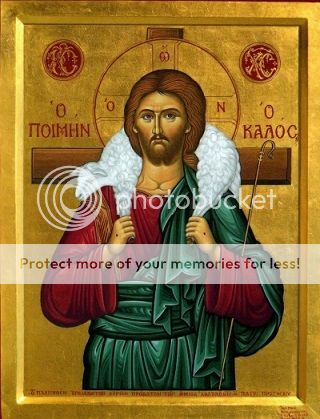
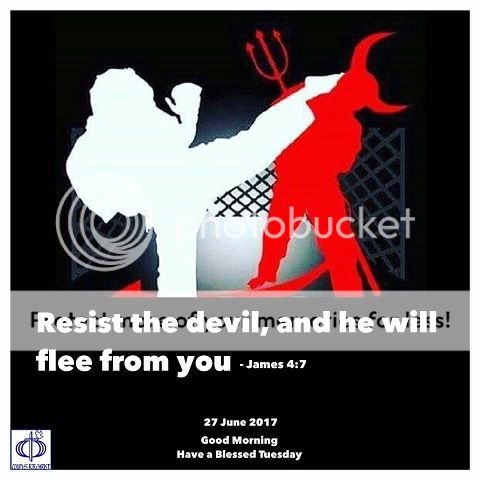
With sadness his friend frantically & quietly, said a prayer knowing very well this was already way way beyond him. As he has never heard of anything similar before and how was he to address the issue of forgiveness of the heart, since that's clearly stated in the Holy Bible.

So, was it correct or incorrect for the priest to say of such things to his parishioners, when in fact he should be encouraging his parishioners of repentance.

Do you think the uneducated friend, whom the lawyer confided in, was able to find an answer in the Holy Bible to soothe desperately the heart in need of forgiveness ?

What do you think ?
*
Dear Bro RC (easier to type, hope you don't mind?)

I was actually planning to ask for more information on this scenario, and on if it was based on a true account. I guess all that is settled ya? Thank God ... phew ... biggrin.gif Now, to answer your questions(s):

a. "... So, was it correct or incorrect for the priest to say of such things to his parishioners, when in fact he should be encouraging his parishioners of repentance. ..." At least, I hope this is a question(?)

the context by which the priest made this statement would be most helpful, under what circumstances was it made would be good. however, on the surface level, the priest is not really wrong in making such a statement. A sin is still a sin, be it a venial and /or a mortal, and needs confession whatever the nature.

if the sin is venial in nature, then the confiteor recited during the welcoming rites of mass should be more than sufficient. a mortal sin, qould require a proper confession to a priest in the sacrament of confession, done with a contrite heart and mind after sufficient soul searching.


Mortal vs Venial sins: A brief explanation

b. "... Do you think the uneducated friend, whom the lawyer confided in, was able to find an answer in the Holy Bible to soothe desperately the heart in need of forgiveness ? ..."

short answer: yes!!!!

long answer: able to find where in the Bible? easy, somehow your question somewhat preceded the answer just by a couple of days. if you were to read my posting of yesterday's daily readings, 13 November 2017, it's there ... to cherry pick the verse itself ... Luke 17:3-4; further enforced by the succeeding verses five (5) and six (6).

in addition, I am sure you are also familiar with this other verse, Matthew 18: 21-22 (NRSV CE); "Then Peter came and said to him, “Lord, if another member of the church[d] sins against me, how often should I forgive? As many as seven times?” Jesus said to him, “Not seven times, but, I tell you, seventy-seven times. ...". in short, always be ready to forgive. after all, is it not a commandment Christ to be merciful? again, this is the gospel reading from a few Sundays ago, Luke 6:30-36; " Give to everyone who begs from you; and if anyone takes away your goods, do not ask for them again. Do to others as you would have them do to you. “If you love those who love you, what credit is that to you? For even sinners love those who love them. 33 If you do good to those who do good to you, what credit is that to you? For even sinners do the same. If you lend to those from whom you hope to receive, what credit is that to you? Even sinners lend to sinners, to receive as much again. But love your enemies, do good, and lend, expecting nothing in return. Your reward will be great, and you will be children of the Most High; for he is kind to the ungrateful and the wicked. Be merciful, just as your Father is merciful.". Which is what Frankie used as a slogan for 2016's extraordinary year of Jubilee correct?


user posted image

hope this answer is alright for you? God bless! rclxm9.gif rclxm9.gif rclxm9.gif thumbup.gif thumbup.gif thumbup.gif

khool
post Nov 14 2017, 12:03 PM

Getting Started
**
Junior Member
225 posts

Joined: Mar 2008


Tuesday of the Thirty-second Week in Ordinary Time
Lectionary: 492


user posted image

Reading 1 (Wis 2:23–3:9)

God formed man to be imperishable;
the image of his own nature he made them.
But by the envy of the Devil, death entered the world,
and they who are in his possession experience it.

But the souls of the just are in the hand of God,
and no torment shall touch them.
They seemed, in the view of the foolish, to be dead;
and their passing away was thought an affliction
and their going forth from us, utter destruction.
But they are in peace.
For if before men, indeed, they be punished,
yet is their hope full of immortality;
Chastised a little, they shall be greatly blessed,
because God tried them
and found them worthy of himself.
As gold in the furnace, he proved them,
and as sacrificial offerings he took them to himself.
In the time of their visitation they shall shine,
and shall dart about as sparks through stubble;
They shall judge nations and rule over peoples,
and the Lord shall be their King forever.
Those who trust in him shall understand truth,
and the faithful shall abide with him in love:
Because grace and mercy are with his holy ones,
and his care is with his elect.

Responsorial Psalm (Ps 34:2-3, 16-17, 18-19)

R. I will bless the Lord at all times.

I will bless the LORD at all times;
his praise shall be ever in my mouth.
Let my soul glory in the LORD;
the lowly will hear me and be glad.
R. I will bless the Lord at all times.

The LORD has eyes for the just,
and ears for their cry.
The LORD confronts the evildoers,
to destroy remembrance of them from the earth.
R. I will bless the Lord at all times.

When the just cry out, the LORD hears them,
and from all their distress he rescues them.
The LORD is close to the brokenhearted;
and those who are crushed in spirit he saves.
R. I will bless the Lord at all times.

Alleluia (Jn 14:23)

R. Alleluia, alleluia.
Whoever loves me will keep my word,
and my Father will love him,
and we will come to him.
R. Alleluia, alleluia.

Gospel (Lk 17:7-10)

Jesus said to the Apostles:
"Who among you would say to your servant
who has just come in from plowing or tending sheep in the field,
'Come here immediately and take your place at table'?
Would he not rather say to him,
'Prepare something for me to eat.
Put on your apron and wait on me while I eat and drink.
You may eat and drink when I am finished'?
Is he grateful to that servant because he did what was commanded?
So should it be with you.
When you have done all you have been commanded, say,
'We are unprofitable servants;
we have done what we were obliged to do.'"

user posted image

REFLECTIONS: WORD Today

user posted image

Jesus says, "When you have done all you were ordered to do, say: We are unworthy servants, we have only done our duty." - Luke 17:10, Gospel Jesus is reminding us of our proper position in relation to our Creator. We do need this humbling reminder because there are times that we do good deeds like give donations or serve at church expecting honor, respect or other forms of payment.

In fact, all things that God deems good and beneficial are already put in place, ready to be picked up by the faithful who love God and who accept the work He offers, even if it is rough and difficult. When we do accept, we are contributing time, talent and treasure - materials that God uses to build a just and merciful society for the good of His entire human family, including ourselves.

That God deems us worthy to be given any part at all in building His Kingdom, is a great and mighty honor for which we ought to fall down on our knees and say, "I will bless the Lord at all times!" (Responsorial Psalm)

When we willingly accept the crosses that come with the job as part of our growth and as our grateful offering, we join the great Saints led by our Mother Mary in saying, "Behold, I am the servant of the Lord. Be it done to me according to thy word."

If we do this, we are assured that "Those who have put their trust in God will come to understand the truth of His ways. Those who have been faithful will live with Him in His love, for He is kind and merciful to the ones whom He has chosen." (Wisdom 2:9, First Reading)

And so, let us ask not what the Kingdom can do for us, but what we can do for the Kingdom.

I WILL SERVE THEE


Source: http://www.facebook.com/CatholicMassReflec...800303293600761

user posted image

khool
post Nov 14 2017, 02:01 PM

Getting Started
**
Junior Member
225 posts

Joined: Mar 2008


user posted image

user posted image

TSyeeck
post Nov 14 2017, 02:19 PM

Look at all my stars!!
*******
Senior Member
3,573 posts

Joined: Apr 2006


Communism (mixed in with materialism) is still well and alive today.

https://www.thestar.com.my/news/regional/20...illagers-urged/
khool
post Nov 14 2017, 04:05 PM

Getting Started
**
Junior Member
225 posts

Joined: Mar 2008


THE REWARDS OF THE JUST AND DUTIFUL SERVANT

user posted image

SCRIPTURE READINGS: [ Wis 2:23 – 3:9; Ps 33:2-3,16-19; Lk 17:7-10 ]

It is natural that we look for gratitude and rewards for what we do. Even if we do not seek material rewards or benefits, we would expect at least that those whom we serve are grateful for what we have done. Otherwise we will be discouraged, because we feel that we are not appreciated. Indeed, when appreciation is not forthcoming, many will be slighted and feel hurt. They will stop serving or giving.

This explains why in the first reading, we read that this is more so when a good and just man suffers for doing what is right and good. Again, we all expect the good to be rewarded and the just to be blessed. But when they suffer injustices, we find it difficult to accept. As the author of Wisdom says, “In the eyes of the unwise, they did appear to die, their going looked like a disaster; their leaving us like annihilation.” Indeed, the suffering of good and holy people is seen as tragic.

In the gospel, Jesus gives us His perspective of the reward of a servant. He said, a servant’s duty is to serve the master:“Which of you, with a servant ploughing or minding sheep, would say to him when he returned from the fields, ‘Come and have your meal immediately?’ Would he not be more likely to say, ‘Get my supper laid; make yourself tidy and wait on me while I eat and drink. You can eat and drink yourself afterwards’” The truth is that the place of a servant is to serve. Only in serving can he or she find himself or herself. This explains why Jesus said, we should not be looking for any reward or gratitude from those whom we serve. This is because we are doing what we are called to do. Hence, Jesus postulated, “Must he be grateful to the servant for doing what he was told? So with you: when you have done all you have been told to do, say, ‘We are merely servants: we have done no more than our duty.’”

In other words, we are all called to live out our vocation in life. Regardless what we do or who we are, our calling is to be a servant of others through our vocation. It is when we live out our identity as servants that we find ourselves, our fulfillment and our meaning for existence. Unless we live out our identity, we will live a conflicted life. Those who are not faithful to their responsibilities in life are not living an integrated life. They contradict what they are called to be and to do. Unless we find unity of life between who we are and what we are called to do, and do accordingly, there will be a lack of peace within our hearts. The reward of being faithful to our servant hood, our vocation, our life is the joy of being our true self and allowing the doing to flow from our being. There is no other reward greater than the joy of satisfaction, fulfillment, self-realization and a clear conscience.

This is true for one who lives a just and good life and yet suffers injustice. As the author of Wisdom says, their suffering and death appear to the unwise as a punishment, a disaster, an annihilation and a tragedy. But the truth is that those who suffer unjustly “are in peace” because they suffer for what is right and true. Their conscience is clear and their suffering and even death is a witness to the truth that they proudly stand for. Indeed, “the souls of the virtuous are in the hands of God. No torment shall ever touch them.” For the unwise, their suffering means a failure of their mission, but for the just man, “their hope was rich with immortality; slight was their affliction, great will their blessings be”. Indeed what greater life can one have than to be true to oneself, and to be ready to die for one’s beliefs? When we fail to stand up for our beliefs and be true to ourselves, we lose our self-dignity. It shows that we lack courage and we are simply dancing to the tunes of the world, not what is true but what is popular. Eventually, we lose our direction and our conscience is not at peace because what we do is contrary to what we believe in our hearts.

Besides being faithful to themselves when the just suffer, they take their sufferings as moments in which they purify themselves in love and faith. “God has put them to the test and proved them worthy to be with him; he has tested them like gold in a furnace, and accepted them as a holocaust. When the time comes for his visitation they will shine out; as sparks run through the stubble, so will they.” Through suffering, especially unjust and innocent suffering, we grow in grace and in the capacity to be detached from the passing values of life. So we should not be afraid to suffer because when we see sufferings positively, they teach us humility, purify our motives in service, strengthen our will, and help us to go beyond the sensual comfort to seek for inner peace and joy.

Unjust suffering is not only good for the ones who suffer but it is also meant for those who look upon their sufferings. Apparently, such unjust suffering is absurd, but only innocent and helpless suffering evokes the compassion and the sentiments of their fellowmen. We have more sympathy for the underdogs when they are helpless and marginalized than those who can fight back when they are attacked. This was the case of the Suffering Servant of Isaiah when he wrote, “As many were astonished at him – his appearance was so marred, beyond human semblance and his form beyond that of the sons of men – so shall he startle many nations; kings shall shut their mouths because of him; for that which has not been told them they shall see, and that which they have not heard they shall understand.” (Isa 52:14f) When Jesus died on the cross, the centurion who witnessed the whole event praised God and exclaimed, “Certainly this man was innocent!” (Lk 23:47) We also read, “And all the multitudes who assembled to see the sight, when they saw what had taken place, returned home beating their breasts. (Lk 23:48) We are moved by innocent and unjust suffering. By our innocent suffering and humble service, we will be a reprimand to those who are evil. “They shall judge nations, rule over peoples, and the Lord will be their king for ever.”

Jesus for us is a model of this servant that was faithful to Himself and as a result, suffered unjustly. Jesus’ identity was that of a servant. He told the disciples, “It shall not be so among you; but whoever would be great among you must be your servant, and whoever would be first among you must be your slave; even as the Son of man came not to be served but to serve, and to give his life as a ransom for many.” (Mt 20:26-28) The letter to the Philippians summarizes the servant hood of the Lord in these words, “Christ Jesus, who, though he was in the form of God, did not count equality with God a thing to be grasped, but emptied himself, taking the form of a servant, being born in the likeness of men. And being found in human form he humbled himself and became obedient unto death, even death on a cross.” (Phil 2:6-8)

We too are called to be like Jesus, to be the Suffering Servant for God and for others. This is our calling in life. Our identity as sons and daughters of God is to be like a servant as God is to us. The author of Wisdom says, “God made man imperishable, he made him in the image of his own nature; it was the devil’s envy that brought death into the world, as those who are his partners will discover.” God’s life is love, service and self-emptying. Indeed, servant hood marks the life of every Christian. Jesus said, “If any man would come after me, let him deny himself and take up his cross and follow me. For whoever would save his life will lose it, and whoever loses his life for my sake will find it.” (Mt 16:24f)

Only by walking in the way of servant hood and, when necessary, suffering for doing what is right and good, can we share in Christ’s exaltation. We are assured in the first reading that “they who trust in him will understand the truth, those who are faithful will live with him in love; for grace and mercy await those he has chosen.” We will share in the resurrection of Christ because we share in His suffering and death. (cf Rom 8:17)Indeed, the joy of being united with the Lord and sharing in His life of grace and peace is worth the suffering. Hence, with the psalmist, let us in good times and in bad, say, “I will bless the Lord at all times, his praise always on my lips; in the Lord my soul shall make its boast. The humble shall hear and be glad. The Lord is close to the broken hearted; those whose spirit is crushed he will save.”

SourcE: http://empoweringgoans.com/2017/11/13/the-...utiful-servant/

khool
post Nov 15 2017, 11:00 AM

Getting Started
**
Junior Member
225 posts

Joined: Mar 2008


The 3 legged stool

user posted image

Sacred Tradition <-> Sacred Scripture <-> Magisterial Teaching. Dogma cannot go against implicit or explicit scripture. St. Paul says spiritual things need to be spiritually examined and the sensual man percieveth not these things.

Scripture as understood by the disciples of the apostles had very deep spiritual meaning, not just a literalist meaning. Also many things were lived and understood through Sacred Tradition because of persecution.

Catechism of the Catholic Church : Part One - The Profession of Faith

user posted image

user posted image

This post has been edited by khool: Nov 15 2017, 12:17 PM
khool
post Nov 15 2017, 11:30 AM

Getting Started
**
Junior Member
225 posts

Joined: Mar 2008


Wednesday of the Thirty-second Week in Ordinary Time
Lectionary: 493


user posted image

Reading 1 (Wis 6:1-11)

Hear, O kings, and understand;
learn, you magistrates of the earth's expanse!
Hearken, you who are in power over the multitude
and lord it over throngs of peoples!
Because authority was given you by the Lord
and sovereignty by the Most High,
who shall probe your works and scrutinize your counsels.
Because, though you were ministers of his kingdom, you judged not rightly,
and did not keep the law,
nor walk according to the will of God,
Terribly and swiftly shall he come against you,
because judgment is stern for the exalted–
For the lowly may be pardoned out of mercy
but the mighty shall be mightily put to the test.
For the Lord of all shows no partiality,
nor does he fear greatness,
Because he himself made the great as well as the small,
and he provides for all alike;
but for those in power a rigorous scrutiny impends.
To you, therefore, O princes, are my words addressed
that you may learn wisdom and that you may not sin.
For those who keep the holy precepts hallowed shall be found holy,
and those learned in them will have ready a response.
Desire therefore my words;
long for them and you shall be instructed.

Responsorial Psalm (Ps 82:3-4, 6-7)

R. Rise up, O God, bring judgment to the earth.

Defend the lowly and the fatherless;
render justice to the afflicted and the destitute.
Rescue the lowly and the poor;
from the hand of the wicked deliver them.
R. Rise up, O God, bring judgment to the earth.

I said: "You are gods,
all of you sons of the Most High;
yet like men you shall die,
and fall like any prince."
R. Rise up, O God, bring judgment to the earth.

Alleluia (1 Thes 5:18)

R. Alleluia, alleluia.
In all circumstances, give thanks,
for this is the will of God for you in Christ Jesus.
R. Alleluia, alleluia.

Gospel (Lk 17:11-19)

As Jesus continued his journey to Jerusalem,
he traveled through Samaria and Galilee.
As he was entering a village, ten lepers met him.
They stood at a distance from him and raised their voice, saying,
"Jesus, Master! Have pity on us!"
And when he saw them, he said,
"Go show yourselves to the priests."
As they were going they were cleansed.
And one of them, realizing he had been healed,
returned, glorifying God in a loud voice;
and he fell at the feet of Jesus and thanked him.
He was a Samaritan.
Jesus said in reply,
"Ten were cleansed, were they not?
Where are the other nine?
Has none but this foreigner returned to give thanks to God?"
Then he said to him, "Stand up and go;
your faith has saved you."

user posted image

REFLECTIONS: WORD Today

user posted image

In the Gospel, Jesus is resolutely marching toward Jerusalem where He would offer His life as sacrifice to save all humanity. He came across ten lepers who, by law, stood at a distance. They called out to Him and begged Him for mercy and healing.

In Jesus' time, leprosy was an incurable disease suffered by the victim till death. They were outcasts of society who could not live with normal people. They had to live in caves (if they were lucky to find one) outside of town. Nobody took care of them; they were the original "living dead."

Moved with love and mercy for them whom He would also die to save, Jesus healed them all. We can only imagine the immense joy they felt for being saved from living death and restored back to their families. Jesus wanted nothing from them except their love, but to His great sadness, only one came back to Him in gratitude and thanksgiving...

ALL of us too were once lepers with the incurable disease of sin. We were bound to suffer that disease till eternal death in hell. Only the healing grace of Christ's sacrifice restored us to health. His death and resurrection gave us a second chance at life and restored us back into the family of God.

Without His sacrifice, we would still be prodigal sons and daughters wallowing in the pigsty of our old lives. Have you thanked Jesus lately for saving you? The God who loves much can hurt much.

The Greek word for thanksgiving is "eukharistia" from which comes our modern "Eucharist". The Holy Mass is the Eucharistic, thanksgiving celebration of Jesus' mighty sacrifice of love. There the Living God will pour out even more grace to make our lives not just mud-free but beautiful, living the fullness of life with Him. Let us go and thank Jesus daily.

THE TREMENDOUS VALUE OF ONE HOLY MASS


Source: https://www.facebook.com/CatholicMassReflec...800655083565582

user posted image

khool
post Nov 15 2017, 01:34 PM

Getting Started
**
Junior Member
225 posts

Joined: Mar 2008


user posted image

user posted image

khool
post Nov 15 2017, 02:35 PM

Getting Started
**
Junior Member
225 posts

Joined: Mar 2008


user posted image

TSyeeck
post Nov 15 2017, 03:42 PM

Look at all my stars!!
*******
Senior Member
3,573 posts

Joined: Apr 2006


khool
post Nov 16 2017, 11:05 AM

Getting Started
**
Junior Member
225 posts

Joined: Mar 2008


Blood, Water, and the Sacraments

user posted image

John’s Gospel records one of the most well-known elements of the story of Jesus’ crucifixion: the spear in his side. Jesus died pretty quickly, so to make sure he really was dead, a Roman soldier stabbed him with a spear (John 20:34). When he did this, blood and water flowed out from the wound, and this event has stuck firmly in the minds of many Christians ever since. However, what is not nearly as well known is that when this happens, John brings the narrative to a screeching halt and addresses his readers directly:
QUOTE
“He who saw it has borne witness—his testimony is true, and he knows that he tells the truth—that you also may believe.” (John 19:35)

John makes a point to tell us that this really happened. He was there, and he saw the blood and water flow from Jesus’ pierced side. Why is this so important? Why does John make sure we know that he was not making this up? At first, we might be tempted to think that it’s because this event fulfills some prophecies from Scripture (John 19:36-37). However, John points out fulfilled prophecies elsewhere (for example, John 2:17, 19:24), but this is the only time he stops the narrative to point out that the event really happened. As a result, there has to be some deeper meaning to this event, some spiritual significance that John wants us to see in it. Let’s examine the passage and see just what that deeper meaning is.

“I Thirst”

To begin, we need to go back a few verses to the scene of Jesus’ death:
QUOTE
“After this Jesus, knowing that all was now finished, said (to fulfil the scripture), ‘I thirst.’ A bowl full of vinegar stood there; so they put a sponge full of the vinegar on hyssop and held it to his mouth. When Jesus had received the vinegar, he said, ‘It is finished’; and he bowed his head and gave up his spirit.” (John 19:28-30)

There is a lot going on in this passage, so let’s start with Jesus’ words “I thirst.” They seem fairly straightforward, but when we look at them more closely, questions begin to arise. He said this only when he knew that he was about to die (“knowing that all was now finished”), but why would he wait till then? He was going to die in a few moments, so why even bother?

This is a clue that there is something more here than meets the eye. Yes, Jesus was genuinely thirsty and really did want to quench that thirst, but his words also contain a second, deeper meaning. On a spiritual level, they tell us something about his impending death. Specifically, these words call to mind an event that happened near the beginning of John’s Gospel.

The Samaritan Woman

The only other place in this Gospel where Jesus asks for a drink is his encounter with a Samaritan woman at a well. He asks for a drink when they first meet (John 4:7), and then after a short exchange, he offers her some water (John 4:10-15). Specifically, he offers her “living water” that will result in eternal life. This conversation mirrors the scene of Jesus’ death perfectly: they both begin with Jesus asking for a drink and then end with him becoming a source of water.

This parallel sheds significant light on the meaning of Jesus’ death. By highlighting Jesus’ request for a drink on the cross, John was subtly telling us that the water that flowed from Jesus’ side (we’ll get to the blood later) was a symbol of the living water he offered to the Samaritan woman.

The Holy Spirit

And what was that living water? John does not tell us right away; instead, we have to wait a few chapters for an explanation:
QUOTE
“On the last day of the feast, the great day, Jesus stood up and proclaimed, ‘If any one thirst, let him come to me and drink. He who believes in me, as the scripture has said, “Out of his heart shall flow rivers of living water.”’ Now this he said about the Spirit, which those who believed in him were to receive.” (John 7:37-39)

Here we finally learn what this “living water” is, and it’s the Holy Spirit. However, there is a problem. In this passage, Jesus says that this water will flow from believers, but both in his conversation with the Samaritan woman and at his crucifixion, it comes from him. The problem, I would suggest, is with our English translations. In the original Greek, the text can be translated as I have quoted it above, or it can be translated to mean that the “rivers of living water” will flow from Jesus himself. That may seem strange to English speakers, but ancient Greek sentence structure is very different from that of modern English, so either translation is possible.

Now, while the grammar of the text is ambiguous, in the context of the entire Gospel of John, the translation I am proposing makes more sense. We see Jesus depicted as the source of this living water everywhere else it appears, so it makes sense that he would be its source here as well. As a result, when we put this all together, we can see that the water that flows from Jesus’ side at his death represents the Holy Spirit. It symbolizes the gift of the Spirit that Jesus won for us by His sacrifice on the cross.

A Novel Phrase

And in case there’s any doubt, there is one more piece to this puzzle. When John narrates Jesus’ death, he says that Jesus “gave up his spirit” (John 19:30). Again, this seems simple enough, but there is a deeper meaning here as well. The Greek literally means that Jesus “handed over the spirit,” and this phrase was never used as a euphemism for death in ancient Greek literature. John made it up, and that has to be significant. If he had meant it to refer to Jesus’ death and nothing more, he would have used another, more common expression. However, he instead chose to make up a new one, and he must have done so for a reason.

You may be able to guess why John described Jesus’ death this way. By saying that he “handed over the spirit,” John was teaching us that at Jesus’ death, he handed over the Holy Spirit to his followers, thereby confirming everything we’ve seen about the symbolism of the water that flowed from his side. However, this leaves us with one last question: what about the blood?
The Sacraments

In John’s Gospel, the word “blood” appears with its normal meaning in only one other passage (elsewhere, we find it only as part of an idiom referring to birth). In a sermon dubbed by scholars the “Bread of Life Discourse,” Jesus tells us repeatedly that we must eat his flesh and drink his blood (John 6:53-56), a clear reference to the Eucharist. Consequently, in the context of this Gospel, the blood that flows from Jesus’ side has to symbolize the Eucharist.

Once we realize this, we can see that the water has a sacramental meaning as well. Like the phrase John used to describe Jesus’ death, this water also has a double meaning. In addition to symbolizing the Holy Spirit in general, it also represents baptism. Towards the beginning of John’s Gospel, Jesus describes baptism as a birth “of water and the Spirit” (John 3:5), so just as the blood calls to mind his words about the Eucharist, so too does the water call to mind these words about baptism. And if we think about it, this dual meaning makes perfect sense. Baptism is the first time we receive the Holy Spirit and the prerequisite for receiving the Spirit in other ways, so it’s fitting that the water would symbolize both baptism and the Spirit.

The Importance of the Sacraments

Now that we’ve seen what the blood and water symbolize, we have one final question to answer: What does this all mean when we put it together? In other words, is there any relation between the sacraments and Jesus’ gift of the Holy Spirit?

Yes, there is. By linking the Spirit with baptism and the Eucharist, John is telling us that we receive Jesus’ parting gift to us primarily through the sacraments. Granted, the blood and water that flowed from Jesus’ side only call to mind two of them, but as Catholics, we can extrapolate from that and conclude that God gives us the Spirit in all seven sacraments. This is extremely important because the Holy Spirit enables our faith (1 Corinthians 12:3), our good works (Romans 8:3-4), and our prayer (Romans 8:15, 1 Corinthians 12:3), the three pillars of the Christian life. Simply put, we can’t be Christians without the Spirit, and we can’t have the Spirit without the sacraments.

Source: http://catholicexchange.com/blood-water-sacraments

khool
post Nov 16 2017, 12:08 PM

Getting Started
**
Junior Member
225 posts

Joined: Mar 2008


Thursday of the Thirty-second Week in Ordinary Time
Lectionary: 494


user posted image

Reading 1 (Wis 7:22b–8:1)

In Wisdom is a spirit
intelligent, holy, unique,
Manifold, subtle, agile,
clear, unstained, certain,
Not baneful, loving the good, keen,
unhampered, beneficent, kindly,
Firm, secure, tranquil,
all-powerful, all-seeing,
And pervading all spirits,
though they be intelligent, pure and very subtle.
For Wisdom is mobile beyond all motion,
and she penetrates and pervades all things by reason of her purity.
For she is an aura of the might of God
and a pure effusion of the glory of the Almighty;
therefore nought that is sullied enters into her.
For she is the refulgence of eternal light,
the spotless mirror of the power of God,
the image of his goodness.
And she, who is one, can do all things,
and renews everything while herself perduring;
And passing into holy souls from age to age,
she produces friends of God and prophets.
For there is nought God loves, be it not one who dwells with Wisdom.
For she is fairer than the sun
and surpasses every constellation of the stars.
Compared to light, she takes precedence;
for that, indeed, night supplants,
but wickedness prevails not over Wisdom.

Indeed, she reaches from end to end mightily
and governs all things well.

Responsorial Psalm (Ps 119:89, 90, 91, 130, 135, 175)

R. Your word is for ever, O Lord.

Your word, O LORD, endures forever;
it is firm as the heavens.
R. Your word is for ever, O Lord.

Through all generations your truth endures;
you have established the earth, and it stands firm.
R. Your word is for ever, O Lord.

According to your ordinances they still stand firm:
all things serve you.
R. Your word is for ever, O Lord.

The revelation of your words sheds light,
giving understanding to the simple.
R. Your word is for ever, O Lord.

Let your countenance shine upon your servant,
and teach me your statutes.
R. Your word is for ever, O Lord.

Let my soul live to praise you,
and may your ordinances help me.
R. Your word is for ever, O Lord.

Alleluia (Jn 15:5)

R. Alleluia, alleluia.
I am the vine, you are the branches, says the Lord:
whoever remains in me and I in him will bear much fruit.
R. Alleluia, alleluia.

Gospel (Lk 17:20-25)

Asked by the Pharisees when the Kingdom of God would come,
Jesus said in reply,
"The coming of the Kingdom of God cannot be observed,
and no one will announce, 'Look, here it is,' or, 'There it is.'
For behold, the Kingdom of God is among you."

Then he said to his disciples,
"The days will come when you will long to see
one of the days of the Son of Man, but you will not see it.
There will be those who will say to you,
'Look, there he is,' or 'Look, here he is.'
Do not go off, do not run in pursuit.
For just as lightning flashes
and lights up the sky from one side to the other,
so will the Son of Man be in his day.
But first he must suffer greatly and be rejected by this generation."

user posted image

REFLECTIONS: WORD Today

user posted image

In the Gospel, the Pharisees ask Jesus when the Kingdom of God will come. Like them, we may also be wondering what "Your Kingdom come" in the Our Father means. What is this kingdom? Where is it coming from? When is it arriving?

Jesus came down from heaven to start building the Kingdom of God. At the start of His pubic ministry, He said to the people, "Repent for the Kingdom of heaven is at hand." (Matthew 4:17). In the Rosary, this is the Third Luminous Mystery, "The Proclamation of the Coming of the Kingdom of God."

For us today, citizenship in the Kingdom starts with Baptism when the Holy Spirit comes down from heaven to live with us. "In every generation she passes into holy souls and makes them friends of God and prophets." (First Reading)

Throughout our lives, the Holy Spirit gently guides us into friendship with the Father by living the Gospel of the Son, then promoting it (being prophets). This means that side by side with Jesus, we too "must suffer and be rejected by this generation." (Gospel)

Like Jesus we sacrifice our comforts and securities for the good of others, and we reject the false values of the world and in turn be rejected by it.

God's Kingdom has come when, by the way we live, a piece of heaven comes down to earth.

BLEST ARE THEY - THE KINGDOM OF GOD IS THEIRS


Source: https://www.facebook.com/CatholicMassReflec...801062420191515

user posted image

This post has been edited by khool: Nov 17 2017, 12:28 PM
khool
post Nov 16 2017, 01:28 PM

Getting Started
**
Junior Member
225 posts

Joined: Mar 2008


user posted image

khool
post Nov 16 2017, 02:06 PM

Getting Started
**
Junior Member
225 posts

Joined: Mar 2008


Seeking What’s Wise …

Lord, may I be a seeker,
a follower of Your light
may I have the wisdom
like the Magi’s had that night.

May I travel the distance,
regardless of how far
may I be willing to go
to wherever You are.

May I have the resolve,
to follow where You lead
may I see to Your will
I must be willing to heed.

May I have the tenacity,
not to ever quit
may I be to Your ways
determined to submit.

May I have the fortitude,
to journey into what’s wise
may I have the stamina
so Your path I’ll recognize.

Lord, may I always seek You,
like the Magi’s did that night
may I have the courage . . .
to follow after wisdom’s light!

By Deborah Ann

“Wisdom is the reflection of eternal light, the spotless mirror of the power of God, the image of his goodness. And she, who is

one, can do all things…” – Wisdom 7:26-27

user posted image

Source: https://www.facebook.com/groups/1663218997255048/

TSyeeck
post Nov 16 2017, 05:54 PM

Look at all my stars!!
*******
Senior Member
3,573 posts

Joined: Apr 2006


AsiaNews.it

Mass for a deceased underground priest. Card. Zen asks for God ‘s grace to save the Church in China and the Holy See from the 'precipice'

by Li Yuan

Fr. Wei Heping, 41, died in mysterious circumstances, his body dumped in a river in Taiyuan (Shanxi). For the police claim he committed suicide. Family members are not allowed to even see the autopsy report. For Card. Zen the Holy See (which "is not necessarily the Pope") seeks a compromise at all costs with the Chinese government, risking "to sell out the faithful Church". Justice and Peace publish a booklet about Fr. Wei, not to forget.


Hong Kong (AsiaNews) - Card. Joseph Zen, Emeritus Bishop of Hong Kong, has asked God to save the Holy See "from the brink of the precipice and not sell out the faithful Church [to the Chinese government]". The cardinal expressed his concerns in his homily recalling Fr. Wei Heping (alias Yu Heping), who died two years ago in mysterious and suspicious circumstances.

The Mass was held last night in the Church of St. Jude, organized by the Diocesan Commission for Justice and Peace. Pointing out that "the Holy See is not necessarily the Pope," the cardinal remarked that in recent years, in which an initial dialogue between Beijing and the Vatican is taking place, the Holy See has often remained silent about the grave events of the Chinese Church such as death of Fr. Wei, the captivity of Msgr. Giacomo Su Zhimin, the destruction of crosses and churches in Zhejiang.

"Dialogue - said Card. Zen - is important and necessary. However, it [the Holy See] is too optimistic about the communist regime. It has depended on its diplomacy instead of faith. It does not have a bottom line to reach an agreement."

He continued “The Holy See is ceaselessly compromising and has even arrived at the point of selling itself out to appease. This is by no means what God expects of the Church and by no means faithful to the mission that Christ gave the Apostles. "

These comments seem to have been provoked by some news the Cardinal has recently received and which is "very shocking". Previously, Card. Zen had thought the negotiations were stalled, that "the Pope was more cautious" perhaps because "Beijing had expressed other demands on which he could not agree."

Without mentioning the diocese, the emeritus bishop of Hong Kong said that "they are pushing for an evil plan: to ask faithful bishops to resign in order to leave room for illicit and excommunicated bishops. This is a bolt out of the blue! And it is the approach of a huge disaster for the Church. "

"Someone - he added - might think I'm using the Mass to complain. No, I think Fr. Wei is using my mouth to communicate. These words serve to let us know what kind of grace we are asking for today. "

The body of Fr. Wei, an active 41-year-old priest of the underground community, was found in suspicious circumstances in the Ren River, near Taiyuan City (Shanxi) on November 8, 2015. He had been expected to return the day before from a trip to Liaoning Province.

According to ecclesial sources, who closely followed his case, the autopsy revealed a wide hemorrhagic area in the right part of the brain, but there were no visible wounds on the skin. The police concluded that he had committed suicide and archived the case.

To the family of Fr. Wei was not allowed to have a copy of the autopsy report and they asked to reopen the investigation but the police refused.

A faithful in the underground community thanked Card. Zen for remembering Fr. Wei and the Church's difficulties in China, and said she was saddened after reading the Cardinal's homily, posted today on his blog: "After reading this, my heart bleeds. As the cardinal said, maybe we should retreat to a cave and weep. But my heart does not give me peace. "

The Justice and Peace Commission, which organized the Mass for Fr. Wei also published a paper and electronic booklet titled "Peace Pilgrim", symbolically using his name (Heping means "peace") and his tireless commitment to evangelization (see here).

The booklet contains articles written by his family, friends, and faithful who received catechism from him, hoping that Catholics will not forget Fr. Wei, before the truth about his death is revealed.

The text also includes a reflection of the priest and his opinion on the relations between China and the Vatican, entitled "Time belongs to God". In it he said there should be no hurry to make an agreement, if the political situation is not yet ready.

user posted image
11/11/2017 12:40:00 - East Asia China Hong Kong


2003 © All rights reserved - AsiaNews C.F. e P.Iva: 00889190153 - GLACOM®
khool
post Nov 17 2017, 12:34 PM

Getting Started
**
Junior Member
225 posts

Joined: Mar 2008


Memorial of Saint Elizabeth of Hungary, Religious
Lectionary: 495


user posted image

Reading 1 (Wis 13:1-9)

All men were by nature foolish who were in ignorance of God,
and who from the good things seen did not succeed in knowing him who is,
and from studying the works did not discern the artisan;
But either fire, or wind, or the swift air,
or the circuit of the stars, or the mighty water,
or the luminaries of heaven, the governors of the world, they considered gods.
Now if out of joy in their beauty they thought them gods,
let them know how far more excellent is the Lord than these;
for the original source of beauty fashioned them.
Or if they were struck by their might and energy,
let them from these things realize how much more powerful is he who made them.
For from the greatness and the beauty of created things
their original author, by analogy, is seen.
But yet, for these the blame is less;
For they indeed have gone astray perhaps,
though they seek God and wish to find him.
For they search busily among his works,
but are distracted by what they see, because the things seen are fair.
But again, not even these are pardonable.
For if they so far succeeded in knowledge
that they could speculate about the world,
how did they not more quickly find its Lord?

Responsorial Psalm (Ps 19:2-3, 4-5ab)

R. The heavens proclaim the glory of God.

The heavens declare the glory of God,
and the firmament proclaims his handiwork.
Day pours out the word to day,
and night to night imparts knowledge.
R. The heavens proclaim the glory of God.

Not a word nor a discourse
whose voice is not heard;
Through all the earth their voice resounds,
and to the ends of the world, their message.
R. The heavens proclaim the glory of God.

Alleluia (Lk 21:28)

R. Alleluia, alleluia.
Stand erect and raise your heads
because your redemption is at hand.
R. Alleluia, alleluia.

Gospel (Lk 17:26-37)

Jesus said to his disciples:
"As it was in the days of Noah,
so it will be in the days of the Son of Man;
they were eating and drinking,
marrying and giving in marriage up to the day
that Noah entered the ark,
and the flood came and destroyed them all.
Similarly, as it was in the days of Lot:
they were eating, drinking, buying,
selling, planting, building;
on the day when Lot left Sodom,
fire and brimstone rained from the sky to destroy them all.
So it will be on the day the Son of Man is revealed.
On that day, someone who is on the housetop
and whose belongings are in the house
must not go down to get them,
and likewise one in the field
must not return to what was left behind.
Remember the wife of Lot.
Whoever seeks to preserve his life will lose it,
but whoever loses it will save it.
I tell you, on that night there will be two people in one bed;
one will be taken, the other left.
And there will be two women grinding meal together;
one will be taken, the other left."
They said to him in reply, "Where, Lord?"
He said to them, "Where the body is,
there also the vultures will gather."

user posted image

REFLECTIONS: WORD Today

user posted image

The First Reading says, "Anyone who does not know God is simply foolish. Such people look at the good things around them and still fail to see the living God. They have studied the things he made, but they have not recognized the one who made them." (Wisdom 13:1, GNT Bible)

Indeed we live in an age of foolish godlessness. We master the complex sciences of nature and the human body; we know their abilities, capacities and limitations. But we abuse them both, using nature for quick gain without responsibility, and using our bodies for pleasure without consequence.

Jesus warns that "In the days before the flood, people enjoyed banquets, parties and weddings right up to the time Noah entered his boat and the great flood came to destroy them all." (Luke 17:27)

We see the terrifying warning signs in nature and the appalling symptoms of corruption in human society, but we just foolishly bandage the surface wound with palliative solutions but ignore the underlying deadly infection of godlessness.

Before it's too late, let us be wise and stop playing god and get on board the rock-solid teachings of the Church, the unsinkable Boat of Jesus (Matthew 16:18) and unfailing vehicle of Christianity for 2,000 years.

SHOUT TO THE LORD


Source: https://www.facebook.com/CatholicMassReflec...801456456818778

user posted image

khool
post Nov 17 2017, 01:24 PM

Getting Started
**
Junior Member
225 posts

Joined: Mar 2008


user posted image

TSyeeck
post Nov 18 2017, 12:54 AM

Look at all my stars!!
*******
Senior Member
3,573 posts

Joined: Apr 2006


“Way of the Future” is a new religious organization whose officially approved statutes say its goal is to “develop and promote the realization of a Godhead based on Artificial Intelligence” in order to “contribute to the betterment of society”.

Behind this initiative is a major Silicon Valley figure, Anthony Levandowski, a 37-year-old engineer, and the father of Waymo, Google’s self-driving car. In September of 2017, the American magazine Wired revealed that the engineer wants to “promote the realization of a Godhead based on Artificial Intelligence”. The project would seem laughable if he were not a follower of a dangerous school of thought: transhumanism.

The idea behind transhumanism is for man to one day be absorbed by machines, and this idea is gradually leaving scientific ideology behind and creeping into the religious field. Anthony Levandowski also believes in the “concept of singularity” that for transhumanists means the day computers will surpass man and enter new era.

“Transhumanism is a progressive and religious form of delirium, which is likely to spread in France and the West,” warns Natalia Trouiller, director of a communications association. Why? “First of all, because of humanity’s perpetual temptation to save itself through its own strength,” she explains, before adding, “then because of the contemporary world’s fascination with Gnosticism, which consists in seeing the body as a hindrance and dreaming of being rid of it”.

Sources : La Croix/Wired

More here:
https://www.theguardian.com/technology/2017...ony-levandowski
khool
post Nov 18 2017, 10:06 AM

Getting Started
**
Junior Member
225 posts

Joined: Mar 2008


QUOTE(yeeck @ Nov 18 2017, 12:54 AM)
“Way of the Future” is a new religious organization whose officially approved statutes say its goal is to “develop and promote the realization of a Godhead based on Artificial Intelligence” in order to “contribute to the betterment of society”.

Behind this initiative is a major Silicon Valley figure, Anthony Levandowski, a 37-year-old engineer, and the father of Waymo, Google’s self-driving car. In September of 2017, the American magazine Wired revealed that the engineer wants to “promote the realization of a Godhead based on Artificial Intelligence”. The project would seem laughable if he were not a follower of a dangerous school of thought: transhumanism.

The idea behind transhumanism is for man to one day be absorbed by machines, and this idea is gradually leaving scientific ideology behind and creeping into the religious field. Anthony Levandowski also believes in the “concept of singularity” that for transhumanists means the day computers will surpass man and enter new era.

“Transhumanism is a progressive and religious form of delirium, which is likely to spread in France and the West,” warns Natalia Trouiller, director of a communications association. Why? “First of all, because of humanity’s perpetual temptation to save itself through its own strength,” she explains, before adding, “then because of the contemporary world’s fascination with Gnosticism, which consists in seeing the body as a hindrance and dreaming of being rid of it”.

Sources : La Croix/Wired

More here:
https://www.theguardian.com/technology/2017...ony-levandowski
*
Trans-what??? Trans-fatty acids arrrrhhh? Da flying Cat6A monster is awakened! ... tongue.gif tongue.gif tongue.gif icon_idea.gif icon_idea.gif icon_idea.gif brows.gif brows.gif brows.gif


TSyeeck
post Nov 18 2017, 06:44 PM

Look at all my stars!!
*******
Senior Member
3,573 posts

Joined: Apr 2006


On October 16, 2017, the president of the Republic of Nepal, Bidhya Devi Bhandari, promulgated an “anti-conversion” law that was adopted by Parliament on August 8. This new law will have consequences for the Christian minority in the country.

“Criminal Code 2074” is the name of the new law that aims to limit religious proselytism in Nepal. According to the newly implemented law, any person convicted of having converted someone to another religion is to be punished with five years in prison and a 50,000-rupee fine (about $500 USD ).

The amount of prison time and the heavy fine, which represents over half of the Nepalese average annual income ($762 in 2014), shows just how important conversions are in this republic where over 81% of the population of 31 million is Hindu; 9% is Buddhist, 4.4% is Muslim, and 1.4% is Christian.

Fr. Bill Robins, S.J., a missionary in the country, believes it best to remain calm: “Despite the presence of an 'anti-conversion law' that limits religious freedom and criminalizes a religious conversion, Christians in Nepal will continue to contribute to building a healthy, peaceful and harmonious society,” he told Agenzia Fides.

One factor remains unknown: in India, similar laws have been the cause of many situations of harassment and arbitrary imprisonment.

Is it a coincidence? The law was promulgated on the same day that Nepal was elected as one of the 15 new members of the Human Rights Council at the UN General Assembly.

Sources : NepalChurch.com/Fides/EDA/infochretienne
khool
post Nov 20 2017, 02:10 PM

Getting Started
**
Junior Member
225 posts

Joined: Mar 2008


user posted image


This post has been edited by khool: Nov 21 2017, 12:34 PM
khool
post Nov 21 2017, 12:21 PM

Getting Started
**
Junior Member
225 posts

Joined: Mar 2008


Monday of the Thirty-third Week in Ordinary Time
Lectionary: 497


user posted image

Reading 1 (1 Mc 1:10-15, 41-43, 54-57, 62-63)

[From the descendants of Alexander's officers]
there sprang a sinful offshoot, Antiochus Epiphanes,
son of King Antiochus, once a hostage at Rome.
He became king in the year one hundred and thirty seven
of the kingdom of the Greeks.

In those days there appeared in Israel
men who were breakers of the law,
and they seduced many people, saying:
"Let us go and make an alliance with the Gentiles all around us;
since we separated from them, many evils have come upon us."
The proposal was agreeable;
some from among the people promptly went to the king,
and he authorized them to introduce the way of living
of the Gentiles.
Thereupon they built a gymnasium in Jerusalem
according to the Gentile custom.
They covered over the mark of their circumcision
and abandoned the holy covenant;
they allied themselves with the Gentiles
and sold themselves to wrongdoing.

Then the king wrote to his whole kingdom that all should be one people,
each abandoning his particular customs.
All the Gentiles conformed to the command of the king,
and many children of Israel were in favor of his religion;
they sacrificed to idols and profaned the sabbath.

On the fifteenth day of the month Chislev,
in the year one hundred and forty-five,
the king erected the horrible abomination
upon the altar of burnt offerings
and in the surrounding cities of Judah they built pagan altars.
They also burned incense at the doors of the houses and in the streets.
Any scrolls of the law which they found they tore up and burnt.
Whoever was found with a scroll of the covenant,
and whoever observed the law,
was condemned to death by royal decree.
But many in Israel were determined
and resolved in their hearts not to eat anything unclean;
they preferred to die rather than to be defiled with unclean food
or to profane the holy covenant; and they did die.
Terrible affliction was upon Israel.

Responsorial Psalm (Ps 119:53, 61, 134, 150, 155, 158)

R. Give me life, O Lord, and I will do your commands.

Indignation seizes me because of the wicked
who forsake your law.
R. Give me life, O Lord, and I will do your commands.

Though the snares of the wicked are twined about me,
your law I have not forgotten.
R. Give me life, O Lord, and I will do your commands.

Redeem me from the oppression of men,
that I may keep your precepts.
R. Give me life, O Lord, and I will do your commands.

I am attacked by malicious persecutors
who are far from your law.
R. Give me life, O Lord, and I will do your commands.

Far from sinners is salvation,
because they seek not your statutes.
R. Give me life, O Lord, and I will do your commands.

I beheld the apostates with loathing,
because they kept not to your promise.
R. Give me life, O Lord, and I will do your commands.

Alleluia (Jn 8:12)

R. Alleluia, alleluia.
I am the light of the world, says the Lord;
whoever follows me will have the light of life.
R. Alleluia, alleluia.

Gospel (Lk 18:35-43)

As Jesus approached Jericho
a blind man was sitting by the roadside begging,
and hearing a crowd going by, he inquired what was happening.
They told him,
"Jesus of Nazareth is passing by."
He shouted, "Jesus, Son of David, have pity on me!"
The people walking in front rebuked him,
telling him to be silent,
but he kept calling out all the more,
"Son of David, have pity on me!"
Then Jesus stopped and ordered that he be brought to him;
and when he came near, Jesus asked him,
"What do you want me to do for you?"
He replied, "Lord, please let me see."
Jesus told him, "Have sight; your faith has saved you."
He immediately received his sight
and followed him, giving glory to God.
When they saw this, all the people gave praise to God.

user posted image

REFLECTIONS: WORD Today

user posted image

This week is the final week of the Church liturgical calendar, or the annual schedule of Mass readings. The First Readings will be from the two books Maccabees. They narrate the events in Jerusalem between the return of the Jews from Babylonian and the birth of Jesus Christ. In this period (350 BC to 63 BC), Jerusalem was invaded and came under Greek rule, then Syrian rule, and then Roman rule.

These powerful foreign nations forced their pagan ways on Jerusalem. In today's reading, the Syrian King and many Jewish collaborators try to erase God by burning the Bible and rejecting God's Commandments. They introduce godless practices and entertainment.

Today, powerful foreign nations continue to do the same things to our country the Philippines. Pornography flows in like a mighty flood through the internet and flows out taking naked pictures of our little boys and girls to pedophiles worldwide. In every corner of our cities and towns are internet cafes where children play online games where they kill non-stop.

Quietly, subtly, and with the use of unlimited dollars, rich foreign nations have successfully hammered in the passage of artificial contraception law that promote casual sex. Now there are exploratory talks about legal abortion (the last-resort contraception) and same-sex unions. There is a new bill proposing "dissolution of marriage", another name for divorce. In 2014 there was even a bill filed in Senate for euthanasia ("mercy killing"). Then there is the extra-judicial killing of suspected criminals.

And the sad thing is that in this predominantly Catholic country, these crossless solutions that end life, dissolve marriage and destroy the family has many supporters.

In the Gospel, Jesus continues His march to Jerusalem where He knew the cross awaited Him, where He would willingly give up His life that we may live.

A blind man calls out to Jesus, "Lord, let me see."

Jesus gave him sight and he followed Jesus to Jerusalem and the cross. Let us ask Jesus to open our spiritual eyes and make us see the evil in the growing culture of death.

The last Sunday of the Church liturgical calendar (this coming Sunday) is the grand celebration of Christ the King. May we never forget that it is Jesus Christ we follow, the King of our lives, our homes, our family and our country.

Source: https://www.facebook.com/CatholicMassReflec...802617043369386

user posted image

khool
post Nov 21 2017, 12:28 PM

Getting Started
**
Junior Member
225 posts

Joined: Mar 2008


Do You Trust Him?

I know God knows what’s best.
I know I don’t.
I know he cares.

Such words come easily when the water is calm. But when you’re looking at a wrecked car or a suspicious-looking mole, when war breaks out or thieves break in, do you trust him? Scripture, from Old Testament to New, from prophets to poets to preachers, renders one unanimous chorus: God directs the affairs of humanity. No leaf falls without God’s knowledge. No dolphin gives birth without his permission. No wave crashes on the shore apart from his calculation. God has never been surprised. Not once.

I am the one who creates the light and makes the darkness. I am the one who sends good times and bad times. I, the Lord, am the one who does these things. (Isa 45:7)

Some find the thought impossible to accept. One dear woman did. After I shared these ideas in a public setting, she asked to speak with me. Husband at her side, she related the story of her horrible childhood. First abused, then abandoned by her father.

Unimaginable and undeserved hurts scar her early memories. Through tear-filled eyes she asked, “Do you mean to tell me God was watching the whole time?”

The question vibrated in the room. I shifted in my chair and answered, “Yes, he was. I don’t know why he allowed your abuse, but I do know this. He loves you and hurts with you.” She didn’t like the answer. But dare we say anything else? Dare we suggest that God dozed off? Abandoned his post? That heaven sees but can’t act? That our Father is kind but not strong, or strong but doesn’t care?

I wish she could have spoken to Joseph. His brothers abused him, selling him into slavery. Was God watching? Yes. And our sovereign God used their rebellious hearts to save a nation from famine and the family of the Messiah from extinction. As Joseph told them, “God turned into good what you meant for evil” (Gen 50:20).

Best of all would have been a conversation with Jesus himself. He begged God for a different itinerary: a crossless death. From Gethsemane’s garden Christ pleaded for a Plan B. Redemption with no nails. “Father, if you are willing, please take this cup of suffering away from me. Yet I want your will, not mine. Then an angel from heaven appeared and strengthened him” (Luke 22:42–43).

Did God hear the prayer of his Son? Enough to send an angel. Did God spare his Son from death? No. The glory of God outranked the comfort of Christ. So Christ suffered, and God’s grace was displayed and deployed.

Are you called to endure a Gethsemane season? Have you “been granted for Christ’s sake, not only to believe in Him, but also to suffer for His sake” (Phil. 1:29)?

If so, then come thirsty and drink deeply from his Lordship. He authors all itineraries. He knows what is best. No struggle will come your way apart from his purpose, presence, and permission. What encouragement this brings! You are never the victim of nature or the prey of fate. Chance is eliminated. You are more than a weather vane whipped about by the winds of fortune. Would God truly abandon you to the whims of drug-crazed thieves, greedy corporate raiders, or evil leaders? Perish the thought!

QUOTE
When you pass through the waters, I will be with you;
And through the rivers, they will not overflow you.
When you walk through the fire, you will not be scorched,
Nor will the flame burn you.
For I am the Lord your God.
(Isa 43:2–3)

We live beneath the protective palm of a sovereign King who superintends every circumstance of our lives and delights in doing us good.

Nothing comes your way that has not first passed through the filter of his love.

Learn well the song of sovereignty: I know God knows what’s best. Pray humbly the prayer of trust: “I trust your Lordship. I belong to you. Nothing comes to me that hasn’t passed through you.”

A word of caution:
The doctrine of sovereignty challenges us. Study it gradually. Don’t share it capriciously. When someone you love faces adversity, don’t insensitively declare, “God is in control.” A cavalier tone can eclipse the right truth. Be careful.

And be encouraged. God’s ways are always right. They may not make sense to us. They may be mysterious, inexplicable, difficult, and even painful. But they are right. “And we know that God causes everything to work together for the good of those who love God and are called according to his purpose for them” (Rom. 8:28)


by Max Lucado

“For the Son of Man has come to seek and to save what was lost." – Luke 19:10

user posted image

khool
post Nov 21 2017, 12:32 PM

Getting Started
**
Junior Member
225 posts

Joined: Mar 2008


Memorial of the Presentation of the Blessed Virgin Mary
Lectionary: 498


user posted image

Reading 1 (2 Mc 6:18-31)

Eleazar, one of the foremost scribes,
a man of advanced age and noble appearance,
was being forced to open his mouth to eat pork.
But preferring a glorious death to a life of defilement,
he spat out the meat,
and went forward of his own accord to the instrument of torture,
as people ought to do who have the courage to reject the food
which it is unlawful to taste even for love of life.
Those in charge of that unlawful ritual meal took the man aside privately,
because of their long acquaintance with him,
and urged him to bring meat of his own providing,
such as he could legitimately eat,
and to pretend to be eating some of the meat of the sacrifice
prescribed by the king;
in this way he would escape the death penalty,
and be treated kindly because of their old friendship with him.
But Eleazar made up his mind in a noble manner,
worthy of his years, the dignity of his advanced age,
the merited distinction of his gray hair,
and of the admirable life he had lived from childhood;
and so he declared that above all
he would be loyal to the holy laws given by God.

He told them to send him at once
to the abode of the dead, explaining:
"At our age it would be unbecoming to make such a pretense;
many young people would think the ninety-year-old Eleazar
had gone over to an alien religion.
Should I thus pretend for the sake of a brief moment of life,
they would be led astray by me,
while I would bring shame and dishonor on my old age.
Even if, for the time being, I avoid the punishment of men,
I shall never, whether alive or dead,
escape the hands of the Almighty.
Therefore, by manfully giving up my life now,
I will prove myself worthy of my old age,
and I will leave to the young a noble example
of how to die willingly and generously
for the revered and holy laws."

Eleazar spoke thus,
and went immediately to the instrument of torture.
Those who shortly before had been kindly disposed,
now became hostile toward him because what he had said
seemed to them utter madness.
When he was about to die under the blows,
he groaned and said:
"The Lord in his holy knowledge knows full well that,
although I could have escaped death,
I am not only enduring terrible pain in my body from this scourging,
but also suffering it with joy in my soul
because of my devotion to him."
This is how he died,
leaving in his death a model of courage
and an unforgettable example of virtue
not only for the young but for the whole nation.

Responsorial Psalm (PS 3:2-3, 4-5, 6-7)

R. The Lord upholds me.

O LORD, how many are my adversaries!
Many rise up against me!
Many are saying of me,
"There is no salvation for him in God."
R. The Lord upholds me.

But you, O LORD, are my shield;
my glory, you lift up my head!
When I call out to the LORD,
he answers me from his holy mountain.
R. The Lord upholds me.

When I lie down in sleep,
I wake again, for the LORD sustains me.
I fear not the myriads of people
arrayed against me on every side.
R. The Lord upholds me.

Alleluia (1 Jn 4:10b)

R. Alleluia, alleluia.
God loved us, and sent his Son
as expiation for our sins.
R. Alleluia, alleluia.

Gospel (Lk 19:1-10)

At that time Jesus came to Jericho and intended to pass through the town.
Now a man there named Zacchaeus,
who was a chief tax collector and also a wealthy man,
was seeking to see who Jesus was;
but he could not see him because of the crowd,
for he was short in stature.
So he ran ahead and climbed a sycamore tree in order to see Jesus,
who was about to pass that way.
When he reached the place, Jesus looked up and said,
"Zacchaeus, come down quickly,
for today I must stay at your house."
And he came down quickly and received him with joy.
When they saw this, they began to grumble, saying,
"He has gone to stay at the house of a sinner."

user posted image

because this man too is a descendant of Abraham.
For the Son of Man has come to seek
and to save what was lost."

user posted image

REFLECTIONS: WORD Today

user posted image

When he was about to die under the blows, he groaned and said: "The Lord in his holy knowledge knows full well that, although I could have escaped death, I am not only enduring terrible pain in my body from this scourging, but also suffering it with joy in my soul because of my devotion to him." -2 Maccabees 6:

In the First Reading, the Jew Eleazar was beaten to death because he loved God and would not break His law. He was an Old Testament martyr of God the Father.

Fear of death is the biggest obstacle to love. Fear of poverty stops us from donating. Fear of losing face stops us from preaching the Word of God. Fear of getting sick stops us from going to Mass because it's raining. Fear of loss of beauty stops us from kneeling because it would scar our knees.

Fear stops love - and love is the greatest commandment of Jesus. Martyrs and Saints gave up health and wealth in order to love totally like Jesus. In the Gospel, the very rich man Zacchaeus, surrendered his social standing and shamelessly climbed a tree just to see Jesus. And he surrendered half his huge wealth in exchange of having Jesus in his home.

Jesus says, "Whoever wants to save their life will lose it (in hell), but whoever loses their life for Me will save it (in heaven)." -Luke 9:24

Let us make it part of our prayer to ask God to increase our love and decrease our fears.

FELLOWSHIP OF THE UNASHAMED


Source: https://www.facebook.com/CatholicMassReflec...802893976675026

user posted image

This post has been edited by khool: Nov 21 2017, 02:25 PM
khool
post Nov 21 2017, 12:35 PM

Getting Started
**
Junior Member
225 posts

Joined: Mar 2008


VENERATION IN PRAYER

As we venerate the glorious memory
of the most holy Virgin Mary,
grant, we pray, O Lord, through her intercession,
that we, too, may merit to receive
from the fullness of your grace.
Through our Lord Jesus Christ, your Son,
who lives and reigns with you in the unity of the Holy Spirit,
one God, for ever and ever.

user posted image

user posted image


This post has been edited by khool: Nov 21 2017, 02:26 PM
khool
post Nov 21 2017, 01:56 PM

Getting Started
**
Junior Member
225 posts

Joined: Mar 2008


user posted image

user posted image


This post has been edited by khool: Nov 21 2017, 02:31 PM
khool
post Nov 22 2017, 11:27 AM

Getting Started
**
Junior Member
225 posts

Joined: Mar 2008


Memorial of Saint Cecilia, Virgin and Martyr
Lectionary: 499


user posted image

Reading 1 (2 Mc 7:1, 20-31)

It happened that seven brothers with their mother were arrested
and tortured with whips and scourges by the king,
to force them to eat pork in violation of God's law.

Most admirable and worthy of everlasting remembrance was the mother,
who saw her seven sons perish in a single day,
yet bore it courageously because of her hope in the Lord.
Filled with a noble spirit that stirred her womanly heart with manly courage,
she exhorted each of them
in the language of their ancestors with these words:
"I do not know how you came into existence in my womb;
it was not I who gave you the breath of life,
nor was it I who set in order
the elements of which each of you is composed.
Therefore, since it is the Creator of the universe
who shapes each man's beginning,
as he brings about the origin of everything,
he, in his mercy,
will give you back both breath and life,
because you now disregard yourselves for the sake of his law."

Antiochus, suspecting insult in her words,
thought he was being ridiculed.
As the youngest brother was still alive, the king appealed to him,
not with mere words, but with promises on oath,
to make him rich and happy if he would abandon his ancestral customs:
he would make him his Friend
and entrust him with high office.
When the youth paid no attention to him at all,
the king appealed to the mother,
urging her to advise her boy to save his life.
After he had urged her for a long time,
she went through the motions of persuading her son.
In derision of the cruel tyrant,
she leaned over close to her son and said in their native language:
"Son, have pity on me, who carried you in my womb for nine months,
nursed you for three years, brought you up,
educated and supported you to your present age.
I beg you, child, to look at the heavens and the earth
and see all that is in them;
then you will know that God did not make them out of existing things;
and in the same way the human race came into existence.
Do not be afraid of this executioner,
but be worthy of your brothers and accept death,
so that in the time of mercy I may receive you again with them."

She had scarcely finished speaking when the youth said:
"What are you waiting for?
I will not obey the king's command.
I obey the command of the law given to our fathers through Moses.
But you, who have contrived every kind of affliction for the Hebrews,
will not escape the hands of God."

Responsorial Psalm (Ps 17:1bcd, 5-6, 8b and 15)

R. Lord, when your glory appears, my joy will be full.

Hear, O LORD, a just suit;
attend to my outcry;
hearken to my prayer from lips without deceit.
R. Lord, when your glory appears, my joy will be full.

My steps have been steadfast in your paths,
my feet have not faltered.
I call upon you, for you will answer me, O God;
incline your ear to me; hear my word.
R. Lord, when your glory appears, my joy will be full.

Keep me as the apple of your eye;
hide me in the shadow of your wings.
But I in justice shall behold your face;
on waking, I shall be content in your presence.
R. Lord, when your glory appears, my joy will be full.

Alleluia (See Jn 15:16)

R. Alleluia, alleluia.
I chose you from the world,
to go and bear fruit that will last, says the Lord.
R. Alleluia, alleluia.

Gospel (Lk 19:11-28)

While people were listening to Jesus speak,
he proceeded to tell a parable because he was near Jerusalem
and they thought that the Kingdom of God
would appear there immediately.
So he said,
"A nobleman went off to a distant country
to obtain the kingship for himself and then to return.
He called ten of his servants and gave them ten gold coins
and told them, 'Engage in trade with these until I return.'
His fellow citizens, however, despised him
and sent a delegation after him to announce,
'We do not want this man to be our king.'
But when he returned after obtaining the kingship,
he had the servants called, to whom he had given the money,
to learn what they had gained by trading.
The first came forward and said,
'Sir, your gold coin has earned ten additional ones.'
He replied, 'Well done, good servant!
You have been faithful in this very small matter;
take charge of ten cities.'
Then the second came and reported,
'Your gold coin, sir, has earned five more.'
And to this servant too he said,
'You, take charge of five cities.'
Then the other servant came and said,
'Sir, here is your gold coin;
I kept it stored away in a handkerchief,
for I was afraid of you, because you are a demanding man;
you take up what you did not lay down
and you harvest what you did not plant.'
He said to him,
'With your own words I shall condemn you,
you wicked servant.
You knew I was a demanding man,
taking up what I did not lay down
and harvesting what I did not plant;
why did you not put my money in a bank?
Then on my return I would have collected it with interest.'
And to those standing by he said,
'Take the gold coin from him
and give it to the servant who has ten.'
But they said to him,
'Sir, he has ten gold coins.'
He replied, 'I tell you,
to everyone who has, more will be given,
but from the one who has not,
even what he has will be taken away.
Now as for those enemies of mine who did not want me as their king,
bring them here and slay them before me.'"

After he had said this,
he proceeded on his journey up to Jerusalem.

user posted image

REFLECTIONS: WORD Today

user posted image

Today's parable in the Gospel is about the use of the gifts of time, treasure and talents God entrusted us His servants to invest in His Kingdom. Jesus describes three kinds of servants...

1. The Rebel:
He rejects the Kingship of God (Lk 19:14), using his gifts only for his own satisfaction, or maybe to build up his own glory. He may claim to believe in God, but not the God who reveals Himself through the Bible and through His prophet the Church. The Rebel constructs a god made in his own image. He will be judged severely and terribly when Jesus returns (verse 27).

2. The Timid Believer:
He is God-fearing and devout in prayer, but he is afraid and ashamed to do anything else (v 20-21), unsure of God's gifts and guidance. When his little talents fade away, and his resources run out, no more is given to him and be wasted (v 26).

3. The Productive Faithful:
Firmly believing in God's promises, this servant boldly invests his talents and energies to make God's Kingdom a better place to live in (v. 16-19). He does not mind making mistakes and being shamed while serving his Master. To him, God constantly adds more grace...

God expects us to use our gifts to bring others to Him and expand His Kingdom. But why does He want us to do this when He can surely do it on His own with His infinite powers?

Because He loves us and wants us to share the fullness of life with His Perfect Son Jesus Christ. Busy with Jesus, we don't have time for vice and sin. Serving the Lord keeps us healthy, holy and happy.

I'VE GOT THE JOY DOWN IN MY HEART


Source: https://www.facebook.com/CatholicMassReflec...511320058099745

user posted image

khool
post Nov 22 2017, 01:28 PM

Getting Started
**
Junior Member
225 posts

Joined: Mar 2008


user posted image

khool
post Nov 24 2017, 11:17 AM

Getting Started
**
Junior Member
225 posts

Joined: Mar 2008


WHY DO WE CELEBRATE CHRIST THE KING SUNDAY?

This celebration, officially known as the 'Solemnity of Jesus Christ, King of the Universe,' was instituted by Pope Pius XI in 1925 in response to the rapidly growing secularization of the world. The times we live in is undoubtedly marked by growing disbelief in the presence of God, much less in the salvation needed by men and brought about by the sacrifice of Jesus Christ.

At first, Christ the King was celebrated on the last Sunday of October, but we now observe it on the last Sunday in Ordinary Time (this year, on November 26). It is only fitting that the liturgical calendar begins and ends with the celebration of the eternal Kingship of the Son of God. Jesus Christ, after all, is our first beginning and last end --the Alpha and the Omega.

Indeed, many of the Church's celebrations are intended to always remind us of the eternal and supreme kingship of Jesus Christ. This kingship is not nominal or ceremonial, like the constitutional monarchs of today, but a real and powerful imperium. He first came as the merciful savior; we prepare for His second coming to judge the living and the dead.

This particular solemnity celebrates Jesus' supremacy over all kingdoms, governments, and powers on earth. It reminds us that no matter how powerful human beings and institutions can be, they will always be subject to decay and destruction. Only the crown of Jesus Christ will last forever. Only in Him do we find salvation, only in Him do we find life and true happiness everlasting.

"My Kingdom is not of this world," Jesus declared before Pilate (cf. John 18:36). To whom, then, do we give our allegiance? To this world or to Christ?

The choice is yours to make.

CHRIST THE KING, MAY YOUR KINGDOM COME!

user posted image

Source: https://www.facebook.com/LayDominicanYTP/ph...671321956411809

khool
post Nov 24 2017, 11:21 AM

Getting Started
**
Junior Member
225 posts

Joined: Mar 2008


For 2018, uses missal Year 'B'

user posted image

khool
post Nov 24 2017, 01:28 PM

Getting Started
**
Junior Member
225 posts

Joined: Mar 2008


user posted image


This post has been edited by khool: Nov 24 2017, 01:56 PM
TSyeeck
post Nov 24 2017, 01:41 PM

Look at all my stars!!
*******
Senior Member
3,573 posts

Joined: Apr 2006


Should the Feast of Christ the King Be Celebrated in October or November?
Peter Kwasniewski

user posted image

With the revival of the traditional Roman Mass throughout the Church, a number of rather significant calendar differences between old and new make themselves increasingly felt by the faithful and those who minister to them. We are all aware, but no one better than our dedicated clergy, that almost every Sunday of the year would demand two different homilies if the same priest, intending to preach on the readings of the day, celebrated Masses in both the Ordinary and Extraordinary Forms.


One of the most egregious differences between the two calendars is the location of the Feast of the Kingship of Our Lord Jesus Christ. In the old calendar, it is always celebrated on the last Sunday of the month of October, right before All Saints. In the new calendar, however, it is the last Sunday of the liturgical year, leading up to the First Sunday of Advent. In practice, the gap between these is often as great as a month. In bi-formal parishes or chapels, the priest is advised to keep that October homily handy for November.

Noting the existence of this difference is not nearly as interesting as asking why there should be such a difference, particularly in a feast of such recent origin. After all, Pope Pius XI instituted the feast in 1925, and already, by 1970, it had been moved. To answer this question, we need to look first at the reasons given by Pope Pius XI himself for choosing the last Sunday of October:

Therefore by Our Apostolic Authority We institute the Feast of the Kingship of Our Lord Jesus Christ to be observed yearly throughout the whole world on the last Sunday of the month of October—the Sunday, that is, which immediately precedes the Feast of All Saints. … The last Sunday of October seemed the most convenient of all for this purpose, because it is at the end of the liturgical year, and thus the feast of the Kingship of Christ sets the crowning glory upon the mysteries of the life of Christ already commemorated during the year, and, before celebrating the triumph of all the Saints, we proclaim and extol the glory of him who triumphs in all the Saints and in all the Elect. Make it your duty and your task, Venerable Brethren, to see that sermons are preached to the people in every parish to teach them the meaning and the importance of this feast, that they may so order their lives as to be worthy of faithful and obedient subjects of the divine King. (Encyclical Letter Quas Primas, 28-29)

Pius XI’s intention, as can be gleaned from n. 29, is to emphasize the glory of Christ as terminus of His earthly mission, a glory and mission visible and perpetuated in history by the saints. Hence the feast falls shortly before the Feast of All Saints, to emphasize that what Christ inaugurated in His own person before ascending in glory, the saints then instantiate and carry further in human society, culture, and nations. It is a feast primarily about celebrating Christ’s ongoing kingship over all reality, including this present world, where the Church must fight for the recognition of His rights, the actual extension of His dominion to all domains, individual and social.

Indeed, there's also the obvious fact, unmentioned in Quas Primas but surely in everyone's mind, that the last Sunday in October had, for centuries, been celebrated as Reformation Sunday. A Catholic counter-feast, reminding the world not only of the comprehensive Kingship of Jesus Christ—so often denied socially and culturally by various teachings of Protestantism—but also of the worldwide kingly authority of His Church, would certainly be a reasonable application of the principle lex orandi, lex credendi.

In the liturgical reforms following the Second Vatican Council, its place was changed to the last Sunday of the Church year—that is, so that one week later would fall the first Sunday of Advent. This new position emphasizes rather the eschatological dimension of Christ’s kingship: the Kingdom of Jesus Christ, though begun in time, is here present “as in a mystery” (as Lumen Gentium phrases it) and in a “crucified” way. This Kingdom will be perfected and fully manifested only at the end of time, with the Second Coming. Hence in the new calendar the feast comes at the very end of the Church’s year, as the summation of the whole of salvation history and the symbol of what we hope for: expectantes … adventum salvatoris nostri Jesu Christi, as the liturgy in the Ordinary Form proclaims after the Lord’s Prayer.

Though both placements are defensible, it would seem that Pius XI’s intention, consistent with the encyclical as a whole, was more to insist on the rights of Jesus Christ here and now, and the corresponding duties of men and nations on earth. As Pius XI explains:

The empire of our Redeemer embraces all men. To use the words of Our immortal predecessor, Pope Leo XIII: “His empire includes not only Catholic nations, not only baptized persons who, though of right belonging to the Church, have been led astray by error, or have been cut off from her by schism, but also all those who are outside the Christian faith; so that truly the whole of mankind is subject to the power of Jesus Christ.” Nor is there any difference in this matter between the individual and the family or the State; for all men, whether collectively or individually, are under the dominion of Christ. In him is the salvation of the individual, in him is the salvation of society. … If, therefore, the rulers of nations wish to preserve their authority, to promote and increase the prosperity of their countries, they will not neglect the public duty of reverence and obedience to the rule of Christ. … When once men recognize, both in private and in public life, that Christ is King, society will at last receive the great blessings of real liberty, well-ordered discipline, peace and harmony. (Quas Primas 18-19)

From this vantage, which certainly does not sound like the language of Dignitatis Humanae or the postconciliar diplomacy of the Church, it is hard to resist thinking that the eschatological perspective betrays weak knees before the challenge of modern secularization, as well as hesitation about the perceived “triumphalism” of the earlier papal social teaching. In other words, the kingship of Christ is palatable and proclaimable so long as its realization comes at the end of time, and does not impinge too much on the political and social order right now—or on the Church’s responsibility to convert the nations, invigorate their cultures, and transform their laws by the light of the Faith.

This suspicion is confirmed by an examination of changes made to the liturgy for this feast, where direct references to Christ’s kingship over States and rulers have been suppressed, as Michael Davies documents in The Second Vatican Council and Religious Liberty (Long Prairie, MN: The Neumann Press, 1992), 243-51. In particular, the hymn for the First Vespers of the feast was significantly modified. The following verses (given here in a literal translation) were simply removed altogether:

The wicked mob screams out:
“We don’t want Christ as king!,”
While we, with shouts of joy, hail
Thee as the world’s supreme king.

May the rulers of the world publicly honor and extol Thee;
May teachers and judges reverence Thee;
May the laws express Thine order
And the arts reflect Thy beauty.

May kings find renown
In their submission and dedication to Thee.
Bring under Thy gentle rule
Our country and our homes.

Glory be to Thee, O Jesus,
Supreme over all secular authorities;
And glory be to the Father and the loving Spirit
Through endless ages. Amen.


(There were several other significant changes in the Novus Ordo liturgy of the feast, all tending in the same direction of the silent denial of Christ's kingship over nations, peoples, rulers. See Davies for a full account.)

What lesson does all of this have for us? The very first expression of the Kingship of Christ over man is found in the natural moral law that comes from God Himself; the highest expression of His kingship is the sacred liturgy, where material elements and man’s own heart are offered to God in union with the divine Sacrifice that redeems creation. Today, we are witnessing the auto-demolition of the Church on earth, certainly in the Western nations, as both the faithful and their shepherds run away and hide from the reality of the Kingship of Christ, which places such great demands on our fallen nature and yet promises such immense blessings in time and eternity. The relentless questioning of basic moral doctrine (especially in the area of marriage and family), the continual watering down of theology and asceticism, the devastation of the liturgy itself—all these are so many rejections of the authority of God and of His Christ.

They arise, the kings [and presidents and prime ministers] of the earth,
princes [in the Church] plot against the Lord and his Anointed.
“Come, let us break their fetters,
come, let us cast off their yoke.”
He who sits in the heavens laughs;
the Lord is laughing them to scorn.
Then he will speak in his anger,
his rage will strike them with terror.
“It is I who have set up my king
on Sion, my holy mountain.”

Now, O kings, understand,
take warning, rulers of the earth;
serve the Lord with awe,
and trembling, pay him your homage.

Blessed are they
who put their trust in Him! (Psalm 2)


Those vital and urgent truths for which Pius XI instituted the very feast of the Kingship of Christ—are they still alive, are they still being preached and taught, are they the lifeblood of the Church’s every liturgy, apostolate, pastoral program? Are we are looking at a feast whose time has passed? The places where the original feast is still celebrated on its original day have, in my experience, some awareness of what this is all about, and nurture a desire to live according to these truths. May the Novemberites sooner or later rediscover the full depth and breadth of this feast as its institutor conceived it.

(Photo of stained glass window courtesy of Fr. Lawrence Lew, O.P.)

https://rorate-caeli.blogspot.com/2014/10/s...st-king-be.html

3 Pages  1 2 3 >Top
 

Change to:
| Lo-Fi Version
0.3166sec    0.51    6 queries    GZIP Disabled
Time is now: 1st December 2025 - 07:57 AM