

QUOTE(Roman Catholic @ Feb 2 2019, 11:25 AM)
Blessed is he who comes in the name of the Lord and that includes any prophet, who has been born again.

Not sure what you are trying to say here, but I'd not add my own words to Scripture.LYN Catholic Fellowship V02 (Group), For Catholics (Roman or Eastern)
|
|
 Feb 11 2019, 01:10 PM Feb 11 2019, 01:10 PM
Return to original view | Post
#181
|
 
Senior Member
3,574 posts Joined: Apr 2006  
|
QUOTE(Roman Catholic @ Feb 2 2019, 11:25 AM) Blessed is he who comes in the name of the Lord and that includes any prophet, who has been born again. Not sure what you are trying to say here, but I'd not add my own words to Scripture. |
|
|
|
|
|
Feb 11 2019, 02:26 PM
Return to original view | Post
#182
|
|
Senior Member
3,574 posts Joined: Apr 2006
|
QUOTE(TheOnly1 @ Feb 11 2019, 02:18 PM) So I cannot pray what I like but must follow the format? You mean you will have a fixed set of prayer for each type of request? Let's say I want ps5 to fall from the sky, what is the name of the prayer I need to perform? For private prayer, you can pray however you like. For public prayer, the Church determines the liturgy. |
|
|
Feb 13 2019, 03:04 PM
Return to original view | Post
#183
|
|
Senior Member
3,574 posts Joined: Apr 2006
|
Homily for the 4th Sunday after Epiphany: “There are Pirates in the Boat”
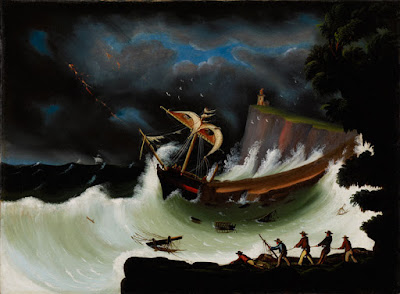 At that time, Jesus got into a boat, and His disciples followed Him. And behold, there arose a great storm on the sea, so that the boat was covered by the waves; but He was asleep. So they came and woke Him, saying: Lord, save us! We are perishing! But He said to them: Why are you fearful, o you of little faith? Then He arose and rebuked the wind and the sea, and there came a great calm. And the men marveled, saying: what manner of man is this, that even the wind and the sea obey Him? (From the Gospel of the day: Matthew VIII, 23-27) Dear Brethren, The words of the Holy Gospel that we just heard tell us of what happened when the boat where Jesus was with his disciples was faced with a terrible storm. The waves were so big that it seemed that the boat would sink. So the disciples cried out to the Lord and the storm disappeared. This is what happened at that time. And this is what is happening today. If we move beyond the literal meaning of the Scriptures, we will be able to see in the Gospel for today not only a faithful narration of what happened in the past, but also a very accurate description of what is happening today. This Gospel teaches us many precious lessons in these terrible times of confusion and scandals. That boat, where Jesus was with his disciples, is a figure of the Church, the Church navigating the sea of this world, navigating toward heaven. And the storms are all the trials that the Church has to face here on earth. So the Church is a spiritual boat, the boat of Christ, which leads us to the port of salvation. The Catholic Church is the Boat of Christ, the only one that can take us to heaven. And how comforting to know that we are inside this boat! However, we see in the Gospel that this boat would not be spared storms. The boat would shake; the boat would swing… The Church would not be spared the attacks of her enemies, who would try, without interruption, to sink the boat. We can see that from the very beginning of the Church: persecutions from the Jews; persecutions from the pagans; and then all the heresies that the Church had to fight over the centuries. So many trials... And sometimes these trials were so strong, sometimes the waves were so big, that it seemed that the boat was going to sink. But no, the boat didn’t sink… it is still floating. All the tactics of the devil seem to have failed. But the enemy of God is very clever. He would not give up so easily: he tried to attack the Church openly, and it didn’t work. So he tried another path. His new plan was to quietly insinuate agents of evil into the Church, who would distill their poison, who would corrupt the truth, but now without being recognized. The plan was to send pirates to hijack the boat of the Church -- pirates who would pretend to be members of the crew of Christ, but who were, instead, members of the crew of Satan. Pirates from the red flag of communism. Pirates from the rainbow flag of immorality. Pirates from the white flag of ecumenism, this false peace that does not come from Christ, because it compromises the Truth. My brethren, it is with great sadness that we see that these pirates made their way into the boat. They made their way into the Church. If in the past they had to be careful not be recognized, nowadays they don’t hide anymore. And we can recognize the pirates, not by the clothes they use, but by the words they say. We recognize the infiltrators by their teachings. If someone teaches the truth of Christ, he is from the crew of Christ. But if someone teaches something contrary to the Gospel of Jesus Christ, he is not from Christ, but he is a pirate. It is as simple as that. So we have to be aware: there are pirates in the boat, there are pirates in the Church. And I would be guilty of a grave sin if I didn’t alert you. This sect of pirates is trying to take control of the Church, and has even climbed to positions of authority in order to give the Church a new direction, opposed to the life giving words of Our Lord. They want to create a “paradigm shift”, a new religion: free from doctrine, free from morality… in a word: free from Christ. They don’t want Christ anymore, because Christ bothers; the words of Christ do not allow them to do whatever they want. And so, of Christ they keep the name only, but not the reality. And then they preach this empty Christ, this deformed Christ, claiming “a new understanding” of things. I can give you some examples. Our Lord said that a man who divorces his wife and marries another commits adultery. But now they say it’s okay. The Holy Scriptures condemn homosexuality, but now they say it’s all right. The Church always taught that there can be no salvation outside the True Faith, but now they say that it is not really like that. My brethren, we should know that Truth cannot change. Heaven and earth shall pass away, but the word of the Lord shall remain forever. We cannot try to update the Word of God. But the pirates do try to change the words of God. They are the anti-Church, somehow mingled with the Church of Christ. The weeds are mingled with the wheat. The Church is in eclipse. So in these very difficult times, we are called to prove the spirits, as Saint John says, in order to see if they come from God. We have to compare the teachings we receive with what the Church has always taught. That is why we must know our Faith, we must study our Faith, in order to discern what is true from what is false. And that is how we will be able to separate the weeds from the wheat, the heresies from the Truth, and the pirates from the true ministers of Jesus Christ. Yes, my brethren, there are pirates in the boat. And they are working hard in order to “change the Church”, what is just a nice euphemism for “destroying” the Church. That is what they are up to. And in these conditions, should we jump out of the boat? Should we leave the Church? No, never! The boat is ours! They are the ones who have to go away. You know that the situation today is very delicate, very painful. However, with all these scandals coming to light, we have reasons to be hopeful that this will bring about a great purification in the Church; that all the pirates will be named and cast out, and that the true face of the Church will shine again. Let us have hope, and never forget that Our Lord is in the boat with us. But if He seems to be sleeping, it is time for us to wake him up with our prayers, with our supplications, asking His boundless mercy that the Church may be delivered from Her enemies, from without and from within, and may experience some peace. Domine, salva nos perimus. Lord, save us lest we perish. Amen. https://rorate-caeli.blogspot.com/2019/02/h...phany.html#more |
|
|
Feb 15 2019, 02:15 PM
Return to original view | Post
#184
|
|
Senior Member
3,574 posts Joined: Apr 2006
|
The Hell of Faith: ‘Dreadful Possibility’ and ‘Terrible Reality’ at Once
There is a sense of mounting intensity in the Church. Within the last ten days alone, the following has happened: Pope Francis and Ahmad Al-Tayyeb, the Grand Imam of Al-Azhar Mosque, signed a “Document on Human Fraternity,” which says that “the diversity of religions” is “willed by God in His wisdom.” Subsequently, many have reacted, directly or indirectly, to the serious theological questions this document raises. Included among those writing on the subject are Phil Lawler (“Not all religions are part of God’s plan”) and Bishop Athanasius Schneider (“The Gift of Filial Adoption”). Four days after the joint statement of the Vicar of Christ and the Grand Imam, the former Prefect of the CDF, Gerhard Ludwig Cardinal Müller, published a “Manifesto of Faith” in seven different languages. This very powerful statement has been praised by Bishops (including the aforementioned Bishop Schneider), and by other clergy and laity. But it has also ruffled the feathers of another German Cardinal, the progressivist Walter Cardinal Kasper, whose inter-religious sensibilities appear to have been offended by his more doctrinaire countryman and brother cardinal. In a similitude bound to cause confusion among ecumenists, Cardinal Kasper compared Cardinal Müller to Martin Luther. Moreover, an unsurprising collection of progressivists has gathered to condemn the “Manifesto,” including the Rev. James Martin, who took to Twitter over it. And only Tuesday, we learned of the publication of a new book by an ostensibly well informed French sociologist claiming that a full eighty percent of the clerics working in the Roman Curia are homosexual. Difficult times. Let us turn our attention to one section of Cardinal Müller’s “Manifesto of Faith,” wherein the eminent author considers the basic truths of the four last things. Having mentioned death, judgement, and Heaven, he goes on to state these hard truths concerning hell: There is also the dreadful possibility that a person will remain opposed to God to the very end, and by definitely refusing His Love, “condemns himself immediately and forever” (CCC 1022). “God created us without us, but He did not want to save us without us” (CCC 1847). The eternity of the punishment of hell is a terrible reality, which — according to the testimony of Holy Scripture — attracts all who “die in the state of mortal sin” (CCC 1035). The Christian goes through the narrow gate, for “the gate is wide, and the way that leads to ruin is wide, and many are upon it” (Mt 7:13). To keep silent about these and the other truths of the Faith and to teach people accordingly is the greatest deception against which the Catechism vigorously warns. It represents the last trial of the Church and leads man to a religious delusion, “the price of their apostasy” (CCC 675); it is the fraud of Antichrist. “He will deceive those who are lost by all means of injustice; for they have closed themselves to the love of the truth by which they should be saved” (2 Thess 2:10). Earlier in his “Manifesto,” Cardinal Müller had written of the sad state of ignorance that exists among the faithful. Far from excusing them from their Christian obligations and giving them a free pass to Heaven, that state of ignorance is a danger to their immortal souls: “Today,” wrote His Eminence, “many Christians are no longer even aware of the basic teachings of the Faith, so there is a growing danger of missing the path to eternal life” (emphasis mine). This pastoral concern reminded me of what that great shepherd, Pope Saint Pius X, wrote in his Acerbo Nimis: “It is a common complaint, unfortunately too well founded, that there are large numbers of Christians in our own time who are entirely ignorant of those truths necessary for salvation. … And so Our Predecessor, Benedict XIV, had just cause to write: ‘We declare that a great number of those who are condemned to eternal punishment suffer that everlasting calamity because of ignorance of those mysteries of faith which must be known and believed in order to be numbered among the elect.’” The “Manifesto” mentions salvation numerous times, and does so in a way that avoids the common errors of our day, errors like presumption, indifferentism (for he associates salvation with Christ and His “Mystical Body,” the Catholic Church), or the soft-core modernism that makes eternal life something natural to man. Evidently, as the above paragraphs on hell would indicate, His Eminence is no disciple of Hans Urs von Balthasar. In the several paragraphs that follow, I am borrowing very heavily from a polemical piece that my beloved mentor and superior, Brother Francis, M.I.C.M., wrote many years ago. Both to shorten the text and to remove the not-presently-relevant particulars of the polemic, I am applying a very heavy editorial hand. All the truths about hell belong to those mysteries which are not the proper object of reason. The best that we can do with hell rationally is to show that it is not absurd. The Rationalists make hell absurd to begin with, and then they try to make it empty — or to make believe that it is empty. In a book on Catholic Doctrine by the Very Rev. William Byrne, D.D., published in 1892, hell is defined as “the state or place of those condemned to eternal punishment.” It is very hard for us to see from reason how any crime of man can ever deserve eternal punishment. “An eye for an eye and a tooth for a tooth” is reasonable. When a man kills another man, kill him, but why send him to eternal fire? Why send the unbaptized baby to an everlasting punishment of loss (soon to be explained) for a crime he did not personally commit? But the hell of Faith is not a punishment for crime, but for sin; and sin adds to crime an entirely new aspect — the aspect of contempt or even hatred of God. It is because the everlasting God commanded “Thou shalt not kill” that murder becomes more than a crime — a sin. The essence of hell consists in the loss of the Beatific Vision, a punishment common both to hell (proper) and to the Limbo of the unbaptized. The torments of hell (poena sensus) — those punishments for actual sin that are superadded to the pain of loss of heavenly beatitude (the poena damni) — belong to the accidental part of the eternal punishment. They are completely absent from Limbo. With regard to these, the same Father Byrne we have already quoted says: “All the damned do not suffer alike. The punishment is proportioned to the malice and gravity of their sins. ‘Give unto her double according to her works.’ (Apoc. 18:6.)” But even the guilt of original sin, by which we inherit a nature lacking the supernatural requirements (and even the supernatural desire) for the Beatific Vision, carries with it the loss of that infinite good. Naturally speaking, that good of heavenly Beatitude can neither be desired nor missed by any creature not reborn by grace. The souls of unbaptized infants can be naturally happy. Part of their natural happiness consists in a connatural love of God, their Creator — a love and happiness not forfeited as a result of original sin. But these souls have not inherited the primordial state of grace which belonged to Adam before the fall, nor were they regenerated (born again) by the waters of Baptism. We have, as we might say, an imperfect knowledge of hell which comes from the virtue of Faith. But, just as no man really knows darkness who has not seen the light, no man fully comprehends the doctrine of hell until he has the Beatific Vision. We cannot know hell now any more perfectly than we can know Heaven; and we know about Heaven merely because He Who came down from Heaven has deigned to reveal that truth to us. If you ask the natural man to describe what to him would be Heaven, he can at best describe a hell, more or less comfortable. For Jesus, our Savior, revealed to us not merely the way to salvation, but the reality itself, and we have to take salvation on His entirely supernatural terms. "Now this is eternal life: That they may know thee, the only true God, and Jesus Christ, whom thou hast sent" (John 17:3). And now, I would like to conclude these thoughts on hell with the exact words of Brother Francis, taken from his wonderful book of meditations, The Challenge of Faith: It is possible to imagine a hell that would be incompatible with a merciful, or even with a just God; but that would not be the authentic hell of Scripture, of dogma, and of Faith. The essence of hell is the loss of the Beatific Vision; therefore it is the loss of something whose very reality is known only through faith. Even in hell, not only the justice and wisdom of God, but also His mercy and love must be in evidence. This we cannot see now, but we will see in eternity. No one is punished in hell beyond the measure due to his sins. Where sufficient awareness exists of the danger of being separated from God for all eternity, no other punishment of hell need be emphasized; but the fires and worms of hell must be preached where weakness of faith or its complete absence make light of the loss of God. Without the faith, the best that our nature would desire, would amount to nothing better than a comfortable hell. This is actually most peoples’ conception of a heaven. The first effects of the action of grace is to give us holy desires: hungers and thirsts for things far above this world and all that it can offer. The men of holy desires, alone, understand. For more on the subject, I point the reader to a longer piece I wrote: “There Is a Hell, and It Makes Perfect Sense.” Let us, in gratitude, pray for Gerhard Ludwig Cardinal Müller. And let us pray for the Church Universal. The confusion and scandal of these last ten days are nothing compared to what’s coming. But remember, “he that shall persevere to the end, he shall be saved” (Matt. 24:13). In the Immaculate Heart of Mary, Brother André Marie, M.I.C.M. |
|
|
Feb 25 2019, 11:55 AM
Return to original view | Post
#185
|
|
Senior Member
3,574 posts Joined: Apr 2006
|
QUOTE(thomasthai @ Feb 25 2019, 09:28 AM) First of all, I just want to say I appreciate your kindness in your reply. You have demonstrated more humility than many others that I have encountered. You are most welcome to ask any questions on anything regarding the Catholic Faith or to bring up your points if you disagree with me.Second, since the ts of the other christian thread have requested to take our discussion somewhere else, I would like to do it here if it is ok with the ts. My end goal is not to win a debate or pick a fight. I have always endeavoured to proclaim the Gospel of Jesus Christ to whoever I meet. I will understand if the ts doesn't want to start a debate here. Thanks. |
|
|
Feb 27 2019, 10:09 AM
Return to original view | Post
#186
|
|
Senior Member
3,574 posts Joined: Apr 2006
|
QUOTE(thomasthai @ Feb 27 2019, 08:07 AM) https://www.news.com.au/world/europe/fallou...10b3bb104c6d8c9 https://onepeterfive.com/cardinal-pells-con...al-falls-apart/The cardinal of Australia George Pell, who also holds the 3rd highest position as the treasurer in Vatican has been found guilty of child sex abuse. What are your thoughts on this issue? "The allegations are understood to concern Pell assaulting the two choristers in the sacristy of Melbourne cathedral on several occasions immediately following Sunday Mass. The defense presented a range of witnesses who testified that the cardinal was never alone in the sacristy with altar servers or members of the choir, and that in all the circumstances under which the allegations are alleged to have taken place, several people would have been present in the room. The sacristy in Melbourne’s Cathedral has large open-plan rooms, each with open arches and halls, and multiple entrances and exits, the defense noted." This post has been edited by yeeck: Feb 27 2019, 10:10 AM |
|
|
|
|
|
Feb 27 2019, 02:02 PM
Return to original view | Post
#187
|
|
Senior Member
3,574 posts Joined: Apr 2006
|
QUOTE(unknown warrior @ Feb 27 2019, 10:16 AM) Nobody is asking to disdain them but we don't have to pray to any saints or angels or even kiss whatever statues that represents them imo, it is not scriptural imo. I've mentioned about prayer to the saints before, but if you forget, I'll be happy to repeat it here. See Revelation 5:8, where John depicts the saints in heaven offering our prayers to God under the form of "golden bowls full of incense, which are the prayers of the saints." But if the saints in heaven are offering our prayers to God, then they must be aware of our prayers. They are aware of our petitions and present them to God by interceding for us. Asking one person to pray for you in no way violates Christ’s mediatorship, as can be seen from considering the way in which Christ is a mediator. First, Christ is a unique mediator between man and God because he is the only person who is both God and man. He is the only bridge between the two, the only God-man. But that role as mediator is not compromised in the least by the fact that others intercede for us. If he was still under the old covenant, that makes it worse Yeeck, think about it, how do you atone for your sins in the Old Covenant? Did the thief do anything as per Old Covenant requirement? What he did seem to apply more under the New Covenant so much so that Christ grants him to paradise......"FAITH". <----- As for kissing statues of the saints, that is merely a sign of affection to love and honour those we regard as friends of God. It doesn't mean we equate them to God. As for the good thief, Christ promised him paradise and forgave his sins there and then just as He forgave the sins of others. But Christ only ascended into Heaven 40 days after His resurrection, so how could the thief enter Heaven first? The only other explanation would be for him to go into the limbo of the Fathers of the Old Covenant, aka "Abraham's bosom" who were all also liberated by Christ to enter into eternal bliss. This post has been edited by yeeck: Feb 28 2019, 10:53 AM |
|
|
Feb 27 2019, 02:09 PM
Return to original view | Post
#188
|
|
Senior Member
3,574 posts Joined: Apr 2006
|
QUOTE(Hades76 @ Feb 27 2019, 10:21 AM) Sexual abuse is wrong regardless of religion. If found guilty, send him to jail for punishment. Agreed. But unlike the McCarrick and other cases, Pell's case seems like a miscarriage of justice. |
|
|
Feb 27 2019, 02:38 PM
Return to original view | Post
#189
|
|
Senior Member
3,574 posts Joined: Apr 2006
|
QUOTE(unknown warrior @ Feb 27 2019, 02:20 PM) Bible never mention those are the prayers of saints in heaven in that verse per say. how did you conclude it is? What is there to stop me from saying, it's the prayer of saints on earth? For us the saints can mean the saints here on earth or those in Heaven, or those in purgatory, what we call the doctrine of the Communion of Saints. No difference be they in heaven or on earth. Saints can and do intercede for us.They're statues dude. You're kissing statues.....I don't know if this isn't obvious to you? So what if it's statues? What if it's a photo? Does it make any difference? The statues are just the representations. Same like how the country's flag represents the country, or a photo of my mum represents my mum. This post has been edited by yeeck: Feb 28 2019, 10:24 AM |
|
|
Feb 27 2019, 03:23 PM
Return to original view | Post
#190
|
|
Senior Member
3,574 posts Joined: Apr 2006
|
QUOTE(unknown warrior @ Feb 27 2019, 02:46 PM) Why ask and pray to the saints to intervene for you when you can directly pray to God? I don't really understand this. You are not the first to object. These are classic objections from Protestants. Do you know, you have as much influence with God as with any saints? This to me, teaches lack of faith. A lot of differences, it's a kind of veneration that is unhealthy to me. Why? because we are not to put faith in the saints. When you adore as such, it can be a distraction away from God...people now look to the saints, rather than complete focus (100%) on God. James 5:14-18 King James Version (KJV) 14 Is any sick among you? let him call for the elders of the church; and let them pray over him, anointing him with oil in the name of the Lord: 15 And the prayer of faith shall save the sick, and the Lord shall raise him up; and if he have committed sins, they shall be forgiven him. 16 Confess your faults one to another, and pray one for another, that ye may be healed. The effectual fervent prayer of a righteous man availeth much. 17 Elias was a man subject to like passions as we are, and he prayed earnestly that it might not rain: and it rained not on the earth by the space of three years and six months. 18 And he prayed again, and the heaven gave rain, and the earth brought forth her fruit. Note here that the Bible itself recommends asking someone else to pray: “the elders” of the Church, who, like other Church leaders (1 Tim 3:1-13; Titus 1:7), are supposed to be of exemplary character, and “worthy of double honor” (1 Tim 5:17). They have more power, due to their ordination. In Revelation 5:8, the “twenty-four elders” (usually regarded by commentators as dead human beings) “fell down before the Lamb . . . with golden bowls full of incense, which are the prayers of the saints.” They appear to have other people's prayers, to present to God. So the obvious question is: what are they doing with them? Why does Revelation present dead saints presenting the prayers of other saints to God? If they have them, it stands to reason as a rather straightforward deduction, that they heard the initial prayers as well, or at least were granted knowledge of them in some fashion: ultimately through the power of God. Revelation 8:3-4 is even more explicit. Rather than equating incense and prayers, it actually distinguishes between them, and presents the scenario that the prayers and incense are presented together: And another angel came and stood at the altar with a golden censer; and he was given much incense to mingle with the prayers of all the saints upon the golden altar before the throne; [4] and the smoke of the incense rose with the prayers of the saints from the hand of the angel before God. It seems clear that they have heard the prayers of men, and are involved as intercessors. Angels are extremely intelligent beings. We know that they rejoice when a sinner repents. They have knowledge in ways that we do not; above our comprehension. This is biblical proof that physically dead saints and angels both somehow know about our prayers and present them to God. They are acting as intercessors and intermediaries. How do they hear our prayers? God gives them the power to do so because they are in heaven and therefore, outside of time. They are aware of earthly events. We know that from Hebrews 12:1 (“we are surrounded by so great a cloud of witnesses”) and from Revelation 6:9-10, where dead saints are praying for those on the earth. This is our entire rationale for asking saints to pray to God for us: all in perfect harmony with the Bible: 1) Holy men and women's prayers have great power. 2) Physically dead saints are perfected in holiness and are still part of the Body of Christ. 3) The Blessed Virgin Mary in particular is exceptionally holy (Immaculate Conception) and as the Mother of God, her prayers have more power and effect than that of any other creature: all by God's grace. 4) We know that they are aware (or are made aware) of earthly events. 5) We know that they exercise much charity and pray for us. Of course Catholics also pray directly to God, no one but the most extreme anti-Catholics denies that. Question is why can't we do both? To say that we have as much influence with God as with any saints in heaven shows pride, because it assumes that we are perfect, holy, and sinless already (unless one is so sure he or she is always in a state of grace), which is a deadly error -> the sin of presumption. For your information, all Catholic masses (Mass is the highest form of public worship in the Catholic Church) are offered to God and God alone. |
|
|
Feb 27 2019, 04:21 PM
Return to original view | Post
#191
|
|
Senior Member
3,574 posts Joined: Apr 2006
|
QUOTE(unknown warrior @ Feb 27 2019, 04:02 PM) I'm sorry but I think only God has "the" power. Holy Man or Woman for that matter do not have whatever powers. Elders of the Church are offices of responsibility, no where in the Bible are they attributed to have more power in prayers or Mary for that matter.... Ultimately all the power comes from God. God may choose to let these be dispensed by anyone according to His Will. Elders of the Church have the authority to give the sacraments instituted by Christ (forgive sins, annointing of the sick).3) The Blessed Virgin Mary in particular is exceptionally holy (Immaculate Conception) and as the Mother of God, her prayers have more power and effect than that of any other creature: all by God's grace. Where in scripture is this explained? As for the Immaculate Conception, I think I have posted enough on the other thread. |
|
|
Feb 27 2019, 05:25 PM
Return to original view | Post
#192
|
|
Senior Member
3,574 posts Joined: Apr 2006
|
QUOTE(unknown warrior @ Feb 27 2019, 04:27 PM) no, I mean where in scripture that explains whatever saints or mary has more power in prayer? Aiyo, see my reply above lah https://forum.lowyat.net/index.php?showtopi...post&p=91945663"The effectual fervent prayer of a righteous man availeth much." This post has been edited by yeeck: Feb 27 2019, 05:26 PM |
|
|
Mar 4 2019, 09:42 AM
Return to original view | Post
#193
|
|
Senior Member
3,574 posts Joined: Apr 2006
|
 |
|
|
|
|
|
Mar 8 2019, 01:52 PM
Return to original view | Post
#194
|
|
Senior Member
3,574 posts Joined: Apr 2006
|
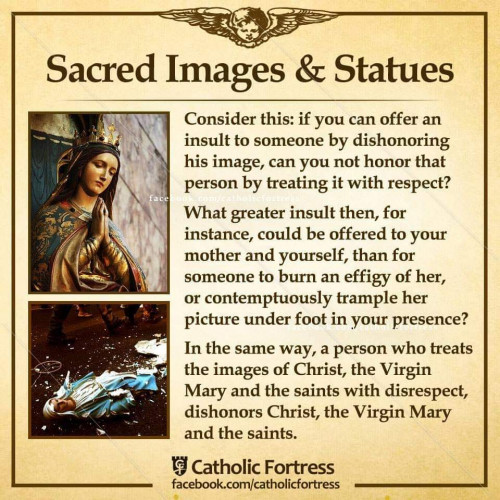
QUOTE(prophetjul @ Mar 8 2019, 08:55 AM) So adding to scriptures is better for you. Even those which are disobedience to His word? Well you make God contradict Himself then based on your interpretation of scripture. But Catholics do not worship the statues in itself. We honour and venerate the persons representated by the images be it statues, icons, paintings or photographs. And we have distinctions in worship. Do read back from the beginning of the Catholic thread v1 and v2 for more details.The Temple and Ark are instructions from God. They did not worship those constructions. Whereas your popes and people are worshipping and bowing down before graven statues. And you laugh? |
|
|
Mar 8 2019, 03:36 PM
Return to original view | Post
#195
|
|
Senior Member
3,574 posts Joined: Apr 2006
|
QUOTE(prophetjul @ Mar 8 2019, 02:44 PM) Yeah right. He did even better than what you think He forbade. He came in the flesh, allowing people to see and touch Him!Did God set Himself up as a statue to be worshipped? Nope. RCCs are the ones setting God up as contradicting Himself , where He should forbid graven images and yet commanded the construction of the temple and ark, which YOU interpret as graven images.  Yeah Right Kissing the statues is 'venerate'. Not worship. Carrying the statues on their shoulders is 'venerate', not worship. Pagan. “The Word was made Flesh and dwelt amongst us.” Your iconoclasm (an ancient heresy that has been dealt with by the Church), is an attack on the Incarnation. Iconoclasm was a frontal assault on that seeable, touchable, and holdable attribute of the Church. Iconoclasm and the Iconoclasts would have eradicated that visible notion of the Church and made her the invisible entity, the “mere Christianity,” that she has become today in the minds of many. By seeking to suppress the very visible representations of Our Lord Jesus Christ, His Mother, and the Communion of Saints in Heaven, the Iconoclasts attempted to de-Incarnationalize Christianity and replace it with an immaterial and ethereal contemplation of God. To de-Incarnationalize Christianity is to remove the visible essence of the Church and her moral authority from the mind, to eradicate the priestly hierarchy, and to break down the distinction between the sacred and the profane. Once the Church and her visible essence have been removed from the mind, the other Authority — the State — soon fills the vacuum, and its “civil” religion replaces that of the True Faith. There are many examples of this in history, including the Protestant Revolt. Wherever Protestantism took hold (often accompanied by Iconoclasm), the end product was the consolidation of power — both civil and religious — in the hands of the State. Iconoclasm comes from the Greek Eikonoclasmos , which is literally “image breaking.” Eradication of the visible representations, in any form, be it statues or paintings of Christ, His Mother, or the Saints, was the end to which Iconoclasts strove. The rise of Iconoclasm can be traced to a variety of causes, all coming together at that particular time in history. As is the case with all heresy, we are dealing not only with a doctrinal error, but also with historical circumstances which form its particular character. The Iconoclast position de-Incarnationalizes religion and turns it into a form of Manichaeism, where flesh is evil and the corporate body of the Church is replaced by the individual’s immaterial contemplation of a God who is no longer “the Word made Flesh.” Carried to its extreme, Iconoclasm becomes Docetism, where God merely appears to use a body of flesh. Docetism is very much alive in many modern Christian heresies. “Of old, God the incorporeal and uncircumscribed was never depicted. Now, however, when God is seen clothed in flesh, and conversing with men (Bar. 3:38), I make an image of the God whom I see. I do not worship matter, I worship the God of matter, who became matter for my sake, and deigned to inhabit matter, who worked out my salvation through matter. I will not cease from honoring that matter which works my salvation. I venerate it, though not as God. How could God be born out of lifeless things? And if God’s body is God by union, it is immutable. The nature of God remains the same as before, the flesh created in time is quickened by a logical and reasoning soul. I honor all matter besides, and venerate it. Through it, filled, as it were, with a divine power and grace, my salvation has come to me. Was not the thrice happy and thrice blessed wood of the Cross matter? Was not the sacred and holy mountain of Calvary matter? What of the life-giving rock, the Holy Sepulchre, the source of our resurrection: was it not matter? Is not the most holy book of the Gospels matter? Is not the blessed table matter which gives us the Bread of Life? Are not the gold and silver matter, out of which crosses and altar-plate and chalices are made? And before all these things, is not the Body and Blood of Our Lord matter? Either do away with the veneration and worship due to all these things, or submit to the tradition of the Church in the worship of images, honoring God and His friends, and following in this the grace of the Holy Spirit. Do not despise matter, for it is not despicable.” -- St John Damascene Regarding the use of incense, it is merely to symbolise the prayers of the faithful rising to heaven and also used even in the Old Testament as a purification ritual. |
|
|
Mar 8 2019, 04:27 PM
Return to original view | Post
#196
|
|
Senior Member
3,574 posts Joined: Apr 2006
|
QUOTE(prophetjul @ Mar 8 2019, 04:01 PM) Old RCC pagan declarations. No Jewish apostle would do that. Your old John does not represent the church. In Exodus 20:3-6 God forbids making graven images for the purpose of idolatry but does not forbid the making of graven images per se. Elsewhere he commands that statues and other graven images be carved for religious purposes. The Catholic Church permits statues because they remind us of unseen things, but it condemns the idolatry of statue worship. Simple as that.Pagan way of understanding God. I did not understand that FLESH was GRAVEN??????????? You have a obnoxious way of interpreting scriptures! |
|
|
Mar 8 2019, 04:45 PM
Return to original view | Post
#197
|
|
Senior Member
3,574 posts Joined: Apr 2006
|
QUOTE(yeeck @ Mar 8 2019, 04:27 PM) In Exodus 20:3-6 God forbids making graven images for the purpose of idolatry but does not forbid the making of graven images per se. Elsewhere he commands that statues and other graven images be carved for religious purposes. The Catholic Church permits statues because they remind us of unseen things, but it condemns the idolatry of statue worship. Simple as that. It is the Catholic view that can look at both the commandment to have no other God besides him, and not ascribe divinity to graven images, but also shows that skillful adornment of images can also be put to use to bring more honour and glory to God with such statuary. This is why only the Catholic view does not have contradiction as most Protestants would have when it comes to this issue.One thing to note that in Ezekiel 41:18-19 there is a mention of making statuaries of men: 18And it was made with cherubim and palm trees, a palm tree between cherub and cherub. Each cherub had two faces, 19so that the face of a man was toward a palm tree on one side, and the face of a young lion toward a palm tree on the other side; thus it was made throughout the temple all around. There could be no pictures of Jesus in the Old Testament because Jesus had not yet revealed himself to his people. The Word did not become flesh until the New Covenant. In fact, the Word, Jesus, did become flesh (Jn 1:14). Even though Jesus existed from the beginning (Jn 1:1, 8:58), God’s people did not know Him as of yet. When He became flesh, the incarnation changed the whole world around in this area. Christ deigned to become man for our salvation. No image could be made of someone who is pure Spirit, but in the incarnation, Jesus became man, enabling us to have an image of Him. Hebrews 1:3 says: 'Who being the brightness of his glory, and the express image of his person'. Statues help us to bring to mind, and meditate on Jesus (and brings to our minds the reality of the incarnation) precisely because He became flesh for us. It also it brings to mind that Jesus intercedes now for us in heaven (Heb. 7:25). It is permissible for His followers to make images of Him to bring Him Glory. Catholics know that statues that reflect Christ's image, is not a god. "We use all our senses to produce worthy images of Him, and we sanctify the noblest of the senses, which is that of sight. For just as words edify the ear, so also the image stimulates the eye. What the book is to the literate, the image is to the illiterate. Just as words speak to the ear, so the image speaks to the sight; it brings us understanding. For this reason God ordered the ark to be constructed of wood which would not decay, and to be gilded outside and in, and for the tablets to be placed inside, with Aaron’s staff and the golden urn containing the manna, in order to provide a remembrance of the past, and an image of the future. Who can say that these were not images, heralds sounding from far off? They were not placed aside in the meeting-tent, but were brought forth in the sight of all the people, who gazed upon them and used them to offer praise and worship to God. Obviously they were not adored for their own sake, but through them the people were led to remember the wonders of old and to worship God, the worker of wonders. They were images serving as memorials; they were not divine, but led to the remembrance of divine power." -- St John Damascene The Manicheans, who battled St. Augustine on some issues, taught that matter was bad, and that grace and good could not come out of material things. As the Word became Flesh, he took upon matter. And it was good. The Protestant too often sees material things as bad, and that is why they refer to the Catholic way of using material means to reflect God as idolatrous. That in part explains the rejection of many Protestants of things such as water being a means of grace through baptism, and the rejection of the Eucharist as the true presence of Christ. This view of material as ‘bad’ and ‘Spiritual’ as good unfortunately gives a stilted view of how God works in the world. |
|
|
Mar 15 2019, 10:41 AM
Return to original view | Post
#198
|
|
Senior Member
3,574 posts Joined: Apr 2006
|
 |
|
|
Apr 9 2019, 12:02 PM
Return to original view | Post
#199
|
|
Senior Member
3,574 posts Joined: Apr 2006
|
QUOTE(thomasthai @ Apr 6 2019, 05:52 AM) Hi friends, please allow me to share a video here. So many heresies typical to classical Protestantism and its spawns. Just a reminder, Catholic Christianity does not teach that you can earn your salvation through your own works, but you can only do so with the grace of God.Thanks guys  |
|
|
Apr 18 2019, 04:13 PM
Return to original view | Post
#200
|
|
Senior Member
3,574 posts Joined: Apr 2006
|
WHAT A SAINT IS
GOD wanted from all eternity to make us one with Himself. That is why He created us. He wanted not merely to be our Creator, but our Father, giving us the title and the right to say to Him, “Our Father, who art in Heaven.” Jesus, the Eternal Son of God, who became man, prays for us — after we receive sanctifying grace which divinizes our souls, and after we receive the Holy Eucharist which makes us concorporeal with Jesus — that we “may be one, as Thou Father in Me and I in Thee.” (John 17:21) Holy Communion makes us concorporeal with God-made-man. After receiving It we are one body, one life, one breath, one heartbeat with Jesus. No one who reads the Bible, God’s book, can fail to see that the whole purpose of creation by God was the divinization of those whom He had created. Our time is to be eternity. Our life is to be everlasting. Our happiness is to be that which God has in being God. In all the prayers of the Catholic Church, one of the most constant utterances is per omnia saecula saeculorum, which means forever and ever. A saint is a created being who has corresponded completely with God’s intention of divinizing him and making him holy. The word saint comes from the word sanctus in Latin, which means holy. The term sanctifying grace means the divine favor by which God elevates a created being to His own state of holiness, and shares with him the everlasting glory of being God’s own by adoption. The Communion of Saints is the greatest brotherhood or sisterhood that there ever could be in creation. It is the union of all those who have been sanctified by God. The word saint , used in its highest sense, means someone already in the Beatific Vision whose heroism and holiness, achieved on this earth, have been acknowledged and approved by the Roman Catholic Church. But in a simple and initial sense, anyone can be called a saint who is in the state of sanctifying grace. Saint Paul in his epistles refers to all early Christians living on earth as “the saints.” He does this over thirty times. Our Lord’s beautiful way of letting everyone know that the early Christians were truly saints was when He said to Saint Paul, who was then called Saul, not “Saul, Saul, why persecutest thou My followers?” but “Saul, Saul, why persecutest thou Me?” The greatest of all expressions of Christian belief is the Apostles’ Creed. In the Apostles’ Creed there are twelve articles, each one of which was written by one of the Twelve Apostles. The ninth article of the Apostles’ Creed is the expression of belief that those who are in the state of sanctifying grace are saints, “the Holy Catholic Church, the Communion of Saints.” Those who die in the state of sanctifying grace, even when they go to Purgatory, are saints. Those who have been purged in Purgatory of all their offenses, and have gone to Heaven, are saints forever. Those who have been outstandingly holy in achieving this goal while on earth are saints in the highest sense. There are, therefore, three states of sanctity applied to the saints by the Catholic Church. They are: the Church Militant (those who are or can be put in the state of sanctifying grace and are fighting to keep it as living members of the one, true Church); the Church Suffering (those who have died in the state of sanctifying grace and are being purged of their defects in Purgatory); and the Church Triumphant (those who have gone forever to see God and know God as God knows Himself, and are united to God in His eternity, in His infinity, in His glory and in His happiness, forever and ever.) The word Communion when used in the term Holy Communion means that in our flesh and blood we are made participators of the Body and Blood of Jesus. So intense is this unity in what is called Holy Communion that, after having received it, any Catholic is entitled to say along with Saint Paul, “And I live, now not I; but Christ liveth in me.” (Gal. 2:20) God wanted from all eternity to make us one with Himself. That is why He created us. He wanted to be not merely our Creator, but our Father. He wanted to give us the title and right to say with the Second Person of the Blessed Trinity, God the Son, when we speak to God the Father, “Our Father, who are in Heaven.” God the Creator becomes God our Father. Every little Christian child who has been baptized and who has died before reaching the age of reason — before the age where he can commit any willful mortal sin, or fail to confess the one, true Faith to which by Baptism he belongs — goes immediately to the Beatific Vision. He, or she, is a little saint by sheer grace. There are millions of such baptized infants in Heaven, and they can be prayed to, and they pray for us. Anyone who wants to be a saint can become one. Our Lord’s challenge in this invitation is most beautiful and clear and definite. “Ask, and it shall be given you: seek, and you shall find: knock, and it shall be opened to you.” (Matt. 7:7) Those who are meek, who are mourning for holiness, who are hungry and thirsty for what God wants to give them, who are admittedly poor in spirit — shall possess the land, and shall be comforted, and shall have their fill, and theirs shall be the kingdom of Heaven. Those who want to be saints shall receive God’s mercy. They shall see God, shall be called the children of God and shall possess the kingdom of Heaven, if their own sanctification is their first goal and if they want to be saints. They are the salt of the earth. They are the light of the world. Everyone in the world is called to be a saint. Those who are not Catholics are called to become Catholics. “Go ye into the whole world, and preach the gospel to every creature. He that believeth and is baptized, shall be saved: but he that believeth not shall be condemned.” (Mark 16:15, 16) Everyone who is in the Catholic Church is called to be a good Catholic, or to come back to the state of sanctifying grace through the Sacrament of Penance if he has lost it by sin. Every Catholic in the state of sanctifying grace is called to be holier and holier, so holy that the Church can declare him, or her, a saint. Anyone who wants to be a saint can become one. Our Lord’s challenge in this invitation is most beautiful and clear and definite. Ours shall be the kingdom of Heaven. We shall possess the land. We shall be comforted. We shall have our fill. All we need to be is meek, and longing with tears for what is to come, and hungry and thirsty for what God has to give us. We are called to be the salt of the earth. God wants us, and will make us the light of the world. That is, if our aim is to be a saint. |
| Change to: |  0.0989sec 0.0989sec
 0.70 0.70
 7 queries 7 queries
 GZIP Disabled GZIP Disabled
Time is now: 3rd December 2025 - 10:53 PM |
 Quote
Quote