QUOTE(pauper21 @ Jan 21 2023, 05:19 PM)
But I don’t get it is why other country most of their bank do support debit card, but not in Malaysia. EG. Singapore’s HSBC. It zit not enough people use ap in Malaysia?
With the information above, let's do some maths from a Malaysian Issuer point of view:
1. The user have to spend between RM500 (RM350+RM150, under the 0.21% category) and RM3,500 (under the RM0.70 + 0.01% category),
both before Apple's cut of USD0.005 per transaction, to recoup that ~USD0.25 annual fee for the 1 debit card enrolled. This could be any spending done on the debit card, even outside of Apple Pay.
2. Any transaction below RM10 will be a loss to the issuer (RM10 * 0.21% = RM0.021 interchange revenue).
3. Transactions above RM350 will fall into the "RM0.70 + 0.01%" category, therefore issuer's ability to earn from interchange revenue seemed to be severely limited (e.g. RM1,000 transaction, under the "0.21%" category issuers will earn RM2.10 while under the "RM0.70 + 0.01%" category issurs will earn RM0.80 instead. The discrepancy will be wider as the transaction amount increases).
In contrast, the following is from an Australian & American Issuer point of view:
1. [US] Banks in the U.S. do not need to worry about the per transaction fee as the minimum debit card interchange fee is at USD0.21 (USD0.21 > USD0.005).
2. [US] Banks in the U.S. could recoup the annual fee once the user has spent at least USD80 on the card (USD80*0.05% + USD0.21 = USD0.25), before Apple's cut of USD0.005 per transaction.
3. [AU] Banks in Australia could recoup the per transaction fee for transactions above ~AUD4.00 (AUD4.00 * 0.2% = AUD0.008 (~USD0.005)).
4. [AU] Banks in Australia could recoup the annual fee once the user has spent at least AUD180 (AUD180 * 0.2% = AUD0.36 (~USD0.25)) on the card, before Apple's cut of USD0.005 per transaction.
Comparing Malaysia to the US & AU markets and assuming that all 3 countries' issuers paid the same fees:
1. Nominally (not taking into account exchange rate), Malaysian issuers would have harder time recouping the per transaction fee (minimum spend of 10 (in MYR) vs 4 (in AUD)).
2. Nominally (not taking into account exchange rate), Malaysian issuers would have harder time recouping the "annual fee" (minimum spend of 500-3,500 (in MYR) vs 180 (in AUD)).
We have no idea on the debit card spending distribution in Malaysia is but I suppose that banks have done the calculations based on current usage data and determined that they are not comfortable financially in offering Apple Pay for debit card users.
However some banks may opt to still support it for other reasons such as future cross-selling opportunities and image/brand perception, even if it doesn't make sense financially.Most importantly,
all of the above are just Apple Pay related fees. We have yet to take into account fees such as maintenance, one-off system upgrades to support Apple Pay, and other variable cost that is needed to offer debit cards by a bank.
Now that I have made the calculations above, I really hope that Malaysian issuers have managed to negotiate a different fee structure than the one above or else not much banks would have the incentive to offer Apple Pay for Debit / Prepaid card I suppose.
TLDR: Apple Pay fee structure seemed to be the same across the world which could be a major challenge for Malaysian issuer to support Apple Pay for Debit Card users. 

 Dec 30 2022, 12:19 AM


 Quote
Quote
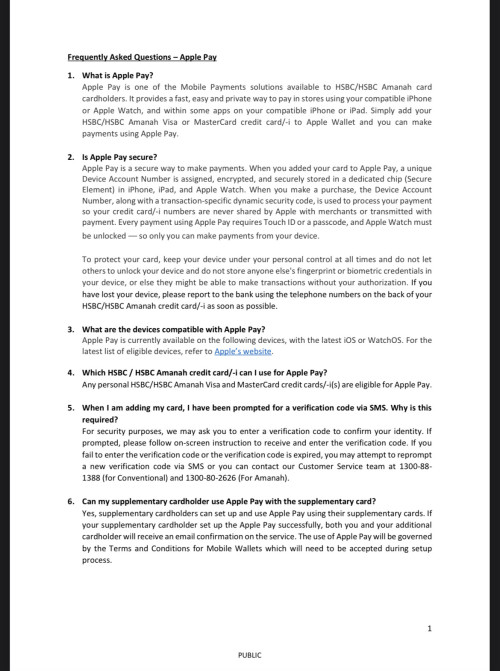
 coz there are still many cashiers who are not aware of this and will just answer 'cant'....
 ), the leaked database will only contain your device's account number and not your actual card info (PayWave directly reports your card number, exp date and CVV to the merchant terminal/site without masking it with device's account number, anyone can just get your card info, do some social engineering and bing, minus whatever in your account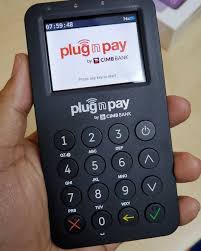

 0.0329sec
 0.29
0.29
 7 queries
 GZIP Disabled