

 Jun 25 2012, 12:53 PM


Mr Farmer:
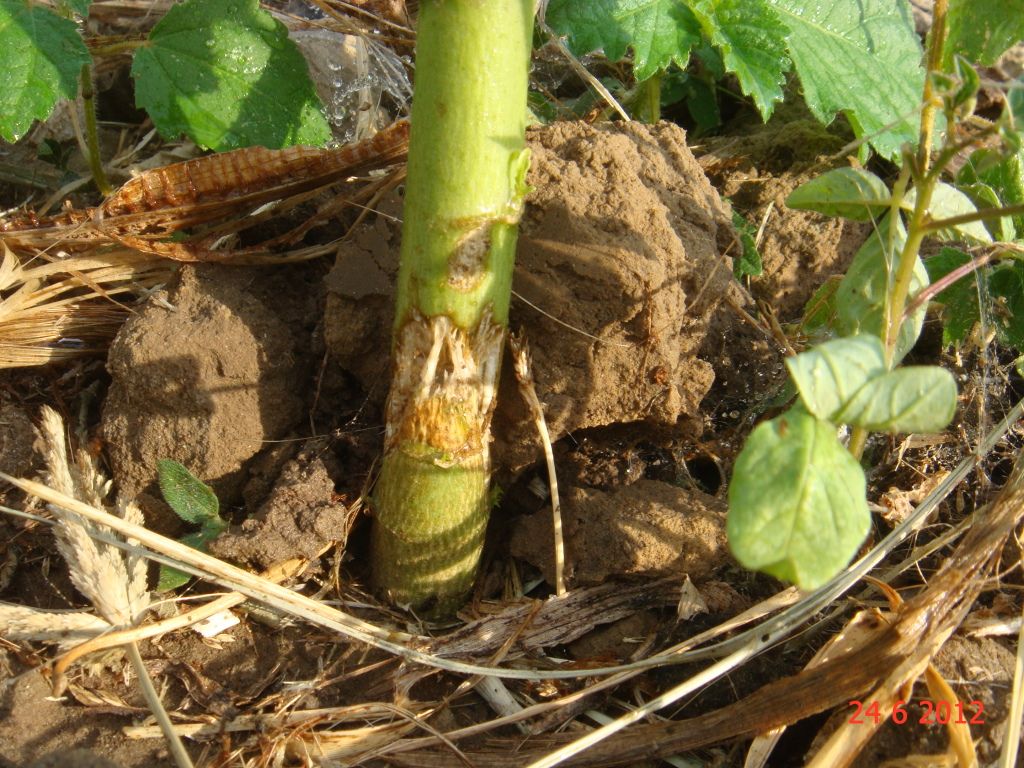
Hmmm...... Sorry I can't see the pictures from here. But based on your description, it sounds to be due to sun scalding, followed by infection by phytophtora fungus. Tell me, do you water early in the evenings, about 4-5pm? Or earlier, shortly after mid-day?
Although literature on sun scalding will show it to be something more of a problem in temperate regions, the fact is sun scalding happens to plants wherever there are drastic shifts in temperature. In the tropics, what happens is that in the daytime, temperatures are excessively high, followed by sharp drops in temperature during evenings or night time. In Malaysia, the normal daytime temperature is anywhere between 28C to 33C or maybe 1-2 degrees higher; night temperatures in most cases are also still quite high, around 26C-28C in the lowlands, which is about 2-5 degrees shifts. This isn't a very drastic change, and plant cells can adapt quite well to this, usually through the uptake of water and other metabolites.
However, problem comes when temperatures soar till around 35C, and then plummet to 26C. The nearly 10C change in temperature will shock the plant, causing the cells to keep "drinking" water without restraint, leading to "bursting" barks and splitting along the trunk. The same condition can occur even under normal temperature ranges, whereby cool water is applied to plants on a hot day, leading to sharp shifts in soil and bark temperatures, thereby stimulating the plant to go into thermal regulation mode. That's why most growers and gardeners will tell you, "Don't water plants during the afternoon sun!". They don't normally explain why, but this is part of the reasoning.
Now once a wound is created, it will allow easy access to plant pathogens and other nasty stuff. Disease causing fungi like phytophtora are commonly present in tropical soil, especially those with very high amount of woody/organic matter. Not all species of phytophtora are habitual plant-killers, but when given the chance, they can kill.
It is hard to determine the severity of the infection at this stage (as I can't view the photos). But if the bark area has some black or dark appearance, the chances are the disease is already in an advance stage, and saving the plant would be difficult. If it isn't a rare or expensive plant, you might want to consider getting replacements.
Added on June 26, 2012, 2:05 pmGood day all.
For all of you aspiring (and on-going) durian growers, a little information about the wonderful of durians.
http://durianinfo.blogspot.com/
This post has been edited by Michael J.: Jun 26 2012, 02:05 PM
Venturing into Agriculture & Aquaculture, Co-Ordination & Implementation is KEY
 Quote
Quote



 No worries, you shall get by if you put effort into it. Anyway, you have your friend to help too. Two heads are always better than 1. Also lots of forumer here with vast experience.



 0.0256sec
 0.50
0.50
 6 queries
 GZIP Disabled